S.Amdt. 4779Senate117th Congress (2021-2023)2nd degree
S.Amdt. 4779
Sponsored by 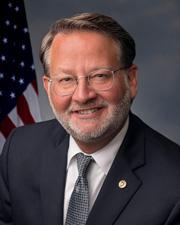 Sen. Gary C. Peters (D-MI)
Sen. Gary C. Peters (D-MI)Submitted November 17, 2021
Legislative Activity
Stay on top of the latest movement without scrolling through every action
Floor
Latest Action
Senate amendment submitted
November 17, 2021
Text
Submitted
SA 4779. Mr. PETERS (for himself, Mr. Portman, and Mr. Grassley)
submitted an amendment intended to be proposed to amendment SA 3867
submitted by Mr. Reed and intended to be proposed to the bill H.R.
4350, to authorize appropriations for fiscal year 2022 for military
activities of the Department of Defense, for military construction, and
for defense activities of the Department of Energy, to prescribe
military personnel strengths for such fiscal year, and for other
purposes; which was ordered to lie on the table; as follows:

At the end, add the following:

DIVISION E--INSPECTORS GENERAL

SEC. 5101. SHORT TITLE.

This division may be cited as the ``Afghanistan Vetting
Review, the IG Testimonial Subpoena Authority, and Inspector
General Access Act of 2021''.

TITLE LI--TESTIMONIAL SUBPOENA AUTHORITY FOR INSPECTORS GENERAL

SEC. 5111. SHORT TITLE.

This title may be cited as the ``IG Testimonial Subpoena
Authority Act''.

SEC. 5112. ADDITIONAL AUTHORITY PROVISIONS FOR INSPECTORS
GENERAL.

The Inspector General Act of 1978 (5 U.S.C. App.) is
amended--
(1) by inserting after section 6 the following:

``SEC. 6A. ADDITIONAL AUTHORITY.

``(a) Definitions.--In this section--
``(1) the term `Chairperson' means the Chairperson of the
Council of the Inspectors General on Integrity and
Efficiency;
``(2) the term `Inspector General'--
``(A) means an Inspector General of an establishment or a
designated Federal entity (as defined in section 8G(a)); and
``(B) includes--
``(i) the Inspector General of the Central Intelligence
Agency established under section 17 of the Central
Intelligence Agency Act of 1949 (50 U.S.C. 3517);
``(ii) the Inspector General of the Intelligence Community
established under section 103H of the National Security Act
of 1947 (50 U.S.C. 3033);
``(iii) the Special Inspector General for Afghanistan
Reconstruction established under section 1229 of the National
Defense Authorization Act for Fiscal Year 2008 (Public Law
110-181; 122 Stat. 379);
``(iv) the Special Inspector General for the Troubled Asset
Relief Plan established under section 121 of the Emergency
Economic Stabilization Act of 2008 (12 U.S.C. 5231); and
``(v) the Special Inspector General for Pandemic Recovery
established under section 4018 of the CARES Act (15 U.S.C.
9053); and
``(3) the term `Subpoena Panel' means the panel to which
requests for approval to issue a subpoena are submitted under
subsection (e).
``(b) Testimonial Subpoena Authority.--
``(1) In general.--In addition to the authority otherwise
provided by this Act and in accordance with the requirements
of this section, each Inspector General, in carrying out the
provisions of this Act or the provisions of the authorizing
statute of the Inspector General, as applicable, is
authorized to require by subpoena the attendance and
testimony of witnesses as necessary in the performance of an
audit, inspection, evaluation, or investigation, which
subpoena, in the case of contumacy or refusal to obey, shall
be enforceable by order of any appropriate United States
district court.
``(2) Prohibition.--An Inspector General may not require by
subpoena the attendance and testimony of a Federal employee
or employee of a designated Federal entity, but may use other
authorized procedures.
``(3) Determination by inspector general.--The
determination of whether a matter constitutes an audit,
inspection, evaluation, or investigation shall be at the
discretion of the applicable Inspector General.
``(c) Limitation on Delegation.--The authority to issue a
subpoena under subsection

[[Page S8391]]

(b) may only be delegated to an official performing the
functions and duties of an Inspector General when the
Inspector General position is vacant or when the Inspector
General is unable to perform the functions and duties of the
Office of the Inspector General.
``(d) Notice to Attorney General.--
``(1) In general.--Not less than 10 days before submitting
a request for approval to issue a subpoena to the Subpoena
Panel under subsection (e), an Inspector General shall--
``(A) notify the Attorney General of the plan of the
Inspector General to issue the subpoena; and
``(B) take into consideration any information provided by
the Attorney General relating to the subpoena.
``(2) Rule of construction.--Nothing in this subsection may
be construed to prevent an Inspector General from submitting
to the Subpoena Panel under subsection (e) a request for
approval to issue a subpoena if 10 or more days have elapsed
since the date on which the Inspector General submits to the
Attorney General the notification required under paragraph
(1)(A) with respect to that subpoena.
``(e) Panel Review Before Issuance.--
``(1) Approval required.--
``(A) Request for approval by subpoena panel.--Before the
issuance of a subpoena described in subsection (b), an
Inspector General shall submit to a panel a request for
approval to issue the subpoena, which shall include a
determination by the Inspector General that--
``(i) the testimony is likely to be reasonably relevant to
the audit, inspection, evaluation, or investigation for which
the subpoena is sought; and
``(ii) the information to be sought cannot be reasonably
obtained through other means.
``(B) Composition of subpoena panel.--
``(i) In general.--Subject to clauses (ii) and (iii), a
Subpoena Panel shall be comprised of 3 inspectors general
appointed by the President and confirmed by the Senate, who
shall be randomly drawn by the Chairperson or a designee of
the Chairperson from a pool of all such inspectors general.
``(ii) Classified information.--If consideration of a
request for a subpoena submitted under subparagraph (A) would
require access to classified information, the Chairperson or
a designee of the Chairperson may limit the pool of
inspectors general described in clause (i) to appropriately
cleared inspectors general.
``(iii) Confirmation of availability.--If an inspector
general drawn from the pool described in clause (i) does not
confirm their availability to serve on the Subpoena Panel
within 24 hours of receiving a notification from the
Chairperson or a designee of the Chairperson regarding
selection for the Subpoena Panel, the Chairperson or a
designee of the Chairperson may randomly draw a new inspector
general from the pool to serve on the Subpoena Panel.
``(C) Contents of request.--The request described in
subparagraph (A) shall include any information provided by
the Attorney General related to the subpoena, which the
Attorney General requests that the Subpoena Panel consider.
``(D) Protection from disclosure.--
``(i) In general.--The information contained in a request
submitted by an Inspector General under subparagraph (A) and
the identification of a witness shall be protected from
disclosure to the extent permitted by law.
``(ii) Request for disclosure.--Any request for disclosure
of the information described in clause (i) shall be submitted
to the Inspector General requesting the subpoena.
``(2) Time to respond.--
``(A) In general.--Except as provided in subparagraph (B),
the Subpoena Panel shall approve or deny a request for
approval to issue a subpoena submitted under paragraph (1)
not later than 10 days after the submission of the request.
``(B) Additional information for panel.--If the Subpoena
Panel determines that additional information is necessary to
approve or deny a request for approval to issue a subpoena
submitted by an Inspector General under paragraph (1), the
Subpoena Panel shall--
``(i) request that information; and
``(ii) approve or deny the request for approval submitted
by the Inspector General not later than 20 days after the
Subpoena Panel submits the request for information under
clause (i).
``(3) Approval by panel.--If all members of the Subpoena
Panel unanimously approve a request for approval to issue a
subpoena submitted by an Inspector General under paragraph
(1), the Inspector General may issue the subpoena.
``(4) Notice to council and attorney general.--Upon
issuance of a subpoena by an Inspector General under
subsection (b), the Inspector General shall provide
contemporaneous notice of such issuance to the Chairperson or
a designee of the Chairperson and to the Attorney General.
``(f) Semiannual Reporting.--On or before May 31, 2022, and
every 6 months thereafter, the Council of the Inspectors
General on Integrity and Efficiency shall submit to the
Committee on Homeland Security and Governmental Affairs of
the Senate, the Committee on Oversight and Reform of the
House of Representatives, and the Comptroller General of the
United States a report on the use of subpoenas described in
subsection (b) in any audit, inspection, evaluation, or
investigation that concluded during the immediately preceding
6-month periods ending March 31 and September 30, which shall
include--
``(1) a list of each Inspector General that has submitted a
request for approval of a subpoena to the Subpoena Panel;
``(2) for each applicable Inspector General, the number of
subpoenas submitted to the Subpoena Panel, approved by the
Subpoena Panel, and disapproved by the Subpoena Panel;
``(3) for each subpoena submitted to the Subpoena Panel for
approval--
``(A) an anonymized description of the individual or
organization to whom the subpoena was directed;
``(B) the date on which the subpoena request was sent to
the Attorney General, the date on which the Attorney General
responded, and whether the Attorney General provided
information regarding the subpoena request, including whether
the Attorney General opposed issuance of the proposed
subpoena;
``(C) the members of the Subpoena Panel considering the
subpoena;
``(D) the date on which the subpoena request was sent to
the Subpoena Panel, the date on which the Subpoena Panel
approved or disapproved the subpoena request, and the
decision of the Subpoena Panel; and
``(E) the date on which the subpoena was issued, if
approved; and
``(4) any other information the Council of the Inspectors
General on Integrity and Efficiency considers appropriate to
include.
``(g) Training and Standards.--The Council of the
Inspectors General on Integrity and Efficiency, in
consultation with the Attorney General, shall promulgate
standards and provide training relating to the issuance of
subpoenas, conflicts of interest, and any other matter the
Council determines necessary to carry out this section.
``(h) Applicability.--The provisions of this section shall
not affect the exercise of authority by an Inspector General
of testimonial subpoena authority established under another
provision of law.
``(i) Termination.--The authorities provided under
subsection (b) shall terminate on January 1, 2027, provided
that this subsection shall not affect the enforceability of a
subpoena issued on or before December 31, 2026.'';
(2) in section 5(a), as amended by section 903 of this
Act--
(A) in paragraph (16)(B), as so redesignated, by striking
the period at the end and inserting ``; and''; and
(B) by adding at the end the following:
``(17) a description of the use of subpoenas for the
attendance and testimony of certain witnesses authorized
under section 6A.''; and
(3) in section 8G(g)(1), by inserting ``6A,'' before ``and
7''.

SEC. 5113. REVIEW BY THE COMPTROLLER GENERAL.

Not later than January 1, 2026, the Comptroller General of
the United States shall submit to the appropriate
congressional committees a report reviewing the use of
testimonial subpoena authority, which shall include--
(1) a summary of the information included in the semiannual
reports to Congress under section 6A(f) of the Inspector
General Act of 1978 (5 U.S.C. App.), as added by this title,
including an analysis of any patterns and trends identified
in the use of the authority during the reporting period;
(2) a review of subpoenas issued by inspectors general on
and after the date of enactment of this Act to evaluate
compliance with this Act by the respective inspector general,
the Subpoena Panel, and the Council of the Inspectors General
on Integrity and Efficiency; and
(3) any additional analysis, evaluation, or recommendation
based on observations or information gathered by the
Comptroller General of the United States during the course of
the review.

TITLE LII--INVESTIGATIONS OF DEPARTMENT OF JUSTICE PERSONNEL

SEC. 5121. SHORT TITLE.

This title may be cited as the ``Inspector General Access
Act of 2021''.

SEC. 5122. INVESTIGATIONS OF DEPARTMENT OF JUSTICE PERSONNEL.

Section 8E of the Inspector General Act of 1978 (5 U.S.C.
App.) is amended--
(1) in subsection (b)--
(A) in paragraph (2), by striking ``and paragraph (3)'';
(B) by striking paragraph (3);
(C) by redesignating paragraphs (4) and (5) as paragraphs
(3) and (4), respectively; and
(D) in paragraph (4), as redesignated, by striking
``paragraph (4)'' and inserting ``paragraph (3)''; and
(2) in subsection (d), by striking ``, except with respect
to allegations described in subsection (b)(3),''.

TITLE LIII--REVIEW RELATING TO AFGHANISTAN RESETTLEMENT AND SPECIAL
IMMIGRANT VISA PROGRAM

SEC. 5131. REVIEW RELATING TO VETTING, PROCESSING, AND
RESETTLEMENT OF EVACUEES FROM AFGHANISTAN AND
THE AFGHANISTAN SPECIAL IMMIGRANT VISA PROGRAM.

(a) In General.--In accordance with the Inspector General
Act of 1978 (5 U.S.C. App.), the Inspector General of the
Department of Homeland Security, jointly with the Inspector
General of the Department of State, and in coordination with
any appropriate inspector general established by that Act or
section 103H of the National Security Act of 1947

[[Page S8392]]

(50 U.S.C. 3033), shall conduct a thorough review of efforts
to support and process evacuees from Afghanistan and the
Afghanistan special immigrant visa program.
(b) Elements.--The review required by subsection (a) shall
include an assessment of the systems, staffing, policies, and
programs used--
(1) to the screen and vet such evacuees, including--
(A) an assessment of whether personnel conducting such
screening and vetting were appropriately authorized and
provided with training, including training in the detection
of fraudulent personal identification documents;
(B) an analysis of the degree to which such screening and
vetting deviated from United States law, regulations, policy,
and best practices relating to--
(i) the screening and vetting of parolees, refugees, and
applicants for United States visas that have been in use at
any time since January 1, 2016, particularly for individuals
from countries with active terrorist organizations; and
(ii) the screening and vetting of parolees, refugees, and
applicants for United States visas pursuant to any mass
evacuation effort since 1975, particularly for individuals
from countries with active terrorist organizations;
(C) an identification of any risk to the national security
of the United States posed by any such deviations;
(D) an analysis of the processes used for evacuees
traveling without personal identification records, including
the creation or provision of any new identification records
to such evacuees; and
(E) an analysis of the degree to which such screening and
vetting process was capable of detecting--
(i) instances of human trafficking and domestic abuse;
(ii) evacuees who are unaccompanied minors; and
(iii) evacuees with a spouse that is a minor;
(2) to admit and process such evacuees at United States
ports of entry;
(3) to temporarily house such evacuees prior to
resettlement;
(4) to account for the total number of individual evacuated
from Afghanistan in 2021 with support of the United States
Government, disaggregated by--
(A) country of origin;
(B) age;
(C) gender;
(D) eligibility for special immigrant visas under the
Afghan Allies Protection Act of 2009 (8 U.S.C. 1101 note;
Public Law 111-8) or section 1059 of the National Defense
Authorization Act for Fiscal Year 2006 (8 U.S.C. 1101 note;
Public Law 109-163) at the time of evacuation;
(E) eligibility for employment-based nonimmigrant visas at
the time of evacuation; and
(F) familial relationship to evacuees who are eligible for
visas described in subparagraphs (D) and (E); and
(5) to provide eligible individuals with special immigrant
visas under the Afghan Allies Protection Act of 2009 (8
U.S.C. 1101 note; Public Law 111-8) and section 1059 of the
National Defense Authorization Act for Fiscal Year 2006 (8
U.S.C. 1101 note; Public Law 109-163) since the date of the
enactment of the Afghan Allies Protection Act of 2009 (8
U.S.C. 1101 note; Public Law 111-8), including--
(A) a detailed step-by-step description of the application
process for such special immigrant visas, including the
number of days allotted by the United States Government for
the completion of each step;
(B) the number of such special immigrant visa applications
received, approved, and denied, disaggregated by fiscal year;
(C) the number of such special immigrant visas issued, as
compared to the number available under law, disaggregated by
fiscal year;
(D) an assessment of the average length of time taken to
process an application for such a special immigrant visa,
beginning on the date of submission of the application and
ending on the date of final disposition, disaggregated by
fiscal year;
(E) an accounting of the number of applications for such
special immigrant visas that remained pending at the end of
each fiscal year;
(F) an accounting of the number of interviews of applicants
for such special immigrant visas conducted during each fiscal
year;
(G) the number of noncitizens who were admitted to the
United States pursuant to such a special immigrant visa
during each fiscal year;
(H) an assessment of the extent to which each participating
department or agency of the United States Government,
including the Department of State and the Department of
Homeland Security, adjusted processing practices and
procedures for such special immigrant visas so as to vet
applicants and expand processing capacity since the February
29, 2020, Doha Agreement between the United States and the
Taliban;
(I) a list of specific steps, if any, taken between
February 29, 2020, and August 31, 2021--
(i) to streamline the processing of applications for such
special immigrant visas; and
(ii) to address longstanding bureaucratic hurdles while
improving security protocols;
(J) a description of the degree to which the Secretary of
State implemented recommendations made by the Department of
State Office of Inspector General in its June 2020 reports on
Review of the Afghan Special Immigrant Visa Program (AUD-
MERO-20-35) and Management Assistance Report: Quarterly
Reporting on Afghan Special Immigrant Visa Program Needs
Improvement (AUD-MERO-20-34);
(K) an assessment of the extent to which challenges in
verifying applicants' employment with the Department of
Defense contributed to delays in the processing of such
special immigrant visas, and an accounting of the specific
steps taken since February 29, 2020, to address issues
surrounding employment verification; and
(L) recommendations to strengthen and streamline such
special immigrant visa process going forward.
(c) Interim Reporting.--
(1) In general.--Not later than 180 days after the date of
the enactment of this Act, the Inspector General of the
Department of Homeland Security and the Inspector General of
the Department of State shall submit to the appropriate
congressional committees not fewer than one interim report on
the review conducted under this section.
(2) Form.--Any report submitted under paragraph (1) shall
be submitted in unclassified form, but may include a
classified annex.
(3) Definitions.--In this subsection:
(A) Appropriate congressional committees.--The term
``appropriate congressional committees'' has the meaning
given the term in section 12 of the Inspector General Act of
1978 (5 U.S.C. App.), as amended by this Act.
(B) Screen; screening.--The terms ``screen'' and
``screening'', with respect to an evacuee, mean the process
by which a Federal official determines--
(i) the identity of the evacuee;
(ii) whether the evacuee has a valid identification
documentation; and
(iii) whether any database of the United States Government
contains derogatory information about the evacuee.
(C) Vet; vetting.--The term ``vet'' and ``vetting'', with
respect to an evacuee, means the process by which a Federal
official interviews the evacuee to determine whether the
evacuee is who they purport to be, including whether the
evacuee poses a national security risk.
(d) Discharge of Responsibilities.--The Inspector General
of the Department of Homeland Security and the Inspector
General of the Department of State shall discharge the
responsibilities under this section in a manner consistent
with the authorities and requirements of the Inspector
General Act of 1978 (5 U.S.C. App.) and the authorities and
requirements applicable to the Inspector General of the
Department of Homeland Security and the Inspector General of
the Department of State under that Act.
(e) Coordination.--Upon request of an Inspector General for
information or assistance under subsection (a), the head of
any Federal agency involved shall, insofar as is practicable
and not in contravention of any existing statutory
restriction or regulation of the Federal agency from which
the information is requested, furnish to such Inspector
General, or to an authorized designee, such information or
assistance.
(f) Rule of Construction.--Nothing in this section shall be
construed to limit the ability of the Inspector General of
the Department of Homeland Security or the Inspector General
of the Department of State to enter into agreements to
conduct joint audits, inspections, or investigations in the
exercise of the oversight responsibilities of the Inspector
General of the Department of Homeland Security and the
Inspector General of the Department of State, in accordance
with the Inspector General Act of 1978 (5 U.S.C. App.), with
respect to oversight of the evacuation from Afghanistan, the
selection, vetting, and processing of applicants for special
immigrant visas and asylum, and any resettlement in the
United States of such evacuees.
______