S.Amdt. 4848Senate117th Congress (2021-2023)2nd degree
S.Amdt. 4848
Sponsored by 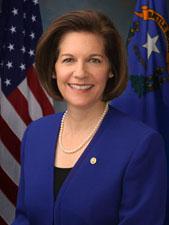 Sen. Catherine Cortez Masto (D-NV)
Sen. Catherine Cortez Masto (D-NV)Submitted November 29, 2021
Legislative Activity
Stay on top of the latest movement without scrolling through every action
Floor
Latest Action
Senate amendment submitted
November 29, 2021
Text
Submitted
SA 4848. Ms. CORTEZ MASTO (for herself and Mrs. Fischer) submitted an
amendment intended to be proposed to amendment SA 3867 proposed by Mr.
Reed to the bill H.R. 4350, to authorize appropriations for fiscal year
2022 for military activities of the Department of Defense, for military
construction, and for defense activities of the Department of Energy,
to prescribe military personnel strengths for such fiscal year, and for
other purposes; which was ordered to lie on the table; as follows:

At the appropriate place, insert the following:

SEC. __. PROMOTING PRIVACY ENHANCING TECHNOLOGIES.

(a) Definition of Privacy Enhancing Technology.--In this
section the term ``privacy enhancing technology'' means any
software solution, technical processes, or other
technological means of protecting an individual's privacy and
the confidentiality of data, which may include--
(1) anonymization and pseudonymization techniques,
filtering tools, anti-tracking technology, differential
privacy tools, synthetic data generation tools, cryptographic
techniques (such as secure multi-party computation and
homomorphic encryption), and systems for federated learning;
and
(2) any other software solution, technical processes, or
other technological means that the Director of the National
Science Foundation, in consultation with the Director of the
National Institute of Standards and Technology outside
experts, determines to be a technology that enhances privacy.
(b) National Science Foundation Support of Research on
Privacy Enhancing Technology.--The Director of the National
Science Foundation, in consultation with other relevant
Federal agencies (as determined by the Director), shall
support merit-reviewed and competitively awarded research on
privacy enhancing technologies, which may include--
(1) fundamental research on technologies for de-
identification, pseudonymization, anonymization, or
obfuscation to protect individuals' privacy in data sets;
(2) fundamental research on algorithms, machine learning,
and other similar mathematical tools used to protect
individual privacy when collecting, storing, sharing,
aggregating, or analyzing data;
(3) fundamental research on technologies that promote data
minimization principles in data collection, sharing,
transfers, retention, and analytics;
(4) research awards on privacy enhancing technologies
coordinated with other relevant Federal agencies and
programs;
(5) research on barriers to, and opportunities for, the
adoption of privacy enhancing technologies, including studies
on effective business models for privacy enhancing
technologies; and
(6) international cooperative research, awards, challenges,
and pilot projects on privacy enhancing technologies with key
United States allies and partners.
(c) Integration Into the Computer and Network Security
Program.--Subparagraph (D) of section 4(a)(1) of the Cyber
Security Research and Development Act (15 U.S.C.
7403(a)(1)(D)) is amended to read as follows:
``(D) privacy enhancing technologies and
confidentiality;''.
(d) Coordination With the National Institute of Standards
and Technology and Other Stakeholders.--
(1) In general.--The Director of the Office of Science and
Technology Policy, acting through the Networking and
Information Technology Research and Development Program,
shall coordinate with the Director of the National Science
Foundation, the Director of the National Institute of
Standards and Technology, and the Federal Trade Commission to
accelerate the development and use of privacy enhancing
technologies.
(2) Outreach.--The Director of the National Institute of
Standards and Technology shall conduct outreach to--
(A) receive input from private, public, and academic
stakeholders on the development and potential uses of privacy
enhancing technologies, including the National Institutes of
Health and the Centers for Disease Control and Prevention
regarding specific applications in public health research;
and
(B) develop ongoing public and private sector engagement to
create and disseminate voluntary, consensus-based resources
to increase the integration of privacy enhancing technologies
in data collection, sharing, transfers, retention, and
analytics by the public and private sectors.
(e) Report on Privacy Enhancing Technology Research.--Not
later than 3 years after the date of enactment of this Act,
the Director of the Office of Science and Technology Policy,
acting through the Networking and Information Technology
Research and Development Program, shall, in coordination with
the Director of the National Science Foundation, the Director
of the National Institute of Standards and

[[Page S8791]]

Technology, and the Chair of the Federal Trade Commission,
submit to the Committee on Commerce, Science, and
Transportation of the Senate, the Committee on Science,
Space, and Technology of the House of Representatives, and
the Committee on Energy and Commerce of the House of
Representatives, a report containing--
(1) the progress of research on privacy enhancing
technologies;
(2) the progress of the development of voluntary resources
described under subsection (d)(2)(B); and
(3) any policy recommendations that could facilitate and
improve communication and coordination between the private
sector, the National Science Foundation, and relevant Federal
agencies through the implementation of privacy enhancing
technologies.
______