In the nature of a substitute.
What it does: Replaces the bill's text with a full substitute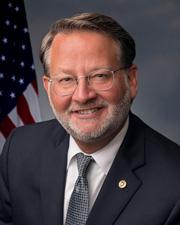 Sen. Gary C. Peters (D-MI)
What it changes
1 change to S. 2551 · shown in the bill's text
Replaces the bill's text with a full substitute
Replaces the full textEverything after the enacting clauseIn S. 2551 · Reported to Senate
15 unchanged paragraphsHide unchanged text
SECTION 1. SHORT TITLE.
This Act may be cited as the "Artificial Intelligence Training for the Acquisition Workforce Act" or the "AI Training Act".
SEC. 2. ARTIFICIAL INTELLIGENCE TRAINING PROGRAMS.
(a) Definitions.--In this section:
(1) AI.--The term "AI" has the meaning given the term "artificial intelligence" in section 238(g) of the John S. McCain National Defense Authorization Act for Fiscal Year 2019 (10 U.S.C. 2358 note).
(2) AI training program.--The term "AI training program" means the training program established under subsection (b)(1).
(3) Covered workforce.--The term "covered workforce" means--
(A) employees of an executive agency who are responsible for--
(i) program management;
(ii) the planning, research, development, engineering, testing, and evaluation of systems, including quality control and assurance;
(iii) procurement and contracting;
(iv) logistics; or
(v) cost estimating; and
(B) other personnel of an executive agency designated by the head of the executive agency to participate in the AI training program.
(4) Director.--The term "Director" means the Director of the Office of Management and Budget.
(5) Executive agency.--The term "executive agency"--
(A) has the meaning given the term in section 133 of title 41, United States Code; and
Inserted: (B) does not include--
(
[struck: B][inserted: i])[struck: does not include ]the Department of Defense or a component of the Department of Defense[struck: .][inserted: ; or]Inserted: (ii) the National Nuclear Security Administration or a component of the National Nuclear Security Administration.
(b) Requirement.--
(1) In general.--Not later than 1 year after the date of enactment of this Act, and not less frequently than annually thereafter, the Director, in coordination with the Administrator of General Services and any other person determined relevant by the Director, shall develop and implement or otherwise provide an AI training program for the covered workforce.
(2) Purpose.--The purpose of the AI training program shall be to ensure that the covered workforce has knowledge of the capabilities and risks associated with AI.
(3) Topics.--The AI training program shall include information relating to--
(A) the science underlying
[struck: artificial intelligence][inserted: AI], including how[struck: artificial intelligence ][inserted: AI ]works;(B) introductory concepts relating to the technological features of artificial intelligence systems;
(C) the ways in which
[struck: artificial intelligence ][inserted: AI ]can benefit the Federal Government;(D) the risks posed by
[struck: artificial intelligence][inserted: AI], including discrimination and risks to privacy;(E) ways to mitigate the risks described in subparagraph (D), including efforts to create and identify
[struck: artificial intelligence ][inserted: AI ]that is reliable, safe, and trustworthy; and(F) future trends in
[struck: artificial intelligence][inserted: AI], including trends for homeland and national security and innovation.(4) Updates.--Not less frequently than once every 2 years, the Director shall update the AI training program to--
(A) incorporate new information relating to AI; and
9 unchanged paragraphsHide unchanged text
(B) ensure that the AI training program continues to satisfy the requirements under paragraph (3).
(5) Format.--The Director is encouraged to develop and implement or otherwise include under the AI training program interactive learning with--
(A) technologists;
(B) scholars; and
(C) other experts from the private, public, and nonprofit sectors.
(6) Metrics.--The Director shall ensure the existence of a means by which to--
(A) understand and measure the participation of the covered workforce; and
(B) receive and consider feedback from participants in the AI training program to improve the AI training program.
(7) Sunset.--Effective 10 years after the date of enactment of this Act, this section shall have no force or effect.
Original wording
Strike all after the enacting clause and insert the following:
Read automatically from the Congressional Record. Check the original before relying on it.
As printed
SA 4896. Mr. SCHATZ (for Mr. Peters (for himself and Mr. Portman)) proposed an amendment to the bill S. 2551, to require the Director of the Office of Management and Budget to establish or otherwise provide an artificial intelligence training program for the acquisition workforce, and for other purposes; as follows:
Strike all after the enacting clause and insert the following:
SECTION 1. SHORT TITLE.
This Act may be cited as the “Artificial Intelligence Training for the Acquisition Workforce Act” or the “AI Training Act”.
SEC. 2. ARTIFICIAL INTELLIGENCE TRAINING PROGRAMS.
(a) Definitions.--In this section:
(1) AI.--The term “AI” has the meaning given the term “artificial intelligence” in section 238(g) of the John S. McCain National Defense Authorization Act for Fiscal Year 2019 (10 U.S.C. 2358 note).
(2) AI training program.--The term “AI training program” means the training program established under subsection (b)(1).
(3) Covered workforce.--The term “covered workforce” means--
(A) employees of an executive agency who are responsible for--
(i) program management;
(ii) the planning, research, development, engineering, testing, and evaluation of systems, including quality control and assurance;
(iii) procurement and contracting;
(iv) logistics; or
(v) cost estimating; and
(B) other personnel of an executive agency designated by the head of the executive agency to participate in the AI training program.
(4) Director.--The term “Director” means the Director of the Office of Management and Budget.
(5) Executive agency.--The term “executive agency”--
(A) has the meaning given the term in section 133 of title 41, United States Code; and
(B) does not include--
(i) the Department of Defense or a component of the Department of Defense; or
(ii) the National Nuclear Security Administration or a component of the National Nuclear Security Administration.
(b) Requirement.--
(1) In general.--Not later than 1 year after the date of enactment of this Act, and not less frequently than annually thereafter, the Director, in coordination with the Administrator of General Services and any other person determined relevant by the Director, shall develop and implement or otherwise provide an AI training program for the covered workforce.
(2) Purpose.--The purpose of the AI training program shall be to ensure that the covered workforce has knowledge of the capabilities and risks associated with AI.
(3) Topics.--The AI training program shall include information relating to--
(A) the science underlying AI, including how AI works;
(B) introductory concepts relating to the technological features of artificial intelligence systems;
(C) the ways in which AI can benefit the Federal Government;
(D) the risks posed by AI, including discrimination and risks to privacy;
(E) ways to mitigate the risks described in subparagraph (D), including efforts to create and identify AI that is reliable, safe, and trustworthy; and
(F) future trends in AI, including trends for homeland and national security and innovation.
(4) Updates.--Not less frequently than once every 2 years, the Director shall update the AI training program to--
(A) incorporate new information relating to AI; and
(B) ensure that the AI training program continues to satisfy the requirements under paragraph (3).
(5) Format.--The Director is encouraged to develop and implement or otherwise include under the AI training program interactive learning with--
(A) technologists;
(B) scholars; and
(C) other experts from the private, public, and nonprofit sectors.
(6) Metrics.--The Director shall ensure the existence of a means by which to--
(A) understand and measure the participation of the covered workforce; and
(B) receive and consider feedback from participants in the AI training program to improve the AI training program.
(7) Sunset.--Effective 10 years after the date of enactment of this Act, this section shall have no force or effect.
Legislative Activity
Stay on top of the latest movement without scrolling through every action
Senate amendment proposed (on the floor): Amendment SA 4896 proposed by Senator Schatz for Senator Peters.
December 18, 2021
View full timeline
Senate amendment proposed (on the floor): Amendment SA 4896 proposed by Senator Schatz for Senator Peters.
December 18, 2021
Senate amendment agreed to: Amendment SA 4896 agreed to in Senate by Unanimous Consent.
December 18, 2021
Senate amendment submitted
December 18, 2021
Amendment SA 4896 proposed by Senator Schatz for Senator Peters. (consideration: CR S9308; text: CR S9308) In the nature of a substitute.
December 18, 2021
Amendment SA 4896 agreed to in Senate by Unanimous Consent.
December 18, 2021