In the nature of a substitute.
What it does: Replaces the bill's text with a full substitute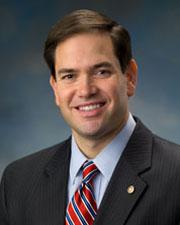 Sen. Marco Rubio (R-FL)
What it changes
1 change to S. 623 · shown in the bill's text
Replaces the bill's text with a full substitute
Replaces the full textEverything after the enacting clauseIn S. 623 · Introduced in Senate
16 unchanged paragraphsHide unchanged text
SECTION 1. SHORT TITLE.
This Act may be cited as the "Sunshine Protection Act of 2021".
SEC. 2. MAKING DAYLIGHT SAVING TIME PERMANENT.
(a) Repeal of Temporary Period for Daylight Saving Time.--Section 3 of the Uniform Time Act of 1966 (15 U.S.C. 260a) is hereby repealed.
(b) Advancement of Standard Time.--
(1) In general.--The second sentence of subsection (a) of section 1 of the Act of March 19, 1918 (commonly known as the "Calder Act") (15 U.S.C. 261), is amended--
(A) by striking "4 hours" and inserting "3 hours";
(B) by striking "5 hours" and inserting "4 hours";
(C) by striking "6 hours" and inserting "5 hours";
(D) by striking "7 hours" and inserting "6 hours";
(E) by striking "8 hours" and inserting "by 7 hours";
(F) by striking "9 hours" and inserting "8 hours";
(G) by striking "10 hours;" and inserting "9 hours;";
(H) by striking "11 hours" and inserting "10 hours"; and
(I) by striking "10 hours." and inserting "11 hours.".
(2) State exemption.--Such section is further amended by--
(A) redesignating subsection (b) as subsection (c); and
(B) inserting after subsection (a) the following:
"(b) Standard Time for Certain States and Areas.--The standard time for a State that has exempted itself from the provisions of section 3(a) of the Uniform Time Act of 1966 (15 U.S.C. 260a(a)), as in effect on the day before
[struck: the date of the enactment of the Sunshine Protection Act of 2021][inserted: November 5, 2023], pursuant to such section or an area of a State that has exempted such area from such provisions pursuant to such section shall be, as such State considers appropriate--"(1) the standard time for such State or area, as the case may be, pursuant to subsection (a) of this section; or
"(2) the standard time for such State or area, as the case may be, pursuant to subsection (a) of this section as it was in effect on the day before
[struck: the date of the enactment of the Sunshine Protection Act of 2021][inserted: November 5, 2023].".(3) Conforming amendment.--Such section is further amended, in the second sentence, by striking "Except as provided in section 3(a) of the Uniform Time Act of 1966 (15 U.S.C. 260a(a)), the" and inserting "Except as provided in subsection (b),".
Inserted: (c) Effective Date.--This Act and the amendments made by this Act take effect on November 5, 2023.
Original wording
Strike all after the enacting clause and insert the following:
Read automatically from the Congressional Record. Check the original before relying on it.
As printed
SA 5000. Mr. RUBIO proposed an amendment to the bill S. 623, to make daylight saving time permanent, and for other purposes; as follows:
Strike all after the enacting clause and insert the following:
SECTION 1. SHORT TITLE.
This Act may be cited as the “Sunshine Protection Act of 2021”.
SEC. 2. MAKING DAYLIGHT SAVING TIME PERMANENT.
(a) Repeal of Temporary Period for Daylight Saving Time.--Section 3 of the Uniform Time Act of 1966 (15 U.S.C. 260a) is hereby repealed.
(b) Advancement of Standard Time.--
(1) In general.--The second sentence of subsection (a) of section 1 of the Act of March 19, 1918 (commonly known as the “Calder Act”) (15 U.S.C. 261), is amended--
(A) by striking “4 hours” and inserting “3 hours”;
(B) by striking “5 hours” and inserting “4 hours”;
(C) by striking “6 hours” and inserting “5 hours”;
(D) by striking “7 hours” and inserting “6 hours”;
(E) by striking “8 hours” and inserting “by 7 hours”;
(F) by striking “9 hours” and inserting “8 hours”;
(G) by striking “10 hours;” and inserting “9 hours;”;
(H) by striking “11 hours” and inserting “10 hours”; and
(I) by striking “10 hours.” and inserting “11 hours.”.
(2) State exemption.--Such section is further amended by--
(A) redesignating subsection (b) as subsection (c); and
(B) inserting after subsection (a) the following:
“(b) Standard Time for Certain States and Areas.--The standard time for a State that has exempted itself from the provisions of section 3(a) of the Uniform Time Act of 1966 (15 U.S.C. 260a(a)), as in effect on the day before November 5, 2023, pursuant to such section or an area of a State that has exempted such area from such provisions pursuant to such section shall be, as such State considers appropriate--
“(1) the standard time for such State or area, as the case may be, pursuant to subsection (a) of this section; or
“(2) the standard time for such State or area, as the case may be, pursuant to subsection (a) of this section as it was in effect on the day before November 5, 2023.”.
(3) Conforming amendment.--Such section is further amended, in the second sentence, by striking “Except as provided in section 3(a) of the Uniform Time Act of 1966 (15 U.S.C. 260a(a)), the” and inserting “Except as provided in subsection (b),”.
(c) Effective Date.--This Act and the amendments made by this Act take effect on November 5, 2023.
Legislative Activity
Stay on top of the latest movement without scrolling through every action
Senate amendment agreed to: Amendment SA 5000 agreed to in Senate by Unanimous Consent.
March 15, 2022
View full timeline
Senate amendment agreed to: Amendment SA 5000 agreed to in Senate by Unanimous Consent.
March 15, 2022
Senate amendment proposed (on the floor): Amendment SA 5000 proposed by Senator Rubio.
March 15, 2022
Senate amendment submitted
March 15, 2022
Amendment SA 5000 proposed by Senator Rubio. (consideration: CR S1165; text: CR S1165) In the nature of a substitute.
March 15, 2022
Amendment SA 5000 agreed to in Senate by Unanimous Consent.
March 15, 2022