S.Amdt. 5940
What it does: Adds Subtitle G--Promotion of Freedom of Information and Countering of Censorship and Surveillance in North Korea SEC. 1281. SHORT TITLE wherever appropriate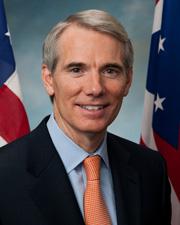 Sen. Rob Portman (R-OH)
What it changes
1 change to S.Amdt. 5499
Adds Subtitle G--Promotion of Freedom of Information and Countering of Censorship and Surveillance in North Korea SEC. 1281. SHORT TITLE wherever appropriate
Adds a sectionInserted: Subtitle G--Promotion of Freedom of Information and Countering of Censorship and Surveillance in North Korea SEC. 1281. SHORT TITLE.
Inserted: This subtitle may be cited as the "Otto Warmbier Countering North Korean Censorship and Surveillance Act of 2022".
Inserted: SEC. 1282. FINDINGS; SENSE OF CONGRESS.
Inserted: (a) Findings.--Congress makes the following findings:
Inserted: (1) The information landscape in North Korea is the most repressive in the world, consistently ranking last or near-last in the annual World Press Freedom Index.
Inserted: (2) Under the brutal rule of Kim Jung Un, the country's leader since 2012, the North Korean regime has tightened controls on access to information, as well as enacted harsh punishments for consumers of outside media, including sentencing to time in a concentration camp and a maximum penalty of death.
Inserted: (3) Such repressive and unjust laws surrounding information in North Korea resulted in the death of 22-year-old United States citizen and university student Otto Warmbier, who had traveled to North Korea in December 2015 as part of a guided tour.
Inserted: (4) Otto Warmbier was unjustly arrested, sentenced to 15 years of hard labor, and severely mistreated at the hands of North Korean officials. While in captivity, Otto Warmbier suffered a serious medical emergency that placed him into a comatose state. Otto Warmbier was comatose upon his release in June 2017 and died 6 days later.
Inserted: (5) Despite increased penalties for possession and viewership of foreign media, the people of North Korean have increased their desire for foreign media content, according to a survey of 200 defectors concluding that 90 percent had watched South Korean or other foreign media before defecting.
Inserted: (6) On March 23, 2021, in an annual resolution, the United Nations General Assembly condemned "the long-standing and ongoing systematic, widespread and gross violations of human rights in the Democratic People's Republic of Korea" and expressed grave concern at, among other things, "the denial of the right to freedom of thought, conscience, and religion . . . and of the rights to freedom of opinion, expression, and association, both online and offline, which is enforced through an absolute monopoly on information and total control over organized social life, and arbitrary and unlawful state surveillance that permeates the private lives of all citizens".
Inserted: (7) In 2018, Typhoon Yutu caused extensive damage to 15 broadcast antennas used by the United States Agency for Global Media in Asia, resulting in reduced programming to North Korea. The United States Agency for Global Media has rebuilt 5 of the 15 antenna systems as of June 2021.
Inserted: (b) Sense of Congress.--It is the sense of Congress that--
Show 32 more inserted paragraphsShow less
Inserted: (1) in the event of a crisis situation, particularly where information pertaining to the crisis is being actively censored or a false narrative is being put forward, the United States should be able to quickly increase its broadcasting capability to deliver fact-based information to audiences, including those in North Korea; and
Inserted: (2) the United States International Broadcasting Surge Capacity Fund is already authorized under section 316 of the United States International Broadcasting Act of 1994 (22 U.S.C. 6216), and expanded authority to transfer unobligated balances from expired accounts of the United States Agency for Global Media would enable the Agency to more nimbly respond to crises.
Inserted: SEC. 1283. STATEMENT OF POLICY.
Inserted: It is the policy of the United States--
Inserted: (1) to provide the people of North Korea with access to a diverse range of fact-based information;
Inserted: (2) to develop and implement novel means of communication and information sharing that increase opportunities for audiences in North Korea to safely create, access, and share digital and non-digital news without fear of repressive censorship, surveillance, or penalties under law; and
Inserted: (3) to foster and innovate new technologies to counter North Korea's state-sponsored repressive surveillance and censorship by advancing internet freedom tools, technologies, and new approaches.
Inserted: SEC. 1284. UNITED STATES STRATEGY TO COMBAT NORTH KOREA'S REPRESSIVE INFORMATION ENVIRONMENT.
Inserted: (a) In General.--Not later than 180 days after the date of the enactment of this Act, the President shall develop and submit to Congress a strategy on combating North Korea's repressive information environment.
Inserted: (b) Elements.--The strategy required by subsection (a) shall include the following:
Inserted: (1) An assessment of the challenges to the free flow of information into North Korea created by the censorship and surveillance technology apparatus of the Government of North Korea.
Inserted: (2) A detailed description of the agencies and other government entities, key officials, and security services responsible for the implementation of North Korea's repressive laws regarding foreign media consumption.
Inserted: (3) A detailed description of the agencies and other government entities and key officials of foreign governments that assist, facilitate, or aid North Korea's repressive censorship and surveillance state.
Inserted: (4) A review of existing public-private partnerships that provide circumvention technology and an assessment of the feasibility and utility of new tools to increase free expression, circumvent censorship, and obstruct repressive surveillance in North Korea.
Inserted: (5) A description of and funding levels required for current United States Government programs and activities to provide access for the people of North Korea to a diverse range of fact-based information.
Inserted: (6) An update of the plan required by section 104(a)(7)(A) of the North Korean Human Rights Act of 2004 (22 U.S.C. 7814(a)(7)(A)).
Inserted: (7) A description of Department of State programs and funding levels for programs that promote internet freedom in North Korea, including monitoring and evaluation efforts.
Inserted: (8) A description of grantee programs of the United States Agency for Global Media in North Korea that facilitate circumvention tools and broadcasting, including monitoring and evaluation efforts.
Inserted: (9) A detailed assessment of how the United States International Broadcasting Surge Capacity Fund authorized under section 316 of the United States International Broadcasting Act of 1994 (22 U.S.C. 6216) has operated to respond to crisis situations in the past, and how authority to transfer unobligated balances from expired accounts would help the United States Agency for Global Media in crisis situations in the future.
Inserted: (10) A detailed plan for how the authorization of appropriations under section 1285 will operate alongside and augment existing programming from the relevant Federal agencies and facilitate the development of new tools to assist that programming.
Inserted: (c) Form of Strategy.--The strategy required by subsection (a) shall be submitted in unclassified form, but may include the matters required by paragraphs (2) and (3) of subsection (b) in a classified annex.
Inserted: SEC. 1285. PROMOTING FREEDOM OF INFORMATION AND COUNTERING CENSORSHIP AND SURVEILLANCE IN NORTH KOREA.
Inserted: (a) Authorization of Appropriations.--There are authorized to be appropriated to the United States Agency for Global Media an additional $10,000,000 for each of fiscal years 2023 through 2027 to provide increased broadcasting and grants for the following purposes:
Inserted: (1) To promote the development of internet freedom tools, technologies, and new approaches, including both digital and non-digital means of information sharing related to North Korea.
Inserted: (2) To explore public-private partnerships to counter North Korea's repressive censorship and surveillance state.
Inserted: (3) To develop new means to protect the privacy and identity of individuals receiving media from the United States Agency for Global Media and other outside media outlets from within North Korea.
Inserted: (4) To bolster existing programming from the United States Agency for Global Media by restoring the broadcasting capacity of damaged antennas caused by Typhoon Yutu in 2018.
Inserted: (b) Annual Reports.--Section 104(a)(7)(B) of the North Korean Human Rights Act of 2004 (22 U.S.C. 7814(a)(7)(B)) is amended--
Inserted: (1) in the matter preceding clause (i)--
Inserted: (A) by striking "1 year after the date of the enactment of this paragraph" and inserting "September 30, 2022"; and
Inserted: (B) by striking "Broadcasting Board of Governors" and inserting "Chief Executive Officer of the United States Agency for Global Media"; and
Inserted: (2) in clause (i), by inserting after "this section" the following: "and sections 1284 and 1285 of the Otto Warmbier Countering North Korean Censorship and Surveillance Act of 2022".
The amendment doesn't say where this goes; the clerk decides.
Original wording
At the appropriate place, insert the following:
Read automatically from the Congressional Record. Check the original before relying on it.
As printed
SA 5940. Mr. PORTMAN (for himself and Mr. Brown) submitted an amendment intended to be proposed to amendment SA 5499 submitted by Mr. Reed (for himself and Mr. Inhofe) and intended to be proposed to the bill H.R. 7900, to authorize appropriations for fiscal year 2023 for military activities of the Department of Defense, for military construction, and for defense activities of the Department of Energy, to prescribe military personnel strengths for such fiscal year, and for other purposes; which was ordered to lie on the table; as follows:
At the appropriate place, insert the following:
Subtitle G--Promotion of Freedom of Information and Countering of Censorship and Surveillance in North Korea SEC. 1281. SHORT TITLE.
This subtitle may be cited as the “Otto Warmbier Countering North Korean Censorship and Surveillance Act of 2022”.
SEC. 1282. FINDINGS; SENSE OF CONGRESS.
(a) Findings.--Congress makes the following findings:
(1) The information landscape in North Korea is the most repressive in the world, consistently ranking last or near-last in the annual World Press Freedom Index.
(2) Under the brutal rule of Kim Jung Un, the country's leader since 2012, the North Korean regime has tightened controls on access to information, as well as enacted harsh punishments for consumers of outside media, including sentencing to time in a concentration camp and a maximum penalty of death.
(3) Such repressive and unjust laws surrounding information in North Korea resulted in the death of 22-year-old United States citizen and university student Otto Warmbier, who had traveled to North Korea in December 2015 as part of a guided tour.
(4) Otto Warmbier was unjustly arrested, sentenced to 15 years of hard labor, and severely mistreated at the hands of North Korean officials. While in captivity, Otto Warmbier suffered a serious medical emergency that placed him into a comatose state. Otto Warmbier was comatose upon his release in June 2017 and died 6 days later.
(5) Despite increased penalties for possession and viewership of foreign media, the people of North Korean have increased their desire for foreign media content, according to a survey of 200 defectors concluding that 90 percent had watched South Korean or other foreign media before defecting.
(6) On March 23, 2021, in an annual resolution, the United Nations General Assembly condemned “the long-standing and ongoing systematic, widespread and gross violations of human rights in the Democratic People's Republic of Korea” and expressed grave concern at, among other things, “the denial of the right to freedom of thought, conscience, and religion . . . and of the rights to freedom of opinion, expression, and association, both online and offline, which is enforced through an absolute monopoly on information and total control over organized social life, and arbitrary and unlawful state surveillance that permeates the private lives of all citizens”.
(7) In 2018, Typhoon Yutu caused extensive damage to 15 broadcast antennas used by the United States Agency for Global Media in Asia, resulting in reduced programming to North Korea. The United States Agency for Global Media has rebuilt 5 of the 15 antenna systems as of June 2021.
(b) Sense of Congress.--It is the sense of Congress that--
(1) in the event of a crisis situation, particularly where information pertaining to the crisis is being actively censored or a false narrative is being put forward, the United States should be able to quickly increase its broadcasting capability to deliver fact-based information to audiences, including those in North Korea; and
(2) the United States International Broadcasting Surge Capacity Fund is already authorized under section 316 of the United States International Broadcasting Act of 1994 (22 U.S.C. 6216), and expanded authority to transfer unobligated balances from expired accounts of the United States Agency for Global Media would enable the Agency to more nimbly respond to crises.
SEC. 1283. STATEMENT OF POLICY.
It is the policy of the United States--
(1) to provide the people of North Korea with access to a diverse range of fact-based information;
(2) to develop and implement novel means of communication and information sharing that increase opportunities for audiences in North Korea to safely create, access, and share digital and non-digital news without fear of repressive censorship, surveillance, or penalties under law; and
(3) to foster and innovate new technologies to counter North Korea's state-sponsored repressive surveillance and censorship by advancing internet freedom tools, technologies, and new approaches.
SEC. 1284. UNITED STATES STRATEGY TO COMBAT NORTH KOREA'S REPRESSIVE INFORMATION ENVIRONMENT.
(a) In General.--Not later than 180 days after the date of the enactment of this Act, the President shall develop and submit to Congress a strategy on combating North Korea's repressive information environment.
(b) Elements.--The strategy required by subsection (a) shall include the following:
(1) An assessment of the challenges to the free flow of information into North Korea created by the censorship and surveillance technology apparatus of the Government of North Korea.
(2) A detailed description of the agencies and other government entities, key officials, and security services responsible for the implementation of North Korea's repressive laws regarding foreign media consumption.
(3) A detailed description of the agencies and other government entities and key officials of foreign governments that assist, facilitate, or aid North Korea's repressive censorship and surveillance state.
(4) A review of existing public-private partnerships that provide circumvention technology and an assessment of the feasibility and utility of new tools to increase free expression, circumvent censorship, and obstruct repressive surveillance in North Korea.
(5) A description of and funding levels required for current United States Government programs and activities to provide access for the people of North Korea to a diverse range of fact-based information.
(6) An update of the plan required by section 104(a)(7)(A) of the North Korean Human Rights Act of 2004 (22 U.S.C. 7814(a)(7)(A)).
(7) A description of Department of State programs and funding levels for programs that promote internet freedom in North Korea, including monitoring and evaluation efforts.
(8) A description of grantee programs of the United States Agency for Global Media in North Korea that facilitate circumvention tools and broadcasting, including monitoring and evaluation efforts.
(9) A detailed assessment of how the United States International Broadcasting Surge Capacity Fund authorized under section 316 of the United States International Broadcasting Act of 1994 (22 U.S.C. 6216) has operated to respond to crisis situations in the past, and how authority to transfer unobligated balances from expired accounts would help the United States Agency for Global Media in crisis situations in the future.
(10) A detailed plan for how the authorization of appropriations under section 1285 will operate alongside and augment existing programming from the relevant Federal agencies and facilitate the development of new tools to assist that programming.
(c) Form of Strategy.--The strategy required by subsection (a) shall be submitted in unclassified form, but may include the matters required by paragraphs (2) and (3) of subsection (b) in a classified annex.
SEC. 1285. PROMOTING FREEDOM OF INFORMATION AND COUNTERING CENSORSHIP AND SURVEILLANCE IN NORTH KOREA.
(a) Authorization of Appropriations.--There are authorized to be appropriated to the United States Agency for Global Media an additional $10,000,000 for each of fiscal years 2023 through 2027 to provide increased broadcasting and grants for the following purposes:
(1) To promote the development of internet freedom tools, technologies, and new approaches, including both digital and non-digital means of information sharing related to North Korea.
(2) To explore public-private partnerships to counter North Korea's repressive censorship and surveillance state.
(3) To develop new means to protect the privacy and identity of individuals receiving media from the United States Agency for Global Media and other outside media outlets from within North Korea.
(4) To bolster existing programming from the United States Agency for Global Media by restoring the broadcasting capacity of damaged antennas caused by Typhoon Yutu in 2018.
(b) Annual Reports.--Section 104(a)(7)(B) of the North Korean Human Rights Act of 2004 (22 U.S.C. 7814(a)(7)(B)) is amended--
(1) in the matter preceding clause (i)--
(A) by striking “1 year after the date of the enactment of this paragraph” and inserting “September 30, 2022”; and
(B) by striking “Broadcasting Board of Governors” and inserting “Chief Executive Officer of the United States Agency for Global Media”; and
(2) in clause (i), by inserting after “this section” the following: “and sections 1284 and 1285 of the Otto Warmbier Countering North Korean Censorship and Surveillance Act of 2022”.
Legislative Activity
Stay on top of the latest movement without scrolling through every action
Senate amendment submitted
September 28, 2022