S.Amdt. 6083
What it does: Adds SEC. 1276. REVIEW OF LOAN SURCHARGE POLICY OF INTERNATIONAL MONETARY FUND at the end of subtitle F of title XII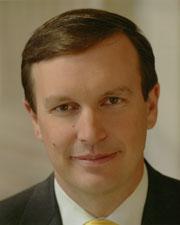 Sen. Christopher Murphy (D-CT)
What it changes
1 change to S.Amdt. 5499 · shown in S.Amdt. 5499's text
Adds SEC. 1276. REVIEW OF LOAN SURCHARGE POLICY OF INTERNATIONAL MONETARY FUND at the end of subtitle F of title XII
Adds a sectionIn S.Amdt. 5499 as proposed
(2) Form of report.--The report required by paragraph (1) shall be submitted in unclassified form but may contain a classified annex.
Inserted: SEC. 1276. REVIEW OF LOAN SURCHARGE POLICY OF INTERNATIONAL MONETARY FUND.
Inserted: (a) Findings.--Congress finds as follows:
Inserted: (1) The International Monetary Fund (in this section referred to as the "IMF") imposes a surcharge, in addition to standard interest and service fees, of 200 basis points on outstanding credit provided through its General Resources Account that exceeds 187.5 percent of the IMF country quota, and an additional 100 basis points if that credit has been outstanding for over 36 or 51 months, depending on the facility.
Inserted: (2) According to the IMF, "These level and time-based surcharges are intended to help mitigate credit risk by providing members with incentives to limit their demand for Fund assistance and encourage timely repurchases while at the same time generating income for the Fund to accumulate precautionary balances.".
Inserted: (3) According to a 2021 report by the European Network on Debt and Development, surcharges increase the average cost of borrowing from the IMF by over 64 percent for surcharged countries. Surcharges increased Ukraine's borrowing costs on its IMF lending program by nearly 27 percent, Jordan's by 72 percent, and Egypt's by over 104 percent.
Inserted: (4) As a result of the invasion by the Russian Federation, the World Bank predicts that Ukraine will experience an economic contraction of 45 percent in 2022. Yet Ukraine is expected to pay the IMF an estimated $483,000,000 in surcharges from 2021 through 2027.
Inserted: (5) The Ukraine Comprehensive Debt Payment Relief Act of 2022 (H.R. 7081), which requires the Department of Treasury to make efforts to secure debt relief for Ukraine, was passed by the House of Representatives on May 11, 2022, with overwhelming bipartisan support, by a vote of 362 Yeas to 56 Nays.
Inserted: (6) As a result of the war in Ukraine and other factors, the World Bank predicted that global growth rates will slow to 2.9 percent in 2022, down nearly half from 2021. External public debt of developing economies is at record levels, and the World Bank, the IMF, and the United Nations have all warned of coming defaults and a potential global debt crisis. As food and energy prices rise, the World Food Program has estimated that 750,000 people are at immediate risk of starvation or death, and 323,000,000 people may experience acute food insecurity before the end of the year.
Inserted: (7) Since 2020, the number of countries paying surcharges to the IMF has increased from 9 to 16. A December 2021 IMF policy paper notes that under the IMF's model-based World Economic Outlook scenario "the number of surcharge-paying members would increase to 38 in FY 2024 and FY 2025" and that under the Fund's "adverse scenario, the number of surcharge-paying members and the amount of surcharge income would increase even more sharply".
Inserted: (8) An April 2022 brief from the United Nations Global Crisis Response Group on Food, Energy and Finance on the impacts of the war in Ukraine on developing countries called for the immediate suspension of surcharge payments for a minimum of 2 years, because "[s]urcharges do not make sense during a global crisis since the need for more financing does not stem from national conditions but from the global economy shock".
Inserted: (b) Review of Surcharge Policy at the International Monetary Fund.--The Secretary of the Treasury shall instruct the United States Executive Director at the International Monetary Fund to use the voice and vote of the United States to--
Inserted: (1) initiate an immediate review by the IMF of the surcharge policy of the IMF to be completed, and its results and underlying data published, within 365 days; and
Show 14 more inserted paragraphsShow less
Inserted: (2) suspend and waive surcharge payments during the pendency of the review.
Inserted: (c) Components of the Review of Surcharge Policy.--The review referred to in subsection (b) should include the following:
Inserted: (1) A borrower-by-borrower analysis of surcharges in terms of cost and as a percentage of national spending on debt service on IMF loans, food security, and health for the 5-year period beginning at the start of the COVID-19 pandemic.
Inserted: (2) Evaluation of the policy's direct impact on--
Inserted: (A) disincentivizing large and prolonged reliance on IMF credit;
Inserted: (B) mitigating the credit risks taken by the IMF;
Inserted: (C) improving borrower balance of payments and debt sustainability, particularly during periods of contraction, unrest, and pandemic;
Inserted: (D) promoting fiscally responsible policy reforms;
Inserted: (E) disincentivizing borrowers from seeking opaque and potentially predatory bilateral loans; and
Inserted: (F) improving the ability of borrowers to repay private creditors and access the private credit market.
Inserted: (3) Recommendations for--
Inserted: (A) identifying alternative sources of funding for the IMF's precautionary balances that prioritize stable funding sources and equitable burden-sharing among IMF members; and
Inserted: (B) determining whether the IMF should maintain, reform, temporarily suspend, or eliminate the use of surcharges.
Inserted: (d) Consultations.--The review referred to in subsection (b) must incorporate extensive consultation with relevant experts, particularly those from countries that are currently paying or have recently paid surcharges. Those experts should include government officials responsible for overseeing economic development, social services, and defense, United Nations officials, economic research institutes, academics, and civil society organizations.
Original wording
At the end of subtitle F of title XII, add the following:
Read automatically from the Congressional Record. Check the original before relying on it.
As printed
SA 6083. Mr. MURPHY submitted an amendment intended to be proposed to amendment SA 5499 submitted by Mr. Reed (for himself and Mr. Inhofe) and intended to be proposed to the bill H.R. 7900, to authorize appropriations for fiscal year 2023 for military activities of the Department of Defense, for military construction, and for defense activities of the Department of Energy, to prescribe military personnel strengths for such fiscal year, and for other purposes; which was ordered to lie on the table; as follows:
At the end of subtitle F of title XII, add the following:
SEC. 1276. REVIEW OF LOAN SURCHARGE POLICY OF INTERNATIONAL MONETARY FUND.
(a) Findings.--Congress finds as follows:
(1) The International Monetary Fund (in this section referred to as the “IMF”) imposes a surcharge, in addition to standard interest and service fees, of 200 basis points on outstanding credit provided through its General Resources Account that exceeds 187.5 percent of the IMF country quota, and an additional 100 basis points if that credit has been outstanding for over 36 or 51 months, depending on the facility.
(2) According to the IMF, “These level and time-based surcharges are intended to help mitigate credit risk by providing members with incentives to limit their demand for Fund assistance and encourage timely repurchases while at the same time generating income for the Fund to accumulate precautionary balances.”.
(3) According to a 2021 report by the European Network on Debt and Development, surcharges increase the average cost of borrowing from the IMF by over 64 percent for surcharged countries. Surcharges increased Ukraine's borrowing costs on its IMF lending program by nearly 27 percent, Jordan's by 72 percent, and Egypt's by over 104 percent.
(4) As a result of the invasion by the Russian Federation, the World Bank predicts that Ukraine will experience an economic contraction of 45 percent in 2022. Yet Ukraine is expected to pay the IMF an estimated $483,000,000 in surcharges from 2021 through 2027.
(5) The Ukraine Comprehensive Debt Payment Relief Act of 2022 (H.R. 7081), which requires the Department of Treasury to make efforts to secure debt relief for Ukraine, was passed by the House of Representatives on May 11, 2022, with overwhelming bipartisan support, by a vote of 362 Yeas to 56 Nays.
(6) As a result of the war in Ukraine and other factors, the World Bank predicted that global growth rates will slow to 2.9 percent in 2022, down nearly half from 2021. External public debt of developing economies is at record levels, and the World Bank, the IMF, and the United Nations have all warned of coming defaults and a potential global debt crisis. As food and energy prices rise, the World Food Program has estimated that 750,000 people are at immediate risk of starvation or death, and 323,000,000 people may experience acute food insecurity before the end of the year.
(7) Since 2020, the number of countries paying surcharges to the IMF has increased from 9 to 16. A December 2021 IMF policy paper notes that under the IMF's model-based World Economic Outlook scenario “the number of surcharge-paying members would increase to 38 in FY 2024 and FY 2025” and that under the Fund's “adverse scenario, the number of surcharge-paying members and the amount of surcharge income would increase even more sharply”.
(8) An April 2022 brief from the United Nations Global Crisis Response Group on Food, Energy and Finance on the impacts of the war in Ukraine on developing countries called for the immediate suspension of surcharge payments for a minimum of 2 years, because “[s]urcharges do not make sense during a global crisis since the need for more financing does not stem from national conditions but from the global economy shock”.
(b) Review of Surcharge Policy at the International Monetary Fund.--The Secretary of the Treasury shall instruct the United States Executive Director at the International Monetary Fund to use the voice and vote of the United States to--
(1) initiate an immediate review by the IMF of the surcharge policy of the IMF to be completed, and its results and underlying data published, within 365 days; and
(2) suspend and waive surcharge payments during the pendency of the review.
(c) Components of the Review of Surcharge Policy.--The review referred to in subsection (b) should include the following:
(1) A borrower-by-borrower analysis of surcharges in terms of cost and as a percentage of national spending on debt service on IMF loans, food security, and health for the 5-year period beginning at the start of the COVID-19 pandemic.
(2) Evaluation of the policy's direct impact on--
(A) disincentivizing large and prolonged reliance on IMF credit;
(B) mitigating the credit risks taken by the IMF;
(C) improving borrower balance of payments and debt sustainability, particularly during periods of contraction, unrest, and pandemic;
(D) promoting fiscally responsible policy reforms;
(E) disincentivizing borrowers from seeking opaque and potentially predatory bilateral loans; and
(F) improving the ability of borrowers to repay private creditors and access the private credit market.
(3) Recommendations for--
(A) identifying alternative sources of funding for the IMF's precautionary balances that prioritize stable funding sources and equitable burden-sharing among IMF members; and
(B) determining whether the IMF should maintain, reform, temporarily suspend, or eliminate the use of surcharges.
(d) Consultations.--The review referred to in subsection (b) must incorporate extensive consultation with relevant experts, particularly those from countries that are currently paying or have recently paid surcharges. Those experts should include government officials responsible for overseeing economic development, social services, and defense, United Nations officials, economic research institutes, academics, and civil society organizations.
Legislative Activity
Stay on top of the latest movement without scrolling through every action
Senate amendment submitted
September 29, 2022