S.Amdt. 6091
What it does: Adds DIVISION E--CAPTA REAUTHORIZATION ACT OF 2022 at the end of S.Amdt. 5499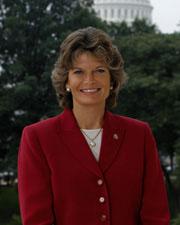 Sen. Lisa Murkowski (R-AK)
What it changes
1 change to S.Amdt. 5499 · shown in S.Amdt. 5499's text
Adds DIVISION E--CAPTA REAUTHORIZATION ACT OF 2022 at the end of S.Amdt. 5499
Adds a sectionIn S.Amdt. 5499 as proposed
(b) Derivation of Funds.--Funds to carry out this section shall be derived from amounts authorized to be appropriated to the National Weather Service that are enacted after the date of the enactment of this Act.
Inserted: DIVISION E--CAPTA REAUTHORIZATION ACT OF 2022
Inserted: SEC. 5001 SHORT TITLE.
Inserted: This division may be cited as the "CAPTA Reauthorization Act of 2022".
Inserted: SEC. 5002. AMENDED CAPTA TABLE OF CONTENTS.
Inserted: The Child Abuse Prevention and Treatment Act (42 U.S.C. 5101 et seq.) is amended--
Inserted: (1) by striking section 2; and
Inserted: (2) by amending the table of contents under section 1(b) to read as follows:
Inserted: "TABLE OF CONTENTS
Inserted: "Sec. 1. Short title.
Inserted: "Sec. 2. Definitions.
Inserted: "TITLE I--GENERAL PROGRAM
Inserted: "Sec. 101. Office on Child Abuse and Neglect.
Show 2,023 more inserted paragraphsShow less
Inserted: "Sec. 102. Interagency work group on child abuse and neglect.
Inserted: "Sec. 103. National clearinghouse for information relating to child abuse.
Inserted: "Sec. 104. Research and assistance activities.
Inserted: "Sec. 105. Grants to States, Indian Tribes or Tribal organizations, and public or private agencies and organizations.
Inserted: "Sec. 106. Grants to States for child abuse or neglect prevention and treatment programs.
Inserted: "Sec. 107. Grants to States for programs relating to the investigation and prosecution of child abuse and neglect cases.
Inserted: "Sec. 108. National child abuse hotline.
Inserted: "Sec. 109. Miscellaneous requirements relating to assistance.
Inserted: "Sec. 110. Coordination of child abuse and neglect programs.
Inserted: "Sec. 111. Reports.
Inserted: "Sec. 112. Monitoring and oversight.
Inserted: "Sec. 113. Rule of construction.
Inserted: "Sec. 114. Authorization of appropriations.
Inserted: "TITLE II--COMMUNITY-BASED GRANTS FOR THE PREVENTION OF CHILD ABUSE AND NEGLECT
Inserted: "Sec. 201. Purposes.
Inserted: "Sec. 202. Authorization of grants.
Inserted: "Sec. 203. Lead entity.
Inserted: "Sec. 204. Application.
Inserted: "Sec. 205. Uses of funds.
Inserted: "Sec. 206. Performance measures.
Inserted: "Sec. 207. National technical assistance for community-based family strengthening services.
Inserted: "Sec. 208. Rule of construction.
Inserted: "Sec. 209. Authorization of appropriations.
Inserted: "TITLE III--PREVENTING CHILD FATALITIES DUE TO CHILD ABUSE AND NEGLECT
Inserted: "Subtitle A--Public Health Approaches to Identify and Prevent Child Fatalities and Near Fatalities Due to Child Abuse and Neglect
Inserted: "Sec. 301. Purpose.
Inserted: "Sec. 302. Federal Work Group on Data Collection Related to Child Fatalities and Near Fatalities Due to Child Abuse and Neglect.
Inserted: "Sec. 303. Case registry for child fatalities and near fatalities due to child abuse and neglect.
Inserted: "Sec. 304. Grants for State, Indian Tribe, and Tribal organization child fatality review of child abuse and neglect fatalities and near fatalities.
Inserted: "Sec. 305. Assisting State, Indian Tribe, and Tribal organization implementation.
Inserted: "Subtitle B--Child Abuse and Neglect Records
Inserted: "Sec. 311. Electronic interstate data exchange system.
Inserted: "Subtitle C--Authorization of Appropriations
Inserted: "Sec. 321. Authorization of appropriations.
Inserted: "TITLE IV--PUBLIC HEALTH RESPONSE TO INFANTS AFFECTED BY PARENTAL SUBSTANCE USE DISORDER
Inserted: "Sec. 401. Purpose.
Inserted: "Sec. 402. Requirements.
Inserted: "Sec. 403. National technical assistance and reporting.
Inserted: "Sec. 404. Grant program authorized.
Inserted: "Sec. 405. Authorization of appropriations.".
Inserted: SEC. 5003. DEFINITIONS.
Inserted: The Child Abuse Prevention and Treatment Act is amended by striking section 3 (42 U.S.C. 5101 note) and inserting the following:
Inserted: "SEC. 2. DEFINITIONS.
Inserted: "(a) In General.--In this Act:
Inserted: "(1) Alaska native.--The term 'Alaska Native' has the meaning given the term 'Native' in section 3 of the Alaska Native Claims Settlement Act (43 U.S.C. 1602)
Inserted: "(2) Child.--Subject to subsection (b)(2), the term 'child' means a person who has not attained the lesser of--
Inserted: "(A) the age of 18; or
Inserted: "(B) except in the case of sexual abuse, the age specified by the child protection law of the State in which the child resides.
Inserted: "(3) Child abuse and neglect.--The term 'child abuse and neglect' means, at a minimum, any recent act or failure to act on the part of a parent or caretaker, which results in death, serious physical or emotional harm, sexual abuse or exploitation (including sexual abuse as determined under paragraph (19)), or an act or failure to act which presents an imminent risk of serious harm.
Inserted: "(4) Child with a disability.--The term 'child with a disability' means a child with a disability as defined in section 602 of the Individuals with Disabilities Education Act (20 U.S.C. 1401), or an infant or toddler with a disability as defined in section 632 of such Act (20 U.S.C. 1432).
Inserted: "(5) Child or youth overrepresented in the child welfare system.--The term 'child or youth overrepresented in the child welfare system' includes any children and youth who belong to populations who are the focus of research efforts authorized under section 404N of the Public Health Service Act (42 U.S.C. 283p) or described in the National Institutes of Health notice NOT-OD-19-139 issued on August 28, 2019.
Inserted: "(6) Community-based family strengthening services.--The term 'community-based family strengthening services' includes services that--
Inserted: "(A) are provided by organizations carrying out programs such as family resource programs, family support programs, voluntary home visiting programs, respite care services programs, parenting education, mutual support programs for parents and children, parent partner programs, family advocate programs, and other community programs or networks of such programs; and
Inserted: "(B) are designed to prevent or respond to child abuse and neglect and support families in building protective factors linked to the prevention of child abuse and neglect.
Inserted: "(7) Community referral services.--The term 'community referral services' means services provided under contract or through an interagency agreement to assist families in obtaining needed information, mutual support, and community resources, including respite care services, health care services (including mental health and substance use disorder services), employability development and workforce development, and other social services, including early developmental screening of children, through help lines or other methods.
Inserted: "(8) Fatality.--The term 'fatality', used with respect to a child fatality that is due to child abuse or neglect, means a fatality of a child that occurred--
Inserted: "(A) due to an injury resulting from child abuse or neglect; or
Inserted: "(B) where child abuse or neglect was a contributing factor to the cause of death.
Inserted: "(9) Governor.--The term 'Governor' means the chief executive officer of a State.
Inserted: "(10) Homeless children and youth.--The term 'homeless children and youth' means an individual who is described in section 725(2) of the McKinney-Vento Homeless Assistance Act (42 U.S.C. 11434a(2)).
Inserted: "(11) Indian; indian tribe; tribal organization.--The terms 'Indian', 'Indian Tribe', and 'Tribal organization' have the meanings given such terms in section 4 of the Indian Self-Determination and Education Assistance Act (25 U.S.C. 5304).
Inserted: "(12) Individuals with personal experience in the child welfare system.--The term 'individuals with personal experience in the child welfare system' means parents and youth with current or previous involvement in the child welfare system, kinship caregivers, foster and adoptive families, and adults who experienced child abuse or neglect as children.
Inserted: "(13) Native hawaiian.--The term 'Native Hawaiian' has the meaning given the term in section 6207 of the Elementary and Secondary Education Act of 1965 (20 U.S.C. 7517).
Inserted: "(14) Near fatality.--The term 'near fatality' means an act that, as certified by a physician, places a child in serious or critical condition.
Inserted: "(15) Protective factors linked to the prevention of child abuse and neglect.--The term 'protective factors linked to the prevention of child abuse and neglect' means evidence-based or evidence-informed factors that have been demonstrated to ensure that families are more likely to be healthy and strong and children are less likely to experience child abuse and neglect.
Inserted: "(16) Respite care services.--The term 'respite care services' means services, including the services of crisis nurseries, that are--
Inserted: "(A) provided in the temporary absence of the regular caregiver (meaning a parent, other relative, foster parent, adoptive parent, or guardian);
Inserted: "(B) provided to children who--
Inserted: "(i) are in danger of child abuse or neglect;
Inserted: "(ii) have experienced child abuse or neglect; or
Inserted: "(iii) have disabilities or chronic or terminal illnesses;
Inserted: "(C) provided within or outside the home of the child;
Inserted: "(D) short-term care (ranging from a few hours to a few weeks of time, per year); and
Inserted: "(E) intended to enable the family to stay together and to keep the child living in the home and community of the child.
Inserted: "(17) Secretary.--The term 'Secretary' means the Secretary of Health and Human Services.
Inserted: "(18) Serious bodily injury.--The term 'serious bodily injury' means bodily injury which involves substantial risk of death, extreme physical pain, protracted and obvious disfigurement, or protracted loss or impairment of the function of a bodily member, organ, or mental faculty.
Inserted: "(19) Sexual abuse.--The term 'sexual abuse' includes--
Inserted: "(A) the employment, use, persuasion, inducement, enticement, or coercion of any child to engage in, or assist any other person to engage in, any sexually explicit conduct or simulation of such conduct for the purpose of producing a visual depiction of such conduct; and
Inserted: "(B) the rape, and in cases of caretaker or inter-familial relationships, statutory rape, molestation, prostitution, or other form of sexual exploitation of children, or incest with children.
Inserted: "(20) State.--Except as provided in section 106(g), the term 'State' means each of the several States, the District of Columbia, the Commonwealth of Puerto Rico, the Virgin Islands, Guam, American Samoa, and the Commonwealth of the Northern Mariana Islands.
Inserted: "(21) Withholding of medically indicated treatment.--The term 'withholding of medically indicated treatment' means the failure to respond to the infant's life-threatening conditions by providing treatment (including appropriate nutrition, hydration, and medication), which, in the treating physician's or physicians' reasonable medical judgment, will be most likely to be effective in ameliorating or correcting all such conditions, except that the term does not include the failure to provide treatment (other than appropriate nutrition, hydration, or medication) to an infant when, in the treating physician's or physicians' reasonable medical judgment--
Inserted: "(A) the infant is chronically and irreversibly comatose;
Inserted: "(B) the provision of such treatment would--
Inserted: "(i) merely prolong dying;
Inserted: "(ii) not be effective in ameliorating or correcting all of the infant's life-threatening conditions; or
Inserted: "(iii) otherwise be futile in terms of the survival of the infant; or
Inserted: "(C) the provision of such treatment would be virtually futile in terms of the survival of the infant and the treatment itself under such circumstances would be inhumane.
Inserted: "(b) Special Rule.--
Inserted: "(1) In general.--For purposes of paragraphs (3) and (19) of subsection (a), a child shall be considered a victim of child abuse and neglect or sexual abuse if the child is identified, by an employee of the State or local agency involved, as being a victim of sex trafficking (as defined in section 103 of the Trafficking Victims Protection Act of 2000 (22 U.S.C. 7102)) or a victim of severe forms of trafficking in persons (as defined in such section 103).
Inserted: "(2) State option.--Notwithstanding the definition of 'child' under subsection (a)(2), for purposes of application of paragraph (1), a State may elect to define the term 'child' as a person who has not attained the age of 24.
Inserted: "(c) Rule of Construction.--In this Act, the term 'substance use disorder' includes alcohol use disorder.".
Inserted: TITLE LI--GENERAL PROGRAM
Inserted: SEC. 5101. INTERAGENCY WORK GROUP ON CHILD ABUSE AND NEGLECT.
Inserted: Section 102 of the Child Abuse Prevention and Treatment Act (42 U.S.C. 5102) is amended to read as follows:
Inserted: "SEC. 102. INTERAGENCY WORK GROUP ON CHILD ABUSE AND NEGLECT.
Inserted: "(a) Establishment.--The Secretary may establish and operate an Interagency Work Group on Child Abuse and Neglect (referred to in this section as the 'Work Group').
Inserted: "(b) Composition.--The Work Group shall be comprised of representatives from Federal agencies with responsibility for child abuse and neglect related programs and activities and other programs and activities that strengthen families and support child and family well-being.
Inserted: "(c) Duties.--The Work Group shall--
Inserted: "(1) coordinate Federal efforts and activities with respect to child abuse and neglect prevention and treatment, including data collection and reporting;
Inserted: "(2) serve as a forum that convenes relevant Federal agencies to communicate and exchange ideas concerning child abuse and neglect related programs and activities and other programs and activities that strengthen families and support child and family well-being;
Inserted: "(3) work to maximize Federal resources to address child abuse and neglect in areas of critical needs for the field, such as--
Inserted: "(A) improving research;
Inserted: "(B) focusing on prevention of child abuse and neglect;
Inserted: "(C) addressing racial bias and disparities in the child welfare system;
Inserted: "(D) enhancing child welfare professionals' understanding of trauma-informed practices that prevent and mitigate the effects of trauma and adverse childhood experiences;
Inserted: "(E) identifying actions the child protective services system, other public agencies, and community-based organizations can take to develop alternative pathways to connect families experiencing difficulty meeting basic needs or other risk factors associated with child abuse and neglect to community-based family strengthening services to prevent child abuse and neglect in order to safely reduce the number of families unnecessarily involved in such system; and
Inserted: "(F) addressing the links between child abuse and neglect and domestic violence; and
Inserted: "(4) consult with experts in the child protective services field and individuals with personal experience in the child welfare system.".
Inserted: SEC. 5102. NATIONAL CLEARINGHOUSE FOR INFORMATION RELATING TO CHILD ABUSE.
Inserted: Section 103 of the Child Abuse Prevention and Treatment Act (42 U.S.C. 5104) is amended to read as follows:
Inserted: "SEC. 103. NATIONAL CLEARINGHOUSE FOR INFORMATION RELATING TO CHILD ABUSE.
Inserted: "(a) Establishment.--The Secretary shall establish, directly or through one or more competitive contracts of not less than 3 years duration, a national clearinghouse for information relating to child abuse and neglect.
Inserted: "(b) Consultation.--In establishing the clearinghouse under subsection (a), the Secretary shall consult with the head of each Federal agency involved with child abuse and neglect regarding--
Inserted: "(1) the development of the components for information collection;
Inserted: "(2) the management of such clearinghouse; and
Inserted: "(3) mechanisms for the sharing of information with other Federal agencies and clearinghouses.
Inserted: "(c) Functions.--The Secretary, through the clearinghouse established under subsection (a), shall maintain and disseminate information on--
Inserted: "(1) evidence-based and evidence-informed programs, including private and community-based programs, that have--
Inserted: "(A) demonstrated success with respect to the prevention, assessment, identification, and treatment of child abuse or neglect; and
Inserted: "(B) potential for broad-scale implementation and replication;
Inserted: "(2) the medical diagnosis and treatment of child abuse and neglect and the use of trauma-informed practices that prevent and mitigate the effects of trauma and adverse childhood experiences;
Inserted: "(3) best practices relating to--
Inserted: "(A) differential response;
Inserted: "(B) the use of alternative pathways to connect families experiencing difficulty meeting basic needs or other risk factors associated with child abuse and neglect to community-based family strengthening services to prevent child abuse and neglect, including through the operation of local, State, or Tribal helplines, websites, or mobile applications (which may include expanding hotlines and referral systems operated by State, Tribal, or local child protective services agencies for such purposes);
Inserted: "(C) making improvements to the child protective services systems, including efforts to prevent child abuse and neglect, prioritize serving children who are at risk of serious harm, and implement protocols to identify, examine, and eliminate child fatalities and near fatalities due to child abuse and neglect;
Inserted: "(D) making appropriate referrals related to the physical, developmental, and mental health needs of children who are victims of child abuse or neglect, and when appropriate, provide services to parents or children, to address the needs of such children and their families and effectively treat the effects of such abuse or neglect;
Inserted: "(E) supporting children and youth being cared for by kinship caregivers, including such children whose living arrangements with kinship caregivers occurred without the involvement of a child protective services agency; and
Inserted: "(F) workforce development and retention of child protective services personnel;
Inserted: "(4) professional development resources available at the State and local level--
Inserted: "(A) for individuals who are engaged, or who intend to engage, in the prevention, identification, and treatment of child abuse and neglect, including mandated reporters; and
Inserted: "(B) for appropriate State, Tribal, and local officials to assist in the provision of professional development for law enforcement, legal, judicial, medical, physical, behavioral and mental health, child care and early learning, education, child welfare, substance use disorder treatment services, and domestic violence services personnel on--
Inserted: "(i) the role of the child protective services system to identify children at risk of serious harm; and
Inserted: "(ii) how to direct families in need to alternative pathways for community-based family strengthening services in order to safely reduce the number of families unnecessarily involved with child protective services;
Inserted: "(5) in conjunction with the National Resource Centers authorized under section 310(b) of the Family Violence Prevention and Services Act (42 U.S.C. 10410(b)), effective programs and best practices for developing and carrying out collaboration between entities providing child protective services and entities providing domestic violence services;
Inserted: "(6) the requirements of section 402(c) and best practices relating to the development, implementation, and monitoring of family care plans as described in section 402(c) for infants affected by parental substance use disorder, including best practices on topics such as--
Inserted: "(A) collaboration and coordination across substance abuse agencies, child welfare agencies, maternal and child health agencies, family courts, early childhood development entities, and other community partners; and
Inserted: "(B) identification and delivery of services for affected infants and their families, including for infants affected by parental substance use disorder, but whose families do not meet criteria for immediate safety concerns of child abuse and neglect;
Inserted: "(7) the incidence of cases of child abuse and neglect in the United States, including information based on data submitted by State child protective services agencies under section 106(d); and
Inserted: "(8) the research conducted under section 104(a).
Inserted: "(d) Data Collection and Analysis.--
Inserted: "(1) In general.--The Secretary shall, in accordance with all applicable Federal and State privacy law, develop and maintain a Federal data collection and analysis system, in consultation with appropriate State, Tribal, and local agencies and experts in the field, to collect, compile, and make available State child abuse and neglect reporting information which shall be universal and case specific and, to the extent practicable, integrated with other case-based Federal, State, Tribal, regional, and local child welfare information (including the automated foster care and adoption reporting system required under section 479 of the Social Security Act (42 U.S.C. 679) and including the case registry authorized under section 303), and which shall include--
Inserted: "(A) standardized data on false, unfounded, unsubstantiated, and substantiated reports;
Inserted: "(B) comparable information on child fatalities and near fatalities due to child abuse and neglect, including--
Inserted: "(i) the number of child fatalities and near fatalities due to child abuse and neglect; and
Inserted: "(ii) case-specific data about the circumstances under which a child fatality or near fatality occurred due to abuse and neglect, including the data elements described in section 106(d)(3)(E);
Inserted: "(C) information about the incidence and characteristics of child abuse and neglect in circumstances in which domestic violence is present; and
Inserted: "(D) information about the incidence and characteristics of child abuse and neglect in cases related to substance use disorder.
Inserted: "(2) Confidentiality requirement.--In carrying out paragraph (1), the Secretary shall ensure that methods are established and implemented to preserve the confidentiality of records relating to case specific data.".
Inserted: SEC. 5103. RESEARCH AND ASSISTANCE ACTIVITIES.
Inserted: Section 104 of the Child Abuse Prevention and Treatment Act (42 U.S.C. 5105) is amended--
Inserted: (1) by amending subsections (a) through (c) to read as follows:
Inserted: "(a) Research.--
Inserted: "(1) In general.--The Secretary, in coordination with relevant Federal agencies, and in consultation with recognized experts in the field, shall carry out a continuing interdisciplinary program of research, including longitudinal research, that is designed to--
Inserted: "(A) provide information needed to improve primary prevention of child abuse and neglect;
Inserted: "(B) better protect children from child abuse or neglect;
Inserted: "(C) evaluate the efficacy of programs or practices to improve outcomes;
Inserted: "(D) improve the well-being of victims of child abuse or neglect; and
Inserted: "(E) be responsive to the research needs of the child welfare field.
Inserted: "(2) Topics.--The research program described in paragraph (1) may focus on--
Inserted: "(A) evidence-based or evidence-informed programs regarding--
Inserted: "(i) prevention of child abuse and neglect in families that have not had contact with the child protective services system, including through supporting the development of protective factors linked to the prevention of child abuse and neglect;
Inserted: "(ii) trauma-informed and developmentally-appropriate treatment of children and families who experience child abuse and neglect, including efforts to prevent the re-traumatization of such children and families; and
Inserted: "(iii) approaches to identify, relieve, and mitigate stressors affecting families' unique needs in rural, urban, and suburban communities;
Inserted: "(B) effective practices to reduce racial bias and disparities in the child protective services system, including examining how neglect is identified, investigated, and treated by such system;
Inserted: "(C) effective practices and programs in the use of differential response to identify children at risk of serious harm and to safely reduce the number of families unnecessarily investigated by the child protective services system;
Inserted: "(D) effective practices and programs designed to improve service delivery and outcomes for child protective services agencies engaged with children and families with complex needs, such as families who have experienced domestic violence, substance use disorders, or adverse childhood experiences, or who have mental health needs;
Inserted: "(E) best practices for recruiting and retaining a child protective services workforce and providing professional development;
Inserted: "(F) effective collaborations between the child protective system and domestic violence service providers that provide for the safety of children exposed to domestic violence and their non-abusing parents and that improve the investigations, interventions, delivery of services, and treatments provided for such children and families;
Inserted: "(G) child abuse and neglect issues facing Indians, Alaska Natives, and Native Hawaiians, including providing recommendations for improving the collection of child abuse and neglect data from Indian Tribes, Tribal organizations, and Native Hawaiian communities;
Inserted: "(H) child abuse and neglect issues related to children and youth overrepresented in the child welfare system, including efforts to improve the child welfare system's practices related to the prevention, identification, and treatment of child abuse and neglect to address such overrepresentation; and
Inserted: "(I) effective collaborations between the child welfare system and substance use disorder treatment service providers that provide for the safety of children exposed to parents with substance use disorders, and that improve the investigations, interventions, delivery of services, and treatments provided for such children and families.
Inserted: "(3) National incidence of child abuse and neglect.--
Inserted: "(A) In general.--The Secretary shall conduct research on the national incidence of child abuse and neglect and investigate the trends in such incidence, including the information on the national incidence of child abuse and neglect specified in subparagraph (B).
Inserted: "(B) Content.--The research described in subparagraph (A) shall examine the national incidence of child abuse and neglect, including--
Inserted: "(i) the extent to which incidents of child abuse and neglect are increasing or decreasing in number and severity;
Inserted: "(ii) the incidence of substantiated and unsubstantiated reported child abuse and neglect cases;
Inserted: "(iii) the number of substantiated cases that result in a judicial finding of child abuse or neglect or related criminal court convictions;
Inserted: "(iv) the extent to which the number of unsubstantiated, unfounded, or falsely reported cases of child abuse or neglect have contributed to the inability of a State to respond effectively to serious cases of child abuse or neglect;
Inserted: "(v) the extent to which the lack of adequate resources or the lack of adequate supports for individuals required by law to report suspected cases of child abuse and neglect have contributed to the inability of a State to respond effectively to serious cases of child abuse and neglect;
Inserted: "(vi) the number of unsubstantiated, false, or unfounded reports that have resulted in a child being placed in substitute care, and the duration of such placement;
Inserted: "(vii) the extent to which unsubstantiated reports return as more serious cases of child abuse or neglect;
Inserted: "(viii) the incidence and prevalence of--
Inserted: "(I) physical, sexual, and emotional abuse and physical and emotional neglect in substitute care; and
Inserted: "(II) domestic violence in substantiated cases of child abuse and neglect;
Inserted: "(ix) the incidence and prevalence of child abuse and neglect by a wide array of demographic characteristics such as age, sex, race, family structure, household relationship (including the living arrangement of the resident parent and family size), school enrollment and education attainment, disability, labor force status, and income in the previous year;
Inserted: "(x) the extent to which reports of suspected or known instances of child abuse or neglect involving a potential combination of jurisdictions, such as intrastate, interstate, Federal-State, and State-Tribal, are screened out solely on the basis of the cross-jurisdictional complications; and
Inserted: "(xi) the incidence and outcomes of child abuse and neglect allegations reported within the context of divorce, custody, or other family court proceedings, and the interaction between family courts and the child protective services system.
Inserted: "(4) Report.--Not later than 3 years after the date of the enactment of the CAPTA Reauthorization Act of 2022 and every 2 years thereafter, the Secretary shall prepare and make available on a website that is accessible to the public and submit to the Committee on Health, Education, Labor, and Pensions of the Senate and the Committee on Education and Labor of the House of Representatives a report that--
Inserted: "(A) identifies the research priorities under paragraph (5) and the process for determining such priorities;
Inserted: "(B) contains a summary of the research supported pursuant to paragraphs (1) and (2), and a summary of any other relevant research on child abuse and neglect conducted by agencies within the Department of Health and Human Services;
Inserted: "(C) contains the findings of the research regarding the national incidence on child abuse and neglect conducted under paragraph (3); and
Inserted: "(D) describes how the Secretary will continue to improve the accuracy of information on the national incidence on child abuse and neglect specified in paragraph (3).
Inserted: "(5) Priorities.--
Inserted: "(A) In general.--The Secretary shall establish research priorities, which may include long-term studies, for making grants or contracts for purposes of carrying out paragraph (1).
Inserted: "(B) Public comment.--The Secretary shall provide a biennial opportunity for public comment concerning the priorities proposed under subparagraph (A) and shall maintain an official record of such public comment.
Inserted: "(b) Provision of Technical Assistance.--
Inserted: "(1) In general.--The Secretary shall provide technical assistance to State, local, and Tribal public and private agencies and community-based organizations, including organizations that support children or youth overrepresented in the child welfare system and their families, disability organizations, and persons who work with children with disabilities, and providers of mental health, substance use disorder treatment, and domestic violence prevention services, to assist such agencies and organizations in planning, improving, developing, carrying out, and evaluating programs and activities, including replicating successful program models, relating to the prevention, assessment, identification, and treatment of child abuse and neglect.
Inserted: "(2) Content.--The technical assistance under paragraph (1) shall be designed to--
Inserted: "(A) reduce racial bias and disparities in the child protective services system;
Inserted: "(B) support the child protective services system to develop and implement trauma-informed approaches to prevent, reduce, and treat child abuse and neglect;
Inserted: "(C) promote best practices for addressing child abuse and neglect in families with complex needs, such as families who have experienced domestic violence, substance use disorders, or adverse childhood experiences, or who have mental health needs, including professional development on such practices for the child protective services workforce;
Inserted: "(D) leverage State, local, and community-based resources to prevent child abuse and neglect to develop a continuum of prevention programs and services, including resources regarding health care (including mental health and substance use disorder), housing, food assistance, parent support, financial assistance, child care and early learning, education services, and other services to assist families;
Inserted: "(E) promote best practices for maximizing coordination and communication between State, Tribal, and local child protective services agencies and relevant health care entities, consistent with all applicable Federal and State privacy law; and
Inserted: "(F) provide other technical assistance, as determined by the Secretary in consultation with such State, Tribal, and local public and
Inserted: private agencies and community-based organizations as the Secretary determines appropriate.
Inserted: "(3) Evaluation.--The technical assistance under paragraph (1) may include an evaluation or identification of--
Inserted: "(A) various methods and procedures for the prevention, investigation, assessment, and prosecution of child physical and sexual abuse cases;
Inserted: "(B) ways to prevent and mitigate the effects of trauma to the child victim;
Inserted: "(C) effective programs carried out by the States under this title and title II;
Inserted: "(D) effective approaches to link child protective service agencies with health care (including mental health and substance use disorder), and developmental services to improve forensic diagnosis and health evaluations, and reduce barriers and shortages to such linkages; and
Inserted: "(E) the extent to which changes in methods, procedures, and approaches implemented by the child protective service system minimized racial bias and disparities in such system.
Inserted: "(4) Dissemination.--The Secretary may provide for, and disseminate information relating to, various professional development available at the State and local level to--
Inserted: "(A) individuals who are engaged, or who intend to engage, in the prevention, identification, and treatment of child abuse and neglect; and
Inserted: "(B) appropriate State and local officials to assist in the provision of professional development for law enforcement, legal, judicial, medical, mental health, child care and early learning, education, child welfare, substance use disorder, and domestic violence services personnel in appropriate methods of interacting during investigative, administrative, and judicial proceedings with children who have been subjected to, or children whom such personnel suspect have been subjected to, child abuse or neglect.
Inserted: "(c) Authority to Make Grants or Enter Into Contracts.--
Inserted: "(1) In general.--The functions of the Secretary under this section may be carried out directly or through grant or contract.
Inserted: "(2) Duration.--Grants under this section shall be made for periods of not more than 5 years."; and
Inserted: (2) by striking subsection (e).
Inserted: SEC. 5104. GRANTS TO STATES, INDIAN TRIBES OR TRIBAL ORGANIZATIONS, AND PUBLIC OR PRIVATE AGENCIES AND ORGANIZATIONS.
Inserted: Section 105 of the Child Abuse Prevention and Treatment Act (42 U.S.C. 5106) is amended to read as follows:
Inserted: "SEC. 105. GRANTS TO STATES, INDIAN TRIBES OR TRIBAL ORGANIZATIONS, AND PUBLIC OR PRIVATE AGENCIES AND ORGANIZATIONS.
Inserted: "(a) Authority to Award Grants or Enter Into Contracts.--The Secretary may award grants and enter into contracts to carry out programs and projects in accordance with this section, for any of the following purposes:
Inserted: "(1) Capacity building, in order to create coordinated, inclusive, and collaborative systems that have statewide, local, or community-based impact in preventing, reducing, and treating child abuse and neglect.
Inserted: "(2) Innovation, through time-limited, field-initiated demonstration projects that further the understanding of the field to prevent, reduce, and treat child abuse and neglect.
Inserted: "(b) Capacity Building Grant Program.--
Inserted: "(1) In general.--The Secretary may award grants or contracts to an eligible entity to improve the capacity of the child protective services system in strengthening families and preventing, reducing, and treating child abuse and neglect.
Inserted: "(2) Eligible entity.--In this subsection, the term 'eligible entity' means--
Inserted: "(A) a State or local agency, Indian Tribe or Tribal organization, or a nonprofit entity; or
Inserted: "(B) a consortium of entities described in subparagraph (A).
Inserted: "(3) Applications.--To receive a grant or contract under this subsection, an eligible entity shall submit an application to the Secretary at such time, in such manner, and containing such information as the Secretary may require.
Inserted: "(4) Use of funds.--An eligible entity receiving a grant or contract under this subsection shall use the funds made available through the grant or contract to better align and coordinate community-based, local, or State activities to strengthen families and prevent, reduce, and treat child abuse and neglect, by--
Inserted: "(A) providing professional development for professionals in prevention, identification, or treatment of child abuse and neglect, which may include--
Inserted: "(i) professional development for professional and paraprofessional personnel who are engaged in, or intend to work in, the field of prevention, identification, and treatment of child abuse and neglect, including on the links between child abuse and neglect and domestic violence and approaches to working with families affected by substance use disorder;
Inserted: "(ii) professional development on evidence-based and evidence-informed programs to improve child abuse and neglect reporting, with a focus on adults who work with children in a professional or volunteer capacity, including on--
Inserted: "(I) preventing, recognizing, and responding to child sexual abuse; and
Inserted: "(II) safely reducing the number of families unnecessarily investigated by the child protective services system;
Inserted: "(iii) professional development of personnel in best practices to meet the unique needs and development of children with disabilities, children under the age of 3, and infants affected by substance use disorder;
Inserted: "(iv) improving the professional development of supervisory child protective services personnel on best practices for recruiting, selecting, and retaining the child protective services workforce;
Inserted: "(v) supporting State child welfare and child protective services agencies in coordinating the provision of services with State and local health care agencies, substance abuse agencies, public health agencies, mental health agencies, other public and private welfare agencies, and agencies that provide early intervention services to promote child safety, permanence, and family stability, which may include best practices to improve coordination between agencies to meet health evaluation and treatment needs of children who have been victims of substantiated cases of child abuse or neglect;
Inserted: "(vi) professional development for personnel in best practices relating to the provision of differential response; and
Inserted: "(vii) professional development for child welfare professionals to reduce and prevent racial bias in the provision of child protective services and child welfare services related to child abuse and neglect;
Inserted: "(B) enhancing systems coordination and triage procedures, including programs of collaborative partnerships between the State child protective services agency, community social service agencies and community-based family support programs, law enforcement agencies and legal systems, developmental disability agencies, substance use disorder treatment agencies, health care entities, domestic violence prevention entities, mental health service entities, schools, places of worship, and other community-based agencies, such as children's advocacy centers, in accordance with all applicable Federal and State privacy law, to--
Inserted: "(i) improve responses to reports of child abuse and neglect;
Inserted: "(ii) allow for the establishment or improvement of a coordinated triage system;
Inserted: "(iii) connect families experiencing difficulty meeting basic needs or risk factors associated with child abuse and neglect to community-based systems and programs that assist families seeking support to minimize involvement in the child protective services system; or
Inserted: "(iv) modernize data systems and networks to improve the effectiveness of technology used by the child protective services system, including to facilitate timely information and data sharing and referrals between systems that are designed to serve children and families; or
Inserted: "(C) establishing or enhancing coordinated systems of support for children, parents, and families, including a continuum of prevention programs and services that strengthens families and connects families to services and supports relevant to their diverse needs regardless of how families make contact with such systems.
Inserted: "(c) Field-initiated Innovation Grant Program.--
Inserted: "(1) In general.--The Secretary may award grants or contracts to eligible entities for field-initiated demonstration projects of up to 5 years that advance innovative approaches to prevent, reduce, or treat child abuse and neglect.
Inserted: "(2) Eligible entity.--In this subsection, the term 'eligible entity' means--
Inserted: "(A) a State or local agency, Indian Tribe or Tribal organization, or public or private agency, or organization; or
Inserted: "(B) a consortium of entities described in subparagraph (A).
Inserted: "(3) Applications.--To receive a grant or contract under this subsection, an eligible entity shall submit an application to the Secretary at such time, in such manner, and containing such information as the Secretary may require, including, at a minimum, a rigorous methodological approach to the evaluation of the grant or contract and a description of the eligible entity's efforts to engage with individuals with personal experience in the child welfare system in carrying out such grant or contract.
Inserted: "(4) Use of funds.--An eligible entity that receives a grant or contract under this subsection shall use the funds made available through the grant or contract to carry out or bring to scale promising, evidence-informed, or evidence-based activities to prevent, treat, or reduce child abuse and neglect that shall include one or more of the following:
Inserted: "(A) Multidisciplinary systems of care to strengthen families and prevent, reduce, and treat child abuse and neglect, such as children's advocacy centers or programs that focus on addressing traumatic stress in families due to child abuse and neglect, especially for families with complex needs, such as families who have experienced domestic violence, substance use disorders, or adverse childhood experiences, or who have mental health needs.
Inserted: "(B) Primary prevention programs or strategies aimed at reducing the prevalence of child abuse and neglect among families.
Inserted: "(C) The development and use of alternative pathways to connect families experiencing difficulty meeting basic needs or other risk factors associated with child abuse and neglect to community-based family strengthening services to prevent child abuse and neglect or other public and private resources, such as supporting the development and implementation of--
Inserted: "(i) State, Tribal, or local helplines, websites, or mobile applications (which may include expanding hotlines and referral systems operated by State, Tribal, or local child protective services agencies for such purposes);
Inserted: "(ii) a continuum of prevention programs and services that strengthen families and promote child, parent, and family well-being; and
Inserted: "(iii) innovative collaboration and coordination between the child protective services system, public agencies, and community-based organizations (including community-based providers supported under title II).
Inserted: "(D) Innovative approaches to support mandated child abuse and neglect reporters, which may include education tailored to the mandated individual's profession or role when working with children.
Inserted: "(E) Innovative programs, activities, and services that are aligned with the research priorities identified under section 104(a)(5).
Inserted: "(F) Projects to improve the development and implementation of best practices to educate and assist medical professionals in identifying, assessing, and responding to potential abuse in infants, including improving communication and alignment with child protective services as appropriate and identifying injuries indicative of potential abuse in infants, and to assess the outcomes of such best practices.
Inserted: "(G) Projects to establish or implement comprehensive child sexual abuse awareness and prevention programs in an age- and developmentally-appropriate manner for children and youth, parents, guardians, and professionals, including on recognizing and safely reporting such abuse.
Inserted: "(d) Evaluation.--In awarding grants and contracts for programs or projects under this section, the Secretary shall require all such programs and projects to be evaluated for their effectiveness. Funding for such evaluations shall be provided either as a stated percentage of a grant or contracts or as a separate grant or contract entered into by the Secretary for the purpose of evaluating a particular program or project or group of programs or projects. In the case of an evaluation performed by the recipient of a grant, the Secretary shall make available technical assistance for the evaluation, where needed, including the use of a rigorous application of scientific evaluation techniques.".
Inserted: SEC. 5105. NATIONAL CHILD ABUSE HOTLINE.
Inserted: Title I of the Child Abuse Prevention and Treatment Act (42 U.S.C. 5101 et seq.) is amended--
Inserted: (1) by repealing section 114;
Inserted: (2) redesignating section 112 as section 114 and moving such section to the end of title I;
Inserted: (3) by redesignating sections 108 through 111 as sections 109 through 112, respectively; and
Inserted: (4) by inserting after section 107 the following:
Inserted: "SEC. 108. NATIONAL CHILD ABUSE HOTLINE.
Inserted: "(a) In General.--The Secretary may award a grant under this section to a nonprofit entity to provide for the ongoing operation of a 24-hour, national, toll-free telephonic child abuse hotline and digital services.
Inserted: "(b) Priority.--In awarding a grant under this section the Secretary shall give priority to applicants with experience in the operation of a hotline and digital services that provide assistance to victims of child abuse or neglect, parents, caregivers, mandated reporters, and other concerned community members.
Inserted: "(c) Term.--The Secretary shall award a grant under this section for a period of not more than 5 years.
Inserted: "(d) Conditions on Payment.--The provision of payments under a grant awarded under this section shall be subject to annual approval by the Secretary and subject to the availability of appropriations for each fiscal year to make the payments.
Inserted: "(e) Application.--To be eligible to receive a grant under this section, a nonprofit entity shall submit an application to the Secretary, at such time, in such manner, and containing such information as the Secretary may require. Such an application shall--
Inserted: "(1) include a description of the applicant's plan for the operation of a national child abuse hotline and digital services, including descriptions of--
Inserted: "(A) the professional development program for advocacy personnel;
Inserted: "(B) the hiring criteria and qualifications for advocacy personnel responding to hotline callers and digital services users;
Inserted: "(C) the methods for the creation, maintenance, and updating of a comprehensive database of resources, including prevention and treatment services and alternative pathways to connect families experiencing difficulty meeting basic needs or other risk factors associated with child abuse and neglect to community-based family strengthening services;
Inserted: "(D) a plan for publicizing the availability of the hotline and digital services throughout the United States, including in urban, suburban, and rural areas;
Inserted: "(E) a plan for providing service to callers and digital service users with limited English proficiency, including service through advocacy personnel who are multilingual;
Inserted: "(F) a plan for facilitating access to the hotline and digital services by people with disabilities, including individuals who are deaf or hard of hearing or are blind or have visual impairments, and for providing professional development to hotline and digital services personnel in assisting people with disabilities who are accessing the hotline and digital services; and
Inserted: "(G) a plan for providing assistance and referrals for victims of child abuse, including youth victims;
Inserted: "(2) demonstrate that the applicant has the capacity and the expertise to maintain a child abuse hotline and digital services and a comprehensive database of service providers;
Inserted: "(3) demonstrate the ability of the applicant to--
Inserted: "(A) provide information and referrals for individuals contacting the hotline or using digital services;
Inserted: "(B) directly connect callers or users of digital services to service providers; and
Inserted: "(C) employ crisis interventions meeting the standards of child abuse and prevention service providers;
Inserted: "(4) demonstrate a commitment to diversity and to the provision of services to underserved populations, including to ethnic, racial, and non-English speaking minorities, older individuals, and people with disabilities; and
Inserted: "(5) provide an assurance that the entity complies with all applicable State and Federal privacy law and has established quality assurance practices.
Inserted: "(f) Performance Metrics and Report.--An entity receiving a grant under this section shall--
Inserted: "(1) establish quantifiable metrics for measuring the performance of the hotline and digital services;
Inserted: "(2) conduct an evaluation of the effectiveness the hotline and digital services as measured by the metric established under paragraph (1); and
Inserted: "(3) submit a performance report to the Secretary at such time, in such manner, and containing such information as the Secretary may require, including--
Inserted: "(A) the activities that have been carried out with such grant funds; and
Inserted: "(B) the results of the evaluation described under paragraph (2).
Inserted: "(g) Continuing Grants.--The Secretary may award a continuing grant to an entity under this section only if such entity submits a performance report required under subsection (f)(3) that demonstrates effectiveness of the project funded.".
Inserted: SEC. 5106. GRANTS TO STATES FOR CHILD ABUSE OR NEGLECT PREVENTION AND TREATMENT PROGRAMS.
Inserted: Section 106 of the Child Abuse Prevention and Treatment Act (42 U.S.C. 5106a) is amended to read as follows:
Inserted: "SEC. 106. GRANTS TO STATES FOR CHILD ABUSE OR NEGLECT PREVENTION AND TREATMENT PROGRAMS.
Inserted: "(a) State Grants.--The Secretary shall make grants to the States, from allotments made under subsection (g), for each State that applies for a grant under this section, for purposes of assisting the States in improving the child protective services system of each such State with respect to one or more of the following activities:
Inserted: "(1) Improving the intake, assessment, screening, and investigation of reports of child abuse or neglect, including--
Inserted: "(A) the use of differential response;
Inserted: "(B) establishing and maintaining a high-risk response system to ensure that each repeat referral of the same child, and each referral of a child under the age of 3 years, receives a rapid response from such system;
Inserted: "(C) protocols and professional development that reduce and prevent--
Inserted: "(i) the separation of children from their legal parents or guardians solely on the basis of poverty; and
Inserted: "(ii) racial bias in the child protective services system.
Inserted: "(2) Supporting trauma-informed response, investigation, and treatment of child abuse and neglect by--
Inserted: "(A) creating and improving the use of multidisciplinary teams, including children's advocacy centers;
Inserted: "(B) enhancing investigations through interagency, intra-agency, interstate, and intrastate protocols; and
Inserted: "(C) improving legal preparation and representation, including procedures for appealing and responding to appeals of substantiated reports of child abuse or neglect.
Inserted: "(3) Establishing alternative pathways to connect families in need to voluntary, community-based family strengthening services in order to enable the child protective services system to focus on children at most serious risk of harm and safely reduce the number of families unnecessarily investigated for child abuse and neglect, through the development, implementation, and expansion of--
Inserted: "(A) local or State helplines, websites, or mobile applications (which may include expanding hotlines and referral systems operated by State or local child protective services agencies for such purposes); and
Inserted: "(B) coordination with other local and State public entities to support a continuum of prevention programs and services that strengthen families and promote child, parent, and family well-being.
Inserted: "(4) Improving case management approaches, including ongoing case monitoring, and delivery of services and treatment provided to children and their families to ensure safety and respond to family needs, including--
Inserted: "(A) multidisciplinary approaches to assessing family needs and connecting families with services, including prevention services under section 471 of the Social Security Act (42 U.S.C. 671);
Inserted: "(B) organizing treatment teams of community service providers that prevent and treat child abuse and neglect, and improve child and family well-being; and
Inserted: "(C) case-monitoring that can ensure progress in child and family well-being.
Inserted: "(5) Modernizing data systems to improve case management, coordination, and communication between State and local public agencies, including--
Inserted: "(A) updating systems of technology that support the program and track reports of child abuse and neglect from intake through final disposition and allow for interstate and intrastate information exchange;
Inserted: "(B) improving real-time case monitoring for the child protective services workforce at the State and local levels to track assessments, service referrals, follow-up, case reviews, and progress toward case plan goals;
Inserted: "(C) facilitating real-time data sharing between State and local public agencies and relevant health care entities, consistent with all applicable Federal and State privacy law; and
Inserted: "(D) developing, improving, and implementing risk and safety assessment tools and protocols that reduce and prevent bias towards children and families involved in the child welfare system.
Inserted: "(6) Developing, strengthening, and facilitating professional development for professionals and volunteers engaged in the prevention, intervention, and treatment of child abuse and neglect, including with respect to--
Inserted: "(A) the legal duties of such professionals and volunteers;
Inserted: "(B) personal safety for the child protective services workforce;
Inserted: "(C) early childhood, child, and adolescent development and the impact of child abuse and neglect, including long-term impacts of adverse childhood experiences;
Inserted: "(D) improving coordination among child protective service agencies and health care agencies, entities providing health care (including mental health and substance use disorder services), and community resources;
Inserted: "(E) improving screening, forensic diagnosis, and health and developmental evaluations, which may include best practices for periodic reevaluations, as appropriate;
Inserted: "(F) addressing the unique needs of children with disabilities, including promoting interagency collaboration to meet such needs;
Inserted: "(G) supporting the placement of children with kinship caregivers and addressing the unique needs of children in such placements;
Inserted: "(H) implementing responsive, family-oriented, and trauma-informed approaches to prevention, identification, intervention, and treatment of child abuse and neglect;
Inserted: "(I) ensuring child safety;
Inserted: "(J) the links between child abuse and neglect and families with complex needs, such as families who have experienced domestic violence, substance use disorders, or adverse childhood experiences, or who have mental health needs;
Inserted: "(K) coordinating with other services and agencies to address family and child needs, including trauma; and
Inserted: "(L) distinguishing between cases of child and abuse neglect and cases related to family economic insecurity where abuse and neglect are not present.
Inserted: "(7) Improving the recruitment and retention of child protective services personnel, such as efforts to address the effects of indirect trauma exposure for such personnel.
Inserted: "(8) Developing, facilitating the use of, and implementing evidence-based or evidence-informed strategies and protocols for individuals mandated to report child abuse and neglect, which may include--
Inserted: "(A) strategies designed for mandated reporters in specific professions;
Inserted: "(B) public awareness and understanding relating to the role and responsibilities of the child protective services system; and
Inserted: "(C) the nature and basis for reporting suspected incidents of child abuse and neglect.
Inserted: "(9) Developing, implementing, or operating programs and referrals to assist in obtaining or coordinating necessary services for families of infants or toddlers with a disability, including--
Inserted: "(A) evaluation and early intervention services for infants and toddlers, with special attention to at-risk infants or toddlers (as defined in section 632 of the Individuals with Disabilities Education Act (20 U.S.C. 1432)), in accordance with part C of the Individuals with Disabilities Education Act (20 U.S.C. 1431 et seq.) and providing other support to such infants or toddlers, which may include--
Inserted: "(i) financial assistance in obtaining early intervention services where an infant or toddler does not meet the State's eligibility requirements under such part C; and
Inserted: "(ii) support for families, including foster families and kinship caregivers, in ensuring infants and toddlers receive early intervention services;
Inserted: "(B) trauma-informed services, and
Inserted: "(C) early care and educational services, including Early Head Start programs.
Inserted: "(10) Enhancing interagency collaboration between agencies and providers of the child protective services, public health, mental health, substance use disorder treatment, education, child care and early learning, domestic violence services, law enforcement, and juvenile justice to improve the investigations, interventions, delivery of services, and treatments provided for children and families experiencing child abuse and neglect, which may include--
Inserted: "(A) methods for continuity of treatment plan and services as children and families transition between systems;
Inserted: "(B) addressing the health needs, including mental health needs, of children identified as victims of child abuse or neglect, including supporting prompt, comprehensive health and developmental evaluations for children who are the subjects of substantiated child abuse and neglect reports;
Inserted: "(C) the provision of services that assist children exposed to domestic violence, and that also support the caregiving role of their non-abusing parents;
Inserted: "(D) enhancing the capacity of public entities or community-based providers to integrate the leadership of parents in such entities' decision-making;
Inserted: "(E) co-locating service providers; and
Inserted: "(F) the provision of services that assist infants affected by substance use disorder and that also support the bond between children and birth parents to strengthen families whenever possible.
Inserted: "(11) Supporting the development, implementation, and monitoring of family care plans for infants affected by substance use disorder and their families and affected caregivers, in accordance with the requirements of section 402(c), including through enhancing interagency coordination, such as between the State's substance abuse agencies, public health and mental health agencies, child welfare agencies, social services agencies, health care facilities with labor and delivery units, maternal and child health agencies, early intervention agencies, family courts with jurisdiction in cases of child abuse and neglect, and other agencies or entities involved in supporting families affected by substance use disorders.
Inserted: "(b) Eligibility Requirements.--
Inserted: "(1) State plan.--
Inserted: "(A) In general.--To be eligible to receive a grant under this section, a State shall submit to the Secretary a State plan for improving and strengthening the child protective service system through the activities described in subsection (a).
Inserted: "(B) Duration of plan.--Each State plan shall--
Inserted: "(i) be submitted not less frequently than once every 5 years, in coordination with the State plan submitted under part B of title IV of the Social Security Act (42 U.S.C. 621 et seq.); and
Inserted: "(ii) be periodically reviewed and revised by the State, as necessary, to reflect--
Inserted: "(I) any substantive changes to State law or regulations related to the prevention of child abuse and neglect that may affect the eligibility of the State under this section; and
Inserted: "(II) any significant changes from the State application related to the State's funding of strategies and programs supported under this section.
Inserted: "(C) Public collaboration and comment.--In developing the State plan under subparagraph (A), each State shall--
Inserted: "(i) consult widely with stakeholders and relevant public and private organizations and individuals across the State, which shall include parents and other individuals with personal experience in the child welfare system;
Inserted: "(ii) collaborate with the lead entity and community-based providers funded under title II to strengthen the State's prevention efforts in the State plan;
Inserted: "(iii) make the draft plan publicly available by electronic means in an easily accessible format; and
Inserted: "(iv) provide all interested members of the public at least 30 days opportunity to submit comments on the draft State plan.
Inserted: "(D) Availability.--The State shall ensure that the final approved plan required under subparagraph (A) shall be publicly available by electronic means in an easily accessible format, and shall update such publicly available plan to include any revisions to such plan described in subparagraph (B)(ii).
Inserted: "(2) Plan provisions.--
Inserted: "(A) Descriptions.--Each State plan required under paragraph (1) shall describe--
Inserted: "(i) the activities the State will carry out using amounts received under the grant to prevent, reduce, and treat child abuse and neglect and how those activities will improve and strengthen the child protective service system;
Inserted: "(ii) the State's strategy to implement a systems-building approach to develop and maintain a continuum of prevention programs and services, in coordination with relevant State and local public agencies families and community-based organizations to prevent child abuse and neglect by strengthening and supporting families whenever possible, such as through the development of alternative pathways described in subsection (a)(3);
Inserted: "(iii) professional development and retention activities to be provided under the grant to support direct line and supervisory child protective services personnel in report taking, screening, assessment, decision-making, and referral for investigating suspected instances of child abuse and neglect;
Inserted: "(iv) the support and education to be provided under the grant for mandatory reporting by individuals who are required to report known or suspected cases of child abuse and neglect, including for purposes of making such individuals aware of such requirements;
Inserted: "(v) policies and procedures encouraging the appropriate involvement of families in decision-making pertaining to children who have experienced child abuse or neglect;
Inserted: "(vi) policies and procedures that promote and enhance appropriate collaboration among child protective service agencies, domestic violence service agencies, substance abuse agencies, mental health agencies, other relevant agencies, and kinship navigators in investigations, interventions, and the delivery of services and treatment provided to children and families affected by child abuse or neglect, including children exposed to domestic violence, where appropriate;
Inserted: "(vii) policies and procedures regarding the use of differential response and a timeline for the development and implementation of a high-risk response system to ensure that each repeat referral of the same child, and each referral of a child under the age of 3 years, receives a rapid response from such system;
Inserted: "(viii) how the State will enact policies and procedures within 2 years of the date of enactment of the CAPTA Reauthorization Act of 2022 requiring timely public disclosure of the findings or information about the case of child abuse or neglect that has resulted in a child fatality or near fatality (in accordance with relevant Federal and State privacy and confidentiality requirements), which shall include a description of--
Inserted: "(I) how the State will make such information publicly available in an easily accessible format, including information on--
Inserted: "(aa) the cause and circumstances of the fatality or near fatality;
Inserted: "(bb) the age, gender, and race or ethnicity of the child; and
Inserted: "(cc) any previous reports of child abuse or neglect investigations by the perpetrator or the victim; and
Inserted: "(II) assurances of the State that the State will not allow an exception to such public disclosure, except in a case in which--
Inserted: "(aa) the State needs to delay public release of case-specific findings or information (including any previous reports of domestic violence and subsequent actions taken to assess and address such reports) during a pending criminal investigation or prosecution of such a fatality or near fatality;
Inserted: "(bb) the State is protecting the identity of a reporter of child abuse or neglect; or
Inserted: "(cc) the State is withholding information in order to ensure the safety and well-being of the child, parents, and family, if such parents or other members of the victim's family are not perpetrators of the fatality or near fatality;
Inserted: "(ix) the State's efforts to collect and review data on child fatalities and near fatalities due to child abuse and neglect to drive systemic change to prevent such incidents from occurring in the future, including a description of--
Inserted: "(I) the criteria utilized by the State's child protective services agency to determine which cases of child fatalities and near fatalities due to abuse and neglect are reported under subsection (d), subject to the requirements of section 422(b)(19) of the Social Security Act (42 U.S.C. 622(b)(19)), such as whether such agency is submitting data on--
Inserted: "(aa) only such cases that--
Inserted: "(AA) had involvement with the State's child protective services agency;
Inserted: "(BB) were investigated by such agency; and
Inserted: "(CC) were substantiated as abuse or neglect by such agency; or
Inserted: "(bb) all cases of child fatalities and near fatalities identified as being related to child abuse and neglect by the State's child fatality review system; and
Inserted: "(II) how the State is reviewing and analyzing such data to support reforms intended to prevent future child fatalities and near fatalities across the policies and procedures of the State's agencies that support children and families;
Inserted: "(x) the State's efforts to reduce racial bias and disparities in its child protective services system;
Inserted: "(xi) the State's efforts to improve policies and procedures regarding the identification and response to child abuse and neglect in order to safely reduce unnecessary investigations by State and local child protective services agencies of--
Inserted: "(I) families solely on the basis of circumstances related to poverty; and
Inserted: "(II) families experiencing homelessness solely on the basis of circumstances related to such families' housing status;
Inserted: "(xii) to improve the State's provision of legal representation to children and parents in cases involving allegations of child abuse or neglect that result in a judicial proceeding, in accordance with the requirements of paragraph (3)(B); and
Inserted: "(xiii) the State's provisions to require intrastate and interstate cooperation between State law enforcement officials, court of competent jurisdiction, and appropriate State agencies providing human services in the investigation, assessment, prosecution, and treatment of child abuse and neglect.
Inserted: "(B) Assurances.--Each State plan shall provide assurances that the State has--
Inserted: "(i) provisions or procedures for individuals to report known and suspected instances of child abuse and neglect directly to the appropriate State or local agency, as applicable under State law, including a State law for mandatory reporting by individuals required to report such instances, including, as defined by the State--
Inserted: "(I) health professionals;
Inserted: "(II) school and child care personnel;
Inserted: "(III) law enforcement officials;
Inserted: "(IV) social workers;
Inserted: "(V) camp and after-school employees;
Inserted: "(VI) clergy, except where clergy-penitent privilege is applicable; and
Inserted: "(VII) other individuals, as a State may require;
Inserted: "(ii) provisions for immunity from civil or criminal liability under State and local laws for individuals making good faith reports of suspected or known instances of child abuse or neglect, or who otherwise provide information or assistance, including medical evaluations or consultations, in connection with a report, investigation, or legal intervention pursuant to a good faith report of child abuse or neglect;
Inserted: "(iii) procedures for the immediate screening, risk and safety assessment, and prompt investigation of reports of suspected or known instances of child abuse and neglect, and triage procedures for the appropriate referral of a child not at risk of imminent harm to a community organization or voluntary preventive service;
Inserted: "(iv) procedures for immediate steps to be taken to ensure and protect the safety of a victim of child abuse or neglect and of any other child under the same care who also may be in danger of child abuse or neglect and ensuring their placement in a safe environment, which may include placements with kinship caregivers;
Inserted: "(v) methods to preserve the confidentiality of all records in order to protect the rights of the child and of the child's parents or guardians, including requirements ensuring that reports and records made and maintained pursuant to the purposes of this Act shall be made available only to--
Inserted: "(I) individuals who are the subject of the report;
Inserted: "(II) Federal, State, or local government entities, or any agent of such entities, as described in clause (vi);
Inserted: "(III) child abuse citizen review panels;
Inserted: "(IV) child fatality review programs;
Inserted: "(V) a grand jury or court, upon a finding that information in the record is necessary for the determination of an issue before the court or grand jury; and
Inserted: "(VI) other entities or classes of individuals statutorily authorized by the State to receive such information pursuant to a legitimate State purpose;
Inserted: "(vi) provisions to require a State to disclose confidential information to any Federal, State, or local government entity, or any agent of such entity, that has a need for such information in order to carry out its responsibilities under law to protect children from child abuse and neglect;
Inserted: "(vii) provisions requiring, and procedures in place that facilitate, the notification of individuals who are added to a child abuse registry and the prompt expungement of any records that are accessible to the general public or are used for purposes of employment or other background checks in cases determined to be unsubstantiated or false, except that nothing in this section shall prevent State child protective services agencies from keeping information on unsubstantiated reports in their casework files to assist in future risk and safety assessment;
Inserted: "(viii) established and maintained citizen review panels in accordance with subsection (c);
Inserted: "(ix) provisions, procedures, and mechanisms--
Inserted: "(I) for the expedited termination of parental rights in the case of any infant determined to be abandoned under State law; and
Inserted: "(II) by which individuals who disagree with an official finding of child abuse or neglect can appeal such finding;
Inserted: "(x) provisions, procedures, and mechanisms that assure that the State does not require reunification of a surviving child with a parent who has been found by a court of competent jurisdiction--
Inserted: "(I) to have committed murder (which would have been an offense under section 1111(a) of title 18, United States Code, if the offense had occurred in the special maritime or territorial jurisdiction of the United States) of another child of such parent;
Inserted: "(II) to have committed voluntary manslaughter (which would have been an offense under section 1112(a) of title 18, United States Code, if the offense had occurred in the special maritime or territorial jurisdiction of the United States) of another child of such parent;
Inserted: "(III) to have aided or abetted, attempted, conspired, or solicited to commit such murder or voluntary manslaughter;
Inserted: "(IV) to have committed a felony assault that results in the serious bodily injury to the surviving child or another child of such parent;
Inserted: "(V) to have committed sexual abuse against the surviving child or another child of such parent; or
Inserted: "(VI) to be required to register with a sex offender registry under section 113(a) of the Adam Walsh Child Protection and Safety Act of 2006 (34 U.S.C. 20913(a));
Inserted: "(xi) an assurance that, upon the implementation by the State of the provisions, procedures, and mechanisms under clause (x), conviction of any one of the felonies listed in clause (x) constitute grounds under State law for the termination of parental rights of the convicted parent as to the surviving children (except that case-by-case determinations of whether or not to seek termination of parental rights shall be within the sole discretion of the State);
Inserted: "(xii) provisions and procedures to require that a representative of the child protective services agency shall, at the initial time of contact with the individual subject to a child abuse or neglect investigation, advise the individual of the complaints or allegations made against the individual, in a manner that is consistent with laws protecting the rights of the informant;
Inserted: "(xiii) provisions to ensure the child protective services workforce receive professional development regarding the legal duties of such personnel, which may consist of various methods of informing such personnel of such duties, including in different languages if necessary, in order to protect the legal rights and safety of children and families from the initial time of contact during investigation through treatment;
Inserted: "(xiv) provisions and procedures for requiring criminal background record checks that meet the requirements of section 471(a)(20) of the Social Security Act (42 U.S.C. 671(a)(20)) for prospective foster and adoptive parents and other adult relatives and non-relatives residing in the household;
Inserted: "(xv) provisions for systems of technology that support the State child protective service system described in subsection (a) and track reports of child abuse and neglect from intake through final disposition;
Inserted: "(xvi) provisions and procedures requiring identification and assessment of all reports involving children known or suspected to be sex trafficking (as defined in section 103 of the Trafficking Victims Protection Act of 2000 (22 U.S.C. 7102)) victims; and
Inserted: "(xvii) provisions to ensure the child protective services workforce receives professional development regarding identifying, assessing, and providing comprehensive services for children who are sex trafficking (as defined in section 103 of the Trafficking Victims Protection Act of 2000 (22 U.S.C. 7102)) victims, including efforts to coordinate with State law enforcement, juvenile justice, and social service agencies such as runaway and homeless youth shelters to serve this population;
Inserted: "(xviii) procedures for responding to the reporting of medical neglect (including instances of withholding of medically indicated treatment from infants with disabilities who have life-threatening conditions), procedures or programs, or both (within the State child protective services system), to provide for--
Inserted: "(I) coordination and consultation with individuals designated by and within appropriate health-care facilities;
Inserted: "(II) prompt notification by individuals designated by and within appropriate health care facilities of cases of suspected medical neglect (including instances of withholding of medically indicated treatment from infants with disabilities who have life-threatening conditions); and
Inserted: "(III) authority, under State law, for the State child protective services system to pursue any legal remedies, including the authority to initiate legal proceedings in a court of competent jurisdiction, as may be necessary to prevent the withholding of medically indicated treatment from infants with disabilities who have life-threatening conditions;
Inserted: "(xix) procedures to provide information to mandated reporters who are educators on the requirements of subtitle B of title VII of the McKinney-Vento Homeless Assistance Act (42 U.S.C. 11431 et seq.) to support homeless children and youth in enrolling, attending, and succeeding in school, in accordance with the State plan submitted under such subtitle B;
Inserted: "(xx) engaged with individuals with personal experience in the child welfare system, and the lead entity and community-based providers supported under title II in developing the State plan described in paragraph (1);
Inserted: "(xxi) procedures and policies for developing, implementing, and monitoring family care plans required under section 402(c) to ensure the safety and well-being of infants affected by parental substance use disorder and the well-being of such infants' parents; and
Inserted: "(xxii) provisions and procedures for referral of a child under the age of 3 who is involved in a substantiated case of child abuse or neglect to early intervention services funded under part C of the Individuals with Disabilities Education Act (20 U.S.C. 1431 et seq.).
Inserted: "(3) Legal representation for children and families.--
Inserted: "(A) Purposes.--The purposes of this paragraph are to--
Inserted: "(i) ensure that children and families in cases involving allegations of child abuse or neglect that result in a judicial proceeding have their rights protected in court; and
Inserted: "(ii) support States in adopting and implementing policies to provide access to attorneys for both children and parents involved in cases described in clause (i), in addition to the provision to children of a guardian ad litem to make recommendations to the court concerning the best interests of such children.
Inserted: "(B) State plan requirements.--For the purposes of submitting the State plan to improve legal representation required under paragraph (2)(A)(xii), the State shall include --
Inserted: "(i) in the first submission of the State plan required under paragraph (1)(A) that occurs after the date of enactment of the CAPTA Reauthorization Act of 2022--
Inserted: "(I) a description of the extent to which the State has enacted policies and procedures to, in cases involving allegations of child abuse or neglect that result in a judicial proceeding, provide both children and parents with access to an attorney to represent each party in the case to provide independent legal representation for such children and parents, including the specific circumstances under such policy or procedure when the State would appoint children or parents an attorney and the specific circumstances when such State would not appoint an attorney;
Inserted: "(II) an assurance that the State will carry out the requirements of subparagraph (C); and
Inserted: "(III) a description of the State's policies and procedures to ensure that all children in cases involving allegations of child abuse or neglect that result in a judicial proceeding are appointed a guardian ad litem, who--
Inserted: "(aa) may be a court appointed special advocate or an attorney; and
Inserted: "(bb) has received specific education regarding such cases, which shall include education in early childhood, child and adolescent development, and domestic violence, to better enable the guardian ad litem to --
Inserted: "(AA) obtain, first-hand, a clear understanding of the situation and needs of the child; and
Inserted: "(BB) make recommendations to the court concerning the best interests of the child; and
Inserted: "(ii) in the subsequent submissions of the State plan, as described in paragraph (1)(B)(i),--
Inserted: "(I) a description of the State's timeline, as determined by the State, to ensure, in cases involving allegations of child abuse or neglect that result in a judicial proceeding, that--
Inserted: "(aa) all children in such cases are provided access to an attorney to provide independent legal representation for the child for the entire duration of the court's jurisdiction of such cases, in accordance with such State or court's policies or procedures; and
Inserted: "(bb) parents in such cases are provided access to an attorney to provide independent legal representation for the parent while the case is in the court's jurisdiction; and
Inserted: "(II) the description of the State's policies and procedures described in clause (i)(III).
Inserted: "(C) Task force.--
Inserted: "(i) In general.--Not later than 1 year after the date of enactment of the CAPTA Reauthorization Act of 2022, the governor of each State shall appoint a statewide task force, which shall include individuals with personal experience in the child welfare system, child protective services representatives, judges, family law attorneys, criminal law attorneys, and State and local elected officials, to improve the quality and provision of legal representation provided to children and parents in cases involving allegations of child abuse or neglect that result in a judicial proceeding.
Inserted: "(ii) Task force consideration.--Consistent with subparagraph (A), each task force required under clause (i) shall--
Inserted: "(I) review information required in the State's plan to improve legal representation described in subparagraph (B)(i)(I) and the model for legal representation required under the State's relevant policies and procedures;
Inserted: "(II) examine State and local data for cases involving allegations of child abuse or neglect that result in a judicial proceeding, including the availability of such data and the feasibility of making such data publicly available, on, with respect to such cases, the number and percentage of--
Inserted: "(aa) children who have been appointed an attorney to provide independent legal representation;
Inserted: "(bb) parents who have been appointed an attorney to provide independent legal representation; and
Inserted: "(cc) children who have a court-appointed special advocate or guardian ad litem to make recommendations to the court concerning the best interests of the child;
Inserted: "(III) review barriers or identify limitations for the provision of independent legal representation for all children and parents, in accordance with the requirements of subparagraph (B) including a review of--
Inserted: "(aa) current and projected financial and staffing needs for the provision of such representation; and
Inserted: "(bb) local, State, and Federal resources currently used or available to meet such financial and staffing needs.
Inserted: "(iii) Task force report.--Not later than 2 years after a State task force has been convened, such task force shall submit a report to the governor (which report shall be made publicly available) containing--
Inserted: "(I) detailed findings from the examination conducted under clause (ii);
Inserted: "(II) recommendations for changes to State policies and procedures to improve the provision of legal representation for children and parents in all cases of allegations of child abuse or neglect that result in a judicial proceeding;
Inserted: "(III) a recommended timeline for the State, including the establishment of interim goals, to provide--
Inserted: "(aa) each child in cases involving allegations of child abuse or neglect that result in a judicial proceeding an attorney to provide independent legal representation for each child for the entire duration of the court's jurisdiction of such cases, in accordance with such State or court's policies or procedures; and
Inserted: "(bb) parents in cases involving allegations of child abuse or neglect that results in a judicial proceeding an attorney to provide independent legal representation for the parent for such case;
Inserted: "(IV) recommendations for increasing the provision of court appointed special advocates or guardians ad litem for children; and
Inserted: "(V) recommendations for improving the collection, tracking, and public reporting of data pursuant to subparagraph (B)(ii).
Inserted: "(4) Rules of construction.--
Inserted: "(A) Certain identifying information.--Nothing in clause (ii) or (iv) of paragraph (2)(B) shall be construed as restricting the authority of a State to refuse to disclose identifying information concerning the individual initiating a report or complaint alleging suspected instances of child abuse or neglect, except that the State may not refuse such a disclosure where a court orders such disclosure after such court has reviewed, in camera, the record of the State related to the report or complaint and has found it has reason to believe that the reporter knowingly made a false report.
Inserted: "(B) Clarification.--Nothing in subparagraph (A) shall be construed to limit a State's flexibility to determine State policies relating to public access to court proceedings to determine child abuse and neglect, except that such policies shall, at a minimum, ensure the safety and well-being of the child, parents, and families.
Inserted: "(C) Mandated reporters in certain states.--With respect to a State in which State law requires all of the individuals to report known or suspected instances of child abuse and neglect directly to the appropriate agency as applicable under State law, the requirement under paragraph (2)(B)(i) shall not be construed to require the State to define the classes of individuals described in subclauses (I) through (VI) of such paragraph.
Inserted: "(D) Alignment with extended foster care.--For purposes of paragraph (2)(A)(xii), the term 'child' shall have any age limit elected by the State pursuant to section 475(8)(B)(iii) of the Social Security Act (42 U.S.C. 675(8)(B)(iii)).
Inserted: "(c) Citizen Review Panels.--
Inserted: "(1) Establishment.--
Inserted: "(A) In general.--Each State to which a grant is made under this section shall establish (including by designating under subparagraph (B)) not fewer than 2 citizen review panels.
Inserted: "(B) Designation.--A State may designate a citizen review panel for purposes of this subsection, comprised of one or more existing (as of the date of the designation) entities established under State or Federal law, such as child fatality review programs, foster care review panels, or State task forces established under section 107, if such entities have the capacity to satisfy the requirements of paragraph (3) and the State ensures that such entities will satisfy such requirements.
Inserted: "(2) Membership.--Except as provided in paragraph (1)(B), each panel established pursuant to paragraph (1) shall be composed of volunteer members who are broadly representative of the community in which such panel is established, including individuals with personal experience in the child welfare system and members who have expertise in the prevention and treatment of child abuse and neglect.
Inserted: "(3) Functions.--
Inserted: "(A) In general.--Each panel established pursuant to paragraph (1) shall evaluate, by examining the policies, procedures, and practices of State and local agencies and where appropriate, specific cases, the extent to which State and local child protective services system agencies are effectively discharging their child protection responsibilities in accordance with--
Inserted: "(i) the State plan under subsection (b);
Inserted: "(ii) any other criteria that the panel considers important to ensure the protection of children, including--
Inserted: "(I) a review of the extent to which the State and local child protective services system is coordinated with the foster care, prevention, and permanency program established under part E of title IV of the Social Security Act (42 U.S.C. 670 et seq.); and
Inserted: "(II) a review of child fatalities and near fatalities due to child abuse and neglect and State and local efforts to change policies, procedures, and practices to prevent future fatalities and near fatalities.
Inserted: "(B) Alternative pathways.--In carrying out the requirements of subparagraph (A), each panel shall examine the policies, procedures, and practices of State and local child protective services system agencies that result in substantial numbers of families being unnecessarily investigated for child abuse and neglect (including by examining racial bias) and shall develop recommendations to the State, in accordance with paragraph (5), regarding how State and local child protective services agencies can become a more effective system of appropriate and immediate response for children who are at most serious risk of child abuse and neglect and eliminate child abuse fatalities and near fatalities.
Inserted: "(C) Confidentiality.--
Inserted: "(i) In general.--The members and staff of a panel established under paragraph (1)--
Inserted: "(I) shall not disclose to any person or government official any identifying information about any specific child protection case with respect to which the panel is provided information; and
Inserted: "(II) shall not make public other information unless authorized by State statute.
Inserted: "(ii) Civil sanctions.--Each State that establishes a panel pursuant to paragraph (1) shall establish civil sanctions for a violation of clause (i).
Inserted: "(D) Public outreach.--Each panel shall provide for public outreach and comment in order to assess the impact of current procedures and practices upon children and families in the community and in order to meet its obligations under subparagraph (A).
Inserted: "(4) State assistance.--Each State that establishes a panel pursuant to paragraph (1)--
Inserted: "(A) shall develop a memorandum of understanding with each panel, clearly outlining the panel's roles and responsibilities, and identifying any support from the State;
Inserted: "(B) shall provide the panel access to information on cases that the panel desires to review if such information is necessary for the panel to carry out its functions under paragraph (3); and
Inserted: "(C) shall provide the panel, upon its request, staff assistance for the performance of the duties of the panel.
Inserted: "(5) Reports.--Each citizen review panel established under paragraph (1) shall annually prepare and make available to the State and the public, which activities may be carried out collectively by a combination of such panels, a report containing a summary of the activities of the panel and recommendations to improve the child protective services system at the State and local levels. Not later than 3 months after the date on which a report is submitted by the panel to the State, the appropriate State agency shall submit a written response to State and local child protective services systems and the panel that describes how the State will incorporate the recommendations of such panel (where appropriate) to make measurable progress in improving the State and local child protective services systems, which response may include providing examples of efforts to implement the panel's recommendations.
Inserted: "(d) Annual State Data Reports.--
Inserted: "(1) In general.--Subject to paragraph (2), each State to which a grant is made under this section shall annually submit a report to the Secretary containing, at a minimum, the data elements described in paragraph (3).
Inserted: "(2) Waivers and technical assistance.--
Inserted: "(A) In general.--In working with States to implement the requirement in paragraph (1), the Secretary shall have the authority to waive such requirements for any data element required in paragraph (3) if the Secretary determines that reporting such information is not feasible or is insufficient to yield statistically reliable information.
Inserted: "(B) Guidance.--The Secretary shall issue guidance to States and provide technical assistance to support States in submitting accurate and comparable data under this subsection and maximizing such States' reporting of data elements required under paragraph (3).
Inserted: "(3) Required data elements.--The following data elements shall annually be reported by States to the Secretary, in accordance with paragraph (1) at the aggregate and case-specific level:
Inserted: "(A) The number of children who were reported to the State during the year as victims of child abuse or neglect, disaggregated, where available, by demographic characteristics including age, sex, race and ethnicity, disability, caregiver risk factors, caregiver relationship, living arrangement, and relation of victim to their perpetrator.
Inserted: "(B) Of the number of children described in subparagraph (A)--
Inserted: "(i) the number with respect to whom such reports were substantiated;
Inserted: "(ii) the number with respect to whom such reports were unsubstantiated; and
Inserted: "(iii) the number with respect to whom such reports were determined to be false.
Inserted: "(C) Of the number of children described in subparagraph (A)--
Inserted: "(i) the number that did not receive services during the year under the State program funded under this section or an equivalent State program;
Inserted: "(ii) the number that received services during the year under the State program funded under this section or an equivalent State program;
Inserted: "(iii) the number that were removed from their families during the year by disposition of the case; and
Inserted: "(iv) the number that were separated from a legal parent or guardian without a judicial order, disaggregated by whether such separation was made in response to the imminent risk of serious harm at the time of removal.
Inserted: "(D) The number of families that were served through differential response, from the State, during the year.
Inserted: "(E) The number of child fatalities and near fatalities in the State during the year resulting from child abuse or neglect, which shall include--
Inserted: "(i) the number of child fatalities and near fatalities due to child abuse and neglect (disaggregated by such type of incident) that--
Inserted: "(I) is compiled by the State child protective services agency for submission under this subsection; and
Inserted: "(II) are derived from data sources which--
Inserted: "(aa) includes data from State vital statistics departments, child fatality review teams, law enforcement agencies, and offices of medical examiners or coroners, in accordance with the requirements of section 422(b)(19) of the Social Security Act (42 U.S.C. 622(b)(19)); and
Inserted: "(bb) may include information from hospitals, health departments, juvenile justice departments, and prosecutor and attorney general offices; and
Inserted: "(ii) case-specific information (and the sources used to provide such information) about the circumstances under which a child fatality or near fatality occurred due to abuse and neglect, including--
Inserted: "(I) the cause of the death listed on the death certificate in the case of a child fatality, and the type of life-threatening injury in the case of a near fatality;
Inserted: "(II) whether the child and such child's siblings were reported to the State child protective services system;
Inserted: "(III) the responses taken by the child protective services agency (which may include services or investigations, as applicable), including any determinations by such agency;
Inserted: "(IV) the child's living arrangement or placement at the time of the incident;
Inserted: "(V) the perpetrator's relationship to the child;
Inserted: "(VI) any known previous child abuse or neglect of the child by other perpetrators and of any child abuse or neglect of other children by the perpetrator;
Inserted: "(VII) the demographics and relevant characteristics of the child, perpetrator, and family, including whether substance use disorder or domestic violence were present and whether services were provided to address those needs;
Inserted: "(VIII) the child's encounters with the health care system prior to the incident; and
Inserted: "(IX) other relevant data as determined by the Secretary designed to inform prevention efforts.
Inserted: "(F) Of the number of children described in subparagraph (E), the number of such children who were in foster care at the time of the incident reported under such subparagraph.
Inserted: "(G)(i) The number of child protective service personnel responsible for each of the following:
Inserted: "(I) Intake of reports filed in the previous year.
Inserted: "(II) Screening of such reports.
Inserted: "(III) Assessment of such reports.
Inserted: "(IV) Investigation of such reports.
Inserted: "(ii) The average caseload for the personnel described in clause (i).
Inserted: "(H) The agency response time with respect to each such report with respect to initial investigation of reports of child abuse or neglect.
Inserted: "(I) The response time with respect to the provision of services to families and children where an allegation of child abuse or neglect has been made.
Inserted: "(J) For child protective service personnel responsible for intake, screening, assessment, and investigation of child abuse and neglect reports in the State--
Inserted: "(i) information on the education, qualifications, and continuing education requirements established by the State for child protective service professionals, including for entry and advancement in the profession, including advancement to supervisory positions;
Inserted: "(ii) data on the education, qualifications, and continuing education of such personnel;
Inserted: "(iii) demographic information of the child protective service personnel; and
Inserted: "(iv) information on caseload or workload requirements for such personnel, including requirements for average number and maximum number of cases per child protective service worker and supervisor.
Inserted: "(K) With respect to children reunited with their families or receiving family preservation services, within the 5-year period preceding submission of the report--
Inserted: "(i) the number of reports to the State child protective services agency for suspected child abuse and neglect;
Inserted: "(ii) the number of substantiated reports of child abuse or neglect; and
Inserted: "(iii) the number of fatalities or near fatalities of such children due to child abuse or neglect.
Inserted: "(L) The number of children for whom individuals were appointed by the court to represent the best interests of such children and the average number of out of court contacts between such individuals and children.
Inserted: "(M) The annual report containing the summary of the activities and recommendations of the citizen review panels of the State required by subsection (c)(5).
Inserted: "(N) The number of children under the care of the State child protection system who are transferred into the custody of the State juvenile justice system.
Inserted: "(O) The number of children that had a family care plan in accordance with section 402(c), and who were referred to the child protective services system.
Inserted: "(P) The number of children determined to be victims of sex trafficking.
Inserted: "(4) NCANDS files.--Not later than 6 months after receiving a State report under this subsection, the Secretary shall publish the data reported by the State under paragraph (3) in the following formats:
Inserted: "(A) The agency file that contains aggregate data.
Inserted: "(B) The child file that contains case-specific information.
Inserted: "(e) Annual State Reports.--A State that receives funds under subsection (a) shall annually prepare and submit to the Secretary a report describing the manner in which funding provided under this section, alone or in combination with other Federal funds, was used to address the purposes and achieve the objectives of this section, including--
Inserted: "(1) the amount of such funding used by the State to provide services to individuals, families, or communities to strengthen families and prevent child abuse and neglect, directly or through referrals, and a description of how the State implemented systems-building approaches to strategically coordinate such services with State and local agencies and relevant public entities to develop and maintain a continuum of prevention programs and services aimed at preventing the occurrence of child abuse and neglect;
Inserted: "(2) a description of how the State uses differential response, as applicable, and alternative pathways for families seeking support;
Inserted: "(3) a description of the State's efforts to reduce racial bias and disparities in its child protective services system, including changes in the rates of overrepresentation of children or youth in the child protective services system by race or ethnicity;
Inserted: "(4) a description of the State's efforts to safely reduce unnecessary investigations of families, through the child protective system, solely based on circumstances related to--
Inserted: "(A) poverty; and
Inserted: "(B) housing status;
Inserted: "(5) the number of children under the age of 3 who are involved in a substantiated case of child abuse or neglect and who the State child protective services agency referred for early intervention services funded under part C of the Individuals with Disabilities Education Act (20 U.S.C. 1431 et seq.), disaggregated, where available, by demographic characteristics including race and ethnicity, and, for children not referred for such services, a description of why such children were not referred; and
Inserted: "(6) a description of how the State used such funding to implement effective strategies to enhance collaboration among child protective services and social services, legal services, health care services (including mental health and substance use disorder services), domestic violence services, and educational agencies, and community-based organizations, that contribute to improvements to the overall well-being of children and families.
Inserted: "(f) Annual Report by the Secretary.--Annually, and not later than 6 months after receiving the State reports under subsections (d) and (e), the Secretary shall--
Inserted: "(1) prepare a report based on information provided by the States for the fiscal year under such subsections and the results of the State monitoring requirements in section 111; and
Inserted: "(2) make the report and such information available to the Committee on Health, Education, Labor, and Pensions of the Senate, the Committee on Education and Labor of the House of Representatives, and the national clearinghouse described in section 103.
Inserted: "(g) Allotments.--
Inserted: "(1) Definitions.--In this subsection:
Inserted: "(A) State.--The term 'State' means each of the several States, the District of Columbia, and the Commonwealth of Puerto Rico.
Inserted: "(B) Territory.--The term 'territory' means Guam, American Samoa, the United States Virgin Islands, and the Commonwealth of the Northern Mariana Islands.
Inserted: "(2) In general.--The Secretary shall make an allotment to each State and territory that applies for a grant under this section, in an amount equal to the sum of--
Inserted: "(A) $50,000; and
Inserted: "(B) an amount that bears the same relationship to any grant funds remaining after all such States and territories have received $50,000, as the number of children under the age of 18 in the State or territory bears to the number of such children in all States and territories that apply for such a grant.
Inserted: "(3) Minimum allotments to states.--The Secretary shall adjust the allotments under paragraph (2), as necessary, such that no State that applies for a grant under this section receives an allotment in an amount that is less than $150,000.".
Inserted: SEC. 5107. GRANTS FOR INVESTIGATION AND PROSECUTION OF CHILD ABUSE AND NEGLECT.
Inserted: (a) Grants to States.--Section 107(a) of the Child Abuse Prevention and Treatment Act (42 U.S.C. 5106c(a)) is amended by striking paragraphs (1) through (4) and inserting the following:
Inserted: "(1) the assessment, investigation, and prosecution of suspected child abuse and neglect cases, including cases of suspected child sexual abuse, exploitation, and child sex trafficking, in a manner that limits additional trauma to the child and the child's family;
Inserted: "(2) the assessment, investigation, and prosecution of cases of suspected child abuse-related fatalities and suspected child neglect-related fatalities, including through a child abuse investigative multidisciplinary review team, such as a team from the State child fatality review program; and
Inserted: "(3) the assessment, investigation, and prosecution of cases involving children with disabilities or serious health-related problems, or other vulnerable populations, who are suspected victims of child abuse or neglect.".
Inserted: (b) State Task Forces.--Section 107(c)(1) (42 U.S.C. 5106c(c)(1)) is amended--
Inserted: (1) in subparagraph (I), by striking "and" at the end;
Inserted: (2) in subparagraph (J), by striking the period and inserting "; and"; and
Inserted: (3) by adding at the end the following:
Inserted: "(K) individuals experienced in working with children or youth overrepresented in the child welfare system.".
Inserted: (c) State Task Force Study.--Section 107(d)(1) of such Act (42 U.S.C. 5106c(d)(1)) is amended by striking "and exploitation," and inserting ", child exploitation, and child sex trafficking,".
Inserted: (d) Adoption of State Task Force Recommendations.--Section 107(e)(1) of such Act (42 U.S.C. 5106c(e)(1)) is amended--
Inserted: (1) in subparagraph (A), by striking "and exploitation," and inserting ", child exploitation, and child sex trafficking,";
Inserted: (2) in subparagraph (B), by striking "and" at the end;
Inserted: (3) in subparagraph (C)--
Inserted: (A) by striking "and exploitation," and inserting ", child exploitation, and child sex trafficking,"; and
Inserted: (B) by striking the period at the end and inserting "; and"; and
Inserted: (4) by adding at the end the following:
Inserted: "(D) improving coordination among agencies regarding reports of child abuse and neglect to ensure both law enforcement and child protective services agencies have ready access to full information regarding past reports, which may be done in coordination with other States, Indian Tribes, or agencies for other geographic regions.".
Inserted: SEC. 5108. MISCELLANEOUS REQUIREMENTS RELATING TO ASSISTANCE.
Inserted: Section 109 of the Child Abuse Prevention and Treatment Act (42 U.S.C. 5106d), as so redesignated by section 5105 of this Act, is amended by striking subsection (e).
Inserted: SEC. 5109. REPORTS.
Inserted: Section 111 of the Child Abuse Prevention and Treatment Act (42 U.S.C. 5106f), as so redesignated by section 5105 of this Act, is amended--
Inserted: (1) in subsection (a), by striking "CAPTA Reauthorization Act of 2010" and inserting "CAPTA Reauthorization Act of 2022";
Inserted: (2) in subsection (b)--
Inserted: (A) by striking "(b)" and all that follows through "Not" and inserting the following:
Inserted: "(b) Activities and Technical Assistance.--Not"; and
Inserted: (B) by striking "Senate a report" and all that follows through the period at the end and inserting "Senate a report on technical assistance activities for programs that support State efforts to meet the needs and objectives of section 106."; and
Inserted: (3) by striking subsections (c) and (d) and inserting the following:
Inserted: "(c) Report on State Mandatory Reporting Laws.--Not later than 4 years after the date of enactment of the CAPTA Reauthorization Act of 2022, the Secretary shall submit to the Committee on Health, Education, Labor, and Pensions of the Senate and the Committee on Education and Labor of the House of Representatives a report that contains information on--
Inserted: "(1) the type, duration, and evidence basis of public awareness efforts, professional development, or other educational resources for mandated reporters of child abuse or neglect supported by this Act, and through other relevant Federal programs;
Inserted: "(2) State efforts to improve reporting on, and responses to reports of, child abuse or neglect; and
Inserted: "(3) barriers, if any, affecting mandatory reporting of child abuse or neglect.
Inserted: "(d) GAO Report Relating to Child Abuse and Neglect in Indian Tribal Communities.--Not later than 3 years after the date of enactment of the CAPTA Reauthorization Act of 2022, the Comptroller General of the United States, taking into consideration the perspectives of selected Indian Tribes from each of the 12 Bureau of Indian Affairs Regions, shall submit a report to the Committee on Health, Education, Labor, and Pensions of the Senate and the Committee on Education and Labor of the House of Representatives that contains--
Inserted: "(1) information about the child abuse and neglect prevention activities such Indian Tribes and related Tribal organizations are providing, including types of programming and funding sources;
Inserted: "(2) a description of promising practices used by such Tribes and related Tribal organizations for child abuse and neglect prevention;
Inserted: "(3) information on ways to support prevention efforts regarding child abuse and neglect of children who are Indians, including Alaska Natives, which may include the use of the children's trust fund model;
Inserted: "(4) an assessment of Federal agency collaboration and technical assistance efforts to address child abuse and neglect prevention and treatment of children who are Indians, including Alaska Natives; and
Inserted: "(5) an examination of access to child abuse and neglect prevention research and demonstration grants by Indian tribes and related Tribal organizations under this Act.
Inserted: "(e) GAO Report Relating to Data on Child Abuse and Neglect in Indian Tribal Communities.--Not later than 2 years after the date of enactment of the CAPTA Reauthorization Act of 2022, the Comptroller General of the United States, shall submit a report to the Committee on Health, Education, Labor, and Pensions of the Senate and the Committee on Education and Labor of the House of Representatives that contains an examination of Federal child abuse and neglect data systems to identify what Tribal data is being submitted to the Department of Health and Human Services, or other relevant agencies, as applicable, any barriers to the submission of such data, and recommendations on improving the submission of such data.
Inserted: "(f) GAO Report on Protecting Against Systemic Child Sexual Abuse.--Not later than 2 years after the date of the enactment of the CAPTA Reauthorization Act of 2022, the Comptroller General of the United States shall submit a report to the Committee on Health, Education, Labor, and Pensions of the Senate and the Committee on Education and Labor of the House of Representatives that focuses on--
Inserted: "(1) promising practices used by selected State and local agencies to identify and prevent recurring or persistent child sexual abuse in community-based or other organizations, including how selected State and local agencies have addressed--
Inserted: "(A) a pattern of informal or formal policy or de facto policy within organizations to not follow State and local requirements to report instances of child sexual abuse in violation of State and local mandatory reporting laws or policy; or
Inserted: "(B) a pattern of assisting individual perpetrators in maintaining their careers despite substantiated evidence of child sexual abuse;
Inserted: "(2) the assistance provided by the Department of Health and Human Services to support State and local efforts to identify and prevent recurring or persistent child sexual abuse in community-based or other organizations.
Inserted: "(g) GAO Report Relating to Court Appointments.--Not later than 4 years after the date of enactment of the CAPTA Reauthorization Act of 2022, the Comptroller General of the United States shall submit a report to the Committee on Health, Education, Labor, and Pensions of the Senate and the Committee on Education and Labor of the House of Representatives on selected State practices related to the appointment of independent legal representation for children and families in cases involving allegations of child abuse or neglect that result in a judicial proceeding, and the appointment of guardians ad litem for children in such proceedings. Such a report shall include--
Inserted: "(1) a review of policies in selected States regarding the appointment of independent legal representation and guardians ad litem as described in section 106(b)(3);
Inserted: "(2) a review of successes and challenges in selected States regarding the appointment of independent legal representation and guardians ad litem in cases involving cases allegations of child abuse or neglect that result in a judicial proceeding; and
Inserted: "(3) recommendations, as appropriate, for improving access to independent legal representation and guardians ad litem in cases involving cases allegations of child abuse or neglect that result in a judicial proceeding.".
Inserted: SEC. 5110. MONITORING AND OVERSIGHT.
Inserted: Title I of the Child Abuse Prevention and Treatment Act is amended by striking section 112 (42 U.S.C. 5106g), as so redesignated by section 5105 of this Act, and inserting the following:
Inserted: "SEC. 112. MONITORING AND OVERSIGHT.
Inserted: "(a) Monitoring.--The Secretary shall conduct monitoring to ensure that each State that receives a grant under section 106 is in compliance with the requirements of section 106(b), which shall--
Inserted: "(1) be in addition to the review of the State plan upon its submission under section 106(b)(1)(A); and
Inserted: "(2) include monitoring of State policies and procedures required under sections 106(b)(2)(B)(xxi) and section 402.
Inserted: "(b) Biennial Reporting.--The Secretary shall submit a biennial report to the Committee on Health, Education, Labor, and Pensions and the Committee on Appropriations of the Senate and the Committee on Education and Labor and the Committee on Appropriations of the House of Representatives that includes a summary of the monitoring conducted under this section.".
Inserted: SEC. 5111. AUTHORIZATION OF APPROPRIATIONS.
Inserted: Subsection (a) of section 114 of the Child Abuse Prevention and Treatment Act (42 U.S.C. 5106h), as so redesignated by section 5105 of this Act, is amended--
Inserted: (1) in paragraph (1)--
Inserted: (A) by striking "$120,000,000 for fiscal year 2010" and inserting "(except for section 108) $270,000,000 for fiscal year 2023"; and
Inserted: (B) by striking "2011 through 2015" and inserting "2024 through 2028"; and
Inserted: (2) by striking paragraph (2) and inserting the following:
Inserted: "(2) Discretionary activities.--Of the amounts appropriated for a fiscal year under paragraph (1), the Secretary shall make available 30 percent of such amounts to fund discretionary activities under this title.
Inserted: "(3) Hotline authorization.--There are authorized to be appropriated to carry out section 108 $2,000,000 for each of fiscal years 2023 through 2028.".
Inserted: SEC. 5112. CONFORMING AMENDMENTS.
Inserted: Section 633 of the Mentoring Matches for Youth Act of 2006 (34 U.S.C. 20990) is amended--
Inserted: (1) in subsection (c)(2)(B), by striking "clauses (viii) and (ix) of section 106(b)(2)(A) of the Child Abuse Prevention and Treatment Act (42 U.S.C. 5106(b)(2)(A) (viii) and (ix))" and inserting "clauses (v) and (vi) of section 106(b)(2)(B) of the Child Abuse Prevention and Treatment Act (42 U.S.C. 5106a(b)(2)(B))"; and
Inserted: (2) in subsection (f), by striking "clauses (viii) and (ix) of section 106(b)(2)(A) of the Child Abuse Prevention and Treatment Act (42 U.S.C. 5106(b)(2)(A) (viii) and (ix))" and inserting "clauses (v) and (vi) of section 106(b)(2)(B) of the Child Abuse Prevention and Treatment Act (42 U.S.C. 5106a(b)(2)(B))".
Inserted: TITLE LII--COMMUNITY-BASED GRANTS FOR THE PREVENTION OF CHILD ABUSE AND NEGLECT
Inserted: SEC. 5201. AMENDMENTS TO TITLE II OF THE CHILD ABUSE PREVENTION AND TREATMENT ACT.
Inserted: (a) In General.--Sections 201 through 208 of the Child Abuse Prevention and Treatment Act (42 U.S.C. 5116 et seq.) is amended to read as follows:
Inserted: "SEC. 201. PURPOSES.
Inserted: "The purposes of this title are--
Inserted: "(1) to support community-based family strengthening services and statewide systems-building approaches to ensure the development, operation, expansion, evaluation, and coordination of initiatives, programs, and activities to prevent child abuse and neglect; and
Inserted: "(2) to increase access to a continuum of prevention programs and services for diverse populations, including families with low incomes, families who are racial or ethnic minorities, families that include children with disabilities or caregivers with disabilities, children and youth overrepresented in the child welfare system, families experiencing homelessness or at risk of homelessness, families experiencing substance use disorders, families with parents who have experienced violence or trauma, families with individuals with personal experience in the child welfare system, and families in rural communities, that help strengthen families and prevent child abuse and neglect.
Inserted: "SEC. 202. AUTHORIZATION OF GRANTS.
Inserted: "(a) Authority.--The Secretary shall make grants under this title on a formula basis, from allotments made in accordance with subsection (c), to the entities designated by the States as the lead entities under section 203(b) for the purposes of--
Inserted: "(1) supporting community-based family strengthening services, to assist families to build protective factors linked to the prevention of child abuse and neglect, that--
Inserted: "(A) are accessible to diverse populations, effective, trauma-informed, and culturally responsive;
Inserted: "(B) build upon the strengths of families;
Inserted: "(C) provide families with early, comprehensive support;
Inserted: "(D) promote the development of healthy familial relationships and parenting skills, especially for young parents and parents of young children;
Inserted: "(E) increase family stability;
Inserted: "(F) improve family access to other formal and informal community-based resources, such as referral to early childhood health and developmental services, health care (including mental health and substance use disorder services), and supports to meet the needs of families that include children with disabilities or caregivers with disabilities; and
Inserted: "(G) meaningfully involve parents in the planning, implementation, and evaluation of such services, including the parents of families with low incomes, parents who are racial or ethnic minorities, parents of children with disabilities, parents with disabilities, parents of children and youth overrepresented in the child welfare system, parents experiencing homelessness or at risk of homelessness, parents of families experiencing substance use disorders, parents who have experienced violence or trauma, parents who are individuals with personal experience in the child welfare system, and parents in rural communities;
Inserted: "(2) promoting the development of a continuum of prevention programs and services for families, through State-and community-based collaborations, public-private partnerships, and the leveraging of Federal, State, local, and private funds;
Inserted: "(3) financing the establishment, maintenance, expansion, or redesign of core services described in section 205(d)(3)(A), to address unmet needs described in the inventory in section 204(b)(1)(C)(i);
Inserted: "(4) financing public information and education activities that focus on the healthy and positive development of parents and children and the promotion of child abuse and neglect prevention activities, including--
Inserted: "(A) comprehensive outreach strategies to engage diverse populations; and
Inserted: "(B) efforts to increase awareness, of adults who work with children in a professional or volunteer capacity, regarding the availability of community-based family strengthening services; and
Inserted: "(5) providing professional development and technical assistance (including activities to support the implementation of services) to improve the effectiveness of community-based family strengthening services including on the use of evidence-based or evidence-informed practices, public health approaches to preventing child abuse and neglect, and culturally responsive practices.
Inserted: "(b) Reservation.--
Inserted: "(1) In general.--The Secretary shall reserve 1 percent of the amount appropriated under section 209 for a fiscal year to make awards to Indian Tribes and Tribal organizations and for migrant programs.
Inserted: "(2) Exception.--Notwithstanding paragraph (1), for any fiscal year for which the amount appropriated under section 209 exceeds the amount appropriated under section 209 for fiscal year 2021 by more than $4,000,000, the Secretary shall reserve, from the total amount appropriated--
Inserted: "(A) 5 percent for awards to Indian Tribes and Tribal organizations to strengthen families and prevent child abuse and neglect; and
Inserted: "(B) 1 percent for migrant programs to strengthen families and prevent child abuse and neglect.
Inserted: "(c) Allotments to States.--The Secretary shall allot the amount appropriated under section 209 for a fiscal year and remaining after the reservations under subsection (b) and section 207 among the States as follows:
Inserted: "(1) 70 percent.--70 percent of such remaining amount shall be allotted among the States by allotting to each State an amount that bears the same proportion to such remaining amount as the number of children under the age of 18 residing in the State bears to the total number of children under the age of 18 residing in all States (except that no State shall receive less than $200,000 under this paragraph).
Inserted: "(2) 30 percent.--30 percent of such remaining amount shall be allotted among the States by allotting to each State an amount that bears the same proportion to such remaining amount as the amount of private, State, or other non-Federal funds leveraged and directed in the preceding fiscal year through the lead entity (as designated for the preceding fiscal year) of the State bears to the total of the amounts of private, State, or other non-Federal sources leveraged and directed in the preceding fiscal year through such an entity of all States.
Inserted: "(d) Terms.--Funds allotted by the Secretary to a State under this section shall be--
Inserted: "(1) for a 3-year period; and
Inserted: "(2) provided to the State on an annual basis.
Inserted: "SEC. 203. LEAD ENTITY.
Inserted: "(a) Definition of Lead Entity.--In this title, the term 'lead entity' means a public, quasi-public, or nonprofit private entity (which may be an entity that has not been established pursuant to State legislation, executive order, or any other written authority of the State) that--
Inserted: "(1) exists to strengthen and support families to prevent child abuse and neglect and has a demonstrated ability to work with State and local public agencies and community-based nonprofit organizations to provide professional development and technical assistance; and
Inserted: "(2) has the capacity and commitment to partner meaningfully with family advocates, parents who are or have been recipients of community-based family strengthening services, and individuals with personal experience in the child welfare system to provide leadership in the planning, implementation, and evaluation of the programs and policy decisions of the entity described in this subsection.
Inserted: "(b) Designation.--
Inserted: "(1) In general.--A State shall be eligible for a grant under this title for a fiscal year if the Governor of a State has designated a lead entity to administer funds under this title for the purposes identified under section 201, including to develop, implement, operate, enhance, or expand community-based family strengthening services.
Inserted: "(2) Designation considerations.--In designating a lead entity under paragraph (1) the Governor shall--
Inserted: "(A) take into consideration the capacity and expertise of potential lead entities; and
Inserted: "(B) take into consideration (equally) whether a potential lead entity is--
Inserted: "(i) a trust fund advisory board of the State; or
Inserted: "(ii) an existing entity that--
Inserted: "(I) leverages Federal, State, local, and private funds for a broad range of child abuse and neglect prevention activities and family resource programs; and
Inserted: "(II) is directed by an interdisciplinary, public-private entity that includes participants from communities to be served by the lead entity.
Inserted: "(c) Assurances.--On designating a lead entity under this title, the Governor of the State shall provide assurances to the Secretary as part of the application submitted by the lead entity under section 204 that the lead entity--
Inserted: "(1) will provide or will be responsible for providing--
Inserted: "(A) community-based family strengthening services, in accordance with section 205, including through collaborative, public-private partnerships with community-based providers;
Inserted: "(B) leadership to elevate the importance of prevention of child abuse and neglect across the State through an interdisciplinary, collaborative, public-private structure with balanced representation from private and public sector members, and representation of parents, individuals with personal experience in the child welfare system, community-based providers, and parents with disabilities; and
Inserted: "(C) direction and oversight of programs of community-based family strengthening services supported by grant funds under this title through the use of identified goals and objectives, clear lines of communication and accountability, the provision of leveraged or combined funding from Federal, State, local, and private sources, centralized assessment and planning activities, the provision of professional development and technical assistance, and reporting and evaluation functions;
Inserted: "(2) has a demonstrated commitment to parental leadership in the development, operation, and oversight of the community-based family strengthening services;
Inserted: "(3) has a demonstrated ability to work with State and local public agencies and community-based nonprofit organizations to develop and maintain a continuum of prevention programs and services designed to support children and families;
Inserted: "(4) has the capacity to provide operational support (both financial and programmatic), professional development, technical assistance, and evaluation assistance to community-based providers, through innovative, interagency funding and interdisciplinary service delivery mechanisms;
Inserted: "(5) will integrate its efforts with individuals and organizations experienced in working in partnership with diverse populations, including families with low incomes, families who are racial or ethnic minorities, families that include children with disabilities or caregivers with disabilities, children and youth overrepresented in the child welfare system, families experiencing homelessness or at risk of homelessness, families experiencing substance use disorders, families with parents who have experienced violence or trauma, families with individuals with personal experience in the child welfare system, and families in rural communities; and
Inserted: "(6) will engage with diverse populations to identify and address unmet needs when developing the inventory required under section 204(b)(1)(C)(i) and when distributing funds to community-based providers under section 205.
Inserted: "SEC. 204. APPLICATION.
Inserted: "(a) In General.--To receive a grant under this title, a lead entity shall, not less than once every 3 years, submit an application to the Secretary at such time, in such form, and containing such information as the Secretary may require, including the contents described in subsection (b).
Inserted: "(b) Contents.--Each application submitted under subsection (a) by a lead entity shall include each of the following:
Inserted: "(1) A description of--
Inserted: "(A) the lead entity responsible for the administration of funds provided under this title, including how the lead entity will conduct oversight of community-based providers that receive subgrants under section 205;
Inserted: "(B) how the lead entity will ensure community-based family strengthening services supported by grant funds under this title will be integrated into a continuum of prevention programs and services for children and families, including how the lead entity will--
Inserted: "(i) utilize statewide and local systems-building approaches to increase access to community-based family strengthening services for diverse populations;
Inserted: "(ii) determine which communities to serve;
Inserted: "(iii) support place-based approaches to meeting the needs of children and families; and
Inserted: "(iv) ensure such services are designed to serve children and families in hard-to-reach areas;
Inserted: "(C) an inventory as of the date of submission of such application, that includes a description of--
Inserted: "(i) the unmet needs in the State, identified through engagement with diverse populations; and
Inserted: "(ii) the community-based family strengthening services supported by grant funds under this title and other relevant services provided in the State;
Inserted: "(D) how the lead entity will ensure, in the policy decision-making, implementation, and evaluation of community-based providers supported by grant funds under this title, the meaningful involvement of--
Inserted: "(i) parents who are or who have been recipients of community-based family strengthening services;
Inserted: "(ii) family advocates; and
Inserted: "(iii) individuals with personal experience in the child welfare system;
Inserted: "(E) the criteria the lead entity will use to select and fund community-based providers, including how the lead entity will take into consideration a provider's ability to--
Inserted: "(i) collaborate with State and local public agencies and community-based nonprofit organizations and engage in long-term and strategic planning to support the development of a continuum of prevention programs and services across the State;
Inserted: "(ii) meaningfully partner with parents in the development, implementation, and evaluation of community-based family strengthening services; and
Inserted: "(iii) incorporate evidence-based or evidence-informed practices;
Inserted: "(F) outreach activities the lead entity and community-based providers will undertake to maximize the participation of diverse populations in the program authorized under this title, including families with low incomes, families who are racial or ethnic minorities, families that include children with disabilities or caregivers with disabilities, children and youth overrepresented in the child welfare system, families experiencing homelessness or at risk of homelessness, families experiencing substance use disorders, families with parents who have experienced violence or trauma, families with individuals with personal experience in the child welfare system, and families in rural communities;
Inserted: "(G) how the performance of the State program will be assessed using the measures described in section 206 and by other measures that may be established by the lead entity;
Inserted: "(H) the actions the lead entity will take to advocate for systemic changes in State policies, practices, procedures, and regulations to--
Inserted: "(i) improve the delivery of community-based family strengthening services; and
Inserted: "(ii) promote prevention activities to strengthen and support families in order to reduce child abuse and neglect and contact with the child protective services system; and
Inserted: "(I) the lead entity's plan for providing operational support, professional development, and technical assistance to community-based providers, related to the use of trauma-informed practices, public health approaches to preventing child abuse and neglect, culturally responsive practices, and the use of evidence-based or evidence-informed practices.
Inserted: "(2) A budget for the development, operation, and expansion of the community-based family strengthening services that demonstrates that the State will expend, in non-Federal funds, an amount (in cash or in kind) equal to not less than 20 percent of the amount received under this title for activities under this title.
Inserted: "(3) An assurance that--
Inserted: "(A) the lead entity will use grant funds received under this title to provide community-based family strengthening services in accordance with section 205 in a manner that--
Inserted: "(i) helps families build protective factors that are linked to the prevention of child abuse and neglect, including knowledge of parenting and child development (including social and emotional development), parental resilience, social connections, and time-limited and need-based concrete support available to families;
Inserted: "(ii) is trauma-informed, culturally responsive, and takes into consideration the assets and needs of communities in which the lead entity serves; and
Inserted: "(iii) promotes coordination between community-based providers, State and local public agencies, community-based nonprofit organizations, and relevant private entities to develop and expand a continuum of prevention programs and services that promote child, parent, and family well-being, with a focus on increasing access to those supports for diverse populations;
Inserted: "(B) funds received under this title will be used to supplement, not supplant, other State and local public funds designated for the establishment, maintenance, expansion, and redesign of community-based family strengthening services; and
Inserted: "(C) the lead entity will provide the Secretary with reports at such time and containing such information as the Secretary may require.
Inserted: "(4) The assurances described in section 203(c).
Inserted: "SEC. 205. USES OF FUNDS.
Inserted: "(a) In General.--A lead entity that receives a grant under this title shall use the grant funds to develop, implement, operate, expand, and enhance community-based family strengthening services, including by providing subgrants to community-based providers described in subsection (b).
Inserted: "(b) Community-based Provider.--In this title, the term 'community-based provider' means an entity that provides community-based family strengthening services, including an entity that is a State or local public agency or a community-based nonprofit organization.
Inserted: "(c) Priority.--In awarding subgrants under this section, a lead entity shall give priority to community-based providers proposing evidence-based or evidence-informed local programs to serve low-income communities or to serve young parents or parents of young children.
Inserted: "(d) Uses of Funds.--A lead entity or a community-based provider that receives funds under this section shall use the funds to develop, implement, operate, expand, and enhance community-based family strengthening services, which may include--
Inserted: "(1) assessing community assets and needs through a planning process that--
Inserted: "(A) involves other relevant community-based organizations, including those that have already performed a local needs assessment and can positively contribute to the planning process;
Inserted: "(B) meaningfully involves parents; and
Inserted: "(C) uses information and expertise from local public agencies, local nonprofit organizations, and local private sector representatives;
Inserted: "(2) developing a comprehensive strategy, which may leverage public-private partnerships, to provide a continuum of prevention programs and services to children and families, especially to families experiencing difficulty meeting basic needs or with other risk factors linked with child abuse and neglect, such as families with young parents, parents of young children, or parents who experienced domestic violence or child abuse or neglect as children;
Inserted: "(3)(A) providing, directly or through community referral services, core child abuse and neglect prevention services, such as--
Inserted: "(i) parent support and education programs that build protective factors linked to the prevention of child abuse and neglect;
Inserted: "(ii) mutual support and self-help programs;
Inserted: "(iii) parental leadership skills development programs that support parents as leaders in their families and communities;
Inserted: "(iv) respite care services; and
Inserted: "(v) outreach and follow up services, which may include voluntary home visiting services; and
Inserted: "(B) connecting individuals and families to community referral services, including referral to--
Inserted: "(i) early childhood care and education programs such as a child care program, a Head Start program (including an Early Head Start program) carried out under the Head Start Act (42 U.S.C. 9831 et seq.), a developmental screening program, or a program carried out under section 619 or part C of the Individuals with Disabilities Education Act (20 U.S.C. 1419, 1431 et seq.);
Inserted: "(ii) services and supports to meet the additional needs of families with children with disabilities or caregivers with disabilities;
Inserted: "(iii) nutrition programs, which may include the special supplemental nutrition program for women, infants, and children program under section 17 of the Child Nutrition Act of 1966 (42 U.S.C. 1786) and the supplemental nutrition assistance program under the Food and Nutrition Act of 2008 (7 U.S.C. 2011 et seq.);
Inserted: "(iv) educational services, academic tutoring, adult education and literacy services, and workforce development activities, such as activities described in section 134 of the Workforce Innovation and Opportunity Act (29 U.S.C. 3174);
Inserted: "(v) self-sufficiency and life management skills development;
Inserted: "(vi) health care (including mental health and substance use disorder services);
Inserted: "(vii) peer counseling;
Inserted: "(viii) domestic violence service programs that provide services and treatment to children and their nonabusing caregivers; and
Inserted: "(ix) adoption services for individuals interested in adopting a child;
Inserted: "(4) developing and maintaining leadership roles for the meaningful involvement of parents and other individuals with personal experience in the child welfare system in the development, operation, evaluation, and oversight of the services provided by the lead entity or community-based providers;
Inserted: "(5) providing leadership in mobilizing local public and private resources to support the provision of community-based family strengthening services; and
Inserted: "(6) coordinating services with State and local public agencies, community-based nonprofit organizations, and relevant private entities, to promote child, parent, and family well-being, including coordinating services through the development, operation, and expansion of State and local systems to develop a continuum of prevention programs and services to strengthen families and to prevent child abuse and neglect.
Inserted: "SEC. 206. PERFORMANCE MEASURES.
Inserted: "(a) Measures.--Each lead entity receiving a grant under this title shall collect information on the extent to which the State program carried out under this title meets measures relating to--
Inserted: "(1) the effective development, operation, and expansion of community-based family strengthening services that meet the requirements of this title, including the use of systems-building approaches to increase access to such services for diverse populations;
Inserted: "(2) the community-based family strengthening services supported under this title and an inventory of the types of such services provided in accordance with section 205 and a description that shall specify whether those services are evidence-based or evidence-informed;
Inserted: "(3) the extent to which the lead entity has addressed the unmet needs identified by the inventory required under section 204(b)(1)(C)(i);
Inserted: "(4)(A) the involvement of a diverse representation of families in the design, operation, and evaluation of community-based family strengthening services supported by grant funds under this title; and
Inserted: "(B) the continued leadership of parents and other individuals with personal experience in the child welfare system in the ongoing planning, implementation, and evaluation of such community-based family strengthening services supported by grant funds under this title, demonstrated in an implementation plan;
Inserted: "(5) the satisfaction among families who received community-based family strengthening services supported by grant funds under this title;
Inserted: "(6) the establishment or maintenance of innovative funding mechanisms that blend Federal, State, local, and private funds, and of innovative, interdisciplinary service delivery mechanisms, for the development, operation, expansion, and enhancement of the community-based family strengthening services;
Inserted: "(7) the effectiveness of activities conducted under this title in meeting the purposes of the program, demonstrated through the results of evaluation, or the outcomes of monitoring, conducted by the lead entity; and
Inserted: "(8) the number of children and families that received community-based family strengthening services funded under this title, including a disaggregated count of families with children with disabilities and families with caregivers with disabilities.
Inserted: "(b) Reports.--The lead entity shall submit to the Secretary a report containing the information described in subsection (a).
Inserted: "SEC. 207. NATIONAL TECHNICAL ASSISTANCE FOR COMMUNITY-BASED FAMILY STRENGTHENING SERVICES.
Inserted: "From the amount appropriated under section 209 for a fiscal year and remaining after the reservation under section 202(b), the Secretary may reserve not more than 5 percent to support, directly or through grants or contracts, the activities of lead entities--
Inserted: "(1) to create, operate, and maintain a peer review process;
Inserted: "(2) to create, operate, and maintain a national resource center;
Inserted: "(3) to fund a yearly symposium on State system change efforts that result from the provision of the community-based family strengthening services;
Inserted: "(4) to establish, operate, and maintain a computerized communication system between lead entities; and
Inserted: "(5) to contribute to funding State-to-State technical assistance and professional development.
Inserted: "SEC. 208. RULE OF CONSTRUCTION.
Inserted: "Nothing in this title shall be construed to prohibit grandparents, kinship care providers, foster parents, adoptive parents, or any other individual, in a parenting role from receiving or participating in services and programs under this title.".
Inserted: SEC. 5202. AUTHORIZATION OF APPROPRIATIONS.
Inserted: Section 209 of the Child Abuse Prevention and Treatment Act (42 U.S.C. 5116i) is amended--
Inserted: (1) by striking "this title" and all that follows through "2010" and inserting the following: "this title $270,000,000,000 for fiscal year 2023"; and
Inserted: (2) by striking "fiscal years 2011 through 2015" and inserting "fiscal years 2024 through 2028".
Inserted: SEC. 5203. CONFORMING AMENDMENTS.
Inserted: Section 511 of the Social Security Act (42 U.S.C. 711) is amended in subsection (b)(2)--
Inserted: (1) by striking "of current unmet" and all that follows through "operating in the State"; and
Inserted: (2) by striking "section 205(3)" and inserting "section 204(b)(1)(C)".
Inserted: TITLE LIII--PREVENTING CHILD FATALITIES AND NEAR FATALITIES DUE TO CHILD ABUSE AND NEGLECT
Inserted: SEC. 5301. IDENTIFYING AND PREVENTING CHILD FATALITIES AND NEAR FATALITIES DUE TO CHILD ABUSE AND NEGLECT.
Inserted: The Child Abuse Prevention and Treatment Act (42 U.S.C. 5101 et seq.) is amended by adding at the end the following:
Inserted: "TITLE III--PREVENTING CHILD FATALITIES DUE TO CHILD ABUSE AND NEGLECT
Inserted: "Subtitle A--Public Health Approaches to Identify and Prevent Child Fatalities and Near Fatalities Due to Child Abuse and Neglect "SEC. 301. PURPOSE.
Inserted: "The purpose of this subtitle is to develop coordinated leadership and shared responsibility at the Federal, State, Tribal, and local levels to implement data-driven strategies and reforms to prevent child fatalities and near fatalities due to child abuse and neglect from occurring in the future through the use of improved collection, reporting, and analysis of data on all child fatalities and near fatalities due to child abuse and neglect.
Inserted: "SEC. 302. FEDERAL WORK GROUP ON DATA COLLECTION RELATED TO CHILD FATALITIES AND NEAR FATALITIES DUE TO CHILD ABUSE AND NEGLECT.
Inserted: "(a) Establishment.--The Secretary shall establish the Federal Work Group on Data Collection Related to Child Fatalities and Near Fatalities Due to Child Abuse and Neglect (referred to in this subtitle as the 'Work Group').
Inserted: "(b) In General.--
Inserted: "(1) Composition.--
Inserted: "(A) In general.--Not later than 120 days after the date of enactment of the CAPTA Reauthorization Act of 2022, the Secretary shall appoint representatives to the Work Group from the Administration for Children and Families, the Centers for Disease Control and Prevention, and the Health Resources and Services Administration.
Inserted: "(B) Other federal agencies.--The Work Group may include representatives from the Department of Justice, appointed by the Attorney General, and such other Federal agencies as the Secretary determines, appointed by the head of the agency involved.
Inserted: "(2) Consultation.--In carrying out the duties described in subsection (c), the Work Group shall consult with--
Inserted: "(A) experts determined by the Secretary who meet the qualifications described in section 3(b)(1)(B) of the Protect our Kids Act of 2012 (Public Law 112-275; 126 Stat. 2460);
Inserted: "(B) representatives of State and local child protective services agencies and other relevant public agencies; and
Inserted: "(C) individuals with personal experience in the child welfare system.
Inserted: "(c) Duties.--The Work Group shall--
Inserted: "(1) oversee the development of data standards that are designed to promote consistent data collection related to child fatalities and near fatalities due to child abuse and neglect as described in section 303(c), and make related recommendations to the Secretary;
Inserted: "(2) oversee the development of the case registry described in section 303(a), and make related recommendations to the Secretary;
Inserted: "(3) make recommendations to the Secretary for the effective operation of the grant program described in section 304;
Inserted: "(4) examine all Federal data collections related to child fatalities and near fatalities due to child abuse and neglect and make recommendations to the Secretary regarding--
Inserted: "(A) how to improve the accuracy, uniformity, portability, and comparability of data regarding child fatalities and near fatalities due to child abuse and neglect, within and across States, localities, Indian Tribes, and Tribal organizations;
Inserted: "(B) how to assure that such data collections are informative and effectively utilized by Federal, State, Tribal, and local policymakers, and the public to make data-driven decisions to identify, prevent, and respond to such fatalities and near fatalities; and
Inserted: "(C) after analysis of the purposes and roles of data systems existing on the date of the recommendations, how to improve such data systems or next-generation data systems to more effectively meet the goals described in subparagraphs (A) and (B);
Inserted: "(5) identify, and recommend to the Secretary, strategies, resources, and supports to improve Federal, State, Tribal, and local responses to child fatalities and near fatalities due to child abuse and neglect among Indian (including Alaska Native) and Native Hawaiian children in a manner that includes consultation and coordination with Indian Tribes, Tribal organizations, and Native Hawaiian organizations (as such term is defined in section 6207 of the Elementary and Secondary Education Act of 1965 (20 U.S.C. 7517)); and
Inserted: "(6) ensure that standards developed under this section are developed in accordance with all applicable Federal and State privacy law.
Inserted: "(d) Annual Report to Secretary.--The Work Group shall annually prepare and submit to the Secretary a report on the activities carried out under subsection (c), including recommendations for improving the collection of data related to child fatalities and near fatalities due to child abuse and neglect.
Inserted: "SEC. 303. CASE REGISTRY FOR CHILD FATALITIES AND NEAR FATALITIES DUE TO CHILD ABUSE AND NEGLECT.
Inserted: "(a) In General.--The Secretary shall operate a national case registry designed to support the collection of data related to child fatalities and near fatalities, to collect complete data on such incidents due to child abuse and neglect for the purposes of--
Inserted: "(1) supporting the systematic collection and analysis of data regarding child fatalities and near fatalities due to child abuse and neglect, within and across States and Indian Tribes;
Inserted: "(2) enabling States, Indian Tribes, and Tribal organizations to review data on all child fatalities and near fatalities for the presence of child abuse and neglect in accordance with uniform public health data standards, including by reviewing--
Inserted: "(A) cases where an incident involving a child was reported to the child protective services system;
Inserted: "(B) cases where an incident involving a child was not reported to the child protective services system but in which child abuse and neglect may have been present; and
Inserted: "(C) cases that may or may not meet criminal or civil definitions of child abuse or neglect for purposes of substantiation or prosecution;
Inserted: "(3) enabling analysis of data collected through such registry to support reforms of Federal, State, Tribal, and local policies and procedures intended to identify, prevent, and respond to future child fatalities and near fatalities due to child abuse and neglect; and
Inserted: "(4) increasing transparency and shared responsibility across public agencies that serve children and families by making data collected through such registry accessible by the public, to the extent permitted by applicable privacy law.
Inserted: "(b) Integration With Existing Data Systems.--In operating the case registry described in subsection (a), the Secretary may integrate or append data from such case registry into or onto data of data systems supported by the Health Resources and Services Administration or Centers for Disease Control and Prevention, as appropriate and shall maintain such integrated or appended data in accordance with all applicable Federal and State privacy law.
Inserted: "(c) Uniform Public Health Data Standards.--
Inserted: "(1) In general.--For the purposes of operating the case registry described in subsection (a), the Secretary shall develop uniform public health data standards that are designed to promote consistent data collection related to child fatalities and near fatalities due to child abuse and neglect and include, as determined by the Secretary, uniform definitions, operational standards, standards for consistent procedures, and data elements for reviewing fatalities and near fatalities due to child abuse and neglect.
Inserted: "(2) Definitions.--The uniform public health data standards described in paragraph (1) shall be designed for public health purposes and not rely solely on criminal or civil definitions of child abuse and neglect.
Inserted: "(3) Technical assistance.--The Secretary shall provide (including through grants, contracts, or cooperative agreements) technical assistance and resources to encourage the adoption and implementation of the standards described in this subsection and support the participation of States, Indian Tribes, and Tribal organizations in the national case registry described in subsection (a).
Inserted: "(4) Child fatality and near-fatality investigation protocol.--As part of the uniform public health data standards described in paragraph (1), the Secretary may develop a standardized child fatality and near-fatality investigation protocol for use by medical examiners, coroners, health care professionals, first responders, and other entities determined appropriate by the Secretary, to improve data collection on child fatalities and near fatalities due to child abuse and neglect.
Inserted: "SEC. 304. GRANTS FOR STATE, INDIAN TRIBE, AND TRIBAL ORGANIZATION CHILD FATALITY REVIEW OF CHILD ABUSE AND NEGLECT FATALITIES AND NEAR FATALITIES.
Inserted: "(a) Program Authorized.--
Inserted: "(1) In general.--The Secretary may award grants or cooperative agreements to States, Indian Tribes, and Tribal organizations for the purposes of assisting such States, Indian Tribes, and Tribal organizations in--
Inserted: "(A) supporting entities carrying out child fatality review programs (which entities are referred to individually in this title as a 'child fatality review program'), including at the local level, in the review of all incidents of child fatalities and near fatalities due to child abuse or neglect, including incidents in which the child victim was known by or referred to the child protective services system;
Inserted: "(B) improving data collection and reporting related to child fatalities and near fatalities due to child abuse and neglect, including intrastate and interstate data comparability;
Inserted: "(C) encouraging voluntary reporting to the case registry authorized under section 303(a); and
Inserted: "(D) developing coordinated leadership and shared responsibility across State and local public agencies, Indian Tribes, and Tribal organizations that support children and families to implement data-driven strategies and reforms in order to identify, prevent, and respond to child fatalities and near fatalities due to child abuse and neglect.
Inserted: "(2) Capacity building grants.--The Secretary may reserve a portion of funds appropriated under section 321, and not reserved under section 305, to award grants or cooperative agreements to States, Indian Tribes, and Tribal organizations for the purposes of increasing the capacity of such States, Indian Tribes, and Tribal Organizations to conduct reviews of child near fatalities due to child abuse and neglect.
Inserted: "(b) Application.--A State, Indian Tribe, or Tribal organization desiring a grant or cooperative agreement under subsection (a)(1) shall submit to the Secretary an application at such time, in such manner, and containing such information as the Secretary may require, including--
Inserted: "(1) the fatality review plan of the State, Indian Tribe, or Tribal organization to ensure--
Inserted: "(A) the corresponding child fatality review program will, for the purposes of identifying fatalities and near fatalities due to child abuse and neglect and preventing such incidents in the future, conduct comprehensive and multidisciplinary reviews of all cases of child fatalities and near fatalities within the State or Indian Tribe, as the case may be, within a reasonable timeframe, and allow the State, Indian Tribe, or Tribal organization to increase the number of cases reviewed over time and review all such cases for child abuse and neglect utilizing the consistent procedures described in paragraph (2); and
Inserted: "(B) the State, Indian Tribe, or Tribal organization will submit information for each case of a fatality or near fatality due to child abuse or neglect identified by the reviews described in subparagraph (A) to the case registry described in section 303(a), in alignment with the consistent procedures described in paragraph (2), including information about the circumstances in which each case occurred, such as--
Inserted: "(i) the cause of the death listed on the death certificate in the case of a child fatality, and the type of life-threatening injury in the case of a child near fatality;
Inserted: "(ii) whether the child was reported to the child protective services system;
Inserted: "(iii) the responses made by the child protective services system (which may include services or investigations, as applicable), including any determinations by such agency;
Inserted: "(iv) the child's living arrangement or placement at the time of the incident;
Inserted: "(v) the perpetrator's relationship to the child;
Inserted: "(vi) any known previous child abuse or neglect of the child by other perpetrators and of any child abuse or neglect of other children by the perpetrator;
Inserted: "(vii) the demographics and relevant characteristics of the child, perpetrator, and family;
Inserted: "(viii) the child's encounters with the health care system within the past 12 months prior to the incident involved for suspected or confirmed child abuse or neglect; and
Inserted: "(ix) other relevant data as determined by the Secretary designed to inform future identification, prevention, and response efforts;
Inserted: "(2) a description of how the State, Indian Tribe, or Tribal organization will, within a timeframe established by the Secretary, develop consistent procedures to conduct the reviews described in paragraph (1)(A) that are aligned with the uniform public health data standards developed under section 303(c) for the purposes of developing a public health approach to the identification of child abuse and neglect that--
Inserted: "(A) does not rely solely on criminal or civil definitions of child abuse and neglect for the purposes of substantiation; and
Inserted: "(B) reduces human error and bias, particularly racial bias, in carrying out such reviews;
Inserted: "(3) a description of how the child fatality review program of the State, Indian Tribe, or Tribal organization will ensure such program--
Inserted: "(A) will coordinate activities with relevant entities to collect data from medical examiners, coroners, vital statistics personnel, law enforcement, medical professionals, hospitals, first responders, the child protective services system, and other agencies that possess relevant data, and how the program and such entities will examine the circumstances surrounding a child fatality or near fatality due to child abuse or neglect;
Inserted: "(B) will make information collected by such program publicly accessible to support data-informed strategies and reforms, across State and local public agencies, Indian Tribes, and Tribal organizations, that are designed to identify, prevent, and respond to future child fatalities and near fatalities due to child abuse and neglect; and
Inserted: "(C) will provide all information collected by the child fatality review program of the State, Indian Tribe, or Tribal organization under the grant to the State to support such State's reporting of data under section 106(d)(3)(E)(i)(II)(bb);
Inserted: "(4) a description of how the child fatality review program of the State, Indian Tribe, or Tribal organization will improve and standardize the identification of near fatalities due to child abuse and neglect across the State or Indian Tribe involved, as the case may be, including--
Inserted: "(A) how the State, Indian Tribe, or Tribal organization will collect information regarding life-threatening injuries related to child abuse and neglect and report such information to the child fatality review program of the State, Indian Tribe, or Tribal organization; and
Inserted: "(B) how the State, Indian Tribe, or Tribal organization will coordinate with health care professionals, hospital systems, and child protective services agencies in identifying life-threatening injuries related to child abuse and neglect and reporting relevant information to the child fatality review program of the State, Indian Tribe, or Tribal organization; and
Inserted: "(5) an assurance that the State, Indian Tribe, or Tribal organization will develop a fatality and near-fatality prevention plan (in alignment with the requirements of section 422(b)(19)(B) of the Social Security Act (42 U.S.C. 622(b)(19)(B)) that is designed to implement data-driven strategies and reforms across the State or the Indian Tribe served, as the case may be, in order to prevent child fatalities and near fatalities due to child abuse and neglect from occurring in the future, which plan shall include--
Inserted: "(A) an analysis of the data collected under the State, Indian Tribe, or Tribal organization plan described in paragraph (1) and data from other relevant sources in order to identify the children at the highest risk of child fatalities and near fatalities due to child abuse and neglect, including an analysis that--
Inserted: "(i) identifies--
Inserted: "(I) individual, family, and community risk factors;
Inserted: "(II) protective factors; and
Inserted: "(III) other circumstances associated with such data; and
Inserted: "(ii) examines relevant State, local, Indian Tribe, and Tribal organization policies and practices associated with cases in which such a fatality or near fatality occurred, including systemic failures across public agencies related to such cases; and
Inserted: "(B) a description of how the child protective services system will update its policies and procedures in response to the data analysis described in subparagraph (A) to prioritize safety screenings for children who match characteristics identified in the analysis as at the highest risk and implement other necessary reforms responsive to the findings of the analysis; and
Inserted: "(6) a description of how the State, Indian Tribe, or Tribal organization will coordinate the leadership of the State and local public agencies, Indian Tribe, or Tribal organization that supports children and families, to develop shared responsibility to protect children at the highest risk of child fatalities and near fatalities due to child abuse and neglect and to implement changes in policies and practices of the State, Indian Tribe, or Tribal organization in response to the findings of the analysis described in paragraph (5)(A) to prevent such incidents, which changes may include improvements in policies and practices related to child protection, health care (including mental health care), substance use disorders, domestic violence, law enforcement, education, social services, and formal and informal support systems that have contact with children and families.
Inserted: "(c) Uses of Funds.--A State, Indian Tribe, or Tribal organization receiving a grant or cooperative agreement under subsection (a)(1)--
Inserted: "(1) shall use such funds to--
Inserted: "(A) implement the child fatality review plan of the State, Indian Tribe, or Tribal organization described in subsection (b)(1), including by--
Inserted: "(i) increasing the capacity of the child fatality review program of the State, Indian Tribe, or Tribal organization to conduct reviews of all cases of child fatalities and near fatalities for child abuse and neglect, regardless of the involvement of such cases with the child protective services system; and
Inserted: "(ii) enabling the submission of required data under such plan to the case registry described in section 303(a);
Inserted: "(B) support the development and adoption of consistent procedures described in subsection (b)(2) to ensure that all cases of child fatalities and near fatalities due to child abuse and neglect are reviewed consistently within the State or Indian Tribe, as the case may be;
Inserted: "(C) supporting coordination between the child fatality review program of the State, Indian Tribe, or Tribal organization and the child protective services system, including by providing all relevant child welfare information and information collected by such child fatality review program to the system in accordance with subsection (b)(3)(C); and
Inserted: "(D) developing the fatality and near-fatality prevention plan of the State, Indian Tribe, or Tribal organization described in (b)(5), including conducting necessary data analysis and examination; and
Inserted: "(2) may use such funds to--
Inserted: "(A) conduct research related to the data described in the fatality review plan of the State, Indian Tribe, or Tribal organization;
Inserted: "(B) identify protective factors associated with the prevention of child abuse and neglect, and support changes in the policies and practices of the State, Indian Tribe, or Tribal organization, across public agencies that serve children and families to support the development of such factors; and
Inserted: "(C) develop, implement, or scale real-time electronic data sharing or improvements in increased interoperability of relevant data among State and local public agencies, Indian Tribes, and Tribal organizations, that serve children and families, to improve submission and analysis of data required under this section.
Inserted: "(d) Reporting.--
Inserted: "(1) State, indian tribe, and tribal organization reporting.--Each State, Indian Tribe, or Tribal organization that receives funds under subsection (a)(1), for each year such funds are received, shall provide a report to the Secretary containing such information, in such manner as the Secretary may require, including, at a minimum--
Inserted: "(A) a description of how such State, Indian Tribe, or Tribal organization utilized funds provided under subsection (a)(1), including the number and percentage of all cases of child fatalities and near fatalities within the State or the Indian Tribe involved, as the case may be, that were--
Inserted: "(i) reviewed for child abuse and neglect using such funds; and
Inserted: "(ii) so reviewed and identified, using such funds, as due to child abuse and neglect in accordance with the consistent procedures described in subsection (b)(2) of the State, Indian Tribe, or Tribal organization;
Inserted: "(B) a description of the progress of the State, Indian Tribe, or Tribal organization in--
Inserted: "(i) implementing its fatality review plan described in subsection (b)(1), including submitting data required under such plan to the case registry described in section 303(a);
Inserted: "(ii) developing and implementing the consistent procedures described in subsection (b)(2) of the State, Indian Tribe, or Tribal organization, including the extent to which such consistent procedures are aligned with the uniform public health data standards described in section 303(c); and
Inserted: "(iii) identifying and standardizing the identification of near fatalities described in subsection (b)(4); and
Inserted: "(iv) developing the fatality and near-fatality prevention plan of the State, Indian Tribe, or Tribal organization required under subsection (b)(5), including conducting data analysis to identify children in the State, Indian Tribe, or Tribal organization at the highest risk of child fatalities and near fatalities due to child abuse and neglect, and identifying potential reforms in accordance with such plan's requirements; and
Inserted: "(C) a description of how the State, Indian Tribe, or Tribal organization coordinated the leadership of State and local public agencies, Indian Tribes, and Tribal organizations, that support children and families, to develop shared responsibility to protect children at the highest risk of child fatalities and near fatalities due to child abuse and neglect, and implemented changes in policies and practices in response to the findings of the analysis described in subsection (b)(5)(A) and the activities supported under this section.
Inserted: "(2) Secretary's report to congress.--The Secretary shall submit an annual report to the Committee on Health, Education, Labor, and Pensions and the Committee on Appropriations of the Senate and the Committee on Education and Labor and the Committee on Appropriations of the House of Representatives, that includes a summary of reports submitted by States, Indian Tribes, and Tribal organizations under paragraph (1) and the Secretary's recommendations or observations on the challenges, successes, and lessons derived from--
Inserted: "(A) the recommendations of the Work Group described in section 302(c);
Inserted: "(B) operation of the case registry described in section 303(a); and
Inserted: "(C) implementation of the grant program authorized under subsection (a)(1).
Inserted: "SEC. 305. ASSISTING STATE, INDIAN TRIBE, AND TRIBAL ORGANIZATION IMPLEMENTATION.
Inserted: "The Secretary shall reserve not more than 15 percent of funds appropriated under section 321 to provide guidance and technical assistance, directly or through grants or cooperative agreements, to support State and local public agencies, Indian Tribes, and Tribal organizations in--
Inserted: "(1) submitting uniform and comparable data to the case registry authorized under section 303(a);
Inserted: "(2) developing applications for the program authorized under section 304 and implementing such program;
Inserted: "(3) developing and supporting the adoption of consistent procedures described under section 304(b)(2), to assure that all child fatalities and near fatalities due to child abuse and neglect are reviewed consistently within States and Indian Tribes, which procedures shall be aligned with uniform public health data standards described in section 303(c); and
Inserted: "(4) implementing data-driven strategies and reforms in order to prevent child fatalities and near fatalities due to child abuse and neglect from occurring in the future through the use of improved collection, reporting, and analysis of data on all child fatalities and near fatalities due to child abuse and neglect.".
Inserted: SEC. 5302. CHILD ABUSE AND NEGLECT RECORDS.
Inserted: Title III of the Child Abuse Prevention and Treatment Act, as added by section 5301 of this Act, is amended by adding at the end the following:
Inserted: "Subtitle B--Child Abuse and Neglect Records "SEC. 311. ELECTRONIC INTERSTATE DATA EXCHANGE SYSTEM.
Inserted: "(a) Purpose.--The purpose of this subtitle is to reduce child fatalities and near fatalities due to child abuse or neglect by improving child welfare investigations through the use of accurate and efficient exchange of interstate and intrastate child abuse and neglect registry records.
Inserted: "(b) Working Group.--
Inserted: "(1) In general.--Not later than 60 days after the date of enactment of the CAPTA Reauthorization Act of 2022, the Secretary shall convene a working group (referred to in this subtitle as the 'working group') to study improving child welfare investigations through the use of accurate and efficient exchange of interstate and intrastate child abuse and neglect registry records. Such working group shall include representatives of Federal, State, and local public agencies knowledgeable about child abuse and neglect registry records and other representatives knowledgeable about interstate data systems.
Inserted: "(2) Duties.--The working group shall study and make recommendations to the Secretary on each of the following topics:
Inserted: "(A) Improving intrastate and interstate communication, including by examining the use of technology and the development of an electronic interstate data exchange system, to allow for accurate and efficient exchange of interstate and intrastate child abuse and neglect registry records.
Inserted: "(B) Reducing barriers to providing, and establishing best practices for States to provide, timely responses to requests from other States for information contained in State and local child abuse and neglect registries.
Inserted: "(C) Identifying data elements currently (as of the date of the establishment of the working group) stored in State and local child abuse and neglect registries and determining--
Inserted: "(i) which such data elements should be accessible for data exchange between and within State and local child welfare agencies to improve child welfare investigations; and
Inserted: "(ii) whether access to such data elements through an electronic interstate data exchange system should be limited to cases involving reported, investigated, or substantiated child abuse and neglect.
Inserted: "(D) Identifying potential obstacles that may prevent States from participating in an electronic interstate data exchange system and developing recommendations for overcoming such obstacles.
Inserted: "(E) Determining how lessons learned from the development and implementation of the electronic interstate data exchange system related to the Interstate Compact on the Placement of Children may be used to inform the development of an electronic interstate data exchange system of child abuse and neglect records.
Inserted: "(F) Examining recommendations made by the Interagency Task Force for Child Safety established under the Child Care Protection Improvement Act of 2020 (Public Law 116-279) and identifying relevant recommendations for the development of an electronic interstate date exchange system.
Inserted: "(G) Identifying best practices for the use of information from State and local child abuse and neglect registries as part of screening and investigating allegations of child abuse or neglect to improve children's safety.
Inserted: "(H) Ensuring procedural due process for any individual included in a State or local child abuse and neglect registry, including recommendations for protections relating to--
Inserted: "(i) the level of evidence necessary for inclusion in such registry;
Inserted: "(ii) the process for notifying such individual of inclusion in the such registry and of the implications of such inclusion;
Inserted: "(iii) the process for providing such individual the opportunity to challenge such inclusion, and the procedures for resolving such challenge; and
Inserted: "(iv) the length of time an individual's record is to remain in such registry, and the process for removing such individual's record.
Inserted: "(I) Establishing criteria for when an individual's child abuse and neglect registry record may be shared through an electronic interstate data exchange system.
Inserted: "(3) Report.--Not later than 18 months after the initial convening of the working group, the working group shall submit a report containing the recommendations described in paragraph (2) to the Secretary, the Committee on Health, Education, Labor, and Pensions of the Senate, and the Committee on Education and Labor of the House of Representatives.
Inserted: "(c) Pilot Program.--
Inserted: "(1) In general.--Not later than 3 years after the date of enactment of the CAPTA Reauthorization Act of 2022, taking into consideration the recommendations included in the report required under subsection (b)(3), the Secretary shall--
Inserted: "(A) develop an electronic interstate data exchange system, in accordance with paragraph (2); and
Inserted: "(B) establish a pilot program, and award grants to support participation in such pilot program, in accordance with paragraph (3).
Inserted: "(2) Electronic interstate data exchange system.--The Secretary shall enter into a cooperative agreement or contract with an entity to develop an electronic interstate data exchange system. Such system shall include, to the greatest extent practicable, the following operational standards:
Inserted: "(A) Interoperable data standards developed and maintained by intergovernmental partnerships, such as the National Information Exchange Model.
Inserted: "(B) Policies and governance standards that--
Inserted: "(i) ensure consistency, accuracy, and reliability in types of information shared and not shared;
Inserted: "(ii) specify circumstances under which data should be shared through the electronic interstate data exchange system;
Inserted: "(iii) ensure procedural due process for individuals included in a State or local child abuse and neglect registry, including policies aligned with the recommendations described in subsection (b)(1)(H); and
Inserted: "(iv) are in accordance with all applicable Federal and State privacy law.
Inserted: "(3) Pilot program for implementation of the electronic interstate data exchange system.--
Inserted: "(A) In general.--The Secretary shall award grants to entities responsible under State law for maintaining child abuse and neglect registries, including State and local child welfare agencies, to support their participation in a pilot program to--
Inserted: "(i) utilize the electronic interstate data exchange system described in paragraph (2) to allow for accurate and efficient exchange of interstate and intrastate child abuse and neglect registry records;
Inserted: "(ii) work with the Secretary to develop and update operational standards for the electronic interstate data exchange system and make improvements to such system; and
Inserted: "(iii) update the existing data systems of such entities to improve participation in the electronic interstate data exchange system.
Inserted: "(B) Participation.--In awarding grants under this paragraph, the Secretary shall, ensure that, to the extent practicable, grants are--
Inserted: "(i) distributed to not less than 10 States; and
Inserted: "(ii) distributed among States that collectively are geographically diverse.
Inserted: "(4) Pilot report.--Not later than 3 years after grants are awarded under paragraph (3), the Secretary shall--
Inserted: "(A) prepare a report detailing the outcomes of the pilot program described in such paragraph, recommendations to improve the electronic interstate data exchange system described in paragraph (2), and recommendations for nationwide implementation of an electronic interstate data exchange system; and
Inserted: "(B) submit such report to the Committee on Health, Education, Labor, and Pensions of the Senate and the Committee on Education and Labor of the House of Representatives.
Inserted: "(d) Nationwide Expansion of the Electronic Interstate Data Exchange System.--
Inserted: "(1) In general.--Not later than 1 year after submitting the report described in subsection (c)(4)(B), the Secretary shall--
Inserted: "(A) enter into or continue a cooperative agreement or contract, in accordance with the requirements of subsection (c)(2), to improve and expand the electronic interstate data exchange system described in subsection (c), which may include updating the operational standards for such system; and
Inserted: "(B) award grants to entities responsible under State law for maintaining child abuse and neglect registries, including State and local child welfare agencies, to--
Inserted: "(i) support increased State participation in the electronic interstate data exchange system described in this subsection; and
Inserted: "(ii) update the existing data systems of such entities to improve participation in such electronic interstate data exchange system.
Inserted: "(2) Grants to entities.--
Inserted: "(A) In general.--In carrying out paragraph (1)(B), the Secretary may award grants on a competitive or formula basis, as determined by the Secretary, who shall ensure that such grants are of sufficient size and scope to allow the entities described in such paragraph to effectively participate in the electronic interstate data exchange system.
Inserted: "(B) Nationwide participation.--In carrying out this subsection, the Secretary shall award grants in a manner that facilitates nationwide participation in the electronic interstate data exchange system described in this subsection, to the greatest extent practicable.
Inserted: "(e) Limitation on Use of Electronic Interstate Data Exchange System.--An electronic interstate data exchange system described in this section shall be used only for purposes of improving child welfare investigations between and within States and ensuring the safety of children placed in foster or adoptive homes.
Inserted: "(f) Prohibition.--The Secretary may neither access nor store data from an electronic interstate data exchange system described in this section.
Inserted: "(g) Reports.--Not later than 2 years after September 30 of the fiscal year that the Secretary awards grants under subsection (d), and every year thereafter, the Secretary shall submit a report to the Committee on Health, Education, Labor, and Pensions of the Senate and the Committee on Education and Labor of the House of Representatives on--
Inserted: "(1) the number of States participating in the electronic interstate data exchange system described in such subsection;
Inserted: "(2) challenges faced by States not able to fully participate in such electronic interstate data exchange system; and
Inserted: "(3) any other information considered relevant by the Secretary for the implementation of this section, including any legislative changes that may be necessary to allow participation by all States in such electronic interstate data exchange system.".
Inserted: SEC. 5303. AUTHORIZATION OF APPROPRIATION.
Inserted: Title III of the Child Abuse Prevention and Treatment Act, as amended by section 5302 of this Act, is further amended by adding at the end the following:
Inserted: "Subtitle C--Authorization of Appropriations "SEC. 321. AUTHORIZATION OF APPROPRIATIONS.
Inserted: "There are authorized to be appropriated to carry out this title $25,000,000 for fiscal year 2023, and such sums as may be necessary for each of fiscal years 2024 through 2028.".
Inserted: TITLE LIV--RESPONSE TO INFANTS AFFECTED BY PARENTAL SUBSTANCE USE DISORDER
Inserted: SEC. 5401. AMENDING THE CAPTA TO PROVIDE FOR A PUBLIC HEALTH RESPONSE TO INFANTS AFFECTED BY PARENTAL SUBSTANCE USE DISORDER.
Inserted: The Child Abuse Prevention and Treatment Act (42 U.S.C. 5101 et seq.) is amended by inserting after title III, as added by section 5301, the following:
Inserted: "TITLE IV--PUBLIC HEALTH RESPONSE TO INFANTS AFFECTED BY PARENTAL SUBSTANCE USE DISORDER
Inserted: "SEC. 401. PURPOSE.
Inserted: "The purpose of this title is to ensure the safety, permanency, and well-being of infants affected by parental substance use disorder, by supporting States in providing a public health response to the impact of substance use disorders on infants, pregnant women, and families by--
Inserted: "(1) supporting the health and well-being of infants, pregnant women, and parents rather than penalizing the parents;
Inserted: "(2) developing comprehensive family care plans to address the needs of infants, pregnant women, parents, families, and caregivers;
Inserted: "(3) increasing access to evidence-based substance use disorder treatment, including medications for opioid use disorder, and other services for pregnant women and parents with a substance use disorder and their infants, including ensuring that women can access necessary prenatal and postpartum services to improve maternal and infant health outcomes;
Inserted: "(4) supporting pregnant women and parents with a substance use disorder, families, and caregivers in building protective factors so that infants are at a low risk of child abuse or neglect;
Inserted: "(5) providing access to appropriate screening, assessment, and intervention services for infants affected by parental substance use disorder; and
Inserted: "(6) improving the capacity of and coordination between health care professionals (including substance use disorder professionals), child welfare workers, and other personnel involved in the development, implementation, and monitoring of family care plans.
Inserted: "SEC. 402. REQUIREMENTS.
Inserted: "(a) In General.--Each State receiving Federal funds under section 106 or section 404 shall have in effect policies and procedures that meet the requirements of this section.
Inserted: "(b) Designation.--The Governor of the State shall designate a State agency with expertise in public health as a State lead agency to work collaboratively with State and local public health agencies, substance abuse agencies, child welfare agencies, the State Medicaid program, and maternal and child health agencies to carry out the State's public health response to strengthen families and ensure the safety and well-being of--
Inserted: "(1) infants affected by parental substance use disorder; and
Inserted: "(2) parents, families, and caregivers of such infants.
Inserted: "(c) Family Care Plans.--At the same time a State submits a State plan under section 106(b)(1), the State lead agency designated by the Governor under subsection (b) shall provide to the Secretary a description of the State's policies and procedures to ensure the safety and well-being of infants affected by parental substance use disorder, and the well-being of the parents of such infants, including a description of--
Inserted: "(1) how the State is implementing and monitoring family care plans, including by--
Inserted: "(A) developing family care plans prior to the expected delivery of the infant; and
Inserted: "(B) conducting necessary follow up after the birth of such infant to ensure that parents, families, and caregivers are able to access supports and services, and to ensure the safety and well-being of such infants;
Inserted: "(2) the State's policies and procedures for requiring providers involved in the delivery or care of infants affected by parental substance use disorder to notify the State lead agency designated under subsection (b) of the occurrence of such condition in such infants;
Inserted: "(3) the State's policies and procedures to ensure the development of a multi-disciplinary family care plan for an infant affected by parental substance use disorder and such infant's parents, family, and caregiver to ensure the safety and well-being of such infant following release from the care of health care providers, including by--
Inserted: "(A) using a family assessment approach to develop each family care plan;
Inserted: "(B) addressing, through coordinated service delivery, the health, developmental, safety, and substance use disorder treatment needs of the infant and affected parent; and
Inserted: "(C) the development and implementation by the State of monitoring systems regarding the implementation of such plans to determine whether, and in what manner, local entities are providing, in accordance with State requirements, referrals to and delivery of appropriate services for the infant, affected parent, family, and caregiver.
Inserted: "(4) the State's plan to develop a system for purposes of notifications required by paragraph (2) that is distinct and separate from the system used in the State to report child abuse and neglect, and designed to promote a public health response to infants affected by parental substance use disorder, and not for the purpose of initiating an investigation of child abuse or neglect.
Inserted: "(d) Special Rule.--Nothing in this section shall be construed to--
Inserted: "(1) establish a definition under Federal law of what constitutes child abuse or neglect;
Inserted: "(2) require investigation or prosecution for any illegal action, including a response by the State's child protective services system; or
Inserted: "(3) imply that use of medications, including medications for opioid use disorder, to treat substance use disorder in pregnancy necessitates the intervention of a child welfare system without separate evidence of child abuse or neglect.
Inserted: "(e) Annual Report.--The State lead agency designated by the Governor under subsection (b) shall annually work with the Secretary to provide a report that provides the number of infants--
Inserted: "(1) identified under subsection (c)(2);
Inserted: "(2) for whom a family care plan was developed under subsection (c)(3); and
Inserted: "(3) for whom a referral was made for appropriate services, including services for the affected parent, family, or caregiver, under subsection (c)(3).
Inserted: "SEC. 403. NATIONAL TECHNICAL ASSISTANCE AND REPORTING.
Inserted: "(a) Technical Assistance.--The Secretary shall provide technical assistance to support States in complying with the requirements of section 402(c) that includes--
Inserted: "(1) disseminating best practices on implementation of multidisciplinary family care plans;
Inserted: "(2) addressing State-identified challenges with developing, implementing, and monitoring family care plans;
Inserted: "(3) supporting collaboration and coordination across substance abuse agencies, child welfare agencies, maternal and child health agencies, family courts, and other community partners;
Inserted: "(4) supporting State efforts to develop information technology systems to manage family care plans; and
Inserted: "(5) providing technical assistance in accordance with the infants with prenatal substance- exposure initiative developed by the National Center on Substance Abuse and Child Welfare.
Inserted: "(b) Secretary's Report to Congress.--The Secretary shall submit an annual report to the Committee on Health, Education, Labor, and Pensions and the Committee on Appropriations of the Senate and the Committee on Education and Labor, the Committee on Appropriations of the House of Representatives, and the Committee on Energy and Commerce of the House of Representatives that includes, at a minimum, information on--
Inserted: "(1) the activities of the Secretary under subsection (a);
Inserted: "(2) the progress of States in developing, implementing, and monitoring family care plans to ensure a public health response to addressing the needs of infants affected by parental substance use disorder and the parents of such infants, including connection to treatment services if necessary, and as appropriate, recommendations for improving such practices; and
Inserted: "(3) the progress of States in safely reducing the number of infants affected by parental substance use disorder entering the child protective services system.
Inserted: "SEC. 404. GRANT PROGRAM AUTHORIZED.
Inserted: "(a) In General.--The Secretary is authorized to award grants to States for the purpose of assisting the State lead agency designated by the Governor under section 402(b) in coordinating a partnership with maternal and child health agencies, child welfare agencies, public health agencies, mental health agencies, social services agencies, substance abuse agencies, health care facilities with labor and delivery units, and health care providers to facilitate collaboration in developing, updating, implementing, and monitoring family care plans described in section 402(c).
Inserted: "(b) Distribution of Funds.--
Inserted: "(1) Reservations.--Of the amounts made available to carry out subsection (a), the Secretary shall reserve--
Inserted: "(A) no more than 3 percent for the purposes described in subsection (g); and
Inserted: "(B) no less than 3 percent for grants to Indian Tribes and Tribal organizations to address the needs of infants affected by parental substance use disorder and their parents, families, or caregivers, which, to the extent practicable, shall be consistent with the uses of funds described under subsection (d).
Inserted: "(2) Allotments to states and territories.--The Secretary shall allot the amount made available to carry out subsection (a) that remains after application of paragraph (1) to each State that applies for such a grant, in an amount equal to the sum of--
Inserted: "(A) $500,000; and
Inserted: "(B) an amount that bears the same relationship to any funds made available to carry out subsection (a) and remaining after application of paragraph (1) and subparagraph (A), as the number of live births in the State in the previous calendar year bears to the number of live births in all States in such year.
Inserted: "(3) Ratable reduction.--If the amount made available to carry out subsection (a) is insufficient to satisfy the requirements of paragraph (2)(A), the Secretary shall ratably reduce each allotment to a State.
Inserted: "(c) Application.--A State desiring a grant under subsection (a) shall submit an application to the Secretary at such time and in such manner as the Secretary may require. Such application shall include, at a minimum--
Inserted: "(1) a description of--
Inserted: "(A) how the State lead agency designated under section 402(b) will coordinate with relevant State entities and programs (including maternal and child health providers, the child welfare agency, public health agencies, mental health agencies, the State substance abuse agency, health care facilities with labor and delivery units, health care providers, programs funded by the Substance Abuse and Mental Health Services Administration that provide substance use disorder treatment for women, maternal and child health programs funded by the Health Resources and Services Administration, the State Medicaid program, the State agency administering the block grant program under title V of the Social Security Act (42 U.S.C. 701 et seq.), the State agency administering the programs funded under part C of the Individuals with Disabilities Education Act (20 U.S.C. 1431 et seq.), the maternal, infant, and early childhood home visiting programs under section 511 of the Social Security Act (42 U.S.C. 711), Early Head Start, the State judicial system, domestic violence agencies, and other agencies, as determined by the Secretary) and any Indian Tribes and Tribal organizations located in the State to develop the application under this subsection and implement the activities under this section;
Inserted: "(B) how the State plans to use funds for activities described in subsection (d) for the purposes of meeting the requirements of section 402(c);
Inserted: "(C) if applicable, how the State plans to utilize funding authorized under part E of title IV of the Social Security Act (42 U.S.C. 670 et seq.) to assist in carrying out any family care plan, including funding authorized under section 471(e) of such Act for mental health and substance use disorder prevention and treatment services and in-home parent skill-based programs and funding authorized under such section 472(j) for children with a parent in a licensed residential family-based treatment facility for substance use disorder; and
Inserted: "(D) the treatment and other services and programs available in the State to effectively carry out any family care plan developed, including identification of needed treatment, and other services and programs to ensure the well-being of young children and their families affected by substance use disorder; and
Inserted: "(2) an assurance that the State will comply with requirements to refer a child identified as substance-exposed to early intervention services as required pursuant to a grant under part C of the Individuals with Disabilities Education Act (20 U.S.C. 1431 et seq.).
Inserted: "(d) Uses of Funds.--Funds awarded to a State under subsection (b)(2) may be used for the following activities, which may be carried out by the State directly, or through grants or subgrants, contracts, or cooperative agreements:
Inserted: "(1) Improving State and local systems with respect to the development and implementation of family care plans, which--
Inserted: "(A) shall address the health and substance use disorder treatment needs of the infant and affected parent, including parent and caregiver engagement, regarding available treatment and service options and include resources available for pregnant and postpartum women; and
Inserted: "(B) may include activities such as--
Inserted: "(i) developing policies, procedures, or protocols for the administration or development of evidence-based and validated screening tools for infants who may be affected by parental substance use disorder and for pregnant and postpartum women with a substance use disorder;
Inserted: "(ii) improving assessments used to determine the needs of the infant, parents, and family members, including kinship or other caregivers;
Inserted: "(iii) improving ongoing case management services;
Inserted: "(iv) improving access to treatment services, which may be initiated prior to the pregnant woman's delivery date;
Inserted: "(v) keeping families safely together, to the greatest extent possible;
Inserted: "(vi) developing the notification pathway as an alternative to a child maltreatment notification, as described in section 402(c)(2); and
Inserted: "(vii) developing procedures to engage health care professionals who provide care for pregnant and postpartum women and their infants to ensure the coordination of family care plans.
Inserted: "(2) Establishing partnerships, agreements, or memoranda of understanding between the State lead agency and other entities (including health professionals, health care facilities, child welfare professionals, juvenile and family court judges, substance use and mental disorder treatment programs, early childhood education programs, maternal and child health and early intervention professionals (including home visiting providers), peer-to-peer recovery programs such as parent mentoring programs, domestic violence agencies, and housing agencies) to facilitate the successful development, implementation, and monitoring of family care plans, including development of plans prior to the expected delivery of the infant, by--
Inserted: "(A) developing a comprehensive, multi-disciplinary assessment and intervention process for infants, pregnant women, and their families who are affected by substance use disorder that includes meaningful engagement with, and takes into account the unique needs of, each family and addresses differences between medically supervised substance use (including for the treatment of substance use disorder) and a substance use disorder;
Inserted: "(B) ensuring that treatment approaches for serving infants, and pregnant and postpartum women whose infants may be affected by parental substance use disorder are designed to, where appropriate, keep infants in the custody of their mothers during both inpatient and outpatient treatment;
Inserted: "(C) increasing access to all evidence-based medications, behavioral therapy, and counseling services, for the treatment of substance use disorders, as appropriate; and
Inserted: "(D) increasing access to residential treatment programs designed to keep infants with their parents during inpatient residential treatment.
Inserted: "(3) Developing policies, procedures, or protocols in consultation and coordination with health professionals, public and private health care facilities, and substance abuse agencies to ensure that--
Inserted: "(A) appropriate notification to the appropriate agency determined by the Governor's office is made in a timely manner, as required under section 402(c)(2);
Inserted: "(B) a family care plan is in place, in accordance with section 402(c)(3) before the infant is discharged from the birth or health care facility; and
Inserted: "(C) such health and related agency professionals are educated on how to follow such protocols and are aware of the supports that may be provided under a family care plan.
Inserted: "(4) Educating health professionals and health system leaders, early intervention professionals, child welfare workers, substance abuse treatment agencies, and other related professionals such as home visiting agency staff and law enforcement in relevant topics, including--
Inserted: "(A) the referral and process requirements for notification to the appropriate agency as determined by the Governor when child abuse or neglect reporting is not mandated, including education on how such notification pathway is distinct and separate from the pathway used in the State to report child abuse and neglect;
Inserted: "(B) the co-occurrence of pregnancy and substance use disorder, and implications of prenatal exposure;
Inserted: "(C) the evidence-based clinical guidance from nationally-recognized standard setting organizations about treating substance use disorder in pregnant and postpartum women;
Inserted: "(D) appropriate screening and interventions for infants affected by parental substance use disorder and the requirements section 402(c); and
Inserted: "(E) appropriate multigenerational strategies to address the mental health needs related to substance use disorder for infants and their parents, families, or caregivers.
Inserted: "(5) Developing and updating systems of technology for improved data collection and monitoring of family care plans, including existing electronic medical records, to measure the outcomes achieved through the family care plans, including monitoring systems to meet the requirements of this title and submission of performance measures.
Inserted: "(e) Reporting.--Each State that receives funds under this section, for each year such funds are received, shall submit a report to the Secretary that includes--
Inserted: "(1) the impact of substance use disorder in such State, including with respect to the substance or class of substances with the highest incidence of abuse in the previous year in such State, including--
Inserted: "(A) the prevalence of substance use disorder in such State;
Inserted: "(B) the aggregate rate of births in the State of infants affected by parental substance use disorder (as determined by hospitals, insurance claims, claims submitted to the State Medicaid program, or other records), if available and to the extent practicable;
Inserted: "(C) the number and percentage of infants identified, for whom a family care plan was developed, and for whom a referral was made for appropriate services;
Inserted: "(D) the number and percentage of family care plans developed prior to the expected delivery of an infant affected by parental substance use disorder; and
Inserted: "(E) the challenges the State faces in developing, implementing, and monitoring family care plans in accordance with section 402(c);
Inserted: "(2) data disaggregated by geographic location, economic status, race and ethnicity, except that such disaggregation shall not be required if the results would reveal personally identifiable information on, with respect to infants identified under section 402(c)(2)--
Inserted: "(A) the number who experienced removal associated with parental substance use disorder;
Inserted: "(B) the number who experienced removal and subsequently are reunified with their parents, and the length of time between such removal and reunification;
Inserted: "(C) the number who are referred to community providers without a child protection case;
Inserted: "(D) the number who receive services while in the care of their parents;
Inserted: "(E) the number who receive post-reunification services within 1 year after a reunification has occurred; and
Inserted: "(F) the number who experienced a return to out-of-home care within 1 year after reunification.
Inserted: "(f) Secretary's Report to Congress.--The Secretary shall submit an annual report to the Committee on Health, Education, Labor, and Pensions and the Committee on Appropriations of the Senate and the Committee on Education and Labor, the Committee on Appropriations of the House of Representatives, and the Committee on Energy and Commerce of the House of Representatives that includes the information described in subsection (e) and recommendations or observations on the challenges, successes, and lessons derived from implementation of the grant program.
Inserted: "(g) Evaluation.--The Secretary shall use the amount reserved under subsection (b)(1)(A) to carry out an independent evaluation to measure the effectiveness of the program assisted under this section in--
Inserted: "(1) developing comprehensive family care plans to support the needs of infants, parents, families, and caregivers;
Inserted: "(2) increasing access to treatment support and other services for pregnant and postpartum women with a substance use disorder and their children;
Inserted: "(3) providing access to appropriate screening, assessment, and intervention services for infants affected by parental substance use disorder;
Inserted: "(4) improving the capacity of health care professionals, child welfare workers, and other personnel involved in the development, implementation, and monitoring of family care plans; and
Inserted: "(5) safely reducing the number of infants who are placed in out-of-home care.
Inserted: "SEC. 405. AUTHORIZATION OF APPROPRIATIONS.
Inserted: "There are authorized to be appropriated to carry out this title $60,000,000 for each of fiscal years 2023 through 2028.".
Inserted: TITLE LV--ADOPTION OPPORTUNITIES
Inserted: SEC. 5501. PURPOSE.
Inserted: Section 201 of the Child Abuse Prevention and Treatment and Adoption Reform Act of 1978 (42 U.S.C. 5111) is amended--
Inserted: (1) by striking the section heading and inserting the following:
Inserted: "SEC. 201. PURPOSE.";
Inserted: (2) by striking subsection (a); and
Inserted: (3) in subsection (b)--
Inserted: (A) by striking the following:
Inserted: "(b) Purpose.--";
Inserted: (B) in the matter preceding paragraph (1), by striking "particularly" and all that follows through ", by providing" and inserting "particularly for children facing barriers to adoption, by providing";
Inserted: (C) in paragraph (2), by striking "and" at the end;
Inserted: (D) in paragraph (3), by striking the period at the end and inserting a semicolon; and
Inserted: (E) by adding at the end the following:
Inserted: "(4) support the development and implementation of evidence-based and evidence-informed post-legal adoption services for families that adopt children, in order to increase permanency in adoptive placements; and
Inserted: "(5) support the recruitment of racially and ethnically diverse prospective foster and adoptive parents.".
Inserted: SEC. 5502. DEFINITIONS.
Inserted: Title II of the Child Abuse Prevention and Treatment and Adoption Reform Act of 1978 is amended by inserting after section 201 (42 U.S.C. 5111) the following:
Inserted: "SEC. 202. DEFINITIONS.
Inserted: "In this title:
Inserted: "(1) Child facing a barrier to adoption.--The term 'child facing a barrier to adoption' includes an older child, a child who is a racial or ethnic minority, a child with a disability, and a child or youth overrepresented in the welfare system (as such term is defined under section 2 of the Child Abuse Prevention and Treatment Act, as inserted by section 5003 of the CAPTA Reauthorization Act of 2022).
Inserted: "(2) Secretary.--The term 'Secretary' means the Secretary of Health and Human Services.".
Inserted: SEC. 5503. INFORMATION AND SERVICES.
Inserted: Section 203 of the Child Abuse Prevention and Treatment and Adoption Reform Act of 1978 (42 U.S.C. 5113) is amended--
Inserted: (1) by striking subsection (a) and inserting the following:
Inserted: "(a) Program Authorization.--
Inserted: "(1) In general.--The Secretary shall meet the purpose of this title by planning and coordinating all Department activities related to adoption and foster care, including programs and services to support--
Inserted: "(A) the adoption of children facing barriers to adoption;
Inserted: "(B) families considering adoption of such children; and
Inserted: "(C) pre- and post-adoption services for families to provide permanent, safe, and caring home environments for children who would benefit from adoption.
Inserted: "(2) Technical assistance.--The Secretary shall make available such consultant services, on-site technical assistance and personnel, together with payment of appropriate administrative expenses as are necessary for carrying out departmental activities described in paragraph (1).";
Inserted: (2) in subsection (b)--
Inserted: (A) in the matter preceding paragraph (1), by striking "connection with";
Inserted: (B) in paragraph (1), by striking "and prepare" and all that follows and inserting the following: "including--
Inserted: "(A) adoption competency educational programming that supports the mental health needs of adoptive families to promote permanency, including the evaluation and updating of such programming for child welfare and mental health professionals; and
Inserted: "(B) the development of information and educational materials, regarding adoption, adoption assistance programs, and post-legal adoption services, and dissemination of such materials to all interested parties, public and private agencies and organizations (including hospitals, health care providers, and social services agencies), and governmental bodies;";
Inserted: (C) in paragraph (2)--
Inserted: (i) by striking "conduct, directly" and inserting "conduct (directly";
Inserted: (ii) by striking "private organizations, ongoing, extensive recruitment efforts" and inserting "private agencies or organizations) ongoing, extensive public awareness and recruitment efforts";
Inserted: (iii) by striking "to promote the adoption of older children, minority children, and children with special needs, develop national public awareness efforts to unite" and inserting the following: "to--
Inserted: "(A) promote the adoption of children facing barriers to adoption;
Inserted: "(B) unite"; and
Inserted: (iv) by striking "parents, and establish a coordinated referral system of recruited families" and inserting the following: "parents; and
Inserted: "(C) establish a coordinated referral system of interested families";
Inserted: (D) in paragraph (3)--
Inserted: (i) by striking "for (A) the" and inserting the following: "for--
Inserted: "(A) the";
Inserted: (ii) by striking ", utilizing computers and data processing methods to assist in the location of children"; and
Inserted: (iii) by striking "and (B) the" and inserting the following: "and
Inserted: "(B) the";
Inserted: (E) in paragraph (4)--
Inserted: (i) by striking "groups and minority groups)" and inserting "groups and organizations that represent families who are racial or ethnic minorities)"; and
Inserted: (ii) by striking "of minorities" and inserting "of people who are racial or ethnic minorities";
Inserted: (F) in paragraph (5), by striking "corporations and" and inserting "large and";
Inserted: (G) in paragraph (7)--
Inserted: (i) by striking "increase" and inserting "identify best practices for";
Inserted: (ii) by striking "for the recruitment of" and inserting "to recruit"; and
Inserted: (iii) by striking "older children" and all that follows and inserting "children facing barriers to adoption;";
Inserted: (H) in paragraph (8), by striking "in order";
Inserted: (I) in paragraph (9)--
Inserted: (i) in the matter preceding subparagraph (A), by striking "Special Needs" and inserting "Children Facing Barriers to";
Inserted: (ii) in subparagraph (A), by inserting "people who are racial or ethnic" before "minorities";
Inserted: (iii) in subparagraph (B), by striking "with special needs" and inserting "facing barriers to adoption"; and
Inserted: (iv) by striking subparagraph (D) and inserting the following:
Inserted: "(D) identify and disseminate best practices to reduce adoption disruption and dissolution, and increase permanency, including best practices related to pre- and post-adoption services;";
Inserted: (J) in paragraph (10)--
Inserted: (i) in the matter preceding subparagraph (A)--
Inserted: (I) by striking "minority populations" and inserting "racial or ethnic minorities";
Inserted: (II) by striking "minority children" and inserting "children who are racial or ethnic minorities"; and
Inserted: (III) by striking "minority families" and inserting "racially and ethnically diverse families";
Inserted: (ii) in subparagraph (A)--
Inserted: (I) in clause (ii), by striking ", including" and all that follows and inserting a semicolon;
Inserted: (II) by redesignating clauses (iii) through (ix) as clauses (iv) through (x), respectively;
Inserted: (III) by inserting after clause (ii) the following:
Inserted: "(iii) developing and using procedures, including family finding strategies, to notify family and relatives when a child enters the child welfare system, and to identify such family and relatives who are willing to adopt or provide a permanent, safe, and caring home for such child to improve permanency;";
Inserted: (IV) in clause (vi), as so redesignated, by inserting ", including such groups for prospective kinship caregivers" before the semicolon;
Inserted: (V) in clause (vii), as so redesignated--
Inserted: (aa) in the matter preceding subclause (I), by striking "training of personnel" and inserting "professional development on working with diverse cultural, racial, linguistic, and socioeconomic communities, for personnel"; and
Inserted: (bb) in subclause (III), by striking "with experience" and all that follows and inserting a semicolon;
Inserted: (VI) in clause (ix), as so redesignated, by inserting ", including such groups for kinship caregivers" before the semicolon; and
Inserted: (VII) in clause (x), as so redesignated, by striking "Act" and inserting "title"; and
Inserted: (K) in paragraph (11)--
Inserted: (i) in the matter preceding subparagraph (A), by inserting "Indian Tribes, Tribal organizations," after "States,";
Inserted: (ii) in subparagraph (B), by striking "and" at the end;
Inserted: (iii) in subparagraph (C), by striking the period at the end and inserting "; and"; and
Inserted: (iv) by adding at the end the following:
Inserted: "(D) procedures to identify and support potential kinship care arrangements.";
Inserted: (3) in subsection (c)--
Inserted: (A) by striking the subsection heading and inserting the following:
Inserted: "(c) Services for Families Adopting Children Facing Barriers to Adoption.--";
Inserted: (B) in paragraph (1), by striking "special needs children" and inserting "children facing barriers to adoption"; and
Inserted: (C) in paragraph (2)(G), by inserting ", including such parents, children, and siblings in kinship care arrangements" before the semicolon;
Inserted: (4) in subsection (d)--
Inserted: (A) by striking the subsection heading and inserting the following:
Inserted: "(d) Improving Placement Rate of Children in Foster Care and Improving Post-adoption Services.--";
Inserted: (B) in paragraph (1), by inserting "including through the improvement of post-adoption services," after "adoption,";
Inserted: (C) in paragraph (2)--
Inserted: (i) in subparagraph (A)--
Inserted: (I) in clause (i), by inserting ", including plans to assess the need for and provide post-adoption services in order to improve permanency" before the semicolon;
Inserted: (II) in clause (ii), by striking "older children" and all that follows and inserting "children facing barriers to adoption, who are legally free for adoption;"; and
Inserted: (III) in clause (iv), by striking "section 473" and all that follows and inserting "subpart 2 of part B of title IV of the Social Security Act (42 U.S.C. 629 et seq.) and part E of such title IV (42 U.S.C. 670 et seq.)."; and
Inserted: (ii) in subparagraph (B)--
Inserted: (I) in clause (i), by striking "older children" and all that follows through "special needs," and inserting "children facing barriers to adoption;"; and
Inserted: (II) in clause (ii), by striking "successful" and inserting "evidence-based and evidence-informed"; and
Inserted: (D) in paragraph (3)--
Inserted: (i) in subparagraph (A)--
Inserted: (I) by striking the first sentence; and
Inserted: (II) in the last sentence, by striking "section 205(a)" and inserting "section 206(a)"; and
Inserted: (ii) in subparagraph (B), by striking "this Act" and inserting "this title"; and
Inserted: (5) in subsection (e)(1), by inserting before the period at the end the following: ", such as through the use of an electronic interstate case processing system".
Inserted: SEC. 5504. STUDIES AND REPORTS.
Inserted: Section 204 of the Child Abuse Prevention and Treatment and Adoption Reform Act of 1978 (42 U.S.C. 5114) is amended to read as follows:
Inserted: "SEC. 204. STUDIES AND REPORTS.
Inserted: "(a) Report on the Outcomes of Individuals Who Were Adopted From Foster Care.--Not later than 2 years after the date of enactment of the CAPTA Reauthorization Act of 2022, the Secretary shall prepare and submit to the Committee on Health, Education, Labor, and Pensions of the Senate and the Committee on Education and Labor of the House of Representatives a report on research and data regarding--
Inserted: "(1) the outcomes of individuals who were adopted from foster care as children; and
Inserted: "(2) a summary of the post-adoption services available to families that adopted children from foster care regarding the extent to which such services are evidence-based or evidence-informed.
Inserted: "(b) Report on Adoption Disruption and Dissolution.--
Inserted: "(1) In general.--Not later than 18 months after the date of enactment of the CAPTA Reauthorization Act of 2022, the Secretary shall prepare and submit to the Committee on Health, Education, Labor, and Pensions of the Senate and the Committee on Education and Labor of the House of Representatives a report on children who enter into foster care under the supervision of a State after prior finalization of an adoption or legal guardianship, including adoptions of foster youth and international adoptions.
Inserted: "(2) Information.--The Secretary shall include in such report information, to the extent that such information is available through the Adoption and Foster Care Analysis and Reporting System and other data sources, regarding the incidence of adoption disruption and dissolution impacting children described in paragraph (1) and factors associated with such circumstances, including--
Inserted: "(A) whether affected individuals received pre- or post-legal adoption services; and
Inserted: "(B) other relevant information, such as the age of the child involved.".
Inserted: SEC. 5505. UNREGULATED CUSTODY TRANSFERS.
Inserted: Title II of the Child Abuse Prevention and Treatment and Adoption Reform Act of 1978 (42 U.S.C. 5111 et seq.) is amended--
Inserted: (1) by redesignating section 205 (42 U.S.C. 5115) as section 206; and
Inserted: (2) by inserting after section 204 the following:
Inserted: "SEC. 205. SENSE OF CONGRESS, TECHNICAL ASSISTANCE, AND REPORT ON UNREGULATED CUSTODY TRANSFERS.
Inserted: "(a) Sense of Congress.--It is the sense of Congress that--
Inserted: "(1) there are challenges associated with some adoptions (including the child's mental health needs and the difficulties many families face in accessing support services) and some families may seek out an unregulated transfer of physical custody of an adoptive child without any formal supervision by child welfare agencies or courts;
Inserted: "(2) some adopted children experience trauma, and the disruption and placement in another home due to such a transfer may contribute to additional trauma and instability for such children;
Inserted: "(3) unregulated custody transfer may not include certain safety measures that are required as part of formal adoption proceedings, such as required child welfare or criminal background checks or clearances;
Inserted: "(4) child welfare agencies and courts may be unaware of the placement of children through unregulated custody transfers and, as a result, may not conduct assessments on children's safety and well-being in such subsequent placements;
Inserted: "(5) the lack of such assessments may result in the placement of children in homes in which the children may be exposed to unsafe environments;
Inserted: "(6) the caregivers with whom a child is placed through an unregulated custody transfer may have no legal responsibility with respect to such child and may not have complete records, including the child's birth, medical, or other records, with respect to such child;
Inserted: "(7) a child adopted through intercountry adoption may be at risk of not acquiring United States citizenship if an unregulated custody transfer occurs before the adoptive parents complete all necessary steps to finalize the adoption of such child; and
Inserted: "(8) unregulated custody transfers pose significant challenges for children who experience such transfers.
Inserted: "(b) Definition.--For the purpose of this section, the term 'unregulated custody transfer' means the abandonment of a child, by the child's parent or legal guardian, or a person or entity acting on behalf, and with the consent, of such parent or guardian--
Inserted: "(1) by placing the child with a person who is not--
Inserted: "(A) the child's parent, stepparent, grandparent, adult sibling, legal guardian, or other adult relative;
Inserted: "(B) a friend of the family who is an adult and with whom the child is familiar; or
Inserted: "(C) a member of the federally recognized Indian Tribe of which the child is also a member;
Inserted: "(2) with the intent of severing the relationship between the child and the parent or guardian of such child; and
Inserted: "(3) without--
Inserted: "(A) reasonably ensuring the safety of the child and permanency of the placement of the child, including by conducting an official home study, background check, and supervision; and
Inserted: "(B) transferring the legal rights and responsibilities of parenthood or guardianship under applicable Federal and State law to a person described in subparagraph (A), (B), or (C) of paragraph (1).
Inserted: "(c) Technical Assistance and Public Awareness.--The Secretary, in coordination with the heads of other relevant Federal agencies--
Inserted: "(1) shall improve public awareness related to preventing adoption disruption and dissolution, including preventing unregulated custody transfers of adopted children; and
Inserted: "(2) in carrying out paragraph (1), shall update Federal resources, including internet websites, to provide--
Inserted: "(A) employees of State, local, and Tribal agencies that provide child welfare services with educational materials related to preventing, identifying, and responding to unregulated custody transfers; and
Inserted: "(B) prospective adoptive families with information on pre-adoption education and post-adoption services from State, local, and private resources to promote child permanency.
Inserted: "(d) Report to Congress.--
Inserted: "(1) In general.--Not later than 1 year after the date of enactment of the CAPTA Reauthorization Act of 2022, the Secretary, in consultation with the Secretary of State, shall prepare and submit to the Committee on Health, Education, Labor, and Pensions and the Committee on Finance of the Senate, and the Committee on Education and Labor and the Committee on Ways and Means of the House of Representatives, a report on unregulated custody transfers of children, including of adopted children.
Inserted: "(2) Elements.--The report required under paragraph (1) shall include--
Inserted: "(A) information on the causes, methods, and characteristics of unregulated custody transfers, including the use of social media and the internet;
Inserted: "(B) information on the effects of unregulated custody transfer on children, including the effects of the lack of assessment of a child's safety and well-being by social services agencies and courts due to such unregulated custody transfer;
Inserted: "(C) data on the prevalence of unregulated custody transfers within each State and across all States;
Inserted: "(D) recommended policies for preventing, identifying, and responding to unregulated custody transfers, including of adopted children, that include--
Inserted: "(i) suggested changes or updates to Federal and State law to address unregulated custody transfers;
Inserted: "(ii) suggested changes or updates to child protection practices to address unregulated custody transfers; and
Inserted: "(iii) methods of providing to the public information regarding adoption and child protection; and
Inserted: "(E) a description of the activities carried out under subsection (c).".
Inserted: SEC. 5506. AUTHORIZATION OF APPROPRIATIONS.
Inserted: Section 206 of the Child Abuse Prevention and Treatment and Adoption Reform Act of 1978 (42 U.S.C. 5115), as redesignated by section 5505(1), is further amended--
Inserted: (1) in subsection (a)--
Inserted: (A) by striking "$40,000,000 for fiscal year 2010" and inserting "$44,000,000 for fiscal year 2023";
Inserted: (B) by striking "fiscal years 2011 through 2015" and inserting "fiscal years 2024 through 2028"; and
Inserted: (C) by striking "this subtitle" and inserting "this title";
Inserted: (2) in subsection (b), by striking "30" and inserting "35"; and
Inserted: (3) in subsection (c)--
Inserted: (A) by striking "this Act" and inserting "this title"; and
Inserted: (B) by striking "they" and inserting "the funds".
Inserted: TITLE LVI--FAMILY VIOLENCE PREVENTION AND SERVICES IMPROVEMENT ACT OF 2022
Inserted: SEC. 5601. SHORT TITLE; REFERENCES IN TITLE.
Inserted: (a) Short Title.--This title may be cited as the "Family Violence Prevention and Services Improvement Act of 2022".
Inserted: (b) References.--Except as otherwise specified, amendments made by this title to a section or other provision of law are amendments to such section or other provision of the Family Violence Prevention and Services Act (42 U.S.C. 10401 et seq.).
Inserted: SEC. 5602. PURPOSE.
Inserted: Subsection (b) of section 301 (42 U.S.C. 10401) is amended to read as follows:
Inserted: "(b) Purpose.--It is the purpose of this title to improve services and interventions for victims of family violence, domestic violence, and dating violence and to advance primary and secondary prevention of family violence, domestic violence, and dating violence by--
Inserted: "(1) assisting States (including territories) and Indian Tribes in supporting local programs to provide accessible, trauma-informed, culturally relevant residential and non-residential services to victims and their children and dependents;
Inserted: "(2) strengthening the capacity of Indian Tribes to exercise their sovereign authority to respond to violence specified in this subsection and committed against Indians;
Inserted: "(3) providing for a network of resource centers to support effective policy, practice, research, and cross-system collaboration to improve prevention, intervention and response efforts throughout the country;
Inserted: "(4) supporting the efforts of State (including territorial) and Tribal coalitions to--
Inserted: "(A) address the needs of victims and their children and dependents, including those who are underserved;
Inserted: "(B) implement effective coordinated community and systems responses; and
Inserted: "(C) promote ongoing public education and community engagement;
Inserted: "(5) maintaining national domestic violence hotlines, including a national Indian domestic violence hotline; and
Inserted: "(6) supporting the development and implementation of evidence-informed, coalition-led, and community-based primary prevention approaches and programs.".
Inserted: SEC. 5603. DEFINITIONS.
Inserted: Section 302 (42 U.S.C. 10402) is amended--
Inserted: (1) in the matter preceding paragraph (1), by striking "In this title:" and inserting the following:
Inserted: "(a) In General.--In this title:";
Inserted: (2) by amending paragraph (2) to read as follows:
Inserted: "(2) Child.--The term 'child' means an individual who is younger than age 18.";
Inserted: (3) by striking paragraphs (3) and (4);
Inserted: (4) by--
Inserted: (A) redesignating paragraphs (13) and (14) as paragraphs (21) and (22), respectively;
Inserted: (B) redesignating paragraphs (7) through (12) as paragraphs (13) and (15) through (19), respectively; and
Inserted: (C) redesignating paragraphs (5) and (6) as paragraphs (9) and (11), respectively;
Inserted: (5) by inserting after paragraph (2) the following:
Inserted: "(3) Dating partner.--The term 'dating partner' has the meaning given such term in section 40002(a) of the Violence Against Women Act of 1994 (34 U.S.C. 12291(a)).
Inserted: "(4) Dating violence.--The term 'dating violence' has the meaning given such term in section 40002(a) of the Violence Against Women Act of 1994 (34 U.S.C. 12291(a)).
Inserted: "(5) Digital services.--The term 'digital services' means services, resources, information, support, or referrals that are provided through electronic communications platforms and media (which may include mobile phone technology, video technology, computer technology (including use of the internet), and any other emerging communications technologies that are appropriate for the purposes of providing services, resources, information, support, or referrals for the benefit of victims of family violence, domestic violence, or dating violence) and that are in accessible formats, including formats compliant with the most recent Web Content Accessibility Guidelines of the World Wide Web Consortium, or successor guidelines as applicable.
Inserted: "(6) Disability.--The term 'disability' has the meaning given the term in section 3 of the Americans with Disabilities Act of 1990 (42 U.S.C. 12102).
Inserted: "(7) Domestic violence.--The term 'domestic violence' has the meaning given such term in section 40002(a) of the Violence Against Women Act of 1994 (34 U.S.C. 12291(a)).
Inserted: "(8) Family violence.--The term 'family violence' means any act, threatened act, or pattern of acts of physical or sexual violence, stalking, harassment, psychological abuse, economic abuse, technological abuse, or any other form of abuse, including threatening to commit harm against children or dependents or other members of the household of the recipient of the threat for the purpose of coercion, threatening, or causing harm, directed against a person (including an elderly person) who is--
Inserted: "(A) related by blood or marriage to the person committing such an act (including a threatened act or pattern of acts);
Inserted: "(B) a dating partner or other person similarly situated to a dating partner under the laws of the jurisdiction;
Inserted: "(C) a person who is cohabitating with or has cohabitated with the person committing such an act (including a threatened act or pattern of acts);
Inserted: "(D) a current or former spouse or other person similarly situated to a spouse under the laws of the jurisdiction;
Inserted: "(E) a person who shares a child or dependent in common with the person committing such an act; or
Inserted: "(F) any other person who is protected from any such act under the domestic or family violence laws, policies, or regulations of the jurisdiction.";
Inserted: (6) by amending paragraph (9), as so redesignated, to read as follows:
Inserted: "(9) Indian; indian tribe; tribal organization.--The terms 'Indian', 'Indian Tribe', and 'Tribal organization' have the meanings given such terms in section 4 of the Indian Self-Determination and Education Assistance Act (25 U.S.C. 5304).";
Inserted: (7) by inserting after paragraph (9), as so redesignated, the following:
Inserted: "(10) Institution of higher education.--The term 'institution of higher education' has the meaning given such term in section 101 of the Higher Education Act of 1965 (20 U.S.C. 1001).";
Inserted: (8) by amending paragraph (11), as so redesignated, to read as follows:
Inserted: "(9) Native hawaiian; native hawaiian organization.--The terms 'Native Hawaiian' and 'Native Hawaiian organization' have the meanings given such terms in section 6207 of the Native Hawaiian Education Act (20 U.S.C. 7517).";
Inserted: (9) in paragraph (13), as so redesignated, by striking "42 U.S.C. 13925(a)" and inserting "34 U.S.C. 12291(a)";
Inserted: (10) by inserting after paragraph (11), as so redesignated, the following:
Inserted: "(12) Population specific services.--The term 'population specific services' has the meaning given such term in section 40002(a) of the Violence Against Women Act (34 U.S.C. 12291(a)).";
Inserted: (11) by inserting after paragraph (13), as so redesignated, the following:
Inserted: "(14) Racial and ethnic minority population.--The term 'racial and ethnic minority population' includes each group listed in the definition of such term in section 1707(g) of the Public Health Service Act (42 U.S.C. 300u-6(g)).";
Inserted: (12) by amending paragraph (16), as so redesignated, to read as follows:
Inserted: "(16) Shelter.--The term 'shelter' means the provision of temporary refuge and basic necessities, in conjunction with supportive services, provided on a regular basis, in compliance with applicable State (including territorial), Tribal, or local law to victims of family violence, domestic violence, or dating violence, and their children and dependents. Such law includes regulations governing the provision of safe homes and other forms of secure temporary lodging, meals, or supportive services (including providing basic necessities) to victims of family violence, domestic violence, or dating violence, and their children and dependents.";
Inserted: (13) in paragraph (18), as so redesignated--
Inserted: (A) in the matter preceding subparagraph (A), by inserting ", designated by the Secretary," after "organization"; and
Inserted: (B) in subparagraph (C), by striking "dependents" and inserting "children and dependents";
Inserted: (14) in paragraph (19), as so redesignated, by striking "dependents" each place it appears and inserting "children and dependents";
Inserted: (15) by inserting after paragraph (19), as so redesignated, the following:
Inserted: "(20) Tribal domestic violence coalition.--The term 'Tribal Domestic Violence Coalition' means an established nonprofit, nongovernmental Indian organization recognized by the Office on Violence Against Women of the Department of Justice that--
Inserted: "(A) provides education, support, and technical assistance to member Indian service providers in a manner that enables the member providers to establish and maintain culturally appropriate services, including shelter and supportive services designed to assist Indian victims of family violence, domestic violence, or dating violence and the children and dependents of such victims; and
Inserted: "(B) is comprised of members who are representative of--
Inserted: "(i) the member service providers described in subparagraph (A); and
Inserted: "(ii) the Tribal communities in which the services are being provided.";
Inserted: (16) in paragraph (21), as so redesignated--
Inserted: (A) by striking "tribally" and inserting "Tribally";
Inserted: (B) by striking "tribal" and inserting "Tribal"; and
Inserted: (C) by striking "tribe" each place it appears and inserting "Tribe"; and
Inserted: (17) by adding at the end the following:
Inserted: "(23) Youth.--The term 'youth' has the meaning given such term in section 40002(a) of the Violence Against Women Act of 1994 (34 U.S.C. 12291(a)).
Inserted: "(b) Rule of Construction.--In this title, any use of the term 'family violence', 'domestic violence', or 'dating violence' shall be treated as a reference to each of the terms 'family violence', 'domestic violence', and 'dating violence'.".
Inserted: SEC. 5604. GRANT CONDITIONS.
Inserted: The Family Violence Prevention and Services Act (42 U.S.C. 10401 et seq.) is amended by inserting after section 302 the following:
Inserted: "SEC. 302A. GRANT CONDITIONS.
Inserted: "(a) Discrimination Prohibited.--
Inserted: "(1) Application of civil rights provisions.--Programs and activities funded in whole or in part with funds made available under this title are considered to be programs and activities receiving Federal financial assistance for the purpose of Federal laws relating to discrimination in programs or activities. Subject to paragraph (2), entities that carry out programs and activities funded in whole or in part with funds made available under this title shall not discriminate on the bases described in section 40002(b)(13)(A) of the Violence Against Women Act of 1994 (34 U.S.C. 12291(b)(13)(A)).
Inserted: "(2) Application.--Section 40002(b)(13)(B) of the Violence Against Women Act of 1994 (34 U.S.C. 12291(b)(13)(B)) shall apply to any program or activity funded in whole or in part with funds made available under this title.
Inserted: "(3) Enforcement authority.--
Inserted: "(A) Secretary.--
Inserted: "(i) In general.--The Secretary shall enforce the provisions of paragraph (1) in accordance with section 602 of the Civil Rights Act of 1964 (42 U.S.C. 2000d-1). Section 603 of such Act (42 U.S.C. 2000d-2) shall apply with respect to any action taken by the Secretary to enforce paragraph (1) regardless of the basis for the discrimination described in paragraph (1).
Inserted: "(ii) Referral to the attorney general for civil action.--Whenever the Secretary has reason to believe that a State, an Indian Tribe, or another entity receiving funds under this title has failed to comply with a provision of law referred to in paragraph (1), the Secretary may refer the matter to the Attorney General with a recommendation that an appropriate civil action be instituted.
Inserted: "(B) Attorney general.--When a matter is referred to the Attorney General under subparagraph (A)(ii) or whenever the Attorney General has reason to believe that a State, an Indian Tribe, or another entity receiving funds under this title is engaged in a pattern or practice in violation of a provision of law referred to in paragraph (1), the Attorney General may bring a civil action in any appropriate district court of the United States for such relief as may be appropriate, including injunctive relief.
Inserted: "(4) Construction.--This subsection shall not be construed as affecting any legal remedy provided under any other provision of law.
Inserted: "(b) Nondisclosure of Confidential Information.--
Inserted: "(1) In general.--In order to ensure the safety of adult, youth, and child victims of family violence, domestic violence, or dating violence, and their families, grantees and subgrantees under this title shall protect the confidentiality and privacy of persons receiving assistance or services.
Inserted: "(2) Nondisclosure.--Subject to paragraphs (3) through (5), the requirements under subparagraphs (A) through (H) of section 40002(b)(2) of the Violence Against Women Act of 1994 (34 U.S.C. 12291(b)(2)) shall apply to grantees and subgrantees under this title in the same manner such requirements apply to grantees and subgrantees under such Act.
Inserted: "(3) Oversight.--Nothing in this subsection shall prevent the Secretary from disclosing grant activities authorized in this title to the Committee on Health, Education, Labor, and Pensions of the Senate and the Committee on Education and Labor of the House of Representatives pursuant to the exercise of congressional oversight authority. In making all such disclosures, the Secretary shall protect the confidentiality of individuals and omit personally identifying information, including location information about individuals and shelter facilities.
Inserted: "(4) Preemption.--Nothing in this subsection shall be construed to supersede any provision of any Federal, State, Tribal, or local law that provides greater protection than this subsection for victims of family violence, domestic violence, or dating violence.
Inserted: "(5) Confidentiality of location.--The address or location of any shelter facility assisted under this title that otherwise maintains a confidential location shall, except with written authorization of the person or persons responsible for the operation of such shelter, not be made public.
Inserted: "(c) Income Eligibility Standards.--No income eligibility standard may be imposed upon persons with respect to eligibility for assistance or services supported with funds under this title. No fees may be levied for assistance or services provided with funds under this title.
Inserted: "(d) Supplement Not Supplant.--Federal funds made available to a State or Indian Tribe under this title shall be used to supplement and not supplant any Federal, State, Tribal, and local public funds expended to provide services and activities that promote the objectives of this title.".
Inserted: SEC. 5605. AUTHORIZATION OF APPROPRIATIONS.
Inserted: The Act is amended by repealing section 303 (42 U.S.C. 10403) and inserting the following:
Inserted: "SEC. 303. AUTHORIZATION OF APPROPRIATIONS.
Inserted: "(a) Authorization.--
Inserted: "(1) In general.--There is authorized to be appropriated to carry out sections 301 through 312 and 313C, other than section 304(c), $270,000,000 for each of fiscal years 2023 through 2028.
Inserted: "(2) Reservations for grants to tribes.--Of the amounts appropriated under paragraph (1) for a fiscal year, not less than 12.5 percent shall be reserved and used to carry out section 309.
Inserted: "(3) Formula grants to states.--Of the amounts appropriated under paragraph (1) for a fiscal year and not reserved under paragraph (2) (referred to in this subsection as the 'remainder'), not less than 70 percent shall be used for making grants under section 306(a).
Inserted: "(4) Resource centers.--Of the remainder, not less than 6 percent shall be used to carry out section 310.
Inserted: "(5) Grants for state and tribal domestic violence coalitions.--Of the remainder--
Inserted: "(A) not less than 10 percent shall be used to carry out section 311; and
Inserted: "(B) not less than 3 percent shall be used to carry out section 311A.
Inserted: "(6) Specialized services.--Of the remainder, not less than 5 percent shall be used to carry out section 312.
Inserted: "(7) Culturally specific services.--Of the remainder, not less than 2.5 percent shall be used to carry out section 313C.
Inserted: "(8) Administration, evaluation, and monitoring.--Of the remainder, not more than 3.5 percent shall be used by the Secretary for evaluation, monitoring, and other administrative costs under this title.
Inserted: "(b) National Domestic Violence Hotline.--There is authorized to be appropriated to carry out section 313 $14,000,000 for each of fiscal years 2023 through 2028.
Inserted: "(c) National Indian Domestic Violence Hotline.--There is authorized to be appropriated to carry out section 313A $4,000,000 for each of fiscal years 2023 through 2028.
Inserted: "(d) Domestic Violence Prevention Enhancement and Leadership.--There is authorized to be appropriated to carry out section 314 $26,000,000 for each of fiscal years 2023 through 2028.
Inserted: "(e) Grants for Underserved Populations.--There is authorized to be appropriated to carry out section 313B $10,000,000 for each of fiscal years 2023 through 2028.
Inserted: "(f) Evaluation.--There is authorized to be appropriated to carry out subsection 304(c) $3,500,000 for each of fiscal years 2023 through 2028.".
Inserted: SEC. 5606. AUTHORITY OF SECRETARY.
Inserted: Section 304 (42 U.S.C. 10404) is amended--
Inserted: (1) in subsection (a)--
Inserted: (A) in paragraph (3), by inserting "or institutions of higher education," after "nongovernmental entities";
Inserted: (B) in paragraph (4)--
Inserted: (i) by striking "CAPTA Reauthorization Act of 2010" and inserting "Family Violence Prevention and Services Improvement Act of 2022"; and
Inserted: (ii) by striking "and" at the end;
Inserted: (C) in paragraph (5)--
Inserted: (i) by inserting ", intervene in, or respond to" after "prevent";
Inserted: (ii) by striking "or the" and inserting ", including the"; and
Inserted: (iii) by striking the period at the end and inserting "; and"; and
Inserted: (D) by adding at the end the following:
Inserted: "(6) provide for flexibilities in the terms for grants and other agreements and waive program requirements (including match requirements under section 306(c)(2)) reasonably necessary to provide relief for grantees and subgrantees and ensure continuity of program activities, during and in response to--
Inserted: "(A) a major disaster declared by the President under section 401 of the Robert T. Stafford Disaster Relief and Emergency Assistance Act (42 U.S.C. 5170);
Inserted: "(B) an emergency declared by the President under section 501 of the Robert T. Stafford Disaster Relief and Emergency Assistance Act (42 U.S.C. 5191);
Inserted: "(C) a public health emergency declared by the Secretary pursuant to section 319 of the Public Health Service Act (42 U.S.C. 247d); or
Inserted: "(D) other circumstances that would, as determined by the Secretary, result in serious hardship or an inability to carry out such program activities.";
Inserted: (2) in subsection (b)--
Inserted: (A) in paragraph (1), by striking "family violence" and all that follows through the semicolon and inserting "prevention of, intervention in, and response to family violence, domestic violence, and dating violence;";
Inserted: (B) in paragraph (2), by striking "prevention and treatment of" inserting "prevention of, intervention in, and response to"; and
Inserted: (C) in paragraph (3)--
Inserted: (i) in the matter preceding subparagraph (A), by striking "intervention in and prevention of" and inserting "prevention of, intervention in, and response to";
Inserted: (ii) in subparagraph (B), by striking "; and" and inserting a semicolon; and
Inserted: (iii) by adding after subparagraph (C) the following:
Inserted: "(D) making grants to eligible entities or entering into contracts with for-profit or nonprofit nongovernmental entities or institutions of higher education to conduct family violence, domestic violence, or dating violence research or evaluation, including by supporting demonstration or discretionary projects (including evaluation projects) in response to current and emerging issues related to prevention of, intervention in, and response to violence specified in this subparagraph; and";
Inserted: (3) by redesignating subsection (c) as subsection (d);
Inserted: (4) by inserting after subsection (b) the following:
Inserted: "(c) Evaluation.--In addition to program evaluation otherwise required or permitted under this title, the Secretary may, including through the use of grants, cooperative agreements, or contracts, conduct program evaluation."; and
Inserted: (5) in subsection (d), as so redesignated--
Inserted: (A) by striking "2" and inserting "5"; and
Inserted: (B) by striking "section 306(d)" each place it appears and inserting "this title".
Inserted: SEC. 5607. ALLOTMENT OF FUNDS.
Inserted: Section 305 (42 U.S.C. 10405) is amended--
Inserted: (1) by amending subsection (a) to read as follows:
Inserted: "(a) In General.--From the sums appropriated under section 303 and available for grants to States under section 306(a) for any fiscal year, each State (including Guam, American Samoa, the United States Virgin Islands, and the Commonwealth of the Northern Mariana Islands) shall be allotted for a grant under section 306(a), $600,000, with the remaining funds to be allotted to each State (other than Guam, American Samoa, the United States Virgin Islands, and the Commonwealth of the Northern Mariana Islands) in an amount that bears the same ratio to such remaining funds as the population of such State bears to the population of all such States (excluding Guam, American Samoa, the United States Virgin Islands, and the Commonwealth of the Northern Mariana Islands).";
Inserted: (2) in subsection (e), by striking "under section 314" each place it appears and inserting "under this title"; and
Inserted: (3) by striking subsection (f).
Inserted: SEC. 5608. FORMULA GRANTS TO STATES.
Inserted: Section 306 (42 U.S.C. 10406) is amended--
Inserted: (1) in subsection (a)--
Inserted: (A) in paragraph (2), by striking "dependents" and inserting "children and dependents"; and
Inserted: (B) in paragraph (3)--
Inserted: (i) by inserting "and youth" after "children"; and
Inserted: (ii) by inserting "Indians, members of Indian Tribes, or" after "who are"; and
Inserted: (2) in subsection (c)--
Inserted: (A) in paragraph (1), by striking "paragraph (5)" and inserting "section 302A";
Inserted: (B) by striking paragraphs (2), (3), (5), and (6);
Inserted: (C) by redesignating paragraph (4) as paragraph (2); and
Inserted: (D) in paragraph (2), as so redesignated--
Inserted: (i) by striking "No grant" and inserting "Except as provided in section 304(a)(6), no grant"; and
Inserted: (ii) by striking "Indian tribe" and inserting "Indian Tribe".
Inserted: SEC. 5609. STATE APPLICATION.
Inserted: Section 307 (42 U.S.C. 10407) is amended--
Inserted: (1) in subsection (a)--
Inserted: (A) in paragraph (1)--
Inserted: (i) by striking "tribally" and inserting "Tribally"; and
Inserted: (ii) by adding "For purposes of section 2007(c)(3) of the Omnibus Crime Control and Safe Streets Act of 1968 (34 U.S.C. 10446(c)(3)), a State's application under this paragraph shall be deemed to be a 'State plan'." at the end; and
Inserted: (B) in paragraph (2)--
Inserted: (i) in subparagraph (A)--
Inserted: (I) by striking "provide a description of" and inserting "describe"; and
Inserted: (II) by striking "306(c)" and inserting "302A, 306(c),";
Inserted: (ii) by striking subparagraph (B) and inserting the following:
Inserted: "(B) provide, with respect to funds described in paragraph (1)--
Inserted: "(i) assurances that--
Inserted: "(I) not more than 5 percent of such funds will be used for administrative costs; and
Inserted: "(II) the remaining funds will be distributed to eligible entities as described in section 308(a) for approved activities as described in section 308(b); and
Inserted: "(ii) a description of how the State, in the distribution of funds under section 308(a), will give special emphasis to the support of community-based projects of demonstrated effectiveness, that are carried out by nonprofit private organizations and that--
Inserted: "(I) have as their primary purpose the provision of shelter for victims of family violence, domestic violence, and dating violence, and their children and dependents; or
Inserted: "(II) provide counseling, advocacy, and self-help services to victims of family violence, domestic violence, and dating violence, and their children and dependents;";
Inserted: (iii) in subparagraph (C)--
Inserted: (I) by inserting "describe how," before "in the case of"; and
Inserted: (II) by striking "provide an assurance that there will be" and inserting the following: "the State will--
Inserted: "(i) ensure"; and
Inserted: (III) by inserting "and" after the semicolon;
Inserted: (iv) in subparagraph (D)--
Inserted: (I) by striking "in the case of an application submitted by a State, provide an assurance that the State will";
Inserted: (II) by striking "planning and monitoring" and inserting "planning, coordination, and monitoring";
Inserted: (III) by striking "and the administration of the grant programs and projects" and inserting ", the administration of the grant programs and projects, and the establishment of a set of service standards and best practices for grantees, including service standards and best practices with cultural and legal relevance for Indian Tribes and cultural relevance for racial and ethnic minority populations"; and
Inserted: (IV) by redesignating subparagraph (D) as clause (ii) and indenting appropriately;
Inserted: (v) by redesignating subparagraphs (E), (F), and (G) as subparagraphs (D), (E), and (F), respectively;
Inserted: (vi) in subparagraph (D), as so redesignated, by striking "to underserved populations" and all that follows through the semicolon and inserting "for individuals from racial and ethnic minority populations, Tribal populations, and other underserved populations, in the State planning process, and how the State plan addresses the unmet needs of populations described in this subparagraph, including an assurance the State or Indian Tribe will disseminate information about the resource centers authorized under section 310;";
Inserted: (vii) in subparagraphs (D), (E), and (F), as so redesignated, by striking "Indian tribe" each place it appears and inserting "Indian Tribe";
Inserted: (viii) in subparagraph (F), as so redesignated, by striking "tribally" and inserting "Tribally";
Inserted: (ix) by inserting after subparagraph (F), as so redesignated, the following:
Inserted: "(G) describe how activities and services provided by the State or Indian Tribe, including shelter, are designed and delivered to promote trauma-informed care, autonomy, and privacy for victims of family violence, domestic violence, and dating violence, and their children and dependents;"; and
Inserted: (x) in subparagraph (H)--
Inserted: (I) by striking "tribe" and inserting "Tribe"; and
Inserted: (II) by inserting ", remove, or exclude" after "bar"; and
Inserted: (2) in subsection (b)--
Inserted: (A) in paragraph (2), by striking "tribe" each place it appears and inserting "Tribe"; and
Inserted: (B) in paragraph (3)--
Inserted: (i) in the heading, by striking "tribal" and inserting "Tribal";
Inserted: (ii) by striking "Indian tribes" each place such term appears and inserting "Indian Tribes"; and
Inserted: (iii) by striking "section 306(c)" and inserting "sections 302A and 306(c)".
Inserted: SEC. 5610. SUBGRANTS AND USES OF FUNDS.
Inserted: Section 308 (42 U.S.C. 10408) is amended--
Inserted: (1) in subsection (a)--
Inserted: (A) by striking "that is designed" and inserting "that are designed"; and
Inserted: (B) by striking "dependents" and inserting "children and dependents";
Inserted: (2) in subsection (b)--
Inserted: (A) in paragraph (1)--
Inserted: (i) in subparagraph (B), by striking "developing safety plans" and inserting "safety planning";
Inserted: (ii) in subparagraph (E), by inserting ", including for racial and ethnic minority populations and persons with disabilities" before the semicolon;
Inserted: (iii) by redesignating subparagraphs (F) through (H) as subparagraphs (G) through (I), respectively;
Inserted: (iv) by inserting after subparagraph (E) the following:
Inserted: "(F) provision of shelter and supportive services to underserved populations;";
Inserted: (v) in subparagraph (H), as so redesignated--
Inserted: (I) in clause (i), by striking "Federal and State" and inserting "Federal, State, and local";
Inserted: (II) in clause (iii), by striking ", alcohol, and drug abuse treatment" and inserting "and substance use disorder services";
Inserted: (III) in clause (v), by striking "; and" and inserting a semicolon;
Inserted: (IV) by redesignating clause (vi) as clause (viii);
Inserted: (V) by inserting after clause (v) the following:
Inserted: "(vi) language assistance, including translation of written materials, telephonic, digital, and in-person interpreter services, for victims with limited English proficiency or
Inserted: victims with disabilities, including persons who are deaf or hard of hearing;
Inserted: "(vii) services described in this subparagraph, provided in a manner that allows for the full participation of victims with disabilities, including providing information in alternative formats; and"; and
Inserted: (VI) in clause (viii), as so redesignated, by striking "; and" and inserting a semicolon;
Inserted: (vi) in subparagraph (I), as so redesignated, by striking the period at the end and inserting a semicolon; and
Inserted: (vii) by adding at the end the following:
Inserted: "(J) partnerships that enhance the design and delivery of services to victims and their children and dependents; and
Inserted: "(K) accessibility improvements, including to physical structures or to transportation, communication, or digital services.";
Inserted: (B) in paragraph (2)--
Inserted: (i) by striking "for the primary purpose of providing" and inserting "whose primary purpose is to provide";
Inserted: (ii) by inserting "for the provision of such shelter and services, as described in paragraph (1)(A)," before "to adult and";
Inserted: (iii) by striking "their dependents, as described in paragraph (1)(A)" and inserting "their children and dependents";
Inserted: (iv) by striking "supportive services and prevention services" and inserting "supportive services or prevention services"; and
Inserted: (v) by striking "through (H)" and inserting "through (I)";
Inserted: (C) by striking "dependents" each place it appears (other than in paragraph (1)(J)) and inserting "children and dependents"; and
Inserted: (D) by adding at the end the following:
Inserted: "(3) Sense of congress regarding use of funds for removal of architectural barriers to accessibility.--It is the sense of Congress that--
Inserted: "(A) individuals with disabilities experience family violence, domestic violence, and dating violence at disproportionate rates; and
Inserted: "(B) shelter facilities are often not equipped to provide effective services to individuals with disabilities, which can act as an impediment to victims seeking and receiving services.";
Inserted: (3) in subsection (c)--
Inserted: (A) in paragraph (1)--
Inserted: (i) by striking "a local public agency, or";
Inserted: (ii) by striking "dependents" and inserting "children and dependents"; and
Inserted: (iii) by striking "tribal organizations, and voluntary associations)," and inserting "Tribal organizations, and voluntary associations) or a local public agency"; and
Inserted: (B) by amending paragraph (2) to read as follows:
Inserted: "(2) an organization whose primary purpose is to provide culturally specific services to racial and ethnic minority populations, Tribal communities, or other underserved populations, that--
Inserted: "(A) has the capacity to provide, but may not have a documented history of work concerning, assistance to victims of family violence, domestic violence, or dating violence, and their children and dependents; and
Inserted: "(B) is in partnership with an organization described in paragraph (1)."; and
Inserted: (4) by amending subsection (d) to read as follows:
Inserted: "(d) Conditions.--Participation in supportive services under this title shall be voluntary. Receipt of the benefits of shelter described in subsection (b)(1)(A) shall not be conditioned upon the participation of the adult or youth, or their children or dependents, in any or all of the supportive services offered under this title.".
Inserted: SEC. 5611. GRANTS FOR INDIAN TRIBES.
Inserted: Section 309 (42 U.S.C. 10409) is amended--
Inserted: (1) in subsection (a)--
Inserted: (A) by striking "42 U.S.C. 14045d" and inserting "34 U.S.C. 20126";
Inserted: (B) by striking "tribal" and inserting "Tribal";
Inserted: (C) by striking "Indian tribes" and inserting "Indian Tribes"; and
Inserted: (D) by striking "section 303(a)(2)(B)" and inserting "section 303 and made available";
Inserted: (2) in subsection (b)--
Inserted: (A) by striking "Indian tribe" each place it appears and inserting "Indian Tribe"; and
Inserted: (B) by striking "tribal organization" each place it appears and inserting "Tribal organization"; and
Inserted: (3) in subsection (d), by striking "306(c)" and inserting "302A, 306(c),".
Inserted: SEC. 5612. RESOURCE CENTERS.
Inserted: Section 310 (42 U.S.C. 10410) is amended--
Inserted: (1) in the section heading, by striking "national resources centers and training and technical assistance" and inserting "resource";
Inserted: (2) in subsection (a)--
Inserted: (A) in paragraph (1), by inserting "and response" after "intervention";
Inserted: (B) in paragraph (2)--
Inserted: (i) in the matter preceding subparagraph (A), by striking "under this title and reserved under section 303(a)(2)(C)" and inserting "under section 303 and made available to carry out this section";
Inserted: (ii) in subparagraph (A)--
Inserted: (I) in clause (i), by striking "; and" and inserting a semicolon;
Inserted: (II) in clause (ii)--
Inserted: (aa) by striking "7" and inserting "11";
Inserted: (bb) by striking "domestic violence, and intervention and prevention" and inserting " the prevention of, intervention in, and response to family violence, domestic violence, and dating violence"; and
Inserted: (cc) by striking "; and" and inserting a semicolon; and
Inserted: (III) by adding at the end the following:
Inserted: "(iii) an Alaska Native Tribal resource center on domestic violence, to reduce Tribal disparities; and
Inserted: "(iv) a Native Hawaiian resource center on domestic violence, to reduce Native Hawaiian disparities; and"; and
Inserted: (iii) in subparagraph (B)--
Inserted: (I) in the matter preceding clause (i), by striking "grants, to" inserting "grants to entities that focus on other critical issues, such as";
Inserted: (II) in clause (i)--
Inserted: (aa) by striking "(including Alaska Native) or Native Hawaiian"; and
Inserted: (bb) by striking "subsection (b)(3)" and inserting "subsection (b)(5)"; and
Inserted: (III) by amending clause (ii) to read as follows:
Inserted: "(ii) entities with demonstrated expertise related to--
Inserted: "(I) addressing the housing needs of family violence, domestic violence, or dating violence victims and their children and dependents;
Inserted: "(II) educating individuals from underserved populations to increase understanding and outreach about issues related to family violence, domestic violence, or dating violence; or
Inserted: "(III) addressing other emerging issues related to the prevention of, intervention in, or response to family violence, domestic violence, or dating violence."; and
Inserted: (C) by adding at the end the following:
Inserted: "(3) Notice to congress of new special issue resource centers.--On or after the date of the enactment of the Family Violence Prevention and Services Improvement Act of 2022, the Secretary shall provide notice to the Committee on Health, Education, Labor, and Pensions of the Senate and the Committee on Education and Labor of the House of Representatives upon publication of any forecasted grant opportunities for the establishment of a special issue resource center under paragraph (2)(A)(ii).";
Inserted: (3) in subsection (b)--
Inserted: (A) in paragraph (1)--
Inserted: (i) in subparagraph (A)--
Inserted: (I) in clause (i)--
Inserted: (aa) by striking "training" and inserting "education"; and
Inserted: (bb) by inserting "and dependents" after "children"; and
Inserted: (II) in clause (ii), in the matter preceding subclause (I), by inserting "online" after "central"; and
Inserted: (ii) in subparagraph (B)--
Inserted: (I) in clauses (i) and (ii)--
Inserted: (aa) by striking "tribes and tribal organizations" each place it appears and inserting "Tribes and Tribal organizations"; and
Inserted: (bb) by striking "the tribes" and inserting "the Tribes";
Inserted: (II) in clause (i)--
Inserted: (aa) by striking "training" and inserting "education"; and
Inserted: (bb) by striking "42" and all that follows through "3796gg-10 note" and inserting "34 U.S.C. 10452 note";
Inserted: (III) in clause (ii)--
Inserted: (aa) by striking "intervention and prevention" and inserting "prevention, intervention, and response"; and
Inserted: (bb) by striking "42" and all that follows through "3796gg-10 note" and inserting "34 U.S.C. 10452 note"; and
Inserted: (IV) in clause (iii)--
Inserted: (aa) by striking "Native Hawaiians that" and inserting "Native Hawaiians who"; and
Inserted: (bb) by inserting "the Office for Victims of Crime and" after "Human Services, and";
Inserted: (B) in paragraph (2)--
Inserted: (i) in the matter preceding subparagraph (A)--
Inserted: (I) by striking "State and local domestic violence service providers" and inserting "support effective policy, practice, research, and cross systems collaboration"; and
Inserted: (II) by striking "enhancing domestic violence intervention and prevention" and inserting "enhancing family violence, domestic violence, and dating violence prevention, intervention, and response";
Inserted: (ii) in subparagraph (A), by striking "which may include the response to the use of the self-defense plea by domestic violence victims and the issuance and use of protective orders" and inserting "including the issuance and use of protective orders, batterers' intervention programming, and responses to charged, incarcerated, and re-entering domestic violence victims";
Inserted: (iii) in subparagraph (B)--
Inserted: (I) by striking "victims of domestic violence" and inserting "victims of family violence, domestic violence, and dating violence";
Inserted: (II) by inserting "children and" after "their"; and
Inserted: (III) by striking "domestic violence cases" and inserting "cases involving violence specified in this subparagraph";
Inserted: (iv) in subparagraph (C)--
Inserted: (I) by striking "to victims of domestic violence" and inserting "to victims of family violence, domestic violence, and dating violence"; and
Inserted: (II) by striking "for victims of domestic violence" and inserting "for such victims";
Inserted: (v) by amending subparagraph (D) to read as follows:
Inserted: "(D) The response of mental health, substance use disorder, and domestic violence systems and programs and other related systems and programs, to victims of family violence, domestic violence, and dating violence, and their children and dependents, who experience psychological trauma, or have mental health or substance use needs.";
Inserted: (vi) in subparagraph (E)--
Inserted: (I) by striking "enhancing domestic violence intervention and prevention" and inserting "enhancing family violence, domestic violence, and dating violence prevention, intervention, and response"; and
Inserted: (II) by striking "of domestic violence"; and
Inserted: (vii) by adding at the end the following:
Inserted: "(F) The response of family violence, domestic violence, and dating violence programs and related systems to victims who are underserved due to sexual orientation or gender identity, including expanding the capacity of organizations to better meet the needs of such victims.
Inserted: "(G) The response of family violence, domestic violence, and dating violence programs, disability service providers, and related programs and systems to victims with disabilities (including victims who acquire disabilities due to family violence, domestic violence, or dating violence), including--
Inserted: "(i) extending community engagement efforts with persons with disabilities;
Inserted: "(ii) expanding partnerships, communication, and joint education efforts among such programs, providers, and systems in order to modify and improve the services offered by such programs, providers, and systems for victims with disabilities;
Inserted: "(iii) evaluating accessibility barriers in programs and shelter facilities and advising on how to make modifications to meet the needs of victims with disabilities; and
Inserted: "(iv) promoting culturally and linguistically relevant responses for persons with disabilities.
Inserted: "(H) Strengthening the organizational capacity of State, territorial, and Tribal Domestic Violence Coalitions and of State (including territorial) and Tribal administrators who distribute funds under this title to community-based family violence, domestic violence, and dating violence programs, with the aim of better enabling such coalitions and administrators--
Inserted: "(i) to collaborate and respond effectively to family violence, domestic violence, and dating violence;
Inserted: "(ii) to meet the conditions and carry out the provisions of this title; and
Inserted: "(iii) to implement best practices to meet the emerging needs of victims and their families, children, and dependents.";
Inserted: (C) by redesignating paragraph (3) as paragraph (5);
Inserted: (D) by inserting after paragraph (2) the following:
Inserted: "(3) Alaska native tribal resource center.--In accordance with subsection (a)(2), the Secretary shall award a grant to an eligible entity for an Alaska Native Tribal resource center on domestic violence to reduce Tribal disparities, which shall--
Inserted: "(A) offer a comprehensive array of technical assistance and educational resources to Indian Tribes and Tribal organizations, specifically designed to enhance the capacity of the Tribes and organizations to respond to family violence, domestic violence, and dating violence and the findings of section 901 and purposes in section 902 of the Violence Against Women and Department of Justice Reauthorization Act of 2005 (34 U.S.C. 10452 note);
Inserted: "(B) coordinate all projects and activities with the national resource center described in paragraph (1)(B);
Inserted: "(C) coordinate with the projects and activities of that center that involve working with non-Tribal State and local governments to enhance their capacity to understand the unique needs of Alaska Natives;
Inserted: "(D) provide comprehensive community education and prevention initiatives relating to family violence, domestic violence, and dating violence in a culturally sensitive and relevant manner; and
Inserted: "(E) coordinate activities with other Federal agencies, offices, and grantees that address the needs of Alaska Natives who experience family violence, domestic violence, and dating violence, including the Office of Justice Services of the Bureau of Indian Affairs, the Indian Health Service, and the Office for Victims of Crime and the Office on Violence Against Women of the Department of Justice.
Inserted: "(4) Native hawaiian resource center.--In accordance with subsection (a)(2), the Secretary shall award a grant to an eligible entity for a Native Hawaiian resource center on domestic violence to reduce Native Hawaiian disparities, which shall--
Inserted: "(A) offer a comprehensive array of technical assistance and educational resources to Native Hawaiian organizations, specifically designed to enhance the capacity of the Native Hawaiian organizations to respond to family violence, domestic violence, and dating violence;
Inserted: "(B) coordinate all projects and other activities with the national resource center described in paragraph (1)(B);
Inserted: "(C) coordinate all projects and other activities, with State and local governments, that involve working with the State and local governments, to enhance their capacity to understand the unique needs of Native Hawaiians;
Inserted: "(D) provide comprehensive community education and prevention initiatives relating to family violence, domestic violence, and dating violence in a culturally sensitive and relevant manner; and
Inserted: "(E) coordinate activities with other Federal agencies, offices, and grantees that address the needs of Native Hawaiians who experience family violence, domestic violence, and dating violence, including the Office for Victims of Crime and the Office on Violence Against Women of the Department of Justice."; and
Inserted: (E) in paragraph (5), as so redesignated--
Inserted: (i) in subparagraphs (A) and (B)(i), by striking "Indian tribes, tribal organizations" each place it appears and inserting "Indian Tribes, Tribal organizations";
Inserted: (ii) in subparagraph (B)--
Inserted: (I) by striking "the tribes" and inserting "the Tribes"; and
Inserted: (II) by striking "nontribal" and inserting "non-Tribal"; and
Inserted: (iii) by striking "(including Alaska Natives) or Native Hawaiians" each place it appears; and
Inserted: (4) in subsection (c)--
Inserted: (A) in paragraph (1)--
Inserted: (i) in the matter preceding subparagraph (A), by striking "or (D)" and inserting "(D), (F), (G), or (H)";
Inserted: (ii) by amending subparagraph (A) to read as follows:
Inserted: "(A) provides documentation to the Secretary--
Inserted: "(i) demonstrating experience working directly on issues of domestic violence; and
Inserted: "(ii)(I) in the case of an entity seeking a grant under such a subparagraph of subsection (b)(2), other than subparagraph (G) of such subsection, demonstrating experience working directly in the corresponding specific special issue area described in such subsection; or
Inserted: "(II) in the case of an entity seeking a grant under subparagraph (G) of such subsection, demonstrating--
Inserted: "(aa) such experience; or
Inserted: "(bb) that the entity has partnered with a private, nonprofit organization that has the primary purpose of serving individuals with disabilities;" and
Inserted: (iii) by amending subparagraph (B) to read as follows:
Inserted: "(B) includes on the board of directors or advisory committee and on the staff of such entity, individuals who are from domestic violence programs and who have demonstrated experience working with individuals who are geographically or culturally diverse; and";
Inserted: (B) in paragraph (2)--
Inserted: (i) by striking "tribal organization" each place it appears and inserting "Tribal organization";
Inserted: (ii) by striking "Indian tribes" each place it appears and inserting "Indian Tribes";
Inserted: (iii) by striking "domestic violence" each place it appears and inserting "family violence, domestic violence, and dating violence";
Inserted: (iv) in subparagraphs (A) and (B), by striking "42 U.S.C. 3796gg-10 note" each place it appears and inserting "34 U.S.C. 10452 note";
Inserted: (v) in subparagraph (B)--
Inserted: (I) by striking "tribally" and inserting "Tribally"; and
Inserted: (II) by striking "prevention and intervention" and inserting "prevention, intervention, and response"; and
Inserted: (vi) in subparagraph (D), by striking "prevention and intervention" and inserting "prevention, intervention, and response";
Inserted: (C) in paragraph (3)--
Inserted: (i) in subparagraph (A), by striking "community" and inserting "population";
Inserted: (ii) in subparagraph (B)(i), by striking "prevention and services" and inserting "prevention, intervention, and response" and
Inserted: (iii) in subparagraph (B)(ii)--
Inserted: (I) by inserting "geographically diverse" before "advocates"; and
Inserted: (II) by striking "from across the Nation";
Inserted: (D) by redesignating paragraph (4) as paragraph (6);
Inserted: (E) by inserting after paragraph (3) the following:
Inserted: "(4) Alaska native tribal resource center on domestic violence.--To be eligible to receive a grant under subsection (b)(3), an entity shall be a Tribal organization, or a nonprofit private organization that focuses primarily on issues of family violence, domestic violence, and dating violence within Indian Tribes, in Alaska that submits information to the Secretary demonstrating--
Inserted: "(A) experience working with Indian Tribes, and Tribal organizations, in Alaska to respond to family violence, domestic violence, and dating violence and the findings of section 901 of the Violence Against Women and Department of Justice Reauthorization Act of 2005 (Public Law 109-162; 34 U.S.C. 10452 note);
Inserted: "(B) experience providing Indian Tribes, and Tribal organizations, in Alaska with assistance in developing Tribally based prevention, intervention, and response services addressing family violence, domestic violence, and dating violence and safety for American Indian and Alaska Native women consistent with the purposes of section 902 of the Violence Against Women and Department of Justice Reauthorization Act of 2005 (Public Law 109-162; 34 U.S.C. 10452 note);
Inserted: "(C) strong support for the entity's designation as the Alaska Native Tribal resource center on domestic violence from advocates working with Indian Tribes in Alaska to address family violence, domestic violence, and dating violence and the safety of Alaska Native women;
Inserted: "(D) a record of demonstrated effectiveness in assisting Indian Tribes, and Tribal organizations, in Alaska with prevention, intervention, and response services addressing family violence, domestic violence, and dating violence; and
Inserted: "(E) the capacity to serve geographically diverse Indian Tribes, and Tribal organizations, in Alaska.
Inserted: "(5) Native hawaiian resource center.--To be eligible to receive a grant under subsection (b)(4), an entity shall be a Native Hawaiian organization, or a nonprofit private organization that focuses primarily on issues of family violence, domestic violence, and dating violence within the Native Hawaiian community, that submits information to the Secretary demonstrating--
Inserted: "(A) experience working with Native Hawaiian organizations to respond to family violence, domestic violence, and dating violence;
Inserted: "(B) experience providing Native Hawaiian organizations with assistance in developing prevention, intervention, and response services addressing family violence, domestic violence, and dating violence and safety for Native Hawaiian women;
Inserted: "(C) strong support for the entity's designation as the Native Hawaiian resource center on domestic violence from advocates working with Native Hawaiian organizations to address family violence, domestic violence, and dating violence and the safety of Native Hawaiian women;
Inserted: "(D) a record of demonstrated effectiveness in assisting Native Hawaiian organizations with prevention, intervention, and response services addressing family violence, domestic violence, and dating violence; and
Inserted: "(E) the capacity to serve geographically diverse Native Hawaiian communities and organizations."; and
Inserted: (F) in paragraph (6), as so redesignated--
Inserted: (i) in the matter preceding subparagraph (A), by striking "subsection (b)(3)" and inserting "subsection (b)(5)"; and
Inserted: (ii) in subparagraph (A)--
Inserted: (I) by striking "(including Alaska Natives)"; and
Inserted: (II) by striking "Indian tribe, tribal organization" and inserting "Indian Tribe, Tribal organization".
Inserted: SEC. 5613. GRANTS TO STATE DOMESTIC VIOLENCE COALITIONS.
Inserted: Section 311 (42 U.S.C. 10411) is amended--
Inserted: (1) in subsection (b)(1), by striking "section 303(a)(2)(D)" and inserting "section 303 and made available to carry out this section";
Inserted: (2) in subsection (d)--
Inserted: (A) in the matter preceding paragraph (1)--
Inserted: (i) by striking "intervention and prevention" and inserting "prevention, intervention, and response"; and
Inserted: (ii) by striking "shall include";
Inserted: (B) in paragraph (1)--
Inserted: (i) by inserting ", and evidence-informed prevention of," after "comprehensive responses to"; and
Inserted: (ii) by striking "working with local" and inserting "shall include--
Inserted: "(A) working with local";
Inserted: (C) by redesignating paragraphs (2) and (3) as subparagraphs (B) and (C), respectively, and adjusting the margins accordingly;
Inserted: (D) in subparagraph (C) of paragraph (1), as so redesignated--
Inserted: (i) by striking "dependents" and inserting "children and dependents"; and
Inserted: (ii) by adding "and" after the semicolon; and
Inserted: (E) by inserting after subparagraph (C) of paragraph (1), as so redesignated, the following:
Inserted: "(D) collaborating with, as applicable for the State, Indian Tribes and Tribal organizations (including Alaska Native groups or communities), or Native Hawaiian groups or communities, to address the needs of Indian (including Alaska Native) or Native Hawaiian victims of family violence, domestic violence, or dating violence; and";
Inserted: (F) in paragraph (4)--
Inserted: (i) by striking "collaborating with and providing" and inserting "may include--
Inserted: "(A) collaborating with and providing"; and
Inserted: (ii) by striking ", mental health" and inserting "(including mental health and substance use disorders)";
Inserted: (G) by redesignating paragraph (4) as paragraph (2);
Inserted: (H) in paragraph (6), by redesignating subparagraphs (A) and (B) as clauses (i) and (ii), respectively, and adjusting the margins accordingly;
Inserted: (I) by redesignating paragraphs (5) through (7) as subparagraphs (B) through (D), respectively, and adjusting the margins accordingly;
Inserted: (J) in clause (ii) of subparagraph (C) of paragraph (2), as so redesignated, by striking "child abuse is present;" and inserting "there is a co-occurrence of child abuse; and";
Inserted: (K) by striking paragraph (8); and
Inserted: (L) in subparagraph (D) of paragraph (2), as so redesignated, by striking "; and" and inserting a period;
Inserted: (3) by striking subsection (e);
Inserted: (4) by redesignating subsections (f) through (h) as subsections (e) through (g), respectively; and
Inserted: (5) in subsection (g), as so redesignated, by striking "Indian tribes and tribal organizations" and inserting "Indian Tribes and Tribal organizations".
Inserted: SEC. 5614. GRANTS TO TRIBAL DOMESTIC VIOLENCE COALITIONS.
Inserted: The Family Violence Prevention and Services Act (42 U.S.C. 10401 et seq.) is amended by inserting after section 311 the following:
Inserted: "SEC. 311A. GRANTS TO TRIBAL DOMESTIC VIOLENCE COALITIONS.
Inserted: "(a) Grants Authorized.--Beginning with fiscal year 2023, out of amounts appropriated under section 303 and made available to carry out this section for a fiscal year, the Secretary shall award grants to eligible entities in accordance with this section.
Inserted: "(b) Eligible Entities.--To be eligible to receive a grant under this section, an entity shall be a Tribal Domestic Violence Coalition that is recognized by the Office on Violence Against Women of the Department of Justice that provides services to Indian Tribes.
Inserted: "(c) Application.--Each Tribal Domestic Violence Coalition desiring a grant under this section shall submit an application to the Secretary at such time, in such manner, and containing such information as the Secretary may require. The application submitted by the coalition for the grant shall provide documentation of the coalition's work, demonstrating that the coalition--
Inserted: "(1) meets all the applicable requirements set forth in this section; and
Inserted: "(2) has the ability to conduct all activities described in this section, as indicated by--
Inserted: "(A) documented experience in administering Federal grants to conduct the activities described in subsection (d); or
Inserted: "(B) documented history of activities to further the purposes of this section set forth in subsection (d).
Inserted: "(d) Use of Funds.--A Tribal Domestic Violence Coalition eligible under subsection (b) that receives a grant under this section may use the grant funds for administration and operation to further the purposes of family violence, domestic violence, and dating violence prevention, intervention, and response activities, including--
Inserted: "(1) working with local Tribal family violence, domestic violence, or dating violence service programs and providers of direct services to encourage appropriate and comprehensive responses to family violence, domestic violence, and dating violence against adults or youth within the Indian Tribes served, including providing education and technical assistance and conducting Tribal needs assessments;
Inserted: "(2) participating in planning and monitoring the distribution of subgrants and subgrant funds within the State under section 308(a);
Inserted: "(3) working in collaboration with Tribal service providers and community-based organizations to address the needs of victims of family violence, domestic violence, and dating violence, and their children and dependents;
Inserted: "(4) collaborating with, and providing information to, entities in such fields as housing, health care (including mental health and substance use disorder care), social welfare, education, and law enforcement to support the development and implementation of effective policies;
Inserted: "(5) supporting the development and implementation of effective policies, protocols, legislation, codes, and programs that address the safety and support needs of adult and youth Tribal victims of family violence, domestic violence, or dating violence;
Inserted: "(6) encouraging appropriate responses to cases of family violence, domestic violence, or dating violence against adults or youth, by working with Tribal, State, and Federal judicial agencies and law enforcement agencies;
Inserted: "(7) working with Tribal, State, and Federal judicial agencies, including family law judges, criminal court judges, child protective service agencies, and children's advocates to develop appropriate responses to child custody and visitation issues--
Inserted: "(A) in cases of child exposure to family violence, domestic violence, or dating violence; or
Inserted: "(B) in cases in which--
Inserted: "(i) family violence, domestic violence, or dating violence is present; and
Inserted: "(ii) child abuse is present;
Inserted: "(8) providing information to the public about prevention of family violence, domestic violence, and dating violence within Indian Tribes;
Inserted: "(9) assisting Indian Tribes' participation in, and attendance of, Federal and State consultations on family violence, domestic violence, or dating violence, including consultations mandated by the Violence Against Women Act of 1994 (title IV of Public Law 103-322), the Victims of Crime Act of 1984 (34 U.S.C. 20101 et seq.), or this title; and
Inserted: "(10) providing services described in section 308(b) to victims of family violence, domestic violence, and dating violence.
Inserted: "(e) Reallocation.--If, at the end of the sixth month of any fiscal year for which sums are appropriated under section 303 and made available to carry out this section, a portion of the available amount has not been awarded to Tribal Domestic Violence Coalitions for grants under this section because of the failure of such coalitions to meet the requirements for such grants, then the Secretary shall award such portion, in equal shares, to Tribal Domestic Violence Coalitions that meet such requirements.".
Inserted: SEC. 5615. SPECIALIZED SERVICES FOR ABUSED PARENTS AND THEIR CHILDREN AND YOUTH.
Inserted: Section 312 (42 U.S.C. 10412) is amended--
Inserted: (1) in subsection (a)--
Inserted: (A) in paragraph (1)--
Inserted: (i) by striking "service programs and community-based programs to prevent future domestic violence by addressing, in an appropriate manner, the needs of children" and inserting " service programs and community-based programs, including culturally-specific community based programs, to serve children and youth"; and
Inserted: (ii) by inserting ", and to support the caregiving capacity of adult victims" before the period; and
Inserted: (B) in paragraph (2), by striking "for periods of not more than 2" and inserting "for periods of 3";
Inserted: (2) in subsection (b)--
Inserted: (A) by inserting "or State domestic violence services" after "local";
Inserted: (B) by inserting "a culturally specific organization," after "associations),";
Inserted: (C) by striking "tribal organization" and inserting "Tribal organization";
Inserted: (D) by inserting "adult, child, and youth" after "serving"; and
Inserted: (E) by striking "and their children"; and
Inserted: (3) in subsection (c)--
Inserted: (A) by amending paragraph (1) to read as follows:
Inserted: "(1) a description of how the entity will prioritize the safety of, and confidentiality of information about adult, child, and youth victims of family violence, domestic violence, or dating violence;";
Inserted: (B) in paragraph (2), by striking "developmentally appropriate and age-appropriate services, and culturally and linguistically appropriate services, to the victims and children; and" and inserting "trauma-informed, developmentally appropriate, age-appropriate, and culturally and linguistically appropriate services to children and youth and their adult caregivers;";
Inserted: (C) in paragraph (3), by striking "appropriate and relevant to the unique needs of children exposed to family violence, domestic violence, or dating violence." and inserting the following: "that--
Inserted: "(i) is relevant to the unique needs of children and youth exposed to family violence, domestic violence, or dating violence;
Inserted: "(ii) provides for the safety of children, youth, and their non-abusing parents; and
Inserted: "(iii) improves the interventions, delivery of services, and treatments provided for such children, youth, and families; and"; and
Inserted: (D) by adding at the end the following:
Inserted: "(4) a description of prevention activities targeting child and youth victims of family violence, domestic violence, or dating violence.";
Inserted: (4) in subsection (d)--
Inserted: (A) in paragraph (1)--
Inserted: (i) in subparagraph (A)--
Inserted: (I) by striking "victims of family violence, domestic violence, or dating violence and their children" and inserting "child, youth and adult victims of family violence, domestic violence, or dating violence"; and
Inserted: (II) by inserting "and the health system, including for the purpose of improving the recognition and response by the systems to signs of family violence, domestic violence, or dating violence" before the semicolon;
Inserted: (ii) in subparagraph (B), by inserting "and youth" after "children"; and
Inserted: (iii) in subparagraph (C), by inserting "or youth" after "child"; and
Inserted: (B) in paragraph (2)--
Inserted: (i) in subparagraph (B), by striking "community-based organizations serving victims of family violence, domestic violence, or dating violence or children exposed to family violence, domestic violence, or dating violence" and inserting "health, education, or other community-based organizations serving adult, child, and youth victims of family violence, domestic violence, or dating violence"; and
Inserted: (ii) in subparagraph (C)--
Inserted: (I) by inserting "and youth" after "for children"; and
Inserted: (II) by inserting "health," after "transportation,"; and
Inserted: (5) in subsection (e)--
Inserted: (A) by inserting "shall participate in an evaluation and" after "under this section"; and
Inserted: (B) by striking "contain" and inserting "including information on".
Inserted: SEC. 5616. NATIONAL DOMESTIC VIOLENCE HOTLINE GRANT.
Inserted: Section 313 (42 U.S.C. 10413) is amended--
Inserted: (1) in subsection (a)--
Inserted: (A) by striking "telephone hotline" and inserting "telephonic hotline and digital services";
Inserted: (B) by striking "a hotline that provides" and inserting "a hotline and digital services that provide"; and
Inserted: (C) by inserting before the period at the end of the second sentence the following: ", and that provide information about healthy relationships for adults and youth";
Inserted: (2) in subsection (d)--
Inserted: (A) in paragraph (2)--
Inserted: (i) in the matter preceding subparagraph (A), by inserting "and digital services" after "hotline";
Inserted: (ii) in subparagraph (A), by striking "hotline personnel" and all that follows through "by the hotline" and inserting "advocacy personnel responding to hotline callers and digital service users";
Inserted: (iii) in subparagraph (B), by striking "hotline personnel" and inserting "advocacy personnel responding to hotline callers and digital service users";
Inserted: (iv) in subparagraphs (D) and (F), by inserting "and digital services" after "hotline" each place such term appears;
Inserted: (v) in subparagraph (E)--
Inserted: (I) by striking "non-English speaking callers" and inserting "callers and digital services users with limited English proficiency"; and
Inserted: (II) by striking "hotline personnel" and inserting "advocacy personnel";
Inserted: (vi) in subparagraph (F), by striking "hearing impairments; and" and inserting "disabilities, including individuals who are deaf or hard of hearing or are blind or have visual impairments, and for educating hotline and digital services personnel in assisting persons with disabilities when those persons are accessing the hotline and digital services;";
Inserted: (vii) in subparagraph (G), by striking "youth victims" and all that follows and inserting "youth victims of family violence, domestic violence, and dating violence, which plan may be carried out through a national youth dating violence hotline and other digital services and resources";
Inserted: (B) in paragraph (4), by inserting ", digital services," after "hotline";
Inserted: (C) by amending paragraph (5) to read as follows:
Inserted: "(5) demonstrate that the applicant has the ability to--
Inserted: "(A) provide information and referrals for individuals contacting the hotline or using digital services;
Inserted: "(B) directly connect callers or assist digital services users in connecting to service providers;
Inserted: "(C) employ crisis interventions meeting the standards of family violence, domestic violence, and dating violence providers; and
Inserted: "(D) provide information about healthy relationships for adults and youth;";
Inserted: (D) in paragraph (7), by striking "306(c)(5)" and inserting "302A(b)"; and
Inserted: (3) in subsection (e)--
Inserted: (A) in the heading, by inserting "and Digital Services" after "Hotline";
Inserted: (B) in paragraph (1)--
Inserted: (i) by striking "telephone hotline" and inserting "telephonic hotline and digital services"; and
Inserted: (ii) by striking "and assistance to adult" and inserting "for the benefit of adult"; and
Inserted: (C) in paragraph (2)--
Inserted: (i) in the matter preceding subparagraph (A), by inserting "and digital services" after "hotline";
Inserted: (ii) in subparagraph (A), by striking "toll-free telephone line" and inserting "24-hour toll-free telephone line and an internet service provider for operating digital services in accessible formats including TTY and interpreter services, where applicable" before the semicolon;
Inserted: (iii) in subparagraph (B), by striking ", provide counseling and referral services for callers on a 24-hour-a-day basis, and directly connect callers" and inserting "and digital services contacts, provide counseling, healthy relationship information, and referral services for callers and digital services users, on a 24-hour-a-day basis, and directly connect callers and digital services users";
Inserted: (iv) in subparagraph (C), by inserting "and digital services users" after "callers";
Inserted: (v) in subparagraph (D)--
Inserted: (I) by inserting "and digital services" after "hotline"; and
Inserted: (II) by inserting "and, as appropriate, in accessible formats, including formats compliant with the most recent Web Content Accessibility Guidelines or successor guideline as applicable" after "users";
Inserted: (vi) in subparagraph (E), by striking "underserved populations and individuals with disabilities" and inserting "racial and ethnic minority populations, Tribal populations, persons with disabilities, and other underserved populations, by ensuring access to the hotline and digital services through accommodations and education for advocacy personnel";
Inserted: (vii) in subparagraph (F), by striking "teen dating violence hotline" and inserting "hotline or digital services"; and
Inserted: (viii) in subparagraph (H), by inserting "or digital services provider" after "hotline operator" each place it appears.
Inserted: SEC. 5617. NATIONAL INDIAN DOMESTIC VIOLENCE HOTLINE GRANT.
Inserted: (a) Purpose.--The purpose of this section is to increase the availability of information and assistance to Indian adult and youth victims of family violence, domestic violence, or dating violence, family and household members of such victims, and individuals affected by such victimization by supporting a national, toll-free telephonic and digital hotline to provide services that are--
Inserted: (1) informed of Federal Indian law and Tribal laws impacting Indian victims of family violence, domestic violence, or dating violence;
Inserted: (2) culturally appropriate to Indian adult and youth victims; and
Inserted: (3) developed in cooperation with victim services offered by Indian Tribes and Tribal organizations.
Inserted: (b) Grant Program.--The Family Violence Prevention and Services Act (42 U.S.C. 10401 et seq.) is amended by inserting after section 313 the following:
Inserted: "SEC. 313A. NATIONAL INDIAN DOMESTIC VIOLENCE HOTLINE GRANT.
Inserted: "(a) In General.--The Secretary shall award a grant to a Tribal organization or private, nonprofit entity to maintain the ongoing operation of a 24-hour, national, toll-free telephonic hotline and digital services to provide information and assistance to Indian adult and youth victims of family violence, domestic violence, or dating violence, family and household members of such victims, and other individuals affected by such victimization.
Inserted: "(b) Term.--The Secretary shall award a grant under this section for a period of not more than 5 years.
Inserted: "(c) Conditions on Payment.--The provision of payments under a grant awarded under this section shall be subject to annual approval by the Secretary and subject to the availability of appropriations for each fiscal year to make the payments.
Inserted: "(d) Eligibility.--To be eligible to receive a grant under this section, an entity shall be a Tribal organization or a nonprofit private organization that focuses primarily on issues of family violence, domestic violence, and dating violence as it relates to American Indians and Alaska Natives, and submit an application to the Secretary that shall--
Inserted: "(1) contain such agreements, assurances, and information, be in such form, and be submitted in such manner, as the Secretary shall prescribe;
Inserted: "(2) include a complete description of the applicant's plan for the operation of a national Indian domestic violence hotline and digital services, including descriptions of--
Inserted: "(A) the education program for advocacy personnel responding to hotline callers and digital service users, including education on the provision of culturally appropriate services, Federal Indian law and Tribal laws impacting Indian victims of family violence, domestic violence, or dating violence, and resources and referrals for such victims;
Inserted: "(B) the qualifications of the applicant and the hiring criteria and qualifications for advocacy personnel, to ensure that hotline advocates and other personnel have demonstrated knowledge of Indian legal, social, and cultural issues and are able to meet the unique needs of Indian callers and users of digital services;
Inserted: "(C) the methods for the creation, maintenance, and updating of a resource database of culturally appropriate victim services and resources available from Indian Tribes and Tribal organizations;
Inserted: "(D) a plan for publicizing the availability of the national Indian hotline and digital services to Indian victims of family violence, domestic violence, and dating violence;
Inserted: "(E) a plan for providing service to callers and digital services users with limited English proficiency, including service through advocacy personnel who have non-English language capability;
Inserted: "(F) a plan for facilitating access to hotline and digital services by persons with disabilities, including individuals who are deaf or hard of hearing or are blind or have visual impairments, and for educating hotline and digital services personnel on assisting persons with disabilities when those persons are accessing the hotline and digital services; and
Inserted: "(G) a plan for providing assistance and referrals to Indian youth victims of family violence, domestic violence, and dating violence, which plan may be carried out through a national Indian youth dating violence hotline and other digital services and resources;
Inserted: "(3) demonstrate recognized expertise providing services, including information on healthy relationships and referrals for Indian victims of family violence, domestic violence, or dating violence and coordinating services with Indian Tribes or Tribal organizations;
Inserted: "(4) demonstrate support from Indian victim services programs, Tribal coalitions recognized by the Office on Violence Against Women and Tribal grantees under this title;
Inserted: "(5) demonstrate the capacity and expertise to maintain a domestic violence hotline, digital services and a comprehensive database of service providers from Indian Tribes or Tribal organizations;
Inserted: "(6) demonstrate compliance with nondisclosure requirements as described in section 302A(b) and following comprehensive quality assurance practices; and
Inserted: "(7) contain such other information as the Secretary may require.
Inserted: "(e) Indian Hotline Activities.--
Inserted: "(1) In general.--An entity that receives a grant under this section shall use funds made available through the grant for the purpose described in subsection (a), consistent with paragraph (2).
Inserted: "(2) Activities.--In establishing and operating the hotline and digital services, the entity--
Inserted: "(A) shall contract with a carrier for the use of a 24-hour toll-free telephone line and an internet service provider for operating digital services in accessible formats including TTY and interpreter services, where applicable;
Inserted: "(B) shall employ, educate, and supervise personnel to answer incoming calls and digital services contacts, provide counseling, healthy relationship information, and referral services for Indian callers and digital services users on a 24-hour-a-day basis, directly connect callers, and assist digital services users in connecting to service providers;
Inserted: "(C) shall assemble and maintain a database of information relating to services for Indian victims of family violence, domestic violence, or dating violence to which Indian callers or digital services users may be referred, including information on the availability of shelter and supportive services for victims of family violence, domestic violence, or dating violence;
Inserted: "(D) shall widely publicize the hotline and digital services (and, as appropriate, in accessible formats, including formats compliant with the most recent Web Content Accessibility Guidelines or successor guideline as applicable) throughout Indian Tribes and communities, including--
Inserted: "(i) national and regional member organizations of Indian Tribes;
Inserted: "(ii) Tribal domestic violence services programs; and
Inserted: "(iii) Tribal nonprofit victim service providers;
Inserted: "(E) at the discretion of the hotline operator or digital services provider, may provide--
Inserted: "(i) appropriate assistance and referrals for family and household members of Indian victims of family violence, domestic violence, or dating violence, and Indians affected by the victimization described in subsection (a); and
Inserted: "(ii) appropriate assistance, or referrals for counseling or intervention, for identified Indian perpetrators, including self-identified perpetrators, of family violence, domestic violence, or dating violence, but shall not be required to provide such assistance or referrals in any circumstance in which the hotline operator or digital services provider fears the safety of a victim may be impacted by an abuser or suspected abuser.
Inserted: "(f) Reports and Evaluation.--The entity receiving a grant under this section shall submit a performance report to the Secretary at such time as shall be reasonably required by the Secretary. Such report shall describe the activities that have been carried out with such grant funds, contain an evaluation of the effectiveness of such activities, and provide such additional information as the Secretary may reasonably require.
Inserted: "(g) Administration, Evaluation, and Monitoring.--Of amounts appropriated under section 303(c) to carry out this section, not more than 4 percent may be used by the Secretary for evaluation, monitoring, and other administrative costs under this section.".
Inserted: SEC. 5618. ADDITIONAL GRANT PROGRAMS.
Inserted: The Family Violence Prevention and Services Act (42 U.S.C. 10401 et seq.) is amended by inserting after section 313A, as added by this title, the following:
Inserted: "SEC. 313B. GRANTS FOR UNDERSERVED POPULATIONS.
Inserted: "(a) Purpose.--It is the purpose of this section to provide grants to assist communities in mobilizing and organizing resources in support of effective and sustainable programs to prevent, intervene in, and respond to family violence, domestic violence, and dating violence, experienced by underserved populations.
Inserted: "(b) Planning and Implementation Grants.--
Inserted: "(1) In general.--The Secretary, acting through the Director of the Family Violence Prevention and Services Program, shall award grants to eligible entities to assist in capacity building for, or planning, developing, or implementing of, culturally and linguistically appropriate, community-driven strategies to prevent, intervene in, and respond to family violence, domestic violence, and dating violence, in underserved populations.
Inserted: "(2) Eligible entities.--To be eligible to receive a grant under this subsection, an entity shall be--
Inserted: "(A) a population-specific organization--
Inserted: "(i) that has demonstrated experience and expertise in providing population-specific victim services in the relevant underserved population that the entity proposes to serve; or
Inserted: "(ii) that demonstrates capacity for providing victim services and is working in partnership with a victim service provider or domestic violence or sexual assault coalition; or
Inserted: "(B) a victim service provider that is offering population-specific services for a specific underserved population.
Inserted: "(3) Application.--An entity seeking a grant under this subsection shall submit an application to the Secretary at such time, in such manner, and containing such information as the Secretary may require. Such application shall include a description of the targeted underserved population to be served under the grant and how grant funds will be used in accordance with this subsection.
Inserted: "(4) Use of funds.--An entity that receives a grant under this subsection--
Inserted: "(A) shall use the grant funds to support the capacity building, planning, developing, or implementing of programs for the targeted underserved population that--
Inserted: "(i) utilize community-driven prevention, intervention, and response strategies that address the barriers to access to family violence, domestic violence, and dating violence services;
Inserted: "(ii) raise awareness of family violence, domestic violence, and dating violence; and
Inserted: "(iii) promote community engagement in the prevention of, intervention in, and response to family violence, domestic violence, and dating violence;
Inserted: "(B) may use the grant funds to--
Inserted: "(i) expand collaboration with national, State, Tribal, local, or community partners that can provide appropriate assistance to the targeted underserved population;
Inserted: "(ii) develop and implement community engagement strategies, including the establishment of community working groups;
Inserted: "(iii) procure or participate in evidence-based education and technical assistance for program development, implementation, evaluation, and other programmatic issues;
Inserted: "(iv) identify or implement promising prevention, intervention, and response strategies;
Inserted: "(v) implement, with input from the targeted underserved population, a plan developed under subparagraph (C)(ii);
Inserted: "(vi) collect, analyze, or interpret data appropriate for monitoring and evaluating the program carried out under this subsection, which may include collaboration with academic or other appropriate institutions;
Inserted: "(vii) collaborate with appropriate partners to disseminate information gained from the program to expand the reach of the information;
Inserted: "(viii) develop policy initiatives for systems change to address the barriers described in subparagraph (A)(i) or the awareness issues described in subparagraph (A)(ii); and
Inserted: "(ix) conduct an evaluation of the capacity building, planning, development, or implementation activities conducted using the grant funds; and
Inserted: "(C) for planning purposes, may use the grant funds to--
Inserted: "(i) conduct, incorporating input from the targeted underserved population, a needs assessment of the targeted underserved population to determine the barriers to access described in subparagraph (A)(i) and factors contributing to such barriers; and
Inserted: "(ii) develop a plan, with the input of the targeted underserved population, that includes strategies for--
Inserted: "(I) implementing prevention, intervention, and response strategies that demonstrate potential for addressing the barriers to access, raising awareness of family violence, domestic violence, and dating violence, and promoting community engagement in the prevention of, intervention in, and response to family violence, domestic violence, and dating violence, within the targeted underserved population;
Inserted: "(II) identifying other sources of revenue (besides funds appropriated to carry out this section) and integrating current and proposed funding sources to ensure long-term sustainability of the program carried out by the eligible entity under this subsection; and
Inserted: "(III) conducting evaluations, including collecting data and measuring progress toward addressing family violence, domestic violence, and dating violence, or towards raising awareness of family violence, domestic violence, and dating violence, in the targeted underserved population.
Inserted: "(5) Duration.--
Inserted: "(A) In general.--Except as described in subparagraph (B), the period during which payments may be made under a grant under this subsection shall not exceed 5 years.
Inserted: "(B) Extension for extraordinary circumstances.--In a case in which the Secretary determines that extraordinary circumstances exist, the Secretary may extend the period under subparagraph (A) for not more than 2 years.
Inserted: "(c) Evaluation Grants, Agreements, and Contracts.--
Inserted: "(1) In general.--The Secretary shall award grants or enter into cooperative agreements or contracts with eligible entities that have received a grant under subsection (b) for the purpose of additional data analysis, program evaluation, which may include evaluating the processes used by the program and evaluating the program outcome measures, or dissemination of findings.
Inserted: "(2) Eligible entities.--To be eligible to receive a grant or to enter into a cooperative agreement or contract under this subsection, an entity shall be an organization that--
Inserted: "(A) has received a grant under subsection (b); and
Inserted: "(B) is working in collaboration with an entity that--
Inserted: "(i) specializes in research, data analysis, or program evaluation; and
Inserted: "(ii) has the ability to analyze or evaluate the programs carried out by the organization.
Inserted: "(3) Application.--An entity seeking a grant, cooperative agreement, or contract under this subsection shall submit an application to the Secretary at such time, in such manner, and containing such information as the Secretary may require, including--
Inserted: "(A) a description of the proposed scope of the analysis or evaluation and how funds will be used to carry out such analysis or evaluation; and
Inserted: "(B) a description of how the analysis or evaluation seeks to increase the research base of effective programs for improving services for preventing, intervening, and responding to family violence, domestic violence, and dating violence in underserved populations.
Inserted: "(d) Nonsupplantation.--Funds provided under this section shall be used to supplement and not supplant other Federal, State, and local public funds expended to provide services and activities that promote the purposes of this section.
Inserted: "(e) Technical Assistance, Evaluation, and Monitoring.--
Inserted: "(1) In general.--Of the amounts appropriated under section 303(e) for each fiscal year--
Inserted: "(A) up to 5 percent may be used by the Secretary for evaluation, monitoring, and other administration under this section; and
Inserted: "(B) up to 3 percent may be used by the Secretary for technical assistance under paragraph (2).
Inserted: "(2) Technical assistance provided by grantees.--The Secretary shall enable recipients of grants under subsection (b) to share best practices, evaluation results, reports, and other pertinent information regarding the programs and projects funded under this section with other entities serving underserved populations.
Inserted: "(3) Reports.--Each entity receiving funds under this section shall file a performance report at such times as requested by the Secretary describing the activities that have been carried out with funds under this section and providing such additional information as the Secretary may require.
Inserted: "SEC. 313C. GRANTS TO ENHANCE CULTURALLY SPECIFIC SERVICES.
Inserted: "(a) Establishment.--The Secretary, acting through the Director of the Family Violence Prevention and Services Program, shall establish a grant program to establish or enhance culturally specific services for victims of family violence, domestic violence, and dating violence from racial and ethnic minority populations.
Inserted: "(b) Purposes.--
Inserted: "(1) In general.--The purposes of the grant program under this section are to--
Inserted: "(A) develop and support innovative culturally specific community-based programs to enhance access to shelter or supportive services to further the purposes of family violence, domestic violence, and dating violence prevention, intervention, and response for all victims of family violence, domestic violence, or dating violence from racial and ethnic minority populations who face obstacles to using more traditional services and resources;
Inserted: "(B) strengthen the capacity and further the leadership development of individuals in racial and ethnic minority populations to address family violence, domestic violence, and dating violence in their communities; and
Inserted: "(C) promote strategic partnership development and collaboration, including with health programs, early childhood programs, economic support programs, schools, child welfare programs, workforce development programs, domestic violence programs, other community-based programs, faith-based programs, and youth programs, in order to address family violence, domestic violence, and dating violence through a multidisciplinary approach.
Inserted: "(2) Use of funds.--
Inserted: "(A) In general.--The Secretary shall award grants to eligible entities for programs for the targeted populations to establish or enhance family violence, domestic violence, and dating violence prevention, intervention, and response efforts that address distinctive culturally specific responses to family violence, domestic violence, and dating violence in racial and ethnic minority populations.
Inserted: "(B) New programs.--In carrying out this section, the Secretary may award initial planning and capacity building grants to eligible entities that are establishing new programs in order to support the planning and development of culturally specific programs.
Inserted: "(C) Competitive basis.--The Secretary shall ensure that grants are awarded under this section, to the extent practical, only on a competitive basis.
Inserted: "(D) Technical assistance.--Up to 5 percent of funds appropriated under section 303 and made available to carry out this section for a fiscal year shall be available for educational and technical assistance to be used by the grantees to access evidence-based educational and technical assistance, including from centers described in section 310, regarding the provision of effective culturally specific, community-based services for racial and ethnic minority populations.
Inserted: "(c) Eligible Entities.--To be eligible for a grant under this section, an entity shall be a private nonprofit, nongovernmental organization (including a faith-based, charitable, or voluntary organization) that is--
Inserted: "(1) a community-based organization whose primary purpose is providing culturally specific services to victims of family violence, domestic violence, and dating violence from racial and ethnic minority populations; or
Inserted: "(2) a community-based organization whose primary purpose is providing culturally specific services to individuals from racial and ethnic minority populations that can partner with an organization having demonstrated expertise in serving victims of family violence, domestic violence, and dating violence.
Inserted: "(d) Cultural Competency of Services.--The Secretary shall ensure that information and services provided pursuant to this section are provided in the language, educational context, and cultural context that is most appropriate for the individuals for whom the information and services are intended.
Inserted: "(e) Grant Period.--The Secretary shall award grants under this section for a 3-year period, with a possible extension of another 2 years to further implementation of the projects under the grant.
Inserted: "(f) Nonexclusivity.--Nothing in this section shall be interpreted to exclude linguistically and culturally specific community-based entities from applying for other sources of funding available under this title.
Inserted: "(g) Reports and Evaluation.--Each entity receiving funds under this section shall file a performance report at such times as requested by the Secretary describing the activities that have been carried out with such grant funds and providing such additional information as the Secretary may require.".
Inserted: SEC. 5619. DOMESTIC VIOLENCE PREVENTION ENHANCEMENT AND LEADERSHIP.
Inserted: Section 314 (42 U.S.C. 10414) is amended to read as follows:
Inserted: "SEC. 314. DOMESTIC VIOLENCE PREVENTION ENHANCEMENT AND LEADERSHIP.
Inserted: "(a) Purpose.--The purposes of this section are--
Inserted: "(1) to continue efforts to build evidence for effective primary and secondary prevention practices, programs, and policies, that reduce and end family violence, domestic violence, and dating violence; and
Inserted: "(2) to advance primary and secondary prevention efforts related to family violence, domestic violence, and dating violence, through the establishment, operation, and maintenance of State, Tribal, and local community projects.
Inserted: "(b) Programs Authorized.--From the amounts appropriated under section 303(d), the Secretary shall provide--
Inserted: "(1) grants or cooperative agreements under subsection (c) to eligible entities to build organizational capacity and leadership for primary and secondary prevention of family violence, domestic violence, and dating violence, including work with other systems central to prevention at the State, Tribal, and local levels; and
Inserted: "(2) grants or cooperative agreements under subsection (d) to eligible entities to--
Inserted: "(A) implement and test innovative family violence, domestic violence, and dating violence prevention models, particularly models for those programs serving culturally specific or underserved populations; and
Inserted: "(B) scale up family violence, domestic violence, and dating violence prevention models with promising or demonstrated evidence of effectiveness.
Inserted: "(c) Grants or Cooperative Agreements to Build Primary and Secondary Prevention Capacity.--
Inserted: "(1) Eligibility.--To be eligible to receive a grant or cooperative agreement under this subsection, an entity shall be a State Domestic Violence Coalition, territorial Domestic Violence Coalition, or Tribal Domestic Violence Coalition.
Inserted: "(2) Application.--An eligible entity seeking a grant or cooperative agreement under this subsection shall submit an application to the Secretary at such time, in such manner, and containing such information as the Secretary may require, including a demonstration of the entity's prevention work and ability to conduct the activities described in paragraph (3).
Inserted: "(3) Use of funds.--An entity that receives a grant or cooperative agreement under this subsection--
Inserted: "(A) shall use the grant or cooperative agreement funds to--
Inserted: "(i) build the entity's organizational and leadership capacity to advance evidence-informed primary and secondary prevention of family violence, domestic violence, and dating violence;
Inserted: "(ii) provide prevention-focused education, technical assistance, peer learning opportunities, and other support to local domestic violence programs and other community-based and culturally specific programs working to address family violence, domestic violence, and dating violence;
Inserted: "(iii) provide education and advocacy to State, Tribal, and local public and private entities on how to prevent family violence, domestic violence, and dating violence; and
Inserted: "(iv) support dissemination of prevention strategies and approaches throughout State, Tribal, or local communities; and
Inserted: "(B) may use the grant or cooperative agreement funds to provide subgrants to local programs for the purposes described in clauses (i) though (iv) of subparagraph (A).
Inserted: "(4) Reports.--Each entity receiving a grant or cooperative agreement under this subsection shall submit a performance report to the Secretary at such time as the Secretary requires. Such report shall describe the activities that have been carried out with the grant or cooperative agreement funds and the effectiveness of such activities, and provide such additional information as the Secretary may require.
Inserted: "(d) Grants or Cooperative Agreement for Implementation, Evaluation, and Scaling of Primary and Secondary Prevention Strategies.--
Inserted: "(1) Eligibility.--To be eligible to receive a grant or cooperative agreement under this subsection, an entity shall--
Inserted: "(A) be a State, Tribal, or territorial Domestic Violence Coalition; and
Inserted: "(B) include representatives of pertinent sectors of the local community to be served, which may include--
Inserted: "(i) health care providers;
Inserted: "(ii) State, Tribal, or local health departments serving the local community;
Inserted: "(iii) the education community;
Inserted: "(iv) the juvenile justice system;
Inserted: "(v) family violence, domestic violence, or dating violence service program advocates;
Inserted: "(vi) faith-based organizations;
Inserted: "(vii) public human service entities;
Inserted: "(viii) business leaders;
Inserted: "(ix) civic leaders;
Inserted: "(x) child and youth-serving organizations;
Inserted: "(xi) community-based organizations that provide culturally appropriate services to underserved populations, such as racial and ethnic minority populations; and
Inserted: "(xii) other pertinent sectors.
Inserted: "(2) Term.--Grants or cooperative agreements under this subsection shall be for a period of not more than 5 fiscal years.
Inserted: "(3) Applications.--An entity that desires a grant or cooperative agreement under this subsection to carry out a project shall submit an application to the Secretary at such time, in such manner, and containing such information as the Secretary may require, which shall include the information described in each of the following subparagraphs:
Inserted: "(A) A complete description of--
Inserted: "(i) the prevention models and strategies to be implemented, tested, or scaled and partner organizations that will be implementing a project to prevent family violence, domestic violence, and dating violence;
Inserted: "(ii) the coalition's strategy to prevent family violence, domestic violence, and dating violence and the expected outcomes from the prevention activities to be carried out under the grant;
Inserted: "(iii) the method to be used for identification and selection of project staff and a project evaluator; and
Inserted: "(iv) the method to be used for identification and selection of a project council consisting of representatives of the community sectors listed in paragraph (1)(B).
Inserted: "(B) A demonstration that the coalition--
Inserted: "(i) has developed collaborative relationships with diverse communities, including organizations primarily serving culturally specific or other underserved populations; and
Inserted: "(ii) has the capacity to carry out collaborative community initiatives to prevent family violence, domestic violence, and dating violence.
Inserted: "(C) Such other information, agreements, and assurances as the Secretary may require.
Inserted: "(4) Geographical dispersion.--The Secretary shall award grants or cooperative agreements under this subsection to coalitions for States and Tribes that are geographically dispersed throughout the United States.
Inserted: "(5) Use of funds.--
Inserted: "(A) In general.--An entity that receives a grant or cooperative agreements under this subsection shall use the grant or cooperative agreement funds to--
Inserted: "(i) establish, operate, maintain, and evaluate a project that involves a coordinated community response to reduce risk factors for family violence, domestic violence, and dating violence perpetration and enhance protective factors to promote positive development and healthy relationships and communities; and
Inserted: "(ii) if such a project shows promising or demonstrated evidence of effectiveness, scale up such project.
Inserted: "(B) Requirements.--In establishing and operating a project under this paragraph, an entity shall--
Inserted: "(i) utilize evidence-informed prevention project planning;
Inserted: "(ii) recognize and address the needs of underserved populations, such as racial and ethnic minority populations and persons with disabilities, through culturally specific responses; and
Inserted: "(iii) expand family violence, domestic violence, and dating violence prevention strategies among local domestic violence programs and other community-based programs.
Inserted: "(6) Reports.--
Inserted: "(A) In general.--Each entity receiving a grant or cooperative agreement under this subsection shall submit a performance report to the Secretary at such time as the Secretary requires. Such report shall contain an evaluation that describes the activities that have been carried out with the grant or cooperative agreement funds and the effectiveness of such activities, and provide such additional information as the Secretary may require.
Inserted: "(B) Publication.--The Secretary shall make the evaluation reports received under this paragraph publicly available on the Department of Health and Human Services website, and submit such reports to the Committee on Health, Education, Labor, and Pensions of the Senate and the Committee on Education and Labor of the House of Representatives.
Inserted: "(e) Technical Assistance, Evaluation, and Monitoring.--The Secretary may use a portion of the funds appropriated to carry out this section to provide for the evaluation, monitoring, administration, and technical assistance of programs authorized under subsection (b).
Inserted: "(f) Rules of Construction.--
Inserted: "(1) State domestic violence coalition.--Notwithstanding section 302, for purposes of this Act, the term 'State', used with respect to a Domestic Violence Coalition, means a State Domestic Violence Coalition operating in a State that is one of the several States or the District of Columbia.
Inserted: "(2) Territorial domestic violence coalition.--For purposes of this Act, the term 'territorial' used with respect to a Domestic Violence Coalition, means a State Domestic Violence Coalition operating in a State that is the Commonwealth of Puerto Rico, Guam, American Samoa, the United States Virgin Islands, or the Commonwealth of the Northern Mariana Islands.".
Inserted: SEC. 5620. ANALYSIS OF FEDERAL SUPPORT FOR FINANCIAL STABILITY AMONG SURVIVORS OF FAMILY VIOLENCE, DOMESTIC VIOLENCE, AND DATING VIOLENCE.
Inserted: Not later than 2 years after the date of enactment of this Act, the Comptroller General of the United States shall--
Inserted: (1) conduct a study that includes--
Inserted: (A) a review of what is known about the number of survivors of family violence, domestic violence, and dating violence in the United States;
Inserted: (B) statistical data for recent fiscal years, as available, on such number of survivors;
Inserted: (C) a description of key Federal programs providing such survivors with financial and nonfinancial services and supports;
Inserted: (D) an analysis of the gaps in such services and supports provided by Federal programs, including in meeting the financial and nonfinancial needs of survivors;
Inserted: (E) a demographic analysis of the distribution of such gaps for groups including racial and ethnic minorities, individuals with disabilities, Tribal populations, and individuals who are geographically isolated;
Inserted: (F) a review of challenges that could affect program utilization by such survivors; and
Inserted: (G) an review of the extent to which Federal agencies administering programs described in subparagraph (C) have taken steps to ensure that survivors of family violence, domestic violence, and dating violence have access to programs that will support them; and
Inserted: (2) submit to the Committee on Health, Education, Labor, and Pensions and the Committee on the Judiciary of the Senate and the Committee on Education and Labor and the Committee on the Judiciary of the House of Representatives a report on such study.
Inserted: SEC. 5621. GAO REVIEW OF RESOURCE CENTERS.
Inserted: Not later than 2 years after the date of enactment of this Act, the Comptroller General of the United States shall--
Inserted: (1) conduct a review of the resource centers receiving grants under section 310 of the Family Violence Prevention and Services Act (42 U.S.C. 10410) that includes--
Inserted: (A) an evaluation of how the Secretary of Health and Human Services works to ensure the effectiveness of such resource centers in providing information, education, and technical assistance related to the response to, intervention in, and prevention of family violence, domestic violence, and dating violence;
Inserted: (B) an evaluation of the quality of the data submissions under subsection (d) of such section;
Inserted: (C) recommendations, as appropriate, to the Secretary for improvements to the use of such resource centers; and
Inserted: (D) an evaluation of the capacity of the Secretary to present statutorily-required data on such resource centers to Congress within the required timeframe; and
Inserted: (2) submit a report to the Committee on Health, Education, Labor, and Pensions of the Senate and the Committee on Education and Labor of the House of Representatives on such review.
Inserted: TITLE LVII--GENERAL PROVISIONS
Inserted: SEC. 5701. EFFECTIVE DATE AND TRANSITION RULE.
Inserted: (a) Effective Date.--This division, including the amendments made by this division, takes effect on the date of enactment of this Act.
Inserted: (b) Transition.--
Inserted: (1) Definition.--In this section, the term "immediate provision" means any of--
Inserted: (A) sections 5109, 5111, 5202, 5302, 5303, 5504, 5506, 5605, 5620, and 5621, including an amendment made by that section;
Inserted: (B) the portion of section 5301 that adds section 302 of the Child Abuse Prevention and Treatment Act;
Inserted: (C) the portions of section 5401 that insert sections 403 and 405 of the Child Abuse Prevention and Treatment Act; and
Inserted: (D) the portion of section 5612 that adds paragraph (3) to section 310(a) of the Family Violence Prevention and Services Act.
Inserted: (2) Applicable provisions.--For each provision of this division that is not one of the immediate provisions, the Secretary of Health and Human Services--
Inserted: (A) shall determine the date (which shall be not later than October 1, 2024) on which the provision shall apply;
Inserted: (B) until the date the provision applies, shall apply the corresponding provision (if any) in effect on the day before the date of enactment of this Act; and
Inserted: (C) shall have the authority to take such steps as are necessary to provide for the orderly transition to, and implementation of, programs authorized by this division, including the amendments made by this division, not later than October 1, 2024.
Inserted: (3) Immediate provision.--In order to provide for that orderly transition, until October 1, 2024, a reference in an immediate provision shall be considered to be a reference to that provision, or to the corresponding provision (if any) described in paragraph (2)(B), as determined by the Secretary.
Original wording
At the end, add the following:
Read automatically from the Congressional Record. Check the original before relying on it.
As printed
SA 6091. Ms. MURKOWSKI (for herself and Mr. Casey) submitted an amendment intended to be proposed to amendment SA 5499 submitted by Mr. Reed (for himself and Mr. Inhofe) and intended to be proposed to the bill H.R. 7900, to authorize appropriations for fiscal year 2023 for military activities of the Department of Defense, for military construction, and for defense activities of the Department of Energy, to prescribe military personnel strengths for such fiscal year, and for other purposes; which was ordered to lie on the table; as follows:
At the end, add the following:
DIVISION E--CAPTA REAUTHORIZATION ACT OF 2022
SEC. 5001 SHORT TITLE.
This division may be cited as the “CAPTA Reauthorization Act of 2022”.
SEC. 5002. AMENDED CAPTA TABLE OF CONTENTS.
The Child Abuse Prevention and Treatment Act (42 U.S.C. 5101 et seq.) is amended--
(1) by striking section 2; and
(2) by amending the table of contents under section 1(b) to read as follows:
“TABLE OF CONTENTS
“Sec. 1. Short title.
“Sec. 2. Definitions.
“TITLE I--GENERAL PROGRAM
“Sec. 101. Office on Child Abuse and Neglect.
“Sec. 102. Interagency work group on child abuse and neglect.
“Sec. 103. National clearinghouse for information relating to child abuse.
“Sec. 104. Research and assistance activities.
“Sec. 105. Grants to States, Indian Tribes or Tribal organizations, and public or private agencies and organizations.
“Sec. 106. Grants to States for child abuse or neglect prevention and treatment programs.
“Sec. 107. Grants to States for programs relating to the investigation and prosecution of child abuse and neglect cases.
“Sec. 108. National child abuse hotline.
“Sec. 109. Miscellaneous requirements relating to assistance.
“Sec. 110. Coordination of child abuse and neglect programs.
“Sec. 111. Reports.
“Sec. 112. Monitoring and oversight.
“Sec. 113. Rule of construction.
“Sec. 114. Authorization of appropriations.
“TITLE II--COMMUNITY-BASED GRANTS FOR THE PREVENTION OF CHILD ABUSE AND NEGLECT
“Sec. 201. Purposes.
“Sec. 202. Authorization of grants.
“Sec. 203. Lead entity.
“Sec. 204. Application.
“Sec. 205. Uses of funds.
“Sec. 206. Performance measures.
“Sec. 207. National technical assistance for community-based family strengthening services.
“Sec. 208. Rule of construction.
“Sec. 209. Authorization of appropriations.
“TITLE III--PREVENTING CHILD FATALITIES DUE TO CHILD ABUSE AND NEGLECT
“Subtitle A--Public Health Approaches to Identify and Prevent Child Fatalities and Near Fatalities Due to Child Abuse and Neglect
“Sec. 301. Purpose.
“Sec. 302. Federal Work Group on Data Collection Related to Child Fatalities and Near Fatalities Due to Child Abuse and Neglect.
“Sec. 303. Case registry for child fatalities and near fatalities due to child abuse and neglect.
“Sec. 304. Grants for State, Indian Tribe, and Tribal organization child fatality review of child abuse and neglect fatalities and near fatalities.
“Sec. 305. Assisting State, Indian Tribe, and Tribal organization implementation.
“Subtitle B--Child Abuse and Neglect Records
“Sec. 311. Electronic interstate data exchange system.
“Subtitle C--Authorization of Appropriations
“Sec. 321. Authorization of appropriations.
“TITLE IV--PUBLIC HEALTH RESPONSE TO INFANTS AFFECTED BY PARENTAL SUBSTANCE USE DISORDER
“Sec. 401. Purpose.
“Sec. 402. Requirements.
“Sec. 403. National technical assistance and reporting.
“Sec. 404. Grant program authorized.
“Sec. 405. Authorization of appropriations.”.
SEC. 5003. DEFINITIONS.
The Child Abuse Prevention and Treatment Act is amended by striking section 3 (42 U.S.C. 5101 note) and inserting the following:
“SEC. 2. DEFINITIONS.
“(a) In General.--In this Act:
“(1) Alaska native.--The term ‘Alaska Native' has the meaning given the term ‘Native' in section 3 of the Alaska Native Claims Settlement Act (43 U.S.C. 1602)
“(2) Child.--Subject to subsection (b)(2), the term ‘child' means a person who has not attained the lesser of--
“(A) the age of 18; or
“(B) except in the case of sexual abuse, the age specified by the child protection law of the State in which the child resides.
“(3) Child abuse and neglect.--The term ‘child abuse and neglect' means, at a minimum, any recent act or failure to act on the part of a parent or caretaker, which results in death, serious physical or emotional harm, sexual abuse or exploitation (including sexual abuse as determined under paragraph (19)), or an act or failure to act which presents an imminent risk of serious harm.
“(4) Child with a disability.--The term ‘child with a disability' means a child with a disability as defined in section 602 of the Individuals with Disabilities Education Act (20 U.S.C. 1401), or an infant or toddler with a disability as defined in section 632 of such Act (20 U.S.C. 1432).
“(5) Child or youth overrepresented in the child welfare system.--The term ‘child or youth overrepresented in the child welfare system' includes any children and youth who belong to populations who are the focus of research efforts authorized under section 404N of the Public Health Service Act (42 U.S.C. 283p) or described in the National Institutes of Health notice NOT-OD-19-139 issued on August 28, 2019.
“(6) Community-based family strengthening services.--The term ‘community-based family strengthening services' includes services that--
“(A) are provided by organizations carrying out programs such as family resource programs, family support programs, voluntary home visiting programs, respite care services programs, parenting education, mutual support programs for parents and children, parent partner programs, family advocate programs, and other community programs or networks of such programs; and
“(B) are designed to prevent or respond to child abuse and neglect and support families in building protective factors linked to the prevention of child abuse and neglect.
“(7) Community referral services.--The term ‘community referral services' means services provided under contract or through an interagency agreement to assist families in obtaining needed information, mutual support, and community resources, including respite care services, health care services (including mental health and substance use disorder services), employability development and workforce development, and other social services, including early developmental screening of children, through help lines or other methods.
“(8) Fatality.--The term ‘fatality', used with respect to a child fatality that is due to child abuse or neglect, means a fatality of a child that occurred--
“(A) due to an injury resulting from child abuse or neglect; or
“(B) where child abuse or neglect was a contributing factor to the cause of death.
“(9) Governor.--The term ‘Governor' means the chief executive officer of a State.
“(10) Homeless children and youth.--The term ‘homeless children and youth' means an individual who is described in section 725(2) of the McKinney-Vento Homeless Assistance Act (42 U.S.C. 11434a(2)).
“(11) Indian; indian tribe; tribal organization.--The terms ‘Indian', ‘Indian Tribe', and ‘Tribal organization' have the meanings given such terms in section 4 of the Indian Self-Determination and Education Assistance Act (25 U.S.C. 5304).
“(12) Individuals with personal experience in the child welfare system.--The term ‘individuals with personal experience in the child welfare system' means parents and youth with current or previous involvement in the child welfare system, kinship caregivers, foster and adoptive families, and adults who experienced child abuse or neglect as children.
“(13) Native hawaiian.--The term ‘Native Hawaiian' has the meaning given the term in section 6207 of the Elementary and Secondary Education Act of 1965 (20 U.S.C. 7517).
“(14) Near fatality.--The term ‘near fatality' means an act that, as certified by a physician, places a child in serious or critical condition.
“(15) Protective factors linked to the prevention of child abuse and neglect.--The term ‘protective factors linked to the prevention of child abuse and neglect' means evidence-based or evidence-informed factors that have been demonstrated to ensure that families are more likely to be healthy and strong and children are less likely to experience child abuse and neglect.
“(16) Respite care services.--The term ‘respite care services' means services, including the services of crisis nurseries, that are--
“(A) provided in the temporary absence of the regular caregiver (meaning a parent, other relative, foster parent, adoptive parent, or guardian);
“(B) provided to children who--
“(i) are in danger of child abuse or neglect;
“(ii) have experienced child abuse or neglect; or
“(iii) have disabilities or chronic or terminal illnesses;
“(C) provided within or outside the home of the child;
“(D) short-term care (ranging from a few hours to a few weeks of time, per year); and
“(E) intended to enable the family to stay together and to keep the child living in the home and community of the child.
“(17) Secretary.--The term ‘Secretary' means the Secretary of Health and Human Services.
“(18) Serious bodily injury.--The term ‘serious bodily injury' means bodily injury which involves substantial risk of death, extreme physical pain, protracted and obvious disfigurement, or protracted loss or impairment of the function of a bodily member, organ, or mental faculty.
“(19) Sexual abuse.--The term ‘sexual abuse' includes--
“(A) the employment, use, persuasion, inducement, enticement, or coercion of any child to engage in, or assist any other person to engage in, any sexually explicit conduct or simulation of such conduct for the purpose of producing a visual depiction of such conduct; and
“(B) the rape, and in cases of caretaker or inter-familial relationships, statutory rape, molestation, prostitution, or other form of sexual exploitation of children, or incest with children.
“(20) State.--Except as provided in section 106(g), the term ‘State' means each of the several States, the District of Columbia, the Commonwealth of Puerto Rico, the Virgin Islands, Guam, American Samoa, and the Commonwealth of the Northern Mariana Islands.
“(21) Withholding of medically indicated treatment.--The term ‘withholding of medically indicated treatment' means the failure to respond to the infant's life-threatening conditions by providing treatment (including appropriate nutrition, hydration, and medication), which, in the treating physician's or physicians' reasonable medical judgment, will be most likely to be effective in ameliorating or correcting all such conditions, except that the term does not include the failure to provide treatment (other than appropriate nutrition, hydration, or medication) to an infant when, in the treating physician's or physicians' reasonable medical judgment--
“(A) the infant is chronically and irreversibly comatose;
“(B) the provision of such treatment would--
“(i) merely prolong dying;
“(ii) not be effective in ameliorating or correcting all of the infant's life-threatening conditions; or
“(iii) otherwise be futile in terms of the survival of the infant; or
“(C) the provision of such treatment would be virtually futile in terms of the survival of the infant and the treatment itself under such circumstances would be inhumane.
“(b) Special Rule.--
“(1) In general.--For purposes of paragraphs (3) and (19) of subsection (a), a child shall be considered a victim of child abuse and neglect or sexual abuse if the child is identified, by an employee of the State or local agency involved, as being a victim of sex trafficking (as defined in section 103 of the Trafficking Victims Protection Act of 2000 (22 U.S.C. 7102)) or a victim of severe forms of trafficking in persons (as defined in such section 103).
“(2) State option.--Notwithstanding the definition of ‘child' under subsection (a)(2), for purposes of application of paragraph (1), a State may elect to define the term ‘child' as a person who has not attained the age of 24.
“(c) Rule of Construction.--In this Act, the term ‘substance use disorder' includes alcohol use disorder.”.
TITLE LI--GENERAL PROGRAM
SEC. 5101. INTERAGENCY WORK GROUP ON CHILD ABUSE AND NEGLECT.
Section 102 of the Child Abuse Prevention and Treatment Act (42 U.S.C. 5102) is amended to read as follows:
“SEC. 102. INTERAGENCY WORK GROUP ON CHILD ABUSE AND NEGLECT.
“(a) Establishment.--The Secretary may establish and operate an Interagency Work Group on Child Abuse and Neglect (referred to in this section as the ‘Work Group').
“(b) Composition.--The Work Group shall be comprised of representatives from Federal agencies with responsibility for child abuse and neglect related programs and activities and other programs and activities that strengthen families and support child and family well-being.
“(c) Duties.--The Work Group shall--
“(1) coordinate Federal efforts and activities with respect to child abuse and neglect prevention and treatment, including data collection and reporting;
“(2) serve as a forum that convenes relevant Federal agencies to communicate and exchange ideas concerning child abuse and neglect related programs and activities and other programs and activities that strengthen families and support child and family well-being;
“(3) work to maximize Federal resources to address child abuse and neglect in areas of critical needs for the field, such as--
“(A) improving research;
“(B) focusing on prevention of child abuse and neglect;
“(C) addressing racial bias and disparities in the child welfare system;
“(D) enhancing child welfare professionals' understanding of trauma-informed practices that prevent and mitigate the effects of trauma and adverse childhood experiences;
“(E) identifying actions the child protective services system, other public agencies, and community-based organizations can take to develop alternative pathways to connect families experiencing difficulty meeting basic needs or other risk factors associated with child abuse and neglect to community-based family strengthening services to prevent child abuse and neglect in order to safely reduce the number of families unnecessarily involved in such system; and
“(F) addressing the links between child abuse and neglect and domestic violence; and
“(4) consult with experts in the child protective services field and individuals with personal experience in the child welfare system.”.
SEC. 5102. NATIONAL CLEARINGHOUSE FOR INFORMATION RELATING TO CHILD ABUSE.
Section 103 of the Child Abuse Prevention and Treatment Act (42 U.S.C. 5104) is amended to read as follows:
“SEC. 103. NATIONAL CLEARINGHOUSE FOR INFORMATION RELATING TO CHILD ABUSE.
“(a) Establishment.--The Secretary shall establish, directly or through one or more competitive contracts of not less than 3 years duration, a national clearinghouse for information relating to child abuse and neglect.
“(b) Consultation.--In establishing the clearinghouse under subsection (a), the Secretary shall consult with the head of each Federal agency involved with child abuse and neglect regarding--
“(1) the development of the components for information collection;
“(2) the management of such clearinghouse; and
“(3) mechanisms for the sharing of information with other Federal agencies and clearinghouses.
“(c) Functions.--The Secretary, through the clearinghouse established under subsection (a), shall maintain and disseminate information on--
“(1) evidence-based and evidence-informed programs, including private and community-based programs, that have--
“(A) demonstrated success with respect to the prevention, assessment, identification, and treatment of child abuse or neglect; and
“(B) potential for broad-scale implementation and replication;
“(2) the medical diagnosis and treatment of child abuse and neglect and the use of trauma-informed practices that prevent and mitigate the effects of trauma and adverse childhood experiences;
“(3) best practices relating to--
“(A) differential response;
“(B) the use of alternative pathways to connect families experiencing difficulty meeting basic needs or other risk factors associated with child abuse and neglect to community-based family strengthening services to prevent child abuse and neglect, including through the operation of local, State, or Tribal helplines, websites, or mobile applications (which may include expanding hotlines and referral systems operated by State, Tribal, or local child protective services agencies for such purposes);
“(C) making improvements to the child protective services systems, including efforts to prevent child abuse and neglect, prioritize serving children who are at risk of serious harm, and implement protocols to identify, examine, and eliminate child fatalities and near fatalities due to child abuse and neglect;
“(D) making appropriate referrals related to the physical, developmental, and mental health needs of children who are victims of child abuse or neglect, and when appropriate, provide services to parents or children, to address the needs of such children and their families and effectively treat the effects of such abuse or neglect;
“(E) supporting children and youth being cared for by kinship caregivers, including such children whose living arrangements with kinship caregivers occurred without the involvement of a child protective services agency; and
“(F) workforce development and retention of child protective services personnel;
“(4) professional development resources available at the State and local level--
“(A) for individuals who are engaged, or who intend to engage, in the prevention, identification, and treatment of child abuse and neglect, including mandated reporters; and
“(B) for appropriate State, Tribal, and local officials to assist in the provision of professional development for law enforcement, legal, judicial, medical, physical, behavioral and mental health, child care and early learning, education, child welfare, substance use disorder treatment services, and domestic violence services personnel on--
“(i) the role of the child protective services system to identify children at risk of serious harm; and
“(ii) how to direct families in need to alternative pathways for community-based family strengthening services in order to safely reduce the number of families unnecessarily involved with child protective services;
“(5) in conjunction with the National Resource Centers authorized under section 310(b) of the Family Violence Prevention and Services Act (42 U.S.C. 10410(b)), effective programs and best practices for developing and carrying out collaboration between entities providing child protective services and entities providing domestic violence services;
“(6) the requirements of section 402(c) and best practices relating to the development, implementation, and monitoring of family care plans as described in section 402(c) for infants affected by parental substance use disorder, including best practices on topics such as--
“(A) collaboration and coordination across substance abuse agencies, child welfare agencies, maternal and child health agencies, family courts, early childhood development entities, and other community partners; and
“(B) identification and delivery of services for affected infants and their families, including for infants affected by parental substance use disorder, but whose families do not meet criteria for immediate safety concerns of child abuse and neglect;
“(7) the incidence of cases of child abuse and neglect in the United States, including information based on data submitted by State child protective services agencies under section 106(d); and
“(8) the research conducted under section 104(a).
“(d) Data Collection and Analysis.--
“(1) In general.--The Secretary shall, in accordance with all applicable Federal and State privacy law, develop and maintain a Federal data collection and analysis system, in consultation with appropriate State, Tribal, and local agencies and experts in the field, to collect, compile, and make available State child abuse and neglect reporting information which shall be universal and case specific and, to the extent practicable, integrated with other case-based Federal, State, Tribal, regional, and local child welfare information (including the automated foster care and adoption reporting system required under section 479 of the Social Security Act (42 U.S.C. 679) and including the case registry authorized under section 303), and which shall include--
“(A) standardized data on false, unfounded, unsubstantiated, and substantiated reports;
“(B) comparable information on child fatalities and near fatalities due to child abuse and neglect, including--
“(i) the number of child fatalities and near fatalities due to child abuse and neglect; and
“(ii) case-specific data about the circumstances under which a child fatality or near fatality occurred due to abuse and neglect, including the data elements described in section 106(d)(3)(E);
“(C) information about the incidence and characteristics of child abuse and neglect in circumstances in which domestic violence is present; and
“(D) information about the incidence and characteristics of child abuse and neglect in cases related to substance use disorder.
“(2) Confidentiality requirement.--In carrying out paragraph (1), the Secretary shall ensure that methods are established and implemented to preserve the confidentiality of records relating to case specific data.”.
SEC. 5103. RESEARCH AND ASSISTANCE ACTIVITIES.
Section 104 of the Child Abuse Prevention and Treatment Act (42 U.S.C. 5105) is amended--
(1) by amending subsections (a) through (c) to read as follows:
“(a) Research.--
“(1) In general.--The Secretary, in coordination with relevant Federal agencies, and in consultation with recognized experts in the field, shall carry out a continuing interdisciplinary program of research, including longitudinal research, that is designed to--
“(A) provide information needed to improve primary prevention of child abuse and neglect;
“(B) better protect children from child abuse or neglect;
“(C) evaluate the efficacy of programs or practices to improve outcomes;
“(D) improve the well-being of victims of child abuse or neglect; and
“(E) be responsive to the research needs of the child welfare field.
“(2) Topics.--The research program described in paragraph (1) may focus on--
“(A) evidence-based or evidence-informed programs regarding--
“(i) prevention of child abuse and neglect in families that have not had contact with the child protective services system, including through supporting the development of protective factors linked to the prevention of child abuse and neglect;
“(ii) trauma-informed and developmentally-appropriate treatment of children and families who experience child abuse and neglect, including efforts to prevent the re-traumatization of such children and families; and
“(iii) approaches to identify, relieve, and mitigate stressors affecting families' unique needs in rural, urban, and suburban communities;
“(B) effective practices to reduce racial bias and disparities in the child protective services system, including examining how neglect is identified, investigated, and treated by such system;
“(C) effective practices and programs in the use of differential response to identify children at risk of serious harm and to safely reduce the number of families unnecessarily investigated by the child protective services system;
“(D) effective practices and programs designed to improve service delivery and outcomes for child protective services agencies engaged with children and families with complex needs, such as families who have experienced domestic violence, substance use disorders, or adverse childhood experiences, or who have mental health needs;
“(E) best practices for recruiting and retaining a child protective services workforce and providing professional development;
“(F) effective collaborations between the child protective system and domestic violence service providers that provide for the safety of children exposed to domestic violence and their non-abusing parents and that improve the investigations, interventions, delivery of services, and treatments provided for such children and families;
“(G) child abuse and neglect issues facing Indians, Alaska Natives, and Native Hawaiians, including providing recommendations for improving the collection of child abuse and neglect data from Indian Tribes, Tribal organizations, and Native Hawaiian communities;
“(H) child abuse and neglect issues related to children and youth overrepresented in the child welfare system, including efforts to improve the child welfare system's practices related to the prevention, identification, and treatment of child abuse and neglect to address such overrepresentation; and
“(I) effective collaborations between the child welfare system and substance use disorder treatment service providers that provide for the safety of children exposed to parents with substance use disorders, and that improve the investigations, interventions, delivery of services, and treatments provided for such children and families.
“(3) National incidence of child abuse and neglect.--
“(A) In general.--The Secretary shall conduct research on the national incidence of child abuse and neglect and investigate the trends in such incidence, including the information on the national incidence of child abuse and neglect specified in subparagraph (B).
“(B) Content.--The research described in subparagraph (A) shall examine the national incidence of child abuse and neglect, including--
“(i) the extent to which incidents of child abuse and neglect are increasing or decreasing in number and severity;
“(ii) the incidence of substantiated and unsubstantiated reported child abuse and neglect cases;
“(iii) the number of substantiated cases that result in a judicial finding of child abuse or neglect or related criminal court convictions;
“(iv) the extent to which the number of unsubstantiated, unfounded, or falsely reported cases of child abuse or neglect have contributed to the inability of a State to respond effectively to serious cases of child abuse or neglect;
“(v) the extent to which the lack of adequate resources or the lack of adequate supports for individuals required by law to report suspected cases of child abuse and neglect have contributed to the inability of a State to respond effectively to serious cases of child abuse and neglect;
“(vi) the number of unsubstantiated, false, or unfounded reports that have resulted in a child being placed in substitute care, and the duration of such placement;
“(vii) the extent to which unsubstantiated reports return as more serious cases of child abuse or neglect;
“(viii) the incidence and prevalence of--
“(I) physical, sexual, and emotional abuse and physical and emotional neglect in substitute care; and
“(II) domestic violence in substantiated cases of child abuse and neglect;
“(ix) the incidence and prevalence of child abuse and neglect by a wide array of demographic characteristics such as age, sex, race, family structure, household relationship (including the living arrangement of the resident parent and family size), school enrollment and education attainment, disability, labor force status, and income in the previous year;
“(x) the extent to which reports of suspected or known instances of child abuse or neglect involving a potential combination of jurisdictions, such as intrastate, interstate, Federal-State, and State-Tribal, are screened out solely on the basis of the cross-jurisdictional complications; and
“(xi) the incidence and outcomes of child abuse and neglect allegations reported within the context of divorce, custody, or other family court proceedings, and the interaction between family courts and the child protective services system.
“(4) Report.--Not later than 3 years after the date of the enactment of the CAPTA Reauthorization Act of 2022 and every 2 years thereafter, the Secretary shall prepare and make available on a website that is accessible to the public and submit to the Committee on Health, Education, Labor, and Pensions of the Senate and the Committee on Education and Labor of the House of Representatives a report that--
“(A) identifies the research priorities under paragraph (5) and the process for determining such priorities;
“(B) contains a summary of the research supported pursuant to paragraphs (1) and (2), and a summary of any other relevant research on child abuse and neglect conducted by agencies within the Department of Health and Human Services;
“(C) contains the findings of the research regarding the national incidence on child abuse and neglect conducted under paragraph (3); and
“(D) describes how the Secretary will continue to improve the accuracy of information on the national incidence on child abuse and neglect specified in paragraph (3).
“(5) Priorities.--
“(A) In general.--The Secretary shall establish research priorities, which may include long-term studies, for making grants or contracts for purposes of carrying out paragraph (1).
“(B) Public comment.--The Secretary shall provide a biennial opportunity for public comment concerning the priorities proposed under subparagraph (A) and shall maintain an official record of such public comment.
“(b) Provision of Technical Assistance.--
“(1) In general.--The Secretary shall provide technical assistance to State, local, and Tribal public and private agencies and community-based organizations, including organizations that support children or youth overrepresented in the child welfare system and their families, disability organizations, and persons who work with children with disabilities, and providers of mental health, substance use disorder treatment, and domestic violence prevention services, to assist such agencies and organizations in planning, improving, developing, carrying out, and evaluating programs and activities, including replicating successful program models, relating to the prevention, assessment, identification, and treatment of child abuse and neglect.
“(2) Content.--The technical assistance under paragraph (1) shall be designed to--
“(A) reduce racial bias and disparities in the child protective services system;
“(B) support the child protective services system to develop and implement trauma-informed approaches to prevent, reduce, and treat child abuse and neglect;
“(C) promote best practices for addressing child abuse and neglect in families with complex needs, such as families who have experienced domestic violence, substance use disorders, or adverse childhood experiences, or who have mental health needs, including professional development on such practices for the child protective services workforce;
“(D) leverage State, local, and community-based resources to prevent child abuse and neglect to develop a continuum of prevention programs and services, including resources regarding health care (including mental health and substance use disorder), housing, food assistance, parent support, financial assistance, child care and early learning, education services, and other services to assist families;
“(E) promote best practices for maximizing coordination and communication between State, Tribal, and local child protective services agencies and relevant health care entities, consistent with all applicable Federal and State privacy law; and
“(F) provide other technical assistance, as determined by the Secretary in consultation with such State, Tribal, and local public and
private agencies and community-based organizations as the Secretary determines appropriate.
“(3) Evaluation.--The technical assistance under paragraph (1) may include an evaluation or identification of--
“(A) various methods and procedures for the prevention, investigation, assessment, and prosecution of child physical and sexual abuse cases;
“(B) ways to prevent and mitigate the effects of trauma to the child victim;
“(C) effective programs carried out by the States under this title and title II;
“(D) effective approaches to link child protective service agencies with health care (including mental health and substance use disorder), and developmental services to improve forensic diagnosis and health evaluations, and reduce barriers and shortages to such linkages; and
“(E) the extent to which changes in methods, procedures, and approaches implemented by the child protective service system minimized racial bias and disparities in such system.
“(4) Dissemination.--The Secretary may provide for, and disseminate information relating to, various professional development available at the State and local level to--
“(A) individuals who are engaged, or who intend to engage, in the prevention, identification, and treatment of child abuse and neglect; and
“(B) appropriate State and local officials to assist in the provision of professional development for law enforcement, legal, judicial, medical, mental health, child care and early learning, education, child welfare, substance use disorder, and domestic violence services personnel in appropriate methods of interacting during investigative, administrative, and judicial proceedings with children who have been subjected to, or children whom such personnel suspect have been subjected to, child abuse or neglect.
“(c) Authority to Make Grants or Enter Into Contracts.--
“(1) In general.--The functions of the Secretary under this section may be carried out directly or through grant or contract.
“(2) Duration.--Grants under this section shall be made for periods of not more than 5 years.”; and
(2) by striking subsection (e).
SEC. 5104. GRANTS TO STATES, INDIAN TRIBES OR TRIBAL ORGANIZATIONS, AND PUBLIC OR PRIVATE AGENCIES AND ORGANIZATIONS.
Section 105 of the Child Abuse Prevention and Treatment Act (42 U.S.C. 5106) is amended to read as follows:
“SEC. 105. GRANTS TO STATES, INDIAN TRIBES OR TRIBAL ORGANIZATIONS, AND PUBLIC OR PRIVATE AGENCIES AND ORGANIZATIONS.
“(a) Authority to Award Grants or Enter Into Contracts.--The Secretary may award grants and enter into contracts to carry out programs and projects in accordance with this section, for any of the following purposes:
“(1) Capacity building, in order to create coordinated, inclusive, and collaborative systems that have statewide, local, or community-based impact in preventing, reducing, and treating child abuse and neglect.
“(2) Innovation, through time-limited, field-initiated demonstration projects that further the understanding of the field to prevent, reduce, and treat child abuse and neglect.
“(b) Capacity Building Grant Program.--
“(1) In general.--The Secretary may award grants or contracts to an eligible entity to improve the capacity of the child protective services system in strengthening families and preventing, reducing, and treating child abuse and neglect.
“(2) Eligible entity.--In this subsection, the term ‘eligible entity' means--
“(A) a State or local agency, Indian Tribe or Tribal organization, or a nonprofit entity; or
“(B) a consortium of entities described in subparagraph (A).
“(3) Applications.--To receive a grant or contract under this subsection, an eligible entity shall submit an application to the Secretary at such time, in such manner, and containing such information as the Secretary may require.
“(4) Use of funds.--An eligible entity receiving a grant or contract under this subsection shall use the funds made available through the grant or contract to better align and coordinate community-based, local, or State activities to strengthen families and prevent, reduce, and treat child abuse and neglect, by--
“(A) providing professional development for professionals in prevention, identification, or treatment of child abuse and neglect, which may include--
“(i) professional development for professional and paraprofessional personnel who are engaged in, or intend to work in, the field of prevention, identification, and treatment of child abuse and neglect, including on the links between child abuse and neglect and domestic violence and approaches to working with families affected by substance use disorder;
“(ii) professional development on evidence-based and evidence-informed programs to improve child abuse and neglect reporting, with a focus on adults who work with children in a professional or volunteer capacity, including on--
“(I) preventing, recognizing, and responding to child sexual abuse; and
“(II) safely reducing the number of families unnecessarily investigated by the child protective services system;
“(iii) professional development of personnel in best practices to meet the unique needs and development of children with disabilities, children under the age of 3, and infants affected by substance use disorder;
“(iv) improving the professional development of supervisory child protective services personnel on best practices for recruiting, selecting, and retaining the child protective services workforce;
“(v) supporting State child welfare and child protective services agencies in coordinating the provision of services with State and local health care agencies, substance abuse agencies, public health agencies, mental health agencies, other public and private welfare agencies, and agencies that provide early intervention services to promote child safety, permanence, and family stability, which may include best practices to improve coordination between agencies to meet health evaluation and treatment needs of children who have been victims of substantiated cases of child abuse or neglect;
“(vi) professional development for personnel in best practices relating to the provision of differential response; and
“(vii) professional development for child welfare professionals to reduce and prevent racial bias in the provision of child protective services and child welfare services related to child abuse and neglect;
“(B) enhancing systems coordination and triage procedures, including programs of collaborative partnerships between the State child protective services agency, community social service agencies and community-based family support programs, law enforcement agencies and legal systems, developmental disability agencies, substance use disorder treatment agencies, health care entities, domestic violence prevention entities, mental health service entities, schools, places of worship, and other community-based agencies, such as children's advocacy centers, in accordance with all applicable Federal and State privacy law, to--
“(i) improve responses to reports of child abuse and neglect;
“(ii) allow for the establishment or improvement of a coordinated triage system;
“(iii) connect families experiencing difficulty meeting basic needs or risk factors associated with child abuse and neglect to community-based systems and programs that assist families seeking support to minimize involvement in the child protective services system; or
“(iv) modernize data systems and networks to improve the effectiveness of technology used by the child protective services system, including to facilitate timely information and data sharing and referrals between systems that are designed to serve children and families; or
“(C) establishing or enhancing coordinated systems of support for children, parents, and families, including a continuum of prevention programs and services that strengthens families and connects families to services and supports relevant to their diverse needs regardless of how families make contact with such systems.
“(c) Field-initiated Innovation Grant Program.--
“(1) In general.--The Secretary may award grants or contracts to eligible entities for field-initiated demonstration projects of up to 5 years that advance innovative approaches to prevent, reduce, or treat child abuse and neglect.
“(2) Eligible entity.--In this subsection, the term ‘eligible entity' means--
“(A) a State or local agency, Indian Tribe or Tribal organization, or public or private agency, or organization; or
“(B) a consortium of entities described in subparagraph (A).
“(3) Applications.--To receive a grant or contract under this subsection, an eligible entity shall submit an application to the Secretary at such time, in such manner, and containing such information as the Secretary may require, including, at a minimum, a rigorous methodological approach to the evaluation of the grant or contract and a description of the eligible entity's efforts to engage with individuals with personal experience in the child welfare system in carrying out such grant or contract.
“(4) Use of funds.--An eligible entity that receives a grant or contract under this subsection shall use the funds made available through the grant or contract to carry out or bring to scale promising, evidence-informed, or evidence-based activities to prevent, treat, or reduce child abuse and neglect that shall include one or more of the following:
“(A) Multidisciplinary systems of care to strengthen families and prevent, reduce, and treat child abuse and neglect, such as children's advocacy centers or programs that focus on addressing traumatic stress in families due to child abuse and neglect, especially for families with complex needs, such as families who have experienced domestic violence, substance use disorders, or adverse childhood experiences, or who have mental health needs.
“(B) Primary prevention programs or strategies aimed at reducing the prevalence of child abuse and neglect among families.
“(C) The development and use of alternative pathways to connect families experiencing difficulty meeting basic needs or other risk factors associated with child abuse and neglect to community-based family strengthening services to prevent child abuse and neglect or other public and private resources, such as supporting the development and implementation of--
“(i) State, Tribal, or local helplines, websites, or mobile applications (which may include expanding hotlines and referral systems operated by State, Tribal, or local child protective services agencies for such purposes);
“(ii) a continuum of prevention programs and services that strengthen families and promote child, parent, and family well-being; and
“(iii) innovative collaboration and coordination between the child protective services system, public agencies, and community-based organizations (including community-based providers supported under title II).
“(D) Innovative approaches to support mandated child abuse and neglect reporters, which may include education tailored to the mandated individual's profession or role when working with children.
“(E) Innovative programs, activities, and services that are aligned with the research priorities identified under section 104(a)(5).
“(F) Projects to improve the development and implementation of best practices to educate and assist medical professionals in identifying, assessing, and responding to potential abuse in infants, including improving communication and alignment with child protective services as appropriate and identifying injuries indicative of potential abuse in infants, and to assess the outcomes of such best practices.
“(G) Projects to establish or implement comprehensive child sexual abuse awareness and prevention programs in an age- and developmentally-appropriate manner for children and youth, parents, guardians, and professionals, including on recognizing and safely reporting such abuse.
“(d) Evaluation.--In awarding grants and contracts for programs or projects under this section, the Secretary shall require all such programs and projects to be evaluated for their effectiveness. Funding for such evaluations shall be provided either as a stated percentage of a grant or contracts or as a separate grant or contract entered into by the Secretary for the purpose of evaluating a particular program or project or group of programs or projects. In the case of an evaluation performed by the recipient of a grant, the Secretary shall make available technical assistance for the evaluation, where needed, including the use of a rigorous application of scientific evaluation techniques.”.
SEC. 5105. NATIONAL CHILD ABUSE HOTLINE.
Title I of the Child Abuse Prevention and Treatment Act (42 U.S.C. 5101 et seq.) is amended--
(1) by repealing section 114;
(2) redesignating section 112 as section 114 and moving such section to the end of title I;
(3) by redesignating sections 108 through 111 as sections 109 through 112, respectively; and
(4) by inserting after section 107 the following:
“SEC. 108. NATIONAL CHILD ABUSE HOTLINE.
“(a) In General.--The Secretary may award a grant under this section to a nonprofit entity to provide for the ongoing operation of a 24-hour, national, toll-free telephonic child abuse hotline and digital services.
“(b) Priority.--In awarding a grant under this section the Secretary shall give priority to applicants with experience in the operation of a hotline and digital services that provide assistance to victims of child abuse or neglect, parents, caregivers, mandated reporters, and other concerned community members.
“(c) Term.--The Secretary shall award a grant under this section for a period of not more than 5 years.
“(d) Conditions on Payment.--The provision of payments under a grant awarded under this section shall be subject to annual approval by the Secretary and subject to the availability of appropriations for each fiscal year to make the payments.
“(e) Application.--To be eligible to receive a grant under this section, a nonprofit entity shall submit an application to the Secretary, at such time, in such manner, and containing such information as the Secretary may require. Such an application shall--
“(1) include a description of the applicant's plan for the operation of a national child abuse hotline and digital services, including descriptions of--
“(A) the professional development program for advocacy personnel;
“(B) the hiring criteria and qualifications for advocacy personnel responding to hotline callers and digital services users;
“(C) the methods for the creation, maintenance, and updating of a comprehensive database of resources, including prevention and treatment services and alternative pathways to connect families experiencing difficulty meeting basic needs or other risk factors associated with child abuse and neglect to community-based family strengthening services;
“(D) a plan for publicizing the availability of the hotline and digital services throughout the United States, including in urban, suburban, and rural areas;
“(E) a plan for providing service to callers and digital service users with limited English proficiency, including service through advocacy personnel who are multilingual;
“(F) a plan for facilitating access to the hotline and digital services by people with disabilities, including individuals who are deaf or hard of hearing or are blind or have visual impairments, and for providing professional development to hotline and digital services personnel in assisting people with disabilities who are accessing the hotline and digital services; and
“(G) a plan for providing assistance and referrals for victims of child abuse, including youth victims;
“(2) demonstrate that the applicant has the capacity and the expertise to maintain a child abuse hotline and digital services and a comprehensive database of service providers;
“(3) demonstrate the ability of the applicant to--
“(A) provide information and referrals for individuals contacting the hotline or using digital services;
“(B) directly connect callers or users of digital services to service providers; and
“(C) employ crisis interventions meeting the standards of child abuse and prevention service providers;
“(4) demonstrate a commitment to diversity and to the provision of services to underserved populations, including to ethnic, racial, and non-English speaking minorities, older individuals, and people with disabilities; and
“(5) provide an assurance that the entity complies with all applicable State and Federal privacy law and has established quality assurance practices.
“(f) Performance Metrics and Report.--An entity receiving a grant under this section shall--
“(1) establish quantifiable metrics for measuring the performance of the hotline and digital services;
“(2) conduct an evaluation of the effectiveness the hotline and digital services as measured by the metric established under paragraph (1); and
“(3) submit a performance report to the Secretary at such time, in such manner, and containing such information as the Secretary may require, including--
“(A) the activities that have been carried out with such grant funds; and
“(B) the results of the evaluation described under paragraph (2).
“(g) Continuing Grants.--The Secretary may award a continuing grant to an entity under this section only if such entity submits a performance report required under subsection (f)(3) that demonstrates effectiveness of the project funded.”.
SEC. 5106. GRANTS TO STATES FOR CHILD ABUSE OR NEGLECT PREVENTION AND TREATMENT PROGRAMS.
Section 106 of the Child Abuse Prevention and Treatment Act (42 U.S.C. 5106a) is amended to read as follows:
“SEC. 106. GRANTS TO STATES FOR CHILD ABUSE OR NEGLECT PREVENTION AND TREATMENT PROGRAMS.
“(a) State Grants.--The Secretary shall make grants to the States, from allotments made under subsection (g), for each State that applies for a grant under this section, for purposes of assisting the States in improving the child protective services system of each such State with respect to one or more of the following activities:
“(1) Improving the intake, assessment, screening, and investigation of reports of child abuse or neglect, including--
“(A) the use of differential response;
“(B) establishing and maintaining a high-risk response system to ensure that each repeat referral of the same child, and each referral of a child under the age of 3 years, receives a rapid response from such system;
“(C) protocols and professional development that reduce and prevent--
“(i) the separation of children from their legal parents or guardians solely on the basis of poverty; and
“(ii) racial bias in the child protective services system.
“(2) Supporting trauma-informed response, investigation, and treatment of child abuse and neglect by--
“(A) creating and improving the use of multidisciplinary teams, including children's advocacy centers;
“(B) enhancing investigations through interagency, intra-agency, interstate, and intrastate protocols; and
“(C) improving legal preparation and representation, including procedures for appealing and responding to appeals of substantiated reports of child abuse or neglect.
“(3) Establishing alternative pathways to connect families in need to voluntary, community-based family strengthening services in order to enable the child protective services system to focus on children at most serious risk of harm and safely reduce the number of families unnecessarily investigated for child abuse and neglect, through the development, implementation, and expansion of--
“(A) local or State helplines, websites, or mobile applications (which may include expanding hotlines and referral systems operated by State or local child protective services agencies for such purposes); and
“(B) coordination with other local and State public entities to support a continuum of prevention programs and services that strengthen families and promote child, parent, and family well-being.
“(4) Improving case management approaches, including ongoing case monitoring, and delivery of services and treatment provided to children and their families to ensure safety and respond to family needs, including--
“(A) multidisciplinary approaches to assessing family needs and connecting families with services, including prevention services under section 471 of the Social Security Act (42 U.S.C. 671);
“(B) organizing treatment teams of community service providers that prevent and treat child abuse and neglect, and improve child and family well-being; and
“(C) case-monitoring that can ensure progress in child and family well-being.
“(5) Modernizing data systems to improve case management, coordination, and communication between State and local public agencies, including--
“(A) updating systems of technology that support the program and track reports of child abuse and neglect from intake through final disposition and allow for interstate and intrastate information exchange;
“(B) improving real-time case monitoring for the child protective services workforce at the State and local levels to track assessments, service referrals, follow-up, case reviews, and progress toward case plan goals;
“(C) facilitating real-time data sharing between State and local public agencies and relevant health care entities, consistent with all applicable Federal and State privacy law; and
“(D) developing, improving, and implementing risk and safety assessment tools and protocols that reduce and prevent bias towards children and families involved in the child welfare system.
“(6) Developing, strengthening, and facilitating professional development for professionals and volunteers engaged in the prevention, intervention, and treatment of child abuse and neglect, including with respect to--
“(A) the legal duties of such professionals and volunteers;
“(B) personal safety for the child protective services workforce;
“(C) early childhood, child, and adolescent development and the impact of child abuse and neglect, including long-term impacts of adverse childhood experiences;
“(D) improving coordination among child protective service agencies and health care agencies, entities providing health care (including mental health and substance use disorder services), and community resources;
“(E) improving screening, forensic diagnosis, and health and developmental evaluations, which may include best practices for periodic reevaluations, as appropriate;
“(F) addressing the unique needs of children with disabilities, including promoting interagency collaboration to meet such needs;
“(G) supporting the placement of children with kinship caregivers and addressing the unique needs of children in such placements;
“(H) implementing responsive, family-oriented, and trauma-informed approaches to prevention, identification, intervention, and treatment of child abuse and neglect;
“(I) ensuring child safety;
“(J) the links between child abuse and neglect and families with complex needs, such as families who have experienced domestic violence, substance use disorders, or adverse childhood experiences, or who have mental health needs;
“(K) coordinating with other services and agencies to address family and child needs, including trauma; and
“(L) distinguishing between cases of child and abuse neglect and cases related to family economic insecurity where abuse and neglect are not present.
“(7) Improving the recruitment and retention of child protective services personnel, such as efforts to address the effects of indirect trauma exposure for such personnel.
“(8) Developing, facilitating the use of, and implementing evidence-based or evidence-informed strategies and protocols for individuals mandated to report child abuse and neglect, which may include--
“(A) strategies designed for mandated reporters in specific professions;
“(B) public awareness and understanding relating to the role and responsibilities of the child protective services system; and
“(C) the nature and basis for reporting suspected incidents of child abuse and neglect.
“(9) Developing, implementing, or operating programs and referrals to assist in obtaining or coordinating necessary services for families of infants or toddlers with a disability, including--
“(A) evaluation and early intervention services for infants and toddlers, with special attention to at-risk infants or toddlers (as defined in section 632 of the Individuals with Disabilities Education Act (20 U.S.C. 1432)), in accordance with part C of the Individuals with Disabilities Education Act (20 U.S.C. 1431 et seq.) and providing other support to such infants or toddlers, which may include--
“(i) financial assistance in obtaining early intervention services where an infant or toddler does not meet the State's eligibility requirements under such part C; and
“(ii) support for families, including foster families and kinship caregivers, in ensuring infants and toddlers receive early intervention services;
“(B) trauma-informed services, and
“(C) early care and educational services, including Early Head Start programs.
“(10) Enhancing interagency collaboration between agencies and providers of the child protective services, public health, mental health, substance use disorder treatment, education, child care and early learning, domestic violence services, law enforcement, and juvenile justice to improve the investigations, interventions, delivery of services, and treatments provided for children and families experiencing child abuse and neglect, which may include--
“(A) methods for continuity of treatment plan and services as children and families transition between systems;
“(B) addressing the health needs, including mental health needs, of children identified as victims of child abuse or neglect, including supporting prompt, comprehensive health and developmental evaluations for children who are the subjects of substantiated child abuse and neglect reports;
“(C) the provision of services that assist children exposed to domestic violence, and that also support the caregiving role of their non-abusing parents;
“(D) enhancing the capacity of public entities or community-based providers to integrate the leadership of parents in such entities' decision-making;
“(E) co-locating service providers; and
“(F) the provision of services that assist infants affected by substance use disorder and that also support the bond between children and birth parents to strengthen families whenever possible.
“(11) Supporting the development, implementation, and monitoring of family care plans for infants affected by substance use disorder and their families and affected caregivers, in accordance with the requirements of section 402(c), including through enhancing interagency coordination, such as between the State's substance abuse agencies, public health and mental health agencies, child welfare agencies, social services agencies, health care facilities with labor and delivery units, maternal and child health agencies, early intervention agencies, family courts with jurisdiction in cases of child abuse and neglect, and other agencies or entities involved in supporting families affected by substance use disorders.
“(b) Eligibility Requirements.--
“(1) State plan.--
“(A) In general.--To be eligible to receive a grant under this section, a State shall submit to the Secretary a State plan for improving and strengthening the child protective service system through the activities described in subsection (a).
“(B) Duration of plan.--Each State plan shall--
“(i) be submitted not less frequently than once every 5 years, in coordination with the State plan submitted under part B of title IV of the Social Security Act (42 U.S.C. 621 et seq.); and
“(ii) be periodically reviewed and revised by the State, as necessary, to reflect--
“(I) any substantive changes to State law or regulations related to the prevention of child abuse and neglect that may affect the eligibility of the State under this section; and
“(II) any significant changes from the State application related to the State's funding of strategies and programs supported under this section.
“(C) Public collaboration and comment.--In developing the State plan under subparagraph (A), each State shall--
“(i) consult widely with stakeholders and relevant public and private organizations and individuals across the State, which shall include parents and other individuals with personal experience in the child welfare system;
“(ii) collaborate with the lead entity and community-based providers funded under title II to strengthen the State's prevention efforts in the State plan;
“(iii) make the draft plan publicly available by electronic means in an easily accessible format; and
“(iv) provide all interested members of the public at least 30 days opportunity to submit comments on the draft State plan.
“(D) Availability.--The State shall ensure that the final approved plan required under subparagraph (A) shall be publicly available by electronic means in an easily accessible format, and shall update such publicly available plan to include any revisions to such plan described in subparagraph (B)(ii).
“(2) Plan provisions.--
“(A) Descriptions.--Each State plan required under paragraph (1) shall describe--
“(i) the activities the State will carry out using amounts received under the grant to prevent, reduce, and treat child abuse and neglect and how those activities will improve and strengthen the child protective service system;
“(ii) the State's strategy to implement a systems-building approach to develop and maintain a continuum of prevention programs and services, in coordination with relevant State and local public agencies families and community-based organizations to prevent child abuse and neglect by strengthening and supporting families whenever possible, such as through the development of alternative pathways described in subsection (a)(3);
“(iii) professional development and retention activities to be provided under the grant to support direct line and supervisory child protective services personnel in report taking, screening, assessment, decision-making, and referral for investigating suspected instances of child abuse and neglect;
“(iv) the support and education to be provided under the grant for mandatory reporting by individuals who are required to report known or suspected cases of child abuse and neglect, including for purposes of making such individuals aware of such requirements;
“(v) policies and procedures encouraging the appropriate involvement of families in decision-making pertaining to children who have experienced child abuse or neglect;
“(vi) policies and procedures that promote and enhance appropriate collaboration among child protective service agencies, domestic violence service agencies, substance abuse agencies, mental health agencies, other relevant agencies, and kinship navigators in investigations, interventions, and the delivery of services and treatment provided to children and families affected by child abuse or neglect, including children exposed to domestic violence, where appropriate;
“(vii) policies and procedures regarding the use of differential response and a timeline for the development and implementation of a high-risk response system to ensure that each repeat referral of the same child, and each referral of a child under the age of 3 years, receives a rapid response from such system;
“(viii) how the State will enact policies and procedures within 2 years of the date of enactment of the CAPTA Reauthorization Act of 2022 requiring timely public disclosure of the findings or information about the case of child abuse or neglect that has resulted in a child fatality or near fatality (in accordance with relevant Federal and State privacy and confidentiality requirements), which shall include a description of--
“(I) how the State will make such information publicly available in an easily accessible format, including information on--
“(aa) the cause and circumstances of the fatality or near fatality;
“(bb) the age, gender, and race or ethnicity of the child; and
“(cc) any previous reports of child abuse or neglect investigations by the perpetrator or the victim; and
“(II) assurances of the State that the State will not allow an exception to such public disclosure, except in a case in which--
“(aa) the State needs to delay public release of case-specific findings or information (including any previous reports of domestic violence and subsequent actions taken to assess and address such reports) during a pending criminal investigation or prosecution of such a fatality or near fatality;
“(bb) the State is protecting the identity of a reporter of child abuse or neglect; or
“(cc) the State is withholding information in order to ensure the safety and well-being of the child, parents, and family, if such parents or other members of the victim's family are not perpetrators of the fatality or near fatality;
“(ix) the State's efforts to collect and review data on child fatalities and near fatalities due to child abuse and neglect to drive systemic change to prevent such incidents from occurring in the future, including a description of--
“(I) the criteria utilized by the State's child protective services agency to determine which cases of child fatalities and near fatalities due to abuse and neglect are reported under subsection (d), subject to the requirements of section 422(b)(19) of the Social Security Act (42 U.S.C. 622(b)(19)), such as whether such agency is submitting data on--
“(aa) only such cases that--
“(AA) had involvement with the State's child protective services agency;
“(BB) were investigated by such agency; and
“(CC) were substantiated as abuse or neglect by such agency; or
“(bb) all cases of child fatalities and near fatalities identified as being related to child abuse and neglect by the State's child fatality review system; and
“(II) how the State is reviewing and analyzing such data to support reforms intended to prevent future child fatalities and near fatalities across the policies and procedures of the State's agencies that support children and families;
“(x) the State's efforts to reduce racial bias and disparities in its child protective services system;
“(xi) the State's efforts to improve policies and procedures regarding the identification and response to child abuse and neglect in order to safely reduce unnecessary investigations by State and local child protective services agencies of--
“(I) families solely on the basis of circumstances related to poverty; and
“(II) families experiencing homelessness solely on the basis of circumstances related to such families' housing status;
“(xii) to improve the State's provision of legal representation to children and parents in cases involving allegations of child abuse or neglect that result in a judicial proceeding, in accordance with the requirements of paragraph (3)(B); and
“(xiii) the State's provisions to require intrastate and interstate cooperation between State law enforcement officials, court of competent jurisdiction, and appropriate State agencies providing human services in the investigation, assessment, prosecution, and treatment of child abuse and neglect.
“(B) Assurances.--Each State plan shall provide assurances that the State has--
“(i) provisions or procedures for individuals to report known and suspected instances of child abuse and neglect directly to the appropriate State or local agency, as applicable under State law, including a State law for mandatory reporting by individuals required to report such instances, including, as defined by the State--
“(I) health professionals;
“(II) school and child care personnel;
“(III) law enforcement officials;
“(IV) social workers;
“(V) camp and after-school employees;
“(VI) clergy, except where clergy-penitent privilege is applicable; and
“(VII) other individuals, as a State may require;
“(ii) provisions for immunity from civil or criminal liability under State and local laws for individuals making good faith reports of suspected or known instances of child abuse or neglect, or who otherwise provide information or assistance, including medical evaluations or consultations, in connection with a report, investigation, or legal intervention pursuant to a good faith report of child abuse or neglect;
“(iii) procedures for the immediate screening, risk and safety assessment, and prompt investigation of reports of suspected or known instances of child abuse and neglect, and triage procedures for the appropriate referral of a child not at risk of imminent harm to a community organization or voluntary preventive service;
“(iv) procedures for immediate steps to be taken to ensure and protect the safety of a victim of child abuse or neglect and of any other child under the same care who also may be in danger of child abuse or neglect and ensuring their placement in a safe environment, which may include placements with kinship caregivers;
“(v) methods to preserve the confidentiality of all records in order to protect the rights of the child and of the child's parents or guardians, including requirements ensuring that reports and records made and maintained pursuant to the purposes of this Act shall be made available only to--
“(I) individuals who are the subject of the report;
“(II) Federal, State, or local government entities, or any agent of such entities, as described in clause (vi);
“(III) child abuse citizen review panels;
“(IV) child fatality review programs;
“(V) a grand jury or court, upon a finding that information in the record is necessary for the determination of an issue before the court or grand jury; and
“(VI) other entities or classes of individuals statutorily authorized by the State to receive such information pursuant to a legitimate State purpose;
“(vi) provisions to require a State to disclose confidential information to any Federal, State, or local government entity, or any agent of such entity, that has a need for such information in order to carry out its responsibilities under law to protect children from child abuse and neglect;
“(vii) provisions requiring, and procedures in place that facilitate, the notification of individuals who are added to a child abuse registry and the prompt expungement of any records that are accessible to the general public or are used for purposes of employment or other background checks in cases determined to be unsubstantiated or false, except that nothing in this section shall prevent State child protective services agencies from keeping information on unsubstantiated reports in their casework files to assist in future risk and safety assessment;
“(viii) established and maintained citizen review panels in accordance with subsection (c);
“(ix) provisions, procedures, and mechanisms--
“(I) for the expedited termination of parental rights in the case of any infant determined to be abandoned under State law; and
“(II) by which individuals who disagree with an official finding of child abuse or neglect can appeal such finding;
“(x) provisions, procedures, and mechanisms that assure that the State does not require reunification of a surviving child with a parent who has been found by a court of competent jurisdiction--
“(I) to have committed murder (which would have been an offense under section 1111(a) of title 18, United States Code, if the offense had occurred in the special maritime or territorial jurisdiction of the United States) of another child of such parent;
“(II) to have committed voluntary manslaughter (which would have been an offense under section 1112(a) of title 18, United States Code, if the offense had occurred in the special maritime or territorial jurisdiction of the United States) of another child of such parent;
“(III) to have aided or abetted, attempted, conspired, or solicited to commit such murder or voluntary manslaughter;
“(IV) to have committed a felony assault that results in the serious bodily injury to the surviving child or another child of such parent;
“(V) to have committed sexual abuse against the surviving child or another child of such parent; or
“(VI) to be required to register with a sex offender registry under section 113(a) of the Adam Walsh Child Protection and Safety Act of 2006 (34 U.S.C. 20913(a));
“(xi) an assurance that, upon the implementation by the State of the provisions, procedures, and mechanisms under clause (x), conviction of any one of the felonies listed in clause (x) constitute grounds under State law for the termination of parental rights of the convicted parent as to the surviving children (except that case-by-case determinations of whether or not to seek termination of parental rights shall be within the sole discretion of the State);
“(xii) provisions and procedures to require that a representative of the child protective services agency shall, at the initial time of contact with the individual subject to a child abuse or neglect investigation, advise the individual of the complaints or allegations made against the individual, in a manner that is consistent with laws protecting the rights of the informant;
“(xiii) provisions to ensure the child protective services workforce receive professional development regarding the legal duties of such personnel, which may consist of various methods of informing such personnel of such duties, including in different languages if necessary, in order to protect the legal rights and safety of children and families from the initial time of contact during investigation through treatment;
“(xiv) provisions and procedures for requiring criminal background record checks that meet the requirements of section 471(a)(20) of the Social Security Act (42 U.S.C. 671(a)(20)) for prospective foster and adoptive parents and other adult relatives and non-relatives residing in the household;
“(xv) provisions for systems of technology that support the State child protective service system described in subsection (a) and track reports of child abuse and neglect from intake through final disposition;
“(xvi) provisions and procedures requiring identification and assessment of all reports involving children known or suspected to be sex trafficking (as defined in section 103 of the Trafficking Victims Protection Act of 2000 (22 U.S.C. 7102)) victims; and
“(xvii) provisions to ensure the child protective services workforce receives professional development regarding identifying, assessing, and providing comprehensive services for children who are sex trafficking (as defined in section 103 of the Trafficking Victims Protection Act of 2000 (22 U.S.C. 7102)) victims, including efforts to coordinate with State law enforcement, juvenile justice, and social service agencies such as runaway and homeless youth shelters to serve this population;
“(xviii) procedures for responding to the reporting of medical neglect (including instances of withholding of medically indicated treatment from infants with disabilities who have life-threatening conditions), procedures or programs, or both (within the State child protective services system), to provide for--
“(I) coordination and consultation with individuals designated by and within appropriate health-care facilities;
“(II) prompt notification by individuals designated by and within appropriate health care facilities of cases of suspected medical neglect (including instances of withholding of medically indicated treatment from infants with disabilities who have life-threatening conditions); and
“(III) authority, under State law, for the State child protective services system to pursue any legal remedies, including the authority to initiate legal proceedings in a court of competent jurisdiction, as may be necessary to prevent the withholding of medically indicated treatment from infants with disabilities who have life-threatening conditions;
“(xix) procedures to provide information to mandated reporters who are educators on the requirements of subtitle B of title VII of the McKinney-Vento Homeless Assistance Act (42 U.S.C. 11431 et seq.) to support homeless children and youth in enrolling, attending, and succeeding in school, in accordance with the State plan submitted under such subtitle B;
“(xx) engaged with individuals with personal experience in the child welfare system, and the lead entity and community-based providers supported under title II in developing the State plan described in paragraph (1);
“(xxi) procedures and policies for developing, implementing, and monitoring family care plans required under section 402(c) to ensure the safety and well-being of infants affected by parental substance use disorder and the well-being of such infants' parents; and
“(xxii) provisions and procedures for referral of a child under the age of 3 who is involved in a substantiated case of child abuse or neglect to early intervention services funded under part C of the Individuals with Disabilities Education Act (20 U.S.C. 1431 et seq.).
“(3) Legal representation for children and families.--
“(A) Purposes.--The purposes of this paragraph are to--
“(i) ensure that children and families in cases involving allegations of child abuse or neglect that result in a judicial proceeding have their rights protected in court; and
“(ii) support States in adopting and implementing policies to provide access to attorneys for both children and parents involved in cases described in clause (i), in addition to the provision to children of a guardian ad litem to make recommendations to the court concerning the best interests of such children.
“(B) State plan requirements.--For the purposes of submitting the State plan to improve legal representation required under paragraph (2)(A)(xii), the State shall include --
“(i) in the first submission of the State plan required under paragraph (1)(A) that occurs after the date of enactment of the CAPTA Reauthorization Act of 2022--
“(I) a description of the extent to which the State has enacted policies and procedures to, in cases involving allegations of child abuse or neglect that result in a judicial proceeding, provide both children and parents with access to an attorney to represent each party in the case to provide independent legal representation for such children and parents, including the specific circumstances under such policy or procedure when the State would appoint children or parents an attorney and the specific circumstances when such State would not appoint an attorney;
“(II) an assurance that the State will carry out the requirements of subparagraph (C); and
“(III) a description of the State's policies and procedures to ensure that all children in cases involving allegations of child abuse or neglect that result in a judicial proceeding are appointed a guardian ad litem, who--
“(aa) may be a court appointed special advocate or an attorney; and
“(bb) has received specific education regarding such cases, which shall include education in early childhood, child and adolescent development, and domestic violence, to better enable the guardian ad litem to --
“(AA) obtain, first-hand, a clear understanding of the situation and needs of the child; and
“(BB) make recommendations to the court concerning the best interests of the child; and
“(ii) in the subsequent submissions of the State plan, as described in paragraph (1)(B)(i),--
“(I) a description of the State's timeline, as determined by the State, to ensure, in cases involving allegations of child abuse or neglect that result in a judicial proceeding, that--
“(aa) all children in such cases are provided access to an attorney to provide independent legal representation for the child for the entire duration of the court's jurisdiction of such cases, in accordance with such State or court's policies or procedures; and
“(bb) parents in such cases are provided access to an attorney to provide independent legal representation for the parent while the case is in the court's jurisdiction; and
“(II) the description of the State's policies and procedures described in clause (i)(III).
“(C) Task force.--
“(i) In general.--Not later than 1 year after the date of enactment of the CAPTA Reauthorization Act of 2022, the governor of each State shall appoint a statewide task force, which shall include individuals with personal experience in the child welfare system, child protective services representatives, judges, family law attorneys, criminal law attorneys, and State and local elected officials, to improve the quality and provision of legal representation provided to children and parents in cases involving allegations of child abuse or neglect that result in a judicial proceeding.
“(ii) Task force consideration.--Consistent with subparagraph (A), each task force required under clause (i) shall--
“(I) review information required in the State's plan to improve legal representation described in subparagraph (B)(i)(I) and the model for legal representation required under the State's relevant policies and procedures;
“(II) examine State and local data for cases involving allegations of child abuse or neglect that result in a judicial proceeding, including the availability of such data and the feasibility of making such data publicly available, on, with respect to such cases, the number and percentage of--
“(aa) children who have been appointed an attorney to provide independent legal representation;
“(bb) parents who have been appointed an attorney to provide independent legal representation; and
“(cc) children who have a court-appointed special advocate or guardian ad litem to make recommendations to the court concerning the best interests of the child;
“(III) review barriers or identify limitations for the provision of independent legal representation for all children and parents, in accordance with the requirements of subparagraph (B) including a review of--
“(aa) current and projected financial and staffing needs for the provision of such representation; and
“(bb) local, State, and Federal resources currently used or available to meet such financial and staffing needs.
“(iii) Task force report.--Not later than 2 years after a State task force has been convened, such task force shall submit a report to the governor (which report shall be made publicly available) containing--
“(I) detailed findings from the examination conducted under clause (ii);
“(II) recommendations for changes to State policies and procedures to improve the provision of legal representation for children and parents in all cases of allegations of child abuse or neglect that result in a judicial proceeding;
“(III) a recommended timeline for the State, including the establishment of interim goals, to provide--
“(aa) each child in cases involving allegations of child abuse or neglect that result in a judicial proceeding an attorney to provide independent legal representation for each child for the entire duration of the court's jurisdiction of such cases, in accordance with such State or court's policies or procedures; and
“(bb) parents in cases involving allegations of child abuse or neglect that results in a judicial proceeding an attorney to provide independent legal representation for the parent for such case;
“(IV) recommendations for increasing the provision of court appointed special advocates or guardians ad litem for children; and
“(V) recommendations for improving the collection, tracking, and public reporting of data pursuant to subparagraph (B)(ii).
“(4) Rules of construction.--
“(A) Certain identifying information.--Nothing in clause (ii) or (iv) of paragraph (2)(B) shall be construed as restricting the authority of a State to refuse to disclose identifying information concerning the individual initiating a report or complaint alleging suspected instances of child abuse or neglect, except that the State may not refuse such a disclosure where a court orders such disclosure after such court has reviewed, in camera, the record of the State related to the report or complaint and has found it has reason to believe that the reporter knowingly made a false report.
“(B) Clarification.--Nothing in subparagraph (A) shall be construed to limit a State's flexibility to determine State policies relating to public access to court proceedings to determine child abuse and neglect, except that such policies shall, at a minimum, ensure the safety and well-being of the child, parents, and families.
“(C) Mandated reporters in certain states.--With respect to a State in which State law requires all of the individuals to report known or suspected instances of child abuse and neglect directly to the appropriate agency as applicable under State law, the requirement under paragraph (2)(B)(i) shall not be construed to require the State to define the classes of individuals described in subclauses (I) through (VI) of such paragraph.
“(D) Alignment with extended foster care.--For purposes of paragraph (2)(A)(xii), the term ‘child' shall have any age limit elected by the State pursuant to section 475(8)(B)(iii) of the Social Security Act (42 U.S.C. 675(8)(B)(iii)).
“(c) Citizen Review Panels.--
“(1) Establishment.--
“(A) In general.--Each State to which a grant is made under this section shall establish (including by designating under subparagraph (B)) not fewer than 2 citizen review panels.
“(B) Designation.--A State may designate a citizen review panel for purposes of this subsection, comprised of one or more existing (as of the date of the designation) entities established under State or Federal law, such as child fatality review programs, foster care review panels, or State task forces established under section 107, if such entities have the capacity to satisfy the requirements of paragraph (3) and the State ensures that such entities will satisfy such requirements.
“(2) Membership.--Except as provided in paragraph (1)(B), each panel established pursuant to paragraph (1) shall be composed of volunteer members who are broadly representative of the community in which such panel is established, including individuals with personal experience in the child welfare system and members who have expertise in the prevention and treatment of child abuse and neglect.
“(3) Functions.--
“(A) In general.--Each panel established pursuant to paragraph (1) shall evaluate, by examining the policies, procedures, and practices of State and local agencies and where appropriate, specific cases, the extent to which State and local child protective services system agencies are effectively discharging their child protection responsibilities in accordance with--
“(i) the State plan under subsection (b);
“(ii) any other criteria that the panel considers important to ensure the protection of children, including--
“(I) a review of the extent to which the State and local child protective services system is coordinated with the foster care, prevention, and permanency program established under part E of title IV of the Social Security Act (42 U.S.C. 670 et seq.); and
“(II) a review of child fatalities and near fatalities due to child abuse and neglect and State and local efforts to change policies, procedures, and practices to prevent future fatalities and near fatalities.
“(B) Alternative pathways.--In carrying out the requirements of subparagraph (A), each panel shall examine the policies, procedures, and practices of State and local child protective services system agencies that result in substantial numbers of families being unnecessarily investigated for child abuse and neglect (including by examining racial bias) and shall develop recommendations to the State, in accordance with paragraph (5), regarding how State and local child protective services agencies can become a more effective system of appropriate and immediate response for children who are at most serious risk of child abuse and neglect and eliminate child abuse fatalities and near fatalities.
“(C) Confidentiality.--
“(i) In general.--The members and staff of a panel established under paragraph (1)--
“(I) shall not disclose to any person or government official any identifying information about any specific child protection case with respect to which the panel is provided information; and
“(II) shall not make public other information unless authorized by State statute.
“(ii) Civil sanctions.--Each State that establishes a panel pursuant to paragraph (1) shall establish civil sanctions for a violation of clause (i).
“(D) Public outreach.--Each panel shall provide for public outreach and comment in order to assess the impact of current procedures and practices upon children and families in the community and in order to meet its obligations under subparagraph (A).
“(4) State assistance.--Each State that establishes a panel pursuant to paragraph (1)--
“(A) shall develop a memorandum of understanding with each panel, clearly outlining the panel's roles and responsibilities, and identifying any support from the State;
“(B) shall provide the panel access to information on cases that the panel desires to review if such information is necessary for the panel to carry out its functions under paragraph (3); and
“(C) shall provide the panel, upon its request, staff assistance for the performance of the duties of the panel.
“(5) Reports.--Each citizen review panel established under paragraph (1) shall annually prepare and make available to the State and the public, which activities may be carried out collectively by a combination of such panels, a report containing a summary of the activities of the panel and recommendations to improve the child protective services system at the State and local levels. Not later than 3 months after the date on which a report is submitted by the panel to the State, the appropriate State agency shall submit a written response to State and local child protective services systems and the panel that describes how the State will incorporate the recommendations of such panel (where appropriate) to make measurable progress in improving the State and local child protective services systems, which response may include providing examples of efforts to implement the panel's recommendations.
“(d) Annual State Data Reports.--
“(1) In general.--Subject to paragraph (2), each State to which a grant is made under this section shall annually submit a report to the Secretary containing, at a minimum, the data elements described in paragraph (3).
“(2) Waivers and technical assistance.--
“(A) In general.--In working with States to implement the requirement in paragraph (1), the Secretary shall have the authority to waive such requirements for any data element required in paragraph (3) if the Secretary determines that reporting such information is not feasible or is insufficient to yield statistically reliable information.
“(B) Guidance.--The Secretary shall issue guidance to States and provide technical assistance to support States in submitting accurate and comparable data under this subsection and maximizing such States' reporting of data elements required under paragraph (3).
“(3) Required data elements.--The following data elements shall annually be reported by States to the Secretary, in accordance with paragraph (1) at the aggregate and case-specific level:
“(A) The number of children who were reported to the State during the year as victims of child abuse or neglect, disaggregated, where available, by demographic characteristics including age, sex, race and ethnicity, disability, caregiver risk factors, caregiver relationship, living arrangement, and relation of victim to their perpetrator.
“(B) Of the number of children described in subparagraph (A)--
“(i) the number with respect to whom such reports were substantiated;
“(ii) the number with respect to whom such reports were unsubstantiated; and
“(iii) the number with respect to whom such reports were determined to be false.
“(C) Of the number of children described in subparagraph (A)--
“(i) the number that did not receive services during the year under the State program funded under this section or an equivalent State program;
“(ii) the number that received services during the year under the State program funded under this section or an equivalent State program;
“(iii) the number that were removed from their families during the year by disposition of the case; and
“(iv) the number that were separated from a legal parent or guardian without a judicial order, disaggregated by whether such separation was made in response to the imminent risk of serious harm at the time of removal.
“(D) The number of families that were served through differential response, from the State, during the year.
“(E) The number of child fatalities and near fatalities in the State during the year resulting from child abuse or neglect, which shall include--
“(i) the number of child fatalities and near fatalities due to child abuse and neglect (disaggregated by such type of incident) that--
“(I) is compiled by the State child protective services agency for submission under this subsection; and
“(II) are derived from data sources which--
“(aa) includes data from State vital statistics departments, child fatality review teams, law enforcement agencies, and offices of medical examiners or coroners, in accordance with the requirements of section 422(b)(19) of the Social Security Act (42 U.S.C. 622(b)(19)); and
“(bb) may include information from hospitals, health departments, juvenile justice departments, and prosecutor and attorney general offices; and
“(ii) case-specific information (and the sources used to provide such information) about the circumstances under which a child fatality or near fatality occurred due to abuse and neglect, including--
“(I) the cause of the death listed on the death certificate in the case of a child fatality, and the type of life-threatening injury in the case of a near fatality;
“(II) whether the child and such child's siblings were reported to the State child protective services system;
“(III) the responses taken by the child protective services agency (which may include services or investigations, as applicable), including any determinations by such agency;
“(IV) the child's living arrangement or placement at the time of the incident;
“(V) the perpetrator's relationship to the child;
“(VI) any known previous child abuse or neglect of the child by other perpetrators and of any child abuse or neglect of other children by the perpetrator;
“(VII) the demographics and relevant characteristics of the child, perpetrator, and family, including whether substance use disorder or domestic violence were present and whether services were provided to address those needs;
“(VIII) the child's encounters with the health care system prior to the incident; and
“(IX) other relevant data as determined by the Secretary designed to inform prevention efforts.
“(F) Of the number of children described in subparagraph (E), the number of such children who were in foster care at the time of the incident reported under such subparagraph.
“(G)(i) The number of child protective service personnel responsible for each of the following:
“(I) Intake of reports filed in the previous year.
“(II) Screening of such reports.
“(III) Assessment of such reports.
“(IV) Investigation of such reports.
“(ii) The average caseload for the personnel described in clause (i).
“(H) The agency response time with respect to each such report with respect to initial investigation of reports of child abuse or neglect.
“(I) The response time with respect to the provision of services to families and children where an allegation of child abuse or neglect has been made.
“(J) For child protective service personnel responsible for intake, screening, assessment, and investigation of child abuse and neglect reports in the State--
“(i) information on the education, qualifications, and continuing education requirements established by the State for child protective service professionals, including for entry and advancement in the profession, including advancement to supervisory positions;
“(ii) data on the education, qualifications, and continuing education of such personnel;
“(iii) demographic information of the child protective service personnel; and
“(iv) information on caseload or workload requirements for such personnel, including requirements for average number and maximum number of cases per child protective service worker and supervisor.
“(K) With respect to children reunited with their families or receiving family preservation services, within the 5-year period preceding submission of the report--
“(i) the number of reports to the State child protective services agency for suspected child abuse and neglect;
“(ii) the number of substantiated reports of child abuse or neglect; and
“(iii) the number of fatalities or near fatalities of such children due to child abuse or neglect.
“(L) The number of children for whom individuals were appointed by the court to represent the best interests of such children and the average number of out of court contacts between such individuals and children.
“(M) The annual report containing the summary of the activities and recommendations of the citizen review panels of the State required by subsection (c)(5).
“(N) The number of children under the care of the State child protection system who are transferred into the custody of the State juvenile justice system.
“(O) The number of children that had a family care plan in accordance with section 402(c), and who were referred to the child protective services system.
“(P) The number of children determined to be victims of sex trafficking.
“(4) NCANDS files.--Not later than 6 months after receiving a State report under this subsection, the Secretary shall publish the data reported by the State under paragraph (3) in the following formats:
“(A) The agency file that contains aggregate data.
“(B) The child file that contains case-specific information.
“(e) Annual State Reports.--A State that receives funds under subsection (a) shall annually prepare and submit to the Secretary a report describing the manner in which funding provided under this section, alone or in combination with other Federal funds, was used to address the purposes and achieve the objectives of this section, including--
“(1) the amount of such funding used by the State to provide services to individuals, families, or communities to strengthen families and prevent child abuse and neglect, directly or through referrals, and a description of how the State implemented systems-building approaches to strategically coordinate such services with State and local agencies and relevant public entities to develop and maintain a continuum of prevention programs and services aimed at preventing the occurrence of child abuse and neglect;
“(2) a description of how the State uses differential response, as applicable, and alternative pathways for families seeking support;
“(3) a description of the State's efforts to reduce racial bias and disparities in its child protective services system, including changes in the rates of overrepresentation of children or youth in the child protective services system by race or ethnicity;
“(4) a description of the State's efforts to safely reduce unnecessary investigations of families, through the child protective system, solely based on circumstances related to--
“(A) poverty; and
“(B) housing status;
“(5) the number of children under the age of 3 who are involved in a substantiated case of child abuse or neglect and who the State child protective services agency referred for early intervention services funded under part C of the Individuals with Disabilities Education Act (20 U.S.C. 1431 et seq.), disaggregated, where available, by demographic characteristics including race and ethnicity, and, for children not referred for such services, a description of why such children were not referred; and
“(6) a description of how the State used such funding to implement effective strategies to enhance collaboration among child protective services and social services, legal services, health care services (including mental health and substance use disorder services), domestic violence services, and educational agencies, and community-based organizations, that contribute to improvements to the overall well-being of children and families.
“(f) Annual Report by the Secretary.--Annually, and not later than 6 months after receiving the State reports under subsections (d) and (e), the Secretary shall--
“(1) prepare a report based on information provided by the States for the fiscal year under such subsections and the results of the State monitoring requirements in section 111; and
“(2) make the report and such information available to the Committee on Health, Education, Labor, and Pensions of the Senate, the Committee on Education and Labor of the House of Representatives, and the national clearinghouse described in section 103.
“(g) Allotments.--
“(1) Definitions.--In this subsection:
“(A) State.--The term ‘State' means each of the several States, the District of Columbia, and the Commonwealth of Puerto Rico.
“(B) Territory.--The term ‘territory' means Guam, American Samoa, the United States Virgin Islands, and the Commonwealth of the Northern Mariana Islands.
“(2) In general.--The Secretary shall make an allotment to each State and territory that applies for a grant under this section, in an amount equal to the sum of--
“(A) $50,000; and
“(B) an amount that bears the same relationship to any grant funds remaining after all such States and territories have received $50,000, as the number of children under the age of 18 in the State or territory bears to the number of such children in all States and territories that apply for such a grant.
“(3) Minimum allotments to states.--The Secretary shall adjust the allotments under paragraph (2), as necessary, such that no State that applies for a grant under this section receives an allotment in an amount that is less than $150,000.”.
SEC. 5107. GRANTS FOR INVESTIGATION AND PROSECUTION OF CHILD ABUSE AND NEGLECT.
(a) Grants to States.--Section 107(a) of the Child Abuse Prevention and Treatment Act (42 U.S.C. 5106c(a)) is amended by striking paragraphs (1) through (4) and inserting the following:
“(1) the assessment, investigation, and prosecution of suspected child abuse and neglect cases, including cases of suspected child sexual abuse, exploitation, and child sex trafficking, in a manner that limits additional trauma to the child and the child's family;
“(2) the assessment, investigation, and prosecution of cases of suspected child abuse-related fatalities and suspected child neglect-related fatalities, including through a child abuse investigative multidisciplinary review team, such as a team from the State child fatality review program; and
“(3) the assessment, investigation, and prosecution of cases involving children with disabilities or serious health-related problems, or other vulnerable populations, who are suspected victims of child abuse or neglect.”.
(b) State Task Forces.--Section 107(c)(1) (42 U.S.C. 5106c(c)(1)) is amended--
(1) in subparagraph (I), by striking “and” at the end;
(2) in subparagraph (J), by striking the period and inserting “; and”; and
(3) by adding at the end the following:
“(K) individuals experienced in working with children or youth overrepresented in the child welfare system.”.
(c) State Task Force Study.--Section 107(d)(1) of such Act (42 U.S.C. 5106c(d)(1)) is amended by striking “and exploitation,” and inserting “, child exploitation, and child sex trafficking,”.
(d) Adoption of State Task Force Recommendations.--Section 107(e)(1) of such Act (42 U.S.C. 5106c(e)(1)) is amended--
(1) in subparagraph (A), by striking “and exploitation,” and inserting “, child exploitation, and child sex trafficking,”;
(2) in subparagraph (B), by striking “and” at the end;
(3) in subparagraph (C)--
(A) by striking “and exploitation,” and inserting “, child exploitation, and child sex trafficking,”; and
(B) by striking the period at the end and inserting “; and”; and
(4) by adding at the end the following:
“(D) improving coordination among agencies regarding reports of child abuse and neglect to ensure both law enforcement and child protective services agencies have ready access to full information regarding past reports, which may be done in coordination with other States, Indian Tribes, or agencies for other geographic regions.”.
SEC. 5108. MISCELLANEOUS REQUIREMENTS RELATING TO ASSISTANCE.
Section 109 of the Child Abuse Prevention and Treatment Act (42 U.S.C. 5106d), as so redesignated by section 5105 of this Act, is amended by striking subsection (e).
SEC. 5109. REPORTS.
Section 111 of the Child Abuse Prevention and Treatment Act (42 U.S.C. 5106f), as so redesignated by section 5105 of this Act, is amended--
(1) in subsection (a), by striking “CAPTA Reauthorization Act of 2010” and inserting “CAPTA Reauthorization Act of 2022”;
(2) in subsection (b)--
(A) by striking “(b)” and all that follows through “Not” and inserting the following:
“(b) Activities and Technical Assistance.--Not”; and
(B) by striking “Senate a report” and all that follows through the period at the end and inserting “Senate a report on technical assistance activities for programs that support State efforts to meet the needs and objectives of section 106.”; and
(3) by striking subsections (c) and (d) and inserting the following:
“(c) Report on State Mandatory Reporting Laws.--Not later than 4 years after the date of enactment of the CAPTA Reauthorization Act of 2022, the Secretary shall submit to the Committee on Health, Education, Labor, and Pensions of the Senate and the Committee on Education and Labor of the House of Representatives a report that contains information on--
“(1) the type, duration, and evidence basis of public awareness efforts, professional development, or other educational resources for mandated reporters of child abuse or neglect supported by this Act, and through other relevant Federal programs;
“(2) State efforts to improve reporting on, and responses to reports of, child abuse or neglect; and
“(3) barriers, if any, affecting mandatory reporting of child abuse or neglect.
“(d) GAO Report Relating to Child Abuse and Neglect in Indian Tribal Communities.--Not later than 3 years after the date of enactment of the CAPTA Reauthorization Act of 2022, the Comptroller General of the United States, taking into consideration the perspectives of selected Indian Tribes from each of the 12 Bureau of Indian Affairs Regions, shall submit a report to the Committee on Health, Education, Labor, and Pensions of the Senate and the Committee on Education and Labor of the House of Representatives that contains--
“(1) information about the child abuse and neglect prevention activities such Indian Tribes and related Tribal organizations are providing, including types of programming and funding sources;
“(2) a description of promising practices used by such Tribes and related Tribal organizations for child abuse and neglect prevention;
“(3) information on ways to support prevention efforts regarding child abuse and neglect of children who are Indians, including Alaska Natives, which may include the use of the children's trust fund model;
“(4) an assessment of Federal agency collaboration and technical assistance efforts to address child abuse and neglect prevention and treatment of children who are Indians, including Alaska Natives; and
“(5) an examination of access to child abuse and neglect prevention research and demonstration grants by Indian tribes and related Tribal organizations under this Act.
“(e) GAO Report Relating to Data on Child Abuse and Neglect in Indian Tribal Communities.--Not later than 2 years after the date of enactment of the CAPTA Reauthorization Act of 2022, the Comptroller General of the United States, shall submit a report to the Committee on Health, Education, Labor, and Pensions of the Senate and the Committee on Education and Labor of the House of Representatives that contains an examination of Federal child abuse and neglect data systems to identify what Tribal data is being submitted to the Department of Health and Human Services, or other relevant agencies, as applicable, any barriers to the submission of such data, and recommendations on improving the submission of such data.
“(f) GAO Report on Protecting Against Systemic Child Sexual Abuse.--Not later than 2 years after the date of the enactment of the CAPTA Reauthorization Act of 2022, the Comptroller General of the United States shall submit a report to the Committee on Health, Education, Labor, and Pensions of the Senate and the Committee on Education and Labor of the House of Representatives that focuses on--
“(1) promising practices used by selected State and local agencies to identify and prevent recurring or persistent child sexual abuse in community-based or other organizations, including how selected State and local agencies have addressed--
“(A) a pattern of informal or formal policy or de facto policy within organizations to not follow State and local requirements to report instances of child sexual abuse in violation of State and local mandatory reporting laws or policy; or
“(B) a pattern of assisting individual perpetrators in maintaining their careers despite substantiated evidence of child sexual abuse;
“(2) the assistance provided by the Department of Health and Human Services to support State and local efforts to identify and prevent recurring or persistent child sexual abuse in community-based or other organizations.
“(g) GAO Report Relating to Court Appointments.--Not later than 4 years after the date of enactment of the CAPTA Reauthorization Act of 2022, the Comptroller General of the United States shall submit a report to the Committee on Health, Education, Labor, and Pensions of the Senate and the Committee on Education and Labor of the House of Representatives on selected State practices related to the appointment of independent legal representation for children and families in cases involving allegations of child abuse or neglect that result in a judicial proceeding, and the appointment of guardians ad litem for children in such proceedings. Such a report shall include--
“(1) a review of policies in selected States regarding the appointment of independent legal representation and guardians ad litem as described in section 106(b)(3);
“(2) a review of successes and challenges in selected States regarding the appointment of independent legal representation and guardians ad litem in cases involving cases allegations of child abuse or neglect that result in a judicial proceeding; and
“(3) recommendations, as appropriate, for improving access to independent legal representation and guardians ad litem in cases involving cases allegations of child abuse or neglect that result in a judicial proceeding.”.
SEC. 5110. MONITORING AND OVERSIGHT.
Title I of the Child Abuse Prevention and Treatment Act is amended by striking section 112 (42 U.S.C. 5106g), as so redesignated by section 5105 of this Act, and inserting the following:
“SEC. 112. MONITORING AND OVERSIGHT.
“(a) Monitoring.--The Secretary shall conduct monitoring to ensure that each State that receives a grant under section 106 is in compliance with the requirements of section 106(b), which shall--
“(1) be in addition to the review of the State plan upon its submission under section 106(b)(1)(A); and
“(2) include monitoring of State policies and procedures required under sections 106(b)(2)(B)(xxi) and section 402.
“(b) Biennial Reporting.--The Secretary shall submit a biennial report to the Committee on Health, Education, Labor, and Pensions and the Committee on Appropriations of the Senate and the Committee on Education and Labor and the Committee on Appropriations of the House of Representatives that includes a summary of the monitoring conducted under this section.”.
SEC. 5111. AUTHORIZATION OF APPROPRIATIONS.
Subsection (a) of section 114 of the Child Abuse Prevention and Treatment Act (42 U.S.C. 5106h), as so redesignated by section 5105 of this Act, is amended--
(1) in paragraph (1)--
(A) by striking “$120,000,000 for fiscal year 2010” and inserting “(except for section 108) $270,000,000 for fiscal year 2023”; and
(B) by striking “2011 through 2015” and inserting “2024 through 2028”; and
(2) by striking paragraph (2) and inserting the following:
“(2) Discretionary activities.--Of the amounts appropriated for a fiscal year under paragraph (1), the Secretary shall make available 30 percent of such amounts to fund discretionary activities under this title.
“(3) Hotline authorization.--There are authorized to be appropriated to carry out section 108 $2,000,000 for each of fiscal years 2023 through 2028.”.
SEC. 5112. CONFORMING AMENDMENTS.
Section 633 of the Mentoring Matches for Youth Act of 2006 (34 U.S.C. 20990) is amended--
(1) in subsection (c)(2)(B), by striking “clauses (viii) and (ix) of section 106(b)(2)(A) of the Child Abuse Prevention and Treatment Act (42 U.S.C. 5106(b)(2)(A) (viii) and (ix))” and inserting “clauses (v) and (vi) of section 106(b)(2)(B) of the Child Abuse Prevention and Treatment Act (42 U.S.C. 5106a(b)(2)(B))”; and
(2) in subsection (f), by striking “clauses (viii) and (ix) of section 106(b)(2)(A) of the Child Abuse Prevention and Treatment Act (42 U.S.C. 5106(b)(2)(A) (viii) and (ix))” and inserting “clauses (v) and (vi) of section 106(b)(2)(B) of the Child Abuse Prevention and Treatment Act (42 U.S.C. 5106a(b)(2)(B))”.
TITLE LII--COMMUNITY-BASED GRANTS FOR THE PREVENTION OF CHILD ABUSE AND NEGLECT
SEC. 5201. AMENDMENTS TO TITLE II OF THE CHILD ABUSE PREVENTION AND TREATMENT ACT.
(a) In General.--Sections 201 through 208 of the Child Abuse Prevention and Treatment Act (42 U.S.C. 5116 et seq.) is amended to read as follows:
“SEC. 201. PURPOSES.
“The purposes of this title are--
“(1) to support community-based family strengthening services and statewide systems-building approaches to ensure the development, operation, expansion, evaluation, and coordination of initiatives, programs, and activities to prevent child abuse and neglect; and
“(2) to increase access to a continuum of prevention programs and services for diverse populations, including families with low incomes, families who are racial or ethnic minorities, families that include children with disabilities or caregivers with disabilities, children and youth overrepresented in the child welfare system, families experiencing homelessness or at risk of homelessness, families experiencing substance use disorders, families with parents who have experienced violence or trauma, families with individuals with personal experience in the child welfare system, and families in rural communities, that help strengthen families and prevent child abuse and neglect.
“SEC. 202. AUTHORIZATION OF GRANTS.
“(a) Authority.--The Secretary shall make grants under this title on a formula basis, from allotments made in accordance with subsection (c), to the entities designated by the States as the lead entities under section 203(b) for the purposes of--
“(1) supporting community-based family strengthening services, to assist families to build protective factors linked to the prevention of child abuse and neglect, that--
“(A) are accessible to diverse populations, effective, trauma-informed, and culturally responsive;
“(B) build upon the strengths of families;
“(C) provide families with early, comprehensive support;
“(D) promote the development of healthy familial relationships and parenting skills, especially for young parents and parents of young children;
“(E) increase family stability;
“(F) improve family access to other formal and informal community-based resources, such as referral to early childhood health and developmental services, health care (including mental health and substance use disorder services), and supports to meet the needs of families that include children with disabilities or caregivers with disabilities; and
“(G) meaningfully involve parents in the planning, implementation, and evaluation of such services, including the parents of families with low incomes, parents who are racial or ethnic minorities, parents of children with disabilities, parents with disabilities, parents of children and youth overrepresented in the child welfare system, parents experiencing homelessness or at risk of homelessness, parents of families experiencing substance use disorders, parents who have experienced violence or trauma, parents who are individuals with personal experience in the child welfare system, and parents in rural communities;
“(2) promoting the development of a continuum of prevention programs and services for families, through State-and community-based collaborations, public-private partnerships, and the leveraging of Federal, State, local, and private funds;
“(3) financing the establishment, maintenance, expansion, or redesign of core services described in section 205(d)(3)(A), to address unmet needs described in the inventory in section 204(b)(1)(C)(i);
“(4) financing public information and education activities that focus on the healthy and positive development of parents and children and the promotion of child abuse and neglect prevention activities, including--
“(A) comprehensive outreach strategies to engage diverse populations; and
“(B) efforts to increase awareness, of adults who work with children in a professional or volunteer capacity, regarding the availability of community-based family strengthening services; and
“(5) providing professional development and technical assistance (including activities to support the implementation of services) to improve the effectiveness of community-based family strengthening services including on the use of evidence-based or evidence-informed practices, public health approaches to preventing child abuse and neglect, and culturally responsive practices.
“(b) Reservation.--
“(1) In general.--The Secretary shall reserve 1 percent of the amount appropriated under section 209 for a fiscal year to make awards to Indian Tribes and Tribal organizations and for migrant programs.
“(2) Exception.--Notwithstanding paragraph (1), for any fiscal year for which the amount appropriated under section 209 exceeds the amount appropriated under section 209 for fiscal year 2021 by more than $4,000,000, the Secretary shall reserve, from the total amount appropriated--
“(A) 5 percent for awards to Indian Tribes and Tribal organizations to strengthen families and prevent child abuse and neglect; and
“(B) 1 percent for migrant programs to strengthen families and prevent child abuse and neglect.
“(c) Allotments to States.--The Secretary shall allot the amount appropriated under section 209 for a fiscal year and remaining after the reservations under subsection (b) and section 207 among the States as follows:
“(1) 70 percent.--70 percent of such remaining amount shall be allotted among the States by allotting to each State an amount that bears the same proportion to such remaining amount as the number of children under the age of 18 residing in the State bears to the total number of children under the age of 18 residing in all States (except that no State shall receive less than $200,000 under this paragraph).
“(2) 30 percent.--30 percent of such remaining amount shall be allotted among the States by allotting to each State an amount that bears the same proportion to such remaining amount as the amount of private, State, or other non-Federal funds leveraged and directed in the preceding fiscal year through the lead entity (as designated for the preceding fiscal year) of the State bears to the total of the amounts of private, State, or other non-Federal sources leveraged and directed in the preceding fiscal year through such an entity of all States.
“(d) Terms.--Funds allotted by the Secretary to a State under this section shall be--
“(1) for a 3-year period; and
“(2) provided to the State on an annual basis.
“SEC. 203. LEAD ENTITY.
“(a) Definition of Lead Entity.--In this title, the term ‘lead entity' means a public, quasi-public, or nonprofit private entity (which may be an entity that has not been established pursuant to State legislation, executive order, or any other written authority of the State) that--
“(1) exists to strengthen and support families to prevent child abuse and neglect and has a demonstrated ability to work with State and local public agencies and community-based nonprofit organizations to provide professional development and technical assistance; and
“(2) has the capacity and commitment to partner meaningfully with family advocates, parents who are or have been recipients of community-based family strengthening services, and individuals with personal experience in the child welfare system to provide leadership in the planning, implementation, and evaluation of the programs and policy decisions of the entity described in this subsection.
“(b) Designation.--
“(1) In general.--A State shall be eligible for a grant under this title for a fiscal year if the Governor of a State has designated a lead entity to administer funds under this title for the purposes identified under section 201, including to develop, implement, operate, enhance, or expand community-based family strengthening services.
“(2) Designation considerations.--In designating a lead entity under paragraph (1) the Governor shall--
“(A) take into consideration the capacity and expertise of potential lead entities; and
“(B) take into consideration (equally) whether a potential lead entity is--
“(i) a trust fund advisory board of the State; or
“(ii) an existing entity that--
“(I) leverages Federal, State, local, and private funds for a broad range of child abuse and neglect prevention activities and family resource programs; and
“(II) is directed by an interdisciplinary, public-private entity that includes participants from communities to be served by the lead entity.
“(c) Assurances.--On designating a lead entity under this title, the Governor of the State shall provide assurances to the Secretary as part of the application submitted by the lead entity under section 204 that the lead entity--
“(1) will provide or will be responsible for providing--
“(A) community-based family strengthening services, in accordance with section 205, including through collaborative, public-private partnerships with community-based providers;
“(B) leadership to elevate the importance of prevention of child abuse and neglect across the State through an interdisciplinary, collaborative, public-private structure with balanced representation from private and public sector members, and representation of parents, individuals with personal experience in the child welfare system, community-based providers, and parents with disabilities; and
“(C) direction and oversight of programs of community-based family strengthening services supported by grant funds under this title through the use of identified goals and objectives, clear lines of communication and accountability, the provision of leveraged or combined funding from Federal, State, local, and private sources, centralized assessment and planning activities, the provision of professional development and technical assistance, and reporting and evaluation functions;
“(2) has a demonstrated commitment to parental leadership in the development, operation, and oversight of the community-based family strengthening services;
“(3) has a demonstrated ability to work with State and local public agencies and community-based nonprofit organizations to develop and maintain a continuum of prevention programs and services designed to support children and families;
“(4) has the capacity to provide operational support (both financial and programmatic), professional development, technical assistance, and evaluation assistance to community-based providers, through innovative, interagency funding and interdisciplinary service delivery mechanisms;
“(5) will integrate its efforts with individuals and organizations experienced in working in partnership with diverse populations, including families with low incomes, families who are racial or ethnic minorities, families that include children with disabilities or caregivers with disabilities, children and youth overrepresented in the child welfare system, families experiencing homelessness or at risk of homelessness, families experiencing substance use disorders, families with parents who have experienced violence or trauma, families with individuals with personal experience in the child welfare system, and families in rural communities; and
“(6) will engage with diverse populations to identify and address unmet needs when developing the inventory required under section 204(b)(1)(C)(i) and when distributing funds to community-based providers under section 205.
“SEC. 204. APPLICATION.
“(a) In General.--To receive a grant under this title, a lead entity shall, not less than once every 3 years, submit an application to the Secretary at such time, in such form, and containing such information as the Secretary may require, including the contents described in subsection (b).
“(b) Contents.--Each application submitted under subsection (a) by a lead entity shall include each of the following:
“(1) A description of--
“(A) the lead entity responsible for the administration of funds provided under this title, including how the lead entity will conduct oversight of community-based providers that receive subgrants under section 205;
“(B) how the lead entity will ensure community-based family strengthening services supported by grant funds under this title will be integrated into a continuum of prevention programs and services for children and families, including how the lead entity will--
“(i) utilize statewide and local systems-building approaches to increase access to community-based family strengthening services for diverse populations;
“(ii) determine which communities to serve;
“(iii) support place-based approaches to meeting the needs of children and families; and
“(iv) ensure such services are designed to serve children and families in hard-to-reach areas;
“(C) an inventory as of the date of submission of such application, that includes a description of--
“(i) the unmet needs in the State, identified through engagement with diverse populations; and
“(ii) the community-based family strengthening services supported by grant funds under this title and other relevant services provided in the State;
“(D) how the lead entity will ensure, in the policy decision-making, implementation, and evaluation of community-based providers supported by grant funds under this title, the meaningful involvement of--
“(i) parents who are or who have been recipients of community-based family strengthening services;
“(ii) family advocates; and
“(iii) individuals with personal experience in the child welfare system;
“(E) the criteria the lead entity will use to select and fund community-based providers, including how the lead entity will take into consideration a provider's ability to--
“(i) collaborate with State and local public agencies and community-based nonprofit organizations and engage in long-term and strategic planning to support the development of a continuum of prevention programs and services across the State;
“(ii) meaningfully partner with parents in the development, implementation, and evaluation of community-based family strengthening services; and
“(iii) incorporate evidence-based or evidence-informed practices;
“(F) outreach activities the lead entity and community-based providers will undertake to maximize the participation of diverse populations in the program authorized under this title, including families with low incomes, families who are racial or ethnic minorities, families that include children with disabilities or caregivers with disabilities, children and youth overrepresented in the child welfare system, families experiencing homelessness or at risk of homelessness, families experiencing substance use disorders, families with parents who have experienced violence or trauma, families with individuals with personal experience in the child welfare system, and families in rural communities;
“(G) how the performance of the State program will be assessed using the measures described in section 206 and by other measures that may be established by the lead entity;
“(H) the actions the lead entity will take to advocate for systemic changes in State policies, practices, procedures, and regulations to--
“(i) improve the delivery of community-based family strengthening services; and
“(ii) promote prevention activities to strengthen and support families in order to reduce child abuse and neglect and contact with the child protective services system; and
“(I) the lead entity's plan for providing operational support, professional development, and technical assistance to community-based providers, related to the use of trauma-informed practices, public health approaches to preventing child abuse and neglect, culturally responsive practices, and the use of evidence-based or evidence-informed practices.
“(2) A budget for the development, operation, and expansion of the community-based family strengthening services that demonstrates that the State will expend, in non-Federal funds, an amount (in cash or in kind) equal to not less than 20 percent of the amount received under this title for activities under this title.
“(3) An assurance that--
“(A) the lead entity will use grant funds received under this title to provide community-based family strengthening services in accordance with section 205 in a manner that--
“(i) helps families build protective factors that are linked to the prevention of child abuse and neglect, including knowledge of parenting and child development (including social and emotional development), parental resilience, social connections, and time-limited and need-based concrete support available to families;
“(ii) is trauma-informed, culturally responsive, and takes into consideration the assets and needs of communities in which the lead entity serves; and
“(iii) promotes coordination between community-based providers, State and local public agencies, community-based nonprofit organizations, and relevant private entities to develop and expand a continuum of prevention programs and services that promote child, parent, and family well-being, with a focus on increasing access to those supports for diverse populations;
“(B) funds received under this title will be used to supplement, not supplant, other State and local public funds designated for the establishment, maintenance, expansion, and redesign of community-based family strengthening services; and
“(C) the lead entity will provide the Secretary with reports at such time and containing such information as the Secretary may require.
“(4) The assurances described in section 203(c).
“SEC. 205. USES OF FUNDS.
“(a) In General.--A lead entity that receives a grant under this title shall use the grant funds to develop, implement, operate, expand, and enhance community-based family strengthening services, including by providing subgrants to community-based providers described in subsection (b).
“(b) Community-based Provider.--In this title, the term ‘community-based provider' means an entity that provides community-based family strengthening services, including an entity that is a State or local public agency or a community-based nonprofit organization.
“(c) Priority.--In awarding subgrants under this section, a lead entity shall give priority to community-based providers proposing evidence-based or evidence-informed local programs to serve low-income communities or to serve young parents or parents of young children.
“(d) Uses of Funds.--A lead entity or a community-based provider that receives funds under this section shall use the funds to develop, implement, operate, expand, and enhance community-based family strengthening services, which may include--
“(1) assessing community assets and needs through a planning process that--
“(A) involves other relevant community-based organizations, including those that have already performed a local needs assessment and can positively contribute to the planning process;
“(B) meaningfully involves parents; and
“(C) uses information and expertise from local public agencies, local nonprofit organizations, and local private sector representatives;
“(2) developing a comprehensive strategy, which may leverage public-private partnerships, to provide a continuum of prevention programs and services to children and families, especially to families experiencing difficulty meeting basic needs or with other risk factors linked with child abuse and neglect, such as families with young parents, parents of young children, or parents who experienced domestic violence or child abuse or neglect as children;
“(3)(A) providing, directly or through community referral services, core child abuse and neglect prevention services, such as--
“(i) parent support and education programs that build protective factors linked to the prevention of child abuse and neglect;
“(ii) mutual support and self-help programs;
“(iii) parental leadership skills development programs that support parents as leaders in their families and communities;
“(iv) respite care services; and
“(v) outreach and follow up services, which may include voluntary home visiting services; and
“(B) connecting individuals and families to community referral services, including referral to--
“(i) early childhood care and education programs such as a child care program, a Head Start program (including an Early Head Start program) carried out under the Head Start Act (42 U.S.C. 9831 et seq.), a developmental screening program, or a program carried out under section 619 or part C of the Individuals with Disabilities Education Act (20 U.S.C. 1419, 1431 et seq.);
“(ii) services and supports to meet the additional needs of families with children with disabilities or caregivers with disabilities;
“(iii) nutrition programs, which may include the special supplemental nutrition program for women, infants, and children program under section 17 of the Child Nutrition Act of 1966 (42 U.S.C. 1786) and the supplemental nutrition assistance program under the Food and Nutrition Act of 2008 (7 U.S.C. 2011 et seq.);
“(iv) educational services, academic tutoring, adult education and literacy services, and workforce development activities, such as activities described in section 134 of the Workforce Innovation and Opportunity Act (29 U.S.C. 3174);
“(v) self-sufficiency and life management skills development;
“(vi) health care (including mental health and substance use disorder services);
“(vii) peer counseling;
“(viii) domestic violence service programs that provide services and treatment to children and their nonabusing caregivers; and
“(ix) adoption services for individuals interested in adopting a child;
“(4) developing and maintaining leadership roles for the meaningful involvement of parents and other individuals with personal experience in the child welfare system in the development, operation, evaluation, and oversight of the services provided by the lead entity or community-based providers;
“(5) providing leadership in mobilizing local public and private resources to support the provision of community-based family strengthening services; and
“(6) coordinating services with State and local public agencies, community-based nonprofit organizations, and relevant private entities, to promote child, parent, and family well-being, including coordinating services through the development, operation, and expansion of State and local systems to develop a continuum of prevention programs and services to strengthen families and to prevent child abuse and neglect.
“SEC. 206. PERFORMANCE MEASURES.
“(a) Measures.--Each lead entity receiving a grant under this title shall collect information on the extent to which the State program carried out under this title meets measures relating to--
“(1) the effective development, operation, and expansion of community-based family strengthening services that meet the requirements of this title, including the use of systems-building approaches to increase access to such services for diverse populations;
“(2) the community-based family strengthening services supported under this title and an inventory of the types of such services provided in accordance with section 205 and a description that shall specify whether those services are evidence-based or evidence-informed;
“(3) the extent to which the lead entity has addressed the unmet needs identified by the inventory required under section 204(b)(1)(C)(i);
“(4)(A) the involvement of a diverse representation of families in the design, operation, and evaluation of community-based family strengthening services supported by grant funds under this title; and
“(B) the continued leadership of parents and other individuals with personal experience in the child welfare system in the ongoing planning, implementation, and evaluation of such community-based family strengthening services supported by grant funds under this title, demonstrated in an implementation plan;
“(5) the satisfaction among families who received community-based family strengthening services supported by grant funds under this title;
“(6) the establishment or maintenance of innovative funding mechanisms that blend Federal, State, local, and private funds, and of innovative, interdisciplinary service delivery mechanisms, for the development, operation, expansion, and enhancement of the community-based family strengthening services;
“(7) the effectiveness of activities conducted under this title in meeting the purposes of the program, demonstrated through the results of evaluation, or the outcomes of monitoring, conducted by the lead entity; and
“(8) the number of children and families that received community-based family strengthening services funded under this title, including a disaggregated count of families with children with disabilities and families with caregivers with disabilities.
“(b) Reports.--The lead entity shall submit to the Secretary a report containing the information described in subsection (a).
“SEC. 207. NATIONAL TECHNICAL ASSISTANCE FOR COMMUNITY-BASED FAMILY STRENGTHENING SERVICES.
“From the amount appropriated under section 209 for a fiscal year and remaining after the reservation under section 202(b), the Secretary may reserve not more than 5 percent to support, directly or through grants or contracts, the activities of lead entities--
“(1) to create, operate, and maintain a peer review process;
“(2) to create, operate, and maintain a national resource center;
“(3) to fund a yearly symposium on State system change efforts that result from the provision of the community-based family strengthening services;
“(4) to establish, operate, and maintain a computerized communication system between lead entities; and
“(5) to contribute to funding State-to-State technical assistance and professional development.
“SEC. 208. RULE OF CONSTRUCTION.
“Nothing in this title shall be construed to prohibit grandparents, kinship care providers, foster parents, adoptive parents, or any other individual, in a parenting role from receiving or participating in services and programs under this title.”.
SEC. 5202. AUTHORIZATION OF APPROPRIATIONS.
Section 209 of the Child Abuse Prevention and Treatment Act (42 U.S.C. 5116i) is amended--
(1) by striking “this title” and all that follows through “2010” and inserting the following: “this title $270,000,000,000 for fiscal year 2023”; and
(2) by striking “fiscal years 2011 through 2015” and inserting “fiscal years 2024 through 2028”.
SEC. 5203. CONFORMING AMENDMENTS.
Section 511 of the Social Security Act (42 U.S.C. 711) is amended in subsection (b)(2)--
(1) by striking “of current unmet” and all that follows through “operating in the State”; and
(2) by striking “section 205(3)” and inserting “section 204(b)(1)(C)”.
TITLE LIII--PREVENTING CHILD FATALITIES AND NEAR FATALITIES DUE TO CHILD ABUSE AND NEGLECT
SEC. 5301. IDENTIFYING AND PREVENTING CHILD FATALITIES AND NEAR FATALITIES DUE TO CHILD ABUSE AND NEGLECT.
The Child Abuse Prevention and Treatment Act (42 U.S.C. 5101 et seq.) is amended by adding at the end the following:
“TITLE III--PREVENTING CHILD FATALITIES DUE TO CHILD ABUSE AND NEGLECT
“Subtitle A--Public Health Approaches to Identify and Prevent Child Fatalities and Near Fatalities Due to Child Abuse and Neglect “SEC. 301. PURPOSE.
“The purpose of this subtitle is to develop coordinated leadership and shared responsibility at the Federal, State, Tribal, and local levels to implement data-driven strategies and reforms to prevent child fatalities and near fatalities due to child abuse and neglect from occurring in the future through the use of improved collection, reporting, and analysis of data on all child fatalities and near fatalities due to child abuse and neglect.
“SEC. 302. FEDERAL WORK GROUP ON DATA COLLECTION RELATED TO CHILD FATALITIES AND NEAR FATALITIES DUE TO CHILD ABUSE AND NEGLECT.
“(a) Establishment.--The Secretary shall establish the Federal Work Group on Data Collection Related to Child Fatalities and Near Fatalities Due to Child Abuse and Neglect (referred to in this subtitle as the ‘Work Group').
“(b) In General.--
“(1) Composition.--
“(A) In general.--Not later than 120 days after the date of enactment of the CAPTA Reauthorization Act of 2022, the Secretary shall appoint representatives to the Work Group from the Administration for Children and Families, the Centers for Disease Control and Prevention, and the Health Resources and Services Administration.
“(B) Other federal agencies.--The Work Group may include representatives from the Department of Justice, appointed by the Attorney General, and such other Federal agencies as the Secretary determines, appointed by the head of the agency involved.
“(2) Consultation.--In carrying out the duties described in subsection (c), the Work Group shall consult with--
“(A) experts determined by the Secretary who meet the qualifications described in section 3(b)(1)(B) of the Protect our Kids Act of 2012 (Public Law 112-275; 126 Stat. 2460);
“(B) representatives of State and local child protective services agencies and other relevant public agencies; and
“(C) individuals with personal experience in the child welfare system.
“(c) Duties.--The Work Group shall--
“(1) oversee the development of data standards that are designed to promote consistent data collection related to child fatalities and near fatalities due to child abuse and neglect as described in section 303(c), and make related recommendations to the Secretary;
“(2) oversee the development of the case registry described in section 303(a), and make related recommendations to the Secretary;
“(3) make recommendations to the Secretary for the effective operation of the grant program described in section 304;
“(4) examine all Federal data collections related to child fatalities and near fatalities due to child abuse and neglect and make recommendations to the Secretary regarding--
“(A) how to improve the accuracy, uniformity, portability, and comparability of data regarding child fatalities and near fatalities due to child abuse and neglect, within and across States, localities, Indian Tribes, and Tribal organizations;
“(B) how to assure that such data collections are informative and effectively utilized by Federal, State, Tribal, and local policymakers, and the public to make data-driven decisions to identify, prevent, and respond to such fatalities and near fatalities; and
“(C) after analysis of the purposes and roles of data systems existing on the date of the recommendations, how to improve such data systems or next-generation data systems to more effectively meet the goals described in subparagraphs (A) and (B);
“(5) identify, and recommend to the Secretary, strategies, resources, and supports to improve Federal, State, Tribal, and local responses to child fatalities and near fatalities due to child abuse and neglect among Indian (including Alaska Native) and Native Hawaiian children in a manner that includes consultation and coordination with Indian Tribes, Tribal organizations, and Native Hawaiian organizations (as such term is defined in section 6207 of the Elementary and Secondary Education Act of 1965 (20 U.S.C. 7517)); and
“(6) ensure that standards developed under this section are developed in accordance with all applicable Federal and State privacy law.
“(d) Annual Report to Secretary.--The Work Group shall annually prepare and submit to the Secretary a report on the activities carried out under subsection (c), including recommendations for improving the collection of data related to child fatalities and near fatalities due to child abuse and neglect.
“SEC. 303. CASE REGISTRY FOR CHILD FATALITIES AND NEAR FATALITIES DUE TO CHILD ABUSE AND NEGLECT.
“(a) In General.--The Secretary shall operate a national case registry designed to support the collection of data related to child fatalities and near fatalities, to collect complete data on such incidents due to child abuse and neglect for the purposes of--
“(1) supporting the systematic collection and analysis of data regarding child fatalities and near fatalities due to child abuse and neglect, within and across States and Indian Tribes;
“(2) enabling States, Indian Tribes, and Tribal organizations to review data on all child fatalities and near fatalities for the presence of child abuse and neglect in accordance with uniform public health data standards, including by reviewing--
“(A) cases where an incident involving a child was reported to the child protective services system;
“(B) cases where an incident involving a child was not reported to the child protective services system but in which child abuse and neglect may have been present; and
“(C) cases that may or may not meet criminal or civil definitions of child abuse or neglect for purposes of substantiation or prosecution;
“(3) enabling analysis of data collected through such registry to support reforms of Federal, State, Tribal, and local policies and procedures intended to identify, prevent, and respond to future child fatalities and near fatalities due to child abuse and neglect; and
“(4) increasing transparency and shared responsibility across public agencies that serve children and families by making data collected through such registry accessible by the public, to the extent permitted by applicable privacy law.
“(b) Integration With Existing Data Systems.--In operating the case registry described in subsection (a), the Secretary may integrate or append data from such case registry into or onto data of data systems supported by the Health Resources and Services Administration or Centers for Disease Control and Prevention, as appropriate and shall maintain such integrated or appended data in accordance with all applicable Federal and State privacy law.
“(c) Uniform Public Health Data Standards.--
“(1) In general.--For the purposes of operating the case registry described in subsection (a), the Secretary shall develop uniform public health data standards that are designed to promote consistent data collection related to child fatalities and near fatalities due to child abuse and neglect and include, as determined by the Secretary, uniform definitions, operational standards, standards for consistent procedures, and data elements for reviewing fatalities and near fatalities due to child abuse and neglect.
“(2) Definitions.--The uniform public health data standards described in paragraph (1) shall be designed for public health purposes and not rely solely on criminal or civil definitions of child abuse and neglect.
“(3) Technical assistance.--The Secretary shall provide (including through grants, contracts, or cooperative agreements) technical assistance and resources to encourage the adoption and implementation of the standards described in this subsection and support the participation of States, Indian Tribes, and Tribal organizations in the national case registry described in subsection (a).
“(4) Child fatality and near-fatality investigation protocol.--As part of the uniform public health data standards described in paragraph (1), the Secretary may develop a standardized child fatality and near-fatality investigation protocol for use by medical examiners, coroners, health care professionals, first responders, and other entities determined appropriate by the Secretary, to improve data collection on child fatalities and near fatalities due to child abuse and neglect.
“SEC. 304. GRANTS FOR STATE, INDIAN TRIBE, AND TRIBAL ORGANIZATION CHILD FATALITY REVIEW OF CHILD ABUSE AND NEGLECT FATALITIES AND NEAR FATALITIES.
“(a) Program Authorized.--
“(1) In general.--The Secretary may award grants or cooperative agreements to States, Indian Tribes, and Tribal organizations for the purposes of assisting such States, Indian Tribes, and Tribal organizations in--
“(A) supporting entities carrying out child fatality review programs (which entities are referred to individually in this title as a ‘child fatality review program'), including at the local level, in the review of all incidents of child fatalities and near fatalities due to child abuse or neglect, including incidents in which the child victim was known by or referred to the child protective services system;
“(B) improving data collection and reporting related to child fatalities and near fatalities due to child abuse and neglect, including intrastate and interstate data comparability;
“(C) encouraging voluntary reporting to the case registry authorized under section 303(a); and
“(D) developing coordinated leadership and shared responsibility across State and local public agencies, Indian Tribes, and Tribal organizations that support children and families to implement data-driven strategies and reforms in order to identify, prevent, and respond to child fatalities and near fatalities due to child abuse and neglect.
“(2) Capacity building grants.--The Secretary may reserve a portion of funds appropriated under section 321, and not reserved under section 305, to award grants or cooperative agreements to States, Indian Tribes, and Tribal organizations for the purposes of increasing the capacity of such States, Indian Tribes, and Tribal Organizations to conduct reviews of child near fatalities due to child abuse and neglect.
“(b) Application.--A State, Indian Tribe, or Tribal organization desiring a grant or cooperative agreement under subsection (a)(1) shall submit to the Secretary an application at such time, in such manner, and containing such information as the Secretary may require, including--
“(1) the fatality review plan of the State, Indian Tribe, or Tribal organization to ensure--
“(A) the corresponding child fatality review program will, for the purposes of identifying fatalities and near fatalities due to child abuse and neglect and preventing such incidents in the future, conduct comprehensive and multidisciplinary reviews of all cases of child fatalities and near fatalities within the State or Indian Tribe, as the case may be, within a reasonable timeframe, and allow the State, Indian Tribe, or Tribal organization to increase the number of cases reviewed over time and review all such cases for child abuse and neglect utilizing the consistent procedures described in paragraph (2); and
“(B) the State, Indian Tribe, or Tribal organization will submit information for each case of a fatality or near fatality due to child abuse or neglect identified by the reviews described in subparagraph (A) to the case registry described in section 303(a), in alignment with the consistent procedures described in paragraph (2), including information about the circumstances in which each case occurred, such as--
“(i) the cause of the death listed on the death certificate in the case of a child fatality, and the type of life-threatening injury in the case of a child near fatality;
“(ii) whether the child was reported to the child protective services system;
“(iii) the responses made by the child protective services system (which may include services or investigations, as applicable), including any determinations by such agency;
“(iv) the child's living arrangement or placement at the time of the incident;
“(v) the perpetrator's relationship to the child;
“(vi) any known previous child abuse or neglect of the child by other perpetrators and of any child abuse or neglect of other children by the perpetrator;
“(vii) the demographics and relevant characteristics of the child, perpetrator, and family;
“(viii) the child's encounters with the health care system within the past 12 months prior to the incident involved for suspected or confirmed child abuse or neglect; and
“(ix) other relevant data as determined by the Secretary designed to inform future identification, prevention, and response efforts;
“(2) a description of how the State, Indian Tribe, or Tribal organization will, within a timeframe established by the Secretary, develop consistent procedures to conduct the reviews described in paragraph (1)(A) that are aligned with the uniform public health data standards developed under section 303(c) for the purposes of developing a public health approach to the identification of child abuse and neglect that--
“(A) does not rely solely on criminal or civil definitions of child abuse and neglect for the purposes of substantiation; and
“(B) reduces human error and bias, particularly racial bias, in carrying out such reviews;
“(3) a description of how the child fatality review program of the State, Indian Tribe, or Tribal organization will ensure such program--
“(A) will coordinate activities with relevant entities to collect data from medical examiners, coroners, vital statistics personnel, law enforcement, medical professionals, hospitals, first responders, the child protective services system, and other agencies that possess relevant data, and how the program and such entities will examine the circumstances surrounding a child fatality or near fatality due to child abuse or neglect;
“(B) will make information collected by such program publicly accessible to support data-informed strategies and reforms, across State and local public agencies, Indian Tribes, and Tribal organizations, that are designed to identify, prevent, and respond to future child fatalities and near fatalities due to child abuse and neglect; and
“(C) will provide all information collected by the child fatality review program of the State, Indian Tribe, or Tribal organization under the grant to the State to support such State's reporting of data under section 106(d)(3)(E)(i)(II)(bb);
“(4) a description of how the child fatality review program of the State, Indian Tribe, or Tribal organization will improve and standardize the identification of near fatalities due to child abuse and neglect across the State or Indian Tribe involved, as the case may be, including--
“(A) how the State, Indian Tribe, or Tribal organization will collect information regarding life-threatening injuries related to child abuse and neglect and report such information to the child fatality review program of the State, Indian Tribe, or Tribal organization; and
“(B) how the State, Indian Tribe, or Tribal organization will coordinate with health care professionals, hospital systems, and child protective services agencies in identifying life-threatening injuries related to child abuse and neglect and reporting relevant information to the child fatality review program of the State, Indian Tribe, or Tribal organization; and
“(5) an assurance that the State, Indian Tribe, or Tribal organization will develop a fatality and near-fatality prevention plan (in alignment with the requirements of section 422(b)(19)(B) of the Social Security Act (42 U.S.C. 622(b)(19)(B)) that is designed to implement data-driven strategies and reforms across the State or the Indian Tribe served, as the case may be, in order to prevent child fatalities and near fatalities due to child abuse and neglect from occurring in the future, which plan shall include--
“(A) an analysis of the data collected under the State, Indian Tribe, or Tribal organization plan described in paragraph (1) and data from other relevant sources in order to identify the children at the highest risk of child fatalities and near fatalities due to child abuse and neglect, including an analysis that--
“(i) identifies--
“(I) individual, family, and community risk factors;
“(II) protective factors; and
“(III) other circumstances associated with such data; and
“(ii) examines relevant State, local, Indian Tribe, and Tribal organization policies and practices associated with cases in which such a fatality or near fatality occurred, including systemic failures across public agencies related to such cases; and
“(B) a description of how the child protective services system will update its policies and procedures in response to the data analysis described in subparagraph (A) to prioritize safety screenings for children who match characteristics identified in the analysis as at the highest risk and implement other necessary reforms responsive to the findings of the analysis; and
“(6) a description of how the State, Indian Tribe, or Tribal organization will coordinate the leadership of the State and local public agencies, Indian Tribe, or Tribal organization that supports children and families, to develop shared responsibility to protect children at the highest risk of child fatalities and near fatalities due to child abuse and neglect and to implement changes in policies and practices of the State, Indian Tribe, or Tribal organization in response to the findings of the analysis described in paragraph (5)(A) to prevent such incidents, which changes may include improvements in policies and practices related to child protection, health care (including mental health care), substance use disorders, domestic violence, law enforcement, education, social services, and formal and informal support systems that have contact with children and families.
“(c) Uses of Funds.--A State, Indian Tribe, or Tribal organization receiving a grant or cooperative agreement under subsection (a)(1)--
“(1) shall use such funds to--
“(A) implement the child fatality review plan of the State, Indian Tribe, or Tribal organization described in subsection (b)(1), including by--
“(i) increasing the capacity of the child fatality review program of the State, Indian Tribe, or Tribal organization to conduct reviews of all cases of child fatalities and near fatalities for child abuse and neglect, regardless of the involvement of such cases with the child protective services system; and
“(ii) enabling the submission of required data under such plan to the case registry described in section 303(a);
“(B) support the development and adoption of consistent procedures described in subsection (b)(2) to ensure that all cases of child fatalities and near fatalities due to child abuse and neglect are reviewed consistently within the State or Indian Tribe, as the case may be;
“(C) supporting coordination between the child fatality review program of the State, Indian Tribe, or Tribal organization and the child protective services system, including by providing all relevant child welfare information and information collected by such child fatality review program to the system in accordance with subsection (b)(3)(C); and
“(D) developing the fatality and near-fatality prevention plan of the State, Indian Tribe, or Tribal organization described in (b)(5), including conducting necessary data analysis and examination; and
“(2) may use such funds to--
“(A) conduct research related to the data described in the fatality review plan of the State, Indian Tribe, or Tribal organization;
“(B) identify protective factors associated with the prevention of child abuse and neglect, and support changes in the policies and practices of the State, Indian Tribe, or Tribal organization, across public agencies that serve children and families to support the development of such factors; and
“(C) develop, implement, or scale real-time electronic data sharing or improvements in increased interoperability of relevant data among State and local public agencies, Indian Tribes, and Tribal organizations, that serve children and families, to improve submission and analysis of data required under this section.
“(d) Reporting.--
“(1) State, indian tribe, and tribal organization reporting.--Each State, Indian Tribe, or Tribal organization that receives funds under subsection (a)(1), for each year such funds are received, shall provide a report to the Secretary containing such information, in such manner as the Secretary may require, including, at a minimum--
“(A) a description of how such State, Indian Tribe, or Tribal organization utilized funds provided under subsection (a)(1), including the number and percentage of all cases of child fatalities and near fatalities within the State or the Indian Tribe involved, as the case may be, that were--
“(i) reviewed for child abuse and neglect using such funds; and
“(ii) so reviewed and identified, using such funds, as due to child abuse and neglect in accordance with the consistent procedures described in subsection (b)(2) of the State, Indian Tribe, or Tribal organization;
“(B) a description of the progress of the State, Indian Tribe, or Tribal organization in--
“(i) implementing its fatality review plan described in subsection (b)(1), including submitting data required under such plan to the case registry described in section 303(a);
“(ii) developing and implementing the consistent procedures described in subsection (b)(2) of the State, Indian Tribe, or Tribal organization, including the extent to which such consistent procedures are aligned with the uniform public health data standards described in section 303(c); and
“(iii) identifying and standardizing the identification of near fatalities described in subsection (b)(4); and
“(iv) developing the fatality and near-fatality prevention plan of the State, Indian Tribe, or Tribal organization required under subsection (b)(5), including conducting data analysis to identify children in the State, Indian Tribe, or Tribal organization at the highest risk of child fatalities and near fatalities due to child abuse and neglect, and identifying potential reforms in accordance with such plan's requirements; and
“(C) a description of how the State, Indian Tribe, or Tribal organization coordinated the leadership of State and local public agencies, Indian Tribes, and Tribal organizations, that support children and families, to develop shared responsibility to protect children at the highest risk of child fatalities and near fatalities due to child abuse and neglect, and implemented changes in policies and practices in response to the findings of the analysis described in subsection (b)(5)(A) and the activities supported under this section.
“(2) Secretary's report to congress.--The Secretary shall submit an annual report to the Committee on Health, Education, Labor, and Pensions and the Committee on Appropriations of the Senate and the Committee on Education and Labor and the Committee on Appropriations of the House of Representatives, that includes a summary of reports submitted by States, Indian Tribes, and Tribal organizations under paragraph (1) and the Secretary's recommendations or observations on the challenges, successes, and lessons derived from--
“(A) the recommendations of the Work Group described in section 302(c);
“(B) operation of the case registry described in section 303(a); and
“(C) implementation of the grant program authorized under subsection (a)(1).
“SEC. 305. ASSISTING STATE, INDIAN TRIBE, AND TRIBAL ORGANIZATION IMPLEMENTATION.
“The Secretary shall reserve not more than 15 percent of funds appropriated under section 321 to provide guidance and technical assistance, directly or through grants or cooperative agreements, to support State and local public agencies, Indian Tribes, and Tribal organizations in--
“(1) submitting uniform and comparable data to the case registry authorized under section 303(a);
“(2) developing applications for the program authorized under section 304 and implementing such program;
“(3) developing and supporting the adoption of consistent procedures described under section 304(b)(2), to assure that all child fatalities and near fatalities due to child abuse and neglect are reviewed consistently within States and Indian Tribes, which procedures shall be aligned with uniform public health data standards described in section 303(c); and
“(4) implementing data-driven strategies and reforms in order to prevent child fatalities and near fatalities due to child abuse and neglect from occurring in the future through the use of improved collection, reporting, and analysis of data on all child fatalities and near fatalities due to child abuse and neglect.”.
SEC. 5302. CHILD ABUSE AND NEGLECT RECORDS.
Title III of the Child Abuse Prevention and Treatment Act, as added by section 5301 of this Act, is amended by adding at the end the following:
“Subtitle B--Child Abuse and Neglect Records “SEC. 311. ELECTRONIC INTERSTATE DATA EXCHANGE SYSTEM.
“(a) Purpose.--The purpose of this subtitle is to reduce child fatalities and near fatalities due to child abuse or neglect by improving child welfare investigations through the use of accurate and efficient exchange of interstate and intrastate child abuse and neglect registry records.
“(b) Working Group.--
“(1) In general.--Not later than 60 days after the date of enactment of the CAPTA Reauthorization Act of 2022, the Secretary shall convene a working group (referred to in this subtitle as the ‘working group') to study improving child welfare investigations through the use of accurate and efficient exchange of interstate and intrastate child abuse and neglect registry records. Such working group shall include representatives of Federal, State, and local public agencies knowledgeable about child abuse and neglect registry records and other representatives knowledgeable about interstate data systems.
“(2) Duties.--The working group shall study and make recommendations to the Secretary on each of the following topics:
“(A) Improving intrastate and interstate communication, including by examining the use of technology and the development of an electronic interstate data exchange system, to allow for accurate and efficient exchange of interstate and intrastate child abuse and neglect registry records.
“(B) Reducing barriers to providing, and establishing best practices for States to provide, timely responses to requests from other States for information contained in State and local child abuse and neglect registries.
“(C) Identifying data elements currently (as of the date of the establishment of the working group) stored in State and local child abuse and neglect registries and determining--
“(i) which such data elements should be accessible for data exchange between and within State and local child welfare agencies to improve child welfare investigations; and
“(ii) whether access to such data elements through an electronic interstate data exchange system should be limited to cases involving reported, investigated, or substantiated child abuse and neglect.
“(D) Identifying potential obstacles that may prevent States from participating in an electronic interstate data exchange system and developing recommendations for overcoming such obstacles.
“(E) Determining how lessons learned from the development and implementation of the electronic interstate data exchange system related to the Interstate Compact on the Placement of Children may be used to inform the development of an electronic interstate data exchange system of child abuse and neglect records.
“(F) Examining recommendations made by the Interagency Task Force for Child Safety established under the Child Care Protection Improvement Act of 2020 (Public Law 116-279) and identifying relevant recommendations for the development of an electronic interstate date exchange system.
“(G) Identifying best practices for the use of information from State and local child abuse and neglect registries as part of screening and investigating allegations of child abuse or neglect to improve children's safety.
“(H) Ensuring procedural due process for any individual included in a State or local child abuse and neglect registry, including recommendations for protections relating to--
“(i) the level of evidence necessary for inclusion in such registry;
“(ii) the process for notifying such individual of inclusion in the such registry and of the implications of such inclusion;
“(iii) the process for providing such individual the opportunity to challenge such inclusion, and the procedures for resolving such challenge; and
“(iv) the length of time an individual's record is to remain in such registry, and the process for removing such individual's record.
“(I) Establishing criteria for when an individual's child abuse and neglect registry record may be shared through an electronic interstate data exchange system.
“(3) Report.--Not later than 18 months after the initial convening of the working group, the working group shall submit a report containing the recommendations described in paragraph (2) to the Secretary, the Committee on Health, Education, Labor, and Pensions of the Senate, and the Committee on Education and Labor of the House of Representatives.
“(c) Pilot Program.--
“(1) In general.--Not later than 3 years after the date of enactment of the CAPTA Reauthorization Act of 2022, taking into consideration the recommendations included in the report required under subsection (b)(3), the Secretary shall--
“(A) develop an electronic interstate data exchange system, in accordance with paragraph (2); and
“(B) establish a pilot program, and award grants to support participation in such pilot program, in accordance with paragraph (3).
“(2) Electronic interstate data exchange system.--The Secretary shall enter into a cooperative agreement or contract with an entity to develop an electronic interstate data exchange system. Such system shall include, to the greatest extent practicable, the following operational standards:
“(A) Interoperable data standards developed and maintained by intergovernmental partnerships, such as the National Information Exchange Model.
“(B) Policies and governance standards that--
“(i) ensure consistency, accuracy, and reliability in types of information shared and not shared;
“(ii) specify circumstances under which data should be shared through the electronic interstate data exchange system;
“(iii) ensure procedural due process for individuals included in a State or local child abuse and neglect registry, including policies aligned with the recommendations described in subsection (b)(1)(H); and
“(iv) are in accordance with all applicable Federal and State privacy law.
“(3) Pilot program for implementation of the electronic interstate data exchange system.--
“(A) In general.--The Secretary shall award grants to entities responsible under State law for maintaining child abuse and neglect registries, including State and local child welfare agencies, to support their participation in a pilot program to--
“(i) utilize the electronic interstate data exchange system described in paragraph (2) to allow for accurate and efficient exchange of interstate and intrastate child abuse and neglect registry records;
“(ii) work with the Secretary to develop and update operational standards for the electronic interstate data exchange system and make improvements to such system; and
“(iii) update the existing data systems of such entities to improve participation in the electronic interstate data exchange system.
“(B) Participation.--In awarding grants under this paragraph, the Secretary shall, ensure that, to the extent practicable, grants are--
“(i) distributed to not less than 10 States; and
“(ii) distributed among States that collectively are geographically diverse.
“(4) Pilot report.--Not later than 3 years after grants are awarded under paragraph (3), the Secretary shall--
“(A) prepare a report detailing the outcomes of the pilot program described in such paragraph, recommendations to improve the electronic interstate data exchange system described in paragraph (2), and recommendations for nationwide implementation of an electronic interstate data exchange system; and
“(B) submit such report to the Committee on Health, Education, Labor, and Pensions of the Senate and the Committee on Education and Labor of the House of Representatives.
“(d) Nationwide Expansion of the Electronic Interstate Data Exchange System.--
“(1) In general.--Not later than 1 year after submitting the report described in subsection (c)(4)(B), the Secretary shall--
“(A) enter into or continue a cooperative agreement or contract, in accordance with the requirements of subsection (c)(2), to improve and expand the electronic interstate data exchange system described in subsection (c), which may include updating the operational standards for such system; and
“(B) award grants to entities responsible under State law for maintaining child abuse and neglect registries, including State and local child welfare agencies, to--
“(i) support increased State participation in the electronic interstate data exchange system described in this subsection; and
“(ii) update the existing data systems of such entities to improve participation in such electronic interstate data exchange system.
“(2) Grants to entities.--
“(A) In general.--In carrying out paragraph (1)(B), the Secretary may award grants on a competitive or formula basis, as determined by the Secretary, who shall ensure that such grants are of sufficient size and scope to allow the entities described in such paragraph to effectively participate in the electronic interstate data exchange system.
“(B) Nationwide participation.--In carrying out this subsection, the Secretary shall award grants in a manner that facilitates nationwide participation in the electronic interstate data exchange system described in this subsection, to the greatest extent practicable.
“(e) Limitation on Use of Electronic Interstate Data Exchange System.--An electronic interstate data exchange system described in this section shall be used only for purposes of improving child welfare investigations between and within States and ensuring the safety of children placed in foster or adoptive homes.
“(f) Prohibition.--The Secretary may neither access nor store data from an electronic interstate data exchange system described in this section.
“(g) Reports.--Not later than 2 years after September 30 of the fiscal year that the Secretary awards grants under subsection (d), and every year thereafter, the Secretary shall submit a report to the Committee on Health, Education, Labor, and Pensions of the Senate and the Committee on Education and Labor of the House of Representatives on--
“(1) the number of States participating in the electronic interstate data exchange system described in such subsection;
“(2) challenges faced by States not able to fully participate in such electronic interstate data exchange system; and
“(3) any other information considered relevant by the Secretary for the implementation of this section, including any legislative changes that may be necessary to allow participation by all States in such electronic interstate data exchange system.”.
SEC. 5303. AUTHORIZATION OF APPROPRIATION.
Title III of the Child Abuse Prevention and Treatment Act, as amended by section 5302 of this Act, is further amended by adding at the end the following:
“Subtitle C--Authorization of Appropriations “SEC. 321. AUTHORIZATION OF APPROPRIATIONS.
“There are authorized to be appropriated to carry out this title $25,000,000 for fiscal year 2023, and such sums as may be necessary for each of fiscal years 2024 through 2028.”.
TITLE LIV--RESPONSE TO INFANTS AFFECTED BY PARENTAL SUBSTANCE USE DISORDER
SEC. 5401. AMENDING THE CAPTA TO PROVIDE FOR A PUBLIC HEALTH RESPONSE TO INFANTS AFFECTED BY PARENTAL SUBSTANCE USE DISORDER.
The Child Abuse Prevention and Treatment Act (42 U.S.C. 5101 et seq.) is amended by inserting after title III, as added by section 5301, the following:
“TITLE IV--PUBLIC HEALTH RESPONSE TO INFANTS AFFECTED BY PARENTAL SUBSTANCE USE DISORDER
“SEC. 401. PURPOSE.
“The purpose of this title is to ensure the safety, permanency, and well-being of infants affected by parental substance use disorder, by supporting States in providing a public health response to the impact of substance use disorders on infants, pregnant women, and families by--
“(1) supporting the health and well-being of infants, pregnant women, and parents rather than penalizing the parents;
“(2) developing comprehensive family care plans to address the needs of infants, pregnant women, parents, families, and caregivers;
“(3) increasing access to evidence-based substance use disorder treatment, including medications for opioid use disorder, and other services for pregnant women and parents with a substance use disorder and their infants, including ensuring that women can access necessary prenatal and postpartum services to improve maternal and infant health outcomes;
“(4) supporting pregnant women and parents with a substance use disorder, families, and caregivers in building protective factors so that infants are at a low risk of child abuse or neglect;
“(5) providing access to appropriate screening, assessment, and intervention services for infants affected by parental substance use disorder; and
“(6) improving the capacity of and coordination between health care professionals (including substance use disorder professionals), child welfare workers, and other personnel involved in the development, implementation, and monitoring of family care plans.
“SEC. 402. REQUIREMENTS.
“(a) In General.--Each State receiving Federal funds under section 106 or section 404 shall have in effect policies and procedures that meet the requirements of this section.
“(b) Designation.--The Governor of the State shall designate a State agency with expertise in public health as a State lead agency to work collaboratively with State and local public health agencies, substance abuse agencies, child welfare agencies, the State Medicaid program, and maternal and child health agencies to carry out the State's public health response to strengthen families and ensure the safety and well-being of--
“(1) infants affected by parental substance use disorder; and
“(2) parents, families, and caregivers of such infants.
“(c) Family Care Plans.--At the same time a State submits a State plan under section 106(b)(1), the State lead agency designated by the Governor under subsection (b) shall provide to the Secretary a description of the State's policies and procedures to ensure the safety and well-being of infants affected by parental substance use disorder, and the well-being of the parents of such infants, including a description of--
“(1) how the State is implementing and monitoring family care plans, including by--
“(A) developing family care plans prior to the expected delivery of the infant; and
“(B) conducting necessary follow up after the birth of such infant to ensure that parents, families, and caregivers are able to access supports and services, and to ensure the safety and well-being of such infants;
“(2) the State's policies and procedures for requiring providers involved in the delivery or care of infants affected by parental substance use disorder to notify the State lead agency designated under subsection (b) of the occurrence of such condition in such infants;
“(3) the State's policies and procedures to ensure the development of a multi-disciplinary family care plan for an infant affected by parental substance use disorder and such infant's parents, family, and caregiver to ensure the safety and well-being of such infant following release from the care of health care providers, including by--
“(A) using a family assessment approach to develop each family care plan;
“(B) addressing, through coordinated service delivery, the health, developmental, safety, and substance use disorder treatment needs of the infant and affected parent; and
“(C) the development and implementation by the State of monitoring systems regarding the implementation of such plans to determine whether, and in what manner, local entities are providing, in accordance with State requirements, referrals to and delivery of appropriate services for the infant, affected parent, family, and caregiver.
“(4) the State's plan to develop a system for purposes of notifications required by paragraph (2) that is distinct and separate from the system used in the State to report child abuse and neglect, and designed to promote a public health response to infants affected by parental substance use disorder, and not for the purpose of initiating an investigation of child abuse or neglect.
“(d) Special Rule.--Nothing in this section shall be construed to--
“(1) establish a definition under Federal law of what constitutes child abuse or neglect;
“(2) require investigation or prosecution for any illegal action, including a response by the State's child protective services system; or
“(3) imply that use of medications, including medications for opioid use disorder, to treat substance use disorder in pregnancy necessitates the intervention of a child welfare system without separate evidence of child abuse or neglect.
“(e) Annual Report.--The State lead agency designated by the Governor under subsection (b) shall annually work with the Secretary to provide a report that provides the number of infants--
“(1) identified under subsection (c)(2);
“(2) for whom a family care plan was developed under subsection (c)(3); and
“(3) for whom a referral was made for appropriate services, including services for the affected parent, family, or caregiver, under subsection (c)(3).
“SEC. 403. NATIONAL TECHNICAL ASSISTANCE AND REPORTING.
“(a) Technical Assistance.--The Secretary shall provide technical assistance to support States in complying with the requirements of section 402(c) that includes--
“(1) disseminating best practices on implementation of multidisciplinary family care plans;
“(2) addressing State-identified challenges with developing, implementing, and monitoring family care plans;
“(3) supporting collaboration and coordination across substance abuse agencies, child welfare agencies, maternal and child health agencies, family courts, and other community partners;
“(4) supporting State efforts to develop information technology systems to manage family care plans; and
“(5) providing technical assistance in accordance with the infants with prenatal substance- exposure initiative developed by the National Center on Substance Abuse and Child Welfare.
“(b) Secretary's Report to Congress.--The Secretary shall submit an annual report to the Committee on Health, Education, Labor, and Pensions and the Committee on Appropriations of the Senate and the Committee on Education and Labor, the Committee on Appropriations of the House of Representatives, and the Committee on Energy and Commerce of the House of Representatives that includes, at a minimum, information on--
“(1) the activities of the Secretary under subsection (a);
“(2) the progress of States in developing, implementing, and monitoring family care plans to ensure a public health response to addressing the needs of infants affected by parental substance use disorder and the parents of such infants, including connection to treatment services if necessary, and as appropriate, recommendations for improving such practices; and
“(3) the progress of States in safely reducing the number of infants affected by parental substance use disorder entering the child protective services system.
“SEC. 404. GRANT PROGRAM AUTHORIZED.
“(a) In General.--The Secretary is authorized to award grants to States for the purpose of assisting the State lead agency designated by the Governor under section 402(b) in coordinating a partnership with maternal and child health agencies, child welfare agencies, public health agencies, mental health agencies, social services agencies, substance abuse agencies, health care facilities with labor and delivery units, and health care providers to facilitate collaboration in developing, updating, implementing, and monitoring family care plans described in section 402(c).
“(b) Distribution of Funds.--
“(1) Reservations.--Of the amounts made available to carry out subsection (a), the Secretary shall reserve--
“(A) no more than 3 percent for the purposes described in subsection (g); and
“(B) no less than 3 percent for grants to Indian Tribes and Tribal organizations to address the needs of infants affected by parental substance use disorder and their parents, families, or caregivers, which, to the extent practicable, shall be consistent with the uses of funds described under subsection (d).
“(2) Allotments to states and territories.--The Secretary shall allot the amount made available to carry out subsection (a) that remains after application of paragraph (1) to each State that applies for such a grant, in an amount equal to the sum of--
“(A) $500,000; and
“(B) an amount that bears the same relationship to any funds made available to carry out subsection (a) and remaining after application of paragraph (1) and subparagraph (A), as the number of live births in the State in the previous calendar year bears to the number of live births in all States in such year.
“(3) Ratable reduction.--If the amount made available to carry out subsection (a) is insufficient to satisfy the requirements of paragraph (2)(A), the Secretary shall ratably reduce each allotment to a State.
“(c) Application.--A State desiring a grant under subsection (a) shall submit an application to the Secretary at such time and in such manner as the Secretary may require. Such application shall include, at a minimum--
“(1) a description of--
“(A) how the State lead agency designated under section 402(b) will coordinate with relevant State entities and programs (including maternal and child health providers, the child welfare agency, public health agencies, mental health agencies, the State substance abuse agency, health care facilities with labor and delivery units, health care providers, programs funded by the Substance Abuse and Mental Health Services Administration that provide substance use disorder treatment for women, maternal and child health programs funded by the Health Resources and Services Administration, the State Medicaid program, the State agency administering the block grant program under title V of the Social Security Act (42 U.S.C. 701 et seq.), the State agency administering the programs funded under part C of the Individuals with Disabilities Education Act (20 U.S.C. 1431 et seq.), the maternal, infant, and early childhood home visiting programs under section 511 of the Social Security Act (42 U.S.C. 711), Early Head Start, the State judicial system, domestic violence agencies, and other agencies, as determined by the Secretary) and any Indian Tribes and Tribal organizations located in the State to develop the application under this subsection and implement the activities under this section;
“(B) how the State plans to use funds for activities described in subsection (d) for the purposes of meeting the requirements of section 402(c);
“(C) if applicable, how the State plans to utilize funding authorized under part E of title IV of the Social Security Act (42 U.S.C. 670 et seq.) to assist in carrying out any family care plan, including funding authorized under section 471(e) of such Act for mental health and substance use disorder prevention and treatment services and in-home parent skill-based programs and funding authorized under such section 472(j) for children with a parent in a licensed residential family-based treatment facility for substance use disorder; and
“(D) the treatment and other services and programs available in the State to effectively carry out any family care plan developed, including identification of needed treatment, and other services and programs to ensure the well-being of young children and their families affected by substance use disorder; and
“(2) an assurance that the State will comply with requirements to refer a child identified as substance-exposed to early intervention services as required pursuant to a grant under part C of the Individuals with Disabilities Education Act (20 U.S.C. 1431 et seq.).
“(d) Uses of Funds.--Funds awarded to a State under subsection (b)(2) may be used for the following activities, which may be carried out by the State directly, or through grants or subgrants, contracts, or cooperative agreements:
“(1) Improving State and local systems with respect to the development and implementation of family care plans, which--
“(A) shall address the health and substance use disorder treatment needs of the infant and affected parent, including parent and caregiver engagement, regarding available treatment and service options and include resources available for pregnant and postpartum women; and
“(B) may include activities such as--
“(i) developing policies, procedures, or protocols for the administration or development of evidence-based and validated screening tools for infants who may be affected by parental substance use disorder and for pregnant and postpartum women with a substance use disorder;
“(ii) improving assessments used to determine the needs of the infant, parents, and family members, including kinship or other caregivers;
“(iii) improving ongoing case management services;
“(iv) improving access to treatment services, which may be initiated prior to the pregnant woman's delivery date;
“(v) keeping families safely together, to the greatest extent possible;
“(vi) developing the notification pathway as an alternative to a child maltreatment notification, as described in section 402(c)(2); and
“(vii) developing procedures to engage health care professionals who provide care for pregnant and postpartum women and their infants to ensure the coordination of family care plans.
“(2) Establishing partnerships, agreements, or memoranda of understanding between the State lead agency and other entities (including health professionals, health care facilities, child welfare professionals, juvenile and family court judges, substance use and mental disorder treatment programs, early childhood education programs, maternal and child health and early intervention professionals (including home visiting providers), peer-to-peer recovery programs such as parent mentoring programs, domestic violence agencies, and housing agencies) to facilitate the successful development, implementation, and monitoring of family care plans, including development of plans prior to the expected delivery of the infant, by--
“(A) developing a comprehensive, multi-disciplinary assessment and intervention process for infants, pregnant women, and their families who are affected by substance use disorder that includes meaningful engagement with, and takes into account the unique needs of, each family and addresses differences between medically supervised substance use (including for the treatment of substance use disorder) and a substance use disorder;
“(B) ensuring that treatment approaches for serving infants, and pregnant and postpartum women whose infants may be affected by parental substance use disorder are designed to, where appropriate, keep infants in the custody of their mothers during both inpatient and outpatient treatment;
“(C) increasing access to all evidence-based medications, behavioral therapy, and counseling services, for the treatment of substance use disorders, as appropriate; and
“(D) increasing access to residential treatment programs designed to keep infants with their parents during inpatient residential treatment.
“(3) Developing policies, procedures, or protocols in consultation and coordination with health professionals, public and private health care facilities, and substance abuse agencies to ensure that--
“(A) appropriate notification to the appropriate agency determined by the Governor's office is made in a timely manner, as required under section 402(c)(2);
“(B) a family care plan is in place, in accordance with section 402(c)(3) before the infant is discharged from the birth or health care facility; and
“(C) such health and related agency professionals are educated on how to follow such protocols and are aware of the supports that may be provided under a family care plan.
“(4) Educating health professionals and health system leaders, early intervention professionals, child welfare workers, substance abuse treatment agencies, and other related professionals such as home visiting agency staff and law enforcement in relevant topics, including--
“(A) the referral and process requirements for notification to the appropriate agency as determined by the Governor when child abuse or neglect reporting is not mandated, including education on how such notification pathway is distinct and separate from the pathway used in the State to report child abuse and neglect;
“(B) the co-occurrence of pregnancy and substance use disorder, and implications of prenatal exposure;
“(C) the evidence-based clinical guidance from nationally-recognized standard setting organizations about treating substance use disorder in pregnant and postpartum women;
“(D) appropriate screening and interventions for infants affected by parental substance use disorder and the requirements section 402(c); and
“(E) appropriate multigenerational strategies to address the mental health needs related to substance use disorder for infants and their parents, families, or caregivers.
“(5) Developing and updating systems of technology for improved data collection and monitoring of family care plans, including existing electronic medical records, to measure the outcomes achieved through the family care plans, including monitoring systems to meet the requirements of this title and submission of performance measures.
“(e) Reporting.--Each State that receives funds under this section, for each year such funds are received, shall submit a report to the Secretary that includes--
“(1) the impact of substance use disorder in such State, including with respect to the substance or class of substances with the highest incidence of abuse in the previous year in such State, including--
“(A) the prevalence of substance use disorder in such State;
“(B) the aggregate rate of births in the State of infants affected by parental substance use disorder (as determined by hospitals, insurance claims, claims submitted to the State Medicaid program, or other records), if available and to the extent practicable;
“(C) the number and percentage of infants identified, for whom a family care plan was developed, and for whom a referral was made for appropriate services;
“(D) the number and percentage of family care plans developed prior to the expected delivery of an infant affected by parental substance use disorder; and
“(E) the challenges the State faces in developing, implementing, and monitoring family care plans in accordance with section 402(c);
“(2) data disaggregated by geographic location, economic status, race and ethnicity, except that such disaggregation shall not be required if the results would reveal personally identifiable information on, with respect to infants identified under section 402(c)(2)--
“(A) the number who experienced removal associated with parental substance use disorder;
“(B) the number who experienced removal and subsequently are reunified with their parents, and the length of time between such removal and reunification;
“(C) the number who are referred to community providers without a child protection case;
“(D) the number who receive services while in the care of their parents;
“(E) the number who receive post-reunification services within 1 year after a reunification has occurred; and
“(F) the number who experienced a return to out-of-home care within 1 year after reunification.
“(f) Secretary's Report to Congress.--The Secretary shall submit an annual report to the Committee on Health, Education, Labor, and Pensions and the Committee on Appropriations of the Senate and the Committee on Education and Labor, the Committee on Appropriations of the House of Representatives, and the Committee on Energy and Commerce of the House of Representatives that includes the information described in subsection (e) and recommendations or observations on the challenges, successes, and lessons derived from implementation of the grant program.
“(g) Evaluation.--The Secretary shall use the amount reserved under subsection (b)(1)(A) to carry out an independent evaluation to measure the effectiveness of the program assisted under this section in--
“(1) developing comprehensive family care plans to support the needs of infants, parents, families, and caregivers;
“(2) increasing access to treatment support and other services for pregnant and postpartum women with a substance use disorder and their children;
“(3) providing access to appropriate screening, assessment, and intervention services for infants affected by parental substance use disorder;
“(4) improving the capacity of health care professionals, child welfare workers, and other personnel involved in the development, implementation, and monitoring of family care plans; and
“(5) safely reducing the number of infants who are placed in out-of-home care.
“SEC. 405. AUTHORIZATION OF APPROPRIATIONS.
“There are authorized to be appropriated to carry out this title $60,000,000 for each of fiscal years 2023 through 2028.”.
TITLE LV--ADOPTION OPPORTUNITIES
SEC. 5501. PURPOSE.
Section 201 of the Child Abuse Prevention and Treatment and Adoption Reform Act of 1978 (42 U.S.C. 5111) is amended--
(1) by striking the section heading and inserting the following:
“SEC. 201. PURPOSE.”;
(2) by striking subsection (a); and
(3) in subsection (b)--
(A) by striking the following:
“(b) Purpose.--”;
(B) in the matter preceding paragraph (1), by striking “particularly” and all that follows through “, by providing” and inserting “particularly for children facing barriers to adoption, by providing”;
(C) in paragraph (2), by striking “and” at the end;
(D) in paragraph (3), by striking the period at the end and inserting a semicolon; and
(E) by adding at the end the following:
“(4) support the development and implementation of evidence-based and evidence-informed post-legal adoption services for families that adopt children, in order to increase permanency in adoptive placements; and
“(5) support the recruitment of racially and ethnically diverse prospective foster and adoptive parents.”.
SEC. 5502. DEFINITIONS.
Title II of the Child Abuse Prevention and Treatment and Adoption Reform Act of 1978 is amended by inserting after section 201 (42 U.S.C. 5111) the following:
“SEC. 202. DEFINITIONS.
“In this title:
“(1) Child facing a barrier to adoption.--The term ‘child facing a barrier to adoption' includes an older child, a child who is a racial or ethnic minority, a child with a disability, and a child or youth overrepresented in the welfare system (as such term is defined under section 2 of the Child Abuse Prevention and Treatment Act, as inserted by section 5003 of the CAPTA Reauthorization Act of 2022).
“(2) Secretary.--The term ‘Secretary' means the Secretary of Health and Human Services.”.
SEC. 5503. INFORMATION AND SERVICES.
Section 203 of the Child Abuse Prevention and Treatment and Adoption Reform Act of 1978 (42 U.S.C. 5113) is amended--
(1) by striking subsection (a) and inserting the following:
“(a) Program Authorization.--
“(1) In general.--The Secretary shall meet the purpose of this title by planning and coordinating all Department activities related to adoption and foster care, including programs and services to support--
“(A) the adoption of children facing barriers to adoption;
“(B) families considering adoption of such children; and
“(C) pre- and post-adoption services for families to provide permanent, safe, and caring home environments for children who would benefit from adoption.
“(2) Technical assistance.--The Secretary shall make available such consultant services, on-site technical assistance and personnel, together with payment of appropriate administrative expenses as are necessary for carrying out departmental activities described in paragraph (1).”;
(2) in subsection (b)--
(A) in the matter preceding paragraph (1), by striking “connection with”;
(B) in paragraph (1), by striking “and prepare” and all that follows and inserting the following: “including--
“(A) adoption competency educational programming that supports the mental health needs of adoptive families to promote permanency, including the evaluation and updating of such programming for child welfare and mental health professionals; and
“(B) the development of information and educational materials, regarding adoption, adoption assistance programs, and post-legal adoption services, and dissemination of such materials to all interested parties, public and private agencies and organizations (including hospitals, health care providers, and social services agencies), and governmental bodies;”;
(C) in paragraph (2)--
(i) by striking “conduct, directly” and inserting “conduct (directly”;
(ii) by striking “private organizations, ongoing, extensive recruitment efforts” and inserting “private agencies or organizations) ongoing, extensive public awareness and recruitment efforts”;
(iii) by striking “to promote the adoption of older children, minority children, and children with special needs, develop national public awareness efforts to unite” and inserting the following: “to--
“(A) promote the adoption of children facing barriers to adoption;
“(B) unite”; and
(iv) by striking “parents, and establish a coordinated referral system of recruited families” and inserting the following: “parents; and
“(C) establish a coordinated referral system of interested families”;
(D) in paragraph (3)--
(i) by striking “for (A) the” and inserting the following: “for--
“(A) the”;
(ii) by striking “, utilizing computers and data processing methods to assist in the location of children”; and
(iii) by striking “and (B) the” and inserting the following: “and
“(B) the”;
(E) in paragraph (4)--
(i) by striking “groups and minority groups)” and inserting “groups and organizations that represent families who are racial or ethnic minorities)”; and
(ii) by striking “of minorities” and inserting “of people who are racial or ethnic minorities”;
(F) in paragraph (5), by striking “corporations and” and inserting “large and”;
(G) in paragraph (7)--
(i) by striking “increase” and inserting “identify best practices for”;
(ii) by striking “for the recruitment of” and inserting “to recruit”; and
(iii) by striking “older children” and all that follows and inserting “children facing barriers to adoption;”;
(H) in paragraph (8), by striking “in order”;
(I) in paragraph (9)--
(i) in the matter preceding subparagraph (A), by striking “Special Needs” and inserting “Children Facing Barriers to”;
(ii) in subparagraph (A), by inserting “people who are racial or ethnic” before “minorities”;
(iii) in subparagraph (B), by striking “with special needs” and inserting “facing barriers to adoption”; and
(iv) by striking subparagraph (D) and inserting the following:
“(D) identify and disseminate best practices to reduce adoption disruption and dissolution, and increase permanency, including best practices related to pre- and post-adoption services;”;
(J) in paragraph (10)--
(i) in the matter preceding subparagraph (A)--
(I) by striking “minority populations” and inserting “racial or ethnic minorities”;
(II) by striking “minority children” and inserting “children who are racial or ethnic minorities”; and
(III) by striking “minority families” and inserting “racially and ethnically diverse families”;
(ii) in subparagraph (A)--
(I) in clause (ii), by striking “, including” and all that follows and inserting a semicolon;
(II) by redesignating clauses (iii) through (ix) as clauses (iv) through (x), respectively;
(III) by inserting after clause (ii) the following:
“(iii) developing and using procedures, including family finding strategies, to notify family and relatives when a child enters the child welfare system, and to identify such family and relatives who are willing to adopt or provide a permanent, safe, and caring home for such child to improve permanency;”;
(IV) in clause (vi), as so redesignated, by inserting “, including such groups for prospective kinship caregivers” before the semicolon;
(V) in clause (vii), as so redesignated--
(aa) in the matter preceding subclause (I), by striking “training of personnel” and inserting “professional development on working with diverse cultural, racial, linguistic, and socioeconomic communities, for personnel”; and
(bb) in subclause (III), by striking “with experience” and all that follows and inserting a semicolon;
(VI) in clause (ix), as so redesignated, by inserting “, including such groups for kinship caregivers” before the semicolon; and
(VII) in clause (x), as so redesignated, by striking “Act” and inserting “title”; and
(K) in paragraph (11)--
(i) in the matter preceding subparagraph (A), by inserting “Indian Tribes, Tribal organizations,” after “States,”;
(ii) in subparagraph (B), by striking “and” at the end;
(iii) in subparagraph (C), by striking the period at the end and inserting “; and”; and
(iv) by adding at the end the following:
“(D) procedures to identify and support potential kinship care arrangements.”;
(3) in subsection (c)--
(A) by striking the subsection heading and inserting the following:
“(c) Services for Families Adopting Children Facing Barriers to Adoption.--”;
(B) in paragraph (1), by striking “special needs children” and inserting “children facing barriers to adoption”; and
(C) in paragraph (2)(G), by inserting “, including such parents, children, and siblings in kinship care arrangements” before the semicolon;
(4) in subsection (d)--
(A) by striking the subsection heading and inserting the following:
“(d) Improving Placement Rate of Children in Foster Care and Improving Post-adoption Services.--”;
(B) in paragraph (1), by inserting “including through the improvement of post-adoption services,” after “adoption,”;
(C) in paragraph (2)--
(i) in subparagraph (A)--
(I) in clause (i), by inserting “, including plans to assess the need for and provide post-adoption services in order to improve permanency” before the semicolon;
(II) in clause (ii), by striking “older children” and all that follows and inserting “children facing barriers to adoption, who are legally free for adoption;”; and
(III) in clause (iv), by striking “section 473” and all that follows and inserting “subpart 2 of part B of title IV of the Social Security Act (42 U.S.C. 629 et seq.) and part E of such title IV (42 U.S.C. 670 et seq.).”; and
(ii) in subparagraph (B)--
(I) in clause (i), by striking “older children” and all that follows through “special needs,” and inserting “children facing barriers to adoption;”; and
(II) in clause (ii), by striking “successful” and inserting “evidence-based and evidence-informed”; and
(D) in paragraph (3)--
(i) in subparagraph (A)--
(I) by striking the first sentence; and
(II) in the last sentence, by striking “section 205(a)” and inserting “section 206(a)”; and
(ii) in subparagraph (B), by striking “this Act” and inserting “this title”; and
(5) in subsection (e)(1), by inserting before the period at the end the following: “, such as through the use of an electronic interstate case processing system”.
SEC. 5504. STUDIES AND REPORTS.
Section 204 of the Child Abuse Prevention and Treatment and Adoption Reform Act of 1978 (42 U.S.C. 5114) is amended to read as follows:
“SEC. 204. STUDIES AND REPORTS.
“(a) Report on the Outcomes of Individuals Who Were Adopted From Foster Care.--Not later than 2 years after the date of enactment of the CAPTA Reauthorization Act of 2022, the Secretary shall prepare and submit to the Committee on Health, Education, Labor, and Pensions of the Senate and the Committee on Education and Labor of the House of Representatives a report on research and data regarding--
“(1) the outcomes of individuals who were adopted from foster care as children; and
“(2) a summary of the post-adoption services available to families that adopted children from foster care regarding the extent to which such services are evidence-based or evidence-informed.
“(b) Report on Adoption Disruption and Dissolution.--
“(1) In general.--Not later than 18 months after the date of enactment of the CAPTA Reauthorization Act of 2022, the Secretary shall prepare and submit to the Committee on Health, Education, Labor, and Pensions of the Senate and the Committee on Education and Labor of the House of Representatives a report on children who enter into foster care under the supervision of a State after prior finalization of an adoption or legal guardianship, including adoptions of foster youth and international adoptions.
“(2) Information.--The Secretary shall include in such report information, to the extent that such information is available through the Adoption and Foster Care Analysis and Reporting System and other data sources, regarding the incidence of adoption disruption and dissolution impacting children described in paragraph (1) and factors associated with such circumstances, including--
“(A) whether affected individuals received pre- or post-legal adoption services; and
“(B) other relevant information, such as the age of the child involved.”.
SEC. 5505. UNREGULATED CUSTODY TRANSFERS.
Title II of the Child Abuse Prevention and Treatment and Adoption Reform Act of 1978 (42 U.S.C. 5111 et seq.) is amended--
(1) by redesignating section 205 (42 U.S.C. 5115) as section 206; and
(2) by inserting after section 204 the following:
“SEC. 205. SENSE OF CONGRESS, TECHNICAL ASSISTANCE, AND REPORT ON UNREGULATED CUSTODY TRANSFERS.
“(a) Sense of Congress.--It is the sense of Congress that--
“(1) there are challenges associated with some adoptions (including the child's mental health needs and the difficulties many families face in accessing support services) and some families may seek out an unregulated transfer of physical custody of an adoptive child without any formal supervision by child welfare agencies or courts;
“(2) some adopted children experience trauma, and the disruption and placement in another home due to such a transfer may contribute to additional trauma and instability for such children;
“(3) unregulated custody transfer may not include certain safety measures that are required as part of formal adoption proceedings, such as required child welfare or criminal background checks or clearances;
“(4) child welfare agencies and courts may be unaware of the placement of children through unregulated custody transfers and, as a result, may not conduct assessments on children's safety and well-being in such subsequent placements;
“(5) the lack of such assessments may result in the placement of children in homes in which the children may be exposed to unsafe environments;
“(6) the caregivers with whom a child is placed through an unregulated custody transfer may have no legal responsibility with respect to such child and may not have complete records, including the child's birth, medical, or other records, with respect to such child;
“(7) a child adopted through intercountry adoption may be at risk of not acquiring United States citizenship if an unregulated custody transfer occurs before the adoptive parents complete all necessary steps to finalize the adoption of such child; and
“(8) unregulated custody transfers pose significant challenges for children who experience such transfers.
“(b) Definition.--For the purpose of this section, the term ‘unregulated custody transfer' means the abandonment of a child, by the child's parent or legal guardian, or a person or entity acting on behalf, and with the consent, of such parent or guardian--
“(1) by placing the child with a person who is not--
“(A) the child's parent, stepparent, grandparent, adult sibling, legal guardian, or other adult relative;
“(B) a friend of the family who is an adult and with whom the child is familiar; or
“(C) a member of the federally recognized Indian Tribe of which the child is also a member;
“(2) with the intent of severing the relationship between the child and the parent or guardian of such child; and
“(3) without--
“(A) reasonably ensuring the safety of the child and permanency of the placement of the child, including by conducting an official home study, background check, and supervision; and
“(B) transferring the legal rights and responsibilities of parenthood or guardianship under applicable Federal and State law to a person described in subparagraph (A), (B), or (C) of paragraph (1).
“(c) Technical Assistance and Public Awareness.--The Secretary, in coordination with the heads of other relevant Federal agencies--
“(1) shall improve public awareness related to preventing adoption disruption and dissolution, including preventing unregulated custody transfers of adopted children; and
“(2) in carrying out paragraph (1), shall update Federal resources, including internet websites, to provide--
“(A) employees of State, local, and Tribal agencies that provide child welfare services with educational materials related to preventing, identifying, and responding to unregulated custody transfers; and
“(B) prospective adoptive families with information on pre-adoption education and post-adoption services from State, local, and private resources to promote child permanency.
“(d) Report to Congress.--
“(1) In general.--Not later than 1 year after the date of enactment of the CAPTA Reauthorization Act of 2022, the Secretary, in consultation with the Secretary of State, shall prepare and submit to the Committee on Health, Education, Labor, and Pensions and the Committee on Finance of the Senate, and the Committee on Education and Labor and the Committee on Ways and Means of the House of Representatives, a report on unregulated custody transfers of children, including of adopted children.
“(2) Elements.--The report required under paragraph (1) shall include--
“(A) information on the causes, methods, and characteristics of unregulated custody transfers, including the use of social media and the internet;
“(B) information on the effects of unregulated custody transfer on children, including the effects of the lack of assessment of a child's safety and well-being by social services agencies and courts due to such unregulated custody transfer;
“(C) data on the prevalence of unregulated custody transfers within each State and across all States;
“(D) recommended policies for preventing, identifying, and responding to unregulated custody transfers, including of adopted children, that include--
“(i) suggested changes or updates to Federal and State law to address unregulated custody transfers;
“(ii) suggested changes or updates to child protection practices to address unregulated custody transfers; and
“(iii) methods of providing to the public information regarding adoption and child protection; and
“(E) a description of the activities carried out under subsection (c).”.
SEC. 5506. AUTHORIZATION OF APPROPRIATIONS.
Section 206 of the Child Abuse Prevention and Treatment and Adoption Reform Act of 1978 (42 U.S.C. 5115), as redesignated by section 5505(1), is further amended--
(1) in subsection (a)--
(A) by striking “$40,000,000 for fiscal year 2010” and inserting “$44,000,000 for fiscal year 2023”;
(B) by striking “fiscal years 2011 through 2015” and inserting “fiscal years 2024 through 2028”; and
(C) by striking “this subtitle” and inserting “this title”;
(2) in subsection (b), by striking “30” and inserting “35”; and
(3) in subsection (c)--
(A) by striking “this Act” and inserting “this title”; and
(B) by striking “they” and inserting “the funds”.
TITLE LVI--FAMILY VIOLENCE PREVENTION AND SERVICES IMPROVEMENT ACT OF 2022
SEC. 5601. SHORT TITLE; REFERENCES IN TITLE.
(a) Short Title.--This title may be cited as the “Family Violence Prevention and Services Improvement Act of 2022”.
(b) References.--Except as otherwise specified, amendments made by this title to a section or other provision of law are amendments to such section or other provision of the Family Violence Prevention and Services Act (42 U.S.C. 10401 et seq.).
SEC. 5602. PURPOSE.
Subsection (b) of section 301 (42 U.S.C. 10401) is amended to read as follows:
“(b) Purpose.--It is the purpose of this title to improve services and interventions for victims of family violence, domestic violence, and dating violence and to advance primary and secondary prevention of family violence, domestic violence, and dating violence by--
“(1) assisting States (including territories) and Indian Tribes in supporting local programs to provide accessible, trauma-informed, culturally relevant residential and non-residential services to victims and their children and dependents;
“(2) strengthening the capacity of Indian Tribes to exercise their sovereign authority to respond to violence specified in this subsection and committed against Indians;
“(3) providing for a network of resource centers to support effective policy, practice, research, and cross-system collaboration to improve prevention, intervention and response efforts throughout the country;
“(4) supporting the efforts of State (including territorial) and Tribal coalitions to--
“(A) address the needs of victims and their children and dependents, including those who are underserved;
“(B) implement effective coordinated community and systems responses; and
“(C) promote ongoing public education and community engagement;
“(5) maintaining national domestic violence hotlines, including a national Indian domestic violence hotline; and
“(6) supporting the development and implementation of evidence-informed, coalition-led, and community-based primary prevention approaches and programs.”.
SEC. 5603. DEFINITIONS.
Section 302 (42 U.S.C. 10402) is amended--
(1) in the matter preceding paragraph (1), by striking “In this title:” and inserting the following:
“(a) In General.--In this title:”;
(2) by amending paragraph (2) to read as follows:
“(2) Child.--The term ‘child' means an individual who is younger than age 18.”;
(3) by striking paragraphs (3) and (4);
(4) by--
(A) redesignating paragraphs (13) and (14) as paragraphs (21) and (22), respectively;
(B) redesignating paragraphs (7) through (12) as paragraphs (13) and (15) through (19), respectively; and
(C) redesignating paragraphs (5) and (6) as paragraphs (9) and (11), respectively;
(5) by inserting after paragraph (2) the following:
“(3) Dating partner.--The term ‘dating partner' has the meaning given such term in section 40002(a) of the Violence Against Women Act of 1994 (34 U.S.C. 12291(a)).
“(4) Dating violence.--The term ‘dating violence' has the meaning given such term in section 40002(a) of the Violence Against Women Act of 1994 (34 U.S.C. 12291(a)).
“(5) Digital services.--The term ‘digital services' means services, resources, information, support, or referrals that are provided through electronic communications platforms and media (which may include mobile phone technology, video technology, computer technology (including use of the internet), and any other emerging communications technologies that are appropriate for the purposes of providing services, resources, information, support, or referrals for the benefit of victims of family violence, domestic violence, or dating violence) and that are in accessible formats, including formats compliant with the most recent Web Content Accessibility Guidelines of the World Wide Web Consortium, or successor guidelines as applicable.
“(6) Disability.--The term ‘disability' has the meaning given the term in section 3 of the Americans with Disabilities Act of 1990 (42 U.S.C. 12102).
“(7) Domestic violence.--The term ‘domestic violence' has the meaning given such term in section 40002(a) of the Violence Against Women Act of 1994 (34 U.S.C. 12291(a)).
“(8) Family violence.--The term ‘family violence' means any act, threatened act, or pattern of acts of physical or sexual violence, stalking, harassment, psychological abuse, economic abuse, technological abuse, or any other form of abuse, including threatening to commit harm against children or dependents or other members of the household of the recipient of the threat for the purpose of coercion, threatening, or causing harm, directed against a person (including an elderly person) who is--
“(A) related by blood or marriage to the person committing such an act (including a threatened act or pattern of acts);
“(B) a dating partner or other person similarly situated to a dating partner under the laws of the jurisdiction;
“(C) a person who is cohabitating with or has cohabitated with the person committing such an act (including a threatened act or pattern of acts);
“(D) a current or former spouse or other person similarly situated to a spouse under the laws of the jurisdiction;
“(E) a person who shares a child or dependent in common with the person committing such an act; or
“(F) any other person who is protected from any such act under the domestic or family violence laws, policies, or regulations of the jurisdiction.”;
(6) by amending paragraph (9), as so redesignated, to read as follows:
“(9) Indian; indian tribe; tribal organization.--The terms ‘Indian', ‘Indian Tribe', and ‘Tribal organization' have the meanings given such terms in section 4 of the Indian Self-Determination and Education Assistance Act (25 U.S.C. 5304).”;
(7) by inserting after paragraph (9), as so redesignated, the following:
“(10) Institution of higher education.--The term ‘institution of higher education' has the meaning given such term in section 101 of the Higher Education Act of 1965 (20 U.S.C. 1001).”;
(8) by amending paragraph (11), as so redesignated, to read as follows:
“(9) Native hawaiian; native hawaiian organization.--The terms ‘Native Hawaiian' and ‘Native Hawaiian organization' have the meanings given such terms in section 6207 of the Native Hawaiian Education Act (20 U.S.C. 7517).”;
(9) in paragraph (13), as so redesignated, by striking “42 U.S.C. 13925(a)” and inserting “34 U.S.C. 12291(a)”;
(10) by inserting after paragraph (11), as so redesignated, the following:
“(12) Population specific services.--The term ‘population specific services' has the meaning given such term in section 40002(a) of the Violence Against Women Act (34 U.S.C. 12291(a)).”;
(11) by inserting after paragraph (13), as so redesignated, the following:
“(14) Racial and ethnic minority population.--The term ‘racial and ethnic minority population' includes each group listed in the definition of such term in section 1707(g) of the Public Health Service Act (42 U.S.C. 300u-6(g)).”;
(12) by amending paragraph (16), as so redesignated, to read as follows:
“(16) Shelter.--The term ‘shelter' means the provision of temporary refuge and basic necessities, in conjunction with supportive services, provided on a regular basis, in compliance with applicable State (including territorial), Tribal, or local law to victims of family violence, domestic violence, or dating violence, and their children and dependents. Such law includes regulations governing the provision of safe homes and other forms of secure temporary lodging, meals, or supportive services (including providing basic necessities) to victims of family violence, domestic violence, or dating violence, and their children and dependents.”;
(13) in paragraph (18), as so redesignated--
(A) in the matter preceding subparagraph (A), by inserting “, designated by the Secretary,” after “organization”; and
(B) in subparagraph (C), by striking “dependents” and inserting “children and dependents”;
(14) in paragraph (19), as so redesignated, by striking “dependents” each place it appears and inserting “children and dependents”;
(15) by inserting after paragraph (19), as so redesignated, the following:
“(20) Tribal domestic violence coalition.--The term ‘Tribal Domestic Violence Coalition' means an established nonprofit, nongovernmental Indian organization recognized by the Office on Violence Against Women of the Department of Justice that--
“(A) provides education, support, and technical assistance to member Indian service providers in a manner that enables the member providers to establish and maintain culturally appropriate services, including shelter and supportive services designed to assist Indian victims of family violence, domestic violence, or dating violence and the children and dependents of such victims; and
“(B) is comprised of members who are representative of--
“(i) the member service providers described in subparagraph (A); and
“(ii) the Tribal communities in which the services are being provided.”;
(16) in paragraph (21), as so redesignated--
(A) by striking “tribally” and inserting “Tribally”;
(B) by striking “tribal” and inserting “Tribal”; and
(C) by striking “tribe” each place it appears and inserting “Tribe”; and
(17) by adding at the end the following:
“(23) Youth.--The term ‘youth' has the meaning given such term in section 40002(a) of the Violence Against Women Act of 1994 (34 U.S.C. 12291(a)).
“(b) Rule of Construction.--In this title, any use of the term ‘family violence', ‘domestic violence', or ‘dating violence' shall be treated as a reference to each of the terms ‘family violence', ‘domestic violence', and ‘dating violence'.”.
SEC. 5604. GRANT CONDITIONS.
The Family Violence Prevention and Services Act (42 U.S.C. 10401 et seq.) is amended by inserting after section 302 the following:
“SEC. 302A. GRANT CONDITIONS.
“(a) Discrimination Prohibited.--
“(1) Application of civil rights provisions.--Programs and activities funded in whole or in part with funds made available under this title are considered to be programs and activities receiving Federal financial assistance for the purpose of Federal laws relating to discrimination in programs or activities. Subject to paragraph (2), entities that carry out programs and activities funded in whole or in part with funds made available under this title shall not discriminate on the bases described in section 40002(b)(13)(A) of the Violence Against Women Act of 1994 (34 U.S.C. 12291(b)(13)(A)).
“(2) Application.--Section 40002(b)(13)(B) of the Violence Against Women Act of 1994 (34 U.S.C. 12291(b)(13)(B)) shall apply to any program or activity funded in whole or in part with funds made available under this title.
“(3) Enforcement authority.--
“(A) Secretary.--
“(i) In general.--The Secretary shall enforce the provisions of paragraph (1) in accordance with section 602 of the Civil Rights Act of 1964 (42 U.S.C. 2000d-1). Section 603 of such Act (42 U.S.C. 2000d-2) shall apply with respect to any action taken by the Secretary to enforce paragraph (1) regardless of the basis for the discrimination described in paragraph (1).
“(ii) Referral to the attorney general for civil action.--Whenever the Secretary has reason to believe that a State, an Indian Tribe, or another entity receiving funds under this title has failed to comply with a provision of law referred to in paragraph (1), the Secretary may refer the matter to the Attorney General with a recommendation that an appropriate civil action be instituted.
“(B) Attorney general.--When a matter is referred to the Attorney General under subparagraph (A)(ii) or whenever the Attorney General has reason to believe that a State, an Indian Tribe, or another entity receiving funds under this title is engaged in a pattern or practice in violation of a provision of law referred to in paragraph (1), the Attorney General may bring a civil action in any appropriate district court of the United States for such relief as may be appropriate, including injunctive relief.
“(4) Construction.--This subsection shall not be construed as affecting any legal remedy provided under any other provision of law.
“(b) Nondisclosure of Confidential Information.--
“(1) In general.--In order to ensure the safety of adult, youth, and child victims of family violence, domestic violence, or dating violence, and their families, grantees and subgrantees under this title shall protect the confidentiality and privacy of persons receiving assistance or services.
“(2) Nondisclosure.--Subject to paragraphs (3) through (5), the requirements under subparagraphs (A) through (H) of section 40002(b)(2) of the Violence Against Women Act of 1994 (34 U.S.C. 12291(b)(2)) shall apply to grantees and subgrantees under this title in the same manner such requirements apply to grantees and subgrantees under such Act.
“(3) Oversight.--Nothing in this subsection shall prevent the Secretary from disclosing grant activities authorized in this title to the Committee on Health, Education, Labor, and Pensions of the Senate and the Committee on Education and Labor of the House of Representatives pursuant to the exercise of congressional oversight authority. In making all such disclosures, the Secretary shall protect the confidentiality of individuals and omit personally identifying information, including location information about individuals and shelter facilities.
“(4) Preemption.--Nothing in this subsection shall be construed to supersede any provision of any Federal, State, Tribal, or local law that provides greater protection than this subsection for victims of family violence, domestic violence, or dating violence.
“(5) Confidentiality of location.--The address or location of any shelter facility assisted under this title that otherwise maintains a confidential location shall, except with written authorization of the person or persons responsible for the operation of such shelter, not be made public.
“(c) Income Eligibility Standards.--No income eligibility standard may be imposed upon persons with respect to eligibility for assistance or services supported with funds under this title. No fees may be levied for assistance or services provided with funds under this title.
“(d) Supplement Not Supplant.--Federal funds made available to a State or Indian Tribe under this title shall be used to supplement and not supplant any Federal, State, Tribal, and local public funds expended to provide services and activities that promote the objectives of this title.”.
SEC. 5605. AUTHORIZATION OF APPROPRIATIONS.
The Act is amended by repealing section 303 (42 U.S.C. 10403) and inserting the following:
“SEC. 303. AUTHORIZATION OF APPROPRIATIONS.
“(a) Authorization.--
“(1) In general.--There is authorized to be appropriated to carry out sections 301 through 312 and 313C, other than section 304(c), $270,000,000 for each of fiscal years 2023 through 2028.
“(2) Reservations for grants to tribes.--Of the amounts appropriated under paragraph (1) for a fiscal year, not less than 12.5 percent shall be reserved and used to carry out section 309.
“(3) Formula grants to states.--Of the amounts appropriated under paragraph (1) for a fiscal year and not reserved under paragraph (2) (referred to in this subsection as the ‘remainder'), not less than 70 percent shall be used for making grants under section 306(a).
“(4) Resource centers.--Of the remainder, not less than 6 percent shall be used to carry out section 310.
“(5) Grants for state and tribal domestic violence coalitions.--Of the remainder--
“(A) not less than 10 percent shall be used to carry out section 311; and
“(B) not less than 3 percent shall be used to carry out section 311A.
“(6) Specialized services.--Of the remainder, not less than 5 percent shall be used to carry out section 312.
“(7) Culturally specific services.--Of the remainder, not less than 2.5 percent shall be used to carry out section 313C.
“(8) Administration, evaluation, and monitoring.--Of the remainder, not more than 3.5 percent shall be used by the Secretary for evaluation, monitoring, and other administrative costs under this title.
“(b) National Domestic Violence Hotline.--There is authorized to be appropriated to carry out section 313 $14,000,000 for each of fiscal years 2023 through 2028.
“(c) National Indian Domestic Violence Hotline.--There is authorized to be appropriated to carry out section 313A $4,000,000 for each of fiscal years 2023 through 2028.
“(d) Domestic Violence Prevention Enhancement and Leadership.--There is authorized to be appropriated to carry out section 314 $26,000,000 for each of fiscal years 2023 through 2028.
“(e) Grants for Underserved Populations.--There is authorized to be appropriated to carry out section 313B $10,000,000 for each of fiscal years 2023 through 2028.
“(f) Evaluation.--There is authorized to be appropriated to carry out subsection 304(c) $3,500,000 for each of fiscal years 2023 through 2028.”.
SEC. 5606. AUTHORITY OF SECRETARY.
Section 304 (42 U.S.C. 10404) is amended--
(1) in subsection (a)--
(A) in paragraph (3), by inserting “or institutions of higher education,” after “nongovernmental entities”;
(B) in paragraph (4)--
(i) by striking “CAPTA Reauthorization Act of 2010” and inserting “Family Violence Prevention and Services Improvement Act of 2022”; and
(ii) by striking “and” at the end;
(C) in paragraph (5)--
(i) by inserting “, intervene in, or respond to” after “prevent”;
(ii) by striking “or the” and inserting “, including the”; and
(iii) by striking the period at the end and inserting “; and”; and
(D) by adding at the end the following:
“(6) provide for flexibilities in the terms for grants and other agreements and waive program requirements (including match requirements under section 306(c)(2)) reasonably necessary to provide relief for grantees and subgrantees and ensure continuity of program activities, during and in response to--
“(A) a major disaster declared by the President under section 401 of the Robert T. Stafford Disaster Relief and Emergency Assistance Act (42 U.S.C. 5170);
“(B) an emergency declared by the President under section 501 of the Robert T. Stafford Disaster Relief and Emergency Assistance Act (42 U.S.C. 5191);
“(C) a public health emergency declared by the Secretary pursuant to section 319 of the Public Health Service Act (42 U.S.C. 247d); or
“(D) other circumstances that would, as determined by the Secretary, result in serious hardship or an inability to carry out such program activities.”;
(2) in subsection (b)--
(A) in paragraph (1), by striking “family violence” and all that follows through the semicolon and inserting “prevention of, intervention in, and response to family violence, domestic violence, and dating violence;”;
(B) in paragraph (2), by striking “prevention and treatment of” inserting “prevention of, intervention in, and response to”; and
(C) in paragraph (3)--
(i) in the matter preceding subparagraph (A), by striking “intervention in and prevention of” and inserting “prevention of, intervention in, and response to”;
(ii) in subparagraph (B), by striking “; and” and inserting a semicolon; and
(iii) by adding after subparagraph (C) the following:
“(D) making grants to eligible entities or entering into contracts with for-profit or nonprofit nongovernmental entities or institutions of higher education to conduct family violence, domestic violence, or dating violence research or evaluation, including by supporting demonstration or discretionary projects (including evaluation projects) in response to current and emerging issues related to prevention of, intervention in, and response to violence specified in this subparagraph; and”;
(3) by redesignating subsection (c) as subsection (d);
(4) by inserting after subsection (b) the following:
“(c) Evaluation.--In addition to program evaluation otherwise required or permitted under this title, the Secretary may, including through the use of grants, cooperative agreements, or contracts, conduct program evaluation.”; and
(5) in subsection (d), as so redesignated--
(A) by striking “2” and inserting “5”; and
(B) by striking “section 306(d)” each place it appears and inserting “this title”.
SEC. 5607. ALLOTMENT OF FUNDS.
Section 305 (42 U.S.C. 10405) is amended--
(1) by amending subsection (a) to read as follows:
“(a) In General.--From the sums appropriated under section 303 and available for grants to States under section 306(a) for any fiscal year, each State (including Guam, American Samoa, the United States Virgin Islands, and the Commonwealth of the Northern Mariana Islands) shall be allotted for a grant under section 306(a), $600,000, with the remaining funds to be allotted to each State (other than Guam, American Samoa, the United States Virgin Islands, and the Commonwealth of the Northern Mariana Islands) in an amount that bears the same ratio to such remaining funds as the population of such State bears to the population of all such States (excluding Guam, American Samoa, the United States Virgin Islands, and the Commonwealth of the Northern Mariana Islands).”;
(2) in subsection (e), by striking “under section 314” each place it appears and inserting “under this title”; and
(3) by striking subsection (f).
SEC. 5608. FORMULA GRANTS TO STATES.
Section 306 (42 U.S.C. 10406) is amended--
(1) in subsection (a)--
(A) in paragraph (2), by striking “dependents” and inserting “children and dependents”; and
(B) in paragraph (3)--
(i) by inserting “and youth” after “children”; and
(ii) by inserting “Indians, members of Indian Tribes, or” after “who are”; and
(2) in subsection (c)--
(A) in paragraph (1), by striking “paragraph (5)” and inserting “section 302A”;
(B) by striking paragraphs (2), (3), (5), and (6);
(C) by redesignating paragraph (4) as paragraph (2); and
(D) in paragraph (2), as so redesignated--
(i) by striking “No grant” and inserting “Except as provided in section 304(a)(6), no grant”; and
(ii) by striking “Indian tribe” and inserting “Indian Tribe”.
SEC. 5609. STATE APPLICATION.
Section 307 (42 U.S.C. 10407) is amended--
(1) in subsection (a)--
(A) in paragraph (1)--
(i) by striking “tribally” and inserting “Tribally”; and
(ii) by adding “For purposes of section 2007(c)(3) of the Omnibus Crime Control and Safe Streets Act of 1968 (34 U.S.C. 10446(c)(3)), a State's application under this paragraph shall be deemed to be a ‘State plan'.” at the end; and
(B) in paragraph (2)--
(i) in subparagraph (A)--
(I) by striking “provide a description of” and inserting “describe”; and
(II) by striking “306(c)” and inserting “302A, 306(c),”;
(ii) by striking subparagraph (B) and inserting the following:
“(B) provide, with respect to funds described in paragraph (1)--
“(i) assurances that--
“(I) not more than 5 percent of such funds will be used for administrative costs; and
“(II) the remaining funds will be distributed to eligible entities as described in section 308(a) for approved activities as described in section 308(b); and
“(ii) a description of how the State, in the distribution of funds under section 308(a), will give special emphasis to the support of community-based projects of demonstrated effectiveness, that are carried out by nonprofit private organizations and that--
“(I) have as their primary purpose the provision of shelter for victims of family violence, domestic violence, and dating violence, and their children and dependents; or
“(II) provide counseling, advocacy, and self-help services to victims of family violence, domestic violence, and dating violence, and their children and dependents;”;
(iii) in subparagraph (C)--
(I) by inserting “describe how,” before “in the case of”; and
(II) by striking “provide an assurance that there will be” and inserting the following: “the State will--
“(i) ensure”; and
(III) by inserting “and” after the semicolon;
(iv) in subparagraph (D)--
(I) by striking “in the case of an application submitted by a State, provide an assurance that the State will”;
(II) by striking “planning and monitoring” and inserting “planning, coordination, and monitoring”;
(III) by striking “and the administration of the grant programs and projects” and inserting “, the administration of the grant programs and projects, and the establishment of a set of service standards and best practices for grantees, including service standards and best practices with cultural and legal relevance for Indian Tribes and cultural relevance for racial and ethnic minority populations”; and
(IV) by redesignating subparagraph (D) as clause (ii) and indenting appropriately;
(v) by redesignating subparagraphs (E), (F), and (G) as subparagraphs (D), (E), and (F), respectively;
(vi) in subparagraph (D), as so redesignated, by striking “to underserved populations” and all that follows through the semicolon and inserting “for individuals from racial and ethnic minority populations, Tribal populations, and other underserved populations, in the State planning process, and how the State plan addresses the unmet needs of populations described in this subparagraph, including an assurance the State or Indian Tribe will disseminate information about the resource centers authorized under section 310;”;
(vii) in subparagraphs (D), (E), and (F), as so redesignated, by striking “Indian tribe” each place it appears and inserting “Indian Tribe”;
(viii) in subparagraph (F), as so redesignated, by striking “tribally” and inserting “Tribally”;
(ix) by inserting after subparagraph (F), as so redesignated, the following:
“(G) describe how activities and services provided by the State or Indian Tribe, including shelter, are designed and delivered to promote trauma-informed care, autonomy, and privacy for victims of family violence, domestic violence, and dating violence, and their children and dependents;”; and
(x) in subparagraph (H)--
(I) by striking “tribe” and inserting “Tribe”; and
(II) by inserting “, remove, or exclude” after “bar”; and
(2) in subsection (b)--
(A) in paragraph (2), by striking “tribe” each place it appears and inserting “Tribe”; and
(B) in paragraph (3)--
(i) in the heading, by striking “tribal” and inserting “Tribal”;
(ii) by striking “Indian tribes” each place such term appears and inserting “Indian Tribes”; and
(iii) by striking “section 306(c)” and inserting “sections 302A and 306(c)”.
SEC. 5610. SUBGRANTS AND USES OF FUNDS.
Section 308 (42 U.S.C. 10408) is amended--
(1) in subsection (a)--
(A) by striking “that is designed” and inserting “that are designed”; and
(B) by striking “dependents” and inserting “children and dependents”;
(2) in subsection (b)--
(A) in paragraph (1)--
(i) in subparagraph (B), by striking “developing safety plans” and inserting “safety planning”;
(ii) in subparagraph (E), by inserting “, including for racial and ethnic minority populations and persons with disabilities” before the semicolon;
(iii) by redesignating subparagraphs (F) through (H) as subparagraphs (G) through (I), respectively;
(iv) by inserting after subparagraph (E) the following:
“(F) provision of shelter and supportive services to underserved populations;”;
(v) in subparagraph (H), as so redesignated--
(I) in clause (i), by striking “Federal and State” and inserting “Federal, State, and local”;
(II) in clause (iii), by striking “, alcohol, and drug abuse treatment” and inserting “and substance use disorder services”;
(III) in clause (v), by striking “; and” and inserting a semicolon;
(IV) by redesignating clause (vi) as clause (viii);
(V) by inserting after clause (v) the following:
“(vi) language assistance, including translation of written materials, telephonic, digital, and in-person interpreter services, for victims with limited English proficiency or
victims with disabilities, including persons who are deaf or hard of hearing;
“(vii) services described in this subparagraph, provided in a manner that allows for the full participation of victims with disabilities, including providing information in alternative formats; and”; and
(VI) in clause (viii), as so redesignated, by striking “; and” and inserting a semicolon;
(vi) in subparagraph (I), as so redesignated, by striking the period at the end and inserting a semicolon; and
(vii) by adding at the end the following:
“(J) partnerships that enhance the design and delivery of services to victims and their children and dependents; and
“(K) accessibility improvements, including to physical structures or to transportation, communication, or digital services.”;
(B) in paragraph (2)--
(i) by striking “for the primary purpose of providing” and inserting “whose primary purpose is to provide”;
(ii) by inserting “for the provision of such shelter and services, as described in paragraph (1)(A),” before “to adult and”;
(iii) by striking “their dependents, as described in paragraph (1)(A)” and inserting “their children and dependents”;
(iv) by striking “supportive services and prevention services” and inserting “supportive services or prevention services”; and
(v) by striking “through (H)” and inserting “through (I)”;
(C) by striking “dependents” each place it appears (other than in paragraph (1)(J)) and inserting “children and dependents”; and
(D) by adding at the end the following:
“(3) Sense of congress regarding use of funds for removal of architectural barriers to accessibility.--It is the sense of Congress that--
“(A) individuals with disabilities experience family violence, domestic violence, and dating violence at disproportionate rates; and
“(B) shelter facilities are often not equipped to provide effective services to individuals with disabilities, which can act as an impediment to victims seeking and receiving services.”;
(3) in subsection (c)--
(A) in paragraph (1)--
(i) by striking “a local public agency, or”;
(ii) by striking “dependents” and inserting “children and dependents”; and
(iii) by striking “tribal organizations, and voluntary associations),” and inserting “Tribal organizations, and voluntary associations) or a local public agency”; and
(B) by amending paragraph (2) to read as follows:
“(2) an organization whose primary purpose is to provide culturally specific services to racial and ethnic minority populations, Tribal communities, or other underserved populations, that--
“(A) has the capacity to provide, but may not have a documented history of work concerning, assistance to victims of family violence, domestic violence, or dating violence, and their children and dependents; and
“(B) is in partnership with an organization described in paragraph (1).”; and
(4) by amending subsection (d) to read as follows:
“(d) Conditions.--Participation in supportive services under this title shall be voluntary. Receipt of the benefits of shelter described in subsection (b)(1)(A) shall not be conditioned upon the participation of the adult or youth, or their children or dependents, in any or all of the supportive services offered under this title.”.
SEC. 5611. GRANTS FOR INDIAN TRIBES.
Section 309 (42 U.S.C. 10409) is amended--
(1) in subsection (a)--
(A) by striking “42 U.S.C. 14045d” and inserting “34 U.S.C. 20126”;
(B) by striking “tribal” and inserting “Tribal”;
(C) by striking “Indian tribes” and inserting “Indian Tribes”; and
(D) by striking “section 303(a)(2)(B)” and inserting “section 303 and made available”;
(2) in subsection (b)--
(A) by striking “Indian tribe” each place it appears and inserting “Indian Tribe”; and
(B) by striking “tribal organization” each place it appears and inserting “Tribal organization”; and
(3) in subsection (d), by striking “306(c)” and inserting “302A, 306(c),”.
SEC. 5612. RESOURCE CENTERS.
Section 310 (42 U.S.C. 10410) is amended--
(1) in the section heading, by striking “national resources centers and training and technical assistance” and inserting “resource”;
(2) in subsection (a)--
(A) in paragraph (1), by inserting “and response” after “intervention”;
(B) in paragraph (2)--
(i) in the matter preceding subparagraph (A), by striking “under this title and reserved under section 303(a)(2)(C)” and inserting “under section 303 and made available to carry out this section”;
(ii) in subparagraph (A)--
(I) in clause (i), by striking “; and” and inserting a semicolon;
(II) in clause (ii)--
(aa) by striking “7” and inserting “11”;
(bb) by striking “domestic violence, and intervention and prevention” and inserting “ the prevention of, intervention in, and response to family violence, domestic violence, and dating violence”; and
(cc) by striking “; and” and inserting a semicolon; and
(III) by adding at the end the following:
“(iii) an Alaska Native Tribal resource center on domestic violence, to reduce Tribal disparities; and
“(iv) a Native Hawaiian resource center on domestic violence, to reduce Native Hawaiian disparities; and”; and
(iii) in subparagraph (B)--
(I) in the matter preceding clause (i), by striking “grants, to” inserting “grants to entities that focus on other critical issues, such as”;
(II) in clause (i)--
(aa) by striking “(including Alaska Native) or Native Hawaiian”; and
(bb) by striking “subsection (b)(3)” and inserting “subsection (b)(5)”; and
(III) by amending clause (ii) to read as follows:
“(ii) entities with demonstrated expertise related to--
“(I) addressing the housing needs of family violence, domestic violence, or dating violence victims and their children and dependents;
“(II) educating individuals from underserved populations to increase understanding and outreach about issues related to family violence, domestic violence, or dating violence; or
“(III) addressing other emerging issues related to the prevention of, intervention in, or response to family violence, domestic violence, or dating violence.”; and
(C) by adding at the end the following:
“(3) Notice to congress of new special issue resource centers.--On or after the date of the enactment of the Family Violence Prevention and Services Improvement Act of 2022, the Secretary shall provide notice to the Committee on Health, Education, Labor, and Pensions of the Senate and the Committee on Education and Labor of the House of Representatives upon publication of any forecasted grant opportunities for the establishment of a special issue resource center under paragraph (2)(A)(ii).”;
(3) in subsection (b)--
(A) in paragraph (1)--
(i) in subparagraph (A)--
(I) in clause (i)--
(aa) by striking “training” and inserting “education”; and
(bb) by inserting “and dependents” after “children”; and
(II) in clause (ii), in the matter preceding subclause (I), by inserting “online” after “central”; and
(ii) in subparagraph (B)--
(I) in clauses (i) and (ii)--
(aa) by striking “tribes and tribal organizations” each place it appears and inserting “Tribes and Tribal organizations”; and
(bb) by striking “the tribes” and inserting “the Tribes”;
(II) in clause (i)--
(aa) by striking “training” and inserting “education”; and
(bb) by striking “42” and all that follows through “3796gg-10 note” and inserting “34 U.S.C. 10452 note”;
(III) in clause (ii)--
(aa) by striking “intervention and prevention” and inserting “prevention, intervention, and response”; and
(bb) by striking “42” and all that follows through “3796gg-10 note” and inserting “34 U.S.C. 10452 note”; and
(IV) in clause (iii)--
(aa) by striking “Native Hawaiians that” and inserting “Native Hawaiians who”; and
(bb) by inserting “the Office for Victims of Crime and” after “Human Services, and”;
(B) in paragraph (2)--
(i) in the matter preceding subparagraph (A)--
(I) by striking “State and local domestic violence service providers” and inserting “support effective policy, practice, research, and cross systems collaboration”; and
(II) by striking “enhancing domestic violence intervention and prevention” and inserting “enhancing family violence, domestic violence, and dating violence prevention, intervention, and response”;
(ii) in subparagraph (A), by striking “which may include the response to the use of the self-defense plea by domestic violence victims and the issuance and use of protective orders” and inserting “including the issuance and use of protective orders, batterers' intervention programming, and responses to charged, incarcerated, and re-entering domestic violence victims”;
(iii) in subparagraph (B)--
(I) by striking “victims of domestic violence” and inserting “victims of family violence, domestic violence, and dating violence”;
(II) by inserting “children and” after “their”; and
(III) by striking “domestic violence cases” and inserting “cases involving violence specified in this subparagraph”;
(iv) in subparagraph (C)--
(I) by striking “to victims of domestic violence” and inserting “to victims of family violence, domestic violence, and dating violence”; and
(II) by striking “for victims of domestic violence” and inserting “for such victims”;
(v) by amending subparagraph (D) to read as follows:
“(D) The response of mental health, substance use disorder, and domestic violence systems and programs and other related systems and programs, to victims of family violence, domestic violence, and dating violence, and their children and dependents, who experience psychological trauma, or have mental health or substance use needs.”;
(vi) in subparagraph (E)--
(I) by striking “enhancing domestic violence intervention and prevention” and inserting “enhancing family violence, domestic violence, and dating violence prevention, intervention, and response”; and
(II) by striking “of domestic violence”; and
(vii) by adding at the end the following:
“(F) The response of family violence, domestic violence, and dating violence programs and related systems to victims who are underserved due to sexual orientation or gender identity, including expanding the capacity of organizations to better meet the needs of such victims.
“(G) The response of family violence, domestic violence, and dating violence programs, disability service providers, and related programs and systems to victims with disabilities (including victims who acquire disabilities due to family violence, domestic violence, or dating violence), including--
“(i) extending community engagement efforts with persons with disabilities;
“(ii) expanding partnerships, communication, and joint education efforts among such programs, providers, and systems in order to modify and improve the services offered by such programs, providers, and systems for victims with disabilities;
“(iii) evaluating accessibility barriers in programs and shelter facilities and advising on how to make modifications to meet the needs of victims with disabilities; and
“(iv) promoting culturally and linguistically relevant responses for persons with disabilities.
“(H) Strengthening the organizational capacity of State, territorial, and Tribal Domestic Violence Coalitions and of State (including territorial) and Tribal administrators who distribute funds under this title to community-based family violence, domestic violence, and dating violence programs, with the aim of better enabling such coalitions and administrators--
“(i) to collaborate and respond effectively to family violence, domestic violence, and dating violence;
“(ii) to meet the conditions and carry out the provisions of this title; and
“(iii) to implement best practices to meet the emerging needs of victims and their families, children, and dependents.”;
(C) by redesignating paragraph (3) as paragraph (5);
(D) by inserting after paragraph (2) the following:
“(3) Alaska native tribal resource center.--In accordance with subsection (a)(2), the Secretary shall award a grant to an eligible entity for an Alaska Native Tribal resource center on domestic violence to reduce Tribal disparities, which shall--
“(A) offer a comprehensive array of technical assistance and educational resources to Indian Tribes and Tribal organizations, specifically designed to enhance the capacity of the Tribes and organizations to respond to family violence, domestic violence, and dating violence and the findings of section 901 and purposes in section 902 of the Violence Against Women and Department of Justice Reauthorization Act of 2005 (34 U.S.C. 10452 note);
“(B) coordinate all projects and activities with the national resource center described in paragraph (1)(B);
“(C) coordinate with the projects and activities of that center that involve working with non-Tribal State and local governments to enhance their capacity to understand the unique needs of Alaska Natives;
“(D) provide comprehensive community education and prevention initiatives relating to family violence, domestic violence, and dating violence in a culturally sensitive and relevant manner; and
“(E) coordinate activities with other Federal agencies, offices, and grantees that address the needs of Alaska Natives who experience family violence, domestic violence, and dating violence, including the Office of Justice Services of the Bureau of Indian Affairs, the Indian Health Service, and the Office for Victims of Crime and the Office on Violence Against Women of the Department of Justice.
“(4) Native hawaiian resource center.--In accordance with subsection (a)(2), the Secretary shall award a grant to an eligible entity for a Native Hawaiian resource center on domestic violence to reduce Native Hawaiian disparities, which shall--
“(A) offer a comprehensive array of technical assistance and educational resources to Native Hawaiian organizations, specifically designed to enhance the capacity of the Native Hawaiian organizations to respond to family violence, domestic violence, and dating violence;
“(B) coordinate all projects and other activities with the national resource center described in paragraph (1)(B);
“(C) coordinate all projects and other activities, with State and local governments, that involve working with the State and local governments, to enhance their capacity to understand the unique needs of Native Hawaiians;
“(D) provide comprehensive community education and prevention initiatives relating to family violence, domestic violence, and dating violence in a culturally sensitive and relevant manner; and
“(E) coordinate activities with other Federal agencies, offices, and grantees that address the needs of Native Hawaiians who experience family violence, domestic violence, and dating violence, including the Office for Victims of Crime and the Office on Violence Against Women of the Department of Justice.”; and
(E) in paragraph (5), as so redesignated--
(i) in subparagraphs (A) and (B)(i), by striking “Indian tribes, tribal organizations” each place it appears and inserting “Indian Tribes, Tribal organizations”;
(ii) in subparagraph (B)--
(I) by striking “the tribes” and inserting “the Tribes”; and
(II) by striking “nontribal” and inserting “non-Tribal”; and
(iii) by striking “(including Alaska Natives) or Native Hawaiians” each place it appears; and
(4) in subsection (c)--
(A) in paragraph (1)--
(i) in the matter preceding subparagraph (A), by striking “or (D)” and inserting “(D), (F), (G), or (H)”;
(ii) by amending subparagraph (A) to read as follows:
“(A) provides documentation to the Secretary--
“(i) demonstrating experience working directly on issues of domestic violence; and
“(ii)(I) in the case of an entity seeking a grant under such a subparagraph of subsection (b)(2), other than subparagraph (G) of such subsection, demonstrating experience working directly in the corresponding specific special issue area described in such subsection; or
“(II) in the case of an entity seeking a grant under subparagraph (G) of such subsection, demonstrating--
“(aa) such experience; or
“(bb) that the entity has partnered with a private, nonprofit organization that has the primary purpose of serving individuals with disabilities;” and
(iii) by amending subparagraph (B) to read as follows:
“(B) includes on the board of directors or advisory committee and on the staff of such entity, individuals who are from domestic violence programs and who have demonstrated experience working with individuals who are geographically or culturally diverse; and”;
(B) in paragraph (2)--
(i) by striking “tribal organization” each place it appears and inserting “Tribal organization”;
(ii) by striking “Indian tribes” each place it appears and inserting “Indian Tribes”;
(iii) by striking “domestic violence” each place it appears and inserting “family violence, domestic violence, and dating violence”;
(iv) in subparagraphs (A) and (B), by striking “42 U.S.C. 3796gg-10 note” each place it appears and inserting “34 U.S.C. 10452 note”;
(v) in subparagraph (B)--
(I) by striking “tribally” and inserting “Tribally”; and
(II) by striking “prevention and intervention” and inserting “prevention, intervention, and response”; and
(vi) in subparagraph (D), by striking “prevention and intervention” and inserting “prevention, intervention, and response”;
(C) in paragraph (3)--
(i) in subparagraph (A), by striking “community” and inserting “population”;
(ii) in subparagraph (B)(i), by striking “prevention and services” and inserting “prevention, intervention, and response” and
(iii) in subparagraph (B)(ii)--
(I) by inserting “geographically diverse” before “advocates”; and
(II) by striking “from across the Nation”;
(D) by redesignating paragraph (4) as paragraph (6);
(E) by inserting after paragraph (3) the following:
“(4) Alaska native tribal resource center on domestic violence.--To be eligible to receive a grant under subsection (b)(3), an entity shall be a Tribal organization, or a nonprofit private organization that focuses primarily on issues of family violence, domestic violence, and dating violence within Indian Tribes, in Alaska that submits information to the Secretary demonstrating--
“(A) experience working with Indian Tribes, and Tribal organizations, in Alaska to respond to family violence, domestic violence, and dating violence and the findings of section 901 of the Violence Against Women and Department of Justice Reauthorization Act of 2005 (Public Law 109-162; 34 U.S.C. 10452 note);
“(B) experience providing Indian Tribes, and Tribal organizations, in Alaska with assistance in developing Tribally based prevention, intervention, and response services addressing family violence, domestic violence, and dating violence and safety for American Indian and Alaska Native women consistent with the purposes of section 902 of the Violence Against Women and Department of Justice Reauthorization Act of 2005 (Public Law 109-162; 34 U.S.C. 10452 note);
“(C) strong support for the entity's designation as the Alaska Native Tribal resource center on domestic violence from advocates working with Indian Tribes in Alaska to address family violence, domestic violence, and dating violence and the safety of Alaska Native women;
“(D) a record of demonstrated effectiveness in assisting Indian Tribes, and Tribal organizations, in Alaska with prevention, intervention, and response services addressing family violence, domestic violence, and dating violence; and
“(E) the capacity to serve geographically diverse Indian Tribes, and Tribal organizations, in Alaska.
“(5) Native hawaiian resource center.--To be eligible to receive a grant under subsection (b)(4), an entity shall be a Native Hawaiian organization, or a nonprofit private organization that focuses primarily on issues of family violence, domestic violence, and dating violence within the Native Hawaiian community, that submits information to the Secretary demonstrating--
“(A) experience working with Native Hawaiian organizations to respond to family violence, domestic violence, and dating violence;
“(B) experience providing Native Hawaiian organizations with assistance in developing prevention, intervention, and response services addressing family violence, domestic violence, and dating violence and safety for Native Hawaiian women;
“(C) strong support for the entity's designation as the Native Hawaiian resource center on domestic violence from advocates working with Native Hawaiian organizations to address family violence, domestic violence, and dating violence and the safety of Native Hawaiian women;
“(D) a record of demonstrated effectiveness in assisting Native Hawaiian organizations with prevention, intervention, and response services addressing family violence, domestic violence, and dating violence; and
“(E) the capacity to serve geographically diverse Native Hawaiian communities and organizations.”; and
(F) in paragraph (6), as so redesignated--
(i) in the matter preceding subparagraph (A), by striking “subsection (b)(3)” and inserting “subsection (b)(5)”; and
(ii) in subparagraph (A)--
(I) by striking “(including Alaska Natives)”; and
(II) by striking “Indian tribe, tribal organization” and inserting “Indian Tribe, Tribal organization”.
SEC. 5613. GRANTS TO STATE DOMESTIC VIOLENCE COALITIONS.
Section 311 (42 U.S.C. 10411) is amended--
(1) in subsection (b)(1), by striking “section 303(a)(2)(D)” and inserting “section 303 and made available to carry out this section”;
(2) in subsection (d)--
(A) in the matter preceding paragraph (1)--
(i) by striking “intervention and prevention” and inserting “prevention, intervention, and response”; and
(ii) by striking “shall include”;
(B) in paragraph (1)--
(i) by inserting “, and evidence-informed prevention of,” after “comprehensive responses to”; and
(ii) by striking “working with local” and inserting “shall include--
“(A) working with local”;
(C) by redesignating paragraphs (2) and (3) as subparagraphs (B) and (C), respectively, and adjusting the margins accordingly;
(D) in subparagraph (C) of paragraph (1), as so redesignated--
(i) by striking “dependents” and inserting “children and dependents”; and
(ii) by adding “and” after the semicolon; and
(E) by inserting after subparagraph (C) of paragraph (1), as so redesignated, the following:
“(D) collaborating with, as applicable for the State, Indian Tribes and Tribal organizations (including Alaska Native groups or communities), or Native Hawaiian groups or communities, to address the needs of Indian (including Alaska Native) or Native Hawaiian victims of family violence, domestic violence, or dating violence; and”;
(F) in paragraph (4)--
(i) by striking “collaborating with and providing” and inserting “may include--
“(A) collaborating with and providing”; and
(ii) by striking “, mental health” and inserting “(including mental health and substance use disorders)”;
(G) by redesignating paragraph (4) as paragraph (2);
(H) in paragraph (6), by redesignating subparagraphs (A) and (B) as clauses (i) and (ii), respectively, and adjusting the margins accordingly;
(I) by redesignating paragraphs (5) through (7) as subparagraphs (B) through (D), respectively, and adjusting the margins accordingly;
(J) in clause (ii) of subparagraph (C) of paragraph (2), as so redesignated, by striking “child abuse is present;” and inserting “there is a co-occurrence of child abuse; and”;
(K) by striking paragraph (8); and
(L) in subparagraph (D) of paragraph (2), as so redesignated, by striking “; and” and inserting a period;
(3) by striking subsection (e);
(4) by redesignating subsections (f) through (h) as subsections (e) through (g), respectively; and
(5) in subsection (g), as so redesignated, by striking “Indian tribes and tribal organizations” and inserting “Indian Tribes and Tribal organizations”.
SEC. 5614. GRANTS TO TRIBAL DOMESTIC VIOLENCE COALITIONS.
The Family Violence Prevention and Services Act (42 U.S.C. 10401 et seq.) is amended by inserting after section 311 the following:
“SEC. 311A. GRANTS TO TRIBAL DOMESTIC VIOLENCE COALITIONS.
“(a) Grants Authorized.--Beginning with fiscal year 2023, out of amounts appropriated under section 303 and made available to carry out this section for a fiscal year, the Secretary shall award grants to eligible entities in accordance with this section.
“(b) Eligible Entities.--To be eligible to receive a grant under this section, an entity shall be a Tribal Domestic Violence Coalition that is recognized by the Office on Violence Against Women of the Department of Justice that provides services to Indian Tribes.
“(c) Application.--Each Tribal Domestic Violence Coalition desiring a grant under this section shall submit an application to the Secretary at such time, in such manner, and containing such information as the Secretary may require. The application submitted by the coalition for the grant shall provide documentation of the coalition's work, demonstrating that the coalition--
“(1) meets all the applicable requirements set forth in this section; and
“(2) has the ability to conduct all activities described in this section, as indicated by--
“(A) documented experience in administering Federal grants to conduct the activities described in subsection (d); or
“(B) documented history of activities to further the purposes of this section set forth in subsection (d).
“(d) Use of Funds.--A Tribal Domestic Violence Coalition eligible under subsection (b) that receives a grant under this section may use the grant funds for administration and operation to further the purposes of family violence, domestic violence, and dating violence prevention, intervention, and response activities, including--
“(1) working with local Tribal family violence, domestic violence, or dating violence service programs and providers of direct services to encourage appropriate and comprehensive responses to family violence, domestic violence, and dating violence against adults or youth within the Indian Tribes served, including providing education and technical assistance and conducting Tribal needs assessments;
“(2) participating in planning and monitoring the distribution of subgrants and subgrant funds within the State under section 308(a);
“(3) working in collaboration with Tribal service providers and community-based organizations to address the needs of victims of family violence, domestic violence, and dating violence, and their children and dependents;
“(4) collaborating with, and providing information to, entities in such fields as housing, health care (including mental health and substance use disorder care), social welfare, education, and law enforcement to support the development and implementation of effective policies;
“(5) supporting the development and implementation of effective policies, protocols, legislation, codes, and programs that address the safety and support needs of adult and youth Tribal victims of family violence, domestic violence, or dating violence;
“(6) encouraging appropriate responses to cases of family violence, domestic violence, or dating violence against adults or youth, by working with Tribal, State, and Federal judicial agencies and law enforcement agencies;
“(7) working with Tribal, State, and Federal judicial agencies, including family law judges, criminal court judges, child protective service agencies, and children's advocates to develop appropriate responses to child custody and visitation issues--
“(A) in cases of child exposure to family violence, domestic violence, or dating violence; or
“(B) in cases in which--
“(i) family violence, domestic violence, or dating violence is present; and
“(ii) child abuse is present;
“(8) providing information to the public about prevention of family violence, domestic violence, and dating violence within Indian Tribes;
“(9) assisting Indian Tribes' participation in, and attendance of, Federal and State consultations on family violence, domestic violence, or dating violence, including consultations mandated by the Violence Against Women Act of 1994 (title IV of Public Law 103-322), the Victims of Crime Act of 1984 (34 U.S.C. 20101 et seq.), or this title; and
“(10) providing services described in section 308(b) to victims of family violence, domestic violence, and dating violence.
“(e) Reallocation.--If, at the end of the sixth month of any fiscal year for which sums are appropriated under section 303 and made available to carry out this section, a portion of the available amount has not been awarded to Tribal Domestic Violence Coalitions for grants under this section because of the failure of such coalitions to meet the requirements for such grants, then the Secretary shall award such portion, in equal shares, to Tribal Domestic Violence Coalitions that meet such requirements.”.
SEC. 5615. SPECIALIZED SERVICES FOR ABUSED PARENTS AND THEIR CHILDREN AND YOUTH.
Section 312 (42 U.S.C. 10412) is amended--
(1) in subsection (a)--
(A) in paragraph (1)--
(i) by striking “service programs and community-based programs to prevent future domestic violence by addressing, in an appropriate manner, the needs of children” and inserting “ service programs and community-based programs, including culturally-specific community based programs, to serve children and youth”; and
(ii) by inserting “, and to support the caregiving capacity of adult victims” before the period; and
(B) in paragraph (2), by striking “for periods of not more than 2” and inserting “for periods of 3”;
(2) in subsection (b)--
(A) by inserting “or State domestic violence services” after “local”;
(B) by inserting “a culturally specific organization,” after “associations),”;
(C) by striking “tribal organization” and inserting “Tribal organization”;
(D) by inserting “adult, child, and youth” after “serving”; and
(E) by striking “and their children”; and
(3) in subsection (c)--
(A) by amending paragraph (1) to read as follows:
“(1) a description of how the entity will prioritize the safety of, and confidentiality of information about adult, child, and youth victims of family violence, domestic violence, or dating violence;”;
(B) in paragraph (2), by striking “developmentally appropriate and age-appropriate services, and culturally and linguistically appropriate services, to the victims and children; and” and inserting “trauma-informed, developmentally appropriate, age-appropriate, and culturally and linguistically appropriate services to children and youth and their adult caregivers;”;
(C) in paragraph (3), by striking “appropriate and relevant to the unique needs of children exposed to family violence, domestic violence, or dating violence.” and inserting the following: “that--
“(i) is relevant to the unique needs of children and youth exposed to family violence, domestic violence, or dating violence;
“(ii) provides for the safety of children, youth, and their non-abusing parents; and
“(iii) improves the interventions, delivery of services, and treatments provided for such children, youth, and families; and”; and
(D) by adding at the end the following:
“(4) a description of prevention activities targeting child and youth victims of family violence, domestic violence, or dating violence.”;
(4) in subsection (d)--
(A) in paragraph (1)--
(i) in subparagraph (A)--
(I) by striking “victims of family violence, domestic violence, or dating violence and their children” and inserting “child, youth and adult victims of family violence, domestic violence, or dating violence”; and
(II) by inserting “and the health system, including for the purpose of improving the recognition and response by the systems to signs of family violence, domestic violence, or dating violence” before the semicolon;
(ii) in subparagraph (B), by inserting “and youth” after “children”; and
(iii) in subparagraph (C), by inserting “or youth” after “child”; and
(B) in paragraph (2)--
(i) in subparagraph (B), by striking “community-based organizations serving victims of family violence, domestic violence, or dating violence or children exposed to family violence, domestic violence, or dating violence” and inserting “health, education, or other community-based organizations serving adult, child, and youth victims of family violence, domestic violence, or dating violence”; and
(ii) in subparagraph (C)--
(I) by inserting “and youth” after “for children”; and
(II) by inserting “health,” after “transportation,”; and
(5) in subsection (e)--
(A) by inserting “shall participate in an evaluation and” after “under this section”; and
(B) by striking “contain” and inserting “including information on”.
SEC. 5616. NATIONAL DOMESTIC VIOLENCE HOTLINE GRANT.
Section 313 (42 U.S.C. 10413) is amended--
(1) in subsection (a)--
(A) by striking “telephone hotline” and inserting “telephonic hotline and digital services”;
(B) by striking “a hotline that provides” and inserting “a hotline and digital services that provide”; and
(C) by inserting before the period at the end of the second sentence the following: “, and that provide information about healthy relationships for adults and youth”;
(2) in subsection (d)--
(A) in paragraph (2)--
(i) in the matter preceding subparagraph (A), by inserting “and digital services” after “hotline”;
(ii) in subparagraph (A), by striking “hotline personnel” and all that follows through “by the hotline” and inserting “advocacy personnel responding to hotline callers and digital service users”;
(iii) in subparagraph (B), by striking “hotline personnel” and inserting “advocacy personnel responding to hotline callers and digital service users”;
(iv) in subparagraphs (D) and (F), by inserting “and digital services” after “hotline” each place such term appears;
(v) in subparagraph (E)--
(I) by striking “non-English speaking callers” and inserting “callers and digital services users with limited English proficiency”; and
(II) by striking “hotline personnel” and inserting “advocacy personnel”;
(vi) in subparagraph (F), by striking “hearing impairments; and” and inserting “disabilities, including individuals who are deaf or hard of hearing or are blind or have visual impairments, and for educating hotline and digital services personnel in assisting persons with disabilities when those persons are accessing the hotline and digital services;”;
(vii) in subparagraph (G), by striking “youth victims” and all that follows and inserting “youth victims of family violence, domestic violence, and dating violence, which plan may be carried out through a national youth dating violence hotline and other digital services and resources”;
(B) in paragraph (4), by inserting “, digital services,” after “hotline”;
(C) by amending paragraph (5) to read as follows:
“(5) demonstrate that the applicant has the ability to--
“(A) provide information and referrals for individuals contacting the hotline or using digital services;
“(B) directly connect callers or assist digital services users in connecting to service providers;
“(C) employ crisis interventions meeting the standards of family violence, domestic violence, and dating violence providers; and
“(D) provide information about healthy relationships for adults and youth;”;
(D) in paragraph (7), by striking “306(c)(5)” and inserting “302A(b)”; and
(3) in subsection (e)--
(A) in the heading, by inserting “and Digital Services” after “Hotline”;
(B) in paragraph (1)--
(i) by striking “telephone hotline” and inserting “telephonic hotline and digital services”; and
(ii) by striking “and assistance to adult” and inserting “for the benefit of adult”; and
(C) in paragraph (2)--
(i) in the matter preceding subparagraph (A), by inserting “and digital services” after “hotline”;
(ii) in subparagraph (A), by striking “toll-free telephone line” and inserting “24-hour toll-free telephone line and an internet service provider for operating digital services in accessible formats including TTY and interpreter services, where applicable” before the semicolon;
(iii) in subparagraph (B), by striking “, provide counseling and referral services for callers on a 24-hour-a-day basis, and directly connect callers” and inserting “and digital services contacts, provide counseling, healthy relationship information, and referral services for callers and digital services users, on a 24-hour-a-day basis, and directly connect callers and digital services users”;
(iv) in subparagraph (C), by inserting “and digital services users” after “callers”;
(v) in subparagraph (D)--
(I) by inserting “and digital services” after “hotline”; and
(II) by inserting “and, as appropriate, in accessible formats, including formats compliant with the most recent Web Content Accessibility Guidelines or successor guideline as applicable” after “users”;
(vi) in subparagraph (E), by striking “underserved populations and individuals with disabilities” and inserting “racial and ethnic minority populations, Tribal populations, persons with disabilities, and other underserved populations, by ensuring access to the hotline and digital services through accommodations and education for advocacy personnel”;
(vii) in subparagraph (F), by striking “teen dating violence hotline” and inserting “hotline or digital services”; and
(viii) in subparagraph (H), by inserting “or digital services provider” after “hotline operator” each place it appears.
SEC. 5617. NATIONAL INDIAN DOMESTIC VIOLENCE HOTLINE GRANT.
(a) Purpose.--The purpose of this section is to increase the availability of information and assistance to Indian adult and youth victims of family violence, domestic violence, or dating violence, family and household members of such victims, and individuals affected by such victimization by supporting a national, toll-free telephonic and digital hotline to provide services that are--
(1) informed of Federal Indian law and Tribal laws impacting Indian victims of family violence, domestic violence, or dating violence;
(2) culturally appropriate to Indian adult and youth victims; and
(3) developed in cooperation with victim services offered by Indian Tribes and Tribal organizations.
(b) Grant Program.--The Family Violence Prevention and Services Act (42 U.S.C. 10401 et seq.) is amended by inserting after section 313 the following:
“SEC. 313A. NATIONAL INDIAN DOMESTIC VIOLENCE HOTLINE GRANT.
“(a) In General.--The Secretary shall award a grant to a Tribal organization or private, nonprofit entity to maintain the ongoing operation of a 24-hour, national, toll-free telephonic hotline and digital services to provide information and assistance to Indian adult and youth victims of family violence, domestic violence, or dating violence, family and household members of such victims, and other individuals affected by such victimization.
“(b) Term.--The Secretary shall award a grant under this section for a period of not more than 5 years.
“(c) Conditions on Payment.--The provision of payments under a grant awarded under this section shall be subject to annual approval by the Secretary and subject to the availability of appropriations for each fiscal year to make the payments.
“(d) Eligibility.--To be eligible to receive a grant under this section, an entity shall be a Tribal organization or a nonprofit private organization that focuses primarily on issues of family violence, domestic violence, and dating violence as it relates to American Indians and Alaska Natives, and submit an application to the Secretary that shall--
“(1) contain such agreements, assurances, and information, be in such form, and be submitted in such manner, as the Secretary shall prescribe;
“(2) include a complete description of the applicant's plan for the operation of a national Indian domestic violence hotline and digital services, including descriptions of--
“(A) the education program for advocacy personnel responding to hotline callers and digital service users, including education on the provision of culturally appropriate services, Federal Indian law and Tribal laws impacting Indian victims of family violence, domestic violence, or dating violence, and resources and referrals for such victims;
“(B) the qualifications of the applicant and the hiring criteria and qualifications for advocacy personnel, to ensure that hotline advocates and other personnel have demonstrated knowledge of Indian legal, social, and cultural issues and are able to meet the unique needs of Indian callers and users of digital services;
“(C) the methods for the creation, maintenance, and updating of a resource database of culturally appropriate victim services and resources available from Indian Tribes and Tribal organizations;
“(D) a plan for publicizing the availability of the national Indian hotline and digital services to Indian victims of family violence, domestic violence, and dating violence;
“(E) a plan for providing service to callers and digital services users with limited English proficiency, including service through advocacy personnel who have non-English language capability;
“(F) a plan for facilitating access to hotline and digital services by persons with disabilities, including individuals who are deaf or hard of hearing or are blind or have visual impairments, and for educating hotline and digital services personnel on assisting persons with disabilities when those persons are accessing the hotline and digital services; and
“(G) a plan for providing assistance and referrals to Indian youth victims of family violence, domestic violence, and dating violence, which plan may be carried out through a national Indian youth dating violence hotline and other digital services and resources;
“(3) demonstrate recognized expertise providing services, including information on healthy relationships and referrals for Indian victims of family violence, domestic violence, or dating violence and coordinating services with Indian Tribes or Tribal organizations;
“(4) demonstrate support from Indian victim services programs, Tribal coalitions recognized by the Office on Violence Against Women and Tribal grantees under this title;
“(5) demonstrate the capacity and expertise to maintain a domestic violence hotline, digital services and a comprehensive database of service providers from Indian Tribes or Tribal organizations;
“(6) demonstrate compliance with nondisclosure requirements as described in section 302A(b) and following comprehensive quality assurance practices; and
“(7) contain such other information as the Secretary may require.
“(e) Indian Hotline Activities.--
“(1) In general.--An entity that receives a grant under this section shall use funds made available through the grant for the purpose described in subsection (a), consistent with paragraph (2).
“(2) Activities.--In establishing and operating the hotline and digital services, the entity--
“(A) shall contract with a carrier for the use of a 24-hour toll-free telephone line and an internet service provider for operating digital services in accessible formats including TTY and interpreter services, where applicable;
“(B) shall employ, educate, and supervise personnel to answer incoming calls and digital services contacts, provide counseling, healthy relationship information, and referral services for Indian callers and digital services users on a 24-hour-a-day basis, directly connect callers, and assist digital services users in connecting to service providers;
“(C) shall assemble and maintain a database of information relating to services for Indian victims of family violence, domestic violence, or dating violence to which Indian callers or digital services users may be referred, including information on the availability of shelter and supportive services for victims of family violence, domestic violence, or dating violence;
“(D) shall widely publicize the hotline and digital services (and, as appropriate, in accessible formats, including formats compliant with the most recent Web Content Accessibility Guidelines or successor guideline as applicable) throughout Indian Tribes and communities, including--
“(i) national and regional member organizations of Indian Tribes;
“(ii) Tribal domestic violence services programs; and
“(iii) Tribal nonprofit victim service providers;
“(E) at the discretion of the hotline operator or digital services provider, may provide--
“(i) appropriate assistance and referrals for family and household members of Indian victims of family violence, domestic violence, or dating violence, and Indians affected by the victimization described in subsection (a); and
“(ii) appropriate assistance, or referrals for counseling or intervention, for identified Indian perpetrators, including self-identified perpetrators, of family violence, domestic violence, or dating violence, but shall not be required to provide such assistance or referrals in any circumstance in which the hotline operator or digital services provider fears the safety of a victim may be impacted by an abuser or suspected abuser.
“(f) Reports and Evaluation.--The entity receiving a grant under this section shall submit a performance report to the Secretary at such time as shall be reasonably required by the Secretary. Such report shall describe the activities that have been carried out with such grant funds, contain an evaluation of the effectiveness of such activities, and provide such additional information as the Secretary may reasonably require.
“(g) Administration, Evaluation, and Monitoring.--Of amounts appropriated under section 303(c) to carry out this section, not more than 4 percent may be used by the Secretary for evaluation, monitoring, and other administrative costs under this section.”.
SEC. 5618. ADDITIONAL GRANT PROGRAMS.
The Family Violence Prevention and Services Act (42 U.S.C. 10401 et seq.) is amended by inserting after section 313A, as added by this title, the following:
“SEC. 313B. GRANTS FOR UNDERSERVED POPULATIONS.
“(a) Purpose.--It is the purpose of this section to provide grants to assist communities in mobilizing and organizing resources in support of effective and sustainable programs to prevent, intervene in, and respond to family violence, domestic violence, and dating violence, experienced by underserved populations.
“(b) Planning and Implementation Grants.--
“(1) In general.--The Secretary, acting through the Director of the Family Violence Prevention and Services Program, shall award grants to eligible entities to assist in capacity building for, or planning, developing, or implementing of, culturally and linguistically appropriate, community-driven strategies to prevent, intervene in, and respond to family violence, domestic violence, and dating violence, in underserved populations.
“(2) Eligible entities.--To be eligible to receive a grant under this subsection, an entity shall be--
“(A) a population-specific organization--
“(i) that has demonstrated experience and expertise in providing population-specific victim services in the relevant underserved population that the entity proposes to serve; or
“(ii) that demonstrates capacity for providing victim services and is working in partnership with a victim service provider or domestic violence or sexual assault coalition; or
“(B) a victim service provider that is offering population-specific services for a specific underserved population.
“(3) Application.--An entity seeking a grant under this subsection shall submit an application to the Secretary at such time, in such manner, and containing such information as the Secretary may require. Such application shall include a description of the targeted underserved population to be served under the grant and how grant funds will be used in accordance with this subsection.
“(4) Use of funds.--An entity that receives a grant under this subsection--
“(A) shall use the grant funds to support the capacity building, planning, developing, or implementing of programs for the targeted underserved population that--
“(i) utilize community-driven prevention, intervention, and response strategies that address the barriers to access to family violence, domestic violence, and dating violence services;
“(ii) raise awareness of family violence, domestic violence, and dating violence; and
“(iii) promote community engagement in the prevention of, intervention in, and response to family violence, domestic violence, and dating violence;
“(B) may use the grant funds to--
“(i) expand collaboration with national, State, Tribal, local, or community partners that can provide appropriate assistance to the targeted underserved population;
“(ii) develop and implement community engagement strategies, including the establishment of community working groups;
“(iii) procure or participate in evidence-based education and technical assistance for program development, implementation, evaluation, and other programmatic issues;
“(iv) identify or implement promising prevention, intervention, and response strategies;
“(v) implement, with input from the targeted underserved population, a plan developed under subparagraph (C)(ii);
“(vi) collect, analyze, or interpret data appropriate for monitoring and evaluating the program carried out under this subsection, which may include collaboration with academic or other appropriate institutions;
“(vii) collaborate with appropriate partners to disseminate information gained from the program to expand the reach of the information;
“(viii) develop policy initiatives for systems change to address the barriers described in subparagraph (A)(i) or the awareness issues described in subparagraph (A)(ii); and
“(ix) conduct an evaluation of the capacity building, planning, development, or implementation activities conducted using the grant funds; and
“(C) for planning purposes, may use the grant funds to--
“(i) conduct, incorporating input from the targeted underserved population, a needs assessment of the targeted underserved population to determine the barriers to access described in subparagraph (A)(i) and factors contributing to such barriers; and
“(ii) develop a plan, with the input of the targeted underserved population, that includes strategies for--
“(I) implementing prevention, intervention, and response strategies that demonstrate potential for addressing the barriers to access, raising awareness of family violence, domestic violence, and dating violence, and promoting community engagement in the prevention of, intervention in, and response to family violence, domestic violence, and dating violence, within the targeted underserved population;
“(II) identifying other sources of revenue (besides funds appropriated to carry out this section) and integrating current and proposed funding sources to ensure long-term sustainability of the program carried out by the eligible entity under this subsection; and
“(III) conducting evaluations, including collecting data and measuring progress toward addressing family violence, domestic violence, and dating violence, or towards raising awareness of family violence, domestic violence, and dating violence, in the targeted underserved population.
“(5) Duration.--
“(A) In general.--Except as described in subparagraph (B), the period during which payments may be made under a grant under this subsection shall not exceed 5 years.
“(B) Extension for extraordinary circumstances.--In a case in which the Secretary determines that extraordinary circumstances exist, the Secretary may extend the period under subparagraph (A) for not more than 2 years.
“(c) Evaluation Grants, Agreements, and Contracts.--
“(1) In general.--The Secretary shall award grants or enter into cooperative agreements or contracts with eligible entities that have received a grant under subsection (b) for the purpose of additional data analysis, program evaluation, which may include evaluating the processes used by the program and evaluating the program outcome measures, or dissemination of findings.
“(2) Eligible entities.--To be eligible to receive a grant or to enter into a cooperative agreement or contract under this subsection, an entity shall be an organization that--
“(A) has received a grant under subsection (b); and
“(B) is working in collaboration with an entity that--
“(i) specializes in research, data analysis, or program evaluation; and
“(ii) has the ability to analyze or evaluate the programs carried out by the organization.
“(3) Application.--An entity seeking a grant, cooperative agreement, or contract under this subsection shall submit an application to the Secretary at such time, in such manner, and containing such information as the Secretary may require, including--
“(A) a description of the proposed scope of the analysis or evaluation and how funds will be used to carry out such analysis or evaluation; and
“(B) a description of how the analysis or evaluation seeks to increase the research base of effective programs for improving services for preventing, intervening, and responding to family violence, domestic violence, and dating violence in underserved populations.
“(d) Nonsupplantation.--Funds provided under this section shall be used to supplement and not supplant other Federal, State, and local public funds expended to provide services and activities that promote the purposes of this section.
“(e) Technical Assistance, Evaluation, and Monitoring.--
“(1) In general.--Of the amounts appropriated under section 303(e) for each fiscal year--
“(A) up to 5 percent may be used by the Secretary for evaluation, monitoring, and other administration under this section; and
“(B) up to 3 percent may be used by the Secretary for technical assistance under paragraph (2).
“(2) Technical assistance provided by grantees.--The Secretary shall enable recipients of grants under subsection (b) to share best practices, evaluation results, reports, and other pertinent information regarding the programs and projects funded under this section with other entities serving underserved populations.
“(3) Reports.--Each entity receiving funds under this section shall file a performance report at such times as requested by the Secretary describing the activities that have been carried out with funds under this section and providing such additional information as the Secretary may require.
“SEC. 313C. GRANTS TO ENHANCE CULTURALLY SPECIFIC SERVICES.
“(a) Establishment.--The Secretary, acting through the Director of the Family Violence Prevention and Services Program, shall establish a grant program to establish or enhance culturally specific services for victims of family violence, domestic violence, and dating violence from racial and ethnic minority populations.
“(b) Purposes.--
“(1) In general.--The purposes of the grant program under this section are to--
“(A) develop and support innovative culturally specific community-based programs to enhance access to shelter or supportive services to further the purposes of family violence, domestic violence, and dating violence prevention, intervention, and response for all victims of family violence, domestic violence, or dating violence from racial and ethnic minority populations who face obstacles to using more traditional services and resources;
“(B) strengthen the capacity and further the leadership development of individuals in racial and ethnic minority populations to address family violence, domestic violence, and dating violence in their communities; and
“(C) promote strategic partnership development and collaboration, including with health programs, early childhood programs, economic support programs, schools, child welfare programs, workforce development programs, domestic violence programs, other community-based programs, faith-based programs, and youth programs, in order to address family violence, domestic violence, and dating violence through a multidisciplinary approach.
“(2) Use of funds.--
“(A) In general.--The Secretary shall award grants to eligible entities for programs for the targeted populations to establish or enhance family violence, domestic violence, and dating violence prevention, intervention, and response efforts that address distinctive culturally specific responses to family violence, domestic violence, and dating violence in racial and ethnic minority populations.
“(B) New programs.--In carrying out this section, the Secretary may award initial planning and capacity building grants to eligible entities that are establishing new programs in order to support the planning and development of culturally specific programs.
“(C) Competitive basis.--The Secretary shall ensure that grants are awarded under this section, to the extent practical, only on a competitive basis.
“(D) Technical assistance.--Up to 5 percent of funds appropriated under section 303 and made available to carry out this section for a fiscal year shall be available for educational and technical assistance to be used by the grantees to access evidence-based educational and technical assistance, including from centers described in section 310, regarding the provision of effective culturally specific, community-based services for racial and ethnic minority populations.
“(c) Eligible Entities.--To be eligible for a grant under this section, an entity shall be a private nonprofit, nongovernmental organization (including a faith-based, charitable, or voluntary organization) that is--
“(1) a community-based organization whose primary purpose is providing culturally specific services to victims of family violence, domestic violence, and dating violence from racial and ethnic minority populations; or
“(2) a community-based organization whose primary purpose is providing culturally specific services to individuals from racial and ethnic minority populations that can partner with an organization having demonstrated expertise in serving victims of family violence, domestic violence, and dating violence.
“(d) Cultural Competency of Services.--The Secretary shall ensure that information and services provided pursuant to this section are provided in the language, educational context, and cultural context that is most appropriate for the individuals for whom the information and services are intended.
“(e) Grant Period.--The Secretary shall award grants under this section for a 3-year period, with a possible extension of another 2 years to further implementation of the projects under the grant.
“(f) Nonexclusivity.--Nothing in this section shall be interpreted to exclude linguistically and culturally specific community-based entities from applying for other sources of funding available under this title.
“(g) Reports and Evaluation.--Each entity receiving funds under this section shall file a performance report at such times as requested by the Secretary describing the activities that have been carried out with such grant funds and providing such additional information as the Secretary may require.”.
SEC. 5619. DOMESTIC VIOLENCE PREVENTION ENHANCEMENT AND LEADERSHIP.
Section 314 (42 U.S.C. 10414) is amended to read as follows:
“SEC. 314. DOMESTIC VIOLENCE PREVENTION ENHANCEMENT AND LEADERSHIP.
“(a) Purpose.--The purposes of this section are--
“(1) to continue efforts to build evidence for effective primary and secondary prevention practices, programs, and policies, that reduce and end family violence, domestic violence, and dating violence; and
“(2) to advance primary and secondary prevention efforts related to family violence, domestic violence, and dating violence, through the establishment, operation, and maintenance of State, Tribal, and local community projects.
“(b) Programs Authorized.--From the amounts appropriated under section 303(d), the Secretary shall provide--
“(1) grants or cooperative agreements under subsection (c) to eligible entities to build organizational capacity and leadership for primary and secondary prevention of family violence, domestic violence, and dating violence, including work with other systems central to prevention at the State, Tribal, and local levels; and
“(2) grants or cooperative agreements under subsection (d) to eligible entities to--
“(A) implement and test innovative family violence, domestic violence, and dating violence prevention models, particularly models for those programs serving culturally specific or underserved populations; and
“(B) scale up family violence, domestic violence, and dating violence prevention models with promising or demonstrated evidence of effectiveness.
“(c) Grants or Cooperative Agreements to Build Primary and Secondary Prevention Capacity.--
“(1) Eligibility.--To be eligible to receive a grant or cooperative agreement under this subsection, an entity shall be a State Domestic Violence Coalition, territorial Domestic Violence Coalition, or Tribal Domestic Violence Coalition.
“(2) Application.--An eligible entity seeking a grant or cooperative agreement under this subsection shall submit an application to the Secretary at such time, in such manner, and containing such information as the Secretary may require, including a demonstration of the entity's prevention work and ability to conduct the activities described in paragraph (3).
“(3) Use of funds.--An entity that receives a grant or cooperative agreement under this subsection--
“(A) shall use the grant or cooperative agreement funds to--
“(i) build the entity's organizational and leadership capacity to advance evidence-informed primary and secondary prevention of family violence, domestic violence, and dating violence;
“(ii) provide prevention-focused education, technical assistance, peer learning opportunities, and other support to local domestic violence programs and other community-based and culturally specific programs working to address family violence, domestic violence, and dating violence;
“(iii) provide education and advocacy to State, Tribal, and local public and private entities on how to prevent family violence, domestic violence, and dating violence; and
“(iv) support dissemination of prevention strategies and approaches throughout State, Tribal, or local communities; and
“(B) may use the grant or cooperative agreement funds to provide subgrants to local programs for the purposes described in clauses (i) though (iv) of subparagraph (A).
“(4) Reports.--Each entity receiving a grant or cooperative agreement under this subsection shall submit a performance report to the Secretary at such time as the Secretary requires. Such report shall describe the activities that have been carried out with the grant or cooperative agreement funds and the effectiveness of such activities, and provide such additional information as the Secretary may require.
“(d) Grants or Cooperative Agreement for Implementation, Evaluation, and Scaling of Primary and Secondary Prevention Strategies.--
“(1) Eligibility.--To be eligible to receive a grant or cooperative agreement under this subsection, an entity shall--
“(A) be a State, Tribal, or territorial Domestic Violence Coalition; and
“(B) include representatives of pertinent sectors of the local community to be served, which may include--
“(i) health care providers;
“(ii) State, Tribal, or local health departments serving the local community;
“(iii) the education community;
“(iv) the juvenile justice system;
“(v) family violence, domestic violence, or dating violence service program advocates;
“(vi) faith-based organizations;
“(vii) public human service entities;
“(viii) business leaders;
“(ix) civic leaders;
“(x) child and youth-serving organizations;
“(xi) community-based organizations that provide culturally appropriate services to underserved populations, such as racial and ethnic minority populations; and
“(xii) other pertinent sectors.
“(2) Term.--Grants or cooperative agreements under this subsection shall be for a period of not more than 5 fiscal years.
“(3) Applications.--An entity that desires a grant or cooperative agreement under this subsection to carry out a project shall submit an application to the Secretary at such time, in such manner, and containing such information as the Secretary may require, which shall include the information described in each of the following subparagraphs:
“(A) A complete description of--
“(i) the prevention models and strategies to be implemented, tested, or scaled and partner organizations that will be implementing a project to prevent family violence, domestic violence, and dating violence;
“(ii) the coalition's strategy to prevent family violence, domestic violence, and dating violence and the expected outcomes from the prevention activities to be carried out under the grant;
“(iii) the method to be used for identification and selection of project staff and a project evaluator; and
“(iv) the method to be used for identification and selection of a project council consisting of representatives of the community sectors listed in paragraph (1)(B).
“(B) A demonstration that the coalition--
“(i) has developed collaborative relationships with diverse communities, including organizations primarily serving culturally specific or other underserved populations; and
“(ii) has the capacity to carry out collaborative community initiatives to prevent family violence, domestic violence, and dating violence.
“(C) Such other information, agreements, and assurances as the Secretary may require.
“(4) Geographical dispersion.--The Secretary shall award grants or cooperative agreements under this subsection to coalitions for States and Tribes that are geographically dispersed throughout the United States.
“(5) Use of funds.--
“(A) In general.--An entity that receives a grant or cooperative agreements under this subsection shall use the grant or cooperative agreement funds to--
“(i) establish, operate, maintain, and evaluate a project that involves a coordinated community response to reduce risk factors for family violence, domestic violence, and dating violence perpetration and enhance protective factors to promote positive development and healthy relationships and communities; and
“(ii) if such a project shows promising or demonstrated evidence of effectiveness, scale up such project.
“(B) Requirements.--In establishing and operating a project under this paragraph, an entity shall--
“(i) utilize evidence-informed prevention project planning;
“(ii) recognize and address the needs of underserved populations, such as racial and ethnic minority populations and persons with disabilities, through culturally specific responses; and
“(iii) expand family violence, domestic violence, and dating violence prevention strategies among local domestic violence programs and other community-based programs.
“(6) Reports.--
“(A) In general.--Each entity receiving a grant or cooperative agreement under this subsection shall submit a performance report to the Secretary at such time as the Secretary requires. Such report shall contain an evaluation that describes the activities that have been carried out with the grant or cooperative agreement funds and the effectiveness of such activities, and provide such additional information as the Secretary may require.
“(B) Publication.--The Secretary shall make the evaluation reports received under this paragraph publicly available on the Department of Health and Human Services website, and submit such reports to the Committee on Health, Education, Labor, and Pensions of the Senate and the Committee on Education and Labor of the House of Representatives.
“(e) Technical Assistance, Evaluation, and Monitoring.--The Secretary may use a portion of the funds appropriated to carry out this section to provide for the evaluation, monitoring, administration, and technical assistance of programs authorized under subsection (b).
“(f) Rules of Construction.--
“(1) State domestic violence coalition.--Notwithstanding section 302, for purposes of this Act, the term ‘State', used with respect to a Domestic Violence Coalition, means a State Domestic Violence Coalition operating in a State that is one of the several States or the District of Columbia.
“(2) Territorial domestic violence coalition.--For purposes of this Act, the term ‘territorial' used with respect to a Domestic Violence Coalition, means a State Domestic Violence Coalition operating in a State that is the Commonwealth of Puerto Rico, Guam, American Samoa, the United States Virgin Islands, or the Commonwealth of the Northern Mariana Islands.”.
SEC. 5620. ANALYSIS OF FEDERAL SUPPORT FOR FINANCIAL STABILITY AMONG SURVIVORS OF FAMILY VIOLENCE, DOMESTIC VIOLENCE, AND DATING VIOLENCE.
Not later than 2 years after the date of enactment of this Act, the Comptroller General of the United States shall--
(1) conduct a study that includes--
(A) a review of what is known about the number of survivors of family violence, domestic violence, and dating violence in the United States;
(B) statistical data for recent fiscal years, as available, on such number of survivors;
(C) a description of key Federal programs providing such survivors with financial and nonfinancial services and supports;
(D) an analysis of the gaps in such services and supports provided by Federal programs, including in meeting the financial and nonfinancial needs of survivors;
(E) a demographic analysis of the distribution of such gaps for groups including racial and ethnic minorities, individuals with disabilities, Tribal populations, and individuals who are geographically isolated;
(F) a review of challenges that could affect program utilization by such survivors; and
(G) an review of the extent to which Federal agencies administering programs described in subparagraph (C) have taken steps to ensure that survivors of family violence, domestic violence, and dating violence have access to programs that will support them; and
(2) submit to the Committee on Health, Education, Labor, and Pensions and the Committee on the Judiciary of the Senate and the Committee on Education and Labor and the Committee on the Judiciary of the House of Representatives a report on such study.
SEC. 5621. GAO REVIEW OF RESOURCE CENTERS.
Not later than 2 years after the date of enactment of this Act, the Comptroller General of the United States shall--
(1) conduct a review of the resource centers receiving grants under section 310 of the Family Violence Prevention and Services Act (42 U.S.C. 10410) that includes--
(A) an evaluation of how the Secretary of Health and Human Services works to ensure the effectiveness of such resource centers in providing information, education, and technical assistance related to the response to, intervention in, and prevention of family violence, domestic violence, and dating violence;
(B) an evaluation of the quality of the data submissions under subsection (d) of such section;
(C) recommendations, as appropriate, to the Secretary for improvements to the use of such resource centers; and
(D) an evaluation of the capacity of the Secretary to present statutorily-required data on such resource centers to Congress within the required timeframe; and
(2) submit a report to the Committee on Health, Education, Labor, and Pensions of the Senate and the Committee on Education and Labor of the House of Representatives on such review.
TITLE LVII--GENERAL PROVISIONS
SEC. 5701. EFFECTIVE DATE AND TRANSITION RULE.
(a) Effective Date.--This division, including the amendments made by this division, takes effect on the date of enactment of this Act.
(b) Transition.--
(1) Definition.--In this section, the term “immediate provision” means any of--
(A) sections 5109, 5111, 5202, 5302, 5303, 5504, 5506, 5605, 5620, and 5621, including an amendment made by that section;
(B) the portion of section 5301 that adds section 302 of the Child Abuse Prevention and Treatment Act;
(C) the portions of section 5401 that insert sections 403 and 405 of the Child Abuse Prevention and Treatment Act; and
(D) the portion of section 5612 that adds paragraph (3) to section 310(a) of the Family Violence Prevention and Services Act.
(2) Applicable provisions.--For each provision of this division that is not one of the immediate provisions, the Secretary of Health and Human Services--
(A) shall determine the date (which shall be not later than October 1, 2024) on which the provision shall apply;
(B) until the date the provision applies, shall apply the corresponding provision (if any) in effect on the day before the date of enactment of this Act; and
(C) shall have the authority to take such steps as are necessary to provide for the orderly transition to, and implementation of, programs authorized by this division, including the amendments made by this division, not later than October 1, 2024.
(3) Immediate provision.--In order to provide for that orderly transition, until October 1, 2024, a reference in an immediate provision shall be considered to be a reference to that provision, or to the corresponding provision (if any) described in paragraph (2)(B), as determined by the Secretary.
Legislative Activity
Stay on top of the latest movement without scrolling through every action
Senate amendment submitted
September 29, 2022