S.Amdt. 6094
What it does: Adds SEC. 1276. COMMISSION ON REFORM AND MODERNIZATION OF THE DEPARTMENT OF STATE at the end of subtitle F of title XII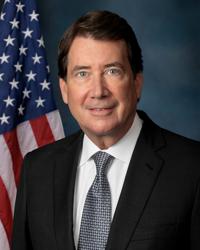 Sen. Bill Hagerty (R-TN)
What it changes
1 change to S.Amdt. 5499 · shown in S.Amdt. 5499's text
Adds SEC. 1276. COMMISSION ON REFORM AND MODERNIZATION OF THE DEPARTMENT OF STATE at the end of subtitle F of title XII
Adds a sectionIn S.Amdt. 5499 as proposed
(2) Form of report.--The report required by paragraph (1) shall be submitted in unclassified form but may contain a classified annex.
Inserted: SEC. 1276. COMMISSION ON REFORM AND MODERNIZATION OF THE DEPARTMENT OF STATE.
Inserted: (a) Short Title.--This section may be cited as the "Commission on Reform and Modernization of the Department of State Act".
Inserted: (b) Establishment of Commission.--There is established, in the legislative branch, the Commission on Reform and Modernization of the Department of State (referred to in this section as the "Commission").
Inserted: (c) Purposes.--The purposes of the Commission are--
Inserted: (1) to examine the changing nature of diplomacy in the 21st century and the ways in which the Department of State and its personnel can modernize to advance the interests of the United States; and
Inserted: (2) to offer recommendations to the President and Congress related to--
Inserted: (A) the organizational structure of the Department of State, including a review of the jurisdictional responsibilities of all of the Department's regional bureaus (the Bureau of African Affairs, the Bureau of East Asian and Pacific Affairs, the Bureau of European and Eurasian Affairs, the Bureau of Near Eastern Affairs, the Bureau of South and Central Asian Affairs, and the Bureau of Western Hemisphere Affairs);
Inserted: (B) personnel-related matters, including recruitment, promotion, training, and retention of the Department of State's workforce in order to retain the best and brightest personnel and foster effective diplomacy worldwide, including measures to strengthen diversity and inclusion to ensure that the Department's workforce represents all of America;
Inserted: (C) the Department of State's infrastructure (both domestic and overseas), including infrastructure relating to information technology, transportation, and security;
Inserted: (D) the link among diplomacy and defense, intelligence, development, commercial, health, law enforcement, and other core United States interests;
Inserted: (E) core legislation that authorizes United States diplomacy, including the Foreign Service Act of 1980 (Public Law 96-465);
Inserted: (F) related regulations, rules, and processes that define United States diplomatic efforts, including the Foreign Affairs Manual;
Show 82 more inserted paragraphsShow less
Inserted: (G) Chief of Mission authority at United States diplomatic missions overseas, including authority over employees of other Federal departments and agencies; and
Inserted: (H) treaties that impact United States overseas presence.
Inserted: (d) Membership.--
Inserted: (1) Composition.--The Commission shall be composed of 8 members, of whom--
Inserted: (A) 1 member shall be appointed by the chairperson of the Committee on Foreign Relations of the Senate, who shall serve as co-chair of the Commission;
Inserted: (B) 1 member shall be appointed by the ranking member of the Committee on Foreign Relations of the Senate, who shall serve as co-chair of the Commission;
Inserted: (C) 1 member shall be appointed by the chairperson of the Committee on Foreign Affairs of the House of Representatives;
Inserted: (D) 1 member shall be appointed by the ranking member of the Committee on Foreign Affairs of the House of Representatives;
Inserted: (E) 1 member shall be appointed by the majority leader of the Senate;
Inserted: (F) 1 member shall be appointed by the Speaker of the House of Representatives;
Inserted: (G) 1 member shall be appointed by the minority leader of the Senate; and
Inserted: (H) 1 member shall be appointed by the minority leader of the House of Representatives.
Inserted: (2) Qualifications; meetings.--
Inserted: (A) Membership.--The members of the Commission should be prominent United States citizens, with national recognition and significant depth of experience in international relations and with the Department of State.
Inserted: (B) Political party affiliation.--Not more than 4 members of the Commission may be from the same political party.
Inserted: (C) Meetings.--
Inserted: (i) Initial meeting.--The Commission shall hold the first meeting and begin operations as soon as practicable.
Inserted: (ii) Frequency.--The Commission shall meet at the call of the co-chairs.
Inserted: (iii) Quorum.--Five members of the Commission shall constitute a quorum for purposes of conducting business, except that 2 members of the Commission shall constitute a quorum for purposes of receiving testimony.
Inserted: (D) Vacancies.--Any vacancy in the Commission shall not affect the powers of the Commission, but shall be filled in the same manner as the original appointment.
Inserted: (e) Functions of Commission.--
Inserted: (1) In general.--The Commission shall act by resolution agreed to by a majority of the members of the Commission voting and present.
Inserted: (2) Panels.--The Commission may establish panels composed of less than the full membership of the Commission for purposes of carrying out the duties of the Commission under this section. The actions of any such panel shall be subject to the review and control of the Commission. Any findings and determinations made by such a panel may not be considered the findings and determinations of the Commission unless such findings and determinations are approved by the Commission.
Inserted: (3) Delegation.--Any member, agent, or staff of the Commission may, if authorized by the co-chairs of the Commission, take any action which the Commission is authorized to take pursuant to this section.
Inserted: (f) Powers of Commission.--
Inserted: (1) Hearings and evidence.--The Commission or any panel or member of the Commission, as delegated by the co-chairs, may, for the purpose of carrying out this section--
Inserted: (A) hold such hearings and meetings, take such testimony, receive such evidence, and administer such oaths as the Commission or such designated subcommittee or designated member considers necessary;
Inserted: (B) require the attendance and testimony of such witnesses and the production of such correspondence, memoranda, papers, and documents, as the Commission or such designated subcommittee or designated member considers necessary; and
Inserted: (C) subject to applicable privacy laws and relevant regulations, secure directly from any Federal department or agency information and data necessary to enable it to carry out its mission, which shall be provided by the head or acting representative of the department or agency not later than 30 days after the Commission provides a written request for such information and data.
Inserted: (2) Contracts.--The Commission, to such extent and in such amounts as are provided in appropriations Acts, may enter into contracts to enable the Commission to discharge its duties under this section.
Inserted: (3) Information from federal agencies.--
Inserted: (A) In general.--The Commission may secure directly from any executive department, bureau, agency, board, commission, office, independent establishment, or instrumentality of the Government, information, suggestions, estimates, and statistics for the purposes of this section.
Inserted: (B) Furnishing information.--Each department, bureau, agency, board, commission, office, independent establishment, or instrumentality, to the extent authorized by law, shall furnish such information, suggestions, estimates, and statistics directly to the Commission, upon request made by a co-chair, the chair of any panel created by a majority of the Commission, or any member designated by a majority of the Commission.
Inserted: (C) Handling.--Information may only be received, handled, stored, and disseminated by members of the Commission and its staff in accordance with all applicable statutes, regulations, and Executive orders.
Inserted: (4) Assistance from federal agencies.--
Inserted: (A) Secretary of state.--The Secretary of State shall provide to the Commission, on a nonreimbursable basis, such administrative services, funds, staff, facilities, and other support services as are necessary for the performance of the Commission's duties under this section.
Inserted: (B) Other departments and agencies.--Other Federal departments and agencies may provide the Commission such services, funds, facilities, staff, and other support as such departments and agencies consider advisable and as may be authorized by law.
Inserted: (C) Cooperation.--The Commission shall receive the full and timely cooperation of any official, department, or agency of the Federal Government whose assistance is necessary, as jointly determined by the co-chairs of the Commission, for the fulfillment of the duties of the Commission, including the provision of full and current briefings and analyses.
Inserted: (5) Assistance from independent organizations.--
Inserted: (A) In general.--In order to inform its work, the Commission should review reports that were written during the 15-year period ending on the date of the enactment of this Act by independent organizations and outside experts relating to reform and modernization of the Department of State.
Inserted: (B) Avoiding duplication.--In analyzing the reports referred to in subparagraph (A), the Commission should pay particular attention to any specific reform proposals that have been recommended by 2 or more of such reports.
Inserted: (6) Postal services.--The Commission may use the United States mails in the same manner and under the same conditions as other departments and agencies of the Federal Government.
Inserted: (7) Gifts.--The Commission may accept, use, and dispose of gifts or donations of services or property.
Inserted: (8) Congressional consultation.--Not less frequently than quarterly, the Commission shall provide a briefing to the appropriate congressional committees about the work of the Commission.
Inserted: (g) Staff and Compensation.--
Inserted: (1) Staff.--
Inserted: (A) Compensation.--The co-chairs of the Commission, in accordance with rules established by the Commission, shall appoint and fix the compensation of a staff director and such other personnel as may be necessary to enable the Commission to carry out its duties, without regard to the provisions of title 5, United States Code, governing appointments in the competitive service, and without regard to the provisions of chapter 51 and subchapter III of chapter 53 of such title relating to classification and General Schedule pay rates, except that no rate of pay fixed under this subsection may exceed the equivalent of that payable to a person occupying a position at level V of the Executive Schedule under section 5316 of such title.
Inserted: (B) Detail of government employees.--A Federal Government employee may be detailed to the Commission without reimbursement, and such detail shall be without interruption or loss of civil service status or privilege.
Inserted: (C) Procurement of temporary and intermittent services.--The co-chairs of the Commission may procure temporary and intermittent services under section 3109(b) of title 5, United States Code, at rates for individuals that do not exceed the daily equivalent of the annual rate of basic pay prescribed for level IV of the Executive Schedule under section 5315 of such title.
Inserted: (2) Commission members.--
Inserted: (A) Compensation.--
Inserted: (i) In general.--Except as provided in paragraph (2), each member of the Commission may be compensated at a rate not to exceed the daily equivalent of the annual rate of basic pay in effect for a position at level IV of the Executive Schedule under section 5315 of title 5, United States Code, for each day during which that member is engaged in the actual performance of the duties of the Commission under this section.
Inserted: (ii) Waiver of certain provisions.--Subsections (a) through (d) of section 824 of the Foreign Service Act of 1980 (22 U.S.C. 4064) are waived for an annuitant on a temporary basis so as to be compensated for work performed as part of the Commission.
Inserted: (3) Travel expenses.--While away from their homes or regular places of business in the performance of service for the Commission, members and staff of the Commission, and any Federal Government employees detailed to the Commission, shall be allowed travel expenses, including per diem in lieu of subsistence, in the same manner as persons employed intermittently in Government service are allowed expenses under section 5703(b) of title 5, United States Code.
Inserted: (4) Security clearances for commission members and staff.--The appropriate Federal agencies or departments shall cooperate with the Commission in expeditiously providing to Commission members and staff appropriate security clearances to the extent possible pursuant to existing procedures and requirements, except that no person shall be provided access to classified information under this section without the appropriate security clearances.
Inserted: (h) Report.--
Inserted: (1) In general.--Not later than 18 months after the date of the enactment of this Act, the Commission shall submit a final report to the President and to Congress that--
Inserted: (A) examines all substantive aspects of Department of State personnel, management, and operations; and
Inserted: (B) contains such findings, conclusions, and recommendations for corrective measures as have been agreed to by a majority of Commission members.
Inserted: (2) Elements.--The report required under paragraph (1) shall include findings, conclusions, and recommendations related to--
Inserted: (A) the organizational structure of the Department of State, including recommendations on whether any of the jurisdictional responsibilities among the bureaus referred to in subsection (c)(2)(A) should be adjusted, with particular focus on the opportunities and costs of adjusting jurisdictional responsibility between the Bureau of Near Eastern Affairs to the Bureau of African Affairs, the Bureau of East Asian and Pacific Affairs, the Bureau of South and Central Asian Affairs, and any other bureaus as may be necessary to advance United States efforts to strengthen its diplomatic engagement in the Indo-Pacific region;
Inserted: (B) personnel-related matters, including recruitment, promotion, training, and retention of the Department of State's workforce in order to retain the best and brightest personnel and foster effective diplomacy worldwide, including measures to strengthen diversity and inclusion to ensure that the Department's workforce represents all of America;
Inserted: (C) the Department of State's infrastructure (both domestic and overseas), including infrastructure relating to information technology, transportation, and security;
Inserted: (D) the link between diplomacy and defense, intelligence, development, commercial, health, law enforcement, and other core United States interests;
Inserted: (E) core legislation that authorizes United States diplomacy;
Inserted: (F) related regulations, rules, and processes that define United States diplomatic efforts, including the Foreign Affairs Manual;
Inserted: (G) treaties that impact United States overseas presence;
Inserted: (H) the authority of Chiefs of Mission at United States diplomatic missions overseas, including the degree of authority that Chiefs of Mission exercise in reality over Department of State employees and other Federal employees at overseas posts;
Inserted: (I) any other areas that the Commission considers necessary for a complete appraisal of United States diplomacy and Department of State management and operations; and
Inserted: (J) the amount of time, manpower, and financial resources that would be necessary to implement the recommendations specified under this paragraph.
Inserted: (3) Department of state response.--The Secretary of State shall have the right to review and respond to all Commission recommendations--
Inserted: (A) before the Commission submits its report to the President and to Congress; and
Inserted: (B) not later than 90 days after receiving such recommendations from the Commission.
Inserted: (i) Termination of Commission.--
Inserted: (1) In general.--The Commission, and all the authorities under this section, shall terminate on the date that is 60 days after the date on which the final report is submitted pursuant to subsection (h).
Inserted: (2) Administrative activities before termination.--The Commission may use the 60-day period referred to in paragraph (1) for the purpose of concluding its activities, including providing testimony to committees of Congress concerning its reports and disseminating the report.
Inserted: (j) Authorization of Appropriations.--
Inserted: (1) In general.--There is authorized to be appropriated to the Commission to carry out this section $2,000,000 for fiscal year 2023.
Inserted: (2) Availability.--Amounts made available to the Commission pursuant to paragraph (1) shall remain available until the date on which the Commission is terminated pursuant to subsection (i)(1).
Inserted: (k) Inapplicability of Certain Administrative Provisions.--
Inserted: (1) Federal advisory committee act.--The Federal Advisory Committee Act (5 U.S.C. App.) shall not apply to the Commission.
Inserted: (2) Freedom of information act.--The provisions of section 552 of title 5, United States Code (commonly referred to as the "Freedom of Information Act") shall not apply to the activities, records, and proceedings of the Commission.
Original wording
At the end of subtitle F of title XII, add the following:
Read automatically from the Congressional Record. Check the original before relying on it.
As printed
SA 6094. Mr. HAGERTY (for himself and Mr. Cardin) submitted an amendment intended to be proposed to amendment SA 5499 submitted by Mr. Reed (for himself and Mr. Inhofe) and intended to be proposed to the bill H.R. 7900, to authorize appropriations for fiscal year 2023 for military activities of the Department of Defense, for military construction, and for defense activities of the Department of Energy, to prescribe military personnel strengths for such fiscal year, and for other purposes; which was ordered to lie on the table; as follows:
At the end of subtitle F of title XII, add the following:
SEC. 1276. COMMISSION ON REFORM AND MODERNIZATION OF THE DEPARTMENT OF STATE.
(a) Short Title.--This section may be cited as the “Commission on Reform and Modernization of the Department of State Act”.
(b) Establishment of Commission.--There is established, in the legislative branch, the Commission on Reform and Modernization of the Department of State (referred to in this section as the “Commission”).
(c) Purposes.--The purposes of the Commission are--
(1) to examine the changing nature of diplomacy in the 21st century and the ways in which the Department of State and its personnel can modernize to advance the interests of the United States; and
(2) to offer recommendations to the President and Congress related to--
(A) the organizational structure of the Department of State, including a review of the jurisdictional responsibilities of all of the Department's regional bureaus (the Bureau of African Affairs, the Bureau of East Asian and Pacific Affairs, the Bureau of European and Eurasian Affairs, the Bureau of Near Eastern Affairs, the Bureau of South and Central Asian Affairs, and the Bureau of Western Hemisphere Affairs);
(B) personnel-related matters, including recruitment, promotion, training, and retention of the Department of State's workforce in order to retain the best and brightest personnel and foster effective diplomacy worldwide, including measures to strengthen diversity and inclusion to ensure that the Department's workforce represents all of America;
(C) the Department of State's infrastructure (both domestic and overseas), including infrastructure relating to information technology, transportation, and security;
(D) the link among diplomacy and defense, intelligence, development, commercial, health, law enforcement, and other core United States interests;
(E) core legislation that authorizes United States diplomacy, including the Foreign Service Act of 1980 (Public Law 96-465);
(F) related regulations, rules, and processes that define United States diplomatic efforts, including the Foreign Affairs Manual;
(G) Chief of Mission authority at United States diplomatic missions overseas, including authority over employees of other Federal departments and agencies; and
(H) treaties that impact United States overseas presence.
(d) Membership.--
(1) Composition.--The Commission shall be composed of 8 members, of whom--
(A) 1 member shall be appointed by the chairperson of the Committee on Foreign Relations of the Senate, who shall serve as co-chair of the Commission;
(B) 1 member shall be appointed by the ranking member of the Committee on Foreign Relations of the Senate, who shall serve as co-chair of the Commission;
(C) 1 member shall be appointed by the chairperson of the Committee on Foreign Affairs of the House of Representatives;
(D) 1 member shall be appointed by the ranking member of the Committee on Foreign Affairs of the House of Representatives;
(E) 1 member shall be appointed by the majority leader of the Senate;
(F) 1 member shall be appointed by the Speaker of the House of Representatives;
(G) 1 member shall be appointed by the minority leader of the Senate; and
(H) 1 member shall be appointed by the minority leader of the House of Representatives.
(2) Qualifications; meetings.--
(A) Membership.--The members of the Commission should be prominent United States citizens, with national recognition and significant depth of experience in international relations and with the Department of State.
(B) Political party affiliation.--Not more than 4 members of the Commission may be from the same political party.
(C) Meetings.--
(i) Initial meeting.--The Commission shall hold the first meeting and begin operations as soon as practicable.
(ii) Frequency.--The Commission shall meet at the call of the co-chairs.
(iii) Quorum.--Five members of the Commission shall constitute a quorum for purposes of conducting business, except that 2 members of the Commission shall constitute a quorum for purposes of receiving testimony.
(D) Vacancies.--Any vacancy in the Commission shall not affect the powers of the Commission, but shall be filled in the same manner as the original appointment.
(e) Functions of Commission.--
(1) In general.--The Commission shall act by resolution agreed to by a majority of the members of the Commission voting and present.
(2) Panels.--The Commission may establish panels composed of less than the full membership of the Commission for purposes of carrying out the duties of the Commission under this section. The actions of any such panel shall be subject to the review and control of the Commission. Any findings and determinations made by such a panel may not be considered the findings and determinations of the Commission unless such findings and determinations are approved by the Commission.
(3) Delegation.--Any member, agent, or staff of the Commission may, if authorized by the co-chairs of the Commission, take any action which the Commission is authorized to take pursuant to this section.
(f) Powers of Commission.--
(1) Hearings and evidence.--The Commission or any panel or member of the Commission, as delegated by the co-chairs, may, for the purpose of carrying out this section--
(A) hold such hearings and meetings, take such testimony, receive such evidence, and administer such oaths as the Commission or such designated subcommittee or designated member considers necessary;
(B) require the attendance and testimony of such witnesses and the production of such correspondence, memoranda, papers, and documents, as the Commission or such designated subcommittee or designated member considers necessary; and
(C) subject to applicable privacy laws and relevant regulations, secure directly from any Federal department or agency information and data necessary to enable it to carry out its mission, which shall be provided by the head or acting representative of the department or agency not later than 30 days after the Commission provides a written request for such information and data.
(2) Contracts.--The Commission, to such extent and in such amounts as are provided in appropriations Acts, may enter into contracts to enable the Commission to discharge its duties under this section.
(3) Information from federal agencies.--
(A) In general.--The Commission may secure directly from any executive department, bureau, agency, board, commission, office, independent establishment, or instrumentality of the Government, information, suggestions, estimates, and statistics for the purposes of this section.
(B) Furnishing information.--Each department, bureau, agency, board, commission, office, independent establishment, or instrumentality, to the extent authorized by law, shall furnish such information, suggestions, estimates, and statistics directly to the Commission, upon request made by a co-chair, the chair of any panel created by a majority of the Commission, or any member designated by a majority of the Commission.
(C) Handling.--Information may only be received, handled, stored, and disseminated by members of the Commission and its staff in accordance with all applicable statutes, regulations, and Executive orders.
(4) Assistance from federal agencies.--
(A) Secretary of state.--The Secretary of State shall provide to the Commission, on a nonreimbursable basis, such administrative services, funds, staff, facilities, and other support services as are necessary for the performance of the Commission's duties under this section.
(B) Other departments and agencies.--Other Federal departments and agencies may provide the Commission such services, funds, facilities, staff, and other support as such departments and agencies consider advisable and as may be authorized by law.
(C) Cooperation.--The Commission shall receive the full and timely cooperation of any official, department, or agency of the Federal Government whose assistance is necessary, as jointly determined by the co-chairs of the Commission, for the fulfillment of the duties of the Commission, including the provision of full and current briefings and analyses.
(5) Assistance from independent organizations.--
(A) In general.--In order to inform its work, the Commission should review reports that were written during the 15-year period ending on the date of the enactment of this Act by independent organizations and outside experts relating to reform and modernization of the Department of State.
(B) Avoiding duplication.--In analyzing the reports referred to in subparagraph (A), the Commission should pay particular attention to any specific reform proposals that have been recommended by 2 or more of such reports.
(6) Postal services.--The Commission may use the United States mails in the same manner and under the same conditions as other departments and agencies of the Federal Government.
(7) Gifts.--The Commission may accept, use, and dispose of gifts or donations of services or property.
(8) Congressional consultation.--Not less frequently than quarterly, the Commission shall provide a briefing to the appropriate congressional committees about the work of the Commission.
(g) Staff and Compensation.--
(1) Staff.--
(A) Compensation.--The co-chairs of the Commission, in accordance with rules established by the Commission, shall appoint and fix the compensation of a staff director and such other personnel as may be necessary to enable the Commission to carry out its duties, without regard to the provisions of title 5, United States Code, governing appointments in the competitive service, and without regard to the provisions of chapter 51 and subchapter III of chapter 53 of such title relating to classification and General Schedule pay rates, except that no rate of pay fixed under this subsection may exceed the equivalent of that payable to a person occupying a position at level V of the Executive Schedule under section 5316 of such title.
(B) Detail of government employees.--A Federal Government employee may be detailed to the Commission without reimbursement, and such detail shall be without interruption or loss of civil service status or privilege.
(C) Procurement of temporary and intermittent services.--The co-chairs of the Commission may procure temporary and intermittent services under section 3109(b) of title 5, United States Code, at rates for individuals that do not exceed the daily equivalent of the annual rate of basic pay prescribed for level IV of the Executive Schedule under section 5315 of such title.
(2) Commission members.--
(A) Compensation.--
(i) In general.--Except as provided in paragraph (2), each member of the Commission may be compensated at a rate not to exceed the daily equivalent of the annual rate of basic pay in effect for a position at level IV of the Executive Schedule under section 5315 of title 5, United States Code, for each day during which that member is engaged in the actual performance of the duties of the Commission under this section.
(ii) Waiver of certain provisions.--Subsections (a) through (d) of section 824 of the Foreign Service Act of 1980 (22 U.S.C. 4064) are waived for an annuitant on a temporary basis so as to be compensated for work performed as part of the Commission.
(3) Travel expenses.--While away from their homes or regular places of business in the performance of service for the Commission, members and staff of the Commission, and any Federal Government employees detailed to the Commission, shall be allowed travel expenses, including per diem in lieu of subsistence, in the same manner as persons employed intermittently in Government service are allowed expenses under section 5703(b) of title 5, United States Code.
(4) Security clearances for commission members and staff.--The appropriate Federal agencies or departments shall cooperate with the Commission in expeditiously providing to Commission members and staff appropriate security clearances to the extent possible pursuant to existing procedures and requirements, except that no person shall be provided access to classified information under this section without the appropriate security clearances.
(h) Report.--
(1) In general.--Not later than 18 months after the date of the enactment of this Act, the Commission shall submit a final report to the President and to Congress that--
(A) examines all substantive aspects of Department of State personnel, management, and operations; and
(B) contains such findings, conclusions, and recommendations for corrective measures as have been agreed to by a majority of Commission members.
(2) Elements.--The report required under paragraph (1) shall include findings, conclusions, and recommendations related to--
(A) the organizational structure of the Department of State, including recommendations on whether any of the jurisdictional responsibilities among the bureaus referred to in subsection (c)(2)(A) should be adjusted, with particular focus on the opportunities and costs of adjusting jurisdictional responsibility between the Bureau of Near Eastern Affairs to the Bureau of African Affairs, the Bureau of East Asian and Pacific Affairs, the Bureau of South and Central Asian Affairs, and any other bureaus as may be necessary to advance United States efforts to strengthen its diplomatic engagement in the Indo-Pacific region;
(B) personnel-related matters, including recruitment, promotion, training, and retention of the Department of State's workforce in order to retain the best and brightest personnel and foster effective diplomacy worldwide, including measures to strengthen diversity and inclusion to ensure that the Department's workforce represents all of America;
(C) the Department of State's infrastructure (both domestic and overseas), including infrastructure relating to information technology, transportation, and security;
(D) the link between diplomacy and defense, intelligence, development, commercial, health, law enforcement, and other core United States interests;
(E) core legislation that authorizes United States diplomacy;
(F) related regulations, rules, and processes that define United States diplomatic efforts, including the Foreign Affairs Manual;
(G) treaties that impact United States overseas presence;
(H) the authority of Chiefs of Mission at United States diplomatic missions overseas, including the degree of authority that Chiefs of Mission exercise in reality over Department of State employees and other Federal employees at overseas posts;
(I) any other areas that the Commission considers necessary for a complete appraisal of United States diplomacy and Department of State management and operations; and
(J) the amount of time, manpower, and financial resources that would be necessary to implement the recommendations specified under this paragraph.
(3) Department of state response.--The Secretary of State shall have the right to review and respond to all Commission recommendations--
(A) before the Commission submits its report to the President and to Congress; and
(B) not later than 90 days after receiving such recommendations from the Commission.
(i) Termination of Commission.--
(1) In general.--The Commission, and all the authorities under this section, shall terminate on the date that is 60 days after the date on which the final report is submitted pursuant to subsection (h).
(2) Administrative activities before termination.--The Commission may use the 60-day period referred to in paragraph (1) for the purpose of concluding its activities, including providing testimony to committees of Congress concerning its reports and disseminating the report.
(j) Authorization of Appropriations.--
(1) In general.--There is authorized to be appropriated to the Commission to carry out this section $2,000,000 for fiscal year 2023.
(2) Availability.--Amounts made available to the Commission pursuant to paragraph (1) shall remain available until the date on which the Commission is terminated pursuant to subsection (i)(1).
(k) Inapplicability of Certain Administrative Provisions.--
(1) Federal advisory committee act.--The Federal Advisory Committee Act (5 U.S.C. App.) shall not apply to the Commission.
(2) Freedom of information act.--The provisions of section 552 of title 5, United States Code (commonly referred to as the “Freedom of Information Act”) shall not apply to the activities, records, and proceedings of the Commission.
Legislative Activity
Stay on top of the latest movement without scrolling through every action
Senate amendment submitted
September 29, 2022