S.Amdt. 6095
What it does: Adds SEC. 1214. FOREIGN AFFAIRS TRAINING at the end of subtitle A of title XII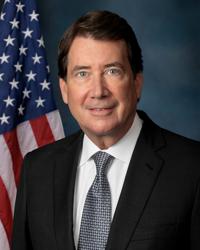 Sen. Bill Hagerty (R-TN)
What it changes
1 change to S.Amdt. 5499 · shown in S.Amdt. 5499's text
Adds SEC. 1214. FOREIGN AFFAIRS TRAINING at the end of subtitle A of title XII
Adds a sectionIn S.Amdt. 5499 as proposed
(b) Report.--Not later than December 31, 2022, the Secretary shall submit to the Committees on Armed Services of the Senate and the House of Representatives a report on the findings of the assessment required by subsection (a).
Inserted: SEC. 1214. FOREIGN AFFAIRS TRAINING.
Inserted: (a) Sense of Congress.--It is the sense of Congress that--
Inserted: (1) the Department of State is a crucial national security agency, whose employees, both Foreign Service and Civil Service, require the best possible training and professional development at every stage of their careers to prepare them to promote and defend United States national interests and the health and safety of United States citizens abroad;
Inserted: (2) the Department of State faces increasingly complex and rapidly evolving challenges, many of which are science- and technology-driven, and which demand continual, high-quality training and professional development of its personnel;
Inserted: (3) the new and evolving challenges of national security in the 21st century necessitate the expansion of standardized training and professional development opportunities linked to equitable, accountable, and transparent promotion and leadership practices for Department of State and other national security agency personnel; and
Inserted: (4) consistent with gift acceptance authority of the Department of State and other applicable laws in effect as of the date of the enactment of this Act, the Department and the Foreign Service Institute may accept funds and other resources from foundations, not-for-profit corporations, and other appropriate sources to help the Department and the Institute enhance the quantity and quality of training and professional development offerings, especially in the introduction of new, innovative, and pilot model courses.
Inserted: (b) Defined Term.--In this section, the term "appropriate committees of Congress" means--
Inserted: (1) the Committee on Foreign Relations of the Senate;
Inserted: (2) the Committee on Appropriations of the Senate;
Inserted: (3) the Committee on Foreign Affairs of the House of Representatives; and
Inserted: (4) the Committee on Appropriations of the House of Representatives.
Inserted: (c) Training and Professional Development Prioritization.--In order to provide the Civil Service of the Department of State and the Foreign Service with the level of professional development and training needed to effectively advance United States interests across the world, the Secretary of State shall--
Show 126 more inserted paragraphsShow less
Inserted: (1) increase relevant offerings provided by the Department of State-- (A) of interactive virtual instruction to make training and professional development more accessible and useful to personnel deployed throughout the world; or
Inserted: (B) at partner organizations, including universities, industry entities, and nongovernmental organizations, throughout the United States to provide useful outside perspectives to Department of State personnel by providing such personnel--
Inserted: (i) a more comprehensive outlook on different sectors of United States society; and
Inserted: (ii) practical experience dealing with commercial corporations, universities, labor unions, and other institutions critical to United States diplomatic success;
Inserted: (2) offer courses using computer-based or computer-assisted simulations, allowing civilian officers to lead decision making in a crisis environment, and encourage officers of the Department of State, and reciprocally, officers of other Federal departments to participate in similar exercises held by the Department or other government organizations and the private sector;
Inserted: (3) increase the duration and expand the focus of certain training and professional development courses, including by extending--
Inserted: (A) the A-100 entry-level course to as long as 12 weeks, which better matches the length of entry-level training and professional development provided to the officers in other national security departments and agencies; and
Inserted: (B) the Chief of Mission course to as long as 6 weeks for first time Chiefs of Mission and creating comparable courses for new Assistant Secretaries and Deputy Assistant Secretaries to more accurately reflect the significant responsibilities accompanying such roles; and
Inserted: (4) ensure that Foreign Service officers who are assigned to a country experiencing significant population displacement due to the impacts of climatic and non-climatic shocks and stresses, including rising sea levels and lack of access to affordable and reliable energy and electricity, receive specific instruction on United States policy with respect to resiliency and adaptation to such climatic and non-climatic shocks and stresses.
Inserted: (d) Fellowships.--The Director General of the Foreign Service shall--
Inserted: (1) expand and establish new fellowship programs for Foreign Service and Civil Service officers that include short- and long-term opportunities at organizations, including--
Inserted: (A) think tanks and nongovernmental organizations;
Inserted: (B) the Department of Defense, the elements of the intelligence community (as defined in section 3 of the National Security Act of 1947 (50 U.S.C. 3003)), and other relevant Federal agencies;
Inserted: (C) industry entities, especially such entities related to technology, global operations, finance, and other fields directly relevant to international affairs; and
Inserted: (D) schools of international relations and other relevant programs at universities throughout the United States; and
Inserted: (2) not later than 180 days after the date of the enactment of this Act, submit a report to Congress that describes how the Department of State could expand the Pearson Fellows Program for Foreign Service Officers and the Brookings Fellow Program for Civil Servants to provide fellows in such programs with the opportunity to undertake a follow-on assignment within the Department in an office in which fellows will gain practical knowledge of the people and processes of Congress, including offices other than the Legislative Affairs Bureau, including--
Inserted: (A) an assessment of the current state of congressional fellowships, including the demand for fellowships and the value the fellowships provide to both the career of the officer and to the Department of State; and
Inserted: (B) an assessment of the options for making congressional fellowships for both the Foreign and Civil Services more career-enhancing.
Inserted: (e) Board of Visitors of the Foreign Service Institute.--
Inserted: (1) Establishment.--Not later than 1 year after the date of the enactment of this Act, the Secretary of State shall establish a Board of Visitors of the Foreign Service Institute (referred to in this subsection as the "Board").
Inserted: (2) Duties.--The Board shall provide the Secretary of State with independent advice and recommendations regarding organizational management, strategic planning, resource management, curriculum development, and other matters of interest to the Foreign Service Institute, including regular observations about how well the Department of State is integrating training and professional development into the work of the Bureau for Global Talent Management.
Inserted: (3) Membership.--
Inserted: (A) In general.--The Board shall be--
Inserted: (i) nonpartisan; and
Inserted: (ii) composed of 12 members, of whom--
Inserted: (I) 2 members shall be appointed by the Chairperson of the Committee on Foreign Relations of the Senate;
Inserted: (II) 2 members shall be appointed by the ranking member of the Committee on Foreign Relations of the Senate;
Inserted: (III) 2 members shall be appointed by the Chairperson of the Committee on Foreign Affairs of the House of Representatives;
Inserted: (IV) 2 members shall be appointed by the ranking member of the Committee on Foreign Affairs of the House of Representatives; and
Inserted: (V) 4 members shall be appointed by the Secretary of State.
Inserted: (B) Qualifications.--Members of the Board shall be appointed from among individuals who--
Inserted: (i) are not officers or employees of the Federal Government; and
Inserted: (ii) are eminent authorities in the fields of diplomacy, national security, management, leadership, economics, trade, technology, or advanced international relations education.
Inserted: (C) Outside expertise.--
Inserted: (i) In general.--Not fewer than 6 members of the Board shall have a minimum of 10 years of relevant expertise outside the field of diplomacy.
Inserted: (ii) Prior senior service at the department of state.--Not more than 6 members of the Board may be persons who previously served in the Senior Foreign Service or the Senior Executive Service at the Department of State.
Inserted: (4) Terms.--Each member of the Board shall be appointed for a term of 3 years, except that of the members first appointed--
Inserted: (A) 4 members shall be appointed for a term of 3 years;
Inserted: (B) 4 members shall be appointed for a term of 2 years; and
Inserted: (C) 4 members shall be appointed for a term of 1 year.
Inserted: (5) Reappointment; replacement.--A member of the Board may be reappointed or replaced at the discretion of the official who made the original appointment.
Inserted: (6) Chairperson; co-chairperson.--
Inserted: (A) Approval.--The Chairperson and Vice Chairperson of the Board shall be approved by the Secretary of State based upon a recommendation from the members of the Board.
Inserted: (B) Service.--The Chairperson and Vice Chairperson shall serve at the discretion of the Secretary of State.
Inserted: (7) Meetings.--The Board shall meet--
Inserted: (A) at the call of the Director of the Foreign Service Institute and the Chairperson; and
Inserted: (B) not fewer than 2 times per year.
Inserted: (8) Compensation.--Each member of the Board shall serve without compensation, except that a member of the Board shall be allowed travel expenses, including per diem in lieu of subsistence, at rates authorized for employees of agencies under subchapter I of chapter 57 of title 5, United States Code, while away from their homes or regular places of business in the performance of service for the Board. Notwithstanding section 1342 of title 31, United States Code, the Secretary of State may accept the voluntary and uncompensated service of members of the Board.
Inserted: (9) Applicability of federal advisory committee act.--The Federal Advisory Committee Act (5 U.S.C. App.) shall apply to the Board established under this subsection.
Inserted: (f) Establishment of Provost of the Foreign Service Institute.--
Inserted: (1) Establishment.--There is established in the Foreign Service Institute the position of Provost.
Inserted: (2) Appointment; reporting.--The Provost shall--
Inserted: (A) be appointed by the Secretary of State; and
Inserted: (B) report to the Director of the Foreign Service Institute.
Inserted: (3) Qualifications.--The Provost shall be--
Inserted: (A) an eminent authority in the field of diplomacy, national security, education, management, leadership, economics, history, trade, adult education, or technology; and
Inserted: (B) a person with significant experience outside the Department of State, whether in other national security agencies or in the private sector, and preferably in positions of authority in educational institutions or the field of professional development and mid-career training with oversight for the evaluation of academic programs.
Inserted: (4) Duties.--The Provost shall--
Inserted: (A) oversee, review, evaluate, and coordinate the academic curriculum for all courses taught and administered by the Foreign Service Institute;
Inserted: (B) coordinate the development of an evaluation system to ascertain how well participants in Foreign Service Institute courses have absorbed and utilized the information, ideas, and skills imparted by each such course, such that performance assessments can be included in the personnel records maintained by the Bureau of Global Talent Management and utilized in Foreign Service Selection Boards, which may include--
Inserted: (i) the implementation of a letter or numerical grading system; and
Inserted: (ii) assessments done after the course has concluded; and
Inserted: (C) report not less frequently than quarterly to the Board of Visitors regarding the development of curriculum and the performance of Foreign Service officers.
Inserted: (5) Term.--The Provost shall serve for a term of not fewer than 5 years and may be reappointed for 1 additional 5-year term.
Inserted: (6) Compensation.--The Provost shall receive a salary commensurate with the rank and experience of a member of the Senior Foreign Service or the Senior Executive Service, as determined by the Secretary of State.
Inserted: (g) Other Agency Responsibilities and Opportunities for Congressional Staff.--
Inserted: (1) Other agencies.--National security agencies other than the Department of State should be afforded the ability to increase the enrollment of their personnel in courses at the Foreign Service Institute and other training and professional development facilities of the Department to promote a whole-of-government approach to mitigating national security challenges.
Inserted: (2) Congressional staff.--Not later than 180 days after the date of the enactment of this Act, the Secretary of State shall submit a report to the appropriate committees of Congress that describes--
Inserted: (A) the training and professional development opportunities at the Foreign Service Institute and other Department of State facilities available to congressional staff;
Inserted: (B) the budget impacts of offering such opportunities to congressional staff; and
Inserted: (C) potential course offerings.
Inserted: (h) Strategy for Adapting Training Requirements for Modern Diplomatic Needs.--
Inserted: (1) In general.--Not later than 1 year after the date of the enactment of this Act, the Secretary of State shall develop and submit to the appropriate committees of Congress a strategy for adapting and evolving training requirements to better meet the Department of State's current and future needs for 21st century diplomacy.
Inserted: (2) Elements.--The strategy required under subsection (a) shall include the following elements:
Inserted: (A) Integrating training requirements into the Department of State's promotion policies, including establishing educational and professional development standards for training and attainment to be used as a part of tenure and promotion guidelines.
Inserted: (B) Addressing multiple existing and emerging national security challenges, including--
Inserted: (i) democratic backsliding and authoritarianism;
Inserted: (ii) countering, and assisting United States allies to address, state-sponsored disinformation, including through the Global Engagement Center;
Inserted: (iii) cyber threats;
Inserted: (iv) the aggression and malign influence of Russia, Cuba, Iran, North Korea, the Maduro Regime, and the Chinese Communist Party's multi-faceted and comprehensive challenge to the rules-based order;
Inserted: (v) the implications of climate change for United States diplomacy; and
Inserted: (vi) nuclear threats.
Inserted: (C) An examination of the likely advantages and disadvantages of establishing residential training for the A-100 orientation course administered by the Foreign Service Institute and evaluating the feasibility of residential training for other long-term training opportunities.
Inserted: (D) An examination of the likely advantages and disadvantages of establishing a press freedom curriculum for the National Foreign Affairs Training Center that enables Foreign Service officers to better understand issues of press freedom and the tools that are available to help protect journalists and promote freedom of the press norms, which may include--
Inserted: (i) the historic and current issues facing press freedom, including countries of specific concern;
Inserted: (ii) the Department of State's role in promoting press freedom as an American value, a human rights issue, and a national security imperative;
Inserted: (iii) ways to incorporate press freedom promotion into other aspects of diplomacy; and
Inserted: (iv) existing tools to assist journalists in distress and methods for engaging foreign governments and institutions on behalf of individuals engaged in journalistic activity who are at risk of harm.
Inserted: (E) The expansion of external courses offered by the Foreign Service Institute at academic institutions or professional associations on specific topics, including in-person and virtual courses on monitoring and evaluation, audience analysis, and the use of emerging technologies in diplomacy.
Inserted: (3) Utilization of existing resources.--In examining the advantages and disadvantages of establishing a residential training program pursuant to paragraph (2)(C), the Secretary of State shall--
Inserted: (A) collaborate with other national security departments and agencies that employ residential training for their orientation courses; and
Inserted: (B) consider using the Department of State's Foreign Affairs Security Training Center in Blackstone, Virginia.
Inserted: (i) Report and Briefing Requirements.--
Inserted: (1) Report.--Not later than 1 year after the date of the enactment of this Act, the Secretary of State shall submit a report to the appropriate committees of Congress that includes--
Inserted: (A) a strategy for broadening and deepening professional development and training at the Department of State, including assessing current and future needs for 21st century diplomacy;
Inserted: (B) the process used and resources needed to implement the strategy referred to in subparagraph (A) throughout the Department of State; and
Inserted: (C) the results and impact of the strategy on the workforce of the Department of State, particularly the relationship between professional development and training and promotions for Department personnel, and the measurement and evaluation methods used to evaluate such results.
Inserted: (2) Briefing.--Not later than 1 year after the date on which the Secretary of State submits the report required under paragraph (1), and annually thereafter for 2 years, the Secretary shall provide to the appropriate committees of Congress a briefing on the information required to be included in the report.
Inserted: (j) Foreign Language Maintenance Incentive Program.--
Inserted: (1) Authorization.--The Secretary of State is authorized to establish and implement an incentive program, with a similar structure as the Foreign Language Proficiency Bonus offered by the Department of Defense, to encourage members of the Foreign Service who possess language proficiency in any of the languages that qualify for additional incentive pay, as determined by the Secretary, to maintain critical foreign language skills.
Inserted: (2) Report.--Not later than 90 days after the date of the enactment of this Act, the Secretary of State shall submit a report to the appropriate committees of Congress that includes a detailed plan for implementing the program authorized under paragraph (1), including anticipated resource requirements to carry out such program.
Inserted: (k) Department of State Workforce Management.--
Inserted: (1) Sense of congress.--It is the sense of Congress that informed, data-driven, and long-term workforce management, including with respect to the Foreign Service, the Civil Service, locally employed staff, and contractors, is needed to align diplomatic priorities with the appropriate personnel and resources.
Inserted: (2) Annual workforce report.--
Inserted: (A) In general.--In order to understand the Department of State's long-term trends with respect to its workforce, the Secretary of State, is consultation with relevant bureaus and offices, including the Bureau of Global Talent Management and the Center for Analytics, shall submit a report to the appropriate committees of Congress that details the Department's workforce, disaggregated by Foreign Service, Civil Service, locally employed staff, and contractors, including, with respect to the reporting period--
Inserted: (i) the number of personnel who were hired;
Inserted: (ii) the number of personnel whose employment or contract was terminated or who voluntarily left the Department of State;
Inserted: (iii) the number of personnel who were promoted, including the grade to which they were promoted;
Inserted: (iv) the demographic breakdown of personnel; and
Inserted: (v) the distribution of the Department of State's workforce based on domestic and overseas assignments, including a breakdown of the number of personnel in geographic and functional bureaus, and the number of personnel in overseas missions by region.
Inserted: (B) Initial report.--Not later than 180 days after the date of the enactment of this Act, the Secretary of State shall submit the report described in subparagraph (A) for each of the fiscal years 2016 through 2022.
Inserted: (C) Recurring report.--Not later than December 31, 2023, and annually thereafter for the following 5 years, the Secretary of State shall submit the report described in subparagraph (A) for the most recently concluded fiscal year.
Inserted: (D) Use of report data.--The data in each of the reports required under this paragraph shall be used by Congress, in coordination with the Secretary of State, to inform recommendations on the appropriate size and composition of the Department of State.
Inserted: (l) Sense of Congress on the Importance of Filling the Position of Under Secretary for Public Diplomacy and Public Affairs.--It is the sense of Congress that since a vacancy in the position of Under Secretary for Public Diplomacy and Public Affairs is detrimental to the national security interests of the United States, the President should expeditiously nominate a qualified individual to such position whenever such vacancy occurs to ensure that the bureaus reporting to such position are able to fulfill their mission of--
Inserted: (1) expanding and strengthening relationships between the people of the United States and citizens of other countries; and
Inserted: (2) engaging, informing, and understanding the perspectives of foreign audiences.
Inserted: (m) Report on Public Diplomacy.--Not later than 120 days after the date of the enactment of this Act, the Secretary of State shall submit a report to the appropriate committees of Congress that includes--
Inserted: (1) an evaluation of the May 2019 merger of the Bureau of Public Affairs and the Bureau of International Information Programs into the Bureau of Global Public Affairs with respect to--
Inserted: (A) the efficacy of the current configuration of the bureaus reporting to the Under Secretary for Public Diplomacy and Public Affairs in achieving the mission of the Department of State;
Inserted: (B) the metrics before and after such merger, including personnel data, disaggregated by position and location, content production, opinion polling, program evaluations, and media appearances;
Inserted: (C) the results of a survey of public diplomacy practitioners to determine their opinion of the efficacy of such merger and any adjustments that still need to be made;
Inserted: (D) a plan for evaluating and monitoring, not less frequently than once every 2 years, the programs, activities, messaging, professional development efforts, and structure of the Bureau of Global Public Affairs, and submitting a summary of each such evaluation to the appropriate committees of Congress; and
Inserted: (2) a review of recent outside recommendations for modernizing diplomacy at the Department of State with respect to public diplomacy efforts, including--
Inserted: (A) efforts in each of the bureaus reporting to the Under Secretary for Public Diplomacy and Public Affairs to address issues of diversity and inclusion in their work, structure, data collection, programming, and personnel, including any collaboration with the Chief Officer for Diversity and Inclusion;
Inserted: (B) proposals to collaborate with think tanks and academic institutions working on public diplomacy issues to implement recent outside recommendations; and
Inserted: (C) additional authorizations and appropriations necessary to implement such recommendations.
Original wording
At the end of subtitle A of title XII, add the following:
Read automatically from the Congressional Record. Check the original before relying on it.
As printed
SA 6095. Mr. HAGERTY (for himself and Mr. Cardin) submitted an amendment intended to be proposed to amendment SA 5499 submitted by Mr. Reed (for himself and Mr. Inhofe) and intended to be proposed to the bill H.R. 7900, to authorize appropriations for fiscal year 2023 for military activities of the Department of Defense, for military construction, and for defense activities of the Department of Energy, to prescribe military personnel strengths for such fiscal year, and for other purposes; which was ordered to lie on the table; as follows:
At the end of subtitle A of title XII, add the following:
SEC. 1214. FOREIGN AFFAIRS TRAINING.
(a) Sense of Congress.--It is the sense of Congress that--
(1) the Department of State is a crucial national security agency, whose employees, both Foreign Service and Civil Service, require the best possible training and professional development at every stage of their careers to prepare them to promote and defend United States national interests and the health and safety of United States citizens abroad;
(2) the Department of State faces increasingly complex and rapidly evolving challenges, many of which are science- and technology-driven, and which demand continual, high-quality training and professional development of its personnel;
(3) the new and evolving challenges of national security in the 21st century necessitate the expansion of standardized training and professional development opportunities linked to equitable, accountable, and transparent promotion and leadership practices for Department of State and other national security agency personnel; and
(4) consistent with gift acceptance authority of the Department of State and other applicable laws in effect as of the date of the enactment of this Act, the Department and the Foreign Service Institute may accept funds and other resources from foundations, not-for-profit corporations, and other appropriate sources to help the Department and the Institute enhance the quantity and quality of training and professional development offerings, especially in the introduction of new, innovative, and pilot model courses.
(b) Defined Term.--In this section, the term “appropriate committees of Congress” means--
(1) the Committee on Foreign Relations of the Senate;
(2) the Committee on Appropriations of the Senate;
(3) the Committee on Foreign Affairs of the House of Representatives; and
(4) the Committee on Appropriations of the House of Representatives.
(c) Training and Professional Development Prioritization.--In order to provide the Civil Service of the Department of State and the Foreign Service with the level of professional development and training needed to effectively advance United States interests across the world, the Secretary of State shall--
(1) increase relevant offerings provided by the Department of State-- (A) of interactive virtual instruction to make training and professional development more accessible and useful to personnel deployed throughout the world; or
(B) at partner organizations, including universities, industry entities, and nongovernmental organizations, throughout the United States to provide useful outside perspectives to Department of State personnel by providing such personnel--
(i) a more comprehensive outlook on different sectors of United States society; and
(ii) practical experience dealing with commercial corporations, universities, labor unions, and other institutions critical to United States diplomatic success;
(2) offer courses using computer-based or computer-assisted simulations, allowing civilian officers to lead decision making in a crisis environment, and encourage officers of the Department of State, and reciprocally, officers of other Federal departments to participate in similar exercises held by the Department or other government organizations and the private sector;
(3) increase the duration and expand the focus of certain training and professional development courses, including by extending--
(A) the A-100 entry-level course to as long as 12 weeks, which better matches the length of entry-level training and professional development provided to the officers in other national security departments and agencies; and
(B) the Chief of Mission course to as long as 6 weeks for first time Chiefs of Mission and creating comparable courses for new Assistant Secretaries and Deputy Assistant Secretaries to more accurately reflect the significant responsibilities accompanying such roles; and
(4) ensure that Foreign Service officers who are assigned to a country experiencing significant population displacement due to the impacts of climatic and non-climatic shocks and stresses, including rising sea levels and lack of access to affordable and reliable energy and electricity, receive specific instruction on United States policy with respect to resiliency and adaptation to such climatic and non-climatic shocks and stresses.
(d) Fellowships.--The Director General of the Foreign Service shall--
(1) expand and establish new fellowship programs for Foreign Service and Civil Service officers that include short- and long-term opportunities at organizations, including--
(A) think tanks and nongovernmental organizations;
(B) the Department of Defense, the elements of the intelligence community (as defined in section 3 of the National Security Act of 1947 (50 U.S.C. 3003)), and other relevant Federal agencies;
(C) industry entities, especially such entities related to technology, global operations, finance, and other fields directly relevant to international affairs; and
(D) schools of international relations and other relevant programs at universities throughout the United States; and
(2) not later than 180 days after the date of the enactment of this Act, submit a report to Congress that describes how the Department of State could expand the Pearson Fellows Program for Foreign Service Officers and the Brookings Fellow Program for Civil Servants to provide fellows in such programs with the opportunity to undertake a follow-on assignment within the Department in an office in which fellows will gain practical knowledge of the people and processes of Congress, including offices other than the Legislative Affairs Bureau, including--
(A) an assessment of the current state of congressional fellowships, including the demand for fellowships and the value the fellowships provide to both the career of the officer and to the Department of State; and
(B) an assessment of the options for making congressional fellowships for both the Foreign and Civil Services more career-enhancing.
(e) Board of Visitors of the Foreign Service Institute.--
(1) Establishment.--Not later than 1 year after the date of the enactment of this Act, the Secretary of State shall establish a Board of Visitors of the Foreign Service Institute (referred to in this subsection as the “Board”).
(2) Duties.--The Board shall provide the Secretary of State with independent advice and recommendations regarding organizational management, strategic planning, resource management, curriculum development, and other matters of interest to the Foreign Service Institute, including regular observations about how well the Department of State is integrating training and professional development into the work of the Bureau for Global Talent Management.
(3) Membership.--
(A) In general.--The Board shall be--
(i) nonpartisan; and
(ii) composed of 12 members, of whom--
(I) 2 members shall be appointed by the Chairperson of the Committee on Foreign Relations of the Senate;
(II) 2 members shall be appointed by the ranking member of the Committee on Foreign Relations of the Senate;
(III) 2 members shall be appointed by the Chairperson of the Committee on Foreign Affairs of the House of Representatives;
(IV) 2 members shall be appointed by the ranking member of the Committee on Foreign Affairs of the House of Representatives; and
(V) 4 members shall be appointed by the Secretary of State.
(B) Qualifications.--Members of the Board shall be appointed from among individuals who--
(i) are not officers or employees of the Federal Government; and
(ii) are eminent authorities in the fields of diplomacy, national security, management, leadership, economics, trade, technology, or advanced international relations education.
(C) Outside expertise.--
(i) In general.--Not fewer than 6 members of the Board shall have a minimum of 10 years of relevant expertise outside the field of diplomacy.
(ii) Prior senior service at the department of state.--Not more than 6 members of the Board may be persons who previously served in the Senior Foreign Service or the Senior Executive Service at the Department of State.
(4) Terms.--Each member of the Board shall be appointed for a term of 3 years, except that of the members first appointed--
(A) 4 members shall be appointed for a term of 3 years;
(B) 4 members shall be appointed for a term of 2 years; and
(C) 4 members shall be appointed for a term of 1 year.
(5) Reappointment; replacement.--A member of the Board may be reappointed or replaced at the discretion of the official who made the original appointment.
(6) Chairperson; co-chairperson.--
(A) Approval.--The Chairperson and Vice Chairperson of the Board shall be approved by the Secretary of State based upon a recommendation from the members of the Board.
(B) Service.--The Chairperson and Vice Chairperson shall serve at the discretion of the Secretary of State.
(7) Meetings.--The Board shall meet--
(A) at the call of the Director of the Foreign Service Institute and the Chairperson; and
(B) not fewer than 2 times per year.
(8) Compensation.--Each member of the Board shall serve without compensation, except that a member of the Board shall be allowed travel expenses, including per diem in lieu of subsistence, at rates authorized for employees of agencies under subchapter I of chapter 57 of title 5, United States Code, while away from their homes or regular places of business in the performance of service for the Board. Notwithstanding section 1342 of title 31, United States Code, the Secretary of State may accept the voluntary and uncompensated service of members of the Board.
(9) Applicability of federal advisory committee act.--The Federal Advisory Committee Act (5 U.S.C. App.) shall apply to the Board established under this subsection.
(f) Establishment of Provost of the Foreign Service Institute.--
(1) Establishment.--There is established in the Foreign Service Institute the position of Provost.
(2) Appointment; reporting.--The Provost shall--
(A) be appointed by the Secretary of State; and
(B) report to the Director of the Foreign Service Institute.
(3) Qualifications.--The Provost shall be--
(A) an eminent authority in the field of diplomacy, national security, education, management, leadership, economics, history, trade, adult education, or technology; and
(B) a person with significant experience outside the Department of State, whether in other national security agencies or in the private sector, and preferably in positions of authority in educational institutions or the field of professional development and mid-career training with oversight for the evaluation of academic programs.
(4) Duties.--The Provost shall--
(A) oversee, review, evaluate, and coordinate the academic curriculum for all courses taught and administered by the Foreign Service Institute;
(B) coordinate the development of an evaluation system to ascertain how well participants in Foreign Service Institute courses have absorbed and utilized the information, ideas, and skills imparted by each such course, such that performance assessments can be included in the personnel records maintained by the Bureau of Global Talent Management and utilized in Foreign Service Selection Boards, which may include--
(i) the implementation of a letter or numerical grading system; and
(ii) assessments done after the course has concluded; and
(C) report not less frequently than quarterly to the Board of Visitors regarding the development of curriculum and the performance of Foreign Service officers.
(5) Term.--The Provost shall serve for a term of not fewer than 5 years and may be reappointed for 1 additional 5-year term.
(6) Compensation.--The Provost shall receive a salary commensurate with the rank and experience of a member of the Senior Foreign Service or the Senior Executive Service, as determined by the Secretary of State.
(g) Other Agency Responsibilities and Opportunities for Congressional Staff.--
(1) Other agencies.--National security agencies other than the Department of State should be afforded the ability to increase the enrollment of their personnel in courses at the Foreign Service Institute and other training and professional development facilities of the Department to promote a whole-of-government approach to mitigating national security challenges.
(2) Congressional staff.--Not later than 180 days after the date of the enactment of this Act, the Secretary of State shall submit a report to the appropriate committees of Congress that describes--
(A) the training and professional development opportunities at the Foreign Service Institute and other Department of State facilities available to congressional staff;
(B) the budget impacts of offering such opportunities to congressional staff; and
(C) potential course offerings.
(h) Strategy for Adapting Training Requirements for Modern Diplomatic Needs.--
(1) In general.--Not later than 1 year after the date of the enactment of this Act, the Secretary of State shall develop and submit to the appropriate committees of Congress a strategy for adapting and evolving training requirements to better meet the Department of State's current and future needs for 21st century diplomacy.
(2) Elements.--The strategy required under subsection (a) shall include the following elements:
(A) Integrating training requirements into the Department of State's promotion policies, including establishing educational and professional development standards for training and attainment to be used as a part of tenure and promotion guidelines.
(B) Addressing multiple existing and emerging national security challenges, including--
(i) democratic backsliding and authoritarianism;
(ii) countering, and assisting United States allies to address, state-sponsored disinformation, including through the Global Engagement Center;
(iii) cyber threats;
(iv) the aggression and malign influence of Russia, Cuba, Iran, North Korea, the Maduro Regime, and the Chinese Communist Party's multi-faceted and comprehensive challenge to the rules-based order;
(v) the implications of climate change for United States diplomacy; and
(vi) nuclear threats.
(C) An examination of the likely advantages and disadvantages of establishing residential training for the A-100 orientation course administered by the Foreign Service Institute and evaluating the feasibility of residential training for other long-term training opportunities.
(D) An examination of the likely advantages and disadvantages of establishing a press freedom curriculum for the National Foreign Affairs Training Center that enables Foreign Service officers to better understand issues of press freedom and the tools that are available to help protect journalists and promote freedom of the press norms, which may include--
(i) the historic and current issues facing press freedom, including countries of specific concern;
(ii) the Department of State's role in promoting press freedom as an American value, a human rights issue, and a national security imperative;
(iii) ways to incorporate press freedom promotion into other aspects of diplomacy; and
(iv) existing tools to assist journalists in distress and methods for engaging foreign governments and institutions on behalf of individuals engaged in journalistic activity who are at risk of harm.
(E) The expansion of external courses offered by the Foreign Service Institute at academic institutions or professional associations on specific topics, including in-person and virtual courses on monitoring and evaluation, audience analysis, and the use of emerging technologies in diplomacy.
(3) Utilization of existing resources.--In examining the advantages and disadvantages of establishing a residential training program pursuant to paragraph (2)(C), the Secretary of State shall--
(A) collaborate with other national security departments and agencies that employ residential training for their orientation courses; and
(B) consider using the Department of State's Foreign Affairs Security Training Center in Blackstone, Virginia.
(i) Report and Briefing Requirements.--
(1) Report.--Not later than 1 year after the date of the enactment of this Act, the Secretary of State shall submit a report to the appropriate committees of Congress that includes--
(A) a strategy for broadening and deepening professional development and training at the Department of State, including assessing current and future needs for 21st century diplomacy;
(B) the process used and resources needed to implement the strategy referred to in subparagraph (A) throughout the Department of State; and
(C) the results and impact of the strategy on the workforce of the Department of State, particularly the relationship between professional development and training and promotions for Department personnel, and the measurement and evaluation methods used to evaluate such results.
(2) Briefing.--Not later than 1 year after the date on which the Secretary of State submits the report required under paragraph (1), and annually thereafter for 2 years, the Secretary shall provide to the appropriate committees of Congress a briefing on the information required to be included in the report.
(j) Foreign Language Maintenance Incentive Program.--
(1) Authorization.--The Secretary of State is authorized to establish and implement an incentive program, with a similar structure as the Foreign Language Proficiency Bonus offered by the Department of Defense, to encourage members of the Foreign Service who possess language proficiency in any of the languages that qualify for additional incentive pay, as determined by the Secretary, to maintain critical foreign language skills.
(2) Report.--Not later than 90 days after the date of the enactment of this Act, the Secretary of State shall submit a report to the appropriate committees of Congress that includes a detailed plan for implementing the program authorized under paragraph (1), including anticipated resource requirements to carry out such program.
(k) Department of State Workforce Management.--
(1) Sense of congress.--It is the sense of Congress that informed, data-driven, and long-term workforce management, including with respect to the Foreign Service, the Civil Service, locally employed staff, and contractors, is needed to align diplomatic priorities with the appropriate personnel and resources.
(2) Annual workforce report.--
(A) In general.--In order to understand the Department of State's long-term trends with respect to its workforce, the Secretary of State, is consultation with relevant bureaus and offices, including the Bureau of Global Talent Management and the Center for Analytics, shall submit a report to the appropriate committees of Congress that details the Department's workforce, disaggregated by Foreign Service, Civil Service, locally employed staff, and contractors, including, with respect to the reporting period--
(i) the number of personnel who were hired;
(ii) the number of personnel whose employment or contract was terminated or who voluntarily left the Department of State;
(iii) the number of personnel who were promoted, including the grade to which they were promoted;
(iv) the demographic breakdown of personnel; and
(v) the distribution of the Department of State's workforce based on domestic and overseas assignments, including a breakdown of the number of personnel in geographic and functional bureaus, and the number of personnel in overseas missions by region.
(B) Initial report.--Not later than 180 days after the date of the enactment of this Act, the Secretary of State shall submit the report described in subparagraph (A) for each of the fiscal years 2016 through 2022.
(C) Recurring report.--Not later than December 31, 2023, and annually thereafter for the following 5 years, the Secretary of State shall submit the report described in subparagraph (A) for the most recently concluded fiscal year.
(D) Use of report data.--The data in each of the reports required under this paragraph shall be used by Congress, in coordination with the Secretary of State, to inform recommendations on the appropriate size and composition of the Department of State.
(l) Sense of Congress on the Importance of Filling the Position of Under Secretary for Public Diplomacy and Public Affairs.--It is the sense of Congress that since a vacancy in the position of Under Secretary for Public Diplomacy and Public Affairs is detrimental to the national security interests of the United States, the President should expeditiously nominate a qualified individual to such position whenever such vacancy occurs to ensure that the bureaus reporting to such position are able to fulfill their mission of--
(1) expanding and strengthening relationships between the people of the United States and citizens of other countries; and
(2) engaging, informing, and understanding the perspectives of foreign audiences.
(m) Report on Public Diplomacy.--Not later than 120 days after the date of the enactment of this Act, the Secretary of State shall submit a report to the appropriate committees of Congress that includes--
(1) an evaluation of the May 2019 merger of the Bureau of Public Affairs and the Bureau of International Information Programs into the Bureau of Global Public Affairs with respect to--
(A) the efficacy of the current configuration of the bureaus reporting to the Under Secretary for Public Diplomacy and Public Affairs in achieving the mission of the Department of State;
(B) the metrics before and after such merger, including personnel data, disaggregated by position and location, content production, opinion polling, program evaluations, and media appearances;
(C) the results of a survey of public diplomacy practitioners to determine their opinion of the efficacy of such merger and any adjustments that still need to be made;
(D) a plan for evaluating and monitoring, not less frequently than once every 2 years, the programs, activities, messaging, professional development efforts, and structure of the Bureau of Global Public Affairs, and submitting a summary of each such evaluation to the appropriate committees of Congress; and
(2) a review of recent outside recommendations for modernizing diplomacy at the Department of State with respect to public diplomacy efforts, including--
(A) efforts in each of the bureaus reporting to the Under Secretary for Public Diplomacy and Public Affairs to address issues of diversity and inclusion in their work, structure, data collection, programming, and personnel, including any collaboration with the Chief Officer for Diversity and Inclusion;
(B) proposals to collaborate with think tanks and academic institutions working on public diplomacy issues to implement recent outside recommendations; and
(C) additional authorizations and appropriations necessary to implement such recommendations.
Legislative Activity
Stay on top of the latest movement without scrolling through every action
Senate amendment submitted
September 29, 2022