S.Amdt. 6103
What it does: Adds SEC. ___. PROGRAMS TO ADDRESS SUBSTANCE USE DISORDER wherever appropriate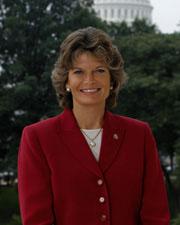 Sen. Lisa Murkowski (R-AK)
What it changes
1 change to S.Amdt. 5499
Adds SEC. ___. PROGRAMS TO ADDRESS SUBSTANCE USE DISORDER wherever appropriate
Adds a sectionInserted: SEC. ___. PROGRAMS TO ADDRESS SUBSTANCE USE DISORDER.
Inserted: (a) Short Title.--This section may be cited as "Bruce's Law".
Inserted: (b) Awareness Campaigns.--
Inserted: (1) Opioid program.--Section 102 of the Comprehensive Addiction and Recovery Act of 2016 (Public Law 114-198) is amended--
Inserted: (A) in the section heading, by inserting "relating to opioids" after "campaigns"; and
Inserted: (B) in subsection (c)--
Inserted: (i) in paragraph (1), by inserting "and" after the semicolon;
Inserted: (ii) in paragraph (2)(B), by striking "; and" and inserting a period; and
Inserted: (iii) by striking paragraph (3).
Inserted: (2) Additional campaign.--Title I of the Comprehensive Addiction and Recovery Act of 2016 (Public Law 114-198) is amended by inserting after section 102 the following:
Inserted: "SEC. 102A. AWARENESS CAMPAIGN RELATED TO LETHALITY OF FENTANYL AND FENTANYL-CONTAMINATED DRUGS.
Inserted: "(a) In General.--The Secretary of Health and Human Services, in coordination with the heads of other Federal departments and agencies, shall, as appropriate, through a public awareness campaign, advance the education and awareness of the public (including school-aged children, youth, parents, first responders, and providers) and other appropriate entities regarding the risk of counterfeit drugs being contaminated with fentanyl or other synthetic opioids and the lethality and other dangers of synthetic opioids.
Show 45 more inserted paragraphsShow less
Inserted: "(b) Topics.--The education and awareness campaigns under subsection (a) shall address--
Inserted: "(1) the dangers of using drugs which may be contaminated with fentanyl or other synthetic opioids;
Inserted: "(2) the prevention of substance use disorder and use of drugs other than as prescribed, including through safe disposal of prescription medications and other safety precautions; and
Inserted: "(3) the detection of early warning signs of substance use disorder and addiction in school-aged children and youth.
Inserted: "(c) Other Requirements.--The education and awareness campaigns under subsection (a) shall, as appropriate, take into account any association between the use of prescription drugs other than as prescribed and the use of drugs that can be contaminated by fentanyl or other synthetic opioids, including heroin.
Inserted: "(d) Drug Defined.--In this section, the term 'drug' means an illicit drug, such as marijuana, hashish, cocaine (including crack cocaine), inhalants, hallucinogens, heroin, a synthetic opioid, methamphetamine or other stimulant, a counterfeit prescription drug, or a prescription drug that is sold illegally.
Inserted: "(e) Authorization of Appropriations.--There are authorized to be appropriated for fiscal years 2023 through 2027 such sums as may be necessary to carry out this section.".
Inserted: (c) Federal Interagency Work Group on Fentanyl Contamination of Illegal Drugs.--Title I of the Comprehensive Addiction and Recovery Act of 2016 (Public Law 114-198), as amended by subsection (b)(2), is further amended by inserting after section 102A the following:
Inserted: "SEC. 102B. FEDERAL INTERAGENCY WORK GROUP ON FENTANYL CONTAMINATION OF ILLEGAL DRUGS.
Inserted: "(a) Establishment.--The Secretary of Health and Human Services (referred to in this section as the 'Secretary') shall establish the Federal Interagency Work Group on Fentanyl Contamination of Illegal Drugs (referred to in this section as the 'Work Group').
Inserted: "(b) Membership; Consultation.--
Inserted: "(1) Composition.--Not later than 120 days after the date of enactment of Bruce's Law, the heads of the Office of National Drug Control Policy, the Substance Abuse and Mental Health Services Administration, the Administration for Children and Families, the Centers for Disease Control and Prevention, the Department of Justice, the Drug Enforcement Administration, the Department of State, the Department of Education, and other Federal agencies (as determined by the Secretary) shall designate representatives of the respective agency or office to the Work Group.
Inserted: "(2) Consultation.--The Work Group shall consult with--
Inserted: "(A) experts at the State, Tribal, and local levels with relevant backgrounds in reducing, preventing, and responding to drug overdose by fentanyl contamination of illegal drugs;
Inserted: "(B) individuals in recovery from misuse of fentanyl or other synthetic opioids;
Inserted: "(C) family members of adults who have overdosed by fentanyl-contaminated illegal drugs;
Inserted: "(D) family members of school-aged children and youth who have overdosed by fentanyl-contaminated illegal drugs;
Inserted: "(E) researchers and other experts in the design and implementation of effective drug-related messaging and prevention campaigns; and
Inserted: "(F) technology companies.
Inserted: "(c) Duties.--The Work Group shall--
Inserted: "(1) examine all Federal efforts directed towards reducing and preventing drug overdose by fentanyl- or other synthetic opioid-contaminated illegal drugs;
Inserted: "(2) identify strategies, resources, and supports to improve State, Tribal, and local responses to overdose by fentanyl- or other synthetic opioid-contaminated illegal drugs;
Inserted: "(3) make recommendations to Congress for improving Federal programs and efforts and coordination across such programs and efforts to reduce and prevent drug overdose by fentanyl- or other synthetic opioid-contaminated illegal drugs; and
Inserted: "(4) make recommendations for educating youth on the dangers of drugs contaminated by fentanyl or other synthetic opioids.
Inserted: "(d) Annual Report to Secretary.--The Work Group shall annually prepare and submit to the Secretary, the Committee on Health, Education, Labor, and Pensions of the Senate, and the Committee on Education and Labor and the Committee on Energy and Commerce of the House of Representatives, a report on the activities carried out by the Work Group under subsection (c), including recommendations to reduce and prevent drug overdose by fentanyl or other synthetic opioid contamination of illegal drugs, in all populations, and specifically among youth at risk for substance use disorder and use of drugs other than as prescribed.".
Inserted: (d) Community-based Coalition Enhancement Grants to Address Local Drug Crises.--Section 103(i) of the Comprehensive Addiction and Recovery Act of 2016 (21 U.S.C. 1536(i)) is amended by striking "2017 through 2021" and inserting "2023 through 2027".
Inserted: (e) Community-based Coalition Enhancement Grants to Educate Youth on the Risks of Drugs Contaminated With Fentanyl or Other Synthetic Opioids.--Title I of the Comprehensive Addiction and Recovery Act of 2016 (Public Law 114-198) is amended by inserting after section 103 the following:
Inserted: "SEC. 103A. COMMUNITY-BASED COALITION ENHANCEMENT GRANTS TO EDUCATE YOUTH ON THE RISKS OF DRUGS CONTAMINATED WITH FENTANYL OR OTHER SYNTHETIC OPIOIDS.
Inserted: "(a) Program Authorized.--The Director of the Office of National Drug Control Policy (referred to in this section as the 'Director'), in coordination with the Director of the Centers for Disease Control and Prevention, may make grants to eligible entities to implement education of the public on the dangers of contamination of drugs with fentanyl or other synthetic opioids.
Inserted: "(b) Application.--
Inserted: "(1) In general.--An eligible entity seeking a grant under this section shall submit an application to the Director at such time, in such manner, and accompanied by such information as the Director may require.
Inserted: "(2) Criteria.--As part of an application for a grant under this section, the Director shall require an eligible entity to submit a detailed, comprehensive, multisector plan for addressing the implementation of an evidence-based public education campaign on the dangers of drugs contaminated with fentanyl or other synthetic opioids, with a specific consideration given to education focused on youth at increased risk for developing a substance use disorder.
Inserted: "(3) Eligible entities.--For purposes of this section, the term 'eligible entity'--
Inserted: "(A) means an entity that has documented, using local data, rates of drug overdose related to fentanyl or other synthetic opioids at levels that are significant, as determined by the Director; and
Inserted: "(B) may include an entity that has received a grant under the Drug-Free Communities Act of 1997.
Inserted: "(c) Use of Funds.--An eligible entity shall use a grant received under this section--
Inserted: "(1) for programs designed to implement comprehensive community-wide prevention strategies to address the dangers of drugs contaminated with fentanyl or other synthetic opioids, in the area served by the eligible entity, in accordance with the plan submitted under subsection (b)(2);
Inserted: "(2) to obtain specialized training and technical assistance from the organization funded under section 4 of Public Law 107-82 (21 U.S.C. 1521 note); and
Inserted: "(3) for programs designed to implement comprehensive community-wide strategies to address the dangers of drugs contaminated with fentanyl or other synthetic opioids in the community.
Inserted: "(d) Supplement Not Supplant.--An eligible entity shall use Federal funds received under this section only to supplement the funds that would, in the absence of those Federal funds, be made available from other Federal and non-Federal sources for the activities described in this section, and not to supplant those funds.
Inserted: "(e) Evaluation.--A grant under this section shall be subject to the same evaluation requirements and procedures as the evaluation requirements and procedures imposed on the recipient of a grant under the Drug-Free Communities Act of 1997, and shall also include an evaluation of the effectiveness at reducing the use of illicit fentanyl or other synthetic opioids.
Inserted: "(f) Limitation on Administrative Expenses.--Not more than 12 percent of the amounts made available to carry out this section for a fiscal year may be used to pay for administrative expenses.
Inserted: "(g) Delegation Authority.--The Director may enter into an interagency agreement with the Director of the Centers for Disease Control and Prevention to delegate authority for the execution of grants and for such other activities, as the Director determines necessary to carry out this section.
Inserted: "(h) Definition.--In this section, the term 'drug' means an illicit drug, such as marijuana, hashish, cocaine (including crack cocaine), inhalants, hallucinogens, heroin, a synthetic opioid, methamphetamine or other stimulant, a counterfeit prescription drug, or a prescription drug that is sold illegally.
Inserted: "(i) Authorization of Appropriations.--For the purpose of carrying out this section, there are authorized to be appropriated such sums as may be necessary for each of fiscal years 2023 through 2027.".
The amendment doesn't say where this goes; the clerk decides.
Original wording
At the appropriate place, insert the following:
Read automatically from the Congressional Record. Check the original before relying on it.
As printed
SA 6103. Ms. MURKOWSKI (for herself, Mrs. Feinstein, Mr. Sullivan, and Ms. Hassan) submitted an amendment intended to be proposed to amendment SA 5499 submitted by Mr. Reed (for himself and Mr. Inhofe) and intended to be proposed to the bill H.R. 7900, to authorize appropriations for fiscal year 2023 for military activities of the Department of Defense, for military construction, and for defense activities of the Department of Energy, to prescribe military personnel strengths for such fiscal year, and for other purposes; which was ordered to lie on the table; as follows:
At the appropriate place, insert the following:
SEC. ___. PROGRAMS TO ADDRESS SUBSTANCE USE DISORDER.
(a) Short Title.--This section may be cited as “Bruce's Law”.
(b) Awareness Campaigns.--
(1) Opioid program.--Section 102 of the Comprehensive Addiction and Recovery Act of 2016 (Public Law 114-198) is amended--
(A) in the section heading, by inserting “relating to opioids” after “campaigns”; and
(B) in subsection (c)--
(i) in paragraph (1), by inserting “and” after the semicolon;
(ii) in paragraph (2)(B), by striking “; and” and inserting a period; and
(iii) by striking paragraph (3).
(2) Additional campaign.--Title I of the Comprehensive Addiction and Recovery Act of 2016 (Public Law 114-198) is amended by inserting after section 102 the following:
“SEC. 102A. AWARENESS CAMPAIGN RELATED TO LETHALITY OF FENTANYL AND FENTANYL-CONTAMINATED DRUGS.
“(a) In General.--The Secretary of Health and Human Services, in coordination with the heads of other Federal departments and agencies, shall, as appropriate, through a public awareness campaign, advance the education and awareness of the public (including school-aged children, youth, parents, first responders, and providers) and other appropriate entities regarding the risk of counterfeit drugs being contaminated with fentanyl or other synthetic opioids and the lethality and other dangers of synthetic opioids.
“(b) Topics.--The education and awareness campaigns under subsection (a) shall address--
“(1) the dangers of using drugs which may be contaminated with fentanyl or other synthetic opioids;
“(2) the prevention of substance use disorder and use of drugs other than as prescribed, including through safe disposal of prescription medications and other safety precautions; and
“(3) the detection of early warning signs of substance use disorder and addiction in school-aged children and youth.
“(c) Other Requirements.--The education and awareness campaigns under subsection (a) shall, as appropriate, take into account any association between the use of prescription drugs other than as prescribed and the use of drugs that can be contaminated by fentanyl or other synthetic opioids, including heroin.
“(d) Drug Defined.--In this section, the term ‘drug' means an illicit drug, such as marijuana, hashish, cocaine (including crack cocaine), inhalants, hallucinogens, heroin, a synthetic opioid, methamphetamine or other stimulant, a counterfeit prescription drug, or a prescription drug that is sold illegally.
“(e) Authorization of Appropriations.--There are authorized to be appropriated for fiscal years 2023 through 2027 such sums as may be necessary to carry out this section.”.
(c) Federal Interagency Work Group on Fentanyl Contamination of Illegal Drugs.--Title I of the Comprehensive Addiction and Recovery Act of 2016 (Public Law 114-198), as amended by subsection (b)(2), is further amended by inserting after section 102A the following:
“SEC. 102B. FEDERAL INTERAGENCY WORK GROUP ON FENTANYL CONTAMINATION OF ILLEGAL DRUGS.
“(a) Establishment.--The Secretary of Health and Human Services (referred to in this section as the ‘Secretary') shall establish the Federal Interagency Work Group on Fentanyl Contamination of Illegal Drugs (referred to in this section as the ‘Work Group').
“(b) Membership; Consultation.--
“(1) Composition.--Not later than 120 days after the date of enactment of Bruce's Law, the heads of the Office of National Drug Control Policy, the Substance Abuse and Mental Health Services Administration, the Administration for Children and Families, the Centers for Disease Control and Prevention, the Department of Justice, the Drug Enforcement Administration, the Department of State, the Department of Education, and other Federal agencies (as determined by the Secretary) shall designate representatives of the respective agency or office to the Work Group.
“(2) Consultation.--The Work Group shall consult with--
“(A) experts at the State, Tribal, and local levels with relevant backgrounds in reducing, preventing, and responding to drug overdose by fentanyl contamination of illegal drugs;
“(B) individuals in recovery from misuse of fentanyl or other synthetic opioids;
“(C) family members of adults who have overdosed by fentanyl-contaminated illegal drugs;
“(D) family members of school-aged children and youth who have overdosed by fentanyl-contaminated illegal drugs;
“(E) researchers and other experts in the design and implementation of effective drug-related messaging and prevention campaigns; and
“(F) technology companies.
“(c) Duties.--The Work Group shall--
“(1) examine all Federal efforts directed towards reducing and preventing drug overdose by fentanyl- or other synthetic opioid-contaminated illegal drugs;
“(2) identify strategies, resources, and supports to improve State, Tribal, and local responses to overdose by fentanyl- or other synthetic opioid-contaminated illegal drugs;
“(3) make recommendations to Congress for improving Federal programs and efforts and coordination across such programs and efforts to reduce and prevent drug overdose by fentanyl- or other synthetic opioid-contaminated illegal drugs; and
“(4) make recommendations for educating youth on the dangers of drugs contaminated by fentanyl or other synthetic opioids.
“(d) Annual Report to Secretary.--The Work Group shall annually prepare and submit to the Secretary, the Committee on Health, Education, Labor, and Pensions of the Senate, and the Committee on Education and Labor and the Committee on Energy and Commerce of the House of Representatives, a report on the activities carried out by the Work Group under subsection (c), including recommendations to reduce and prevent drug overdose by fentanyl or other synthetic opioid contamination of illegal drugs, in all populations, and specifically among youth at risk for substance use disorder and use of drugs other than as prescribed.”.
(d) Community-based Coalition Enhancement Grants to Address Local Drug Crises.--Section 103(i) of the Comprehensive Addiction and Recovery Act of 2016 (21 U.S.C. 1536(i)) is amended by striking “2017 through 2021” and inserting “2023 through 2027”.
(e) Community-based Coalition Enhancement Grants to Educate Youth on the Risks of Drugs Contaminated With Fentanyl or Other Synthetic Opioids.--Title I of the Comprehensive Addiction and Recovery Act of 2016 (Public Law 114-198) is amended by inserting after section 103 the following:
“SEC. 103A. COMMUNITY-BASED COALITION ENHANCEMENT GRANTS TO EDUCATE YOUTH ON THE RISKS OF DRUGS CONTAMINATED WITH FENTANYL OR OTHER SYNTHETIC OPIOIDS.
“(a) Program Authorized.--The Director of the Office of National Drug Control Policy (referred to in this section as the ‘Director'), in coordination with the Director of the Centers for Disease Control and Prevention, may make grants to eligible entities to implement education of the public on the dangers of contamination of drugs with fentanyl or other synthetic opioids.
“(b) Application.--
“(1) In general.--An eligible entity seeking a grant under this section shall submit an application to the Director at such time, in such manner, and accompanied by such information as the Director may require.
“(2) Criteria.--As part of an application for a grant under this section, the Director shall require an eligible entity to submit a detailed, comprehensive, multisector plan for addressing the implementation of an evidence-based public education campaign on the dangers of drugs contaminated with fentanyl or other synthetic opioids, with a specific consideration given to education focused on youth at increased risk for developing a substance use disorder.
“(3) Eligible entities.--For purposes of this section, the term ‘eligible entity'--
“(A) means an entity that has documented, using local data, rates of drug overdose related to fentanyl or other synthetic opioids at levels that are significant, as determined by the Director; and
“(B) may include an entity that has received a grant under the Drug-Free Communities Act of 1997.
“(c) Use of Funds.--An eligible entity shall use a grant received under this section--
“(1) for programs designed to implement comprehensive community-wide prevention strategies to address the dangers of drugs contaminated with fentanyl or other synthetic opioids, in the area served by the eligible entity, in accordance with the plan submitted under subsection (b)(2);
“(2) to obtain specialized training and technical assistance from the organization funded under section 4 of Public Law 107-82 (21 U.S.C. 1521 note); and
“(3) for programs designed to implement comprehensive community-wide strategies to address the dangers of drugs contaminated with fentanyl or other synthetic opioids in the community.
“(d) Supplement Not Supplant.--An eligible entity shall use Federal funds received under this section only to supplement the funds that would, in the absence of those Federal funds, be made available from other Federal and non-Federal sources for the activities described in this section, and not to supplant those funds.
“(e) Evaluation.--A grant under this section shall be subject to the same evaluation requirements and procedures as the evaluation requirements and procedures imposed on the recipient of a grant under the Drug-Free Communities Act of 1997, and shall also include an evaluation of the effectiveness at reducing the use of illicit fentanyl or other synthetic opioids.
“(f) Limitation on Administrative Expenses.--Not more than 12 percent of the amounts made available to carry out this section for a fiscal year may be used to pay for administrative expenses.
“(g) Delegation Authority.--The Director may enter into an interagency agreement with the Director of the Centers for Disease Control and Prevention to delegate authority for the execution of grants and for such other activities, as the Director determines necessary to carry out this section.
“(h) Definition.--In this section, the term ‘drug' means an illicit drug, such as marijuana, hashish, cocaine (including crack cocaine), inhalants, hallucinogens, heroin, a synthetic opioid, methamphetamine or other stimulant, a counterfeit prescription drug, or a prescription drug that is sold illegally.
“(i) Authorization of Appropriations.--For the purpose of carrying out this section, there are authorized to be appropriated such sums as may be necessary for each of fiscal years 2023 through 2027.”.
Legislative Activity
Stay on top of the latest movement without scrolling through every action
Senate amendment submitted
September 29, 2022