S.Amdt. 6377
What it does: Adds SEC. ___. ANTI-MONEY LAUNDERING SAFEGUARDS REGARDING GATEKEEPERS wherever appropriate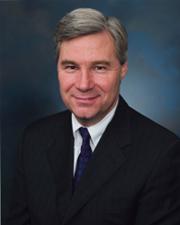 Sen. Sheldon Whitehouse (D-RI)
What it changes
1 change to S.Amdt. 5499
Adds SEC. ___. ANTI-MONEY LAUNDERING SAFEGUARDS REGARDING GATEKEEPERS wherever appropriate
Adds a sectionInserted: SEC. ___. ANTI-MONEY LAUNDERING SAFEGUARDS REGARDING GATEKEEPERS.
Inserted: (a) Short Title.--This section may be cited as the "Establishing New Authorities for Business Laundering and Enabling Risks to Security Act of 2022" or the "ENABLERS Act of 2022".
Inserted: (b) Findings.--Congress finds the following:
Inserted: (1) Kleptocrats and other corrupt actors across the world are increasingly relying on non-bank professional service providers, including those operating in the United States, to move, hide, and grow their ill-gotten gains.
Inserted: (2) In 2003, the Financial Action Task Force (referred to in this subsection as the "FATF"), an intergovernmental body formed by the United States and other major industrial nations, determined that designated non-financial businesses and professions should be subject to the same anti-money laundering and counter-terrorist financing rules and regulations as financial institutions, including the requirement to know your customer or client and to perform due diligence, as well as to file suspicious transaction reports, referred to as suspicious activity reports or "SARs" in the United States.
Inserted: (3) In 2016, an FATF evaluation of the United States rated the United States as noncompliant with 4 of the 40 recommendations of the FATF regarding combating money laundering and the financing of terrorism and proliferation. Of the 4 noncompliant ratings described in the preceding sentence, 3 of those ratings pertained to designated non-financial businesses and professions, including lawyers, accountants, and trust and company service providers, and the fourth such rating pertained to transparency and the beneficial ownership of legal entities. The United States also received the lowest mark from the FATF for the effectiveness of the United States in combating the misuse of legal entities. The FATF evaluation listed, as a priority action, applying appropriate anti-money laundering and countering the financing of terrorism obligations "to lawyers, accountants, trust and company service providers (other than trust companies which are already covered)" to improve the anti-money laundering and counter-terrorist financing regime in the United States.
Inserted: (4) In line with the procedures of the FATF, members of the FATF are expected to address deficiencies in the regimes of those members not later than 3 years after adopting their mutual evaluation. In March 2020, the FATF published the "3rd Enhanced Follow-up Report & Technical Compliance Re-Rating" with respect to the United States, which continued to score the United States noncompliant with respect to the 4 recommendations described in paragraph (3).
Inserted: (5) On January 1, 2021, the United States took steps to address the non-compliant rating of the United States with respect to the beneficial ownership of legal entities through the enactment of the Corporate Transparency Act (title LXIV of Public Law 116-283), but, as of the date of enactment of this Act, Congress has yet to address the non-compliant rating of the United States with respect to designated non-financial businesses and professions.
Inserted: (6) In October 2021, the "Pandora Papers", the largest expose of global financial data in history, revealed to a global audience how the United States plays host to a highly specialized group of "enablers" that help the world's elite move, hide, and grow their money.
Inserted: (7) The Pandora Papers described how an adviser to the former Prime Minister of Malaysia reportedly used affiliates of a United States law firm to assemble and consult a network of companies, despite the adviser fitting the "textbook definition" of a high-risk client. The adviser went on to use his companies to help steal $4,500,000,000 from Malaysia's public investment fund in one of "the world's biggest-ever financial frauds", known as 1MDB.
Inserted: (8) Russian oligarchs have used gatekeepers to move their money into the United States. For example, a gatekeeper formed a company in Delaware that reportedly owns a $15,000,000 mansion in Washington, D.C., that is linked to one of Vladimir Putin's closest allies. Also reportedly connected to the oligarch is a $14,000,000 townhouse in New York City owned by a separate Delaware company.
Inserted: (9) On May 8, 2022, the Office of Foreign Assets Control of the Department of the Treasury (referred to in this subsection as "OFAC"), pursuant to Executive Order 14071 (87 Fed. Reg. 20999; relating to prohibiting new investment in and certain services to the Russian Federation in response to continued Russian Federation aggression), prohibited "the exportation, reexportation, sale, or supply, directly or indirectly, from the United States, or by a United States person, wherever located, of accounting, trust and corporate formation, or management consulting services to any person located in the Russian Federation.".
Show 88 more inserted paragraphsShow less
Inserted: (10) On June 30, 2022, OFAC blocked a trust holding more than $1,000,000,000 linked to designated Russian oligarch Suleiman Kerimov. These efforts revealed that Kerimov used a complex series of legal structures and front persons to obscure his interest in Heritage Trust, the funds of which first entered the financial system of the United States through 2 foreign, Kerimov-controlled entities before the imposition of sanctions against him. The funds were subsequently invested in large public and private companies in the United States and managed by a series of investment firms and facilitators in the United States.
Inserted: (11) The Pandora Papers uncovered more than 200 United States-based trusts across 15 States that held assets of more than $1,000,000,000, "including nearly 30 trusts that held assets linked to people or companies accused of fraud, bribery, or human rights abuses". In particular, South Dakota, Nevada, Delaware, Florida, Wyoming, and New Hampshire have emerged as global hotspots for those seeking to hide their assets and minimize their tax burdens.
Inserted: (12) In 2016, an investigator with the nonprofit organization Global Witness posed as an adviser to a corrupt African official and set up meetings with 13 New York City law firms to discuss how to move suspect funds into the United States. Lawyers from all but 1 of the firms provided advice to the faux adviser, including advice on how to utilize anonymous companies to obscure the true owner of the assets. Other suggestions included naming the lawyer as a trustee of an offshore trust in order to open a bank account and using the law firm's escrow account to receive payments.
Inserted: (13) The autocratic Prime Minister of Iraqi Kurdistan, reportedly known for torturing and killing journalists and critics, allegedly purchased a retail store valued at more than $18,000,000 in Miami, Florida, with the assistance of a Pennsylvania-based law firm.
Inserted: (14) Teodoro Obiang, the Vice President of Equatorial Guinea and son of the country's authoritarian President, embezzled millions of dollars from his home country, which was then used to purchase luxury assets in the United States. Obiang relied on the assistance of 2 lawyers in the United States to move millions of dollars of suspect funds through United States banks. The lawyers incorporated 5 shell companies in California and opened bank accounts associated with the companies for Obiang's personal use. The suspect funds were first wired to the lawyers' attorney-client and firm accounts, then transferred to the accounts of the shell companies.
Inserted: (15) A consulting company in the United States reportedly made millions of dollars working for companies owned or partly owned by Isabel dos Santos, the eldest child of a former President of Angola. This included working with Angola's state oil company when it was run by Isabel dos Santos and helping to "run a failing jewelry business acquired with Angolan money". In 2021, a Dutch tribunal found that Isabel dos Santos and her husband obtained a $500,000,000 stake in the oil company through "grand corruption".
Inserted: (16) In December 2021, the United States Government issued a first-ever "United States Strategy on Countering Corruption", which includes "Curbing Illicit Finance" as a strategic pillar. An express line of effort to advance this strategic pillar states that: "Deficiencies in the U.S. regulatory framework mean various professionals and service providers--including lawyers, accountants, trust and company service providers, incorporators, and others willing to be hired as registered agents or who act as nominees to open and move funds through bank accounts--are not required to understand the nature or source of income of their clients or prospective clients. . .While U.S. law enforcement has increased its focus on such facilitators, it is both difficult to prove 'intent and knowledge' that a facilitator was dealing with illicit funds or bad actors, or that they should have known the same. Cognizant of such constraints, the Administration will consider additional authorities to cover key gatekeepers, working with the Congress as necessary to secure additional authorities".
Inserted: (17) This section, and the amendments made by this section, provide the authorities needed to require that professional service providers that serve as key gatekeepers to the financial system of the United States adopt anti-money laundering procedures that can help detect and prevent the laundering of corrupt and other criminal funds into the United States. Absent such authorities, the United States Government will be unable to adequately protect the financial system of the United States, identify funds and assets that are the proceeds of corruption and other crimes, support foreign states in their efforts to combat corruption and promote good governance, or maintain the role of the United States as a leader in international bodies that are committed to combating money laundering and corruption.
Inserted: (c) Requirements for Gatekeepers.--
Inserted: (1) In general.--Section 5312(a)(2) of title 31, United States Code, as amended by section 6110(a) of the William M. (Mac) Thornberry National Defense Authorization Act for Fiscal Year 2021 (Public Law 116-283), is amended--
Inserted: (A) by redesignating subparagraphs (Z) and (AA) as subparagraphs (AA) and (BB), respectively; and
Inserted: (B) by inserting after subparagraph (Y) the following:
Inserted: "(Z) any person, excluding any governmental entity, employee, or agent, that provides to a third party--
Inserted: "(i) a service described in section 5337(a)(2);
Inserted: "(ii) corporate or other legal entity arrangement, association, or formation services;
Inserted: "(iii) trust services;
Inserted: "(iv) third party payment services; or
Inserted: "(v) legal or accounting services that--
Inserted: "(I) involve financial activities that facilitate a service described in any of clauses (i) through (iv); and
Inserted: "(II) are not provided in exchange for direct compensation for civil or criminal defense matters;".
Inserted: (2) Requirements for gatekeepers.--Subchapter II of chapter 53 of title 31, United States Code, is amended by adding at the end the following:
Inserted: "Sec. 5337. Requirements for gatekeepers
Inserted: "(a) In General.--
Inserted: "(1) In general.--The Secretary of the Treasury (referred to in this section as the 'Secretary') shall, not later than 4 years after the date of enactment of this section, issue regulations to--
Inserted: "(A) determine what persons fall within the class of persons acting as described in section 5312(a)(2)(Z); and
Inserted: "(B) prescribe appropriate requirements under this subchapter for the persons described in subparagraph (A).
Inserted: "(2) Identification of persons.--When determining what persons fall within the class of persons acting as described in section 5312(a)(2)(Z), the Secretary of the Treasury shall consider, on a risk basis--
Inserted: "(A) any person involved in the provision of services to a third party regarding--
Inserted: "(i) the formation or registration of a corporation, limited liability company, trust, foundation, limited liability partnership, partnership, or other similar entity;
Inserted: "(ii) the acquisition or disposition of an interest in a corporation, limited liability company, trust, foundation, limited liability partnership, partnership, or other similar entity;
Inserted: "(iii) the provision of a registered office, an address or accommodation, correspondence, or an administrative address for a corporation, limited liability company, trust, foundation, limited liability partnership, partnership, or other similar entity;
Inserted: "(iv) managing, advising, or consulting with respect to money or other assets;
Inserted: "(v) the processing of payments;
Inserted: "(vi) the provision of cash vault services;
Inserted: "(vii) the wiring of money;
Inserted: "(viii) the exchange of foreign currency;
Inserted: "(ix) the exchange of any digital currency, digital asset, or other value that substitutes for currency; or
Inserted: "(x) the sourcing, pooling, organization, or management of capital in association with the formation, operation, or management of, or investment in, a corporation, limited liability company, trust, foundation, limited liability partnership, partnership, or other similar entity;
Inserted: "(B) any person that, in connection with filing any return, directly or indirectly, on behalf of a foreign individual, trust, or fiduciary with respect to direct or indirect United States investment, transaction, trade or business, or similar activities--
Inserted: "(i) obtains or uses a preparer tax identification number; or
Inserted: "(ii) would be required to use or obtain a preparer tax identification number, if that person were compensated for services rendered;
Inserted: "(C) any person providing a service to a third party by acting as, or arranging for another person to act as, a registered agent, trustee, director, secretary, nominee shareholder, partner of a company, partner of a partnership, or similar position with respect to a corporation, limited liability company, trust, foundation, limited liability partnership, or other similar activity; and
Inserted: "(D) any service provider described in subparagraph (A), (B), or (C), wherever organized or doing business, that--
Inserted: "(i) is owned or controlled by a person described in any such subparagraph;
Inserted: "(ii) acts as an agent of a person described in any such subparagraph; or
Inserted: "(iii) is an instrumentality of a person described in any such subparagraph.
Inserted: "(3) Sense of congress.--It is the sense of Congress that, when issuing regulations under this subsection, the Secretary shall design those regulations to--
Inserted: "(A) minimize the burden of those regulations and maximize the intended outcomes of those regulations, as determined by the Secretary; and
Inserted: "(B) avoid applying additional requirements for persons that may fall within the class of persons described in section 5312(a)(2)(Z) but that are already, as determined by the Secretary, appropriately regulated under this subchapter.
Inserted: "(b) Enforcement.--
Inserted: "(1) Random audits.--Not later than 1 year after the date on which the Secretary issues the regulations required under subsection (a), and on an ongoing basis thereafter, the Secretary shall conduct random audits of persons that fall within the class of persons described in section 5312(a)(2)(Z), including persons described in subsection (a)(2), in a manner that the Secretary determines appropriate, to assess compliance with the requirements of this section.
Inserted: "(2) Reports.--The Secretary shall, not later than 180 days after the conclusion of any calendar year that begins after the date that is 1 year after the date on which the Secretary issues regulations pursuant to subsection (a), submit to the Committee on Banking, Housing, and Urban Affairs of the Senate and the Committee on Financial Services of the House of Representatives a report that--
Inserted: "(A) describes the results of any random audits conducted pursuant to paragraph (1) during such calendar year; and
Inserted: "(B) includes recommendations for improving the effectiveness of the requirements imposed under this section on persons described in section 5312(a)(2)(Z), including persons described in subsection (a)(2).".
Inserted: (3) Conforming amendment.--The table of sections for subchapter II of chapter 53 of title 31, United States Code, is amended by inserting after the item relating to section 5336 the following:
Inserted: "5337. Requirements for gatekeepers.".
Inserted: (4) Use of technology to increase efficiency and accuracy of information.--The Secretary of the Treasury shall promote--
Inserted: (A) the integrity of information collected under this section and the amendments made by this section; and
Inserted: (B) if applicable, the timely and efficient collection of information by persons described in section 5312(a)(2)(Z) of title 31, United States Code, as so redesignated by this subsection, including persons described in subsection (a)(2) of section 5337 of that title, as added by this subsection, by exploring the use of technologies to--
Inserted: (i) effectuate the collection, standardization, transmission, and sharing of information that the Secretary may require under such section 5337; and
Inserted: (ii) minimize the burdens associated with the collection, standardization, transmission, and sharing of information that the Secretary may require under such section 5337.
Inserted: (5) Effective date.--This subsection, and the amendments made by this subsection, shall take effect on the effective date of the regulations issued by the Secretary of the Treasury pursuant to section 5337(a) of title 31, United States Code, as added by this subsection.
Inserted: (d) Gatekeepers Strategy.--Section 262 of the Countering Russian Influence in Europe and Eurasia Act of 2017 (title II of Public Law 115-44) is amended by adding at the end the following:
Inserted: "(11) Gatekeeper strategy.--
Inserted: "(A) In general.--A description of efforts to impose sufficient anti-money laundering safeguards on designated non-financial businesses and professions, as that term is defined by the Financial Action Task Force.
Inserted: "(B) Update.--If, as of the date of enactment of this paragraph, the updates to the national strategy required under section 261 have been submitted to appropriate congressional committees, the President, acting through the Secretary of the Treasury, shall, not later than 1 year after that date of enactment, submit to the appropriate congressional committees an additional update to the national strategy with respect to the addition of this paragraph.".
Inserted: (e) Agency Coordination and Collaboration.--The Secretary of the Treasury shall, to the greatest extent practicable--
Inserted: (1) establish relationships with State, local, territorial, and Tribal governmental agencies; and
Inserted: (2) work collaboratively with the governmental agencies described in paragraph (1) to implement and enforce the regulations prescribed under this section, and the amendments made by this section, by--
Inserted: (A) using the Domestic Liaisons appointed under section 310(f) of title 31, United States Code, to share information regarding changes effectuated by this section and the amendments made by this section;
Inserted: (B) using the Domestic Liaisons appointed under section 310(f) of title 31, United States Code, to advise on necessary revisions to State, local, territorial, and Tribal standards with respect to relevant professional licensure;
Inserted: (C) engaging with various persons described in section 5312(a)(2)(Z) of title 31, United States Code, as so redesignated by subsection (c) (including persons described in section 5337(a)(2) of that title, as added by subsection (c)), as appropriate, including with respect to information sharing and data sharing; and
Inserted: (D) working with State, local, territorial, and Tribal governmental agencies to levy professional sanctions on persons that facilitate corruption, money laundering, the financing of terrorist activities, and other related crimes.
Inserted: (f) Report.--Not later than 3 years after the date of enactment of this Act, the Secretary of the Treasury shall submit to the Committee on Banking, Housing, and Urban Affairs of the Senate and the Committee on Financial Services of the House of Representatives a report that--
Inserted: (1) describes any findings of the Secretary with respect to technologies that may effectuate the collection, standardization, transmission, and sharing of information that the Secretary may require under section 5337 of title 31, United States Code, as added by subsection (c); and
Inserted: (2) makes recommendations for implementing the technologies described in paragraph (1).
Inserted: (g) Authorization of Appropriations.--In addition to amounts otherwise available for such purposes, there are authorized to be appropriated to the Secretary of the Treasury, without fiscal year limitation, such sums as may be necessary, to remain available until expended, exclusively for the purpose of carrying out this section and the amendments made by this section, including for--
Inserted: (1) the appointment of personnel;
Inserted: (2) the exploration and adoption of information technology to effectively support enforcement activities or activities described in subsection (c) and the amendments made by that subsection;
Inserted: (3) audit, investigatory, and review activities, including those described in subsection (c) and the amendments made by that subsection;
Inserted: (4) agency coordination and collaboration efforts and activities described in subsection (e);
Inserted: (5) voluntary compliance programs;
Inserted: (6) compiling the reports required under--
Inserted: (A) subsection (c);
Inserted: (B) the amendments made by subsection (c); and
Inserted: (C) subsection (f); and
Inserted: (7) allocating amounts to State, local, territorial, and Tribal jurisdictions to pay reasonable costs relating to compliance with, or enforcement of, the requirements of this section and the amendments made by this section.
Inserted: (h) Rule of Construction.--Nothing in this section, or the amendments made by this section, may be construed to be limited or impeded by any obligations under State, local, territorial, or Tribal laws or rules concerning privilege, ethics, confidentiality, privacy, or related matters.
The amendment doesn't say where this goes; the clerk decides.
Original wording
At the appropriate place, insert the following:
Read automatically from the Congressional Record. Check the original before relying on it.
As printed
SA 6377. Mr. WHITEHOUSE (for himself and Mr. Wicker) submitted an amendment intended to be proposed to amendment SA 5499 submitted by Mr. Reed (for himself and Mr. Inhofe) and intended to be proposed to the bill H.R. 7900, to authorize appropriations for fiscal year 2023 for military activities of the Department of Defense, for military construction, and for defense activities of the Department of Energy, to prescribe military personnel strengths for such fiscal year, and for other purposes; which was ordered to lie on the table; as follows:
At the appropriate place, insert the following:
SEC. ___. ANTI-MONEY LAUNDERING SAFEGUARDS REGARDING GATEKEEPERS.
(a) Short Title.--This section may be cited as the “Establishing New Authorities for Business Laundering and Enabling Risks to Security Act of 2022” or the “ENABLERS Act of 2022”.
(b) Findings.--Congress finds the following:
(1) Kleptocrats and other corrupt actors across the world are increasingly relying on non-bank professional service providers, including those operating in the United States, to move, hide, and grow their ill-gotten gains.
(2) In 2003, the Financial Action Task Force (referred to in this subsection as the “FATF”), an intergovernmental body formed by the United States and other major industrial nations, determined that designated non-financial businesses and professions should be subject to the same anti-money laundering and counter-terrorist financing rules and regulations as financial institutions, including the requirement to know your customer or client and to perform due diligence, as well as to file suspicious transaction reports, referred to as suspicious activity reports or “SARs” in the United States.
(3) In 2016, an FATF evaluation of the United States rated the United States as noncompliant with 4 of the 40 recommendations of the FATF regarding combating money laundering and the financing of terrorism and proliferation. Of the 4 noncompliant ratings described in the preceding sentence, 3 of those ratings pertained to designated non-financial businesses and professions, including lawyers, accountants, and trust and company service providers, and the fourth such rating pertained to transparency and the beneficial ownership of legal entities. The United States also received the lowest mark from the FATF for the effectiveness of the United States in combating the misuse of legal entities. The FATF evaluation listed, as a priority action, applying appropriate anti-money laundering and countering the financing of terrorism obligations “to lawyers, accountants, trust and company service providers (other than trust companies which are already covered)” to improve the anti-money laundering and counter-terrorist financing regime in the United States.
(4) In line with the procedures of the FATF, members of the FATF are expected to address deficiencies in the regimes of those members not later than 3 years after adopting their mutual evaluation. In March 2020, the FATF published the “3rd Enhanced Follow-up Report & Technical Compliance Re-Rating” with respect to the United States, which continued to score the United States noncompliant with respect to the 4 recommendations described in paragraph (3).
(5) On January 1, 2021, the United States took steps to address the non-compliant rating of the United States with respect to the beneficial ownership of legal entities through the enactment of the Corporate Transparency Act (title LXIV of Public Law 116-283), but, as of the date of enactment of this Act, Congress has yet to address the non-compliant rating of the United States with respect to designated non-financial businesses and professions.
(6) In October 2021, the “Pandora Papers”, the largest expose of global financial data in history, revealed to a global audience how the United States plays host to a highly specialized group of “enablers” that help the world's elite move, hide, and grow their money.
(7) The Pandora Papers described how an adviser to the former Prime Minister of Malaysia reportedly used affiliates of a United States law firm to assemble and consult a network of companies, despite the adviser fitting the “textbook definition” of a high-risk client. The adviser went on to use his companies to help steal $4,500,000,000 from Malaysia's public investment fund in one of “the world's biggest-ever financial frauds”, known as 1MDB.
(8) Russian oligarchs have used gatekeepers to move their money into the United States. For example, a gatekeeper formed a company in Delaware that reportedly owns a $15,000,000 mansion in Washington, D.C., that is linked to one of Vladimir Putin's closest allies. Also reportedly connected to the oligarch is a $14,000,000 townhouse in New York City owned by a separate Delaware company.
(9) On May 8, 2022, the Office of Foreign Assets Control of the Department of the Treasury (referred to in this subsection as “OFAC”), pursuant to Executive Order 14071 (87 Fed. Reg. 20999; relating to prohibiting new investment in and certain services to the Russian Federation in response to continued Russian Federation aggression), prohibited “the exportation, reexportation, sale, or supply, directly or indirectly, from the United States, or by a United States person, wherever located, of accounting, trust and corporate formation, or management consulting services to any person located in the Russian Federation.”.
(10) On June 30, 2022, OFAC blocked a trust holding more than $1,000,000,000 linked to designated Russian oligarch Suleiman Kerimov. These efforts revealed that Kerimov used a complex series of legal structures and front persons to obscure his interest in Heritage Trust, the funds of which first entered the financial system of the United States through 2 foreign, Kerimov-controlled entities before the imposition of sanctions against him. The funds were subsequently invested in large public and private companies in the United States and managed by a series of investment firms and facilitators in the United States.
(11) The Pandora Papers uncovered more than 200 United States-based trusts across 15 States that held assets of more than $1,000,000,000, “including nearly 30 trusts that held assets linked to people or companies accused of fraud, bribery, or human rights abuses”. In particular, South Dakota, Nevada, Delaware, Florida, Wyoming, and New Hampshire have emerged as global hotspots for those seeking to hide their assets and minimize their tax burdens.
(12) In 2016, an investigator with the nonprofit organization Global Witness posed as an adviser to a corrupt African official and set up meetings with 13 New York City law firms to discuss how to move suspect funds into the United States. Lawyers from all but 1 of the firms provided advice to the faux adviser, including advice on how to utilize anonymous companies to obscure the true owner of the assets. Other suggestions included naming the lawyer as a trustee of an offshore trust in order to open a bank account and using the law firm's escrow account to receive payments.
(13) The autocratic Prime Minister of Iraqi Kurdistan, reportedly known for torturing and killing journalists and critics, allegedly purchased a retail store valued at more than $18,000,000 in Miami, Florida, with the assistance of a Pennsylvania-based law firm.
(14) Teodoro Obiang, the Vice President of Equatorial Guinea and son of the country's authoritarian President, embezzled millions of dollars from his home country, which was then used to purchase luxury assets in the United States. Obiang relied on the assistance of 2 lawyers in the United States to move millions of dollars of suspect funds through United States banks. The lawyers incorporated 5 shell companies in California and opened bank accounts associated with the companies for Obiang's personal use. The suspect funds were first wired to the lawyers' attorney-client and firm accounts, then transferred to the accounts of the shell companies.
(15) A consulting company in the United States reportedly made millions of dollars working for companies owned or partly owned by Isabel dos Santos, the eldest child of a former President of Angola. This included working with Angola's state oil company when it was run by Isabel dos Santos and helping to “run a failing jewelry business acquired with Angolan money”. In 2021, a Dutch tribunal found that Isabel dos Santos and her husband obtained a $500,000,000 stake in the oil company through “grand corruption”.
(16) In December 2021, the United States Government issued a first-ever “United States Strategy on Countering Corruption”, which includes “Curbing Illicit Finance” as a strategic pillar. An express line of effort to advance this strategic pillar states that: “Deficiencies in the U.S. regulatory framework mean various professionals and service providers--including lawyers, accountants, trust and company service providers, incorporators, and others willing to be hired as registered agents or who act as nominees to open and move funds through bank accounts--are not required to understand the nature or source of income of their clients or prospective clients. . .While U.S. law enforcement has increased its focus on such facilitators, it is both difficult to prove ‘intent and knowledge' that a facilitator was dealing with illicit funds or bad actors, or that they should have known the same. Cognizant of such constraints, the Administration will consider additional authorities to cover key gatekeepers, working with the Congress as necessary to secure additional authorities”.
(17) This section, and the amendments made by this section, provide the authorities needed to require that professional service providers that serve as key gatekeepers to the financial system of the United States adopt anti-money laundering procedures that can help detect and prevent the laundering of corrupt and other criminal funds into the United States. Absent such authorities, the United States Government will be unable to adequately protect the financial system of the United States, identify funds and assets that are the proceeds of corruption and other crimes, support foreign states in their efforts to combat corruption and promote good governance, or maintain the role of the United States as a leader in international bodies that are committed to combating money laundering and corruption.
(c) Requirements for Gatekeepers.--
(1) In general.--Section 5312(a)(2) of title 31, United States Code, as amended by section 6110(a) of the William M. (Mac) Thornberry National Defense Authorization Act for Fiscal Year 2021 (Public Law 116-283), is amended--
(A) by redesignating subparagraphs (Z) and (AA) as subparagraphs (AA) and (BB), respectively; and
(B) by inserting after subparagraph (Y) the following:
“(Z) any person, excluding any governmental entity, employee, or agent, that provides to a third party--
“(i) a service described in section 5337(a)(2);
“(ii) corporate or other legal entity arrangement, association, or formation services;
“(iii) trust services;
“(iv) third party payment services; or
“(v) legal or accounting services that--
“(I) involve financial activities that facilitate a service described in any of clauses (i) through (iv); and
“(II) are not provided in exchange for direct compensation for civil or criminal defense matters;”.
(2) Requirements for gatekeepers.--Subchapter II of chapter 53 of title 31, United States Code, is amended by adding at the end the following:
“Sec. 5337. Requirements for gatekeepers
“(a) In General.--
“(1) In general.--The Secretary of the Treasury (referred to in this section as the ‘Secretary') shall, not later than 4 years after the date of enactment of this section, issue regulations to--
“(A) determine what persons fall within the class of persons acting as described in section 5312(a)(2)(Z); and
“(B) prescribe appropriate requirements under this subchapter for the persons described in subparagraph (A).
“(2) Identification of persons.--When determining what persons fall within the class of persons acting as described in section 5312(a)(2)(Z), the Secretary of the Treasury shall consider, on a risk basis--
“(A) any person involved in the provision of services to a third party regarding--
“(i) the formation or registration of a corporation, limited liability company, trust, foundation, limited liability partnership, partnership, or other similar entity;
“(ii) the acquisition or disposition of an interest in a corporation, limited liability company, trust, foundation, limited liability partnership, partnership, or other similar entity;
“(iii) the provision of a registered office, an address or accommodation, correspondence, or an administrative address for a corporation, limited liability company, trust, foundation, limited liability partnership, partnership, or other similar entity;
“(iv) managing, advising, or consulting with respect to money or other assets;
“(v) the processing of payments;
“(vi) the provision of cash vault services;
“(vii) the wiring of money;
“(viii) the exchange of foreign currency;
“(ix) the exchange of any digital currency, digital asset, or other value that substitutes for currency; or
“(x) the sourcing, pooling, organization, or management of capital in association with the formation, operation, or management of, or investment in, a corporation, limited liability company, trust, foundation, limited liability partnership, partnership, or other similar entity;
“(B) any person that, in connection with filing any return, directly or indirectly, on behalf of a foreign individual, trust, or fiduciary with respect to direct or indirect United States investment, transaction, trade or business, or similar activities--
“(i) obtains or uses a preparer tax identification number; or
“(ii) would be required to use or obtain a preparer tax identification number, if that person were compensated for services rendered;
“(C) any person providing a service to a third party by acting as, or arranging for another person to act as, a registered agent, trustee, director, secretary, nominee shareholder, partner of a company, partner of a partnership, or similar position with respect to a corporation, limited liability company, trust, foundation, limited liability partnership, or other similar activity; and
“(D) any service provider described in subparagraph (A), (B), or (C), wherever organized or doing business, that--
“(i) is owned or controlled by a person described in any such subparagraph;
“(ii) acts as an agent of a person described in any such subparagraph; or
“(iii) is an instrumentality of a person described in any such subparagraph.
“(3) Sense of congress.--It is the sense of Congress that, when issuing regulations under this subsection, the Secretary shall design those regulations to--
“(A) minimize the burden of those regulations and maximize the intended outcomes of those regulations, as determined by the Secretary; and
“(B) avoid applying additional requirements for persons that may fall within the class of persons described in section 5312(a)(2)(Z) but that are already, as determined by the Secretary, appropriately regulated under this subchapter.
“(b) Enforcement.--
“(1) Random audits.--Not later than 1 year after the date on which the Secretary issues the regulations required under subsection (a), and on an ongoing basis thereafter, the Secretary shall conduct random audits of persons that fall within the class of persons described in section 5312(a)(2)(Z), including persons described in subsection (a)(2), in a manner that the Secretary determines appropriate, to assess compliance with the requirements of this section.
“(2) Reports.--The Secretary shall, not later than 180 days after the conclusion of any calendar year that begins after the date that is 1 year after the date on which the Secretary issues regulations pursuant to subsection (a), submit to the Committee on Banking, Housing, and Urban Affairs of the Senate and the Committee on Financial Services of the House of Representatives a report that--
“(A) describes the results of any random audits conducted pursuant to paragraph (1) during such calendar year; and
“(B) includes recommendations for improving the effectiveness of the requirements imposed under this section on persons described in section 5312(a)(2)(Z), including persons described in subsection (a)(2).”.
(3) Conforming amendment.--The table of sections for subchapter II of chapter 53 of title 31, United States Code, is amended by inserting after the item relating to section 5336 the following:
“5337. Requirements for gatekeepers.”.
(4) Use of technology to increase efficiency and accuracy of information.--The Secretary of the Treasury shall promote--
(A) the integrity of information collected under this section and the amendments made by this section; and
(B) if applicable, the timely and efficient collection of information by persons described in section 5312(a)(2)(Z) of title 31, United States Code, as so redesignated by this subsection, including persons described in subsection (a)(2) of section 5337 of that title, as added by this subsection, by exploring the use of technologies to--
(i) effectuate the collection, standardization, transmission, and sharing of information that the Secretary may require under such section 5337; and
(ii) minimize the burdens associated with the collection, standardization, transmission, and sharing of information that the Secretary may require under such section 5337.
(5) Effective date.--This subsection, and the amendments made by this subsection, shall take effect on the effective date of the regulations issued by the Secretary of the Treasury pursuant to section 5337(a) of title 31, United States Code, as added by this subsection.
(d) Gatekeepers Strategy.--Section 262 of the Countering Russian Influence in Europe and Eurasia Act of 2017 (title II of Public Law 115-44) is amended by adding at the end the following:
“(11) Gatekeeper strategy.--
“(A) In general.--A description of efforts to impose sufficient anti-money laundering safeguards on designated non-financial businesses and professions, as that term is defined by the Financial Action Task Force.
“(B) Update.--If, as of the date of enactment of this paragraph, the updates to the national strategy required under section 261 have been submitted to appropriate congressional committees, the President, acting through the Secretary of the Treasury, shall, not later than 1 year after that date of enactment, submit to the appropriate congressional committees an additional update to the national strategy with respect to the addition of this paragraph.”.
(e) Agency Coordination and Collaboration.--The Secretary of the Treasury shall, to the greatest extent practicable--
(1) establish relationships with State, local, territorial, and Tribal governmental agencies; and
(2) work collaboratively with the governmental agencies described in paragraph (1) to implement and enforce the regulations prescribed under this section, and the amendments made by this section, by--
(A) using the Domestic Liaisons appointed under section 310(f) of title 31, United States Code, to share information regarding changes effectuated by this section and the amendments made by this section;
(B) using the Domestic Liaisons appointed under section 310(f) of title 31, United States Code, to advise on necessary revisions to State, local, territorial, and Tribal standards with respect to relevant professional licensure;
(C) engaging with various persons described in section 5312(a)(2)(Z) of title 31, United States Code, as so redesignated by subsection (c) (including persons described in section 5337(a)(2) of that title, as added by subsection (c)), as appropriate, including with respect to information sharing and data sharing; and
(D) working with State, local, territorial, and Tribal governmental agencies to levy professional sanctions on persons that facilitate corruption, money laundering, the financing of terrorist activities, and other related crimes.
(f) Report.--Not later than 3 years after the date of enactment of this Act, the Secretary of the Treasury shall submit to the Committee on Banking, Housing, and Urban Affairs of the Senate and the Committee on Financial Services of the House of Representatives a report that--
(1) describes any findings of the Secretary with respect to technologies that may effectuate the collection, standardization, transmission, and sharing of information that the Secretary may require under section 5337 of title 31, United States Code, as added by subsection (c); and
(2) makes recommendations for implementing the technologies described in paragraph (1).
(g) Authorization of Appropriations.--In addition to amounts otherwise available for such purposes, there are authorized to be appropriated to the Secretary of the Treasury, without fiscal year limitation, such sums as may be necessary, to remain available until expended, exclusively for the purpose of carrying out this section and the amendments made by this section, including for--
(1) the appointment of personnel;
(2) the exploration and adoption of information technology to effectively support enforcement activities or activities described in subsection (c) and the amendments made by that subsection;
(3) audit, investigatory, and review activities, including those described in subsection (c) and the amendments made by that subsection;
(4) agency coordination and collaboration efforts and activities described in subsection (e);
(5) voluntary compliance programs;
(6) compiling the reports required under--
(A) subsection (c);
(B) the amendments made by subsection (c); and
(C) subsection (f); and
(7) allocating amounts to State, local, territorial, and Tribal jurisdictions to pay reasonable costs relating to compliance with, or enforcement of, the requirements of this section and the amendments made by this section.
(h) Rule of Construction.--Nothing in this section, or the amendments made by this section, may be construed to be limited or impeded by any obligations under State, local, territorial, or Tribal laws or rules concerning privilege, ethics, confidentiality, privacy, or related matters.
Legislative Activity
Stay on top of the latest movement without scrolling through every action
Senate amendment submitted
September 29, 2022