S.Amdt. 6498Senate117th Congress (2021-2023)2nd degree
S.Amdt. 6498
Sponsored by 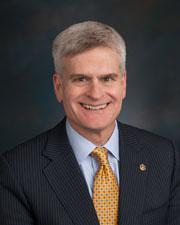 Sen. Bill Cassidy (R-LA)
Sen. Bill Cassidy (R-LA)Submitted November 28, 2022
Legislative Activity
Stay on top of the latest movement without scrolling through every action
Floor
Latest Action
Senate amendment submitted
November 28, 2022
Text
Submitted
SA 6498. Mr. CASSIDY submitted an amendment intended to be proposed
to amendment SA 6487 proposed by Mr. Schumer (for Ms. Baldwin (for
herself, Ms. Collins, Mr. Portman, Ms. Sinema, Mr. Tillis, and Ms.
Lummis)) to the bill H.R. 8404, to repeal the Defense of Marriage Act
and ensure respect for State regulation of marriage, and for other
purposes; which was ordered to lie on the table; as follows:

At the appropriate place, insert the following:

TITLE II--RELIGIOUS BELIEFS AND MORAL CONVICTIONS

SEC. 201. PROHIBITION AGAINST DISCRIMINATION OR SEGREGATION
IN PLACES OF PUBLIC ACCOMMODATION.

(a) Places of Public Accommodation.--Section 201 of the
Civil Rights Act of 1964 (42 U.S.C. 2000a) is amended--
(1) in subsection (b)--
(A) in paragraph (3), by striking ``and'' at the end;
(B) by redesignating paragraph (4) as paragraph (6); and
(C) by inserting after paragraph (3) the following:
``(4) any store, facility in a shopping center, or online
retailer or provider of online services that has 1 or more
employees in the current or preceding calendar year;
``(5) a social media platform provider; and'';
(2) in subsection (c)--
(A) in paragraph (1), by striking ``paragraph (1)'' and
inserting ``paragraph (1) or (5)'';
(B) in paragraph (3), by striking ``and'' at the end;
(C) in paragraph (4), by striking ``paragraph (4)'' and
inserting ``paragraph (6)'';
(D) by redesignating paragraph (4) as paragraph (5); and
(E) by inserting after paragraph (3) the following: ``(4)
in the case of an establishment described in paragraph (4) of
subsection (b), it sells or offers to sell a product or
service that moves, or has moved, in commerce; and''; and
(3) by adding at the end the following:
``(f) The provisions of this title shall not apply to a
religious institution, including place of worship, religious
camp, or religious school.
``(g) For purposes of this title:
``(1) The term `online retailer or provider of online
services' means a commercial business, acting through a web
page that invites the general public to purchase a good or
service by use of a credit card or similar payment device
over the internet, that provides content for the web page.
The term does not mean a commercial business, acting through
a web page that gives information, including information on
quality, price, or availability, about a good or service but
does not permit such purchase directly from the web page.
``(2) The term `social media platform provider' means the
provider of a public website or internet application,
including a mobile internet application, social network,
video sharing service, advertising network, mobile operating
system, search engine, email service, or internet access
service, that promotes users posting content and others
consuming that content.''.
(b) Exception.--Title II of the Civil Rights Act of 1964
(42 U.S.C. 2000a et seq.) is amended by adding at the end the
following:

``SEC. 208. EXCEPTION FOR SMALL BUSINESSES.

``(a) Definition.--In this section, the term `small
business' means an employer who does not have 15 or more
employees for each working day in each of 20 or more calendar
weeks in the current or preceding calendar year.
``(b) Exception.--No small business shall be required,
under this title or any other Federal, State, or local law,
to provide a service related to a marriage of individuals of
the same sex, if the small business declines to provide the
service in accordance with a sincerely held religious belief,
or moral conviction, that marriage is or should be recognized
as a certain type of union. For purposes of this subsection,
services related to marriage include services for any
ceremony or related celebration of the marriage.''.

SEC. 202. DETERMINATION OF TAX-EXEMPT STATUS MADE WITHOUT
REGARD TO RELIGIOUS BELIEFS.

Section 501(c)(3) of the Internal Revenue Code of 1986 is
amended--
(1) by striking ``Corporations'' and inserting the
following:
``(A) In general.--Corporations'', and
(2) by adding at the end the following new subparagraph:
``(B) Determination made without regard to religious
beliefs.--
``(i) In general.--Any determination whether an
organization is organized or operated exclusively for
religious, charitable, scientific, literary, or educational
purposes or complies with legal standards of charity shall be
made without regard to the organization's religious beliefs
or practices concerning the validity of marriages between
individuals of the same sex.
``(ii) Religious.--For purposes of this paragraph, the term
`religious' includes all aspects of religious belief,
observance, and practice, whether or not compelled by, or
central to, a system of religion.''.

SEC. 203. CHILD WELFARE PROVIDER INCLUSION ACT.

(a) Short Title of Section.--This section may be cited as
the ``Child Welfare Provider Inclusion Act of 2022''.
(b) Purposes.--The purposes of this section are as follows:
(1) To prohibit governmental entities from discriminating
or taking an adverse action against a child welfare service
provider on the basis that the provider declines to provide a
child welfare service that conflicts, or under circumstances
that conflict, with the sincerely held religious beliefs or
moral convictions of the provider.
(2) To protect child welfare service providers' exercise of
religion and to ensure that governmental entities will not be
able to force those providers, either directly or indirectly,
to discontinue all or some of their child welfare services
because they decline to provide a child welfare service that
conflicts, or under circumstances that conflict, with their
sincerely held religious beliefs or moral convictions.
(3) To provide relief to child welfare service providers
whose rights have been violated.
(c) Discrimination and Adverse Actions Prohibited.--
(1) In general.--The Federal Government, and any State that
receives Federal funding for any program that provides child
welfare services under part B or E of title IV of the Social
Security Act (42 U.S.C. 621 et seq., 671 et seq.) (and any
subdivision, office or department of such State) shall not
discriminate or take an adverse action against a child
welfare service provider on the basis that the provider has
declined or will decline to provide, facilitate, or refer for
a child welfare service that conflicts with, or under
circumstances that conflict with, the provider's sincerely
held religious beliefs or moral convictions.
(2) Limitation.--Paragraph (1) does not apply to conduct
forbidden by paragraph (18) of section 471(a) of such Act (42
U.S.C. 671(a)(18)).
(d) Funds Withheld for Violation.--The Secretary of Health
and Human Services shall withhold from a State 15 percent of
the Federal funds the State receives for a program that
provides child welfare services under part B or E of title IV
of the Social Security Act (42 U.S.C. 621 et seq., 671 et
seq.) if the State violates subsection (c) when administering
or disbursing funds under such program.
(e) Private Right of Action.--
(1) In general.--A child welfare service provider aggrieved
by a violation of subsection (c) may assert that violation as
a claim or defense in a judicial proceeding and obtain all
appropriate relief, including declaratory relief, injunctive
relief, and compensatory damages, with respect to that
violation.
(2) Attorneys' fees and costs.--A child welfare service
provider that prevails in an action by establishing a
violation of subsection (c) is entitled to recover reasonable
attorneys' fees and costs.
(3) Waiver of sovereign immunity.--By accepting or
expending Federal funds in connection with a program that
provides child welfare services under part B or E of title IV
of the Social Security Act (42 U.S.C. 621 et seq., 671 et
seq.), a State waives its sovereign immunity for any claim or
defense that is raised under this subsection.
(f) Severability.--If any provision of this section, or any
application of such provision to any person or circumstance,
is held to be unconstitutional, the remainder of this section
and the application of the provision to any other person or
circumstance shall not be affected.
(g) Effective Date.--
(1) In general.--Except as provided in paragraph (2), this
section shall take effect on the 1st day of the 1st fiscal
year beginning on or after the date of the enactment of

[[Page S6827]]

this section, and the withholding of funds authorized by
subsection (d) shall apply to payments under parts B and E of
title IV of the Social Security Act (42 U.S.C. 621 et seq.,
671 et seq.) for calendar quarters beginning on or after such
date.
(2) Exception.--If legislation (other than legislation
appropriating funds) is required for a governmental entity to
bring itself into compliance with this section, the
governmental entity shall not be regarded as violating this
section before the 1st day of the 1st calendar quarter
beginning after the 1st regular session of the legislative
body that begins after the date of the enactment of this
section. For purposes of the preceding sentence, if the
governmental entity has a 2-year legislative session, each
year of the session is deemed to be a separate regular
session.
(h) Definitions.--In this section:
(1) Child welfare service provider.--The term ``child
welfare service provider'' includes organizations,
corporations, groups, entities, or individuals that provide
or seek to provide, or that apply for or receive a contract,
subcontract, grant, or subgrant for the provision of, child
welfare services. A provider need not be engaged exclusively
in child welfare services to be considered a child welfare
service provider for purposes of this section.
(2) Child welfare services.--The term ``child welfare
services'' means social services provided to or on behalf of
children, including assisting abused, neglected, or troubled
children, counseling children or parents, promoting foster
parenting, providing foster homes or temporary group shelters
for children, recruiting foster parents, placing children in
foster homes, licensing foster homes, promoting adoption,
recruiting adoptive parents, assisting adoptions, supporting
adoptive families, assisting kinship guardianships, assisting
kinship caregivers, providing family preservation services,
providing family support services, and providing time-limited
family reunification services.
(3) State.--The term ``State'' means each of the 50 States,
the District of Columbia, any commonwealth, territory or
possession of the United States, and any political
subdivision thereof, and any Indian tribe, tribal
organization, or tribal consortium that has a plan approved
in accordance with section 479B of the Social Security Act
(42 U.S.C. 679c) or that has a cooperative agreement or
contract with one of the 50 States for the administration or
payment of funds under part B or E of title IV of the Social
Security Act.
(4) Funding; funded; funds.--The terms ``funding'',
``funded'', or ``funds'' include money paid pursuant to a
contract, grant, voucher, or similar means.
(5) Adverse action.--The term ``adverse action'' includes,
but is not limited to, denying a child welfare service
provider's application for funding, refusing to renew the
provider's funding, canceling the provider's funding,
declining to enter into a contract with the provider,
refusing to renew a contract with the provider, canceling a
contract with the provider, declining to issue a license to
the provider, refusing to renew the provider's license,
canceling the provider's license, terminating the provider's
employment, or any other adverse action that materially
alters the terms or conditions of the provider's employment,
funding, contract, or license.
______