S.Amdt. 6613Senate117th Congress (2021-2023)2nd degree
S.Amdt. 6613
Sponsored by 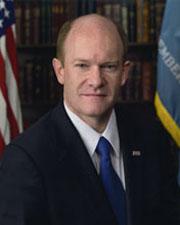 Sen. Christopher A. Coons (D-DE)
Sen. Christopher A. Coons (D-DE)Submitted December 21, 2022
Legislative Activity
Stay on top of the latest movement without scrolling through every action
Floor
Latest Action
Senate amendment submitted
December 21, 2022
Text
Submitted
SA 6613. Mr. COONS submitted an amendment intended to be proposed to
amendment SA 6552 proposed by Mr. Leahy to the bill H.R. 2617, to amend
section 1115 of title 31, United States Code, to amend the description
of how performance goals are achieved, and for other purposes; which
was ordered to lie on the table; as follows:

On page 1589, after line 10, add the following:

TITLE VIII--MADELEINE K. ALBRIGHT DEMOCRACY IN THE 21ST CENTURY ACT

SEC. 801. SHORT TITLE.

This title may be cited as the ``Madeleine K. Albright
Democracy in the 21st Century Act''.

SEC. 802. DEFINITIONS.

In this title:
(1) Appropriate congressional committees.--The term
``appropriate congressional committees'' means--
(A) the Committee on Appropriations of the Senate;
(B) the Committee on Foreign Relations of the Senate;
(C) the Committee on Appropriations of the House of
Representatives; and
(D) the Committee on Foreign Affairs of the House of
Representatives.
(2) Civil and political rights.--The term ``civil and
political rights'' means the rights provided for in the
International Covenant on Civil and Political Rights, done in
New York December 16, 1966, as ratified by the United States
of America.
(3) Democracy programs.--For purposes of funds authorized
to be appropriated by this title, the Foreign Assistance Act
of 1961 (22 U.S.C. 2151 et seq.), or appropriated under any
Act making appropriations for the Department of State,
foreign operations, and related programs, the term
``democracy programs'' means programs that, consistent with
section 133(b) of the Foreign Assistance Act of 1961 (22
U.S.C. 2152c(b)) and the International Covenant on Civil and
Political Rights, done at New York December 16, 1966,
support--
(A) good governance;
(B) credible and competitive elections;
(C) freedom of expression, association, assembly, and
religion;
(D) human rights, labor rights, independent media, and the
rule of law; and
(E) otherwise strengthen the capacity of democratic
political parties, governments, nongovernmental organizations
and institutions, and citizens to support the development of
democratic states and institutions that are responsive and
accountable to citizens.
(4) NED.--The term ``NED'' means the National Endowment for
Democracy.
(5) Relevant federal departments and agencies.--The term
``relevant Federal departments and agencies'' means--
(A) the Department of State;
(B) the United States Agency for International Development;
and
(C) other Federal agencies that the President determines
are relevant for purposes of this title.
(6) USAID.--The term ``USAID'' means the United States
Agency for International Development.

SEC. 803. PROGRAM PRIORITIZATION AND DEMOCRACY STRATEGY.

(a) Program Prioritization .--As the global leader in
promoting and advancing democratic principles, the United
States Government should prioritize democracy programs that--
(1) align and are coordinated with diplomatic and security
strategies for a given country or region;
(2) advance democracy during and following a country's
transition to democracy and address democratic backsliding in
a country;
(3) support democracy and democratic voices in closed and
repressive societies, including those defending the exercise
of civil and political rights;
(4) counter the malign influence of authoritarian
governments;
(5) counter corruption and kleptocracy, including by
enhancing transparent, accountable, effective, and responsive
governance;
(6) counter authoritarian abuse of technology and
manipulation of elections, electoral data, and critical
electoral infrastructure;
(7) promote internet freedom and combat digital
authoritarianism, including the use of the internet and other
digital technologies to restrict the exercise of civil and
political rights;
(8) counter transnational repression;
(9) counter the increasing use of arbitrary detention;
(10) promote civic education and enhanced citizen
participation in democratic processes; and
(11) protect the civil and political rights of religious
and ethnic minorities.
(b) Strategy.--Not later than 120 days after the date of
the enactment of this Act, the President shall submit to
Congress a comprehensive strategy to promote democracy abroad
that is informed by extensive consultations with the local
actors impacted by such programs. The strategy shall
encompass a whole of government approach to such efforts, and
include detailed information on funding, goals and
objectives, and oversight.

[[Page S10020]]

SEC. 804. AUTHORITIES AND LIMITATION.

(a) Beneficiaries.--Funds that are made available by this
title for the National Endowment for Democracy are made
available pursuant to the authority of the National Endowment
for Democracy Act (title V of Public Law 98-164), including
all decisions regarding the selection of beneficiaries.
(b) Restrictions on Foreign Government Interference.--
(1) Prior approval.--With respect to the provision of
assistance for democracy programs by relevant Federal
departments and agencies, the organizations implementing such
assistance, the specific nature of that assistance, and the
participants in such programs shall not be subject to the
prior approval by the government of any foreign country.
(2) Disclosure of implementing partner information.--
(A) In general.--If the Secretary of State, in consultation
with the Administrator of the United States Agency for
International Development, determines that the government of
a country is undemocratic or has engaged in gross violations
of civil and political rights, any new bilateral agreement
governing the terms and conditions under which assistance is
provided to such a country shall not require the disclosure
of the names of implementing partners of democracy programs,
and the Secretary of State and the USAID Administrator shall
expeditiously seek to negotiate amendments to existing
bilateral agreements, as necessary, to conform to this
requirement.
(B) Information regarding, and names of, implementing
partners to be received by congress.--The requirement of
subparagraph (A) does not preclude Congress from receiving,
upon request by the appropriate congressional committees to
the Department of State and USAID, information regarding, and
names of, implementing partners, to be provided in a
classified or other setting as appropriate.
(3) Reporting requirement.--The Secretary of State, in
coordination with the USAID Administrator, shall submit a
report to the appropriate congressional committees, not later
than 180 days after the date of the enactment of this Act,
and annually thereafter until September 30, 2026, detailing
steps taken by the Department of State and USAID to comply
with the requirements of this subsection.
(c) Information Sharing.--The Secretary of State and the
USAID Administrator shall regularly inform the NED President
of democracy programs that are planned and supported by such
agencies, and the NED President shall regularly inform such
Secretary and Administrator of programs that are planned and
supported by the NED, consistent with the requirements of
section 505(b) of the National Endowment for Democracy Act
(22 U.S.C. 4414(b)).
(d) Digital Security.--Democracy programs supported by
funds authorized to be made available pursuant to section 807
should include a component on digital security to enhance the
security and safety of implementers and beneficiaries,
including, as appropriate, assistance for civil society
organizations to counter government surveillance, censorship,
and repression by digital means.
(e) Audits.--Section 504(g) of the National Endowment for
Democracy Act (22 U.S.C. 4413(g)) is amended by striking
``United States Information Agency'' and inserting
``Department of State Office of Inspector General''.

SEC. 805. ADVANCING DEMOCRACY IN THE 21ST CENTURY.

(a) Democracy in the 21st Century Fund.--There is
authorized to be established a fund to be known as the
``Democracy in the 21st Century Fund'' (in this subsection
referred to as the ``Fund''), to be administered by the
Secretary of State, following consultation with the
Administrator of the United States Agency for International
Development and the appropriate congressional committees,
consisting of amounts authorized to be made available by
section 807, to advance the comprehensive strategy under
section 803(b), including the programs of the Department of
State, USAID, and the National Endowment for Democracy
described in subsections (b), (c), (d), and (e).
(b) Defending Democracy Globally.--The Secretary of State,
in coordination with the USAID Administrator and in
consultation with the appropriate congressional committees,
shall establish a program to defend democracy globally by--
(1) strengthening and enhancing the Department of State and
USAID's ability to respond quickly and flexibly to democratic
openings and backsliding;
(2) supporting independent media against threats from
authoritarian regimes;
(3) promoting and prioritizing democratic values and the
promotion of civil and political rights in current and
emerging technologies, and countering efforts by
authoritarian governments to surveil, censor, or otherwise
repress populations by digital means, including through
programs that--
(A) help countries around the world implement governing
regulations for the transparent procurement and use of
technology; and
(B) provide education on digital literacy to key
populations;
(4) establishing international coalitions of governmental
and nongovernmental actors dedicated to promoting democracy;
and
(5) supporting human rights defenders in exile.
(c) Combating Corruption and Kleptocracy.--The Secretary of
State, in coordination with the USAID Administrator and in
consultation with the appropriate congressional committees,
shall establish a program to support efforts by foreign
governments, civil society, and the private sector, as
appropriate, to combat corruption and kleptocracy abroad,
including through efforts that--
(1) enhance government transparency, accountability, and
effectiveness across relevant sectors;
(2) improve detection and exposure of corruption crimes,
improve citizen oversight and advocacy, protect freedom of
expression and civic activism, and build the capacity of
civil society, investigative journalists, and independent
media to counter corruption;
(3) expand investigations and prosecutions of corrupt acts,
hold corrupt actors accountable, and assist in the adoption
and implementation of corruption prevention measures;
(4) strengthen effective, impartial judiciaries;
(5) support public-private partnerships to address
corruption that harms competitiveness, economic growth, and
development and taints critical supply chains; and
(6) strengthen cross-sectoral collaboration among
nongovernmental organizations combating transnational
kleptocratic networks.
(d) Democracy Research and Development.--The Secretary of
State, in consultation with the USAID Administrator and in
consultation with the appropriate congressional committees,
shall establish a program for democracy research and
development that--
(1) supports independent and objective research and
development outside scholars and experts on policies,
programs, and technologies relating to democracy programs;
(2) drives innovation within the Department of State,
USAID, and the NED regarding the development of tools to
promote democracy, combat corruption, transnational
kleptocracy, and malign authoritarian influence, and leverage
emerging technology for democracy;
(3) incentivizes collaboration among governments,
nongovernmental organizations, and the private sector to
identify and mitigate threats to democracy abroad; and
(4) identifies lessons learned, repeated failures of, and
best practices for democracy programs and diplomatic
engagement and establish independent and objective
monitoring, evaluation, and learning to assess effectiveness
of programs and diplomatic engagement; and
(5) makes recommendations regarding programs to pause,
discontinue, or expand based on evaluations.
(e) Leveraging.--Pursuant to sections 607 and 632 of the
Foreign Assistance Act of 1961 (22 U.S.C. 2357 and 2392), and
after consultation with the appropriate congressional
committees, the Secretary of State is authorized to establish
mechanisms under the Fund to partner with other donors and
private sector partners to carry out the purposes of this
section.
(f) Funding Transparency.--Concurrent with the submission
of the report required under section 653(a) of the Foreign
Assistance Act of 1961 (22 U.S.C. 2413(a)), the Secretary of
State shall submit to the appropriate congressional
committees a detailed accounting of any funds programmed
pursuant to the authorities under subsection (e) during the
prior fiscal year.
(g) Notification Requirements.--Not later than 15 days
before obligating funds authorized to be appropriated for the
Fund and the programs established under this section, the
Secretary of State and the USAID Administrator, as
appropriate, shall notify the appropriate congressional
committees of the intended uses of such funds.
(h) Reporting Requirement.--Not later than 60 days after
the date of the enactment of this Act, and annually
thereafter through the end of fiscal year 2027, the Secretary
of State, the USAID Administrator, and the NED President, as
appropriate, shall submit reports to the appropriate
congressional committees detailing the uses of funds made
available to the Fund pursuant to this title.

SEC. 806. ROLES AND RESPONSIBILITIES.

(a) In General.--In carrying out the programs described in
section 805 using funds amounts made available under section
807, the Secretary of State and the USAID Administrator shall
regularly coordinate and consult on activities and
implementation of the comprehensive strategy under section
803(b), consistent with the overall strategic direction and
capabilities of their respective entities.
(b) Department of State.--For the Department of State, such
programs and funds should be the responsibility of the
Assistant Secretary of State for Democracy, Human Rights, and
Labor, except for funds provided to the NED which should be
incorporated into a larger diplomatic strategy and are
flexible, innovative, and responsive to--
(1) current human rights abuses and democracy deficiencies
as documented in the annual Country Report on Human Rights
Practices required by sections 116(d) and 502B(b) of the
Foreign Assistance Act of 1961 (22 U.S.C. 2151n(d), 2304(b));
and
(2) emerging opportunities and sudden crises.
(c) USAID.--For USAID, such programs and funds should have
as their primary purpose flexible, innovative, and responsive
democracy promotion efforts that are development-oriented,
often coordinated through a

[[Page S10021]]

Country Development Cooperation Strategy, and conducted in
countries where a USAID Mission is present or a where a USAID
Mission in a neighboring country can manage and oversee such
programs effectively. Such programs should, as appropriate,
build enduring local capacity, incorporate democracy
programming into a larger development and diplomatic
strategy, and emphasize participatory and locally led
programs when possible.
(d) Department of State and USAID.--In cases where both the
Department of State and USAID are able to respond to emerging
opportunities and sudden crises, including in closed and
repressive societies, the Secretary of State and the USAID
Administrator shall coordinate their respective programs,
including at the country level, to ensure complementarity and
prevent waste or redundancy.

SEC. 807. FUNDING.

(a) Democracy Programs.--Funds made available to carry out
part I and chapter 4 of part II of the Foreign Assistance Act
of 1961 (22 U.S.C. 2151 et seq. and 22 U.S.C. 2346 et seq.)
and paragraphs (3) and (5) of section 502(b) of the National
Endowment for Democracy Act (22 U.S.C. 4411(b)) are
authorized to be made available for democracy programs.
(b) Democracy in the 21st Century Fund.--
(1) In general.--Of the funds authorized to be made
available by subsection (a), the following amounts are
authorized to be made available for the Democracy in the 21st
Century Fund established under section 805(a) as follows:
(A) $20,000,000 in each such fiscal year is authorized to
be made available for the program to defend democracy
globally under section 805(b), of which not more than
$10,000,000 may be administered by the USAID Administrator.
(B) $50,000,000 in each such fiscal year is authorized to
be made available for the combating corruption and
kleptocracy program under section 805(c).
(C) $15,000,000 in each such fiscal year is authorized to
be made available for the Democracy Research and Development
program under section 805(d), which shall be allocated
equally between the Department of State, USAID, and the
National Endowment for Democracy.
(D) $5,000,000 in each such fiscal year is authorized to be
made available for the Reagan-Fascell Democracy Fellows
Program for additional fellowships for democracy advocates at
risk.
(2) Additional amounts.--Funds authorized to be made
available to the National Endowment for Democracy and its
core institutes under this subsection are in addition to
amounts otherwise authorized to be made available by this
title for such purposes.
(c) Restrictions.--Federal funds made available to any
individual, private entity, or any other nonprofit
organization pursuant to this title shall be subject to the
restrictions and prohibitions of section 1352 of title 31,
United States Code.
(d) Authorization of Appropriations for National Endowment
for Democracy.--In addition to amounts authorized to be
appropriated under subsection (a), there are authorized to be
appropriated for NED $325,000,000, including amounts to be
allocated in the traditional and customary manner, to counter
transnational threats to democracy, as well as to support and
sustain democratic growth abroad, consistent with section 503
of the National Endowment for Democracy Act (22 U.S.C. 4412).
______