S.Amdt. 6615Senate117th Congress (2021-2023)
S.Amdt. 6615
Sponsored by 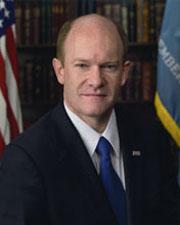 Sen. Christopher A. Coons (D-DE)
Submitted December 21, 2022
Text
Submitted
This amendment's own text couldn't be picked out of its Congressional Record passage, so the passage is shown in full.
SA 6615. Mr. COONS submitted an amendment intended to be proposed by
     him to the bill H.R. 2617, to amend section 1115 of title 31, United
     States Code, to amend the description of how performance goals are
     achieved, and for other purposes; which was ordered to lie on the
     table; as follows:

            At the end, add the following:

                       DIVISION KK--DRIVING FOR OPPORTUNITY

          SEC. 101. SHORT TITLE.

            This division may be cited as the ``Driving for Opportunity
          Act of 2022''.

          SEC. 102. FINDINGS.

            Congress finds the following:
            (1) Driving a vehicle is an essential aspect of the daily
          lives of most people in the United States.
            (2) Driving is often required to access jobs and
          healthcare, take care of family, get groceries, and fulfill
          other basic responsibilities.
            (3) In many small cities, towns, and rural areas that do
          not have public transportation and ridesharing alternatives,
          driving is often the only realistic means of transportation.
            (4) Even in cities with public transportation and
          ridesharing options, individuals vulnerable to infection
          during the COVID-19 pandemic and those complying with public
          health guidance regarding social distancing are increasingly
          reliant on driving as their primary means of transportation
          for essential travel.
            (5) In the United States, millions of Americans have had
          their driver's licenses suspended for unpaid court fines and
          fees.
            (6) A person whose driver's license is suspended or revoked
          for unpaid fines and fees will often find it more difficult
          to earn a living and therefore pay the debt owed to the
          government.
            (7) The barrier to employment posed by driver's license
          suspensions and revocations for unpaid fines and fees is
          especially problematic during the COVID-19 pandemic, when the
          unemployment rate is the highest it has been since the Great
          Depression.
            (8) Drunk and dangerous driving are some of the leading
          causes of death and serious bodily injury in the United
          States, and promoting safety on the roads is a legitimate,
          necessary, and core governmental function. Suspending a
          license for unsafe driving conduct presents different
          considerations than suspending a license for unpaid fines and
          fees. Suspending a license for unsafe driving is an
          appropriate tool to protect public safety. Policymakers also
          may consider alternatives to suspension of a license for
          unsafe driving such as ignition interlock device programs.
            (9) According to the National Highway Traffic Safety
          Administration, every year on average, over 34,000 people are
          killed and 2,400,000 more people are injured in motor vehicle
          crashes. Some of the major causes of these crashes include
          speeding, impaired driving, and distracted driving. Nearly
          half of passenger vehicle occupants killed in crashes are
          unrestrained. The societal harm caused by motor vehicle
          crashes has been valued at $836,000,000,000 annually. The
          enactment of, enforcement of, and education regarding traffic
          laws are key to addressing unsafe behavior and promoting
          public safety.
            (10) However, most driver's license suspensions are not
          based on the need to protect public safety.
            (11) In the State of Florida, 1,100,000 residents received
          a suspension notice for unpaid fines and fees in 2017 alone.
            (12) Between 2010 and 2017, all but 3 States increased the
          amount of fines and fees for civil and criminal violations.
            (13) In the United States, 40 percent of all driver's
          license suspensions are issued for conduct that was unrelated
          to driving.

     [[Page S10022]]

            (14) In 2015, the State of Washington calculated that State
          troopers spent 70,848 hours dealing with license suspensions
          for non-driving offenses.
            (15) The American Association of Motor Vehicle
          Administrators estimated that arresting a person for driving
          with a suspended license can take 9 hours of an officer's
          time, including waiting for a tow truck, transporting an
          individual to jail, filling out paperwork, making a court
          appearance, and other administrative duties and accordingly
          Washington State Patrol Chief John Batiste called non-driving
          suspensions a ``drain on the system as a whole''.
            (16) The Colorado Department of Motor Vehicles determined
          that suspending driver's licenses for offenses unrelated to
          driving consumed 8,566 hours per year of staff time in the
          Department.
            (17) Many States impose a significant fee for reinstating a
          suspended driver's license, such as Alabama, where the fee is
          $275.
            (18) Driving on a suspended license is one of the most
          common criminal charges in jurisdictions across the country.
            (19) Seventy-five percent of those with suspended licenses
          report continuing to drive.
            (20) It is more likely that those people are also driving
          without insurance due to the costs and restrictions
          associated with obtaining auto insurance on a suspended
          license, thereby placing a greater financial burden on other
          drivers when a driver with a suspended license causes an
          accident.
            (21) The American Association of Motor Vehicle
          Administrators has concluded the following: ``Drivers who
          have been suspended for social non-conformance-related
          offenses are often trapped within the system. Some cannot
          afford to pay the original fines, and may lose their ability
          to legally get to and from work as a result of the
          suspension. Many make the decision to drive while suspended.
          The suspension results in increased financial obligations
          through new requirements such as reinstatement fees, court
          costs, and other penalties. While there is a clear societal
          interest in keeping those who are unfit to drive off the
          roads, broadly restricting licenses for violations unrelated
          to an individual's ability to drive safely may do more harm
          than good. This is especially true in areas of the country
          that lack alternative means of transportation. For those
          individuals, a valid driver license can be a means to
          survive. Local communities, employers, and employees all
          experience negative consequences as a result of social non-
          conformity suspensions, including unemployment, lower wages,
          fewer employment opportunities and hiring choices, and
          increased insurance costs.''.
            (22) A report by the Harvard Law School Criminal Justice
          Policy Program concluded the following: ``The suspension of a
          driver's or professional license is one of the most pervasive
          poverty traps for poor people assessed a fine that they
          cannot afford to pay. The practice is widespread. Nearly 40
          percent of license suspensions nationwide stem from unpaid
          fines, missed child support payments, and drug offenses--not
          from unsafe or intoxicated driving or failing to obtain
          automotive insurance. Suspension of a driver's or
          professional licenses is hugely counterproductive; it
          punishes non-payment by taking away a person's means for
          making a living. License suspension programs are also
          expensive for States to run and they distract law enforcement
          efforts from priorities related to public safety. License
          suspensions may also be unconstitutional if the license was
          suspended before the judge determined the defendant had the
          ability to pay the criminal justice debt.''.

          SEC. 103. GRANTS FOR DRIVER'S LICENSES REINSTATEMENT
                        PROGRAMS.

            Subpart 1 of part E of title I of the Omnibus Crime Control
          and Safe Streets Act of 1968 (34 U.S.C. 10151 et seq.) is
          amended--
            (1) in section 501(a) (34 U.S.C. 10152(a)), by adding at
          the end the following:
            ``(3) Grants for driver's license reinstatement programs.--
            ``(A) In general.--In addition to grants made under
          paragraph (1), the Attorney General may make grants to States
          described in subparagraph (B) to cover costs incurred by the
          State to reinstate or renew driver's licenses or motor
          vehicle registrations previously suspended, revoked, or
          failed to be renewed for unpaid civil or criminal fines or
          fees.
            ``(B) States described.--A State described in this
          subparagraph is a State that--
            ``(i) does not have in effect any State or local law that
          permits--

            ``(I) the suspension or revocation of, or refusal to renew,
          a driver's license of an individual based on the individual's
          failure to pay a civil or criminal fine or fee; or
            ``(II) the refusal to renew the registration of a motor
          vehicle based on the owner's failure to pay a civil or
          criminal fine or fee; and

            ``(ii) during the 3-year period ending on the date on which
          the State applies for or receives a grant under this
          paragraph, has repealed a State or local law that permitted
          the suspension or revocation of, or refusal to renew,
          driver's licenses or the registration of a motor vehicle
          based on the failure to pay civil or criminal fines or fees.
            ``(C) Criteria.--The Attorney General shall award grants
          under this paragraph to States described in subparagraph (B)
          that submit a plan to reinstate or renew driver's licenses or
          motor vehicle registrations previously suspended, revoked, or
          failed to be renewed for unpaid civil or criminal fines or
          fees--
            ``(i) to maximize the number of individuals with suspended
          or revoked driver's licenses or motor vehicle registrations
          eligible to have driving privileges reinstated or regained;
            ``(ii) to provide assistance to individuals living in areas
          where public transportation options are limited; and
            ``(iii) to ease the burden on States where the State or
          local law described in subparagraph (B)(ii) was in effect
          during the 3-year period ending on the date on which a State
          applies for a grant under this paragraph in accordance with
          section 502.
            ``(D) Amount.--Each grant awarded under this paragraph
          shall be not greater than 5 percent of the amount allocated
          to the State in accordance with the formula established under
          section 505.
            ``(E) Report.--Not later than 1 year after the date on
          which a grant is made to a State under this paragraph, the
          State shall submit to the Attorney General a report that
          describes the actions of the State to carry out activities
          described in subparagraph (A), including with respect to--
            ``(i) the population served by the program;
            ``(ii) the number of driver's licenses and motor vehicle
          registrations reinstated or renewed under the program; and
            ``(iii) all costs to the State of the program, including
          how the grants under this paragraph were spent to defray such
          costs.
            ``(F) Additional analysis.--Not later than 2 years after
          the date on which a grant is made to a State under this
          paragraph, the State shall submit to the Attorney General an
          analysis of the impact of the program on the collections of
          civil or criminal fines or fees.''; and
            (2) in section 508--
            (A) by striking ``There'' and inserting ``(a) In General.--
          There''; and
            (B) by adding at the end the following:
            ``(b) Driver's License Reinstatement Programs.--There is
          authorized to be appropriated to carry out section 501(a)(3)
          $10,000,000 for each of fiscal years 2022 through 2026.''.

          SEC. 104. GAO STUDY.

            (a) Study.--The Comptroller General of the United States
          shall conduct a study of the implementation of the grant
          program in paragraph (3) of section 501(a) of the Omnibus
          Crime Control and Safe Streets Act of 1968 (34 U.S.C.
          10152(a)), as added by section 103(a) of this division,
          that--
            (1) includes what is known about the effect of repealing
          State laws, in selected States, that had permitted the
          suspension or revocation of, or refusal to renew, driver's
          licenses or the registration of a motor vehicle based on the
          failure to pay civil or criminal fines or fees, including
          such factors, to the extent information is available, as--
            (A) the collection of fines and fees;
            (B) the usage of law enforcement resources;
            (C) economic mobility and unemployment;
            (D) rates of enforcement of traffic safety laws through the
          tracking of number of summonses and violations issued
          (including those related to automated enforcement
          technologies);
            (E) the use of suspensions for public safety-related
          reasons (including reckless driving, speeding, and driving
          under the influence);
            (F) safety-critical traffic events (including in localities
          with automated enforcement programs);
            (G) the rates of license suspensions and proportion of
          unlicensed drivers;
            (H) racial and geographic disparities; and
            (I) administrative costs (including costs associated with
          the collection of fines and fees and with the reinstatement
          of driver's licenses); and
            (2) includes what is known about--
            (A) existing alternatives to driver's license suspension as
          methods of enforcement and collection of unpaid fines and
          fees; and
            (B) existing alternatives to traditional driver's license
          suspension for certain kinds of unsafe driving, including
          models that allow drivers to continue to drive legally while
          pursuing driver improvement opportunities.
            (b) Report.--Not later than 2 years after the date of
          enactment of this Act, the Comptroller General of the United
          States shall submit to the Committee on the Judiciary and the
          Committee on Environment and Public Works of the Senate and
          the Committee on the Judiciary and the Committee on
          Transportation and Infrastructure a report on the study
          required under subsection (a).

          SEC. 105. REPEAL.

            (a) In General.--Section 159 of title 23, United States
          Code, is repealed.
            (b) Clerical Amendment.--The analysis for chapter 1 of
          title 23, United States Code, is amended by striking the item
          relating to section 159.
______Legislative Activity
Stay on top of the latest movement without scrolling through every action
Floor
Latest Action
Senate amendment submitted
December 21, 2022