In the nature of a substitute.
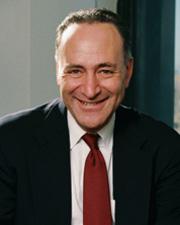 Sen. Charles E. Schumer (D-NY)
Legislative Activity
Stay on top of the latest movement without scrolling through every action
Senate amendment proposed (on the floor): Amendment SA 888 proposed by Senator Schumer.
February 5, 2021
View full timeline
Senate amendment proposed (on the floor): Amendment SA 888 proposed by Senator Schumer.
February 5, 2021
Senate amendment agreed to: Amendment SA 888 agreed to in Senate by Yea-Nay Vote. 51 - 50. Record Vote Number: 52.
February 5, 2021
Roll call votes on amendments in Senate: Amendment SA 888 agreed to in Senate by Yea-Nay Vote. 51 - 50. Record Vote Number: 52.
February 5, 2021
Senate amendment submitted
February 5, 2021
Amendment SA 888 proposed by Senator Schumer. (consideration: CR S459-460; text: CR S549-557) In the nature of a substitute.
February 5, 2021
Amendment SA 888 agreed to in Senate by Yea-Nay Vote. 51 - 50. Record Vote Number: 52.
February 5, 2021
Votes
1 roll call on this amendment
Text
Submitted
SA 888. Mr. SCHUMER (for himself and Mr. Sanders) proposed an
amendment to the concurrent resolution S. Con. Res. 5, setting forth
the congressional budget for the United States Government for fiscal
year 2021 and setting forth the appropriate budgetary levels for fiscal
years 2022 through 2030; as follows:

Strike all after the resolving clause and insert the
following:

SECTION 1. CONCURRENT RESOLUTION ON THE BUDGET FOR FISCAL
YEAR 2021.

(a) Declaration.--Congress declares that this resolution is
the concurrent resolution on the budget for fiscal year 2021
and that this resolution sets forth the appropriate budgetary
levels for fiscal years 2022 through 2030.

[[Page S550]]

(b) Table of Contents.--The table of contents for this
concurrent resolution is as follows:

Sec. 1. Concurrent resolution on the budget for fiscal year 2021.

TITLE I--RECOMMENDED LEVELS AND AMOUNTS

Subtitle A--Budgetary Levels in Both Houses

Sec. 1101. Recommended levels and amounts.
Sec. 1102. Major functional categories.

Subtitle B--Levels and Amounts in the Senate

Sec. 1201. Social security in the Senate.
Sec. 1202. Postal Service discretionary administrative expenses in the
Senate.

TITLE II--RECONCILIATION

Sec. 2001. Reconciliation in the House of Representatives.
Sec. 2002. Reconciliation in the Senate.

TITLE III--RESERVE FUNDS

Sec. 3001. Reserve fund for reconciliation legislation.
Sec. 3002. Reserve fund for deficit-neutral legislation.
Sec. 3003. Deficit-neutral reserve fund relating to establishing a fund
to provide grants to food service and drinking
establishments affected by the COVID-19 pandemic.
Sec. 3004. Deficit-neutral reserve fund relating to preventing tax
increases on small businesses during a pandemic.
Sec. 3005. Deficit-neutral reserve fund relating to the authority of
States and other taxing jurisdictions to tax certain
income of employees working in other States or taxing
jurisdictions.
Sec. 3006. Deficit-neutral reserve fund relating to targeting economic
impact payments to Americans who are suffering from the
effects of COVID-19.
Sec. 3007. Deficit-neutral reserve fund relating to COVID-19 vaccine
administration and a public awareness campaign.
Sec. 3008. Deficit-neutral reserve fund relating to supporting
elementary and secondary schools in States with lost
revenue due to the Federal moratorium on oil and natural
gas leasing on public lands and offshore waters.
Sec. 3009. Deficit-neutral reserve fund relating to strengthening the
Provider Relief Fund.
Sec. 3010. Deficit-neutral reserve fund relating to improving services
and interventions relating to sexual assault, family
violence, domestic violence, dating violence, and child
abuse.
Sec. 3011. Deficit-neutral reserve fund relating to supporting
hospitality, conventions, trade shows, entertainment,
tourism, and travel and their workers.
Sec. 3012. Deficit-neutral reserve fund relating to maintaining the
United States Embassy in Jerusalem, Israel.
Sec. 3013. Deficit-neutral reserve fund relating to increasing the
Federal minimum wage during a global pandemic.
Sec. 3014. Deficit-neutral reserve fund relating to funding the police.
Sec. 3015. Deficit-neutral reserve fund relating to providing
information online regarding the expenditure of COVID-19
relief funds.
Sec. 3016. Deficit-neutral reserve fund relating to improving the
solvency of Federal trust funds.
Sec. 3017. Deficit-neutral reserve fund relating to Federal
environmental and water policies.
Sec. 3018. Deficit-neutral reserve fund relating to Federal relief
funds for State or local governments.
Sec. 3019. Deficit-neutral reserve fund relating to prohibiting actions
by the executive branch that would make the United States
more reliant on countries with weaker environmental or
labor standards for oil, gas, or hardrock mineral
production.
Sec. 3020. Deficit-neutral reserve fund relating to expanding health
savings accounts.

TITLE IV--OTHER MATTERS

Sec. 4001. Enforcement filing.
Sec. 4002. Budgetary treatment of administrative expenses.
Sec. 4003. Application and effect of changes in allocations,
aggregates, and other budgetary levels.
Sec. 4004. Adjustments to reflect changes in concepts and definitions.
Sec. 4005. Adjustment for changes in the baseline.
Sec. 4006. Limitation on advance appropriations.
Sec. 4007. Repeal of supermajority enforcement requirement.
Sec. 4008. Exercise of rulemaking powers.

TITLE I--RECOMMENDED LEVELS AND AMOUNTS

Subtitle A--Budgetary Levels in Both Houses

SEC. 1101. RECOMMENDED LEVELS AND AMOUNTS.

The following budgetary levels are appropriate for each of
fiscal years 2021 through 2030:
(1) Federal revenues.--For purposes of the enforcement of
this resolution:
(A) The recommended levels of Federal revenues are as
follows:
Fiscal year 2021: $2,303,274,000,000.
Fiscal year 2022: $2,768,717,000,000.
Fiscal year 2023: $2,971,083,000,000.
Fiscal year 2024: $3,092,643,000,000.
Fiscal year 2025: $3,236,199,000,000.
Fiscal year 2026: $3,514,253,000,000.
Fiscal year 2027: $3,762,577,000,000.
Fiscal year 2028: $3,883,209,000,000.
Fiscal year 2029: $4,007,991,000,000.
Fiscal year 2030: $4,121,665,000,000.
(B) The amounts by which the aggregate levels of Federal
revenues should be changed are as follows:
Fiscal year 2021: -$15,670,000,000.
Fiscal year 2022: -$17,390,000,000.
Fiscal year 2023: $102,000,000.
Fiscal year 2024: $226,000,000.
Fiscal year 2025: $216,000,000.
Fiscal year 2026: $181,000,000.
Fiscal year 2027: $98,000,000.
Fiscal year 2028: -$106,000,000.
Fiscal year 2029: -$121,000,000.
Fiscal year 2030: -$128,000,000.
(2) New budget authority.--For purposes of the enforcement
of this resolution, the appropriate levels of total new
budget authority are as follows:
Fiscal year 2021: $6,020,543,000,000.
Fiscal year 2022: $4,091,342,000,000.
Fiscal year 2023: $4,011,132,000,000.
Fiscal year 2024: $4,072,784,000,000.
Fiscal year 2025: $4,267,538,000,000.
Fiscal year 2026: $4,449,047,000,000.
Fiscal year 2027: $4,642,875,000,000.
Fiscal year 2028: $4,960,846,000,000.
Fiscal year 2029: $5,082,932,000,000.
Fiscal year 2030: $5,471,756,000,000.
(3) Budget outlays.--For purposes of the enforcement of
this resolution, the appropriate levels of total budget
outlays are as follows:
Fiscal year 2021: $6,140,857,000,000.
Fiscal year 2022: $4,298,244,000,000.
Fiscal year 2023: $4,070,343,000,000.
Fiscal year 2024: $4,070,242,000,000.
Fiscal year 2025: $4,250,436,000,000.
Fiscal year 2026: $4,425,376,000,000.
Fiscal year 2027: $4,606,887,000,000.
Fiscal year 2028: $4,950,170,000,000.
Fiscal year 2029: $5,019,083,000,000.
Fiscal year 2030: $5,419,949,000,000.
(4) Deficits.--For purposes of the enforcement of this
resolution, the amounts of the deficits are as follows:
Fiscal year 2021: $3,837,583,000,000.
Fiscal year 2022: $1,529,527,000,000.
Fiscal year 2023: $1,099,260,000,000.
Fiscal year 2024: $977,599,000,000.
Fiscal year 2025: $1,014,237,000,000.
Fiscal year 2026: $911,123,000,000.
Fiscal year 2027: $844,310,000,000.
Fiscal year 2028: $1,066,961,000,000.
Fiscal year 2029: $1,011,092,000,000.
Fiscal year 2030: $1,298,284,000,000.
(5) Public debt.--Pursuant to section 301(a)(5) of the
Congressional Budget Act of 1974 (2 U.S.C. 632(a)(5)), the
appropriate levels of the public debt are as follows:
Fiscal year 2021: $29,943,000,000,000.
Fiscal year 2022: $31,647,000,000,000.
Fiscal year 2023: $32,911,000,000,000.
Fiscal year 2024: $34,102,000,000,000.
Fiscal year 2025: $35,262,000,000,000.
Fiscal year 2026: $36,311,000,000,000.
Fiscal year 2027: $37,261,000,000,000.
Fiscal year 2028: $38,443,000,000,000.
Fiscal year 2029: $39,652,000,000,000.
Fiscal year 2030: $41,068,000,000,000.
(6) Debt held by the public.--The appropriate levels of
debt held by the public are as follows:
Fiscal year 2021: $24,081,000,000,000.
Fiscal year 2022: $25,818,000,000,000.
Fiscal year 2023: $27,153,000,000,000.
Fiscal year 2024: $28,380,000,000,000.
Fiscal year 2025: $29,610,000,000,000.
Fiscal year 2026: $30,730,000,000,000.
Fiscal year 2027: $31,882,000,000,000.
Fiscal year 2028: $33,333,000,000,000.
Fiscal year 2029: $34,768,000,000,000.
Fiscal year 2030: $36,518,000,000,000.

SEC. 1102. MAJOR FUNCTIONAL CATEGORIES.

Congress determines and declares that the appropriate
levels of new budget authority and outlays for fiscal years
2021 through 2030 for each major functional category are:
(1) National Defense (050):
Fiscal year 2021:
(A) New budget authority, $762,552,000,000.
(B) Outlays, $748,719,000,000.
Fiscal year 2022:
(A) New budget authority, $776,986,000,000.
(B) Outlays, $766,960,000,000.
Fiscal year 2023:
(A) New budget authority, $792,882,000,000.
(B) Outlays, $773,777,000,000.
Fiscal year 2024:
(A) New budget authority, $810,362,000,000.
(B) Outlays, $782,210,000,000.
Fiscal year 2025:
(A) New budget authority, $828,950,000,000.
(B) Outlays, $804,311,000,000.
Fiscal year 2026:
(A) New budget authority, $847,993,000,000.
(B) Outlays, $821,641,000,000.
Fiscal year 2027:
(A) New budget authority, $868,011,000,000.
(B) Outlays, $840,472,000,000.
Fiscal year 2028:
(A) New budget authority, $888,637,000,000.
(B) Outlays, $865,412,000,000.
Fiscal year 2029:
(A) New budget authority, $909,676,000,000.
(B) Outlays, $874,729,000,000.
Fiscal year 2030:
(A) New budget authority, $931,654,000,000.

[[Page S551]]

(B) Outlays, $901,459,000,000.
(2) International Affairs (150):
Fiscal year 2021:
(A) New budget authority, $85,042,000,000.
(B) Outlays, $47,310,000,000.
Fiscal year 2022:
(A) New budget authority, $64,249,000,000.
(B) Outlays, $58,941,000,000.
Fiscal year 2023:
(A) New budget authority, $60,410,000,000.
(B) Outlays, $60,004,000,000.
Fiscal year 2024:
(A) New budget authority, $61,722,000,000.
(B) Outlays, $59,578,000,000.
Fiscal year 2025:
(A) New budget authority, $63,114,000,000.
(B) Outlays, $60,371,000,000.
Fiscal year 2026:
(A) New budget authority, $64,518,000,000.
(B) Outlays, $61,851,000,000.
Fiscal year 2027:
(A) New budget authority, $66,053,000,000.
(B) Outlays, $63,271,000,000.
Fiscal year 2028:
(A) New budget authority, $67,608,000,000.
(B) Outlays, $64,814,000,000.
Fiscal year 2029:
(A) New budget authority, $69,140,000,000.
(B) Outlays, $66,100,000,000.
Fiscal year 2030:
(A) New budget authority, $70,703,000,000.
(B) Outlays, $67,498,000,000.
(3) General Science, Space, and Technology (250):
Fiscal year 2021:
(A) New budget authority, $38,543,000,000.
(B) Outlays, $35,563,000,000.
Fiscal year 2022:
(A) New budget authority, $38,029,000,000.
(B) Outlays, $37,267,000,000.
Fiscal year 2023:
(A) New budget authority, $38,791,000,000.
(B) Outlays, $38,167,000,000.
Fiscal year 2024:
(A) New budget authority, $39,609,000,000.
(B) Outlays, $38,841,000,000.
Fiscal year 2025:
(A) New budget authority, $40,471,000,000.
(B) Outlays, $39,604,000,000.
Fiscal year 2026:
(A) New budget authority, $41,342,000,000.
(B) Outlays, $40,432,000,000.
Fiscal year 2027:
(A) New budget authority, $42,249,000,000.
(B) Outlays, $41,291,000,000.
Fiscal year 2028:
(A) New budget authority, $43,169,000,000.
(B) Outlays, $42,181,000,000.
Fiscal year 2029:
(A) New budget authority, $44,096,000,000.
(B) Outlays, $43,095,000,000.
Fiscal year 2030:
(A) New budget authority, $45,065,000,000.
(B) Outlays, $44,035,000,000.
(4) Energy (270):
Fiscal year 2021:
(A) New budget authority, $4,057,000,000.
(B) Outlays, $5,280,000,000.
Fiscal year 2022:
(A) New budget authority, $6,050,000,000.
(B) Outlays, $5,076,000,000.
Fiscal year 2023:
(A) New budget authority, $5,730,000,000.
(B) Outlays, $4,542,000,000.
Fiscal year 2024:
(A) New budget authority, $5,834,000,000.
(B) Outlays, $4,760,000,000.
Fiscal year 2025:
(A) New budget authority, $5,948,000,000.
(B) Outlays, $4,857,000,000.
Fiscal year 2026:
(A) New budget authority, $5,819,000,000.
(B) Outlays, $4,810,000,000.
Fiscal year 2027:
(A) New budget authority, $5,928,000,000.
(B) Outlays, $4,886,000,000.
Fiscal year 2028:
(A) New budget authority, $7,846,000,000.
(B) Outlays, $6,806,000,000.
Fiscal year 2029:
(A) New budget authority, $8,318,000,000.
(B) Outlays, $7,337,000,000.
Fiscal year 2030:
(A) New budget authority, $8,502,000,000.
(B) Outlays, $7,601,000,000.
(5) Natural Resources and Environment (300):
Fiscal year 2021:
(A) New budget authority, $50,042,000,000.
(B) Outlays, $47,053,000,000.
Fiscal year 2022:
(A) New budget authority, $51,243,000,000.
(B) Outlays, $49,042,000,000.
Fiscal year 2023:
(A) New budget authority, $53,061,000,000.
(B) Outlays, $50,890,000,000.
Fiscal year 2024:
(A) New budget authority, $54,116,000,000.
(B) Outlays, $52,475,000,000.
Fiscal year 2025:
(A) New budget authority, $55,219,000,000.
(B) Outlays, $54,269,000,000.
Fiscal year 2026:
(A) New budget authority, $54,734,000,000.
(B) Outlays, $55,807,000,000.
Fiscal year 2027:
(A) New budget authority, $55,899,000,000.
(B) Outlays, $57,090,000,000.
Fiscal year 2028:
(A) New budget authority, $57,141,000,000.
(B) Outlays, $58,098,000,000.
Fiscal year 2029:
(A) New budget authority, $58,378,000,000.
(B) Outlays, $59,056,000,000.
Fiscal year 2030:
(A) New budget authority, $59,616,000,000.
(B) Outlays, $59,946,000,000.
(6) Agriculture (350):
Fiscal year 2021:
(A) New budget authority, $49,067,000,000.
(B) Outlays, $50,970,000,000.
Fiscal year 2022:
(A) New budget authority, $28,047,000,000.
(B) Outlays, $28,576,000,000.
Fiscal year 2023:
(A) New budget authority, $28,130,000,000.
(B) Outlays, $27,794,000,000.
Fiscal year 2024:
(A) New budget authority, $27,909,000,000.
(B) Outlays, $27,424,000,000.
Fiscal year 2025:
(A) New budget authority, $27,496,000,000.
(B) Outlays, $26,898,000,000.
Fiscal year 2026:
(A) New budget authority, $27,675,000,000.
(B) Outlays, $27,055,000,000.
Fiscal year 2027:
(A) New budget authority, $27,535,000,000.
(B) Outlays, $26,873,000,000.
Fiscal year 2028:
(A) New budget authority, $27,715,000,000.
(B) Outlays, $27,072,000,000.
Fiscal year 2029:
(A) New budget authority, $27,752,000,000.
(B) Outlays, $27,083,000,000.
Fiscal year 2030:
(A) New budget authority, $28,058,000,000.
(B) Outlays, $27,392,000,000.
(7) Commerce and Housing Credit (370):
Fiscal year 2021:
(A) New budget authority, -$242,699,000,000.
(B) Outlays, $327,529,000,000.
Fiscal year 2022:
(A) New budget authority, $19,497,000,000.
(B) Outlays, $36,392,000,000.
Fiscal year 2023:
(A) New budget authority, $20,198,000,000.
(B) Outlays, $18,376,000,000.
Fiscal year 2024:
(A) New budget authority, $21,159,000,000.
(B) Outlays, $18,015,000,000.
Fiscal year 2025:
(A) New budget authority, $20,943,000,000.
(B) Outlays, $16,507,000,000.
Fiscal year 2026:
(A) New budget authority, $21,827,000,000.
(B) Outlays, $15,783,000,000.
Fiscal year 2027:
(A) New budget authority, $22,117,000,000.
(B) Outlays, $15,520,000,000.
Fiscal year 2028:
(A) New budget authority, $21,953,000,000.
(B) Outlays, $16,174,000,000.
Fiscal year 2029:
(A) New budget authority, $22,222,000,000.
(B) Outlays, $15,056,000,000.
Fiscal year 2030:
(A) New budget authority, $21,683,000,000.
(B) Outlays, $13,389,000,000.
(8) Transportation (400):
Fiscal year 2021:
(A) New budget authority, $206,391,000,000.
(B) Outlays, $185,619,000,000.
Fiscal year 2022:
(A) New budget authority, $104,160,000,000.
(B) Outlays, $119,664,000,000.
Fiscal year 2023:
(A) New budget authority, $104,738,000,000.
(B) Outlays, $112,309,000,000.
Fiscal year 2024:
(A) New budget authority, $105,569,000,000.
(B) Outlays, $105,989,000,000.
Fiscal year 2025:
(A) New budget authority, $106,120,000,000.
(B) Outlays, $108,527,000,000.
Fiscal year 2026:
(A) New budget authority, $107,067,000,000.
(B) Outlays, $111,187,000,000.
Fiscal year 2027:
(A) New budget authority, $108,278,000,000.
(B) Outlays, $113,982,000,000.
Fiscal year 2028:
(A) New budget authority, $109,339,000,000.
(B) Outlays, $116,164,000,000.
Fiscal year 2029:
(A) New budget authority, $110,222,000,000.
(B) Outlays, $118,680,000,000.
Fiscal year 2030:
(A) New budget authority, $111,372,000,000.
(B) Outlays, $121,056,000,000.
(9) Community and Regional Development (450):
Fiscal year 2021:
(A) New budget authority, $127,525,000,000.
(B) Outlays, $98,043,000,000.
Fiscal year 2022:
(A) New budget authority, $32,000,000,000.
(B) Outlays, $51,963,000,000.
Fiscal year 2023:
(A) New budget authority, $32,624,000,000.
(B) Outlays, $48,433,000,000.
Fiscal year 2024:
(A) New budget authority, $33,318,000,000.
(B) Outlays, $45,776,000,000.
Fiscal year 2025:
(A) New budget authority, $34,031,000,000.
(B) Outlays, $43,758,000,000.
Fiscal year 2026:
(A) New budget authority, $34,763,000,000.
(B) Outlays, $42,053,000,000.
Fiscal year 2027:
(A) New budget authority, $35,520,000,000.
(B) Outlays, $42,217,000,000.
Fiscal year 2028:
(A) New budget authority, $36,283,000,000.
(B) Outlays, $42,162,000,000.
Fiscal year 2029:
(A) New budget authority, $37,048,000,000.
(B) Outlays, $42,100,000,000.
Fiscal year 2030:
(A) New budget authority, $37,843,000,000.
(B) Outlays, $42,189,000,000.
(10) Education, Training, Employment, and Social Services
(500):
Fiscal year 2021:
(A) New budget authority, $372,350,000,000.
(B) Outlays, $160,006,000,000.
Fiscal year 2022:
(A) New budget authority, $115,812,000,000.
(B) Outlays, $178,392,000,000.
Fiscal year 2023:
(A) New budget authority, $116,259,000,000.
(B) Outlays, $154,773,000,000.

[[Page S552]]

Fiscal year 2024:
(A) New budget authority, $118,661,000,000.
(B) Outlays, $150,171,000,000.
Fiscal year 2025:
(A) New budget authority, $121,803,000,000.
(B) Outlays, $144,105,000,000.
Fiscal year 2026:
(A) New budget authority, $125,194,000,000.
(B) Outlays, $134,645,000,000.
Fiscal year 2027:
(A) New budget authority, $128,638,000,000.
(B) Outlays, $130,729,000,000.
Fiscal year 2028:
(A) New budget authority, $132,003,000,000.
(B) Outlays, $131,492,000,000.
Fiscal year 2029:
(A) New budget authority, $134,674,000,000.
(B) Outlays, $132,652,000,000.
Fiscal year 2030:
(A) New budget authority, $137,812,000,000.
(B) Outlays, $135,558,000,000.
(11) Health (550):
Fiscal year 2021:
(A) New budget authority, $943,093,000,000.
(B) Outlays, $882,818,000,000.
Fiscal year 2022:
(A) New budget authority, $748,503,000,000.
(B) Outlays, $797,760,000,000.
Fiscal year 2023:
(A) New budget authority, $713,126,000,000.
(B) Outlays, $722,016,000,000.
Fiscal year 2024:
(A) New budget authority, $720,847,000,000.
(B) Outlays, $730,335,000,000.
Fiscal year 2025:
(A) New budget authority, $754,383,000,000.
(B) Outlays, $753,709,000,000.
Fiscal year 2026:
(A) New budget authority, $790,057,000,000.
(B) Outlays, $785,131,000,000.
Fiscal year 2027:
(A) New budget authority, $825,982,000,000.
(B) Outlays, $820,641,000,000.
Fiscal year 2028:
(A) New budget authority, $858,454,000,000.
(B) Outlays, $858,986,000,000.
Fiscal year 2029:
(A) New budget authority, $900,409,000,000.
(B) Outlays, $901,525,000,000.
Fiscal year 2030:
(A) New budget authority, $955,814,000,000.
(B) Outlays, $946,672,000,000.
(12) Medicare (570):
Fiscal year 2021:
(A) New budget authority, $766,853,000,000.
(B) Outlays, $766,005,000,000.
Fiscal year 2022:
(A) New budget authority, $745,579,000,000.
(B) Outlays, $745,556,000,000.
Fiscal year 2023:
(A) New budget authority, $838,359,000,000.
(B) Outlays, $838,200,000,000.
Fiscal year 2024:
(A) New budget authority, $851,671,000,000.
(B) Outlays, $851,452,000,000.
Fiscal year 2025:
(A) New budget authority, $958,756,000,000.
(B) Outlays, $958,451,000,000.
Fiscal year 2026:
(A) New budget authority, $1,026,856,000,000.
(B) Outlays, $1,026,484,000,000.
Fiscal year 2027:
(A) New budget authority, $1,098,460,000,000.
(B) Outlays, $1,098,027,000,000.
Fiscal year 2028:
(A) New budget authority, $1,244,688,000,000.
(B) Outlays, $1,244,201,000,000.
Fiscal year 2029:
(A) New budget authority, $1,184,583,000,000.
(B) Outlays, $1,184,048,000,000.
Fiscal year 2030:
(A) New budget authority, $1,331,736,000,000.
(B) Outlays, $1,331,161,000,000.
(13) Income Security (600):
Fiscal year 2021:
(A) New budget authority, $1,845,601,000,000.
(B) Outlays, $1,779,410,000,000.
Fiscal year 2022:
(A) New budget authority, $770,908,000,000.
(B) Outlays, $805,014,000,000.
Fiscal year 2023:
(A) New budget authority, $619,246,000,000.
(B) Outlays, $628,956,000,000.
Fiscal year 2024:
(A) New budget authority, $620,759,000,000.
(B) Outlays, $612,726,000,000.
Fiscal year 2025:
(A) New budget authority, $632,210,000,000.
(B) Outlays, $624,207,000,000.
Fiscal year 2026:
(A) New budget authority, $640,597,000,000.
(B) Outlays, $638,103,000,000.
Fiscal year 2027:
(A) New budget authority, $633,758,000,000.
(B) Outlays, $627,362,000,000.
Fiscal year 2028:
(A) New budget authority, $645,839,000,000.
(B) Outlays, $643,707,000,000.
Fiscal year 2029:
(A) New budget authority, $641,962,000,000.
(B) Outlays, $627,556,000,000.
Fiscal year 2030:
(A) New budget authority, $657,398,000,000.
(B) Outlays, $648,615,000,000.
(14) Social Security (650):
Fiscal year 2021:
(A) New budget authority, $40,594,000,000.
(B) Outlays, $40,598,000,000.
Fiscal year 2022:
(A) New budget authority, $42,633,000,000.
(B) Outlays, $42,633,000,000.
Fiscal year 2023:
(A) New budget authority, $45,486,000,000.
(B) Outlays, $45,486,000,000.
Fiscal year 2024:
(A) New budget authority, $48,621,000,000.
(B) Outlays, $48,621,000,000.
Fiscal year 2025:
(A) New budget authority, $52,151,000,000.
(B) Outlays, $52,151,000,000.
Fiscal year 2026:
(A) New budget authority, $62,223,000,000.
(B) Outlays, $62,223,000,000.
Fiscal year 2027:
(A) New budget authority, $68,685,000,000.
(B) Outlays, $68,685,000,000.
Fiscal year 2028:
(A) New budget authority, $73,712,000,000.
(B) Outlays, $73,712,000,000.
Fiscal year 2029:
(A) New budget authority, $78,912,000,000.
(B) Outlays, $78,912,000,000.
Fiscal year 2030:
(A) New budget authority, $83,948,000,000.
(B) Outlays, $83,948,000,000.
(15) Veterans Benefits and Services (700):
Fiscal year 2021:
(A) New budget authority, $258,560,000,000.
(B) Outlays, $250,738,000,000.
Fiscal year 2022:
(A) New budget authority, $243,210,000,000.
(B) Outlays, $267,893,000,000.
Fiscal year 2023:
(A) New budget authority, $249,723,000,000.
(B) Outlays, $251,696,000,000.
Fiscal year 2024:
(A) New budget authority, $256,945,000,000.
(B) Outlays, $244,770,000,000.
Fiscal year 2025:
(A) New budget authority, $264,708,000,000.
(B) Outlays, $263,284,000,000.
Fiscal year 2026:
(A) New budget authority, $272,216,000,000.
(B) Outlays, $270,636,000,000.
Fiscal year 2027:
(A) New budget authority, $280,109,000,000.
(B) Outlays, $278,409,000,000.
Fiscal year 2028:
(A) New budget authority, $288,040,000,000.
(B) Outlays, $299,629,000,000.
Fiscal year 2029:
(A) New budget authority, $296,740,000,000.
(B) Outlays, $281,467,000,000.
Fiscal year 2030:
(A) New budget authority, $305,496,000,000.
(B) Outlays, $303,520,000,000.
(16) Administration of Justice (750):
Fiscal year 2021:
(A) New budget authority, $72,961,000,000.
(B) Outlays, $74,900,000,000.
Fiscal year 2022:
(A) New budget authority, $76,879,000,000.
(B) Outlays, $73,320,000,000.
Fiscal year 2023:
(A) New budget authority, $74,336,000,000.
(B) Outlays, $73,557,000,000.
Fiscal year 2024:
(A) New budget authority, $75,600,000,000.
(B) Outlays, $75,011,000,000.
Fiscal year 2025:
(A) New budget authority, $76,413,000,000.
(B) Outlays, $76,155,000,000.
Fiscal year 2026:
(A) New budget authority, $78,161,000,000.
(B) Outlays, $77,827,000,000.
Fiscal year 2027:
(A) New budget authority, $80,010,000,000.
(B) Outlays, $79,533,000,000.
Fiscal year 2028:
(A) New budget authority, $81,961,000,000.
(B) Outlays, $80,963,000,000.
Fiscal year 2029:
(A) New budget authority, $83,994,000,000.
(B) Outlays, $82,930,000,000.
Fiscal year 2030:
(A) New budget authority, $92,786,000,000.
(B) Outlays, $91,769,000,000.
(17) General Government (800):
Fiscal year 2021:
(A) New budget authority, $375,971,000,000.
(B) Outlays, $376,468,000,000.
Fiscal year 2022:
(A) New budget authority, $24,837,000,000.
(B) Outlays, $24,899,000,000.
Fiscal year 2023:
(A) New budget authority, $24,888,000,000.
(B) Outlays, $24,787,000,000.
Fiscal year 2024:
(A) New budget authority, $25,205,000,000.
(B) Outlays, $24,961,000,000.
Fiscal year 2025:
(A) New budget authority, $25,885,000,000.
(B) Outlays, $25,481,000,000.
Fiscal year 2026:
(A) New budget authority, $26,483,000,000.
(B) Outlays, $26,036,000,000.
Fiscal year 2027:
(A) New budget authority, $27,170,000,000.
(B) Outlays, $26,711,000,000.
Fiscal year 2028:
(A) New budget authority, $27,869,000,000.
(B) Outlays, $27,402,000,000.
Fiscal year 2029:
(A) New budget authority, $28,621,000,000.
(B) Outlays, $28,137,000,000.
Fiscal year 2030:
(A) New budget authority, $29,416,000,000.
(B) Outlays, $28,918,000,000.
(18) Net Interest (900):
Fiscal year 2021:
(A) New budget authority, $365,131,000,000.
(B) Outlays, $365,131,000,000.
Fiscal year 2022:
(A) New budget authority, $345,959,000,000.
(B) Outlays, $345,959,000,000.
Fiscal year 2023:
(A) New budget authority, $336,379,000,000.
(B) Outlays, $336,379,000,000.
Fiscal year 2024:
(A) New budget authority, $332,881,000,000.
(B) Outlays, $332,881,000,000.
Fiscal year 2025:
(A) New budget authority, $341,018,000,000.
(B) Outlays, $341,018,000,000.
Fiscal year 2026:
(A) New budget authority, $367,269,000,000.
(B) Outlays, $367,269,000,000.
Fiscal year 2027:
(A) New budget authority, $418,442,000,000.
(B) Outlays, $418,442,000,000.
Fiscal year 2028:
(A) New budget authority, $502,412,000,000.
(B) Outlays, $502,412,000,000.
Fiscal year 2029:

[[Page S553]]

(A) New budget authority, $605,086,000,000.
(B) Outlays, $605,086,000,000.
Fiscal year 2030:
(A) New budget authority, $727,019,000,000.
(B) Outlays, $727,019,000,000.
(19) Allowances (920):
Fiscal year 2021:
(A) New budget authority, -$25,000,000.
(B) Outlays, $0.
Fiscal year 2022:
(A) New budget authority, -$33,933,000,000.
(B) Outlays, -$27,630,000,000.
Fiscal year 2023:
(A) New budget authority, -$34,686,000,000.
(B) Outlays, -$31,376,000,000.
Fiscal year 2024:
(A) New budget authority, -$35,495,000,000.
(B) Outlays, -$33,380,000,000.
Fiscal year 2025:
(A) New budget authority, -$36,367,000,000.
(B) Outlays, -$34,806,000,000.
Fiscal year 2026:
(A) New budget authority, -$37,240,000,000.
(B) Outlays, -$35,938,000,000.
Fiscal year 2027:
(A) New budget authority, -$38,152,000,000.
(B) Outlays, -$36,942,000,000.
Fiscal year 2028:
(A) New budget authority, -$38,991,000,000.
(B) Outlays, -$37,890,000,000.
Fiscal year 2029:
(A) New budget authority, -$39,927,000,000.
(B) Outlays, -$38,847,000,000.
Fiscal year 2030:
(A) New budget authority, -$40,906,000,000.
(B) Outlays, -$39,817,000,000.
(20) Undistributed Offsetting Receipts (950):
Fiscal year 2021:
(A) New budget authority, -$101,066,000,000.
(B) Outlays, -$101,303,000,000.
Fiscal year 2022:
(A) New budget authority, -$109,306,000,000.
(B) Outlays, -$109,433,000,000.
Fiscal year 2023:
(A) New budget authority, -$108,548,000,000.
(B) Outlays, -$108,423,000,000.
Fiscal year 2024:
(A) New budget authority, -$102,509,000,000.
(B) Outlays, -$102,374,000,000.
Fiscal year 2025:
(A) New budget authority, -$105,714,000,000.
(B) Outlays, -$112,421,000,000.
Fiscal year 2026:
(A) New budget authority, -$108,507,000,000.
(B) Outlays, -$107,659,000,000.
Fiscal year 2027:
(A) New budget authority, -$111,817,000,000.
(B) Outlays, -$110,312,000,000.
Fiscal year 2028:
(A) New budget authority, -$114,832,000,000.
(B) Outlays, -$113,327,000,000.
Fiscal year 2029:
(A) New budget authority, -$118,974,000,000.
(B) Outlays, -$117,619,000,000.
Fiscal year 2030:
(A) New budget authority, -$123,259,000,000.
(B) Outlays, -$121,979,000,000.

Subtitle B--Levels and Amounts in the Senate

SEC. 1201. SOCIAL SECURITY IN THE SENATE.

(a) Social Security Revenues.--For purposes of Senate
enforcement under sections 302 and 311 of the Congressional
Budget Act of 1974 (2 U.S.C. 633 and 642), the amounts of
revenues of the Federal Old-Age and Survivors Insurance Trust
Fund and the Federal Disability Insurance Trust Fund are as
follows:
Fiscal year 2021: $898,089,000,000.
Fiscal year 2022: $930,023,000,000.
Fiscal year 2023: $996,745,000,000.
Fiscal year 2024: $1,040,533,000,000.
Fiscal year 2025: $1,085,441,000,000.
Fiscal year 2026: $1,133,139,000,000.
Fiscal year 2027: $1,182,469,000,000.
Fiscal year 2028: $1,231,717,000,000.
Fiscal year 2029: $1,279,075,000,000.
Fiscal year 2030: $1,326,172,000,000.
(b) Social Security Outlays.--For purposes of Senate
enforcement under sections 302 and 311 of the Congressional
Budget Act of 1974 (2 U.S.C. 633 and 642), the amounts of
outlays of the Federal Old-Age and Survivors Insurance Trust
Fund and the Federal Disability Insurance Trust Fund are as
follows:
Fiscal year 2021: $1,101,575,000,000.
Fiscal year 2022: $1,158,817,000,000.
Fiscal year 2023: $1,222,448,000,000.
Fiscal year 2024: $1,292,270,000,000.
Fiscal year 2025: $1,365,124,000,000.
Fiscal year 2026: $1,434,051,000,000.
Fiscal year 2027: $1,506,794,000,000.
Fiscal year 2028: $1,586,096,000,000.
Fiscal year 2029: $1,666,850,000,000.
Fiscal year 2030: $1,750,666,000,000.
(c) Social Security Administrative Expenses.--In the
Senate, the amounts of new budget authority and budget
outlays of the Federal Old-Age and Survivors Insurance Trust
Fund and the Federal Disability Insurance Trust Fund for
administrative expenses are as follows:
Fiscal year 2021:
(A) New budget authority, $5,650,000,000.
(B) Outlays, $5,665,000,000.
Fiscal year 2022:
(A) New budget authority, $6,345,000,000.
(B) Outlays, $6,318,000,000.
Fiscal year 2023:
(A) New budget authority, $6,502,000,000.
(B) Outlays, $6,462,000,000.
Fiscal year 2024:
(A) New budget authority, $6,672,000,000.
(B) Outlays, $6,629,000,000.
Fiscal year 2025:
(A) New budget authority, $6,856,000,000.
(B) Outlays, $6,808,000,000.
Fiscal year 2026:
(A) New budget authority, $7,048,000,000.
(B) Outlays, $6,998,000,000.
Fiscal year 2027:
(A) New budget authority, $7,247,000,000.
(B) Outlays, $7,195,000,000.
Fiscal year 2028:
(A) New budget authority, $7,458,000,000.
(B) Outlays, $7,403,000,000.
Fiscal year 2029:
(A) New budget authority, $7,678,000,000.
(B) Outlays, $7,621,000,000.
Fiscal year 2030:
(A) New budget authority, $7,908,000,000.
(B) Outlays, $7,847,000,000.

SEC. 1202. POSTAL SERVICE DISCRETIONARY ADMINISTRATIVE
EXPENSES IN THE SENATE.

In the Senate, the amounts of new budget authority and
budget outlays of the Postal Service for discretionary
administrative expenses are as follows:
Fiscal year 2021:
(A) New budget authority, $267,000,000.
(B) Outlays, $268,000,000.
Fiscal year 2022:
(A) New budget authority, $282,000,000.
(B) Outlays, $282,000,000.
Fiscal year 2023:
(A) New budget authority, $289,000,000.
(B) Outlays, $289,000,000.
Fiscal year 2024:
(A) New budget authority, $298,000,000.
(B) Outlays, $298,000,000.
Fiscal year 2025:
(A) New budget authority, $308,000,000.
(B) Outlays, $308,000,000.
Fiscal year 2026:
(A) New budget authority, $317,000,000.
(B) Outlays, $317,000,000.
Fiscal year 2027:
(A) New budget authority, $328,000,000.
(B) Outlays, $328,000,000.
Fiscal year 2028:
(A) New budget authority, $338,000,000.
(B) Outlays, $338,000,000.
Fiscal year 2029:
(A) New budget authority, $350,000,000.
(B) Outlays, $349,000,000.
Fiscal year 2030:
(A) New budget authority, $362,000,000.
(B) Outlays, $361,000,000.

TITLE II--RECONCILIATION

SEC. 2001. RECONCILIATION IN THE HOUSE OF REPRESENTATIVES.

(a) Committee on Agriculture.--The Committee on Agriculture
of the House of Representatives shall submit changes in laws
within its jurisdiction to increase the deficit by not more
than $16,112,000,000 for the period of fiscal years 2021
through 2030.
(b) Committee on Education and Labor.--The Committee on
Education and Labor of the House of Representatives shall
submit changes in laws within its jurisdiction to increase
the deficit by not more than $357,926,000,000 for the period
of fiscal years 2021 through 2030.
(c) Committee on Energy and Commerce.--The Committee on
Energy and Commerce of the House of Representatives shall
submit changes in laws within its jurisdiction to increase
the deficit by not more than $188,498,000,000 for the period
of fiscal years 2021 through 2030.
(d) Committee on Financial Services.--The Committee on
Financial Services of the House of Representatives shall
submit changes in laws within its jurisdiction to increase
the deficit by not more than $75,000,000,000 for the period
of fiscal years 2021 through 2030.
(e) Committee on Foreign Affairs.--The Committee on Foreign
Affairs of the House of Representatives shall submit changes
in laws within its jurisdiction to increase the deficit by
not more than $10,000,000,000 for the period of fiscal years
2021 through 2030.
(f) Committee on Natural Resources.--The Committee on
Natural Resources of the House of Representatives shall
submit changes in laws within its jurisdiction to increase
the deficit by not more than $1,005,000,000 for the period of
fiscal years 2021 through 2030.
(g) Committee on Oversight and Reform.--The Committee on
Oversight and Reform of the House of Representatives shall
submit changes in laws within its jurisdiction to increase
the deficit by not more than $350,690,000,000 for the period
of fiscal years 2021 through 2030.
(h) Committee on Science, Space, and Technology.--The
Committee on Science, Space, and Technology of the House of
Representatives shall submit changes in laws within its
jurisdiction to increase the deficit by not more than
$750,000,000 for the period of fiscal years 2021 through
2030.
(i) Committee on Small Business.--The Committee on Small
Business of the House of Representatives shall submit changes
in laws within its jurisdiction to increase the deficit by
not more than $50,000,000,000 for the period of fiscal years
2021 through 2030.
(j) Committee on Transportation and Infrastructure.--The
Committee on Transportation and Infrastructure of the House
of Representatives shall submit changes in laws within its
jurisdiction to increase the deficit by not more than
$95,620,000,000 for the period of fiscal years 2021 through
2030.
(k) Committee on Veterans' Affairs.--The Committee on
Veterans' Affairs of the House of Representatives shall
submit changes in laws within its jurisdiction to increase
the deficit by not more than

[[Page S554]]

$17,000,000,000 for the period of fiscal years 2021 through
2030.
(l) Committee on Ways and Means.--The Committee on Ways and
Means of the House of Representatives shall submit changes in
laws within its jurisdiction to increase the deficit by not
more than $940,718,000,000 for the period of fiscal years
2021 through 2030.
(m) Submissions.--In the House of Representatives, not
later than February 16, 2021, the committees named in the
subsections of this section shall submit their
recommendations to the Committee on the Budget of the House
of Representatives to carry out this section.

SEC. 2002. RECONCILIATION IN THE SENATE.

(a) Committee on Agriculture, Nutrition, and Forestry.--The
Committee on Agriculture, Nutrition, and Forestry of the
Senate shall report changes in laws within its jurisdiction
that increase the deficit by not more than $22,717,000,000
for the period of fiscal years 2021 through 2030.
(b) Committee on Banking, Housing, and Urban Affairs.--The
Committee on Banking, Housing, and Urban Affairs of the
Senate shall report changes in laws within its jurisdiction
that increase the deficit by not more than $89,250,000,000
for the period of fiscal years 2021 through 2030.
(c) Committee on Commerce, Science, and Transportation.--
The Committee on Commerce, Science, and Transportation of the
Senate shall report changes in laws within its jurisdiction
that increase the deficit by not more than $35,903,000,000
for the period of fiscal years 2021 through 2030.
(d) Committee on Environment and Public Works.--The
Committee on Environment and Public Works of the Senate shall
report changes in laws within its jurisdiction that increase
the deficit by not more than $3,206,500,000 for the period of
fiscal years 2021 through 2030.
(e) Committee on Finance.--The Committee on Finance of the
Senate shall report changes in laws within its jurisdiction
that increase the deficit by not more than $1,296,487,000,000
for the period of fiscal years 2021 through 2030.
(f) Committee on Foreign Relations.--The Committee on
Foreign Relations of the Senate shall report changes in laws
within its jurisdiction that increase the deficit by not more
than $10,000,000,000 for the period of fiscal years 2021
through 2030.
(g) Committee on Health, Education, Labor, and Pensions.--
The Committee on Health, Education, Labor, and Pensions of
the Senate shall report changes in laws within its
jurisdiction that increase the deficit by not more than
$304,956,000,000 for the period of fiscal years 2021 through
2030.
(h) Committee on Homeland Security and Governmental
Affairs.--The Committee on Homeland Security and Governmental
Affairs of the Senate shall report changes in laws within its
jurisdiction that increase the deficit by not more than
$50,687,000,000 for the period of fiscal years 2021 through
2030.
(i) Committee on Indian Affairs.--The Committee on Indian
Affairs of the Senate shall report changes in laws within its
jurisdiction that increase the deficit by not more than
$8,604,000,000 for the period of fiscal years 2021 through
2030.
(j) Committee on Small Business and Entrepreneurship.--The
Committee on Small Business and Entrepreneurship of the
Senate shall report changes in laws within its jurisdiction
that increase the deficit by not more than $50,000,000,000
for the period of fiscal years 2021 through 2030.
(k) Committee on Veterans' Affairs.--The Committee on
Veterans' Affairs of the Senate shall report changes in laws
within its jurisdiction that increase the deficit by not more
than $17,000,000,000 for the period of fiscal years 2021
through 2030.
(l) Submissions.--In the Senate, not later than February
16, 2021, the Committees named in the subsections of this
section shall submit their recommendations to the Committee
on the Budget of the Senate. Upon receiving all such
recommendations, the Committee on the Budget of the Senate
shall report to the Senate a reconciliation bill carrying out
all such recommendations without any substantive revision.

TITLE III--RESERVE FUNDS

SEC. 3001. RESERVE FUND FOR RECONCILIATION LEGISLATION.

(a) House of Representatives.--
(1) In general.--In the House of the Representatives, the
chair of the Committee on the Budget may revise the
allocations of a committee or committees, aggregates, and
other appropriate levels in this resolution for any bill or
joint resolution considered pursuant to section 2001
containing the recommendations of one or more committees, or
for one or more amendments to, a conference report on, or an
amendment between the Houses in relation to such a bill or
joint resolution, by the amounts necessary to accommodate the
budgetary effects of the legislation, if the budgetary
effects of the legislation comply with the reconciliation
instructions under this concurrent resolution.
(2) Determination of compliance.--For purposes of this
section, compliance with the reconciliation instructions
under this concurrent resolution shall be determined by the
chair of the Committee on the Budget of the House of
Representatives.
(3) Exception for legislation.--The point of order set
forth in clause 10 of rule XXI of the House of
Representatives shall not apply to reconciliation legislation
reported by the Committee on the Budget pursuant to
submissions under section 2001.
(b) Senate.--
(1) In general.--In the Senate, the Chairman of the
Committee on the Budget of the Senate may revise the
allocations of a committee or committees, aggregates, and
other appropriate levels in this resolution, and make
adjustments to the pay-as-you-go ledger, for any bill or
joint resolution considered pursuant to section 2002
containing the recommendations of one or more committees, or
for one or more amendments to, a conference report on, or an
amendment between the Houses in relation to such a bill or
joint resolution, by the amounts necessary to accommodate the
budgetary effects of the legislation, if the budgetary
effects of the legislation comply with the reconciliation
instructions under this concurrent resolution.
(2) Determination of compliance.--For purposes of this
section, compliance with the reconciliation instructions
under this concurrent resolution shall be determined by the
Chairman of the Committee on the Budget of the Senate.
(3) Exceptions for legislation.--
(A) Short-term.--Section 404 of S. Con. Res. 13 (111th
Congress), the concurrent resolution on the budget for fiscal
year 2010, as amended by section 3201(b)(2) of S. Con. Res.
11 (114th Congress), the concurrent resolution on the budget
for fiscal year 2016, shall not apply to legislation for
which the Chairman of the Committee on the Budget of the
Senate has exercised the authority under paragraph (1).
(B) Long-term.--Section 3101 of S. Con. Res. 11 (114th
Congress), the concurrent resolution on the budget for fiscal
year 2016, shall not apply to legislation for which the
Chairman of the Committee on the Budget of the Senate has
exercised the authority under paragraph (1).

SEC. 3002. RESERVE FUND FOR DEFICIT-NEUTRAL LEGISLATION.

The chair of the Committee on the Budget of the House of
Representatives may revise the allocations of a committee or
committees, aggregates, and other appropriate levels in this
resolution for one or more bills, joint resolutions,
amendments, or conference reports by the amounts provided in
such legislation, provided that such legislation would not
increase the deficit for either of the following time
periods: fiscal year 2021 to fiscal year 2025 or fiscal year
2021 to fiscal year 2030.

SEC. 3003. DEFICIT-NEUTRAL RESERVE FUND RELATING TO
ESTABLISHING A FUND TO PROVIDE GRANTS TO FOOD
SERVICE AND DRINKING ESTABLISHMENTS AFFECTED BY
THE COVID-19 PANDEMIC.

The Chairman of the Committee on the Budget of the Senate
may revise the allocations of a committee or committees,
aggregates, and other appropriate levels in this resolution,
and make adjustments to the pay-as-you-go ledger, for one or
more bills, joint resolutions, amendments, amendments between
the Houses, motions, or conference reports relating to
establishing a fund to provide grants to food service and
drinking establishments affected by the COVID-19 pandemic by
the amounts provided in such legislation for those purposes,
provided that such legislation would not increase the deficit
over either the period of the total of fiscal years 2021
through 2025 or the period of the total of fiscal years 2021
through 2030.

SEC. 3004. DEFICIT-NEUTRAL RESERVE FUND RELATING TO
PREVENTING TAX INCREASES ON SMALL BUSINESSES
DURING A PANDEMIC.

The Chairman of the Committee on the Budget of the Senate
may revise the allocations of a committee or committees,
aggregates, and other appropriate levels in this resolution,
and make adjustments to the pay-as-you-go ledger, for one or
more bills, joint resolutions, amendments, amendments between
the Houses, motions, or conference reports relating to
changes in Federal tax laws, which may include preventing tax
increases on small businesses during any period in which a
national emergency has been declared with respect to a
pandemic, by the amounts provided in such legislation for
those purposes, provided that such legislation would not
increase the deficit over either the period of the total of
fiscal years 2021 through 2025 or the period of the total of
fiscal years 2021 through 2030.

SEC. 3005. DEFICIT-NEUTRAL RESERVE FUND RELATING TO THE
AUTHORITY OF STATES AND OTHER TAXING
JURISDICTIONS TO TAX CERTAIN INCOME OF
EMPLOYEES WORKING IN OTHER STATES OR TAXING
JURISDICTIONS.

The Chairman of the Committee on the Budget of the Senate
may revise the allocations of a committee or committees,
aggregates, and other appropriate levels in this resolution,
and make adjustments to the pay-as-you-go ledger, for one or
more bills, joint resolutions, amendments, amendments between
the Houses, motions, or conference reports relating to the
authority of States or other taxing jurisdictions to tax
certain income of employees for employment duties performed
in other States or taxing jurisdictions by the amounts
provided in such legislation for those purposes, provided
that such legislation would not increase the deficit over
either the period of the total of fiscal years 2021 through
2025 or the period of the total of fiscal years 2021 through
2030.

[[Page S555]]

SEC. 3006. DEFICIT-NEUTRAL RESERVE FUND RELATING TO TARGETING
ECONOMIC IMPACT PAYMENTS TO AMERICANS WHO ARE
SUFFERING FROM THE EFFECTS OF COVID-19.

The Chairman of the Committee on the Budget of the Senate
may revise the allocations of a committee or committees,
aggregates, and other appropriate levels in this resolution,
and make adjustments to the pay-as-you-go ledger, for one or
more bills, joint resolutions, amendments, amendments between
the Houses, motions, or conference reports relating to
targeting economic impact payments to Americans who are
suffering from the effects of COVID-19, including provisions
to ensure upper-income taxpayers are not eligible, by the
amounts provided in such legislation for those purposes,
provided that such legislation would not increase the deficit
over either the period of the total of fiscal years 2021
through 2025 or the period of the total of fiscal years 2021
through 2030.

SEC. 3007. DEFICIT-NEUTRAL RESERVE FUND RELATING TO COVID-19
VACCINE ADMINISTRATION AND A PUBLIC AWARENESS
CAMPAIGN.

The Chairman of the Committee on the Budget of the Senate
may revise the allocations of a committee or committees,
aggregates, and other appropriate levels in this resolution,
and make adjustments to the pay-as-you-go ledger, for one or
more bills, joint resolutions, amendments, amendments between
the Houses, motions, or conference reports relating to
strengthening and improving the process of distributing
COVID-19 vaccines to States, which may include supporting
States in implementing a transparent and consistent vaccine
administration program and bolstering States' public
awareness campaigns to increase awareness and knowledge of
the safety and effectiveness of COVID-19 vaccines
(particularly among vulnerable communities, including ethnic
minority populations), by the amounts provided in such
legislation for those purposes, provided that such
legislation would not increase the deficit over either the
period of the total of fiscal years 2021 through 2025 or the
period of the total of fiscal years 2021 through 2030.

SEC. 3008. DEFICIT-NEUTRAL RESERVE FUND RELATING TO
SUPPORTING ELEMENTARY AND SECONDARY SCHOOLS IN
STATES WITH LOST REVENUE DUE TO THE FEDERAL
MORATORIUM ON OIL AND NATURAL GAS LEASING ON
PUBLIC LANDS AND OFFSHORE WATERS.

The Chairman of the Committee on the Budget of the Senate
may revise the allocations of a committee or committees,
aggregates, and other appropriate levels in this resolution,
and make adjustments to the pay-as-you-go ledger, for one or
more bills, joint resolutions, amendments, amendments between
the Houses, motions, or conference reports relating to
supporting elementary and secondary schools in States with
lost revenue due to the Federal moratorium on oil and natural
gas leasing on public lands and offshore waters by the
amounts provided in such legislation for those purposes,
provided that such legislation would not increase the deficit
over either the period of the total of fiscal years 2021
through 2025 or the period of the total of fiscal years 2021
through 2030.

SEC. 3009. DEFICIT-NEUTRAL RESERVE FUND RELATING TO
STRENGTHENING THE PROVIDER RELIEF FUND.

The Chairman of the Committee on the Budget of the Senate
may revise the allocations of a committee or committees,
aggregates, and other appropriate levels in this resolution,
and make adjustments to the pay-as-you-go ledger, for one or
more bills, joint resolutions, amendments, amendments between
the Houses, motions, or conference reports relating to
strengthening the Provider Relief Fund, which may include
additional support for rural hospitals in order to preserve
jobs and access to specialty services, by the amounts
provided in such legislation for those purposes, provided
that such legislation would not increase the deficit over
either the period of the total of fiscal years 2021 through
2025 or the period of the total of fiscal years 2021 through
2030.

SEC. 3010. DEFICIT-NEUTRAL RESERVE FUND RELATING TO IMPROVING
SERVICES AND INTERVENTIONS RELATING TO SEXUAL
ASSAULT, FAMILY VIOLENCE, DOMESTIC VIOLENCE,
DATING VIOLENCE, AND CHILD ABUSE.

The Chairman of the Committee on the Budget of the Senate
may revise the allocations of a committee or committees,
aggregates, and other appropriate levels in this resolution,
and make adjustments to the pay-as-you-go ledger, for one or
more bills, joint resolutions, amendments, amendments between
the Houses, motions, or conference reports relating to
improving services and interventions for victims relating to
sexual assault, family violence, domestic violence, dating
violence, and child abuse, which may include funding for
programs and grants authorized by the Violence Against Women
Act and the Victims of Child Abuse Act, by the amounts
provided in such legislation for those purposes, provided
that such legislation would not increase the deficit over
either the period of the total of fiscal years 2021 through
2025 or the period of the total of fiscal years 2021 through
2030.

SEC. 3011. DEFICIT-NEUTRAL RESERVE FUND RELATING TO
SUPPORTING HOSPITALITY, CONVENTIONS, TRADE
SHOWS, ENTERTAINMENT, TOURISM, AND TRAVEL AND
THEIR WORKERS.

The Chairman of the Committee on the Budget of the Senate
may revise the allocations of a committee or committees,
aggregates, and other appropriate levels in this resolution,
and make adjustments to the pay-as-you-go ledger, for one or
more bills, joint resolutions, amendments, amendments between
the Houses, motions, or conference reports relating to
supporting struggling Americans in relation to their
employment in hospitality, including those in the convention,
trade show, entertainment, tourism, and travel industries,
which may include legislation that provides relief and
recovery incentives, by the amounts provided in such
legislation for those purposes, provided that such
legislation would not increase the deficit over either the
period of the total of fiscal years 2021 through 2025 or the
period of the total of fiscal years 2021 through 2030.

SEC. 3012. DEFICIT-NEUTRAL RESERVE FUND RELATING TO
MAINTAINING THE UNITED STATES EMBASSY IN
JERUSALEM, ISRAEL.

The Chairman of the Committee on the Budget of the Senate
may revise the allocations of a committee or committees,
aggregates, and other appropriate levels in this resolution,
and make adjustments to the pay-as-you-go ledger, for one or
more bills, joint resolutions, amendments, amendments between
the Houses, motions, or conference reports relating to the
United States Embassy in Jerusalem, Israel, maintaining its
current location in Jerusalem and level of operations, which
may include current funding levels and security, by the
amounts provided in such legislation for those purposes,
provided that such legislation would not increase the deficit
over either the period of the total of fiscal years 2021
through 2025 or the period of the total of fiscal years 2021
through 2030.

SEC. 3013. DEFICIT-NEUTRAL RESERVE FUND RELATING TO
INCREASING THE FEDERAL MINIMUM WAGE DURING A
GLOBAL PANDEMIC.

The Chairman of the Committee on the Budget of the Senate
may revise the allocations of a committee or committees,
aggregates, and other appropriate levels in this resolution,
and make adjustments to the pay-as-you-go ledger, for one or
more bills, joint resolutions, amendments, amendments between
the Houses, motions, or conference reports relating to
increasing the Federal minimum wage during a global pandemic,
which may include prohibiting the rate from more than
doubling to $15 per hour, by the amounts provided in such
legislation for those purposes, provided that such
legislation would not increase the deficit over either the
period of the total of fiscal years 2021 through 2025 or the
period of the total of fiscal years 2021 through 2030.

SEC. 3014. DEFICIT-NEUTRAL RESERVE FUND RELATING TO FUNDING
THE POLICE.

The Chairman of the Committee on the Budget of the Senate
may revise the allocations of a committee or committees,
aggregates, and other appropriate levels in this resolution,
and make adjustments to the pay-as-you-go ledger, for one or
more bills, joint resolutions, amendments, amendments between
the Houses, motions, or conference reports relating to
funding the Nation's police through programs that are in
within the jurisdiction of any committee of the Senate
instructed under section 2002, which may include funding for
law enforcement officer safety programs and fusion centers to
protect the United States from domestic and international
terrorists administered by the Department of Homeland
Security, mental and behavioral health intervention programs
administered by the Department of Health and Human Services,
programs administered by the Department of Veterans Affairs
to increase the hiring of military veterans as law
enforcement officers, gang and youth violence education
programs administered by the Department of Health and Human
Services, and the Department of Education, by the amounts
provided in such legislation for those purposes, provided
that such legislation would not increase the deficit over
either the period of the total of fiscal years 2021 through
2025 or the period of the total of fiscal years 2021 through
2030.

SEC. 3015. DEFICIT-NEUTRAL RESERVE FUND RELATING TO PROVIDING
INFORMATION ONLINE REGARDING THE EXPENDITURE OF
COVID-19 RELIEF FUNDS.

The Chairman of the Committee on the Budget of the Senate
may revise the allocations of a committee or committees,
aggregates, and other appropriate levels in this resolution,
and make adjustments to the pay-as-you-go ledger, for one or
more bills, joint resolutions, amendments, amendments between
the Houses, motions, or conference reports relating to
increasing Government spending transparency, which may
include requiring the President to make available online
information regarding the amount of funds made available for
relief from the COVID-19 pandemic that have been expended, by
the amounts provided in such legislation for those purposes,
provided that such legislation would not increase the deficit
over either the period of the total of fiscal years 2021
through 2025 or the period of the total of fiscal years 2021
through 2030.

SEC. 3016. DEFICIT-NEUTRAL RESERVE FUND RELATING TO IMPROVING
THE SOLVENCY OF FEDERAL TRUST FUNDS.

The Chairman of the Committee on the Budget of the Senate
may revise the allocations of a committee or committees,
aggregates, and other appropriate levels in this

[[Page S556]]

resolution, and make adjustments to the pay-as-you-go ledger,
for one or more bills, joint resolutions, amendments,
amendments between the Houses, motions, or conference reports
relating to improving the solvency of major Federal trust
funds, which may include developing recommendations and
legislation to rescue programs that support surface
transportation, health care services, and financial
protection and security for individuals, by the amounts
provided in such legislation for those purposes, provided
that such legislation would not increase the deficit over
either the period of the total of fiscal years 2021 through
2025 or the period of the total of fiscal years 2021 through
2030.

SEC. 3017. DEFICIT-NEUTRAL RESERVE FUND RELATING TO FEDERAL
ENVIRONMENTAL AND WATER POLICIES.

The Chairman of the Committee on the Budget of the Senate
may revise the allocations of a committee or committees,
aggregates, and other appropriate levels in this resolution,
and make adjustments to the pay-as-you-go ledger, for one or
more bills, joint resolutions, amendments, amendments between
the Houses, motions, or conference reports relating to
Federal environmental and water policies, which may include
ensuring the effective and efficient implementation of the
Federal Water Pollution Control Act (33 U.S.C. 1251 et seq.),
preserving consistency and certainty in defining water
features within, and exclusions from, Federal jurisdiction
under that Act, or limiting or prohibiting efforts to
withdraw, revoke, or amend the final rule of the Corps of
Engineers and the Environmental Protection Agency entitled
``The Navigable Waters Protection Rule: Definition of `Waters
of the United States' '' (85 Fed. Reg. 22250 (April 21,
2020)), by the amounts provided in such legislation for those
purposes, provided that such legislation would not increase
the deficit over either the period of the total of fiscal
years 2021 through 2025 or the period of the total of fiscal
years 2021 through 2030.

SEC. 3018. DEFICIT-NEUTRAL RESERVE FUND RELATING TO FEDERAL
RELIEF FUNDS FOR STATE OR LOCAL GOVERNMENTS.

The Chairman of the Committee on the Budget of the Senate
may revise the allocations of a committee or committees,
aggregates, and other appropriate levels in this resolution,
and make adjustments to the pay-as-you-go ledger, for one or
more bills, joint resolutions, amendments, amendments between
the Houses, motions, or conference reports, relating to
adjustments to Federal relief funds for State or local
governments within the jurisdiction of the instructed
committees, which may include limitations on new or existing
Federal COVID-19 relief payments to a State or locality that
imposes greater limits on the content of speech, or
restrictions on the religious exercise or belief, of houses
of worship and faith-based organizations described in section
501(c)(3) of the Internal Revenue Code of 1986 and exempt
from taxation under section 501(a) of such Code, than on
secular organizations described in that section 501(c)(3) and
exempt under that section 501(a), by the amounts provided in
such legislation for those purposes, provided that such
legislation would not increase the deficit over either the
period of the total of fiscal years 2021 through 2025 or the
period of the total of fiscal years 2021 through 2030.

SEC. 3019. DEFICIT-NEUTRAL RESERVE FUND RELATING TO
PROHIBITING ACTIONS BY THE EXECUTIVE BRANCH
THAT WOULD MAKE THE UNITED STATES MORE RELIANT
ON COUNTRIES WITH WEAKER ENVIRONMENTAL OR LABOR
STANDARDS FOR OIL, GAS, OR HARDROCK MINERAL
PRODUCTION.

The Chairman of the Committee on the Budget of the Senate
may revise the allocations of a committee or committees,
aggregates, and other appropriate levels in this resolution,
and make adjustments to the pay-as-you-go ledger, for one or
more bills, joint resolutions, amendments, amendments between
the Houses, motions, or conference reports relating to
prohibiting actions by the executive branch that would cause
the United States to import larger quantities of oil, gas, or
hardrock minerals from countries that have weaker
environmental or labor standards by the amounts provided in
such legislation for those purposes, provided that such
legislation would not increase the deficit over either the
period of the total of fiscal years 2021 through 2025 or the
period of the total of fiscal years 2021 through 2030.

SEC. 3020. DEFICIT-NEUTRAL RESERVE FUND RELATING TO EXPANDING
HEALTH SAVINGS ACCOUNTS.

The Chairman of the Committee on the Budget of the Senate
may revise the allocations of a committee or committees,
aggregates, and other appropriate levels in this resolution,
and make adjustments to the pay-as-you-go ledger, for one or
more bills, joint resolutions, amendments, amendments between
the Houses, motions, or conference reports relating to
expanding health savings accounts by the amounts provided in
such legislation for those purposes, provided that such
legislation would not increase the deficit over either the
period of the total of fiscal years 2021 through 2025 or the
period of the total of fiscal years 2021 through 2030.

TITLE IV--OTHER MATTERS

SEC. 4001. ENFORCEMENT FILING.

(a) In the House of Representatives.--In the House of
Representatives, if a concurrent resolution on the budget for
fiscal year 2021 is adopted without the appointment of a
committee of conference on the disagreeing votes of the two
Houses with respect to this concurrent resolution on the
budget, for the purpose of enforcing the Congressional Budget
Act of 1974 (2 U.S.C. 621 et seq.) and applicable rules and
requirements set forth in the concurrent resolution on the
budget, the allocations provided for in this subsection shall
apply in the House of Representatives in the same manner as
if such allocations were in a joint explanatory statement
accompanying a conference report on the budget for fiscal
year 2021. The chair of the Committee on the Budget of the
House of Representatives shall submit a statement for
publication in the Congressional Record containing--
(1) for the Committee on Appropriations, committee
allocations for fiscal year 2021 consistent with title I for
the purpose of enforcing section 302 of the Congressional
Budget Act of 1974 (2 U.S.C. 633); and
(2) for all committees other than the Committee on
Appropriations, committee allocations consistent with title I
for fiscal year 2021 and for the period of fiscal years 2021
through 2030 for the purpose of enforcing 302 of the
Congressional Budget Act of 1974 (2 U.S.C. 633).
(b) In the Senate.--If this concurrent resolution on the
budget is agreed to by the Senate and House of
Representatives without the appointment of a committee of
conference on the disagreeing votes of the two Houses, the
Chairman of the Committee on the Budget of the Senate may
submit a statement for publication in the Congressional
Record containing--
(1) for the Committee on Appropriations, committee
allocations for fiscal year 2021 consistent with the levels
in title I for the purpose of enforcing section 302 of the
Congressional Budget Act of 1974 (2 U.S.C. 633); and
(2) for all committees other than the Committee on
Appropriations, committee allocations for fiscal years 2021,
2021 through 2025, and 2021 through 2030 consistent with the
levels in title I for the purpose of enforcing section 302 of
the Congressional Budget Act of 1974 (2 U.S.C. 633).

SEC. 4002. BUDGETARY TREATMENT OF ADMINISTRATIVE EXPENSES.

(a) In General.--Notwithstanding section 302(a)(1) of the
Congressional Budget Act of 1974 (2 U.S.C. 633(a)(1)),
section 13301 of the Budget Enforcement Act of 1990 (2 U.S.C.
632 note), and section 2009a of title 39, United States Code,
the report or the joint explanatory statement, as applicable,
accompanying this concurrent resolution on the budget shall
include in an allocation under section 302(a) of the
Congressional Budget Act of 1974 (2 U.S.C. 633(a)) to the
Committee on Appropriations of the applicable House of
Congress amounts for the discretionary administrative
expenses of the Social Security Administration and the United
States Postal Service.
(b) Special Rule.--In the House of Representatives and the
Senate, for purposes of enforcing section 302(f) of the
Congressional Budget Act of 1974 (2 U.S.C. 633(f)), estimates
of the level of total new budget authority and total outlays
provided by a measure shall include any discretionary amounts
described in subsection (a).

SEC. 4003. APPLICATION AND EFFECT OF CHANGES IN ALLOCATIONS,
AGGREGATES, AND OTHER BUDGETARY LEVELS.

(a) Application.--Any adjustments of allocations,
aggregates, and other budgetary levels made pursuant to this
concurrent resolution shall--
(1) apply while that measure is under consideration;
(2) take effect upon the enactment of that measure; and
(3) be published in the Congressional Record as soon as
practicable.
(b) Effect of Changed Allocations, Aggregates, and Other
Budgetary Levels.--Revised allocations, aggregates, and other
budgetary levels resulting from these adjustments shall be
considered for the purposes of the Congressional Budget Act
of 1974 (2 U.S.C. 621 et seq.) as the allocations,
aggregates, and other budgetary levels contained in this
concurrent resolution.
(c) Budget Committee Determinations.--For purposes of this
concurrent resolution, the levels of new budget authority,
outlays, direct spending, new entitlement authority,
revenues, deficits, and surpluses for a fiscal year or period
of fiscal years shall be determined on the basis of estimates
made by the chair of the Committee on the Budget of the
applicable House of Congress.

SEC. 4004. ADJUSTMENTS TO REFLECT CHANGES IN CONCEPTS AND
DEFINITIONS.

(a) House of Representatives.--In the House of
Representatives, the chair of the Committee on the Budget may
adjust the appropriate aggregates, allocations, and other
budgetary levels in this concurrent resolution for any change
in budgetary concepts and definitions consistent with section
251(b)(1) of the Balanced Budget and Emergency Deficit
Control Act of 1985 (2 U.S.C. 901(b)(1)).
(b) Senate.--Upon the enactment of a bill or joint
resolution providing for a change in concepts or definitions,
the Chairman of the

[[Page S557]]

Committee on the Budget of the Senate may make adjustments to
the levels and allocations in this resolution in accordance
with section 251(b) of the Balanced Budget and Emergency
Deficit Control Act of 1985 (2 U.S.C. 901(b)).

SEC. 4005. ADJUSTMENT FOR CHANGES IN THE BASELINE.

The chair of the Committee on the Budget of the House of
Representatives and the Chairman of the Committee on the
Budget of the Senate may adjust the allocations, aggregates,
and other appropriate budgetary levels in this concurrent
resolution to reflect changes resulting from the
Congressional Budget Office's updates to its baseline for
fiscal years 2021 through 2030.

SEC. 4006. LIMITATION ON ADVANCE APPROPRIATIONS.

Notwithstanding subsection (d) of section 203 of the
Bipartisan Budget Act of 2019 (Public Law 116-37; 133 Stat.
1052), such section 203 shall continue to have force and
effect in the House of Representatives during fiscal year
2021.

SEC. 4007. REPEAL OF SUPERMAJORITY ENFORCEMENT REQUIREMENT.

Section 3203 of S. Con. Res. 11 (114th Congress), the
concurrent resolution on the budget for fiscal year 2016, is
repealed.

SEC. 4008. EXERCISE OF RULEMAKING POWERS.

Congress adopts the provisions of this title--
(1) as an exercise of the rulemaking power of the Senate
and the House of Representatives, respectively, and as such
they shall be considered as part of the rules of each House
or of that House to which they specifically apply, and such
rules shall supersede other rules only to the extent that
they are inconsistent with such other rules; and
(2) with full recognition of the constitutional right of
either the Senate or the House of Representatives to change
those rules (insofar as they relate to that House) at any
time, in the same manner, and to the same extent as is the
case of any other rule of the Senate or House of
Representatives.
______