S.Amdt. 1214Senate118th Congress (2023-2025)2nd degree
S.Amdt. 1214
Sponsored by 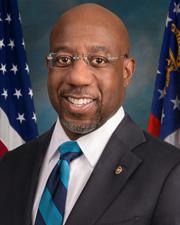 Sen. Raphael G. Warnock (D-GA)
Sen. Raphael G. Warnock (D-GA)Submitted September 14, 2023
Legislative Activity
Stay on top of the latest movement without scrolling through every action
Floor
Latest Action
Senate amendment submitted
September 14, 2023
View full timeline
Floor
Senate amendment submitted
September 14, 2023
Floor
Senate amendment submitted
September 14, 2023
Text
Submitted
SA 1214. Mr. WARNOCK (for himself, Mr. Coons, Mr. Kaine, Mr. Lujan,
Mr. Ossoff, and Mr. Booker) submitted an amendment intended to be
proposed to amendment SA 1092 proposed by Mrs. Murray (for herself and
Ms. Collins) to the bill H.R. 4366, making appropriations for military
construction, the Department of Veterans Affairs, and related agencies
for the fiscal year ending September 30, 2024, and for other purposes;
which was ordered to lie on the table; as follows:

At the appropriate place in division C, insert the
following:
Sec. ___.  Using amounts made available for the Federal
Aviation Administration under this Act that are not otherwise
obligated, the Secretary of Transportation shall submit a
report to the House and Senate Committees on Appropriations
on whether, and the degree to which, the Federal Aviation
Administration's workforce development programs authorized in
section 625 of the FAA Reauthorization Act of 2018 (Public
Law 115-254) have: (1) helped to expand the pool of
prospective applicants to the industry; (2) strengthened
aviation programs at minority-serving institutions, public
institutions of higher education, and public postsecondary
vocational institutions; and (3) encouraged the participation
of populations that are underrepresented in the aviation
workforce, including women, minorities, and individuals in
economically disadvantaged geographic areas and rural
communities. In submitting this report, the Federal Aviation
Administration shall also provide recommendations on how it
can better use its workforce development grant programs to:
(1) expand the pool of prospective applicants to the
industry; (2) strengthen aviation programs at minority-
serving institutions, public institutions of higher
education, and public postsecondary vocational institutions;
and (3) encouraged the participation of populations that are
underrepresented in the aviation workforce, including women,
minorities, and individuals in economically disadvantaged
geographic areas and rural communities.
______