S.Amdt. 130Senate118th Congress (2023-2025)
S.Amdt. 130
Sponsored by 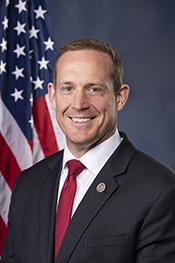 Sen. Ted Budd (R-NC)
Sen. Ted Budd (R-NC)Submitted June 1, 2023
Legislative Activity
Stay on top of the latest movement without scrolling through every action
Floor
Latest Action
Senate amendment submitted
June 1, 2023
View full timeline
Floor
Senate amendment submitted
June 1, 2023
Floor
Senate amendment submitted
June 1, 2023
Text
Submitted
SA 130. Mr. BUDD submitted an amendment intended to be proposed by
him to the bill H.R. 3746, to provide for a responsible increase to the
debt ceiling; which was ordered to lie on the table; as follows:

[[Page S1956]]

Strike title III of division B and insert the following:

TITLE III--REGULATORY BUDGETING AND STATUTORY ADMINISTRATIVE PAY-AS-
YOU-GO

SEC. 261. SHORT TITLE.

This title may be cited as the ``Regulatory Budgeting and
Administrative Pay-As-You-Go Act of 2023''.

SEC. 262. DEFINITIONS.

In this title:
(1) Administrative action.--The term ``administrative
action'' means a ``rule'' as defined in section 804(3) of
title 5, United States Code.
(2) Agency.--The term ``agency'' means any authority of the
United States that is an ``agency'' under section 3502(1) of
title 44, United States Code, other than those considered to
be independent regulatory agencies, as defined in section
3502(5) of such title.
(3) Costs.--The term ``costs'' means opportunity cost to
society.
(4) Cost savings.--The term ``cost savings'' means the cost
imposed by a regulatory action that is eliminated by the
repeal, replacement, or modification of the regulatory
action.
(5) Covered discretionary administrative action.--The term
``covered discretionary administrative action'' means a
discretionary administrative action that would affect direct
spending.
(6) Deregulatory action.--The term ``deregulatory action''
means the repeal, replacement, or modification of an existing
regulatory action.
(7) Direct spending.--The term ``direct spending'' has the
meaning given that term in section 250(c) of the Balanced
Budget and Emergency Deficit Control Act of 1985 (2 U.S.C.
900(c)).
(8) Director.--The term ``Director'' means the Director of
the Office of Management and Budget.
(9) Discretionary administrative action.--The term
``discretionary administrative action''--
(A) means any administrative action that is not required by
law; and
(B) includes an administrative action required by law for
which an agency has discretion in the manner in which to
implement the administrative action.
(10) Increase direct spending.--The term ``increase direct
spending'' means that the amount of direct spending would
increase relative to--
(A) the most recently submitted projection of the amount of
direct spending presented in baseline estimates as defined in
section 257 of the Balanced Budget and Emergency Deficit
Control Act of 1985, as amended, under--
(i) the budget of the President submitted under section
1105 of title 31, United States Code; or
(ii) the supplemental summary of the budget submitted under
section 1106 of title 31, United States Code;
(B) with respect to a discretionary administrative action
that is incorporated into the applicable projection described
in subparagraph (A) and for which a proposal has not been
submitted under section 263(a)(2)(A), a projection of the
amount of direct spending if no administrative action were
taken; or
(C) with respect to a discretionary administrative action
described in paragraph (9)(B), a projection of the amount of
direct spending under the least costly implementation option
reasonably identifiable by the agency that meets the
requirements under the statute.
(11) Incremental regulatory cost.--The term ``incremental
regulatory cost'' means the difference between the estimated
cost of issuing a significant regulatory action and the
estimated cost saved by issuing any deregulatory action.
(12) Regulation; rule.--The term ``regulation'' or ``rule''
has the meaning given the term ``rule'' in section 551 of
title 5, United States Code.
(13) Regulatory action.--The term ``regulatory action''
means--
(A) any regulation; and
(B) any other regulatory guidance, statement of policy,
information collection request, form, or reporting,
recordkeeping, or disclosure requirements that imposes a
burden on the public or governs agency operations.
(14) Significant regulatory action.--The term ``significant
regulatory action'' means any regulatory action, other than
monetary policy proposed or implemented by the Board of
Governors of the Federal Reserve System or the Federal Open
Market Committee, that is likely to--
(A) have an annual effect on the economy of $100,000,000 or
more or adversely affect in a material way the economy, a
sector of the economy, productivity, competition, jobs, the
environment, public health or safety, or State, local, or
Tribal governments or communities;
(B) create a serious inconsistency or otherwise interfere
with an action taken or planned by another agency;
(C) materially alter the budgetary impact of entitlements,
grants, user fees, or loan programs or the rights and
obligations of recipients thereof; or
(D) raise a novel legal or policy issue.
(15) State.--The term ``State'' means each of the several
States, the District of Columbia, and each territory or
possession of the United States.

SEC. 263. REQUIREMENTS FOR ADMINISTRATIVE ACTIONS THAT AFFECT
DIRECT SPENDING.

(a) Discretionary Administrative Actions.--
(1) In general.--Before an agency may finalize any covered
discretionary administrative action, the head of the agency
shall submit to the Director for review written notice
regarding the covered discretionary administrative action,
which shall include an estimate of the budgetary effects of
the covered discretionary administrative action.
(2) Increasing direct spending.--
(A) In general.--If the covered discretionary
administrative action would increase direct spending in an
amount equal to or exceeding the amounts specified in
paragraph (3), the written notice submitted by the head of
the agency under paragraph (1) shall identify 1 or more other
administrative actions that would provide a reduction in
direct spending greater than or equal to the increase in
direct spending attributable to the covered discretionary
administrative action. To the extent feasible, the head of
such agency shall issue such administrative actions that
would provide a reduction in direct spending before or on the
same schedule as the covered discretionary administrative
action.
(B) Review.--
(i) In general.--The Director shall determine whether the
reduction in direct spending in a proposal in a written
notice from an agency under subparagraph (A) is greater than
or equal to the increase in direct spending attributable to
the covered discretionary administrative action to which the
written notice relates.
(ii) No offset.--If the written notice regarding a proposed
covered discretionary administrative action that would
increase direct spending does not include a proposal to
offset the increased direct spending as determined in clause
(i), the Director shall return the written notice to the
agency for resubmission in accordance with this title.
(3) Amounts specified.--The amounts specified in this
paragraph are--
(A) $1,000,000,000 over the 10-year period beginning with
the current year; and
(B) $100,000,000 in any given year during such 10-year
period.
(b) Nondiscretionary Actions.--
(1) In general.--If an agency determines that an
administrative action that would increase direct spending is
required by law and therefore is not a covered discretionary
administrative action, before the agency finalizes that
administrative action, the head of the agency shall--
(A) submit to the Director a written opinion by the general
counsel of the agency, or the equivalent employee of the
agency, explaining that legal conclusion;
(B) submit to the Director a projection of the amount of
direct spending under the least costly implementation option
reasonably identifiable by the agency that meets the
requirements under the statute; and
(C) consult with the Director regarding implementation of
the administrative action.
(2) Approval required.--An administrative action described
in paragraph (1) shall have no effect unless the Director--
(A) certifies the administrative action is required by law
and therefore is not a covered discretionary administrative
action; and
(B) approves the administrative action in advance in
writing and the written approval is publicly available online
prior to the issuance of the administrative action.
(c) Projections.--Any projection for purposes of this title
shall be conducted in accordance with Office of Management
and Budget Circular A-11, or any successor thereto.
(d) Issuance of Administrative Guidance.--Not later than 90
days after the date of enactment of this Act, the Director
shall issue instructions regarding the implementation of this
title, including how covered discretionary administrative
actions that increase direct spending and nontax receipts
will be evaluated.

SEC. 264. REGULATORY PLANNING AND BUDGET.

(a) Unified Agenda and Annual Regulatory Plan.--
(1) Unified regulatory agenda.--During the months of April
and October of each year, the Director shall publish a
unified regulatory agenda, which shall include--
(A) regulatory and deregulatory actions under development
or review at agencies;
(B) a Federal regulatory plan of all significant regulatory
actions and associated deregulatory actions that agencies
reasonably expect to issue in proposed or final form in the
current and following fiscal year; and
(C) all information required to be included in the
regulatory flexibility agenda under section 602 of title 5,
United States Code.
(2) Agency submissions.--In accordance with guidance issued
by the Director and not less than 60 days before each date of
publication for the unified regulatory agenda under paragraph
(1), the head of each agency shall submit to the Director an
agenda of all regulatory actions and deregulatory actions
under development at the agency, including the following:
(A) For each regulatory action and deregulatory action:
(i) A regulation identifier number.
(ii) A brief summary of the action.
(iii) The legal authority for the action.
(iv) Any legal deadline for the action.
(v) The name and contact information for a knowledgeable
agency official.
(vi) Any other information as required by the Director.

[[Page S1957]]

(B) An annual regulatory plan, which shall include a list
of each significant regulatory action the agency reasonably
expects to issue in proposed or final form in the current and
following fiscal year, including for each significant
regulatory action:
(i) A summary, including the following:

(I) A statement of the regulatory objectives.
(II) The legal authority for the action.
(III) A statement of the need for the action.
(IV) The agency's schedule for the action.

(ii) The estimated cost.
(iii) The estimated benefits.
(iv) Any deregulatory action identified to offset the
estimated cost of such significant regulatory action and an
explanation of how the agency will continue to achieve
regulatory objectives if the deregulatory action is taken.
(v) A best approximation of the total cost or savings and
any cost or savings associated with a deregulatory action.
(vi) An estimate of the economic effects, including any
estimate of the net effect that such action will have on the
number of jobs in the United States, that was considered in
drafting the action, or, if such estimate is not available, a
statement affirming that no information on the economic
effects, including the effect on the number of jobs, of the
action has been considered.
(C) Information required under section 602 of title 5,
United States Code.
(D) Information required under any other law to be reported
by agencies about significant regulatory actions, as
determined by the Director.
(b) Federal Regulatory Budget.--
(1) Establishment.--In the April unified regulatory agenda
described in subsection (a), the Director--
(A) shall establish the annual Federal Regulatory Budget,
which specifies the net amount of incremental regulatory
costs allowed by the Federal Government and at each agency
for the next fiscal year; and
(B) may set the incremental regulatory cost allowance to
allow an increase, prohibit an increase, or require a
decrease of incremental regulatory costs.
(2) Default net incremental regulatory cost.--If the
Director does not set a net amount of incremental regulatory
costs allowed for an agency, the net incremental regulatory
cost allowed shall be zero.
(3) Balance rollover of incremental regulatory cost
allowance.--
(A) In general.--If an agency does not exhaust all of the
incremental regulatory cost allowance for a fiscal year, the
balance may be added to the incremental regulatory cost
allowance for the subsequent fiscal year, without increasing
the incremental regulatory costs allowed for the Federal
Government for the subsequent fiscal year.
(B) Total carryover.--The Director shall identify the total
carryover incremental regulatory cost allowance available to
an agency in the Federal Regulatory Budget.
(c) Significant Regulatory Action Requirements.--Except as
otherwise required by law, a significant regulatory action
shall have no effect unless--
(1) the--
(A) head of the agency identifies not less than 2
deregulatory actions to offset the costs of the significant
regulatory action, and to the extent feasible, issues those
deregulatory actions before or on the same schedule as the
significant regulatory action;
(B) incremental costs of the significant regulatory action
as offset by any deregulatory action issued before or on the
same schedule as the significant regulatory action do not
cause the agency to exceed or contribute to the agency
exceeding the incremental regulatory cost allowance of the
agency for that fiscal year; and
(C) significant regulatory action was included on the most
recent version or update of the published unified regulatory
agenda; or
(2) the issuance of the significant regulatory action was
approved in advance in writing by the Director and the
written approval is publicly available online prior to the
issuance of the significant regulatory action.
(d) Guidance by OMB.--
(1) In general.--Not later than 90 days after the date of
enactment of this Act, the Director shall establish and issue
guidance on how agencies should comply with the requirements
of this section, which shall include the following:
(A) A process for standardizing the measurement and
estimation of regulatory costs, including cost savings
associated with deregulatory actions.
(B) Standards for determining what qualifies as a
deregulatory action.
(C) Standards for determining the costs of existing
regulatory actions that are considered for repeal,
replacement, or modification.
(D) A process for accounting for costs in different fiscal
years.
(E) Methods to oversee the issuance of significant
regulatory actions offset by cost savings achieved at
different times or by different agencies.
(F) Emergencies and other circumstances that may justify
individual waivers of the requirements of this section.
(G) Standards by which the Director will determine whether
a regulatory action or a collection of regulatory actions
qualifies as a significant regulatory action.
(2) Updates to guidance.--The Director shall update the
guidance issued pursuant to this section as necessary.

SEC. 265. WAIVER.

(a) In General.--The Director may waive the requirements of
section 263(a) if the Director concludes that the waiver--
(1) is necessary for the delivery of essential services; or
(2) is necessary for effective program delivery.
(b) Publication.--Any waiver determination under subsection
(a) shall be published in the Federal Register.
(c) Applicability of the Congressional Review Act.--A
waiver determination under subsection (a) shall be considered
a rule for the purposes of chapter 8 of title 5, United
States Code.

SEC. 266. GAO REPORT.

Within 180 days of the date of enactment of this Act, the
Comptroller General shall issue a report on the
implementation of this title.

SEC. 267. CONGRESSIONAL REVIEW ACT COMPLIANCE ASSESSMENT.

Section 801(a)(2)(A) of title 5, United States Code, is
amended by inserting after ``compliance with procedural steps
required by paragraph (1)(B)'' the following: ``, and shall
in addition include an assessment of the agency's compliance
with such requirements of the Regulatory Budgeting and
Administrative Pay-As-You-Go Act of 2023 as may be
applicable''.
______