S.Amdt. 1950Senate118th Congress (2023-2025)2nd degree
S.Amdt. 1950
Sponsored by 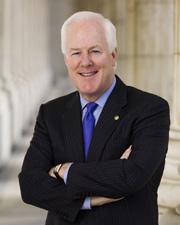 Sen. John Cornyn (R-TX)
Sen. John Cornyn (R-TX)Submitted May 2, 2024
Legislative Activity
Stay on top of the latest movement without scrolling through every action
Floor
Latest Action
Senate amendment submitted
May 2, 2024
View full timeline
Floor
Senate amendment submitted
May 2, 2024
Floor
Senate amendment submitted
May 2, 2024
Text
Submitted
SA 1950. Mr. CORNYN (for himself, Mr. Ossoff, Mr. Grassley, Mr.
Peters, Mr. Coons, and Mr. Cruz) submitted an amendment intended to be
proposed to amendment SA 1911 submitted by Ms. Cantwell (for herself,
Mr. Cruz, Ms. Duckworth, and Mr. Moran) and intended to be proposed to
the bill H.R. 3935, to amend title 49, United States Code, to
reauthorize and improve the Federal Aviation Administration and other
civil aviation programs, and for other purposes; which was ordered to
lie on the table; as follows:

At the end, add the following:

TITLE XIV--LAW ENFORCEMENT AND VICTIM SUPPORT ACT OF 2024

SEC. 1401. SHORT TITLE.

This title may be cited as the ``Law Enforcement and Victim
Support Act of 2024''.

SEC. 1402. PREVENTING CHILD TRAFFICKING ACT OF 2024.

(a) Defined Term.--In this section, the term ``anti-
trafficking recommendations'' means the recommendations set
forth in the report of the Government Accountability Office
entitled ``Child Trafficking: Addressing Challenges to Public
Awareness and Survivor Support'', which was published on
December 11, 2023.
(b) Implementation of Anti-trafficking Programs for
Children.--Not later than 180 days after the date of the
enactment of this Act, the Office for Victims of Crime of the
Department of Justice, in coordination with the Office on
Trafficking in Persons of the Administration for Children and
Families, shall implement the anti-trafficking
recommendations.
(c) Report.--Not later than 60 days after the date on which
the Office for Victims of Crime implements the anti-
trafficking recommendations pursuant to subsection (c), the
Director of the Office for Victims of Crime shall submit a
report to the Committee on the Judiciary of the Senate and
Committee on the Judiciary of the House of Representatives
that explicitly describes the steps taken by the Office to
complete such implementation.

SEC. 1403. PROJECT SAFE CHILDHOOD ACT.

Section 143 of the Adam Walsh Child Protection and Safety
Act of 2006 (34 U.S.C. 20942) is amended to read as follows:

``SEC. 143. PROJECT SAFE CHILDHOOD.

``(a) Definitions.--In this section:
``(1) Child sexual abuse material.--The term `child sexual
abuse material' has the meaning given the term `child
pornography' in section 2256 of title 18, United States Code.
``(2) Child sexual exploitation offense.--The term `child
sexual exploitation offense' means--
``(A)(i) an offense involving a minor under section 1591 or
chapter 117 of title 18, United States Code;
``(ii) an offense under subsection (a), (b), or (c) of
section 2251 of title 18, United States Code;
``(iii) an offense under section 2251A or 2252A(g) of title
18, United States Code; or
``(iv) any attempt or conspiracy to commit an offense
described in clause (i) or (ii); or
``(B) an offense involving a minor under a State or Tribal
statute that is similar to a provision described in
subparagraph (A).

[[Page S3334]]

``(3) Circle of trust offender.--The term `circle of trust
offender' means an offender who is related to, or in a
position of trust, authority, or supervisory control with
respect to, a child.
``(4) Computer.--The term `computer' has the meaning given
the term in section 1030 of title 18, United States Code.
``(5) Contact sexual offense.--The term `contact sexual
offense' means--
``(A) an offense involving a minor under chapter 109A of
title 18, United States Code, or any attempt or conspiracy to
commit such an offense; or
``(B) an offense involving a minor under a State or Tribal
statute that is similar to a provision described in
subparagraph (A).
``(6) Dual offender.--The term `dual offender' means--
``(A) a person who commits--
``(i) a technology-facilitated child sexual exploitation
offense or an offense involving child sexual abuse material;
and
``(ii) a contact sexual offense; and
``(B) without regard to whether the offenses described in
clauses (i) and (ii) of subparagraph (A)--
``(i) are committed as part of the same course of conduct;
or
``(ii) involve the same victim.
``(7) Facilitator.--The term `facilitator' means an
individual who facilitates the commission by another
individual of--
``(A) a technology-facilitated child sexual exploitation
offense or an offense involving child sexual abuse material;
or
``(B) a contact sexual offense.
``(8) ICAC affiliate partner.--The term `ICAC affiliate
partner' means a law enforcement agency that has entered into
a formal operating agreement with the ICAC Task Force
Program.
``(9) ICAC task force.--The term `ICAC task force' means a
task force that is part of the ICAC Task Force Program.
``(10) ICAC task force program.--The term `ICAC Task Force
Program' means the National Internet Crimes Against Children
Task Force Program established under section 102 of the
PROTECT Our Children Act of 2008 (34 U.S.C. 21112).
``(11) Offense involving child sexual abuse material.--The
term `offense involving child sexual abuse material' means--
``(A) an offense under section 2251(d), section 2252, or
paragraphs (1) through (6) of section 2252A(a) of title 18,
United States Code, or any attempt or conspiracy to commit
such an offense; or
``(B) an offense under a State or Tribal statute that is
similar to a provision described in subparagraph (A).
``(12) Serious offender.--The term `serious offender'
means--
``(A) an offender who has committed a contact sexual
offense or child sexual exploitation offense;
``(B) a dual offender, circle of trust offender, or
facilitator; or
``(C) an offender with a prior conviction for a contact
sexual offense, a child sexual exploitation offense, or an
offense involving child sexual abuse material.
``(13) State.--The term `State' means a State of the United
States, the District of Columbia, and any commonwealth,
territory, or possession of the United States.
``(14) Technology-facilitated.--The term `technology-
facilitated', with respect to an offense, means an offense
that is committed through the use of a computer, even if the
use of a computer is not an element of the offense.
``(b) Establishment of Program.--The Attorney General shall
create and maintain a nationwide initiative to align Federal,
State, and local entities to combat the growing epidemic of
online child sexual exploitation and abuse, to be known as
the `Project Safe Childhood program', in accordance with this
section.
``(c) Best Practices.--The Attorney General, in
coordination with the Child Exploitation and Obscenity
Section of the Criminal Division of the Department of Justice
and the Office of Juvenile Justice and Delinquency Prevention
of the Department of Justice, and in consultation with
training and technical assistance providers under the ICAC
Task Force Program who are funded by the Attorney General and
with appropriate nongovernmental organizations, shall--
``(1) develop best practices to adopt a balanced approach
to the investigation of suspect leads involving contact
sexual offenses, child sexual exploitation offenses, and
offenses involving child sexual abuse material, and the
prosecution of those offenses, prioritizing when feasible the
identification of a child victim or a serious offender, which
approach shall incorporate the use of--
``(A) proactively generated leads, including leads
generated by current and emerging technology;
``(B) in-district investigative referrals; and
``(C) CyberTipline reports from the National Center for
Missing and Exploited Children;
``(2) develop best practices to be used by each United
States Attorney and ICAC task force to assess the likelihood
that an individual could be a serious offender or that a
child victim may be identified;
``(3) develop and implement a tracking and communication
system for Federal, State, and local law enforcement agencies
and prosecutor's offices to report successful cases of victim
identification and child rescue to the Department of Justice
and the public; and
``(4) encourage the submission of all lawfully seized
visual depictions to the Child Victim Identification Program
of the National Center for Missing and Exploited Children.
``(d) Implementation.--Except as authorized under
subsection (e), funds authorized under this section may only
be used for the following 4 purposes:
``(1) Integrated Federal, State, and local efforts to
investigate and prosecute contact sexual offenses, child
sexual exploitation offenses, and offenses involving child
sexual abuse material, including--
``(A) the partnership by each United States Attorney with
each Internet Crimes Against Children Task Force within the
district of such attorney;
``(B) training of Federal, State, and local law enforcement
officers and prosecutors through--
``(i) programs facilitated by the ICAC Task Force Program;
``(ii) ICAC training programs supported by the Office of
Juvenile Justice and Delinquency Prevention of the Department
of Justice;
``(iii) programs facilitated by appropriate nongovernmental
organizations with subject matter expertise, technical skill,
or technological tools to assist in the identification of and
response to serious offenders, contact sexual offenses, child
sexual exploitation offenses, or offenses involving child
sexual abuse material; and
``(iv) any other program that provides training--

``(I) on the investigation and identification of serious
offenders or victims of contact sexual offenses, child sexual
exploitation offenses, or offenses involving child sexual
abuse material; or
``(II) that specifically addresses the use of existing and
emerging technologies to commit or facilitate contact sexual
offenses, child sexual exploitation offenses, or offenses
involving child sexual abuse material;

``(C) the development by each United States Attorney of a
district-specific strategic plan to coordinate with State and
local law enforcement agencies and prosecutor's offices,
including ICAC task forces and their ICAC affiliate partners,
on the investigation of suspect leads involving serious
offenders, contact sexual offenses, child sexual exploitation
offenses, and offenses involving child sexual abuse material,
and the prosecution of those offenders and offenses, which
plan--
``(i) shall include--

``(I) the use of the best practices developed under
paragraphs (1) and (2) of subsection (c);
``(II) the development of plans and protocols to target and
rapidly investigate cases involving potential serious
offenders or the identification and rescue of a victim of a
contact sexual offense, a child sexual exploitation offense,
or an offense involving child sexual abuse material;
``(III) the use of training and technical assistance
programs to incorporate victim-centered, trauma-informed
practices in cases involving victims of contact sexual
offenses, child sexual exploitation offenses, and offenses
involving child sexual abuse material, which may include the
use of child protective services, children's advocacy
centers, victim support specialists, or other supportive
services;
``(IV) the development of plans to track, report, and
clearly communicate successful cases of victim identification
and child rescue to the Department of Justice and the public;
``(V) an analysis of the investigative and forensic
capacity of law enforcement agencies and prosecutor's offices
within the district, and goals for improving capacity and
effectiveness;
``(VI) a written policy describing the criteria for
referrals for prosecution from Federal, State, or local law
enforcement agencies, particularly when the investigation may
involve a potential serious offender or the identification or
rescue of a child victim;
``(VII) plans and budgets for training of relevant
personnel on contact sexual offenses, child sexual
exploitation offenses, and offenses involving child sexual
abuse material;
``(VIII) plans for coordination and cooperation with State,
local, and Tribal law enforcement agencies and prosecutorial
offices; and
``(IX) evidence-based programs that educate the public
about and increase awareness of such offenses; and

``(ii) shall be developed in consultation, as appropriate,
with--

``(I) the local ICAC task force;
``(II) the United States Marshals Service Sex Offender
Targeting Center;
``(III) training and technical assistance providers under
the ICAC Task Force Program who are funded by the Attorney
General;
``(IV) nongovernmental organizations with subject matter
expertise, technical skill, or technological tools to assist
in the identification of and response to contact sexual
offenses, child sexual exploitation offenses, or offenses
involving child sexual abuse material;
``(V) any relevant component of Homeland Security
Investigations;
``(VI) any relevant component of the Federal Bureau of
Investigation;
``(VII) the Office of Juvenile Justice and Delinquency
Prevention of the Department of Justice;
``(VIII) the Child Exploitation and Obscenity Section of
the Criminal Division of the Department of Justice;
``(IX) the United States Postal Inspection Service;
``(X) the United States Secret Service; and

[[Page S3335]]

``(XI) each military criminal investigation organization of
the Department of Defense; and

``(D) a quadrennial assessment by each United States
Attorney of the investigations within the district of such
attorney of contact sexual offenses, child sexual
exploitation offenses, and offenses involving child sexual
abuse material--
``(i) with consideration of--

``(I) the variety of sources for leads;
``(II) the proportion of work involving proactive or
undercover law enforcement investigations;
``(III) the number of serious offenders identified and
prosecuted; and
``(IV) the number of children identified or rescued; and

``(ii) information from which may be used by the United
States Attorney, as appropriate, to revise the plan described
in subparagraph (C).
``(2) Major case coordination by the Department of Justice
(or other Federal agencies as appropriate), including
specific cooperation, as appropriate, with--
``(A) the Child Exploitation and Obscenity Section of the
Criminal Division of the Department of Justice;
``(B) any relevant component of Homeland Security
Investigations;
``(C) any relevant component of the Federal Bureau of
Investigation;
``(D) the ICAC task forces and ICAC affiliate partners;
``(E) the United States Marshals Service, including the Sex
Offender Targeting Center;
``(F) the United States Postal Inspection Service;
``(G) the United States Secret Service;
``(H) each Military Criminal Investigation Organization of
the Department of Defense; and
``(I) any task forces established in connection with the
Project Safe Childhood program set forth under subsection
(b).
``(3) Increased Federal involvement in, and commitment to,
the prevention and prosecution of technology-facilitated
child sexual exploitation offenses or offenses involving
child sexual abuse material by--
``(A) using technology to identify victims and serious
offenders;
``(B) developing processes and tools to identify victims
and offenders; and
``(C) taking measures to improve information sharing among
Federal law enforcement agencies, including for the purposes
of implementing the plans and protocols described in
paragraph (1)(C)(i)(II) to identify and rescue--
``(i) victims of contact sexual offenses, child sexual
exploitation offenses, and offenses involving child sexual
abuse material; or
``(ii) victims of serious offenders.
``(4) The establishment, development, and implementation of
a nationally coordinated `Safer Internet Day' every year
developed in collaboration with the Department of Education,
national and local internet safety organizations, parent
organizations, social media companies, and schools to
provide--
``(A) national public awareness and evidence-based
educational programs about the threats posed by circle of
trust offenders and the threat of contact sexual offenses,
child sexual exploitation offenses, or offenses involving
child sexual abuse material, and the use of technology to
facilitate those offenses;
``(B) information to parents and children about how to
avoid or prevent technology-facilitated child sexual
exploitation offenses; and
``(C) information about how to report possible technology-
facilitated child sexual exploitation offenses or offenses
involving child sexual abuse material through--
``(i) the National Center for Missing and Exploited
Children;
``(ii) the ICAC Task Force Program; and
``(iii) any other program that--

``(I) raises national awareness about the threat of
technology-facilitated child sexual exploitation offenses or
offenses involving child sexual abuse material; and
``(II) provides information to parents and children seeking
to report possible violations of technology-facilitated child
sexual exploitation offenses or offenses involving child
sexual abuse material.

``(e) Expansion of Project Safe Childhood.--Notwithstanding
subsection (d), funds authorized under this section may be
also be used for the following purposes:
``(1) The addition of not less than 20 Assistant United
States Attorneys at the Department of Justice, relative to
the number of such positions as of the day before the date of
enactment of the Law Enforcement and Victim Support Act of
2024, who shall be--
``(A) dedicated to the prosecution of cases in connection
with the Project Safe Childhood program set forth under
subsection (b); and
``(B) responsible for assisting and coordinating the plans
and protocols of each district under subsection
(d)(1)(C)(i)(II).
``(2) Such other additional and related purposes as the
Attorney General determines appropriate.
``(f) Authorization of Appropriations.--
``(1) In general.--For the purpose of carrying out this
section, there are authorized to be appropriated--
``(A) for the activities described under paragraphs (1),
(2), and (3) of subsection (d), $28,550,000 for each of
fiscal years 2023 through 2028;
``(B) for the activities described under subsection (d)(4),
$4,000,000 for each of fiscal years 2023 through 2028; and
``(C) for the activities described under subsection (e),
$29,100,000 for each of fiscal years 2023 through 2028.
``(2) Supplement, not supplant.--Amounts made available to
State and local agencies, programs, and services under this
section shall supplement, and not supplant, other Federal,
State, or local funds made available for those agencies,
programs, and services.''.

SEC. 1404. STRONG COMMUNITIES ACT OF 2023.

Section 1701 of title I of the Omnibus Crime Control and
Safe Streets Act of 1968 (34 U.S.C. 10381) is amended by
adding at the end the following:
``(o) COPS Strong Communities Program.--
``(1) Definitions.--In this subsection:
``(A) Eligible entity.--The term `eligible entity' means--
``(i) an institution of higher education, as defined in
section 101 of the Higher Education Act of 1965 (20 U.S.C.
1001), that, in coordination or through an agreement with a
local law enforcement agency, offers a law enforcement
training program; or
``(ii) a local law enforcement agency that offers a law
enforcement training program.
``(B) Local law enforcement agency.--The term `local law
enforcement agency' means an agency of a State, unit of local
government, or Indian Tribe that is authorized by law or by a
government agency to engage in or supervise the prevention,
detection, investigation, or prosecution of any violation of
criminal law.
``(2) Grants.--The Attorney General may use amounts
otherwise appropriated to carry out this section for a fiscal
year (beginning with fiscal year 2024) to make competitive
grants to local law enforcement agencies to be used for
officers and recruits to attend law enforcement training
programs at eligible entities if the officers and recruits
agree to serve in law enforcement agencies in their
communities.
``(3) Eligibility.--To be eligible for a grant through a
local law enforcement agency under this subsection, each
officer or recruit described in paragraph (2) shall--
``(A) serve as a full-time law enforcement officer for a
total of not fewer than 4 years during the 8-year period
beginning on the date on which the officer or recruit
completes a law enforcement training program for which the
officer or recruit receives benefits;
``(B) complete the service described in subparagraph (A) in
a local law enforcement agency located within--
``(i) 7 miles of the residence of the officer or recruit
where the officer or recruit has resided for not fewer than 5
years; or
``(ii) if the officer or recruit resides in a county with
fewer than 150,000 residents, within 20 miles of the
residence of the officer or recruit where the officer or
recruit has resided for not fewer than 5 years; and
``(C) submit to the eligible entity providing a law
enforcement training program to the officer or recruit
evidence of employment of the officer or recruit in the form
of a certification by the chief administrative officer of the
local law enforcement agency where the officer or recruit is
employed.
``(4) Repayment.--
``(A) In general.--If an officer or recruit does not
complete the service described in paragraph (3), the officer
or recruit shall submit to the local law enforcement agency
an amount equal to any benefits the officer or recruit
received through the local law enforcement agency under this
subsection.
``(B) Regulations.--The Attorney General shall promulgate
regulations that establish categories of extenuating
circumstances under which an officer or recruit may be
excused from repayment under subparagraph (A).''.

SEC. 1405. FIGHTING POST-TRAUMATIC STRESS DISORDER ACT OF
2023.

(a) Findings.--Congress finds the following:
(1) Public safety officers serve their communities with
bravery and distinction in order to keep their communities
safe.
(2) Public safety officers, including police officers,
firefighters, emergency medical technicians, and 911
dispatchers, are on the front lines of dealing with
situations that are stressful, graphic, harrowing, and life-
threatening.
(3) The work of public safety officers puts them at risk
for developing post-traumatic stress disorder and acute
stress disorder.
(4) It is estimated that 30 percent of public safety
officers develop behavioral health conditions at some point
in their lifetimes, including depression and post-traumatic
stress disorder, in comparison to 20 percent of the general
population that develops such conditions.
(5) Victims of post-traumatic stress disorder and acute
stress disorder are at a higher risk of dying by suicide.
(6) Firefighters have been reported to have higher suicide
attempt and ideation rates than the general population.
(7) It is estimated that between 125 and 300 police
officers die by suicide every year.
(8) In 2019, pursuant to section 2(b) of the Law
Enforcement Mental Health and Wellness Act of 2017 (Public
Law 115-113; 131 Stat. 2276), the Director of the Office of
Community Oriented Policing Services of the Department of
Justice developed a report (referred to in this section as
the ``LEMHWA report'') that expressed that many law
enforcement agencies do not have the capacity

[[Page S3336]]

or local access to the mental health professionals necessary
for treating their law enforcement officers.
(9) The LEMHWA report recommended methods for establishing
remote access or regional mental health check programs at the
State or Federal level.
(10) Individual police and fire departments generally do
not have the resources to employ full-time mental health
experts who are able to treat public safety officers with
state-of-the-art techniques for the purpose of treating job-
related post-traumatic stress disorder and acute stress
disorder.
(b) Programming for Post-traumatic Stress Disorder.--
(1) Definitions.--In this subsection:
(A) Public safety officer.--The term ``public safety
officer''--
(i) has the meaning given the term in section 1204 of the
Omnibus Crime Control and Safe Streets Act of 1968 (34 U.S.C.
10284); and
(ii) includes Tribal public safety officers.
(B) Public safety telecommunicator.--The term ``public
safety telecommunicator'' means an individual who--
(i) operates telephone, radio, or other communication
systems to receive and communicate requests for emergency
assistance at 911 public safety answering points and
emergency operations centers;
(ii) takes information from the public and other sources
relating to crimes, threats, disturbances, acts of terrorism,
fires, medical emergencies, and other public safety matters;
and
(iii) coordinates and provides information to law
enforcement and emergency response personnel.
(2) Report.--Not later than 150 days after the date of
enactment of this Act, the Attorney General, acting through
the Director of the Office of Community Oriented Policing
Services of the Department of Justice, shall submit to the
Committee on the Judiciary of the Senate and the Committee on
the Judiciary of the House of Representatives a report on--
(A) not fewer than 1 proposed program, if the Attorney
General determines it appropriate and feasible to do so, to
be administered by the Department of Justice for making
state-of-the-art treatments or preventative care available to
public safety officers and public safety telecommunicators
with regard to job-related post-traumatic stress disorder or
acute stress disorder by providing public safety officers and
public safety telecommunicators access to evidence-based
trauma-informed care, peer support, counselor services, and
family supports for the purpose of treating or preventing
post-traumatic stress disorder or acute stress disorder;
(B) a draft of any necessary grant conditions required to
ensure that confidentiality is afforded to public safety
officers on account of seeking the care or services described
in paragraph (1) under the proposed program;
(C) how each proposed program described in subparagraph (A)
could be most efficiently administered throughout the United
States at the State, Tribal, territorial, and local levels,
taking into account in-person and telehealth capabilities;
(D) a draft of legislative language necessary to authorize
each proposed program described in subparagraph (A); and
(E) an estimate of the amount of annual appropriations
necessary for administering each proposed program described
in subparagraph (A).
(3) Development.--In developing the report required under
paragraph (2), the Attorney General shall consult relevant
stakeholders, including--
(A) Federal, State, Tribal, territorial, and local agencies
employing public safety officers and public safety
telecommunicators; and
(B) non-governmental organizations, international
organizations, academies, or other entities, including
organizations that support the interests of public safety
officers and public safety telecommunicators and the
interests of family members of public safety officers and
public safety telecommunicators.

SEC. 1406. RECRUIT AND RETAIN ACT.

(a) Improving COPS Grants for Police Hiring Purposes.--
(1) Grant use expansion.--Section 1701(b) of title I of the
Omnibus Crime Control and Safe Streets Act of 1968 (34 U.S.C.
10381(b)) is amended--
(A) by redesignating paragraphs (5) through (23) as
paragraphs (6) through (24), respectively; and
(B) by inserting after paragraph (4) the following:
``(5) to support hiring activities by law enforcement
agencies experiencing declines in officer recruitment
applications by reducing application-related fees, such as
fees for background checks, psychological evaluations, and
testing;''.
(2) Technical amendment.--Section 1701(b)(23) of title I of
the Omnibus Crime Control and Safe Streets Act of 1968 (34
U.S.C. 10381(b)(23)), as so redesignated, is amended by
striking ``(21)'' and inserting ``(22)''.
(b) Administrative Costs.--Section 1701 of title I of the
Omnibus Crime Control and Safe Streets Act of 1968 (34 U.S.C.
10381), as amended by section 1404, is amended--
(1) by redesignating subsections (i) through (o) as
subsections (k) through (p), respectively; and
(2) by inserting after subsection (h) the following:
``(i) Administrative Costs.--Not more than 2 percent of a
grant made for the hiring or rehiring of additional career
law enforcement officers may be used for costs incurred to
administer such grant.''.
(c) Pipeline Partnership Program.--Section 1701 of title I
of the Omnibus Crime Control and Safe Streets Act of 1968 (34
U.S.C. 10381), as amended by section 1404 and subsection (b),
is amended by inserting after subsection (p) the following:
``(q) COPS Pipeline Partnership Program.--
``(1) Eligible entity defined.--In this subsection, the
term `eligible entity' means a law enforcement agency in
partnership with not less than 1 educational institution,
which may include 1 or any combination of the following:
``(A) An elementary school.
``(B) A secondary school.
``(C) An institution of higher education.
``(D) A Hispanic-serving institution.
``(E) A historically Black college or university.
``(F) A Tribal college.
``(2) Grants.--The Attorney General shall award competitive
grants to eligible entities for recruiting activities that--
``(A) support substantial student engagement for the
exploration of potential future career opportunities in law
enforcement;
``(B) strengthen recruitment by law enforcement agencies
experiencing a decline in recruits, or high rates of
resignations or retirements;
``(C) enhance community interactions between local youth
and law enforcement agencies that are designed to increase
recruiting; and
``(D) otherwise improve the outcomes of local law
enforcement recruitment through activities such as dedicated
programming for students, work-based learning opportunities,
project-based learning, mentoring, community liaisons, career
or job fairs, work site visits, job shadowing,
apprenticeships, or skills-based internships.
``(3) Funding.--Of the amounts made available to carry out
this part for a fiscal year, the Attorney General may use not
more than $3,000,000 to carry out this subsection.''.
(d) COPS Grant Guidance for Agencies Operating Below
Budgeted Strength.--Section 1704 of title I of the Omnibus
Crime Control and Safe Streets Act of 1968 (34 U.S.C. 10384)
is amended by adding at the end the following:
``(d) Guidance for Understaffed Law Enforcement Agencies.--
``(1) Definitions.--In this subsection:
``(A) Covered applicant.--The term `covered applicant'
means an applicant for a hiring grant under this part seeking
funding for a law enforcement agency operating below the
budgeted strength of the law enforcement agency.
``(B) Budgeted strength.--The term `budgeted strength'
means the employment of the maximum number of sworn law
enforcement officers the budget of a law enforcement agency
allows the agency to employ.
``(2) Procedures.--Not later than 180 days after the date
of enactment of this subsection, the Attorney General shall
establish consistent procedures for covered applicants,
including guidance that--
``(A) clarifies that covered applicants remain eligible for
funding under this part; and
``(B) enables covered applicants to attest that the funding
from a grant awarded under this part is not being used by the
law enforcement agency to supplant State or local funds, as
described in subsection (a).
``(3) Paperwork reduction.--In developing the procedures
and guidance under paragraph (2), the Attorney General shall
take measures to reduce paperwork requirements for grants to
covered applicants.''.
(e) Study on Police Recruitment.--
(1) Study.--
(A) In general.--The Comptroller General of the United
States shall conduct a study to consider the comprehensive
effects of recruitment and attrition rates on Federal, State,
Tribal, and local law enforcement agencies in the United
States, to identify--
(i) the primary reasons that law enforcement officers--

(I) join law enforcement agencies; and
(II) resign or retire from law enforcement agencies;

(ii) how the reasons described in clause (i) may have
changed over time;
(iii) the effects of recruitment and attrition on public
safety;
(iv) the effects of electronic media on recruitment
efforts;
(v) barriers to the recruitment and retention of Federal,
State, and local law enforcement officers; and
(vi) recommendations for potential ways to address barriers
to the recruitment and retention of law enforcement officers,
including the barriers identified in clause (v).
(B) Representative cross-section.--
(i) In general.--The Comptroller General of the United
States shall endeavor to ensure accurate representation of
law enforcement agencies in the study conducted pursuant to
subparagraph (A) by surveying a broad cross-section of law
enforcement agencies--

(I) from various regions of the United States;
(II) of different sizes; and
(III) from rural, suburban, and urban jurisdictions.

(ii) Methods description.--The study conducted pursuant to
subparagraph (A) shall

[[Page S3337]]

include in the report under paragraph (2) a description of
the methods used to identify a representative sample of law
enforcement agencies.
(2) Report.--Not later than 540 days after the date of
enactment of this Act, the Comptroller General of the United
States shall--
(A) submit to the Committee on the Judiciary of the Senate
and the Committee on the Judiciary of the House of
Representatives a report containing the study conducted under
paragraph (1); and
(B) make the report submitted under subparagraph (A)
publicly available online.
(3) Confidentiality.--The Comptroller General of the United
States shall ensure that the study conducted under paragraph
(1) protects the privacy of participating law enforcement
agencies.

SEC. 1407. ADMINISTRATIVE FALSE CLAIMS ACT OF 2023.

(a) Change in Short Title.--
(1) In general.--Subtitle B of title VI of the Omnibus
Budget Reconciliation Act of 1986 (Public Law 99-509; 100
Stat. 1934) is amended--
(A) in the subtitle heading, by striking ``Program Fraud
Civil Remedies'' and inserting ``Administrative False
Claims''; and
(B) in section 6101 (31 U.S.C. 3801 note), by striking
``Program Fraud Civil Remedies Act of 1986'' and inserting
``Administrative False Claims Act''.
(2) References.--Any reference to the Program Fraud Civil
Remedies Act of 1986 in any provision of law, regulation,
map, document, record, or other paper of the United States
shall be deemed a reference to the Administrative False
Claims Act.
(b) Reverse False Claims.--Chapter 38 of title 31, United
States Code, is amended--
(1) in section 3801(a)(3), by amending subparagraph (C) to
read as follows:
``(C) made to an authority which has the effect of
concealing or improperly avoiding or decreasing an obligation
to pay or transmit property, services, or money to the
authority,''; and
(2) in section 3802(a)(3)--
(A) by striking ``An assessment'' and inserting ``(A)
Except as provided in subparagraph (B), an assessment''; and
(B) by adding at the end the following:
``(B) In the case of a claim described in section
3801(a)(3)(C), an assessment shall not be made under the
second sentence of paragraph (1) in an amount that is more
than double the value of the property, services, or money
that was wrongfully withheld from the authority.''.
(c) Increasing Dollar Amount of Claims.--Section 3803(c) of
title 31, United States Code, is amended--
(1) in paragraph (1), by striking ``$150,000'' each place
that term appears and inserting ``$1,000,000''; and
(2) by adding at the end the following:
``(3) Adjustment for Inflation.--The maximum amount in
paragraph (1) shall be adjusted for inflation in the same
manner and to the same extent as civil monetary penalties
under the Federal Civil Penalties Inflation Adjustment Act
(28 U.S.C. 2461 note).''.
(d) Recovery of Costs.--Section 3806(g)(1) of title 31,
United States Code, is amended to read as follows:
``(1)(A) Except as provided in paragraph (2)--
``(i) any amount collected under this chapter shall be
credited first to reimburse the authority or other Federal
entity that expended costs in support of the investigation or
prosecution of the action, including any court or hearing
costs; and
``(ii) amounts reimbursed under clause (i) shall--
``(I) be deposited in--
``(aa) the appropriations account of the authority or other
Federal entity from which the costs described in subparagraph
(A) were obligated;
``(bb) a similar appropriations account of the authority or
other Federal entity; or
``(cc) if the authority or other Federal entity expended
nonappropriated funds, another appropriate account; and
``(II) remain available until expended.
``(B) Any amount remaining after reimbursements described
in subparagraph (A) shall be deposited as miscellaneous
receipts in the Treasury of the United States.''.
(e) Semiannual Reporting.--Section 405(c) of title 5,
United States Code, is amended--
(1) in paragraph (4), by striking ``and'' at the end;
(2) by redesignating paragraph (5) as paragraph (6); and
(3) by inserting after paragraph (4) the following:
``(5) information relating to cases under chapter 38 of
title 31, including--
``(A) the number of reports submitted by investigating
officials to reviewing officials under section 3803(a)(1) of
such title;
``(B) actions taken in response to reports described in
subparagraph (A), which shall include statistical tables
showing--
``(i) pending cases;
``(ii) resolved cases;
``(iii) the average length of time to resolve each case;
``(iv) the number of final agency decisions that were
appealed to a district court of the United States or a higher
court; and
``(v) if the total number of cases in a report is greater
than 2--

``(I) the number of cases that were settled; and
``(II) the total penalty or assessment amount recovered in
each case, including through a settlement or compromise; and

``(C) instances in which the reviewing official declined to
proceed on a case reported by an investigating official;
and''.
(f) Increasing Efficiency of DOJ Processing.--Section
3803(j) of title 31, United States Code, is amended--
(1) by inserting ``(1)'' before ``The reviewing''; and
(2) by adding at the end the following:
``(2) A reviewing official shall notify the Attorney
General in writing not later than 30 days before entering
into any agreement to compromise or settle allegations of
liability under section 3802 and before the date on which the
reviewing official is permitted to refer allegations of
liability to a presiding officer under subsection (b).''.
(g) Revision of Definition of Hearing Officials.--
(1) In general.--Chapter 38 of title 31, United States
Code, is amended--
(A) in section 3801(a)(7)--
(i) in subparagraph (A), by striking ``or'' at the end;
(ii) in subparagraph (B)(vii), by adding ``or'' at the end;
and
(iii) by adding at the end the following:
``(C) a member of the board of contract appeals pursuant to
section 7105 of title 41, if the authority does not employ an
available presiding officer under subparagraph (A);''; and
(B) in section 3803(d)(2)--
(i) in subparagraph (A), by striking ``and'' at the end;
(ii) in subparagraph (B)--

(I) by striking ``the presiding'' and inserting ``(i) in
the case of a referral to a presiding officer described in
subparagraph (A) or (B) of section 3801(a)(7), the
presiding'';
(II) in clause (i), as so designated, by striking the
period at the end and inserting ``; or''; and
(III) by adding at the end the following:

``(ii) in the case of a referral to a presiding officer
described in subparagraph (C) of section 3801(a)(7)--
``(I) the reviewing official shall submit a copy of the
notice required by under paragraph (1) and of the response of
the person receiving such notice requesting a hearing--

``(aa) to the board of contract appeals that has
jurisdiction over matters arising from the agency of the
reviewing official pursuant to section 7105(e)(1) of title
41; or
``(bb) if the Chair of the board of contract appeals
declines to accept the referral, to any other board of
contract appeals; and

``(II) the reviewing official shall simultaneously mail, by
registered or certified mail, or shall deliver, notice to the
person alleged to be liable under section 3802 that the
referral has been made to an agency board of contract appeals
with an explanation as to where the person may obtain the
relevant rules of procedure promulgated by the board; and'';
and
(iii) by adding at the end the following:
``(C) in the case of a hearing conducted by a presiding
officer described in subparagraph (C) of section 3801(a)(7)--
``(i) the presiding officer shall conduct the hearing
according to the rules and procedures promulgated by the
board of contract appeals; and
``(ii) the hearing shall not be subject to the provisions
in subsection (g)(2), (h), or (i).''.
(2) Agency boards.--Section 7105(e) of title 41, United
States Code, is amended--
(A) in paragraph (1), by adding at the end the following:
``(E) Administrative false claims act.--
``(i) In general.--The boards described in subparagraphs
(B), (C), and (D) shall have jurisdiction to hear any case
referred to a board of contract appeals under section 3803(d)
of title 31.
``(ii) Declining referral.--If the Chair of a board
described in subparagraph (B), (C), or (D) determines that
accepting a case under clause (i) would prevent adequate
consideration of other cases being handled by the board, the
Chair may decline to accept the referral.''; and
(B) in paragraph (2), by inserting ``or, in the event that
a case is filed under chapter 38 of title 31, any relief that
would be available to a litigant under that chapter'' before
the period at the end.
(3) Regulations.--Not later than 180 days after the date of
enactment of this Act, each authority head, as defined in
section 3801 of title 31, United States Code, and each board
of contract appeals of a board described in subparagraph (B),
(C), or (D) of section 7105(e) of title 41, United States
Code, shall amend procedures regarding proceedings as
necessary to implement the amendments made by this
subsection.
(h) Revision of Limitations.--Section 3808 of title 31,
United States Code, is amended by striking subsection (a) and
inserting the following:
``(a) A notice to the person alleged to be liable with
respect to a claim or statement shall be mailed or delivered
in accordance with section 3803(d)(1) not later than the
later of--
``(1) 6 years after the date on which the violation of
section 3802 is committed; or
``(2) 3 years after the date on which facts material to the
action are known or reasonably should have been known by the
authority head, but in no event more than 10 years after the
date on which the violation is committed.''.
(i) Definitions.--Section 3801 of title 31, United States
Code, is amended--
(1) in subsection (a)--
(A) in paragraph (8), by striking ``and'' at the end;

[[Page S3338]]

(B) in paragraph (9), by striking the period at the end and
inserting a semicolon; and
(C) by adding at the end the following:
``(10) `material' has the meaning given the term in section
3729(b) of this title; and
``(11) `obligation' has the meaning given the term in
section 3729(b) of this title.''; and
(2) by adding at the end the following:
``(d) For purposes of subsection (a)(10), materiality shall
be determined in the same manner as under section 3729 of
this title.''.
(j) Promulgation of Regulations.--Not later than 180 days
after the date of enactment of this Act, each authority head,
as defined in section 3801 of title 31, United States Code,
shall--
(1) promulgate regulations and procedures to carry out this
Act and the amendments made by this Act; and
(2) review and update existing regulations and procedures
of the authority to ensure compliance with this Act and the
amendments made by this Act.

SEC. 1408. JUSTICE FOR MURDER VICTIMS ACT.

(a) In General.--Chapter 51 of title 18, United States
Code, is amended by adding at the end the following:

``Sec. 1123. No maximum time period between act or omission
and death of victim

``(a) In General.--A prosecution may be instituted for any
homicide offense under this title without regard to the time
that elapsed between--
``(1) the act or omission that caused the death of the
victim; and
``(2) the death of the victim.
``(b) Relation to Statute of Limitations.--Nothing in
subsection (a) shall be construed to supersede the
limitations period under section 3282(a), to the extent
applicable.
``(c) Maximum Time Period Applicable if Death Penalty
Imposed.--A sentence of death may not be imposed for a
homicide offense under this title unless the Government
proves beyond a reasonable doubt that not more than 1 year
and 1 day elapsed between--
``(1) the act or omission that caused the death of the
victim; and
``(2) the death of the victim.''.
(b) Table of Contents.--The table of sections for chapter
51 of title 18, United States Code, is amended by adding at
the end the following:

``1123. No maximum time period between act or omission and death of
victim.''.
(c) Applicability.--Section 1123(a) of title 18, United
States Code, as added by subsection (a), shall apply with
respect to an act or omission described in that section that
occurs after the date of enactment of this Act.
(d) Maximum Penalty for First-degree Murder Based on Time
Period Between Act or Omission and Death of Victim.--Section
1111(b) of title 18, United States Code, is amended by
inserting after ``imprisonment for life'' the following: ``,
unless the death of the victim occurred more than 1 year and
1 day after the act or omission that caused the death of the
victim, in which case the punishment shall be imprisonment
for any term of years or for life''.

SEC. 1409. PROJECT SAFE NEIGHBORHOODS REAUTHORIZATION ACT OF
2023.

(a) Findings.--Congress finds the following:
(1) Launched in 2001, the Project Safe Neighborhoods
program is a nationwide initiative that brings together
Federal, State, local, and Tribal law enforcement officials,
prosecutors, community leaders, and other stakeholders to
identify the most pressing crime problems in a community and
work collaboratively to address those problems.
(2) The Project Safe Neighborhoods program--
(A) operates in all 94 Federal judicial districts
throughout the 50 States and territories of the United
States; and
(B) implements 4 key components to successfully reduce
violent crime in communities, including community engagement,
prevention and intervention, focused and strategic
enforcement, and accountability.
(b) Reauthorization.--
(1) Definitions.--Section 2 of the Project Safe
Neighborhoods Grant Program Authorization Act of 2018 (? 34
U.S.C. 60701) is amended--
(A) by redesignating paragraphs (1), (2), and (3) as
paragraphs (2), (4), and (5), respectively;
(B) by inserting before paragraph (2), as so redesignated,
the following:
``(1) the term crime analyst means an individual employed
by a law enforcement agency for the purpose of separating
information into key components and contributing to plans of
action to understand, mitigate, and neutralize criminal
threats;''; and
(C) by inserting after paragraph (2), as so redesignated,
the following:
``(3) the term law enforcement assistant means an
individual employed by a law enforcement agency or a
prosecuting agency for the purpose of aiding law enforcement
officers in investigative or administrative duties;''.
(2) Use of funds.--Section 4(b) of the Project Safe
Neighborhoods Grant Program Authorization Act of 2018 (? 34
U.S.C. 60703(b)) is amended--
(A) in paragraph (3), by striking or at the end;
(B) in paragraph (4), by striking the period at the end and
inserting a semicolon; and
(C) by adding at the end the following:
``(5) hiring crime analysts to assist with violent crime
reduction efforts;
``(6) the cost of overtime for law enforcement officers,
prosecutors, and law enforcement assistants that assist with
the Program; and
``(7) purchasing, implementing, and using technology to
assist with violent crime reduction efforts.''.
(3) Authorization of appropriations.--Section 6 of the
Project Safe Neighborhoods Grant Program Authorization Act of
2018 (? 34 U.S.C. 60705) is amended by striking ``fiscal
years 2019 through 2021'' and inserting ``fiscal years 2023
through 2028''.
(c) Task Force Support.--
(1) Short title.--This subsection may be cited as the
Officer Ella Grace French and Sergeant Jim Smith Task Force
Support Act of 2023.
(2) Amendment.--Section 4(b) of the Project Safe
Neighborhoods Grant Program Authorization Act of 2018 (? 34
U.S.C. 60703(b)), as amended by subsection (c)(2), is
amended--
(A) in paragraph (6), by striking and at the end;
(B) in paragraph (7), by striking the period at the end and
inserting ; and; and
(C) by adding at the end the following:
``(8) support for multi-jurisdictional task forces.''.
(d) Transparency.--Not less frequently than annually, the
Attorney General shall submit to the Committee on the
Judiciary of the Senate and the Committee on the Judiciary of
the House of Representatives a report that details, for each
area in which the Project Safe Neighborhoods Block Grant
Program operates and with respect to the 1-year period
preceding the date of the report--
(1) how the area spent funds under the Project Safe
Neighborhoods Block Grant Program;
(2) the community outreach efforts performed in the area;
and
(3) the number and a description of the violent crime
offenses committed in the area, including murder, non-
negligent manslaughter, rape, robbery, and aggravated
assault.

SEC. 1410. FEDERAL JUDICIARY STABILIZATION ACT OF 2024.

(a) Existing Judgeships.--The existing judgeships for the
district of Hawaii, the district of Kansas, and the eastern
district of Missouri authorized by section 203(c) of the
Judicial Improvements Act of 1990 (Public Law 101-650; 28
U.S.C. 133 note) and the existing judgeships for the northern
district of Alabama, the district of Arizona, the central
district of California, the southern district of Florida, the
district of New Mexico, the western district of North
Carolina, and the eastern district of Texas authorized by
section 312(c) of the 21st Century Department of Justice
Appropriations Authorization Act (Public Law 107-273; 28
U.S.C. 133 note) shall, as of the effective date of this Act,
be authorized under section 133 of title 28, United States
Code, and the incumbents in those offices shall hold the
office under section 133 of title 28, United States Code, as
amended by this Act.
(b) Tables.--In order that the table contained in section
133 of title 28, United States Code, will, with respect to
each judicial district, reflect the changes in the total
number of permanent district judgeships authorized as a
result of subsection (a) of this section, such table is
amended--
(1) by striking the items relating to Alabama and inserting
the following:

``Alabama:
Northern.................................  8
Middle...................................  3
Southern.................................  3'';

(2) by striking the item relating to Arizona and inserting
the following:

``Arizona                                  13'';

(3) by striking the items relating to California and
inserting the following:

``California:
Northern.................................  14
Eastern..................................  6
Central..................................  28
Southern.................................  13'';

(4) by striking the items relating to Florida and inserting
the following:

``Florida:
Northern.................................  4
Middle...................................  15
Southern.................................  18'';

(5) by striking the item relating to Hawaii and inserting
the following:

``Hawaii.................................  4'';

(6) by striking the item relating to Kansas and inserting
the following:

``Kansas.................................  6'';

(7) by striking the items relating to Missouri and
inserting the following:

``Missouri:
Eastern..................................  7
Western..................................  5
Eastern and Western......................  2'';

(8) by striking the item relating to New Mexico and
inserting the following:

``New Mexico                               7'';

[[Page S3339]]

(9) by striking the items relating to North Carolina and
inserting the following:

``North Carolina:
Eastern..................................  4
Middle...................................  4
Western..................................  5''; and

(10) by striking the items relating to Texas and inserting
the following:

``Texas:
Northern.................................  12
Southern.................................  19
Eastern..................................  8
Western..................................  13'';

(c) Authorization of Appropriations.--There are authorized
to be appropriated such sums as may be necessary to carry out
this section and the amendments made by this section.
______