S.Amdt. 2462Senate118th Congress (2023-2025)
S.Amdt. 2462
Sponsored by 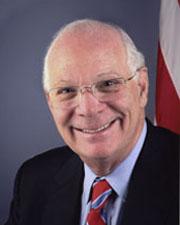 Sen. Benjamin L. Cardin (D-MD)
Sen. Benjamin L. Cardin (D-MD)Submitted July 11, 2024
Legislative Activity
Stay on top of the latest movement without scrolling through every action
Floor
Latest Action
Senate amendment submitted
July 11, 2024
Text
Submitted
SA 2462. Mr. CARDIN submitted an amendment intended to be proposed by
him to the bill S. 4638, to authorize appropriations for fiscal year
2025 for military activities of the Department of Defense, for military
construction, and for defense activities of the Department of Energy,
to prescribe military personnel strengths for such fiscal year, and for
other purposes; which was ordered to lie on the table; as follows:

At the end of title XII, add the following:

Subtitle G--International Freedom Protection

SEC. 1291. SHORT TITLE.

This subtitle may be cited as the ``International Freedom
Protection Act''.

SEC. 1292. DEFINITIONS.

In this subtitle:
(1) Appropriate congressional committees.--The term
``appropriate congressional committees'' means--
(A) the Committee on Foreign Relations of the Senate; and
(B) the Committee on Foreign Affairs of the House of
Representatives.
(2) Relevant federal agencies.--The term ``relevant Federal
agencies'' means--
(A) the Department of State; and
(B) the United States Agency for International Development.
(3) Transnational repression.--The term ``transnational
repression''--
(A) means actions of a foreign government, or agents of a
foreign government, involving the transgression of national
borders through physical, digital, or analog means to
intimidate, silence, coerce, harass, or harm members of
diaspora populations, political opponents, civil society
activists, journalists, or members of ethnic or religious
minority groups to prevent their exercise of internationally
recognized human rights; and
(B) may include--
(i) extrajudicial killings;
(ii) physical assaults and intimidation;
(iii) arbitrary detentions;
(iv) renditions;
(v) deportations;
(vi) unexplained or enforced disappearances;
(vii) physical or online surveillance or stalking;
(viii) unwarranted passport cancellation or control over
other identification documents;
(ix) abuse of international law enforcement systems;
(x) unlawful asset freezes;
(xi) digital threats, such as cyberattacks, targeted
surveillance and spyware, online harassment, and
intimidation; and
(xii) coercion by proxy, such as harassment of, or threats
or harm to, family and associates of private individuals who
remain in their country of origin.

SEC. 1293. COMBATING TRANSNATIONAL REPRESSION ABROAD.

(a) Statement of Policy on Transnational Repression.--It is
the policy of the United States--
(1) to identify and address transnational repression,
including by protecting targeted individuals and groups, as a
direct threat to the United States national interests of
upholding and promoting democratic values and internationally
recognized human rights;
(2) to address transnational repression, including by
protecting targeted individuals and groups;
(3) to strengthen the capacity of United States embassy and
mission staff to counter transnational repression, including
by--
(A) monitoring and documenting instances of transnational
repression;
(B) conducting regular outreach with at-risk or affected
populations to provide information regarding available
resources without putting such people at further risk; and
(C) working with local and national law enforcement, as
appropriate, to support victims of transnational repression;
(4) to develop policy and programmatic responses based on
input from--
(A) vulnerable populations who are at risk of, or are
experiencing, transnational repression;
(B) nongovernmental organizations working to address
transnational repression; and
(C) the private sector;
(5) to provide training to relevant Federal personnel--
(A) to enhance their understanding of transnational
repression; and
(B) to identify and combat threats of transnational
repression;
(6) to strengthen documentation and monitoring by the
United States Government of transnational repression by
foreign governments in the United States, in foreign
countries, and within international organizations; and
(7) to seek to hold perpetrators of transnational
repression accountable, including through the use of targeted
sanctions and visa restrictions.
(b) Report on Transnational Repression.--
(1) In general.--Not later than 180 days after the date of
the enactment of this Act, and every 2 years thereafter for
the following 10 years, the Secretary of State and the
Administrator of the United States Agency for International
Development shall submit a classified report to the
appropriate congressional committees that assesses the
efforts of the United States Government to implement the
policy objectives described in subsection (a).
(2) Elements.--The report required under paragraph (1)
shall include--
(A) a detailed description and assessment of United States
Government efforts to monitor, prevent, and respond to
transnational repression abroad;
(B) a detailed accounting of the most common tactics of
transnational repression;
(C) instances of transnational repression occurring within
international organizations;
(D) a description of--
(i) efforts by personnel at United States embassies and
missions to support victims of or those at risk of
transnational repression; and
(ii) resources provided to United States embassies and
missions to support such efforts; and
(E) a strategy to strengthen interagency efforts and
coordination to combat transnational repression, which shall
include--
(i) a plan, developed in consultation with partner
governments, civil society, the business community, and other
entities, to promote respect for rule of law and human rights
in surveillance technology use, which shall include--

(I) protecting personal digital data from being used for
the purposes of transnational repression;
(II) establishing safeguards to prevent the misuse of
surveillance technology, including elements such as
appropriate legal protections, a prohibition on
discrimination, oversight and accountability mechanisms,
transparency on the applicable legal framework, limiting
biometric tools for surveillance to what is lawful and
appropriate, testing and evaluation, and training; and
(III) working to ensure, as applicable, that such
technologies are designed, developed, and deployed with
safeguards to protect human rights (including privacy),
consistent with the United Nations Guiding Principles on
Business and Human Rights;

(ii) public diplomacy efforts and plans for, including the
use of the voice, vote, and influence of the United States at
international organizations, to promote awareness of and
oppose acts of transnational repression;
(iii) a plan to develop or enhance global coalitions to
monitor cases of transnational repression at international
organizations and to strengthen alert mechanisms for key
stakeholders worldwide;
(iv) a description, as appropriate, of how the United
States Government has previously provided, and will continue
to provide, support to civil society organizations in foreign
countries in which transnational repression occurs--

(I) to improve the documentation, investigation, and
research of cases, trends, and tactics of transnational
repression; and
(II) to promote accountability and transparency in
government actions impacting victims of transnational
repression; and

(v) a description of new or existing emergency assistance
mechanisms, to aid at-risk groups, communities, and
individuals in countries abroad in which transnational
repression occurs.
(3) Form of report.--The report required under paragraph
(1) shall be submitted in classified form, but may include an
unclassified annex.
(c) Training of United States Personnel.--The Secretary of
State and the Administrator of the United States Agency for
International Development shall develop and provide training
to relevant personnel, including appropriate Foreign Service
nationals, of the Department of State and the United States
Agency for International Development, whether serving in the
United States or overseas, to advance the purposes of this
Act, including training on the identification of--
(1) physical and nonphysical threats of transnational
repression;
(2) foreign governments that are most frequently involved
in transnational repression;
(3) foreign governments that are known to frequently
cooperate with other governments in committing transnational
repression;
(4) digital surveillance and cyber tools commonly used in
transnational repression;
(5) safe outreach methods for vulnerable populations at
risk of transnational repression; and
(6) tools to respond to transnational repression threats,
including relevant authorities which may be invoked.
(d) Training of Foreign Service Officers and Presidential
Appointees.--Section 708(a)(1) of the Foreign Service Act of
1980 (22 U.S.C. 4028(a)(1)) is amended--
(1) in subparagraph (C), by striking ``and'' at the end;
(2) in subparagraph (D), by striking the period at the end
and inserting ``; and''; and
(3) by adding at the end the following:

[[Page S4780]]

``(E) for Foreign Service Officers and Presidential
appointees, including chiefs of mission and USAID Mission
Directors, in missions abroad who work on political,
economic, public diplomacy, security, or development issues,
a dedicated module of instruction on transnational repression
(as such term is defined in section 1292(3) of the
International Freedom Protection Act), including--
``(i) how to recognize threats of transnational repression;
``(ii) an overview of relevant laws that can be invoked to
combat such threats; and
``(iii) how to support individuals experiencing
transnational repression.''.

SEC. 1294. STRENGTHENING TOOLS TO COMBAT AUTHORITARIANISM.

(a) Transnational Repression.--The President should
consider the use of transnational repression by a foreign
person in determining whether to impose sanctions with
respect to such foreign person under--
(1) the Global Magnitsky Human Rights Accountability Act
(22 U.S.C. 10101 et seq.); or
(2) any other relevant statutory provision granting human
rights-related sanctions authority under which a foreign
person has been sanctioned.
(b) Report Required.--
(1) In general.--Not later than 180 days after the date of
the enactment of this Act, and not less frequently than
annually thereafter until 5 years after such date of
enactment, the Secretary of State shall submit a report to
the appropriate congressional committees that, except as
provided in paragraph (2), identifies each foreign person
about whom the President has made a determination to impose
sanctions pursuant to paragraphs (1) and (2) of subsection
(a) based on the consideration of the use of transnational
repression.
(2) Exception.--The report required under paragraph (1) may
not identify individuals if such identification would
interfere with law enforcement efforts.
(3) Form.--The report required under paragraph (1) shall be
submitted in unclassified form, but may include a classified
annex.
(c) Anti-kleptocracy and Human Rights Ineligibility.--
(1) Ineligibility.--
(A) Significant corruption or human rights violations.--
Except as provided in paragraphs (2) and (3), a foreign
government official shall be ineligible for entry into the
United States if the Secretary of State determines that such
official was knowingly directly or indirectly involved in--
(i) significant corruption, including corruption related to
the extraction of natural resources; or
(ii) a gross violation of internationally recognized human
rights (as defined in section 502B(d)(1) of the Foreign
Assistance Act of 1961 (22 U.S.C. 2304(d)(1))), including the
wrongful detention of--

(I) locally employed staff of a United States diplomatic
mission; or
(II) a United States citizen or national.

(B) Immediate family members.--The immediate family members
of an official described in subparagraph (A) may be subject
to the same restriction on entry into the United States as
such official.
(C) Referral.--The Secretary of State, in implementing this
subsection, shall, as appropriate, provide information
regarding the actions of officials described in subparagraph
(A) to the Office of Foreign Assets Control of the Department
of the Treasury, which shall determine whether to impose
sanctions authorized under Federal law to block the transfer
of property and interests in property, and all financial
transactions, in the United States involving any such
official.
(D) Designation or determination.--The Secretary of State
shall publicly or privately designate or make the
determination that the foreign government officials or party
members about whom the Secretary has made such designation or
determination regarding significant corruption or gross
violations of internationally recognized human rights, and
their immediate family members, without regard to whether any
such individual has applied for a visa.
(2) Exceptions.--
(A) In general.--Individuals are not ineligible for entry
into the United States pursuant to paragraph (1) if such
entry--
(i) would further important United States law enforcement
objectives; or
(ii) is necessary to permit the United States to fulfill
its obligations under the Agreement regarding the
Headquarters of the United Nations, signed at Lake Success
June 26, 1947, and entered into force November 21, 1947,
between the United Nations and the United States or under
other international obligations of the United States.
(B) Savings provision.--Nothing in paragraph (1) may be
construed to derogate from United States Government
obligations under applicable international agreements or
obligations.
(3) Waiver.--The Secretary of State may waive the
application of paragraph (1) with respect to any individual
if the Secretary determines that--
(A) such waiver would serve a compelling national interest
of the United States; or
(B) the circumstances that caused such individual to be
ineligible for entry into the United States have sufficiently
changed.
(4) Semiannual report.--
(A) In general.--Not later than 30 days after the date of
the enactment of this Act, and every 180 days thereafter
until 5 years after such date of enactment, the Secretary of
State shall submit a report, including a classified annex if
necessary, to the Committee on Foreign Relations of the
Senate and the Committee on Foreign Affairs of the House of
Representatives. Each such report shall include--
(i) all relevant information relating to corruption or
gross violations of internationally recognized human rights
that was a factor in identifying, during the most recent 12-
month period--

(I) individuals who are ineligible for entry into the
United States under paragraph (1)(A); and
(II) individuals about whom the Secretary has made a
designation or determination pursuant to paragraph (1)(D);
and
(III) individuals who would be ineligible for entry into
the United States under paragraph (1)(A), but were excluded
from such restriction pursuant to paragraph (2);

(ii) a list of any waivers granted by the Secretary
pursuant to paragraph (3); and
(iii) a description of the justification for each such
waiver.
(B) Posting of report.--The unclassified portion of each
report required under subparagraph (A) shall be posted on a
publicly accessible website of the Department of State.
(5) Clarification.--For purposes of paragraphs (1) and (4),
the records of the Department of State and of diplomatic and
consular offices of the United States pertaining to the
issuance or refusal of visas or permits to enter the United
States shall not be considered confidential.
(d) Restriction on Assistance in the Wake of a Coup
D'etat.--Chapter 1 of part III of the Foreign Assistance Act
of 1961 (22 U.S.C. 2751 et seq.) is amended by adding at the
end the following:

``SEC. 620N. LIMITATION ON ASSISTANCE IN THE WAKE OF A COUP
D'ETAT.

``(a) In General.--Except as provided under subsections (b)
and (d), no assistance may be provided under this Act or
under the Arms Export Control Act (22 U.S.C. 2751) to the
central government of any country in which the head of
government, as recognized by the United States, was deposed
by a military coup d'etat or decree or a coup d'etat or
decree in which the military played a decisive role.
``(b) Exemption for National Security.--
``(1) In general.--The Secretary of State, after
consultation with the heads of relevant Federal agencies, may
exempt assistance from the restriction described in
subsection (a), on a program by program basis for an annual
renewable period, if the Secretary determines that the
continuation of such assistance is in the national security
interest of the United States.
``(2) Justification.--The Secretary of State shall provide
a justification to the appropriate congressional committees
for each exemption granted pursuant to paragraph (1) not
later than 5 days after making such determination.
``(3) Updates.--The Secretary of State shall provide
periodic updates, not less frequently than every 90 days,
regarding the status of any assistance subject to the
exemption granted pursuant to paragraph (1).
``(c) Resumption of Assistance.--Assistance to a foreign
government that is subject to the restriction described in
subsection (a) may be resumed if the Secretary of State
certifies and reports to the appropriate congressional
committees, not fewer than 30 days before the resumption of
such assistance, that a democratically-elected government has
taken office subsequent to the termination of assistance
pursuant to subsection (a).
``(d) Exception for Democracy and Humanitarian
Assistance.--The restriction under subsection (a) shall not
apply to any assistance used--
``(1) to promote democratic elections or public
participation in the democratic processes;
``(2) to support a democratic transition; or
``(3) for humanitarian purposes.
``(e) Defined Term.--In this section, the term `appropriate
congressional committees' means--
``(1) the Committee on Foreign Relations of the Senate; and
``(2) the Committee on Foreign Affairs of the House of
Representatives.''.

SEC. 1295. AMENDMENT TO REWARDS FOR JUSTICE PROGRAM.

Section 36(b) of the State Department Basic Authorities Act
of 1956 (22 U.S.C. 2708(b)) is amended--
(1) in paragraph (13), by striking ``or'' at the end;
(2) in paragraph (14), by striking the period at the end
and inserting ``; or''; and
(3) by adding at the end the following:
``(15) the restraining, seizing, forfeiting, or
repatriating of stolen assets linked to foreign government
corruption and the proceeds of such corruption.''.

SEC. 1296. INVESTING IN DEMOCRACY RESEARCH AND DEVELOPMENT.

The Secretary of State, in coordination with the
Administrator of the United States Agency for International
Development, should establish, within the Bureau of
Democracy, Human Rights, and Labor, a program for democracy
research and development that--
(1) supports research and development by the Department of
State, the United States Agency for International
Development, and the National Endowment for Democracy on
policies and programs relating to democracy efforts;

[[Page S4781]]

(2) drives innovation within such agencies regarding the
response to complex, multidimensional challenges to
democracy;
(3) identifies lessons learned and best practices for
democracy programs and diplomatic approaches to create
feedback loops and shape future evidence-based programming
and diplomacy;
(4) encourages private sector actors to establish and
implement business practices that will--
(A) strengthen democratic institutions; and
(B) bolster democratic processes; and
(5) strengthens the resilience of democratic actors and
institutions.

SEC. 1297. ADDRESSING AUTHORITARIANS IN THE MULTILATERAL
SYSTEM.

It is the sense of Congress that the Secretary of State and
the United States Permanent Representative to the United
Nations should use the voice, vote, and influence of the
United States at the United Nations and with other
multilateral bodies--
(1)(A) to promote the full participation of civil society
actors within the United Nations Human Rights Council and
other multilateral bodies;
(B) to closely monitor instances of reprisals against such
actors; and
(C) to support the use of targeted sanctions, censure of
member states, and other diplomatic measures to hold
responsible any person who engages in reprisals against human
rights defenders and civil society within such multilateral
bodies;
(2) to reform the process for suspending the rights of
membership in the United Nations Human Rights Council for
member states that commit gross and systemic violations of
internationally recognized human rights, including--
(A) ensuring information detailing the member state's human
rights record is publicly available before a vote for
membership or a vote on suspending the rights of membership
of such member state; and
(B) making publicly available the vote of each member state
on the suspension of rights of membership from the United
Nations Human Rights Council;
(3) to reform the rules for electing members to the United
Nations Human Rights Council to seek to ensure that member
states that have committed gross and systemic violations of
internationally recognized human rights are not elected to
the Human Rights Council; and
(4) to oppose the election to the United Nations Human
Rights Council of any member state--
(A) that engages in a consistent pattern of gross
violations of internationally recognized human rights, as
determined pursuant to section 116 or 502B of the Foreign
Assistance Act of 1961 (22 U.S.C. 2151n and 2304);
(B) the government of which has repeatedly provided support
for acts of international terrorism, as determined pursuant
to section 620A of the Foreign Assistance Act of 1961 (22
U.S.C. 2371);
(C) that is designated as a Tier 3 country under section
110(b)(1)(C) of the Trafficking Victims Protection Act of
2000 (22 U.S.C. 7107(b)(1)(C));
(D) that is included on the list published by the Secretary
of State pursuant to section 404(b)(1) of the Child Soldiers
Prevention Act of 2008 (22 U.S.C. 2370c-1(b)(1)) as a
government that recruits and uses child soldiers; or
(E) the government of which the United States determines to
have committed genocide, crimes against humanity, war crimes,
or ethnic cleansing.

SEC. 1298. CONFRONTING DIGITAL AUTHORITARIANISM.

(a) Statement of Policy.--It is the policy of the United
States--
(1) to combat digital authoritarianism, including the use
of digital technologies, that--
(A) restricts the exercise of civil and political rights
(as defined in the International Covenant on Civil and
Political Rights, done at New York December 16, 1966);
(B) weakens democratic processes and institutions,
including elections; or
(C) surveils, censors, or represses human rights defenders,
democracy activists, civil society actors, independent media,
or political opponents;
(2) to promote internet freedom; and
(3) to support efforts to counter government censorship and
surveillance, including efforts--
(A) to bypass internet shutdowns and other forms of
censorship, including blocks on services through
circumvention technologies; and
(B) to provide digital security support and training for
democracy activists, journalists, and other at-risk groups.
(b) Report.--Not later than 270 days after the date of the
enactment of this Act, the Secretary of State and the
Administrator of the United States Agency for International
Development shall submit a report to the appropriate
congressional committees that describes the efforts to
implement the policy objectives described in subsection (a).

SEC. 1299. PROTECTING POLITICAL PRISONERS.

(a) Report.--Not later than 270 days after the date of the
enactment of this Act, the Secretary of State shall submit a
report to the Committee on Foreign Relations of the Senate
and the Committee on Foreign Affairs of the House of
Representatives that includes, with respect to unjustly
detained political prisoners worldwide--
(1) a description of existing Department of State processes
and efforts to carry out the political prisoner-related
activities described in subsection (b);
(2) an assessment of any resource gaps or institutional
deficiencies that adversely impact the Department of State's
ability to engage in the activities described in subsection
(b) in order to respond to increasing numbers of unjustly
detained political prisoners; and
(3) a strategy for enhancing the efforts of the Department
of State and other Federal agencies to carry out the
political prisoner-related activities described in subsection
(b).
(b) Political Prisoner-related Activities.--The report
required under subsection (a) shall include a description of
the Department of State's efforts--
(1) to monitor regional and global trends concerning
unjustly detained political prisoners and maintain
information regarding individual cases;
(2) to consistently raise concerns regarding unjustly
detained political prisoners, including specific individuals,
through public and private engagement with foreign
governments, public reporting, and multilateral engagement;
(3) to routinely--
(A) attend the trials of political prisoners;
(B) conduct wellness visits of political prisoners, to the
extent practicable and pending approval from political
prisoners or their legal counsel;
(C) visit political prisoners incarcerated under home
arrest, subject to a travel ban, or confined in detention;
and
(D) report on the well-being of such political prisoners;
(4) to regularly request information and specific actions
related to individual prisoners' medical conditions,
treatment, access to legal counsel, location, and family
visits;
(5) to identify cases in which an imminent arrest, a
potential re-arrest, or physical violence poses a risk to an
at-risk individual;
(6) to utilize embassy resources to provide shelter or
facilitate the safe evacuation of willing individuals and
their families, whenever feasible; and
(7) to use sanctions and other accountability mechanisms to
encourage the release of unjustly detained political
prisoners.
______