S.Amdt. 2479Senate118th Congress (2023-2025)
S.Amdt. 2479
Sponsored by 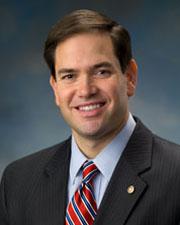 Sen. Marco Rubio (R-FL)
Sen. Marco Rubio (R-FL)Submitted July 11, 2024
Legislative Activity
Stay on top of the latest movement without scrolling through every action
Floor
Latest Action
Senate amendment submitted
July 11, 2024
Text
Submitted
SA 2479. Mr. RUBIO submitted an amendment intended to be proposed by
him to the bill S. 4638, to authorize appropriations for fiscal year
2025 for military activities of the Department of Defense, for military
construction, and for defense activities of the Department of Energy,
to prescribe military personnel strengths for such fiscal year, and for
other purposes; which was ordered to lie on the table; as follows:

At the end of title XII, add the following:

Subtitle G--Hong Kong Economic and Trade Office (HKETO) Certification
Act

SEC. 1291. SHORT TITLE.

This subtitle may be cited as the ``Hong Kong Economic and
Trade Office (HKETO) Certification Act''.

SEC. 1292. DETERMINATION ON WHETHER TO EXTEND CERTAIN
PRIVILEGES, EXEMPTIONS, AND IMMUNITIES TO THE
HONG KONG ECONOMIC AND TRADE OFFICES IN THE
UNITED STATES.

(a) Determination Required.--Not later than 30 days after
the date of the enactment of this Act, and thereafter as part
of each certification required by the Secretary of State
under section 205(a)(1)(A) of the United States-Hong Kong
Policy Act of 1992 (22 U.S.C. 5725(a)(1)(A)), the Secretary
of State shall, as part of such certification, include a
separate determination that--
(1) the Hong Kong Economic and Trade Offices--
(A) merit extension and application of the privileges,
exemptions, and immunities specified in subsection (b); or
(B) no longer merit extension and application of the
privileges, exemptions, and immunities specified in
subsection (b); and
(2) a detailed report justifying that determination, which
may include considerations related to United States national
security interests.
(b) Privileges, Exemptions, and Immunities Specified.--The
privileges, exemptions, and immunities specified in this
subsection are the privileges, exemptions, and immunities
extended and applied to the Hong Kong Economic and Trade
Offices under section 1 of the Act entitled ``An Act to
extend certain privileges, exemptions, and immunities to Hong
Kong Economic and Trade Offices'', approved June 27, 1997 (22
U.S.C. 288k).
(c) Effect of Determination.--
(1) Termination.--If the Secretary of State determines
under subsection (a)(1)(B) that the Hong Kong Economic and
Trade Offices no longer merit extension and application of
the privileges, exemptions, and immunities specified in
subsection (b), the Hong Kong Economic and Trade Offices
shall terminate operations not later than 180 days after the
date on which that determination is delivered to the
appropriate congressional committees, as part of the
certification required under section 205(a)(1)(A) of the
United States-Hong Kong Policy Act of 1992 (22 U.S.C.
5725(a)(1)(A)).
(2) Continued operations.--If the Secretary of State
determines under subsection (a)(1)(A) that the Hong Kong
Economic and Trade Offices merit extension and application of
the privileges, exemptions, and immunities specified in
subsection (b), the Hong Kong Economic and Trade Offices may
continue operations for the one-year period following the
date of the certification that includes that determination or
until the next certification required under section
205(a)(1)(A) of the United States-Hong Kong Policy Act of
1992 (22 U.S.C. 5725(a)(1)(A)) is submitted, whichever occurs
first, unless a disapproval resolution is enacted under
subsection (d).
(d) Congressional Review.--
(1) Disapproval resolution.--In this subsection, the term
``disapproval resolution'' means only a joint resolution of
either House of Congress--
(A) the title of which is the following: ``A joint
resolution disapproving the determination by the President
that the Hong Kong Economic and Trade Offices continue to
merit extension and application of certain privileges,
exemptions, and immunities.''; and
(B) the sole matter after the resolving clause of which is
the following: ``Congress disapproves of the determination by
the Secretary of State under section 1292(a)(1)(A) of the
Hong Kong Economic and Trade Office (HKETO) Certification Act
that the Hong Kong Economic and Trade Offices merit extension
and application of certain privileges, exemptions, and
immunities, on ___.'', with the blank space being filled with
the appropriate date.
(2) Introduction.--A disapproval resolution may be
introduced--
(A) in the House of Representatives, by the majority leader
or the minority leader; and
(B) in the Senate, by the majority leader (or the majority
leader's designee) or the minority leader (or the minority
leader's designee).
(e) Definitions.--In this section:
(1) Appropriate congressional committees.--The term
``appropriate congressional committees'' means the Committee
on Foreign Relations of the Senate and the Committee on
Foreign Affairs of the House of Representatives.
(2) Hong kong economic and trade offices.--The term ``Hong
Kong Economic and Trade Offices'' has the meaning given that
term in section 1(c) of the Act entitled ``An Act to extend
certain privileges, exemptions, and immunities to Hong Kong
Economic and Trade Offices'', approved June 27, 1997 (22
U.S.C. 288k).

SEC. 1293. LIMITATION ON CONTRACTING RELATING TO HONG KONG
ECONOMIC AND TRADE OFFICES.

(a) In General.--On and after the date of the enactment of
this Act, an entity of the United States Government may enter
into an agreement or partnership with the Hong Kong Economic
and Trade Offices to promote tourism, culture, business, or
other matters relating to Hong Kong only if--
(1) the Secretary of State has submitted to the Committee
on Foreign Relations of the Senate and the Committee on
Foreign Affairs of the House of Representatives a
determination under section 1292(a)(1)(A) that the Hong Kong
Economic and Trade Offices merit extension and application of
certain privileges, exemptions, and immunities;
(2) a disapproval resolution under section 1292(d) is not
enacted during the 90-day period following the submission of
that determination; and
(3) the agreement or partnership does not promote efforts
by the Government of the Hong Kong Special Administrative
Region and the Government of the People's Republic of China--
(A) to justify the dismantling of the autonomy of Hong Kong
and the freedoms and rule of law guaranteed by the Sino-
British Joint Declaration of 1984; and
(B) to portray within the United States the Government of
the Hong Kong Special Administrative Region or the Government
of the People's Republic of China as protecting the rule of
law or the human rights and civil liberties of the people of
Hong Kong.
(b) Hong Kong Economic and Trade Offices Defined.--In this
section, the term ``Hong Kong Economic and Trade Offices''
has the meaning given that term in section 1(c) of the Act
entitled ``An Act to extend certain privileges, exemptions,
and immunities to Hong Kong Economic and Trade Offices'',
approved June 27, 1997 (22 U.S.C. 288k).

SEC. 1294. POLICY OF UNITED STATES ON PROMOTION OF AUTONOMY
OF GOVERNMENT OF THE HONG KONG SPECIAL
ADMINISTRATIVE REGION.

It is the policy of the United States--
(1) to ensure that entities of the United States Government
do not knowingly assist in the promotion of Hong Kong as a
free and autonomous city or the Government of the Hong Kong
Special Administrative Region as committed to protecting the
human rights of the people of Hong Kong or fully maintaining
the rule of law required for human rights and economic
prosperity as long as the Secretary of State continues to
determine under section 205(a)(1) of the United States-Hong
Kong Policy Act of 1992 (22 U.S.C. 5725(a)(1)) that Hong Kong
does not enjoy a high degree

[[Page S4802]]

of autonomy from the People's Republic of China and does not
warrant treatment under the laws of the United States in the
same manner as those laws were applied to Hong Kong before
July 1, 1997;
(2) to recognize that promotion of Hong Kong as described
in paragraph (1) should be considered propaganda for the
efforts of the People's Republic of China to dismantle rights
and freedom guaranteed to the residents of Hong Kong by the
International Covenant on Civil and Political Rights and the
Sino-British Joint Declaration of 1984;
(3) to ensure that entities of the United States Government
do not engage in or assist with propaganda of the People's
Republic of China regarding Hong Kong; and
(4) to engage with the Government of the Hong Kong Special
Administrative Region, through all relevant entities of the
United States Government, seeking the release of political
prisoners, the end of arbitrary detentions, the resumption of
a free press and fair and free elections open to all
candidates, and the restoration of an independent judiciary.
______