S.Amdt. 2490Senate118th Congress (2023-2025)
S.Amdt. 2490
Sponsored by 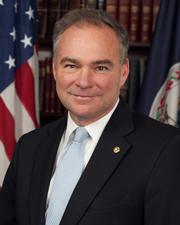 Sen. Tim Kaine (D-VA)
Sen. Tim Kaine (D-VA)Submitted July 11, 2024
Legislative Activity
Stay on top of the latest movement without scrolling through every action
Floor
Latest Action
Senate amendment submitted
July 11, 2024
Text
Submitted
SA 2490. Mr. KAINE submitted an amendment intended to be proposed by
him to the bill S. 4638, to authorize appropriations for fiscal year
2025 for military activities of the Department of Defense, for military
construction, and for defense activities of the Department of Energy,
to prescribe military personnel strengths for such fiscal year, and for
other purposes; which was ordered to lie on the table; as follows:

At the end of title XII, add the following:

Subtitle I--Caribbean and Latin America Maritime Security Initiative
Act

SEC. 1291. SHORT TITLE.

This Act may be cited as the ``Caribbean and Latin America
Maritime Security Initiative Act''.

SEC. 1292. SUPPORT FOR IMPLEMENTATION OF BILATERAL AGREEMENTS
CONCERNING ILLICIT TRANSNATIONAL MARITIME
ACTIVITY IN THE CARIBBEAN AND LATIN AMERICA.

(a) In General.--The Secretary of Defense, in coordination
with the Commandant of the Coast Guard, and in consultation
with the Secretary of State, may provide covered assistance
to the Coast Guard for the execution of existing maritime law
enforcement agreements between the United States and
countries in the Caribbean and Latin America that were
entered into to combat transnational organized illegal
maritime activity, including illegal, unreported, and
unregulated fishing.
(b) Effect on Military Training and Readiness.--The
Secretary of Defense shall ensure that the provision of
covered assistance under this section does not negatively
affect military training, operations, readiness, or other
military requirements.

[[Page S4810]]

(c) Funds.--If the Secretary of Defense provides covered
assistance under subsection (a) during fiscal year 2025 or
any subsequent fiscal year, the Secretary shall provide such
covered assistance using amounts available for that fiscal
year for the Department of Defense for operation and
maintenance.
(d) Definitions.--In this section:
(1) Covered assistance.--The term ``covered assistance''
means any of the following:
(A) The use of surface and air assets as bases of
operations and information collection platforms.
(B) Communication infrastructure.
(C) Information sharing.
(D) The provision of logistic support, supplies, and
services (as such term is defined in section 2350 of title
10, United States Code).
(E) Allowing the participation of enforcement units of
countries in the Caribbean and Latin America in shiprider
agreements with the Coast Guard for the enforcement of
fisheries regulations that address illegal, unreported, and
unregulated fishing.
(2) Illegal, unreported, and unregulated fishing.--The term
``illegal, unreported, and unregulated fishing'' means any
activity set out in paragraph 3 of the 2001 Food and
Agriculture Organization of the United Nations International
Plan of Action to Prevent, Deter and Eliminate Illegal,
Unreported, and Unregulated Fishing.

SEC. 1293. AUTHORIZATION OF IMPOSITION OF SANCTIONS WITH
RESPECT TO ILLEGAL, UNREPORTED, OR UNREGULATED
FISHING.

(a) In General.--The President may impose the sanctions
described in subsection (b) with respect to any foreign
person or foreign vessel (regardless of ownership) that the
President determines--
(1) is responsible for, complicit in, or has directly or
indirectly participated in--
(A) illegal, unreported, or unregulated fishing; or
(B) except as part of a conservation effort, the sale,
supply, purchase, or transfer (including transportation) of
endangered species, as defined in section 3(6) of the
Endangered Species Act of 1973 (16 U.S.C. 1532(6));
(2) is a leader or official of an entity, including a
government entity, that has engaged in, or the members of
which have engaged in, any of the activities described in
paragraph (1) during the tenure of the leader or official;
(3) has ever owned, operated, chartered, or controlled a
vessel during which time the personnel of the vessel engaged
in any of the activities described in paragraph (1); or
(4) has materially assisted, sponsored, or provided
financial, material, or technological support for, or goods
or services in support of--
(A) any of the activities described in paragraph (1); or
(B) any foreign person engaged in any such activity.
(b) Sanctions Described.--The sanctions that may be imposed
under subsection (a) with respect to a foreign person or
foreign vessel are the following:
(1) Blocking of property.--Notwithstanding section 202 of
the International Emergency Economic Powers Act (50 U.S.C.
1701), the exercise of all powers granted to the President by
the International Emergency Economic Powers Act (50 U.S.C.
1701 et seq.) to the extent necessary to block and prohibit
all transactions in all property and interests in property of
a foreign person described in subsection (a), if such
property and interests in property are in the United States,
come within the United States, or are or come within the
possession or control of a United States person.
(2) Inadmissibility to the united states.--In the case of a
foreign person described in subsection (a) who is an
individual, or any alien that the President determines is a
corporate officer or principal of, or a shareholder with a
controlling interest in, a foreign person described in
subsection (a) that is an entity--
(A) ineligibility for a visa to enter and inadmissibility
to the United States; and
(B) revocation of any valid visa or travel documentation in
accordance with section 221(i) of the Immigration and
Nationality Act (8 U.S.C. 1201(i)).
(3) Prohibition on access to the united states.--In the
case of a foreign vessel described in subsection (a), denial
of access to United States ports.
(4) Loans from united states financial institutions.--The
President may prohibit any United States financial
institution from making loans or providing credits to a
foreign person described in subsection (a).
(5) Foreign exchange.--The President may, pursuant to such
regulations as the President may prescribe, prohibit any
transactions in foreign exchange that are subject to the
jurisdiction of the United States and in which a foreign
person or foreign vessel described in subsection (a) has any
interest.
(6) Sanctions on principal executive officers.--The
President may impose any of the sanctions described in this
subsection that are applicable on the principal executive
officer or officers of the foreign person, or on individuals
performing similar functions and with similar authorities as
such officer or officers, who are knowingly responsible for,
complicit in, or responsible for ordering, controlling, or
otherwise directing, or participated in, any activity
described in subsection (a).
(c) Report Required.--Not later than 1 year after the
implementation of this section, and annually thereafter, the
President shall submit a report on the imposition of
sanctions under this section to--
(1) the Committee on Banking, Housing, and Urban Affairs
and the Committee on Foreign Relations of the Senate; and
(2) the Committee on Financial Services and the Committee
on Foreign Affairs of the House of Representatives.
(d) National Interest Waiver.--The President may waive the
imposition of sanctions under subsection (a) with respect to
a foreign person or foreign vessel if the President
determines that such a waiver is in the national interests of
the United States.
(e) Exceptions.--
(1) Exceptions for authorized intelligence and law
enforcement activities.--Sanctions under this section shall
not apply with respect to activities subject to the reporting
requirements under title V of the National Security Act of
1947 (50 U.S.C. 3091 et seq.) or any authorized intelligence,
law enforcement, or national security activities of the
United States.
(2) Exception to comply with international agreements.--
Sanctions under subsection (b)(2) shall not apply with
respect to the admission of an alien to the United States if
such admission is necessary to comply with the obligations of
the United States under the Agreement regarding the
Headquarters of the United Nations, signed at Lake Success on
June 26, 1947, and entered into force on November 21, 1947,
between the United Nations and the United States, or the
Convention on Consular Relations, done at Vienna on April 24,
1963, and entered into force on March 19, 1967, or other
international obligations.
(3) Exception for safety of vessels and crew.--Sanctions
under this section shall not apply with respect to a person
providing provisions to a vessel if such provisions are
intended for the safety and care of the crew aboard the
vessel or the maintenance of the vessel to avoid any
environmental or other significant damage.
(4) Humanitarian exception.--The President may not impose
sanctions under this section with respect to any person for
conducting or facilitating a transaction for--
(A) the sale of--
(i) agricultural commodities or food (other than fish or
fish products obtained through illegal, unreported, or
unregulated fishing); or
(ii) medicine or medical devices; or
(B) the provision of humanitarian assistance.
(f) Implementation; Penalties.--
(1) Implementation.--The President may exercise all
authorities provided under sections 203 and 205 of the
International Emergency Economic Powers Act (50 U.S.C. 1702
and 1704) to carry out this section.
(2) Penalties.--A person that violates, attempts to
violate, conspires to violate, or causes a violation of this
section or any regulation, license, or order issued to carry
out this section shall be subject to the penalties set forth
in subsections (b) and (c) of section 206 of the
International Emergency Economic Powers Act (50 U.S.C. 1705)
to the same extent as a person that commits an unlawful act
described in subsection (a) of that section.
(g) Rulemaking.--
(1) In general.--The head of any Federal agency responsible
for the implementation of this section may promulgate such
rules and regulations as may be necessary to carry out the
provisions of this section (which may include regulatory
exceptions), including under section 205 of the International
Emergency Economic Powers Act (50 U.S.C. 1704).
(2) Rule of construction.--Nothing in this section may be
construed to limit the authority of the President pursuant to
the International Emergency Economic Powers Act (50 U.S.C.
1701 et seq.).
(h) Definitions.--In this section:
(1) Admission; admitted; alien; lawfully admitted for
permanent residence.--The terms ``admission'', ``admitted'',
``alien'', and ``lawfully admitted for permanent residence''
have the meanings given those terms in section 101 of the
Immigration and Nationality Act (8 U.S.C. 1101).
(2) Foreign person.--The term ``foreign person'' means an
individual or entity that is not a United States person.
(3) United states person.--The term ``United States
person'' means--
(A) a United States citizen or an alien lawfully admitted
for permanent residence to the United States;
(B) an entity organized under the laws of the United States
or any jurisdiction within the United States, including a
foreign branch of such an entity; or
(C) any person located in the United States.
______