S.Amdt. 2661Senate118th Congress (2023-2025)
S.Amdt. 2661
Sponsored by 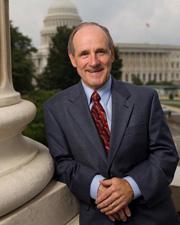 Sen. James E. Risch (R-ID)
Sen. James E. Risch (R-ID)Submitted July 11, 2024
Legislative Activity
Stay on top of the latest movement without scrolling through every action
Floor
Latest Action
Senate amendment submitted
July 11, 2024
Text
Submitted
SA 2661. Mr. RISCH submitted an amendment intended to be proposed by
him to the bill S. 4638, to authorize appropriations for fiscal year
2025 for military activities of the Department of Defense, for military
construction, and for defense activities of the Department of Energy,
to prescribe military personnel strengths for such fiscal year, and for
other purposes; which was ordered to lie on the table; as follows:

At the end of subtitle F of title XII, add the following:

SEC. 1291. PROHIBITION ON CERTAIN GIFTS AND CONTRACTS FROM
THE PEOPLE'S REPUBLIC OF CHINA TO CERTAIN
UNITED STATES INSTITUTIONS.

(a) Definitions.--In this section:
(1) Appropriate committees of congress.--The term
``appropriate committees of Congress'' means--
(A) the Committee on Foreign Relations of the Senate;
(B) the Committee on Health, Education, Labor, and Pensions
of the Senate;
(C) the Committee on Foreign Affairs of the House of
Representatives; and
(D) the Committee on Energy and Commerce of the House of
Representatives.
(2) Contract.--The term ``contract'' means any agreement to
acquire, by purchase, lease, or barter, property or services
for the direct benefit or use of either of party to the
agreement.
(3) Covered prc person.--The term ``covered PRC person''
means a person that, according to unclassified or publicly
available information--
(A) is a current or former member of the People's
Liberation Army of the People's Republic of China;
(B) is currently, or was formerly, employed in any security
or intelligence service of the People's Republic of China;
(C) is, or is affiliated with, an entity identified by the
Secretary of Defense under section 1260H(a) of the William M.
(Mac) Thornberry National Defense Authorization Act for
Fiscal Year 2021 (Public Law 116-283; 10 U.S.C. 113 note) as
a Chinese military company operating directly or indirectly
in the United States;
(D) is, or is affiliated with, any entity that is included
in the Non-SDN Chinese Military-Industrial Complex Companies
List maintained by the Office of Foreign Assets Control of by
the Department of the Treasury;
(E) is, or is affiliated with, the United Front Work
Department of the Government of the People's Republic of
China or any subsidiary or affiliate organization, or is
otherwise involved in activities that support the goals of
the United Front Work Department;
(F) is an employee of any entity owned or controlled by the
Government of the People's Republic of China;
(G) is or was an employee of any entity on the Entity List
maintained by the Bureau of Industry and Security of the
Department of Commerce and set forth in Supplement No. 4 to
part 744 of title 15, Code of Federal Regulations;
(H) is or was an employee of an entity organized under the
laws of the People's Republic of China that--
(i) is in noncompliance with the auditing rules and
standards of the Public Company Accounting Oversight Board;
or
(ii) has been sanctioned by the Public Company Accounting
Oversight Board;
(I) is a think tank directed or funded by the Chinese
Communist Party or any entity of the Government of the
People's Republic of China;
(J) is any state key laboratory, including any defense
science and technology state key laboratory identified in the
2022 report of the China Aerospace Studies Institute of the
Department of the Air Force entitled ``The PRC State &
Defense Laboratory System Part Two: Defense S&T Key Lab
Directory'' that is--
(i) working on critical emerging technologies, including
advanced computing, advanced engineering materials, advanced
gas turbine engine technologies, advanced manufacturing,
advanced and networked sensing and signature management,
advanced nuclear energy technologies, artificial
intelligence, autonomous systems and robotics,
biotechnologies, communication and networking technologies,
directed energy, financial technologies, human-machine
interfaces, hypersonics, networked sensors and sensing,
quantum information technologies, renewable energy generation
and storage, semiconductors and microelectronics, or space
technologies and systems; and
(ii) affiliated with, controlled, or administratively
managed by an agency of the Government of the People's
Republic of China, the Chinese Academy of Sciences, or the
Polar Research Institute of China; or
(K) is, or was affiliated with, any entity owned or
controlled by an agency or instrumentality of any person
described in any of subparagraphs (A) through (J).
(4) Covered united states institution.--The term ``covered
United States institution'' means any public or private
institution or, if a multicampus institution, any single
campus of such institution, in any State--
(A) that is legally authorized within such State to provide
a program of education beyond secondary school;
(B) that provides a program for which the institution
awards a bachelor's degree (or provides not less than a 2-
year program which is acceptable for full credit toward such
a degree) or a more advanced degree;
(C) that is accredited by a nationally recognized
accrediting agency or association; and
(D) to which the Federal Government extends Federal
financial assistance (directly or indirectly through another
entity or person), or that receives support from the
extension of Federal financial assistance to any of the
institution's subunits.
(5) Critical technologies.--The term ``critical
technologies'' has the meaning given such term in section
721(a)(6) of the Defense Production Act of 1950 (50 U.S.C.
4565(a)(6))).
(6) Foreign source.--The term ``foreign source'' means--
(A) a foreign government, including an agency of a foreign
government;
(B) a legal entity, governmental or otherwise, created
solely under the laws of a foreign state or states;
(C) an individual who is not a citizen or a national of the
United States or a trust territory or protectorate thereof;
and
(D) an agent, including a subsidiary or affiliate of a
foreign legal entity, acting on behalf of a foreign source.
(7) Freely associated states.--The term ``Freely Associated
States'' means the Republic of the Marshall Islands, the
Federated States of Micronesia, and the Republic of Palau.
(8) Gift.--The term ``gift'' means any gift of money or
property.
(9) Restricted or conditional gift or contract.--The term
``restricted or conditional gift or contract'' means any
endowment, gift, grant, contract, award, present, or property
of any kind that includes provisions regarding--
(A) the employment, assignment, or termination of faculty;
(B) the establishment of departments, centers, research or
lecture programs, or new faculty positions;
(C) the selection or admission of students; or
(D) the award of grants, loans, scholarships, fellowships,
or other forms of financial aid restricted to students of a
specified country, religion, sex, ethnic origin, or political
opinion.

[[Page S4973]]

(10) State.--The term ``State'' includes, in addition to
the several States of the United States, the Commonwealth of
Puerto Rico, the District of Columbia, Guam, American Samoa,
the United States Virgin Islands, the Commonwealth of the
Northern Mariana Islands, and the Freely Associated States.
(11) State key laboratory.--The term ``state key
laboratory'' means an institution in the People's Republic of
China that has been categorized as a national laboratory or
state key laboratory by, and receives funding, policy,
developmental guidance, or administrative support from, the
Government of the People's Republic of China.
(b) Prohibition.--
(1) In general.--Not later than 1 year after the date of
the enactment of this Act, the Secretary of State shall
prescribe regulations to prohibit a covered United States
institution from accepting a gift from, or entering into a
contract with, a covered PRC person if--
(A)(i) the value of the gift or contract equals or exceeds
$1,000,000; or
(ii) including the gift or contract, the institution would
receive, directly or indirectly, more than 1 gift from or
enter into more than 1 contract, directly or indirectly, with
the same covered PRC person, the aggregate of which, during a
period of 2 consecutive calendar years, would equal or exceed
$1,000,000; and
(B) the gift or contract--
(i) relates to research, development, or production of
critical technologies and provides the covered PRC person
making the gift or providing the contract--

(I) access to regulated or unregulated United States-
developed information, technology, or data in the possession
of the institution; or
(II) rights, including early access, to intellectual
property created by or in the possession of the institution;
or

(ii) except as provided under paragraph (2), is a
restricted or conditional gift or contract.
(2) Exception for operating agreements for branches of
covered united states institutions.--The Secretary of State
shall include, in the regulations prescribed pursuant to
paragraph (1), an exception to the prohibition under such
paragraph for a contract between a covered United States
institution and a branch of such institution located in the
People's Republic of China that provides funding for the
operation of such branch.
(c) Penalties.--
(1) Fine.--
(A) In general.--A covered United States institution that
accepts a gift or enters into a contract in violation of
subsection (b) shall be fined--
(i) for the first such violation, not more than $250,000;
(ii) for the second such violation, not more than $500,000;
and
(iii) for the third such violation or a subsequent such
violation, not more than the greater of--

(I) $1,000,000; or
(II) the total value of the gift or contract, as the case
may be.

(B) Availability of fines to administer this section.--
(i) Establishment of fund.--There is established in the
Treasury of the United States a fund, consisting of such
amounts as may be transferred to the fund pursuant to clause
(ii).
(ii) Transfer of amounts.--The Secretary of the Treasury
shall transfer to the fund established under clause (i), from
the general fund of the Treasury, an amount determined by the
Secretary of State to be equivalent to the amount received in
the general fund and attributable to fines collected under
subparagraph (A) during fiscal year 2024 and during each
fiscal year thereafter.
(iii) Availability and use of amounts.--Amounts in the fund
established under clause (i) shall be available, as provided
in advance in appropriations Acts, to the Secretary of State
for fiscal year 2025 and for each fiscal year thereafter to
carry out this section.
(2) Requirement to return gift or terminate contract.--A
covered United States institution that accepts a gift or
enters into a contract in violation of subsection (b) shall
return the gift or terminate the contract, as the case may
be.
(3) Restriction on funding from the department of state.--
(A) In general.--A covered United States institution that
accepts a gift or enters into a contract in violation of
subsection (b) is ineligible to receive any grant or other
funding from the Department of State during the 5-year period
beginning on the date on which the institution accepts such
gift or enters into such contract, as the case may be.
(B) Restriction on grantees doing business with
violators.--A person that receives a grant or other funding
from the Department of State may not, as a condition of the
grant or funding, conduct any business with a covered United
States institution that accepts a gift or enters into a
contract in violation of subsection (b) during the 5-year
period beginning on the date on which the institution accepts
such gift or enters into such contract, as the case may be.
(4) Waiver.--
(A) Authorization.--The Secretary of State may waive the
application of not more than 2 of the penalties under
paragraphs (1) through (3), with respect to a covered United
States institution that accepts a gift or enters into a
contract in violation of subsection (b), if the President--
(i) determines that--

(I) such waiver is in the national security interest of the
United States; and
(II) such gift or contract does not result in any
restrictions on academic freedom or freedom of expression
within the United States; and

(ii) not later than 15 days after making such
determination, submits to the chairperson and ranking member
of the appropriate committees of Congress a written report
regarding such determination that includes a detailed
justification for the determination.
(B) Elements.--Each report submitted pursuant to
subparagraph (A)(ii) shall--
(i) be accompanied by materials submitted by the covered
United States institution that accepted a gift or entered
into a contract in violation of subsection (b) disclosing--

(I) the covered PRC person that provided the gift or with
which the contract was entered into;
(II) the nature of the gift or contract; and
(III) the purpose of the gift or contract; and

(ii) include a detailed justification for why the gift or
contract does not result in--

(I) harm to the national security of the United States; or
(II) any restrictions on academic freedom or freedom of
expression within the United States.

(d) Guidance.--The regulations prescribed pursuant to
subsection (b)(1) shall--
(1) provide guidance to covered United States institutions
with respect to complying with this section; and
(2) provide a specific point of contact through which
covered United States institutions can communicate with the
Department of State on matters relating to compliance with
this section.
(e) Disclosure Reports.--
(1) In general.--A covered United States institution shall
submit to the Secretary of State a disclosure report relating
to any gift or contract received from or entered into with a
foreign source described in paragraph (5) that includes--
(A) the aggregate dollar amount or value of the gift or
contract;
(B) a detailed description of the nature and purpose of the
gift or contract, including--
(i) whether such gift or contract relates to the research,
development, or production of critical technologies and, if
so, a description of the nature of such relationship; and
(ii) whether it is a restricted or conditional gift or
contract and, if so, a description of the restrictions or
conditions on the gift or contract;
(C) in the case of a gift or contract that relates to the
research, development, or production of critical technologies
or that is a restricted or conditional gift or contract, a
justification for why the gift or contract does not result
in--
(i) harm to the national security of the United States; or
(ii) any restrictions on academic freedom or freedom of
expression within the United States;
(D) the name and verified address of the foreign source;
(E) a description of any due diligence conducted by such
institution before accepting the gift or entering into the
contract; and
(F) an assurance that such institution will--
(i) maintain a true copy of the gift or contract agreement
until the later of--

(I) the date that is 4 years after the date on which such
institution entered into such agreement; or
(II) the date on which such agreement terminates;

(ii) produce a true copy of the gift or contract agreement
upon the request of the Secretary of State during an audit of
the compliance of the institution with this section or
another institutional investigation; and
(iii) ensure that all gifts and contracts from the foreign
source are translated into English by a third party that is
unaffiliated with the foreign source or institution.
(2) Provision of information to congress upon request.--
(A) In general.--The Secretary of State shall provide the
information described in subparagraph (B) to the chairperson
or ranking member of the Committee on Foreign Relations of
the Senate or the Committee on Foreign Affairs of the House
of Representatives not later than 15 days after receiving a
request from the chairperson or ranking member for such
information.
(B) Information described.--The information described in
this subparagraph, with respect to any disclosure report
submitted under paragraph (1) is--
(i) any information required to be included in the report;
and
(ii) a justification for any decision by the Secretary of
State with respect to the gift or contract that is the
subject of the report.
(3) Public information.--The Secretary of State shall make
public, in a searchable database, with respect to each gift
or contract that is the subject of a disclosure report
submitted under paragraph (1)--
(A) the aggregate dollar amount or value of the gift or
contract;
(B) a summary of the purpose of the gift or contract,
including--
(i) whether the gift or contract relates to the research,
development, or production of critical technologies and, if
so, a description of the nature of such relationship; and
(ii) whether it is a restricted or conditional gift or
contract and, if so, a description of

[[Page S4974]]

the restrictions or conditions on the gift or contract; and
(C) with respect to the foreign source from which the gift
was received or with which the contract was entered into--
(i) in the case of a foreign source that is an individual,
the primary professional affiliation of the individual; and
(ii) in the case of a foreign source that is an entity, the
name and verified address of the entity.
(4) Condition.--A gift received from, or a contract entered
into with, a foreign source described in paragraph (5) may
not be disclosed to the Department of State or to the
chairperson or ranking member of the Committee on Foreign
Relations of the Senate or of the Committee on Foreign
Affairs of the House of Representatives, or publicly
reported, as anonymous.
(5) Foreign sources described.--A foreign source described
in this paragraph is a foreign source that is--
(A) the Chinese Communist Party or the Government of the
People's Republic of China, including an agency of such
government;
(B) a legal entity (governmental or otherwise) created
solely under the laws of the People's Republic of China;
(C) an individual who is a citizen or a national of the
People's Republic of China; or
(D) an agent, including a subsidiary or affiliate of a
foreign legal entity, acting on behalf of--
(i) the Chinese Communist Party or the Government of the
People's Republic of China; or
(ii) an entity or individual described in subparagraph (B)
or (C).
(f) Annual Report.--
(1) In general.--Not later than 2 years after the date of
the enactment of this Act, and annually thereafter for a
period of 7 years, the Secretary of State shall submit to the
appropriate committees of Congress a report that--
(A) describes steps taken during the period described in
paragraph (2) to implement this section;
(B) includes information or recommendations to improve the
implementation of this section; and
(C) includes any other information the Secretary of State
considers relevant.
(2) Period described.--The period described in this
paragraph is--
(A) in the case of the first report required by paragraph
(1), the 2-year period beginning on the date of the enactment
of this Act; and
(B) in the case of any subsequent such report, the 1-year
period preceding submission of the report.
(3) Form of report.--
(A) In general.--The report required under paragraph (1)
shall be submitted in unclassified form, but (subject to
subparagraph (B)) may include a classified annex.
(B) Material required to be unclassified.--The Secretary of
State shall include all information on foreign donations
received by covered United States institutions in the
unclassified portion of the report required by paragraph (1).
______