S.Amdt. 2662Senate118th Congress (2023-2025)
S.Amdt. 2662
Sponsored by 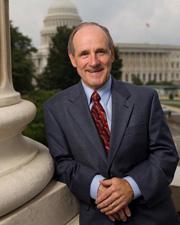 Sen. James E. Risch (R-ID)
Sen. James E. Risch (R-ID)Submitted July 11, 2024
Legislative Activity
Stay on top of the latest movement without scrolling through every action
Floor
Latest Action
Senate amendment submitted
July 11, 2024
Text
Submitted
SA 2662. Mr. RISCH submitted an amendment intended to be proposed by
him to the bill S. 4638, to authorize appropriations for fiscal year
2025 for military activities of the Department of Defense, for military
construction, and for defense activities of the Department of Energy,
to prescribe military personnel strengths for such fiscal year, and for
other purposes; which was ordered to lie on the table; as follows:

At the end of subtitle F of title XII, add the following:

SEC. 1291. ADVANCING OVERSIGHT OF INTERNATIONAL LIFE SCIENCES
RESEARCH.

(a) Short Title.--This section may be cited as the
``Biological Weapons Act of 2024''.
(b) Definitions.--In this section:
(1) Appropriate congressional committees.--The term
``appropriate congressional committees'' means--
(A) the Committee on Foreign Relations of the Senate;
(B) the Committee on Armed Services of the Senate;
(C) the Select Committee on Intelligence of the Senate;
(D) the Committee on Health, Education, Labor, and Pensions
of the Senate
(E) the Committee on Foreign Affairs of the House of
Representatives;
(F) the Committee on Armed Services of the House of
Representatives;
(G) the Permanent Select Committee on Intelligence of the
House of Representatives; and
(H) the Committee on Energy and Commerce of the House of
Representatives;
(2) Biological weapons convention.--The term ``Biological
Weapons Convention'' means the Convention on the Prohibition
of the Development, Production and Stockpiling of
Bacteriological and Toxin Weapons and on their Destruction,
done at Washington, London, and Moscow, April 10, 1972.
(3) Dual use research of concern.--The term ``dual use
research of concern'' is life sciences research that--
(A) involves an international partner; and
(B) based on current understanding can be reasonably
anticipated to provide knowledge, information, products, or
technologies that could be directly misapplied to pose a
significant threat with broad potential consequences to
public health and safety, agricultural crops and other
plants, animals, the environment, materiel, or national
security.
(4) Other international life sciences research of
concern.--The term ``other international life sciences
research of concern'' means --
(A) research conducted by or with an international partner;
(B) involves or is anticipated to involve enhancing a
potential pandemic pathogen, the characterization of
pathogens with pandemic potential, or modifying a pathogen in
such a way that it could acquire pandemic potential; or
(C) involves enhancing the pathogenicity, contagiousness,
or transmissibility of viruses or bacteria in ways or for
purposes that can be reasonably anticipated to pose a threat
to public health and safety or national security.
(c) Statement of Policy.--It is the policy of the United
States--
(1) to conduct rigorous scrutiny of and regularly review
international biological, bacteriological, virological, and
other relevant research collaboration that could be
weaponized or reasonably considered dual-use research of
concern, and incorporate national security and
nonproliferation considerations and country-specific
conditions into decisions regarding such collaborations;
(2) to ensure that, in the search for solutions to pressing
global health challenges, United States Government support
for public health research and other actions does not advance
the capabilities of foreign adversaries in the area of dual
use research of concern or inadvertently contribute to the
proliferation of biological weapons technologies; and
(3) to declassify, to the maximum extent possible, all
intelligence relevant to the People's Republic of China's
compliance or lack of compliance with its obligations under
the Biological Weapons Convention, and other national
security concerns regarding biological, bacteriological,
virological, and other relevant research by the People's
Republic of China that could be weaponized or reasonably
considered dual use research of concern that may be outside
the scope of the Biological Weapons Convention.
(d) Amendments to Secretary of State Authorities in the
Arms Control and Disarmament Act.--
(1) Research, development, and other studies.--Section
301(a) of the Arms Control and Disarmament Act (22 U.S.C.
2571(a)) is amended by inserting ``biological, virological,''
after ``bacteriological''.
(2) Oversight of dual-use research.--
(A) In general.--Title III of the Arms Control and
Disarmament Act (22 U.S.C. 2571 et seq.) is amended by adding
at the end the following:

``SEC. 309. AUTHORITIES WITH RESPECT TO DUAL USE RESEARCH OF
CONCERN AND OTHER INTERNATIONAL LIFE SCIENCES
RESEARCH OF CONCERN.

``(a) Definitions.--In this section:
``(1) Appropriate committees of congress.--In this section,
the term `appropriate committees of Congress' means--
``(A) the Committee on Foreign Relations of the Senate;
``(B) the Committee on Health, Education, Labor, and
Pensions of the Senate;
``(C) the Committee on Foreign Affairs of the House of
Representatives; and
``(D) the Committee on Energy and Commerce of the House of
Representatives.
``(2) Dual use research of concern.--The term ` dual use
research of concern' has the meaning given such term in
section 1299(b)(3) of the Biological Weapons Act of 2024.
``(3) Other international life sciences research of
concern.--The term `other international life sciences
research of concern' has the meaning given such term in
section 1299(b)(4) of the Biological Weapons Act of 2024.
``(b) Oversight of Dual Use Research of Concern and Other
International Life Sciences Research of Concern.--The
Secretary of State, with respect to oversight of dual-use
research of concern and other international life sciences
research of concern, shall--
``(1) ensure robust and consistent Department of State
participation in interagency processes and review mechanisms;
``(2) require the Administrator of the United States Agency
for International Development to report to and consult with
the Department of State on any proposed programs, projects,
initiatives, or funding for dual use research of concern or
other international life sciences research of concern;
``(3) evaluate whether proposed international scientific
and technological cooperation activities in which the United
States Government participates that involves dual use
research of concern or other international life sciences
research of concern, including research related to biological
agents, toxins, and pathogens, aligns with the United States
National Security Strategy and related strategic documents;
``(4) create, in consultation with other Federal
departments and agencies, policies and processes for post-
award oversight of grants and funding for dual use research
of concern and other international life sciences research of
concern, including as aligned with current laws and
regulations and for grants or funding from other Federal
departments and agencies, such that the Department of State
is kept apprised of any national security or foreign policy
concerns that may

[[Page S4975]]

arise with respect to a project funded by another Federal
department or agency;
``(5) conduct periodic reviews of the adequacy of
consultative mechanisms with other Federal Departments and
agencies with respect to oversight of dual use research of
concern and other international life sciences research of
concern, especially consultative mechanisms required under
United States law, and identify recommendations for improving
such consultative mechanisms;
``(6) direct Chiefs of Mission to ensure Country Team
Assessments are submitted to the Department of State and the
head of the Federal department or agency proposing to sponsor
programs and collaborations to scrutinize whether such
programs or collaborations involve dual use research of
concern or other life international life sciences research of
concern, and that such assessments are integrated into
relevant interagency processes; and
``(7) direct Chiefs of Mission to increase embassy
reporting in other countries on dual use research of concern,
other international life sciences research of concern,
biosecurity hazards trends in the development of synthetic
biology and biotechnology, and other related matters.
``(c) Reports to Congress.--
``(1) Implementation report.--Not later than 1 year after
the date of the enactment of the Biological Weapons Act of
2024, and semiannually thereafter for the following 5 years,
the Secretary of State shall submit a report to the
appropriate committees of Congress regarding the
implementation of subsection (a).
``(2) Report on approvals of collaboration.--Not later than
1 year after the date of the enactment of the Biological
Weapons Act of 2024, and annually thereafter for the
following 4 years, the Secretary of State should shall submit
a report to the appropriate committees of Congress that
describes any research or other collaboration, including
transfer agreements, memoranda of understanding, joint
research projects, training, and conferences involving
significant knowledge transfer that was approved or not
objected to by the Secretary of State and the justification
for such approval or lack of an objection.''.
(e) Report on Threats Related to Specific Dual Use Research
of Concern and Other International Life Sciences Research of
Concern.--Not later than 1 year after the date of enactment
of this Act and annually thereafter, the Secretary of State
shall submit to the Foreign Relations Committee of the Senate
and the Foreign Affairs Committee of the House of
Representatives an assessment of the key national security
risks of dual use research of concern or other international
life sciences research of concern, including--
(1) major issues the Department of State is prioritizing
with respect to the misuse or weaponization of, or that be
reasonably anticipated to be misused or weaponized,
biological, bacteriological, and virological research, or the
misuse or weaponization of, or that be reasonably anticipated
to be misused or weaponized, any other category of dual use
research of concern or other international life sciences
research of concern by state and non-state actors;
(2) the Department of State's efforts to develop and
promote measures to prevent such misuse, weaponization, or
proliferation of dual use research of concern or other
international life sciences research of concern;
(3) an assessment of targeted national level and government
directed policies, research initiatives, or other relevant
efforts focused on dual use research of concern or other
international life sciences research of concern, including--
(A) the People's Republic of China;
(B) the Russian Federation;
(C) the Islamic Republic of Iran;
(D) the Democratic People's Republic of Korea;
(E) any other nation identified in the report required
under section 403 of the Arms Control and Disarmament Act (22
U.S.C. 2593a); and
(F) any terrorist group or malign non-state actor;
(4) an assessment of the national security concerns posed
by any of the activities described in paragraphs (1) or (3);
(5) a description of collaboration between ostensibly
civilian entities, including research laboratories, and
military entities on the activities identified in paragraph
(3);
(6) a description of the confidence-building measures or
other attempts by the countries in paragraph (3) to justify,
clarify, or explain the activities described in such
paragraph;
(7) the extent to which the Secretary of State assesses the
Biological Weapons Convention and any other relevant
international agreements account for or keep pace with the
security threats of the activities identified in paragraph
(3);
(8) a description of the process the United States
Government uses, including the role of the Department of
State, to approve and review funding or other support,
including subgrants in other countries for dual use research
of concern or other life sciences research of concern,
including research related to biological agents, toxins, and
pathogens that does or can reasonably be anticipated to pose
a risk of misuse, weaponization, or other threat to United
States national security;
(9) a list and description of United States Government
interagency mechanisms and international groups or
coordinating bodies on biosecurity and dual use research of
concern in which the Department of State is a member or has a
formal role; and
(10) a description of any obstacles or challenges to the
ability of United States Government to address the
requirements specified in this section, including a
description of gaps in authorities, intelligence collection
and analysis, organizational responsibilities, and resources.
(f) Report on United States Funding Research With the
People's Republic of China.--
(1) In general.--Not later than 400 days after the date of
the enactment of this Act, the President shall conduct a
formal review, and produce a written report, all United
States Government-funded research collaboration initiatives
conducted with international partners in the past 20 years
with the People's Republic of China related to research areas
that pose potential biological weapons proliferation risks or
meet the criteria of dual use research of concern or other
international life sciences research of concern.
(2) Elements.--The review required under subsection (a)
shall--
(A) provide a detailed description and example projects of
the initiatives identified pursuant to subsection (a), the
current status of such programs, including dates of
initiation and termination, and the criteria for granting
approval of funding;
(B) outline the procedures used to approve or deny such
grants or other funding, including coordination, if any,
between agencies responsible for public health preparedness
and biomedical research agencies, including the Department of
Health and Human Services, and national security agencies,
including the Department of State, the Department of Defense,
and the intelligence community (as defined in section 3 of
the National Security Act of 1947 (50 U.S.C. 3003));
(C) identify gaps in United States Government safeguards
regarding sufficient measures to prevent any such research
intended for civilian purposes from being diverted for
military research in the People's Republic of China;
(D) an assessment of how to best address any such gaps in
procedures, especially regarding greater interagency input;
(E) how the research conducted with the grants and funding
requests listed pursuant to subparagraph (A) may have
contributed to the development of biological weapons, or the
development of technology and advancements that meet the
criteria of dual use research of concern or other
international life sciences research of concern in the
People's Republic of China;
(F) how the United States Government's understanding of the
People's Republic of China's ``military-civil fusion''
national strategy informed and affected such funding
decisions, and how it will inform future funding decisions in
research related to gain-of-function, synthetic biology,
biotechnology, or other research areas that pose biological
weapons proliferation or dual-use concerns;
(G) whether any United States Government funding was used
to support gain-of-function research in the People's Republic
of China during the United States moratorium on such research
between 2014 and 2017;
(H) steps taken the by United States Government, if any to
apply additional scrutiny to United States Government
funding, including subgrants, to support gain-of-function
research in the People's Republic of China after the United
States Government lifted the moratorium on gain-of-function
research in 2017; and
(I) any other relevant matter discovered during the course
of the review.
(3) Report submission.--Not later than 15 days after
completing the report required under paragraph (1), the
President shall submit such report to the appropriate
congressional committees.
(4) Form of report.--The report required under paragraph
(1) shall be unclassified, but may include a classified
annex.
(g) Biological and Toxin Weapons Review Conference.--
(1) Statement of policy.--In order to promote international
peace and security, it is the policy of the United States to
promote compliance with the Biological Weapons Convention in
accordance with paragraphs (2) through (4).
(2) Activities to advance united states interests at
meetings of the biological weapons convention.--Before each
Review Conference of the Biological Weapons Convention, the
Secretary of State shall--
(A) demand greater transparency from the Government of the
People's Republic of China's activities on dual use research
of concern and the applications of such research that raise
concerns regarding its compliance with Article I of the
Biological Weapons Convention;
(B) engage with other governments, the private sector
(including in relevant science and technology fields), and
other stakeholders, as appropriate, regarding--
(i) United States concerns about the People's Republic of
China's compliance with the Biological Weapons Convention;
and
(ii) the national security, public health, and non-
proliferation implications of such concerns; and
(C) emphasize that the People's Republic of China's
national strategy of military-civil fusion undermines the
underlying utility and effectiveness of the Biological
Weapons Convention, which may not adequately capture the full
range of technologies with dual-use

[[Page S4976]]

implications being pursued by the People's Republic of China.
(3) Declassification of intelligence.--The President
should, as appropriate, declassify intelligence relevant to
the People's Republic of China's obligations under the
Biological Weapons Convention and concerns about its
compliance.
(4) Security council complaint.--If the questions and
concerns raised pursuant to paragraph (2) are not adequately
addressed and another state party is believed to be in breach
of an obligation under the Biological Weapons Convention, the
President should consider lodging a complaint to the Security
Council pursuant to Article VI of the Biological Weapons
Convention.
(h) Annual Report by the United States Agency for
International Development.--
(1) In general.--Not later than 180 days after the date of
the enactment of this Act, and annually thereafter for the
following 5 years, the Administrator of the United States
Agency for International Development shall submit an annual
report to the appropriate congressional committees that
describes all funding, including subgrants, for research
involving or related to the study of pathogens, viruses, and
toxins provided to entities subject to the jurisdiction of
countries listed in paragraph (2), which shall include a
national security justification by the Secretary of State for
such funding.
(2) List of countries specified.--The countries covered by
the report required under paragraph (1) are--
(A) the People's Republic of China;
(B) the Russian Federation;
(C) the Islamic Republic of Iran;
(D) the Democratic People's Republic of Korea; and
(E) any other country specified in the report assessing
compliance with the Biological Weapons Convention, as
required under section 403(a) of the Arms Control and
Disarmament Act (22 U.S.C. 2593a(a)) in the relevant calendar
year.
(3) Form.--The report required under paragraph (1)) shall
be submitted in unclassified form, but may include a
classified annex.
(i) United Nations Agencies, Programs, and Funds.--
(1) Requirement.--The Permanent Representative of the
United States to the United Nations shall use the voice,
vote, and influence of the United States at the United
Nations to block representatives from any country specified
in the report required under section 403(a) of the Arms
Control and Disarmament Act (22 U.S.C. 2593a(a)) from serving
in leadership positions within any United Nations organ,
fund, program, or related specialized agency with
responsibility for global health security (including animal
health), biosecurity, atomic, biological or chemical weapons,
or food security and agricultural development.
(2) List of countries specified.--The countries covered by
the report required under paragraph (1) are--
(A) the People's Republic of China;
(B) the Russian Federation;
(C) the Islamic Republic of Iran;
(D) the Democratic People's Republic of Korea;
(E) the Assad Regime of Syria; and
(F) any other country specified in the report required
under section 403(a) of the Arms Control and Disarmament Act
(22 U.S.C. 2593a(a)) in the relevant calendar year.
(3) Sunset.--This subsection shall cease to have any force
or effect beginning on the date that is 5 years after the
date of the enactment of this Act.
______