S.Amdt. 2712Senate118th Congress (2023-2025)
S.Amdt. 2712
Sponsored by 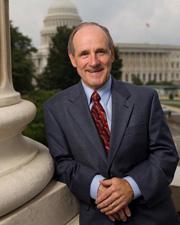 Sen. James E. Risch (R-ID)
Sen. James E. Risch (R-ID)Submitted July 11, 2024
Legislative Activity
Stay on top of the latest movement without scrolling through every action
Floor
Latest Action
Senate amendment submitted
July 11, 2024
Text
Submitted
SA 2712. Mr. RISCH submitted an amendment intended to be proposed by
him to the bill S. 4638, to authorize appropriations for fiscal year
2025 for military activities of the Department of Defense, for military
construction, and for defense activities of the Department of Energy,
to prescribe military personnel strengths for such fiscal year, and for
other purposes; which was ordered to lie on the table; as follows:

At the end of subtitle A of title XII, add the following:

SEC. 1216. LIMITING UNITED STATES ASSISTANCE THAT DIRECTLY
BENEFITS THE TALIBAN.

(a) Short Title.--This section may be cited as the ``Stop
Supporting the Taliban Act''.
(b) Findings.--Congress finds the following:
(1) After al-Qaeda attacked the United States on September
11, 2001, the United States sought to eliminate al-Qaeda's
safe havens and training camps in Afghanistan.
(2) The Taliban government that was in control of
Afghanistan, under the leadership of Mullah Omar, had granted
al-Qaeda sanctuary in Afghanistan.
(3) The Taliban government fell in 2001 following the
United States-led Operation Enduring Freedom, but returned to
power during the United States' withdrawal from Afghanistan
in August 2021.
(4) The United States Armed Forces and international
partners fought with valor, honor, and effectiveness to
eliminate terrorist threats, including threats against the
United States.
(5) More than 800,000 Americans answered our Nation's call
and served in Operation Enduring Freedom, which was the
longest military operation in United States history.
(6) A total of 2,459 United States military personnel were
killed in Afghanistan during Operation Enduring Freedom and
more than 20,000 servicemembers were wounded during the
operation.
(7) Since the American withdrawal from Afghanistan, the
Taliban have engaged in widespread human rights abuses to
Afghan women and girls and Afghanistan has again become a
terrorism concern.
(8) The Taliban has erased rights for women and girls to
include barring access to education, reinstating guardianship
laws, ejecting women from the workplace, and the resumption
of stoning women in public.
(9) On April 22, 2024, the annual Department of State
Country Report on Human Rights Practices in Afghanistan cited
a ``significant deterioration in women's rights'' due to
Taliban actions, including credible reports of killings,
torture, forced marriages, and extensive gender-based
violence.
(10) On July 31, 2022, al-Qaeda emir Ayman al-Zawahiri, who
was provided sanctuary by the Taliban, was killed in a United
States drone strike in Afghanistan.
(11) On January 29, 2024, the United Nations Security
Council published a report stating ``the relationship between
the Taliban and al-Qaeda remain close'', and in the most
recent 6-month period, al-Qaeda had established up to 8 new
training camps in Afghanistan.
(12) The Taliban lack the capability and the will to
effectively counter the Islamic State Khorasan (commonly
known as ``ISIS-K'').
(13) On March 7, 2024, the Commander of the United States
Central Command Commander testified that terrorist groups,
such as ISIS-K, ``retain a safe haven in Afghanistan''.
(14) On March 22, 2024, ISIS-K killed 140 people in an
attack on a concert venue in Russia, demonstrating the
capability and will to conduct transnational terrorist
attacks.
(15) On April 11, 2024, Federal Bureau of Investigation
Director Christopher Wray testified ``the potential for a
coordinated attack here in the homeland, akin to the ISIS-K
attack'' in Russia is ``increasingly concerning''.
(16) In November 2023, the Special Inspector General for
Afghanistan Reconstruction (SIGAR) testified, ``The Taliban
is diverting or otherwise benefitting from a considerable
amount of U.S. assistance.''.
(17) The May 2024 SIGAR report stated that--
(A) implementing partners of United States assistance
collectively paid at least $10,900,000 to the Taliban; and
(B) several implementing partners were pressured by the
Taliban to divert assistance to populations chosen by the
Taliban rather

[[Page S5009]]

than to allocate assistance based on the needs of the Afghan
people.
(c) Definitions.--In this section:
(1) Appropriate congressional committees.--The term
``appropriate congressional committees'' means--
(A) the Committee on Foreign Relations of the Senate;
(B) the Committee on Armed Services of the Senate;
(C) the Select Committee on Intelligence of the Senate;
(D) the Committee on Foreign Affairs of the House of
Representatives;
(E) the Committee on Armed Services of the House of
Representatives; and
(F) the Permanent Select Committee on Intelligence of the
House of Representatives.
(2) The taliban.--The term ``the Taliban''--
(A) refers to the organization that refers to itself as the
``Islamic Emirate of Afghanistan'', which was founded by
Mohammed Omar, and is led, as of the date of the enactment of
this Act, by Mawlawi Hibatullah Akhundzada; and
(B) includes subordinate organizations, such as the Haqqani
Network, and any successor organization.
(d) Limitation on United States' Contributions to the
Taliban That Support Terrorism or Human Rights Abuses.--
Except as provided in subsection (e), amounts authorized to
be appropriated or otherwise made available for assistance
under chapter 4 of part II of the Foreign Assistance Act of
1961 (22 U.S.C. 2346 et seq.; relating to Economic Support
Fund) and available for assistance for Afghanistan that
directly benefit the Taliban may only be made available for
such purpose if, not later than 30 days after the date of the
enactment of this Act and every 180 days thereafter, the
Secretary of State submits written certification to the
appropriate congressional committees that the Taliban and all
successor or affiliated organizations--
(1) have publicly and privately broken all ties with other
terrorist groups, including al-Qaeda;
(2) have taken verifiable measures to prevent the use of
Afghanistan as a staging area for terrorist attacks against
the United States or partners or allies of the United States,
including by denying sanctuary space, transit of Afghan
territory, and use of Afghanistan for terrorist training,
planning, or equipping;
(3) have provided humanitarian actors with full, unimpeded
access to vulnerable populations throughout Afghanistan
without interference or diversion;
(4) have respected freedom of movement, including by
facilitating the departure of foreign nationals, Afghan
applicants for the special immigrant visa program, and other
at-risk Afghan nationals by air or land routes, and the safe,
voluntary, and dignified return of displaced persons;
(5) have supported the establishment of an inclusive
Government of Afghanistan that respects the rule of law,
press freedom, and internationally recognized human rights,
including the rights of women and girls; and
(6) have ensured the release of all United States nationals
designated as unlawfully or wrongfully detained in
Afghanistan.
(e) Initial Use and Disposition of Withheld Funds.--
(1) Period of availability.--Amounts withheld pursuant to
subsection (d) are authorized to remain available for an
additional 2 years after the date on which the availability
of such funds would otherwise have expired.
(2) Use of funds.--Amounts withheld pursuant to subsection
(d) may be made available for assistance for Afghanistan that
directly benefits the Taliban if the Secretary of State
provides written certification that the Taliban and any
successor or affiliated organizations have met the conditions
set forth in subsection (d).
(f) Strategy.--
(1) In general.--Not later than 180 days after the date of
the enactment of this Act, the Secretary of State, in
coordination with the Administrator of the United States
Agency for International Development, shall submit a strategy
to the Committee on Foreign Relations of the Senate and the
Committee on Foreign Affairs of the House of Representatives
that seeks to minimize direct benefits to the Taliban through
United States' humanitarian and development assistance in
Afghanistan.
(2) Elements.--The strategy required under paragraph (1)
shall--
(A) describe in detail the mechanisms used to monitor and
prevent the diversion of United States' assistance to
terrorism and drug trafficking, including through currency
manipulation;
(B) describe in detail any mechanisms for ensuring that--
(i) the Taliban is not--

(I) the intended primary beneficiary or end user of United
States' assistance; or
(II) the direct recipient of such assistance; and

(ii) such assistance is not used for payments to Taliban
creditors;
(C) describe the extent of ownership or control exerted by
the Taliban over entities and individuals that are the
primary beneficiaries or end users of United States'
assistance;
(D) indicate whether United States' assistance or direct
services replace assistance or services previously provided
by the Taliban; and
(E) define ``direct benefit'' for purposes of governing
Department of State and United States Agency for
International Development assistance operations in
Afghanistan.
(3) Form.--The strategy required under paragraph (1) shall
be submitted in unclassified form, but may include a
classified annex.
(g) Reports.--
(1) In general.--If the Secretary of State is unable to
provide written certification to the appropriate
congressional committees that the Taliban and any successor
or affiliated organizations have met the conditions described
in subsection (d), the Secretary, not later than 15 days
after the date on which the Secretary is unable to make such
certification, shall submit to the appropriate congressional
committees a report that contains--
(A) the reasons the Secretary was unable to certify in
writing that such organizations have met such requirements;
and
(B) the total amount of funds to be withheld from
Afghanistan.
(2) Form.--The report required under paragraph (1) shall be
submitted in unclassified form, but may include a classified
annex.
______