S.Amdt. 2713Senate118th Congress (2023-2025)
S.Amdt. 2713
Sponsored by 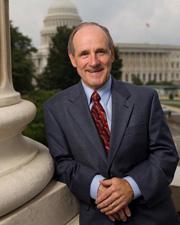 Sen. James E. Risch (R-ID)
Sen. James E. Risch (R-ID)Submitted July 11, 2024
Legislative Activity
Stay on top of the latest movement without scrolling through every action
Floor
Latest Action
Senate amendment submitted
July 11, 2024
Text
Submitted
SA 2713. Mr. RISCH submitted an amendment intended to be proposed by
him to the bill S. 4638, to authorize appropriations for fiscal year
2025 for military activities of the Department of Defense, for military
construction, and for defense activities of the Department of Energy,
to prescribe military personnel strengths for such fiscal year, and for
other purposes; which was ordered to lie on the table; as follows:

At the end of subtitle B of title XII, add the following:

SECTION 1228. PROHIBITING THE NORMALIZATION OF DIPLOMATIC
RELATIONS WITH SYRIA WHILE BASHAR AL-ASSAD
REMAINS IN POWER.

(a) Short Title.--This section may be cited as the ``Assad
Regime Anti-Normalization Act of 2024''.
(b) Modifications to the Caesar Syria Civilian Protection
Act.--
(1) Caesar syria civilian protection act.--Section 7412 of
the Caesar Syria Civilian Protection Act of 2019 (title LXXIV
of the National Defense Authorization Act for Fiscal Year
2020; 22 U.S.C. 8791 note) is amended--
(A) in subsection (a)--
(i) in paragraph (1), by striking ``the President shall
impose'' and all that follows through the end of the
paragraph and inserting ``the President--''
``(A) shall impose the sanctions described in subsection
(b) with respect to a foreign person that the President
determines--
``(i) knowingly engages, on or after such date of
enactment, in an activity described in paragraph (2);
``(ii) is an adult family member of a foreign person
described in clause (i), unless the President determines
there is clear and convincing evidence that such adult family
member has disassociated themselves from the foreign person
described in such clause and has no history of helping such
foreign person conceal assets; or
``(iii) is owned or controlled by a foreign person
described in clause (i) or (ii); and
``(B) may impose the sanctions described in subsection (b)
with respect to a foreign person that the President
determines knowingly provides, on or after such date of
enactment, significant financial, material, or technological
support to a foreign person engaging in an activity described
in any of subparagraphs (B) through (H) of paragraph (2);''.
(ii) in paragraph (2)--

(I) in subparagraph (A)--

(aa) by amending clause (i) to read as follows:
``(i) the Government of Syria (including any entity owned
or controlled by the Government of Syria), a senior political
figure of the Government of Syria, a member of the People's
Assembly of Syria, or a senior foreign political figure (as
such term is defined in section 101.605 of title 31, Code of
Federal Regulations) of the Arab Socialist Ba'ath Party of
Syria, including any such senior foreign political figure who
is--

``(I) a member of the Central Command, Central Committee,
or Auditing and Inspection Committee of such Party; or
``(II) a leader of a local branch of such Party;'';

(bb) in clause (ii), by striking ``; or'' and inserting a
semicolon;
(cc) in clause (iii), by striking the semicolon and
inserting ``; or''; and
(dd) by adding at the end the following:
``(iv) Syria Arab Airlines, Cham Wings, or any foreign
person owned or controlled by Syria Arab Airlines or Cham
Wings;'';

(II) by amending subparagraph (C) to read as follows:

``(C) knowingly sells or provides aircraft or spare
aircraft parts--
``(i) to the Government of Syria; or
``(ii) for or on behalf of the Government of Syria to any
foreign person operating in an area directly or indirectly
controlled by the Government of Syria or foreign forces
associated with the Government of Syria;'';

(III) in subparagraph (D), by striking ``; or'' and
inserting a semicolon;
(IV) in subparagraph (E)--

(aa) by striking ``construction or engineering services''
and inserting ``construction, engineering, or commercial
financial services''; and

[[Page S5010]]

(bb) by striking the closing period and inserting a
semicolon; and

(V) by adding at the end the following:

``(F) purposefully engages in or directs--
``(i) the diversion of goods (including agricultural
commodities, food, medicine, and medical devices), or any
international humanitarian assistance, intended for the
people of Syria; or
``(ii) the dealing in proceeds from the sale or resale of
such diverted goods or international humanitarian assistance,
as the case may be;
``(G) knowingly, directly or indirectly, engages in or
attempts to engage in, the seizure, confiscation, theft, or
expropriation for personal gain or political purposes of
property, including real property, in Syria or owned by a
citizen of Syria;
``(H) knowingly, directly or indirectly, engages in or
attempts to engage in a transaction or transactions for or
with such seized, confiscated, stolen, or expropriated
property described in subparagraph (G); or
``(I) knowingly provides significant financial, material,
or technological support to a foreign person engaging in an
activity described in subparagraph (A).''; and
(iii) by adding at the end the following:
``(4) Transaction defined.--For purposes of the
determination required by subparagraph (a)(2)(A), the term
`transaction' includes in-kind transactions.
``(5) Additional definitions.--In this section:
``(A) Commercial financial services.--The term `commercial
financial services' means any transaction between the
Government of Syria and a foreign bank or foreign financial
institution operating in an area under the control of the
Government of Syria that has a valuation of more than
$5,000,000.
``(B) Financial institution.--The term `financial
institution' means a financial institution specified in any
of subparagraphs (A) through (K), (M), (N), (P), (R), (T),
(Y), or (Z) of section 5312(a)(2) of title 31, United States
Code.
``(6) Significant transaction clarified.--In this section,
the term `significant transaction' includes any natural gas,
electricity, or other energy-related transaction.''; and
(B) by adding at the end the following:
``(c) Congressional Requests.--Not later than 120 days
after receiving a request from the chairman and ranking
member of one of the appropriate congressional committees
with respect to whether a foreign person knowingly engages in
an activity described in subsection (a)(2) the President
shall--
``(1) make the determination specified in subsection (a)(1)
with respect to that foreign person; and
``(2) submit to such chairman and ranking member that
submitted the request a report with respect to such
determination that includes a statement of whether the
President has imposed or intends to impose the sanctions
described in subsection (b) with respect to that foreign
person.''.
(2) Extension of sunset.--Section 7438 of the Caesar Syria
Civilian Protection Act of 2019 (22 U.S.C. 8791 note) is
amended by striking ``the date that is 5 years after the date
of the enactment of this Act'' and inserting ``December 31,
2035''.
(3) Determinations with respect to syria trust for
development.--
(A) Determinations.--Not later than 120 days after the
enactment of this Act, the President shall--
(i) determine whether the nonprofit organization chaired by
Asma Al-Assad, the First Lady of Syria, known as the ``Syria
Trust for Development'' meets the criteria for the imposition
of sanctions--

(I) under section 7412(a) of the Caesar Syria Civilian
Protection Act of 2019, as amended by subsection (a);
(II) under Executive Order No. 13894 (84 Fed. Reg. 55851;
relating to blocking property and suspending entry of certain
persons contributing to the situation in Syria); or
(III) by nature of being owned or controlled by a person
designated under any executive order or regulation
administered by the Office of Foreign Assets Control; and

(ii) submit to the appropriate congressional committees
each such determination, including a justification for the
determination.
(B) Form.--The determination required under subparagraph
(A) shall be submitted in unclassified form, but the
justification required under clause (ii) of such subparagraph
may be included in a classified annex. The unclassified
determination shall be made available on a publicly available
website of the Federal Government.
(C) Sanctions relating to importation of goods unchanged.--
Subparagraph (A) may not be construed to create any new
authorities or requirements to impose sanctions on the
importation of goods.
(D) Defined term.--In this subsection, the term
``appropriate congressional committees'' means--
(i) the Committee on Armed Services of the Senate;
(ii) the Committee on Foreign Relations of the Senate;
(iii) the Committee on Banking, Housing, and Urban Affairs
of the Senate;
(iv) the Committee on Armed Services of the House of
Representatives;
(v) the Committee on Foreign Affairs of the House of
Representatives; and
(vi) the Committee on Financial Services of the House of
Representatives.
(4) Findings on applicability with respect to syrian arab
airlines, cham wings airlines, and related entities.--
Congress finds the following:
(A) In 2013, the President identified Syrian Arab Airlines
as a blocked instrumentality or controlled entity of the
Government of Syria and concurrently sanctioned Syrian Arab
Airlines pursuant to Executive Order No. 13224 for acting for
or on behalf of the Islamic Revolutionary Guard Corps-Qods
Force of Iran.
(B) In 2016, the President sanctioned Syria-based Cham
Wings Airlines pursuant to Executive Order No. 13582 for
having materially assisted, sponsored, or provided financial,
material, or technological support for, or goods or services
in support of, the Government of Syria and Syrian Arab
Airlines.
(C) Section 7412(a)(2)(A)(iii) of the Caesar Syria Civilian
Protection Act of 2019 (22 U.S.C. 8791 note) mandates the
application of sanctions against any foreign person that
``knowingly provides significant financial, material, or
technological support to, or knowingly engages in a
significant transaction with * * * a foreign person subject
to sanctions pursuant to the International Emergency Economic
Powers Act (50 U.S.C. 1701 et seq.) with respect to Syria or
any other provision of law that imposes sanctions with
respect to Syria,'', which applies to airport service
providers outside of Syria.
(5) Severability.--If any provision of this section, or the
application of such provision to any person or circumstance,
is found to be unconstitutional, the remainder of this
section, or the application of such provision to other
persons or circumstances, shall not be affected.
(c) Prohibition of Recognition of Assad Regime.--
(1) Statement of policy.--It is the policy of the United
States--
(A) to not recognize or normalize relations with any
Government of Syria that is led by Bashar al-Assad due to the
Assad regime's ongoing crimes against the Syrian people,
including failure to meet the criteria outlined in section
7431(a) of the Caesar Syria Civilian Protection Act of 2019
(22 U.S.C. 8791 note);
(B) to actively oppose recognition or normalization of
relations by other governments with any Government of Syria
that is led by Bashar Al-Assad, including by fully
implementing the mandatory primary and secondary sanctions
authorized under the Caesar Syria Civilian Protection Act of
2019 and Executive Order No. 13894; and
(C) to use the full range of authorities, including those
provided under the Caesar Syria Civilian Protection Act of
2019 and Executive Order No. 13894, to deter reconstruction
activities in areas under the control of Bashar al-Assad.
(2) Prohibition.--In accordance with paragraph (1), no
Federal official or employee may take any action, and no
Federal funds may be made available, to recognize or
otherwise imply, in any manner, United States recognition of
Bashar al-Assad or any Government in Syria that is led by
Bashar al-Assad.
(d) Interagency Strategy to Counter Normalization With
Assad Regime.--
(1) Definitions.--In this subsection:
(A) Appropriate congressional committees.--The term
``appropriate congressional committees'' means--
(i) the Committee on Foreign Relations of the Senate;
(ii) the Committee on the Judiciary of the Senate;
(iii) the Committee on Banking, Housing, and Urban Affairs
of the Senate;
(iv) the Committee on Appropriations of the Senate;
(v) the Select Committee on Intelligence of the Senate.
(vi) the Committee on Foreign Affairs of the House of
Representatives;
(vii) the Committee on the Judiciary of the House of
Representatives;
(viii) the Committee on Financial Services of the House of
Representatives;
(ix) the Committee on Appropriations of the House of
Representatives; and
(x) the Permanent Select Committee on Intelligence of the
House of Representatives.
(B) Covered transaction.--The term ``covered transaction''
means a transaction, including an investment, grant,
contract, or donation (including a loan or other extension of
credit) by a foreign person located in Turkey, the United
Arab Emirates, Egypt, Jordan, Iraq, Oman, Bahrain, Kuwait,
the Kingdom of Saudi Arabia, Tunisia, Algeria, Morocco,
Libya, or Lebanon to a recipient in any area of Syria held by
the Assad regime.
(2) Report and strategy required.--
(A) Submission.--Not later than 180 days after the date of
the enactment of this Act, and annually thereafter for the
following 5 years, the Secretary of State, in consultation
with the Secretary of the Treasury, the Administrator of the
Drug Enforcement Administration, and the heads of other
appropriate Federal departments and agencies, shall submit to
the appropriate congressional committees a report and a
strategy that describes any counter actions taken or planned
by foreign governments to normalize, engage with, or upgrade
political, diplomatic, or economic ties with the regime led
by Bashar al-Assad in Syria (referred to in this subsection
as the ``Assad regime'').
(B) Elements.--The report required under subparagraph (A)
shall include--
(i) a description of violations of international law and
human rights abuses committed by Bashar al-Assad, the
Government

[[Page S5011]]

of the Russian Federation, or the Government of Iran and
progress towards justice and accountability for the Syrian
people;
(ii) a full list of diplomatic meetings at the Ambassador
level or above, between the Syrian regime and any
representative of the Governments of Turkey, the United Arab
Emirates, Egypt, Jordan, Iraq, Oman, Bahrain, Kuwait, the
Kingdom of Saudi Arabia, Tunisia, Algeria, Morocco, Libya, or
Lebanon, respectively;
(iii) a list including an identification of--

(I) any single covered transaction exceeding $500,000; and
(II) any combination of covered transactions by the same
source that, in aggregate, exceed $500,000 and occur within a
single year;

(iv) for each identified single transaction or aggregate
transactions, as the case may be, included in the list
described in clause (iii), a determination of whether such
transaction subjects any of the parties to the transaction to
sanctions under the Caesar Syria Civilian Protection Act of
2019, as amended by subsection (b);
(v) a description of the steps the United States is taking
to actively deter recognition or normalization of relations
by other governments with the Assad regime, including
specific diplomatic engagements and use of economic sanctions
authorized by statutes or implemented through Executive
orders, including--

(I) the Caesar Syria Civilian Protection Act of 2019 (22
U.S.C. 8791 note);
(II) the Syria Accountability and Lebanese Sovereignty
Restoration Act (22 U.S.C. 2151 note);
(III) the Comprehensive Iran Sanctions, Accountability, and
Divestment Act of 2010 (22 U.S.C. 8501 et seq.);
(IV) Executive Order No. 13894 (84 Fed. Reg. 55851;
relating to blocking property and suspending entry of certain
persons contributing to the situation in Syria);
(V) the Global Magnitsky Human Rights Accountability Act
(22 U.S.C. 10101 et seq.);
(VI) the Countering America's Adversaries Through Sanctions
Act (22 U.S.C. 9401 et seq.); and
(VII) the Foreign Narcotics Kingpin Designation Act (21
U.S.C. 1901 et seq.); and

(vi) an assessment of how recognition or normalization of
relations by other governments with the Assad regime impacts
the national security of the United States, prospects for
implementation of the United Nations Security Council
Resolution 2254, prospects for justice and accountability for
war crimes in Syria, and the benefits derived by the
Government of the Russian Federation or the Government of
Iran.
(3) Scope.--The initial report required under paragraph (2)
shall address the period beginning on January 1, 2021, and
ending on the date of the enactment of this Act, and each
subsequent report shall address the 1-year period following
the conclusion of the scope of the prior report.
(4) Form.--Each report submitted pursuant to paragraph (2))
shall be submitted in unclassified form, but may contain a
classified annex. The unclassified section of such a report
shall be made publicly available on a website of the United
States Federal Government.
(e) Reports on Manipulation of United Nations by Assad
Regime in Syria.--Not later than 180 days after the date of
the enactment of this Act, and annually thereafter for the
following 5 years, the Secretary of State shall submit a
report to the Committee on Foreign Relations of the Senate
and the Committee on Foreign Affairs of the House of
Representatives that describes the manipulation of the United
Nations by the regime led by Bashar al-Assad in Syria
(referred to in this subsection as the ``Assad regime'') and
includes--
(1) a description of conditions, both explicit and
implicit, set by the Assad regime with respect to United
Nations operations in Syria, including with respect to
implementing partners, hiring practices, allocation of grants
and contracts, and procurement of goods and services;
(2) a description of the extent to which the United Nations
has rejected or otherwise opposed any of the conditions
described in paragraph (1);
(3) an identification of any officials or employees of the
United Nations (including funds, programs and specialized
agencies of the United Nations) with ties to the Assad
regime, including family ties, or persons designated for
sanctions by United Nations donor countries;
(4) a full account of access restrictions imposed by the
Assad regime and the overall impact on the ability of the
United Nations to deliver international assistance to target
beneficiaries in areas outside regime control;
(5) a description of ways in which United Nations aid
improperly benefits the Assad regime and its associates in
defiance of basic humanitarian principles;
(6) a description of the due diligence mechanisms and
vetting procedures in place to ensure entities contracted by
the United Nations to ensure goods, supplies, or services
provided to Syria do not have links to the Assad regime,
known human rights abusers, or persons designated for
sanctions by United Nations donor countries;
(7) an identification of entities affiliated with the Assad
regime, including the Syria Trust for Development and the
Syrian Arab Red Crescent, foreign government ministries, and
private corporations owned or controlled directly or
indirectly by the Assad regime, that have received United
Nations funding, contracts, or grants or have otherwise
entered into a formalized partnership with the United
Nations;
(8) an assessment of how the Assad regime sets arbitrary or
punitive exchange rates to extract funding from the United
Nations, as well as the total amount extracted by such means;
(9) an assessment of the degree to which the various forms
of manipulation described in this section has resulted in
compromises of the humanitarian principles of humanity,
neutrality, impartiality, and independence of the United
Nations; and
(10) a strategy to reduce the ability of the Assad regime
to manipulate or otherwise influence the United Nations and
other aid operations in Syria and ensure United States and
international aid is delivered in a neutral and impartial
manner consistent with basic humanitarian principles.
(f) Interagency Strategy to Free Austin Tice and Repatriate
American Remains From the Bashar Al-Assad Regime in Syria.--
(1) In general.--Not later than 180 days after the date of
the enactment of this Act, and annually thereafter, the
Secretary of State, in consultation with the heads of other
appropriate Federal agencies, shall submit a written strategy
to the appropriate congressional committees to secure the
release of all hostages or unlawfully or wrongfully detained
United States nationals from Syria.
(2) Elements.--The strategy required under paragraph (1)
shall include--
(A) a detailed description of the efforts by the United
States Government to secure the release of United States
nationals during the previous 12-month period, including
working through intermediaries;
(B) a detailed description of the efforts and formal
mechanisms of senior administration officials to keep family
members of detained Americans informed of the latest
developments relating to their detention, which shall include
appropriate declassification of relevant information;
(C) a detailed plan for monitoring and assessing the
health, well-being, location, conditions, and treatment of
American hostages or unlawfully or wrongfully detained United
States nationals in Syria;
(D) a description of the efforts by the United States
Government to repatriate the remains of United States
citizens killed by the Assad regime or the Islamic State in
Syria, including Majd Kamalmaz, Kayla Mueller, James Foley,
Peter Kassig, Steven Sotloff, and others; and
(E) a description of the efforts by the United States
Government to seek accountability for Bashar al-Assad's
crimes against United States citizens, including the murder
of Majd Kamalmaz and the kidnaping and imprisonment of Austin
Tice.
(3) Form.--The strategy required under paragraph (1) shall
be submitted in unclassified form, but may include a
classified annex.
(4) Special rule.--The Special Presidential Envoy for
Hostage Affairs shall share as much information as possible
from the strategy submitted pursuant to paragraph (1) with--
(A) the family of each of the American hostages in Syria;
(B) Americans who are being unlawfully or wrongfully
detained in Syria; and
(C) families of Americans who have been killed by the
Islamic State in Syria and whose remains have not been
returned.
(g) Rule of Construction.--Nothing in this section may be
construed as prohibiting United States officials from
engaging directly with representatives of the Assad regime
for the purposes of--
(1) securing the release of American hostages or wrongfully
or unlawfully detained Americans; or
(2) seeking the repatriation of the remains of Americans
who have been killed in Syria.
______