S.Amdt. 2863Senate118th Congress (2023-2025)
S.Amdt. 2863
Sponsored by 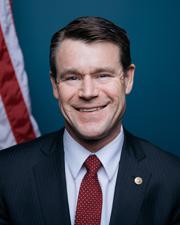 Sen. Todd Young (R-IN)
Sen. Todd Young (R-IN)Submitted July 11, 2024
Legislative Activity
Stay on top of the latest movement without scrolling through every action
Floor
Latest Action
Senate amendment submitted
July 11, 2024
Text
Submitted
SA 2863. Mr. YOUNG (for himself and Mr. Heinrich) submitted an
amendment intended to be proposed by him to the bill S. 4638, to
authorize appropriations for fiscal year 2025 for military activities
of the Department of Defense, for military construction, and for
defense activities of the Department of Energy, to prescribe military
personnel strengths for such fiscal year, and for other purposes; which
was ordered to lie on the table; as follows:

Strike section 236 and insert the following:

SEC. 236. ARTIFICIAL INTELLIGENCE AND BIOTECHNOLOGY SANDBOX
PILOT PROGRAM TO DEVELOP NEAR-TERM USE CASES
AND DEMONSTRATION OF ARTIFICIAL INTELLIGENCE
TOWARD BIOTECHNOLOGY APPLICATIONS FOR NATIONAL
SECURITY.

(a) Pilot Program Required.--Not later than 1 year after
the date of the enactment of this Act, the Secretary of
Defense shall commence carrying out a pilot program on
developing near-term use cases and demonstrations of
artificial intelligence toward biotechnology applications for
national security.
(b) Duration.--The pilot program required by subsection (a)
shall be carried out during the five-year period beginning on
the date of the commencement of the pilot program.
(c) Public-private Partnerships.--The Secretary shall carry
out the pilot program required by subsection (a) by entering
into one or more public-private partnerships.
(d) Biological Data.--In carrying out the pilot program
required in subsection (a), the Secretary shall use
artificial intelligence models trained on or applied to
biological data or problems.
(e) Laboratory Partnerships.--
(1) In general.--In order to facilitate any partnership
entered into under subsection (c), the Secretary shall--
(A) develop a set of laboratory partners to perform
biological experimentation that would help to validate their
artificial intelligence models; and
(B) develop a streamlined partnership model to make it
easier for companies and laboratories to work together to
better evaluate applications for products for national
security purposes.
(2) Consultation.--In carrying out paragraph (1), the
Secretary shall ensure sufficient consultation with the
following:
(A) The Under Secretary of Defense for Research and
Engineering.
(B) The Under Secretary of Defense for Acquisition and
Sustainment.
(C) The head of the Air Force Research Laboratory.
(D) The head of the Naval Research Laboratory.
(E) The head of the DEVCOM Army Research Laboratory.
(F) The Chief Digital and Artificial Intelligence Officer.
(G) The Director of the Test Resource Management Center.
(H) The head of the Air Force Artificial Intelligence
Accelerator.
(I) The Chief Research and Development Officer for the
Department of Veterans Affairs.
(J) The Director of the Defense Advanced Research Projects
Agency.
(K) Such others as the Secretary considers appropriate.
(f) Infrastructure.--In carrying out the pilot program
required by subsection (a), the Secretary shall ensure that
such computing and data storage infrastructure as may be
necessary for testing and evaluating cases and demonstrations
of artificial intelligence towards biotechnology applications
is fully operational before the date that is one year after
the date of the enactment of this Act.
(g) Eligible Projects.--Projects eligible for testing in
[the Sandbox --Note: What sandbox? This is the first mention
of a sandbox.] shall be associated with the Department of
Defense and involve the use of artificial intelligence models
trained on or applied to biological data or problems. Such
projects may include--
(1) predicting and producing medical countermeasures;
(2) analysis and development of warfighter diagnostics and
treatments;
(3) predicting or producing new or enhanced biological
materials;
(4) analyzing and predicting how biology could contribute
to the supply chain, especially for national defense; or
(5) any other project as the Secretary considers
appropriate.
(h) Annual Report.--.
(1) In general.--Not later than one year after the date of
the enactment of this Act and not less frequently than once
each year thereafter for the duration of the pilot program
required by subsection (a), the Secretary shall submit to the
congressional defense committees an annual report on the
pilot program.
(2) Contents.--Each report submitted pursuant to paragraph
(1) shall include, for the period covered by the report, the
following:
(A) An assessment of existing Department of Defense
biological data resources, including those relating to health
data, genetic data, and biological surveillance data, and how
to leverage such resources in [the sandbox].
(B) [The updated cybersecurity requirements for sandbox
users. --Note: What requirements are you referring to? This
is the first mention of anything about cybersecurity
requirements.]
(C) The development of any mechanisms necessary for
collaboration among different parties associated with
projects in [the Sandbox], including intellectual property
agreements, funding agreements, and material transfer
agreements.
(D) An assessment of the role that artificial intelligence
is playing in developing biotechnology, such as how
commercial industry may be using artificial intelligence to
develop biotechnologies.
(E) A description of near-term use cases developed under
the pilot program for artificial intelligence-enabled
biotechnology applications for national security.
(F) A description of planned, ongoing, and complete
demonstrations or other pilot programs funded under the pilot
program required by subsection (a) or otherwise by the
Department of Defense.
(G) An assessment of the viability for transition of
technology developed under the pilot program, including
assessment of--
(i) the resources needed for further development and
scaling of such technology; and
(ii) the potential benefits of such technology.
(3) Form.--Each report submitted pursuant to paragraph (1)
shall be submitted in unclassified form, but may include a
classified annex.
(i) Transition Plan.--One year before the end of the pilot
program, the Secretary shall submit to the congressional
defense committees a plan that outlines what steps the
Department could take to turn the pilot program into an
operational program if authorized by Congress to do so. This
plan shall include the following:
(1) A transition timeline.
(2) Associated annual cost of running the program.
(3) Additional infrastructure that might be needed.
(4) An outlined landscape of jurisdiction, partnerships,
and collaboration within the Department and with external
stakeholders.
(5) Examples of projects from the pilot phase of the
program and their outcomes.
(6) The potential impact to Department capabilities of
transitioning the program.
(7) Any other details deemed necessary to include by the
Secretary.
______