S.Amdt. 3038Senate118th Congress (2023-2025)
S.Amdt. 3038
Sponsored by 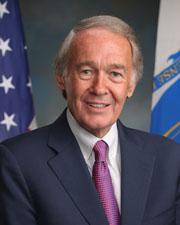 Sen. Edward J. Markey (D-MA)
Sen. Edward J. Markey (D-MA)Submitted July 23, 2024
Legislative Activity
Stay on top of the latest movement without scrolling through every action
Floor
Latest Action
Senate amendment submitted
July 23, 2024
Text
Submitted
SA 3038. Mr. MARKEY submitted an amendment intended to be proposed by
him to the bill S. 4638, to authorize appropriations for fiscal year
2025 for military activities of the Department of Defense, for military
construction, and for defense activities of the Department of Energy,
to prescribe military personnel strengths for such fiscal year, and for
other purposes; which was ordered to lie on the table; as follows:

At the end of subtitle B of title XV, add the following:

SEC. 1526. RESTRICTION ON FIRST-USE NUCLEAR STRIKES.

(a) Findings.--Congress finds the following:
(1) The Constitution gives Congress the sole power to
declare war.
(2) The framers of the Constitution understood that the
monumental decision to go to war, which can result in massive
death and the destruction of civilized society, must be made
by the representatives of the people and not by a single
person.
(3) As stated by section 2(c) of the War Powers Resolution
(Public Law 93-148; 50 U.S.C. 1541), ``the constitutional
powers of the President as Commander-in-Chief to introduce
United States Armed Forces into hostilities, or into
situations where imminent involvement in hostilities is
clearly indicated by the circumstances, are exercised only
pursuant to (1) a declaration of war, (2) specific statutory
authorization, or (3) a national emergency created by attack
upon the United States, its territories or possessions, or
its armed forces''.
(4) Nuclear weapons are uniquely powerful weapons that have
the capability to instantly kill millions of people, create
long-term health and environmental consequences throughout
the world, directly undermine global peace, and put the
United States at existential risk from retaliatory nuclear
strikes.
(5) A first-use nuclear strike carried out by the United
States would constitute a major act of war.
(6) A first-use nuclear strike conducted absent a
declaration of war by Congress would violate the
Constitution.
(7) The President has the sole authority to authorize the
use of nuclear weapons, an order which military officers of
the United States must carry out in accordance with their
obligations under the Uniform Code of Military Justice.
(8) Given its exclusive power under the Constitution to
declare war, Congress must provide meaningful checks and
balances to the President's sole authority to authorize the
use of a nuclear weapon.
(b) Declaration of Policy.--It is the policy of the United
States that no first-use nuclear strike should be conducted
absent a declaration of war by Congress.
(c) Prohibition.--No Federal funds may be obligated or
expended to conduct a first-use nuclear strike unless such
strike is conducted pursuant to a war declared by Congress
that expressly authorizes such strike.
(d) First-use Nuclear Strike Defined.--In this section, the
term ``first-use nuclear strike'' means an attack using
nuclear weapons against an enemy that is conducted without
the Secretary of Defense and the Chairman of the Joint Chiefs
of Staff first confirming to the President that there has
been a nuclear strike against the United States, its
territories, or its allies (as specified in section 3(b)(2)
of the Arms Export Control Act (22 U.S.C. 2753(b)(2))).

[[Page S5311]]

______