S.Amdt. 3039Senate118th Congress (2023-2025)
S.Amdt. 3039
Sponsored by 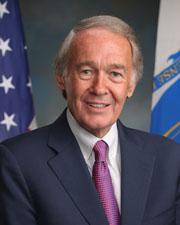 Sen. Edward J. Markey (D-MA)
Sen. Edward J. Markey (D-MA)Submitted July 23, 2024
Legislative Activity
Stay on top of the latest movement without scrolling through every action
Floor
Latest Action
Senate amendment submitted
July 23, 2024
Text
Submitted
SA 3039. Mr. MARKEY submitted an amendment intended to be proposed by
him to the bill S. 4638, to authorize appropriations for fiscal year
2025 for military activities of the Department of Defense, for military
construction, and for defense activities of the Department of Energy,
to prescribe military personnel strengths for such fiscal year, and for
other purposes; which was ordered to lie on the table; as follows:

At the end of subtitle F of title XII, add the following:

SECTION 1291. COUNTERING SAUDI ARABIA'S PURSUIT OF WEAPONS OF
MASS DESTRUCTION.

(a) Short Titles.--This section may be cited as the
``Stopping Activities Underpinning Development In Weapons of
Mass Destruction Act'' or the ``SAUDI WMD Act''.
(b) Findings.--Congress makes the following findings:
(1) The People's Republic of China (referred to in this
section as ``China''), became a full-participant of the
Nuclear Suppliers Group in 2004, committing it to apply a
strong presumption of denial in exporting nuclear-related
items that a foreign country could divert to a nuclear
weapons program.
(2) China also committed to the United States, in November
2000, to abide by the foundational principles of the 1987
Missile Technology Control Regime (referred to in this
section as ``MTCR'') to not ``assist, in any way, any country
in the development of ballistic missiles that can be used to
deliver nuclear weapons (i.e., missiles capable of delivering
a payload of at least 500 kilograms to a distance of at least
300 kilometers)''.
(3) In the 1980s, China secretly sold the Kingdom of Saudi
Arabia (referred to in this section as ``Saudi Arabia'')
conventionally armed DF-3A ballistic missiles, and in 2007,
reportedly sold Saudi Arabia dual-use capable DF-21 medium-
range ballistic missiles of a 300 kilometer, 500 kilogram
range and payload threshold which should have triggered a
denial of sale under the MTCR.
(4) The 2020 Department of State Report on the Adherence to
and Compliance with Arms Control, Nonproliferation, and
Disarmament Agreements and Commitments found that China
``continued to supply MTCR-controlled goods to missile
programs of proliferation concern in 2019'' and that the
United States imposed sanctions on nine Chinese entities for
covered missile transfers to Iran.
(5) A June 5, 2019, press report indicated that China
allegedly provided assistance to Saudi Arabia in the
development of a ballistic missile facility, which if
confirmed, would violate the purpose of the MTCR and run
contrary to the longstanding United States policy priority to
prevent weapons of mass destruction proliferation in the
Middle East.
(6) The Arms Export and Control Act of 1976 (Public Law 93-
329) requires the President to sanction any foreign person or
government who knowingly ``exports, transfers, or otherwise
engages in the trade of any MTCR equipment or technology'' to
a country that does not adhere to the MTCR.
(7) China concluded 2 nuclear cooperation agreements with
Saudi Arabia in 2012 and 2017, respectively, which may
facilitate China's bid to build 2 reactors in Saudi Arabia to
generate 2.9 Gigawatt-electric (GWe) of electricity.
(8) On August 4, 2020, a press report revealed the alleged
existence of a previously undisclosed uranium yellowcake
extraction facility in Saudi Arabia allegedly constructed
with the assistance of China, which if confirmed, would
indicate significant progress by Saudi Arabia in developing
the early stages of the nuclear fuel cycle that precede
uranium enrichment.
(9) Saudi Arabia's outdated Small Quantities Protocol and
its lack of an in force Additional Protocol to its
International Atomic Energy Agency (IAEA) Comprehensive
Safeguards Agreement severely curtails IAEA inspections,
which has led the Agency to call upon Saudi Arabia to either
rescind or update its Small Quantities Protocol.
(10) On January 19, 2021, in response to a question about
Saudi Arabia's reported ballistic missile cooperation with
China, incoming Secretary of State Antony J. Blinken stated
that ``we want to make sure that to the best of our ability
all of our partners and allies are living up to their
obligations under various nonproliferation and arms control
agreements and, certainly, in the case of Saudi Arabia that
is something we will want to look at''.
(11) On March 15, 2018, the Crown Prince of Saudi Arabia,
Mohammad bin-Salman, stated that ``if Iran developed a
nuclear bomb, we would follow suit as soon as possible,''
raising questions about whether a Saudi Arabian nuclear
program would remain exclusively peaceful, particularly in
the absence of robust international IAEA safeguards.
(12) An August 9, 2019, study by the United Nations High
Commissioner for Human Rights found that the Saudi Arabia-led
military coalition airstrikes in Yemen and its restrictions
on the flow of humanitarian assistance to the country, both
of which have disproportionately impacted civilians, may be
violations of international humanitarian law.
(c) Definitions.--In this section:
(1) Appropriate committees of congress.--The term
``appropriate committees of Congress'' means--
(A) the Select Committee on Intelligence of the Senate;
(B) the Committee on Foreign Relations of the Senate;
(C) the Permanent Select Committee on Intelligence of the
House of Representatives; and
(D) the Committee on Foreign Affairs of the House of
Representatives.
(2) Foreign person; person.--The terms ``foreign person''
and `` `person' '' mean--
(A) a natural person that is an alien;
(B) a corporation, business association, partnership,
society, trust, or any other nongovernmental entity,
organization, or group, that is organized under the laws of a
foreign country or has its principal place of business in a
foreign country;
(C) any foreign governmental entity operating as a business
enterprise; and
(D) any successor, subunit, or subsidiary of any entity
described in subparagraph (B) or (C).
(3) Middle east and north africa.--The term ``Middle East
and North Africa'' means those countries that are included in
the Area of Responsibility of the Assistant Secretary of
State for Near Eastern Affairs.
(d) Determination of Possible MTCR Transfers to Saudi
Arabia.--
(1) MTCR transfers.--Not later than 30 days after the date
of the enactment of this Act, the President shall submit to
the appropriate committees of Congress a written
determination, and any documentation to support that
determination detailing--
(A) whether any foreign person knowingly exported,
transferred, or engaged in trade of any item designated under
Category I of the MTCR Annex item with Saudi Arabia during
the previous 3 fiscal years; and
(B) the sanctions the President has imposed or intends to
impose pursuant to section 11B(b) of the Export
Administration Act of 1979 (50 U.S.C. 4612(b)) against any
foreign person who knowingly engaged in the export, transfer,
or trade of that item or items.
(2) Waiver.--Notwithstanding any provision of paragraphs
(3) through (7) of section 11(B)(b) of the Export
Administration Act of 1979 (50 U.S.C. 4612(b)), the President
may only waive the application of sanctions under such
section with respect to Saudi Arabia if that country is
verifiably determined to no longer possess an item designated
under Category I of the MTCR Annex received during the
previous 3 fiscal years.
(3) Form of report.--The determination required under
paragraph (1) shall be unclassified and include a classified
annex.
(e) Prohibition on United States Arms Sales to Saudi Arabia
if It Imports Nuclear Technology Without Safeguards.--
(1) In general.--The United States shall not sell,
transfer, or authorize licenses for export of any item
designated under Category III, IV, VII, or VIII on the United
States Munitions List pursuant to section 38(a)(1) of the
Arms Export Control Act (22 U.S.C. 2778(a)(1)) to Saudi
Arabia, other than ground-based missile defense systems, if
Saudi Arabia has, during any of the previous 3 fiscal years--
(A) knowingly imported any item classified as ``plants for
the separation of isotopes of uranium'' or ``plants for the
reprocessing of irradiated nuclear reactor fuel elements''
under Part 110 of the Nuclear Regulatory Commission export
licensing authority; or
(B) engaged in nuclear cooperation related to the
construction of any nuclear-related fuel cycle facility or
activity that has not been notified to the IAEA and would be
subject to complementary access if an Additional Protocol was
in force.
(2) Waiver.--The Secretary of State may waive the
prohibition under paragraph (1) with respect to a foreign
country if the Secretary submits to the appropriate
committees of Congress a written certification that contains
a determination, and any relevant documentation on which the
determination is based, that Saudi Arabia--
(A) has brought into force an Additional Protocol to the
IAEA Comprehensive Safeguards Agreement based on the model
described in IAEA INFCIRC/540;
(B) has concluded a civilian nuclear cooperation agreement
with the United States under section 123 of the Atomic Energy
Act of 1954 (42 U.S.C. 2153) or another supplier that
prohibits the enrichment of uranium or separation of
plutonium on its own territory; and
(C) has rescinded its Small Quantities Protocol and is not
found by the IAEA Board of Governors to be in noncompliance
with its Comprehensive Safeguards Agreement.
(3) Rule of construction.--Nothing in this section may be
construed as superseding the obligation of the President
under section 502B(a)(2) or section 620I(a) of the Foreign
Assistance Act of 1961 (22 U.S.C. 2304(a)(2), 22 U.S.C. 2378-
1(a)), respectively, to not furnish security assistance to
Saudi Arabia or any country if the Government of Saudi
Arabia--
(A) engages in a consistent pattern of gross violations of
internationally recognized human rights; or
(B) prohibits or otherwise restricts, directly or
indirectly, the transport or delivery of United States
humanitarian assistance.
(f) Middle East Nonproliferation Strategy.--
(1) In general.--Beginning with the first report published
after the date of the enactment of this Act, the Secretary of
State and the Secretary of Energy, in consultation with the
Director of National Intelligence, shall provide the
appropriate committees of Congress, as an appendix to the
Report on the Adherence to and Compliance with Arms

[[Page S5312]]

Control, Nonproliferation, and Disarmament Agreements and
Commitments, a report on MTCR compliance and a United States
strategy to prevent the spread of nuclear weapons and
missiles in the Middle East.
(2) Elements.--The report required under paragraph (1)
shall include the following elements:
(A) An assessment of China's compliance, during the
previous fiscal year, with its November 2000 commitment to
abide by the MTCR and United States diplomatic efforts to
address noncompliance.
(B) A description of every foreign person that, during the
previous fiscal year, engaged in the export, transfer, or
trade of MTCR items to a country that is a non-MTCR adherent,
and a description of the sanctions the President imposed
pursuant to section 11B(b) of the Export Administration Act
of 1979 (50 U.S.C. 4612(b)).
(C) A detailed strategy to prevent the proliferation of
ballistic missile and sensitive nuclear technology in the
Middle East and North Africa from China and other foreign
countries, including the following elements:
(i) An assessment of the proliferation risks associated
with concluding or renewing a civilian nuclear cooperation
``123'' agreement with any country in the Middle-East and
North Africa and the risks of such if that same equipment and
technology is sourced from a foreign state.
(ii) An update on United States bilateral and multilateral
diplomatic actions to commence negotiations on a Weapons of
Mass Destruction Free Zone (WMDFZ) since the 2015 Nuclear
Nonproliferation Treaty Review Conference.
(iii) A description of United States Government efforts to
achieve global adherence and compliance with the Nuclear
Suppliers Group, MTCR, and the 2002 International Code of
Conduct against Ballistic Missile Proliferation guidelines.
(D) An account of the briefings to the appropriate
committees of Congress in the reporting period detailing
negotiations on any new or renewed civilian nuclear
cooperation ``123'' agreement with any country consistent
with the intent of the Atomic Energy Act of 1954 (42 U.S.C.
2011 et seq.).
(3) Form of report.--The report required under paragraph
(1) shall be unclassified and include a classified annex.
______