S.Amdt. 3139Senate118th Congress (2023-2025)
S.Amdt. 3139
Sponsored by 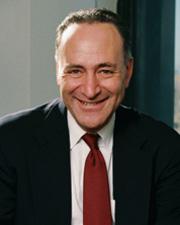 Sen. Charles E. Schumer (D-NY)
Sen. Charles E. Schumer (D-NY)Submitted July 24, 2024
Legislative Activity
Stay on top of the latest movement without scrolling through every action
Floor
Latest Action
Senate amendment submitted
July 24, 2024
Text
Submitted
SA 3139. Mr. SCHUMER (for himself, Mr. Rounds, and Mr. Heinrich)
submitted an amendment intended to be proposed by him to the bill S.
4638, to authorize appropriations for fiscal year 2025 for military
activities of the Department of Defense, for military construction, and
for defense activities of the Department of Energy, to prescribe
military personnel strengths for such fiscal year, and for other
purposes; which was ordered to lie on the table; as follows:

At the appropriate place in title X, insert the following:

SEC. ___. PHYSICAL AND CYBERSECURITY REQUIREMENTS FOR HIGHLY
CAPABLE ARTIFICIAL INTELLIGENCE SYSTEMS.

(a) Definitions.--In this section:
(1) Artificial intelligence.--The term ``artificial
intelligence'' has the meaning given such term in section
5002 of the National Artificial Intelligence Initiative Act
of 2020 (15 U.S.C. 9401).
(2) Covered artificial intelligence technology.--The term
``covered artificial intelligence technology'' means a
technology specified in the guidance developed under
subsection (c)(3), including all components of that
technology, such as source code and numerical parameters of a
trained artificial intelligence system.
(3) Covered entity.--The term ``covered entity'' means a
person (as defined in section 1742 of the Export Control
Reform Act of 2018 (50 U.S.C. 4801)) who engages in the
development, deployment, storage, or transportation of a
covered artificial intelligence technology.
(b) Findings.--Congress makes the following findings:
(1) Source code, numerical parameters, and related
technology associated with highly capable artificial
intelligence systems in the possession of private artificial
intelligence companies are an invaluable national resource
that would pose a grave threat to United States national
security if stolen by a foreign adversary through a cyber
operation or insider threat.
(2) Numerous foreign adversaries have the capacity to
engage in cyber operations to extract important data from
private companies, absent the most stringent cybersecurity
protections.
(c) Security Framework.--
(1) In general.--The Secretary of Commerce and the
Secretary of Homeland Security shall jointly, in coordination
with the Director of National Intelligence, develop a
consensus-based framework describing best practices for
artificial intelligence cybersecurity, physical security, and
insider threat mitigation to address or mitigate risks
relating to national security, foreign policy, economic
stability, or public safety implications, including to
protect vital national resources from theft that would do
grave damage to the United States.
(2) Risk-based framework.--The framework developed under
paragraph (1) shall be risk-based, with stronger security
corresponding proportionally to the national security,
foreign policy, economic stability, or public safety risks
posed by the artificial intelligence technology being stolen
or made publicly available.
(3) Covered artificial intelligence technologies.--
(A) Guidance.--The framework developed under paragraph (1)
shall provide clear guidance about which artificial
intelligence technologies are covered under the framework.
Such technologies shall be those that, if obtained by a
foreign adversary, would pose a grave threat to the national
security of the United States.
(B) Objective evaluation procedures.--Where feasible, the
guidance provided under subparagraph (A) shall be specified
in terms of objective evaluation procedures that measure or
estimate the national security implications of the artificial
intelligence technology, either before, during, or after it
has been developed.
(4) Minimum stringency.--The framework developed under
paragraph (1) shall be no less stringent than ISO/IEC 27001,
as in effect on the day before the date of the enactment of
this Act.
(5) Form.--At the discretion of the Secretary, the
framework developed under paragraph (1) may be implemented in
the form of technical standards.
(d) Security Requirements.--
(1) In general.--The Secretary of Commerce and the
Secretary of Homeland Security may issue rules to require
covered entities to implement the best practices described in
the framework developed under subsection (c).
(2) Risk-based rules.--Requirements implemented in rules
developed under paragraph (1) shall be as narrowly tailored
as practicable to the specific covered artificial
intelligence technologies developed, deployed, stored, or
transported by a covered entity, and shall be calibrated
accordingly to the different tasks involved in development,
deployment, storage, or transportation of components of those
covered artificial intelligence technologies.
______