S.Amdt. 3168Senate118th Congress (2023-2025)
S.Amdt. 3168
Sponsored by 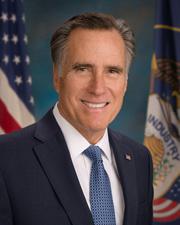 Sen. Mitt Romney (R-UT)
Sen. Mitt Romney (R-UT)Submitted July 24, 2024
Legislative Activity
Stay on top of the latest movement without scrolling through every action
Floor
Latest Action
Senate amendment submitted
July 24, 2024
Text
Submitted
SA 3168. Mr. ROMNEY submitted an amendment intended to be proposed by
him to the bill S. 4638, to authorize appropriations for fiscal year
2025 for military activities of the Department of Defense, for military
construction, and for defense activities of the Department of Energy,
to prescribe military personnel strengths for such fiscal year, and for
other purposes; which was ordered to lie on the table; as follows:

At the end of subtitle F of title XII, add the following:

SEC. 1291. IMPOSITION OF SANCTIONS WITH RESPECT TO FOREIGN
ADVERSARY MARITIME MILITIA.

(a) In General.--On and after the date that is 90 days
after the date of the enactment of this Act, the President
may impose the sanctions described in subsection (d) with
respect to any foreign adversary entity that the President
determines--
(1) has materially contributed to, engaged in, or provided
significant direct or indirect support for--
(A) the maritime militia of a foreign adversary;
(B) the provision of logistical support to such a militia,
including provision of at-sea or at-port refueling or any
other on-shore services, such as repair and servicing;
(C) the construction of vessels used by such a militia;
(D) the direction or control of such a militia, including
directing activities that inhibit or coerce another country
from protecting its sovereign rights or access to vessels or
territory under its control; or
(E) other activities that may support, sustain, or enable
the activities of such a militia; or
(2) has materially assisted, sponsored, or provided
financial, material, or technological support for, or goods
or services to, or in support of, any person subject to
sanctions pursuant to paragraph (1).
(b) Exceptions.--
(1) Exception for intelligence activities.--Sanctions under
this section shall not apply to any activity subject to the
reporting requirements under title V of the National Security
Act of 1947 (50 U.S.C. 3091 et seq.) or any authorized
intelligence activities of the United States.
(2) Exception for compliance with international obligations
and law enforcement activities.--Sanctions under this section
shall not apply with respect to an alien if admitting or
paroling the alien into the United States is necessary--
(A) to permit the United States to comply with the
Agreement regarding the Headquarters of the United Nations,
signed at Lake Success on June 26, 1947, and entered into
force November 21, 1947, between the United Nations and the
United States, or other applicable international obligations
of the United States; or
(B) to carry out or assist law enforcement activity of the
United States.
(3) Exception relating to importation of goods.--
(A) In general.--The authority to impose sanctions under
this section shall not include the authority to impose
sanctions on the importation of goods.
(B) Good defined.--In this paragraph, the term ``good''
means any article, natural or manmade substance, material,
supply, or manufactured product, including inspection and
test equipment and excluding technical data.
(c) Waiver.--The President may waive the application of
sanctions under this section with respect to a foreign
adversary entity if the President determines and reports to
Congress that such a waiver is in the national interests of
the United States.
(d) Sanctions Described.--The sanctions described in this
subsection are, notwithstanding section 202 of the
International Emergency Economic Powers Act (50 U.S.C. 1701),
the exercise of the authorities provided to the President
under that Act (50 U.S.C. 1701 et seq.) to the extent
necessary to block and prohibit all transactions in property
and interests in property of a foreign adversary entity
subject to subsection (a) if such property or interests in
property are in the United States, come within the United
States, or are or come within the possession or control of a
United States person.
(e) Implementation; Penalties.--
(1) Implementation.--The President may exercise the
authorities provided to the President under sections 203 and
205 of the International Emergency Economic Powers Act (50
U.S.C. 1702 and 1704) to the extent necessary to carry out
this section.
(2) Penalties.--A person that violates, attempts to
violate, conspires to violate, or causes a violation of
subsection (d) or any regulation, license, or order issued to
carry out that subsection shall be subject to the penalties
set forth in subsections (b) and (c) of section 206 of the
International Emergency Economic Powers Act (50 U.S.C. 1705)
to the same extent as a person that commits an unlawful act
described in subsection (a) of that section.
(f) Engagement With Allies and Partners With Respect to
Maritime Militia of People's Republic of China.--Not later
than 180 days after the date of the enactment of this Act,
the Secretary of State should submit to the Committee on
Foreign Relations of the Senate and the Committee on Foreign
Affairs of the House of Representatives a report on the
efforts of the United States to engage with foreign allies
and partners with territorial or security interests in

[[Page S5487]]

the South China Sea, East China Sea, Philippine Sea, and
other maritime areas of interest to coordinate efforts to
counter malign activities of the maritime militia of the
People's Republic of China.
(g) Definitions.--In this section:
(1) Foreign adversary.--The term ``foreign adversary''
means a country specified in section 7.4(a) of title 15, Code
of Federal Regulations.
(2) Foreign adversary entity.--The term ``foreign adversary
entity'' means an entity organized under the laws of or
otherwise subject to the jurisdiction of a foreign adversary.
(3) Maritime militia.--The term ``maritime militia'' means
an organized civilian force that--
(A) operates primarily in maritime domains, including
coastal waters, exclusive economic zones, and international
waters, and may use a variety of vessels, including fishing
boats, trawlers, and other commercial vessels;
(B) is acting under the authority of, or is funded by, the
government of a country; or
(C) is equipped and trained for the purpose of supporting
and advancing the geopolitical or strategic objectives of
that government, including asserting territorial claims,
safeguarding maritime interests of that country, and
conducting activities such as surveillance, reconnaissance,
intelligence gathering, and logistical support, and may
engage in coordinated activities with naval and other
military forces of that country.
(4) Person.--The term ``person'' means an individual or
entity.
(5) United states person.--The term ``United States
person'' means--
(A) a United States citizen or an alien lawfully admitted
for permanent residence to the United States;
(B) an entity organized under the laws of the United States
or any jurisdiction within the United States, including a
foreign branch of such an entity; or
(C) any person located in the United States.
______