S.Amdt. 3277Senate118th Congress (2023-2025)
S.Amdt. 3277
Sponsored by 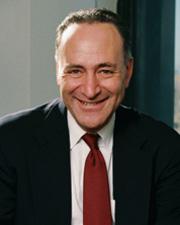 Sen. Charles E. Schumer (D-NY)
Sen. Charles E. Schumer (D-NY)Submitted September 16, 2024
Legislative Activity
Stay on top of the latest movement without scrolling through every action
Floor
Latest Action
Senate amendment submitted
September 16, 2024
Text
Submitted
SA 3277. Mr. SCHUMER (for himself, Mr. Rounds, and Mr. Heinrich)
submitted an amendment intended to be proposed by him to the bill S.
4638, to authorize appropriations for fiscal year 2025 for military
activities of the Department of Defense, for military construction, and
for defense activities of

[[Page S6057]]

the Department of Energy, to prescribe military personnel strengths for
such fiscal year, and for other purposes; which was ordered to lie on
the table; as follows:

At the appropriate place in title XVI, insert the
following:

SEC. ___. PHYSICAL AND CYBERSECURITY PROCUREMENT REQUIREMENTS
FOR ARTIFICIAL INTELLIGENCE SYSTEMS.

(a) Definitions.--In this section:
(1) Artificial intelligence.--The term ``artificial
intelligence'' has the meaning given such term in section
5002 of the National Artificial Intelligence Initiative Act
of 2020 (15 U.S.C. 9401).
(2) Covered artificial intelligence technology.--The term
``covered artificial intelligence technology'' means an
artificial intelligence system procured by the Department of
Defense and all components of the development and deployment
lifecycle of that artificial intelligence system, including
source code, numerical parameters (such as model weights) of
the trained artificial intelligence system, details of any
methods and algorithms used to develop that system, data used
in the development of the system, and software used for
evaluating the trustworthiness of the artificial intelligence
system during development or deployment.
(3) Covered entity.--The term ``covered entity'' means an
entity that enters into a Department of Defense contract that
engages in the development, deployment, storage, or
transportation of a covered artificial intelligence
technology.
(b) Security Framework.--
(1) In general.--The Secretary of Defense shall develop a
framework describing best practices for artificial
intelligence cybersecurity and physical security to mitigate
risks to the Department of Defense from the use of covered
artificial intelligence technologies.
(2) Coverage of relevant aspects of security.--The
framework developed under paragraph (1) shall cover all
relevant aspects of the security of artificial intelligence
systems, including the following:
(A) Workforce risks, such as insider threat risks.
(B) Supply chain risks, such as data poisoning risks.
(C) Risks relating to adversarial tampering with artificial
intelligence systems.
(D) Risks relating to unintended exposure or theft of
artificial intelligence systems.
(3) Risk-based framework.--The framework developed under
paragraph (1) shall be risk-based, with higher security
levels corresponding proportionally to the national security
or foreign policy risks posed by the covered artificial
intelligence technology being stolen or tampered with.
(4) Use of existing frameworks.--To the maximum extent
feasible, the framework developed under paragraph (1) shall--
(A) draw on existing cybersecurity references, such as the
NIST Special Publication 800 series; and
(B) be implemented as an extension or augmentation of
existing cybersecurity frameworks developed by the Department
of Defense, such as the Cybersecurity Maturity Model
Certification framework.
(5) Addressing extreme security risks.--
(A) Highly capable cyber threat actors.--The framework
developed under paragraph (1) shall take into account that
the most highly capable artificial intelligence systems may
be of great interest to the most highly capable cyber threat
actors, such as intelligence and defense agencies of peer and
near-peer nations.
(B) Security levels.--The Secretary of Defense shall ensure
that cybersecurity frameworks provided for contractors
contain security levels designed to mitigate risks posed by
cyber threat actors described in subparagraph (A), with the
highest levels being similar in scope to the level of
protection offered by national security systems.
(C) General design with specific components.--To the extent
feasible, any additional security levels developed under
subparagraph (B) shall be designed generally for all software
systems, but may contain components designed specifically for
highly capable artificial intelligence systems.
(c) Security Requirements.--
(1) In general.--The Secretary may amend the Defense
Federal Acquisition Regulation Supplement, or take other
similar action, to require covered entities to implement the
best practices described in the framework developed under
subsection (c).
(2) Risk-based rules.--Requirements implemented in rules
developed under paragraph (1) shall be as narrowly tailored
as practicable to the specific covered artificial
intelligence technologies developed, deployed, stored, or
transported by a covered entity, and shall be calibrated
accordingly to the different tasks involved in development,
deployment, storage, or transportation of components of those
covered artificial intelligence technologies.
(3) Cost-benefit consideration.--
(A) In general.--In implementing paragraph (1), the
Secretary shall--
(i) consider the costs and benefits to the Department and
to United States national security and technological
leadership, of imposing security requirements on covered
entities; and
(ii) to the extent feasible, design requirements in a way
that minimizes costs and maximizes benefits.
(B) Weighing costs of slowing down development.--In
carrying out subparagraph (A), the Secretary shall, in
particular, weigh the costs of slowing down artificial
intelligence development and deployment against the benefits
of mitigating national security risks and potential security
risks to the Department of Defense from using commercial
software.
(d) Reporting Requirements.--Not later than 180 days after
the date of the enactment of this Act, the Secretary shall
submit to the congressional defense committees an update on
the status of implementation of the requirements of this
section.

SEC. ___. PUBLIC-PRIVATE CYBERSECURITY PARTNERSHIP FOR HIGHLY
CAPABLE ARTIFICIAL INTELLIGENCE SYSTEMS.

(a) Establishment Required.--Not later than 180 days after
the date of the enactment of this Act, the Assistant
Secretary of Defense for Cyber Policy shall establish a
public-private partnership body to address cybersecurity
threats to highly capable artificial intelligence systems.
(b) Forum for Engagement.--The partnership body established
under subsection (a) shall serve as a forum for engagement
between the Department of Defense and commercial industry
partners to align and enhance cybersecurity frameworks and
practices applicable to both national security systems and
artificial intelligence systems at risk from sophisticated
state actors.
(c) Purpose.--The public-private partnership body developed
under subsection (a) shall--
(1) convene regular engagements to discuss cybersecurity
threats specific to highly capable artificial intelligence
systems, with a focus on both current and emerging threats
posed by state-sponsored cyber actors;
(2) facilitate the development, sharing, and alignment of
best practices and robust cybersecurity frameworks between
the Department and commercial industry to protect artificial
intelligence systems;
(3) promote collaborative threat intelligence sharing
between the Department and commercial entities, with
particular attention to vulnerabilities in artificial
intelligence systems used in critical infrastructure, defense
operations, and sensitive national security functions; and
(4) develop recommendations for cybersecurity policy
enhancements aimed at safeguarding artificial intelligence
technologies from state-sponsored cyber attacks and report
findings and policy recommendations to Congress on an annual
basis.
(d) Participants.--The public-private partnership body
developed under subsection (a) shall include representatives
from--
(1) the Department of Defense, including--
(A) the Office of the Assistant Secretary of Defense for
Cyber Policy;
(B) the Under Secretary of Defense for Intelligence and
Security;
(C) the Chief Information Officer of the Department of
Defense;
(D) the Chief Digital and Artificial Intelligence Officer
of the Department of Defense;
(E) the Defense Advanced Research Projects Agency;
(F) the National Security Agency;
(G) United States Cyber Command; and
(H) such other Department of Defense agencies with
responsibilities for cybersecurity or artificial intelligence
systems as the Assistant Secretary considers relevant;
(2) commercial industry companies with expertise in highly
capable artificial intelligence systems or cybersecurity
practices, including--
(A) cloud computing and artificial intelligence service
providers;
(B) cybersecurity companies;
(C) artificial intelligence research and development
companies;
(D) telecommunications companies; and
(E) such other industry leaders as the Assistant Secretary
identifies as relevant and appropriate; and
(3) federally funded research and development centers,
national laboratories, and academic institutions with
demonstrated expertise in artificial intelligence or
cybersecurity.
(e) Meetings.--The engagements described under subsection
(c)(1) shall include convenings not less frequently than
semiannually--
(1) to identify key threats to artificial intelligence
systems in both the Department and commercial sectors, with
an emphasis on threats posed by sophisticated state actors;
(2) to align the most robust cybersecurity frameworks
applicable to national security systems and those artificial
intelligence systems used in commercial sectors that are
deemed critical to national security; and
(3) to assess the cybersecurity readiness of artificial
intelligence systems and artificial intelligence developers
and providers and make recommendations to improve protective
measures against cyber threats to artificial intelligence
systems and artificial intelligence developers and providers.
(f) Reporting Requirements.--Not later than one year after
the establishment of the public-private partnership body
under subsection (a), and not less frequently than once each
year thereafter, the Assistant Secretary shall submit to the
congressional defense committees a report summarizing--
(1) the key findings from the meetings held under
subsection (e), including identified cybersecurity
vulnerabilities in artificial intelligence systems;
(2) recommendations for enhancing cybersecurity policy and
practices to protect artificial intelligence systems across
both the Department and commercial sectors; and

[[Page S6058]]

(3) an analysis of the progress made in aligning Department
and commercial cybersecurity frameworks to address state-
sponsored cyber threats.
______