S.Amdt. 952Senate118th Congress (2023-2025)
S.Amdt. 952
Sponsored by 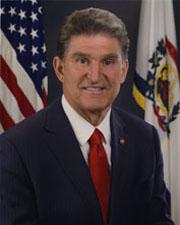 Sen. Joe Manchin III (D-WV)
Sen. Joe Manchin III (D-WV)Submitted July 19, 2023
Legislative Activity
Stay on top of the latest movement without scrolling through every action
Floor
Latest Action
Senate amendment submitted
July 19, 2023
View full timeline
Floor
Senate amendment submitted
July 19, 2023
Floor
Senate amendment submitted
July 19, 2023
Text
Submitted
SA 952. Mr. MANCHIN (for himself and Mr. Risch) submitted an
amendment intended to be proposed by him to the bill S. 2226, to
authorize appropriations for fiscal year 2024 for military activities
of the Department of Defense, for military construction, and for
defense activities of the Department of Energy, to prescribe military
personnel strengths for such fiscal year, and for other purposes; which
was ordered to lie on the table; as follows:

At the appropriate place in title XXXI, insert the
following:

SEC. 31___. INTERNATIONAL NUCLEAR ENERGY ACT.

(a) Short Title.--This section may be cited as the
``International Nuclear Energy Act''.
(b) Definitions.--In this section:
(1) Advanced nuclear reactor.--The term ``advanced nuclear
reactor'' has the meaning given the term in section 951(b) of
the Energy Policy Act of 2005 (42 U.S.C. 16271(b)).
(2) Ally or partner nation.--The term ``ally or partner
nation'' means--
(A) the Government of any country that is a member of the
Organisation for Economic Co-operation and Development;
(B) the Government of the Republic of India; and
(C) the Government of any country designated as an ally or
partner nation by the Secretary of State for purposes of this
section.
(3) Appropriate committees of congress.--The term
``appropriate committees of Congress'' means--
(A) the Committees on Foreign Relations and Energy and
Natural Resources of the Senate; and
(B) the Committees on Foreign Affairs and Energy and
Commerce of the House of Representatives.
(4) Assistant.--The term ``Assistant'' means the Assistant
to the President and Director for International Nuclear
Energy Policy described in subsection (c)(1)(D).
(5) Associated entity.--The term ``associated entity''
means an entity that--
(A) is owned, controlled, or operated by--
(i) an ally or partner nation; or
(ii) an associated individual; or
(B) is organized under the laws of, or otherwise subject to
the jurisdiction of, a country described in paragraph (2),
including a corporation that is incorporated in a country
described in that paragraph.
(6) Associated individual.--The term ``associated
individual'' means a foreign national who is a national of a
country described in paragraph (2).
(7) Civil nuclear.--The term ``civil nuclear'' means
activities relating to--
(A) nuclear plant construction;
(B) nuclear fuel services;
(C) nuclear energy financing;
(D) nuclear plant operations;
(E) nuclear plant regulation;
(F) nuclear medicine;
(G) nuclear safety;
(H) community engagement in areas in reasonable proximity
to nuclear sites;
(I) infrastructure support for nuclear energy;
(J) nuclear plant decommissioning;
(K) nuclear liability;
(L) safe storage and safe disposal of spent nuclear fuel;
(M) environmental safeguards;
(N) nuclear nonproliferation and security; and
(O) technology related to the matters described in
subparagraphs (A) through (N).
(8) Embarking civil nuclear energy nation.--
(A) In general.--The term ``embarking civil nuclear energy
nation'' means a country that--
(i) does not have a civil nuclear program;
(ii) is in the process of developing or expanding a civil
nuclear program, including safeguards and a legal and
regulatory framework, for--

(I) nuclear safety;
(II) nuclear security;
(III) radioactive waste management;
(IV) civil nuclear energy;
(V) environmental safeguards;
(VI) community engagement in areas in reasonable proximity
to nuclear sites;
(VII) nuclear liability; or
(VIII) advanced nuclear reactor licensing;

(iii) is in the process of selecting, developing,
constructing, or utilizing advanced light water reactors,
advanced nuclear reactors, or advanced civil nuclear
technologies; and
(iv) is eligible to receive development lending from the
World Bank.
(B) Exclusions.--The term ``embarking civil nuclear energy
nation'' does not include--
(i) the People's Republic of China;
(ii) the Russian Federation;
(iii) the Republic of Belarus;
(iv) the Islamic Republic of Iran;
(v) the Democratic People's Republic of Korea;
(vi) the Republic of Cuba;
(vii) the Bolivarian Republic of Venezuela;
(viii) the Syrian Arab Republic;
(ix) Burma; or

[[Page S3404]]

(x) any other country--

(I) the property or interests in property of the government
of which are blocked pursuant to the International Emergency
Economic Powers Act (50 U.S.C. 1701 et seq.); or
(II) the government of which the Secretary of State has
determined has repeatedly provided support for acts of
international terrorism for purposes of--

(aa) section 620A(a) of the Foreign Assistance Act of 1961
(22 U.S.C. 2371(a));
(bb) section 40(d) of the Arms Export Control Act (22
U.S.C. 2780(d));
(cc) section 1754(c)(1)(A)(i) of the Export Control Reform
Act of 2018 (50 U.S.C. 4813(c)(1)(A)(i)); or
(dd) any other relevant provision of law.
(9) Nuclear safety.--The term ``nuclear safety'' means
issues relating to the design, construction, operation, or
decommissioning of nuclear facilities in a manner that
provides reasonable assurance of adequate protection of
workers, the public, and the environment, including--
(A) the safe operation of nuclear reactors and other
nuclear facilities;
(B) radiological protection of--
(i) members of the public;
(ii) workers; and
(iii) the environment;
(C) nuclear waste management;
(D) emergency preparedness;
(E) nuclear liability; and
(F) the safe transportation of nuclear materials.
(10) Secretary.--The term ``Secretary'' means the Secretary
of Energy.
(11) Spent nuclear fuel.--The term ``spent nuclear fuel''
has the meaning given the term in section 2 of the Nuclear
Waste Policy Act of 1982 (42 U.S.C. 10101).
(12) U.S. nuclear energy company.--The term ``U.S. nuclear
energy company'' means a company that--
(A) is organized under the laws of, or otherwise subject to
the jurisdiction of, the United States; and
(B) is involved in the nuclear energy industry.
(c) White House Focal Point on Civil Nuclear
Coordination.--
(1) Sense of congress.--Given the critical importance of
developing and implementing, with input from various agencies
throughout the executive branch, a cohesive policy with
respect to international efforts related to civil nuclear
energy, it is the sense of Congress that--
(A) there should be a focal point within the White House,
which may, if determined to be appropriate, report to the
National Security Council, for coordination on issues
relating to those efforts;
(B) to provide that focal point, the President should
establish, within the Executive Office of the President, an
office, to be known as the ``Office of the Assistant to the
President and Director for International Nuclear Energy
Policy'' (referred to in this subsection as the ``Office'');
(C) the Office should act as a coordinating office for--
(i) international civil nuclear cooperation; and
(ii) civil nuclear export strategy;
(D) the Office should be headed by an individual appointed
as an Assistant to the President with the title of ``Director
for International Nuclear Energy Policy''; and
(E) the Office should--
(i) coordinate civil nuclear export policies for the United
States;
(ii) develop, in coordination with the officials described
in paragraph (2), a cohesive Federal strategy for engagement
with foreign governments (including ally or partner nations
and the governments of embarking civil nuclear energy
nations), associated entities, and associated individuals
with respect to civil nuclear exports;
(iii) coordinate with the officials described in paragraph
(2) to ensure that necessary framework agreements and trade
controls relating to civil nuclear materials and technologies
are in place for key markets; and
(iv) develop--

(I) a whole-of-government coordinating strategy for civil
nuclear cooperation;
(II) a whole-of-government strategy for civil nuclear
exports; and
(III) a whole-of-government approach to support appropriate
foreign investment in civil nuclear energy projects supported
by the United States in embarking civil nuclear energy
nations.

(2) Officials described.--The officials referred to in
paragraph (1)(E) are--
(A) appropriate officials of any Federal agency that the
President determines to be appropriate; and
(B) appropriate officials representing foreign countries
and governments, including--
(i) ally or partner nations;
(ii) embarking civil nuclear energy nations; and
(iii) any other country or government that the Assistant
(if appointed) and the officials described in subparagraph
(A) jointly determine to be appropriate.
(d) Nuclear Exports Working Group.--
(1) Establishment.--There is established a working group,
to be known as the ``Nuclear Exports Working Group''
(referred to in this subsection as the ``working group'').
(2) Composition.--The working group shall be composed of--
(A) senior-level Federal officials, selected internally by
the applicable Federal agency or organization, from any
Federal agency or organization that the President determines
to be appropriate; and
(B) other senior-level Federal officials, selected
internally by the applicable Federal agency or organization,
from any other Federal agency or organization that the
Secretary determines to be appropriate.
(3) Reporting.--The working group shall report to the
appropriate White House official, which may be the Assistant
(if appointed).
(4) Duties.--The working group shall coordinate, not less
frequently than quarterly, with the Civil Nuclear Trade
Advisory Committee of the Department of Commerce, the Nuclear
Energy Advisory Committee of the Department of Energy, and
other advisory or stakeholder groups, as necessary, to
maintain an accurate and up-to-date knowledge of the standing
of civil nuclear exports from the United States, including
with respect to meeting the targets established as part of
the 10-year civil nuclear trade strategy described in
paragraph (5)(A).
(5) Strategy.--
(A) In general.--Not later than 1 year after the date of
enactment of this Act, the working group shall establish a
10-year civil nuclear trade strategy, including biennial
targets for the export of civil nuclear technologies,
including light water and non-light water reactors and
associated equipment and technologies, civil nuclear
materials, and nuclear fuel that align with meeting
international energy demand while seeking to avoid or reduce
emissions.
(B) Collaboration required.--In establishing the strategy
under subparagraph (A), the working group shall collaborate
with--
(i) any Federal agency that the President determines to be
appropriate; and
(ii) representatives of private industry.
(e) Engagement With Ally or Partner Nations.--
(1) In general.--The President shall launch, in accordance
with applicable nuclear technology export laws (including
regulations), an international initiative to modernize the
civil nuclear outreach to embarking civil nuclear energy
nations.
(2) Financing.--In carrying out the initiative described in
paragraph (1), the President, acting through an appropriate
Federal official, who may be the Assistant (if appointed) or
the Chief Executive Officer of the United States
International Development Finance Corporation, if determined
to be appropriate, and in coordination with the officials
described in subsection (c)(2), may, if the President
determines to be appropriate, seek to establish cooperative
financing relationships for the export of civil nuclear
technology, components, materials, and infrastructure to
embarking civil nuclear energy nations.
(3) Activities.--In carrying out the initiative described
in paragraph (1), the President shall--
(A) assist nongovernmental organizations and appropriate
offices, administrations, agencies, laboratories, and
programs of the Department of Energy and other relevant
Federal agencies and offices in providing education and
training to foreign governments in nuclear safety, security,
and safeguards--
(i) through engagement with the International Atomic Energy
Agency; or
(ii) independently, if the applicable entity determines
that it would be more advantageous under the circumstances to
provide the applicable education and training independently;
(B) assist the efforts of the International Atomic Energy
Agency to expand the support provided by the International
Atomic Energy Agency to embarking civil nuclear energy
nations for nuclear safety, security, and safeguards;
(C) coordinate the work of the Chief Executive Officer of
the United States International Development Finance
Corporation and coordinate with the President of the Export-
Import Bank of the United States to expand outreach to the
private investment community to create public-private
financing relationships to assist in the adoption of civil
nuclear technologies by embarking civil nuclear energy
nations, including through exports from the United States;
(D) seek to better coordinate, to the maximum extent
practicable, the work carried out by any Federal agency that
the President determines to be appropriate; and
(E) coordinate with the Export-Import Bank of the United
States to improve the efficient and effective exporting of
civil nuclear technologies and materials.
(f) Cooperative Financing Relationships With Ally or
Partner Nations and Embarking Civil Nuclear Energy Nations.--
(1) In general.--The President, acting through an
appropriate Federal official, who may be the Assistant (if
appointed) or the Chief Executive Officer of the United
States International Development Finance Corporation, if
determined to be appropriate, and in coordination with the
officials described in subsection (c)(2), shall develop, as
the President determines to be appropriate, financing
relationships with ally or partner nations to assist in the
adoption of civil nuclear technologies exported from the
United States or ally or partner nations to embarking civil
nuclear energy nations.
(2) United states competitiveness clauses.--
(A) Definition of united states competitiveness clause.--In
this paragraph, the term ``United States competitiveness
clause'' means any United States competitiveness provision in
any agreement entered into by the Department of Energy,
including--
(i) a cooperative agreement;

[[Page S3405]]

(ii) a cooperative research and development agreement; and
(iii) a patent waiver.
(B) Consideration.--In carrying out paragraph (1), the
relevant officials described in that paragraph shall consider
the impact of United States competitiveness clauses on any
financing relationships entered into or proposed to be
entered into under that paragraph.
(C) Waiver.--The Secretary shall facilitate waivers of
United States competitiveness clauses as necessary to
facilitate financing relationships with ally or partner
nations under paragraph (1).
(g) Cooperation With Ally or Partner Nations on Advanced
Nuclear Reactor Demonstration and Cooperative Research
Facilities for Civil Nuclear Energy.--
(1) In general.--Not later than 2 years after the date of
enactment of this Act, the Secretary of State, in
coordination with the Secretary and the Secretary of
Commerce, shall conduct bilateral and multilateral meetings
with not fewer than 5 ally or partner nations, with the aim
of enhancing nuclear energy cooperation among those ally or
partner nations and the United States, for the purpose of
developing collaborative relationships with respect to
research, development, licensing, and deployment of advanced
nuclear reactor technologies for civil nuclear energy.
(2) Requirement.--The meetings described in paragraph (1)
shall include--
(A) a focus on cooperation to demonstrate and deploy
advanced nuclear reactors, with an emphasis on U.S. nuclear
energy companies, during the 10-year period beginning on the
date of enactment of this Act to provide options for
addressing energy security and climate change; and
(B) a focus on developing a memorandum of understanding or
any other appropriate agreement between the United States and
ally or partner nations with respect to--
(i) the demonstration and deployment of advanced nuclear
reactors; and
(ii) the development of cooperative research facilities.
(3) Financing arrangements.--In conducting the meetings
described in paragraph (1), the Secretary of State, in
coordination with the Secretary and the Secretary of
Commerce, shall seek to develop financing arrangements to
share the costs of the demonstration and deployment of
advanced nuclear reactors and the development of cooperative
research facilities with the ally or partner nations
participating in those meetings.
(4) Report.--Not later than 1 year after the date of
enactment of this Act, the Secretary, the Secretary of State,
and the Secretary of Commerce shall jointly submit to
Congress a report highlighting potential partners--
(A) for the establishment of cost-share arrangements
described in paragraph (3); or
(B) with which the United States may enter into agreements
with respect to--
(i) the demonstration of advanced nuclear reactors; or
(ii) cooperative research facilities.
(h) International Civil Nuclear Energy Cooperation.--
Section 959B of the Energy Policy Act of 2005 (42 U.S.C.
16279b) is amended--
(1) in the matter preceding paragraph (1), by striking
``The Secretary'' and inserting the following:
``(a) In General.--The Secretary'';
(2) in subsection (a) (as so designated)--
(A) in paragraph (1)--
(i) by striking ``financing,''; and
(ii) by striking ``and'' after the semicolon at the end;
(B) in paragraph (2)--
(i) in subparagraph (A), by striking ``preparations for'';
and
(ii) in subparagraph (C)(v), by striking the period at the
end and inserting a semicolon; and
(C) by adding at the end the following:
``(3) to support, in coordination with the Secretary of
State, the safe, secure, and peaceful use of civil nuclear
technology in countries developing nuclear energy programs,
with a focus on countries that have increased civil nuclear
cooperation with the Russian Federation or the People's
Republic of China; and
``(4) to promote the fullest utilization of the reactors,
fuel, equipment, services, and technology of U.S. nuclear
energy companies (as defined in subsection (b) of the
International Nuclear Energy Act) in civil nuclear energy
programs outside the United States through--
``(A) bilateral and multilateral arrangements developed and
executed in coordination with the Secretary of State that
contain commitments for the utilization of the reactors,
fuel, equipment, services, and technology of U.S. nuclear
energy companies (as defined in that subsection);
``(B) the designation of 1 or more U.S. nuclear energy
companies (as defined in that subsection) to implement an
arrangement under subparagraph (A) if the Secretary
determines that the designation is necessary and appropriate
to achieve the objectives of this section;
``(C) the waiver of any provision of law relating to
competition with respect to any activity related to an
arrangement under subparagraph (A) if the Secretary, in
consultation with the Attorney General and the Secretary of
Commerce, determines that a waiver is necessary and
appropriate to achieve the objectives of this section; and
``(D) the issuance of loans, loan guarantees, other
financial assistance, or assistance in the form of an equity
interest to carry out activities related to an arrangement
under subparagraph (A), to the extent appropriated funds are
available.''; and
(3) by adding at the end the following:
``(b) Requirements.--The program under subsection (a) shall
be supported in consultation with the Secretary of State and
implemented by the Secretary--
``(1) to facilitate, to the maximum extent practicable,
workshops and expert-based exchanges to engage industry,
stakeholders, and foreign governments with respect to
international civil nuclear issues, such as--
``(A) training;
``(B) financing;
``(C) safety;
``(D) security;
``(E) safeguards;
``(F) liability;
``(G) advanced fuels;
``(H) operations; and
``(I) options for multinational cooperation with respect to
the disposal of spent nuclear fuel (as defined in section 2
of the Nuclear Waste Policy Act of 1982 (42 U.S.C. 10101));
and
``(2) in coordination with any Federal agency that the
President determines to be appropriate.
``(c) Authorization of Appropriations.--There is authorized
to be appropriated to the Secretary to carry out subsection
(a)(3) $15,500,000 for each of fiscal years 2023 through
2027.''.
(i) International Civil Nuclear Program Support.--
(1) In general.--Not later than 120 days after the date of
enactment of this Act, the Secretary of State, in
coordination with the Secretary and the Assistant (if
appointed), shall launch an international initiative
(referred to in this subsection as the ``initiative'') to
provide financial assistance to, and facilitate the building
of technical capacities by, in accordance with this
subsection, embarking civil nuclear energy nations for
activities relating to the development of civil nuclear
energy programs.
(2) Financial assistance.--
(A) In general.--In carrying out the initiative, the
Secretary of State, in coordination with the Secretary and
the Assistant (if appointed), may award grants of financial
assistance to embarking civil nuclear energy nations in
accordance with this paragraph--
(i) for activities relating to the development of civil
nuclear energy programs; and
(ii) to facilitate the building of technical capacities for
those activities.
(B) Amount.--The amount of a grant of financial assistance
under subparagraph (A) shall be not more than $5,500,000.
(C) Limitations.--The Secretary of State, in coordination
with the Secretary and the Assistant (if appointed), may
award--
(i) not more than 1 grant of financial assistance under
subparagraph (A) to any 1 embarking civil nuclear energy
nation each fiscal year; and
(ii) not more than a total of 5 grants of financial
assistance under subparagraph (A) to any 1 embarking civil
nuclear energy nation.
(3) Senior advisors.--
(A) In general.--In carrying out the initiative, the
Secretary of State, in coordination with the Secretary and
the Assistant (if appointed), may provide financial
assistance to an embarking civil nuclear energy nation for
the purpose of contracting with a U.S. nuclear energy company
to hire 1 or more senior advisors to assist the embarking
civil nuclear energy nation in establishing a civil nuclear
program.
(B) Requirement.--A senior advisor described in
subparagraph (A) shall have relevant experience and
qualifications to advise the embarking civil nuclear energy
nation on, and facilitate on behalf of the embarking civil
nuclear energy nation, 1 or more of the following activities:
(i) The development of financing relationships.
(ii) The development of a standardized financing and
project management framework for the construction of nuclear
power plants.
(iii) The development of a standardized licensing framework
for--

(I) light water civil nuclear technologies; and
(II) non-light water civil nuclear technologies and
advanced nuclear reactors.

(iv) The identification of qualified organizations and
service providers.
(v) The identification of funds to support payment for
services required to develop a civil nuclear program.
(vi) Market analysis.
(vii) The identification of the safety, security,
safeguards, and nuclear governance required for a civil
nuclear program.
(viii) Risk allocation, risk management, and nuclear
liability.
(ix) Technical assessments of nuclear reactors and
technologies.
(x) The identification of actions necessary to participate
in a global nuclear liability regime based on the Convention
on Supplementary Compensation for Nuclear Damage, with Annex,
done at Vienna September 12, 1997 (TIAS 15-415).
(xi) Stakeholder engagement.
(xii) Management of spent nuclear fuel and nuclear waste.
(xiii) Any other major activities to support the
establishment of a civil nuclear program, such as the
establishment of export, financing, construction, training,
operations, and education requirements.
(C) Clarification.--Financial assistance under this
paragraph may be provided to an

[[Page S3406]]

embarking civil nuclear energy nation in addition to any
financial assistance provided to that embarking civil nuclear
energy nation under paragraph (2).
(4) Limitation on assistance to embarking civil nuclear
energy nations.--Not later than 1 year after the date of
enactment of this Act, the Offices of the Inspectors General
for the Department of State and the Department of Energy
shall coordinate--
(A) to establish and submit to the appropriate committees
of Congress a joint strategic plan to conduct comprehensive
oversight of activities authorized under this subsection to
prevent fraud, waste, and abuse; and
(B) to engage in independent and effective oversight of
activities authorized under this subsection through joint or
individual audits, inspections, investigations, or
evaluations.
(5) Authorization of appropriations.--There is authorized
to be appropriated to the Secretary of State to carry out the
initiative $50,000,000 for each of fiscal years 2023 through
2027.
(j) Biennial Cabinet-level International Conference on
Nuclear Safety, Security, Safeguards, and Sustainability.--
(1) In general.--The President, in coordination with
international partners, as determined by the President, and
industry, shall hold a biennial conference on civil nuclear
safety, security, safeguards, and sustainability (referred to
in this subsection as a ``conference'').
(2) Conference functions.--It is the sense of Congress that
each conference should--
(A) be a forum in which ally or partner nations may engage
with each other for the purpose of reinforcing the commitment
to--
(i) nuclear safety, security, safeguards, and
sustainability;
(ii) environmental safeguards; and
(iii) local community engagement in areas in reasonable
proximity to nuclear sites; and
(B) facilitate--
(i) the development of--

(I) joint commitments and goals to improve--

(aa) nuclear safety, security, safeguards, and
sustainability;
(bb) environmental safeguards; and
(cc) local community engagement in areas in reasonable
proximity to nuclear sites;

(II) stronger international institutions that support
nuclear safety, security, safeguards, and sustainability;
(III) cooperative financing relationships to promote
competitive alternatives to Chinese and Russian financing;
(IV) a standardized financing and project management
framework for the construction of civil nuclear power plants;
(V) a standardized licensing framework for civil nuclear
technologies;
(VI) a strategy to change internal policies of
multinational development banks, such as the World Bank, to
support the financing of civil nuclear projects;
(VII) a document containing any lessons learned from
countries that have partnered with the Russian Federation or
the People's Republic of China with respect to civil nuclear
power, including any detrimental outcomes resulting from that
partnership; and
(VIII) a global civil nuclear liability regime;

(ii) cooperation for enhancing the overall aspects of civil
nuclear power, such as--

(I) nuclear safety, security, safeguards, and
sustainability;
(II) nuclear laws (including regulations);
(III) waste management;
(IV) quality management systems;
(V) technology transfer;
(VI) human resources development;
(VII) localization;
(VIII) reactor operations;
(IX) nuclear liability; and
(X) decommissioning; and

(iii) the development and determination of the mechanisms
described in subparagraphs (G) and (H) of subsection (k)(1),
if the President intends to establish an Advanced Reactor
Coordination and Resource Center as described in that
subsection.
(3) Input from industry and government.--It is the sense of
Congress that each conference should include a meeting that
convenes nuclear industry leaders and leaders of government
agencies with expertise relating to nuclear safety, security,
safeguards, or sustainability to discuss best practices
relating to--
(A) the safe and secure use, storage, and transport of
nuclear and radiological materials;
(B) managing the evolving cyber threat to nuclear and
radiological security; and
(C) the role that the nuclear industry should play in
nuclear and radiological safety, security, and safeguards,
including with respect to the safe and secure use, storage,
and transport of nuclear and radiological materials,
including spent nuclear fuel and nuclear waste.
(k) Advanced Reactor Coordination and Resource Center.--
(1) In general.--The President shall consider the
feasibility of leveraging existing activities or frameworks
or, as necessary, establishing a center, to be known as the
``Advanced Reactor Coordination and Resource Center''
(referred to in this subsection as the ``Center''), for the
purposes of--
(A) identifying qualified organizations and service
providers--
(i) for embarking civil nuclear energy nations;
(ii) to develop and assemble documents, contracts, and
related items required to establish a civil nuclear program;
and
(iii) to develop a standardized model for the establishment
of a civil nuclear program that can be used by the
International Atomic Energy Agency;
(B) coordinating with countries participating in the Center
and with the Nuclear Exports Working Group established under
subsection (d)--
(i) to identify funds to support payment for services
required to develop a civil nuclear program;
(ii) to provide market analysis; and
(iii) to create--

(I) project structure models;
(II) models for electricity market analysis;
(III) models for nonelectric applications market analysis;
and
(IV) financial models;

(C) identifying and developing the safety, security,
safeguards, and nuclear governance required for a civil
nuclear program;
(D) supporting multinational regulatory standards to be
developed by countries with civil nuclear programs and
experience;
(E) developing and strengthening communications,
engagement, and consensus-building;
(F) carrying out any other major activities to support
export, financing, education, construction, training, and
education requirements relating to the establishment of a
civil nuclear program;
(G) developing mechanisms for how to fund and staff the
Center; and
(H) determining mechanisms for the selection of the
location or locations of the Center.
(2) Objective.--The President shall carry out paragraph (1)
with the objective of establishing the Center if the
President determines that it is feasible to do so.
(l) Investment by Allies and Partners of the United
States.--
(1) Commercial licenses.--Section 103 d. of the Atomic
Energy Act of 1954 (42 U.S.C. 2133(d)) is amended, in the
second sentence--
(A) by inserting ``for a production facility'' after ``No
license''; and
(B) by striking ``any any'' and inserting ``any''.
(2) Medical therapy and research development licenses.--
Section 104 d. of the Atomic Energy Act of 1954 (42 U.S.C.
2134(d)) is amended, in the second sentence, by inserting
``for a production facility'' after ``No license''.
(m) Strategic Infrastructure Fund Working Group.--
(1) Establishment.--There is established a working group,
to be known as the ``Strategic Infrastructure Fund Working
Group'' (referred to in this subsection as the ``working
group'') to provide input on the feasibility of establishing
a program to support strategically important capital-
intensive infrastructure projects.
(2) Composition.--The working group shall be--
(A) led by a White House official, who may be the Assistant
(if appointed), who shall serve as the White House focal
point with respect to matters relating to the working group;
and
(B) composed of--
(i) senior-level Federal officials, selected by the head of
the applicable Federal agency or organization, from any
Federal agency or organization that the President determines
to be appropriate;
(ii) other senior-level Federal officials, selected by the
head of the applicable Federal agency or organization, from
any other Federal agency or organization that the Secretary
determines to be appropriate; and
(iii) any senior-level Federal official selected by the
White House official described in subparagraph (A) from any
Federal agency or organization.
(3) Reporting.--The working group shall report to the
National Security Council.
(4) Duties.--The working group shall--
(A) provide direction and advice to the officials described
in subsection (c)(2)(A) and appropriate Federal agencies, as
determined by the working group, with respect to the
establishment of a Strategic Infrastructure Fund (referred to
in this paragraph as the ``Fund'') to be used--
(i) to support those aspects of projects relating to--

(I) civil nuclear technologies; and
(II) microprocessors; and

(ii) for strategic investments identified by the working
group; and
(B) address critical areas in determining the appropriate
design for the Fund, including--
(i) transfer of assets to the Fund;
(ii) transfer of assets from the Fund;
(iii) how assets in the Fund should be invested; and
(iv) governance and implementation of the Fund.
(5) Report required.--
(A) In general.--Not later than 1 year after the date of
the enactment of this Act, the working group shall submit to
the committees described in subparagraph (B) a report on the
findings of the working group that includes suggested
legislative text for how to establish and structure a
Strategic Infrastructure Fund.
(B) Committees described.--The committees referred to in
subparagraph (A) are--
(i) the Committee on Foreign Relations, the Committee on
Commerce, Science, and Transportation, the Committee on Armed
Services, the Committee on Energy and Natural Resources, the
Committee on Environment and Public Works, and the Committee
on Finance of the Senate; and

[[Page S3407]]

(ii) the Committee on Foreign Affairs, the Committee on
Energy and Commerce, the Committee on Armed Services, the
Committee on Science, Space, and Technology, and the
Committee on Ways and Means of the House of Representatives.
(C) Administration of the fund.--The report submitted under
subparagraph (A) shall include suggested legislative language
requiring all expenditures from a Strategic Infrastructure
Fund established in accordance with this subsection to be
administered by the Secretary of State (or a designee of the
Secretary of State).
(n) Notification With Respect to Safety and Security of New
Exports of Advanced Nuclear Reactors.--Before the United
States may export an advanced nuclear reactor to a country
that has not previously received an advanced nuclear reactor
from the United States, the Secretary, in coordination with
the Secretary of State, shall provide a notification to the
appropriate committees of Congress that addresses whether the
country--
(1) is technically equipped to safely operate and maintain
the advanced nuclear reactor; and
(2) has a transparency plan in place for oversight of any
assistance received from the United States Government for the
purpose of purchasing the advanced nuclear reactor.
(o) Ensuring Continued Safety and Security Oversight of
Enhanced Energy Cooperation.--
(1) Briefing required.--
(A) In general.--Not later than 60 days after the date of
the enactment of this Act, the Secretary of State, the
Secretary of Defense, and the Secretary (or their designees)
shall jointly brief the committees of Congress described in
subparagraph (B) on the procedures being used to mitigate any
nuclear proliferation risks of--
(i) any recommendations for enhanced energy cooperation
that may emerge from the meetings described in subsection
(g)(1); or
(ii) any new exports of advanced nuclear reactors.
(B) Committees of congress described.--The committees of
Congress referred to in subparagraph (A) are--
(i) the Committees on Foreign Relations, Energy and Natural
Resources, and Armed Services of the Senate; and
(ii) the Committees on Foreign Affairs, Energy and
Commerce, and Armed Services of the House of Representatives.
(2) Prohibition on exports of nuclear reactors to certain
countries.--On and after the date of the enactment of this
Act, an advanced nuclear reactor may not be exported from the
United States to a country unless that country--
(A) has signed an additional protocol to its safeguards
agreement with the International Atomic Energy Agency;
(B) has put in place a comprehensive safeguards agreement
and is working toward signing an additional protocol with the
International Atomic Energy Agency; or
(C) is party to a civilian nuclear cooperation agreement
under section 123 of the Atomic Energy Act of 1954 (42 U.S.C.
2153) (commonly known as a ``123 Agreement'').
(p) Joint Assessment Between the United States and India on
Nuclear Liability Rules.--
(1) In general.--The Secretary of State, in consultation
with the heads of other relevant Federal departments and
agencies, shall establish and maintain within the U.S.-India
Strategic Security Dialogue a joint consultative mechanism
with the Government of the Republic of India that convenes on
a recurring basis--
(A) to assess the implementation of the Agreement for
Cooperation between the Government of the United States of
America and the Government of India Concerning Peaceful Uses
of Nuclear Energy, signed at Washington October 10, 2008
(TIAS 08-1206);
(B) to discuss opportunities for the Republic of India to
align domestic nuclear liability rules with international
norms; and
(C) to develop a strategy for the United States and the
Republic of India to pursue bilateral and multilateral
diplomatic engagements related to analyzing and implementing
those opportunities.
(2) Report.--Not later than 180 days after the date of the
enactment of this Act, and annually thereafter for 5 years,
the Secretary of State, in consultation with the heads of
other relevant Federal departments and agencies, shall submit
to the appropriate committees of Congress a report that
describes the joint assessment developed pursuant to
paragraph (1)(A).
(q) Lessons Learned From the Zaporizhzhya Nuclear Power
Plant.--
(1) Briefing.--
(A) In general.--Not later than 60 days after the date of
enactment of this Act, the Secretary of State (or a designee
of the Secretary of State) shall provide a briefing to the
appropriate committees of Congress regarding the capture of
the Zaporizhzhya nuclear power plant by Russian armed forces.
(B) Requirements.--The briefing required by subparagraph
(A) shall focus on--
(i) events leading up to the capture of the Zaporizhzhya
nuclear power plant by Russian armed forces;
(ii) ongoing efforts to ensure the continued operation of
the reactor and the safety and security of the plant;
(iii) efforts to mitigate potential risks to the
surrounding civilian population; and
(iv) any safety and security measures implemented since the
capture.
(2) Report.--
(A) In general.--Not later than 120 days after the date of
enactment of this Act, the Secretary of State shall submit to
the appropriate committees of Congress a report outlining
lessons learned from attacks on the Zaporizhzhya nuclear
power plant, including--
(i) the efforts to ensure the safety and security of the
Zaporizhzhya nuclear power plant;
(ii) how those lessons can be applied to other nuclear
sites in Ukraine while there is an ongoing threat of armed
conflict in Ukraine; and
(iii) how those lessons could apply to other nuclear power
plants in the event of armed conflict.
(B) Form of report.--The report required by subparagraph
(A) shall be submitted in unclassified form but may include a
classified annex.
______