S.Amdt. 3561Senate119th Congress (2025-2027)
S.Amdt. 3561
Sponsored by 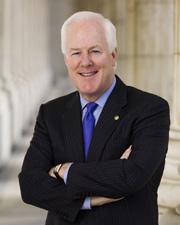 Sen. John Cornyn (R-TX)
Sen. John Cornyn (R-TX)Submitted August 1, 2025
Legislative Activity
Stay on top of the latest movement without scrolling through every action
Floor
Latest Action
Senate amendment submitted
August 1, 2025
Text
Submitted
SA 3561. Mr. CORNYN (for himself and Mrs. Shaheen) submitted an
amendment intended to be proposed by him to the bill S. 2296, to
authorize appropriations for fiscal year 2026 for military activities
of the Department of Defense, for military construction, and for
defense activities of the Department of Energy, to prescribe military
personnel strengths for such fiscal year, and for other purposes; which
was ordered to lie on the table; as follows:

At the end of title XII, add the following:

Subtitle F--Scam Compound Accountability and Mobilization Act

SEC. 1271. SHORT TITLE.

This subtitle may be cited as the ``Scam Compound
Accountability and Mobilization Act''.

SEC. 1272. SENSE OF CONGRESS.

It is the sense of Congress that--
(1) transnational cyber-enabled fraud, particularly
perpetrated from scam compounds in Southeast Asia, is a
growing threat to citizens of the United States, national
security, and economic interests globally, with the Federal
Bureau of Investigation reporting $13,700,000,000 in losses
in the United States due to cyber-enabled fraud in 2024,
including schemes commonly perpetrated by transnational
criminal organizations operating scam compounds;
(2) transnational criminal organizations responsible for a
large proportion of these scam compounds are affiliated with
the People's Republic of China (PRC), actively spread PRC
propaganda, promote unification with Taiwan, and have
brokered projects for the Belt and Road Initiative;
(3) transnational criminal organizations have lured
hundreds of thousands of human trafficking victims from over
40 countries to scam compounds, primarily in Burma, Cambodia,
and Laos, for purposes of forced criminality;
(4) transnational criminal organizations are expanding scam
compounds internationally including in Africa, the Middle
East, South Asia, and the Pacific Islands, and related money
laundering, human trafficking and recruitment fraud have
occurred in Europe, North America, and South America;
(5) the United States should redouble efforts to hold the
perpetrators and enablers of scam compound operations
accountable, including those involved in related money
laundering, human trafficking, and recruitment fraud, by
employing tools, such as targeted sanctions, visa
restrictions, and asset seizures;
(6) to effectively address cyber-enabled fraud originating
from scam compounds internationally, the United States
Government should work with partner governments, multilateral
institutions, civil society experts, and private sector
stakeholders to improve information sharing, strengthen
preventative measures, raise public awareness, and increase
coordination on law enforcement investigations and regulatory
actions; and
(7) survivors of human trafficking and forced criminality
require victim-centered support to ensure they are not
punished for offences that directly resulted from being
trafficked.

SEC. 1273. DEFINITIONS.

In this subtitle:
(1) Appropriate congressional committees.--The term
``appropriate congressional committees'' means--
(A) the Committee on Foreign Relations of the Senate;
(B) the Committee on Appropriations of the Senate;
(C) the Committee on Foreign Affairs of the House of
Representatives; and
(D) the Committee on Appropriations of the House of
Representatives.
(2) Cyber-enabled fraud.--The term ``cyber-enabled fraud''
means the use of the internet or other technology to commit
fraudulent activity, including the theft of money, data, or
identity or the creation of counterfeit goods or services.
(3) Enabling country.--The term ``enabling country'' means
a country where--
(A) government authorities actively or implicitly permit,
enable, or perpetuate scam compound operations; or
(B) ineffective law enforcement or a failure to enact
legislation intended to prevent facilitating services from
reaching scam compounds or transnational criminal
organizations enables scam compound operators to obtain
facilitating services.
(4) Forced criminality.--The term ``forced criminality''
means the coercion of an individual, including under threat
of physical violence, blackmail, prosecution, or other harm
directly against the individual or a person with whom such
individual has a personal relationship, to engage in criminal
activity, such as cyber-enabled fraud.
(5) Impacted country.--The term ``impacted country'' means
a country that is a significant--
(A) transit location for forced labor and human trafficking
to scam compounds;
(B) source of forced labor or victims of human trafficking
for scam compounds; or
(C) target of cyber-enabled fraud originating from scam
compounds internationally.
(6) Scam compound.--The term ``scam compound'' means a
physical installation where a transnational criminal
organization carries out cyber-enabled fraud operations,
frequently using victims of human trafficking and forced
criminality.
(7) Strategy.--The term ``Strategy'' means the strategy to
counter scam compounds and hold transnational criminal
organizations accountable required under section 1274.
(8) Transnational criminal organization.--The term
``transnational criminal organization'' means a group of
persons that--
(A) includes one or more foreign person;
(B) engages in or facilitates an ongoing pattern of serious
criminal activity involving the jurisdictions of at least two
foreign states or one foreign state and the United States;
and
(C) threatens the national security, foreign policy, or
economy of the United States.

SEC. 1274. STRATEGY TO COUNTER SCAM COMPOUNDS AND HOLD
TRANSNATIONAL CRIMINAL ORGANIZATIONS
ACCOUNTABLE.

(a) In General.--Not later than 180 days after the date of
enactment of this Act, the Secretary of State, in
consultation with other Federal departments and agencies as
designated by the President, shall submit to the appropriate
congressional committees a comprehensive strategy to counter
scam compounds and hold transnational criminal organizations
accountable.
(b) Contents.--The Strategy shall--
(1) articulate a comprehensive problem statement
identifying the structural vulnerabilities exploited by
transnational criminal organizations operating scam
compounds;

[[Page S5325]]

(2) develop a comprehensive list of enabling countries and
impacted countries;
(3) identify all active executive branch foreign assistance
programs and diplomatic efforts underway to address scam
compounds, transnational criminal organizations connected to
scam compounds, money laundering, and human trafficking and
forced criminality, including efforts with enabling countries
and impacted countries;
(4) identify foreign assistance resources needed to fully
implement the Strategy and any obstacles to the response of
the Federal Government to scam compounds, including
coordination with partner governments, to address the human
trafficking, forced criminality, and money laundering that
sustains scam compound operations;
(5) include objectives, activities, and performance
indicators regarding the response of the Federal government
to scam compounds, including--
(A) the prevention of recruitment fraud and human
trafficking, including by--
(i) engaging private sector entities operating internet
platforms or other services that can be abused or exploited
to perpetrate recruitment fraud, human trafficking or cyber-
enabled fraud;
(ii) raising awareness among at-risk populations to
identify common recruitment fraud strategies and improve due
diligence and self-protection measures; and
(iii) sharing information and building awareness among
foreign counterparts, including law enforcement and border
officials, to identify potential human trafficking victims;
(B) the support for survivors of human trafficking and
forced criminality under the direction of the Ambassador at
Large to Monitor and Combat Trafficking in Persons and the
Assistant Secretary of State for International Narcotics and
Law Enforcement;
(C) the enhancement of coordination and strengthening the
capabilities of partner governments and law enforcement
agencies;
(D) the use of sanctions, visa restrictions, and other
accountability measures against enabling countries,
transnational criminal organizations, and related third-party
facilitators of scam compound operations;
(E) the support of partner governments in countering
corruption and money laundering related to scam compound
operations; and
(F) the investigation of PRC connections to transnational
criminal organizations operating scam compounds.

SEC. 1275. ESTABLISHING A TASK FORCE TO IMPLEMENT THE
STRATEGY.

(a) In General.--Not later than 90 days after submitting
the Strategy pursuant to section 1274(a), the Secretary of
State, in consultation with other Federal departments and
agencies as designated by the President, shall establish an
interagency task force (referred to in this section as the
``Task Force'')--
(1) to coordinate the implementation of the Strategy;
(2) to conduct regular monitoring and analysis of scam
compound operations internationally;
(3) to track and evaluate progress toward the objectives,
activities, and performance indicators of the Strategy
described in section 1274(b)(5); and
(4) to update the Strategy, in consultation with the
appropriate congressional committees, as needed.
(b) Annual Reviews and Reports.--Not later than one year
after the establishment of the Task Force, and not less
frequently than annually thereafter, the Secretary of State,
in consultation with the heads of other Federal departments
and agencies as designated by the President, shall--
(1) conduct a status review of the Strategy and the overall
state of scam compounds operated by transnational criminal
organizations;
(2) include a list of enabling countries and impacted
countries; and
(3) submit the results of such review in a public report to
the appropriate congressional committees, which may contain a
classified annex.
(c) Task Force Termination.--The Task Force shall terminate
six years after the date of its establishment.

SEC. 1276. STRENGTHENING TOOLS TO DISMANTLE SCAM COMPOUNDS
AND HOLD TRANSNATIONAL CRIMINAL ORGANIZATIONS
ACCOUNTABLE.

(a) Authority to Sanction Significant Actors in Scam
Compound Operations.--
(1) In general.--The President may exercise the authorities
set forth in section 203 of the International Emergency
Economic Powers Act (50 U.S.C. 1702) without regard to
section 202 of that Act (50 U.S.C. 1701) in the case of any
of the following persons:
(A) Foreign persons that materially assist in, or provide
financial or technological support to, or provide goods or
services in support of, the activities of international scam
compounds or enabling services, including recruitment fraud,
human trafficking, forced criminality, cyber-enabled fraud,
or money-laundering.
(B) Foreign persons that are owned, controlled, or directed
by, or acting for or on behalf of, a significant scam
compound operation or enabling service, including recruitment
fraud, human trafficking, forced criminality, cyber-enabled
fraud, or money-laundering.
(2) Notification requirement of suspension or termination
of sanctions.--Not earlier than 15 days after notifying the
appropriate congressional committees of a determination that
any sanction authorized under paragraph (1) should be
suspended or terminated, and the basis for such
determination, the President may suspend or terminate such
sanction.
(3) Penalties.--The penalties set forth in section 206 of
the International Emergency Economic Powers Act (50 U.S.C.
1705) apply to a violation of any license, order, or
regulation issued under this section.
(b) Report to Congress on Identification and Sanctioning of
Significant Actors in International Scam Compound Operations
or Enabling Services.--
(1) In general.--Upon exercising any authority under
subsection (a)(1), the President shall submit to the
appropriate congressional committees a report that
identifies--
(A) the foreign persons that the President has determined
are appropriate for sanctions pursuant to this section and
the basis for such determination; and
(B) specific sanctions imposed pursuant to this section.
(2) Submission of classified information.--Reports
submitted under this section may include an annex with
classified information regarding the basis for the
determination made by the President under paragraph (1)(A) or
subsection (a)(2).
(c) Law Enforcement and Intelligence Activities Not
Affected.--Nothing in this section may be construed to
prohibit or otherwise limit the authorized law enforcement or
intelligence activities of the United States, or the law
enforcement activities of any State or subdivision thereof.
(d) Exception Relating to Importation of Goods.--
(1) In general.--A requirement to block and prohibit all
transactions in all property and interests in property
pursuant to subsection (a) shall not include the authority or
a requirement to impose sanctions on the importation of
goods.
(2) Good defined.--In this subsection, the term ``good''
means any article, natural or manmade substance, material,
supply, or manufactured product, including inspection and
test equipment, and excluding technical data.
______