S.Amdt. 3621Senate119th Congress (2025-2027)
S.Amdt. 3621
Sponsored by 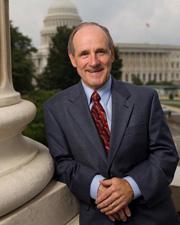 Sen. James E. Risch (R-ID)
Sen. James E. Risch (R-ID)Submitted August 1, 2025
Legislative Activity
Stay on top of the latest movement without scrolling through every action
Floor
Latest Action
Senate amendment submitted
August 1, 2025
Text
Submitted
SA 3621. Mr. RISCH submitted an amendment intended to be proposed by
him to the bill S. 2296, to authorize appropriations for fiscal year
2026 for military activities of the Department of Defense, for military
construction, and for defense activities of the Department of Energy,
to prescribe military personnel strengths for such fiscal year, and for
other purposes; which was ordered to lie on the table; as follows:

At the end of title XII, add the following:

Subtitle F--Artificial Intelligence Diplomacy

SEC. 1271. DEFINITIONS.

In this subtitle:
(1) Appropriate committees of congress.--The term
``appropriate committees of Congress'' means--
(A) the Committee on Foreign Relations, the Committee on
Commerce, Science, and Transportation, and the Committee on
Banking, Housing, and Urban Affairs of the Senate; and
(B) the Committee on Foreign Affairs, the Committee on
Science, Space, and Technology, and the Committee on Energy
and Commerce of the House of Representatives.
(2) Artificial intelligence system.--The term ``artificial
intelligence system'' means the set of components and tools
that collectively enable the development, deployment, and
operation of artificial intelligence, including--
(A) infrastructure;
(B) data used for training, validating, and testing
artificial intelligence models;
(C) data used for inference;
(D) artificial intelligence models;
(E) artificial intelligence development tools; and
(F) artificial intelligence applications.
(3) Covered foreign country.--The term ``covered foreign
country'' means--
(A) the People's Republic of China;
(B) the Russian Federation;
(C) the Islamic Republic of Iran;
(D) the Democratic People's Republic of Korea;
(E) the Republic of Cuba;
(F) the Bolivarian Republic of Venezuela under the regime
of Nicolas Maduro; and
(G) any other country determined by the President, the
Secretary of State, or the Secretary of Commerce to present a
risk of diversion, misuse, or transfer of sensitive
technologies as a result of the country's strategic
alignment, trade relationships, or technology cooperation
with any country specified in any of subparagraphs (A)
through (F).
(4) Dual-use.--The term ``dual-use'' has the meaning given
that term in section 1742 of the Export Control Reform Act of
2018 (50 U.S.C. 4801).

SEC. 1272. ENHANCEMENT OF TECHNOLOGY TRANSFER PROTECTIONS.

(a) Assessment of Technology Transfer Risks; Strategy
Development.--
(1) In general.--The Secretary of State shall coordinate
with the Secretary of Commerce, the Secretary of Energy, and
the heads of other relevant agencies--
(A) to assess--
(i) the effectiveness of existing technology transfer
protection measures, including initiatives to mitigate the
risks of technology transfer in--

(I) basic and applied research;
(II) higher education and academic partnerships;
(III) collaboration with respect to dual-use technology
with, and exports to, foreign entities; and
(IV) activities by covered foreign countries; and

(ii) the creation of and progress in implementing new
technology transfer protection measures; and
(B) to develop a plan, to be known as the ``Technology
Diplomacy Strategic Plan for an Artificial Intelligence
Global Alliance'', that aligns incentives and policy levers
across the Federal Government to induce key allies of the
United States to adopt artificial intelligence protection
systems and export controls across the artificial
intelligence supply chain.
(2) Report required.--Not later than 180 days after the
date of the enactment of this Act, the Secretary of State
shall submit to the appropriate committees of Congress a
report on the assessment required by subparagraph (A) of
paragraph (1) and the plan required by subparagraph (B) of
that paragraph.
(b) Expansion of Export Control Frameworks to Address
Technology Transfer Risks.--
(1) In general.--The Secretary of State shall, in
coordination with the heads of other relevant agencies,
conduct an assessment of the capacity of existing
multilateral and plurilateral export control frameworks to
address the risks of technology transfer, including--
(A) the Wassenaar Arrangement on Export Controls for
Conventional Arms and Dual-Use Goods and Technologies;
(B) the trilateral agreement between the United States, the
Netherlands, and Japan with respect to export controls on
advanced artificial intelligence and semiconductor
technology;
(C) the Missile Technology Control Regime;
(D) the Australia Group; and
(E) the Multilateral Action on Sensitive Technologies
(MAST) dialogues.
(2) Elements.--In conducting the assessment required by
paragraph (1), the Secretary shall--
(A) identify gaps in coverage of existing frameworks in
coordinating export controls for the purpose of limiting
artificial intelligence systems from flowing to covered
foreign countries;

[[Page S5388]]

(B) assess diplomatic initiatives and next steps to fill
gaps through new or expanded plurilateral export controls;
and
(C) analyze options for enforcement if nationals of
countries that are partners of the United States undermine
United States export control objectives.
(3) Report on assessment.--Not later than 180 days after
the date of the enactment of this Act, the Secretary of State
shall submit to the appropriate committees of Congress a
report on the assessment conducted under paragraph (1) that
includes recommendations with respect to the matters
described in subparagraphs (A), (B), and (C) of paragraph
(2).

SEC. 1273. PROMOTION OF EXPORTS OF UNITED STATES ARTIFICIAL
INTELLIGENCE.

(a) Report on Efforts to Promote Artificial Intelligence
Exports.--Not later than 180 days after the date of the
enactment of this Act, and every 180 days thereafter, the
Secretary of State shall submit to the appropriate committees
of Congress a report that includes the following:
(1) A list of countries or regions in which exports of
United States-origin artificial intelligence systems have
been promoted.
(2) A description of financing mechanisms for such exports.
(3) An assessment of challenges encountered in advancing
artificial intelligence export diplomacy and financing,
including an evaluation of--
(A) the effectiveness of diplomatic activities with foreign
governments to promote demand for United States-origin
artificial intelligence systems;
(B) coordination across United States embassies, including
economic officers and cyber and technology diplomats at such
embassies, to identify demand for such systems in partner
countries and facilitate high-level discussions with respect
to the export of such systems; and
(C) coordination within the Department of State and with
relevant interagency counterparts to facilitate artificial
intelligence export diplomacy.
(4) Recommendations for additional authorities or funding
needed to advance efforts to promote such exports.
(5) Promotion activities, where appropriate, with respect
to the inclusion of local technical assistance and deployment
readiness support as part of artificial intelligence export
packages, particularly in developing partner countries, to
ensure effective and secure integration of United States
technologies.
(6) Supporting partner countries in fostering pro-
innovation regulatory, data, and infrastructure environments
conducive to the deployment of United States-origin
artificial intelligence systems.
(7) An assessment of--
(A) how security controls and technology protection
measures, consistent with the security standards described in
subsection (b)(1), have been incorporated into transactions
for the export of United States-origin artificial
intelligence systems; and
(B) actions taken to monitor and evaluate exports of such
systems, including--
(i) risks assessments;
(ii) validating compliance with security protections;
(iii) procedures for suspension or review of exports if
national security risks are identified, such as chip
diversion or loss of control; and
(iv) verification of end-users and intended end-use cases
for artificial intelligence export packages, with particular
scrutiny for exports involving--

(I) surveillance;
(II) cyber threats to the United States and allies of the
United States;
(III) nefarious information operations; or
(IV) other sensitive applications that may be inconsistent
with the national security interests of the United States or
of countries that are partners of the United States.

(b) Report on Interagency Security Standards.--Not later
than 180 days after the date of the enactment of this Act,
the Secretary of State, in coordination with the Secretary of
Commerce, the Secretary of Defense, and the heads of other
relevant agencies, shall submit to the appropriate committees
of Congress a report that assesses the activities required to
achieve the following security standards for artificial
intelligence export packages:
(1) Export control harmonization with the governments of
countries that are allies of the United States and
restrictions on reexports to covered foreign countries.
(2) Coordination on outbound investment restrictions and
inbound investment screening with the governments of
countries importing United States-origin artificial
intelligence systems.
(3) Requirements that model weights and sensitive
components be hosted on cloud infrastructure controlled by
the United States or an ally of the United States and with
appropriate access controls.
(4) Prohibition on integration or interoperability with
military infrastructure linked to a covered foreign country.
(5) Know-Your-Customer protocols for computer
infrastructure recipients, including beneficial ownership
disclosure and personnel screening.
(6) Enforcement of access control, encryption, and
traceability of model development and use.
(7) Monitoring, logging, and auditability of administrative
and developer access to exported artificial intelligence
systems.
(8) Provisions allowing revocation of exports of artificial
intelligence systems for security violations, including
diversion of such systems.
(9) Transparency and compliance assurance measures across
the life cycle of exports of United States-origin artificial
intelligence systems.
(10) Any additional security objectives determined
appropriate by the Secretary of State.
(c) Congressional Oversight.--The Secretary of State shall
notify the appropriate committees of Congress of any proposed
transactions for the export of artificial intelligence
facilitated under this section that--
(1) exceeds $20,000,000 in value; or
(2) involves the export of dual-use artificial intelligence
systems with potential national security implications.
______