S.Amdt. 3629Senate119th Congress (2025-2027)
S.Amdt. 3629
Sponsored by 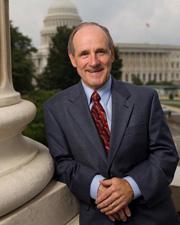 Sen. James E. Risch (R-ID)
Sen. James E. Risch (R-ID)Submitted August 1, 2025
Legislative Activity
Stay on top of the latest movement without scrolling through every action
Floor
Latest Action
Senate amendment submitted
August 1, 2025
Text
Submitted
SA 3629. Mr. RISCH submitted an amendment intended to be proposed by
him to the bill S. 2296, to authorize appropriations for fiscal year
2026 for military activities of the Department of Defense, for military
construction, and for defense activities of the Department of Energy,
to prescribe military personnel strengths for such fiscal year, and for
other purposes; which was ordered to lie on the table; as follows:

At the end of title XII, add the following:

Subtitle F--Real Reciprocity With Adversaries Act of 2025

SEC. 1271. SHORT TITLE.

This subtitle may be cited as the ``Real Reciprocity with
Adversaries Act of 2025''.

SEC. 1272. DEFINITIONS.

In this subtitle:
(1) Appropriate congressional committees.--The term
``appropriate congressional committees'' means--
(A) the Committee on Foreign Relations of the Senate; and
(B) the Committee on Foreign Affairs of the House of
Representatives.
(2) Country of concern.--The term ``country of concern''
means--
(A) the People's Republic of China;
(B) the Russian Federation;
(C) the Islamic Republic of Iran;
(D) the Democratic People's Republic of Korea;
(E) the Republic of Cuba; and
(F) the Maduro Regime of the Bolivarian Republic of
Venezuela.
(3) Foreign malign influence.--The term ``foreign malign
influence'' means any hostile effort undertaken by, at the
direction of, or on behalf of or with the substantial support
of, the government of a country of concern with the objective
of influencing, through overt or covert means--
(A) the political, military, economic, or other policies or
activities of the United States Government or State or local
governments, including any election within the United States;
(B) the public opinion within the United States; or
(C) free speech, academic freedom, political and civil
rights, the integrity of non-governmental institutions, or
discourse or any activity related to authoritarianism or the
policies and practices of countries of concern.

PART I--ADVERSARY ABUSE OF UNITED STATES DIPLOMATS

SEC. 1275. STATEMENT OF POLICY ON ADVERSARY ABUSE OF UNITED
STATES.

(a) Statement of Policy.--It is the policy of the United
States--
(1) to safeguard the privileges and immunities of the
United States with respect to United States diplomats;
(2) to take special care to safeguard these privileges and
immunities in adversarial nations, including the Russian
Federation and the People's Republic of China;
(3) to prevent the exploitation of diplomatic facilities
for intelligence collection and malign influence;
(4) to ensure United States diplomats and all other
personnel under Chief of Mission authority are made aware of
any waivers of diplomatic privileges and immunities,
including subsequent changes to the waivers, in a timely
fashion, especially for those posted to adversarial nations;
(5) to prevent adversarial nations from collecting the
biogenetic data of United States Government personnel;
(6) to resist efforts by adversarial nations to use public
health, overly broad concepts of national security, and other
pretexts to violate the privileges and immunities of the
United States;
(7) to collect detailed information on any foreign
government violation of privileges and immunities, abuse or
harassment of United States diplomats, and encourage those
who experience such violations, abuse, or harassment to come
forward;
(8) to impose costs on United States adversaries that
violate diplomatic privileges and immunities or engage in any
other form of harassment of United States diplomatic
personnel; and
(9) to ensure that what happened to United States diplomats
and their families in China during the COVID-19 pandemic is
never repeated.

SEC. 1276. REPORT ON VIOLATIONS OF AMERICAN DIPLOMATIC CORPS
PRIVILEGES AND IMMUNITIES.

Not later than 180 days after the date of the enactment of
this Act, and annually thereafter for five years, the
Secretary of State shall submit a report to the appropriate
congressional committees that includes--
(1) a detailed description of each case in which United
States diplomats had privileges and immunities (as set forth
in the Vienna Convention on Diplomatic Relations, done at
Vienna April 18, 1961, and other applicable international
agreements) violated while serving in the People's Republic
of China and the Russian Federation since 2020 in the first
report, and during the period since the last report for all
subsequent reports; and
(2) a fulsome and detailed review of efforts undertaken by
the Department of State to mitigate or otherwise respond to
such violations of the United States privileges and
immunities as enjoyed by its diplomats.

SEC. 1277. CHINA'S ABUSE OF THE DIPLOMATIC POUCH.

(a) Findings.--Congress makes the following findings:
(1) The Vienna Convention on Diplomatic Relations, done at
Vienna April 18, 1961 (referred to in this subtitle as the
``Vienna Convention''), governs the conduct of diplomatic
relations between countries, including the provisioning of
countries' foreign missions. Article 27 of the Vienna
Convention states that the ``diplomatic bag shall not be
opened or detained.'' Article 25 of the Vienna Convention
states clearly that ``[t]he receiving State shall accord full
facilities for the performance of the functions of the
mission''.
(2) The People's Republic of China is in violation of
Articles 25 and 27 of the Vienna Convention due to the undue
restrictions it places on the United States use of its
diplomatic pouch, which is essential to the function of the
United States Mission in China.
(3) The Government of the PRC's restrictions on the United
States diplomatic pouch are one of many ways it undermines
United States interests, harasses and mistreats United States
diplomats in China, imposes its view of the world on others,
and violates international law.
(4) Despite this treatment, the United States has
nevertheless upheld its obligations under the Vienna
Convention.
(b) Sense of Congress on the Diplomatic Pouch.--It is the
sense of Congress that--
(1) China's restrictions on the United States Government's
use of the diplomatic pouch are severe and represent a threat
to United States national security;
(2) the United States Government must prioritize the issue
of the diplomatic pouch and raise this issue consistently and
at the high levels with Chinese leadership; and
(3) the United States must impose costs on China in
response to flagrant violations of diplomatic law and
reciprocity.
(c) Statement of Policy With Respect to Flights Between the
United States and China.--It is the policy of the United
States--
(1) not to conclude any further agreements that increase
commercial flights from the People's Republic of China or
utilization of PRC airline carriers into the United States
until the United States regains its right of unfettered use
of its diplomatic pouch; and
(2) to consider decreasing the number of commercial flights
from the People's Republic of China or decreasing utilization
of PRC airline carriers into the United States to put
pressure on China to restore the United States' right to the
unfettered use of its diplomatic pouch.
(d) Amendment to Diplomatic Clearance Requirements.--Not
later than 120 days after the date of the enactment of this
Act, the Secretary of State shall update existing regulations
with respect to diplomatic clearance for state aviation and
foreign government ships of the People's Republic of China.
(e) Elements.--The regulations described in subsection (d)
shall include the following:
(1) A designation of any aircraft, ship, or vessel, whether
cargo or passenger, that is owned by a state-owned enterprise
of the People's Republic of China, to be designated as a
state aircraft or foreign government ship.
(2) A requirement that each such aircraft, ship, or vessel
certify that in entering the United States, it is not
carrying out any government purpose or task, including
conveyance of goods via a diplomatic pouch.
(3) At least two penalties, including a significant
financial penalty, for noncompliance.

PART II--ADVERSARY COUNTERINTELLIGENCE RISKS

SEC. 1281. BAN ON FRATERNIZATION AT CRITICAL-THREAT POSTS.

Not later than 90 days after the date of the enactment of
this Act, the Secretary of State shall promulgate guidance
that prohibits any United States Government employee under
Chief of Mission authority assigned to or on temporary duty
at a Critical Human Intelligence Threat post identified in
the Department of State's Security Environment Threat List
(SETL) from engaging in a

[[Page S5393]]

romantic or sexual relationship with any citizen of that
country.

SEC. 1282. COUNTERINTELLIGENCE INVESTIGATIONS OF SPECIAL
IMMIGRANT VISA APPLICANTS AT CRITICAL HUMAN
INTELLIGENCE THREAT POSTS.

(a) In General.--The Secretary shall require all principal
officers assigned to a Critical Human Intelligence Threat
post, before recommending any current or former locally
employed staff of the United States Government abroad for
special immigrant status, to ensure that such individuals
have been subject to an in-depth counterintelligence
investigation conducted by the Regional Security Office (RSO)
assigned to such post and the Department's Office of
Counterintelligence (DS/DO/CI).
(b) Effect of Derogatory Counterintelligence Information.--
If an investigation conducted pursuant to subsection (a)
reveals derogatory counterintelligence information about an
employee--
(1) a principal officer described in subsection (a) shall
not recommend that such employee receive special immigrant
status; and
(2) if applicable, the employee's security certification at
such post shall be adjudicated by the RSO not later than 30
days after the conclusion of such investigation.
(c) Report.--Not later than 1 year after the date of the
enactment of this Act, the Secretary of State shall submit to
the appropriate congressional committees a report on the
implementation of this section that includes--
(1) a list of all steps taken to date;
(2) a description of the in-depth counterintelligence
investigation process established pursuant to subsection (a)
for current or former locally employed staff recommended for
special immigrant status;
(3) the number of investigations that have been undertaken
and the results of those investigations; and
(4) a description of planned additional steps required to
implement this section.

SEC. 1283. REPORT ON VETTING OF FOREIGN SERVICE INSTITUTE
INSTRUCTORS.

(a) Report.--Not later than 120 days after the date of
enactment of this Act, the Secretary of State shall submit to
the appropriate congressional committees a report on the
execution of requirements under section 6116 of the
Department of State Authorization Act of Fiscal Year 2023 (22
U.S.C. 4030) that includes--
(1) a description of all steps taken to date to carry out
that section;
(2) a detailed explanation of the suitability or fitness
reviews, background investigations, and periodic background
checks or reinvestigations of relevant Foreign Service
Institute instructors who provide language instructions; and
(3) a description of planned additional steps required to
execute such section.

SEC. 1284. RESTRICTION ON ISSUANCE OF VISAS TO PROTECT
NATIONAL SECURITY.

(a) Restrictions for Members of the People's Liberation
Army and Visa Applicants From Prc Universities.--The
Secretary of State may not issue a visa to, and the Secretary
of Homeland Security shall deny entry to, the United States
of--
(1) all members of the People's Liberation Army of China,
with the exception of the A1-A visa classifications; and
(2) applicants from PRC universities that have a memorandum
of understanding (referred to in this paragraph as ``MOU'')
or other research or academic exchange agreement with a
United States institution of higher education, and are
seeking to study or work in the United States pursuant to
such an agreement, unless--
(A) the United States university has submitted such MOU or
similar agreement for a security review by the Secretary of
State, who shall consult with other relevant Federal agencies
as appropriate; and
(B) the Secretary of State, in consultation with other
relevant Federal agencies, has determined that such MOU or
similar agreement--
(i) has sufficient safeguards against illicit knowledge and
technology transfer to the PRC; and
(ii) does not facilitate foreign malign influence.
(b) Waiver.--The Secretary of State may waive the
restrictions in subsection (a) if the Secretary determines
and certifies to Congress within five days of such
determination, including a justification, that such a waiver
is in the national security interest of the United States.
(c) Exception.--Restrictions shall not apply with respect
to the admission of an alien to the United States if such
admission is necessary to comply with the obligations of the
United States under the Agreement regarding the Headquarters
of the United Nations, signed at Lake Success on June 26,
1947, and entered into force on November 21, 1947, between
the United Nations and the United States, or the Convention
on Consular Relations, done at Vienna on April 24, 1963, and
entered into force on March 19, 1967, or other international
obligations of the United States.

SEC. 1285. REVIEW OF THREAT ENVIRONMENT FOR LOCALLY EMPLOYED
STAFF AT CRITICAL HUMINT THREAT POSTS.

(a) Not later than 120 days after the date of enactment of
this Act, the Secretary of State shall submit to the
appropriate congressional committees a classified report on
the efforts of host nation intelligence and security-services
to co-opt locally employed staff at Critical HUMINT threat
posts identified in the Security Environment Threat List,
including--
(1) the numbers of locally employed staff at such posts;
(2) vacancies or unfilled local staff positions at such
posts;
(3) an assessment conducted by the RSO assigned to such
post and DS/DO/CI of the degree to which host nation
intelligence and security services target local staff at such
posts are the degree to which local staff are compromised,
co-opted, or influenced by host nation intelligence and
security services and the impact on posts' ability to execute
core functions;
(4) an assessment of which responsibilities performed by
local nationals in such posts could be performed by direct-
hire or contract personnel who are United States nationals,
as well as the cost of transferring those functions to United
States nationals; and
(5) a timeline for transferring the responsibilities and
job functions identified in paragraph (4) to direct-hire or
contract personnel who are United States nationals.

SEC. 1286. REVIEW OF TOUR LENGTHS FOR FOREIGN SERVICE
OFFICERS AT CRITICAL HUMINT THREAT POSTS.

Not later than 120 days after the date of enactment of this
Act, the Secretary of State shall submit to the appropriate
congressional committees a report evaluating the length of
foreign service postings at Critical HUMINT threat posts
identified in the Security Environment Threat List
including--
(1) an assessment of the counterintelligence or safety
risks of current tour of duty lengths;
(2) a determination of whether changes at specific posts
are necessary to mitigate counterintelligence of safety risks
identified in paragraph (1); and
(3) a description of the changes the Department is making
in line with the determination in paragraph (2) and the
timeline for implementation.

SEC. 1287. DIPLOMATIC ACCREDITATION FOR DIPLOMATS OF THE
RUSSIAN FEDERATION MISSION TO THE UNITED
STATES.

(a) In General.--The Secretary of State shall not issue any
accreditation for diplomats of the Russian Federation mission
to the United States for a period exceeding three years or
the length of time United States diplomats receive
accreditation from the government of the Russian Federation.
(b) Waiver.--The Secretary of State, in coordination with
the Director of the Federal Bureau of Investigation, may
waive the limitation in subsection (a) if the Secretary
determines it is in the vital national security interests of
the United States and submits to the appropriate
congressional committees--
(1) a justification for the determination;
(2) the number of diplomatic visas/accreditation extensions
being issued pursuant to the waiver; and
(3) a plan and implementation timeline to return to parity.

PART III--ADVERSARY COERCION AND IMPRISONMENT OF AMERICAN CITIZENS

SEC. 1291. RESTRICTION ON ISSUANCE OF VISAS BECAUSE OF
CHINA'S EXIT BANS.

(a) Findings.--Congress makes the following findings:
(1) The Government of the People's Republic of China has
increasingly expanded its legal landscape for exit bans,
which prevent both Chinese citizens and foreign nationals
from leaving the country.
(2) Chinese officials enforce exit bans by confiscating
passports, denying passport applications or renewals, or
simply preventing people from leaving the country.
(3) The legal framework governing exit bans in the People's
Republic of China is vague and opaque, allowing government
officials to abuse the system.
(4) There is no process to challenge an exit ban in court
or appeal the decision within the Chinese judicial system.
(5) Exit bans have been used to target members of ethnic
minorities, citizens of Taiwan, defenders of internationally
recognized human rights, persons involved in civil disputes,
officials, relatives of persons of interest to the Chinese
Communist Party, and foreign nationals.
(6) As of November 2024, the United States Department of
State's travel advisory for mainland China warned Americans
to ``exercise increased caution'' due to ``arbitrary
enforcement of local laws, including in relation to exit
bans''.
(b) Sense of Congress on Exit Bans.--It is the sense of
Congress that--
(1) The Government of the People's Republic of China abuses
its opaque legal framework governing exit bans to arbitrarily
detain people, and some of those who are forbidden from
leaving the country have no legal recourse;
(2) The use of use of exit bans by the Government of the
People's Republic of China, including with regard to foreign
nationals, has grown in recent years;
(3) the arbitrary application of exit bans to United States
citizens is a threat to United States national security; and
(4) the United States Government should hold officials of
the People's Republic of China accountable for China's
arbitrary exit bans on United States citizens.
(c) Restrictions for Spouses and Children of Senior Prc
Officials.--
(1) In general.--With the exception of the A1-A2, G1-G4, C-
2, and C-3 visa classifications as well as any travel covered
under the United Nations Headquarters Agreement, the
Secretary of State may not issue a visa and

[[Page S5394]]

the Secretary of Homeland Security shall deny entry to the
United States of the spouses and children of any senior
official of the Chinese Communist Party, including all
members of the Politburo, the Central Committee, delegates to
the National Congress of the Chinese Communist Party, members
or staff of the National People's Congress, and anyone with
the rank of Deputy Party Secretary or above.
(2) Waiver.--The Secretary of State may waive the
restrictions in paragraph (1) if the Secretary determines and
certifies to Congress within five days of such determination,
including a justification, that such a waiver is in the
national security interest of the United States.
(3) Exception.--The restrictions under paragraph (1) shall
not apply with respect to the admission of an alien to the
United States if such admission is necessary to comply with
the obligations of the United States under the Agreement
regarding the Headquarters of the United Nations, signed at
Lake Success on June 26, 1947, and entered into force on
November 21, 1947, between the United Nations and the United
States, or the Convention on Consular Relations, done at
Vienna on April 24, 1963, and entered into force on March 19,
1967, or other international obligations of the United
States.
(d) Applicability and Certification.--The restrictions in
subsection (c) shall not apply during any fiscal year in
which the Secretary of State certifies to the Committee on
Foreign Relations of the Senate and the Committee on Foreign
Affairs of the House of Representatives that the People's
Republic of China has lifted all known exit bans on United
States citizens.
(e) Further Notification.--If the Secretary of State,
subsequent to certifying that the People's Republic of China
has lifted all known exit bans on United States citizens,
learns in the same fiscal year of any additional exit bans on
United States citizens, the Secretary of State shall notify
the Committee on Foreign Relations of the Senate and the
Committee on Foreign Affairs of the House of Representatives
of such fact and the restrictions in subsection (c) shall be
reimposed 10 days after such notification.
(f) Data on Exit Bans Against United States Nationals.--The
Secretary of State shall collect and analyze available
information on the application of exit bans by the PRC,
including trends with respect to the application of such exit
bans to United States nationals. Such data shall be--
(1) used to update travel warnings and disseminated to
relevant State and local authorities, as appropriate, with a
special emphasis on domestic jurisdictions with large numbers
of at-risk populations;
(2) shared, as appropriate, with allies and partner nations
to raise awareness about potential risks and vulnerabilities
their citizens may face in traveling to the PRC;
(3) used to inform United States actions to hold the PRC
accountable for its exit ban policy; and
(4) submitted to the appropriate congressional committees.
(g) Exit Ban Defined.--In this section, the term ``exit
ban'' means a restriction imposed by the Government of the
PRC that prevents foreign nationals, including United States
nationals, from leaving the PRC without a fair and
transparent legal cause or recourse for the impacted party.

PART IV--ADVERSARY ABUSE OF AMERICA'S OPEN SOCIETY

SEC. 1295. APPLICATION OF TRAVEL RESTRICTIONS ON UNITED
STATES ADVERSARIES.

Section 502 of the Intelligence Authorization Act for
Fiscal Year 2017 (division N of Public Law 115-31; 22 U.S.C.
254a note) is amended--
(1) in subsection (b), by inserting ``and the People's
Republic of China'' after ``accredited diplomatic and
consular personnel of the Russian Federation'' and by
striking ``Russian personnel'' and inserting ``such
personnel'';
(2) in subsection (c)(1), by inserting ``and the People's
Republic of China'' after ``accredited diplomatic and
consular personnel of the Russian Federation''; and
(3) in subsection (d)(2), by inserting ``and the People's
Republic of China'' after ``accredited diplomatic and
consular personnel of the Russian Federation''.

SEC. 1296. ANNUAL REVIEW OF TRAVEL RESTRICTIONS ON ACCREDITED
DIPLOMATS AND CONSULAR OFFICIALS OF THE
PEOPLE'S REPUBLIC OF CHINA AND THE RUSSIAN
FEDERATION.

(a) In General.--Not later than 1 year after the date of
the enactment of this Act, and annually thereafter, the
Secretary of State, in coordination with the Director of the
Federal Bureau of Investigations, shall submit to the
appropriate committees of Congress a review of the travel
restriction policies for accredited diplomats and consular
officials of the People's Republic of China and the Russian
Federation in the United States, including--
(1) the number of known or suspected violations of such
requirements by any accredited diplomatic or consular
personnel of the Russian Federation and the People's Republic
of China;
(2) an assessment of whether policies governing travel and
notification requirements for accredited United States
diplomats in the People's Republic of China and the Russian
Federation are reciprocal to the travel restriction policies
governing their diplomats in the United States; and
(3) an assessment of whether United States policies on
travel restrictions for Chinese and Russian diplomats are
sufficient to mitigate Chinese and Russian
counterintelligence and malign influence activities in the
United States.
(b) Appropriate Committees of Congress Defined.--In this
section, the term ``appropriate committees of Congress''
means--
(1) the Committee on Foreign Relations and the Select
Committee on Intelligence of the Senate; and
(2) the Committee on Foreign Affairs and the Permanent
Select Committee on Intelligence of the House of
Representatives.

SEC. 1297. ANNUAL REPORT ON THE PRC'S DIPLOMATIC MISSION
ENGAGEMENTS.

(a) Report.--Not later than 180 days after the date of the
enactment of this Act, and annually thereafter for 10 years,
the Secretary of State shall submit to the appropriate
congressional committees a report that details all official
meetings, conferences, events, activities, or travel within
the United States organized or participated in by PRC
diplomatic missions in the United States that were approved
by or notified to the Office of Foreign Missions.
(b) Elements.--The report required under subsection (a)
shall include--
(1) the date and location of the engagement;
(2) the purpose and nature of the engagement, including any
official meetings, conferences, events, activities, or
deliverables organized or participated in by the PRC
diplomatic missions;
(3) the format of the engagement, including in-person, on-
site, virtually, or any other format that was approved by or
notified to the Office of Foreign Missions;
(4) the identities and official positions of all
individuals involved in the engagement, including members of
the PRC diplomatic missions and host organizations;
(5) a summary of the Department of State's evaluation of
the potential impact of the engagement on United States
national security, foreign policy, and economic interests;
(6) any actions or measures taken by the Department of
State to address concerns or mitigate risks related to the
engagement; and
(7) any other relevant information the Secretary determines
appropriate.
(c) Form.--The report required under subsection (a) may be
submitted in classified or unclassified form, but shall
include an unclassified section released publicly that
includes a summary of the information in paragraphs (2), (5),
(6), (7), (8), and (9) of subsection (b).
(d) Report Savings Clause.--The Secretary of State may
submit the report required in subsection (a) as part of the
review required by section 1296.

SEC. 1298. RESTRICTION ON UNITED STATES PARTICIPATION IN
EVENTS AND ACTIVITIES LINKED TO PRC MALIGN
INFLUENCE.

(a) Definitions.--In this section:
(1) Officials.--The term ``official'' means an individual
who is employed directly or through a contractual arrangement
by the Department of State.
(2) Subordinate or affiliate organization.--The term
``subordinate or affiliate organization'' means a person or
entity--
(A) that is determined by any agency within the
intelligence community to be linked to the United Front Work
Department of the Central Committee of the Chinese Communist
Party or its activities;
(B) the activities or funding of which is associated with
the United Front Work Department or the Chinese People's
Political Consultative Conference; or
(C) that has at least one senior executive or board member
with demonstrable ties to the United Front Work Department or
the Chinese People's Political Consultative Conference.
(b) Restriction.--No Senate-confirmed officials may
participate in any conference, forum, or other event
organized or funded by--
(1) any organ of the United Front Work Department of the
Central Committee of the Chinese Communist Party;
(2) any organ of the Liaison Department of the Political
Work Department of the Central Military Commission;
(3) any organ of the International Department of the
Central Committee of the Chinese Communist Party;
(4) the Chinese People's Political Consultative Conference
or any organ thereof; or
(5) any subordinate or affiliate organization of paragraphs
(1), (2), or (3).
(c) Participation.--The Secretary of State may dispatch
officials that are not Senate-confirmed to attend a
conference, forum, or other event described in subsection (b)
for the purposes of--
(1) observation; or
(2) engagement with United States persons in attendance.

SEC. 1299. ADDITIONAL REPORTING REQUIREMENTS.

Section 204B of the State Department Basic Authorities Act
of 1956 (22 U.S.C. 4304b) is amended--
(1) in subsection (a)--
(A) in paragraph (1), by striking ``the Congress'' and
inserting ``the Select Committee on Intelligence of the
Senate, the Committee on Foreign Relations of the Senate, the
Permanent Select Committee on Intelligence of the House of
Representatives, and the Committee on Foreign Affairs of the
House of Representatives'';
(B) in paragraph (2)--

[[Page S5395]]

(i) in subparagraph (F), by striking ``subsection (c)'' and
inserting ``subsection (d)''; and
(ii) by adding at the end the following new subparagraphs:
``(G) The number and names of foreign diplomats with
expired diplomatic visas who continue to receive diplomatic
accreditation.
``(H) The foreign country represented by each diplomat
referred to in subparagraph (G).'';
(C) by redesignating paragraph (3) as paragraph (4); and
(D) by inserting after paragraph (2) the following new
paragraph:
``(3) Form.--The report required under paragraph (1) shall
be submitted in unclassified form, except that the
information described in subparagraphs (G) and (H) of
paragraph (2) may be included in a classified annex.'';
(2) by redesignating subsections (b) and (c) as subsections
(c) and (d), respectively; and
(3) by inserting after subsection (a) the following new
subsection:
``(b) Certification.--
``(1) In general.--Subject to paragraphs (2) and (3), the
Secretary of State, in coordination with the Director of
National Intelligence, shall certify to the Select Committee
on Intelligence of the Senate, the Committee on Foreign
Relations of the Senate, the Permanent Select Committee on
Intelligence of the House of Representatives, and the
Committee on Foreign Affairs of the House of Representatives,
in each annual report required under subsection (a), that the
foreign diplomats identified under subsection (a)(2)(G) are
not engaging in intelligence activities in the United States
that are harmful to the national security of the United
States.
``(2) Inability to certify.--If the Secretary of State is
unable to make the certification described in paragraph (1),
the Secretary shall submit a report to the congressional
committees listed under such paragraph that describes why
such certification was not made.
``(3) Continued diplomatic accreditation in national
security interest.--If the Secretary of State determines that
the continued diplomatic accreditation of a foreign diplomat
identified under subsection (a)(2)(G) is in the national
security interests of the United States and the Secretary is
unable to submit the certification required under paragraph
(1), the Secretary shall submit a report to the congressional
committees listed under such paragraph that describes the
reasons for such determination.''.
______