S.Amdt. 3641Senate119th Congress (2025-2027)
S.Amdt. 3641
Sponsored by 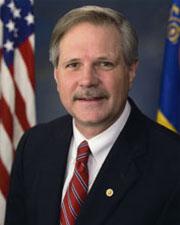 Sen. John Hoeven (R-ND)
Sen. John Hoeven (R-ND)Submitted August 1, 2025
Legislative Activity
Stay on top of the latest movement without scrolling through every action
Floor
Latest Action
Senate amendment submitted
August 1, 2025
Text
Submitted
SA 3641. Mr. HOEVEN (for himself and Mrs. Shaheen) submitted an
amendment intended to be proposed by him to the bill S. 2296, to
authorize appropriations for fiscal year 2026 for military activities
of the Department of Defense, for military construction, and for
defense activities of the Department of Energy, to prescribe military
personnel strengths for such fiscal year, and for other purposes; which
was ordered to lie on the table; as follows:

At the end of subtitle F of title X, add the following:

SEC. ____. AIR TRAFFIC CONTROL TRAINING IMPROVEMENTS.

(a) Definitions.--In this section:
(1) Administrator.--The term ``Administrator'' means the
Administrator of the Federal Aviation Administration.
(2) FAA.--The term ``FAA'' means the Federal Aviation
Administration.
(b) Collegiate Training Initiative Program Improvements.--
(1) In general.--Section 44506(c) of title 49, United
States Code, is amended to read as follows:
``(c) Air Traffic-Collegiate Training Initiative and
Enhanced Air Traffic-Collegiate Training Initiative.--
``(1) In general.--The Administrator of the Federal
Aviation Administration shall maintain the Air Traffic-
Collegiate Training Initiative program and the Enhanced Air
Traffic-Collegiate Training Initiative program by making new
agreements and continuing existing agreements with
institutions of higher education (as defined by the
Administrator) under which the institutions prepare students
for the position of air traffic controller with the
Department of Transportation (as defined in section 2109 of
title 5). The Administrator may establish standards for the
entry of institutions into the program and for their
continued participation.
``(2) Appointment of program graduates.--The Administrator
of the Federal Aviation Administration may appoint an
individual who has successfully completed a course of
training in a program described in paragraph (1) to the
position of air traffic controller noncompetitively in the
excepted service (as defined in section 2103 of title 5).
``(3) Enhanced air traffic-collegiate training initiative
grant program.--
``(A) Establishment.--The Administrator of the Federal
Aviation Administration shall establish and carry out a grant
program to award grants to institutions of higher education
(as defined by the Administrator) that have been approved to,
or are seeking to (as determined appropriate by the
Administrator), participate in the Enhanced Air

[[Page S5402]]

Traffic-Collegiate Training Initiative program described in
paragraph (1).
``(B) Grants.--
``(i) Use of funds.--An institution of higher education
shall use a grant awarded under this paragraph for the
following purposes:

``(I) To implement curriculum for the Enhanced Air Traffic-
Collegiate Training Initiative program described in paragraph
(1).
``(II) To provide faculty, simulators, and other necessary
classroom supplies to the Enhanced Air Traffic-Collegiate
Training Initiative program.
``(III) For any other purpose determined appropriate by the
Administrator of the Federal Aviation Administration,
including providing medical certificates and FAA-required
tests.

``(ii) Eligibility.--To be eligible to receive a grant
under this paragraph, an institution of higher education
shall submit an application to the Administrator of the
Federal Aviation Administration at such time, in such form,
and containing such information as the Administrator may
require.
``(iii) Funding.--

``(I) In general.--There is authorized to be appropriated
$20,000,000 for each of fiscal years 2026 through 2031 to
carry out this paragraph.
``(II) Federal share of costs.--The Federal share of costs
for a grant under this paragraph shall be 90 percent.''.

(2) Enhanced air traffic-collegiate training initiative
program faculty annuity supplement.--Section 8421a(c) of
title 5, United States Code, is amended--
(A) in paragraph (1), by striking ``; or'' and inserting a
semicolon;
(B) in paragraph (2), by striking the period at the end and
inserting ``; or''; and
(C) by adding at the end the following new paragraph:
``(3) air traffic control instructor, or supervisor
thereof, at an institution of higher education participating
in the Enhanced Air Traffic-Collegiate Training Initiative
program described in section 44506(c) of title 49.''.
(3) FAA academy and collegiate training initiative program
curriculum aviation rulemaking committee.--
(A) In general.--The Administrator shall convene an
aviation rulemaking committee to--
(i) review the curricula of the air traffic technical
training academy of the FAA, the Air Traffic-Collegiate
Training Initiative program, and the Enhanced Air Traffic-
Collegiate Training Initiative program;
(ii) develop findings and recommendations regarding the
improvement and modernization of such curricula; and
(iii) provide to the Administrator a report on such
findings and recommendations and for other related purposes
as determined by the Administrator.
(B) Composition.--The aviation rulemaking committee
established under subparagraph (A) shall consist of members
appointed by the Administrator, including representatives
of--
(i) institutions of higher education that are accredited by
the Aviation Accreditation Board International;
(ii) aviation industry organizations;
(iii) FAA subject matter experts;
(iv) military and commercial operators of aircraft,
helicopters, and powered-lift aircraft;
(v) the exclusive bargaining representative of the air
traffic controllers certified under section 7111 of title 5,
United States Code; and
(vi) aviation safety experts and other experts determined
appropriate by the Administrator.
(C) Considerations.--The aviation rulemaking committee
established under subparagraph (A) shall consider the
following:
(i) The advancements in education technology, including
digital resources and augmented reality or virtual reality
capabilities, that may be incorporated into a modern
curriculum.
(ii) The appropriate balance between the use of theoretical
knowledge and practical application.
(iii) A review of instructional techniques to improve the
effectiveness of learning outcomes.
(iv) The real-world applicability of air traffic operations
procedures included in the curriculum.
(v) Student success rates, including outcomes of air
traffic controller trainees when placed at facilities for on-
the-job training.
(vi) Methods for reducing the subjectivity of instructional
techniques.
(vii) Student success rates correlated to the Air Traffic-
Collegiate Training Initiative program and the Enhanced Air
Traffic-Collegiate Training Initiative program described in
section 44506(c) of title 49, United States Code.
(viii) The appropriate method for ensuring the curriculum
incorporates new entrants into the nationals airspace system.
(ix) Other considerations as determined appropriate by the
Administrator.
(D) Duties.--The Administrator shall--
(i) not later than 1 year after the date of enactment of
this section, submit to Congress a copy of the aviation
rulemaking committee report provided to the Administrator
under subparagraph (A)(iii); and
(ii) not later than 180 days after the date of submission
of the report under clause (i), in consultation with other
agencies as determined appropriate by the Administrator--

(I) initiate a rulemaking activity or make such policy and
guidance updates necessary to address any consensus
recommendations reached by the aviation rulemaking committee;
or
(II) submit to Congress a supplemental report with an
explanation for each such consensus recommendation not
adopted by the Administrator through an action under
subclause (I).

(E) Prohibition on compensation.--The members of the
aviation rulemaking committee convened under this paragraph
shall not receive pay, allowances, or benefits from the
Federal Government by reason of their service on such
committee. This paragraph shall not be construed to affect
the pay, allowances, or benefits of any Federal employee who
serves as a member of the aviation rulemaking committee as
part of their official duties,
(c) Other Improvements.--
(1) Air traffic controller mental health improvements.--
(A) In general.--Not later than 180 days after the date of
enactment of this subsection, the Administrator shall
establish, in consultation with aviation industry
stakeholders and aviation medical professionals, a training
course to--
(i) support the development of mental health providers with
an innate knowledge and understanding of the FAA criteria and
decision making regarding mental health conditions for air
traffic controllers; and
(ii) develop advanced training programs for Aviation
Medical Examiners with respect to mental health.
(B) Considerations.--In establishing the training course
under subparagraph (A), the Administrator shall consider--
(i) the feasibility of virtual and in-person course
offerings; and
(ii) the need for an advisory board to ensure continuous
improvement of the training course.
(2) Report on the airport non-cooperative surveillance
radar program.--Not later than 180 days after the date of
enactment of this subsection, the Administrator shall submit
to the Committees on Commerce, Science, and Transportation
and Appropriations of the Senate and the Committees on
Transportation and Infrastructure and Appropriations of the
House of Representatives a report on the status of the
Airport Non-cooperative Surveillance Radar (in this paragraph
referred to as ``ANSR'') program, including--
(A) a determination of funding needs for the ANSR program;
(B) a cost-benefit analysis of the most effective solutions
to provide ongoing ANSR services, including a comparison of a
sustainment approach versus a replacement approach;
(C) an analysis of how the FAA intends to provide
commercial service airports with the necessary equipment,
including radar, to detect any threat posed by non-
cooperative flying objects, including aircraft, unmanned
aircraft systems, balloons, and other objects determined
appropriate by the Administrator;
(D) an update on the Radar Divestiture Program;
(E) the projected lifecycle support needs of the existing
inventory of non-cooperative Airport Surveillance Radar
Models 8, 9, and 11; and
(F) any other information determined appropriate by the
Administrator.
______