S.Amdt. 3644Senate119th Congress (2025-2027)
S.Amdt. 3644
Sponsored by 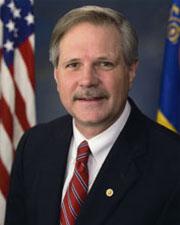 Sen. John Hoeven (R-ND)
Sen. John Hoeven (R-ND)Submitted August 1, 2025
Legislative Activity
Stay on top of the latest movement without scrolling through every action
Floor
Latest Action
Senate amendment submitted
August 1, 2025
Text
Submitted
SA 3644. Mr. HOEVEN submitted an amendment intended to be proposed by
him to the bill S. 2296, to authorize appropriations for fiscal year
2026 for military activities of the Department of Defense, for military
construction, and for defense activities of the Department of Energy,
to prescribe military personnel strengths for such fiscal year, and for
other purposes; which was ordered to lie on the table; as follows:

At the end of subtitle E of title III, add the following:

SEC. 350. PILOT PROGRAM ON ENHANCED USE OF ADVANCED SENSOR
NETWORKS TO IMPROVE COUNTER-UNMANNED AIRCRAFT
SYSTEM CAPABILITIES OF THE AIR FORCE FOR BASE
DEFENSE.

(a) Establishment.--Beginning not later than 180 days after
the date of the enactment of this Act, the Secretary of the
Air Force, in coordination with the Administrator of the
Federal Aviation Administration, shall carry out a pilot
program, to be known as the ``Enhancing Cooperation for
Counter-Unmanned Aircraft Systems Program'' (in this section
referred to as the ``pilot program''), under which the
Secretary shall incorporate the use of civilian civil
airspace sensor networks into data processing systems of the
Air Force--
(1) to improve defense of installations of the Department
of Defense against small unmanned aircraft systems (in this
section referred to as ``sUAS'');
(2) to inform the development of counter-unmanned aircraft
system capabilities that are suitable for use inside the
United States and in the national airspace system; and
(3) to enhance cooperation with law enforcement, State and
local partners, and other Federal departments and agencies to
counter domestic threats.
(b) Locations.--
(1) In general.--The Secretary, in coordination with the
Administrator, shall select not fewer than two installations
of the Department of Defense located in the United States at
which to conduct the pilot program.
(2) Considerations.--In selecting installations under
paragraph (1), the Secretary shall consider the potential for
the Air Force--
(A) to access advanced civilian airspace sensor networks;
(B) to leverage public-private partnerships that enable
multi-use of airspace awareness capabilities for public
safety, defense of critical infrastructure to include
installations of the Department of Defense, and protection of
civil aviation; and
(C) to minimize the potential for negatively affecting
civil aircraft operations in the national airspace system.
(c) Objectives.--The objectives of the pilot program are--
(1) to demonstrate the efficacy of shared situational
awareness data from civilian sensor networks to defense
systems of installations of the Department;
(2) to provide the Air Force with access to airspace
awareness data derived from civilian airspace sensor networks
to increase the ability of the Air Force to defend such
installations from the threats posed by sUAS;
(3) to determine any authority, capability, and capacity
barriers to enhancing cooperation between the Air Force,
civilian partners, and other Federal, State, and local
government entities to extend the over-the-horizon
identification of potential sUAS threats beyond the current
range of existing defense systems for such installations in
the United States; and
(4) to improve the data-sharing frameworks for airspace
data between the Air Force and various stakeholders for the
purpose of defense of such installations.
(d) Contract Authority.--In carrying out the pilot program,
the Secretary of the Air Force may enter into one or more
contracts for the procurement of additional technologies
capable of--
(1) leveraging commercial or Federal Government off-the-
shelf detect-track-defeat systems;
(2) integrating and using civilian airspace awareness data
to serve as an early warning capability specifically to help
identify and monitor non-compliant sUAS; and
(3) informing appropriate communication mechanisms between
installations of the Department of Defense and local law
enforcement agencies to report and track non-compliant air
vehicles, deter incursions, and foster potential prosecution.
(e) Briefings.--Not later than 90 days after the conclusion
of all activities carried out under the pilot program at an
installation selected for such program, the Secretary shall
provide to the Committees on Armed Services of the Senate and
the House of Representatives, the Committee on Commerce,
Science, and Transportation of the Senate, and the Committee
on Transportation and Infrastructure of the House of
Representatives a briefing that includes a description of--
(1) the manner in which the pilot program was conducted at
such installation; and
(2) any results achieved under the pilot program at such
installation.
(f) Termination.--
(1) In general.--The authority to carry out a pilot program
under this section shall terminate on the date that is five
years after the date of the enactment of this Act.
(2) Early termination option.--The Secretary of the Air
Force may request the termination of the pilot program before
the date specified in paragraph (1) if the Secretary--
(A) determines that administrative, legal, performance, or
other factors indicate the pilot program will not be
successful; and
(B) submits to the Committees on Armed Services of the
Senate and the House of Representatives, the Committee on
Commerce, Science, and Transportation of the Senate, and the
Committee on Transportation and Infrastructure of the House
of Representatives notice in writing of such determination.
______