S.Amdt. 3833Senate119th Congress (2025-2027)
S.Amdt. 3833
Sponsored by 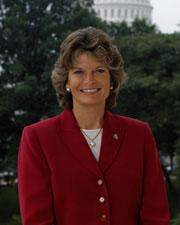 Sen. Lisa Murkowski (R-AK)
Sen. Lisa Murkowski (R-AK)Submitted September 9, 2025
Legislative Activity
Stay on top of the latest movement without scrolling through every action
Floor
Latest Action
Senate amendment submitted
September 9, 2025
Text
Submitted
SA 3833. Ms. MURKOWSKI (for herself and Mr. Schatz) submitted an
amendment intended to be proposed by her to the bill S. 2296, to
authorize appropriations for fiscal year 2026 for military activities
of the Department of Defense, for military construction, and for
defense activities of the Department of Energy, to prescribe military
personnel strengths for such fiscal year, and for other purposes; which
was ordered to lie on the table; as follows:

At the end, add the following:

[[Page S6487]]

DIVISION E--INDIAN AFFAIRS

TITLE LI--WOUNDED KNEE MASSACRE MEMORIAL AND SACRED SITE

SEC. 5101. WOUNDED KNEE MASSACRE MEMORIAL AND SACRED SITE.

(a) Definitions.--In this section:
(1) Restricted fee status.--The term ``restricted fee
status'' means a status in which the Tribal land--
(A) shall continue to be owned by the Tribes;
(B) shall be part of the Pine Ridge Indian Reservation and
expressly made subject to the civil and criminal jurisdiction
of the Oglala Sioux Tribe;
(C) shall not be transferred without the consent of
Congress and the Tribes;
(D) shall not be subject to taxation by a State or local
government; and
(E) shall not be subject to any provision of law providing
for the review or approval by the Secretary of the Interior
before the Tribes may use the land for any purpose as allowed
by the document titled ``Covenant Between the Oglala Sioux
Tribe and the Cheyenne River Sioux Tribe'' and dated October
21, 2022, directly, or through agreement with another party.
(2) Secretary.--The term ``Secretary'' means the Secretary
of the Interior.
(3) Tribal land.--The term ``Tribal land'' means the
approximately 40 acres (including the surface and subsurface
estate, and mineral estate, and any and all improvements,
structures, and personal property on those acres) on the Pine
Ridge Indian Reservation in Oglala Lakota County, at Rural
County Road 4, Wounded Knee, South Dakota, and generally
depicted as ``Area of Interest'' on the map entitled
``Wounded Knee Sacred Site and Memorial Land'' and dated
October 26, 2022, which is a segment of the December 29,
1890, Wounded Knee Massacre site.
(4) Tribes.--The term ``Tribes'' means the Oglala Sioux
Tribe and Cheyenne River Sioux Tribe of the Cheyenne River
Reservation, both tribes being among the constituent tribes
of the Great Sioux Nation and signatories to the Fort Laramie
Treaty of 1868 between the United States of America and the
Great Sioux Nation, 15 Stat. 635.
(b) Land Held in Restricted Fee Status by the Tribes.--
(1) Action by secretary.--Not later than 365 days after
enactment of this Act, the Secretary shall--
(A) complete all actions, including documentation and minor
corrections to the survey and legal description of Tribal
land, necessary for the Tribal land to be held by the Tribes
in restricted fee status; and
(B) appropriately assign each applicable private and
municipal utility and service right or agreement with regard
to the Tribal land.
(2) Conditions.--
(A) Federal laws relating to indian land.--Except as
otherwise provided in this section, the Tribal land shall be
subject to Federal laws relating to Indian country, as
defined by section 1151 of title 18, United States Code and
protected by the restriction against alienation in section
177 of title 25, United States Code.
(B) Use of land.--The Tribal land shall be used for the
purposes allowed by the document titled ``Covenant Between
the Oglala Sioux Tribe and the Cheyenne River Sioux Tribe''
and dated October 21, 2022.
(C) Encumbrances and agreements.--The Tribal land shall
remain subject to any private or municipal encumbrance,
right-of-way, restriction, easement of record, or utility
service agreement in effect on the date of the enactment of
this Act.
(D) Gaming.--Pursuant to the document titled ``Covenant
Between the Oglala Sioux Tribe and the Cheyenne River Sioux
Tribe'' and dated October 21, 2022, the Tribal land shall not
be used for gaming activity under the Indian Gaming
Regulatory Act (25 U.S.C. 2701 et seq.).

TITLE LII--MISSING OR MURDERED INDIANS

SEC. 5201. DEFINITIONS.

In this title:
(1) Death investigation.--The term ``death investigation''
has the meaning determined by the Attorney General.
(2) Death investigation of interest to indian tribes.--The
term ``death investigation of interest to Indian Tribes''
means a case involving--
(A) a death investigation into the death of an Indian; or
(B) a death investigation of a person found on, in, or
adjacent to Indian land or a Village.
(3) Director.--The term ``Director'' means the Deputy
Bureau Director of the Office of Justice Services of the
Bureau of Indian Affairs.
(4) Federal law enforcement agency.--The term ``Federal law
enforcement agency'' means the Office of Justice Services of
the Bureau of Indian Affairs, the Federal Bureau of
Investigation, and any other Federal law enforcement agency
that--
(A) has jurisdiction over crimes in Indian country; or
(B) investigates missing persons cases of interest to
Indian Tribes, death investigations of interest to Indian
Tribes, unclaimed human remains cases of interest to Indian
Tribes, or unidentified remains cases of interest to Indian
Tribes.
(5) Indian.--The term ``Indian'' has the meaning given the
term in section 4 of the Indian Self-Determination and
Education Assistance Act (25 U.S.C. 5304).
(6) Indian country.--The term ``Indian country'' has the
meaning given the term in section 1151 of title 18, United
States Code.
(7) Indian land.--The term ``Indian land'' has the meaning
given the term ``Indian lands'' in section 3 of the Native
American Business Development, Trade Promotion, and Tourism
Act of 2000 (25 U.S.C. 4302).
(8) Indian tribe.--The term ``Indian Tribe'' has the
meaning given the term in section 4 of the Indian Self-
Determination and Education Assistance Act (25 U.S.C. 5304).
(9) Missing persons case of interest to indian tribes.--The
term ``missing persons case of interest to Indian Tribes''
means a case involving--
(A) a missing Indian; or
(B) a missing person whose last known location is believed
to be on, in, or adjacent to Indian land or a Village.
(10) National crime information databases.--The term
``national crime information databases'' has the meaning
given the term in section 534(f)(3) of title 28, United
States Code.
(11) Relevant tribal organization.--The term ``relevant
Tribal organization'' means, as applicable--
(A) a Tribal organization or an urban Indian organization;
and
(B) a national or regional organization that--
(i) represents a substantial Indian constituency; and
(ii) has expertise in the fields of--

(I) human trafficking of Indians;
(II) human trafficking on Indian land or in a Village;
(III) violence against Indians;
(IV) missing or murdered Indigenous persons; or
(V) Tribal justice systems.

(12) Secretary.--The term ``Secretary'' means the Secretary
of the Interior.
(13) Sexual violence case of interest to indian tribes.--
The term ``sexual violence case of interest to Indian
Tribes'' means a case involving an allegation of sexual
violence (as defined in section 204(a) of Public Law 90-284
(25 U.S.C. 1304(a))).
(14) Tribal justice official.--The term ``Tribal justice
official'' has the meaning given the term ``tribal justice
official'' in section 2 of the Indian Law Enforcement Reform
Act (25 U.S.C. 2801).
(15) Tribal organization.--The term ``Tribal organization''
has the meaning given the term in section 4 of the Indian
Self-Determination and Education Assistance Act (25 U.S.C.
5304).
(16) Unclaimed human remains case of interest to indian
tribes.--The term ``unclaimed human remains case of interest
to Indian Tribes'' means a case involving--
(A) unclaimed Indian remains identified by Federal, Tribal,
State, or local law enforcement; or
(B) unclaimed human remains found on, in, or adjacent to
Indian land or a Village.
(17) Unidentified remains case of interest to indian
tribes.--The term ``unidentified remains case of interest to
Indian Tribes'' means a case involving--
(A) unidentified Indian remains; or
(B) unidentified remains found on, in, or adjacent to
Indian land or a Village.
(18) Urban indian organization.--The term ``urban Indian
organization'' has the meaning given the term in section 4 of
the Indian Health Care Improvement Act (25 U.S.C. 1603).
(19) Village.--The term ``Village'' means the Alaska Native
Village Statistical Area covering all or any portion of a
Native village (as defined in section 3 of the Alaska Native
Claims Settlement Act (43 U.S.C. 1602)), as depicted on the
applicable Tribal Statistical Area Program Verification Map
of the Bureau of the Census.

Subtitle A--Bridging Agency Data Gaps

SEC. 5211. NATIONAL MISSING AND UNIDENTIFIED PERSONS SYSTEM
TRIBAL FACILITATOR.

(a) Appointment.--The Attorney General shall appoint 1 or
more Tribal facilitators for the National Missing and
Unidentified Persons System.
(b) Duties.--The duties of a Tribal facilitator appointed
under subsection (a) shall include--
(1) coordinating the reporting of information relating to
missing persons cases of interest to Indian Tribes, unclaimed
human remains cases of interest to Indian Tribes, and
unidentified remains cases of interest to Indian Tribes;
(2) consulting and coordinating with Indian Tribes and
relevant Tribal organizations to address the reporting,
documentation, and tracking of missing persons cases of
interest to Indian Tribes, unclaimed human remains cases of
Interest to Indian Tribes, and unidentified remains cases of
interest to Indian Tribes;
(3) developing working relationships, and maintaining
communication, with Indian Tribes and relevant Tribal
organizations;
(4) providing technical assistance and training to Indian
Tribes and relevant Tribal organizations, victim service
advocates, medical examiners, coroners, and Tribal justice
officials regarding--
(A) the gathering and reporting of information to the
National Missing and Unidentified Persons System; and
(B) working with non-Tribal law enforcement agencies to
encourage missing persons cases of interest to Indian Tribes,
unclaimed human remains cases of interest to Indian Tribes,
and unidentified remains cases of interest to Indian Tribes
are reported to the

[[Page S6488]]

National Missing and Unidentified Persons System;
(5) coordinating with the Office of Tribal Justice, the
Office of Justice Services of the Bureau of Indian Affairs,
the Executive Office for United States Attorneys, the Federal
Bureau of Investigation, State law enforcement agencies, and
the National Indian Country Training Initiative, as
necessary; and
(6) conducting other training, information gathering, and
outreach activities to improve resolution of missing persons
cases of interest to Indian Tribes, unclaimed human remains
cases of interest to Indian Tribes, and unidentified remains
cases of interest to Indian Tribes.
(c) Reporting and Transparency.--
(1) Annual reports to congress.--During the 3-year-period
beginning on the date of enactment of this Act, the Attorney
General, acting through the Director of the National
Institute of Justice, shall submit to the Committees on
Indian Affairs, the Judiciary, and Appropriations of the
Senate and the Committees on Natural Resources, the
Judiciary, and Appropriations of the House of Representatives
an annual report describing the activities and
accomplishments of the Tribal facilitators appointed under
subsection (a) during the 1-year period preceding the date of
the report.
(2) Public transparency.--Annually, the Attorney General,
acting through the Director of the National Institute of
Justice, shall publish on a website publicly accessible
information describing the activities and accomplishments of
the Tribal facilitators appointed under subsection (a) during
the 1-year period preceding the date of the publication.

SEC. 5212. REPORT ON INDIAN COUNTRY LAW ENFORCEMENT PERSONNEL
RESOURCES AND NEED.

(a) Office of Justice Services of the Bureau of Indian
Affairs.--Section 3(c)(16) of the Indian Law Enforcement
Reform Act (25 U.S.C. 2802(c)(16)) is amended by striking
subparagraph (C) and inserting the following:
``(C) a list of the unmet--
``(i) staffing needs of law enforcement, corrections, and
court personnel, including criminal investigators, medical
examiners, coroners, forensic technicians, indigent defense
staff, crime victim services staff, and prosecution staff, at
Tribal and Bureau justice agencies, including the Missing and
Murdered Unit of the Office of Justice Services of the
Bureau;
``(ii) replacement and repair needs of Tribal and Bureau
corrections facilities;
``(iii) infrastructure and capital needs for Tribal police
and court facilities, including evidence storage and
processing; and
``(iv) public safety and emergency communications and
technology needs, including equipment and internet capacity
needs; and''.
(b) Department of Justice.--
(1) Definition of department of justice law enforcement
agency.--In this subsection, the term ``Department of Justice
law enforcement agency'' means each of--
(A) the Federal Bureau of Investigation;
(B) the Drug Enforcement Administration;
(C) the United States Marshals Service;
(D) the Bureau of Alcohol, Tobacco, Firearms and
Explosives; and
(E) the Offices of the United States Attorneys.
(2) Annual report.--Each fiscal year, the Attorney General
shall submit to the Committees on Indian Affairs, the
Judiciary, and Appropriations of the Senate and the
Committees on Natural Resources, the Judiciary, and
Appropriations of the House of Representatives a report for
that fiscal year that includes--
(A) the number of full-time employees of each Department of
Justice law enforcement agency that are assigned to work on
criminal investigations and prosecutions in Indian country;
(B) the percentage of time the full-time employees, as
identified under subparagraph (A), spend specifically working
in Indian country;
(C) the turnover rate during the 5-year period preceding
the report of full-time employees assigned to work on
criminal investigations and prosecutions in Indian country;
(D) the average years of experience at the Department of
Justice of full-time employees assigned to work on criminal
investigations and prosecutions in Indian country;
(E) the number of vacant positions with responsibilities
for criminal investigations and prosecutions in Indian
country;
(F) an identification of expertise and skills necessary to
achieve the strategic goals of the Department of Justice
relating to public safety in Indian country;
(G) an estimate of the number of employees needed with
specific skills and competencies to fulfill responsibilities
assigned for criminal investigations and prosecutions in
Indian country; and
(H) a list of measures identified to indicate whether and
how the Department of Justice plans to execute its hiring,
retention, and training strategies.
(3) GAO study and report.--
(A) Study.--
(i) In general.--Not later than 18 months after the date on
which the first annual report is submitted under paragraph
(2), the Comptroller General of the United States shall
conduct a review of unmet staffing identified by the
Department of Justice law enforcement agencies tasked with
work on criminal investigations and prosecutions in Indian
country.
(ii) Requirement.--In conducting the study required under
clause (i), the Comptroller General of the United States
shall take into account the results of the most recent
report, as of the date of enactment of this Act, relating to
Indian country investigations and prosecutions prepared by
the Attorney General pursuant to section 10(b) of the Indian
Law Enforcement Reform Act (25 U.S.C. 2809(b)).
(B) Report.--On completion of the review under subparagraph
(A), the Comptroller General of the United States shall
submit to the Committees on Indian Affairs, the Judiciary,
and Appropriations of the Senate and the Committees on
Natural Resources, the Judiciary, and Appropriations of the
House of Representatives a report that describes the results
of the study, including, as appropriate, proposals for
methods by which the Department of Justice can better measure
its unmet staffing and other needs for Department of Justice
law enforcement agencies tasked with work on criminal
investigations and prosecutions in Indian country.

Subtitle B--Ensuring Safety for Native Communities

SEC. 5221. DEMONSTRATION PROGRAM ON BUREAU OF INDIAN AFFAIRS
LAW ENFORCEMENT EMPLOYMENT BACKGROUND CHECKS.

(a) Establishment of Demonstration Program.--
(1) In general.--The Secretary shall establish a
demonstration program for the purpose of conducting or
adjudicating, in coordination with the Director, personnel
background investigations for applicants for law enforcement
positions in the Bureau of Indian Affairs.
(2) Background investigations and security clearance
determinations.--
(A) BIA investigations.--As part of the demonstration
program established under paragraph (1), the Secretary may
carry out a background investigation, security clearance
determination, or both a background investigation and a
security clearance determination for an applicant for a law
enforcement position in the Bureau of Indian Affairs.
(B) Agreements.--The Secretary may enter into a memorandum
of agreement with a State or local government, Indian Tribe,
or Tribal organization to develop steps to expedite the
process of receiving and obtaining access to information
pertinent to background investigation and security clearance
determinations for use in the demonstration program.
(3) Sunset.--The demonstration program established under
paragraph (1) shall terminate 5 years after the date of the
commencement of the demonstration program.
(b) Sufficiency.--Notwithstanding any other provision of
law, a background investigation conducted or adjudicated by
the Secretary pursuant to the demonstration program
established under subsection (a)(1) that results in the
granting of a security clearance to an applicant for a law
enforcement position in the Bureau of Indian Affairs shall be
sufficient to meet the applicable requirements of the Office
of Personnel Management or other Federal agency for such
investigations.
(c) Report.--Not later than 3 years after the date on which
the demonstration program is established under subsection
(a)(1), the Secretary shall submit to the Committees on
Indian Affairs, the Judiciary, and Appropriations of the
Senate and the Committees on Natural Resources, the
Judiciary, and Appropriations of the House of Representatives
a report on the demonstration program, which shall include a
description of--
(1) the demonstration program and any recommended changes
or updates to the demonstration program, including whether
the demonstration program should be reauthorized;
(2) the number of background investigations carried out
under the demonstration program;
(3) the costs, including any cost savings, associated with
the investigation and adjudication process under the
demonstration program;
(4) the processing times for the investigation and
adjudication processes under the demonstration program; and
(5) any other information that the Secretary determines to
be relevant.

SEC. 5222. MISSING OR MURDERED RESPONSE COORDINATION GRANT
PROGRAM.

(a) Establishment of Grant Program.--The Attorney General
shall establish within the Office of Justice Programs a grant
program under which the Attorney General shall make grants to
eligible entities described in subsection (b) to carry out
eligible activities described in subsection (c).
(b) Eligible Entities.--
(1) In general.--To be eligible to receive a grant under
the grant program established under subsection (a) an entity
shall be--
(A) an Indian Tribe;
(B) a relevant Tribal organization;
(C) subject to paragraph (2), a State, in consortium with--
(i) 1 or more Indian Tribes; and
(ii) relevant Tribal organizations, if any;
(D) a consortium of 2 or more Indian Tribes or relevant
Tribal organizations; or
(E) subject to paragraph (2), a consortium of 2 or more
States in consortium with--
(i) 1 or more Indian Tribes; and
(ii) relevant Tribal organizations, if any.
(2) State eligibility.--To be eligible under subparagraph
(C) or (E) of paragraph (1), a

[[Page S6489]]

State shall demonstrate to the satisfaction of the Attorney
General that the State--
(A)(i) reports missing persons cases in the State to the
national crime information databases; or
(ii) if not, has a plan to do so using a grant received
under the grant program established under subsection (a); and
(B) if data sharing between the State and the Indian Tribes
and relevant Tribal organizations with which the State is in
consortium is part of the intended use of the grant received
under the grant program established under subsection (a), has
entered into a memorandum of understanding with each
applicable Indian Tribe and relevant Tribal organization.
(c) Eligible Activities.--An eligible entity receiving a
grant under the grant program established under subsection
(a) may use the grant--
(1) to establish a statewide or regional center--
(A) to document and track--
(i) missing persons cases of interest to Indian Tribes;
(ii) sexual violence cases of interest to Indian Tribes;
and
(iii) death investigations of interest to Indian Tribes;
and
(B) to input information regarding missing persons cases of
interest to Indian Tribes, unclaimed human remains cases of
interest to Indian Tribes, and unidentified remains cases of
interest to Indian Tribes into the National Missing and
Unidentified Persons System and the Missing Persons File in
the National Crime Information Center;
(2) to establish a State or regional commission to respond
to, and to improve coordination between Federal law
enforcement agencies, and Tribal, State, and local law
enforcement agencies of the investigation of, missing persons
cases of interest to Indian Tribes, sexual violence cases of
interest to Indian Tribes, and death investigations of
interest to Indian Tribes; and
(3) to document, develop, and disseminate resources for the
coordination and improvement of the investigation of missing
persons cases of interest to Indian Tribes, sexual violence
cases of interest to Indian Tribes, and death investigations
of interest to Indian Tribes, including to develop local or
statewide rapid notification or communication systems for
alerts and other information relating to those cases.
(d) Authorization of Appropriations.--There is authorized
to be appropriated to carry out the grant program established
under subsection (a)(1) $1,000,000 for each of fiscal years
2026 through 2030.

SEC. 5223. GAO STUDY ON FEDERAL LAW ENFORCEMENT AGENCY
EVIDENCE COLLECTION, HANDLING, AND PROCESSING.

(a) In General.--The Comptroller General of the United
States shall conduct a study--
(1) on the evidence collection, handling, response times,
and processing procedures and practices of the Office of
Justice Services of the Bureau of Indian Affairs and the
Federal Bureau of Investigation in exercising jurisdiction
over crimes involving Indians or committed in Indian country;
(2) on barriers to evidence collection, handling, response
times, and processing identified by the agencies referred to
in paragraph (1);
(3) on the views of law enforcement officials at the
agencies referred to in paragraph (1) and their counterparts
within the Offices of the United States Attorneys concerning
any relationship between--
(A) the barriers identified under paragraph (2); and
(B) United States Attorneys declination rates due to
insufficient evidence; and
(4) that includes a description of barriers to evidence
collection, handling, response times, and processing
identified and faced by--
(A) Tribal law enforcement agencies; and
(B) State and local law enforcement agencies that exercise
jurisdiction over Indian country.
(b) Report.--Not later than 18 months after the date of
enactment of this Act, the Comptroller General of the United
States shall submit to the Committees on Indian Affairs, the
Judiciary, and Appropriations of the Senate and the
Committees on Natural Resources, the Judiciary, and
Appropriations of the House of Representatives a report
describing the results of the study conducted under
subsection (a).

SEC. 5224. BUREAU OF INDIAN AFFAIRS AND TRIBAL LAW
ENFORCEMENT OFFICER COUNSELING RESOURCES
INTERDEPARTMENTAL COORDINATION.

The Secretary of Health and Human Services and the Attorney
General shall coordinate with the Director--
(1) to ensure that Federal training materials and
culturally appropriate mental health and wellness programs
are locally or regionally available to law enforcement
officers working for the Office of Justice Services of the
Bureau of Indian Affairs or an Indian Tribe; and
(2) to determine whether law enforcement agencies operated
by the Office of Justice Services of the Bureau of Indian
Affairs and Indian Tribes are eligible to receive services
under--
(A) the Law Enforcement Assistance Program of Federal
Occupational Health of the Department of Health and Human
Services; or
(B) any other law enforcement assistance program targeted
to meet the needs of law enforcement officers working for law
enforcement agencies operated by the Federal Government or an
Indian Tribe.

TITLE LIII--TECHNICAL CORRECTION TO THE SHOSHONE-PAIUTE TRIBES OF THE
DUCK VALLEY RESERVATION WATER RIGHTS SETTLEMENT

SEC. 5301. AUTHORIZATION OF PAYMENT OF ADJUSTED INTEREST ON
DEVELOPMENT FUND.

Section 10807(b)(3) of the Omnibus Public Land Management
Act of 2009 (Public Law 111-11; 123 Stat. 1409) is amended--
(1) by striking ``There is'' and inserting the following:
``(A) In general.--There is''; and
(2) by adding at the end the following:
``(B) Adjusted interest payments.--There is authorized to
be appropriated to the Secretary for deposit into the
Development Fund $5,124,902.12.''.

TITLE LIV--SETTLEMENT OF CERTAIN INDIAN LAND DISPUTES IN ILLINOIS

SEC. 5401. SETTLEMENT OF CLAIMS.

(a) Jurisdiction Conferred on the United States Court of
Federal Claims.--
(1) In general.--Notwithstanding any other provision of
law, the United States Court of Federal Claims shall have
jurisdiction to hear, determine, and render judgment on a
land claim of the Miami Tribe of Oklahoma under its Treaty
with the United States of America signed at Grouseland August
21, 1805 (7 Stat. 91) (commonly known as the ``Treaty of
Grouseland''), without regard to the statute of limitations,
including section 2501 of title 28, United States Code, and
any delay-based defense, no matter how characterized.
(2) Jurisdiction expiration.--Not later than 1 year after
the date of enactment of this Act, the jurisdiction conferred
to the United States Court of Federal Claims under paragraph
(1) shall expire unless the Miami Tribe of Oklahoma files a
land claim under that paragraph.
(b) Extinguishment of Title and Claims.--Except for a claim
filed under subsection (a)(1), all other claims, including
any and all future claims, of the Miami Tribe of Oklahoma, or
any member, descendant, or predecessor in interest to the
Miami Tribe of Oklahoma, to land in the State of Illinois are
extinguished.

TITLE LV--NATIVE AMERICAN TOURISM GRANT PROGRAMS

SEC. 5501. NATIVE AMERICAN TOURISM GRANT PROGRAMS.

The Native American Tourism and Improving Visitor
Experience Act (25 U.S.C. 4351 et seq.) is amended--
(1) by redesignating section 6 (25 U.S.C. 4355) as section
7; and
(2) by inserting after section 5 (25 U.S.C. 4354) the
following:

``SEC. 6. NATIVE AMERICAN TOURISM GRANT PROGRAMS.

``(a) Bureau of Indian Affairs Program.--The Director of
the Bureau of Indian Affairs may make grants to and enter
into agreements with Indian tribes and tribal organizations
to carry out the purposes of this Act, as described in
section 2.
``(b) Office of Native Hawaiian Relations.--The Director of
the Office of Native Hawaiian Relations may make grants to
and enter into agreements with Native Hawaiian organizations
to carry out the purposes of this Act, as described in
section 2.
``(c) Other Federal Agencies.--The heads of other Federal
agencies, including the Secretaries of Commerce,
Transportation, Agriculture, Health and Human Services, and
Labor, may make grants under this authority to and enter into
agreements with Indian tribes, tribal organizations, and
Native Hawaiian organizations to carry out the purposes of
this Act, as described in section 2.
``(d) Authorization of Appropriations.--There is authorized
to be appropriated to carry out this section $35,000,000 for
the period of fiscal years 2025 through 2029.''.

TITLE LVI--VETERINARY SERVICES IN RURAL COMMUNITIES

SEC. 5601. SENSE OF CONGRESS.

It is the sense of Congress that the Indian Health Service
of the Department of Health and Human Services is uniquely
suited to empower Indian Tribes and Tribal organizations to
address zoonotic disease threats in the communities they
serve by providing public health veterinary services through
a One Health approach that recognizes the interconnection
between people, animals, plants, and their shared
environment.

SEC. 5602. PUBLIC HEALTH VETERINARY SERVICES.

Title II of the Indian Health Care Improvement Act is
amended by inserting after section 223 (25 U.S.C. 1621v) the
following:

``SEC. 224. PUBLIC HEALTH VETERINARY SERVICES.

``(a) Definitions.--In this section:
``(1) Public health veterinary services.--The term `public
health veterinary services' includes any of the following:
``(A) Spaying and neutering services for domestic animals.
``(B) Diagnoses.
``(C) Surveillance.
``(D) Epidemiology.
``(E) Control.
``(F) Prevention.
``(G) Elimination.
``(H) Vaccination.
``(I) Any other related service or activity that reduces
the risk of zoonotic disease transmission or antimicrobial
resistance in humans, food, or animals.

[[Page S6490]]

``(2) Zoonotic disease.--The term `zoonotic disease' means
a disease or infection that may be transmitted naturally from
vertebrate animals to humans, or from humans to vertebrate
animals.
``(b) Authorization for Veterinary Services.--The
Secretary, acting through the Service, may expend funds,
directly or pursuant to the Indian Self-Determination and
Education Assistance Act (25 U.S.C. 5301 et seq.), for public
health veterinary services to prevent and control zoonotic
disease infection and transmission in Service areas where the
risk for disease occurrence in humans and wildlife is
endemic.
``(c) Public Health Officers; Coordination.--In providing
public health veterinary services under subsection (b), the
Secretary may--
``(1) assign or deploy veterinary public health officers
from the Commissioned Corps of the Public Health Service to
Service areas; and
``(2) coordinate and implement activities with--
``(A) the Director of the Centers for Disease Control and
Prevention; and
``(B) the Secretary of Agriculture.
``(d) Report.--The Secretary shall submit to the Committee
on Indian Affairs of the Senate, the Committee on Health,
Education, Labor, and Pensions of the Senate, the Committee
on Natural Resources of the House of Representatives, and the
Committee on Energy and Commerce of the House of
Representatives a biennial report on the use of funds, the
assignment and deployment of veterinary public health
officers from the Commissioned Corps of the Public Health
Service, data related to the monitoring and disease
surveillance of zoonotic diseases, and related services
provided under this section.''.

SEC. 5603. APHIS WILDLIFE SERVICES STUDY ON ORAL RABIES
VACCINES IN ARCTIC REGIONS OF THE UNITED
STATES.

Not later than 1 year after the date of enactment of this
Act, the Secretary of Agriculture shall conduct a feasibility
study--
(1) on the delivery of oral rabies vaccines to wildlife
reservoir species that are directly or indirectly connected
to the transmission of rabies to Tribal members living in
Arctic regions of the United States; and
(2) that--
(A) evaluates the efficacy of the vaccines described in
paragraph (1); and
(B) makes recommendations to improve the delivery of those
vaccines.

SEC. 5604. ONE HEALTH FRAMEWORK.

Section 2235(b) of the Prepare for and Respond to Existing
Viruses, Emerging New Threats, and Pandemics Act (42 U.S.C.
300hh-37(b)) is amended by striking ``and the Secretary of
the Interior'' and inserting ``, the Secretary of the
Interior, and the Director of the Indian Health Service''.

TITLE LVII--REVOCATION OF CHARTER OF INCORPORATION OF THE LOWER SIOUX
INDIAN COMMUNITY

SEC. 5701. REVOCATION OF CHARTER OF INCORPORATION OF THE
LOWER SIOUX INDIAN COMMUNITY.

The request of the Lower Sioux Indian Community in the
State of Minnesota to surrender the charter of incorporation
issued to that community and ratified on July 17, 1937,
pursuant to section 17 of the Act of June 18, 1934 (commonly
known as the ``Indian Reorganization Act'') (48 Stat. 988,
chapter 576; 25 U.S.C. 5124), is hereby accepted and that
charter of incorporation is hereby revoked.

TITLE LVIII--TRANSFER OF ADDITIONAL FEDERAL LAND TO THE LEECH LAKE BAND
OF OJIBWE

SEC. 5801. TRANSFER OF ADDITIONAL FEDERAL LAND TO THE LEECH
LAKE BAND OF OJIBWE.

(a) Findings.--Section 2(a)(5) of the Leech Lake Band of
Ojibwe Reservation Restoration Act (Public Law 116-255; 134
Stat. 1140) is amended by striking subparagraph (B) and
inserting the following:
``(B) does not intend immediately to modify the use of the
Federal land.''.
(b) Inclusion of Additional Federal Land.--Section 2 of the
Leech Lake Band of Ojibwe Reservation Restoration Act (Public
Law 116-255; 134 Stat. 1139) is amended--
(1) in subsection (b)(1)--
(A) in subparagraph (A)--
(i) by striking ``means the approximately'' and inserting
``means--
``(i) the approximately'';
(ii) in clause (i) (as so designated), by striking the
period at the end and inserting ``; and''; and
(iii) by adding at the end the following:
``(ii) any other land managed by the Secretary, through the
Chief of the Forest Service, located in the Chippewa National
Forest in Cass County, Minnesota, which records maintained by
the Bureau of Indian Affairs show was sold without the
unanimous consent of the rightful landowners.''; and
(B) in subparagraph (B)--
(i) by redesignating clauses (i) and (ii) as clauses (ii)
and (iii), respectively; and
(ii) by inserting before clause (ii) (as so redesignated)
the following:
``(i) any land transferred pursuant to an agreement entered
into between the Secretary and the Tribe under subsection
(c)(2);'';
(2) in subsection (c)--
(A) in paragraph (1), by striking ``paragraph (2)'' and
inserting ``paragraphs (2) and (3)'';
(B) by redesignating paragraph (2) as paragraph (3); and
(C) by inserting after paragraph (1) the following:
``(2) Agreement.--
``(A) In general.--On agreement between the Secretary and
the Tribe, the Secretary shall substitute, for purposes of
the transfer under paragraph (1), alternative National Forest
System land located in Cass County, Minnesota, on an acre-
for-acre basis, for those parcels of Federal land to be
transferred under that paragraph in a manner that avoids in-
holdings and provides a preference for land adjacent to or
near existing Leech Lake trust lands and lands of cultural
importance to the Tribe, to the maximum extent practicable.
``(B) Frequency of transfers.--Pursuant to an agreement
entered into under subparagraph (A), the Secretary may
transfer land to the Secretary of the Interior on a rolling
basis as that land is identified and surveys are
completed.''; and
(3) in subsection (d)--
(A) in paragraph (1)--
(i) in subparagraph (A), by inserting ``described in
subsection (b)(1)(A)(i)'' after ``Federal land''; and
(ii) in subparagraph (B), in the matter preceding clause
(i), by striking ``submit a map and legal description of the
Federal land'' and inserting ``submit maps and legal
descriptions of the Federal land transferred pursuant to
paragraphs (1) and (2) of subsection (c), as applicable,'';
(B) in paragraph (2)--
(i) by striking ``map and legal description'' and inserting
``maps and legal descriptions''; and
(ii) by striking ``map or legal description'' and inserting
``maps or legal descriptions''; and
(C) in paragraph (3), by striking ``map and legal
description'' and inserting ``maps and legal descriptions''.
(c) Reaffirmation.--Congress reaffirms the applicability of
section 97A.151 of the Minnesota Statutes, including the
settlement agreement ratified by that section, for purposes
of ensuring that the hunting, fishing, and recreation rights
of non-Tribal members remain unchanged by the Leech Lake Band
of Ojibwe Reservation Restoration Act (Public Law 116-255;
134 Stat. 1139) and the amendments made to that Act by this
section.
(d) Implementation.--In implementing the amendments made by
this section, the Secretary of Agriculture, acting through
the Chief of the Forest Service, shall provide for public
engagement and comment in accordance with applicable laws
(including regulations).

TITLE LIX--IHS SCHOLARSHIP AND LOAN RECIPIENTS

SEC. 5901. INDIAN HEALTH SERVICE SCHOLARSHIP AND LOAN
RECIPIENTS.

(a) Indian Health Professions Scholarships.--Section
104(b)(3) of the Indian Health Care Improvement Act (25
U.S.C. 1613a(b)(3)) is amended by striking the paragraph
designation and all that follows through the end of
subparagraph (A) and inserting the following:
``(3)(A) The active duty service obligation under a written
contract with the Secretary under section 338A of the Public
Health Service Act (42 U.S.C. 254l) that an individual has
entered into under that section shall, if that individual is
a recipient of an Indian Health Scholarship--
``(i) be met by full-time (as defined in section 331(j) of
the Public Health Service Act (42 U.S.C. 254d(j))) practice--
``(I) in the Service;
``(II) in a program conducted under a contract entered into
under the Indian Self-Determination and Education Assistance
Act (25 U.S.C. 5301 et seq.);
``(III) in a program assisted under title V; or
``(IV) in the private practice of the applicable profession
if, as determined by the Secretary, in accordance with
guidelines issued by the Secretary, the practice--
``(aa) is situated in a physician or other health
professional shortage area; and
``(bb) addresses the health care needs of a substantial
number of Indians; or
``(ii) be met by half-time (as defined in section 331(j) of
the Public Health Service Act (42 U.S.C. 254d(j))) practice
in a program described in any of subclauses (I) through (IV)
of clause (i) if the individual agrees, in writing--
``(I) to double the period of obligated service that would
otherwise be required if the individual were satisfying the
period of obligated service through full-time (as so defined)
practice; and
``(II) that if the individual fails to begin or complete
the period of obligated service described in subclause (I),
the procedures described in section 108(l)(2) for determining
damages for breach of contract will be used after converting
that period of obligated service or service performed into
its full-time equivalent.''.
(b) Indian Health Service Loan Repayment Program.--Section
108 of the Indian Health Care Improvement Act (25 U.S.C.
1616a) is amended--
(1) in subsection (f)(1)(B), by striking clause (iii) and
inserting the following:
``(iii) to serve for a period of time (referred to in this
section as the `period of obligated service') equal to--

[[Page S6491]]

``(I) 2 years, or a longer period of time as the individual
may agree to serve, in the full-time (as defined in section
331(j) of the Public Health Service Act (42 U.S.C. 254d(j)))
clinical practice of the profession of the individual in an
Indian health program to which the individual may be assigned
by the Secretary;
``(II) 4 years, or a longer period of time as the
individual may agree to serve, in the half-time (as defined
in that section) clinical practice of the profession of the
individual in an Indian health program to which the
individual may be assigned by the Secretary, subject to the
condition that if the individual has agreed to serve for a
period longer than 2 years of full-time (as so defined)
service, as described in subclause (I), the half-time (as so
defined) service obligation shall be the amount of time
required for the individual to complete an equivalent amount
of service on a half-time (as so defined) basis; or
``(III) 2 years in the half-time (as so defined) clinical
practice of the profession of the individual in an Indian
health program to which the individual may be assigned by the
Secretary with a loan payment amount equal to 50 percent of
the amount that would otherwise be payable for full-time (as
so defined) service for that same period of obligated
service; and

``(iv) in the case of an individual completing a period of
obligated service through half-time (as so defined) clinical
practice, that if the individual fails to begin or complete
that period of obligated service, the procedures described in
subsection (l)(2) for determining damages for breach of
contract under this section will be used after converting the
period of obligated service or service performed into its
full-time (as so defined) equivalent;''; and
(2) in subsection (l)(2), in the undesignated matter
following subparagraph (D), by inserting the following before
``Amounts'': ``Periods of obligated service completed in
half-time (as defined in section 331(j) of the Public Health
Service Act (42 U.S.C. 254d(j))) clinical practice shall be
converted to their full-time (as defined in that section)
equivalents for purposes of determining damages for breach of
contract under this paragraph.''.

TITLE LX--SETTLEMENT FUNDS

SEC. 6001. SETTLEMENT FUNDS.

(a) Authorization of Payment of Adjusted Interest on the
Navajo Nation Water Resources Development Trust Fund.--The
Omnibus Public Land Management Act of 2009 (Public Law 111-
11) is amended--
(1) in section 10701(e)(1)(A)(vii), by striking ``10702.''
and inserting ``10702, except for deposits made pursuant to
section 10702(g).''; and
(2) in section 10702--
(A) in subsection (a)(1), by striking ``subsection (f)''
and inserting ``subsections (f) and (g)''; and
(B) by adding at the end the following:
``(g) Adjusted Interest Payments.--In addition to amounts
made available under subsection (f), there is authorized to
be appropriated for deposit in the Trust Fund
$6,357,674.46.''.
(b) Authorization of Payment of Adjusted Interest on the
Taos Pueblo Water Development Fund.--The Claims Resolution
Act of 2010 (Public Law 111-291) is amended by adding after
section 513 the following:

``SEC. 514. ADJUSTED INTEREST PAYMENTS.

``In addition to the amounts made available under section
509(c), there is authorized to be appropriated to the
Secretary for deposit into the Taos Pueblo Water Development
Fund established by section 505(a) $7,794,297.52.''.
(c) Authorization of Payment of Adjusted Interest on the
Aamodt Settlement Pueblos' Fund.--The Claims Resolution Act
of 2010 (Public Law 111-291) is amended by adding after
section 626 the following:

``SEC. 627. INTEREST PAYMENTS.

``(a) Adjusted Interest Payments.--In addition to amounts
made available under section 617, there is authorized to be
appropriated to the Secretary for deposit into the Aamodt
Settlement Pueblos' Fund established by section 615(a)
$4,314,709.18 for the Pueblos' share of the costs of
operating, maintaining, and replacing the Pueblo Water
Facilities and the Regional Water System, as set forth in
section 617(c)(1)(B).
``(b) Waiver of Payment.--To the extent monies are due or
payable to the United States attributable to interest earned
on amounts made available under section 617(c)(1)(A) prior to
September 15, 2017, the Secretary of the Treasury shall waive
payment of such monies.''.
(d) Disclaimer.--
(1) Section 509 of claims resolution act of 2010.--Nothing
in this section shall be construed to affect the previous
satisfaction of the conditions precedent in section 509(f)(2)
of the Claims Resolution Act of 2010 (Public Law 111-291) or
to affect the validity of the Secretarial finding published
in the Federal Register on October 7, 2016, pursuant to
section 509(f)(1) of the Claims Resolution Act of 2010
(Public Law 111-291) that such conditions precedent were
fully satisfied.
(2) Section 623 of claims resolution act of 2010.--Nothing
in this section shall be construed to affect the previous
satisfaction of the conditions precedent in section 623(a)(2)
of the Claims Resolution Act of 2010 (Public Law 111-291) or
to affect the validity of the Secretarial finding published
in the Federal Register on September 15, 2017, pursuant to
section 623(a)(1) of the Claims Resolution Act of 2010
(Public Law 111-291) that such conditions precedent were
fully satisfied.

TITLE LXI--KEWEENAW BAY INDIAN COMMUNITY LAND SETTLEMENT

SEC. 6101. FINDINGS.

Congress finds that--
(1) the Keweenaw Bay Indian Community is a federally
recognized Indian Tribe residing on the L'Anse Indian
Reservation in Baraga County in the Upper Peninsula of the
State of Michigan;
(2) the Community is a successor in interest to the Treaty
with the Chippewa Indians of the Mississippi and Lake
Superior, made and concluded at La Pointe of Lake Superior
October 4, 1842 (7 Stat. 591) (referred to in this section as
the ``1842 Treaty''), which, among other things, guaranteed
the usufructuary rights of the Community over a large area of
land that was ceded to the United States, until such time
that those usufructuary rights were properly and legally
extinguished;
(3) the Community is also a successor in interest to the
Treaty with the Chippewa Indians of Lake Superior and the
Mississippi, made and concluded at La Pointe September 30,
1854 (10 Stat. 1109) (referred to in this section as the
``1854 Treaty'');
(4) article 2, paragraph 1 of the 1854 Treaty created the
L'Anse Indian Reservation as a permanent reservation;
(5) pursuant to article 13 of the 1854 Treaty, the 1854
Treaty became ``obligatory on the contracting parties'' when
ratified by the President and the Senate on January 10, 1855;
(6) in 1850, Congress enacted the Act of September 28, 1850
(sections 2479 through 2481 of the Revised Statutes (43
U.S.C. 982 through 984)) (commonly known and referred to in
this section as the ``Swamp Land Act''), which authorized the
State of Arkansas and other States, including the State of
Michigan, to ``construct the necessary levees and drains to
reclaim'' certain unsold ``swamp and overflowed lands, made
unfit thereby for cultivation'' and stating that those lands
``shall remain unsold at the passage of this act'';
(7) following enactment of the Swamp Land Act, the State
claimed thousands of acres of swamp land in the State
pursuant to that Act;
(8) between 1893 and 1937, the General Land Office patented
2,743 acres of land to the State that were located within the
exterior boundaries of the Reservation;
(9) the right of the Community to use and occupy the unsold
land within the Reservation had not been extinguished when
the United States patented the Reservation Swamp Lands to the
State;
(10) in 1852, Congress enacted the Act of August 26, 1852
(10 Stat. 35, chapter 92) (referred to in this section as the
``Canal Land Act''), to facilitate the building of the Sault
Ste. Marie Canal at the Falls of the St. Mary's River, to
connect Lake Superior to Lake Huron;
(11) pursuant to the Canal Land Act, the United States
granted the State the right to select 750,000 acres of unsold
public land within the State to defray the cost of
construction of the Sault Ste. Marie Canal;
(12) the State identified and selected, among other land, a
minimum of 1,333.25 and up to 2,720 acres within the exterior
boundaries of the Reservation;
(13) the Department of the Interior approved the land
selections of the State, including the Reservation Canal
Lands, after ratification of the 1854 Treaty;
(14) the Secretary noted that the approval described in
paragraph (13) was ``subject to any valid interfering
rights'';
(15) the 1854 Treaty set apart from the public domain all
unsold land within the Reservation to the Community as of
September 30, 1854, which preceded the date on which the
State established legally effective title to the Reservation
Canal Lands;
(16) the Community made claims to the Department of the
Interior with respect to the Reservation Swamp Lands and the
Reservation Canal Lands, providing legal analysis and
ethnohistorical support for those claims;
(17) in December 2021, the Department of the Interior
stated that ``We have carefully reviewed pertinent documents,
including the Tribe's expert reports, and have determined
that the Tribe's claims to the Swamp Lands and Canal Lands
have merit'';
(18) the United States, through the actions of the General
Land Office, deprived the Community of the exclusive use and
occupancy of the Reservation Swamp Lands and the Reservation
Canal Lands within the Reservation, without just compensation
as required under the Takings Clause of the Fifth Amendment
to the Constitution of the United States;
(19) the loss of the Reservation Swamp Lands and the
Reservation Canal Lands without just compensation has--
(A) impacted the exercise by the Community of cultural,
religious, and subsistence rights on the land;
(B) caused a harmful disconnect between the Community and
its land;
(C) impacted the ability of the Community to fully exercise
its economy within the Reservation; and
(D) had a negative economic impact on the development of
the economy of the Community;
(20) certain non-Indian individuals, entities, and local
governments occupy land within the boundaries of the
Reservation--

[[Page S6492]]

(A) acquired ownership interests in the Reservation Swamp
Lands and the Reservation Canal Lands in good faith; and
(B) have an interest in possessing clear title to that
land;
(21) this title allows the United States--
(A) to secure a fair and equitable settlement of past
inequities suffered by the Community as a result of the
actions of the United States that caused the taking of the
Reservation Swamp Lands and the Reservation Canal Lands
without just compensation; and
(B) to ensure protection of the ownership of the
Reservation Swamp Lands and the Reservation Canal Lands by
non-Indian occupants of the Reservation, through the
settlement of the claims of the Community to that land, and
through that action, the relief of any clouds on title;
(22) a settlement will allow the Community to receive just
compensation and the local landowners to obtain clear title
to land, without long and protracted litigation that would be
both costly and detrimental to all involved; and
(23) this title achieves both justice for the Community and
security for current landowners through a restorative and
non-confrontational process.

SEC. 6102. PURPOSES.

The purposes of this title are--
(1) to acknowledge the uncompensated taking by the Federal
Government of the Reservation Swamp Lands and the Reservation
Canal Lands;
(2) to provide compensation to the Community for the
uncompensated taking of the Reservation Swamp Lands and the
Reservation Canal Lands by the Federal Government;
(3) to extinguish all claims by the Community to the
Reservation Swamp Lands and the Reservation Canal Lands and
to confirm the ownership by the current landowners of the
Reservation Swamp Lands and the Reservation Canal Lands, who
obtained that land in good faith;
(4) to extinguish all potential claims by the Community
against the United States, the State, and current landowners
concerning title to, use of, or occupancy of the Reservation
Swamp Lands and the Reservation Canal Lands; and
(5) to authorize the Secretary--
(A) to compensate the Community; and
(B) to take any other action necessary to carry out this
title.

SEC. 6103. DEFINITIONS.

In this title:
(1) Community.--The term ``Community'' means the Keweenaw
Bay Indian Community.
(2) County.--The term ``County'' means Baraga County,
Michigan.
(3) Reservation.--The term ``Reservation'' means the L'Anse
Indian Reservation, located in--
(A) T. 51 N., R. 33 W.;
(B) T. 51 N., R. 32 W.;
(C) T. 50 N., R. 33 W., E\1/2\;
(D) T. 50 N., R. 32 W., W\1/2\; and
(E) that portion of T. 51 N., R. 31 W. lying west of Huron
Bay.
(4) Reservation canal lands.--The term ``Reservation Canal
Lands'' means the 1,333.25 to 2,720 acres of Community land
located within the exterior boundaries of the Reservation
that the Federal Government conveyed to the State pursuant to
the Act of August 26, 1852 (10 Stat. 35, chapter 92).
(5) Reservation swamp lands.--The term ``Reservation Swamp
Lands'' means the 2,743 acres of land located within the
exterior boundaries of the Reservation that the Federal
Government conveyed to the State between 1893 and 1937
pursuant to the Act of September 28, 1850 (sections 2479
through 2481 of the Revised Statutes (43 U.S.C. 982 through
984)) (commonly known as the ``Swamp Land Act'').
(6) Secretary.--The term ``Secretary'' means the Secretary
of the Interior.
(7) State.--The term ``State'' means the State of Michigan.

SEC. 6104. PAYMENTS.

(a) Transfer of Funds.--As soon as practicable after the
date on which the amount authorized to be appropriated under
subsection (c) is made available to the Secretary, the
Secretary shall transfer $33,900,000 to the Community.
(b) Use of Funds.--
(1) In general.--Subject to paragraph (2), the Community
may use the amount received under subsection (a) for any
lawful purpose, including--
(A) governmental services;
(B) economic development;
(C) natural resources protection; and
(D) land acquisition.
(2) Restriction on use of funds.--The community may not use
the amount received under subsection (a) to acquire land for
gaming purposes.
(c) Authorization of Appropriations.--There is authorized
to be appropriated to the Secretary to carry out subsection
(a) $33,900,000 for fiscal year 2026, to remain available
until expended.

SEC. 6105. EXTINGUISHMENT OF CLAIMS.

(a) In General.--Effective on the date on which the
Community receives the payment under section 6104(a), all
claims of the Community to the Reservation Swamp Lands and
the Reservation Canal Lands owned by persons or entities
other than the Community are extinguished.
(b) Clear Title.--Effective on the date on which the
Community receives the payment under section 6104(a), the
title of all current owners to the Reservation Swamp Lands
and the Reservation Canal Lands is cleared of all preexisting
rights held by the Community and any of the members of the
Community.

SEC. 6106. EFFECT.

Nothing in this title authorizes--
(1) the Secretary to take land into trust for the benefit
of the Community for gaming purposes; or
(2) the Community to use land acquired using amounts
received under this title for gaming purposes.

TITLE LXII--MICCOSUKEE RESERVED AREA

SEC. 6201. MICCOSUKEE RESERVED AREA ADDITION.

Section 4(4) of the Miccosukee Reserved Area Act (16 U.S.C.
410 note; Public Law 105-313) is amended by adding at the end
the following:
``(C) Additional area.--In addition to the land described
in subparagraph (B), the term `Miccosukee Reserved Area' or
`MRA' includes the portion of the Park that is known as
`Osceola Camp' and is depicted on the map entitled
`Everglades National Park, Proposed Expansion-Miccosukee
Reserved Area, Osceola Camp', numbered 160/188443, and dated
July 2023, copies of which shall--
``(i) be kept available for public inspection in the
offices of the National Park Service; and
``(ii) be filed with appropriate officers of Miami-Dade
County and the Tribe.''.

SEC. 6202. PROTECTION OF THE OSCEOLA CAMP FROM FLOODING.

Section 8 of the Miccosukee Reserved Area Act (16 U.S.C.
410 note; Public Law 105-313) is amended by adding at the end
the following:
``(j) Protection of Osceola Camp From Flooding.--Not later
than 2 years after the date of enactment of this subsection,
the Secretary, in consultation with the Tribe, shall take
appropriate actions to protect structures within the area
described in section 4(4)(C) from flooding.''.

TITLE LXIII--TRIBAL FOREST PROTECTION ACT

SEC. 6301. TRIBAL FOREST PROTECTION ACT OF 2004 AMENDMENTS.

Section 2 of the Tribal Forest Protection Act of 2004 (25
U.S.C. 3115a) is amended--
(1) in subsection (a), by striking paragraph (2) and
inserting the following:
``(2) Indian forest land or rangeland.--The term `Indian
forest land or rangeland' means--
``(A) land that is held in trust by, or with a restriction
against alienation by, the United States for an Indian tribe
or a member of an Indian tribe, and--
``(i) is Indian forest land (as defined in section 304 of
the National Indian Forest Resources Management Act (25
U.S.C. 3103));
``(ii) has a cover of grasses, brush, or any similar
vegetation; or
``(iii) formerly had a forest cover or vegetative cover
that is capable of restoration; and
``(B) land that is in the State of Alaska and held by an
Alaska Native Corporation pursuant to the Alaska Native
Claims Settlement Act (43 U.S.C. 1601 et seq.).'';
(2) in subsection (b)--
(A) in the subsection heading, by inserting ``or Restore''
after ``Protect'';
(B) in paragraph (1), by striking ``to protect Indian
forest land or rangeland'' and all that follows through
``Indian forest land or rangeland)'' and inserting ``to
protect or restore Indian forest land or rangeland, or to
carry out a project to protect or restore Federal land''; and
(C) in paragraph (3), by striking ``that is--'' and all
that follows through the period at the end of subparagraph
(B) and inserting ``or Indian forest land or rangeland.'';
(3) in subsection (c)--
(A) in the subsection heading, by inserting ``for Federal
Land'' after ``Criteria'';
(B) by striking ``an Indian tribe,'' in the matter
preceding paragraph (1) and all that follows through ``Indian
tribe--'' in the matter preceding subparagraph (A) of
paragraph (2) and inserting the following: ``Federal land,
are whether--
``(1) the Federal land has a special geographic,
historical, or cultural significance to the Indian tribe
and--'';
(C) in paragraph (1) (as so designated)--
(i) in subparagraph (A), by striking clause (i) and
inserting the following:
``(i) Indian forest land or rangeland; or''; and
(ii) in subparagraph (B), by inserting ``or watershed''
after ``land'';
(D) by redesignating paragraphs (3) and (4) as paragraphs
(2) and (3), respectively;
(E) in paragraph (2) (as so redesignated), by striking
``subject'' and inserting ``Federal''; and
(F) in paragraph (3) (as so redesignated), by striking
``Forest Service or Bureau of Land Management'' and inserting
``Federal'';
(4) in subsection (g), by striking ``date of enactment of
this Act'' and inserting ``date of enactment of the National
Defense Authorization Act for Fiscal Year 2026''; and
(5) by adding at the end the following:
``(h) Authorization of Appropriations.--There is authorized
to be appropriated to carry out this Act $15,000,000 for each
of fiscal years 2026 through 2031.''.

TITLE LXIV--TRIBAL TRUST HOMEOWNERSHIP

SEC. 6401. DEFINITIONS.

In this title:
(1) Applicable bureau office.--The term ``applicable Bureau
office'' means--

[[Page S6493]]

(A) a Regional office of the Bureau;
(B) an Agency office of the Bureau; or
(C) a Land Titles and Records Office of the Bureau.
(2) Bureau.--The term ``Bureau'' means the Bureau of Indian
Affairs.
(3) Director.--The term ``Director'' means the Director of
the Bureau.
(4) First certified title status report.--The term ``first
certified title status report'' means the title status report
needed to verify title status on Indian land.
(5) Indian land.--The term ``Indian land'' has the meaning
given the term in section 162.003 of title 25, Code of
Federal Regulations (as in effect on the date of enactment of
this Act).
(6) Land mortgage.--The term ``land mortgage'' means a
mortgage obtained by an individual Indian who owns a tract of
trust land for the purpose of--
(A) home acquisition;
(B) home construction;
(C) home improvements; or
(D) economic development.
(7) Leasehold mortgage.--The term ``leasehold mortgage''
means a mortgage, deed of trust, or other instrument that
pledges the leasehold interest of a lessee as security for a
debt or other obligation owed by the lessee to a lender or
other mortgagee.
(8) Mortgage package.--The term ``mortgage package'' means
a proposed residential leasehold mortgage, business leasehold
mortgage, land mortgage, or right-of-way document submitted
to an applicable Bureau office under section 6402(a)(1).
(9) Relevant federal agency.--The term ``relevant Federal
agency'' means any of the following Federal agencies that
guarantee or make direct mortgage loans on Indian land:
(A) The Department of Agriculture.
(B) The Department of Housing and Urban Development.
(C) The Department of Veterans Affairs.
(10) Right-of-way document.--The term ``right-of-way
document'' has the meaning given the term in section 169.2 of
title 25, Code of Federal Regulations (as in effect on the
date of enactment of this Act).
(11) Subsequent certified title status report.--The term
``subsequent certified title status report'' means the title
status report needed to identify any liens against a
residential, business, or land lease on Indian land.

SEC. 6402. MORTGAGE REVIEW AND PROCESSING.

(a) Review and Processing Deadlines.--
(1) In general.--As soon as practicable after receiving a
proposed residential leasehold mortgage, business leasehold
mortgage, land mortgage, or right-of-way document, the
applicable Bureau office shall notify the lender that the
proposed residential leasehold mortgage, business leasehold
mortgage, or right-of-way document has been received.
(2) Preliminary review.--
(A) In general.--Not later than 10 calendar days after
receipt of a proposed residential leasehold mortgage,
business leasehold mortgage, land mortgage, or right-of-way
document, the applicable Bureau office shall conduct and
complete a preliminary review of the residential leasehold
mortgage, business leasehold mortgage, land mortgage, or
right-of-way document to verify that all required documents
are included.
(B) Incomplete documents.--As soon as practicable, but not
more than 2 calendar days, after finding that any required
documents are missing under subparagraph (A), the applicable
Bureau office shall notify the lender of the missing
documents.
(3) Approval or disapproval.--
(A) Leasehold mortgages.--Not later than 20 calendar days
after receipt of a complete executed residential leasehold
mortgage or business leasehold mortgage, proof of required
consents, and other required documentation, the applicable
Bureau office shall approve or disapprove the residential
leasehold mortgage or business leasehold mortgage.
(B) Right-of-way documents.--Not later than 30 calendar
days after receipt of a complete executed right-of-way
document, proof of required consents, and other required
documentation, the applicable Bureau office shall approve or
disapprove the right-of-way document.
(C) Land mortgages.--Not later than 30 calendar days after
receipt of a complete executed land mortgage, proof of
required consents, and other required documentation, the
applicable Bureau office shall approve or disapprove the land
mortgage.
(D) Requirements.--The determination of whether to approve
or disapprove a residential leasehold mortgage or business
leasehold mortgage under subparagraph (A), a right-of-way
document under subparagraph (B), or a land mortgage under
subparagraph (C)--
(i) shall be in writing; and
(ii) in the case of a determination to disapprove a
residential leasehold mortgage, business leasehold mortgage,
right-of-way document, or land mortgage shall, state the
basis for the determination.
(E) Application.--This paragraph shall not apply to a
residential leasehold mortgage or business leasehold mortgage
with respect to Indian land in cases in which the applicant
for the residential leasehold mortgage or business leasehold
mortgage is an Indian tribe (as defined in subsection (d) of
the first section of the Act of 1955 (69 Stat. 539, chapter
615; 126 Stat. 1150; 25 U.S.C. 415(d))) that has been
approved for leasing under subsection (h) of that section (69
Stat. 539, chapter 615; 126 Stat. 1151; 25 U.S.C. 415(h)).
(4) Certified title status reports.--
(A) Completion of reports.--
(i) In general.--Not later than 10 calendar days after the
applicable Bureau office approves a residential leasehold
mortgage, business leasehold mortgage, land mortgage, or
right-of-way document under paragraph (3), the applicable
Bureau office shall complete the processing of, as
applicable--

(I) a first certified title status report, if a first
certified title status report was not completed prior to the
approval of the residential leasehold mortgage, business
leasehold mortgage, land mortgage, or right-of-way document;
and
(II) a subsequent certified title status report.

(ii) Requests for first certified title status reports.--
Notwithstanding clause (i), not later than 14 calendar days
after the applicable Bureau office receives a request for a
first certified title status report from an applicant for a
residential leasehold mortgage, business leasehold mortgage,
land mortgage, or right-of-way document under paragraph (1),
the applicable Bureau office shall complete the processing of
the first certified title status report.
(B) Notice.--
(i) In general.--As soon as practicable after completion of
the processing of, as applicable, a first certified title
status report or a subsequent certified title status report
under subparagraph (A), but by not later than the applicable
deadline described in that subparagraph, the applicable
Bureau office shall give notice of the completion to the
lender.
(ii) Form of notice.--The applicable Bureau office shall
give notice under clause (i)--

(I) electronically through secure, encryption software; and
(II) through the United States mail.

(iii) Option to opt out.--The lender may opt out of
receiving notice electronically under clause (ii)(I).
(b) Notices.--
(1) In general.--If the applicable Bureau office does not
complete the review and processing of mortgage packages under
subsection (a) (including any corresponding first certified
title status report or subsequent certified title status
report under paragraph (4) of that subsection) by the
applicable deadline described in that subsection, immediately
after missing the deadline, the applicable Bureau office
shall provide notice of the delay in review and processing
to--
(A) the party that submitted the mortgage package or
requested the first certified title status report; and
(B) the lender for which the mortgage package (including
any corresponding first certified title status report or
subsequent certified title status report) is being requested.
(2) Requests for updates.--In addition to providing the
notices required under paragraph (1), not later than 2
calendar days after receiving a relevant inquiry with respect
to a submitted mortgage package from the party that submitted
the mortgage package or the lender for which the mortgage
package (including any corresponding first certified title
status report or subsequent certified title status report) is
being requested or an inquiry with respect to a requested
first certified title status report from the party that
requested the first certified title status report, the
applicable Bureau office shall respond to the inquiry.
(c) Delivery of First and Subsequent Certified Title Status
Reports.--Notwithstanding any other provision of law, any
first certified title status report and any subsequent
certified title status report, as applicable, shall be
delivered directly to--
(1) the lender;
(2) any local or regional agency office of the Bureau that
requests the first certified title status report or
subsequent certified title status report;
(3) in the case of a proposed residential leasehold
mortgage or land mortgage, the relevant Federal agency that
insures or guarantees the loan; and
(4) if requested, any individual or entity described in
section 150.303 of title 25, Code of Federal Regulations (as
in effect on the date of enactment of this Act).
(d) Access to Trust Asset and Accounting Management System
(TAAMS).--Beginning on the date of enactment of this Act, the
relevant Federal agencies and Indian Tribes shall have read-
only access to portals containing the relevant land documents
from the Trust Asset and Accounting Management System
(commonly known as ``TAAMS'') maintained by the Bureau.
(e) Annual Report.--
(1) In general.--Not later than March 1 of each calendar
year, the Director shall submit to the Committee on Indian
Affairs of the Senate and the Committee on Natural Resources
of the House of Representatives a report describing--
(A) for the most recent calendar year, the number of
requests received to complete residential leasehold mortgage
packages, business leasehold mortgage packages, land mortgage
packages, and right-of-way document packages (including any
requests for corresponding first certified title status
reports and subsequent certified title status reports),
including a detailed description of--
(i) requests that were and were not successfully completed
by the applicable deadline described in subsection (a) by
each applicable Bureau office; and

[[Page S6494]]

(ii) the reasons for each applicable Bureau office not
meeting any applicable deadlines; and
(B) the length of time needed by each applicable Bureau
office during the most recent calendar year to provide the
notices required under subsection (b)(1).
(2) Requirement.--In submitting the report required under
paragraph (1), the Director shall maintain the
confidentiality of personally identifiable information of the
parties involved in requesting the completion of residential
leasehold mortgage packages, business leasehold mortgage
packages, land mortgage packages, and right-of-way document
packages (including any corresponding first certified title
status reports and subsequent certified title status
reports).
(f) GAO Study.--Not later than 1 year after the date of
enactment of this Act, the Comptroller General of the United
States shall submit to the Committee on Indian Affairs of the
Senate and the Committee on Natural Resources of the House of
Representatives a report that includes--
(1) an evaluation of the need for residential leasehold
mortgage packages, business leasehold mortgage packages, land
mortgage packages, and right-of-way document packages of each
Indian Tribe to be digitized for the purpose of streamlining
and expediting the completion of mortgage packages for
residential mortgages on Indian land (including the
corresponding first certified title status reports and
subsequent certified title status reports); and
(2) an estimate of the time and total cost necessary for
Indian Tribes to digitize the records described in paragraph
(1), in conjunction with assistance in that digitization from
the Bureau.

SEC. 6403. ESTABLISHMENT OF REALTY OMBUDSMAN POSITION.

(a) In General.--The Director shall establish within the
Division of Real Estate Services of the Bureau the position
of Realty Ombudsman, who shall report directly to the
Secretary of the Interior.
(b) Functions.--The Realty Ombudsman shall--
(1) ensure that the applicable Bureau offices are meeting
the mortgage review and processing deadlines established by
section 6402(a);
(2) ensure that the applicable Bureau offices comply with
the notices required under subsections (a) and (b) of section
6402;
(3) serve as a liaison to other Federal agencies, including
by--
(A) ensuring the Bureau is responsive to all of the
inquiries from the relevant Federal agencies; and
(B) helping to facilitate communications between the
relevant Federal agencies and the Bureau on matters relating
to mortgages on Indian land;
(4) receive inquiries, questions, and complaints directly
from Indian Tribes, members of Indian Tribes, and lenders in
regard to executed residential leasehold mortgages, business
leasehold mortgages, land mortgages, or right-of-way
documents; and
(5) serve as the intermediary between the Indian Tribes,
members of Indian Tribes, and lenders and the Bureau in
responding to inquiries and questions and resolving
complaints.

TITLE LXV--LYTTON RANCHERIA OF CALIFORNIA LAND REAFFIRMATION

SEC. 6501. LYTTON RANCHERIA OF CALIFORNIA LAND REAFFIRMATION.

(a) In General.--Notwithstanding any other provision of
law, the Lytton Rancheria of California is subject to the Act
of June 18, 1934 (commonly known as the ``Indian
Reorganization Act'') (48 Stat. 984, chapter 576; 25 U.S.C.
5101 et seq.), and the Secretary of the Interior may acquire
and take into trust land for the benefit of the Lytton
Rancheria of California pursuant to section 5 of that Act (25
U.S.C. 5108).
(b) Land To Be Made Part of the Reservation.--Land taken
into trust pursuant to subsection (a) shall be--
(1) part of the reservation of the Lytton Rancheria of
California; and
(2) administered in accordance with the laws and
regulations generally applicable to property held in trust by
the United States for an Indian Tribe.

TITLE LXVI--TRUTH AND HEALING COMMISSION ON INDIAN BOARDING SCHOOL
POLICIES ACT OF 2025

SEC. 6601. SHORT TITLE.

This title may be cited as the ``Truth and Healing
Commission on Indian Boarding School Policies Act of 2025''.

SEC. 6602. PURPOSES.

The purposes of this title are--
(1) to establish a Truth and Healing Commission on Indian
Boarding School Policies in the United States, including
other necessary advisory committees and subcommittees;
(2) to formally investigate, document, and report on the
histories of Indian Boarding Schools, Indian Boarding School
Polices, and the systematic and long-term effects of those
schools and policies on Native American peoples;
(3) to develop recommendations for Federal efforts based on
the findings of the Commission; and
(4) to promote healing for survivors of Indian Boarding
Schools, the descendants of those survivors, and the
communities of those survivors.

SEC. 6603. DEFINITIONS.

In this title:
(1) Commission.--The term ``Commission'' means the Truth
and Healing Commission on Indian Boarding School Policies in
the United States established by section 6611(a).
(2) Federal and religious truth and healing advisory
committee.--The term ``Federal and Religious Truth and
Healing Advisory Committee'' means the Federal and Religious
Truth and Healing Advisory Committee established by section
6622(a).
(3) Indian.--The term ``Indian'' has the meaning given the
term in section 6151 of the Elementary and Secondary
Education Act of 1965 (20 U.S.C. 7491).
(4) Indian boarding school.--The term ``Indian Boarding
School'' means--
(A) a site of an institution that--
(i) provided on-site housing or overnight lodging;
(ii) was described in Federal records as providing formal
academic or vocational training and instruction to Native
Americans;
(iii) received Federal funds or other Federal support; and
(iv) was operational before 1969;
(B) a site of an institution identified by the Department
of the Interior in appendices A and B of the report entitled
``Federal Indian Boarding School Initiative Investigative
Report'' and dated May 2022 (or a successor report); or
(C) any other institution that implemented Indian Boarding
School Policies, including an Indian day school.
(5) Indian boarding school policies.--The term ``Indian
Boarding School Policies'' means Federal laws, policies, and
practices purported to ``assimilate'' and ``civilize'' Native
Americans that included psychological, physical, sexual, and
mental abuse, forced removal from home or community, and
identity-altering practices intended to terminate Native
languages, cultures, religions, social organizations, or
connections to traditional land.
(6) Indian tribe.--The term ``Indian Tribe'' has the
meaning given the term in section 4 of the Indian Self-
Determination and Education Assistance Act (25 U.S.C. 5304).
(7) Native american.--The term ``Native American'' means an
individual who is--
(A) an Indian; or
(B) a Native Hawaiian.
(8) Native american truth and healing advisory committee.--
The term ``Native American Truth and Healing Advisory
Committee'' means the Native American Truth and Healing
Advisory Committee established by the Commission under
section 6621(a).
(9) Native hawaiian.--The term ``Native Hawaiian'' has the
meaning given the term in section 6207 of the Elementary and
Secondary Education Act of 1965 (20 U.S.C. 7517).
(10) Native hawaiian organization.--The term ``Native
Hawaiian organization'' means a private nonprofit
organization that--
(A) serves and represents the interests of Native
Hawaiians;
(B) has as its primary and stated purpose the provision of
services to Native Hawaiians;
(C) has Native Hawaiians serving in substantive and
policymaking positions; and
(D) has expertise in Native Hawaiian affairs.
(11) Office of hawaiian affairs.--The term ``Office of
Hawaiian Affairs'' has the meaning given the term in section
6207 of the Elementary and Secondary Education Act of 1965
(20 U.S.C. 7517).
(12) Survivors truth and healing subcommittee.--The term
``Survivors Truth and Healing Subcommittee'' means the
Survivors Truth and Healing Subcommittee established by
section 6613(a).
(13) Trauma-informed care.--The term ``trauma-informed
care'' means holistic psychological and health care practices
that include promoting culturally responsive practices,
patient psychological, physical, and emotional safety, and
environments of healing, trust, peer support, and recovery.
(14) Tribal organization.--The term ``Tribal organization''
has the meaning given the term in section 4 of the Indian
Self-Determination and Education Assistance Act (25 U.S.C.
5304).

Subtitle A--Commission and Subcommittee

CHAPTER 1--TRUTH AND HEALING COMMISSION ON INDIAN BOARDING SCHOOL
POLICIES IN THE UNITED STATES

SEC. 6611. TRUTH AND HEALING COMMISSION ON INDIAN BOARDING
SCHOOL POLICIES IN THE UNITED STATES.

(a) Establishment.--There is established in the legislative
branch a commission, to be known as the ``Truth and Healing
Commission on Indian Boarding School Policies in the United
States''.
(b) Membership.--
(1) Appointment.--Nominees submitted under paragraph (2)(A)
shall be appointed as members to the Commission as follows:
(A) 1 member shall be appointed by the majority leader of
the Senate, in consultation with the Chairperson of the
Committee on Indian Affairs of the Senate.
(B) 1 member shall be appointed by the minority leader of
the Senate, in consultation with the Vice Chairperson of the
Committee on Indian Affairs of the Senate.
(C) 1 member shall be appointed by the Speaker of the House
of Representatives, in consultation with the Chair of the
Committee on Natural Resources of the House of
Representatives.
(D) 1 member shall be appointed by the minority leader of
the House of Representatives, in consultation with the
Ranking Member of the Committee on Natural Resources of the
House of Representatives.

[[Page S6495]]

(E) 1 member shall be jointly appointed by the Chairperson
and Vice Chairperson of the Committee on Indian Affairs of
the Senate.
(2) Nominations.--
(A) In general.--Not later than 90 days after the date of
the enactment of this Act, Indian Tribes, Tribal
organizations, Native Americans, the Office of Hawaiian
Affairs, and Native Hawaiian organizations may submit to the
Secretary of the Interior nominations for individuals to be
appointed as members of the Commission.
(B) Submission to congress.--Not later than 7 days after
the submission deadline for nominations described in
subparagraph (A), the Secretary of the Interior shall submit
to Congress a list of the individuals nominated under that
subparagraph.
(C) Qualifications.--
(i) In general.--Nominees to serve on the Commission shall
have significant experience in matters relating to--

(I) overseeing or leading complex research initiatives with
and for Indian Tribes and Native Americans;
(II) indigenous human rights law and policy;
(III) Tribal court judicial and restorative justice systems
and Federal agencies, such as participation as a Tribal
judge, researcher, or former presidentially appointed
commissioner;
(IV) providing and coordinating trauma-informed care and
other health-related services to Indian Tribes and Native
Americans; or
(V) traditional and cultural resources and practices in
Native communities.

(ii) Additional qualifications.--In addition to the
qualifications described in clause (i), each member of the
Commission shall be an individual of recognized integrity and
empathy, with a demonstrated commitment to the values of
truth, reconciliation, healing, and expertise in truth and
healing endeavors that are traditionally and culturally
appropriate so as to provide balanced points of view and
expertise with respect to the duties of the Commission.
(3) Date.--Members of the Commission under paragraph (1)
shall be appointed not later than 180 days after the date of
the enactment of this Act.
(4) Period of appointment; vacancies; removal.--
(A) Period of appointment.--A member of the Commission
shall be appointed for a term that is the shorter of--
(i) 6 years; and
(ii) the life of the Commission.
(B) Vacancies.--After all initial members of the Commission
are appointed and the initial business meeting of the
Commission has been convened under subsection (c)(1), a
single vacancy in the Commission--
(i) shall not affect the powers of the Commission; and
(ii) shall be filled within 90 days in the same manner as
was the original appointment.
(C) Removal.--A quorum of members of the Commission may
remove a member of the Commission only for neglect of duty or
malfeasance.
(5) Termination.--The Commission shall terminate 6 years
after the date of the enactment of this Act.
(6) Limitation.--No member of the Commission may otherwise
be an officer or employee of the Federal Government.
(c) Business Meetings.--
(1) Initial business meeting.--90 days after the date on
which all of the members of the Commission are appointed
under subsection (b)(1)(A), the Commission shall hold the
initial business meeting of the Commission--
(A) to appoint a Chairperson, a Vice Chairperson, and such
other positions as determined necessary by the Commission;
(B) to establish rules for meetings of the Commission; and
(C) to appoint members of--
(i) the Survivors Truth and Healing Subcommittee under
section 6613(b)(1); and
(ii) the Native American Truth and Healing Advisory
Committee under section 6621(b)(1).
(2) Subsequent business meetings.--After the initial
business meeting of the Commission is held under paragraph
(1), the Commission shall meet at the call of the
Chairperson.
(3) Advisory and subcommittee committees designees.--Each
Commission business meeting shall include participation by 2
non-voting designees from each of the Survivors Truth and
Healing Subcommittee, the Native American Truth and Healing
Advisory Committee, and the Federal and Religious Truth and
Healing Advisory Committee, as appointed in accordance with
section 6613(c)(1)(D), section 6621(e)(1)(C), and section
6622(c)(1)(B), as applicable.
(4) Format of meetings.--A business meeting of the
Commission may be conducted in-person or virtually.
(5) Quorum required.--A business meeting of the Commission
may be held only after a quorum, established in accordance
with subsection (d), is present.
(d) Quorum.--A simple majority of the members of the
Commission shall constitute a quorum for a business meeting.
(e) Rules.--The Commission may establish, by a majority
vote, any rules for the conduct of Commission business, in
accordance with this section and other applicable law.
(f) Commission Personnel Matters.--
(1) Compensation of commissioners.--A member of the
Commission shall be compensated at a daily equivalent of the
annual rate of basic pay prescribed for grade 5 of the
General Schedule under section 5332 of title 5, United States
Code, for each day, not to exceed 10 days per month, for
which a member is engaged in the performance of their duties
under this title, limited to convening meetings, including
public or private meetings to receive testimony in
furtherance of the duties of the Commission and the purposes
of this title.
(2) Travel expenses.--A member of the Commission shall be
allowed travel expenses, including per diem in lieu of
subsistence, at rates authorized for employees of agencies
under subchapter I of chapter 57 of title 5, United States
Code, while away from their homes or regular places of
business in the performance of services for the Commission.
(3) Detail of government employees.--Any Federal Government
employee, with the approval of the head of the appropriate
Federal agency and at the request of the Commission, may be
detailed to the Commission without--
(A) reimbursement to the agency of that employee; and
(B) interruption or loss of civil service status, benefits,
or privileges.
(g) Powers of Commission.--
(1) Convenings and information.--The Commission may, for
the purpose of carrying out this title--
(A) hold such convenings and sit and act at such times and
places, take such testimony, and receive such information,
virtually or in-person, as the Commission may determine
necessary to accomplish the purposes of this title;
(B) conduct or request such interdisciplinary research,
investigation, or analysis of such information and documents,
records, or other data as the Commission may determine
necessary to accomplish the purposes of this title,
including--
(i) securing, directly from a Federal agency, such
information as the Commission considers necessary to
accomplish the purposes of this title; and
(ii) requesting the head of any relevant Tribal or State
agency to provide to the Commission such information as the
Commission considers necessary to accomplish the purposes of
this title;
(C) request such records, papers, correspondence,
memoranda, documents, books, videos, oral histories,
recordings, or any other paper or electronic material, as the
Commission may determine necessary to accomplish the purposes
of this title;
(D) oversee, direct, and collaborate with the Federal and
Religious Truth and Healing Advisory Committee, the Native
American Truth and Healing Advisory Committee, and the
Survivors Truth and Healing Subcommittee to accomplish the
purposes of this title; and
(E) coordinate with Federal and non-Federal entities to
preserve and archive, as appropriate, any gifts, documents,
or other property received while carrying out the purposes of
this title.
(2) Contracting; volunteer services.--
(A) Contracting.--The Commission may, to such extent and in
such amounts as are provided in appropriations Acts, and in
accordance with applicable law, enter into contracts and
other agreements with public agencies, private organizations,
and individuals to enable the Commission to carry out the
duties of the Commission under this title.
(B) Volunteer and uncompensated services.--Notwithstanding
section 1342 of title 31, United States Code, the Commission
may accept and use such voluntary and uncompensated services
as the Commission determines to be necessary.
(C) General services administration.--The Administrator of
General Services shall provide, on request of the Commission,
on a reimbursable basis, administrative support and other
services for the performance of the functions of the
Commission under this title.
(3) Postal services.--The Commission may use the United
States mails in the same manner and under the same conditions
as other agencies of the Federal Government.
(4) Gifts, fundraising, and disbursement.--
(A) Gifts and donations.--
(i) In general.--The Commission may accept, use, and
dispose of any gift, donation, service, property, or other
record or recording to accomplish the purposes of this title.
(ii) Return of gifts and donations.--On termination of the
Commission under subsection (b)(5), any gifts, unspent
donations, property, or other record or recording accepted by
the Commission under clause (i) shall be--

(I) returned to the donor that made the donation under that
clause; or
(II) archived under subparagraph (E).

(B) Fundraising.--The Commission may, on the affirmative
vote of \3/5\ of the members of the Commission, solicit funds
to accomplish the purposes of this title.
(C) Disbursement.--The Commission may, on the affirmative
vote of \3/5\ of the members of the Commission, approve a
spending plan of funds to accomplish the purposes of this
title.
(D) Tax documents.--The Commission (or a designee) shall,
on request of a donor under subparagraph (A) or (B), provide
tax documentation to that donor for any tax-deductible gift
made by that donor under those subparagraphs.
(E) Archiving.--The Commission shall coordinate with the
Library of Congress and

[[Page S6496]]

the Smithsonian Institution to archive and preserve relevant
gifts or donations received under subparagraph (A) or (B).
(h) Convening.--
(1) Convening protocol.--
(A) In general.--Not later than 45 days after the initial
business meeting of the Native American Truth and Healing
Advisory Committee, the Commission, 3 designees from the
Native American Truth and Healing Advisory Committee, and 3
designees from the Survivors Truth and Healing Subcommittee
shall hold a meeting to recommend rules, protocols, and
formats for convenings carried out under this subsection.
(B) Rules and protocols.--Not later than 45 days after the
initial meeting described in subparagraph (A), the Commission
shall finalize rules, protocols, and formats for convenings
carried out under this subsection by a \3/5\ majority in
attendance at a meeting of the Commission.
(C) Additional meetings.--The Commission and designees
described in subparagraph (A) may hold additional meetings,
as necessary, to amend, by a \3/5\ majority in attendance at
a meeting of the Commission, the rules, protocols, and
formats for convenings established under that subparagraph.
(2) Announcement of convenings.--Not later than 30 days
before the date of a convening under this subsection, the
Commission shall announce the location and details of the
convening.
(3) Minimum number of convenings.--The Commission shall
hold--
(A) not fewer than 1 convening in each of the 12 regions of
the Bureau of Indian Affairs and in Hawai`i during the life
of the Commission; and
(B) beginning 1 year after the date of the enactment of
this Act, not fewer than 1 convening in each quarter to
receive testimony each calendar year until the date on which
the Commission submits the final report of the Commission
under section 6612(e)(3).
(4) Opportunity to provide testimony.--No person or entity
shall be denied the opportunity to provide relevant testimony
or information at a convening held under this subsection,
except at the discretion of the Chairperson of the Commission
(or a designee).
(i) Federal Advisory Committee Act Applicability.--Chapter
10 of title 5, United States Code (commonly known as the
``Federal Advisory Committee Act''), shall not apply to the
Commission.
(j) Congressional Accountability Act Applicability.--For
purposes of the Congressional Accountability Act of 1995 (2
U.S.C. 1301 et seq.)--
(1) any individual who is an employee of the Commission
shall be considered a covered employee under that Act;
(2) the Commission shall be considered an employing office
under that Act; and
(3) a member of the Commission shall be considered a
covered employee under that Act.
(k) Consultation or Engagement With Native Americans,
Indian Tribes, Tribal Organizations, the Office of Hawaiian
Affairs, and Native Hawaiian Organizations.--In carrying out
the duties of the Commission under section 6612, the
Commission shall meaningfully consult or engage, as
appropriate, in a timely manner with Native Americans, Indian
Tribes, Tribal organizations, the Office of Hawaiian Affairs,
and Native Hawaiian organizations.
(l) Funding.--Of the amounts authorized to be appropriated
pursuant to section 105 of the Indian Land Consolidation Act
Amendments of 2000 (25 U.S.C. 2201 note; Public Law 106-462)
and section 403 of the Indian Financing Act of 1974 (25
U.S.C. 1523), $90,000,000 shall be used to carry out this
title.

CHAPTER 2--DUTIES OF THE COMMISSION

SEC. 6612. DUTIES OF THE COMMISSION.

(a) Investigation.--
(1) In general.--The Commission shall conduct a
comprehensive interdisciplinary investigation of Indian
Boarding School Policies, including the social, cultural,
economic, emotional, and physical effects of Indian Boarding
School Policies in the United States on Native American
communities, Indian Tribes, survivors of Indian Boarding
Schools, families of those survivors, and their descendants.
(2) Matters to be investigated.--The matters to be
investigated by the Commission under paragraph (1) shall
include, at a minimum--
(A) conducting a comprehensive review of existing research
and historical records of Indian Boarding School Policies and
any documentation, scholarship, or other resources relevant
to the purposes of this title from--
(i) any archive or any other document storage location,
notwithstanding the location of that archive or document
storage location; and
(ii) any research conducted by private individuals, private
entities, and non-Federal Government entities, whether
domestic or foreign, including religious institutions;
(B) collaborating with the Federal and Religious Truth and
Healing Advisory Committee to obtain all relevant information
from--
(i) the Department of the Interior, the Department of
Health and Human Services, other relevant Federal agencies,
and institutions or organizations, including religious
institutions or organizations, that operated an Indian
Boarding School, carried out Indian Boarding School Policies,
or have information that the Commission determines to be
relevant to the investigation of the Commission; and
(ii) Indian Tribes, Tribal organizations, Native Americans,
the Office of Hawaiian Affairs, and Native Hawaiian
organizations; and
(C) conducting a comprehensive assessment of the impacts of
Indian Boarding School Policies on Native American students
and alumni, including the impact on cultures, traditions, and
languages.
(3) Research related to objects, artifacts, and real
property.--If the Commission conducts a comprehensive review
of research described in paragraph (2)(A)(ii) that focuses on
objects, artifacts, or real or personal property that are in
the possession or control of private individuals, private
entities, or non-Federal Government entities within the
United States, the Commission may enter into a contract or
agreement to acquire, hold, curate, or maintain those
objects, artifacts, or real or personal property until the
objects, artifacts, or real or personal property can be
properly repatriated or returned, consistent with applicable
Federal law, subject to the condition that no Federal funds
may be used to purchase those objects, artifacts, or real or
personal property.
(b) Meetings and Convenings.--
(1) In general.--The Commission shall hold, with the advice
of the Native American Truth and Healing Advisory Committee
and the Survivors Truth and Healing Subcommittee, and in
coordination with, as relevant, Indian Tribes, Tribal
organizations, the Office of Hawaiian Affairs, and Native
Hawaiian organizations, as part of its investigation under
subsection (a), safe, trauma-informed, and culturally
appropriate public or private meetings or convenings to
receive testimony relating to that investigation.
(2) Requirements.--The Commission shall ensure that
meetings and convenings held under paragraph (1) provide
access to adequate trauma-informed care services for
participants, attendees, and communities during and following
the meetings and convenings where the Commission receives
testimony, including ensuring that private space is available
for survivors and descendants of survivors, family members,
and other community members to receive trauma-informed care
services.
(c) Recommendations.--
(1) In general.--The Commission shall make recommendations
to Congress relating to the investigation carried out under
subsection (a), which shall be included in the final report
required under subsection (e)(3).
(2) Inclusions.--Recommendations made under paragraph (1)
shall include, at a minimum, recommendations relating to--
(A) in light of Tribal and Native Hawaiian law, Tribal
customary law, tradition, custom, and practice, how the
Federal Government can meaningfully acknowledge the role of
the Federal Government in supporting Indian Boarding School
Policies in all issue areas that the Commission determines
relevant, including appropriate forms of memorialization,
preservation of records, objects, artifacts, and burials;
(B) how modification of existing statutes, procedures,
regulations, policies, budgets, and practices will, in the
determination of the Commission, address the findings of the
Commission and ongoing effects of Indian Boarding School
Policies;
(C) how the Federal Government can promote public awareness
of, and education about, Indian Boarding School Policies and
the impacts of those policies, including through coordinating
with the Native American Truth and Healing Advisory
Committee, the Survivors Truth and Healing Subcommittee, the
Smithsonian Institution, and other relevant institutions and
organizations; and
(D) the views of religious institutions.
(d) Duties Related to Burials.--The Commission shall, with
respect to burial sites associated with Indian Boarding
Schools--
(1) coordinate, as appropriate, with the Native American
Truth and Healing Advisory Committee, the Federal and
Religious Truth and Healing Advisory Committee, the Survivors
Truth and Healing Subcommittee, lineal descendants, Indian
Tribes, the Office of Hawaiian Affairs, Federal agencies,
institutions, and organizations to locate and identify, in a
culturally appropriate manner, marked and unmarked burial
sites, including cemeteries, unmarked graves, and mass burial
sites, where students of Indian Boarding Schools were
originally or later interred;
(2) locate, document, analyze, and coordinate the
preservation or continued preservation of records and
information relating to the interment of students, including
any records held by Federal, State, international, or local
entities or religious institutions or organizations; and
(3) share, to the extent practicable, with affected lineal
descendants, Indian Tribes, and the Office of Hawaiian
Affairs burial locations and the identities of children who
attended Indian Boarding Schools.
(e) Reports.--
(1) Annual reports to congress.--Not less frequently than
annually until the year before the year in which the
Commission terminates, the Commission shall submit to the
Committee on Indian Affairs of the Senate and the Committee
on Natural Resources of the House of Representatives a report
that describes the activities of the Commission during the
previous year, including an accounting of funds and gifts
received and expenditures made, the progress made, and any

[[Page S6497]]

barriers encountered in carrying out this title.
(2) Commission initial report.--Not later than 4 years
after the date on which a majority of the members of the
Commission are appointed under section 6611(b)(1), the
Commission shall submit to the individuals described in
paragraph (4), and make publicly available, an initial report
containing--
(A) a detailed review of existing research, including
documentation, scholarship, or other resources shared with
the Commission that further the purposes of this title;
(B) a detailed statement of the initial findings and
conclusions of the Commission; and
(C) a detailed statement of the initial recommendations of
the Commission.
(3) Commission final report.--Before the termination of the
Commission, the Commission shall submit to the individuals
described in paragraph (4), and make publicly available, a
final report containing the findings, conclusions, and
recommendations of the Commission that have been agreed on by
the vote of a majority of the members of the Commission and
\3/5\ of the members of each of the Native American Truth and
Healing Advisory Committee and the Survivors Truth and
Healing Subcommittee.
(4) Report recipients.--The individuals referred to in
paragraphs (2) and (3) are--
(A) the President;
(B) the Secretary of the Interior;
(C) the Attorney General;
(D) the Comptroller General of the United States;
(E) the Secretary of Education;
(F) the Secretary of Health and Human Services;
(G) the Secretary of Defense;
(H) the Chairperson and Vice Chairperson of the Committee
on Indian Affairs of the Senate;
(I) the Chairperson and ranking minority member of the
Committee on Natural Resources of the House of
Representatives;
(J) the Co-Chairs of the Congressional Native American
Caucus;
(K) the Executive Director of the White House Council on
Native American Affairs;
(L) the Director of the Office of Management and Budget;
(M) the Archivist of the United States;
(N) the Librarian of Congress; and
(O) the Director of the National Museum of the American
Indian.
(5) Additional commission responsibilities relating to the
publication of the initial and final reports.--
(A) Events relating to initial report.--
(i) In general.--The Commission shall hold not fewer than 2
events in each region of the Bureau of Indian Affairs and in
Hawai`i following publication of the initial report under
paragraph (2) to receive comments on the initial report.
(ii) Timing.--The schedule of events referred to in clause
(i) shall be announced not later than 90 days after the date
on which the initial report under paragraph (2) is published.
(B) Publication of final report.--Not later than 180 days
after the date on which the Commission submits the final
report under paragraph (3), the Commission, the Secretary of
the Interior, the Secretary of Education, the Secretary of
Defense, and the Secretary of Health and Human Services shall
each make the final report publicly available on the website
of the applicable agency.
(6) Secretarial response to final report.--Not later than
120 days after the date on which the Secretary of the
Interior, the Secretary of Education, the Secretary of
Defense, and the Secretary of Health and Human Services
receive the final report under paragraph (3), the Secretaries
shall each make publicly available a written response to
recommendations for future action by those agencies, if any,
contained in the final report, and submit the written
response to--
(A) the President;
(B) the Committee on Indian Affairs of the Senate;
(C) the Committee on Natural Resources of the House of
Representatives; and
(D) the Comptroller General of the United States.

CHAPTER 3--SURVIVORS TRUTH AND HEALING SUBCOMMITTEE

SEC. 6613. SURVIVORS TRUTH AND HEALING SUBCOMMITTEE.

(a) Establishment.--There is established a subcommittee of
the Commission, to be known as the ``Survivors Truth and
Healing Subcommittee''.
(b) Membership, Nomination, and Appointment to the
Survivors Truth and Healing Subcommittee.--
(1) Membership.--The Survivors Truth and Healing
Subcommittee shall include 15 members, to be appointed by the
Commission, in consultation with the National Native American
Boarding School Healing Coalition, from among the nominees
submitted under paragraph (2)(A), of whom--
(A) 12 shall be representatives from each of the 12 regions
of the Bureau of Indian Affairs and 1 shall be a
representative from Hawai`i;
(B) 9 shall be individuals who attended an Indian Boarding
School of whom--
(i) not fewer than 2 shall be individuals who graduated
during the 5-year period preceding the date of the enactment
of this Act from--

(I) an Indian Boarding School in operation as of that date
of the enactment; or
(II) a Bureau of Indian Education-funded school; and

(ii) all shall represent diverse regions of the United
States;
(C) 5 shall be descendants of individuals who attended
Indian Boarding Schools, who shall represent diverse regions
of the United States; and
(D) 1 shall be an educator who, as of the date of the
appointment--
(i) is employed at an Indian Boarding School; or
(ii) was employed at an Indian Boarding School during the
5-year period preceding the date of the enactment of this
Act.
(2) Nominations.--
(A) In general.--Not later than 90 days after the date of
the enactment of this Act, Indian Tribes, Tribal
organizations, Native Americans, the Office of Hawaiian
Affairs, and Native Hawaiian organizations may submit to the
Secretary of the Interior nominations for individuals to be
appointed as members of the Survivors Truth and Healing
Subcommittee.
(B) Submission.--The Secretary of the Interior shall
provide the Commission with nominations submitted under
subparagraph (A) at the initial business meeting of the
Commission under section 6611(c)(1) and the Commission shall
select the members of the Survivors Truth and Healing
Subcommittee from among those nominees.
(3) Date.--
(A) In general.--The Commission shall appoint all members
of the Survivors Truth and Healing Subcommittee during the
initial business meeting of the Commission under section
6611(c)(1).
(B) Failure to appoint.--If the Commission fails to appoint
all members of the Survivors Truth and Healing Subcommittee
in accordance with subparagraph (A), the Chair of the
Committee on Indian Affairs of the Senate, with the
concurrence of the Vice Chair of the Committee on Indian
Affairs of the Senate, shall appoint individuals, in
accordance with the requirements of paragraph (1), to all
vacant positions of the Survivors Truth and Healing
Subcommittee not later than 30 days after the date of the
initial business meeting of the Commission under section
6611(c)(1).
(4) Period of appointment; vacancies; removal.--
(A) Period of appointment.--A member of the Survivors Truth
and Healing Subcommittee shall be appointed for an
automatically renewable term of 2 years.
(B) Vacancies.--
(i) In general.--A member of the Survivors Truth and
Healing Subcommittee may vacate the position at any time and
for any reason.
(ii) Effect; filling of vacancy.--A vacancy in the
Survivors Truth and Healing Subcommittee--

(I) shall not affect the powers of the Survivors Truth and
Healing Subcommittee if a simple majority of the positions of
the Survivors Truth and Healing Subcommittee are filled; and
(II) shall be filled within 90 days in the same manner as
was the original appointment.

(C) Removal.--A quorum of members of the Commission may
remove a member of the Survivors Truth and Healing
Subcommittee only for neglect of duty or malfeasance.
(5) Termination.--The Survivors Truth and Healing
Subcommittee shall terminate 90 days after the date on which
the Commission submits the final report required under
section 6612(e)(3).
(6) Limitation.--No member of the Survivors Truth and
Healing Subcommittee may otherwise be an officer or employee
of the Federal Government.
(c) Business Meetings.--
(1) Initial meeting.--Not later than 30 days after the date
on which all members of the Survivors Truth and Healing
Subcommittee are appointed under subsection (b)(1), the
Survivors Truth and Healing Subcommittee shall hold an
initial business meeting--
(A) to appoint--
(i) a Chairperson, who shall also serve as the Vice
Chairperson of the Federal and Religious Truth and Healing
Advisory Committee;
(ii) a Vice Chairperson, who shall also serve as the Vice
Chairperson of the Native American Truth and Healing Advisory
Committee; and
(iii) other positions, as determined necessary by the
Survivors Truth and Healing Subcommittee;
(B) to establish, with the advice of the Commission, rules
for the Survivors Truth and Healing Subcommittee;
(C) to appoint 3 designees to fulfill the responsibilities
described in section 6611(h)(1)(A); and
(D) to appoint, with the advice of the Commission, 2
members of the Survivors Truth and Healing Subcommittee to
serve as non-voting designees on the Commission in accordance
with section 6611(c)(3).
(2) Subsequent business meetings.--After the initial
business meeting of the Survivors Truth and Healing
Subcommittee is held under paragraph (1), the Survivors Truth
and Healing Subcommittee shall meet at the call of the
Chairperson.
(3) Format of business meetings.--A business meeting of the
Survivors Truth and Healing Subcommittee may be conducted in-
person or virtually.
(4) Quorum required.--A business meeting of the Survivors
Truth and Healing Subcommittee may be held only after a
quorum,

[[Page S6498]]

established in accordance with subsection (d), is present.
(d) Quorum.--A simple majority of the members of the
Survivors Truth and Healing Subcommittee shall constitute a
quorum for a business meeting.
(e) Rules.--The Survivors Truth and Healing Subcommittee,
with the advice of the Commission, may establish, by a
majority vote, any rules for the conduct of business, in
accordance with this section and other applicable law.
(f) Duties.--The Survivors Truth and Healing Subcommittee
shall--
(1) assist the Commission, the Native American Truth and
Healing Advisory Committee, and the Federal and Religious
Truth and Healing Advisory Committee in coordinating public
and private convenings, including providing advice to the
Commission on developing criteria and protocols for
convenings;
(2) provide advice and evaluate Committee recommendations
relating to the commemoration and public education relating
to Indian Boarding Schools and Indian Boarding School
Policies;
(3) assist the Commission--
(A) in the production of the initial and final reports
required under paragraphs (2) and (3), respectively, of
section 6612(e); and
(B) by providing such other advice, or fulfilling such
other requests, as may be required by the Commission; and
(4) coordinate with the Commission, the Native American
Truth and Healing Advisory Committee, and the Federal and
Religious Truth and Healing Advisory Committee.
(g) Consultation or Engagement With Native Americans,
Indian Tribes, Tribal Organizations, the Office of Hawaiian
Affairs, and Native Hawaiian Organizations.--In carrying out
the duties of the Survivors Truth and Healing Subcommittee
under subsection (f), the Survivors Truth and Healing
Subcommittee shall meaningfully consult or engage, as
appropriate, in a timely manner with Native Americans, Indian
Tribes, Tribal organizations, the Office of Hawaiian Affairs,
and Native Hawaiian organizations.
(h) Federal Advisory Committee Act Applicability.--Chapter
10 of title 5, United States Code (commonly known as the
``Federal Advisory Committee Act''), shall not apply to the
Survivors Truth and Healing Subcommittee.
(i) Congressional Accountability Act Applicability.--For
purposes of the Congressional Accountability Act of 1995 (2
U.S.C. 1301 et seq.), any individual who is a member of the
Survivors Truth and Healing Subcommittee shall be considered
a covered employee under that Act.
(j) Personnel Matters.--
(1) Compensation of members.--A member of the Survivors
Truth and Healing Subcommittee shall be compensated at a
daily equivalent of the annual rate of basic pay prescribed
for grade 7, step 1, of the General Schedule under section
5332 of title 5, United States Code, for each day, not to
exceed 10 days per month, for which a member of the Survivors
Truth and Healing Subcommittee is engaged in the performance
of their duties under this title limited to convening
meetings, including public and private meetings to receive
testimony in furtherance of the duties of the Survivors Truth
and Healing Subcommittee and the purposes of this title.
(2) Travel expenses.--A member of the Survivors Truth and
Healing Subcommittee shall be allowed travel expenses,
including per diem in lieu of subsistence, at rates
authorized for employees of agencies under subchapter I of
chapter 57 of title 5, United States Code, while away from
their homes or regular places of business in the performance
of services for the Survivors Truth and Healing Subcommittee.

Subtitle B--Advisory Committees

CHAPTER 1--NATIVE AMERICAN TRUTH AND HEALING ADVISORY COMMITTEE

SEC. 6621. NATIVE AMERICAN TRUTH AND HEALING ADVISORY
COMMITTEE.

(a) Establishment.--The Commission shall establish an
advisory committee, to be known as the ``Native American
Truth and Healing Advisory Committee''.
(b) Membership, Nomination, and Appointment to the Native
American Truth and Healing Advisory Committee.--
(1) Membership.--
(A) In general.--The Native American Truth and Healing
Advisory Committee shall include 19 members, to be appointed
by the Commission from among the nominees submitted under
paragraph (2)(A), of whom--
(i) 1 shall be the Vice Chairperson of the Commission, who
shall serve as the Chairperson of the Native American Truth
and Healing Advisory Committee;
(ii) 1 shall be the Vice Chairperson of the Survivors Truth
and Healing Subcommittee, who shall serve as the Vice
Chairperson of the Native American Truth and Healing Advisory
Committee;
(iii) 1 shall be the Secretary of the Interior, or a
designee, who shall serve as the Secretary of the Native
American Truth and Healing Advisory Committee;
(iv) 12 shall be representatives from each of the 12
regions of the Bureau of Indian Affairs and 1 shall be a
representative from Hawai`i;
(v) 1 shall represent the National Native American Boarding
School Healing Coalition;
(vi) 1 shall represent the National Association of Tribal
Historic Preservation Officers; and
(vii) 1 shall represent the National Indian Education
Association.
(B) Additional requirements.--Not fewer than 2 members of
the Native American Truth and Healing Advisory Committee
shall have experience with health care or mental health,
traditional healing or cultural practices, counseling, or
working with survivors, or descendants of survivors, of
Indian Boarding Schools to ensure that the Commission
considers culturally responsive support for survivors,
families, and communities.
(2) Nominations.--
(A) In general.--Not later than 90 days after the date of
the enactment of this Act, Indian Tribes, Tribal
organizations, Native Americans, the Office of Hawaiian
Affairs, and Native Hawaiian organizations may submit to the
Secretary of the Interior nominations for individuals to be
appointed as members of the Native American Truth and Healing
Advisory Committee.
(B) Submission.--The Secretary of the Interior shall
provide the Commission with nominations submitted under
subparagraph (A) at the initial business meeting of the
Commission under section 6611(c)(1) and the Commission shall
select the members of the Native American Truth and Healing
Advisory Committee from among those nominees.
(3) Date.--
(A) In general.--The Commission shall appoint all members
of the Native American Truth and Healing Advisory Committee
during the initial business meeting of the Commission under
section 6611(c)(1).
(B) Failure to appoint.--If the Commission fails to appoint
all members of the Native American Truth and Healing Advisory
Committee in accordance with subparagraph (A), the Chair of
the Committee on Indian Affairs of the Senate, with the
concurrence of the Vice Chair of the Committee on Indian
Affairs of the Senate, shall appoint, in accordance with the
requirements of paragraph (1), individuals to all vacant
positions of the Native American Truth and Healing Advisory
Committee not later than 30 days after the date of the
initial business meeting of the Commission under section
6611(c)(1).
(4) Period of appointment; vacancies.--
(A) Period of appointment.--A member of the Native American
Truth and Healing Advisory Committee shall be appointed for
an automatically renewable term of 2 years.
(B) Vacancies.--A vacancy in the Native American Truth and
Healing Advisory Committee--
(i) shall not affect the powers of the Native American
Truth and Healing Advisory Committee if a simple majority of
the positions of the Native American Truth and Healing
Advisory Committee are filled; and
(ii) shall be filled within 90 days in the same manner as
was the original appointment.
(5) Termination.--The Native American Truth and Healing
Advisory Committee shall terminate 90 days after the date on
which the Commission submits the final report required under
section 6612(e)(3).
(6) Limitation.--No member of the Native American Truth and
Healing Advisory Committee (other than the member described
in paragraph (1)(A)(iii)) may otherwise be an officer or
employee of the Federal Government.
(c) Quorum.--A simple majority of the members of the Native
American Truth and Healing Advisory Committee shall
constitute a quorum.
(d) Removal.--A quorum of members of the Native American
Truth and Healing Advisory Committee may remove another
member only for neglect of duty or malfeasance.
(e) Business Meetings.--
(1) Initial business meeting.--Not later than 30 days after
the date on which all members of the Native American Truth
and Healing Advisory Committee are appointed under subsection
(b)(1)(A), the Native American Truth and Healing Advisory
Committee shall hold an initial business meeting--
(A) to establish rules for the Native American Truth and
Healing Advisory Committee;
(B) to appoint 3 designees to fulfill the responsibilities
described in section 6611(h)(1)(A); and
(C) to appoint 2 members of the Native American Truth and
Healing Advisory Committee to serve as non-voting designees
on the Commission in accordance with section 6611(c)(3).
(2) Subsequent business meetings.--After the initial
business meeting of the Native American Truth and Healing
Advisory Committee is held under paragraph (1), the Native
American Truth and Healing Advisory Committee shall meet at
the call of the Chairperson.
(3) Format of business meetings.--A meeting of the Native
American Truth and Healing Advisory Committee may be
conducted in-person or virtually.
(4) Quorum required.--A business meeting of the Native
American Truth and Healing Advisory Committee may be held
only after a quorum, established in accordance with
subsection (c), is present.
(f) Rules.--The Native American Truth and Healing Advisory
Committee may establish, with the advice of the Commission,
by a majority vote, any rules for the conduct of business, in
accordance with this section and other applicable law.
(g) Duties.--The Native American Truth and Healing Advisory
Committee shall--
(1) serve as an advisory body to the Commission;
(2) assist the Commission in organizing and carrying out
culturally appropriate public

[[Page S6499]]

and private convenings relating to the duties of the
Commission;
(3) assist the Commission in determining what documentation
from Federal and religious organizations and institutions may
be necessary to fulfill the duties of the Commission;
(4) assist the Commission in the production of the initial
report and final report required under paragraphs (2) and
(3), respectively, of section 6612(e);
(5) coordinate with the Commission, the Federal and
Religious Truth and Healing Advisory Committee, and the
Survivors Truth and Healing Subcommittee; and
(6) provide advice to, or fulfill such other requests by,
the Commission as the Commission may require to carry out the
purposes described in section 6602.
(h) Consultation or Engagement With Native Americans,
Indian Tribes, Tribal Organizations, the Office of Hawaiian
Affairs, and Native Hawaiian Organizations.--In carrying out
the duties of the Native American Truth and Healing Advisory
Committee under subsection (g), the Native American Truth and
Healing Advisory Committee shall meaningfully consult or
engage, as appropriate, in a timely manner with Native
Americans, Indian Tribes, Tribal organizations, the Office of
Hawaiian Affairs, and Native Hawaiian organizations.
(i) Federal Advisory Committee Act Applicability.--Chapter
10 of title 5, United States Code (commonly known as the
``Federal Advisory Committee Act''), shall not apply to the
Native American Truth and Healing Advisory Committee.
(j) Congressional Accountability Act Applicability.--For
purposes of the Congressional Accountability Act of 1995 (2
U.S.C. 1301 et seq.), any individual who is a member of the
Native American Truth and Healing Advisory Committee shall be
considered a covered employee under that Act.
(k) Personnel Matters.--
(1) Compensation of members.--A member of the Native
American Truth and Healing Advisory Committee shall be
compensated at a daily equivalent of the annual rate of basic
pay prescribed for grade 7, step 1, of the General Schedule
under section 5332 of title 5, United States Code, for each
day, not to exceed 14 days per month, for which a member is
engaged in the performance of their duties under this title,
limited to convening meetings, including public and private
meetings to receive testimony in furtherance of the duties of
the Native American Truth and Healing Advisory Committee and
the purposes of this title.
(2) Travel expenses.--A member of the Native American Truth
and Healing Advisory Committee shall be allowed travel
expenses, including per diem in lieu of subsistence, at rates
authorized for employees of agencies under subchapter I of
chapter 57 of title 5, United States Code, while away from
their homes or regular places of business in the performance
of services for the Native American Truth and Healing
Advisory Committee.

CHAPTER 2--FEDERAL AND RELIGIOUS TRUTH AND HEALING ADVISORY COMMITTEE

SEC. 6622. FEDERAL AND RELIGIOUS TRUTH AND HEALING ADVISORY
COMMITTEE.

(a) Establishment.--There is established within the
Department of the Interior an advisory committee, to be known
as the ``Federal and Religious Truth and Healing Advisory
Committee''.
(b) Membership and Appointment to the Federal and Religious
Truth and Healing Advisory Committee.--
(1) Membership.--The Federal and Religious Truth and
Healing Advisory Committee shall include 20 members, of
whom--
(A) 1 shall be the Chairperson of the Commission, who shall
serve as the Chairperson of the Federal and Religious Truth
and Healing Advisory Committee;
(B) 1 shall be the Chairperson of the Survivors Truth and
Healing Subcommittee, who shall serve as the Vice Chairperson
of the Federal and Religious Truth and Healing Advisory
Committee;
(C) 1 shall be the White House Domestic Policy Advisor, who
shall serve as the Secretary of the Federal and Religious
Truth and Healing Advisory Committee;
(D) 1 shall be the Director of the Bureau of Trust Funds
Administration (or a designee);
(E) 1 shall be the Archivist of the United States (or a
designee);
(F) 1 shall be the Librarian of Congress (or a designee);
(G) 1 shall be the Director of the Department of the
Interior Library (or a designee);
(H) 1 shall be the Director of the Indian Health Service
(or a designee);
(I) 1 shall be the Assistant Secretary for Mental Health
and Substance Abuse of the Department of Health and Human
Services (or a designee);
(J) 1 shall be the Commissioner of the Administration for
Native Americans of the Department of Health and Human
Services (or a designee);
(K) 1 shall be the Director of the National Institutes of
Health (or a designee);
(L) 1 shall be the Senior Program Director of the Office of
Native Hawaiian Relations of the Department of the Interior
(or a designee);
(M) 1 shall be the Director of the Office of Indian
Education of the Department of Education (or a designee);
(N) 1 shall be the Director of the Rural, Insular, and
Native American Achievement Programs of the Department of
Education (or a designee);
(O) 1 shall be the Chair of the Advisory Council on
Historic Preservation (or a designee);
(P) 1 shall be the Assistant Secretary of Indian Affairs
(or a designee);
(Q) 1 shall be the Director of the Bureau of Indian
Education (or a designee); and
(R) 3 shall be representatives employed by, or
representatives of, religious institutions, to be appointed
by the White House Office of Faith-Based and Neighborhood
Partnerships in consultation with relevant religious
institutions.
(2) Period of service; vacancies; removal.--
(A) Period of service.--A member of the Federal and
Religious Truth and Healing Advisory Committee shall serve
for an automatically renewable term of 2 years.
(B) Vacancies.--A vacancy in the Federal and Religious
Truth and Healing Advisory Committee--
(i) shall not affect the powers of the Federal and
Religious Truth and Healing Advisory Committee if a simple
majority of the positions of the Federal and Religious Truth
and Healing Advisory Committee are filled; and
(ii) shall be filled within 90 days in the same manner as
was the original appointment.
(C) Removal.--A quorum of members of the Federal and
Religious Truth and Healing Advisory Committee may remove a
member of the Federal and Religious Truth and Healing
Advisory Committee only for neglect of duty or malfeasance.
(3) Termination.--The Federal and Religious Truth and
Healing Advisory Committee shall terminate 90 days after the
date on which the Commission submits the final report
required under section 6612(e)(3).
(c) Business Meetings.--
(1) Initial business meeting.--Not later than 30 days after
the date of the initial business meeting of the Commission
under section 6611(c)(1), the Federal and Religious Truth and
Healing Advisory Committee shall hold an initial business
meeting--
(A) to establish rules for the Federal and Religious Truth
and Healing Advisory Committee; and
(B) to appoint 2 members of the Federal and Religious Truth
and Healing Advisory Committee to serve as non-voting
designees on the Commission in accordance with section
6611(c)(3).
(2) Subsequent business meetings.--After the initial
business meeting of the Federal and Religious Truth and
Healing Advisory Committee is held under paragraph (1), the
Federal and Religious Truth and Healing Advisory Committee
shall meet at the call of the Chairperson.
(3) Format of business meetings.--A business meeting of the
Federal and Religious Truth and Healing Advisory Committee
may be conducted in-person or virtually.
(4) Quorum required.--A business meeting of the Federal and
Religious Truth and Healing Advisory Committee may be held
only after a quorum, established in accordance with
subsection (d), is present.
(d) Quorum.--A simple majority of the members of the
Federal and Religious Truth and Healing Advisory Committee
shall constitute a quorum for a business meeting.
(e) Rules.--The Federal and Religious Truth and Healing
Advisory Committee may establish, with the advice of the
Commission, by a majority vote, any rules for the conduct of
business, in accordance with this section and other
applicable law.
(f) Duties.--The Federal and Religious Truth and Healing
Advisory Committee shall--
(1) ensure the effective and timely coordination among
Federal agencies and religious institutions in furtherance of
the purposes of this title;
(2) assist the Commission and the Native American Truth and
Healing Advisory Committee in coordinating--
(A) meetings and other related public and private
convenings; and
(B) the collection, organization, and preservation of
information obtained from witnesses and by other Federal
agencies and religious institutions;
(3) ensure the timely submission to the Commission of
materials, documents, testimony, and such other information
as the Commission determines to be necessary to carry out the
duties of the Commission; and
(4) coordinate with the Commission, the Native American
Truth and Healing Advisory Committee, and the Survivors Truth
and Healing Subcommittee to carry out the purposes of this
title.
(g) Consultation or Engagement With Native Americans,
Indian Tribes, Tribal Organizations, the Office of Hawaiian
Affairs, and Native Hawaiian Organizations.--In carrying out
the duties of the Federal and Religious Truth and Healing
Advisory Committee under subsection (f), the Federal and
Religious Truth and Healing Advisory Committee shall
meaningfully consult or engage, as appropriate, in a timely
manner with Native Americans, Indian Tribes, Tribal
organizations, the Office of Hawaiian Affairs, and Native
Hawaiian organizations.
(h) Nondisclosure.--
(1) Privacy act of 1974 applicability.--Subsection (b) of
section 552a of title 5, United States Code (commonly known
as the ``Privacy Act of 1974''), shall not apply to the
Federal and Religious Truth and Healing Advisory Committee.
(2) Freedom of information act applicability.--Records and
other communications

[[Page S6500]]

in the possession of the Federal and Religious Truth and
Healing Advisory Committee shall be exempt from disclosure
under subsection (b)(3)(B) of section 552 of title 5, United
States Code (commonly known as the ``Freedom of Information
Act'').
(3) Federal advisory committee act applicability.--Chapter
10 of title 5, United States Code (commonly known as the
``Federal Advisory Committee Act''), shall not apply to the
Federal and Religious Truth and Healing Advisory Committee.

Subtitle C--General Provisions

SEC. 6631. CLARIFICATION.

The Native American Graves Protection and Repatriation Act
(25 U.S.C. 3001 et seq.) shall apply to cultural items (as
defined in section 2 of that Act (25 U.S.C. 3001)) relating
to an Indian Boarding School or Indian Boarding School
Policies regardless of interpretation of applicability by a
Federal agency.

SEC. 6632. BURIAL MANAGEMENT.

Federal agencies shall permit reburial of cultural items
relating to an Indian Boarding School or Indian Boarding
School Policies that have been repatriated pursuant to the
Native American Graves Protection and Repatriation Act (25
U.S.C. 3001 et seq.), or returned to a lineal descendant,
Indian Tribe, or Native Hawaiian organization by any other
disinterment process, on any Federal land as agreed to by the
relevant parties.

SEC. 6633. CO-STEWARDSHIP AGREEMENTS.

A Federal agency that carries out activities pursuant to
this title or that created or controls a cemetery with
remains of an individual who attended an Indian Boarding
School or an Indian Boarding School may enter into a co-
stewardship agreement for the management of the cemetery or
Indian Boarding School.

SEC. 6634. NO RIGHT OF ACTION.

Nothing in this title creates a private right of action to
seek administrative or judicial relief.
______