To limit the use of Federal law enforcement officers for crowd control, and for other purposes.
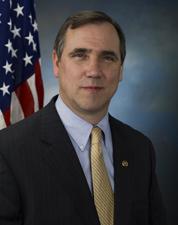 Sen. Jeff Merkley (D-OR)
Legislative Activity
Stay on top of the latest movement without scrolling through every action
Roll call votes on amendments in Senate: Amendment SA 3927, under the order of 10/9/2025, not having achieved 60 votes in the affirmative, not agreed to in Senate by Yea-Nay Vote. 47 - 50. Record Vote Number: 569.
October 9, 2025
View full timeline
Roll call votes on amendments in Senate: Amendment SA 3927, under the order of 10/9/2025, not having achieved 60 votes in the affirmative, not agreed to in Senate by Yea-Nay Vote. 47 - 50. Record Vote Number: 569.
October 9, 2025
Senate amendment not agreed to: Amendment SA 3927, under the order of 10/9/2025, not having achieved 60 votes in the affirmative, not agreed to in Senate by Yea-Nay Vote. 47 - 50. Record Vote Number: 569.
October 9, 2025
Senate amendment proposed (on the floor): Amendment SA 3927 proposed by Senator Merkley to Amendment SA 3748.
October 9, 2025
Amendment SA 3927 proposed by Senator Merkley to Amendment SA 3748. (consideration: CR S7074)
October 9, 2025
Amendment SA 3927, under the order of 10/9/2025, not having achieved 60 votes in the affirmative, not agreed to in Senate by Yea-Nay Vote. 47 - 50. Record Vote Number: 569.
October 9, 2025
Senate amendment submitted
October 8, 2025
Votes
1 roll call on this amendment
Text
Submitted
SA 3927. Mr. MERKLEY (for himself, Mr. Wyden, and Mr. Durbin)
submitted an amendment intended to be proposed to amendment SA 3748
proposed by Mr. Wicker (for himself and Mr. Reed) to the bill S. 2296,
to authorize appropriations for fiscal year 2026 for military
activities of the Department of Defense, for military construction, and
for defense activities of the Department of Energy, to prescribe
military personnel strengths for such fiscal year, and for other
purposes; which was ordered to lie on the table; as follows:

At the end of subtitle F of title X, add the following:

SEC. 1067. IDENTIFICATION OF FEDERAL LAW ENFORCEMENT OFFICERS
ENGAGED IN CROWD CONTROL.

(a) Definitions.--In this section--
(1) the term ``Federal law enforcement officer'' means--
(A) an employee or officer in a position in the executive,
legislative, or judicial branch of the Federal Government who
is authorized by law to engage in or supervise a law
enforcement function; or
(B) an employee or officer of a contractor or subcontractor
(at any tier) of an agency in the executive, legislative, or
judicial branch of the Federal Government who is authorized
by law or under the contract with the agency to engage in or
supervise a law enforcement function;
(2) the term ``law enforcement function'' means the
prevention, detection, or investigation of, or the
prosecution or incarceration of any person for, any violation
of law; and
(3) the term ``member of an armed force'' means a member of
any of the armed forces, as defined in section 101(a)(4) of
title 10, United States Code, or a member of the National
Guard, as defined in section 101(3) of title 32, United
States Code.
(b) Required Identification.--
(1) In general.--Each Federal law enforcement officer or
member of an armed force who is engaged in any form of crowd
control, riot control, or arrest or detainment of individuals
engaged in an act of civil disobedience, demonstration,
protest, other activity protected by the First Amendment to
the Constitution of the United States, or riot in the United
States shall at all times display identifying information in
a clearly visible fashion, which shall include--
(A) for a Federal law enforcement officer, the Federal
agency and the last name or unique identifier of the officer;
and
(B) for a member of an armed force, the service branch and
the last name or unique identifier of the member.
(2) Prohibition on covering of identifying information.--A
Federal law enforcement officer or member of an armed force
may not tape over or otherwise obscure or conceal the
identifying information required under paragraph (1) while
the officer or member is engaged in any form of law
enforcement activity described in paragraph (1).
(c) Rule of Construction.--Nothing in this section shall be
construed to--
(1) provide any new authority or expand existing authority
for members of an armed force to engage in law enforcement
activity; or
(2) affect existing law regarding the deployment of members
of an armed force for law enforcement activity.
______