S.Amdt. 4453Senate119th Congress (2025-2027)
S.Amdt. 4453
Sponsored by 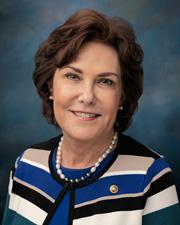 Sen. Jacky Rosen (D-NV)
Sen. Jacky Rosen (D-NV)Submitted March 17, 2026
Legislative Activity
Stay on top of the latest movement without scrolling through every action
Floor
Latest Action
Senate amendment submitted
March 17, 2026
Text
Submitted
SA 4453. Ms. ROSEN submitted an amendment intended to be proposed by
her to the bill S. 1383, to establish the Veterans Advisory Committee
on Equal Access, and for other purposes; which was ordered to lie on
the table; as follows:

At the appropriate place, insert the following:

SEC. __. SENSE OF THE SENATE REGARDING VACCINES.

(a) Findings.--Congress finds as follows:
(1) There is strong bipartisan support for wide access to
vaccines, ensuring vaccines are affordable, trusting science
and relying on peer-reviewed medical information, and
protecting all individuals, especially children and
vulnerable populations, from preventable illness.
(2) It is dangerous and harmful to children's health to
promote conspiracy theories and restrict access to life-
saving preventive medicine, including vaccines.
(3) Having a high rate of community adoption of vaccines is
critical to protect individuals who medically cannot receive
certain vaccinations, including infants and individuals with
weakened immune systems, such as cancer patients.
(4) Routine childhood immunizations for children born
between 1994 and 2023 have prevented approximately
508,000,000 cases of illness, approximately 32,000,000
hospitalizations, and over 1,100,000 deaths, according to the
Centers for Disease Control and Prevention.
(5) Measles is a highly contagious and deadly disease with
a range of serious health complications, and the measles,
mumps, and rubella vaccine (MMR) is safe and effective in
preventing this disease and has prevented over 60,000,000
deaths worldwide between 2000 and 2023.
(6) COVID-19 has caused over 1,200,000 deaths in the United
States and over 7,100,000 deaths worldwide, with fatalities
dropping dramatically once the COVID-19 vaccine became widely
available.
(7) After the hepatitis A vaccine was introduced in 1995,
between 1996 and 2011, the rate of hepatitis A infection
dropped by 95 percent.
(8) After the hepatitis B vaccine was introduced with
implementation of the birth dose recommendation, there has
been a 95 percent reduction in infant hepatitis B infections,
and an estimated 90,100 deaths have been prevented.
(9) Polio was a major cause of significant disability and
paralysis of children prior to the polio vaccine being
released in 1955, with over 21,000 paralytic cases in 1952,
and the disease was eradicated in the United States by 1979
due to effectiveness of the vaccine.
(10) Diphtheria, described in history dating back to the
5th century, is a contagious disease that causes respiratory
illness, has a 30 percent fatality rate (with higher fatality
rates for young children), and caused up to 15,000 deaths in
the United States annually in the 1920s, but due to
widespread vaccination, there has been only 1 reported death
from diphtheria in the United States between 1996 and 2018.
(11) Smallpox is a deadly disease that has existed for over
3000 years, with a fatality rate around 30 percent, that was
eradicated in the United States by 1949 and worldwide by
1977, due to the effectiveness of vaccines.
(12) Vaccines for seniors, including vaccines for
influenza, COVID-19, and shingles, are a critical prevention
tool to keep older individuals healthy and out of the
hospital.
(13) There are numerous additional diseases, including some
cancers, that are preventable by vaccines.
(14) Vaccine research to discover new ways to prevent
additional disease or treat disease should continue to
receive Federal research funding with no political
interference.
(15) Availability and insurance coverage of vaccines for
the entire population through a wide range of medical and
community settings, such as pharmacies, clinics, hospitals,
physician offices, health departments, health centers, mobile
clinics, and other locations, is essential to ensure access
to vaccines and protect public health.
(16) Recommendations of the Advisory Committee on
Immunization Practices and the Centers for Disease Control
and Prevention on vaccines are tied to, and impact, a wide
array of health programs, including the Medicaid program
under title XIX of the Social Security Act (42 U.S.C. 1396 et
seq.), the program under section 1928 of the Social Security
Act (42 U.S.C. 1396s; commonly referred to as the ``Vaccines
for Children program'') , the TRICARE program under chapter
55 of title 10, United States Code, hospital care and medical
services furnished by the Department of Veterans Affairs
under chapters 17 and 18 of title 38, United States

[[Page S1143]]

Code, the Medicare program under title XIX of the Social
Security Act (42 U.S.C. 1395 et seq.), and private health
insurance.
(17) A lack of private or public insurance coverage for
vaccines could make vaccines prohibitively expensive for
millions of patients to access, forcing patients to forego
vaccinations due to cost.
(18) In June 2025, Secretary of Health and Human Services
Robert F. Kennedy, Jr. took the unprecedented step of
dismissing all 17 members of the previously independent
Advisory Committee on Immunization Practices of the Centers
for Disease Control and Prevention and appointed a new set of
members.
(19) Such Advisory Committee has advised the Centers for
Disease Control and Prevention on vaccine recommendations for
more than 60 years.
(20) Secretary Kennedy's actions directly threatened access
to the COVID-19 vaccine in several States, including Nevada,
by making it more difficult for individuals who want the
vaccine to get it.
(21) In September 2025, the State of Florida became the
first State in modern history to take steps to eliminate its
immunization requirements for schoolchildren, putting Florida
children at a higher risk of contracting preventable diseases
like measles, pertussis, and other life-threatening diseases.
(b) Sense of the Senate.--It is the sense of the Senate
that--
(1) public health decisions should be based on science;
(2) the stance of the American Academy of Pediatrics and
other professional medical organizations in strongly
recommending immunization as the safest and most cost-
effective way of preventing disease, disability, and death
should be supported;
(3) States taking steps to weaken school immunization
requirements puts children and vulnerable individuals at
serious risk;
(4) the anti-vaccine policies proposed by the State of
Florida in September 2025 should be opposed;
(5) the misguided policies of Secretary of Health and Human
Services Robert F. Kennedy, Jr. that are based on anti-
vaccine conspiracy theories and have resulted in confusion,
fear, and lack of vaccine access for American families should
be condemned;
(6) the politicization of the Advisory Committee on
Immunization Practices of the Centers for Disease Control and
Prevention and calls for a return to relying on unbiased and
qualified medical professionals should be opposed;
(7) vaccines, including for COVID-19, should remain
accessible, including through insurance coverage, and that
the government should not mandate policies that make COVID-19
vaccines unavailable for those who want them; and
(8) vaccines--
(A) are critical to protecting public health, eliminating
preventable illness and death, and reducing hospitalization
and severity of illness;
(B) work best when adopted at a high rate within each
community; and
(C) should remain easily accessible and affordable, without
restriction.
______