S.Amdt. 4672Senate119th Congress (2025-2027)
S.Amdt. 4672
Sponsored by 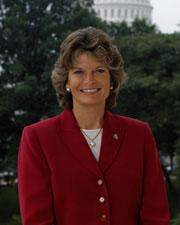 Sen. Lisa Murkowski (R-AK)
Sen. Lisa Murkowski (R-AK)Submitted March 19, 2026
Legislative Activity
Stay on top of the latest movement without scrolling through every action
Floor
Latest Action
Senate amendment submitted
March 19, 2026
Text
Submitted
SA 4672. Ms. MURKOWSKI submitted an amendment intended to be proposed
by her to the bill S. 1383, to establish the Veterans Advisory
Committee on Equal Access, and for other purposes; which was ordered to
lie on the table; as follows:

At the appropriate place, insert the following:

SEC. ___. CRITERIA FOR COVERAGE OF STATES AND POLITICAL
SUBDIVISIONS.

(a) Determination of States and Political Subdivisions
Subject to Section 4(a).--
(1) In general.--Section 4(b) of the Voting Rights Act of
1965 (52 U.S.C. 10303(b)) is amended to read as follows:
``(b) Determination of States and Political Subdivisions
Subject to Requirements.--
``(1) Existence of voting rights violations during previous
25 years.--
``(A) Statewide application.--Subsection (a) applies with
respect to a State and all political subdivisions within the
State during a calendar year if--
``(i) fifteen or more voting rights violations occurred in
the State during the previous 25 calendar years; or
``(ii) ten or more voting rights violations occurred in the
State during the previous 25 calendar years, at least one of
which was committed by the State itself (as opposed to a
political subdivision within the State).
``(B) Application to specific political subdivisions.--
Subsection (a) applies with respect to a political
subdivision as a separate unit during a calendar year if
three or more voting rights violations occurred in the
subdivision during the previous 25 calendar years.
``(2) Period of application.--
``(A) In general.--Except as provided in subparagraph (B),
if, pursuant to paragraph (1), subsection (a) applies with
respect to a State or political subdivision during a calendar
year, subsection (a) shall apply with respect to such State
or political subdivision for the period--

[[Page S1386]]

``(i) that begins on January 1 of the year in which
subsection (a) applies; and
``(ii) that ends on the date which is 10 years after the
date described in clause (i).
``(B) No further application after declaratory judgment.--
``(i) States.--If a State obtains a declaratory judgment
under subsection (a), and the judgment remains in effect,
subsection (a) shall no longer apply to such State and all
political subdivisions in the State pursuant to paragraph
(1)(A) unless, after the issuance of the declaratory
judgment, paragraph (1)(A) applies to the State solely on the
basis of voting rights violations occurring after the
issuance of the declaratory judgment, or paragraph (1)(B)
applies to the political subdivision solely on the basis of
voting rights violations occurring after the issuance of the
declaratory judgment.
``(ii) Political subdivisions.--If a political subdivision
obtains a declaratory judgment under subsection (a), and the
judgment remains in effect, subsection (a) shall no longer
apply to such political subdivision pursuant to paragraph
(1), including pursuant to paragraph (1)(A) (relating to the
statewide application of subsection (a)), unless, after the
issuance of the declaratory judgment, paragraph (1)(B)
applies to the political subdivision solely on the basis of
voting rights violations occurring after the issuance of the
declaratory judgment.
``(3) Determination of voting rights violation.--For
purposes of paragraph (1), a voting rights violation occurred
in a State or political subdivision if any of the following
applies:
``(A) Judicial relief; violation of the 14th or 15th
amendment.--Any final judgment (that has not been reversed on
appeal) occurred, in which the plaintiff prevailed and in
which any court of the United States determined that a denial
or abridgement of the right of any citizen of the United
States to vote on account of race, color, or membership in a
language minority group occurred, that a voting qualification
or prerequisite to voting or standard, practice, or procedure
with respect to voting created an undue burden on the right
to vote in connection with a claim that the law unduly
burdened voters of a particular race, color, or language
minority group, or that race was the predominant factor
motivating the decision to place a significant number of
voters within or outside of a particular district, unless
narrowly tailored in service of a compelling interest or in
response to an objection interposed by the Department of
Justice, in violation of the 14th or 15th Amendment to the
Constitution of the United States, anywhere within the State
or subdivision.
``(B) Judicial relief; violations of this act.--Any final
judgment (that has not been reversed on appeal) occurred in
which the plaintiff prevailed and in which any court of the
United States determined that a voting qualification or
prerequisite to voting or standard, practice, or procedure
with respect to voting was imposed or applied or would have
been imposed or applied anywhere within the State or
subdivision in a manner that resulted or would have resulted
in a denial or abridgement of the right of any citizen of the
United States to vote on account of race, color, or
membership in a language minority group, in violation of
subsection (e) or (f) or section 2, 201, or 203, or any final
judgment (that has not been reversed on appeal) occurred in
which a court of the United States found a State or political
subdivision failed to comply with section 5(a):  Provided,
That if the voting qualifications or prerequisites to voting
or standards, practices, or procedures that the court finds
required compliance with section 5(a) subsequently go into
effect (without alteration or amendment) in accordance with
the procedures in section 5(a), then such finding shall not
count as a violation.
``(C) Final judgment; denial of declaratory judgment.--In a
final judgment (that has not been reversed on appeal), any
court of the United States has denied the request of the
State or subdivision for a declaratory judgment under section
3(c) or section 5, and thereby prevented a voting
qualification or prerequisite to voting or standard,
practice, or procedure with respect to voting from being
enforced anywhere within the State or subdivision.
``(D) Objection by the attorney general.--The Attorney
General has interposed an objection under section 3(c) or
section 5, and thereby prevented a voting qualification or
prerequisite to voting or standard, practice, or procedure
with respect to voting from being enforced anywhere within
the State or subdivision. A violation under this subparagraph
has not occurred where an objection has been withdrawn by the
Attorney General, unless the withdrawal was in response to a
change in the law or practice that served as the basis of the
objection. A violation under this subparagraph has not
occurred where the objection is based solely on a State or
political subdivision's failure to comply with a procedural
process that would not otherwise count as an independent
violation of this Act.
``(E) Consent decree, settlement, or other agreement.--
``(i) Agreement.--A consent decree, settlement, or other
agreement was adopted or entered by a court of the United
States that contains an admission of liability by the
defendants, which resulted in the alteration or abandonment
of a voting practice anywhere in the territory of such State
or subdivision that was challenged on the ground that the
practice denied or abridged the right of any citizen of the
United States to vote on account of race, color, or
membership in a language minority group in violation of
subsection (e) or (f) or section 2, 201, or 203, or the 14th
or 15th Amendment.
``(ii) Independent violations.--A voluntary extension or
continuation of a consent decree, settlement, or agreement
described in clause (i) shall not count as an independent
violation under this subparagraph. Any other extension or
modification of such a consent decree, settlement, or
agreement, if the consent decree, settlement, or agreement
has been in place for ten years or longer, shall count as an
independent violation under this subparagraph. If a court of
the United States finds that a consent decree, settlement, or
agreement described in clause (i) itself denied or abridged
the right of any citizen of the United States to vote on
account of race, color, or membership in a language minority
group, violated subsection (e) or (f) or section 2, 201, or
203, or created an undue burden on the right to vote in
connection with a claim that the consent decree, settlement,
or other agreement unduly burdened voters of a particular
race, color, or language minority group, that finding shall
count as an independent violation under this subparagraph.
``(F) Multiple violations.--Each instance in which a voting
qualification or prerequisite to voting or standard,
practice, or procedure with respect to voting, including each
redistricting plan, is found to be a violation by a court of
the United States pursuant to subparagraph (A) or (B), or
prevented from being enforced pursuant to subparagraph (C) or
(D), or altered or abandoned pursuant to subparagraph (E)
shall count as an independent violation under this paragraph.
Within a redistricting plan, each violation under this
paragraph found to violate the rights of any group of voters
within an individual district based on race, color, or
language minority group shall count as an independent
violation under this paragraph.
``(4) Timing of determinations.--
``(A) Determinations of voting rights violations.--As early
as practicable during each calendar year, the Attorney
General shall make the determinations required by this
subsection, including updating the list of voting rights
violations occurring in each State and political subdivision
for the previous calendar year.
``(B) Effective upon publication in federal register.--A
determination or certification of the Attorney General under
this section or under section 8 or 13 shall be effective upon
publication in the Federal Register.''.
(2) Conforming amendments.--Section 4(a) of such Act (52
U.S.C. 10303(a)) is amended--
(A) in paragraph (1), in the first sentence of the matter
preceding subparagraph (A), by striking ``any State with
respect to which'' and all that follows through ``unless''
and inserting ``any State to which this subsection applies
during a calendar year pursuant to determinations made under
subsection (b), or in any political subdivision of such State
(as such subdivision existed on the date such determinations
were made with respect to such State), though such
determinations were not made with respect to such subdivision
as a separate unit, or in any political subdivision with
respect to which this subsection applies during a calendar
year pursuant to determinations made with respect to such
subdivision as a separate unit under subsection (b),
unless'';
(B) in paragraph (1), in the matter preceding subparagraph
(A), by striking the second sentence;
(C) in paragraph (1)(A), by striking ``(in the case of a
State or subdivision seeking a declaratory judgment under the
second sentence of this subsection)'';
(D) in paragraph (1)(B), by striking ``(in the case of a
State or subdivision seeking a declaratory judgment under the
second sentence of this subsection)'';
(E) in paragraph (3), by striking ``(in the case of a State
or subdivision seeking a declaratory judgment under the
second sentence of this subsection)'';
(F) in paragraph (5), by striking ``(in the case of a State
or subdivision which sought a declaratory judgment under the
second sentence of this subsection)'';
(G) by striking paragraphs (7) and (8); and
(H) by redesignating paragraph (9) as paragraph (7).
(b) Clarification of Treatment of Members of Language
Minority Groups.--Section 4(a)(1) of such Act (52 U.S.C.
10303(a)(1)), as amended by subsection (a), is further
amended, in the first sentence, by striking ``race or
color,'' and inserting ``race or color, or in contravention
of the guarantees of subsection (f)(2),''.
(c) Facilitating Bailout.--Section 4(a) of the Voting
Rights Act of 1965 (52 U.S.C. 10303(a)), as amended by
subsection (a), is further amended--
(1) by striking paragraph (1)(C);
(2) by inserting at the beginning of paragraph (7), as
redesignated by subsection (a)(2)(H), the following: ``Any
plaintiff seeking a declaratory judgment under this
subsection on the grounds that the plaintiff meets the
requirements of paragraph (1) may request that the Attorney
General consent to entry of judgment.''; and
(3) by adding at the end the following:
``(8) If a political subdivision is subject to the
application of this subsection, due to the applicability of
subsection (b)(1)(A), the political subdivision may seek a
declaratory judgment under this section if the subdivision
demonstrates that the subdivision

[[Page S1387]]

meets the criteria established by the subparagraphs of
paragraph (1), for the 10 years preceding the date on which
subsection (a) applied to the political subdivision under
subsection (b)(1)(A).
``(9) If a political subdivision was not subject to the
application of this subsection by reason of a declaratory
judgment entered prior to the date of enactment of this
paragraph, and is not, subsequent to that date of enactment,
subject to the application of this subsection under
subsection (b)(1)(B), then that political subdivision shall
not be subject to the requirements of this subsection.''.

SEC. ___. DETERMINATION OF STATES AND POLITICAL SUBDIVISIONS
SUBJECT TO PRECLEARANCE FOR COVERED PRACTICES.

The Voting Rights Act of 1965 (52 U.S.C. 10301 et seq.) is
further amended by inserting after section 4 the following:

``SEC. 4A. DETERMINATION OF STATES AND POLITICAL SUBDIVISIONS
SUBJECT TO PRECLEARANCE FOR COVERED PRACTICES.

``(a) Practice-Based Preclearance.--
``(1) In general.--Each State and each political
subdivision shall--
``(A) identify any change to a law, regulation, or policy
that includes a voting qualification or prerequisite to
voting, or a standard, practice, or procedure with respect to
voting, that is a covered practice described in subsection
(b); and
``(B) ensure that no such covered practice is implemented
unless or until the State or political subdivision, as the
case may be, complies with subsection (c).
``(2) Determinations of characteristics of voting-age
population.--
``(A) In general.--As early as practicable during each
calendar year, the Attorney General, in consultation with the
Director of the Bureau of the Census and the heads of other
relevant offices of the government, shall make the
determinations required by this section regarding voting-age
populations and the characteristics of such populations, and
shall publish a list of the States and political subdivisions
to which a voting-age population characteristic described in
subsection (b) applies.
``(B) Publication in the federal register.--A determination
(including a certification) of the Attorney General under
this paragraph shall be effective upon publication in the
Federal Register.
``(b) Covered Practices.--To assure that the right of
citizens of the United States to vote is not denied or
abridged on account of race, color, or membership in a
language minority group as a result of the implementation of
certain qualifications or prerequisites to voting, or
standards, practices, or procedures with respect to voting in
a State or political subdivision, the following shall be
covered practices subject to the requirements described in
subsection (a):
``(1) Changes to method of election.--Any change to the
method of election--
``(A) to add seats elected at-large in a State or political
subdivision where--
``(i) two or more racial groups or language minority groups
each represent 20 percent or more of the voting-age
population in the State or political subdivision,
respectively; or
``(ii) a single language minority group represents 20
percent or more of the voting-age population on Indian lands
located in whole or in part in the State or political
subdivision; or
``(B) to convert one or more seats elected from a single-
member district to one or more at-large seats or seats from a
multi-member district in a State or political subdivision
where--
``(i) two or more racial groups or language minority groups
each represent 20 percent or more of the voting-age
population in the State or political subdivision,
respectively; or
``(ii) a single language minority group represents 20
percent or more of the voting-age population on Indian lands
located in whole or in part in the State or political
subdivision.
``(2) Changes to political subdivision boundaries.--Any
change or series of changes within a year to the boundaries
of a political subdivision that reduces by 3 or more
percentage points the percentage of the political
subdivision's voting-age population that is comprised of
members of a single racial group or language minority group
in the political subdivision where--
``(A) two or more racial groups or language minority groups
each represent 20 percent or more of the political
subdivision's voting-age population; or
``(B) a single language minority group represents 20
percent or more of the voting-age population on Indian lands
located in whole or in part in the political subdivision.
``(3) Changes through redistricting.--Any change to the
apportionment or boundaries of districts for Federal, State,
or local elections in a State or political subdivision where
any racial group or language minority group that is not the
largest racial group or language minority group in the
jurisdiction and that represents 15 percent or more of the
State or political subdivision's voting-age population
experiences a population increase of at least 20 percent of
its voting-age population, over the preceding decade (as
calculated by the Bureau of the Census under the most recent
decennial census), in the jurisdiction.
``(4) Changes in documentation or qualifications to vote.--
Any change to requirements for documentation or proof of
identity to vote or register to vote in elections for
Federal, State, or local offices that will exceed or be more
stringent than such requirements under State law on the day
before the date of enactment of this section.
``(5) Changes to multilingual voting materials.--Any change
that reduces multilingual voting materials or alters the
manner in which such materials are provided or distributed,
where no similar reduction or alteration occurs in materials
provided in English for such election.
``(6) Changes that reduce, consolidate, or relocate voting
locations, or reduce voting opportunities.--Any change that
reduces, consolidates, or relocates voting locations in
elections for Federal, State, or local office, including
early, absentee, and election-day voting locations, or
reduces days or hours of in-person voting on any Sunday
during a period occurring prior to the date of an election
for Federal, State, or local office during which voters may
cast ballots in such election, if the location change, or
reduction in days or hours, applies--
``(A) in one or more census tracts in which two or more
language minority groups or racial groups each represent 20
percent or more of the voting-age population; or
``(B) on Indian lands in which at least 20 percent of the
voting-age population belongs to a single language minority
group.
``(7) New list maintenance process.--Any change to the
maintenance process for voter registration lists that adds a
new basis for removal from the list of active voters
registered to vote in elections for Federal, State, or local
office, or that incorporates new sources of information in
determining a voter's eligibility to vote in elections for
Federal, State, or local office, if such a change would have
a statistically significant disparate impact, concerning the
removal from voter rolls, on members of racial groups or
language minority groups that constitute greater than 5
percent of the voting-age population--
``(A) in the case of a political subdivision imposing such
change if--
``(i) two or more racial groups or language minority groups
each represent 20 percent or more of the voting-age
population of the political subdivision; or
``(ii) a single language minority group represents 20
percent or more of the voting-age population on Indian lands
located in whole or in part in the political subdivision; or
``(B) in the case of a State imposing such change, if two
or more racial groups or language minority groups each
represent 20 percent or more of the voting-age population
of--
``(i) the State; or
``(ii) a political subdivision in the State, except that
the requirements under subsections (a) and (c) shall apply
only with respect to each such political subdivision
individually.
``(c) Preclearance.--
``(1) In general.--
``(A) Action .--Whenever a State or political subdivision
with respect to which the requirements set forth in
subsection (a) are in effect shall enact, adopt, or seek to
implement any covered practice described under subsection
(b), such State or subdivision may institute an action in the
United States District Court for the District of Columbia for
a declaratory judgment that such covered practice neither has
the purpose nor will have the effect of denying or abridging
the right to vote on account of race, color, or membership in
a language minority group, and unless and until the court
enters such judgment such covered practice shall not be
implemented.
``(B) Submission to attorney general.--
``(i) In general.--Notwithstanding subparagraph (A), such
covered practice may be implemented without such proceeding
if the covered practice has been submitted by the chief legal
officer or other appropriate official of such State or
subdivision to the Attorney General and the Attorney General
has not interposed an objection within 60 days after such
submission, or upon good cause shown, to facilitate an
expedited approval within 60 days after such submission, the
Attorney General has affirmatively indicated that such
objection will not be made. An exigency, including a natural
disaster, inclement weather, or other unforeseeable event,
requiring a changed qualification, prerequisite, standard,
practice, or procedure within 30 days of a Federal, State, or
local election shall constitute good cause requiring the
Attorney General to expedite consideration of the submission.
To the extent feasible, expedited consideration shall
consider the views of individuals affected by the changed
qualification, prerequisite, standard, practice, or
procedure.
``(ii) Effect of indication.--Neither an affirmative
indication by the Attorney General that no objection will be
made, nor the Attorney General's failure to object, nor a
declaratory judgment entered under this subsection shall bar
a subsequent action to enjoin implementation of such covered
practice. In the event the Attorney General affirmatively
indicates that no objection will be made within the 60-day
period following receipt of a submission, the Attorney
General may reserve the right to reexamine the submission if
additional information comes to the Attorney General's
attention during the remainder of the 60-day period which
would otherwise require objection in accordance with this
subsection.
``(C) Court.--Any action under this subsection shall be
heard and determined by a court of three judges in accordance
with the provisions of section 2284 of title 28, United

[[Page S1388]]

States Code, and any appeal shall lie to the Supreme Court.
``(2) Denying or abridging the right to vote.--Any covered
practice described in subsection (b) that has the purpose of
or will have the effect of diminishing the ability of any
citizens of the United States on account of race, color, or
membership in a language minority group, to elect their
preferred candidates of choice denies or abridges the right
to vote within the meaning of paragraph (1).
``(3) Purpose defined.--The term `purpose' in paragraphs
(1) and (2) shall include any discriminatory purpose.
``(4) Purpose of paragraph (2).--The purpose of paragraph
(2) is to protect the ability of such citizens to elect their
preferred candidates of choice.
``(d) Enforcement.--The Attorney General or any aggrieved
citizen may file an action in a district court of the United
States to compel any State or political subdivision to
satisfy the obligations set forth in this section. Such an
action shall be heard and determined by a court of three
judges under section 2284 of title 28, United States Code. In
any such action, the court shall provide as a remedy that
implementation of any voting qualification or prerequisite to
voting, or standard, practice, or procedure with respect to
voting, that is the subject of the action under this
subsection be enjoined unless the court determines that--
``(1) the voting qualification or prerequisite to voting,
or standard, practice, or procedure with respect to voting,
is not a covered practice described in subsection (b); or
``(2) the State or political subdivision has complied with
subsection (c) with respect to the covered practice at issue.
``(e) Counting of Racial Groups and Language Minority
Groups.--For purposes of this section, the calculation of the
population of a racial group or a language minority group
shall be carried out using the methodology in the guidance of
the Department of Justice entitled `Guidance Concerning
Redistricting Under Section 5 of the Voting Rights Act;
Notice' (76 Fed. Reg. 7470 (February 9, 2011)).
``(f) Special Rule.--For purposes of determinations under
this section, any data provided by the Bureau of the Census,
whether based on estimation from a sample or actual
enumeration, shall not be subject to challenge or review in
any court.
``(g) Multilingual Voting Materials.--In this section, the
term `multilingual voting materials' means registration or
voting notices, forms, instructions, assistance, or other
materials or information relating to the electoral process,
including ballots, provided in the language or languages of
one or more language minority groups.''.
______