S.Amdt. 5718Senate119th Congress (2025-2027)
S.Amdt. 5718
Sponsored by 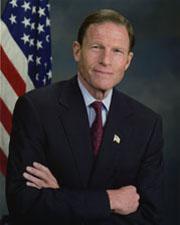 Sen. Richard Blumenthal (D-CT)
Sen. Richard Blumenthal (D-CT)Submitted June 4, 2026
Legislative Activity
Stay on top of the latest movement without scrolling through every action
Floor
Latest Action
Senate amendment submitted
June 4, 2026
Text
Submitted
SA 5718. Mr. BLUMENTHAL submitted an amendment intended to be
proposed by him to the bill S. 2, to provide for reconciliation
pursuant to title II of S. Con. Res. 33.; which was ordered to lie on
the table; as follows:

At the appropriate place, insert the following:

SEC. _____. PROHIBITING POLITICAL PROSECUTIONS.

(a) Short Title.--This section may be cited as the
``Prohibiting Political Prosecutions Act of 2026''.
(b) Impermissible Considerations for Initiating or
Declining Charges and Right of Action.--
(1) In general.--Chapter 31 of title 28, United States
Code, is amended by adding at the end the following:

``Sec. 530E. Impermissible considerations for initiating or
declining charges and right of action

``(a) Definition.--In this section, the term `applicable
covered individual' means--
``(1) if the investigation involved the Federal Bureau of
Investigation, the Director of the Federal Bureau of
Investigation, a special agent in charge, a section chief,
and an agent of the Federal Bureau of Investigation;
``(2) if the investigation involved an agency other than
the Federal Bureau of Investigation, the head of the agency
and an agent of the agency; and
``(3) a United States attorney and a line prosecutor.
``(b) Impermissible Considerations.--
``(1) In general.--In determining whether to commence or
recommend prosecution or investigation an attorney or
investigator for the Government shall not consider the
political or policy associations, activities, or beliefs of
the person. An attorney or investigator for the Government
shall not commence or recommend prosecution or investigation
against a person in order to influence or change, in any way,
the political or policy associations, activities, or beliefs
of the person.
``(2) Applications.--Each criminal complaint, information,
indictment, and application for a search warrant or arrest
warrant shall include an attestation by the applicable
covered individual that--
``(A) the covered individual is not aware that the criminal
complaint, information, indictment, search warrant, or arrest
warrant, as applicable, is being sought because of the
political association, activities, or beliefs of the person
subject to the warrant or a defendant named in the
indictment;
``(B) the covered individual is not aware that the criminal
complaint, information, indictment, search warrant, or arrest
warrant, as applicable, is being sought in order to influence
or change, in any way, the political or policy associations,
activities, or beliefs of the person subject to the warrant
or a defendant named in the indictment; and
``(C) in the case of a criminal complaint, information, or
indictment, the covered individual believes the evidence in
support of the indictment is sufficient to prove the guilt of
the defendant at trial beyond a reasonable doubt.
``(3) Rule of construction.--Nothing in paragraph (1) may
be construed to limit the authority of the Attorney General--
``(A) to establish prosecutorial and other guidelines for
personnel of the Department of Justice;
``(B) to displace any additional provisions of the Justice
Manual; or
``(C) to exclude by implication any other consideration the
Attorney General determines is impermissible in determining
whether to commence or recommend prosecution or take other
action against a person.
``(c) Right of Action.--Any person investigated or
prosecuted following a violation of this section may bring a
civil action in an appropriate court of the United States for
damages against any applicable covered individual in their
individual capacity.''.
(2) Technical and conforming amendment.--The table of
sections for chapter 31, United States Code, is amended by
adding at the end the following:

``530E. Impermissible considerations for initiating or declining
charges and right of action.''.
(c) Grand Jury Reforms.--
(1) In general.--Rule 6 of the Federal Rules of Criminal
Procedure is amended by adding at the end the following:
``(j) Presentation of Exculpatory Information.--If the
government is aware of exculpatory evidence, the government
shall inform the grand jury of its nature and existence.
``(k) Presentation of Impeachment Information.--The
government shall inform the grand jury of any statement,
report, communication, or recording in the possession of the
government made by, or including, a witness who testified
before the grand jury that may impeach the credibility of the
testimony of the witness.''.
(2) Discovery and inspection.--Rule 16(a)(1) of the Federal
Rules of Criminal Procedure is amended--
(A) by redesignating subparagraph (G) as subparagraph (H);
and
(B) by inserting after subparagraph (F) the following:
``(G) Grand jury vote tally.--Upon a defendant's request,
the government must furnish the defendant with the number of
grand jurors who voted to indict on each count and the number
of grand jurors present for the vote.''.
(3) Dismissal.--Rule 48 of the Federal Rules of Criminal
Procedure is amended by adding at the end the following:
``(c) For Political Reasons.--
``(1) In general.--Upon a motion by the defendant alleging
that substantial grounds exist to believe that the political
or policy associations, activities, or beliefs of the
defendant were considered in bringing the prosecution or that
the prosecution was sought in order to influence or change,
in any way, the political or policy association, activities,
or beliefs of the defendant and requesting dismissal of all
or part of the indictment and inspection of grand jury
minutes, the judge shall review the grand jury minutes in
camera, including whether--
``(A) the government provided the grand jury with
sufficient evidence to prove by probable cause that the
defendant committed each element of the crime;
``(B) the evidence presented to the grand jury was without
impermissible reference to the political or policy
associations, activities, or beliefs of the defendant;
``(C) the government informed the grand jury of the nature
and existence of all exculpatory evidence of which the
government was aware; and
``(D) the government informed the grand jury of any
statement, report, communication, or recording in the
possession of the government made by a witness who testified
before the grand jury that may impeach the credibility of the
grand jury testimony of the witness.
``(2) Dismissal of all or part of the indictment.--
``(A) Determination.--If the court determines that evidence
presented to the grand jury impermissibly related to the
political or policy associations, activities or beliefs of
the defendant, or that the evidence was not sufficient to
prove probable cause for each element of the offense, the
court shall dismiss all or part of the indictment, as
applicable.
``(B) Re-presentation.--If the court dismisses all or part
of an indictment under this paragraph, the government may re-
present a case to a different grand jury only if the
government first files a motion providing, and the court
first finds, substantial grounds to believe that the
political or policy associations, activities, or beliefs of
the target were not considered in bringing the prosecution
and that the prosecution is not being sought in order to
influence or change, in any way, the political or policy
association, activities, or beliefs of the defendant.''.
(d) Prohibition on White House Influence.--
(1) In general.--Chapter 31 of title 28, United States
Code, as amended by section 2 of this Act, is amended by
adding at the end the following:

``Sec. 530F. Impermissible influence

``(a) In General.--No President or any employee of the
White House shall directly or indirectly instruct the
Department of Justice concerning investigative or charging
decisions in individual criminal cases.
``(b) No Consideration.--No Department of Justice employee
may consider direct or indirect instructions from the
President or any White House employee when making
investigative or charging decisions in individual criminal
cases.''.
(2) Technical and conforming amendment.--The table of
sections for chapter 31, United States Code, as amended by
section 2 of this Act, is amended by adding at the end the
following:

``530F. Impermissible influence.''.
(e) Reporting.--
(1) In general.--Section 530B of title 28, United States
Code, is amended--
(A) by redesignating subsection (c) as subsection (d); and
(B) by inserting after subsection (b) the following:

[[Page S2614]]

``(c)(1) All employees of the Department of Justice and
Federal Bureau of Investigation shall report to the Office of
Professional Responsibility of the Department of Justice and
the Office of the Inspector General of the Department of
Justice any instance where the political or policy
associations, activities, or beliefs of the target were
considered in any investigation or charging decision or when
an investigation or charging decision was made in order to
influence or change, in any way, the political or policy
association, activities, or beliefs of the target.
``(2) The Director of the Office of Professional
Responsibility of the Department of Justice and the Inspector
General of the Department of Justice shall disclose to each
appropriate congressional committee any communication or
complaint received by the Office of the Inspector General
relating to an allegation that, in determining whether to
commence or recommend prosecution or take other action
against a person, the political or policy associations,
activities, or beliefs of the person were considered or a
decision was made in order to influence or change, in any
way, the political or policy association, activities, or
beliefs of the person.
``(3) Any disclosure made under paragraph (2) shall--
``(A) include--
``(i) the specific communication or complaint received by
the Office of Professional Responsibility or Office of the
Inspector General;
``(ii) the investigative steps the Office of Professional
Responsibility or Office of the Inspector General took in
response to the allegation; and
``(iii) any findings of the Office of Professional
Responsibility or Office of the Inspector General;
``(B) notwithstanding section 552a of title 5, be
confidential and not subject to disclosure; and
``(C) be made not later than 5 business days after the
issuance of any findings or, if no findings are issued, be
made no later than 5 business days after the conclusion of
the investigation.
``(4) The Office of Professional Responsibility of the
Department of Justice and the Office of the Inspector General
of the Department of Justice shall investigate all
communications and complaints relating to an allegation that,
in determining whether to commence or recommend prosecution
or take other action against a person, the political
association, activities, or beliefs of the person were
considered or a decision was made in order to influence or
change, in any way, the political or policy associations,
activities, or beliefs of the person. Such investigations
shall be commenced not later than 5 business days after the
initial receipt of the communication or complaint and shall
be completed not later than 1 month after such receipt.''.
(f) Severability.--If any provision of this section, an
amendment made by this section, or the application of such
provision or amendment to any person or circumstance is held
to be unconstitutional, the remainder of this section, the
amendments made by this section, and the application of the
provisions of such to any person or circumstance shall not be
affected thereby.
______