S.Amdt. 6110Senate119th Congress (2025-2027)
S.Amdt. 6110
Sponsored by 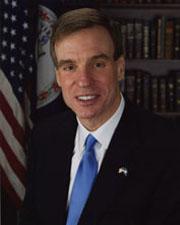 Sen. Mark R. Warner (D-VA)
Sen. Mark R. Warner (D-VA)Submitted June 24, 2026
Legislative Activity
Stay on top of the latest movement without scrolling through every action
Floor
Latest Action
Senate amendment submitted
June 24, 2026
Text
Submitted
SA 6110. Mr. WARNER (for himself and Mr. Rounds) submitted an
amendment intended to be proposed by him to the bill S. 4784, to
authorize appropriations for fiscal year 2027 for military activities
of the Department of Defense, for military construction, and for
defense activities of the Department of Energy, to prescribe military
personnel strengths for such fiscal year, and for other purposes; which
was ordered to lie on the table; as follows:

At the appropriate place in title ___, insert the
following:

SEC. __. ECONOMY OF THE FUTURE COMMISSION.

(a) Definitions.--In this section:
(1) Artificial intelligence.--The term ``artificial
intelligence'' has the meaning given the term in section 5002
of the National Artificial Intelligence Initiative Act of
2020 (15 U.S.C. 9401).

[[Page S3317]]

(2) Commission.--The term ``Commission'' means the Economy
of the Future Commission established under subsection (b).
(3) Congressional leader.--The term ``congressional
leader'' means the majority leader of the Senate, the Speaker
of the House of Representatives, the minority leader of the
Senate, or the minority leader of the House of
Representatives.
(4) NAICS.--The term ``NAICS'' means the North American
Industry Classification System.
(b) In General.--There is established in the legislative
branch a commission to develop consensus legislative
recommendations addressing economic changes caused by the
adoption of artificial intelligence, to be known as the
``Economy of the Future Commission''.
(c) Membership.--
(1) In general.--The Commission shall be composed of the
following members:
(A) 12 members appointed by Congress in accordance with
paragraph (2), of whom--
(i) the majority leader of the Senate and the Speaker of
the House of Representatives shall each appoint 3 members;
and
(ii) the minority leader of the Senate and the minority
leader of the House of Representatives shall each appoint 3
members.
(B) Four persons appointed by the President, as nonvoting
members.
(2) Congressional appointees.--Each congressional leader
making appointments under paragraph (1)(A) shall--
(A) appoint 1 member who is serving as a Member of the
house of Congress in which the congressional leader serves;
and
(B) for any remaining appointments, appoint an individual
who is not serving in Congress and who is nationally
recognized for expertise, knowledge, or experience in--
(i) artificial intelligence technology;
(ii) education;
(iii) workforce retraining; or
(iv) taxation.
(3) Appointment.--Members of the Commission shall be
appointed not later than 45 days after the date of the
enactment of this Act.
(4) Ethics.--A congressional leader who appoints members of
the Commission may not appoint an individual as a member of
the Commission if such individual possesses any personal or
financial interest in the discharge of any of the duties of
the Commission.
(d) Co-Chairs.--
(1) In general.--The Commission shall have 2 co-chairs,
selected jointly by the congressional leaders from among the
members of the Commission in accordance with paragraph (2).
(2) Co-chair requirements.--One co-chair of the Commission
shall be a member of the Democratic Party, and one co-chair
shall be a member of the Republican Party. One co-chair of
the Commission shall be a Member of the House of
Representatives and one co-chair shall be a Senator.
(e) Meetings; Quorum; Vacancies.--
(1) Initial meeting.--The Commission shall hold its initial
meeting on or before the date that is 60 days after the date
of the enactment of this Act.
(2) Additional meetings.--After its initial meeting, the
Commission shall meet upon the call of the co-chairs of the
Commission.
(3) Quorum.--7 members of the Commission shall constitute a
quorum for purposes of conducting business, except that 2
members of the Commission shall constitute a quorum for
purposes of receiving testimony.
(4) Vacancies.--Any vacancy in the Commission shall not
affect its powers, but shall be filled in the same manner in
which the original appointment was made.
(5) Quorum with vacancies.--If vacancies in the Commission
occur on any day after 45 days after the date of the
enactment of this Act, a quorum shall consist of a majority
of the members of the Commission as of such day.
(f) Actions of Commission.--
(1) In general.--The Commission shall act by resolution
agreed to by a majority of the members of the Commission
voting and present.
(2) Panels.--The Commission may establish panels composed
of less than the full membership of the Commission for
purposes of carrying out the duties of the Commission under
this section. The actions of any such panel shall be subject
to the review and control of the Commission. Any findings and
determinations made by such a panel shall not be considered
the findings and determinations of the Commission unless
approved by the Commission.
(3) Delegation.--Any member, agent, or staff of the
Commission may, if authorized by the co-chairs of the
Commission, take any action which the Commission is
authorized to take pursuant to this section.
(g) Duties.--The duties of the Commission are--
(1) in general, to develop consensus legislative
recommendations addressing economic changes caused by the
adoption of artificial intelligence;
(2) to evaluate the effectiveness of, and develop consensus
legislative recommendations that address and respond to the
economic changes caused by, the adoption of artificial
intelligence, including the effectiveness and economic
changes of that adoption for--
(A) government data, research, and measurement;
(B) workforce development programs;
(C) kindergarten through grade 12 public education, career
and technical education, and higher education; and
(D) social safety net programs and worker support;
(3) to develop consensus legislative recommendations
addressing--
(A) the development of standards and metrics to evaluate
and address artificial intelligence adoption across the
Federal Government, including standards and metrics to
identify and address artificial intelligence-specific skill
and training needs across the Federal workforce;
(B) the relative merits of open-source and open-weight
models of artificial intelligence for suitability for small-
and medium-sized businesses and the use of open-source and
open-weight models to improve the efficiency of government
operations;
(C) the potential for a national Federal artificial
intelligence research investment strategy;
(D) public and private sector partnerships to increase
research access by academic institutions and small businesses
to private sector computing, models, data, and software
resources related to artificial intelligence;
(E) developing and scaling foundational manufacturing
technologies related to artificial intelligence through
government programs and public-private partnerships such as
the Hollings Manufacturing Extension Program established
under section 25(b) of the National Institute of Standards
and Technologies Act (15 U.S.C. 278k);
(F) supply chain and manufacturing challenges to developing
emerging technologies that are projected to heavily utilize
artificial intelligence, such as robotics;
(G) the need for public and private sector collaboration in
developing cloud computing-based laboratories for furthering
research into key technology focus areas, as defined in
section 10387(c) of the Research and Development,
Competition, and Innovation Act (42 U.S.C. 19107(c)),
utilizing artificial intelligence;
(H) changes to transportation safety policies and
regulations caused by the adoption of artificial intelligence
in land-, air-, and sea-based autonomous vehicles;
(I) energy generation, storage, and transmission demands
caused by the development of the artificial intelligence
industry and the construction and operation of domestic data
centers; and
(J) the use of artificial intelligence-enabled robotics in
government (other than in the Department of Defense) and
industry; and
(4) to prepare the reports required under subsection (k).
(h) Powers of Commission.--
(1) In general.--The Commission or, on the authorization of
the Commission, any subcommittee or member of, the Commission
may, for the purpose of carrying out the provisions of this
section--
(A) hold such hearings and sit and act at such times and
places, take such testimony, receive such evidence, and
administer such oaths; and
(B) require the attendance and testimony of such witnesses
and the production of such books, records, correspondence,
memoranda, papers, and documents, as the Commission or such
designated subcommittee or designated member considers
necessary.
(2) Contracting.--The Commission may, to such extent and in
such amounts as are provided in advance in appropriation
Acts, enter into contracts to enable the Commission to
discharge its duties under this section.
(3) Information from federal agencies.--
(A) In general.--The Commission may secure directly from
any executive department, agency, bureau, board, commission,
office, independent establishment, or instrumentality of the
Government information, suggestions, estimates, and
statistics for the purposes of this section.
(B) Response.--Each such department, agency, bureau, board,
commission, office, establishment, or instrumentality shall,
to the extent authorized by law, furnish such information,
suggestions, estimates, and statistics directly to the
Commission, upon request of the co-chairs of the Commission.
(C) Classified information.--The Commission shall handle
and protect all classified information provided to it under
this section in accordance with applicable statutes and
regulations.
(4) Assistance from federal agencies.--Federal departments
and agencies may provide the Commission such services, funds,
facilities, staff, and other support as such departments and
agencies consider advisable and as may be authorized by law.
(5) Postal services.--The Commission may use the United
States postal services in the same manner and under the same
conditions as the departments and agencies of the United
States.
(6) Gifts.--
(A) No gifts for service.--No member or staff of the
Commission may receive a gift or benefit by reason of the
service of such member or staff to the Commission.
(B) Authority to accept gifts.--The Commission may accept,
use, and dispose of gifts or donations of services or
property (including goods) from non-Federal entities for the
purposes of aiding and facilitating the work of the
Commission. The authority in this subparagraph does not
extend to gifts of money.
(i) Staff of Commission.--
(1) In general.--The co-chairs of the Commission, in
accordance with rules agreed upon by the Commission, shall
appoint and fix at a reasonable rate the compensation for a
staff director and such other personnel as

[[Page S3318]]

may be necessary to enable the Commission to carry out its
duties.
(2) Experts and consultants.--The co-chairs of the
Commission may procure the services of experts and
consultants in accordance with applicable law.
(3) Detailees.--Any Federal Government employee may be
detailed to the Commission without reimbursement from the
Commission, and such detailee shall retain the rights,
status, and privileges of his or her regular employment
without interruption.
(j) Compensation and Travel Expenses.--
(1) Compensation.--
(A) In general.--Except as provided in paragraph (B), each
member of the Commission may be compensated at a rate set by
the co-chairs that is reasonable for the services that such a
member provides for each day during which that member is
engaged in the actual performance of the duties of the
Commission under this section.
(B) Exclusion.--Members of the Commission who are officers
or employees of the United States or Members of Congress
shall receive no additional pay by reason of their service on
the Commission.
(2) Travel expenses.--While away from their homes or
regular places of business in the performance of services for
the Commission, members of the Commission may be allowed
travel expenses, including per diem in lieu of subsistence,
at a reasonable rate set by the co-chairs.
(k) Reports.--
(1) Interim report.--By not later than 7 months after the
date of enactment of this Act, the Commission shall issue an
interim report, to be disseminated to the public, including--
(A)(i) the initial estimates of changes in employment due
to the adoption of artificial intelligence for 5 years and 10
years after the date of enactment of this Act, by 6-digit
NAICS code; and
(ii) the Commission's level of confidence in such
estimates;
(B)(i) Federal revenue estimates for tax years beginning 5
and 10 years after the enactment of this Act; and
(ii) commentary by the Commission on the likelihood that
the adoption of artificial intelligence will increase or
decrease revenue during each time period described in clause
(i); and
(C) a description of high-quality, free resources that the
public can access to learn more about artificial intelligence
and the effects that its wide adoption may have on the global
economy.
(2) Final report.--By not later than 13 months after the
date of enactment of this Act, the Commission shall prepare
and submit to Congress a final report regarding the impact of
the adoption of artificial intelligence that includes
legislative recommendations on artificial intelligence
education, reskilling of employees needed due to the adoption
of artificial intelligence, unemployment insurance, and
taxation policy, and on maintaining global competitiveness in
key industries including technology and manufacturing.
(l) Termination.--
(1) In general.--The Commission, and all the authorities of
this section, shall terminate on the last day of the 120-day
period beginning on the date on which the final report
described in subsection (k)(2) is submitted to Congress.
(2) Closing activities.--The Commission may use the 120-day
period immediately preceding termination for the purposes of
concluding its activities, including providing testimony to
Congress concerning the final report described in subsection
(k)(2) and disseminating the report.
(m) Funding.--There is authorized to be appropriated to
carry out this section, $5,250,000 for fiscal year 2027, to
remain available until the date on which the Commission
terminates under subsection (l)(1).
______