S.Amdt. 6334Senate119th Congress (2025-2027)
S.Amdt. 6334
Sponsored by 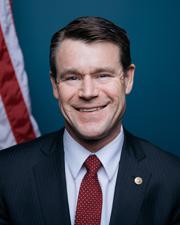 Sen. Todd Young (R-IN)
Sen. Todd Young (R-IN)Submitted June 24, 2026
Legislative Activity
Stay on top of the latest movement without scrolling through every action
Floor
Latest Action
Senate amendment submitted
June 24, 2026
Text
Submitted
SA 6334. Mr. YOUNG (for himself, Mr. Padilla, Mr. Budd, Mr. Cotton,
Mr. Coons, Mr. Fetterman, and Ms. Klobuchar) submitted an amendment
intended to be proposed by him to the bill S. 4784, to authorize
appropriations for fiscal year 2027 for military activities of the
Department of Defense, for military construction, and for defense

[[Page S3457]]

activities of the Department of Energy, to prescribe military personnel
strengths for such fiscal year, and for other purposes; which was
ordered to lie on the table; as follows:

At the end, add the following:

DIVISION F--AMERICAN BIOTECHNOLOGY COMPETITIVENESS ACT

SECTION 1. SHORT TITLE.

This division may be cited as the ``American Biotechnology
Competitiveness Act''.

TITLE I--BIOSECURITY MODERNIZATION AND INNOVATION

SEC. 101. DEFINITIONS.

In this title:
(1) Covered provider.--
(A) In general.--Except as provided in subparagraph (B),
the term ``covered provider'' means a person who--
(i) synthesizes and sells synthetic nucleic acids to
persons in the United States or in a foreign country; or
(ii) produces and distributes or sells, including
resellers, equipment for synthesizing nucleic acids,
including benchtop synthesizers, to persons in the United
States.
(B) Exception.--The term ``covered provider'' does not
include a person the extent the person sells or distributes
synthetic nucleic acids within a commercial entity for the
purpose of such entity's research and development activities.
(2) Director.--The term ``Director'' means the Director of
the Office of Science and Technology Policy.
(3) Secretary.--The term ``Secretary'' means the Secretary
of Commerce.
(4) Under secretary.--The term ``Under Secretary'' means
the Under Secretary of Commerce for Standards and Technology.

SEC. 102. SENSE OF CONGRESS.

It is the Sense of Congress that--
(1) the field of biotechnology is accelerating and the
United States is at risk of losing its biotechnology
leadership to foreign adversaries;
(2) this acceleration of the field brings the United States
into a period of both great opportunity and risk;
(3) policymaking for biosecurity, biosafety, and
responsible innovation needs to be flexible to keep pace with
advances in biotechnology and ensure an environment that
allows biotechnology research and industry to flourish;
(4) the current landscape of biosecurity and biosafety
authorities is spread among multiple agencies, contributing
to slow policymaking, which, coupled with the rapid
advancement of biotechnology, becomes outdated quickly;
(5) previous studies conducted by the Government
Accountability Office, the National Security Commission for
Emerging Biotechnology, and several presidential
administrations have already identified gaps in the Federal
Government's oversight of biosecurity and biosafety risks;
(6) the United States Government needs to streamline
biosecurity and biosafety authorities to ensure efficiency
and clarity;
(7) gene synthesis technology is becoming increasingly
sophisticated and accessible, along with the ability to
design novel nucleic acid sequences;
(8) both of these factors described in paragraph (7) may
increase the risk of the development and deployment of new
pathogens by bad actors; and
(9) gene synthesis screening of orders and customers is
immediately needed to mitigate risk in the short-term, which
will act as a stopgap while the United States Government
develops a comprehensive biosecurity and biosafety strategy
that is appropriate for the dynamic and rapidly advancing
field of biotechnology.

SEC. 103. NUCLEIC ACID SYNTHESIS SECURITY.

(a) Regulations Required.--
(1) In general.--Not later than 1 year after the date of
the enactment of this Act, the Secretary shall, in
coordination with the Secretary of Health and Human Services
and the heads of other agencies as the Secretary considers
appropriate, establish and maintain by regulation the
following:
(A) A requirement for covered providers described in
section 101(1)(A)(i) to implement screening protocols to
detect orders for sequences of concern included in the list
established and maintained under subparagraph (C). Such
protocols shall--
(i) include the ability for privacy-preserving submission
of information regarding orders for potential sequences of
concern to a mechanism, which may be maintained by the
Secretary or an independent organization designated by the
Secretary, for facilitating effective split order detection
across covered providers, utilizing the list established and
maintained under subparagraph (C); and
(ii) prioritize the mitigation of misuse of sequences
capable of creating pathogens with pandemic potential.
(B) A requirement for covered providers to implement
screening protocols to verify the identity and legitimacy of
customers.
(C) A list of sequences of concern, which shall be
determined by the Secretary in consultation with the
Secretary of Health and Human Services and such heads of
Federal departments and agencies as the Secretary considers
appropriate.
(D) A system for reviewing and updating on a regular basis
the list of sequences of concern established and maintained
under subparagraph (C) that--
(i) uses a docket to allow for privacy-preserving
submissions from the public on recommendations for the list
of sequences of concern;
(ii) includes an expedited procedure to rapidly add
sequences of concern to the list on a provisional basis,
which may include, as far as technically feasible, automatic
procedures such as algorithmic literature scanning, industry
self-reporting, or inter-agency submissions; and
(iii) incorporates strong data security and confidentiality
standards.
(E) A conformity assessment system to verify that covered
providers are adhering to the requirements established and
maintained under subparagraphs (A) and (B), which will
include--
(i) an auditing process to ensure orders and customers have
been scrutinized appropriately, including procedures to
conduct adversarial testing (sometimes referred to as ``red-
teaming'') at random intervals to ensure compliance; and
(ii) a process to revoke conformity status of covered
providers that fail to maintain compliance with the
requirements established and maintained under subparagraphs
(A) and (B), including the establishment of a grace period
for covered providers who have failed auditing or adversarial
testing under clause (i) to demonstrate compliance or
mitigation steps.
(F) Safeguards to ensure regulations promulgated under this
subsection avoid unnecessary burden on innovation and
industry by--
(i) allowing covered providers to offer an expedited review
process for institutional customers, including considering
principal investigators at institutions of higher education,
with demonstrated records of legitimacy;
(ii) providing exemptions from customer screening
requirements for sequences or products as determined in
clause (iii) that are clearly non-hazardous and pose no
credible threat to public health or national security based
on scientific literature and industry best practices for
biosecurity screening; and
(iii) conducting regular consultations with relevant
experts to determine exempted sequences and minimize
regulatory burden while maintaining security effectiveness.
(2) Provisional additions to list of sequences of
concern.--For purposes of paragraph (1)(D)(ii), sequences of
concern may be added to the list on a provisional basis using
a rulemaking process that involves shorter periods for notice
and comment, notwithstanding section 553 of title 5, United
States Code.
(3) Rule of construction.--Paragraph (1)(A) shall not be
construed to prohibit a covered provider from synthesizing a
sequence.
(b) Program of Technical Assistance.--
(1) Program required.--The Secretary shall establish a
program to provide technical assistance upon request of a
covered provider, including assistance with orders whose
screening results are ambiguous, subject to determination by
the Secretary, in consultation with the heads of such other
Federal departments and agencies as the Secretary considers
appropriate.
(2) Treatment of information received.--Information
received as part of the technical assistance request under
paragraph (1) may not be used in any enforcement against a
covered provider.
(c) National Institute of Standards and Technology
Requirements.--The Under Secretary shall develop best
practices, technical standards, and other tools needed to
support the administration of subsection (a), including the
following:
(1) Testing and evaluation of customer and order screening
protocols to improve accuracy, efficacy, and reliability, and
to support the conformity assessment system under subsection
(a)(1)(E).
(2) Evaluation of the sequences recommended for the list
established and updated under subparagraphs (C) and (D) of
subsection (a)(1), including by developing best practices and
guidelines for determining if a novel sequence is a sequence
of concern.
(3) Research and prototype sequence-to-function models to
supplement the system established and maintained under
subsection (a)(1)(D).
(d) Updates.--As frequently as the Secretary considers
appropriate to account for technological advances, but not
less frequently than once every 2 years, the Secretary shall
review and update the regulations promulgated under
subsection (a).
(e) Protection of Customer Information.--Any information
about a customer included in a submission under subparagraph
(A)(i) or (D)(i) of subsection (a)(1) shall, be kept
confidential and shall be exempt from disclosure under
section 552(b)(3) of title 5, United States Code.
(f) Relationship With Other Federal Guidelines and
Recommendations.--The regulations established and maintained
under subparagraphs (A) and (B) of subsection (a)(1) shall
supplant any Federal guidelines or recommendations relating
to nucleic acid synthesis screening that--
(1) were in effect before the date of the enactment of this
Act; and
(2) are voluntary.
(g) Civil Enforcement.--
(1) Civil action.--The Attorney General may bring a civil
action in a court of competent jurisdiction against any
person who violates a requirement promulgated under
subparagraph (A) or (B) of subsection (a)(1),

[[Page S3458]]

including through providing false or misleading information
or engaging in other deceptive practices, or does not
demonstrate compliance within the grace period set forth by
subsection (a)(1)(E)(ii).
(2) Powers of the court.--In an action brought under
paragraph (1), the court may--
(A) enjoin a violation described in paragraph (1); and
(B) award damages under paragraph (3).
(3) Award of damages.--A person who violates a requirement
as described in paragraph (1) is liable for statutory
damages--
(A) in the case of an individual, in the sum of not more
than $500,000, adjusted from time to time under paragraph
(4); and
(B) in the case of a person who is not an individual, in
the sum of not more than $750,000, adjusted from time to time
under paragraph (4).
(4) Adjustments for inflation.--Effective on October 1 of
each year (beginning in the first fiscal year after the date
of the enactment of this Act), the dollar amounts in effect
under paragraph (3) shall be increased by a percentage equal
to the percentage by which the Consumer Price Index for all
urban consumers (U.S. city average) increased during the 12-
month period ending with the last month for which Consumer
Price Index data is available. In the event that such
Consumer Price Index does not increase during such period,
the dollar amount in effect under such paragraph during the
previous fiscal year shall be maintained.
(h) Reports to Congress.--Not less frequently than once
each year, the Secretary shall submit to Congress a report on
the administration of this section. Each such report shall
include an overview of how many covered providers have been
verified by the conformity assessment system established and
maintained under subsection (a)(1)(E).

SEC. 104. ESTABLISHMENT OF BIOTECHNOLOGY GOVERNANCE SANDBOX
PROGRAM.

(a) In General.--Not later than 1 year after the date of
the enactment of this Act, the Under Secretary shall, in
collaboration with the heads of such Federal agencies as the
Under Secretary considers relevant and with such persons in
the private sector, academia, and civil society as the Under
Secretary considers appropriate, establish a biotechnology
governance sandbox program.
(b) Responsibilities.--Under the program established under
subsection (a), the Under Secretary shall--
(1) provide secure testing of innovations or tools
developed to advance the science of biosecurity, biosafety,
and responsible biotechnology innovation;
(2) foster participation of nongovernmental experts in the
development and testing of appropriate levels and methods of
governance, to achieve the goals of--
(A) ensuring the continued global competitiveness of
biotechnology innovations in the United States;
(B) bolstering the national security posture of the United
States; and
(C) strengthening the ability of the United States to
robustly analyze emerging threats, anticipate concerns, and
govern proactively in the biotechnology space;
(3) carry out biological measurement research to support
the development and improvement of technical standards for
biosecurity, biosafety, and responsible biotechnology
innovation; and
(4) report annually to the Secretary of Commerce on the
administration of paragraph (2) and whether any promising
governance strategies have resulted from the development and
testing.
(c) Access to Environments.--The Under Secretary may
contract with the private sector or coordinate with other
Federal agencies to access environments necessary to provide
testing under subsection (b)(1).
(d) Temporary Waivers of Requirements.--In order to test
and experiment with a screening protocol or other tool
provided under subsection (b)(1), the Under Secretary may
temporarily waive a requirement of section 103 on a case-by-
case basis for a covered provider who is participating in the
program established under subsection (a) if the Under
Secretary considers doing so appropriate.

SEC. 105. STREAMLINING BIOSECURITY AND BIOSAFETY AUTHORITIES
ACROSS THE FEDERAL GOVERNMENT.

(a) Assessment and Plan Required.--Not later than 90 days
after the date of the enactment of this Act, the Director
shall, in collaboration with the heads of such Federal
agencies as the Director considers relevant--
(1) assess the current state of biosecurity and biosafety
oversight by the Federal Government; and
(2) develop, based on the findings of the Director with
respect to the assessment conducted under paragraph (1), an
implementation plan to make oversight of biosecurity and
biosafety by the Federal Government more effective and
efficient.
(b) Elements of Assessment.--The assessment required by
subsection (a)(1) shall include the following:
(1) A full accounting of Federal biosecurity and biosafety
authorities and programs, including which agencies hold these
authorities, whether these authorities are exercised
effectively, and where there are overlaps or redundancies,
real or perceived, in regulatory and enforcement authorities.
(2) Engagement with industry stakeholders and academia to
understand where there are challenges with compliance,
communication, and information sharing.
(3) Identification of gaps in funding or other Government
support for the development of research, innovation, and
tools that advance the science of applied biosecurity,
biosafety, and responsible biotechnology innovation.
(4) Identification of gaps in current Federal biosecurity
and biosafety authorities and whether these gaps are
hindering effective and efficient governance and assessment
of emerging risks and opportunities in biotechnology.
(5) An evaluation of how consolidation of biosecurity and
biosafety guidelines, authorities, and regulations across
Federal agencies, including the regulations established and
maintained under section 103(a), should be implemented to
make oversight more effective and efficient and to address
the gaps in such guidelines, authorities, and regulations,
including those identified under paragraphs (3) and (4).
(c) Report to Congress.--
(1) In general.--Not later than 90 days after the date on
which the Director completes the assessment required by
paragraph (1) of subsection (a) and the implementation plan
required by paragraph (2) of such subsection, the Director
shall submit to Congress--
(A) a report on the findings of the Director with respect
to the assessment; and
(B) a copy of the implementation plan.
(2) Contents.--The report submitted pursuant to paragraph
(1)(A) shall include the following:
(A) The findings of the Director with respect to the
assessment conducted pursuant to subsection (a)(1), with an
annex for classified and business confidential information,
as needed.
(B) Recommendations for legislative or administrative
action to support the implementation plan developed under
subsection (a)(2), according to--
(i) what, if any, new biosecurity and biosafety authorities
are needed; and
(ii) where the Federal Government can consolidate
biosecurity and biosafety authorities, including which, if
any, should be reside under a common government entity, and
whether this necessitates establishing a new government
entity.
(d) Implementation.--
(1) In general.--Not later than 90 days after the date on
which the Director completes the implementation plan required
by subsection (a)(2), the Director shall commence
implementing the plan through administrative action in
accordance with applicable provisions of law.
(2) Governance strategies.--In carrying out the
implementation plan developed under subsection (a)(2), the
Director shall consider which, if any, of the governance
strategies reported under section 104(b)(4) should be
included in the plan.
(e) Authorization of Appropriations.--There is authorized
to be appropriated $6,000,000 for the National Institute of
Standards and Technology to carry out this section.

TITLE II--AI-READY BIO-DATA STANDARDS

SEC. 201. DEFINITIONS, STANDARDS, RESOURCES, AND FRAMEWORKS
BY THE NATIONAL INSTITUTE OF STANDARDS AND
TECHNOLOGY FOR CERTAIN BIOLOGICAL DATASETS.

Not later than 2 years after the date of the enactment of
this Act, the Director of the National Institute of Standards
and Technology (in this section referred to as the
``Director''), shall establish, and make publicly available,
definitions, standards, resources, and frameworks to ensure
each biological dataset generated as a result of qualified
federally funded research--
(1) is artificial intelligence-ready;
(2) enables the effective use of the dataset for training
artificial intelligence models; and
(3) supports advancements in research relating to
artificial intelligence and biotechnology.

TITLE III--NATIONAL PROGRAMMABLE CLOUD LABORATORIES NETWORK

SEC. 301. DEFINITIONS.

(a) Definitions.--In this title:
(1) Artificial intelligence.--The term ``artificial
intelligence'' has the meaning given that term in section
5002 of the William M. (Mac) Thornberry National Defense
Authorization Act for Fiscal Year 2021 (15 U.S.C. 9401).
(2) Biological data.--The term ``biological data'' means
the information, including associated descriptors, derived
from the structure, function, or process of a biological
system that is either measured, collected, or aggregated for
analysis.
(3) Director.--Unless otherwise provided, the term
``Director'' means the Director of the National Science
Foundation.
(4) Institution of higher education.--The term
``institution of higher education'' has the meaning given
that term in section 101 of the Higher Education Act of 1965
(20 U.S.C. 1001).
(5) Network.--The term ``Network'' means the National
Programmable Cloud Laboratories Network.
(6) Node.--The term ``node'' means a programmable cloud
laboratory designated as part of the Network.
(7) Non-designated laboratory.--The term ``non-designated
laboratory'' means any Federal, academic, nonprofit, or
private industry programmable cloud laboratory not selected
as a node under section 302.
(8) Programmable cloud laboratory.--The term ``programmable
cloud laboratory''

[[Page S3459]]

means a physical laboratory that is equipped with research
instrumentation and advanced manufacturing capabilities,
including robotics and artificial intelligence, that can be
securely and remotely programmed and controlled in order to
conduct experiments and collect associated data.

SEC. 302. NATIONAL PROGRAMMABLE CLOUD LABORATORIES NETWORK.

(a) Purposes.--The purposes of the Network established
under this title are--
(1) to maintain leadership by the United States in advanced
experimentation, laboratory automation, and artificial
intelligence for scientific research, advanced manufacturing,
long-term economic competitiveness, and national security;
(2) to reduce the cost of federally funded research through
automation and reproducibility;
(3) to accelerate national competitiveness by transferring
government-funded research to private-sector commercial
applications;
(4) to improve collaboration among federally funded
national laboratories, institutions of higher education, and
private industry;
(5) to ensure that investment in programmable cloud
laboratories results in measurable cost savings,
efficiencies, and long-term fiscal sustainability;
(6) to incentivize private-sector cost-sharing in research
infrastructure and equipment;
(7) to support workforce development aligned with the
technical needs of industry in the United States;
(8) to provide funding for nodes;
(9) to advance the development of a domestic industrial
base for scientific automation tools, artificial intelligence
systems for experimentation, and robotics platforms for use
in laboratory settings; and
(10) to further programmable cloud laboratory research in
areas such as materials science, biotechnology, chemistry,
and other scientific or engineering disciplines where
automation and cloud-enabled experimentation can deliver
transformative results, including advanced materials
synthesis and characterization, scalable biotechnology
experimentation, and high-throughput chemical catalyst
development.
(b) Establishment.--
(1) In general.--
(A) Establishment.--Not later than 1 year after the date of
the enactment of this Act, the Director, in consultation with
the Director of the National Institute of Standards and
Technology, shall designate and oversee a National
Programmable Cloud Laboratories Network of not more than 6
nodes to support secure, standards-based, and cost-effective
remote experimentation and automated research.
(B) Awards.--The Director shall award a grant to each node,
in an amount not to exceed $5,000,000 per fiscal year for a
period of not more than 5 years, to support the Network.
(2) Assessment sequencing.--The assessment required under
section 304 shall be conducted only after the final
designation of nodes under paragraph (1).
(3) Nodes.--The Network shall consist of nodes that--
(A) enable programmable workflows and automated science;
(B) provide access to advanced scientific and manufacturing
instruments, including artificial intelligence-enabled tools;
(C) collaborate to establish and adopt common standards,
protocols, and best practices; and
(D) support interoperability across and between nodes.
(c) Application and Selection.--
(1) In general.--The Director shall issue a public
solicitation for eligible entities to apply for node
designation.
(2) Eligible entities.--Eligible entities that may apply
for designation as a node include--
(A) institutions of higher education;
(B) nonprofit research organizations;
(C) private-sector research entities; and
(D) consortia or collaborations of the entities described
in subparagraphs (A) through (C).
(d) Applications for Designation.--
(1) In general.--An eligible entity that desires to apply
for designation as a node in the Network shall submit an
application to the Director at such time and in such manner
as the Director may require.
(2) Matters to be included.--The application required under
paragraph (1) shall include--
(A) a technical and programmatic plan for laboratory
operations, automation capabilities, and data integration;
(B) a plan to achieve long-term self-sustainability,
including metrics, interim milestones, and a timeline for
reducing reliance on Federal funding; and
(C) evidence of non-Federal cost share, private capital, or
other third-party contributions demonstrating self-
sustainability potential.
(e) Evaluation of Applicants.--The Director shall ensure
that the process for selecting eligible entities for
designation in the Network is competitive, merit-based, and
transparent, through the evaluation of, with respect to each
entity--
(1) pre-existing laboratory infrastructure and suitability
for automated science;
(2) capacity to support distributed, cloud-enabled
programmable workflows for multiple users;
(3) likelihood of achieving long-term sustainability
without continued Federal funding;
(4) demonstrated ability to collaborate with other nodes,
academic partners, industry partners, or other Federal
research agencies (as defined in section 10002 of the
Research and Development, Competition, and Innovation Act (42
U.S.C. 18901));
(5) protocols for research security, cybersecurity, and
responsible access; and
(6) demonstration of user interest and research needs.
(f) Designation.--In designating nodes, the Director
shall--
(1) give preference to applicants demonstrating meaningful
third-party cost share and pre-existing infrastructure; and
(2) to the extent practicable, ensure that at least 1 node
demonstrates the capability to support cloud-enabled
biotechnology research, including automated experimentation
or quality control workflows.
(g) Responsibilities.--Each node selected by the Director
shall--
(1) support the purposes described in subsection (a);
(2) facilitate collaboration among Network members to
expand and integrate automated science capabilities and best
practices;
(3) actively participate with the Director of National
Institute of Standards and Technology in developing network-
wide interoperability, data-sharing, cybersecurity, and
artificial intelligence-assisted experimentation standards;
(4) support secure sharing of experimental data, models,
and results across institutions of higher education
participating in the Network, if applicable;
(5) provide a secure digital infrastructure to enable
remote experimentation, artificial intelligence-assisted
analysis, and reproducible science;
(6) engage in public-private partnerships to streamline the
transfer of technology developed using Network
infrastructure;
(7) develop and maintain a financial sustainability plan to
reduce long-term reliance on Federal funds, including through
user fees, licensing, consortia membership, or other revenue-
generating models;
(8) establish performance metrics, including scientific
output, cost-effectiveness, academic engagement, private-
sector engagement, user satisfaction, and reproducibility of
results; and
(9) where practicable, leverage commercially available
hardware and software solutions to minimize cost and
accelerate deployment of automated science capabilities.

SEC. 303. INTERAGENCY COLLABORATION.

Not later than 180 days after all nodes of the Network are
designated, the Director of the National Institute of
Standards and Technology, in cooperation with the Director
and participating eligible entities (including institutions
of higher education), shall--
(1) develop and promulgate standards to ensure
interoperability across Network nodes, including laboratory
instrumentation, data infrastructure, communication
protocols, and experiment execution systems;
(2) establish protocols for secure, seamless, and
standardized data-sharing among all members of the Network
aligned with node-level cybersecurity and research security
protocols;
(3) define minimum technical requirements and operating
procedures to support remote experimentation, experiment
reproducibility, and artificial intelligence-assisted
workflows; and
(4) periodically update such standards in consultation with
private-sector partners and nodes of the Network to reflect
advancements in hardware, software, and automation
technology.

SEC. 304. ASSESSMENT OF NON-DESIGNATED LABORATORIES.

(a) Assessment Requirement.--Not later than 180 days after
the Director designates the final node of the Network under
section 302, the Director, in consultation with the Secretary
of Energy and the Director of the National Institute of
Standards and Technology, shall conduct and submit to the
appropriate committees of Congress, a comprehensive
assessment of non-designated laboratories.
(b) Scope.--The assessment under subsection (a) shall
identify, to the extent practicable--
(1) Federal laboratories, institutions of higher education,
nonprofit organizations, and private-sector laboratories that
possess or are developing programmable, automated, or
remotely accessible research infrastructure;
(2) the instrumentation, automation, and data capabilities
of such laboratories;
(3) cybersecurity and research security measures relevant
to interoperability;
(4) existing or potential pathways for such laboratories to
coordinate with Network nodes in areas such as data-sharing,
standards adoption, or pilot interoperability projects; and
(5) legal, contractual, or intellectual property
considerations that may affect participation in the Network.
(c) Confidentiality and Security.--
(1) In general.--In carrying out the assessment under
subsection (a), the Director shall ensure that proprietary
information is protected from public disclosure consistent
with applicable law.
(2) Publication of nonproprietary public summary.--The
Director shall publish a nonproprietary public summary of the
assessment under subsection (a) and may submit a

[[Page S3460]]

proprietary annex for that assessment to the Committee on
Commerce, Science, and Transportation of the Senate and the
Committee on Science, Space, and Technology of the House of
Representatives.

SEC. 305. REPORTING AND OVERSIGHT.

(a) Annual Briefings.--Not later than 1 year after the date
of the enactment of this Act, and annually thereafter, the
Director shall brief the Committee on Commerce, Science, and
Transportation of the Senate and the Committee on Science,
Space, and Technology of the House of Representatives on the
status of the Network.
(b) Contents.--Each briefing required under subsection (a)
shall include an assessment of--
(1) the alignment of supported research with national
scientific and economic priorities;
(2) the progress each node of the Network has made toward
achieving self-sustainability as described in section
302(d)(2)(B); and
(3) the performance metrics established in section
302(g)(8).

SEC. 306. AUTHORIZATION OF APPROPRIATIONS.

(a) Authorization of Appropriations.--There are authorized
to be appropriated to carry out the activities under this
title--
(1) $30,000,000 for fiscal year 2027;
(2) $30,000,000 for fiscal year 2028;
(3) $30,000,000 for fiscal year 2029;
(4) $30,000,000 for fiscal year 2030; and
(5) $30,000,000 for fiscal year 2031.
(b) Derivation of Funds.--Amounts made available to carry
out this title shall be derived from amounts appropriated or
otherwise made available to the National Science Foundation

SEC. 307. SUNSET.

The National Programmable Cloud Laboratories Network,
including all authorities, programs, and funding provided
under this title, shall terminate on September 30, 2031.

TITLE IV--BIOMANUFACTURING INNOVATION

SEC. 401. FINDINGS; SENSE OF CONGRESS.

(a) Findings.--Congress finds the following:
(1) Biotechnology is the designing and engineering of
biological systems. Biotechnology allows scientists to grow
everything from medicines to crops to materials, enabling
``biology by design''.
(2) Biotechnology holds the potential for the United States
to transform its military capabilities, strengthen food
security and agricultural resilience, and cure life-
threatening diseases, but it holds that same potential for
other countries. The countries that master biotechnology
first will gain the ability to shape how those technologies
are used for decades to come.
(3) Biotechnology unlocks the capabilities of producing
medicines via biological systems, known as biopharmaceutical
manufacturing. Biopharmaceutical manufacturing will enable
better and less invasive treatments that extend and improve
lives.
(4) By investing in biomanufacturing, the United States
Government would reduce dependency on foreign supply chains.
(5) For United States manufacturers, the biggest roadblock
to commercialization is proving that their products and
processes can scale and produce a return on investment.
Biomanufacturing requires flexible and affordable
infrastructure for development, to ensure that innovative
products can rapidly move from the lab to commercial-scale
production.
(b) Sense of Congress.--It is the sense of Congress that--
(1) to realize the potential of biotechnology in the
pharmaceutical sector, the United States Government should
establish and operate a biopharmaceutical manufacturing
innovation center;
(2) the center should facilitate and accelerate
manufacturing innovation, support good manufacturing
practices, and provide for collaboration among public,
private, and nonprofit institutions; and
(3) the center should also facilitate training for workers
to operate biotechnology tools and equipment and to bolster
talent throughout the biotechnology sector.

SEC. 402. ESTABLISHMENT OF NATIONAL BIOPHARMACEUTICAL
INNOVATION CENTER.

The National Institute of Standards and Technology Act (15
U.S.C. 271 et seq.) is amended--
(1) by redesignating section 36 as section 37; and
(2) by inserting after section 35 the following:

``SEC. 36. NATIONAL BIOPHARMACEUTICAL INNOVATION CENTER.

``(a) Establishment of Innovation Center.--
``(1) In general.--The Director shall award a grant to or
enter into an other transaction agreement with, on a
competitive basis, an eligible entity to establish and
operate the National Biopharmaceutical Manufacturing
Innovation Center (in this section referred to as the
`Innovation Center').
``(2) Objectives.--The objectives of the Innovation Center
include--
``(A) advancing the science of biopharmaceutical
manufacturing, especially with respect to products of
particular importance to the national security, health
security, or economic security of the United States,
including by--
``(i) developing and demonstrating flexible
biopharmaceutical manufacturing technologies and systems that
connect the United States pharmaceutical industry with the
research of the National Institute of Standards and
Technology, including propagation of measurement science and
standards related to biopharmaceutical manufacturing;
``(ii) improving upstream and downstream processes for
multiple biopharmaceutical manufacturing platforms or product
modalities;
``(iii) improving biopharmaceutical manufacturing equipment
and capabilities; and
``(iv) reducing supply bottlenecks and strengthening supply
chain self-sufficiency through demonstration of innovative
technologies;
``(B) supporting good manufacturing practices, quality by
design, and standardization of chemistry, manufacturing, and
controls to ensure effective and efficient manufacturing and
to improve the regulation of innovative methods of
manufacturing;
``(C) advancing workforce training and development by
working with educational and community partners to bolster
biotechnology talent;
``(D) developing the science of and deploying the
infrastructure for innovative biopharmaceutical manufacturing
by engaging with--
``(i) institutions of higher education;
``(ii) small, medium, and large pharmaceutical
manufacturers;
``(iii) Federal, State, and local government agencies and
institutes;
``(iv) non-profit organizations;
``(v) professional organizations; and
``(vi) any other entity the Director considers relevant;
``(E) aligning with and complementing existing Department
of Commerce initiatives, including the Manufacturing
Innovation Institutes, metrology research and standards
setting, and research programs;
``(F) ensuring small- and medium-size biopharmaceutical
manufacturers have equal access to the Innovation Center and
its resources;
``(G) sharing with the head of any Executive agency that
oversees the planning, management, or coordination of Federal
activities relating to biotechnology research generated by
the Innovation Center, including data regarding best
practices for biopharmaceutical manufacturing; and
``(H) any other objective the Director considers relevant.
``(3) Funding.--Subject to the availability of
appropriations, the Director shall award the Innovation
Center funding for any of the following:
``(A) To facilitate the construction, expansion, or
renovation of facilities necessary to accomplish the
objectives described in paragraph (2).
``(B) To conduct collaborative research on new technology
for scaling biopharmaceutical manufacturing in the United
States for commercial production, including with the National
Institute of Standards and Technology as appropriate.
``(C) To facilitate workforce training programs for
biopharmaceutical manufacturing.
``(D) To fund relevant research and programs for the
development of biopharmaceutical manufacturing and for the
practical adoption of measurement science and standards
setting in biopharmaceutical manufacturing.
``(b) Application; Award.--
``(1) In general.--Not later than 180 days after the date
of the enactment of this section, the Director shall solicit
applications from eligible entities specified in paragraph
(2) and award to or enter into with one such entity a grant
or other transaction agreement to establish the Innovation
Center.
``(2) Eligibility.--An entity is eligible to submit an
application pursuant to paragraph (1) if--
``(A) the entity is--
``(i) a public-private partnership;
``(ii) an institution of higher education; or
``(iii) a consortia of entities specified in clauses (i) or
(ii); and
``(B) the entity is not a Federal entity.
``(3) Content of application.--An application submitted by
an entity pursuant to paragraph (1) shall include--
``(A) examples from the entity of previous research,
development, implementation, and demonstration of innovative
practices of biopharmaceutical manufacturing;
``(B) a description of the manner by which the entity plans
to advance the science of biopharmaceutical manufacturing,
especially with respect to products of particular importance
to the national security, health security, or economic
security of the United States;
``(C) a description of the manner by which the entity plans
to incorporate good manufacturing practices, quality by
design, and standardization of chemistry, manufacturing, and
controls, and similar guidance to ensure effective and
efficient manufacturing and to make innovative methods of
manufacturing more understandable to Executive agencies that
are tasked with regulating such methods;
``(D) examples of trainings facilitated by the entity that
prepare workers for the biotechnology sector;
``(E) a description of any existing partnerships with
educational or community partners that help facilitate
workforce training for the biotechnology sector;
``(F) a description of any experience participating in or
leading biopharmaceutical manufacturing partnerships,
including those

[[Page S3461]]

with institutions of higher education, pharmaceutical
manufacturers, non-profit organizations, and governmental
agencies--
``(i) to organize and conduct research and development
aimed at--

``(I) creating and standardizing new and more effective
technology;
``(II) developing best practices and sharing knowledge
about such technology;
``(III) creating intellectual property; and
``(IV) maintaining technological leadership in the United
States;

``(ii) to support the deployment of innovative practices
and infrastructure of biopharmaceutical manufacturing in the
United States; and
``(iii) to support developing a skilled workforce ready to
use innovations in the biopharmaceutical manufacturing
sector; and
``(G) a description of how the entity intends to utilize
any funds authorized under this section to build or expand
facilities and infrastructure to achieve any of the
objectives described in subsection (a)(2).
``(4) Selection criteria.--In selecting an applicant for a
grant or other transaction agreement under paragraph (1), the
Director shall consider the following:
``(A) The potential of the applicant to establish a
Innovation Center that would achieve the objectives set forth
in subsection (a)(2).
``(B) The past performance of the applicant in
biopharmaceutical manufacturing workforce development and the
potential of the applicant to support workforce development
activities in various regions throughout the United States.
``(C) The extent to which the applicant proposes to
leverage the activities of other biopharmaceutical
manufacturing innovation, development, and scaling
initiatives, including Manufacturing USA institutes (as
defined in section 34(d)).
``(D) Whether the proposed location for the Innovation
Center is proximate to other biomanufacturing infrastructure,
training facilities, or industrial clusters.
``(E) The time the applicant estimates is needed for the
Innovation Center to be fully operational and to start
delivering impact.
``(F) The amount of co-investment committed by Federal,
State, private, and other sources to establish the Innovation
Center.
``(G) The alignment with the other initiatives of the
Department of Commerce and the National Institute of
Standards and Technology, including the Manufacturing
Innovation Institutes, biometrology research and standards
setting, and research programs.
``(H) Plans for the Innovation Center to engage in
collaborative research with the National Institute of
Standards and Technology.
``(I) Any additional criteria that the Director considers
relevant.
``(c) Annual Reports.--
``(1) Initial report.--Not later than one year after the
date on which the Director awards to or enters into with an
eligible entity a grant or other transaction agreement to
establish the Innovation Center under subsection (b)(1), the
Director shall submit to Congress a report describing the
progress on establishing the Innovation Center, including--
``(A) the construction of facilities;
``(B) any activities, partnerships, and collaborations by
the Innovation Center; and
``(C) any other information regarding the formation of the
Innovation Center that the Director considers relevant.
``(2) Progress report.--Not later than one year after the
date on which operations at the Innovation Center officially
begin, the Director shall submit to Congress a report
describing--
``(A) the activities, partnerships, collaborations, and
findings of the Innovation Center; and
``(B) any other information regarding the Innovation Center
that the Director considers relevant.
``(3) Final report.--Not later than 5 years after the date
on which operations at the Innovation Center officially
begin, the Director shall submit to Congress a report
describing--
``(A) the activities, partnerships, collaborations, and
findings of the Innovation Center; and
``(B) any other information regarding the Innovation Center
that the Director considers relevant.
``(4) Publication.--The Director shall make the reports
required by paragraphs (1), (2), and (3) available to the
public in an easily accessible electronic format on a website
of the Federal Government that includes information on
biotechnology.
``(d) Guidelines.--The Director shall ensure that, prior to
commencing operations, the Innovation Center, in
collaboration with similar existing institutions, such as
Manufacturing USA institutes (as defined in section 34(d)),
establishes guidelines for research conducted within or in
collaboration with the Innovation Center, including
guidelines with respect to intellectual property and any
other guideline that the Director considers relevant.
``(e) Authorization of Appropriations.--There is authorized
to be appropriated to the Director to carry out this
section--
``(1) $40,000,000 for fiscal year 2027;
``(2) $40,000,000 for fiscal year 2028; and
``(3) $40,000,000 for fiscal year 2029.
``(f) Definitions.--In this section:
``(1) Biomanufacturing.--The term `biomanufacturing' means
the use of a biological system to produce goods and services
at commercial scale.
``(2) Biopharmaceutical.--The term `biopharmaceutical'
means a pharmaceutical drug product manufactured using,
extracted from, or synthesized from living cells or
biological organisms.
``(3) Biotechnology.--The term `biotechnology' means
technology that applies to or is enabled by life sciences
innovation or product development.
``(4) Executive agency.--The term `Executive agency'--
``(A) has the meaning given that term in section 105 of
title 5, United States Code; and
``(B) includes the Executive Office of the President and
the Office of the Vice President.
``(5) Institution of higher education.--The term
`institution of higher education' has the meaning given that
term in section 101 of the Higher Education Act of 1965 (20
U.S.C. 1001).''.
______