S.Amdt. 6371Senate119th Congress (2025-2027)
S.Amdt. 6371
Sponsored by 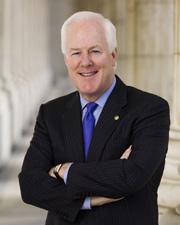 Sen. John Cornyn (R-TX)
Sen. John Cornyn (R-TX)Submitted June 24, 2026
Legislative Activity
Stay on top of the latest movement without scrolling through every action
Floor
Latest Action
Senate amendment submitted
June 24, 2026
Text
Submitted
SA 6371. Mr. CORNYN (for himself and Mrs. Shaheen) submitted an
amendment intended to be proposed by him to the bill S. 4784, to
authorize appropriations for fiscal year 2027 for military activities
of the Department of Defense, for military construction, and for
defense activities of the Department of Energy, to prescribe military
personnel strengths for such fiscal year, and for other purposes; which
was ordered to lie on the table; as follows:

At the end of title XII, add the following:

Subtitle F--Scam Compound Accountability and Mobilization

SEC. 1271. SHORT TITLE.

This subtitle may be cited as the ``Scam Compound
Accountability and Mobilization Act''.

SEC. 1272. FINDINGS.

Congress finds the following:
(1) Transnational cyber-enabled fraud, particularly such
fraud that is perpetrated from scam compounds in Southeast
Asia, is a growing threat to citizens of the United States,
national security, and global economic interests.
(2) The Federal Bureau of Investigation reported
$17,697,074,980 in losses in the United States due to cyber-
enabled fraud during

[[Page S3484]]

2025, including schemes commonly perpetrated by significant
transnational criminal organizations that are operating scam
compounds.
(3) Annual global losses due to cyber-enabled fraud are
estimated at between $40,000,000,000 and $65,000,000,000, but
the actual amount is likely higher since many instances are
not reported.
(4) Significant transnational criminal organizations
responsible for a large proportion of these scam compounds--
(A) are affiliated with the People's Republic of China;
(B) are actively spreading propaganda on behalf of the
People's Republic of China;
(C) are promoting unification with Taiwan; and
(D) have brokered projects for the Belt and Road
Initiative.
(5) Significant transnational criminal organizations have
lured hundreds of thousands of human trafficking victims from
an estimated 80 countries to scam compounds, which are
located primarily in Burma, Cambodia, and Laos, for purposes
of forced criminality.
(6) Significant transnational criminal organizations are
expanding scam compounds internationally, including in
Africa, the Middle East, South Asia, and the Pacific Islands.
(7) Money laundering, human trafficking, and recruitment
fraud related to such scam compounds have occurred in
Southeast Asia, Europe, North America, and South America.

SEC. 1273. SENSE OF CONGRESS.

It is the sense of Congress that--
(1) the United States should redouble efforts to hold the
perpetrators and enablers of scam compound operations
accountable, including those involved in related money
laundering, human trafficking, and recruitment fraud, by
employing effective tools, such as targeted financial
sanctions, visa restrictions, asset seizures, and forfeiture;
(2) to enhance effective international cooperation and
responses against cyber-enabled fraud originating from scam
compounds internationally, the United States Government
should work with partner governments, multilateral
institutions, civil society experts, and private sector
stakeholders to improve information sharing, strengthen
preventative measures, raise public awareness, and increase
coordination on law enforcement investigations and regulatory
actions; and
(3) victims and survivors of human trafficking, including
for the purpose of forced criminality, require victim-
centered and trauma-informed protection and support to ensure
they are not inappropriately prosecuted, penalized, or
otherwise punished solely for unlawful acts committed as a
direct result of being trafficked, consistent with section
102(b)(19) of the Trafficking Victims Protection Act of 2000
(22 U.S.C. 7101(b)(19)).

SEC. 1274. STATEMENT OF POLICY.

It shall be the policy of the United States--
(1) to comprehensively combat the significant transnational
criminal organizations operating scam compounds and
exploiting workers, including through human trafficking and
forced criminality, to perpetrate large-scale online scams
against the people of the United States; and
(2) to bolster international law enforcement cooperation
with nations in Southeast Asia and in other regions where
scam compounds and associated financial and operational
infrastructures are located to combat transnational crime,
including scam compounds, human trafficking, narcotics
trafficking, and money laundering.

SEC. 1275. DEFINITIONS.

(a) In General.--In this subtitle:
(1) Appropriate congressional committees.--The term
``appropriate congressional committees'' means--
(A) the Committee on Foreign Relations of the Senate;
(B) the Committee on the Judiciary of the Senate;
(C) the Committee on Banking, Housing, and Urban Affairs of
the Senate;
(D) the Select Committee on Intelligence of the Senate;
(E) the Committee on Foreign Affairs of the House of
Representatives;
(F) the Committee on the Judiciary of the House of
Representatives;
(G) the Committee on Financial Services of the House of
Representatives; and
(H) the Permanent Select Committee on Intelligence of the
House of Representatives.
(2) Cyber-enabled fraud.--The term ``cyber-enabled fraud''
means the use of the internet or other technology to commit
fraudulent activity, including illicitly obtaining money,
property, data, identification documents, or authentication
features, or creating counterfeit goods or services.
(3) Enabling country.--The term ``enabling country'' means
a country where--
(A) government authorities actively or implicitly permit,
enable, or perpetuate scam compound operations; or
(B) ineffective law enforcement or a failure to enact
legislation intended to prevent facilitating services from
reaching scam compounds or significant transnational criminal
organizations enables scam compound operators to obtain
facilitating services.
(4) Forced criminality.--The term ``forced criminality''
means a form of forced labor for the purpose of causing the
victim to engage in criminal activity, which may include
cyber-enabled fraud.
(5) Forced labor.--The term ``forced labor'' has the
meaning given the term severe forms of trafficking in persons
in section 103(11)(B) of the Trafficking Victims Protection
Act of 2000 (22 U.S.C. 7102(11)(B)).
(6) Relevant foreign assistance programs and diplomatic
efforts.--The term ``relevant foreign assistance programs and
diplomatic efforts''--
(A) means unclassified voluntary support programs funded
directly by the United States Government that provide
assistance to one or more foreign countries for the purpose
of combating scam compound operations and related significant
transnational criminal organizations; and
(B) excludes intelligence activities, including activities
authorized by the President and reported to Congress in
accordance with section 503 of the National Security Act of
1947 (50 U.S.C. 3093).
(7) Human trafficking.--The term ``human trafficking'' has
the meaning given the term severe forms of trafficking in
persons in section 103(11) of the Trafficking Victims
Protection Act of 2000 (22 U.S.C. 7102(11)).
(8) Human trafficking victim.--The terms ``human
trafficking victim'' and ``victim of human trafficking'' mean
a person subject to an act or practice described in section
103(11) of the Trafficking Victims Protection Act of 2000 (22
U.S.C. 7102(11)).
(9) Impacted country.--The term ``impacted country'' means
a country that is a significant--
(A) transit location for victims of human trafficking to
scam compounds;
(B) source location for victims of human trafficking for
scam compounds; or
(C) target of cyber-enabled fraud originating from scam
compounds internationally.
(10) Scam compound.--The term ``scam compound'' means a
physical installation where a significant transnational
criminal organization carries out cyber-enabled fraud
operations, often using victims of human trafficking and
forced criminality.
(11) Significant transnational criminal organization.--The
term ``significant transnational criminal organization''
means a group of persons that--
(A) includes one or more foreign person;
(B) engages in or facilitates an ongoing pattern of serious
criminal activity involving the jurisdictions of at least two
foreign states or one foreign state and the United States;
and
(C) threatens the national security, foreign policy, or
economy of the United States.
(12) Strategy.--The term ``Strategy'' means the strategy to
counter scam compounds and hold significant transnational
criminal organizations and human traffickers accountable
described in section 1276.
(b) Rule of Construction.--The definitions under this
section are exclusive to this subtitle and may not be
construed to affect any other provision of United States law.

SEC. 1276. STRATEGY TO COUNTER SCAM COMPOUNDS AND HOLD
SIGNIFICANT TRANSNATIONAL CRIMINAL
ORGANIZATIONS AND HUMAN TRAFFICKERS
ACCOUNTABLE.

(a) In General.--Not later than 180 days after the date of
enactment of this Act, the Secretary of State, in
consultation with the Attorney General, the Secretary of the
Treasury, and the heads of other Federal departments and
agencies as appropriate, shall submit to the appropriate
congressional committees a comprehensive strategy, with a
classified annex if necessary, that--
(1) is designed--
(A) to shut down scam compounds and prevent their further
proliferation;
(B) to disrupt and dismantle--
(i) significant transnational criminal organizations and
human traffickers involved in operating scam compounds; and
(ii) the financial, operational, and technological
infrastructure that enables such criminal enterprises to
execute their scams and crimes; and
(C) to hold accountable corrupt officials and non-state
actors enabling scam compounds;
(2) is global in scope; and
(3) may prioritize efforts focused on Southeast Asian
countries where scam compound operations are most prevalent.
(b) Objectives.--The Strategy shall provide for and
incorporate the following objectives:
(1) Reducing the ability of significant transnational
criminal organizations to operate scam compounds in Southeast
Asia and wherever else they may propagate.
(2) Building the capacity, including that of digital
forensics, anti-money laundering, anti-corruption, and border
patrol, of trusted foreign law enforcement partners to
degrade, disrupt, and shut down scam compounds and prevent
their proliferation.
(3) Supporting survivors of human trafficking and forced
criminality under the direction of the Ambassador-at-Large to
Monitor and Combat Trafficking in Persons.
(4) Preventing recruitment fraud and human trafficking in
scam compounds, including by--
(A) engaging private sector entities operating internet
platforms or other services that could be abused or exploited
to perpetrate recruitment fraud, human trafficking or cyber-
enabled fraud;
(B) raising awareness among at-risk populations to identify
common recruitment fraud strategies and improve due diligence
and self-protection measures;
(C) urging governments to monitor and enforce laws against
fraudulent and unlawful recruitment practices; and

[[Page S3485]]

(D) sharing information and building capacity among foreign
counterparts, including law enforcement and border officials,
to identify potential human trafficking victims.
(5) Advocating for the thorough review of countries
implicated in scam compound operations at the Financial
Action Task Force (FATF) or FATF-style regional bodies.
(6) Examining existing authorities and procedures of the
United States Government for assisting defrauded United
States persons in recovering and returning their stolen
assets.
(7) Using sanctions, visa restrictions, and other
accountability measures, in coordination with allies and
partners to the greatest extent possible, against enabling
countries, significant transnational criminal organizations,
human traffickers, and related third-party facilitators of
scam compound operations.
(8) Investigating and highlighting the People's Republic of
China's involvement in the origin and perpetuation of scam
compounds, including through links between Chinese Communist
Party officials and criminal organizations, deepening
regional security influence, and selective crackdowns that
incentivize the targeting of Americans.
(9) Investigating the Burmese military's involvement in
allowing, neglecting, and profiting from scam compounds in
Burma, and the importance of resolving the instability and
violence in Burma to stop the unfettered operation of scam
compounds in Burma.
(10) Harnessing offensive cyber capabilities to degrade
scam compound operations.
(11) Integrating data collection, analysis, and response
mechanisms across Federal, State, and local agencies,
including by assessing if any existing relevant Fusion
Centers could be leveraged to combat the operations of scam
compounds.
(12) Convening like-minded foreign allies and partners to
combat scam compounds, including by establishing similar task
forces or working groups, compiling and sharing data, and
collaborating regarding the indictment of key actors and
enablers.
(c) Contents.--The Strategy shall--
(1) include a comprehensive problem statement identifying
the structural vulnerabilities exploited by significant
transnational criminal organizations operating scam
compounds;
(2) develop a comprehensive list of enabling countries and
impacted countries;
(3) identify all active executive branch relevant foreign
assistance programs and diplomatic efforts underway to
address scam compounds, significant transnational criminal
organizations connected to scam compounds, and related money
laundering, human trafficking and forced criminality,
including efforts with enabling countries and impacted
countries;
(4) identify relevant foreign assistance resources needed
to fully implement the Strategy and any obstacles to the
response of the Federal Government to scam compounds,
including coordination with partner governments, to address
the human trafficking, including forced criminality, and
money laundering that facilitates and sustains scam compound
operations; and
(5) include indicators that measure the success of the
Strategy, including achieving the objectives described in
subsection (b), which may include the number of persons
sanctioned, the number of arrest warrants or indictments
issued, the number of arrests made, the amount of United
States losses mitigated, the number of victims of trafficking
in persons identified and protected, and the reduction in the
number of active scam compounds, in comparison to the
previous year.
(d) Limitation.--Nothing in the Strategy may affect, apply
to, or create obligations related to past, present, or future
criminal or civil law enforcement or intelligence activities
of the United States or the law enforcement activities of any
State or subdivision of a State.

SEC. 1277. ESTABLISHING A TASK FORCE TO IMPLEMENT THE
STRATEGY.

(a) In General.--Not later than 90 days after submitting
the Strategy pursuant to section 1276(a), the Secretary of
State, in consultation with the Attorney General, the
Secretary of the Treasury, and the heads of other Federal
departments and agencies, shall establish or designate an
interagency task force (referred to in this section as the
``Task Force'')--
(1) to coordinate the implementation of the Strategy;
(2) to conduct regular monitoring and analysis of scam
compound operations internationally; and
(3) to track and evaluate progress toward the objectives,
activities, and performance indicators of the Strategy.
(b) Information Sharing.--To ensure proper coordination and
effective interagency action, each Federal department or
agency represented on the Task Force shall fully share--
(1) all relevant data with the Task Force; and
(2) all information regarding the department's or agency's
plans, before and after final agency decisions are made, on
all matters relating to actions regarding combating scam
compounds.
(c) Consultation.--The Task Force, or representatives of
the Task Force, should--
(1) consult with State and local law enforcement entities
and stakeholder organizations in the United States that have
firsthand expertise in reporting and combating cyber-enabled
fraud and recovering stolen assets;
(2) consult regularly with nongovernmental organizations in
the United States with expertise in countering trafficking in
persons or anti-corruption, as appropriate;
(3) develop partnerships with relevant private sector
actors for the purpose of better disrupting the enabling
infrastructure of scam compounds, operations, and syndicates;
and
(4) engage civil society organizations to better understand
the complexity of the scam compound problem in each country
and the broader economic, political, and governance
challenges that are exacerbating the problem.
(d) Congressional Consultation.--The Task Force shall
consult regularly with the appropriate congressional
committees on its efforts to implement the Strategy,
including potential updates to the strategy.
(e) Annual Reviews and Reports.--Not later than 1 year
after the establishment of the Task Force, and not less
frequently than annually thereafter, the Task Force shall--
(1) conduct a status review of the Strategy and the overall
state of scam compounds operated by significant transnational
criminal organizations that includes--
(A) a list of enabling countries and impacted countries;
(B) an estimate of the amount of money that has been stolen
from United States nationals through scams emanating from
scam compounds;
(C) an estimate of the amount of the stolen money described
in subparagraph (B) that was intercepted, seized, or returned
as a result of United States Government action;
(D) an analysis of the role that human trafficking plays in
scam compounds around the world;
(E) a list of known scam compounds operating across
Southeast Asia; and
(F) a description of if, where, and how scam compounds and
operations have proliferated outside of Southeast Asia across
other regions of the world; and
(2) submit the results of such review in a public report to
the appropriate congressional committees, which may contain a
classified annex.
(f) Task Force Termination.--The Task Force shall terminate
on the date that is 6 years after the date on which the Task
Force is established.

SEC. 1278. STRENGTHENING TOOLS TO DISMANTLE SCAM COMPOUNDS
AND HOLD SIGNIFICANT TRANSNATIONAL CRIMINAL
ORGANIZATIONS ACCOUNTABLE.

(a) Imposition of Sanctions With Respect to Significant
Actors in Scam Compound Operations.--Beginning on the date
that is 180 days after the date of the enactment of this Act,
the President may impose the sanctions described in
subsection (b) with respect to any foreign person the
President determines--
(1) has materially assisted in, or provided significant
financial or technological support to, or provided
significant goods or services in support of, the activities
of international scam compounds or enabling services,
including recruitment fraud, human trafficking (including
forced criminality), cyber-enabled fraud, or money-
laundering; or
(2) owned, controlled, directed, or acted for, or on behalf
of, a significant scam compound operation or enabling
service, including recruitment fraud, human trafficking
(including forced criminality), cyber-enabled fraud, or
money-laundering.
(b) Sanctions Described.--
(1) Asset blocking.--The President may exercise all powers
granted to the President under the International Emergency
Economic Powers Act (50 U.S.C. 1701 et seq.) to the extent
necessary to block and prohibit all transactions in all
property and interests in property of a foreign person
described in subsection (a), including, to the extent
appropriate, the vessel of which the person is the beneficial
owner, if such property or interests in property are in the
United States, come within the United States, or are or come
within the possession or control of a United States person.
(2) Visas, admission, or parole.--
(A) In general.--An alien described in subsection (a) is--
(i) inadmissible to the United States;
(ii) ineligible for a visa or other documentation to enter
the United States; and
(iii) otherwise ineligible to be admitted or paroled into
the United States or to receive any other benefit under the
Immigration and Nationality Act (8 U.S.C. 1101 et seq.).
(B) Current visas revoked.--
(i) In general.--An alien described in subsection (a) is
subject to revocation of any visa or other entry
documentation regardless of when the visa or other entry
documentation was issued.
(ii) Immediate effect.--A revocation under clause (i) shall
take effect immediately and automatically cancel any other
valid visa or entry documentation that is in the alien's
possession.
(c) Exceptions.--
(1) Exception to comply with international obligations.--
Sanctions described in subsection (b)(2) shall not apply with
respect to the admission of an alien if admitting or paroling
such alien into the United States is necessary to permit the
United States to comply with the Agreement regarding the
Headquarters of the United Nations, signed at Lake Success
June 26, 1947, and entered into force November 21, 1947,
between the United Nations and the United States, or other
applicable international obligations.

[[Page S3486]]

(2) Exceptions for human trafficking victims.--Sanctions
described in subsection (b) shall not apply with respect to a
person determined by the President to be a victim of
trafficking in persons within a scam compound, consistent
with section 102(b)(19) of the Trafficking Victims Protection
Act of 2000 (22 U.S.C. 7101(b)(19)).
(d) Implementation; Penalties.--
(1) Implementation.--The President may exercise all
authorities provided under sections 203 and 205 of the
International Emergency Economic Powers Act (50 U.S.C. 1702
and 1704) to carry out this section.
(2) Penalties.--The penalties set forth in subsections (b)
and (c) of section 206 of the International Emergency
Economic Powers Act (50 U.S.C. 1705) shall apply to any
person who violates, attempts to violate, conspires to
violate, or causes a violation of any prohibition of this
section, or an order or regulation prescribed under this
section, to the same extent that such penalties apply to a
person that commits an unlawful act described in section
206(a) of such Act (50 U.S.C. 1705(a)).
(e) Intelligence and Law Enforcement Activities.--Sanctions
authorized under this section shall not apply with respect
to--
(1) any activity subject to the reporting requirements
under title V of the National Security Act of 1947 (50 U.S.C.
3091 et seq.); or
(2) any authorized intelligence or law enforcement
activities of the United States.
(f) Semiannual Report.--Not later than 180 days after the
date of the enactment of this Act, and every 180 days
thereafter for 7 years, the President shall submit a report
to the appropriate congressional committees that identifies--
(1) all foreign persons the President has sanctioned
pursuant to this section; and
(2) the dates on which such sanctions were imposed.
(g) Form.--The report required under subsection (f) shall
be submitted in an unclassified form, but may include a
classified annex.
(h) Exception Relating to Importation of Goods.--
(1) In general.--A requirement to block and prohibit all
transactions in all property and interests in property
pursuant to subsection (b) shall not include the authority or
a requirement to impose sanctions on the importation of
goods.
(2) Defined term.--In this subsection, the term ``good''
means any article, natural or manmade substance, material,
supply, or manufactured product, including inspection and
test equipment, and excluding technical data.
(i) Waiver.--
(1) In general.--The President may waive the application of
sanctions under this section with respect to a foreign person
or a foreign financial institution if the President
determines that such waiver is in the national interest of
the United States.
(2) Report.--Not later than 15 days before granting a
waiver pursuant to paragraph (1), the President shall submit
a report to the appropriate congressional committees that
includes--
(A) the name of the individual or institution that is
benefitting from such waiver; and
(B) if the beneficiary is an individual, a detailed
justification explaining how the waiver serves the national
security interests of the United States.
(3) Form.--The report required under paragraph (2) shall be
submitted in an unclassified form, but may include a
classified annex.

SEC. 1279. REDRESS TO VICTIMS OF INTERNATIONAL SCAM COMPOUND
OPERATIONS.

(a) Report.--Not later than 90 days after the date of the
enactment of this Act, the Attorney General, in consultation
with the Secretary of State, the Secretary of the Treasury,
and the heads of other appropriate Federal departments and
agencies, shall submit to the appropriate congressional
committees a report containing an assessment of existing
forfeiture law that--
(1) outlines challenges or limitations to providing
financial redress to victims of international scam compound
operations;
(2) offers recommendations to amend existing forfeiture law
to enable the Department of Justice to use assets forfeited
as a result of law enforcement activities targeting
international scam compound operations to provide financial
redress to United States citizen victims of scam operations;
and
(3) offers recommendations for the administration of such a
redress mechanism.
(b) Form.--The report required under subsection (a) shall
be submitted in an unclassified form.

SEC. 1280. SATELLITE IMAGERY ACCESS TO MONITOR HUMAN RIGHTS
ABUSES RELATED TO SCAM COMPOUNDS TO DISCOVER
THE PRESENCE OF HUMAN TRAFFICKING.

(a) Access to Satellite Imagery.--The Secretary of State is
authorized to provide nongovernmental organizations,
nonprofit organizations, and intergovernmental entities
access to current and archival high-resolution satellite
imagery to help advance efforts to combat scam compounds,
forced criminality, and human trafficking, including
monitoring and documenting observable activities at scam
compounds in Southeast Asia, which may be associated with
human trafficking, such as forced labor or forced
criminality.
(b) Report.--Not later than 180 days after the date of the
enactment of this Act, the Secretary of State shall submit a
report to the appropriate congressional committees that
includes--
(1) any terms and conditions applicable with respect to the
access authorized under subsection (a); and
(2) a list of each organization or entity that has been
provided access pursuant to subsection (a).
(c) Form.--The report required under subsection (b) shall
be submitted in an unclassified form, but may include a
classified annex.

SEC. 1280A. SUNSET.

This subtitle shall cease to be effective beginning on the
date that is 7 years after the date of the enactment of this
Act.
______