S.Amdt. 6527Senate119th Congress (2025-2027)
S.Amdt. 6527
Sponsored by 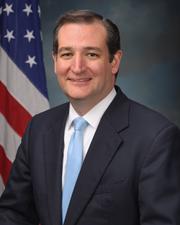 Sen. Ted Cruz (R-TX)
Sen. Ted Cruz (R-TX)Submitted June 24, 2026
Legislative Activity
Stay on top of the latest movement without scrolling through every action
Floor
Latest Action
Senate amendment submitted
June 24, 2026
Text
Submitted
SA 6527. Mr. CRUZ (for himself, Ms. Cantwell, Mr. Moran, Mr. Peters,
Mr. Schmitt, Mr. Lujan, and Ms. Duckworth) submitted an amendment
intended to be proposed by him to the bill S. 4784, to authorize
appropriations for fiscal year 2027 for military activities of the
Department of Defense, for military construction, and for defense
activities of the Department of Energy, to prescribe military personnel
strengths for such fiscal year, and for other purposes; which was
ordered to lie on the table; as follows:

At the end, add the following:

DIVISION F--NASA AUTHORIZATION ACT OF 2026

SECTION 1. SHORT TITLE; TABLE OF CONTENTS.

(a) Short Title.--This division may be cited as the ``NASA
Authorization Act of 2026''.
(b) Table of Contents.--The table of contents for this
division is as follows:

DIVISION F--NASA AUTHORIZATION ACT OF 2026

Sec. 1. Short title; table of contents.
Sec. 2. Definitions.

TITLE I--AUTHORIZATION OF APPROPRIATIONS

Sec. 101. Authorization of NASA.

TITLE II--EXPLORATION

Sec. 201. Continuity of purpose for space exploration.
Sec. 202. Artemis program.
Sec. 203. Space launch system.
Sec. 204. Human-rated lunar landing capabilities.
Sec. 205. Advanced spacesuit capabilities.
Sec. 206. Briefing on lunar outpost.
Sec. 207. Lunar Terrain Vehicle element.
Sec. 208. Exploration ground systems.
Sec. 209. Commercial Lunar Payload Services program.
Sec. 210. Moon Base.
Sec. 211. Engine testing for exploration.

TITLE III--SPACE OPERATIONS

Sec. 301. Maximizing United States presence in low-Earth orbit.
Sec. 302. Commercial Low-Earth-Orbit Development Program.
Sec. 303. Managed transition from International Space Station to
commercial low-Earth-orbit destinations.
Sec. 304. Extension of International Space Station.
Sec. 305. Reporting and oversight.
Sec. 306. Transition to a commercially led low-Earth-orbit economy.
Sec. 307. Nongovernmental missions on the International Space Station.
Sec. 308. Briefing on use of commercial suborbital vehicles for crewed
missions.
Sec. 309. Lunar communications.
Sec. 310. Report on space communications upgrades.
Sec. 311. Lunar time standardization.
Sec. 312. Lunar surface power.
Sec. 313. Commercial lunar data acquisition.
Sec. 314. Crew rescue capabilities.
Sec. 315. Commercial launch services.
Sec. 316. Executing International Space Station science manifest.
Sec. 317. Safety standards for cislunar human spaceflight.

TITLE IV--SPACE TECHNOLOGY AND STEM EDUCATION

Sec. 401. Space Technology Mission Directorate.
Sec. 402. Small Business Innovation Research and Small Business
Technology Transfer.
Sec. 403. Sense of Congress on cryogenic fluid valve technology.
Sec. 404. Space nuclear power and propulsion systems.
Sec. 405. National space grant college and fellowship program.
Sec. 406. Skilled technical workforce education outreach.
Sec. 407. Active orbital debris remediation demonstration.
Sec. 408. Established Program to Stimulate Competitive Research.
Sec. 409. Use of Science, Space, and Technology Education Trust Fund.

TITLE V--AERONAUTICS

Sec. 501. Hypersonic research.
Sec. 502. Advanced materials and manufacturing technology.
Sec. 503. Unmanned aircraft systems and advanced air mobility.
Sec. 504. Hydrogen aviation.
Sec. 505. High-performance chase aircraft.
Sec. 506. Electrified powertrain flight demonstration.
Sec. 507. Study on modernization of T-38 flight trainer aircraft fleet.
Sec. 508. Subsonic thin-wing flight technologies.
Sec. 509. Advanced capabilities for airspace management.
Sec. 510. Open-fan flight demonstration.
Sec. 511. Authority with respect to unmanned aircraft system
identification and detection.

TITLE VI--SCIENCE

Sec. 601. Maintenance of balanced science portfolio.
Sec. 602. Implementation of science mission cost caps.
Sec. 603. Modification of National Academies decadal surveys.
Sec. 604. Report on Landsat mission.
Sec. 605. Commercial satellite data.
Sec. 606. Planetary science portfolio.
Sec. 607. Planetary defense.
Sec. 608. Lunar Discovery and Exploration Program.
Sec. 609. Plan for planetary and lunar operations.
Sec. 610. Restructuring of Mars Sample Return program.
Sec. 611. Heliophysics research.
Sec. 612. Report on Geospace Dynamics Constellation mission.
Sec. 613. Sense of Congress on Nancy Grace Roman Space Telescope.
Sec. 614. Plan for Apophis science mission.
Sec. 615. Plan to launch Volatiles Investigating Polar Exploration
Rover.
Sec. 616. Dedicated science rideshare pilot program.
Sec. 617. Continuation of Chandra X-ray Observatory.
Sec. 618. Great Observatories Mission and Technology Maturation
project.
Sec. 619. Flight opportunities.
Sec. 620. Annual report on Hubble Space Telescope and the James Webb
Space Telescope.
Sec. 621. Sense of Congress on Earth science data.
Sec. 622. Support for astrophysical observatories and national high-
energy astrophysics hubs.
Sec. 623. Studies on Mars-focused missions using commercial heavy-lift
systems.

TITLE VII--POLICY

Sec. 701. NASA Advisory Council.
Sec. 702. Assessment of early cost estimates.
Sec. 703. Role of NASA in commercial space activities.
Sec. 704. Relationships with the People's Republic of China.
Sec. 705. Findings relating to contract flexibility.
Sec. 706. GAO report.
Sec. 707. Public-private talent program.
Sec. 708. Mentoring.
Sec. 709. Passenger carrier use for astronaut transportation.
Sec. 710. Physical security modernization.
Sec. 711. NASA agreements with private and commercial entities and
State governments to provide certain supplies, support,
and services.
Sec. 712. Aerospace infrastructure modernization.
Sec. 713. Enhanced use leases.
Sec. 714. Identification of and justification for redactions.
Sec. 715. Commercial activity at Wallops Flight Facility.
Sec. 716. Continuity of purpose for NASA activities.
Sec. 717. Transmission of data to Congress.
Sec. 718. Timely responses to Congress.
Sec. 719. Contracting flexibility and transparency.
Sec. 720. Chief Scientist.
Sec. 721. Chief Economist.
Sec. 722. Chief Technologist.

[[Page S3637]]

Sec. 723. Report on indemnification framework for civil and commercial
space nuclear technologies.
Sec. 724. Confidentiality of medical quality assurance records.
Sec. 725. Reports to Congress.
Sec. 726. Collaboration between NASA and the Department of Defense.
Sec. 727. Space cooperation with Taiwan.
Sec. 728. Rule of construction.

SEC. 2. DEFINITIONS.

In this division:
(1) Administration.--The term ``Administration'' means the
National Aeronautics and Space Administration.
(2) Administrator.--The term ``Administrator'' means the
Administrator of the National Aeronautics and Space
Administration.
(3) Appropriate committees of congress.--The term
``appropriate committees of Congress'' means--
(A) the Committee on Commerce, Science, and Transportation
of the Senate; and
(B) the Committee on Science, Space, and Technology of the
House of Representatives.
(4) Cislunar space.--The term ``cislunar space'' means the
region of space beyond low-Earth orbit out to and including
the region around the surface of the Moon.
(5) Commercial lunar payload services program.--The term
``Commercial Lunar Payload Services program'' means the
multiple-award, indefinite-delivery, indefinite-quantity NASA
contracting vehicle that enables end-to-end commercial lunar
payload delivery services to the lunar surface.
(6) Commercial provider.--The term ``commercial provider''
means any person providing space services or space-related
capabilities, primary control of which is held by persons
other than the Federal Government, a State or local
government, or a foreign government.
(7) Continuous human presence.--The term ``continuous human
presence'' means the maintenance by the United States of the
presence, in low-Earth orbit on 1 or more space stations on a
permanent, ongoing basis, of not fewer than--
(A) 1 government astronaut; or
(B) 1 astronaut sponsored by the United States Government.
(8) Deep space.--The term ``deep space'' means the region
of space beyond low-Earth orbit that includes cislunar space.
(9) Government astronaut.--The term ``government
astronaut'' has the meaning given such term in section 50902
of title 51, United States Code.
(10) Institution of higher education.--The term
``institution of higher education'' has the meaning given the
term in section 101 of the Higher Education Act of 1965 (20
U.S.C. 1001).
(11) ISS.--The term ``ISS'' means the International Space
Station.
(12) Low-earth orbit.--The term ``low-Earth orbit'' means
the area encompassing Earth-centered orbits at an altitude of
not more than 1,200 miles (2,000 kilometers).
(13) NASA.--The term ``NASA'' means the National
Aeronautics and Space Administration.
(14) Orion.--The term ``Orion'' means the multipurpose crew
vehicle described in section 303 of the National Aeronautics
and Space Administration Authorization Act of 2010 (42 U.S.C.
18323).
(15) Space launch system.--The term ``Space Launch System''
means the Space Launch System authorized under section 302 of
the National Aeronautics and Space Administration
Authorization Act of 2010 (42 U.S.C. 18322).
(16) Commercial market estimates.--The term ``commercial
market estimates'' means rigorous quantitative estimates of
the current and most-likely future revenues that commercial
providers may capture from sources other than the
Administration, with appropriate sensitivity analyses, and
assessments of the ability of such providers to sustainably
provide services to the Administration.

TITLE I--AUTHORIZATION OF APPROPRIATIONS

SEC. 101. AUTHORIZATION OF NASA.

(a) Fiscal Year 2026.--For fiscal year 2026, there is
authorized to be appropriated to NASA $24,670,515,000 as
follows:
(1) For the Exploration Systems Development Mission
Directorate, $7,783,000,000.
(2) For the Space Operations Mission Directorate,
$4,175,000,000.
(3) For the Space Technology Mission Directorate,
$975,000,000.
(4) For the Science Mission Directorate, $7,300,000,000.
(5) For the Aeronautics Research Mission Directorate,
$950,000,000.
(6) For the Office of STEM Engagement, $147,500,000.
(7) For Safety, Security, and Mission Services,
$3,107,079,000.
(8) For Construction and Environmental Compliance and
Restoration, $185,336,000.
(9) For Inspector General, $47,600,000.
(b) Fiscal Year 2027.--For fiscal year 2027, there is
authorized to be appropriated to NASA $25,287,277,875 as
follows:
(1) For the Exploration Systems Development Mission
Directorate, $7,977,575,000.
(2) For the Space Operations Mission Directorate,
$4,279,375,000.
(3) For the Space Technology Mission Directorate,
$999,375,000.
(4) For the Science Mission Directorate, $7,482,500,000.
(5) For the Aeronautics Research Mission Directorate,
$973,750,000.
(6) For the Office of STEM Engagement, $151,187,500.
(7) For Safety, Security, and Mission Services,
$3,184,755,975.
(8) For Construction and Environmental Compliance and
Restoration, $189,969,400.
(9) For Inspector General, $48,790,000.

TITLE II--EXPLORATION

SEC. 201. CONTINUITY OF PURPOSE FOR SPACE EXPLORATION.

(a) Findings.--Congress makes the following findings:
(1) NASA continues to make progress in developing and
testing the Space Launch System, Orion, and associated ground
systems, including through--
(A) the successful completion of the Artemis I mission in
November 2022; and
(B) continued preparations for the Artemis II crewed flight
demonstration mission.
(2) The number of spacefaring countries is increasing, and
foreign countries have expanded activities for space
exploration efforts, including efforts to explore and use the
Moon through human and robotic missions in partnership with
the United States, independently, or with adversaries of the
United States through alternative arrangements such as the
International Lunar Research Station (ILRS) of the People's
Republic of China.
(3) A strong and ambitious space exploration program
conducted with international and commercial partners is
important to maintaining United States leadership in space
and enhancing the international competitiveness of the United
States, especially with respect to space exploration efforts
of adversaries.
(4) The development of clear mission objectives, tied to
concrete long-term programmatic and national policy goals, is
a method for ensuring accountability, enhancing public
support for exploration missions, and providing a clear
signal of commitment to both international and domestic
partners.
(b) Continuity of Existing Capabilities and Programs.--
(1) Space exploration.--As part of the human exploration
activities of the Administration, including progress on
Artemis missions and activities, the Administrator shall
continue development of space exploration elements pursuant
to section 10811 of the National Aeronautics and Space
Administration Authorization Act of 2022 (51 U.S.C. 20302
note; Public Law 117-167).
(2) Logistical services.--The Administrator shall leverage
the private sector for logistical services to the extent
practicable, consistent with the Moon to Mars architecture
requirements and in accordance with section 50131 of title
51, United States Code.
(3) Continuity of purpose.--Congress reaffirms the need to
maintain continuity of purpose as described in section 201 of
the National Aeronautics and Space Administration Transition
Authorization Act of 2017 (Public Law 115-10; 131 Stat. 21).
(4) Space weather research for exploration.--
(A) In general.--The Administrator shall continue to
conduct, and to partner with Federal agencies or research
centers that conduct, research into space weather phenomena,
including solar flares, solar energetic particles, and
galactic cosmic rays, for the purpose of characterizing the
radiation environment of cislunar space, the lunar surface,
and the Martian surface.
(B) Integration.--The results of such research shall be
integrated into the Moon to Mars architecture--
(i) to inform the design and shielding requirements of
human-rated lunar landing capabilities and the orbital lunar
outpost;
(ii) to develop predictive modeling and early-warning
systems to ensure the safety of astronauts during travel
outside the Earth's Van Allen radiation belts, extravehicular
activities, and long-duration habitation; and
(iii) to ensure the reliability of lunar and Martian
communications, navigation, and power infrastructure against
space weather-induced disruptions.
(c) Mars Exploration Coordination.--
(1) In general.--In carrying out exploration missions to
and around Mars, including science missions and
infrastructure development missions for future human
exploration missions, the Administrator shall establish and
maintain a robust process for collaboration and coordination
across all NASA mission directorates and the Moon to Mars
Program Office for the unified implementation of activities
required by law.
(2) Briefing.--Not later than 180 days after the date of
the enactment of this Act, the Administrator shall provide
the appropriate committees of Congress with a briefing on the
process required by paragraph (1) and the manner in which
such process has been applied to authorized Mars programs,
including with respect to the following:
(A) The Mars Relay Network.
(B) The Mars Telecommunications Orbiter.
(C) Commercial Mars payload services.
(D) Mars future missions within the Science Mission
Directorate.

SEC. 202. ARTEMIS PROGRAM.

(a) Findings.--Congress makes the following findings:
(1) Exploration of outer space, including exploration of
the lunar surface and cislunar space, provides economic,
scientific, technological, security, and societal benefits
and economic opportunity, including by inspiring future
generations and expanding the science, technology,
engineering, and mathematics workforce needed to sustain
United

[[Page S3638]]

States leadership in science, space, and technology.
(2) The lunar south pole is home to shadowed craters that
may contain water ice and other volatiles. Understanding the
nature of lunar polar volatiles, such as water ice, would
advance science related to the origin and evolution of
volatiles in the inner solar system and could facilitate the
long-term future of space exploration. Water ice lunar
resources have the potential to become an enabling component
of future space exploration missions throughout the solar
system, including crewed missions to Mars.
(3) Other countries have demonstrated technological
advances and successful robotic missions for lunar
exploration and have announced credible plans for long-term
human exploration of the Moon that include the intent to
establish lunar bases. Such countries are forming alternative
organizational entities to structure their efforts, such as
the ILRS of the People's Republic of China.
(4) United States leadership of, and measurable progress
on, the exploration of deep space is essential for guiding
development of norms related to operations on and around the
Moon and for other space destinations.
(5) It is in the national interest of the United States to
maintain a leadership role in the establishment of future
norms governing activities in space, including such
activities on the lunar surface and in cislunar space.
(b) Requirements.--In carrying out activities to enable
Artemis missions under the Moon to Mars Program set forth in
section 10811 of the National Aeronautics and Space
Administration Authorization Act of 2022 (51 U.S.C. 20302
note; Public Law 117-167), the Administrator shall--
(1) use relevant elements set forth in subsection (b)(2)(B)
of that Act under the direction of the Moon to Mars program
manager;
(2) continue to ensure that such elements enable the human
exploration of Mars, consistent with subsection (b)(2)(C)(i)
of that Act;
(3) include scientific objectives as integral components of
Artemis missions and coordinate with the Science Mission
Directorate and the Space Technology Mission Directorate to
ensure that opportunities for lunar science are incorporated
throughout the Artemis and Moon to Mars architectures;
(4) engage with international partners, as appropriate,
including through the Artemis Accords to guide the
development of norms of behavior in a manner that--
(A) is consistent with subsection (b)(2)(C) of that Act;
and
(B) increases redundancy, efficiency, and cost savings;
(5) leverage capabilities provided by United States
commercial providers, as appropriate and practicable; and
(6) certify that each existing and future contract entered
into for NASA exploration activities conducted by commercial
partners includes provisions--
(A) to ensure the preservation of mission continuity and
adherence to initial operating capability timeline
requirements; and
(B) to preclude cessation of contract activities before
completion of the contract, as appropriate.
(c) United States Commercial Provider Capabilities in
Support of Lunar Exploration Efforts.--The Administrator may
enter into agreements with United States commercial providers
or engage in public-private partnerships to procure
capabilities and services to support the human exploration of
the Moon or cislunar space.
(d) Briefings.--Not later than 30 days after the date of
the enactment of this Act, and quarterly thereafter, the
Administrator, in coordination with the Moon to Mars
management entity, shall provide the appropriate committees
of Congress with a briefing on--
(1) the status of the elements set forth in subsection
(b)(2)(B) of section 10811 of the National Aeronautics and
Space Administration Authorization Act of 2022 (51 U.S.C.
20302 note; Public Law 117-167) to enable lunar operations
and the human exploration of Mars, consistent with subsection
(b)(2)(C)(i) of that section; and
(2) the readiness of such elements to meet the respective
Artemis missions.

SEC. 203. SPACE LAUNCH SYSTEM.

(a) Findings.--Congress makes the following findings:
(1) The Space Launch System--
(A) represents a national capability for super-heavy lift
space launch that may support a range of unique commercial,
civil, and military mission opportunities;
(B) is the only vehicle ready to support human flights to
the Moon; and
(C) has not met the flight rate of the integrated Space
Launch System and Orion crew vehicle missions set forth in
section 10812(b) of the National Aeronautics and Space
Administration Authorization Act of 2022 (51 U.S.C. 20301
note; Public Law 117-167).
(2) The Space Launch System Exploration Upper Stage was
conceived to increase Space Launch System launch cargo
capacity in an era before the emergence of competitive lunar
payload delivery capabilities.
(3) The report of the Inspector General of NASA entitled
``NASA's Management of Space Launch System Block 1B
Development'' issued on August 8, 2024, noted that the
current Exploration Upper Stage technology is behind schedule
and over budget.
(4) Alternative technologies exist that may be used within
the current Space Launch System architecture.
(b) Exploration Upper Stage Alternatives.--Subject to the
availability of appropriations, the Administrator may seek to
identify and fund an alternative technology to replace the
Exploration Upper Stage if the Administrator determines that
the Exploration Upper Stage efforts under section 10812(b) of
the National Aeronautics and Space Administration
Authorization Act of 2022 (51 U.S.C. 20301 note; Public Law
117-167) are unlikely to achieve the mission goals of the
Artemis campaign.
(c) Briefing.--
(1) In general.--Not later than 60 days after the date of
the enactment of this Act, the Administrator shall provide
the appropriate committees of Congress with a briefing on the
challenges of the Administration in achieving the flight rate
set forth in section 10812(b) of the National Aeronautics and
Space Administration Authorization Act of 2022 (51 U.S.C.
20301 note; Public Law 117-167).
(2) Elements.--The briefing required by paragraph (1) shall
include an assessment of methods for reducing the complexity
and cost of production and operation of the Space Launch
System, including--
(A) a standardization of the design of the Space Launch
System;
(B) the simplification of contracts;
(C) a balancing of government and industry workforce
components, roles, and responsibilities; and
(D) the optimization of the use of Administration
infrastructure.

SEC. 204. HUMAN-RATED LUNAR LANDING CAPABILITIES.

(a) In General.--The Administrator shall continue to
support the development and demonstration of, and shall
obtain, human-rated lunar landing capabilities to further the
goals of the human exploration roadmap under section 432 of
the National Aeronautics and Space Administration Transition
Authorization Act of 2017 (51 U.S.C. 20302 note; Public Law
115-10) and the Moon to Mars Program set forth in section
10811 of the National Aeronautics and Space Administration
Authorization Act of 2022 (51 U.S.C. 20302 note; Public Law
117-167).
(b) Relevant Requirements.--The Administrator shall ensure
that such human-rated lunar landing capabilities meet all
relevant human rating and certification requirements,
including the requirements of the Moon to Mars Program and
requirements for human rating and certification.
(c) United States Commercial Provider.--Any commercial
provider from which the Administrator obtains human-rated
lunar landing capabilities must be a United States commercial
provider.
(d) Duties of the Administrator.--In carrying out
subsection (a)--
(1) the Administrator may include uncrewed lunar landing
services; and
(2) the Administrator shall--
(A) subject to the availability of appropriations for such
purpose, seek to obtain capabilities from not fewer than 2
commercial providers;
(B) submit to the appropriate committees of Congress a
report that assesses the development milestones of human-
rated lunar landing systems developed by commercial
providers.
(e) Report.--
(1) In general.--Not later than 90 days after the date of
the enactment of this Act, the Administrator shall submit to
the appropriate committees of Congress a report on the status
of human-rated lunar lander development and key enabling
technologies, including cryogenic propellant transfer and
storage.
(2) Public availability.--Not later than 30 days after the
date on which the Administrator submits the report required
by this subsection, the Administrator shall make such report
available to the public.
(f) Moon to Mars Landing Capabilities.--The Administrator
shall, to the extent practicable, use existing Human Landing
Systems technology in developing Mars and deep space
exploration landing capabilities.

SEC. 205. ADVANCED SPACESUIT CAPABILITIES.

(a) Findings.--Congress makes the following findings:
(1) Spacesuits and associated extravehicular activity
(referred to in this sections as ``EVA'') technologies are
critical-path exploration technologies that are necessary for
future human deep space exploration efforts, including crewed
missions to low-Earth orbit, the Moon, and Mars.
(2) NASA is currently contracted with a single commercial
provider for the development of extravehicular spacesuits to
be used on the lunar surface and in deep space as part of the
Artemis program.
(3) While NASA's commercial services approach to acquiring
advanced spacesuit capabilities has resulted in the private
sector making substantial investments in the research,
development, and testing of advanced spacesuit capabilities
and the related supply chain, reliance on a single spacesuit
provider creates strategic, operational, and technical
vulnerabilities that may threaten mission continuity and
United States leadership in human spaceflight.
(4) As the United States competes with the People's
Republic of China to maintain leadership in exploration
beyond low-Earth-orbit operations, it is critical to ensure
redundancy and resilience in all mission-critical systems,
including spacesuits.
(5) The NASA workforce at the Johnson Space Center provides
unique experience and capabilities for designing,
integrating, and

[[Page S3639]]

validating spacesuits and associated EVA technologies.
(6) Maintaining a strong NASA core competency in the
design, development, manufacture, and operation of spacesuits
and related technologies allows the Administration to be an
informed purchaser of competitively awarded commercial
spacesuits and subcomponents.
(7) Testing spacesuits and related technologies on the ISS
could reduce risk and improve the safety of spacesuits and
related technologies.
(b) Capabilities Requirement.--
(1) In general.--The Administrator shall obtain the
advanced spacesuit capabilities necessary to achieve the
goals of NASA's human spaceflight exploration programs.
(2) Development by nasa.--If advanced spacesuit
capabilities from a commercial provider are not reasonably
available to meet NASA mission requirements with respect to
cost, schedule, and performance, the Administrator may pursue
development by NASA of advanced spacesuit capabilities to
ensure United States access to and use of such capabilities.
(c) Eligibility.--Any commercial provider from which the
Administrator obtains advanced spaceflight capabilities
shall--
(1) be a United States commercial provider; and
(2) be required to ensure that such capabilities comply
with applicable NASA safety and performance requirements.
(d) Preserving Spacesuit Expertise.--
(1) In general.--In carrying out subsection (b), and while
maintaining a strong partnership with United States industry,
the Administration shall maintain the internal expertise
necessary to certify and develop spacesuits for
extravehicular activity and surface operations, including
through partnerships with the private sector.
(2) Role of johnson space center.--The Johnson Space Center
shall continue to manage the spacesuit and extravehicular
activity programs of NASA.
(e) Briefing.--
(1) In general.--Not later than 180 days after the date of
the enactment of this Act, the Administrator shall provide
the appropriate committees of Congress with a briefing on the
plans of the Administration for in-space testing of advanced
spacesuit capabilities.
(2) Elements.--The briefing required by paragraph (1) shall
include--
(A) a detailed justification of compliance with section
30301 of title 51, United States Code; and
(B) a detailed certification and justification of
compliance with section 50503 of title 51, United States
Code.

SEC. 206. BRIEFING ON LUNAR OUTPOST.

Not later than 60 days after the date of the enactment of
this Act, the Administrator shall provide the appropriate
committees of Congress with a briefing on plans for the
Gateway outpost.

SEC. 207. LUNAR TERRAIN VEHICLE ELEMENT.

(a) Findings.--Congress makes the following findings:
(1) Artemis lunar human exploration is essential to
maintaining United States leadership in influencing norms and
responsible behavior in the conduct of scientific and
economic activities on the lunar surface.
(2) Human surface mobility and the establishment of
infrastructure and technology that enable long-term lunar
habitation and exploration are essential to United States
leadership.
(3) The completed Phase 1 of the Lunar Terrain Vehicle
element has successfully engaged multiple contractors, each
of which has conducted a year-long study to develop a capable
human surface mobility system through the preliminary design
maturity project phase.
(4) A robust domestic industrial base will support the
longevity and success of United States space missions and
allow the Administration to leverage the rapid pace of
commercial innovation while providing value to taxpayers.
(b) Requirements.--In carrying out activities to enable
Artemis missions under the Moon to Mars Program set forth in
section 10811 of the National Aeronautics and Space
Administration Authorization Act of 2022 (51 U.S.C. 20302
note; Public Law 117-167), subject to the availability of
appropriations, the Administrator shall--
(1) enter into an agreement a United States commercial
entity or entities, or engage in public-private partnerships,
to procure capabilities and services to support the human
exploration of the lunar surface; and
(2) seek to obtain capabilities from not fewer than 2
commercial providers to execute Phase 2 of the Lunar Terrain
Vehicle element.

SEC. 208. EXPLORATION GROUND SYSTEMS.

(a) Findings.--Congress finds that space exploration ground
system infrastructure is critical for future human deep space
exploration missions described in section 10812 of the
National Aeronautics and Space Administration Authorization
Act of 2022 (51 U.S.C. 20301 note; Public Law 117-167).
(b) Investment.--The Administrator shall ensure that all
taxpayer-funded infrastructure at the Kennedy Space Center,
including the Exploration Ground System, is used to the
extent practicable in support of space exploration missions
and activities.

SEC. 209. COMMERCIAL LUNAR PAYLOAD SERVICES PROGRAM.

(a) Sense of Congress.--It is the sense of Congress that--
(1) the encouragement and support of the Administrator for
competitive commercial services for lunar surface delivery
capabilities and other related services is in the national
interest of the United States; and
(2) commercial providers benefit from an approach that
places low-cost, noncritical instruments on initial lunar
deliveries using small- and medium-sized commercial landers
of various sizes before proceeding to more complex payloads.
(b) Commercial Lunar Payload Services Program.--
(1) In general.--The Administrator is authorized to
continue the Commercial Lunar Payload Services program for
the purpose of procuring from multiple United States
commercial providers services for the delivery of NASA
science, space technology, and human exploration payloads,
and the payloads of other NASA mission directorates, as
appropriate and practicable, to the lunar surface.
(2) Objectives.--The objectives of the Commercial Lunar
Payload Services program shall be--
(A) to advance lunar science through a continual cadence of
low-cost robotic lunar landing missions; and
(B) to establish a pathway for the use of commercial
services for cislunar space communications.
(3) Implementation.--In carrying out activities pursuant to
the Commercial Lunar Payload Services program, the
Administrator shall--
(A) conduct updated independent market research, including
commercial market estimates on the commercial lunar economy,
and identify any changes since the date of any preceding
market analysis;
(B) conduct an assessment of the role of NASA in the
commercial lunar delivery market;
(C) based on research and assessments required by
subparagraphs (A) and (B)--
(i) conduct an assessment on the effectiveness of the task
order and block buy approach in advancing commercial
development of lunar delivery services, including an
assessment of the appropriate number of providers necessary
to support NASA commercial lunar delivery needs and the
development of a sustainable lunar presence; and
(ii) identify any challenges and recommendations for
improvement;
(D) strengthen procedures related to the selection,
manifesting, interfaces, and requirements of payloads and
other relevant factors that could contribute to minimizing
future NASA-directed changes to projects after the date of
the award of commercial lunar payload service contracts,
including adherence to financial and technical milestones;
and
(E) follow best practices and lessons learned, as
applicable and appropriate, from other Administration
commercial services programs, such as the Commercial Crew
program and the Commercial Resupply Services Program.
(4) Coordination.--In implementing the Commercial Lunar
Payload Services program, the Administrator shall ensure
coordination of such program with the NASA mission
directorates and the Moon to Mars Program so as to ensure the
alignment of Administration goals for lunar delivery
services, including such goals related to cislunar space
communications and Mars exploration.
(c) Management Plan.--
(1) In general.--Not later than 90 days after the date of
the enactment of this Act, the Administrator shall develop
and implement a management plan that--
(A) is informed by the activities conducted under the
Commercial Lunar Payload Services program; and
(B) sets forth clear leadership authority and
responsibility for such program.
(2) Briefings.--Not later than 180 days after the date of
the enactment of this Act, the Administrator shall provide
the appropriate committees of Congress with a briefing on the
implementation of the management plan required by paragraph
(1).

SEC. 210. MOON BASE.

(a) Findings.--Congress makes the following findings:
(1) The National Aeronautics and Space Administration,
through the Artemis program, is advancing United States
leadership in space exploration by developing the
capabilities necessary for sustained human presence on the
Moon and beyond, reinforcing the role of the United States as
the global leader in space science and technology.
(2) The lunar south pole is a strategically important
region due to its unique resources, making it a critical
location for establishing a sustainable presence on the Moon,
as well as a departure point for missions deeper into the
solar system, including crewed missions to Mars.
(3) Establishing a lunar base ensures that the United
States can explore from the ultimate high ground of the Moon,
providing strategic advantages for science, technology,
international cooperation, and national interests, while
ensuring peace and freedom of exploration beyond Earth.
(4) Through the Commercial Lunar Payload Services program
and Lunar Terrain Vehicle procurements, NASA is laying the
foundation for logistics and mobility capabilities necessary
for a sustainable lunar base.
(5) Meaningful and robust scientific research on the lunar
surface is essential to the success, justification, and long-
term sustainability of a permanent lunar presence,

[[Page S3640]]

including investigations in planetary science, heliophysics,
astrophysics, life sciences, in-situ resource utilization,
and other disciplines enabled by sustained access to the
lunar environment.
(6) A lunar base that is designed to enable and be
supported by high-priority scientific objectives will
maximize return on investment, strengthen United States
leadership in space science, and generate knowledge necessary
for future missions to Mars and other destinations.
(b) Lunar Base.--
(1) In general.--As soon as practicable, the Administrator
shall undertake activities necessary to establish a Lunar
Surface Moon Base to develop a permanent crewed United States
presence on the Moon capable of long-duration habitation,
robotic, and industrial operations to advance science,
technology, and strategic interests.
(2) Transition.--The Administrator shall procure an
incremental transition from continuous capability to a
permanently occupied or continuously inhabited lunar surface
presence, conducted in coordination with cislunar
infrastructure, as applicable, to achieving long-term
exploration objectives beyond low-Earth orbit.
(3) Requirements and standards.--As of the date of the
enactment of this Act, Government expertise is required to
define requirements and standards and maximize the
opportunities for partners of all sizes and abilities to
participate.
(4) Science integration.--In carrying out this subsection,
the Administrator shall ensure that--
(A) in its final form, the lunar base is designed,
constructed, and operated to enable meaningful and robust
scientific research and technology demonstrations on the
lunar surface;
(B) science objectives inform site selection,
infrastructure development, habitation design, power systems,
mobility systems, communications architecture, and logistics
planning; and
(C) sustained human and robotic presence at the lunar base
supports priority scientific investigations identified
through the National Academies' decadal surveys and other
relevant strategic science planning processes.
(c) Enduring Lunar Presence.--
(1) In general.--The Administrator may establish a United
States lunar base, consistent with sections 20302 and 70505
of title 51, United States Code.
(2) Initial elements.--In establishing the lunar base under
paragraph (1), the Administrator may prioritize
sustainability, affordability, long-term viability, and
scientific utility, and shall ensure, to the maximum
practical extent, that capabilities are scalable to Mars
missions and adaptable to evolving national exploration and
science needs.
(d) Utilization of Commercial Infrastructure.--In carrying
out this section, the Administrator may, to the maximum
extent practicable, leverage any commercial infrastructure or
capacity already emplaced on the lunar surface and
incorporate planned viable commercial infrastructure or
capacity into the development and operation of the lunar
presence to reduce costs, enhance resiliency, and improve
capacity.
(e) Use of Existing Hardware.--The Administrator may
repurpose, reprogram, reconfigure, or reassign existing
programs, platforms, modules, or hardware originally
developed for other programs.
(f) Utilization of Commercial Lunar Payload Services and
Cargo Landers.--
(1) Commercial lunar payload services program.--In carrying
out subsection (b), the Administrator may utilize the
Commercial Lunar Payload Services Program contracting vehicle
to deliver instruments, infrastructure components,
communication and power systems, scientific payloads, and
other logistics packages to the outpost and designated
staging sites.
(2) Cargo landers.--The Administrator may procure, through
the Commercial Lunar Payload Services Program or other
competitive solicitations, cargo lunar lander services to
deliver cargo, vehicles, science instruments, technology
demonstrations, habitats, power systems, elements of the
lunar outpost, or any other infrastructure elements to the
lunar surface.
(g) Precursor and Enabling Activities.--The Administrator
may carry out precursor surface missions and demonstrations
necessary for lunar outpost establishment, including--
(1) delivery and emplacement of power generation and energy
storage systems;
(2) precision landing, hazard avoidance, and site
preparation;
(3) autonomous assembly and berthing systems;
(4) communications, navigation, and timing infrastructure;
and
(5) early scientific investigations and technology
demonstrations that inform long-duration habitation and
infrastructure development utilizing the Commercial Lunar
Payload Services Program and other commercial lunar services,
as appropriate.
(h) Space Resource Extraction and Development Demonstration
Mission.--
(1) In general.--As soon as practicable, the Administrator
shall conduct, on the lunar surface, a space resource
extraction and development demonstration mission focused on
solar wind volatiles, including helium-3, hydrogen, and other
resources.
(2) Approach.--To accomplish such space resource extraction
and development, the mission required by paragraph (1) shall
use a lander developed under the Commercial Lunar Payload
Services program and a commercial payload.
(3) Implementation plan.--As soon as practicable but not
later than 120 days after the date of the enactment of this
Act, the Administrator shall submit to the appropriate
committees of Congress a plan and timeline for the
implementation of the demonstration mission required by
paragraph (1), which shall include--
(A) a design and mission architecture; and
(B) realistic cost and schedule estimates.
(i) Management and Organizational Responsibility.--
(1) In general.--The Administrator shall designate as the
lead NASA center for the Lunar Surface Moon Base activities a
NASA center that is institutionally responsible for--
(A) human spaceflight operations and crewed mission
execution;
(B) astronaut training and crew operations development;
(C) integration of human spaceflight systems across
multiple programs and mission directorates; and
(D) operational control of missions involving sustained
human presence beyond low-Earth orbit.
(2) Responsibilities.--The designated center shall be
responsible for overall program management, systems
integration, crew operations planning, and logistics
coordination for the Lunar Surface Moon Base activities.
(3) Exploration systems development mission directorate.--
The Lunar Surface Moon Base shall be conducted under the
Exploration Systems Development Mission Directorate.
(j) Coordination and Integration.--In carrying out this
section, the Administrator shall--
(1) ensure coordination between the Lunar Surface Moon Base
and other NASA exploration and science activities;
(2) promote interoperability between lunar surface systems
and cislunar infrastructure to support safe, efficient, and
sustained operations;
(3) ensure that lunar surface systems are designed to
enable long-term expansion and integration with future
exploration architectures; and
(4) coordinate with the Science Mission Directorate to
align lunar surface infrastructure, operations planning, and
crew utilization with high-priority scientific objectives.
(k) Limitations.--The Administrator may not fund the
development of any landers under this section.

SEC. 211. ENGINE TESTING FOR EXPLORATION.

(a) Findings.--Congress makes the following findings:
(1) Rocket propulsion system testing is critical for the
operation of the space launch system and of future rockets
that will embark on deep space exploration, including crewed
missions to the Moon.
(2) The NASA Stennis Space Center is the primary and
largest rocket propulsion system testing and engineering
facility for NASA.
(3) The NASA Stennis Engineering and Test Directorate
provides unique ground-testing services for rocket propulsion
systems.
(4) The existing infrastructure at the Stennis Space Center
provides unique capabilities to test and evaluate rocket
propulsion systems for space launch vehicles.
(5) Maintaining within NASA a strong core competency in the
testing and evaluation of rocket propulsion systems and
related technologies allows NASA to be an informed purchaser
of competitively awarded commercial rocket engines.
(6) The commercial space industry is currently developing
rocket propulsion systems and other space launch
capabilities.
(7) Testing rocket propulsion systems reduces risk and
improves safety of space launch vehicles.
(b) Rocket Propulsion System Testing.--
(1) Maintaining rocket propulsion system testing
capabilities.--
(A) In general.--The Administrator shall--
(i) maintain the rocket propulsion system testing
capabilities necessary to achieve the goals of the human
spaceflight exploration programs of NASA; and
(ii) ensure the continuity within NASA of the internal
expertise necessary to test and evaluate rocket propulsion
systems, including through partnerships with the private
sector.
(B) Role of stennis space center.--The rocket propulsion
system testing programs of NASA shall continue to be managed
by the Stennis Space Center.
(2) Briefing.--Not later than 180 days after the date of
the enactment of this Act, the Administrator shall provide
the appropriate committees of Congress with a briefing on
NASA plans for--
(A) rocket propulsion system testing and evaluation for--
(i) missions in low-Earth orbit; and
(ii) missions to be conducted in deep space; and
(B) future programs for rocket propulsion system testing
for missions that use space launch vehicles certified for use
by NASA for government astronauts (as defined in section
50902 of title 51, United States Code).

TITLE III--SPACE OPERATIONS

SEC. 301. MAXIMIZING UNITED STATES PRESENCE IN LOW-EARTH
ORBIT.

(a) Sense of Congress.--It is the sense of Congress that--

[[Page S3641]]

(1) it is in the national and economic security, foreign
policy, and scientific interests of the United States to
maintain a continuous human presence in low-Earth orbit;
(2) capabilities in low-Earth orbit should include a mix of
crewed and uncrewed commercial platforms;
(3) platforms in low-Earth orbit should transition from
government-only enterprises to commercially led enterprises;
and
(4) low-Earth orbit should be used to advance human space
exploration, scientific discoveries, and United States
leadership, economic competitiveness, and commercial
participation.
(b) Continuous Human Presence Requirement.--
(1) In general.--The Administrator shall maintain a
continuous human presence in low-Earth orbit to advance human
space exploration, scientific discoveries, international
cooperation, and United States economic competitiveness and
commercial participation in low-Earth orbit through and
beyond the useful life of the ISS.
(2) Waiver.--
(A) In general.--The Administrator may waive the
application of paragraph (1) if the Administrator determines
that technical or safety issues exist that--
(i) would put the lives of United States astronauts in
jeopardy; or
(ii) prohibit the continued safe operation of the ISS or
other low-Earth-orbit destinations operating under contracts,
cooperative agreements, or other arrangements with the
Federal Government.
(B) Notification.--The Administrator shall notify the
appropriate committees of Congress of the exercise of the
waiver authority under subparagraph (A).
(c) Uncrewed Commercial Platforms.--
(1) In general.--Subject to the availability of
appropriations, the Administrator shall support and fund
uncrewed platforms to meet the growing demand for
observational and microgravity research and commercial
activities in support of United States economic
competitiveness and commercial participation in low-Earth
orbit.
(2) Partnership.--The Administrator, through a full and
open competition process informed by commercial market
estimates, shall partner with commercial providers to pursue
phased development and demonstration of technologies required
for uncrewed platforms in low-Earth orbit, including
returnable uncrewed vehicles and downmass capability.

SEC. 302. COMMERCIAL LOW-EARTH-ORBIT DEVELOPMENT PROGRAM.

(a) Findings.--Congress makes the following findings:
(1) The ISS has been the cornerstone of United States human
spaceflight in low-Earth orbit for over 2 decades.
(2) The planned retirement of the ISS necessitates a
transition to commercial destinations so as to maintain
continuous United States human presence in low-Earth orbit.
(3) Relying on a single commercial destination provider
risks programmatic, operational, and strategic
vulnerabilities.
(4) Strategic competition with countries such as the
People's Republic of China requires the United States to
maintain a resilient and redundant space infrastructure in
low-Earth orbit.
(b) Continuous Crew Presence and Activity.--The
Administrator shall use commercial low-Earth-orbit
destinations to ensure the continuous presence of United
States Government crew to advance human space exploration,
scientific discoveries, the national defense, and United
States economic competitiveness and commercial participation
in low-Earth orbit.
(c) Commercial Low-Earth-orbit Development Program.--
(1) In general.--The Administrator shall--
(A) establish a Commercial Low-Earth-Orbit Development
Program; and
(B) designate the Johnson Space Center as the lead NASA
center responsible for coordinating all NASA activities
related to commercial low-Earth-orbit space destinations,
including crew operations, mission integration, and astronaut
training.
(2) Consolidation.--In establishing the Commercial Low-
Earth-Orbit Development Program, the Administrator may, as
appropriate and practicable, consolidate programs of other
Administration centers that support activities described in
subsection (b).
(3) Systems integration.--The Johnson Space Center shall
lead efforts to integrate the operations of commercial
destinations into NASA human spaceflight programs in order to
ensure interoperability, safety, and mission success.
(d) Development of Commercial Low-Earth-orbit
Destinations.--
(1) Solicitation.--
(A) In general.--The Administrator shall issue a
solicitation using full and open competition, informed by
commercial market estimates and industry feedback, to
identify commercial entities capable of providing services to
the Administration to support activities described in
subsection (b).
(B) Requirements.--Not later than 60 days after the date of
the enactment of this Act, the Administrator shall make
available to the public a document that sets forth the
requirements for a commercial destination in low-Earth orbit
for the purpose of facilitating the development of a request
for proposal for services to be provided to the
Administration to support activities described in subsection
(b).
(C) Final request for proposals.--Not later than 90 days
after the date of the enactment of this Act, the
Administrator shall make available the final request for
proposals to solicit industry proposals to support activities
described in subsection (b).
(2) Selection.--
(A) In general.--Not later than 180 days after the date of
the enactment of this Act, the Administrator shall enter into
contracts, cooperative agreements, or other arrangements with
2 or more commercial providers that have submitted a proposal
in response to the solicitation under paragraph (1).
(B) Use of funds.--Funds provided by the Administrator to
the Commercial Low-Earth-Orbit Development Program shall be
used to support the selection described in subparagraph (A).

SEC. 303. MANAGED TRANSITION FROM INTERNATIONAL SPACE STATION
TO COMMERCIAL LOW-EARTH-ORBIT DESTINATIONS.

(a) Transition Process.--
(1) Initiation.--Beginning on the date on which 1 or more
commercial low-Earth-orbit destinations have commenced
operations, the Administrator shall commence the process of
an orderly, managed transition of operations from the ISS to
1 or more commercial providers in a manner that maintains a
continuous human presence.
(2) Vehicle certification.--As part of the process
described in paragraph (1), the Administrator shall develop
and initiate a process for the certification of a commercial
destination capable of providing services to the
Administration so as to enable continuous, safe crew
operations.
(3) Demonstration of capabilities.--In order to be
considered for the transition of operations under this
section, a commercial low-Earth-orbit destination shall
demonstrate, based on requirements set forth in accordance
with section 302(d)(1)(B), capabilities sufficient to support
scientific research, technology development, national
laboratory functions, and commercial activities previously
conducted aboard the ISS.
(4) Authority to transfer operations.--
(A) In general.--The Administrator may transfer operations
from the ISS to a commercial low-Earth-orbit destination that
has successfully demonstrated capabilities sufficient to
support scientific research, technology development, national
laboratory functions, and commercial activities previously
conducted aboard the ISS.
(B) Notification.--Not later than 7 days after the date on
which the Administrator makes a decision to initiate the
transfer of operations under this subsection, the
Administrator shall notify the appropriate committees of
Congress of the intent to initiate such transfer.
(C) Mixed portfolio.--In transferring operations under
subparagraph (A), the Administrator shall seek to maintain
the same average number of commercial crew and frequency of
cargo flights to low-Earth orbit and the same tempo of
operations, crew size, and research throughput in low-Earth
orbit as existed before the date on which the transfer
commenced.
(5) Duration of managed transition.--A transition under
this subsection shall, to the extent practicable, occur in a
manner that ensures an overlap between ISS operations and
commercial low-Earth-orbit destination operations, during
which both platforms may support continuous human presence
for not less than 180 days.
(b) De-orbit of the ISS.--The Administrator shall not
initiate the de-orbit of the ISS until the date on which a
commercial low-Earth-orbit destination has reached an initial
operational capability to support crew in low-Earth orbit.
(c) Waiver.--
(1) In general.--The Administrator may waive the
application of subsections (a) and (b) if the Administrator
determines that technical or safety issues exist that--
(A) would put the lives of United States astronauts in
jeopardy; or
(B) prohibit the continued safe operation of the ISS.
(2) Notification.--Not later than 7 days after the date on
which the Administrator makes a determination under paragraph
(1), the Administrator shall notify the appropriate
committees of Congress of the intent of the Administrator to
exercise the waiver authority pursuant to that paragraph.

SEC. 304. EXTENSION OF INTERNATIONAL SPACE STATION.

(a) Findings.--Congress makes the following findings:
(1) The United States has maintained a continuous human
presence in low-Earth orbit since November 2000, through
operations aboard the ISS.
(2) It is the current policy of the United States to
support full and complete utilization of the ISS, in
consultation with the international partners of the United
States.
(3) It is the intent of Congress to ensure an orderly
transition from the ISS to commercial low-Earth-orbit
destinations without a gap in continuous United States human
presence in low-Earth orbit.
(4) Pursuant to chapter 501 of title 51, United States
Code, and related authorities, NASA has undertaken efforts to
transition from the ISS to commercial low-Earth-orbit
destinations.
(5) The successful development of commercial destinations
capable of maintaining continuous human presence in low-Earth
orbit depends upon timely, stable, and transparent Federal
acquisition strategies, clearly defined operational
requirements, and predictable transition timelines.

[[Page S3642]]

(6) Over the course of the effort to transition from the
ISS to commercially owned and operated low-Earth-orbit
destinations, NASA has issued programmatic direction and
planning guidance that materially altered previously
communicated acquisition approaches, operational
requirements, funding assumptions, and transition schedules.
(7) NASA has repeatedly delayed the release of a request
for proposals for sustained commercial low-Earth-orbit
services, and such delays, coupled with shifting requirements
and inconsistent programmatic direction, have introduced
substantial uncertainty into the development planning,
financing, workforce scaling, and infrastructure investment
decisions of commercial providers.
(8) As a result of such uncertainty and delayed procurement
action, commercial providers have been unable to scale
development and private investment at a pace aligned with the
previously articulated NASA objective of de-orbiting the ISS
in or around 2030.
(9) The risk of a gap in continuous United States human
presence in low-Earth orbit between the retirement of the ISS
and the availability of at least 1 fully operational
commercial destination capable of demonstrating sustained
continuous human presence has been exacerbated by delayed and
inconsistent Federal acquisition actions, rather than solely
by technical or industrial base challenges of commercial
providers.
(10) Maintaining uninterrupted United States human presence
in low-Earth orbit is a matter of national interest,
scientific continuity, workforce stability, international
leadership, industrial base preservation, and strategic
competition.
(b) Sense of Congress.--It is the sense of Congress that
until the date on which NASA has certified a commercial low-
Earth orbit destination to which the operations of the ISS
may be transferred, it is in the national and economic
security, foreign policy, and scientific interests of the
United States to maintain and support the ISS.
(c) Proper Support.--To adequately maintain the effective
use of the ISS, until the date on which 1 or more commercial
destinations are capable of providing services to the
Administration, the Administrator shall seek to maintain the
same average number of commercial crew and frequency of cargo
flights as before the date of the enactment of this Act,
including exploring opportunities for private cargo missions
to build commercial operational experience, maintain crew
size or maintain or increase tempo of operations, completion
of regular maintenance and procurement of critical spare
parts, and research throughput.
(d) Extension of the ISS.--Section 501(a) of the National
Aeronautics and Space Administration Authorization Act of
2010 (42 U.S.C. 18351(a)) is amended by striking ``September
30, 2030'' and inserting ``September 30, 2032''.
(e) Waiver.--
(1) In general.--The Administrator may waive the
application of subsection (c) if the Administrator determines
that technical or safety issues exist that would put the
lives of astronauts in jeopardy.
(2) Notification.-- The Administrator shall notify the
appropriate committees of Congress of the exercise of the
waiver authority under paragraph (1).

SEC. 305. REPORTING AND OVERSIGHT.

Section 50111 of title 51, United States Code, is amended
by striking subsection (c) and inserting the following:
``(c) Low-earth Orbit Transition Briefing.--Not later than
60 days after the date of the enactment of the NASA
Authorization Act of 2026, and semiannually thereafter, the
Administrator shall provide the appropriate committees of
Congress with a briefing that includes--
``(1) the status of commercial low-Earth-orbit destination
procurement, development, and certification, including a
description, schedule, and status of major milestones for
each provider;
``(2) an evaluation of crew and cargo vehicles needed to
ensure access to commercial low-Earth-orbit destinations,
including the projected availability and cost of commercially
available systems;
``(3) an evaluation of the service life of the
International Space Station, including--
``(A) an inventory of spares or replacements for elements,
systems, and equipment necessary to maintain continuous human
presence;
``(B) the status of extra vehicular mobility units;
``(C) projected timelines for achieving an overlap between
International Space Station operations and operations of a
commercial low-Earth-orbit destination of not less than 1
year, during which both platforms shall support continuous
human presence for not less than 180 days;
``(D) an assessment of risks to maintaining continuous
human presence prior to the transition to commercial low-
Earth-orbit destinations; and
``(E) certification of compliance with the full crew
requirement under section 303(a)(4)(C) of the NASA
Authorization Act of 2026; and
``(4) the status of the de-orbit of the International Space
Station, including--
``(A) a description and the schedule and status of major
milestones;
``(B) the status of the development of a United States de-
orbit vehicle and other space station equipment necessary for
a successful de-orbit of the International Space Station; and
``(C) a description of the life-cycle expenditures for the
preceding year and expenditures for the upcoming year on
activities related to the de-orbit of the International Space
Station and any impacts to the tempo of operations, crew
size, and research throughput in low-Earth orbit as were
conducted before the date of the enactment of the NASA
Authorization Act of 2026.''.

SEC. 306. TRANSITION TO A COMMERCIALLY LED LOW-EARTH-ORBIT
ECONOMY.

(a) Sense of Congress.--It is the sense of Congress that--
(1) the transition from the ISS to commercial destinations
to support a continuous human presence in low-Earth orbit is
in the national and economic security interests of the United
States;
(2) using commercial low-Earth-orbit destinations for a
wide range of contemplated missions will facilitate the
economic, national defense, science, and exploration
objectives of the United States;
(3) the United States should--
(A) facilitate partnerships among the Federal Government,
international partners, and the commercial space sector,
including through the purchase of commercial low-Earth-orbit
services, to ensure the evolution of an ecosystem with
private sector development of new technologies, hardware,
processes, capabilities, and other commercial low-Earth-orbit
service offerings; and
(B) continue to consider private sector proposals that
further the development of the low-Earth-orbit economy in
which the Administration is 1 of many customers; and
(4) the managed transition under section 303 is necessary
to enable the transition from the ISS to commercial
destinations.
(b) NASA Activities for Development of Commercial Low-
Earth-orbit Destinations.--The Administrator shall authorize
activities, on the ISS and within the Administration, that
develop infrastructure, hardware, processes, capabilities,
technologies, and personnel to enable--
(1) the development of commercial low-Earth-orbit
destinations; and
(2) a United States-led low-Earth-orbit economy.
(c) Commercial Activities.--The Administrator may permit
the use of the ISS, in a manner consistent with the policy
and purpose set forth in section 20102 of title 51, United
States Code--
(1) to carry out the activities described in subsection
(b); and
(2) to conduct--
(A) science and technology research with commercial
applications; and
(B) marketing and sponsorship of services and products on a
cost-reimbursable basis.

SEC. 307. NONGOVERNMENTAL MISSIONS ON THE INTERNATIONAL SPACE
STATION.

(a) Sense of Congress.--It is the sense of Congress that--
(1) nongovernmental missions on the ISS carried out, as
appropriate, pursuant to Federal law and NASA policies and
procedures can provide lessons and learning experiences for
governmental and nongovernmental entities to inform the
development of future commercial low-Earth-orbit platforms
and a low-Earth-orbit economy; and
(2) the Administrator should share lessons learned from
nongovernmental missions on the ISS--
(A) to advance the commercial human spaceflight industry;
(B) to promote the safety of future commercial low-Earth-
orbit platforms; and
(C) to inform the evolution of policies guiding such
activities in low-Earth orbit.
(b) Agreements for Nongovernmental Missions on the ISS.--
The Administrator may enter into 1 or more agreements to
enable 1 or more United States commercial providers to
conduct nongovernmental missions on the ISS pursuant to
Federal law and NASA policies and procedures.

SEC. 308. BRIEFING ON USE OF COMMERCIAL SUBORBITAL VEHICLES
FOR CREWED MISSIONS.

(a) Sense of Congress.--It is the sense of Congress that--
(1) there should be assured access to suborbital
microgravity environments for United States Government
personnel; and
(2) commercial suborbital vehicles should be used as a low-
cost option for training, experimentation, research, and
testing purposes.
(b) Briefing.--Not later than 180 days after the date of
the enactment of this Act, the Administrator shall provide
the appropriate committees of Congress with a briefing on--
(1) the costs, benefits, risks, training requirements, and
policy or legal implications, including liability matters, of
launching United States Government personnel on commercial
suborbital vehicles; and
(2) the maximum flight cadence and current availability of
such vehicles.

SEC. 309. LUNAR COMMUNICATIONS.

(a) Findings.--Congress makes the following findings:
(1) Reliable communication and navigation capabilities are
essential for sustainable human and robotic exploration of
the Moon.
(2) Fostering the development of commercial capabilities
may accelerate the deployment of lunar communication and
navigation services.
(b) Authority To Develop Architecture for Lunar
Communications and Navigation.--The Administrator may develop
a robust and resilient architecture for lunar communications
and navigation to support

[[Page S3643]]

the human and robotic lunar exploration activities of the
Administration.
(c) Study and Plan.--To inform the development of the
architecture described in subsection (b), the Administrator
shall--
(1) conduct a study on the need for a lunar communications
and navigation architecture, which shall include the
development of commercial market estimates; and
(2) develop a plan--
(A) to enable interoperable communications and navigation
services for cislunar space missions;
(B) to collaborate with the private sector, other Federal
agencies, and, as appropriate, international partners to
establish technical standards, consistent with section 12(d)
of the National Technology Transfer and Advancement Act of
1995 (15 U.S.C. 272 note; Public Law 104-113), protocols, and
interface requirements for cislunar space communications and
navigation services and systems;
(C) to support NASA lunar activities;
(D) to leverage the space technology research, development,
and demonstration activities of NASA relating to space
communications and navigation; and
(E) to evaluate the opportunities, benefits, feasibility,
and challenges of the potential use of commercial cislunar
space communication and navigation services, as appropriate,
by United States commercial providers.
(d) Role of Glenn Research Center.--The Administrator shall
designate the Glenn Research Center as the lead NASA center
for the conduct of the study and the development of the plan
required by subsection (c).

SEC. 310. REPORT ON SPACE COMMUNICATIONS UPGRADES.

(a) Sense of Congress.--It is the sense of Congress that--
(1) the aging NASA Tracking and Data Relay Satellite System
provides critically important communications capabilities for
services used by NASA, other Federal agencies, the domestic
commercial space industry, and other entities; and
(2) as such system ages out, the NASA Communications
Services Project is partnering with industry to develop
advanced options for augmenting and replacing such
capabilities and related services with commercial offerings.
(b) Report.--
(1) In general.--Not later than 180 days after the date of
the enactment of this Act, the Administrator shall submit to
the appropriate committees of Congress a report that includes
the following:
(A) An identification of the projected space communications
needs of the Administration, including needs relating to
necessary upgrades to existing infrastructure, including the
Tracking and Data Relay Satellite System, and new
capabilities for future missions, including the
Communications Services Project.
(B) A description of the upgrades required to meet the
needs identified under subparagraph (A).
(C) A summary of the actions taken by the Administrator to
carry out such upgrades.
(D) A discussion of the manner in which the Administrator
is taking an integrated approach to upgrading space
communications infrastructure, including whether the
Administrator is considering infrastructure that may be
extended to other needs of the Administration, such as the
Moon to Mars Program.
(E) An analysis of the manner in which commercial solutions
from entities that provide or use on-orbit or launch services
that may be leveraged to fulfill the needs identified under
subparagraph (A).
(2) Form.--The report required by this subsection shall be
submitted in unclassified form but may include a classified
annex or may be accompanied by a classified briefing.

SEC. 311. LUNAR TIME STANDARDIZATION.

(a) Sense of Congress.--It is the sense of Congress that--
(1) the establishment of a resilient, interoperable, and
precise United States-led lunar positioning, navigation, and
timing architecture is critical to the success of civil,
commercial, and national security operations in cislunar
space and on the lunar surface;
(2) a unified interagency approach, supported by strong
public-private partnerships and international coordination,
is necessary to ensure United States leadership in space
standards and infrastructure; and
(3) open and interoperable standards must underpin all
lunar positioning, navigation, and timing systems in order to
enable seamless coordination across government, commercial,
and international missions.
(b) Statement of Policy on Promotion of Domestic
Capability.--It is the policy of the United States to support
the development of a domestic, commercially scalable, high-
accuracy timekeeping infrastructure to complement Government
capabilities and reduce reliance on foreign or legacy
systems.
(c) NASA as Lead Agency for Lunar Positioning, Navigation,
and Timing Architecture.--
(1) In general.--The Administrator shall--
(A) continue leading the development and deployment of a
lunar positioning, navigation, and timing architecture that
is resilient, scalable, and interoperable;
(B) coordinate with the Department of Defense, the National
Geospatial-Intelligence Agency, the Navy, the National
Institute of Standards and Technology, the Department of
Transportation, and other relevant agencies to define and
implement a unified, secure, and high-precision lunar time
standard consistent with United States space policy;
(C) encourage and integrate commercial capabilities into
the NASA Space Communications and Navigation infrastructure,
including through support of commercial lunar clock data
centers and related services; and
(D) ensure that any lunar geodetic reference frame
developed by the United States is interoperable with
international standards.
(2) Report.--Not later than 180 days after the date of the
enactment of this Act, the Administrator, in coordination
with interagency partners, shall submit to the appropriate
committees of Congress a report that includes the following:
(A) A description of existing and planned United States
lunar positioning, navigation, and timing capabilities.
(B) Identified gaps with respect to such capabilities or
the coverage of such capabilities.
(C) With respect to such capabilities--
(i) defined roles and responsibilities of Federal agencies
and commercial stakeholders;
(ii) a description of interagency coordination mechanisms
and any barriers that prevent the alignment of such
mechanisms; and
(iii) plans for engagement by the Administrator with
international standards bodies and space agencies.
(D) A proposed roadmap and timeline for the deployment of
an integrated lunar positioning, navigation, and timing
system.
(3) Briefing.--Not later than 90 days after the date of the
enactment of this Act, the Administrator shall provide the
appropriate committees of Congress with a briefing on the
development and deployment of a lunar positioning,
navigation, and timing architecture that includes, with
respect to such architecture, information on the following:
(A) Lunar relay and surface navigation infrastructure.
(B) Interoperability with allied and international partner
capabilities.
(C) Integration of commercial partnerships and data
services.

SEC. 312. LUNAR SURFACE POWER.

(a) Findings.--Congress makes the following findings:
(1) It is in the national interest of the United States to
achieve a sustained presence on the Moon for human
exploration, scientific discovery, and commercial economic
activity.
(2) Abundant reliable power is required to carry out robust
human and robotic exploration of the Moon and commercial
economic activity in space.
(3) Establishing a reliable power infrastructure on the
lunar surface near key areas of interest is vital to--
(A) continued United States leadership in space;
(B) the next phase of the Artemis campaign; and
(C) enabling a sustained United States presence on the
Moon.
(4) NASA has sponsored research to demonstrate solar and
fission surface power on the surface of the Moon.
(5) Commercial entities seek to deploy solar arrays,
nuclear reactors, and radioisotope power systems to the
surface of the Moon for the purpose of providing power for
lunar activities.
(6) NASA has successfully leveraged commercial capabilities
for Commercial Lunar Payload Services and other programs.
(7) Leveraging commercially developed power infrastructure
may increase efficiency, reduce costs, and accelerate the
deployment of sustainable lunar power sources.
(b) Report on Power Requirements.--
(1) In general.--Not later than 120 days after the date of
the enactment of this Act, the Administrator shall issue a
report that forecasts the power needs of the Administration
on the lunar surface during the 10-year period beginning on
such date of enactment.
(2) Elements.--The report required by paragraph (1) shall
include an identification of the projected power needs for
human missions, robotic operations, and commercial activities
supported by the Administration.
(3) Form.--The report required by paragraph (1) shall be
submitted in unclassified form but may include a classified
annex.
(c) Pilot Program.--
(1) Agreements.--Not later than 1 year after the date of
the enactment of this Act, subject to the availability of
appropriations, the Administrator, through an open and
competitive solicitation process, shall enter into an
agreement with not fewer than 2 private entities for the
purpose of acquiring power on the lunar surface, including
power provided by onboard integrated systems capable of
surviving through lunar nights, based on the Administration's
forecasted needs for power set forth in the report issued
under subsection (b).
(2) Termination.--The Administrator may terminate an
agreement entered into under paragraph (1) if the private
entity concerned is unable to commence the delivery of power
by the date that is 4 years after the date on which the
agreement is entered into.
(d) Designation of Lead Center for Lunar Surface Fission
Power.--The Administrator shall designate the NASA Glenn
Research Center as the lead NASA center for the development,
integration, testing, and demonstration of lunar surface
fission power systems authorized under this section.

SEC. 313. COMMERCIAL LUNAR DATA ACQUISITION.

(a) Sense of Congress.--It is the sense of Congress that--

[[Page S3644]]

(1) advancements in commercial imagery and sensing
technology are capable of supporting scientific progress; and
(2) the Administrator should--
(A) take advantage of all sources of innovation; and
(B) leverage capabilities from outside government in order
to accomplish the science and exploration missions of NASA.
(b) Pilot Program.--
(1) Establishment.--The Administrator shall establish a
pilot program to assess the viability of acquiring
commercially available data from the lunar and cislunar space
environments and integrating such data into NASA activities
and missions, including--
(A) planetary science research;
(B) exploration missions; and
(C) space traffic coordination in lunar orbit.
(2) Publication of standards.--Not later than 60 days after
the date of the enactment of this Act, the Administrator
shall publish in the Federal Register standards and
specifications for data and metadata to be acquired from the
lunar and cislunar space environments under the pilot
program.
(3) Contracts and agreements.--
(A) Authority.--The Administrator may enter into such
multi-year contracts or agreements as may be necessary to
carry out the pilot program established under this
subsection.
(B) Contracts.--
(i) In general.--Not later than 180 days after the date of
the enactment of this Act, the Administrator, through an open
and competitive solicitation process, shall enter into 1 or
more contracts or agreements with 1 or more private entities
for the provision of data that meets the standards set forth
under paragraph (2) for use in any applicable NASA program or
research effort.
(ii) Data-sharing practices.--As part of the contract
negotiation process, the Administrator shall negotiate data-
sharing agreements on a case-by-case basis with each private
entity selected for participation in the pilot program.
(4) Report.--Not later than 3 years after the date on which
the Administrator enters into a contract or agreement under
paragraph (3), the Administrator shall submit to the
appropriate committees of Congress a report that assesses the
extent to which--
(A) the data acquired under the contract or agreement was
leveraged within NASA; and
(B) the pilot program has demonstrated the viability of
acquiring and assimilating data collected by private entities
from the lunar and cislunar space environments into NASA
programs and research efforts.

SEC. 314. CREW RESCUE CAPABILITIES.

(a) Evaluation.--
(1) In general.--To maintain the safe and effective
operation and use of the ISS and future commercial low-Earth-
orbit platforms, not later than 120 days after the date of
the enactment of this Act, the Administrator shall evaluate
existing and evolvable crew rescue capabilities for the
return of astronauts in emergency and non-emergency
scenarios.
(2) Elements.--The evaluation required by paragraph (1)
shall include a comprehensive assessment of the following:
(A) The number of commercial human-rated spacecraft,
available from United States providers, with the capability
to carry out potential crew rescue.
(B) The similarities and dissimilarities among such
spacecraft, and the number of astronauts each such spacecraft
can accommodate.
(C) The maximum flight cadence and current availability of
crew rescue capabilities for the emergency and non-emergency
return of astronauts.
(D) The evolvability of current commercial cargo vehicles
to support emergency and non-emergency return of astronauts
from the ISS and future commercial low-Earth-orbit platforms.
(3) Briefing.--Not later than 180 days after the date of
the enactment of this Act, the Administrator shall provide
the appropriate committees of Congress with a briefing on the
results of the evaluation required by paragraph (1).
(b) Evolutionary Development of Crew Rescue Capabilities.--
Subject to the availability of appropriations, the
Administrator may contract with United States commercial
crew, cargo, or human-rated spacecraft providers for the
evolutionary development of additional crew rescue
capabilities.

SEC. 315. COMMERCIAL LAUNCH SERVICES.

(a) Findings.--Congress finds the following:
(1) Launch service providers have a long and reliable
history of working with NASA to successfully deliver civil,
scientific, and exploration payloads into space.
(2) NASA's commercial launch service providers have
maintained an extremely safe operational record,
demonstrating high standards of mission assurance and
reliability.
(3) Encouraging healthy competition among launch services
providers promotes innovation, affordability, and redundancy.
(4) Launch capabilities of varying sizes provide discrete
advantages to NASA, such as access to unique orbits, fast
turnaround, and responsive launch opportunities.
(5) Having access to multiple launch services providers can
support the health and viability of the broader domestic
supply chain, including small- and medium-sized aerospace
manufacturers, propulsion suppliers, avionics developers, and
ground systems integrators.
(6) United States commercial launch services are helpful to
national competitiveness, workforce development, and economic
prosperity.
(b) Policy.--It is the policy of the United States to
enhance American leadership in space by--
(1) enabling a competitive United States commercial launch
marketplace capable of delivering NASA payloads;
(2) substantially increasing commercial space launch
cadence and novel space activities by 2030; and
(3) streamlining Federal Government processes, including
commercial license and permit approvals for United States-
based operators, to facilitate growth in the commercial space
sector.
(c) Briefing.--NASA shall provide a briefing to the
appropriate committees of Congress on the Administrator's
plans and strategy for continuing to procure commercial
launch services, including an assessment of the supply chain
and domestic industrial base supporting such services and any
associated risks to cost, schedule, or mission assurance.

SEC. 316. EXECUTING INTERNATIONAL SPACE STATION SCIENCE
MANIFEST.

(a) Sense of Congress.--It is the sense of Congress that--
(1) the ability to accurately measure reflected radiation
and temperature of the Earth, Sun, and Moon system is
critical to understanding the space environment for future
civil, industry, and military uses;
(2) the next generation of on-orbit sensors requires
improved accuracy in order to enable inter-calibration
between government and industry satellite sensors;
(3) to the maximum extent practicable, NASA should use the
current platform that the ISS provides for low-Earth-orbit
research until the date on which the ISS is decommissioned;
and
(4) hardware currently completed, configured, and
manifested for flight to the ISS should be launched and
carried out as planned.
(b) Report.--Not later than 180 days after the date of the
enactment of this Act, the Administrator shall submit to the
appropriate committees of Congress a report that provides an
inventory of all completed science hardware that has been
manifested for, but has yet to be launched to, the ISS.
(c) Activities.--Subject to the availability of
appropriations, the Administrator shall, to the greatest
extent practicable, launch to the ISS (or a successor
platform) the completed scientific hardware that is on the
ISS flight manifest so as to maximize the investment of
United States taxpayers.

SEC. 317. SAFETY STANDARDS FOR CISLUNAR HUMAN SPACEFLIGHT.

Section 50132 of title 51, United States Code, is amended
by adding at the end the following:
``(c) Human-rating Requirements.--In procuring services for
the transportation of humans to cislunar space or the lunar
surface, the Administrator shall require that such services
satisfy all applicable Administration human-rating
standards.''.

TITLE IV--SPACE TECHNOLOGY AND STEM EDUCATION

SEC. 401. SPACE TECHNOLOGY MISSION DIRECTORATE.

(a) Sense of Congress.--It is the sense of Congress that an
independent Space Technology Mission Directorate is critical
to ensuring continued investment in the development of
technologies for missions across the portfolio of NASA,
including science, aeronautics, and human exploration.
(b) Space Technology Mission Directorate.--The
Administrator shall maintain a Space Technology Mission
Directorate consistent with section 702 of the National
Aeronautics and Space Administration Transition Authorization
Act of 2017 (51 U.S.C. 20301 note; Public Law 115-10).

SEC. 402. SMALL BUSINESS INNOVATION RESEARCH AND SMALL
BUSINESS TECHNOLOGY TRANSFER.

(a) Briefing.--Not later than 180 days after the date of
the enactment of this Act, the Administrator shall provide
the appropriate committees of Congress with a briefing on the
following:
(1) Active awards made by the Administrator under a Small
Business Innovation Research Program or a Small Business
Technology Transfer Program (as those terms are defined in
section 9(e) of the Small Business Act (15 U.S.C. 638(e))) as
of the date of the enactment of this Act.
(2) The manner in which the awards described in paragraph
(1) are apportioned to each mission directorate of NASA.
(b) SBIR Phase II Flexibility.--Section 9(cc) of the Small
Business Act (15 U.S.C. 638(cc)) is amended by striking ``and
the Department of Education'' and inserting ``the Department
of Education, and the National Aeronautics and Space
Administration''.

SEC. 403. SENSE OF CONGRESS ON CRYOGENIC FLUID VALVE
TECHNOLOGY.

It is the sense of Congress that advancing cryogenic fluid
valve technology would support the Administration's efforts
to improve cryogenic fluid management and improve the
reliability and efficiency of space vehicles.

SEC. 404. SPACE NUCLEAR POWER AND PROPULSION SYSTEMS.

(a) Sense of Congress.--It is the sense of Congress that--
(1) domestically developed fusion energy technologies have
matured significantly over

[[Page S3645]]

the last several years as a result of surging private sector
investment;
(2) such technologies could provide a safe, reliable, and
long-duration power source for a range of cislunar, lunar,
and Martian operations, and could offer certain advantages
over fission power systems by mitigating radiation risk,
improving fuel security, and limiting non-proliferation
concerns;
(3) advancing nuclear thermal propulsion and nuclear
electric propulsion systems would support the
Administration's efforts to ensure technological readiness
for Moon and Mars missions and other deep space exploration;
and
(4) NASA and the Department of Energy have long
collaborated on the development of space nuclear power and
propulsion systems.
(b) Activities.--
(1) In general.--As a complement to the lunar surface power
program described in section 312, the Administrator shall
continue development and demonstration activities for space
nuclear power and propulsion, in collaboration with other
relevant Federal agencies and with industry.
(2) Elements.--The activities described in paragraph (1)
shall include the following:
(A) An assessment of the potential near-term use cases of
nuclear systems for NASA missions, including commercial lunar
payload services missions for lunar night survival.
(B) A roadmap for incorporating commercially developed
nuclear systems into future science and exploration
partnerships and funding opportunities of NASA.
(C) The use of previously developed NASA hardware, as
appropriate.

SEC. 405. NATIONAL SPACE GRANT COLLEGE AND FELLOWSHIP
PROGRAM.

(a) Amendments.--Title 51, United States Code, is amended--
(1) in section 40303, by striking subsections (d) and (e);
and
(2) in section 40304--
(A) by striking subsection (c) and inserting the following:
``(c) Solicitations and Awards.--
``(1) Solicitations.--The Administrator may issue a
solicitation to space grant regional consortia for the award
of grants or contracts under this section.
``(2) Applications.--A lead institution of a space grant
regional consortium that seeks a grant or contract under this
section shall submit, on behalf of such space grant regional
consortium, an application to the Administrator at such time,
in such manner, and accompanied by such information as the
Administrator may require.
``(3) Awards.--The Administrator may award 1 or more multi-
year grants or contracts, disbursed in annual installments,
to the lead institution of a space grant regional consortium
comprised of institutions of any of the following:
``(A) 1 or more of the 50 States of the United States.
``(B) The District of Columbia.
``(C) The Commonwealth of Puerto Rico.''; and
(B) by adding at the end the following:
``(e) Allocation of Funding.--
``(1) Program implementation.--To carry out the purposes
set forth in section 40301, each fiscal year, the
Administrator may allocate the funds appropriated for the
national space grant college and fellowship program for the
fiscal year to each space grant regional consortium awarded a
grant or contract under subsection (c)(3) in an equal amount.
``(2) Program administration.--
``(A) In general.--Each fiscal year, of the funds made
available for the national space grant college and fellowship
program, the Administrator shall allocate not more than 10
percent for the administration of the program.
``(B) Costs covered.--The funds allocated under
subparagraph (A) shall cover all costs of the Administration
associated with the administration of the national space
grant college and fellowship program, including--
``(i) direct costs to the program, including costs relating
to support services and civil service salaries and benefits;
``(ii) indirect general and administrative costs of centers
and facilities of the Administration; and
``(iii) indirect general and administrative costs of
Administration headquarters.''.
(b) Analysis and Report.--
(1) Analysis.--The Administrator shall make arrangements
for the conduct of a multi-year analysis of the independent
external reviews under development in the national space
grant college and fellowship program established under
section 40303 of title 51, United States Code--
(A) to evaluate the program's management, accomplishments,
approach to funding allocation as described in subsection (e)
of such section, and responsiveness to the purposes set forth
in section 40301 of such title;
(B) to consider the benefits that partnerships with local
education agencies, including those in underserved and rural
areas, may provide; and
(C) to propose any statutory updates that may be needed to
implement recommendations of the analysis.
(2) Briefing.--Not later than 270 days after the date of
the enactment of this Act, the Administrator shall provide
the appropriate committees of Congress with a briefing on the
results of the analysis conducted under paragraph (1).

SEC. 406. SKILLED TECHNICAL WORKFORCE EDUCATION OUTREACH.

(a) In General.--The Administrator may conduct or support
STEM engagement activities that focus on expanding
opportunities for students to pursue skilled technical
workforce occupations in space and aeronautics, with the
objective of strengthening the United States space and
aeronautics industrial base and ensuring the availability of
a mission-ready workforce to support current and future NASA
programs.
(b) Leveraging Existing Programs.--In conducting or
supporting activities under subsection (a), the
Administrator--
(1) shall leverage, as appropriate, existing NASA
education, workforce, and outreach programs; and
(2) may coordinate with or leverage Federal programs,
interagency initiatives, and public-private partnerships,
including the Manufacturing USA Program established under
section 34 of the National Institute of Standards and
Technology Act (15 U.S.C. 278s), to address workforce needs
across the domestic space and aeronautics supply chain, as
appropriate.
(c) Inclusions.--Activities conducted or supported under
subsection (a) may include outreach activities that--
(1) engage secondary and post-secondary students, including
students--
(A) at institutions of higher education, 2-year colleges,
and high schools; and
(B) enrolled in vocational, apprenticeship, or career and
technical education programs;
(2) expose students to--
(A) careers that require career and technical education,
skills, and training relevant to NASA missions; and
(B) the competitiveness and resiliency of the United States
space and aeronautics industrial base;
(3) encourage students to pursue high-demand technical
careers supporting spaceflight, aeronautics, science,
research, manufacturing, propulsion, avionics, testing,
materials, operations, and sustainment; and
(4) provide students with hands-on learning opportunities
to observe or participate in--
(A) the manufacturing, assembly, integration, and testing
of NASA-funded space and aeronautical systems (consistent
with mission requirements);
(B) workplace safety;
(C) mission requirements; and
(D) the protection of sensitive or proprietary information.
(d) Briefing.--Not later than 1 year after the date of the
enactment of this Act, the Administrator shall provide the
appropriate committees of Congress with a briefing on the
following:
(1) Activities conducted or supported under this section.
(2) Any planned activities to be conducted or supported.
(3) The manner in which such activities support the long-
term health, resiliency, and competitiveness of the United
States space and aeronautics industrial base.
(e) Definitions.--In this section:
(1) Institution of higher education.--The term
``institution of higher education'' has the meaning given
that term in section 101(a) of the Higher Education Act of
1965 (20 U.S.C. 1001(a)).
(2) Skilled technical workforce.--The term ``skilled
technical workforce'' has the meaning given that term in
section 4(b)(3) of the Innovations in Mentoring, Training,
and Apprenticeships Act (42 U.S.C. 1862p note; Public Law
115-402).

SEC. 407. ACTIVE ORBITAL DEBRIS REMEDIATION DEMONSTRATION.

(a) In General.--Subject to the availability of
appropriations, the Administrator may establish a
demonstration program to make competitive awards for the
research, development, and demonstration of technologies
leading to the active remediation of orbital debris.
(b) Purpose.--The program authorized under subsection (a)
may enable eligible entities to pursue the phased development
and demonstration of technologies and processes required for
active debris remediation and to mature capabilities
necessary for potential future remediation missions.
(c) Prioritization of Orbital Debris.--
(1) List.--Not later than 90 days after the date of the
enactment of this Act, the Administrator, in collaboration
with the Secretary of Commerce, and in consultation with
relevant Federal departments and agencies and representatives
of the commercial space industry, academia, and nonprofit
organizations, shall publish a list of selected identified
orbital debris that may be remediated to improve the safety
and sustainability of orbiting satellites and on-orbit
activities.
(2) Contents.--The list required under paragraph (1)--
(A) shall be developed using appropriate sources of data
and information derived from governmental and nongovernmental
sources, including space situational awareness data obtained
by the Office of Space Commerce, to the extent practicable;
(B) shall include, to the extent practicable--
(i) a description of the approximate age, location in
orbit, size, mass, tumbling state, post-mission passivation
actions taken, and national jurisdiction of all orbital
debris identified; and
(ii) data required to inform decisions regarding potential
risk and feasibility of safe remediation;
(C) may include orbital debris that poses a significant
risk to terrestrial people and assets, including risks
resulting from potential

[[Page S3646]]

environmental impacts from the uncontrolled reentry of the
orbital debris identified; and
(D) may include collections of small debris that, as of the
date of the enactment of this Act, are untracked.
(d) Demonstration Project Authority.--
(1) Establishment.--Not later than 180 days after the date
of the enactment of this Act, subject to the availability of
appropriations, the Administrator, in consultation with the
head of each relevant Federal department or agency, shall
establish a demonstration project to make competitive awards
for the research, development, and demonstration of
technologies leading to the remediation of selected orbital
debris identified under subsection (c)(1).
(2) Purpose.--The purpose of the demonstration project
shall be to enable eligible entities to pursue the phased
development and demonstration of technologies and processes
required for active debris remediation.
(3) Procedures and criteria.--In establishing the
demonstration project, the Administrator shall--
(A) establish--
(i) eligibility criteria for participation;
(ii) a process for soliciting proposals from eligible
entities;
(iii) criteria for the contents of such proposals;
(iv) project compliance and evaluation metrics; and
(v) project phases and milestones;
(B) identify government-furnished data or equipment;
(C) develop a plan for NASA participation, as appropriate,
in technology development and intellectual property rights
that--
(i) leverages NASA centers that have demonstrated expertise
and historical knowledge in measuring, modeling,
characterizing, and describing the current and future orbital
debris environment; and
(ii) develops the technical consensus for adopting
mitigation measures for such participation;
(D) assign a project manager to oversee the demonstration
project and carry out project activities under this
subsection; and
(E) in assigning such project manager, leverage NASA
centers and the personnel of NASA centers, as practicable.
(4) Research and development phase.--With respect to
orbital debris identified under paragraph (1) of subsection
(c), the Administrator shall, to the extent practicable and
subject to the availability of appropriations, carry out the
additional research and development activities necessary to
mature technologies, in partnership with eligible entities,
with the intent to close commercial capability gaps and
enable potential future remediation missions for such orbital
debris, with a preference for technologies that are capable
of remediating orbital debris with a broad range of
characteristics described in paragraph (2) of that
subsection.
(5) Demonstration mission phase.--
(A) In general.--Subject to the availability of
appropriations, the Administrator shall evaluate proposals
for a demonstration mission and select and enter into a
partnership with an eligible entity with the intent to
demonstrate technologies determined by the Administrator to
meet a level of technology readiness sufficient to carry out
on-orbit remediation of select orbital debris.
(B) Evaluation.--In evaluating proposals for the
demonstration project, the Administrator shall--
(i) consider the safety, feasibility, cost, benefit, and
maturity of the proposed technology;
(ii) consider the potential for the proposed demonstration
to successfully remediate orbital debris and to advance the
commercial state of the art with respect to active debris
remediation;
(iii) carry out a risk analysis of the proposed technology
that takes into consideration the potential casualty risk to
humans in space or on the Earth's surface;
(iv) in an appropriate setting, conduct thorough testing
and evaluation of the proposed technology and each component
of such technology or system of technologies; and
(v) consider the technical and financial feasibility of
using the proposed technology to conduct multiple remediation
missions.
(C) Consultation.--The Administrator shall consult with the
head of each relevant Federal department or agency before
carrying out any demonstration mission under this paragraph.
(D) Sense of congress on active debris remediation
demonstration mission.--It is the sense of Congress that the
Administrator should consider maximizing competition for, and
use best practices to engage commercial entities in, an
active debris remediation demonstration mission.
(6) Briefing and reports.--
(A) Initial briefing.--Not later than 30 days after the
establishment of the demonstration project under paragraph
(1), the Administrator shall provide the appropriate
committees of Congress with a briefing on the details of the
demonstration project.
(B) Annual report.--Not later than 1 year after the initial
briefing under subparagraph (A), and annually thereafter
until the conclusion of 1 or more demonstration missions, the
Administrator shall submit to the appropriate committees of
Congress a status report on--
(i) the technology developed under the demonstration
project;
(ii) progress toward the accomplishment of 1 or more
demonstration missions; and
(iii) any duplicative efforts carried out or supported by
NASA or the Department of Defense.
(C) Recommendations.--Not later than 1 year after the date
on which the first demonstration mission is carried out under
this subsection, the Administrator, in consultation with the
head of each relevant Federal department or agency, shall
submit to Congress a report that provides legislative,
regulatory, and policy recommendations to improve active
debris remediation missions, as applicable.
(D) Technical analysis.--
(i) In general.--To inform decisions regarding the
acquisition of active debris remediation services by the
Federal Government, not later than 1 year after the date on
which an award is made under paragraph (1), the Administrator
shall submit to Congress a report that--

(I) summarizes the cost effectiveness, and provides a
technical analysis of, technologies developed under the
demonstration project;
(II) identifies any technology gaps addressed by the
demonstration project and any remaining technology gaps; and
(III) provides, as applicable, any further legislative,
regulatory, and policy recommendations to enable active
debris remediation missions.

(ii) Availability.--The Administration shall make the
report submitted under clause (i) available to the Secretary
of Commerce, the Secretary of Defense, and the head of any
other relevant Federal department or agency, as determined by
the Administrator
(7) Sense of congress on international cooperation.--It is
the sense of Congress that, in carrying out the demonstration
project, it is critical that the Administrator, in
coordination with the Secretary of State, cooperate with 1 or
more partner countries to enable the remediation of orbital
debris that is under their respective jurisdictions.
(e) Acquisition of Services.--To foster the competitive
development and commercial availability of active debris
remediation services, the Administrator may acquire such
services, whenever practicable, through fair and open
competition using well-defined milestone-based contracts in
accordance with the Federal Acquisition Regulation.

SEC. 408. ESTABLISHED PROGRAM TO STIMULATE COMPETITIVE
RESEARCH.

Section 40903 of title 51, United States Code, is amended
by adding at the end the following:
``(e) Types of Grants.--In carrying out the program, the
Administrator shall issue the following grant categories to
eligible States:
``(1) Research infrastructure development.--Grants to
strengthen research capacity, workforce development, and
institutional competitiveness within EPSCoR jurisdictions,
including support for attendance at NASA EPSCoR focused
Technical Interchange Meetings for eligible States.
``(2) Jurisdiction-specific nasa collaborative research.--
Multi-year major collaborative research grants supporting
competitively selected, merit-reviewed projects aligned with
NASA mission directorate priorities and areas of agency
interest.
``(3) Special awards.--Grants supporting multi-
jurisdictional research projects, rapid response projects,
flight missions, partnerships with other agency EPSCoR
programs, and other special awards.
``(f) Sense of Congress.--It is the sense of Congress
that--
``(1) NASA EPSCoR is a research-focused program intended to
build long-term research competitiveness and contribute
substantively to NASA's mission priorities;
``(2) the Administrator should maintain a balanced
distribution of funding among the grant categories described
in subsection (e) that is consistent with the historical
practice of the program and preserves robust support for both
research infrastructure and mission-relevant collaborative
research;
``(3) funding for such grant categories should be
administered in a manner that ensures continuity, stability,
and sustained research capacity in eligible jurisdictions;
``(4) the NASA EPSCoR STIMULI report serves as an important
public accounting of research outcomes, mission
contributions, and return on investment from the program, and
should continue to document and showcase the scientific,
technological, and workforce impacts generated through these
awards; and
``(5) activities funded under this section should be
coordinated with other NASA and Federal research programs to
avoid unnecessary duplication while preserving the distinct
research capacity-building purpose of NASA EPSCoR.''.

SEC. 409. USE OF SCIENCE, SPACE, AND TECHNOLOGY EDUCATION
TRUST FUND.

(a) Science, Space, and Technology Education Trust Fund.--
Beginning on October 1, 2026, the Administrator shall award
as grants to the Challenger Center for Space Science
Education the remaining balance in the Treasury of the United
States of the Science, Space, and Technology Education Trust
Fund.
(b) Repeal.--Effective 1 year after the date of the
enactment of this Act, section 40901 of title 51, United
States Code, is repealed.

TITLE V--AERONAUTICS

SEC. 501. HYPERSONIC RESEARCH.

(a) Sense of Congress.--It is the sense of Congress that--
(1) basic and applied hypersonic research--

[[Page S3647]]

(A) is critical for enabling the development of advanced
high-speed aeronautical and space systems; and
(B) can improve understanding of technical challenges
related to high-speed and reusable vehicle technologies,
including those related to--
(i) propulsion;
(ii) noise;
(iii) advanced materials; and
(iv) entry, descent, and landing operations;
(2) investments in, and NASA efforts to study, hypersonic
research are critical to sustaining United States global
leadership in space and aeronautics;
(3) the Department of Defense should not duplicate, and may
complement, such NASA efforts;
(4) NASA hypersonic research tunnels at Neil Armstrong Test
Facility should immediately be refurbished to full non-
vitiated hypersonic capability, in full coordination with the
Department of Defense;
(5) the Department of Defense should use NASA capabilities
to the maximum extent practicable so as to avoid duplication
of costly facilities; and
(6) efforts to study hypersonic research supported by the
Department of Defense and NASA should be conducted in
partnership with universities and industry, as appropriate.
(b) Hypersonic Research.--The Administrator, in
coordination with the Administrator of the Federal Aviation
Administration and the Secretary of Defense, as appropriate,
and in consultation with industry and academia, shall
continue to carry out basic and applied hypersonic research.
(c) Roadmap.--
(1) In general.--Not later than 180 days after the date of
the enactment of this Act, the Administrator, in consultation
with the Administrator of the Federal Aviation
Administration, the Secretary of Defense, industry, and
academic institutions, shall update the roadmap for
hypersonic research required by section 603 of the National
Aeronautics and Space Administration Transition Authorization
Act of 2017 (Public Law 115-10; 131 Stat. 55).
(2) Considerations.--In updating the roadmap under
paragraph (1), the Administrator may consider--
(A) advancements in--
(i) system-level design, analysis, and validation of
hypersonic aircraft technologies;
(ii) propulsion capabilities and technologies;
(iii) vehicle technologies, including vehicle flow physics
and vehicle thermal management associated with aerodynamic
heating;
(iv) advanced materials, including materials capable of
withstanding high temperatures;
(v) demonstrating durable materials;
(vi) efforts to apply such materials; and
(vii) other areas of hypersonic research as determined
appropriate by the Administrator; and
(B) data trends regarding sonic boom overpressures
associated with hypersonic aircraft.
(d) Report and Briefing.--Not later than 1 year after the
date of the enactment of this Act, the Administrator shall--
(1) submit to the appropriate committees of Congress the
roadmap updated under subsection (c); and
(2) provide the appropriate committees of Congress with a
briefing on the research carried out under subsection (b),
including with respect to the manner in which such research
aligns with such updated roadmap.

SEC. 502. ADVANCED MATERIALS AND MANUFACTURING TECHNOLOGY.

(a) Report.--Not later than 180 days after the date of the
enactment of this Act, the Administrator shall submit to the
appropriate committees of Congress a report on the status of
NASA activities relating to subsections (e) and (f) of
section 10831 of the National Aeronautics and Space
Administration Authorization Act of 2022 (51 U.S.C. 40102
note; Public Law 117-167).
(b) Update and Briefing.--Not later than 2 years after the
date on which the report required by subsection (a) is
submitted, the Administrator shall--
(1) submit to the appropriate committees of Congress an
update to the findings contained in such report; and
(2) provide the appropriate committees of Congress with a
briefing on such update.

SEC. 503. UNMANNED AIRCRAFT SYSTEMS AND ADVANCED AIR
MOBILITY.

(a) In General.--The Administrator shall continue research,
as appropriate and necessary, in collaboration with the
Administrator of the Federal Aviation Administration, the
heads of other relevant Federal agencies, and appropriate
representatives of academia and industry, on unmanned
aircraft systems and advanced air mobility.
(b) Definitions.--In this section:
(1) Advanced air mobility.--The term ``advanced air
mobility'' means a transportation system that is composed of
urban air mobility and regional air mobility using manned or
unmanned aircraft.
(2) Regional air mobility.--The term ``regional air
mobility'' means the movement of passengers or property by
air between 2 points using an airworthy aircraft that--
(A) has advanced technologies, such as distributed
propulsion, vertical takeoff and landing, powered lift,
nontraditional power systems, or autonomous technologies;
(B) has a maximum takeoff weight of greater than 1,320
pounds; and
(C) is not urban air mobility.
(3) Unmanned aircraft system.--The term ``unmanned aircraft
system'' has the meaning given that term in section 44801 of
title 49, United States Code.
(4) Urban air mobility.--The term ``urban air mobility''
means the movement of passengers or property by air between 2
points in different cities or 2 points within the same city
using an airworthy aircraft that--
(A) has advanced technologies, such as distributed
propulsion, vertical takeoff and landing, powered lift,
nontraditional power systems, or autonomous technologies; and
(B) has a maximum takeoff weight of greater than 1,320
pounds.

SEC. 504. HYDROGEN AVIATION.

(a) In General.--Subject to the availability of
appropriations for such purpose, the Administrator may carry
out research on emerging technologies related to hydrogen
aviation.
(b) Report.--Not later than 180 days after the date of the
enactment of this Act, the Administrator shall provide the
appropriate committees of Congress with a briefing on ongoing
research carried out under subsection (a) that includes the
following:
(1) An identification of any agency with which NASA has
partnered on such research.
(2) A description of anticipated further actions and
activities related to hydrogen aviation.

SEC. 505. HIGH-PERFORMANCE CHASE AIRCRAFT.

(a) Sense of Congress.--It is the sense of Congress that--
(1) NASA programs benefit from and rely upon high-
performance chase aircraft for providing research and mission
support; and
(2) NASA currently faces maintenance challenges related to
its aging high-performance aircraft fleet, which is resulting
in increased program costs.
(b) Briefing.--Not later than 60 days after the date of the
enactment of this Act, and biannually thereafter, the
Administrator shall provide the appropriate committees of
Congress with a briefing on the strategy of NASA relating to
the following:
(1) Collaboration with the Department of Defense on efforts
for research and flight asset sharing to support NASA's
research and mission support and pilot training requirements.
(2) Efforts to seek aircraft parts and engines to keep
NASA's current fleet of chase aircraft operational, including
potential use of 3D additive manufactured parts.
(3) Strategies for acquiring or using through loan,
sharing, or other agreements, as appropriate, Department of
Defense aircraft to support NASA's research and mission
support activities, as required.

SEC. 506. ELECTRIFIED POWERTRAIN FLIGHT DEMONSTRATION.

(a) Sense of Congress.--It is the sense of Congress that--
(1) hybrid-electric powertrain systems and component
technology show great promise for improving the efficiency
and cost effectiveness of next-generation commercial subsonic
aircraft; and
(2) NASA, in partnership with commercial industry, has made
significant progress in demonstrating the practical
application of such systems and technology.
(b) Continuation.--The Administrator shall--
(1) continue the Electrified Powertrain Flight
Demonstration project to mature electrified aircraft
propulsion technologies for commercial aircraft; and
(2) ensure that partnerships with industry in effect as of
the date of the enactment of this Act continue through the
successful completion of flight demonstrations under such
project.

SEC. 507. STUDY ON MODERNIZATION OF T-38 FLIGHT TRAINER
AIRCRAFT FLEET.

(a) Findings.--Congress finds the following:
(1) The NASA astronaut corps has historically relied on the
T-38 flight trainer aircraft to develop and maintain critical
skills in high-performance, high-risk environments.
(2) Such high-performance training remains essential as the
United States undertakes increasingly complex and dangerous
deep space exploration missions, including crewed missions to
the Moon and Mars.
(3) The T-38 flight trainer aircraft fleet, currently
managed, housed, and maintained at Ellington Field Joint
Reserve Base in Texas, provides essential operational
readiness for astronauts and must continue to be based there
to sustain the proficiency of the astronaut corps.
(b) Study Required.--
(1) In general.--The Administrator shall conduct a study
evaluating the following:
(A) The costs, benefits, and requirements of modernizing or
replacing NASA's T-38 flight trainer aircraft fleet with new
aircraft of similar or superior performance capability.
(B) The resources needed and requirements to continue
operating and maintaining the T-38 flight trainer aircraft
fleet in a safe and mission-effective manner.
(C) Options for establishing a dedicated NASA maintenance
program for the T-38 flight trainer aircraft fleet at
Ellington Field Joint Reserve Base.
(D) The training, operational, and safety implications for
the astronaut corps under each such option.
(E) The feasibility and advisability of leveraging other
United States Government advanced flight trainer aircraft
fleets, including with respect to interoperability,
sustainment, common training curricula,

[[Page S3648]]

and potential shared logistics or maintenance arrangements
with the Department of Defense trainer programs.
(2) Consultation.--In conducting the study required by
paragraph (1), the Administrator shall consult with relevant
Department of Defense and commercial aviation experts.
(c) Report Required.--Not later than 1 year after the date
of the enactment of this Act, the Administrator shall submit
to the appropriate committees of Congress a report on the
findings of the study required by subsection (b), including
recommendations for future action.
(d) Continuation of T-38 Fleet.--The Administrator may not
divest, retire, or otherwise reduce the number of T-38 flight
trainer aircraft until the Administrator has--
(1) procured and fielded not fewer than 10 high-performance
trainer aircraft of similar or superior capability to the
existing T-38 flight trainer aircraft; and
(2) ensured that such high-performance trainer aircraft are
operationally available for astronaut training at Ellington
Field Joint Reserve Base.

SEC. 508. SUBSONIC THIN-WING FLIGHT TECHNOLOGIES.

(a) In General.--Section 40112 of title 51, United States
Code, is amended--
(1) by redesignating subsections (b) through (g) as
subsections (c) through (h), respectively; and
(2) by inserting after subsection (a) the following:
``(b) Thin-wing Flight Technologies.--The Administrator may
establish an initiative to research, develop, integrate, and
test new flight technologies that will enable thin-wing
architecture on subsonic commercial aircraft, including a
ground-based, full-scale wing demonstration and other
advanced technologies necessary to enable the use of thin-
wing technology on subsonic commercial aircraft.''.
(b) Conforming Amendments.--Section 10833 of the National
Aeronautics and Space Administration Authorization Act of
2022 (51 U.S.C. 40112 note; Public Law 117-167) is amended--
(1) in subsections (b) and (c), by striking ``section
40112(b) of title 51'' each place it appears and inserting
``section 40112(c) of title 51''; and
(2) in subsections (c) and (d), by striking ``subsection
(b) of section 40112'' each place it appears and inserting
``subsection (c) of section 40112''.

SEC. 509. ADVANCED CAPABILITIES FOR AIRSPACE MANAGEMENT.

(a) In General.--The Administrator may continue to conduct
research and development activities under the Advanced
Capabilities for Emergency Response Operations project
managed by the Airspace Operations and Safety Program (or the
appropriate successor project or projects) to develop
advanced airspace management technologies.
(b) Briefing.--
(1) In general.--Not later than 180 days after the date of
the enactment of this Act, the Administrator shall provide
the appropriate committees of Congress with a briefing on
ongoing research and development activities related to
improving airspace management in complex environments.
(2) Elements.--The briefing required by paragraph (1) shall
include the following:
(A) An identification of any topic related to improvement
of aerial responses to wildfires that could benefit from
further research.
(B) A description of collaboration with other relevant
Federal agencies.
(C) A description of any continuing efforts under this
section.
(D) A description of the applicability of technologies
developed through the project for the integration of new
airspace entrants.
(E) Any other information the Administrator considers
appropriate.

SEC. 510. OPEN-FAN FLIGHT DEMONSTRATION.

Section 40112 of title 51, United States Code, is amended
by adding at the end the following:
``(h) Open-fan Technologies.--The Administrator may
establish an initiative to research, develop, integrate, and
test open-fan and advanced propulsion technologies for
narrow-body aircraft.''.

SEC. 511. AUTHORITY WITH RESPECT TO UNMANNED AIRCRAFT SYSTEM
IDENTIFICATION AND DETECTION.

(a) In General.--Subchapter III of chapter 201 of title 51,
United States Code, is amended by adding at the end the
following:

``Sec. 20150. Detecting, identifying, monitoring, and
tracking unmanned aircraft systems and unmanned aircraft
that threaten certain facilities and assets

``(a) In General.--Notwithstanding sections 1030 and 1367
and chapters 119 and 206 of title 18, the Administrator may
take, and may authorize personnel with assigned duties that
include the security or protection of people, facilities, or
assets to take, the actions described in subsection (b) that
are necessary to detect, identify, monitor, and track an
unmanned aircraft system or unmanned aircraft that poses a
credible threat (as defined by the Administrator, in
consultation with the Secretary of Transportation) to the
safety or security of a covered facility or asset.
``(b) Actions Described.--The actions described in this
subsection are limited to such actions to detect, identify,
monitor, or track the unmanned aircraft systems or unmanned
aircraft, without prior consent, including by means of
intercept or other access of a wire communication, an oral
communication, or an electronic communication used to control
the unmanned aircraft system or unmanned aircraft.
``(c) Required Coordination.--The Administrator shall
develop the actions described in subsection (b) in
coordination with the Administrator of the Federal Aviation
Administration.
``(d) Training of Personnel.--The Administrator, in
coordination with the Administrator of the Federal Aviation
Administration, shall provide training on the actions
described in subsection (b) to personnel authorized to take
such actions.
``(e) Aviation Safety.--In carrying out any activity under
this section, the Administrator shall coordinate with the
Administrator of the Federal Aviation Administration in the
case of any action authorized under this section that might
affect aviation safety, civilian aviation and aerospace
operations, aircraft airworthiness, or the use of the
airspace.
``(f) Identification and Assessment of Covered Facilities
or Assets.--
``(1) Inventory.--The Administrator shall identify each
covered facility or asset (as defined in subsection (o)(2)).
``(2) Risk-based assessment.--The Administrator, in
coordination with the Administrator of the Federal Aviation
Administration, shall conduct a risk-based assessment of each
covered facility or asset identified as defined in subsection
(o)(2) with respect to the risk that a credible threat by an
unmanned aircraft system or unmanned aircraft poses to the
operation of each such covered facility or asset, that
includes an evaluation of the following:
``(A) Threat information specific to each such covered
facility or asset.
``(B) Each of the following factors, with respect to
potential impacts on the safety and efficiency of the
national airspace system and law enforcement and national
security needs while carrying out the activities described in
subsection (b):
``(i) Potential effects to safety, efficiency, or use of
the national airspace system, including potential effects on
a manned aircraft, an unmanned aircraft system or unmanned
aircraft, aviation safety, airport operations,
infrastructure, or air navigation services related to the use
of any system or technology for carrying out the actions
described in subsection (b).
``(ii) Options for minimizing any identified effect to the
national airspace system related to the use of any system or
technology, including minimizing any effect to civil aviation
or air traffic control systems, for carrying out the actions
described in subsection (b).
``(iii) Potential consequences of the impacts of any
actions described in subsection (b) to the national airspace
system or infrastructure if not detected, identified,
monitored, or tracked.
``(iv) The ability to provide reasonable advance notice to
aircraft operators consistent with the safety of the national
airspace system and the needs of law enforcement and national
security.
``(v) The setting and character of the covered facility or
asset at issue, including the following:

``(I) Whether the covered facility or asset is located in a
populated area or near other structures.
``(II) Whether the covered facility or asset is open to the
public.
``(III) Whether the covered facility or asset is used for
nongovernmental functions.
``(IV) Any potential for interference with wireless
communications or for injury or damage to persons or
property.

``(vi) Potential consequences to national security, public
safety, or law enforcement if a credible threat posed by an
unmanned aircraft system or unmanned aircraft to the covered
facility or asset at issue is not detected, identified,
monitored, or tracked.
``(C) Distribution.--Not later than 180 days after the date
of the enactment of this section, and annually thereafter,
the Administrator shall distribute to each relevant
department or agency (including the Department of
Transportation) and the appropriate committees of Congress,
through appropriate means, a list of facilities and assets
identified as covered facilities or assets.
``(g) Technologies.--Technologies used by the
Administration to take actions described in subsection (b)
shall be limited to systems or technologies that are included
on a list of authorized technologies maintained jointly by
the Department of Justice, the Department of Homeland
Security, the Department of Defense, the Department of
Transportation, the Federal Communications Commission, the
National Aeronautics and Space Administration, and the
National Telecommunications and Information Administration.
``(h) Guidance and Procedures.--The Administrator and the
Administrator of the Federal Aviation Administration--
``(1) shall issue guidance, and may prescribe appropriate
procedures as necessary, for the Administrator to carry out
this section; and
``(2) in developing such guidance and procedures, shall
consult the Chairman of the Federal Communications
Commission, the Assistant Secretary of Commerce for
Communications and Information, the Secretary of
Transportation, and the head of any other agency determined
appropriate by the Administrator.
``(i) Coordination.--

[[Page S3649]]

``(1) Coordination with federal aviation administration.--
With respect to the development of guidance under subsection
(f), the Administrator--
``(A) shall coordinate with the Administrator of the
Federal Aviation Administration; and
``(B) may coordinate with the heads of other agencies, as
determined relevant by the Administrator.
``(2) Effect on aviation safety.--The Administrator shall
coordinate with the Secretary of Transportation and the
Administrator of the Federal Aviation Administration before
issuing any guidance or otherwise implementing this section,
if such guidance or implementation might affect aviation
safety, civilian aviation and aerospace operations, aircraft
airworthiness, or the use of airspace.
``(j) Privacy Protection.--The guidance or procedures
issued to carry out an action described in subsection (b) by
the Administrator shall ensure the following:
``(1) The interception or acquisition of, access to, or
maintenance or use of, any communication to or from an
unmanned aircraft system or unmanned aircraft under this
section is conducted in a manner consistent with the First
and Fourth Amendments to the Constitution of the United
States and any applicable provisions of Federal law.
``(2) Any communication to or from an unmanned aircraft
system or an unmanned aircraft is intercepted or acquired
only to the extent necessary to support an action described
in subsection (b).
``(3) Any record of such communication is maintained only
for as long as necessary, and in no event for more than 180
days, unless the Administrator, in consultation with the
Attorney General, determines that maintenance of such records
is necessary to investigate or prosecute a violation of law
or to directly support an ongoing security operation.
``(4) Such communications are not disclosed to any person
not employed or contracted by the Administration for the
purposes of carrying out this section unless the disclosure--
``(A) is necessary to investigate or prosecute a violation
of law, including by the Department of Defense or a Federal
law enforcement agency;
``(B) would support the enforcement activities of a
regulatory agency of the Federal Government in connection
with a criminal or civil investigation of, or any regulatory,
statutory, or other enforcement action relating to, an action
described in subsection (b); or
``(C) is otherwise required by law.
``(k) Semiannual Briefings and Notifications.--
``(1) In general.--On a semiannual basis beginning 6 months
after the date of the enactment of this section, the
Administrator shall provide a briefing to the appropriate
committees of Congress on the activities carried out pursuant
to this section.
``(2) Content.--Each briefing required under paragraph (1)
shall include the following:
``(A) Information relating to policies, programs, and
procedures to minimize or eliminate impacts of the actions
carried out pursuant to subsection (b) to the national
airspace system.
``(B) A description of the following:
``(i) Each instance that an action described in subsection
(b) was taken, including any such instance that may have
resulted in harm, damage, or loss to a person or to private
property.
``(ii) The guidance, policies, or procedures established by
the Administrator to address privacy, civil rights, and civil
liberties issues implicated by the actions permitted under
subsection (b), as well as any changes or subsequent efforts
by the Administrator that would significantly affect privacy,
civil rights, or civil liberties.
``(iii) Options considered and steps taken by the
Administrator to minimize any identified impacts to the
national airspace system related to the use of any system or
technology, including minimizing any effects to civil
aviation or air traffic control systems, for carrying out the
actions described in subsection (b).
``(iv) Such consultation conducted by the Administrator
with other agencies with respect to each action described
under clauses (ii) and (iii).
``(v) Each instance in which a communication intercepted or
acquired as a result of an action described in subsection (b)
taken during operations of an unmanned aircraft system or
unmanned aircraft was--

``(I) held in the possession of the Administration for more
than 180 days; or
``(II) shared with any entity other than the
Administration.

``(C) An explanation of how the Administrator--
``(i) informed the public with respect to the possible use
of authorities granted under this section; and
``(ii) engaged with Federal, State, local, Tribal, and
territorial law enforcement agencies to implement and use
such authorities.
``(D) An assessment of whether any gaps or insufficiencies
in laws, regulations, or policies impede the ability of the
Administration to detect, identify, monitor, or track the
credible threat posed by malicious, inappropriate, or
unauthorized use of an unmanned aircraft system or unmanned
aircraft to the safety or security of a covered facility or
asset.
``(E) Recommendations to remedy any such gaps or
insufficiencies, including recommendations relating to the
potential need for changes in laws, regulations, or policies,
as appropriate.
``(3) Unclassified form.--Each briefing required under
paragraph (1) shall be unclassified but may be accompanied by
an additional classified briefing.
``(l) Scope of Authority.--This section may not be
interpreted to provide the Administrator with any additional
authority other than the authorities described in subsections
(a) and (f).
``(m) Termination.--This section shall cease to have effect
on September 30, 2031.
``(n) Rule of Construction.--Nothing in this section may be
construed--
``(1) to vest in the Administrator any authority of the
head of any other Federal agency;
``(2) to vest in the head of any other Federal agency any
authority of the Administrator; or
``(3) to modify the spectrum management authorities of the
Assistant Secretary of Commerce for Communications and
Information under the National Telecommunications and
Information Administration Organization Act (47 U.S.C. 901 et
seq.).
``(o) Definitions.--In this section:
``(1) Appropriate committees of congress.--The term
`appropriate committees of Congress' means--
``(A) the Committee on Commerce, Science, and
Transportation of the Senate; and
``(B) the Committee on Transportation and Infrastructure
and the Committee on Science, Space, and Technology of the
House of Representatives.
``(2) Covered facility or asset.--The term `covered
facility or asset' means a facility or asset of the
Administration that--
``(A) is a NASA center; or
``(B) is located within the property of the National
Aeronautics and Space Administration.
``(3) Electronic communication; intercept; oral
communication; wire communication.--The terms `electronic
communication', `intercept', `oral communication', and `wire
communication' have the meanings given those terms in section
2510 of title 18.
``(4) Intelligence community.--The term `intelligence
community' has the meaning given the term in section 3 of the
National Security Act of 1947 (50 U.S.C. 3003).
``(5) Personnel.--
``(A) In general.--The term `personnel' means an officer,
employee, or contractor of the Administration authorized to
perform duties that include safety, security, or protection
of people, facilities, or assets.
``(B) Use of authority.--To qualify for use of the
authority under subsection (a), a contractor conducting
operations under such subsection shall satisfy the following:
``(i) Be directly contracted by the Administration.
``(ii) Be assigned to law enforcement duties within the
Office of Protective Services of the Administration.
``(iii) Operate at a Government-owned or Government-leased
facility.
``(iv) Not conduct inherently governmental functions.
``(v) Be trained and certified by the Administration to
meet the established guidance and regulations of the
Administration.
``(vi) Be subject to the penalties specified in section 799
of title 18.
``(6) Unmanned aircraft; unmanned aircraft system.--The
terms `unmanned aircraft' and `unmanned aircraft system' have
the meanings given those terms in section 44801 of title
49.''.
(b) Clerical Amendment.--The table of contents for chapter
201 of title 51, United States Code, is amended by inserting
after the item relating to section 20149 the following new
item:

20150. Detecting, identifying, monitoring, and tracking unmanned
aircraft systems and unmanned aircraft that threaten
certain facilities and assets.

TITLE VI--SCIENCE

SEC. 601. MAINTENANCE OF BALANCED SCIENCE PORTFOLIO.

(a) Sense of Congress.--It is the sense of Congress that--
(1) a balanced and adequately funded set of activities
consisting of research and analysis grant programs,
technology development, suborbital research activities, and
small, medium, and large space missions, contributes to a
robust and productive science program and serves as a
catalyst for innovation and discovery; and
(2) the Administrator should set science priorities by
considering the recommendations and guidance provided by the
scientific community through the National Academies of
Sciences, Engineering, and Medicine decadal surveys.
(b) Policy Reaffirmation.--Congress reaffirms the policy of
the United States set forth in section 501(c) of the National
Aeronautics and Space Administration Transition Authorization
Act of 2017 (51 U.S.C. 20302 note; Public Law 115-10), which
states, ``It is the policy of the United States to ensure, to
the extent practicable, a steady cadence of large, medium,
and small science missions.''.

SEC. 602. IMPLEMENTATION OF SCIENCE MISSION COST CAPS.

(a) Sense of Congress.--It is the sense of Congress that--
(1) NASA science missions address compelling scientific
questions prioritized by the

[[Page S3650]]

National Academies of Sciences, Engineering, and Medicine
decadal surveys, and often such missions exceed expectations
in terms of performance, longevity, and scientific impact;
(2) the Administrator should continue to pursue an
ambitious science program while also seeking to avoid
excessive cost growth that has the potential to affect the
balance across the Science Mission Directorate portfolio and
within the science missions of NASA;
(3) audit reports by the Inspector General of NASA and the
Government Accountability Office have revealed that--
(A) early cost estimates for missions in the preliminary
phases of conception and development are unreliable; and
(B) the cost of a mission typically is not well understood
until the project is further along in the development
process;
(4) cost growth of a mission beyond its early cost
estimates is a challenge for budget planning and has the
potential to affect other missions in the Science Mission
Directorate portfolio, including through delays to future
mission solicitations; and
(5) relying on early cost estimates made prior to
preliminary design review for science missions that later
experience cost growth may disincentivize program and cost
discipline moving forward.
(b) Requirement.--To the extent practicable, the
Administrator shall ensure that, unless overwhelmingly
necessary to do otherwise, NASA--
(1) minimizes changes to requirements, capabilities, and
mission objectives under fixed-price contracts with
commercial providers; and
(2) otherwise adheres to the requirements, capabilities,
and mission objectives of such contracts.
(c) Report.--
(1) In general.--Not later than 1 year after the date of
the enactment of this Act, the Comptroller General of the
United States shall submit to the appropriate committees of
Congress a report on NASA practices related to the
establishment of and compliance with cost caps of
competitively selected, principal investigator-led science
missions.
(2) Elements.--The report required by paragraph (1) shall
include the following:
(A) An assessment of current cost cap values and a
determination as to whether existing cost cap amounts are
appropriate for different classes of missions.
(B) Consideration of the effectiveness of cost caps in
maintaining a varied and balanced portfolio of mission types
within the Science Mission Directorate.
(C) A description of the information relating to project
cost estimates and proposal compliance with cost caps that
NASA requires for proposal submissions, and an assessment as
to whether such information provides sufficient insight or
confidence in cost estimates.
(D) Consideration of NASA processes for assessing proposed
cost estimates and an evaluation of the accuracy of such
assessments for past competitively selected, principal
investigator-led science missions.
(E) For the period beginning on January 1, 2000, and ending
on the date of the enactment of this Act--
(i) a list of competitively selected, principal
investigator-led science missions for which costs have
exceeded the associated cost cap, including the reason the
mission costs exceeded the cost cap;
(ii) an assessment of NASA's role in predicting,
preventing, or managing competitively selected, principal
investigator-led science mission cost increases; and
(iii) a description of the impact of increased
competitively selected, principal investigator-led science
mission costs beyond the cost caps on--

(I) the missions for which the cost cap has been exceeded;
and
(II) other missions within the applicable division and
within the Science Mission Directorate.

SEC. 603. MODIFICATION OF NATIONAL ACADEMIES DECADAL SURVEYS.

Section 20305 of title 51, United States Code, is amended--
(1) in subsection (a), by striking ``The Administrator
shall enter into agreements on a periodic basis'' and
inserting ``Not less frequently than every 10 years, the
Administrator shall enter into agreements'';
(2) in subsection (c), by inserting ``, significant changes
to the budget of NASA,'' after ``cost growth''; and
(3) by adding at the end the following:
``(d) Mid-decadal Reviews.--
``(1) In general.--Not later than 5 years after the date on
which each decadal survey report under this section is
issued, the Administrator shall enter into an agreement with
the National Academies to conduct a mid-decadal review.
``(2) Elements.--Each review required by paragraph (1)
shall assess the following:
``(A) The effectiveness of the manner in which the programs
of NASA address the strategies, goals, and priorities
outlined in the most recent decadal survey and other relevant
National Academies reports.
``(B) The progress made by NASA toward realizing such
strategies, goals, and priorities, including consideration of
significant scientific discoveries, technical advances, and
relevant programmatic changes since the date on which the
decadal survey was published.''.

SEC. 604. REPORT ON LANDSAT MISSION.

(a) Findings.--Congress makes the following findings:
(1) Since 1972, the Landsat mission has served as the
definitive data reference network that continuously informs
how landscapes and associated natural resources are changing
at local, regional, and global scales.
(2) Continuation of the Landsat mission will not only
ensure the continuity of the longest space-based record of
Earth's land surface but will also fundamentally transform
the breadth and depth of actionable data and information
through significantly enhanced temporal, spatial, and
spectral resolution.
(b) Report.--Not later than 180 days after the date of the
enactment of this Act, the Administrator shall submit to the
appropriate committees of Congress a report describing--
(1) efforts made by the Administrator to comply with
section 60134 of title 51, United States Code;
(2) aspects of Landsat observations that could be provided
by private sector data buys or service procurements; and
(3) aspects of Landsat observations that could--
(A) meet associated science and technical requirements
while maintaining or exceeding the quality, integrity, and
continuity of Landsat observational capabilities and
performance as of the date of the enactment of this Act,
including the requirements necessary to ensure high-quality
calibrated data continuity and traceability with the 50-year
Landsat data record; and
(B) comply with nondiscriminatory availability of
unenhanced data and public archiving of data pursuant to
section 60141 and 60142 of title 51, United States Code, and
all other relevant Federal laws, regulations, and policies
related to open science and data accessibility;
(4) any potential tradeoffs or other impacts of the
requirements described in paragraph (3) that could reduce the
benefit of Landsat data for scientific and applied uses or
reduce the Federal Government's ability to make such data
available for the widest possible use; and
(5) recommendations with respect to opportunities for the
Federal Government to mitigate potential tradeoffs or impacts
identified under paragraph (4) or to otherwise facilitate
private sector data buys or service procurements.

SEC. 605. COMMERCIAL SATELLITE DATA.

(a) Findings.--Congress makes the following findings:
(1) Section 60501 of title 51, United States Code, states
that the goal for the Earth Science program of NASA shall be
to pursue a program of Earth observations, research, and
applications activities to better understand the Earth, how
it supports life, and how human activities affect its ability
to do so in the future.
(2) Section 50115 of title 51, United States Code, states
that the Administrator shall, to the extent possible and
while satisfying the scientific or educational requirements
of NASA, and where appropriate, of other Federal agencies and
scientific researchers, acquire, where cost effective, space-
based and airborne commercial Earth remote sensing data,
services, distribution, and applications from a commercial
provider.
(3) After the completion of the Private-Sector Small
Constellation Satellite Data Product Pilot launch in 2017,
the Administrator established the Commercial SmallSat Data
Acquisition Pilot Program in 2019 to identify, evaluate,
validate, and acquire from commercial sources data that
support the Earth science research and application goals.
(4) The Administrator has--
(A) determined that the pilot program described in
paragraph (3) has been a success, as described in the final
evaluation entitled ``Commercial SmallSat Data Acquisition
Program Pilot Evaluation Report'' issued in 2020;
(B) established a formal process for evaluating and
onboarding new commercial vendors in such pilot program;
(C) increased the number of commercial vendors and
commercial data products available through such pilot
program; and
(D) expanded procurement arrangements with commercial
vendors to broaden user access to provide Earth remote
sensing data and imagery to federally funded researchers.
(b) Commercial Satellite Data Acquisition Program.--
(1) In general.--Chapter 603 of title 51, United States
Code, is amended by adding at the end the following:

``Sec. 60307. Commercial Satellite Data Acquisition Program

``(a) In General.--The Administrator shall establish within
the Earth Science Division of the Science Mission Directorate
a program, to be known as the `Commercial Satellite Data
Acquisition Program', to cost-effectively acquire and
disseminate commercial Earth observation data and imagery in
order to complement the scientific, operational, and
educational requirements of the Administration, and where
appropriate, of other Federal agencies and scientific
researchers.
``(b) Data Publication and Accessibility.--The terms and
conditions of commercial Earth remote sensing data and
imagery acquisitions under the program described in
subsection (a) shall not prevent--
``(1) the publication of commercial data or imagery in
academic or scientific articles, papers, or other similar
publications for scientific purposes; or

[[Page S3651]]

``(2) the publication, in academic or scientific articles,
papers, or other similar publications, of information that is
derived from, incorporates, or enhances the original
commercial data or imagery of a vendor.
``(c) Authorization.--
``(1) In general.--In carrying out the program under this
section, the Administrator may--
``(A) procure commercial Earth remote sensing data and
imagery from commercial vendors to advance scientific
research and applications for the purpose set forth in
subsection (a); and
``(B) establish or modify end-use license terms and
conditions to allow for the widest possible use of procured
commercial Earth remote sensing data and imagery by
individuals other than NASA-funded users, consistent with the
goals of the program.
``(2) Acquisition from united states vendors.--The
commercial Earth remote sensing data and imagery procured
under this subsection shall be procured, to the maximum
extent practicable, from United States vendors.
``(d) Report.--Not later than 180 days after the date of
the enactment of this section, and annually thereafter, the
Administrator shall submit to the Committee on Commerce,
Science, and Transportation of the Senate and the Committee
on Science, Space, and Technology of the House of
Representatives a report that includes the following:
``(1)(A) In the case of the initial report, a list of all
vendors that are providing commercial Earth remote sensing
data and imagery to NASA as of the date of the report.
``(B) For each subsequent report, a list of all vendors
that have provided commercial Earth remote sensing data and
imagery to NASA during the reporting period.
``(2) A description of the end-use license terms and
conditions for each such vendor.
``(3) A description of the manner in which each such vendor
is advancing scientific research and applications, including
priorities recommended by the National Academies of Sciences,
Engineering, and Medicine decadal surveys.
``(4) Information specifying whether the Administrator has
entered into an agreement with a commercial vendor or a
Federal agency that permits the use of data and imagery by
Federal Government employees, contractors, or non-Federal
users.
``(e) Definition of United States Vendor.--In this section,
the term `United States vendor' means a commercial or
nonprofit entity incorporated in the United States.''.
(2) Clerical amendment.--The table of contents for chapter
603 of title 51, United States Code, is amended by adding at
the end the following new item:

``60307. Commercial Satellite Data Acquisition Program.''.

SEC. 606. PLANETARY SCIENCE PORTFOLIO.

(a) Sense of Congress.--It is the sense of Congress that--
(1) planetary science missions advance the scientific
understanding of the solar system and the place of humans in
it while also advancing the design and operation of
spacecraft and robotic engineering;
(2) multiple countries, including countries that are
partners of the United States and countries that are
competitors of the United States, have set forth plans,
allocated commensurate budgets, and performed precursor
activities to enable ambitious planetary science missions
across the solar system during the next decade;
(3) the Discovery, New Frontiers, and Flagship missions
allow the Administration to carry out a range of missions
that vary in size, cost, and complexity; and
(4) maintaining balance among such missions allows for a
broad scope of discoveries and scientific advances.
(b) Mission Priorities Reaffirmation.--Congress reaffirms
the direction in section 502(b)(1) of the National
Aeronautics and Space Administration Transition Authorization
Act of 2017 (51 U.S.C. 20301 note; Public Law 115-10) that--
(1) in accordance with the priorities established in the
Planetary Science and Astrobiology Decadal Survey 2023-2032
of the National Academies of Sciences, Engineering, and
Medicine, the Administrator shall ensure, to the greatest
extent practicable, the completion of a balanced set of
Discovery, New Frontiers, and Flagship missions at the
cadence recommended in such decadal survey; and
(2) consistent with the missions described in paragraph
(1), and while maintaining the continuity of scientific data
and steady development of capabilities and technologies, the
Administrator may seek, if necessary, adjustments to mission
priorities, schedule, and scope in light of changing budget
projections.

SEC. 607. PLANETARY DEFENSE.

(a) Near-Earth Object Survey and Policy.--Section 808 of
the National Aeronautics and Space Administration
Authorization Act of 2010 (42 U.S.C. 18387), is amended in
subsection (b) by striking ``shall implement, before
September 30, 2012,'' and inserting ``, in coordination with
the Administrator, shall maintain and regularly update''.
(b) Policy on Near-Earth Objects and Responsible Federal
Agency.--Section 71103 of title 51, United States Code, is
amended to read as follows:

``Sec. 71103. Policy on near-Earth objects and responsible
Federal agency

``The Director of the Office of Science and Technology
Policy, in coordination with the Administrator, shall--
``(a) maintain and regularly update a policy for notifying
Federal agencies and relevant emergency response institutions
of an impending near-Earth object threat, if near-term public
safety is at risk; and
``(b) provide recommendations for a Federal agency or
agencies to be responsible for--
``(1) protecting the United States from a near-Earth object
that is expected to collide with Earth; and
``(2) implementing a deflection campaign, in consultation
with international bodies, should one be necessary.''.
(c) Planetary Defense Coordination Office.--Chapter 711 of
title 51, United States Code, is amended by adding at the end
the following:

``Sec. 71105. Planetary Defense Coordination Office

``(a) Office.--The Administrator shall maintain an office
within the Planetary Science Division of the Science Mission
Directorate, to be known as the `Planetary Defense
Coordination Office', as required by section 10825 of the
National Aeronautics and Space Administration Authorization
Act of 2022 (51 U.S.C. 71101 note; Public Law 117-167).
``(b) Responsibilities.--Consistent with section 10825 of
the National Aeronautics and Space Administration
Authorization Act of 2022 (51 U.S.C. 71101 note; Public Law
117-167), the Planetary Defense Coordination Office under
subsection (a) shall--
``(1) plan, develop, and implement a Near-Earth Object
Surveyor and associated data modeling and analysis program to
survey threats posed by near-Earth objects equal to or
greater than 140 meters in diameter, as required by section
321(d)(1) of the National Aeronautics and Space
Administration Authorization Act of 2005 (51 U.S.C. 71101
note prec.; Public Law 109-155);
``(2) identify, track, and characterize potentially
hazardous near-Earth objects, issue warnings on the effects
of potential impacts of such objects, and investigate
strategies and technologies for mitigating the potential
impacts of such objects; and
``(3) assist in coordinating Government planning for a
response to a potential impact of a near-Earth object.''.
(d) Conforming Amendment.--The table of contents for
chapter 711 of title 51, United States Code, is amended--
(1) by striking the item relating to section 71103 and
inserting the following:

``71103. Policy on near-Earth objects and responsible Federal
agency.'';
and
(2) by adding at the end the following:

``71105. Planetary Defense Coordination Office.''.

SEC. 608. LUNAR DISCOVERY AND EXPLORATION PROGRAM.

(a) In General.--The Administrator may carry out, within
the Science Mission Directorate, a program to accomplish
science objectives for the Moon, with an organizational
structure that aligns responsibility, authority, and
accountability, as recommended in the Planetary Science and
Astrobiology Decadal Survey 2023-2032 of the National
Academies of Sciences, Engineering, and Medicine.
(b) Objectives and Requirements.--In carrying out the
program under subsection (a), the Administrator shall set
forth the following:
(1) High-priority lunar science objectives, informed by
decadal and other scientific consensus recommendations.
(2) Related requirements for an integrated Artemis science
strategy for human and robotic missions to the Moon that--
(A) encourages industry, academia, and international
participation; and
(B) considers opportunities for Artemis Accords signatories
to participate in the overall lunar science program of the
United States.
(c) Instrumentation.--The program under subsection (a)
shall assess the need for and facilitate the development of
instrumentation to support the scientific exploration of the
Moon.

SEC. 609. PLAN FOR PLANETARY AND LUNAR OPERATIONS.

(a) Sense of Congress.--It is the sense of Congress that--
(1) existing NASA lunar and Martian orbital missions, and
other long-duration science observatories, are operating well
beyond their planned mission lifespans;
(2) NASA relies on such aging infrastructure for
observations, communications relay, and other operations to
support critical NASA missions; and
(3) the United States plans to increase its activities on
and around both the Moon and Mars in coming years.
(b) Plan.--
(1) In general.--The Administrator shall develop a plan to
ensure the continuity of operations and sufficient
observational and operational capabilities on and around the
Moon and Mars necessary to continue to enable a robust
science program and human exploration program for the Moon
and Mars well into the future.
(2) Element.--The plan required by paragraph (1) shall take
into consideration opportunities for the Administration to
engage private and international partners in future
operations, with consideration given to relevant past
performance commensurate with the complexity of each
endeavor.

[[Page S3652]]

(c) Annual Briefing.--
(1) In general.--Not later than 90 days after the beginning
of each fiscal year, the Administrator shall provide the
appropriate committees of Congress with a briefing on aging
and extended NASA planetary, lunar, and space science
programs and missions, including flagship observatories such
as the Hubble Space Telescope and the Chandra X-ray
Observatory.
(2) Elements.--Each briefing required by paragraph (1)
shall address--
(A) each planetary, lunar, or space science program or
mission with an anticipated end-of-operational or end-of-
useful lifespan during the 2-year period after the date on
which the briefing is provided;
(B) each such program or mission that has continued
operations beyond its originally approved baseline lifespan;
and
(C) a detailed plan for--
(i) decommissioning;
(ii) servicing each such program to extend its lifespan; or
(iii) establishing a new program to continue the objectives
of such program or mission.

SEC. 610. RESTRUCTURING OF MARS SAMPLE RETURN PROGRAM.

(a) Termination of Existing Program.--Not later than 30
days after the date of the enactment of this Act, the
Administrator shall terminate the Mars Sample Return program
in effect on such date of enactment, including all related
contracts, task orders, and project structures associated
with such program that are in place on such date.
(b) Establishment of New Mars Sample Return Program.--
(1) In general.--The Administrator shall establish within
the Science Mission Directorate a new Mars Sample Return
program (referred to in this section as the ``Program'') for
the purpose of returning scientifically curated samples from
Mars to Earth.
(2) Requirements.--The Program shall--
(A) be limited to a total life-cycle cost not to exceed
$8,000,000,000;
(B) use contract structures for the development and
delivery of flight systems and associated mission elements
that are most likely to lead to the lowest total life-cycle
cost;
(C) to the extent practicable, leverage existing flight-
proven technologies and heritage systems, such as radar,
spectroscopy, power, entry, and descent and landing systems
so as to reduce cost, risk, and schedule;
(D) provide for the safe return of samples from Mars to
Earth, appropriate screening for purposes of planetary
protection, and delivery to the Johnson Space Center, which
shall be responsible for the long-term curation, scientific
access, and United States ownership of all returned
materials; and
(E) allow for the participation of international partners
only if such participation--
(i) does not unduly increase the overall cost of, or risk
associated with, the program;
(ii) is consistent with the cost limitation under
subparagraph (A); and
(iii) preserves United States leadership and custodianship
of returned samples.
(3) Management.--
(A) In general.--The Program shall be led and managed by
the Science Mission Directorate, in coordination with and
with the support of the Exploration Systems Development
Mission Directorate to ensure the alignment of the Program
with relevant launch, propulsion, and Earth entry
technologies.
(B) Plan.--
(i) In general.--Not later than 120 days after the date of
the enactment of this Act, the Administrator shall submit to
the appropriate committees of Congress a comprehensive
management plan for the Program.
(ii) Elements.--The plan required by clause (i) shall
include the following:

(I) A statement of program objectives and a description of
the manner in which such objectives align with priorities set
forth in the National Academies decadal surveys.
(II) A technical and acquisition strategy that includes--

(aa) the intended contracting structure for each major
contract or subcontract, and a justification for such
structure;
(bb) a schedule of major program milestones; and
(cc) a plan to leverage existing and proven flight systems.

(III) A life-cycle cost estimate and funding profile that
is consistent with the cost limitation under paragraph
(2)(A).
(IV) An integrated master schedule.
(V) A risk management strategy, including mitigation
approaches for international coordination, Earth reentry, and
planetary protection.
(VI) A governance structure detailing the roles of relevant
NASA directorates and partner institutions.
(VII) A plan for science integration and sample science
objectives, including coordination with international
scientific communities, as appropriate.
(VIII) A requirement for the provision of a quarterly
briefing to the appropriate committees of Congress on program
status.

(c) Preservation of Mars Telecommunications Orbiter
Program.--
(1) In general.--The Administrator shall ensure that the
development of the Mars Telecommunications Orbiter remains
independent from the restructuring and implementation of the
Mars Sample Return program.
(2) Rule of construction.--Nothing in this section may be
construed to modify, delay, or otherwise affect the planning,
funding, development, or schedule of the Mars
Telecommunications Orbiter program.

SEC. 611. HELIOPHYSICS RESEARCH.

(a) Sense of Congress.--It is the sense of Congress that--
(1) NASA heliophysics research advances the scientific
understanding of the Sun, the impact of the Sun on the Earth
and near-Earth environment, and the interactions of the Sun
with other bodies in the solar system, the interplanetary
medium, and the interstellar medium;
(2) fundamental science supported by the Heliophysics
Division is critical to improving the forecasting
capabilities of space weather observations, which contribute
to--
(A) fortifying national security and other critically
important space-based and ground-based assets;
(B) improving the resilience of the energy infrastructure
of the United States; and
(C) protecting human health in space; and
(3) the Heliophysics Division should continue to maximize
the scientific return on investment of its portfolio through
maintaining a balanced portfolio that includes research and
analysis, including multidisciplinary research initiatives,
technology development, space-based missions, and suborbital
flight projects that include both directed and strategic
missions and principal investigator-led, competitively
solicited missions, informed by the science priorities and
guidance of the most recent National Academies decadal survey
in solar and space physics.
(b) Program Management.--The Administrator shall seek--
(1) to maintain a regular Explorer Announcement of
Opportunity cadence and to alternate between small and mid-
sized missions; and
(2) to enable a regular selection of Missions of
Opportunity.

SEC. 612. REPORT ON GEOSPACE DYNAMICS CONSTELLATION MISSION.

(a) Sense of Congress.--It is the sense of Congress that--
(1) the Geospace Dynamics Constellation mission may enable
scientific discoveries that will transform the understanding
of the processes that govern the dynamics of the upper
atmospheric envelope of the Earth, which surrounds and
protects the planet;
(2) seeking commercial partnerships to provide the
technology to understand the phenomena and use the scientific
knowledge gained by such mission may assist in identifying
solutions that may benefit United States industry and the
people of the United States; and
(3) the scientific return of the Geospace Dynamics
Constellation will be enhanced by simultaneous observations
from the satellites that comprise the Dynamical Neutral
Atmosphere-Ionosphere Coupling mission.
(b) Report.--Not later than 180 days after the date of the
enactment of this Act, the Administrator shall submit to the
appropriate committees of Congress a report on the schedule
and budget to launch the Geospace Dynamics Constellation
mission by 2030 in order to fulfill the recommendations of
the National Academies heliophysics decadal survey.

SEC. 613. SENSE OF CONGRESS ON NANCY GRACE ROMAN SPACE
TELESCOPE.

It is the sense of Congress that--
(1) the Nancy Grace Roman Space Telescope team has done an
exemplary job in executing its mission within cost and
schedule parameters; and
(2) the Administrator shall continue development of the
Nancy Grace Roman Space Telescope under section 10823(b) of
the National Aeronautics and Space Administration
Authorization Act of 2022 (Public Law 117-167; 136 Stat.
1742).

SEC. 614. PLAN FOR APOPHIS SCIENCE MISSION.

(a) Sense of Congress.--It is the sense of Congress that--
(1) the close approach of the asteroid Apophis in April
2029 will present an opportunity to acquire unique scientific
and technical data; and
(2) acquiring data about Apophis is critical to improving
the planetary defense capabilities of the United States.
(b) Plan.--Not later than 90 days after the date of the
enactment of this Act, the Administrator shall submit to the
appropriate committees of Congress a plan for gathering
science data from the asteroid Apophis, including--
(1) efforts to collaborate, coordinate, or otherwise
support efforts by Federal, industry, and international
partners that are or will be studying Apophis; and
(2) a strategy to use infrastructure already in space to
carry out rendezvous missions with Apophis.

SEC. 615. PLAN TO LAUNCH VOLATILES INVESTIGATING POLAR
EXPLORATION ROVER.

(a) Sense of Congress.--It is the sense of Congress that--
(1) the Volatiles Investigating Polar Exploration Rover
mission was designed to map the distribution and
concentration of water ice and other lunar volatiles at the
south pole of the Moon to help determine the manner in which
lunar resources may be used for future human space
exploration;
(2) the People's Republic of China plans to launch its
Chang'e 7 mission in 2026, which is also designed to map
resources at the south pole of the Moon; and
(3) collection of lunar volatile data at the south pole of
the Moon is essential for continued United States leadership
in cislunar space.

[[Page S3653]]

(b) Briefing.--Not later than 180 days after the date of
the enactment of this Act, the Administrator shall submit to
the appropriate committees of Congress a plan for launching
the Volatiles Investigating Polar Exploration Rover not later
than December 31, 2027.

SEC. 616. DEDICATED SCIENCE RIDESHARE PILOT PROGRAM.

(a) Establishment.--The Administrator shall establish a
rideshare pilot program to purchase dedicated launch or
reentry services for the transport of multiple NASA
instruments and other science and technology instruments
funded by other Federal agencies.
(b) Announcement of Opportunity.--As part of the pilot
program required by subsection (a), the Administrator shall--
(1) regularly fund the development of payloads for
scientific research and technology development; and
(2) provide flight opportunities for such payloads to
orbital environments on dedicated rideshare missions.

SEC. 617. CONTINUATION OF CHANDRA X-RAY OBSERVATORY.

The Administrator, to the extent practicable, shall not
take any action to reduce or otherwise preclude the
continuation of the science operations of the Chandra X-ray
Telescope before the completion and consideration of the next
triennial review of mission extensions for the Astrophysics
Division conducted pursuant to section 30504 of title 51,
United States Code.

SEC. 618. GREAT OBSERVATORIES MISSION AND TECHNOLOGY
MATURATION PROJECT.

(a) Establishment.--The Administrator may establish a Great
Observatories Mission and Technology Maturation project
(referred to in this section as a ``Project'') to mature the
large-scale space-based mission concepts and technologies
needed for a future astrophysics mission, which shall be
based on the recommendations of the most recent decadal
survey of the National Academies of Sciences, Engineering,
and Medicine relating to astronomy and astrophysics.
(b) Purpose.--The purpose of a Project shall be to inform
the design and development of future large-scale space-based
astrophysics missions, including the Habitable Worlds
Observatory.
(c) Activities.--The following activities may be carried
out under a Project:
(1) An assessment of the appropriate scope for a future
large-scale space-based astrophysics mission.
(2) A determination of the range of capabilities and
technology readiness of such capabilities needed for such a
mission.
(3) The provision of information for the development and
maturation of science and technologies needed for such a
mission.
(4) Any other activity the Administrator considers
appropriate.
(d) Costs.--The Administrator shall conduct an independent
life-cycle cost estimate for a large-scale space-based
astrophysics mission.
(e) Report.--Not later than 1 year after the date of the
enactment of this Act, and annually thereafter, the
Administrator shall submit to the appropriate committees of
Congress a report on the status of any Project established
under subsection (a).

SEC. 619. FLIGHT OPPORTUNITIES.

(a) Findings.--Congress finds that low-cost suborbital
flight opportunities provide key access to high altitude and
microgravity environments for Government employees, students,
university and institute researchers, and commercial
organizations.
(b) Continuing Authorization.--As part of the Flight
Opportunities Program that includes opportunities for access
to orbit, the Administrator may continue providing flight
opportunities to microgravity environments and suborbital
altitudes under section 907 of the National Aeronautics and
Space Administration Act of 2010 (42 U.S.C. 18405).
(c) Briefing.--Not later than 1 year after the date of the
enactment of this Act, the Administrator shall provide the
appropriate committees of Congress with a briefing on
progress in carrying out the suborbital flight opportunity
activities under this section.

SEC. 620. ANNUAL REPORT ON HUBBLE SPACE TELESCOPE AND THE
JAMES WEBB SPACE TELESCOPE.

(a) In General.--The Administrator, to the greatest extent
practicable, shall not take any action to reduce or otherwise
preclude the continuation of the science operations of the
Hubble Space Telescope or the James Webb Space Telescope
before the completion and consideration of the next triennial
review of mission extensions for the Astrophysics Division
conducted pursuant to section 30504 of title 51, United
States Code.
(b) Report.--Not less frequently than annually, the
Administrator shall submit to the appropriate committees of
Congress a report on--
(1) the operational status of the Hubble Space Telescope
and the James Webb Space Telescope;
(2) any plan or assessment regarding repairs, servicing
missions, or upgrades of such telescopes; and
(3) any donation received for the operation of such
telescopes and intended use of the donation.

SEC. 621. SENSE OF CONGRESS ON EARTH SCIENCE DATA.

It is the sense of Congress that--
(1) NASA research on instrumentation for the observation of
the Earth improves sensors and analysis techniques that drive
advances in weather forecasting;
(2) such advances in Earth science data and computing
systems are vitally important for measuring the intensity and
extent of natural disasters;
(3) the use of such data and systems additionally supports
sustainable management of natural resources;
(4) NASA should maintain its strategic objective to
understand the Earth system and its climate;
(5) advancements in Earth science research, including
remote sensing, modeling, and data analytics, directly
contribute to the success of human exploration missions in
low-Earth orbit and deep space by improving understanding of
radiation environments, atmospheric dynamics, life-support
systems, and planetary surface conditions;
(6) the technologies and scientific methods developed for
Earth observation, such as high-resolution imaging, data
compression, and autonomous environmental monitoring, enhance
the design, safety, and operational performance of spacecraft
and habitats used in human exploration; and
(7) investments in Earth science research and applications
produce measurable benefits to the United States economy by--
(A) supporting sectors such as agriculture, energy,
insurance, transportation, and infrastructure planning;
(B) fostering innovation; and
(C) maintaining United States leadership in the global
commercial remote sensing and environmental data markets.

SEC. 622. SUPPORT FOR ASTROPHYSICAL OBSERVATORIES AND
NATIONAL HIGH-ENERGY ASTROPHYSICS HUBS.

(a) Sense of Congress.--It is the sense of Congress that--
(1) the United States should maintain its global leadership
in high-energy astrophysics;
(2) in order to maintain such leadership, the United States
should support X-ray flagship missions based on the
recommendations of the most recent and future decadal Surveys
in Astronomy and Astrophysics issued by the National
Academies of Sciences, Engineering, and Medicine;
(3) the workforce associated with high-energy astrophysics
constitutes a national strategic asset that will be critical
to the development and eventual operation of any such
flagship mission; and
(4) proactive steps should be taken to ensure that the
capabilities of current high-energy astrophysics facilities
continue to serve the scientific, educational, and commercial
interests of the United States long beyond the duration of
the current high-energy astrophysics flagship mission.
(b) Designation.--
(1) In general.--The Administrator shall designate as a
national high-energy astrophysics hub each eligible facility
described in paragraph (2).
(2) Eligible facility described.--An eligible facility
described in this paragraph is an entity that--
(A)(i) is party to a contract with NASA; and
(ii) plans and operates missions that conduct activities
for purposes of--
(I) ensuring continued United States leadership in high-
energy astrophysics and related space sciences;
(II) supporting training and workforce development in data-
intensive high-energy astrophysics, aerospace engineering,
and spacecraft operations;
(III) advancing United States capabilities in high-
performance scientific software, spaceflight operations, and
technology transfer;
(IV) enabling future high-energy astrophysics missions
through mission design, planning, and scientific
coordination; or
(V) serving as a collaborative national resource for
academic, governmental, and commercial partners; and
(B)(i) is an institution of higher education;
(ii) is an appropriate State or Federal entity, including a
federally funded research and development center; or
(iii) is a nongovernmental organization with expertise in
advanced energy technology research, development,
demonstration, or commercial application.

SEC. 623. STUDIES ON MARS-FOCUSED MISSIONS USING COMMERCIAL
HEAVY-LIFT SYSTEMS.

(a) In General.--Not later than 120 days after the date of
the enactment of this Act, the Administrator shall complete
studies on the feasibility, cost, schedule, and mission
design concepts for Mars-focused missions using commercially
developed heavy-lift launch systems with fully reusable
architectures, including the studies described in subsection
(b).
(b) Studies Described.--The studies described in this
subsection are as follows:
(1) Human tissue exposure mission.--
(A) In general.--A study to assess the feasibility, cost,
and potential scientific value of a mission to transport and
deploy human tissue samples to the surface of Mars for the
purpose of studying biological and environmental effects on
human tissue in the Martian environment in preparation for
future human missions to Mars under the Artemis program.
(B) Elements.--The study shall evaluate the following:
(i) Methods for safe transport, preservation, and
controlled exposure of human tissue samples.
(ii) The technical and operational requirements for
landing, deployment, and sample monitoring.

[[Page S3654]]

(iii) Opportunities to leverage commercial heavy-lift
launch capabilities developed through NASA's public-private
partnerships.
(iv) The manner in which a commercial heavy-lift vehicle
may--

(I) address the need for expediency in delivering sensitive
biological payloads to the surface of Mars; and
(II) enable data collection on vehicle performance and
reliability for future human-rated Mars missions.

(v) The schedule for such a mission.
(2) Space weather and physical and life sciences for long-
duration exploration missions.--
(A) In general.--A study to assess the feasibility, cost,
and potential integration of--
(i) use of a commercially developed heavy-lift launch
system to support space weather measurements for advanced
solar storm warnings; and
(ii) physical and life science missions that advance
understanding of topics, such as flammability and space crop
science, that would enable eventual human Mars missions.
(B) Elements.--The study shall evaluate the following:
(i) Mission architecture, vehicle performance, and
integration requirements.
(ii) Opportunities to reduce cost and schedule risk through
commercial launch systems.
(iii) Compatibility with NASA's science and exploration
objectives for Mars.
(iv) The benefits of employing a heavy-lift launch vehicle
capable of supporting future human exploration of Mars to
expedite the delivery of scientific instruments and collect
data on system performance in deep space conditions.
(v) The schedule for such a mission.
(c) Mars-focused Missions.--Subject to the findings of the
studies conducted under subsection (a) and the availability
of appropriations, the Administrator may fund 1 or more
missions described in subsection (b).
(d) Briefing.--Not later than 30 days after the date on
which the studies described in subsection (b) are completed,
the Administrator shall provide the appropriate committees of
Congress with a briefing on the findings of the studies and
recommendations of the Administrator based on such findings.

TITLE VII--POLICY

SEC. 701. NASA ADVISORY COUNCIL.

(a) Balanced Membership.--In making appointments to the
NASA Advisory Council (referred to in this subsection as the
``Council''), the Administrator shall ensure, to the maximum
extent practicable and consistent with the Federal Advisory
Committee Act (5 U.S.C. App.), that the Council reflects a
balance of viewpoints and expertise and an equal distribution
of members from each of the following categories:
(1) Individuals representing the commercial space industry.
(2) Individuals representing traditional aerospace and
spaceflight contractors.
(3) Individuals from institutions of higher education or
the academic community with expertise relevant to the mission
of the Administration.
(4) Former officials or employees of Federal, State, or
local government with relevant experience in space policy,
space operations, or related fields.
(5) Individuals representing nonprofit organizations with
expertise relevant to the mission of the Administration.
(b) Limitation on Organizational Representation.--Not more
than 1 member of the Council may represent the same company,
institution, or organization at any given time.
(c) Chair Eligibility.--The Chair of the Council--
(1) shall be appointed from among the members of the
Council; and
(2) may not be an individual who, during the period of
service as Chair--
(A) is serving as an officer, employee, or agent of a
private entity that holds a contract, grant, cooperative
agreement, or other funding agreement with the
Administration;
(B) is actively representing or providing support to a
private entity that holds a contract, grant, cooperative
agreement, or other funding agreement with the
Administration; or
(C) is actively representing or providing support to an
entity seeking to obtain a contract, grant, cooperative
agreement, or other funding agreement with the
Administration.
(d) Rule of Construction.--Nothing in this subsection shall
be construed to prohibit an individual from serving as Chair
solely on the basis of prior employment with, or prior
representation of, an entity described in subsection (c)(2)
if the individual is not engaged in any activity described in
that paragraph during the period of service as Chair.
(e) Submission of Reports to Congress.--The Administrator
shall submit to the appropriate committees of Congress any
report, recommendation, finding, or other formal written
product issued by the Council not later than 30 days after
the date on which such report, recommendation, finding, or
written product is provided to the Administrator.

SEC. 702. ASSESSMENT OF EARLY COST ESTIMATES.

(a) In General.--Not later than 1 year after the date of
the enactment of this Act, the Comptroller General of the
United States shall submit to the appropriate committees of
Congress a review of the development, application, and
assessment of early cost estimates made prior to preliminary
design review for NASA missions.
(b) Elements.--The review required by subsection (a) shall
include--
(1) an assessment of NASA processes related to the
formation and evaluation of proposed and early-stage cost
estimates;
(2) an evaluation of NASA's monitoring and management of
cost estimates throughout mission development, in accordance
with section 10861(b)(4) of the National Aeronautics and
Space Administration Authorization Act of 2022 (51 U.S.C.
20113 note; Public Law 117-167); and
(3) any recommendations the Comptroller General considers
appropriate.

SEC. 703. ROLE OF NASA IN COMMERCIAL SPACE ACTIVITIES.

(a) Sense of Congress.--It is the sense of Congress that--
(1) NASA and the commercial space sector complement each
other in maintaining the leadership role of the United States
in outer space activities;
(2) as more outer space activities are conducted by private
industry, it is vital to define the appropriate role of NASA;
and
(3) the expertise and experience of NASA in human
spaceflight is especially important as commercial human
spaceflight activities extend into Earth's orbit, to the
lunar surface, and beyond.
(b) Briefing.--Not later than 180 days after the date of
the enactment of this Act, the Administrator shall provide
the appropriate committees of Congress with a briefing on--
(1) the current activities of NASA, including the detail of
any NASA personnel, to assist the Secretary of Commerce, the
Secretary of Transportation, the Federal Communications
Commission, or the head of any other relevant Federal agency
with the regulation of the United States commercial space
enterprise;
(2) a general breakdown of the types of NASA expertise,
including scientific, technical, and engineering expertise,
most used in support of other Federal agencies; and
(3) expected future growth in the workload of NASA as it
relates to the support described in paragraph (1).

SEC. 704. RELATIONSHIPS WITH THE PEOPLE'S REPUBLIC OF CHINA.

(a) In General.--Except as provided in subsection (b), no
funds authorized to be appropriated by this division may be
obligated or expended--
(1) for NASA, the Office of Science and Technology Policy,
or the National Space Council to develop, design, plan,
promulgate, implement, or execute a bilateral policy,
program, order, or contract of any kind to participate,
collaborate, or coordinate bilaterally in any way with the
People's Republic of China or any Chinese-owned company
unless such activities are specifically authorized by a law
enacted after the date of the enactment of this Act; or
(2) to effectuate the hosting of official Chinese visitors
at facilities belonging to or used by NASA.
(b) Certification.--
(1) In general.--The limitations under subsection (a) shall
not apply to activities with respect to which NASA, the
Office of Science and Technology Policy, or the National
Space Council, after consultation with the Federal Bureau of
Investigation, has certified that such activities--
(A) pose no risk of resulting in the transfer of
technology, data, or other information with national security
or economic security implications to the People's Republic of
China or a Chinese-owned company; and
(B) will not involve knowing interaction with officials who
have been determined by the United States to have direct
involvement with violations of human rights.
(2) Submission.--
(A) In general.--Any certification made under subsection
(b) shall be submitted to the Committee on Commerce, Science,
and Transportation and the Committee on Appropriations of the
Senate and the Committee on Science, Space, and Technology
and the Committee on Appropriations of the House of
Representatives, not later than 30 days before the activity
concerned is intended to be carried out.
(B) Elements.--Any such certification shall include, with
respect to such activity, the following:
(i) A description of the purpose and agenda.
(ii) An identification of major participants.
(iii) The location and timing.
(c) Consideration of Chinese Influence in Contracting and
Grants.--In considering any response to a solicitation,
request for proposal, broad agency announcement, contract,
contract modification, grant, cooperative agreement, or any
other binding agreement with a commercial or noncommercial
entity, the Administrator, in consultation with relevant
Federal departments and agencies, shall require disclosure as
to whether the entity, or any affiliate of such entity, has
received loans, equity investments, or other financial
assistance from--
(1) any governmental organization of the People's Republic
of China;
(2) any entity owned or controlled by, or affiliated with,
such governmental organizations; or
(3) any entity organized under, or subject to, the laws of
the People's Republic of China.
(d) Mandatory Background Checks.--
(1) Requirement.--The Administrator, or a designee of the
Administrator, shall implement a security vetting and
background check process for all entities awarded NASA
funding, including--
(A) current and prospective first- and second-tier
contractors; and

[[Page S3655]]

(B) current and prospective grantees and other partners
that have agreements with the Administration.
(2) Elements.--Each background check conducted under
paragraph (1) shall assess--
(A) any direct or indirect financial ties between the
entity and the Government of the People's Republic of China,
or any affiliated organization described in subsection
(c)(1);
(B) shared ownership or control between the entity and any
organization organized under, or subject to, the laws of the
People's Republic of China;
(C) any past or present involvement by the entity in
technology transfer activities or cooperative research
agreements with governmental entities or state-owned
enterprises of the People's Republic of China; and
(D) whether any individual serving in an executive, board,
or advisory capacity for the entity has known affiliations
with the Government of the People's Republic of China, the
Chinese Communist Party, or the Chinese military.
(e) Review of Existing Contracts, Grants, and Agreements by
the Comptroller General.--
(1) In general.--The Comptroller General of the United
States shall conduct a comprehensive review of existing
contracts, grants, and agreements of NASA to assess potential
risks related to the unauthorized transfer of intellectual
property or sensitive technologies to the People's Republic
of China.
(2) Elements.--The review conducted under paragraph (1)
shall include an assessment of--
(A) whether any contractor, grantee, partner, or other
recipient of NASA funding has received assistance or
investment from the Government of the People's Republic of
China or affiliated entities;
(B) whether any Chinese-affiliated actors may be leveraging
shared ownership or control of contractors to gain access to
United States space technology;
(C) the adequacy of safeguards and internal controls to
protect mission-critical and dual-use technologies; and
(D) whether supply chains include components, software, or
services originating from entities owned or controlled by the
Government of the People's Republic of China.
(3) Report.--Not later than 1 year after the date of the
enactment of this Act, the Comptroller General shall submit
to the Administrator and the appropriate committees of
Congress--
(A) a report on the findings of the review conducted under
this subsection; and
(B) recommendations for mitigating potential risks
associated with future contracting and partnership
agreements.
(f) Agency Implementation Plan.--Not later than 180 days
after the date on which the report required under subsection
(e)(3) is submitted, the Administrator shall--
(1) develop a comprehensive risk mitigation and compliance
plan based on the recommendations provided by the Comptroller
General;
(2) submit such plan to the appropriate committees of
Congress; and
(3) begin implementing enhanced security protocols for
contracts, grants, and agreements, consistent with the
findings of the review and the risk mitigation plan.

SEC. 705. FINDINGS RELATING TO CONTRACT FLEXIBILITY.

Congress finds that NASA Federal Acquisition Regulation
Supplement (NFS) 1852.242-72 entitled ``Denied Access to NASA
Facilities'' instructs that, for the period during which NASA
facilities were not accessible to contractor employees, the
contracting officer may adjust the contract performance or
delivery schedule, forgo the work, reschedule the work, or
consider requests for equitable adjustment to the contract.

SEC. 706. GAO REPORT.

Not later than 1 year after the date of the enactment of
this Act, the Comptroller General of the United States shall
submit to the appropriate committees of Congress a report on
fire and emergency services at NASA launch and reentry
facilities that assesses the following:
(1) Current capabilities and projected demand for NASA-
provided fire and emergency services.
(2) The manner in which demand for NASA-provided fire and
emergency services has been impacted by the following:
(A) An increased rate of launch and reentry operations.
(B) An increased number of leases with commercial launch
and reentry service providers for use of NASA property.
(3) Current fire and emergency services provided by
commercial providers to support launch and reentry operations
that are conducted--
(A) to fulfill a contractual obligation with NASA; or
(B) for non-NASA purposes using NASA-leased property.
(4) Whether NASA-provided and commercially provided fire
and emergency services are able to meet current and projected
demand and support all fire response areas on NASA property.

SEC. 707. PUBLIC-PRIVATE TALENT PROGRAM.

Section 20113 of title 51, United States Code, is amended
by adding at the end the following new subsection:
``(o) Public-private Talent Program.--
``(1) Assignment authority.--Under policies and procedures
prescribed by the Administrator, the Administrator may, with
the agreement of a private sector entity and the consent of
an employee of the Administration or of such entity, arrange
for the temporary assignment of such employee of the
Administration to such private sector entity, or of such
employee of such entity to the Administration, as the case
may be.
``(2) Agreements.--
``(A) In general.--The Administrator shall provide for a
written agreement among the Administration, the private
sector entity, and the employee concerned regarding the terms
and conditions of the employee's assignment under this
subsection.
``(B) Elements.--An agreement under subparagraph (A)
shall--
``(i) require that the employee of the Administration, upon
completion of the assignment, serve in the Administration, or
elsewhere in the civil service if approved by the
Administrator, for a period equal to twice the length of the
assignment;
``(ii) provide that if the employee of the Administration
or of the private sector entity (as the case may be) fails to
carry out the agreement, such employee shall be liable to the
United States for payment of all expenses of the assignment,
unless such failure was for good and sufficient reason, as
determined by the Administrator; and
``(iii) contain language prohibiting such employee of the
Administration or of the private sector entity (as the case
may be) from improperly using pre-decisional or draft
deliberative information that such employee may be privy to
or aware of related to Administration programing, budgeting,
resourcing, acquisition, or procurement for the benefit or
advantage of the private sector entity.
``(C) Treatment.--An amount for which an employee is liable
under subparagraph (B)(ii) shall be treated as a debt due the
United States.
``(D) Waiver.--The Administrator may waive, in whole or in
part, collection of a debt described in subparagraph (C)
based on a determination that the collection would be against
equity and good conscience and not in the best interests of
the United States, after taking into account any indication
of fraud, misrepresentation, fault, or lack of good faith on
the part of the employee concerned.
``(3) Termination.--An assignment under this subsection
may, at any time and for any reason, be terminated by the
Administration or the private-sector entity concerned, as the
case may be.
``(4) Duration.--
``(A) In general.--An assignment under this subsection
shall be for a period of not less than 90 days and not more
than 2 years, renewable up to a total of 3 years. An employee
of the Administration may not be assigned under this
subsection for more than a total of 3 years inclusive of all
such assignments.
``(B) Extension.--An assignment under this subsection may
be for a period in excess of 2 years, but not more than 3
years, if the Administrator determines that such assignment
is necessary to meet critical mission or program
requirements.
``(5) Policies and procedures.--
``(A) In general.--The Administrator shall establish
policies and procedures relating to assignments under this
subsection.
``(B) Elements.--Policies and procedures established
pursuant to subparagraph (A) shall address the following:
``(i) The nature and elements of written agreements with
participants in assignments under this subsection.
``(ii) Criteria for making such assignments, including the
needs of the Administration relating to such assignments.
``(iii) The manner in which the Administration will oversee
such assignments, in particular with respect to paragraphs
(2)(B)(iii), (7)(C), and (7)(D).
``(iv) Criteria for issuing waivers.
``(v) The manner in which expenses under paragraph
(2)(B)(ii) would be determined.
``(vi) Guidance for participants in such assignments.
``(vii) Mission Directorate, Office, and organizational
structure to implement and manage such assignments.
``(viii) Any other necessary policies, procedures, or
guidelines to ensure that such assignments comply with all
relevant statutory authorities and ethics rules, and
effectively contribute to 1 or more of the Administration's
missions.
``(C) Inherently governmental activities.--An employee of a
private sector entity assigned to the Administration under
this subsection shall not have responsibilities or perform
duties or decision making regarding Administration activities
that are inherently governmental, pursuant to section 7.500
of title 48, Code of Federal Regulations, and Office of
Management and Budget review.
``(6) Status of federal employees assigned to private
sector entities.--
``(A) In general.--An employee of the Administration who is
assigned to a private sector entity under this subsection
shall be considered, during the period of such assignment, to
be on detail to a regular work assignment in the
Administration for all purposes. The written agreement
established under paragraph (2)(A) shall address the specific
terms and conditions related to such employee's continued
status as a Federal employee.
``(B) Certification.--In establishing a temporary
assignment of an employee of the Administration to a private
sector entity, the Administrator shall certify that such
temporary assignment shall not have an adverse or negative
impact on the mission of

[[Page S3656]]

the Administration or organizational capabilities associated
with such assignment.
``(7) Terms and conditions for private sector employees.--
An employee of a private sector entity who is assigned to the
Administration under this subsection--
``(A) shall continue to receive pay and benefits from the
private sector entity from which such employee is assigned
and shall not receive pay or benefits from the
Administration, except as provided in subparagraph (B);
``(B) is deemed to be an employee of the Administration for
the purposes of--
``(i) chapters 73 and 81 of title 5;
``(ii) sections 201, 203, 205, 207, 208, 209, 603, 606,
607, 643, 654, 1905, and 1913 of title 18, except that such
section 209 does not apply to any salary, or contribution or
supplementation of salary made pursuant to subparagraph (A)
of this paragraph;
``(iii) sections 1343, 1344, and 1349(b) of title 31;
``(iv) chapter 171 of title 28 (commonly known as the
`Federal Tort Claims Act') and any other Federal tort
liability statute;
``(v) the Ethics in Government Act of 1978 (Public Law 95-
521) ; and
``(vi) chapter 21 of title 41;
``(C) shall not have access to any trade secrets or any
other nonpublic information which is of commercial value to
the private sector entity from which such employee is
assigned;
``(D) may not perform work that is considered inherently
governmental in nature, in accordance with paragraph (5)(C);
and
``(E) may not be used to circumvent--
``(i) section 1710 of title 41, United States Code; or
``(ii) any limitation or restriction on the size of the
Administration's civil servant workforce.
``(8) Additional requirements.--The Administrator shall
ensure that--
``(A) the normal duties and functions of an employee of the
Administration who is assigned to a private sector entity
under this subsection can be reasonably performed by other
employees of the Administration without the permanent
transfer or reassignment of other personnel of the
Administration;
``(B) normal duties and functions of such other employees
of the Administration are not, as a result of and during the
course of such temporary assignment, performed or augmented
by contractor personnel in violation of section 1710 of title
41; and
``(C) not more than 2 percent of the Administration's civil
servant workforce participates in an assignment under this
subsection at the same time.
``(9) Conflicts of interest.--The Administrator shall
implement a system to identify, mitigate, and manage any
conflicts of interest that may arise as a result of an
employee's assignment under this subsection.
``(10) Prohibition against charging certain costs to the
federal government.--A private sector entity may not charge
the Administration or any other agency of the Federal
Government, as direct or indirect costs under a Federal
contract, the cost of pay or benefits paid by the entity to
an employee assigned to the Administration under this
subsection for the period of the assignment concerned.
``(11) Considerations.--In carrying out this subsection,
the Administrator shall take into consideration--
``(A) the question of the manner in which assignments under
this subsection might best be used to help meet the needs of
the Administration with respect to the training of employees;
and
``(B) as applicable, areas of particular private sector
expertise, such as cybersecurity.
``(12) NASA reporting.--
``(A) In general.--Not later than April 30 each year, the
Administrator shall submit to the Committee on Commerce,
Science, and Transportation of the Senate and the Committee
on Science, Space, and Technology of the House of
Representatives a report summarizing the implementation of
this subsection.
``(B) Elements.--Each report required by subparagraph (A)
shall include, with respect to the annual period to which
such report relates, the following:
``(i) Information relating to the total number of employees
of private sector entities assigned to the Administration and
the total number of employees of the Administration assigned
to private sector entities.
``(ii) A brief description and assessment of the talent
management benefits evidenced from such assignments and any
identified strategic human capital and operational
challenges, including the following:

``(I) An identification of the names of the private sector
entities to and from which employees were assigned.
``(II) A complete listing of positions to and from which
such employees were assigned.
``(III) An identification of assigned roles and objectives
of such assignments.
``(IV) Information relating to the duration of such
assignments.
``(V) Information relating to associated pay grades and
levels.

``(iii) An assessment of impacts of such assignments on the
Administration workforce and workforce culture.
``(iv) An identification of the number of Administration
staff and budgetary resources required to implement this
subsection.
``(13) Federal ethics.--Nothing in this subsection shall
affect existing Federal ethics rules applicable to Federal
personnel.
``(14) GAO reporting.--
``(A) In general.--Not later than 3 years after the date of
the enactment of this subsection, the Comptroller General of
the United States shall submit to the Committee on Commerce,
Science, and Transportation of the Senate and the Committee
on Science, Space, and Technology of the House of
Representatives a report summarizing the implementation of
this subsection.
``(B) Elements.--The report required by subparagraph (A)
shall include the following:
``(i) A review of the implementation of this subsection,
according to law and the Administration policies and
procedures established for assignments under this subsection.
``(ii) Information relating to the extent to which such
assignments adhere to best practices relating to public-
private talent exchange programs.
``(iii) A determination as to whether there should be
limitations on the number of individuals participating in
such assignments.
``(iv) Information relating to the extent to which the
Administration complies with statutory requirements and
ethics rules, and appropriately handles potential conflicts
of interest and access to nonpublic information with respect
to such assignments.
``(v) Information relating to the extent to which such
assignments effectively contribute to 1 or more of the
Administration's missions.
``(vi) Information relating to Administration resources,
including employee time, dedicated to administering such
assignments, and whether such resources are sufficient for
such administration.''.

SEC. 708. MENTORING.

(a) Briefing.--Not later than 180 days after the date of
the enactment of this Act, the Administrator shall provide
the appropriate committees of Congress with a briefing on
existing NASA-wide mentoring programs that are focused in
whole or in part on ensuring a robust pipeline for NASA's
civil servant workforce, for early-career, mid-level, and
senior-level employees at all NASA centers and at NASA
headquarters.
(b) Considerations.--As part of the briefing required by
subsection (a), the Administrator may consider the merits of
consolidating existing, disparate programs into a single
unified employee development program.

SEC. 709. PASSENGER CARRIER USE FOR ASTRONAUT TRANSPORTATION.

(a) In General.--Subchapter III of chapter 201 of title 51,
United States Code, is amended by adding at the end the
following:

``Sec. 20150. Passenger carrier use for astronaut
transportation

``(a) Definitions.--In this section:
``(1) Government astronaut; international partner
astronaut; space flight participant; space support vehicle.--
The terms `government astronaut', `international partner
astronaut', `space flight participant', and `space support
vehicle' have the meanings given such terms in section 50902.
``(2) Mission.--The term `mission' means an assignment to a
space support vehicle of 1 or more--
``(A) government astronauts in the course of their
employment; or
``(B) space flight participants.
``(3) Official purpose.--With respect to transportation,
the term `official purpose' means transportation necessary
for post-mission activities, including medical research,
monitoring, diagnosis, and treatment of a government
astronaut or space flight participant before receiving post-
mission medical clearance to operate a motor vehicle.
``(4) Passenger carrier.--The term `passenger carrier'
means a passenger motor vehicle, aircraft, boat, vessel, or
other similar means of transportation that is owned or leased
by the United States Government.
``(b) Authority.--
``(1) In general.--The Administrator may authorize the use
of a passenger carrier to transport a government astronaut or
space flight participant between the residence of the
individual and various locations if--
``(A) such transportation is provided for an official
purpose; and
``(B) the Chief of the Astronaut Office has approved, in
writing, post-mission transportation of government astronauts
and space flight participants under this section.
``(2) Maintenance, operation, and repair.--The
Administrator may maintain, operate, and repair 1 or more
passenger carriers for the purpose of providing
transportation pursuant to the authority provided in
paragraph (1).
``(c) Reimbursement.--Transportation under subsection
(b)(1) of an international partner astronaut or a space
flight participant who is not an employee of the United
States Government shall be subject to reimbursement to the
Treasury of the United States.
``(d) Regulations.--The Administrator shall promulgate such
regulations as are necessary to carry out this section.
``(e) Applicability of Section 1344 of Title 31.--In
carrying out subsection (b), the Administrator may expend
funds available to the Administration, by appropriation or
otherwise, notwithstanding section 1344(a) of title 31.''.
(b) Clerical Amendment.--The table of contents for chapter
201 of title 51, United States Code, is amended by inserting
after the item relating to section 20149 the following:

``20150. Passenger carrier use for astronaut transportation.''.

[[Page S3657]]

SEC. 710. PHYSICAL SECURITY MODERNIZATION.

(a) Modification of Permission To Carry Firearms.--Section
20133(2) of title 51, United States Code, is amended by
striking ``of property owned'' and all that follows through
``to the United States,'' and inserting ``of personnel and of
property owned or leased by, or under the control of, the
United States''.
(b) Modification of Arrest Authority.--Section 20134 of
title 51, United States Code, is amended--
(1) by striking ``protecting property'' and inserting
``protecting personnel, or property''; and
(2) by striking ``, at facilities owned by or contracted by
the Administration''.

SEC. 711. NASA AGREEMENTS WITH PRIVATE AND COMMERCIAL
ENTITIES AND STATE GOVERNMENTS TO PROVIDE
CERTAIN SUPPLIES, SUPPORT, AND SERVICES.

(a) In General.--Section 20113 of title 51, United States
Code, as amended by this Act, is further amended by adding at
the end the following:
``(p) Agreements With Commercial Entities and State
Governments.--The Administrator--
``(1) may enter into an agreement with a private or
commercial entity or a State government to provide the entity
or State government with supplies, support, and services
related to private, commercial, or State government space
activities carried out at a property owned or operated by the
Administration; and
``(2) on request by such an entity or State government, may
include such supplies, support, and services in the
requirements of the Administration if--
``(A) the Administrator determines that the inclusion of
such supplies, support, or services in such requirements--
``(i) is in the best interests of the United States;
``(ii) does not interfere with the requirements of the
Administration; and
``(iii) does not compete with the commercial space
activities of other such entities or State governments; and
``(B) the Administration has full reimbursable funding from
the entity or State government requesting such supplies,
support, and services before making any obligation for the
delivery of the supplies, support, or services under an
Administration procurement contract or any other
agreement.''.

SEC. 712. AEROSPACE INFRASTRUCTURE MODERNIZATION.

(a) In General.--Not later than 180 days after the date of
enactment of this Act, the Administrator shall develop and
submit to the appropriate committees of Congress a
comprehensive proposal for the establishment and
implementation of an Infrastructure Capital Fund for NASA
(referred to in this section as the ``Fund'').
(b) Elements.--The proposal required by subsection (a)
shall include, at a minimum, the following:
(1) A detailed description of the purposes and objectives
of the Fund, including the manner in which the Fund would
support the modernization, recapitalization, maintenance, and
sustainment of NASA infrastructure and facilities.
(2) The proposed structure and governance of the Fund,
including criteria for project eligibility and
prioritization.
(3) The mechanisms for capitalization of the Fund,
including potential sources of appropriations, reprogramming
authority, cost savings, enhanced use leasing receipts, or
other authorized funding mechanisms.
(4) A description of the manner in which projects financed
through the Fund would be evaluated, selected, and overseen,
including applicable reporting and auditing requirements.
(5) A plan for ensuring transparency, accountability, and
measurable outcomes associated with expenditures from the
Fund.
(6) An assessment of statutory authorities required to
establish and operate the Fund, including any recommended
legislative changes.
(7) A spend plan and notional 5-year projection of
anticipated projects and funding levels.
(8) An analysis of the manner in which the Fund would
improve life-cycle cost management, reduce deferred
maintenance, and enhance mission assurance.
(9) A description of the policies and procedures that would
govern unobligated balances in the Fund.
(10) A comprehensive inventory of all infrastructure
projects included in NASA's deferred maintenance and
construction backlog as of the date of the enactment of this
Act, including--
(A) a description of each project;
(B) the location of each project;
(C) the estimated total life-cycle cost of each project;
(D) the estimated cost to complete each project; and
(E) the prioritization status assigned by NASA.
(c) Consultation.--In developing the proposal under
subsection (a), the Administrator shall consult with the
Office of Management and Budget and the head of any other
relevant Federal agency, as appropriate.

SEC. 713. ENHANCED USE LEASES.

(a) In General.--Section 20145 of title 51, United States
Code, is amended--
(1) in subsection (b)(1)(B), by inserting ``or expanding
the rocket propulsion test infrastructure capacity of the
United States'' after ``facilities''; and
(2) in subsection (h), in the first sentence, by striking
``December 31, 2032'' and inserting ``December 31, 2035''.
(b) Report.--Not later than 180 days after the date of the
enactment of this Act, and consistent with section 20145 of
title 51, United States Code, the Administrator shall submit
to the appropriate committees of Congress a report that--
(1) indicates the total number of lease agreements entered
into under that section since the date of the enactment of
that section;
(2) identifies the NASA centers and facilities (and the
respective locations of such centers and facilities) that
have entered into such agreements; and
(3) describes economic and other benefits to each party to
such agreements.

SEC. 714. IDENTIFICATION OF AND JUSTIFICATION FOR REDACTIONS.

If the Administration redacts any portion of a document
produced to another person, the Administration shall cite a
specific statute authorizing the withholding of the
information redacted.

SEC. 715. COMMERCIAL ACTIVITY AT WALLOPS FLIGHT FACILITY.

(a) Findings.--Congress makes the following findings:
(1) Maintaining multiple NASA launch sites contributes to
assured access to space for NASA, researchers, and industry,
and supports broader United States Government interests in
assured access to space.
(2) The Wallops Flight Facility is a critical launch
complex for NASA, national security space organizations, and
commercial industry. The Wallops Flight Facility is the only
national launch site capable of providing assured access to
space on the east coast other than the Kennedy Space Center
and Cape Canaveral launch complexes.
(3) As the commercial space sector continues to expand,
driven in part by increasing NASA and Department of Defense
use of commercial launch services, the Wallops Flight
Facility and other Federal and non-Federal launch ranges must
continue to support affordable, flexible, and responsive
access for commercial space launch service providers and
their customers.
(b) Requirement.--Given the role of the Wallops Flight
Facility in supporting NASA missions and the global economic
competitiveness and national security of the United States,
the Administrator shall--
(1) enable the public-private partnership among the Wallops
Flight Facility, the Mid-Atlantic Regional Spaceport of the
Virginia Spaceport Authority, and other private entities in
order to use the full potential of the Wallops Flight
Facility, including by--
(A) reviewing and updating agreements between NASA and the
Federal Aviation Administration relating to operations at
NASA launch sites to ensure reciprocal approval of flight and
range safety analysis for operators; and
(B) reviewing NASA's approach to compliance with
Occupational Safety and Health Administration regulations and
oversight of such compliance by private sector partners and
customers;
(2) request needed investments for the Wallops Flight
Facility in budgeting and appropriations requests, the 21st
Century Launch Complex account, and in NASA's Construction
and Environmental Compliance and Restoration account, and
specifically identify construction, revitalization,
recapitalization, or other infrastructure projects and
improvements needed for the Wallops Flight Facility, taking
into account the needs of commercial launch and reentry users
of the Wallops Flight Facility, as appropriate; and
(3) not later than 30 days before implementing any change
to fees assessed by NASA on the Virginia Spaceport Authority
in connection with the activities at the Wallops Flight
Facility, provide written notice to the Virginia Spaceport
Authority that includes--
(A) a detailed description of the proposed fee changes;
(B) the rationale and cost basis for such changes; and
(C) an explanation of the manner in which the fees relate
to services provided or costs incurred by the Administration.
(c) Report.--Not later than 180 days after the date of the
enactment of this Act and annually thereafter for 5 years,
the Administrator shall submit to the appropriate committees
of Congress a report, and provide the appropriate committees
of Congress with a briefing, on--
(1) efforts made under paragraphs (1) and (2) of subsection
(b);
(2) challenges faced by the Wallops Flight Facility that
might reasonably impede the growth of commercial activity;
(3) recommendations for any necessary legislative action;
and
(4) the fee structure imposed by NASA on the Virginia
Spaceport Authority.

SEC. 716. CONTINUITY OF PURPOSE FOR NASA ACTIVITIES.

(a) Consistency in Operating Plans.--Consistent with the
Commerce, Justice, Science, and Related Agencies
Appropriations Act, 2026 (Public Law 119-74), the
Administrator shall produce a spending, expenditure, or
operating plan for fiscal year 2026 that provides funding at
levels commensurate with the applicable joint explanatory
statement or committee report language incorporated by
reference in such joint explanatory statement for the
pertinent appropriations Act for fiscal year 2026.

[[Page S3658]]

(b) Applicability to Future Fiscal Years.--In any fiscal
year in which appropriations for the Administration are
provided by a full-year or partial-year continuing
resolution, the Administrator shall produce and adhere to a
spending, expenditure, or operating plan that provides
funding at levels commensurate with the previous full fiscal
year.
(c) Notice of Reprogramming.--If any funds authorized by
this division are subject to a reprogramming action that
requires notice to be provided to the Committee on
Appropriations of the Senate and the Committee on
Appropriations of the House of Representatives, notice of
such action shall be provided to the appropriate committees
of Congress.
(d) Notice of Reorganization.--The Administrator shall
provide notice to the appropriate committees of Congress, not
later than 30 days before any major reorganization of any
program, project, or activity of the Administration,
including the cancellation of a specific program, project, or
activity, and the termination of an operational spacecraft
and mission.

SEC. 717. TRANSMISSION OF DATA TO CONGRESS.

(a) In General.--The Administrator shall use electronic
technology resources to submit all reports, briefings, and
requests to the applicable committees of Congress in a timely
manner.
(b) Waiver.--The Administrator may waive the electronic
submission requirement under subsection (a) in any case in
which the submission of a physical copy of a report,
briefing, or request is required by law.

SEC. 718. TIMELY RESPONSES TO CONGRESS.

(a) In General.--Not later than 30 days after the date on
which a request is made by Congress, the Administrator shall
respond to the request.
(b) Briefing.--Beginning on the date that is 60 days after
the date of the enactment of this Act and quarterly
thereafter, the Administrator shall provide to the
appropriate committees of Congress a briefing that--
(1) identifies each request made by Congress to which the
Administrator has not responded, and provides an estimated
date on which a response will be provided; and
(2) identifies each report due to Congress that has not
been submitted, and provides an estimated date on which the
report will be submitted.

SEC. 719. CONTRACTING FLEXIBILITY AND TRANSPARENCY.

(a) In General.--In carrying out acquisition activities,
the Administrator shall ensure the use of contract types that
are appropriate to the technical maturity, risk, and
development stage of the system, subsystem, or service being
procured.
(b) Developmental Programs.--In the case of a program or
project that involves significant technical uncertainty,
technology development, or first-of-a-kind system design, the
Administrator may consider the use of a cost-reimbursement or
other appropriate contract type, including a cost-plus
contract, if the Administrator determines--
(1) the program or project requirements are not suitable
for a fixed-price contract;
(2) associated technical risks exceed reasonable levels for
a contractor; or
(3) use of an alternative contract type would likely
increase total program cost or risk to mission success.
(c) Fixed-price Contracts.--
(1) In general.--In the case of a fixed-price or firm-
fixed-price contract, the Administrator shall continue to
ensure appropriate transparency, auditability, and cost
visibility, consistent with applicable law and the Federal
Acquisition Regulation, including--
(A) maintenance of adequate cost or pricing data, as
required;
(B) access for audit by the Inspector General of NASA, the
Comptroller General of the United States, and any other
authorized oversight entity; and
(C) documentation sufficient to evaluate contract
performance, pricing, and value to the Federal Government.
(2) Additional requirements.--In addition to the
requirement under paragraph (1), for any contract entered
into by NASA on or after the date of the enactment of this
Act, in which the contract is structured as a firm-fixed-
price contract with a value exceeding $100,000,000, the
Administrator shall ensure the following:
(A) Requirements visibility.--Changes to contract
requirements after initial contract award that could
materially affect cost, schedule, and performance contract
outcomes shall be documented and transparent to the
contractor and subject to congressional oversight consistent
with subparagraph (E).
(B) NASA safety standards compliance.--The contract awardee
and all subcontractors and suppliers shall comply with all
safety standards that are applicable and required by NASA
under the contract.
(C) Reasonable price data.--Current laws and regulations
governing the determination of a fair and reasonable price
shall be followed in accordance with chapter 35 of title 41,
United States Code.
(D) Schedule and performance reporting.--The contract
awardee shall provide NASA with quarterly performance updates
on schedule progress, technical performance metrics, and key
risk assessments, as determined by the Administrator.
(E) Congressional oversight.--Upon request, NASA shall make
available to the appropriate committees of Congress relevant
documentation, with applicable markings, for fixed-price
contracts exceeding the applicable threshold, including
executed contracts, milestone schedules, and payment records
to support congressional oversight responsibilities.
(3) Implementation guidance.--Not later than 180 days after
the date of the enactment of this Act, the Administrator
shall issue guidance necessary to implement this section.
(d) Rule of Construction.--Nothing in this section may be
construed--
(1) to alter or waive any requirement under procurement law
or regulation governing fixed-price or cost-reimbursement
contracts;
(2) to require the use of any specific contract type for a
program; or
(3) to limit the authority of the Administrator to select
the contract type that best supports mission assurance, cost
effectiveness, and timely execution.

SEC. 720. CHIEF SCIENTIST.

(a) Reinstatement.--To ensure that NASA research programs
are scientifically well founded, not later than 60 days after
the date of the enactment of this Act, the Administrator
shall--
(1) reinstate, within the Office of the Administrator, the
position of the Chief Scientist, who shall report to the
Associate Administrator of NASA; and
(2) ensure that the Office of the Chief Scientist is
adequately staffed and is provided the resources necessary--
(A) to provide independent assessment and advice to the
Administrator on matters related to NASA science, including
technical, programmatic, and policy reviews, in order to
ensure that NASA science programs are of the highest
scientific and technologic merit and integrity;
(B) to encourage and foster science integration and
cooperation across NASA, including the mission directorates
and the NASA centers;
(C) to lead the development of NASA science strategy and
ensure that NASA's overarching strategic plan properly
incorporates science goals and objectives;
(D) to promote, communicate, and advocate for NASA's
science portfolio and strategy to the broad external
community, and to facilitate the widest practical and
appropriate dissemination of information concerning science
and space activities;
(E) to direct and oversee the Agency nomination process for
Agency-wide external and internal scientific awards; and
(F) to direct and oversee a Science Innovation Fund to
promote the conduct of highly innovative, exploratory, and
high-risk and high-return scientific research at NASA centers
in support of the strategic direction of NASA and NASA
centers.

SEC. 721. CHIEF ECONOMIST.

(a) In General.--Not later than 60 days after the date of
the enactment of this Act, the Administrator shall--
(1) reinstate an independent position of Chief Economist,
who shall report to the Associate Administrator of NASA; and
(2) provide the Office of the Chief Economist with the
internal expertise, staffing, and resources necessary to
develop--
(A) rigorous quantitative economic assessments of United
States commercial space providers, competition in United
States commercial space markets, and the labor and capital
markets that support United States commercial space
providers; and
(B) agency-level commercial market estimates for any NASA
commercial acquisition program with a total annual budget
exceeding $100,000,000 or that aims to develop a commercial
market for space-related goods and services.
(b) Biannual Report.--Not less frequently than biannually,
the Administrator shall submit to Congress the NASA Economic
Impact Report on the economic impact of NASA on State-level
economic output and jobs.

SEC. 722. CHIEF TECHNOLOGIST.

To ensure that NASA programs are technologically well
founded, not later than 60 days after the date of the
enactment of this Act, the Administrator shall--
(1) reinstate, within the Office of the Administrator, the
position of the Chief Technologist, who shall report to the
Associate Administrator of NASA; and
(2) ensure that the Office of the Chief Technologist is
adequately staffed and is provided the resources necessary--
(A) to provide independent assessments and advice to the
Administrator on matters related to NASA-wide technology
policy and programs;
(B) to develop and implement plans that address technology
and innovation goals, objectives, technical challenges, and
investment;
(C) to engage the internal and external technology
community (including other Government agencies, industry,
academia, and advisory groups) to identify needs and
recommend priorities that NASA should pursue, consistent with
the national space policy, NASA's mission, and national
needs; and
(D) to ensure that data and information from NASA's
technology programs and projects are openly available and
accessible in a timely and affordable manner, as appropriate.

SEC. 723. REPORT ON INDEMNIFICATION FRAMEWORK FOR CIVIL AND
COMMERCIAL SPACE NUCLEAR TECHNOLOGIES.

(a) In General.--Not later than 180 days after the date of
the enactment of this Act, the Administrator, in consultation
with the

[[Page S3659]]

head of any other appropriate Federal agency, shall submit to
the appropriate committees of Congress a report on the need
for and value of potential frameworks for indemnification of
civil and commercial space nuclear technologies.
(b) Elements.--The report required by subsection (a) shall
include the following:
(1) An evaluation of the existing statutory and regulatory
authorities under which NASA or another appropriate Federal
agency may provide indemnification or other liability
protection related to the use of space nuclear systems.
(2) An identification of gaps in the current
indemnification framework for activities involving civil
missions or commercial activities partners or civil missions
using nuclear technologies in space, including--
(A) radioisotope power systems;
(B) fission surface power systems; and
(C) nuclear electric or thermal propulsion systems.
(3) An identification and assessment of pathways to address
such gaps, including--
(A) indemnification under section 20138 of title 51, United
States Code, and Public Law 85-804 (50 U.S.C. 1431 et seq.);
(B) the applicability of authorities under section 440 of
title 14, Code of Federal Regulations, for nuclear systems
launched on commercially procured launch vehicles;
(C) extension of coverage under section 170 of the Atomic
Energy Act of 1954 (42 U.S.C. 2210); and
(D) development of such new statutory authorities or risk-
sharing mechanisms as the Administrator may require.
(4) Recommendations for legislative or regulatory changes
to ensure appropriate indemnification mechanisms for the
deployment of space nuclear technologies in support of NASA
missions or NASA-partnered commercial missions.
(c) Scope.--The report required by subsection (a) shall
address indemnification considerations for--
(1) United States Government-sponsored missions; and
(2) missions conducted through public-private partnerships
and commercially procured services, including technology
demonstrations and operational capability deployments in
cislunar space, on the lunar surface, or beyond low-Earth
orbit.
(d) Form.--The report required by subsection (a) shall be
submitted in unclassified form but may include a classified
annex.

SEC. 724. CONFIDENTIALITY OF MEDICAL QUALITY ASSURANCE
RECORDS.

(a) In General.--Chapter 313 of title 51, United States
Code, is amended by adding at the end the following:

``Sec. 31303. Confidentiality of medical quality assurance
records

``(a) In General.--Except as provided in subsection
(b)(1)--
``(1) a medical quality assurance record, or any part of a
medical quality assurance record, may not be subject to
discovery or admitted into evidence in a judicial or
administrative proceeding; and
``(2) an individual who reviews or creates a medical
quality assurance record for the Administration, or
participates in any proceeding that reviews or creates a
medical quality assurance record, may not testify in a
judicial or administrative proceeding with respect to--
``(A) the medical quality assurance record; or
``(B) any finding, recommendation, evaluation, opinion, or
action taken by such individual or in accordance with such
proceeding with respect to the medical quality assurance
record.
``(b) Disclosure of Records.--
``(1) In general.--Notwithstanding subsection (a), a
medical quality assurance record may be disclosed to--
``(A) a Federal agency or private entity, if the medical
quality assurance record is necessary for the Federal agency
or private entity to carry out--
``(i) licensing or accreditation functions relating to
Administration healthcare facilities; or
``(ii) monitoring of Administration healthcare facilities
required by law;
``(B) a Federal agency or healthcare provider, if the
medical quality assurance record is required by the Federal
agency or healthcare provider to enable Administration
participation in a healthcare program of the Federal agency
or healthcare provider;
``(C) a criminal or civil law enforcement agency, or an
instrumentality authorized by law to protect the public
health or safety, on written request by a qualified
representative of such agency or instrumentality submitted to
the Administrator that includes a description of the lawful
purpose for which the medical quality assurance record is
requested;
``(D) an official of the Department of Justice who is
investigating a claim or potential claim against the
Administration or investigating in response to litigation or
potential litigation involving the Administration when the
records are deemed relevant and necessary;
``(E) healthcare personnel, to the extent necessary to
address a medical emergency affecting the health or safety of
an individual;
``(F) any committee, panel, or board convened by the
Administration to review the healthcare-related policies and
practices of the Administration; and
``(G) pursuant to the order of a court of competent
jurisdiction.
``(2) Subsequent disclosure prohibited.--An individual or
entity to whom a medical quality assurance record has been
disclosed under paragraph (1) may not make a subsequent
disclosure of the medical quality assurance record.
``(c) Personally Identifiable Information.--
``(1) In general.--Except as provided in paragraph (2), the
personally identifiable information contained in a medical
quality assurance record of a patient or an employee of the
Administration, or any other individual associated with the
Administration for purposes of a medical quality assurance
program, shall be removed before the disclosure of the
medical quality assurance record to an entity other than the
Administration.
``(2) Exception.--Personally identifiable information
described in paragraph (1) may be released to an entity other
than the Administration if the Administrator makes a
determination that the release of such personally
identifiable information--
``(A) is in the best interests of the Administration; and
``(B) does not constitute an unwarranted invasion of
personal privacy.
``(d) Exclusion From FOIA.--A medical quality assurance
record may not be made available to any person under section
552 of title 5, United States Code (commonly referred to as
the `Freedom of Information Act'), and this section shall be
considered a statute described in subsection (b)(3)(B) of
such section 522.
``(e) Regulations.--Not later than 1 year after the date of
the enactment of this section, the Administrator shall
promulgate regulations to implement this section.
``(f) Rules of Construction.--Nothing in this section shall
be construed--
``(1) to withhold a medical quality assurance record from a
committee of the Senate or the House of Representatives or a
joint committee of Congress if the medical quality assurance
record relates to a matter within the jurisdiction of such
committee or joint committee; or
``(2) to limit the use of a medical quality assurance
record within the Administration, including use by a
contractor or consultant of the Administration.
``(g) Definitions.--In this section:
``(1) Medical quality assurance record.--The term `medical
quality assurance record' means any proceeding, discussion,
record, finding, recommendation, evaluation, opinion,
minutes, report, or other document or action that results
from a quality assurance committee, quality assurance
program, or quality assurance program activity.
``(2) Quality assurance program.--
``(A) In general.--The term `quality assurance program'
means a comprehensive program of the Administration, the
purpose of which is--
``(i) to systematically review and improve the quality of
medical and behavioral health services provided by the
Administration to ensure the safety and security of
individuals receiving such health services; and
``(ii) to evaluate and improve the efficiency,
effectiveness, and use of staff and resources in the delivery
of such health services.
``(B) Inclusion.--The term `quality assurance program'
includes any activity carried out by or for the
Administration to assess the quality of medical care provided
by the Administration.''.
(b) Technical and Conforming Amendment.--The table of
sections for chapter 313 of title 51, United States Code, is
amended by adding at the end the following:

``31303. Confidentiality of medical quality assurance records.''.

SEC. 725. REPORTS TO CONGRESS.

(a) Congressional Reports and Notices.--Any final report or
notification required by law that is provided to Congress by
NASA shall be submitted to the appropriate committees of
Congress not later than 10 days after the date on which such
report or notification is submitted to any other committee or
office.
(b) Privileged Reports and Reprogramming Requests.--
Nonpublic reports, including privileged reports,
reprogramming requests, and spend plans provided to the
appropriate committees of Congress pursuant to subsection (a)
shall be treated as confidential committee documents and
shall not to be disclosed publicly.
(c) Reports on International Agreements.--If the United
States becomes a signatory to an international agreement or
nonbinding instrument concerning activities in outer space
involving NASA, the Administrator shall, not later than 15
days after the date on which the United States becomes a
signatory, submit to the Committee on Commerce, Science, and
Transportation and the Committee on Foreign Relations of the
Senate and the Committee on Science, Space, and Technology
and the Committee on Foreign Affairs of the House of
Representatives a report containing a copy of such agreement
or instrument.

SEC. 726. COLLABORATION BETWEEN NASA AND THE DEPARTMENT OF
DEFENSE.

(a) In General.--The Administrator and the Secretary of
Defense shall, to the maximum extent practicable, exercise
collaboration, including by co-locating NASA and Space Force
elements, so as to accelerate national security space
initiatives, including the Golden Dome initiative.
(b) Units of Armed Forces at NASA Installations.--For the
purpose of maximizing speed and efficiency of critical space
efforts and minimizing costs to United

[[Page S3660]]

States taxpayers, the Administrator may enter into an
agreement to host units of the Armed Forces at NASA
installations, including at the NASA Armstrong Test Facility.
(c) Reimbursement.--The Administration shall be reimbursed
for any costs incurred pursuant to such agreement.

SEC. 727. SPACE COOPERATION WITH TAIWAN.

(a) Requirement.--Not later than 90 days after the date of
the enactment of this Act, the Administrator, with the
concurrence of the Secretary of State and in coordination
with the Secretary of Commerce (acting through the
Administrator of the National Oceanic and Atmospheric
Administration), may seek to engage Taiwan relating to
expanding cooperation regarding civilian space activities.
(b) Cooperation Efforts.--In seeking to expand cooperation
regarding civilian space activities between NASA, the
National Oceanic and Atmospheric Administration, and Taiwan
under subsection (a), the Administrator and the Administrator
of the National Oceanic and Atmospheric Administration, with
the concurrence of the Secretary of State, may carry out
efforts to identify and pursue space exploration, space
applications, and science initiatives in areas of mutual
benefit, consistent with the Taiwan Relations Act of 1979 (22
U.S.C. 3301 et seq.) and applicable export regulations, and
taking all appropriate measures to protect sensitive
information, intellectual property, trade secrets, and
economic interests of the United States, in the following
areas:
(1) Satellite programs, space exploration programs, and
atmospheric and weather programs.
(2) Personnel exchanges of employees of NASA and the
National Oceanic and Atmospheric Administration with the
Taiwan Space Agency.
(3) Activities of mutual benefit related to commercial
space and atmospheric and weather technology and services.
(c) Report.--
(1) Requirement.--Not later than 180 days after the date of
the enactment of this Act and annually thereafter for 5
years, the Administrator, the Administrator of the National
Oceanic and Atmospheric Administration, and the Secretary of
State, shall jointly submit to the appropriate congressional
committees a report on the implementation of this section.
(2) Contents.--The report under paragraph (1) shall include
the following:
(A) A description of the activities conducted between NASA
and the National Oceanic and Atmospheric Administration with
Taiwan.
(B) An identification of any challenges that need to be
addressed to expand such cooperation.
(C) An overview of efforts undertaken pursuant to this
section.
(D) Any other matter the Administrator, the Administrator
of the National Oceanic and Atmospheric Administration, and
the Secretary of State consider relevant.
(d) Appropriate Congressional Committees Defined.--In this
section, the term ``appropriate congressional committees''
means--
(1) the Committee on Science, Space, and Technology and the
Committee on Foreign Affairs of the House of Representatives;
and
(2) the Committee on Commerce, Science, and Transportation
and the Committee on Foreign Relations of the Senate.

SEC. 728. RULE OF CONSTRUCTION.

Nothing in this division may be construed to alter or limit
the scientific integrity policies of NASA.
______