S.Amdt. 6648Senate119th Congress (2025-2027)
S.Amdt. 6648
Sponsored by 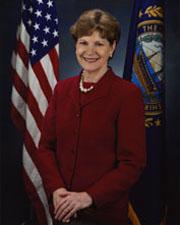 Sen. Jeanne Shaheen (D-NH)
Sen. Jeanne Shaheen (D-NH)Submitted July 13, 2026
Legislative Activity
Stay on top of the latest movement without scrolling through every action
Floor
Latest Action
Senate amendment submitted
July 13, 2026
Text
Submitted
SA 6648. Mrs. SHAHEEN (for herself and Mr. Kaine) submitted an
amendment intended to be proposed by her to the bill S. 4784, to
authorize appropriations for fiscal year 2027 for military activities
of the Department of Defense, for military construction, and for
defense activities of the Department of Energy, to prescribe military
personnel strengths for such fiscal year, and for other purposes; which
was ordered to lie on the table; as follows:

At the end of subtitle E of title XII, add the following:

SEC. 1270A. ADVANCING A COMPREHENSIVE APPROACH TO ADDRESS
TRANSNATIONAL CRIME.

(a) Addressing Gaps in Law Enforcement and Anti-crime
Programs.--
(1) Strategic plan.--Not later than 180 days after the date
of the enactment of this Act, the Secretary of State
(referred to in this section and section 1270B as the
``Secretary''), acting through the Assistant Secretary of
State for International Narcotics and Law Enforcement Affairs
(referred to in this section and section 1270B as the
``Assistant Secretary''), shall develop and implement a
strategic plan for the Bureau of International Narcotics and
Law Enforcement Affairs (referred to in this section and
section 1270B as the ``Bureau'') to expand anti-crime
programming related to citizen security and the rule of law,
crime and violence prevention, and other efforts to address
systemic and structural drivers of transnational crime for an
initial 5-year period.
(2) Scope.--Programs identified pursuant to paragraph (1)
--
(A) shall include types of anti-crime programs
traditionally done by other bureaus within the Department of
State; and
(B) may include--
(i) community-level crime and violence prevention programs;
(ii) alternative development programs;
(iii) land titling programs; and
(iv) anti-corruption and good governance programs.
(3) Stakeholder engagement.--In developing the strategic
plan under paragraph (1), and before implementing such plan
and submitting the report required under paragraph (5), the
Secretary shall--
(A) consult with, and incorporate suggestions from,
security, law enforcement, and justice institutions of
partner governments, relevant multilateral and
intergovernmental entities, and relevant private sector
entities, to the maximum extent practicable;
(B) consult with, and incorporate suggestions from, the
appropriate congressional committees, to the maximum extent
practicable;
(C) request a list from partner governments identifying
resource and program gaps in anti-crime efforts following the
foreign assistance review directed by the President through
Executive Order 14169 (90 Fed. Reg.

[[Page S3854]]

8619 (January 20, 2025) relating to reevaluating and
realigning United States foreign aid); and
(D) request a list of gaps and opportunities in programming
described in paragraphs (1) and (2) from the chief of mission
of the United States embassies in all countries that receive
assistance under chapter 8 of part I of the Foreign
Assistance Act of 1961 (22 U.S.C. 2291 et seq.).
(4) Prioritization.--The Secretary, acting through the
Assistant Secretary, should prioritize the use of funds
appropriated to carry out chapter 4 of part II of the Foreign
Assistance Act of 1961 (22 U.S.C. 2346 et seq.) for programs
and activities identified under this subsection when
International Narcotics Control and Law Enforcement funding
is not available for such purpose.
(5) Report.--The Secretary, acting through the Assistant
Secretary, shall include, in the first report submitted after
the date of the enactment of this Act, a section containing--
(A) the strategic plan required under paragraph (1),
including--
(i) a description of the initial proposed list of new anti-
crime programs for the Bureau to undertake;
(ii) the identification of an initial list of priority
countries for receiving such programming, which shall, to the
maximum extent practicable, include countries across all the
geographic regions in which the Bureau operates; and
(iii) a description of any constraints or challenges to the
Bureau undertaking such programming;
(B) a timeline for implementing the strategic plan; and
(C) a description of the funds needed to implement such
plan and programming during the next 5 fiscal years.
(6) Authorization of appropriations.--There is authorized
to be appropriated $100,000,000 for each of the fiscal years
2027 through 2031 to implement this subsection.
(b) Public-private Partnerships.--
(1) Authorization.--The Secretary, acting through the
Assistant Secretary, and in coordination with the heads of
relevant Federal departments and agencies, is authorized and
encouraged to pursue public-private partnerships, other
research partnerships, and innovative financing mechanisms--
(A) to strengthen citizen security;
(B) to counter transnational crime; and
(C) to otherwise prevent and reduce violence and
participation in illicit markets that affect United States
national interests, including through initiatives at the
community level.
(2) Priority focus areas.--Partnerships authorized under
paragraph (1) shall prioritize, during the 5-year period
beginning on the date of the enactment of this Act, efforts
to address--
(A) cyber-scam centers;
(B) demand reduction matters relating to the illicit use of
narcotics and other drugs, particularly fentanyl and other
synthetic opioids, including monitoring and data collection
regarding use of such illicit drugs;
(C) port security and maritime domain awareness;
(D) sexual and gender-based violence;
(E) alternatives to illicit drug cultivation;
(F) anti-money laundering;
(G) community-based crime and violence deterrence and
prevention;
(H) rule of law, transparency, and anti-corruption; and
(I) environmental and natural resource crimes.
(3) Consultation.--In expanding the Department of State's
public-private partnerships and other multi-stakeholder
initiatives in the areas described in paragraph (1), the
Assistant Secretary shall engage with the United Nations
Office on Drugs and Crime and other entities with experience
undertaking public-private partnerships related to law
enforcement and anti-crime issues.
(4) Capacity building and information sharing.--The
Secretary, acting through the Assistant Secretary, and in
coordination with the heads of relevant Federal departments
and agencies, shall collaborate with relevant stakeholders,
including law enforcement agencies and other related
institutions of partner governments, the private sector, and
civil society--
(A) to convene capacity building and training sessions,
events, and other forums to explore opportunities for public-
private partnerships related to the activities described in
paragraph (1) in each geographic region in which the Bureau
operates; and
(B) to encourage information sharing on best practices to
address such activities.
(5) Limitations.--Any public-private partnership entered
into pursuant to this subsection shall comply with--
(A) international best practices on public-private
partnerships; and
(B) additional guidelines and standards for best practices
set by the Secretary of State, including those within section
970 of volume 2 of the Foreign Affairs Manual.
(6) Notification and briefing.--Before entering into a
public-private partnership under this subsection, the
Assistant Secretary shall notify and brief the Committee on
Foreign Relations of the Senate and the Committee on Foreign
Affairs of the House of Representatives regarding the
activities to be undertaken under such partnership and how
partner entities will be selected.
(c) Rule of Construction.--The term ``anticrime purposes'',
with respect to the authority of the President under section
481(a)(4) of the Foreign Assistance Act of 1961 (22 U.S.C.
2291(a)(4)), shall be construed to allow for the provision of
assistance, including through grants to nongovernmental
organizations, for efforts--
(1) to advance citizen security and the rule of law;
(2) to strengthen the capacity, accountability, and reform
of foreign security, law enforcement, and justice
institutions, including police, prosecutors and judges,
correctional facilities, border and customs enforcement
authorities, anti-corruption institutions, and other related
entities;
(3) to prevent, reduce, or deter transnational crime; and
(4) to otherwise address the drivers and impacts of illicit
activity, including systemic and structural drivers of
violence, affecting United States national interests,
including through programs that--
(A) prevent community violence and crime;
(B) provide alternatives to drug cultivation and production
or other illicit activities;
(C) disarm, demobilize, or reintegrate members of criminal
organizations;
(D) reduce impunity and strengthen anti-corruption and good
governance frameworks;
(E) increase government presence and access to justice in
conflict-affected areas;
(F) prevent and respond to sexual and gender-based
violence; and
(G) address illicit arms trafficking.
(d) Modification of Assistant Secretary's Areas of
Responsibility.--Section 1(c)(3)(B) of the State Department
Basic Authorities Act of 1956 (22 U.S.C. 2651a(c)(3)(B)) is
amended--
(1) in clause (ii), by inserting ``law enforcement and''
after ``foreign'';
(2) in clause (iv), by striking ``human rights and women's
participation issues'' and inserting ``human rights, women's,
afrodescendents', indigenous people's, and other excluded
communities' participation issues, and international
humanitarian law, as applicable'';
(3) in clause (v), by striking ``wildlife, and cultural
property, migrant smuggling, corruption, money laundering,
the illicit smuggling of bulk cash, the licit use of
financial systems for malign purposes,'' and inserting
``wildlife, timber, metals and minerals, and cultural
property, migrant smuggling, corruption, money laundering,
the illicit smuggling of bulk cash, the licit use of
financial systems for malign purposes, cybercrime,''; and
(4) by adding at the end the following:
``(vii) Combating, in conjunction with other relevant
bureaus of the Department of State and other United States
Government agencies, environmental and natural resource
crimes, including illegal mining, fishing, and logging and
associated illicit trade.''.
(e) Amendments to Chapter 8 of Part I of the Foreign
Assistance Act of 1961.--Chapter 8 of part I of the Foreign
Assistance Act of 1961 (22 U.S.C. 2291 et seq.) is amended--
(1) by amending the chapter header to read as follows:
``INTERNATIONAL NARCOTICS CONTROL, LAW ENFORCEMENT, AND
RELATED ANTICRIME MATTER''; and
(2) in section 481(a)(1)--
(A) by redesignating subparagraphs (A) through (G) as
subparagraphs (B) through (H), respectively;
(B) by inserting before subparagraph (B), as redesignated,
the following:
``(A) It is the policy of the United States--
``(i) to assist foreign countries in preventing and
combating all forms of transnational criminal activity that
threaten regional stability and undermine United States
national security interests, including--

``(I) illicit narcotics production and trafficking;
``(II) arms trafficking;
``(III) illicit finance and money laundering;
``(IV) trafficking in persons;
``(V) sexual and gender-based violence;
``(VI) migrant smuggling;
``(VII) cybercrime;
``(VIII) environmental and natural resource crime;
``(IX) corruption; and
``(X) and other related conditions that enable the
activities described in subclauses (I) through (IX); and

``(ii) to use United States assistance under this chapter
to support efforts to strengthen civilian law enforcement,
justice sector institutions, corrections systems, border and
customs authorities, anti-corruption institutions, and
international cooperation mechanisms to prevent, investigate,
prosecute, and adjudicate crimes associated with
transnational criminal activity and associated criminal
networks.'';
(C) in subparagraph (B), as redesignated, by adding at the
end the following: ``Transnational criminal organizations
engaged in international narcotics trafficking have expanded
their activities to other illicit markets, including human
trafficking, smuggling, and environmental and natural
resource crimes, which requires the United States to modify
its foreign policies and programs to effectively counter
international narcotics trafficking and associated criminal
networks.'';
(D) in subparagraph (E), as redesignated, by striking
``particularly'' and inserting ``including''; and
(E) in subparagraph (G), as redesignated, by inserting ``,
environmental and natural resource crimes, and other
transnational crime-related'' after ``narcotics''.

[[Page S3855]]

SEC. 1270B. STRENGTHENING DEPARTMENT OF STATE REPORTING OF
TRANSNATIONAL CRIMINAL ACTIVITIES.

(a) Bureau of International Narcotics and Law Enforcement
Affairs Strategy.--
(1) In general.--Not later than 180 days after the
Secretary of State makes publicly available the strategic
plan required under section 306 of title 5, United States
Code, the Secretary shall--
(A) develop a strategic plan for the Bureau containing--
(i) all the information required under subsection (a) of
such section 306; and
(ii) a separate section evaluating foreign assistance and
programming carried out by the Bureau since the submission of
the previous Bureau strategy and the future direction of such
assistance and programming;
(B) make such strategic plan available on a publicly
accessible website of the Department of State; and
(C) simultaneously notify the Committee on Foreign
Relations of the Senate and the Committee on Foreign Affairs
of the House of Representatives of the availability of such
strategic plan.
(2) Contingency plan.--If the strategic plan for the Bureau
is not made publicly available in accordance with paragraph
(1)(B) before the date of the enactment of this Act, the
Secretary shall comply with such paragraph not later than 180
days after such date of enactment.
(b) Elements.--The strategic plan for the Bureau required
under subsection (a) shall, with respect to each geographic
region in which the Bureau operates--
(1) provide a detailed assessment of--
(A) the transnational criminal and citizen security threats
to United States national interests within such region;
(B) how such threats have changed since the submission of
the previous Bureau strategy; and
(C) how foreign assistance, diplomatic engagement, and
programming by the Bureau are designed--
(i) to promote citizen security;
(ii) to disrupt transnational criminal organizations and
their illicit economies; and
(iii) to strengthen the capacity of foreign partners to
counter such threats;
(2) identify priority gaps and strategic opportunities for
strengthening foreign assistance and programming carried out
by the Bureau;
(3) assess outcome metrics from monitoring and evaluation
conducted since the submission of the previous Bureau
strategic plan, and provide concrete plans to ensure such
outcome assessments inform the foreign assistance program
design and funding decisions of the Bureau;
(4) describe in detail the Bureau's plans for addressing--
(A) narcotics trafficking, including the trafficking of
fentanyl and other synthetic drugs and precursor chemicals;
(B) environmental and natural resource crimes, including
illegal logging, wildlife trafficking, illegal mining, and
illegal fishing;
(C) human trafficking and migrant smuggling;
(D) ransom kidnapping and extortion;
(E) arms trafficking;
(F) money laundering;
(G) rule of law and corruption issues;
(H) drug demand reduction;
(I) cyber crime and intellectual property rights;
(J) capacity challenges faced by law enforcement, border
security, and criminal justice institutions in partner
countries, including civilian police and correctional
facilities; and
(K) sexual and gender-based violence;
(5) identify concrete ways in which the Department of State
has used the findings of the International Narcotics Control
Strategy Reports submitted pursuant to section 489 of the
Foreign Assistance Act of 1961 (22 U.S.C. 2291h) since the
submission of the Bureau' s previous strategic plan to inform
foreign assistance program design and funding decisions by
the Bureau;
(6) identify concrete ways in which the Department has used
the findings regarding foreign countries' progress on anti-
corruption efforts referred to in subsections (a) through (c)
of section 5403 of the Combating Global Corruption Act
(subtitle A of title LIV of Public Law 118-31; 22 U.S.C.
10502) that have been provided to Congress since the
submission of the Bureau's previous strategic plan to inform
foreign assistance program design and funding decisions by
the Bureau;
(7) provide concrete examples of progress made in
significantly increasing the recruitment, training and
retention of women and other underrepresented communities in
law enforcement positions;
(8) identify concrete ways in which the Bureau, in
coordination with all other relevant Federal entities, can
more effectively target drivers of organized criminal
activity and recruitment at the community level, including
through Bureau programs--
(A) to deter crime and violence;
(B) to support crop substitution and alternatives to
illicit drug cultivation; and
(C) to support community education and rehabilitation
programming;
(9) describe how foreign assistance and programming carried
out by the Bureau may be used to counter malign foreign
influence, including from the People's Republic of China and
the Russian Federation;
(10)(A) identify and evaluate outcome metrics to assess the
operations and effectiveness of the Bureau's International
Law Enforcement Academies since the submission of the
Bureau's previous strategic plan; and
(B) describe how such results will inform future program
design and funding decisions for such Academies;
(11)(A) identify and evaluate outcome metrics to assess the
operations and effectiveness of the Bureau's Narcotics
Rewards Program and Transnational Organized Crime Rewards
Programs since the submission of the Bureau's previous
strategic plan; and
(B) describe how such results will inform future program
design and funding decisions for such rewards programs; and
(12) identify concrete ways to strengthen multilateral and
donor coordination to enhance the delivery and efficiency of
assistance by the Bureau.
(c) Annual Program and Budget Accountability Report.--
(1) In general.--Not later than 180 days after the date of
the enactment of this Act, and not later than the first
Monday of March of each year thereafter, the Secretary,
acting through the Assistant Secretary, shall submit a
program and budget accountability report for the Bureau for
the preceding fiscal year to the Committee on Foreign
Relations of the Senate, the Committee on Foreign Affairs of
the House of Representatives, the Committee on Appropriations
of the Senate, and the Committee on Appropriations of the
House of Representatives.
(2) Requirements.--Each report submitted pursuant to
paragraph (1) shall, with respect to the preceding fiscal
year--
(A) provide a breakdown, by geographic region, of countries
that received funding from the INCLE account, disaggregated
by amount, fiscal year, and program type;
(B) identify all programming conducted through interagency
agreements described in section 632(b) of the Foreign
Assistance Act of 1961 (22 U.S.C. 2392(b)), disaggregated by
geographic region and implementing agency and, for such
programming--
(i) identify each recipient of such support;
(ii) describe the support provided and the anticipated
duration of such support; and
(iii) describe the sources and amounts of funds used to
provide such support;
(C) identify how much assistance from the INCLE account was
provided through interagency agreements described in section
632(b) of the Foreign Assistance Act of 1961 (22 U.S.C.
2392(b)), disaggregated by geographic region and implementing
agency;
(D) identify, globally and by geographic region, to the
maximum extent practicable, how much assistance from the
INCLE account was obligated for addressing--
(i) narcotics trafficking, including a specific amount for
addressing trafficking of fentanyl, synthetic opioids and
related precursor chemicals;
(ii) environmental and natural resource crimes,
disaggregated by illegal logging, wildlife trafficking,
illegal mining, and illegal fishing;
(iii) human trafficking and migrant smuggling;
(iv) arms trafficking;
(v) money laundering;
(vi) rule of law and corruption issues;
(vii) drug demand reduction;
(viii) cyber crime and intellectual property rights; and
(ix) sexual and gender-based violence;
(E) identify, globally and by geographic region, how much
assistance from the INCLE account was directly provided to--
(i) foreign government institutions;
(ii) intergovernmental or multilateral organizations;
(iii) locally-based nongovernmental organizations;
(iv) United States-based nongovernmental organizations;
(v) security or military contractors; and
(vi) any other implementing entity;
(F) list the amount of--
(i) law enforcement, criminal justice, border security, and
other foreign personnel trained through funding from the
INCLE account, disaggregated by geographic region, and the
types of trainings they received, with a separate section on
personnel trained by the International Law Enforcement
Academies;
(ii) lethal and non-lethal equipment provided to foreign
governments, disaggregated by geographic region and type of
equipment provided; and
(iii) previously existing and newly created United States-
vetted units in countries in which the Bureau operates;
(G) identify any foreign assistance and programming
provided by the Bureau that is carried out at the subnational
level, disaggregated by geographic region;
(H) identify any end-use monitoring or human rights
monitoring issues that arose regarding foreign assistance and
programming provided by the Bureau, disaggregated by
geographic region, and how such issues were resolved;
(I) identify any provisions of law that were waived or
superseded by the Bureau pursuant to the section 481(a)(4) of
the Foreign Assistance Act of 1961 (22 U.S.C. 2291(a)(4)) and
provide justification for each such action;
(J) with respect to the Narcotics Rewards Program and the
Transnational Organized Crime Rewards Program--
(i) identify previously existing outstanding rewards and
newly issued rewards, disaggregated by geographic region of
the

[[Page S3856]]

designated target and by relevant criminal activity; and
(ii) identify--

(I) how many and which rewards led to the conviction or
arrest of designated targets; and
(II) how much money was paid out to reward program
participants;

(K) identify and describe any public-private partnership
programming carried out by the Bureau, disaggregated by
geographic region;
(L) disclose all private military and security contractors
with which the Bureau collaborates, disaggregated by
geographic region;
(M) identify and describe the Bureau priorities for
programs for which independent evaluations will be carried
out during the upcoming fiscal year, including the reasons
for their selection;
(N)(i) summarize major takeaways and recommendations from
program management and evaluation activities; and
(ii) describe, to the maximum extent practicable, how such
results will inform program design and funding decisions by
the Bureau for the upcoming fiscal year;
(O) identify--
(i) the 5 countries in each geographic region that received
the highest amount of foreign assistance and programming from
the Bureau; and
(ii) any other country, irrespective of geographic region,
that received more than $10,000,000 in such assistance and
programming; and
(P) for each country identified pursuant to subparagraph
(O)--
(i) provide a country narrative that describes the major
citizen security and transnational criminal challenges faced
by such country;
(ii) assess--

(I) the political will of the government of such country to
work with the United States to address such threats;
(II) such government's absorptive capacity; and
(III) other capacity building challenges faced by such
government across law enforcement, criminal justice, and
border security sectors;

(iii) identify the potential fraud risk, end use
monitoring, and human rights-related challenges for the
Bureau related to operating in such country;
(iv) identify all programs operated by the Bureau and, for
each such program--

(I) provide an overview and details of program activity,
operationalizable program goals and objectives, and outcome-
based and results-oriented performance indicators and metrics
for evaluating the effectiveness of such programs; and
(II) assess the progress being made to achieve program
goals and objectives and any challenges affecting such
achievement; and

(v) identify--

(I) any concrete assistance requested by the government of
such country related to the Bureau's mission; and
(II) the Bureau's assessment of the challenges to, and
merit of, providing such assistance.

(3) Form and public availability of report.--
(A) Form.--Each report required under paragraph (1) shall
be submitted in unclassified form to the Committee on Foreign
Relations of the Senate and the Committee on Foreign Affairs
of the House of Representatives, but may include a classified
annex to the extent necessary to protect sensitive
information if an explanation is provided for why such
information is required to be classified.
(B) Public availability.--The Secretary shall make the
unclassified portions of each such report available to the
public on a website of the Department of State.
(d) Implementation.--The Secretary, acting through the
Assistant Secretary, shall promulgate and implement any
polices, guidance, or procedures within the Bureau that may
be necessary to comprehensively and accurately track,
compile, and report the data required to be included in the
report under subsection (c)(2).
______