S.Amdt. 6838Senate119th Congress (2025-2027)
S.Amdt. 6838
Sponsored by 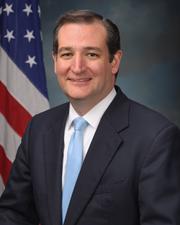 Sen. Ted Cruz (R-TX)
Sen. Ted Cruz (R-TX)Submitted September 28, 2026
Legislative Activity
Stay on top of the latest movement without scrolling through every action
Floor
Latest Action
Senate amendment submitted
September 28, 2026
Text
Submitted
SA 6838. Mr. CRUZ (for himself and Ms. Cantwell) submitted an
amendment intended to be proposed by him to the bill S. 3923, to
improve the weather research of the National Oceanic and Atmospheric
Administration, support improvements in weather forecasting and
prediction, and expand commercial opportunities for the provision of
weather data; which was ordered to lie on the table; as follows:

Strike all after the enacting clause and insert the
following:

SECTION 1. SHORT TITLE; TABLE OF CONTENTS.

(a) Short Title.--This Act may be cited as the ``Weather
Research and Forecasting Innovation Reauthorization Act of
2026''.
(b) Table of Contents.--The table of contents for this Act
is as follows:

Sec. 1. Short title; table of contents.
Sec. 2. Definitions.

TITLE I--REAUTHORIZATION OF THE WEATHER RESEARCH AND FORECASTING
INNOVATION ACT OF 2017

Sec. 101. Public safety priority.

[[Page S5081]]

Sec. 102. United States weather research and forecasting.
Sec. 103. Verification of the Origins of Rotation in Tornadoes
Experiment-United States of America (VORTEX-USA).
Sec. 104. Hurricane forecast improvement program.
Sec. 105. Tsunami Warning and Education Act reauthorization.
Sec. 106. Observing system planning.
Sec. 107. Observing system simulation experiments.
Sec. 108. Computing resources prioritization.
Sec. 109. Earth Prediction Innovation Center.
Sec. 110. Satellite architecture planning.
Sec. 111. Improving uncrewed activities.
Sec. 112. Interagency Council for Advancing Meteorological Services.
Sec. 113. Ocean observations.
Sec. 114. Consolidation of reports.
Sec. 115. Precipitation forecast improvement program.

TITLE II--ENHANCING FEDERAL WEATHER FORECASTING AND INNOVATION

Sec. 201. Next-generation numerical weather prediction initiative.
Sec. 202. Radar Next Program.
Sec. 203. Data voids in under-observed areas of the United States.
Sec. 204. Radar innovation for the next generation.
Sec. 205. Atmospheric rivers forecast improvement program.
Sec. 206. Coastal flooding and storm surge forecast improvement
program.
Sec. 207. Improving prevention and responses to temperature related
impacts.
Sec. 208. Aviation weather and data innovation.
Sec. 209. Aerial snow survey program.
Sec. 210. National Environmental Satellite, Data, and Information
Service partnership program, transition program, and
operational planning.
Sec. 211. Advanced Weather Interactive Processing System.
Sec. 212. Reanalysis and reforecasting.
Sec. 213. National Weather Service workforce.
Sec. 214. Consultation relating to modernization and reorganization.
Sec. 215. Artificial intelligence for weather forecasting.
Sec. 216. Composition of the atmosphere and atmospheric observations.
Sec. 217. Project to improve forecasts of coastal marine fog.
Sec. 218. Modernization of NWS alerting systems.

TITLE III--COMMERCIAL WEATHER AND ENVIRONMENTAL OBSERVATIONS

Sec. 301. Commercial Data Program.
Sec. 302. Commercial Data Pilot Program.
Sec. 303. Contracting authority and avoidance of duplication.
Sec. 304. Data assimilation, management, and sharing practices.
Sec. 305. Clerical amendment.

TITLE IV--COMMUNICATING WEATHER TO THE PUBLIC

Sec. 401. Definitions.
Sec. 402. Hazardous weather or water event risk communication.
Sec. 403. Hazard communication research and engagement.
Sec. 404. NOAA Weather Radio.
Sec. 405. National standards for weather warning systems in flash flood
zones.
Sec. 406. Post-storm surveys and assessments.
Sec. 407. Government Accountability Office report on alert
dissemination for hazardous weather or water events.
Sec. 408. Data collection, management, and protection.

TITLE V--IMPROVING WEATHER INFORMATION FOR AGRICULTURE AND WATER
MANAGEMENT

Sec. 501. Weather information for agriculture and water management.
Sec. 502. National Integrated Drought Information System.
Sec. 503. National Mesonet Program.
Sec. 504. National Coordinated Soil Moisture Monitoring Network.
Sec. 505. National Water Center.

TITLE VI--HARMFUL ALGAL BLOOM AND HYPOXIA RESEARCH AND CONTROL

Sec. 601. Amendments to the Harmful Algal Bloom and Hypoxia Research
and Control Act of 1998.
Sec. 602. Other harmful algal bloom and hypoxia matters.

TITLE VII--FIRE READY NATION

Sec. 701. Definitions.
Sec. 702. Establishment of fire weather services program.
Sec. 703. Fire weather testbed.
Sec. 704. Data management and technology modernization.
Sec. 705. Surveys and assessments.
Sec. 706. Incident Meteorologist Service.
Sec. 707. Emergency response activities.
Sec. 708. Submissions to Congress regarding the Fire Weather Services
Program, incident meteorologist workforce needs, and
National Weather Service workforce support.
Sec. 709. Fire Weather Science and Technology Working Group; strategic
plan.
Sec. 710. Fire weather rating system.
Sec. 711. Government Accountability Office reports.
Sec. 712. Cooperation and coordination.
Sec. 713. General provisions.
Sec. 714. Authorization of appropriations.

TITLE VIII--PRECIPITATION ESTIMATES AND LANDSLIDE PREPAREDNESS

Sec. 801. Inclusion of atmospheric rivers and extreme precipitation
events in estimates of precipitation frequency.
Sec. 802. Reauthorization of National Landslide Preparedness Act.
Sec. 803. Next Generation Water Observing System.
Sec. 804. Water data enhancement and national groundwater resources
monitoring by United States Geological Survey.

TITLE IX--IMPROVING CYBERSECURITY AND TELECOMMUNICATIONS FOR OCEANIC
RESEARCH

Sec. 901. Definitions.
Sec. 902. Plan to improve cybersecurity and telecommunications of U.S.
Academic Research Fleet.

TITLE X--INTEGRATED OCEAN OBSERVATION SYSTEM REAUTHORIZATION ACT OF
2026

Sec. 1001. Short title.
Sec. 1002. Purposes.
Sec. 1003. Definitions.
Sec. 1004. Integrated Coastal and Ocean Observing System.
Sec. 1005. Report to Congress.
Sec. 1006. Authorization of appropriations.
Sec. 1007. Conforming amendments.

TITLE XI--OTHER AUTHORITIES

Sec. 1101. Relocation allowances.
Sec. 1102. Unfunded priorities list, reports, and plans.
Sec. 1103. Meteorological observations in the Arctic region.
Sec. 1104. Transfer of excess property of the National Oceanic and
Atmospheric Administration.
Sec. 1105. Miscellaneous authorities.

SEC. 2. DEFINITIONS.

(a) In General.--In this Act, the terms ``seasonal'',
``State'', ``subseasonal'', ``Under Secretary'', ``weather
enterprise'', ``weather data'', and ``weather industry'' have
the meanings given such terms in section 2 of the Weather
Research and Forecasting Innovation Act of 2017 (15 U.S.C.
8501).
(b) Weather Data Defined.--Section 2 of the Weather
Research and Forecasting Innovation Act of 2017 (15 U.S.C.
8501) is amended--
(1) by redesignating paragraph (5) as paragraph (6); and
(2) by inserting after paragraph (4) the following:
``(5) Weather data.--The term `weather data' means
information used to track and predict weather conditions and
patterns, including forecasts, observations, and derivative
products from such information.''.

TITLE I--REAUTHORIZATION OF THE WEATHER RESEARCH AND FORECASTING
INNOVATION ACT OF 2017

SEC. 101. PUBLIC SAFETY PRIORITY.

Section 101 of the Weather Research and Forecasting
Innovation Act of 2017 (15 U.S.C. 8511) is amended to read as
follows:

``SEC. 101. PUBLIC SAFETY PRIORITY.

``(a) In General.--The Under Secretary shall ensure the
National Oceanic and Atmospheric Administration remains
focused on providing accurate and timely weather forecasts
that protect lives and property and enhance the national
economy, including by--
``(1) coordinating and modernizing observational
infrastructure, weather forecasting systems, communications,
and impact-based decision support services; and
``(2) improving operational weather forecasts, products,
and services.
``(b) Research.--In conducting research, the Under
Secretary shall prioritize improving weather data, modeling,
computing, forecasting, and warnings and support transition
of advancements into operational forecasting and services,
for the protection of life and property and for the
enhancement of the national economy.''.

SEC. 102. UNITED STATES WEATHER RESEARCH AND FORECASTING.

Section 110 of the Weather Research and Forecasting
Innovation Act of 2017 (15 U.S.C. 8519) is amended to read as
follows:

``SEC. 110. AUTHORIZATION OF APPROPRIATIONS.

``(a) Authorization of Appropriations.--There are
authorized to be appropriated to the Office of Oceanic and
Atmospheric Research to carry out this title the following:
``(1) $166,736,000 for fiscal year 2027, of which--
``(A) $94,000,000 is authorized for weather laboratories
and cooperative institutes;
``(B) $39,491,000 is authorized for the United States
Weather Research Program;
``(C) $21,125,000 is authorized for tornado, severe storm,
and next generation radar research; and
``(D) $12,120,000 is authorized for the joint technology
transfer initiative described in section 102(b)(4) of this
title.
``(2) $168,403,000 for fiscal year 2028, of which--
``(A) $94,940,000 is authorized for weather laboratories
and cooperative institutes;
``(B) $39,886,000 is authorized for the United States
Weather Research Program;
``(C) $21,336,000 is authorized for tornado, severe storm,
and next generation radar research; and

[[Page S5082]]

``(D) $12,241,000 is authorized for the joint technology
transfer initiative described in section 102(b)(4) of this
title.
``(3) $170,089,000 for fiscal year 2029, of which--
``(A) $95,890,000 is authorized for weather laboratories
and cooperative institutes;
``(B) $40,285,000 is authorized for the United States
Weather Research Program;
``(C) $21,550,000 is authorized for tornado, severe storm,
and next generation radar research; and
``(D) $12,364,000 is authorized for the joint technology
transfer initiative described in section 102(b)(4) of this
title.
``(4) $171,789,000 for fiscal year 2030, of which--
``(A) $96,849,000 is authorized for weather laboratories
and cooperative institutes;
``(B) $40,688,000 is authorized for the United States
Weather Research Program;
``(C) $21,765,000 is authorized for tornado, severe storm,
and next generation radar research; and
``(D) $12,487,000 is authorized for the joint technology
transfer initiative described in section 102(b)(4) of this
title.
``(5) $173,506,000 for fiscal year 2031, of which--
``(A) $97,817,000 is authorized for weather laboratories
and cooperative institutes;
``(B) $41,094,000 is authorized for the United States
Weather Research Program;
``(C) $21,983,000 is authorized for tornado, severe storm,
and next generation radar research; and
``(D) $12,612,000 is authorized for the joint technology
transfer initiative described in section 102(b)(4) of this
title.
``(b) Limitation.--No additional funds are authorized to
carry out this title or the amendments made by this title.''.

SEC. 103. VERIFICATION OF THE ORIGINS OF ROTATION IN
TORNADOES EXPERIMENT-UNITED STATES OF AMERICA
(VORTEX-USA).

(a) In General.--Section 103 of the Weather Research and
Forecasting Innovation Act of 2017 (15 U.S.C. 8513) is
amended to read as follows:

``SEC. 103. VERIFICATION OF THE ORIGINS OF ROTATION IN
TORNADOES EXPERIMENT-UNITED STATES OF AMERICA
(VORTEX-USA).

``(a) In General.--The Under Secretary, in collaboration
with the United States weather industry and academic
partners, shall maintain a program for rapidly improving
tornado forecasts, predictions, and warnings.
``(b) Goal.--The goal of the program under subsection (a)
shall be to develop and extend accurate tornado forecasts,
predictions, and warnings in order to reduce the loss of life
or property related to tornadoes, with a focus on the
following:
``(1) Forecaster training in radar interpretation and
information integration from new sources.
``(2) Improving the effectiveness and timeliness of tornado
forecasts, predictions, and warnings, including with respect
to--
``(A) tornado formation from fast-developing storm systems,
such as derechos;
``(B) areas that have historically experienced lower
tornado frequency; and
``(C) tornado formation at night.
``(3) Optimizing lead time and providing actionable
information beyond one hour in advance.
``(4) Transitioning from warn-on-detection to warn-on-
forecast.
``(c) Innovative Observations.--The Under Secretary shall
ensure the program under subsection (a) periodically
examines, tests, and evaluates the value of incorporating
innovative observations, such as novel sensor technologies,
observation tools or networks, crewed or uncrewed systems,
and hosted instruments on commercial aircraft, vessels, and
satellites, with respect to the improvement of tornado
forecasts, predictions, and warnings.
``(d) Activities.--The Under Secretary shall award grants
for research, including relating to the following:
``(1) Implementing key goals and achieving program
milestones to the maximum extent practicable, as outlined by
the National Oceanic and Atmospheric Administration's 2019
report entitled, `Tornado Warning Improvement and Extension
Program Plan'.
``(2) In coordination with the Social and Behavioral
Sciences Subcommittee of the National Science and Technology
Council, improving the social, behavioral and economic
sciences regarding risk communication, and delivery of
information critical for reducing the loss of life or
property related to tornadoes.
``(3) Improving the physical sciences, computer modeling,
and tools related to tornado formation, the impacts of
tornadoes on the built and natural environment, and the
interaction of tornadoes and hurricanes.
``(e) Priority Institutions.--
``(1) In general.--In awarding grants under subsection (d),
the Under Secretary shall give priority to eligible
institutions selected through a competitive, merit-based
process.
``(2) Eligible institution defined.--In this subsection,
the term `eligible institution' means any of the following:
``(A) An institution that is frequently subjected to severe
weather, such as tornadoes, hurricanes, or floods.
``(B) An institution of higher education in close proximity
to a Weather Forecast Office of the National Weather Service.
``(f) Warnings.--In carrying out subsection (a), the Under
Secretary, in coordination with the program established under
section 403(a) of the Weather Research and Forecasting
Innovation Reauthorization Act of 2026, shall--
``(1) conduct and transition to operations the research
necessary to develop and deploy probabilistic weather
forecast guidance technology for tornadoes and related
weather phenomena;
``(2) incorporate into tornado modeling and forecasting, as
appropriate, social, behavioral, risk, communication, and
economic sciences;
``(3) enhance workforce training on radar interpretation
and use of tornado warning systems; and
``(4) expand computational resources to support higher-
resolution modeling to advance the capability for warn-on-
forecast.
``(g) Tornado Rating System.--The Under Secretary, in
collaboration with local communities and emergency managers,
shall--
``(1) evaluate the system used as of the date of enactment
of the Weather Research and Forecasting Innovation
Reauthorization Act of 2026 to rate the severity of
tornadoes;
``(2) determine whether updates to such system are required
to ensure such ratings accurately reflect the severity of
tornadoes; and
``(3) if determined necessary, update such system.
``(h) Annual Budget.--The Under Secretary shall submit to
Congress, with the budget of the President submitted under
section 1105 of title 31, United States Code, for a fiscal
year, a proposed budget for activities to carry out this
section in that fiscal year.
``(i) Authorization of Appropriations.--There is authorized
to be appropriated to the Under Secretary to carry out this
section $11,000,000 for each of fiscal years 2027 through
2031, of which not less than $2,000,000 each fiscal year
shall be used for grants awarded to institutions under
subsection (e).''.
(b) Clerical Amendment.--The table of contents in section
1(b) of the Weather Research and Forecasting Innovation Act
of 2017 is amended by amending the item relating to section
103 to read as follows:

``Sec. 103. Verification of the Origins of Rotation in Tornadoes
Experiment-United States of America (VORTEX-USA).''.

SEC. 104. HURRICANE FORECAST IMPROVEMENT PROGRAM.

Section 104 of the Weather Research and Forecasting
Innovation Act of 2017 (15 U.S.C. 8514) is amended to read as
follows:

``SEC. 104. HURRICANE FORECAST IMPROVEMENT PROGRAM.

``(a) In General.--The Under Secretary, in collaboration
with the United States weather industry and academic
partners, shall maintain a program to improve hurricane
forecasting, predictions, and warnings.
``(b) Goal.--The goal of the program under subsection (a)
shall be to develop and extend accurate hurricane forecasts,
predictions, and warnings in order to reduce the loss of life
or property related to hurricanes, with a focus on the
following:
``(1) Improving the understanding, prediction, and
communication of rapid intensity change and projected path of
hurricanes, including probabilistic methods for hurricane
hazard mapping.
``(2) Improving the forecast and impact-based communication
of inland flooding, compound flooding, and storm surges from
hurricanes, in coordination with the program established
under section 206 of the Weather Research and Forecasting
Innovation Reauthorization Act of 2026.
``(3) Incorporating social, behavioral, risk,
communication, and economic sciences to clearly inform
response to prevent the loss of life or property.
``(4) Evaluating and incorporating, as appropriate,
innovative observations, including acoustic or infrasonic
measurements, novel sensor technologies, observation tools or
networks, crewed or uncrewed systems, and hosted instruments
on commercial aircraft, vessels, and satellites.
``(c) Activities.--The Under Secretary shall award grants
for research, including relating to the following:
``(1) Implementing key strategies and following priorities
and objectives outlined by the National Oceanic and
Atmospheric Administration's 2019 report entitled, `Hurricane
Forecast Improvement Program'.
``(2) In coordination with the Social and Behavioral
Sciences Subcommittee of the National Science and Technology
Council and other relevant interagency committees, improving
the social, behavioral, and economic sciences related to risk
communication, and delivery of information critical for
reducing the loss of life or property related to hurricanes.
``(3) Improving the physical sciences, operational
modeling, and tools related to hurricane formation, the
impacts of wind and water-based hurricane hazards on the
built and natural environment, and the interaction of
hurricanes and tornadoes.
``(d) Warnings.--In carrying out subsection (a), the Under
Secretary, in coordination with the program established under
section 403(a) of the Weather Research and Forecasting
Innovation Reauthorization Act of 2026, shall--
``(1) conduct and transition to operations the research
necessary to develop and deploy probabilistic weather
forecast guidance technology relating to hurricanes and
related weather phenomena;
``(2) incorporate into hurricane modeling and forecasting,
as appropriate, social, behavioral, and economic sciences
research; and

[[Page S5083]]

``(3) expand computational resources to support and improve
higher resolution operational modeling of hurricanes and
related weather phenomena.
``(e) Annual Report.--Not later than June 1 of each year
until 2030, the Under Secretary, in consultation with the
Secretary of Defense, shall submit to the Committee on
Science, Space, and Technology of the House of
Representatives and the Committee on Commerce, Science, and
Transportation of the Senate a report that includes the
following:
``(1) The number and causes of missed mission requirements
for the National Hurricane Operations Plan and the National
Winter Season Operations Plan, including those related to
equipment malfunction, aircraft availability, aircraft
maintenance, flight hour limits, and availability of pilots
or other air and maintenance crew members.
``(2) Requirements related to the plans described in
paragraph (1) that were requested by forecasters but not
tasked, and the reasons why those were not tasked.
``(3) A workforce management plan addressing any shortfalls
in human capital resources that are necessary for hurricane
observational data collection aboard aircraft or uncrewed
systems.
``(4) A summary of--
``(A) hurricane technology that is under research and
development to improve confidence in hurricane track and
intensity predictions;
``(B) hurricane technology that is at the prototype
demonstration stage or beyond; and
``(C) plans for transitioning the hurricane technology
described in subparagraph (B) into operations.
``(f) Annual Budget.--The Under Secretary shall submit to
Congress, with the budget of the President submitted under
section 1105 of title 31, United States Code, for a fiscal
year, a proposed budget for activities to carry out this
section in that fiscal year.''.

SEC. 105. TSUNAMI WARNING AND EDUCATION ACT REAUTHORIZATION.

(a) Title Heading; Definitions.--
(1) Title heading.--The Tsunami Warning and Education Act
(enacted as title VIII of the Magnuson-Stevens Fishery
Conservation and Management Reauthorization Act of 2006
(Public Law 109-479)) is amended in the title heading for
title VIII, by inserting ``, RESEARCH,'' after ``WARNING''.
(2) Definitions.--Section 802 of the Tsunami Warning and
Education Act (33 U.S.C. 3201) is amended by adding at the
end the following:
``(3) The term `Indian Tribe' has the meaning given the
term in section 4 of the Indian Self-Determination and
Education Assistance Act (25 U.S.C. 5304).
``(4) The term `Native Hawaiian organization' has the
meaning given the term in section 6207 of the Elementary and
Secondary Education Act of 1965 (20 U.S.C. 7517), except that
the term includes the Department of Hawaiian Home Lands and
the Office of Hawaiian Affairs.
``(5) The term `Tribal organization' has the meaning given
the term in section 4 of the Indian Self-Determination and
Education Assistance Act.
``(6) The term `tsunami' means a series of waves that is
caused by a tsunamigenic event.
``(7) The term `tsunamigenic event' means any event, such
as an earthquake, volcanic eruption, submarine landslide,
coastal rockfall, or other event, with the magnitude to cause
a tsunami.''.
(b) Purposes.--Section 803 of the Tsunami Warning and
Education Act (33 U.S.C. 3202) is amended--
(1) in paragraph (2), by inserting ``timeliness and''
before ``accuracy'';
(2) in paragraph (7), by striking ``and'' after the
semicolon;
(3) by amending paragraph (8) to read as follows:
``(8) to improve coordination for detection, warnings, and
outreach for tsunami and other coastal impacts with Federal,
State, and international partners, and Indian Tribes, Tribal
organizations, and Native Hawaiian organizations; and'';
(4) by adding at the end the following:
``(9) to ensure data and metadata are managed, archived,
and made available for operations, research, education, and
mitigation activities in accordance with section 305 of the
Weather Research and Forecasting Innovation Act of 2017.''.
(c) Tsunami Forecasting and Warning Program.--Section 804
of the Tsunami Warning and Education Act (33 U.S.C. 3203) is
amended--
(1) in subsection (a), by striking ``the Pacific and Arctic
Ocean regions and for the Atlantic Ocean region, including
the Caribbean Sea and the Gulf of Mexico'' and inserting
``the United States and its territories'';
(2) in subsection (b)--
(A) in paragraph (1), by striking ``subsection (d)'' and
inserting ``subsection (e)'';
(B) in paragraph (2), by inserting ``, or a successor
system,'' after ``buoy array'';
(C) in paragraph (4), by inserting ``, using industry and
scientific best practices,'' after ``operational condition'';
(D) in paragraph (5)--
(i) in subparagraph (C), by striking ``global seismic
network'' and inserting ``Global Seismic Network'';
(ii) by redesignating subparagraphs (D) through (F) and
subparagraph (G) as subparagraphs (E) through (G) and
subparagraph (I), respectively;
(iii) by inserting after subparagraph (C) the following:
``(D) the global navigation satellite system network;'';
(iv) in subparagraph (G), as so redesignated, by striking
``; and'' and inserting a semicolon; and
(v) by inserting after subparagraph (G), as so
redesignated, the following:
``(H) tidal gauges, water level gauges, and buoys; and'';
(E) by amending paragraph (6) to read as follows:
``(6) ensure data quality and management systems support
data and metadata access and archiving;'';
(F) in paragraph (7)--
(i) by amending the matter preceding subparagraph (A) to
read as follows: ``include a cooperative effort among the
Administration, the United States Geological Survey, the
National Aeronautics and Space Administration, and the
National Science Foundation under which the Director of the
United States Geological Survey, the Director of the National
Science Foundation, and the Administrator of the National
Aeronautics and Space Administration shall--'';
(ii) in subparagraph (A), by striking ``and'' at the end;
(iii) by amending subparagraph (B) to read as follows:
``(B) support operators of seismic stations installed
before the date of enactment of the Weather Research and
Forecasting Innovation Reauthorization Act of 2026 that
supplement coverage areas of sparse instrumentation, with a
focus on the most seismically active States and on stations
with multi-State benefits;''; and
(iv) by adding at the end the following:
``(C) provide support for the global navigation satellite
system network data streams from such agencies, and
supplement instrumentation coverage for rapid earthquake
assessment; and
``(D) assess the data and information of such agencies for
potential use in the Administration's warning system;'';
(G) by redesignating paragraphs (8) through (10) as
paragraphs (9) through (11), respectively;
(H) by inserting after paragraph (7) the following:
``(8) include a cooperative effort between the
Administration and the United States Geological Survey to
assess additional methods of rapid delivery for tsunami
notifications and warnings, including via the Earthquake
Early Warning System of the United States Geological
Survey;'';
(I) in paragraph (9), as so redesignated--
(i) by striking ``graphical warning products, to at-risk
States, territories, and tsunami communities'' and inserting
``graphical warning products and decision support tools, to
communities at risk of tsunami''; and
(ii) by striking ``utilization'' and inserting ``use'';
(J) in paragraph (10), as so redesignated, by striking
``and'' after the semicolon;
(K) in paragraph (11), as so redesignated, by striking the
period and inserting ``; and''; and
(L) by adding at the end the following:
``(12) update inundation maps, models, or other geographic
products, in order to best support, as appropriate, relevant
agencies with tsunami mitigation and recovery activities.'';
(3) in subsection (c)--
(A) by striking paragraph (1) and redesignating paragraphs
(2) and (3) as paragraphs (1) and (2), respectively; and
(B) by amending paragraph (1), as so redesignated, to read
as follows:
``(1) is capable of forecasting and providing adequate
warnings, including tsunami arrival time, alert levels, and
inundation models where applicable, for the United States and
its territories; and'';
(4) by redesignating subsections (d), (e), (f), and (g) as
subsections (e), (f), (g), and (h), respectively;
(5) by inserting after subsection (c) the following:
``(d) Tsunami Warning Alert Level Evaluation.--Not later
than 1 year after the date of enactment of the Weather
Research and Forecasting Innovation Reauthorization Act of
2026, the Administrator, in collaboration with social
scientists, Federal, State, and local emergency personnel,
Indian Tribes, Tribal organizations, Native Hawaiian
organizations, and high-risk communities, shall--
``(1) evaluate tsunami alert levels terminology, timing,
and effectiveness;
``(2) determine if such alerts produce the desired response
and understanding from possible tsunami-prone communities;
``(3) if necessary, update the alert level system for
increased effectiveness; and
``(4) provide to the Committee on Science, Space, and
Technology of the House of Representatives and the Committee
on Commerce, Science, and Transportation of the Senate a
briefing on the activities under this subsection.'';
(6) in subsection (e), as so redesignated--
(A) in paragraph (1)--
(i) in the matter preceding subparagraph (A), by striking
``Centers shall'' and inserting ``centers shall'';
(ii) in subparagraph (A), by striking ``, which is
primarily responsible for Alaska and the continental United
States''; and
(iii) in subparagraph (B), by striking ``, which is
primarily responsible for Hawaii, the Caribbean, and other
areas of the Pacific not covered by the National Center'';
(B) in paragraph (2)--

[[Page S5084]]

(i) in subparagraph (A), by inserting ``current, surface
and ground water level,'' after ``sea level,'';
(ii) by amending subparagraph (B) to read as follows:
``(B) Evaluating tsunamigenic sources.'';
(iii) in subparagraph (C), by striking ``buoy data and
tidal'' and inserting ``and coastal'';
(iv) in subparagraph (E), by striking ``Integrated Ocean
Observing System of the Administration'' and inserting
``United States and global ocean and coastal observing
systems'';
(v) in subparagraph (F), by striking ``Federal, State,
tribal, and local government officials'' and inserting
``Federal, State, and local government officials, Indian
Tribes, Tribal organizations, Native Hawaiian
organizations,'';
(vi) by redesignating subparagraphs (G) and (H) and
subparagraphs (I) and (J) as subparagraphs (H) and (I) and
subparagraphs (K) and (L), respectively;
(vii) by inserting after subparagraph (F) the following:
``(G) Providing a Tsunami Warning Coordinator at each
center supported or maintained under paragraph (1) to
coordinate with partners and stakeholders on products and
services provided by each such center.'';
(viii) in subparagraph (I), as so redesignated, by
inserting ``monitoring needs,'' after ``response,'';
(ix) by inserting after subparagraph (I), as so
redesignated, the following:
``(J) Updating, as appropriate, forecast points,
breakpoints, and special procedure areas.''; and
(x) by adding at the end the following:
``(M) Conducting, not less than annually, a tsunami warning
drill with Federal, State, and local emergency managers, and
emergency managers of Indian Tribes, Tribal organizations,
and Native Hawaiian organizations.'';
(C) by amending paragraph (3) to read as follows:
``(3) Fail-safe warning capability.--
``(A) In general.--The Administrator shall support and
maintain fail-safe warning capability for the tsunami warning
centers supported or maintained under paragraph (1).
``(B) Service back-up drills.--Not less than biannually,
such centers shall conduct a service back-up drill to ensure
they are able to perform back-up duties for each other.'';
(D) in paragraph (4)--
(i) by amending the matter preceding subparagraph (A) to
read as follows: ``The Administrator shall coordinate with
the weather forecast offices of the National Weather Service,
the centers supported or maintained under paragraph (1), and
such national and regional program offices of the
Administration as the Administrator or the coordinating
committee, as established in section 805(b), consider
appropriate to ensure that regional and local weather
forecast offices--'';
(ii) in subparagraph (B), by striking ``and'' after the
semicolon;
(iii) in subparagraph (C), by striking the period and
inserting ``; and''; and
(iv) by adding at the end the following:
``(D) conduct education and outreach efforts to help
prepare coastal communities for tsunami hazards.'';
(E) in paragraph (5)--
(i) in the paragraph heading, by striking ``Uniform'' and
inserting ``Standardized'';
(ii) in subparagraph (B), by redesignating clauses (i)
through (iii) as subclauses (I) through (III), respectively,
and adjusting the margins accordingly;
(iii) in subparagraph (C), by redesignating clauses (i) and
(ii) as subclauses (I) and (II), respectively, and adjusting
the margins accordingly;
(iv) by redesignating subparagraphs (A) through (E) as
clauses (i) through (v), respectively, and adjusting the
margins accordingly;
(v) by striking ``The Administrator'' and inserting the
following:
``(A) In general.--The Administrator'';
(vi) in clause (i), as so redesignated, by striking
``uniform'' and inserting ``standardized'';
(vii) in clause (iii)(II), as so redesignated, by striking
``uniform'' and inserting ``standardized'';
(viii) in clause (iv), as so redesignated, by striking ``;
and'' and inserting a semicolon;
(ix) in clause (v), as so redesignated, by striking the
period and inserting ``; and'';
(x) by adding after clause (v), as so redesignated, the
following:
``(vi) align the analytic techniques and methodologies of
the existing tsunami warning centers supported or maintained
under paragraph (1) to ensure continuity of operations and
mitigate risk of operational failure by prioritizing
investments that include--

``(I) replacing end of life equipment;
``(II) ensuring product consistency;
``(III) enabling consistent operational process for backup
capabilities;
``(IV) mitigating existing operational security risks; and
``(V) meeting information security requirements specified
in chapter 35 of title 44, United States Code.''; and

(xi) by adding at the end the following:
``(B) Regional differences.--Notwithstanding subparagraph
(A), the Administrator shall allow for regional differences
with respect to the communication methods and decision
support tools used by the centers supported or maintained
under paragraph (1) in order to account for the unique needs
of the community served by such centers, provided such
regional differences do not undermine performance.'';
(F) in paragraph (6), in the first sentence, by inserting
``, including personnel,'' after ``resources''; and
(G) by adding at the end the following:
``(7) Reporting.--Not later than 180 days after the date of
the enactment of this paragraph and annually thereafter for 3
years, the Administrator shall provide to the Committee on
Science, Space, and Technology of the House of
Representatives and the Committee on Commerce, Science, and
Transportation of the Senate a briefing on the progress and
expected timelines of the following:
``(A) Standardizing products and procedures under paragraph
(5), including tsunami assessments, forecast guidance, and
related products.
``(B) Migrating the message generation systems of the
centers supported or maintained under paragraph (1) to the
Advanced Weather Interactive Processing System, or successor
systems.
``(C) Any structural reorganization efforts as may be
necessary following the enactment of the Weather Research and
Forecasting Innovation Reauthorization Act of 2026.
``(D) Such centers conducting drills required under
paragraphs (2)(M) and (3)(B).'';
(7) in subsection (f), as so redesignated--
(A) in paragraph (1)--
(i) in the matter preceding subparagraph (A), by inserting
``detect, measure, and'' after ``used to'';
(ii) in subparagraph (B), by striking ``; and'' and
inserting a semicolon;
(iii) in subparagraph (C)--

(I) by striking ``and the Advanced National Seismic
System;'' and inserting ``the Advanced National Seismic
System, and the global navigation satellite system;''; and
(II) by adding ``and'' after the semicolon; and

(iv) by adding at the end the following:
``(D) by ensuring research is coordinated with tsunami
warning operations;''; and
(8) in subsection (h)(2), as so redesignated--
(A) in subparagraph (A), by striking ``accuracy of the
tsunami model used'' and inserting ``accuracy and timeliness
of the tsunami model and forecast used''; and
(B) in subparagraph (C)--
(i) by inserting ``and timeliness'' after
``effectiveness''; and
(ii) by striking ``local, and tribal partners'' and
inserting ``and local partners, Indian Tribes, Tribal
organizations, and Native Hawaiian organizations''.
(d) Assessment of Tsunami Watches and Warnings.--
(1) In general.--The Tsunami Warning and Education Act
(enacted as title VIII of the Magnuson-Stevens Fishery
Conservation and Management Reauthorization Act of 2006
(Public Law 109-479)) is amended by inserting after section
804 (33 U.S.C. 3203) the following:

``SEC. 804A. ASSESSMENT OF TSUNAMI WATCHES AND WARNINGS.

``(a) Assessment of Tsunami Watches and Warnings.--
``(1) In general.--Not later than 2 years after the date of
the enactment of this section, the Under Secretary shall--
``(A) conduct an assessment of--
``(i) the tsunami watches and warnings of the National
Weather Service; and
``(ii) the information delivery to support preparation and
responses to tsunamis; and
``(B) submit to the Committee on Science, Space, and
Technology of the House of Representatives and the Committee
on Commerce, Science, and Transportation of the Senate a
report on the findings of the Under Secretary with respect to
the assessment required by subparagraph (A).
``(2) Elements.--The assessment required by paragraph
(1)(A) shall include the following:
``(A) An evaluation of whether the watches, warnings, and
information described in paragraph (1)(A) effectively--
``(i) communicate risk to the general public;
``(ii) inform action to prevent loss of life and property;
``(iii) inform action to support tsunami preparation and
response; and
``(iv) deliver information in a manner designed to lead to
appropriate action.
``(B) Subject to subsection (b)(2), such recommendations as
the Under Secretary may have for--
``(i) legislative and administrative action to improve the
watches and warnings described in paragraph (1)(A)(i); and
``(ii) such research as the Under Secretary considers
necessary to address the focus areas described in paragraph
(3).
``(3) Focus areas.--The assessment required by paragraph
(1)(A) shall focus on the following areas:
``(A) Ways to communicate the risks posed by hazardous
tsunami events to the public that are most likely to result
in informed decision making regarding the mitigation of those
risks.
``(B) Ways to provide actionable geographic information to
the recipient of a watch or warning for tsunami, including
partnering with emergency response agencies, as appropriate.
``(C) Evaluation of information delivery to support the
preparation for and response to tsunamis.

[[Page S5085]]

``(4) Consultation.--In conducting the assessment required
by paragraph (1)(A), the Under Secretary shall consult with--
``(A) individuals in the academic sector, including
individuals in the fields of social and behavioral sciences;
``(B) other weather services;
``(C) media outlets and other entities that distribute the
watches and warnings described in paragraph (1)(A)(i);
``(D) emergency planners and responders, including State,
local, and Tribal emergency management agencies; and
``(E) other government users of the watches and warnings
described in paragraph (1)(A)(i), including the Federal
Highway Administration.
``(5) Methodologies.--In conducting the assessment required
by paragraph (1)(A), the Under Secretary shall use such
methodologies as the Under Secretary considers are generally
accepted by the weather enterprise, including methodologies
of the fields of social and behavioral sciences.
``(b) Improvements to Tsunami Watches and Warnings.--
``(1) In general.--Based on the assessment required by
subsection (a)(1)(A), the Under Secretary shall make such
improvements to the watches and warnings described in that
subsection as the Under Secretary considers necessary--
``(A) to improve the communication of the risks posed by
tsunami events; and
``(B) to provide specific and actionable geographic
information to the recipient of a watch or warning for a
tsunami.
``(2) Requirements regarding recommendations.--In
conducting the assessment required by subsection (a)(1)(A),
the Under Secretary shall ensure that any recommendation
under subsection (a)(2)(B) that the Under Secretary considers
a major change--
``(A) is validated by social and behavioral science using a
generalizable sample;
``(B) accounts for the needs of various demographics,
vulnerable populations, and geographic regions;
``(C) responds to the needs of Federal, State, local, and
Tribal government partners and media partners; and
``(D) accounts for necessary changes to federally operated
watch and warning propagation and dissemination
infrastructure and protocols.''.
(2) Clerical amendment.--The table of contents for the
Tsunami Warning and Education Act (enacted as title VIII of
the Magnuson-Stevens Fishery Conservation and Management
Reauthorization Act of 2006 (Public Law 109-479)) is amended
by inserting after the item relating to section 804 the
following:

``Sec. 804A. Assessment of tsunami watches and warnings.''.
(e) National Tsunami Hazard Mitigation Program.--Section
805 of the Tsunami Warning and Education Act (33 U.S.C. 3204)
is amended--
(1) in subsection (b)--
(A) in the matter preceding paragraph (1)--
(i) by inserting ``and maintain'' after ``establish'' each
place it appears; and
(ii) by striking ``Federal, State, local, and tribal
government officials'' and inserting ``Federal, State, local,
and Tribal government officials and representatives of Native
Hawaiian organizations''; and
(B) in paragraph (3), by inserting before the semicolon ``,
such as vertical evacuation structures, sirens, and other
potentially life-saving measures to ensure that communities
designated as TsunamiReady have sufficient tsunami response
options'';
(2) in subsection (c)--
(A) in paragraph (1), by striking ``tribes,'' and inserting
``Indian Tribes, Tribal organizations, Native Hawaiian
organizations,'';
(B) in paragraph (4), by striking ``tribal, and local
governments'' and inserting ``and local governments, Indian
Tribes, Tribal organizations, Native Hawaiian
organizations,'';
(C) in paragraph (5)--
(i) in subparagraph (A), by striking ``in the region,
including paleotsunami data'' and inserting ``and
tsunamigenic events in the region'';
(ii) by redesignating subparagraph (B) and subparagraphs
(C) through (G) as subparagraph (C) and subparagraphs (E)
through (I), respectively;
(iii) by inserting after subparagraph (A) the following:
``(B) Coastal digital elevation models to support the
development of inundation maps.'';
(iv) by inserting after subparagraph (C), as so
redesignated, the following:
``(D) Probabilistic tsunami hazard analysis maps.''; and
(v) by adding at the end the following:
``(J) Evaluation of the variation of inundation impact
resulting from tsunami-driven sediment transport.
``(K) Evaluation of tsunami debris impact on critical
infrastructure (as such term is defined in subsection (e) of
the Critical Infrastructures Protection Act of 2001 (42
U.S.C. 5195c)) and lifelines.
``(L) High-resolution and high-quality digital elevation
models needed for at-risk waterways, ports, and harbors,
particularly for regions with outdated or low-quality data,
not covered by existing inundation maps, or identified as a
priority by the Administrator.'';
(D) in paragraph (7)--
(i) in subparagraph (C), by inserting ``and behavioral''
after ``social''; and
(ii) by adding at the end the following:
``(E) The development and regular maintenance of a user-
friendly repository of inundation and evacuation maps and
evacuation mapping guidelines for States, local governments,
Indian Tribes, Tribal organizations, and Native Hawaiian
organizations on the website of the program conducted under
subsection (a).
``(F) Coordination with tsunami-prone, rural communities to
enhance emergency planning and response efforts, including
through the TsunamiReady program.''; and
(E) in paragraph (8)(A)--
(i) by redesignating clauses (ii) and (iii) as clauses
(iii) and (iv), respectively; and
(ii) by inserting after clause (i) the following:
``(ii) tsunami source parameters;'';
(3) in subsection (d)--
(A) in paragraph (3), by striking ``tribal'' and inserting
``Tribal''; and
(B) in paragraph (6), by striking ``tribal, and territorial
governments and agencies,'' and inserting ``and territorial
governments and agencies, Indian Tribes, Tribal
organizations, Native Hawaiian organizations,''; and
(4) in subsection (e), by striking ``tribes,'' and
inserting ``Indian Tribes, Tribal organizations, Native
Hawaiian organizations,''.
(f) Tsunami Research Program.--Section 806 of the Tsunami
Warning and Education Act (33 U.S.C. 3205) is amended--
(1) in subsection (a)--
(A) by striking ``State, tribal, and territorial
governments, and academic institutions'' and inserting
``State and territorial governments, Indian Tribes, Tribal
organizations, Native Hawaiian organizations, and academic
institutions (including Tribal Colleges or Universities)'';
(B) by striking ``section 805(d)'' and inserting ``section
805(b)''; and
(C) by inserting ``and management'' after ``data
collection'';
(2) in subsection (b)--
(A) in paragraph (1), by inserting ``deployment and'' after
``may include'';
(B) in paragraph (3), by striking ``social science
research'' and inserting ``social and behavioral science
research'';
(C) in paragraph (4), by striking ``and'' after the
semicolon;
(D) by redesignating paragraph (5) as paragraph (7); and
(E) by inserting after paragraph (4) the following:
``(5) develop and maintain a data portal for advancing
research and model development;
``(6) develop decision support tools; and''; and
(3) by adding at the end the following:
``(c) Research and Development Plan.--Not later than 1 year
after the date of enactment of this subsection, and not less
frequently than every 3 years thereafter until 2036, the
Administrator, in consultation with the Interagency Council
for Advancing Meteorological Services, shall develop a
research and development and research to operations plan to
improve tsunami detection and forecasting capabilities that--
``(1) identifies and prioritizes research and development
priorities to satisfy section 804;
``(2) identifies key research needs for better detecting
and forecasting tsunamis impacting the United States and its
territories;
``(3) develops plans for transitioning research to
operations; and
``(4) identifies collaboration opportunities that may
advance and align tsunami research, development, warnings,
and operations between the centers supported or maintained
under section 804, the National Tsunami Hazard Mitigation
Program, the National Oceanic and Atmospheric Administration
Center for Tsunami Research, the National Science Foundation,
the United States Geological Survey, the Federal Emergency
Management Agency, State and local governments, Indian
Tribes, Tribal organizations, Native Hawaiian organizations,
institutions of higher education, private entities and other
appropriate stakeholders.''.
(g) Global Tsunami Warning and Mitigation Network.--Section
807 of the Tsunami Warning and Education Act (33 U.S.C. 3206)
is amended--
(1) in subsection (b)--
(A) in the matter preceding paragraph (1), by striking
``Pacific Ocean nations participating in the International
Tsunami Warning System of the Pacific,'' and inserting
``Pacific Ocean and Caribbean Sea nations participating in
the International Tsunami Warning and Mitigation System,'';
(B) in paragraph (2), by striking ``national warning
systems, and make information'' and inserting ``,
maintaining, and strengthening the capacities of their
national warning systems, by making information'';
(C) by redesignating paragraphs (3) and (4) as paragraphs
(4) and (5), respectively;
(D) by inserting after paragraph (2) the following:
``(3) provide decision support services and improve
preparedness and tsunami readiness through exercises and
drills, outreach, training, and capacity development of
national tsunami warning centers and disaster and emergency
management agencies;'';
(E) in paragraph (4), as so redesignated--
(i) by striking ``maintain a library of materials'' and
inserting ``serve as an information source''; and
(ii) by striking ``tsunami in general'' and inserting
``tsunamis and tsunami hazard-related risks to the public'';
and
(F) in paragraph (5), as so redesignated, by inserting ``,
tools,'' after ``materials''; and

[[Page S5086]]

(2) in subsection (d), by inserting ``and management''
after ``data sharing''.
(h) Tsunami Science and Technology Advisory Panel.--Section
808 of the Tsunami Warning and Education Act (33 U.S.C.
3206a) is amended--
(1) in subsection (b)(1), by inserting ``and behavioral''
after ``social''; and
(2) by adding at the end the following:
``(e) Sunset.--The Panel shall terminate not later than 6
years after the date of the enactment of the Weather Research
and Forecasting Innovation Reauthorization Act of 2026.''.
(i) Annual Notifications; Government-to-government
Consultation With Indian Tribes.--
(1) In general.--The Tsunami Warning and Education Act (33
U.S.C. 3201 et seq.) is amended--
(A) by redesignating section 809 as section 811; and
(B) by inserting after section 808 the following:

``SEC. 809. ANNUAL NOTIFICATIONS.

``Not later than September 30 of each fiscal year until
fiscal year 2031, the Administrator shall provide the
Committee on Science, Space, and Technology of the House of
Representatives, the Committee on Appropriations of the House
of Representatives, the Committee on Commerce, Science, and
Transportation of the Senate, and the Committee on
Appropriations of the Senate a notification with an
accounting of funds spent in such fiscal year for the
programs authorized under this title, that includes--
``(1) the amount of funds allocated for the tsunami hazard
mitigation program under section 805; and
``(2) the amount of funds allocated for the tsunami
research program under section 806.

``SEC. 810. GOVERNMENT-TO-GOVERNMENT CONSULTATION WITH INDIAN
TRIBES.

``The Administrator shall conduct government-to-government
consultation with Indian Tribes in implementing this
title.''.
(2) Table of contents amendment.--The table of contents in
section 1(b) of the Magnuson-Stevens Fishery Conservation and
Management Reauthorization Act of 2006 (Public Law 109-479;
120 Stat. 3575) is amended by striking the item relating to
section 809 and inserting the following:

``Sec. 809. Annual notifications.
``Sec. 810. Government-to-government consultation with Indian Tribes.
``Sec. 811. Authorization of appropriations.''.
(j) Authorization of Appropriations.--Section 811 of the
Tsunami Warning and Education Act, as so redesignated, is
amended to read as follows:

``SEC. 811. AUTHORIZATION OF APPROPRIATIONS.

``There are authorized to be appropriated to the
Administrator to carry out this title $30,000,000 for each of
fiscal years 2027 through 2031, of which--
``(1) not less than 27 percent of the amount appropriated
for each fiscal year shall be for activities conducted at the
State level under the national tsunami hazard mitigation
program under section 805; and
``(2) not less than 8 percent of the amount appropriated
shall be for the tsunami research program under section
806.''.
(k) Use of IPAWS to Deliver Tsunami Alerts.--
(1) In general.--The Administrator, in consultation with
the Administrator of the Federal Emergency Management Agency
and the Federal Communications Commission, shall clarify and
document the responsibilities and decision-making processes
of the Administration, the Federal Emergency Management
Agency, and the Federal Communications Commission with
respect to the use of the Integrated Public Alert and Warning
System to deliver tsunami alerts to the Emergency Alert
System and the Wireless Emergency Alerts system.
(2) Memorandum of understanding.--Not later than 180 days
after the date of enactment of this Act, the Administrator
shall--
(A) update its memorandum of understanding with the Federal
Emergency Management Agency and the Federal Communications
Commission to reflect the responsibilities and processes
clarified under paragraph (1); and
(B) provide the Committee on Science, Space, and Technology
of the House of Representatives and the Committee on
Commerce, Science, and Transportation of the Senate with a
copy of such updated memorandum of understanding.
(l) Outreach Responsibilities.--Section 511 of the Weather
Research and Forecasting Innovation Act of 2017 (33 U.S.C.
3208) is amended--
(1) in the matter preceding paragraph (1), by inserting
``and Indian Tribes, Tribal organizations, and Native
Hawaiian organizations (for purposes of this section, as such
terms are defined in section 802 of the Tsunami Warning and
Education Act (33 U.S.C. 3201))'' after ``managers'';
(2) in paragraph (1), by striking ``804(d)'' and inserting
``804(e)''; and
(3) in paragraph (1), by striking ``and emergency
managers'' and inserting ``, emergency managers, Indian
Tribes, Tribal organizations, and Native Hawaiian
organizations''.
(m) Report on Certain Tsunami Threats.--
(1) Definitions.-- In this subsection:
(A) Covered event.--The term ``covered event'' means a
tsunami or combined earthquake and tsunami event that impacts
the United States.
(B) Critical infrastructure.--The term ``critical
infrastructure'' has the meaning given such term in
subsection (e) of the Critical Infrastructures Protection Act
of 2001 (42 U.S.C. 5195c).
(2) Report.--
(A) In general.--Not later than 18 months after the date of
enactment of this Act, the Comptroller General of the United
States, in consultation with the entities described in
paragraph (3), shall produce a report on how the United
States should prepare for, mitigate against, respond to, and
recover from each of the following types of covered events:
(i) A covered event in the Cascadia Subduction Zone.
(ii) A covered event that impacts Alaska, including in the
Alaska-Aleutian Subduction Zone.
(iii) A covered event in the Kuril-Kamchatka Subduction
Zone.
(B) Requirements.--The report under this paragraph shall,
with respect to each type of covered event described in
subparagraph (A), include each of the following:
(i) A description of a command structure plan, including
the roles of Federal departments and agencies, State and
local governments, Indian Tribes, Tribal organizations, and
Native Hawaiian organizations during and following the
covered event.
(ii) A description of how Federal departments and agencies
can improve coordination to enhance the ability to prepare
and plan for, mitigate against, provide warning of, respond
to, and recover from the covered event.
(iii) A strategy to ensure collaboration between relevant
Federal departments and agencies for purposes of--

(I) completing a risk assessment of Federal facilities to
identify such facilities that may need improvements to
withstand the covered event; and
(II) developing a strategic plan to--

(aa) support mitigation efforts for and retrofitting of
Federal, State, local, and Tribal critical infrastructure;
and
(bb) help save lives during and immediately after the
covered event.
(iv) A strategy to improve Federal guidance and assistance
to State and local governments, Indian Tribes, Tribal
organizations, and Native Hawaiian organizations in
developing and implementing comprehensive plans to develop
the ability to prepare and plan for, mitigate against,
provide warning of, respond to, and recover from the covered
event.
(v) If the covered event is large scale, an interagency
search and rescue strategy for such covered event, which
strategy shall include--

(I) a command structure plan, including the roles of
Federal departments and agencies, State and local
governments, Indian Tribes, Tribal organizations, and Native
Hawaiian organizations if such command structure would differ
from the structure under clause (i);
(II) the sources of personnel and assets that can be
utilized to support search and rescue efforts;
(III) an estimation of the required personnel and assets
and an identification of any gaps in personnel and assets;
and
(IV) an identification of and a strategy to address the
vulnerabilities of existing infrastructure that will be
necessary for search and rescue efforts.

(vi) A strategy for addressing the impacts of the covered
event to critical infrastructure, including the
responsibilities of Federal departments and agencies, State
and local governments, Indian Tribes, Tribal organizations,
Native Hawaiian organizations, and private entities.
(vii) Recommendations on how Federal departments and
agencies can develop a mitigation strategy, including
providing financial assistance to State, local, and Tribal
operators, for any infrastructure that provides information
to support or issue warnings for the covered event.
(viii) Recommendations on administrative or legislative
changes required to implement the report for the covered
event.
(C) Public availability.--Not later than 1 month after
completing the report under this paragraph, the Comptroller
General shall make such report available to the public.
(3) Entities described.--The entities described in this
paragraph are--
(A) the Administration, the Federal Emergency Management
Agency, the United States Geological Survey, the National
Guard Bureau, the Coast Guard, the United States
Transportation Command, the Department of Transportation, and
other Federal departments and agencies as determined
appropriate by the Comptroller General;
(B) the States of Alaska, California, Hawaii, Oregon, and
Washington;
(C) the territories of American Samoa, Guam, and the
Commonwealth of the Northern Mariana Islands;
(D) Indian Tribes, Tribal organizations, and Native
Hawaiian organizations;
(E) local governments;
(F) institutions of higher education and other research
institutions with relevant expertise; and
(G) private sector representatives that may be impacted by
the applicable type of covered event described in paragraph
(2)(A).
(4) Strategy.--Not later than 1 year after the completion
of the report required under paragraph (2), the
Administration and the Federal Emergency Management Agency
shall, in consultation with the National Guard Bureau, the
Coast Guard, the United States Transportation Command, the
United

[[Page S5087]]

States Geological Survey, the Department of Transportation,
and other Federal departments and agencies as determined
appropriate, provide the Committee on Science, Space, and
Technology of the House of Representatives and the Committee
on Commerce, Science, and Transportation of the Senate a
written strategy and briefing on how the relevant Federal
departments and agencies will implement such report within
their respective statutory authorities for each type of
covered event described in paragraph (2)(A).
(n) Definitions.--In this section, the terms
``Administration'', ``Administrator'', ``Indian Tribe'',
``Native Hawaiian organization'', ``Tribal organization'',
and ``tsunami'' have the meanings given such terms in section
802 of the Tsunami Warning and Education Act (33 U.S.C.
3201).

SEC. 106. OBSERVING SYSTEM PLANNING.

Section 106 of the Weather Research and Forecasting
Innovation Act of 2017 (15 U.S.C. 8516) is amended--
(1) in paragraph (3)--
(A) by inserting ``Federal'' before ``observing
capabilities''; and
(B) by striking ``and'' after the semicolon;
(2) in paragraph (4)--
(A) by inserting ``, including private sector partnerships
or commercial acquisition,'' after ``options''; and
(B) by striking the period and inserting a semicolon; and
(3) by adding at the end the following:
``(5) compare costs and schedule, including cost-benefit
analysis, of Federal and private sector supplemental options
to fill the observation data requirements under paragraph (1)
and gaps identified pursuant to paragraph (3); and
``(6) not later than 1 year after the date of the enactment
of this paragraph, submit to Congress a report that provides
an analysis of the technical requirements, schedule, and cost
to place an operational polar-orbiting environmental
satellite capability in the early morning orbit to support
the weather enterprise and the mission of the National
Oceanic and Atmospheric Administration and a cost-benefit
analysis of such placement.''.

SEC. 107. OBSERVING SYSTEM SIMULATION EXPERIMENTS.

Section 107 of the Weather Research and Forecasting
Innovation Act of 2017 (15 U.S.C. 8517) is amended--
(1) in subsection (b)(3), by striking ``providing data''
and inserting ``comparison to current or experimental
commercial system capabilities that provide data'';
(2) in subsection (c)(1), by striking ``, including polar-
orbiting and geostationary satellite systems,'';
(3) by striking subsection (d); and
(4) by redesignating subsection (e) as subsection (d).

SEC. 108. COMPUTING RESOURCES PRIORITIZATION.

(a) Computing Research Initiative.--Section 108 of the
Weather Research and Forecasting Innovation Act of 2017 (15
U.S.C. 8518) is amended by striking subsection (a)(3)(C) and
all that follows through subsection (b)(7) and inserting the
following:
``(b) Artificial Intelligence Investments.--
``(1) In general.--The Under Secretary shall leverage
artificial intelligence and machine learning technologies to
facilitate, optimize, and further leverage advanced computing
to accomplish critical missions of the National Oceanic and
Atmospheric Administration.
``(2) Acquisition of systems.--The Under Secretary shall
include computing requirements needed to support technologies
specified in paragraph (1) as part of major acquisitions of
high-performance computing systems or cloud computing
services for research, testing and evaluation, and
operations.
``(c) Centers of Excellence.--
``(1) In general.--The Under Secretary may expand, and
where applicable establish through a competitive, merit-
reviewed process, centers of excellence to aid the adoption
of next-generation artificial intelligence and machine
learning-enabled advanced computing capabilities.
``(2) Activities.--Each center expanded or established
under paragraph (1) may carry out activities that include the
following:
``(A) Leveraging public-private partnerships for
infrastructure development training and workforce
development.
``(B) Developing and optimizing tools, libraries,
algorithms, data structures, and other supporting software
necessary for specific applications on high-performance
computing systems.
``(C) Applying modern artificial intelligence, deep machine
learning, and advanced data analysis technologies to address
current and emerging challenges.
``(D) To the maximum extent practicable, exploring quantum
computing and related partnerships with public, private, and
academic entities to improve the accuracy and resolution of
weather predictions.
``(d) Coordination.--In carrying out activities under this
section, the Under Secretary shall prevent unnecessary
duplication and coordinate research efforts across the
National Oceanic and Atmospheric Administration, and leverage
coordinating activities managed by the National Science and
Technology Council, the Interagency Council for Advancing
Meteorological Services, and other relevant interagency
entities.
``(e) Research Security.--The activities authorized under
this section shall be applied in a manner consistent with
subtitle D of title VI of the Research and Development,
Competition, and Innovation Act (enacted as division B of
Public Law 117-167; 42 U.S.C. 19231 et seq.).''.
(b) Strategic Plan on High-Performance Computing and Data
Management Needs.--
(1) In general.--The Under Secretary shall make publicly
available not later than 1 year after the date of enactment
of this Act, and update every 5 years thereafter until 2037,
a 5-year strategic plan that outlines the high-performance
computing and data management requirements and needs of the
National Oceanic and Atmospheric Administration and actions
and strategies to address those requirements and needs.
(2) Plan elements.--At a minimum, the strategic plan
required by paragraph (1) shall include the following:
(A) A 5-year prospective outlook of computing resources and
upgrades needed to meet the mission needs of the National
Oceanic and Atmospheric Administration for fisheries
management, oceanographic forecasting, and ecological
forecasting.
(B) An identification of--
(i) computing and processing resources of the
Administration and a 5-year projected need for such
resources, disaggregated by line office of the
Administration;
(ii) facilities, commercial contracts, and partnerships
(with other Federal departments and agencies or other
institutions or entities) of the Administration that are
providing computing and data management support or capacity
as of the date of the plan;
(iii) the use by the Administration of cloud computing and
other emerging technologies, such as artificial intelligence
and machine learning;
(iv) additional technologies that have the potential to
increase effectiveness and efficiency for data storage and
processing power, including challenges to access and use of
those technologies;
(v) the distribution of computing resources among the
operations and research functions of the Administration;
(vi) products and services of the Administration that have
not become available to the public because of a lack of
computing resources;
(vii) current and future workforce development needs of the
Administration, such as information technology and software
engineering needs; and
(viii) the high-performance computing requirements of the
Administration, with a special focus on requirements that are
common across line offices of the Administration.
(C) Timelines and performance measures for assessing
progress toward attaining goals for--
(i) computing infrastructure and architecture of the
Administration (including facilities, hardware, and
software); and
(ii) use by the Administration of technologies that will
increase effectiveness and efficiency for data storage and
processing power, including challenges to access and use of
such technologies.
(D) A 5-year life cycle analysis of the management of
facilities, hardware, and engineering involved in the
strategic plan that includes--
(i) program formulation for project conception,
implementation, and closure; and
(ii) technical infrastructure, products, processes, data,
and personnel resources required to achieve defined cost,
schedule, and performance objectives.
(E) If appropriate, a description of actions taken to
implement the previous plan.
(3) Public involvement.--In developing the strategic plan
required by paragraph (1), the Under Secretary shall invite
comments and other feedback from the public through a notice
in the Federal Register to inform the strategic plan.
(4) Annual briefings.--
(A) In general.--Not later than 1 year after the date of
the enactment of this Act, and annually thereafter until
2035, the Under Secretary shall brief Congress on the
progress made toward the objectives of the strategic plan
required by paragraph (1).
(B) Elements.--Each briefing required by subparagraph (A)
shall include the following:
(i) An evaluation of the progress made in implementing the
strategic plan.
(ii) Such updates to the strategic plan as the Under
Secretary considers appropriate.

SEC. 109. EARTH PREDICTION INNOVATION CENTER.

Section 102(b)(5) of the Weather Research and Forecasting
Innovation Act of 2017 (15 U.S.C. 8512(b)(5)) is amended--
(1) in subparagraph (D), by striking ``and'' after the
semicolon; and
(2) by striking subparagraph (E) and inserting the
following:
``(E) developing community weather research modeling
systems that--
``(i) are accessible by the public in accordance with
section 10601 of the James M. Inhofe National Defense
Authorization Act for Fiscal Year 2023 (15 U.S.C. 8512a) and
available for archive and long-term study;
``(ii) meet basic end-user requirements for running on
public computers and networks located outside of secure
National Oceanic and Atmospheric Administration information
and technology systems;
``(iii) utilize, whenever appropriate and cost effective,
innovative strategies and methods, including cloud-based
computing capabilities, for hosting and management of part or
all of the systems described in this subparagraph;

[[Page S5088]]

``(iv) utilize modeling systems that allow for
interoperability with new model components, modules, and
next-generation software and coding languages;
``(v) allow for open testing and integration of promising
operational model improvements from the broader community;
``(vi) access on as close to a real-time basis as possible
operational data and metadata, including commercially
purchased data for use in the model testing conducted by the
Earth Prediction Innovation Center pursuant to redistribution
restrictions, licensing agreements, and applicable laws
(including regulations) that were in effect on the date of
enactment of the Weather Research and Forecasting Innovation
Reauthorization Act of 2026; and
``(vii) provide supported and portable versions of the
unified forecast system, including applications for fire
weather, subseasonal to seasonal forecasting, hurricane,
space weather, ocean, cryosphere, air quality, and coastal
models, that can reproduce current operational global and
regional model prediction; and
``(F) establishing a National Oceanic and Atmospheric
Administration Data Lake, to be maintained by the
Administration, a commercial partner, or non-profit entity,
that consolidates and maintains a publicly available and
continuously updated collection of data and metadata used in
numerical weather prediction for use in the Earth Prediction
Innovation Center's model testing, pursuant to redistribution
restrictions, licensing agreements, and applicable laws
(including regulations) that were in effect on the date of
enactment of the Weather Research and Forecasting Innovation
Reauthorization Act of 2026.''.

SEC. 110. SATELLITE ARCHITECTURE PLANNING.

(a) National Oceanic and Atmospheric Administration
Satellite Systems and Data.--Section 301 of the Weather
Research and Forecasting Innovation Act of 2017 (15 U.S.C.
8531) is amended--
(1) in subsection (a), by striking paragraph (1) and
redesignating paragraphs (2), (3), and (4) as paragraphs (1),
(2), and (3), respectively;
(2) by amending subsection (b) to read as follows:
``(b) National Oceanic and Atmospheric Administration
Satellite Systems and Data.--
``(1) Sense of congress.--It is the sense of Congress
that--
``(A) Congress reaffirms the prohibition barring any effort
to lease, sell, or transfer to the private sector or
commercialize any portion of the weather satellite systems
operated by the Department of Commerce, or any successor
agency, as set forth in section 60161 of title 51, United
States Code; and
``(B) the National Oceanic and Atmospheric Administration
should implement a robust satellite architecture designed
with the goal of ensuring that at least 2 failures of space-
based operational systems would be required before a data gap
occurs.
``(2) In general.--The Under Secretary shall acquire and
maintain space-based observation capabilities of the
Administration that provide critical operations-focused data
and information to support the mission of the Administration
in order to protect lives and property and safeguard the
economy of the United States.
``(3) Operations.--
``(A) In general.--In carrying out paragraph (2), the Under
Secretary shall ensure government capacity for satellite
command and control and data transmission and processing.
``(B) Rule of construction.--This paragraph shall not be
construed to limit the Under Secretary from using contractor-
operated functions, commercial services, or other
nongovernmental capabilities for satellite command and
control and data transmission and processing.
``(4) Collaboration.--
``(A) In general.--The Under Secretary shall ensure
continuity of space-based observations and implement, as
appropriate, recommendations from the NOAA Observing Systems
Council, or a successor entity, to ensure an appropriate mix
of government, academic, commercial sector, and international
partnerships, including a broadened effort on data
acquisition through the Commercial Data Program under section
302 when cost effective and beneficial to the Administration.
``(B) Report to congress.--
``(i) In general.--Not later than 1 year after the date of
enactment of the Weather Research and Forecasting Innovation
Reauthorization Act of 2026, the Under Secretary shall study
and report to Congress on varying acquisition models,
including government-owned assets, contractor operated
functions, and data-as-a-service models, for future space-
based observing capabilities.
``(ii) Contents of report.--The report under clause (i)
shall assess the relative costs, benefits, short- and long-
term operational risks, resilience, and mission impacts of
each model.
``(5) Priority.--The Under Secretary shall ensure that
platforms acquired and maintained under paragraph (2)
prioritize the development of products and services that are
tailored to meet the Administration's mission and have
sufficient Federal personnel to manage and operate the
platforms and associated infrastructure.
``(6) Long term data archive.--The Under Secretary shall
maintain the National Centers for Environmental Information,
or a successor entity, to provide a long-term archive and
access to the national and global data and metadata of the
Administration.''.
(3) in subsection (c) by adding at the end the following:
``(3) Geostationary extended observation.--
``(A) In general.--The Under Secretary shall develop and
maintain geostationary extended observations with the next
generation geostationary orbit satellite systems, known as
GeoXO, that--
``(i) retain continuity of data collected from
geostationary orbit, with data quality standards meeting or
exceeding those of the GOES-R program;
``(ii) advance core weather-monitoring capabilities, while
ensuring imaging and sounding remain core instruments on all
satellites to ensure full coverage of the continental United
States; and
``(iii) launch a first satellite not later than 2032.
``(B) Mission architecture and implementation plan.--
``(i) In general.--Not later than 60 days after the date of
enactment of the Weather Research and Forecasting Innovation
Reauthorization Act of 2026, the Under Secretary shall submit
to the appropriate committees of Congress a revised mission
architecture and implementation plan, including component
costs, costs associated with terminating or altering current
mission architecture, and a planned launch schedule.
``(ii) Appropriate committees of congress defined.--In this
subparagraph, the term `appropriate committees of Congress'
means--

``(I) the Committee on Commerce, Science, and
Transportation and the Committee on Appropriations of the
Senate; and
``(II) the Committee on Science, Space, and Technology and
the Committee on Appropriations of the House of
Representatives.'';

(4) in subsection (d)(3), by striking ``2030'' and
inserting ``2035''; and
(5) by striking subsection (f) and inserting the following:
``(f) Reports.--
``(1) In general.-- Not later than 90 days after September
30 of each fiscal year through September 30, 2035, the Under
Secretary shall submit to the Committee on Science, Space,
and Technology of the House of Representatives and the
Committee on Commerce, Science, and Transportation of the
Senate a report on--
``(A) the use of additional transaction authority by the
National Oceanic and Atmospheric Administration during the
previous fiscal year; and
``(B) the partnership between the National Oceanic and
Atmospheric Administration and the National Aeronautics and
Space Administration for current and planned government-
owned, space-based observing systems of the National Oceanic
and Atmospheric Administration.
``(2) Contents.--Each report shall include--
``(A) for each transaction agreement in effect during the
fiscal year covered by the report--
``(i) an indication of whether the transaction agreement is
a reimbursable, non-reimbursable, or funded agreement;
``(ii) a description of--

``(I) the subject and terms;
``(II) the parties;
``(III) the responsible National Oceanic and Atmospheric
Administration line office;
``(IV) the value;
``(V) the extent of the cost sharing among Federal
Government and non-Federal sources;
``(VI) the duration or schedule; and
``(VII) all milestones;

``(iii) an indication of whether the transaction agreement
was renewed during the previous fiscal year;
``(iv) the technology areas in which research projects were
conducted under that agreement;
``(v) the extent to which the use of that agreement--

``(I) has contributed to a broadening of the technology and
industrial base available for meeting National Oceanic and
Atmospheric Administration needs; and
``(II) has fostered within the technology and industrial
base new relationships and practices that support the United
States; and

``(vi) the total value received by the Federal Government
under that agreement for that fiscal year;
``(B) a list of all anticipated reimbursable, non-
reimbursable, and funded transaction agreements for the
upcoming fiscal year; and
``(C) for the partnership between the National Oceanic and
Atmospheric Administration and the National Aeronautics and
Space Administration for current and planned government-
owned, space-based observing systems of the National Oceanic
and Atmospheric Administration--
``(i) a description of any actions taken or planned to
reduce costs and improve the schedule performance and timely
delivery of satellite observing systems;
``(ii) a description of any new, renewed, or planned
modifications to the management agreement with the National
Aeronautics and Space Administration for the upcoming fiscal
year; and
``(iii) for each current or planned program, project, or
activity carried out jointly with, or through, such
partnership--

[[Page S5089]]

``(I) a description of the program, project, or activity
and the respective roles and responsibilities of the National
Oceanic and Atmospheric Administration and the National
Aeronautics and Space Administration;
``(II) the total amount of funds obligated or transferred
by the National Oceanic and Atmospheric Administration to the
National Aeronautics and Space Administration during the
fiscal year covered by the report, separately identifying--

``(aa) amounts attributable to the direct costs of the
program, project, or activity; and
``(bb) administrative, management, institutional, overhead,
and other indirect costs assessed by the National Aeronautics
and Space Administration;

``(III) the performance of the program, project, or
activity against applicable cost, schedule, technical, and
performance milestones; and

``(iv) the goals and objectives for the partnership, such
as--

``(I) improving the coordination between the two agencies;
``(II) eliminating unnecessary duplication of activities;
``(III) considering the transition of research observations
and instrumentation to operations; and
``(IV) ensuring the continuity of relevant satellite
observations.''.

(b) Revision of Satellite Anomaly Notification Policy.--
(1) In general.--Not later than 60 days after the date of
enactment of this Act, the Under Secretary of Commerce for
Oceans and Atmosphere shall, in consultation with the
appropriate congressional committees, revise and submit to
such committees the National Environmental Satellite, Data,
and Information Service Satellite and Product Anomaly
Reporting Policy to improve congressional notification
regarding satellite operational anomalies, including--
(A) the permanent loss of critical mission data;
(B) a reduction in the expected mission lifetime of a
spacecraft or instrument;
(C) a switchover to a backup system due to the permanent
loss of a primary spacecraft or sensor system; and
(D) any other issue that results in the loss of critical
mission data for more than 24 hours.
(2) Definitions.--In this subsection:
(A) Appropriate congressional committees.--The term
``appropriate congressional committees'' means--
(i) the Committee on Science, Space, and Technology and the
Committee on Appropriations of the House of Representatives;
and
(ii) the Committee on Commerce, Science, and Transportation
and the Committee on Appropriations of the Senate.
(B) Critical mission data.--The term ``critical mission
data'' has the meaning given such term in the most recently
published Satellite and Product Anomaly Reporting Policy of
the National Environmental Satellite, Data, and Information
Service as of the date of enactment of this Act.

SEC. 111. IMPROVING UNCREWED ACTIVITIES.

(a) In General.--Section 102(b)(3) of the Weather Research
and Forecasting Innovation Act of 2017 (15 U.S.C. 8512(b)(3))
is amended--
(1) in subparagraph (B), by striking ``aerial'' and
inserting ``crewed and uncrewed aerial and surface''; and
(2) in subparagraph (G), by striking ``, including
commercial observing systems'' and inserting ``, including
stationary and mobile commercial observing systems, such as
uncrewed aircraft and marine systems, to provide observations
of the atmosphere and ocean, and other observations, in
cooperation with the Office of Marine and Aviation
Operations''.
(b) Use of Uncrewed Aerial Systems.--Section 102 of the
Weather Research and Forecasting Innovation Act of 2017 (15
U.S.C. 8512) is further amended--
(1) by striking subsection (d);
(2) by redesignating subsection (c) as subsection (d); and
(3) by inserting after subsection (b) the following:
``(c) Use of Uncrewed Aerial Systems.--
``(1) In general.--In carrying out the program under this
section, the Assistant Administrator for Oceanic and
Atmospheric Research and the Assistant Administrator for the
Office of Marine and Aviation Operations, whenever practical,
shall use uncrewed aerial systems to assess damage and assist
recovery after an extreme weather or water event.
``(2) Authority.--In carrying out the program under this
section, the Assistant Administrator for Oceanic and
Atmospheric Research and the Assistant Administrator for the
Office of Marine and Aviation Operations may acquire uncrewed
aerial systems and training resources for the regional
offices and partners of the National Oceanic and Atmospheric
Administration for the use and deployment of those systems in
storm assessments and response.
``(3) Briefing.--Not later than 1 year after the date of
the enactment of the Weather Research and Forecasting
Innovation Reauthorization Act of 2026, the Assistant
Administrator for Oceanic and Atmospheric Research and the
Assistant Administrator for the Office of Marine and Aviation
Operations shall provide a briefing to the Committee on
Science, Space, and Technology of the House of
Representatives and the Committee on Commerce, Science, and
Transportation of the Senate regarding compliance with
subtitle B of title XVIII of the National Defense
Authorization Act for Fiscal Year 2024 in carrying out
paragraph (1).''.

SEC. 112. INTERAGENCY COUNCIL FOR ADVANCING METEOROLOGICAL
SERVICES.

(a) In General.--Section 402 of the Weather Research and
Forecasting Innovation Act of 2017 (15 U.S.C. 8542) is
amended--
(1) in subsection (a)--
(A) by striking ``Interagency Committee for Advancing
Weather Services'' and inserting ``Interagency Council for
Advancing Meteorological Services (in this section referred
to as the `Interagency Council')''; and
(B) by striking ``Committee'' and inserting ``Council'';
(2) by amending subsections (b) and (c) to read as follows:
``(b) Co-Chairs; Federal Coordinator.--The Director of the
Office of Science and Technology Policy and the Under
Secretary shall serve as co-chairs of the Interagency
Council. The Under Secretary shall serve as the Federal
Coordinator for Meteorology.
``(c) Further Coordination.--The Director of the Office of
Science and Technology Policy shall take such steps as are
necessary to coordinate the activities of the Federal
Government with stakeholders in the United States weather
industry, academic partners, State governments, and emergency
managers.''; and
(3) by adding at the end the following:
``(d) Functions.--The Interagency Council shall be the
formal mechanism by which all relevant Federal departments
and agencies coordinate implementation of policy and
practices to ensure United States global leadership in
meteorological services. In doing so, the Interagency Council
shall review programs and support relevant weather research
and forecast innovation activities, as well as other related
implementation activities, related to Federal meteorological
services, including by carrying out the following:
``(1) Identifying and helping prioritize meteorological
research and service delivery needs, including relating to
observations, operational systems, communications, and
infrastructure.
``(2) Providing recommendations to streamline or
consolidate activities and develop greater efficiencies in
cross-agency activities.
``(3) Leveraging Earth system science research outcomes of
the National Oceanic and Atmospheric Administration, the
National Aeronautics and Space Administration, and other
relevant Federal departments and agencies, including research
outcomes related to the relevant recommended key science and
applications questions and priorities in the National
Academies of Sciences, Engineering, and Medicine's 2018
report `Thriving on Our Changing Planet: A Decadal Strategy
for Earth Observation from Space', to understand and predict
high-impact weather phenomena.
``(4) Facilitating the expansion and strengthening of
partnerships with private sector entities to advance
meteorological research, communications, and computing,
including by implementing mechanisms to encourage and enable
the participation of non-Federal employees in the functions
of the Interagency Council.
``(5) Sharing information regarding meteorological research
improvement needs and science opportunities across relevant
Federal departments and agencies.
``(6) Providing advice to all relevant Federal departments
and agencies regarding potential collaborations and expected
levels of resources needed to maintain and operate the
Interagency Council.
``(7) Enhancing communication and coordination and
promoting sharing within relevant Federal departments and
agencies and across the Interagency Council.
``(8) Developing, recruiting, and sustaining a professional
workforce for meteorological research and services.
``(e) Data Inventory.--The Interagency Council, in
coordination with, and avoiding duplication with the efforts
of, the United States Group on Earth Observations, shall
promote data and metadata access and archive activities to
increase accessibility, interoperability, and reusability by
maintaining a data inventory of meteorological observations.
Not less frequently than once every 2 years for a period of
10 years beginning on the date of the enactment of this
subsection, the Interagency Council shall solicit updated
information from private sector entities identifying current
and near future sources of such data. Such data shall be made
available to participating agencies.
``(f) Coordination Office.--The Interagency Meteorological
Coordination Office shall provide to the Interagency Council
such administrative and logistical support as the Interagency
Council may require, as determined by the co-chairs.
``(g) Cost Share.--Participating agencies of the
Interagency Council specified under subsection (a) may
provide reimbursable financial support to the Interagency
Meteorological Coordination Office to enhance cost sharing
and collaboration related to weather research and forecast
innovation activities.
``(h) Report.--Not later than 1 year after the date of the
enactment of this subsection, and annually thereafter until
2030, the Interagency Council shall publish a report that
identifies among participating agencies the following:

[[Page S5090]]

``(1) Federal programs that use meteorological
observations, data sources, and capabilities.
``(2) Federal programs that acquire such observations,
data, and capabilities from private sector entities.
``(3) Advancements in meteorological data collection,
assimilation, and forecasting that could improve Federal
programmatic operational capabilities.
``(4) Barriers to acquiring meteorological observations,
data sources, and capabilities that could be used to better
meet Federal programmatic needs.''.
(b) References.--Any reference to the Interagency Committee
for Advancing Weather Services in any law, rule, regulation,
paper, document, map, or other such record of the United
States shall be deemed to be a reference to the Interagency
Council for Advancing Meteorological Services.

SEC. 113. OCEAN OBSERVATIONS.

Section 12304(b) of the Integrated Coastal and Ocean
Observation System Act of 2009 (33 U.S.C. 3603(b)) is amended
by adding at the end the following:
``(5) Ships of opportunity pilot programs and projects.--
``(A) In general.--The Administrator, in coordination with
the heads of relevant Federal departments and agencies,
shall, subject to relevant regulations and certifications,
maintain pilot programs or projects to contract with research
or commercial ship operators for data collection and assess
the potential costs, benefits, and viability of a network of
ocean and atmospheric observing instruments operating on
research or commercial ocean vessels, including in the
Arctic, in order to supplement the Integrated Ocean
Observation System in improving understanding of coastal and
ocean systems and their relationships to human activities.
``(B) Standards and specifications.--The Administrator
shall ensure that data acquired through the pilot programs or
projects established pursuant to subparagraph (A) meets the
most recent standards and specifications required for
observation services and data as published pursuant to
section 302(e) of the Weather Research and Forecasting
Innovation Act of 2017.
``(C) Report.--Not later than 5 years after the date of the
enactment of this paragraph, the Administrator, in
consultation with the Secretary of Transportation, shall
submit to Congress a report on the requirements for a global
network of ocean and atmospheric instruments operating on
research or commercial ocean vessels for measurement and data
transmission.
``(D) Briefing.--Not later than 1 year after the date of
the enactment of this paragraph, the Under Secretary shall
provide the Committee on Science, Space, and Technology and
the Committee on Natural Resources of the House of
Representatives and the Committee on Commerce, Science, and
Transportation of the Senate a briefing on ocean observation
networks and programs, including with respect to the
following:
``(i) The status of the observational capabilities for
weather forecasting, including any specific gaps in such
capabilities.
``(ii) The plans of the Under Secretary to address such
gaps and otherwise improve, expand, and sustain such
capabilities.
``(iii) The cost analyses for such plans.
``(iv) The status of and funding for current and any
planned agreements that--

``(I) are between the Under Secretary and the head of
another Federal department or agency; and
``(II) are related to such ocean observation networks and
programs.

``(E) Limitation.--No funds authorized to be appropriated
for the Integrated Ocean Observation System under this Act
may be used to carry out this paragraph.
``(F) Sunset.--This paragraph shall terminate 1 year after
the date on which the report required under subparagraph (C)
is submitted by the Administrator.''.

SEC. 114. CONSOLIDATION OF REPORTS.

(a) Weather Research and Forecasting Innovation Act of
2017.--
(1) In general.--The Weather Research and Forecasting
Innovation Act of 2017 is amended--
(A) by amending section 105 (15 U.S.C. 8515) to read as
follows:

``SEC. 105. WEATHER RESEARCH AND DEVELOPMENT PLANNING.

``Not later than 2 years after the date of enactment of the
Weather Research and Forecasting Innovation Reauthorization
Act of 2026, and not less frequently than once every 2 years
thereafter, the Under Secretary, acting through the Assistant
Administrator for Oceanic and Atmospheric Research, and in
coordination with the Director of the National Weather
Service and the Assistant Administrator for Satellite and
Information Services, shall issue a research and development
and research to operations plan to maintain United States
leadership in numerical weather prediction and forecasting
that--
``(1) describes the forecasting skill and technology goals,
technology transfer plan, objectives, expected budget, and
progress of the National Oceanic and Atmospheric
Administration in carrying out the program conducted under
section 102;
``(2) identifies and prioritizes specific research and
development activities, data collection and analysis,
predictive modeling, demonstration of potential operational
forecast application, education, training, and performance
metrics, weighted to meet the operational weather and flood-
event mission of the National Weather Service to achieve a
weather-ready Nation;
``(3) describes how the program conducted under section 102
will collaborate with Federal departments and agencies,
international partners, and stakeholders, including the
United States weather industry and academic partners, and the
role of each in advancing weather forecasting and
communications;
``(4) identifies, through consultation with the National
Science Foundation, the United States weather industry, and
academic partners, research necessary to advance the
scientific understanding of weather processes and improve
weather warning and forecast systems in the United States
most effectively;
``(5) describes the ongoing research projects of the United
States Weather Research Program, including--
``(A) the goals of those projects;
``(B) a description of those projects related to weather
observations, short-term weather, or subseasonal forecasts
within the Office of Oceanic and Atmospheric Research that
are closest to operationalization; and
``(C) a description of the research that has been
transitioned into operations, including research at the fire
weather testbed established under section 703(a) of the
Weather Research and Forecasting Innovation Reauthorization
Act of 2026; and
``(6) describes how the National Oceanic and Atmospheric
Administration is advancing community weather modeling.'';
(B) in section 403 (15 U.S.C. 8543)--
(i) in subsection (a), by inserting ``the'' after
``Director of''; and
(ii) by amending subsection (d) to read as follows:
``(d) Annual Briefing.--Not less frequently than once each
year, the Under Secretary shall--
``(1) brief the Committee on Science, Space, and Technology
of the House of Representatives and the Committee on
Commerce, Science, and Transportation of the Senate on
participation in the program under subsection (a); and
``(2) highlight any innovations that come from the
interaction described in subsection (b).''; and
(C) by striking sections 408 through 411 and section 414
and redesignating sections 412 and 413 as sections 408 and
409, respectively.
(2) Clerical amendments.--The table of contents in section
1(b) of the Weather Research and Forecasting Innovation Act
of 2017 is amended by striking the items relating to sections
408 through 414 and inserting the following:

``Sec. 408. Weather enterprise outreach.
``Sec. 409. Hurricane hunter aircraft.''.
(b) National Oceanic and Atmospheric Administration
Authorization Act of 1992.--The National Oceanic and
Atmospheric Administration Authorization Act of 1992 (Public
Law 102-567) is amended--
(1) in section 106, by striking subsection (c) (15 U.S.C.
1537); and
(2) in section 108 (15 U.S.C. 8520)--
(A) in subsection (a)--
(i) by striking paragraph (5); and
(ii) by redesignating paragraphs (6) through (12) as
paragraphs (5) through (11), respectively;
(B) by striking subsection (b); and
(C) by redesignating subsection (c) as subsection (b).

SEC. 115. PRECIPITATION FORECAST IMPROVEMENT PROGRAM.

(a) In General.--Title VI of the Weather Research and
Forecasting Innovation Act of 2017 (15 U.S.C. 8561 et seq.)
is amended--
(1) by redesignating section 603 as section 604; and
(2) by inserting after section 602 the following:

``SEC. 603. PRECIPITATION FORECAST IMPROVEMENT PROGRAM.

``(a) In General.--The Under Secretary, in collaboration
with the United States weather industry, other Federal
departments and agencies, and academic partners, shall
maintain a program to improve precipitation forecasting
across timescales.
``(b) Goal.--The goal of the program under subsection (a)
shall be to provide more accurate, reliable, and timely
precipitation forecasts across timescales through the
development and application of a fully coupled Earth system
prediction model in order to reduce the loss of life or
property related to precipitation extremes, with a focus on
the following:
``(1) Improving the understanding and prediction of
precipitation extremes from a variety of weather systems,
including atmospheric rivers.
``(2) Evaluating and incorporating, as appropriate,
innovative observations into operational monitoring and
forecast systems to improve precipitation forecasts.
``(3) Improving Earth system model predictions of
precipitation extremes from atmospheric rivers, tropical
cyclones, summertime thunderstorms, winter storms, and other
phenomena, in coordination with relevant programs.
``(4) Enhancing research-to-operations transition through
testbeds, including the evaluation of physical and social
science, technology, and other research to develop products
and services for implementation and use by relevant
stakeholders.
``(5) Incorporating best practices from the social,
behavioral, and economic sciences into operations for more
effective and actionable watch and warning products that
support public safety and damage mitigation

[[Page S5091]]

decisions in coordination with the programs established in
accordance with this Act.
``(6) Ensuring data and metadata management processes are
in place to support data access and archive for long-term
research and operations among multiple partners.
``(c) Activities.--In carrying out the program under
subsection (a), the Under Secretary shall support research-
to-operations work, including the following:
``(1) Implementing key strategies and following priorities
and objectives outlined in the Precipitation Prediction Grand
Challenge Strategy of the National Oceanic and Atmospheric
Administration.
``(2) Improving the physical science, operational modeling
and tools, and technology related to better forecasting
precipitation extremes across timescales.
``(3) Improving the social, behavioral, and economic
sciences related to risk communication, and delivery of
information critical for reducing the loss of life or
property related to extreme precipitation.
``(4) Conducting the research necessary to develop and
deploy probabilistic weather forecast guidance technology
relating to precipitation extremes in operational practice.
``(5) Enhancing the operational capacity of the National
Weather Service to deliver decision support for extreme
precipitation.
``(6) Expanding computational resources to improve
precipitation modeling.
``(d) Annual Budget.--The Under Secretary shall submit to
Congress, with the budget of the President submitted under
section 1105 of title 31, United States Code, for a fiscal
year, a proposed budget for activities to carry out this
section in that fiscal year.''.
(b) Clerical Amendment.--The table of contents in section
1(b) of the Weather Research and Forecasting Innovation Act
of 2017 is amended by striking the item relating to section
603 and inserting the following:

``Sec. 603. Precipitation forecast improvement program.
``Sec. 604. Definitions.''.

TITLE II--ENHANCING FEDERAL WEATHER FORECASTING AND INNOVATION

SEC. 201. NEXT-GENERATION NUMERICAL WEATHER PREDICTION
INITIATIVE.

(a) In General.--The Under Secretary may establish a long-
term, agency-wide initiative to focus and align numerical
weather prediction activities around a shared strategic
vision for the future to further protect lives and property,
enhance the national economy, and promote international
leadership.
(b) Initiative Goals.--An initiative under subsection (a)
shall encourage physics-based and data-driven modeling
approaches, the use of ensemble systems, continuous and
collaborative model development, and the modernization of
modeling infrastructure and software practices.
(c) Activities.--In carrying out an initiative under
subsection (a), the Under Secretary should seek to--
(1) modernize infrastructure to optimize forecast accuracy
and efficiency;
(2) leverage community innovation by aligning operations
with the weather research enterprise;
(3) develop a high-resolution physics-based global ensemble
system with advanced data assimilation;
(4) explore the use of high-resolution artificial
intelligence-based global superensembles;
(5) develop a long-term high-resolution reanalysis to drive
innovation for artificial intelligence-based prediction
systems;
(6) integrate probabilistic forecast guidance into
scenario-based communication that supports actionable
information; and
(7) sunset legacy modeling systems that are replaced by
newer systems, while maintaining operational continuity.
(d) Operational Equivalency Requirements.--Not less than 90
days before any relevant Federal department or agency that
supports software development that is used for weather
predictions may transfer such management or operation to a
non-Federal entity, that agency shall evaluate and provide a
report to the Committee on Science, Space, and Technology of
the House of Representatives and the Committee on Commerce,
Science, and Transportation of the Senate on how the
successor infrastructure achieves operational equivalency and
maintains forecast accuracy and data latency.

SEC. 202. RADAR NEXT PROGRAM.

(a) In General.--The Under Secretary, in consultation with
the Director of the National Weather Service, shall establish
a program to be known as the ``Radar Next Program'' (in this
section referred to as the ``program'').
(b) Requirements.--In carrying out the program, the Under
Secretary shall--
(1) develop performance and coverage requirements for the
weather radar network of the United States, including for the
territories of the United States;
(2) collaborate with the weather enterprise to determine
potential solutions to update the weather radar network of
the United States that meet the requirements developed under
paragraph (1); and
(3) develop a plan in accordance with subsection (c).
(c) Plan.--
(1) In general.--The Under Secretary shall develop a plan
to replace the Next Generation Weather Radar system of the
National Weather Service in existence as of the date of the
enactment of this Act (in this subsection referred to as the
``NEXRAD system'').
(2) Elements.--The plan developed under this subsection
shall seek to continue and improve weather radar coverage in
the United States and its territories and include the
following:
(A) Estimates of quantifiable improvements in performance,
coverage, and accuracy to be made from potential options for
replacement of the NEXRAD system.
(B) Development of a phased array radar test article to
determine the specifications and requirements for such
replacement.
(C) Expected actions needed to implement the
recommendations of the report published by the Environmental
Information Services Working Group of the Science Advisory
Board of the National Oceanic and Atmospheric Administration
on November 15, 2023, and entitled ``A NESDIS Observing
System Backbone Framework'' to assist in defining a radar
backbone architecture that will best serve the United States.
(D) Establishment of a weather surveillance radar testbed
for the following:
(i) Evaluation of commercial radars with the potential to
replace or supplement the NEXRAD system.
(ii) Providing technical assistance for the use of small,
gap-filling radars with private and local partners in regions
where geographical topography prevents the full use of large
systems or in locations where such systems may not be
commercially viable.
(E) Consultation and input solicited from academia,
meteorologists, emergency managers, and public safety or
utility officials regarding the specifications and
requirements for replacement of the NEXRAD system.
(F) Prioritized locations for initial deployment of the
system that will replace the NEXRAD system.
(G) Expected locations of the system that will replace the
NEXRAD system, including sites located more than 75 miles
away from an existing NEXRAD system station and additional
appropriate locations.
(H) Expected or planned improvements to data available for
weather and water-related forecasts and warnings from the
system that will replace the NEXRAD system.
(3) Procurement deadline.--The Under Secretary shall take
such actions in accordance with the plan developed under this
subsection to ensure the replacement of the Next Generation
Weather Radar System not later than the earlier of--
(A) the date on which the existing system is projected to
no longer meet operational requirements; or
(B) September 30, 2037.
(d) Radar-as-a-Service.--
(1) In general.--The Under Secretary, consistent with
relevant activities under section 203, may partner or
contract with entities outside of the National Oceanic and
Atmospheric Administration to fill data gaps in weather radar
coverage using weather radars and data assimilation
technologies in order to--
(A) supplement data gaps in weather radar coverage,
including at low levels and in wide areas, in existence as of
the date of the enactment of this Act;
(B) ensure the continued performance of the weather radar
network of the United States; and
(C) better detect significant precipitation and severe
weather over a greater area across a population.
(2) Considerations.--In carrying out paragraph (1), the
Under Secretary may consider--
(A) partnering or contracting with entities that have
participated in the testbed described in subsection
(c)(2)(D), the National Mesonet Program, or cooperative
research and development agreements; and
(B) weather camera systems and services, including in
consultation with the Federal Aviation Administration, as
viable technologies to supplement weather forecasting and
prediction needs.
(e) Updates to Congress.--The Under Secretary shall provide
to the Committee on Science, Space, and Technology of the
House of Representatives and the Committee on Commerce,
Science, and Transportation of the Senate annual updates on
the implementation of this section.

SEC. 203. DATA VOIDS IN UNDER-OBSERVED AREAS OF THE UNITED
STATES.

(a) In General.--The Under Secretary shall carry out
activities to ensure continuous comprehensive weather
observation coverage, impact-based decision support services,
and emergency information sharing in the United States,
including the following:
(1) Identifying regions in the United States and the
territories of the United States that are under-observed, and
as a result, have data gaps or experience disproportionate
impacts from hazardous weather that threatens human life,
health, and property.
(2) Identifying any challenges that contribute to the lack
of weather observations under paragraph (1).
(3) Increasing weather observations and developing new
weather observational capabilities with respect to the
regions identified under paragraph (1).
(4) Establishing or supporting testbeds and deployments of
decision support services to Federal, State, and local
emergency operations centers to develop and integrate new
weather, water, and climate observation or emergency
information sharing tools, with respect to the regions
identified under paragraph (1).

[[Page S5092]]

(5) To the maximum extent practicable, advancing weather
and water forecasting and subseasonal to seasonal modeling
capabilities for the regions identified under paragraph (1).
(6) Undertaking workforce development efforts for emergency
management officials and meteorologists in the regions
identified under paragraph (1).
(7) Using observations to fill voids in data and better
understand extreme rainfall in complex topography.
(8) Contributing to a national integrated heat health
information system.
(b) Consultation; Coordination.--The Under Secretary shall
carry out activities under subsection (a)--
(1) in coordination with the Director of the National
Weather Service and the Administrator of the Federal
Emergency Management Agency;
(2) in consultation with the United States weather industry
and academic partners; and
(3) in accordance with activities implemented through
existing regional atmospheric, coastal, ocean, and Great
Lakes observing systems.
(c) Interagency Partnership To Support Pilot Projects.--
(1) In general.--In carrying out this section, the Under
Secretary, acting through the Director of the National
Weather Service and in collaboration with the Administrator
of the Federal Emergency Management Agency, shall establish
an interagency partnership to support pilot projects that
accelerate coordination and use of localized weather, water,
and subseasonal to seasonal data and impact-based decision
support services in infrastructure and emergency management
decisions by Federal, State, and local officials.
(2) Priority.--At least one pilot project under paragraph
(1) shall address key science challenges to using mesonet
data in local decision making and development of new tools
and training for owners and operators of critical
infrastructure (as defined in subsection (e) of the Critical
Infrastructures Protection Act of 2001 (42 U.S.C. 5195c)),
such as dams, energy generation and distribution facilities,
nuclear power plants, and transportation networks.

SEC. 204. RADAR INNOVATION FOR THE NEXT GENERATION.

(a) In General.--The Under Secretary shall conduct
research, development, testing, evaluation, and operational
activities, using existing authorities and programs, to
ensure the continued performance of weather radar
capabilities, including systems being developed in areas
impacted with interferences in the line of sight of such
radar.
(b) Requirements.--In carrying out activities under this
section, the Under Secretary, in consultation with the
Interagency Council for Advancing Meteorological Services,
may--
(1) coordinate or partner with the private sector,
academia, any Federal, State, or local government entity, or
any other entity the Under Secretary considers appropriate;
(2) identify, evaluate, and test technologies or
operational approaches to improve radar coverage and
performance, including by mitigating the impacts of
interferences on weather radar;
(3) to the maximum extent practicable, research additional
solutions that could mitigate the effects of interferences on
weather radar, such as--
(A) signal processing algorithms;
(B) short-term forecasting algorithms to supplement or
mitigate the impacts of contaminated data;
(C) the use of dual polarization characteristics in
mitigating the effects of wind turbines on weather radar; and
(D) gap filling radars to provide supplemental or
replacement observations in impacted areas; and
(4) support the evaluation or demonstration of technical
mitigation solutions for interferences to weather radar
capabilities that are compatible with the operational
requirements of the weather radar systems.
(c) Priority.--In carrying out subsection (b), the Under
Secretary shall prioritize consideration of the following
technology-based mitigation solutions:
(1) Phased array weather radar systems.
(2) Supplementing, mitigating, or replacing contaminated
data with commercial radar data.
(3) Using data from private sector associated
meteorological towers or similar capabilities.
(4) The display on local forecasting equipment of wind farm
boundaries and consolidated wind farm areas.
(5) The installation and provision of access to rain
gauges.
(6) Any other technology-based mitigation solution the
Under Secretary determines could improve radar coverage by
overcoming interferences, beam blockage, or ghost echoes.
(d) Report; Recommendation.--
(1) In general.--Not later than 2 years after the date of
enactment of this Act, the Under Secretary shall brief
Congress on activities carried out under this section.
(2) Final recommendation.--Not later than 5 years after the
date of the enactment of this Act, the Under Secretary shall
provide to Congress, in the form of a briefing or report, a
recommendation on whether additional research, testing, and
development established under subsection (a) is warranted.
(e) Rule of Construction.--Nothing in this section shall be
construed to require the establishment of a new program
office or organizational structure.
(f) Definitions.--In this section:
(1) Beam blockage.--The term ``beam blockage'' means a
signal that is partially or fully blocked due to an
interference.
(2) Ghost echo.--The term ``ghost echo'' means radar signal
reflectivity or velocity return errors in radar data due to
the proximity of an interference.
(3) Interference.--The term ``interference'' includes--
(A) a wind turbine that could limit the effectiveness of a
weather radar system;
(B) any building that disrupts or limits the effectiveness
of a weather radar system; or
(C) any other natural or human built structure that affects
a weather radar system.

SEC. 205. ATMOSPHERIC RIVERS FORECAST IMPROVEMENT PROGRAM.

(a) In General.--The Under Secretary, in collaboration with
the United States weather industry and academic partners and
in coordination with the precipitation forecast improvement
program under section 603 of the Weather Research and
Forecasting Innovation Act of 2017, as added by section 115
of this Act, shall establish an atmospheric river forecast
improvement program (in this section referred to as the
``program'').
(b) Goal.--The goal of the program shall be to reduce the
loss of life and property and economic losses from
atmospheric rivers through the research, development, and
extension of accurate, effective, and actionable forecasts
and warnings, including by--
(1) establishing quantifiable skill metrics for atmospheric
river forecasts that include assessing the benefits of
dynamical modeling, data assimilation, and machine learning
improvements in the probabilistic forecasts of landfall
location, extreme wind and precipitation, and cascading
impacts;
(2) developing an atmospheric river forecast system within
a unified forecast system, and advancing next-generation
coupled modeling systems, with the capability of providing
seasonal to short-range atmospheric river forecasts that
include forecasts of snow accumulation and other hydrologic
components;
(3) advancing scientific understanding of the roles of
atmospheric rivers in subseasonal to seasonal precipitation
and probabilistic predictions at subseasonal to seasonal
scales;
(4) developing tools and improved forecast products to
predict periods of active or inactive atmospheric river
landfalls and inland penetration over the United States with
a focus on addressing stakeholder and public needs related to
perceiving, comprehending, and responding to atmospheric
river forecast improvements;
(5) enhancing the transition of research to operations
through testbeds of the National Oceanic and Atmospheric
Administration, including the evaluation of physical and
social science, technology, and other research to develop
products and services for implementation and use by relevant
stakeholders; and
(6) incorporating social, behavioral, and economic sciences
into atmospheric river forecast communication, as
appropriate.
(c) Innovative Observations, Data Assimilation, and
Modeling.--The Under Secretary shall ensure the program
periodically examines, tests, and evaluates the value of
incorporating innovative observations, data, and measurements
with respect to the improvement of atmospheric river
analysis, modeling, forecasts, predictions, and warnings.
(d) Program Plan.--Not later than 270 days after the date
of the enactment of this Act, the Under Secretary, in
consultation with the Secretary of the Air Force or the
Commander of the 53rd Weather Reconnaissance Squadron of the
Air Force Reserve Command, shall develop a plan that details
the specific activities relating to research, development,
data acquisition, partnerships with the weather industry and
academic partners, and technology transfer, and corresponding
resources and timelines, necessary to achieve the goal of the
program under subsection (b), as well as include any barriers
to implementation. Such plan shall be made available to the
public on release.
(e) Annual Budget for Plan Submittal.--After the
development of the plan pursuant to subsection (d), the Under
Secretary shall submit to Congress, with the budget of the
President submitted under section 1105 of title 31, United
States Code, for a fiscal year, a proposed budget for the
activities identified in such plan for that fiscal year.
(f) Improved Modeling.--In carrying out the program, the
Under Secretary may--
(1) develop, test, and operationalize prototype high-
resolution Atmospheric River Analysis and Forecasting System
models through research and operations partnerships with
institutions of higher education and other partners outside
the National Oceanic and Atmospheric Administration;
(2) enhance data assimilation of current and new satellite
and ocean observations that is useful for atmospheric river
analysis and forecasting predictions;
(3) improve data processing techniques related to
atmospheric river analysis and forecasting predictions;
(4) use artificial intelligence and machine learning
methods as applicable to atmospheric river analysis and
forecasting predictions;
(5) ensure the surface and subsurface observations of the
ocean meet the needs of atmospheric river analysis and
forecasting predictions on different timescales; and

[[Page S5093]]

(6) to the maximum extent practicable, improve or establish
baseline weather monitoring services in areas that have
historically experienced, or are predicted to experience,
atmospheric rivers.
(g) Conduct of Reconnaissance.--The Under Secretary shall
acquire and sustain adequate aircraft, scientific equipment,
and personnel--
(1) to meet mission requirements of the National Hurricane
Operations Plan and the National Winter Season Operations
Plan;
(2) to ensure atmospheric river air reconnaissance
observations are available throughout the expected seasons of
tropical cyclones and atmospheric rivers;
(3) to the maximum extent practicable and in accordance
with paragraph (5), to ensure data and information collected
are made available for research and operations purposes;
(4) to participate in research and operations partnerships
that guide flight planning and use research methods to
improve and expand the capabilities and effectiveness of
atmospheric river reconnaissance over time;
(5) to develop data management strategies to ensure that
data and metadata are adequately stewarded, maintained, and
archived; and
(6) to undertake such other additional activities as the
Under Secretary, in consultation with the Secretary of the
Air Force, considers appropriate to improve and grow the
hurricane hunter and atmospheric river reconnaissance
mission.
(h) Improved Atmospheric River Hazard Communication.--The
Under Secretary may conduct research and development
activities in coordination with the program established under
section 403(a)--
(1) to, as appropriate, develop and refine--
(A) methods to categorize the intensity of weather and
ocean hazards, including tropical cyclones and atmospheric
rivers, on a quantitative scale; and
(B) the effectiveness of such scale in hazard
communication;
(2) to develop best practices for communication of
atmospheric river events and hazards across regions of the
United States;
(3) to gather information from areas prone to hurricanes
and atmospheric rivers regarding levels of knowledge and
preparedness, including responses to early forecasts and
warnings by the National Oceanic and Atmospheric
Administration; and
(4) to explore strategies to communicate, and the
effectiveness of communicating, that hurricane and
atmospheric river events are beneficial at lower intensities
versus hazardous at higher intensity.

SEC. 206. COASTAL FLOODING AND STORM SURGE FORECAST
IMPROVEMENT PROGRAM.

(a) In General.--The Under Secretary, in collaboration with
the Integrated Ocean Observing System, the United States
weather enterprise, and academic partners, shall establish a
coastal flooding and storm surge forecast improvement program
(in this section referred to as the ``program'').
(b) Goal.--The goal of the program shall be to reduce the
loss of life or property from coastal flooding, including
high tide flooding, and storm surge events through the
development and extension of accurate, effective, actionable,
and probabilistic forecasts and warnings.
(c) Priority.--In implementing the program, the Under
Secretary shall prioritize activities that carry out the
following:
(1) Improving understanding and capacity for real-time
operational prediction of the ocean's role in coastal
flooding, including high tide flooding, and storm surge
events.
(2) Improving the capacity to mitigate, adapt to, or
prevent the impacts of coastal flooding, including high tide
flooding, and storm surge events, including by improving the
understanding of coastal communities and the capacity of such
communities to perceive, comprehend, and respond to forecast
information.
(3) Incorporating data from in situ distributed sensors
into predictive models and re-analyses.
(4) Developing probabilistic coastal flooding, including
high tide flooding, and storm surge estimates to complement
worst-case scenario estimates, including for use in long-term
planning and risk management by States, Tribal governments,
localities, and emergency managers in coordination with the
Federal Emergency Management Agency, as appropriate.
(5) Establishing skill metrics for coastal inundation
forecasting that quantify the benefits of dynamical modeling,
data assimilation, and machine learning improvements in the
probabilistic forecast of coastal flooding, including high
tide flooding, and storm surge risk and impacts.
(6) Improving operational regional storm surge models and,
in collaboration with the United States Geological Survey,
wave prediction models to enhance probabilistic guidance and
messaging.
(7) Improving the understanding and capacity of coastal
communities to receive and respond to rip current forecasts
and information.
(d) Innovative Observations and Modeling.--The Under
Secretary shall ensure the program periodically examines,
tests, and evaluates the value of incorporating enhanced
model physics, hybrid dynamical or machine learning-based
prediction systems, and innovative observations, such as
novel sensor technologies, observation networks, crewed or
uncrewed systems, and hosted instruments on commercial
aircraft, vessels, and satellites, with respect to the
improvement of coastal flooding, including high tide
flooding, and storm surge forecasts, predictions, and
warnings.
(e) Program Plan.--Not later than 180 days after the date
of the enactment of this Act, the Under Secretary shall
develop a plan that details the specific research,
development, data acquisition, and technology transfer
activities, and corresponding resources and timelines,
necessary to achieve the goal of the program under subsection
(b).
(f) Annual Budget for Plan Submittal.--After the
development of the plan pursuant to subsection (e), the Under
Secretary shall submit to Congress, with the budget of the
President submitted under section 1105 of title 31, United
States Code, for a fiscal year, a proposed budget for the
activities identified in that plan for that fiscal year.

SEC. 207. IMPROVING PREVENTION AND RESPONSES TO TEMPERATURE
RELATED IMPACTS.

(a) Establishment.--The Under Secretary shall establish
within the National Oceanic and Atmospheric Administration a
system to support the reduction of extreme temperature
impacts by--
(1) improving the delivery and communication of data,
information, forecasts, and warnings related to extreme
temperatures;
(2) developing science-based solutions and tools to improve
impact-based decision support services for extreme impacts
to--
(A) protect human life, property, and the United States
economy; and
(B) support the unique needs of--
(i) emergency preparedness and response activities; and
(ii) urban, rural, and suburban communities; and
(3) supporting a research program on health impacts from
extreme temperatures, in coordination with relevant agencies.
(b) Methodology.--The Under Secretary shall, in
collaboration with relevant agencies--
(1) coordinate with State and local entities to improve the
quality of data on deaths and related illnesses attributed to
extreme temperatures; and
(2) make public the methodology for attributing adverse
health impacts to extreme temperatures.
(c) Prioritization.--The Under Secretary shall give
priority to activities under subsection (a) that support the
reduction of adverse impacts due to extreme temperatures
that--
(1) cause the most fatalities in the United States; and
(2) are frequent and severe.
(d) Interagency Committee.--There is established within the
National Oceanic and Atmospheric Administration an
interagency committee that shall coordinate relevant agencies
to execute, as appropriate, activities across such agencies
to ensure a united Federal approach to reducing health risks
from extreme temperatures.
(e) Authorization of Appropriations.--There is authorized
to be appropriated to the National Oceanic and Atmospheric
Administration to carry out this section, including for any
administrative costs for the Committee and the System,
$2,700,000 for each of fiscal years 2027 through 2031.

SEC. 208. AVIATION WEATHER AND DATA INNOVATION.

(a) Airborne Observation Program.--
(1) In general.--The Under Secretary shall maintain an
airborne observation program (in this subsection referred to
as the ``program'') for the acquisition of atmospheric sensor
data and the deployment of critical atmospheric sensors,
including in partnership with the weather enterprise.
(2) Activities.--The program shall include activities that
carry out the following:
(A) Procurement of weather data available from commercial
aircraft, as determined by the Under Secretary.
(B) Acquisition of additional vertical profile observations
that provide spatial and temporal density, as determined by
the Under Secretary.
(C) Analysis of procured data when incorporated into the
unified forecast system of the National Oceanic and
Atmospheric Administration in order to provide improved
forecast information for aircraft.
(3) Budget.--The Under Secretary shall submit to Congress,
with the budget of the President submitted under section 1105
of title 31, United States Code, for a fiscal year, a
proposed budget for the activities described in paragraph (2)
for that fiscal year, including an analysis of activities
that can be complemented by aircraft of the National Oceanic
and Atmospheric Administration.
(4) Authorization of appropriations.--There is authorized
to be appropriated $10,000,000 for each of fiscal years 2027
through 2031 to carry out the program.
(b) Aviation Weather and Turbulence Forecasting.--
(1) In general.--The Director of the National Weather
Service shall--
(A) include turbulence events, icing conditions, or other
phenomena in the forecasting capabilities of the Aviation
Weather Center and the Center Weather Service Units; and
(B) deliver operational forecasts with consistent, timely,
and accurate weather and turbulence information for the
airspace system and the protection of lives and property.
(2) Coordination.--In carrying out paragraph (1), the
Director of the National Weather Service shall--
(A) give consideration to recommendations of the
Administrator of the Federal Aviation Administration under
section 44720 of title 49, United States Code; and

[[Page S5094]]

(B) improve weather and turbulence forecasting capabilities
by--
(i) designating or establishing within the Federal
Government an interagency working group to determine weather
and environmental data or observation requirements, needs,
and potential solutions related to aviation weather and
turbulence modeling or forecasting;
(ii) identifying current and future potential data gaps
related to turbulence events or phenomena that can--

(I) identify or inform route-specific flight planning; and
(II) be supplemented or filled by commercial aviation
tools;

(iii) transitioning research initiatives and pilot
programs, including a pilot program of instrumentation
deployed on commercial aircraft for observing atmospheric
composition and other atmospheric factors and support for the
evaluation of a sustained observing network using such
instrumentation, into operations that improve the forecasting
capabilities of the Aviation Weather Center;
(iv) developing and deploying improved probabilistic
aviation weather forecast guidance technology;
(v) updating interagency agreements as appropriate,
including to address reimbursable agreements; and
(vi) recommending adequate staffing levels at each Center
Weather Service Unit to ensure safety.
(c) Next Generation Aviation Research.--Section 102(b)(3)
of the Weather Research and Forecasting Innovation Act of
2017 (15 U.S.C. 8512(b)(3)), as amended by section 111(a) of
this Act, is further amended--
(1) by redesignating subparagraphs (F) and (G) as
subparagraphs (G) and (H), respectively; and
(2) by inserting after subparagraph (E) the following:
``(F) aviation weather phenomena, including atmospheric
composition and turbulence, to improve scientific
understanding and forecast capabilities for the airspace
system;''.
(d) Aviation Information Dissemination.--The Under
Secretary shall ensure the Aviation Weather Center is able,
to the maximum extent possible, to disseminate in a timely
manner full-resolution aviation weather data, forecasts, and
information to meet the needs of aviation users.
(e) Provision of Weather Services to the Federal Aviation
Administration.--
(1) Interagency agreement and supplemental services.--
(A) In general.--The Under Secretary and the Administrator
of the Federal Aviation Administration shall enter into or
otherwise participate in an interagency agreement for a
period of not less than 5 years under which the National
Oceanic and Atmospheric Administration provides weather
services to the Federal Aviation Administration.
(B) Request for proposals.--To inform the interagency
agreement under subparagraph (A), the Administrator of the
Federal Aviation Administration shall, in consultation with
the Under Secretary, request proposals from the weather
enterprise to evaluate commercial opportunities to
supplement, and not replace, weather services or data at
center weather service units provided by the National Oceanic
and Atmospheric Administration.
(C) Compensation.--The interagency agreement under
subparagraph (A) shall ensure that the Administrator of the
Federal Aviation Administration fairly compensates the
National Oceanic and Atmospheric Administration, in a timely
manner, for utilizing services under this agreement.
(2) Briefings.--Not later than 90 days after the date of
the enactment of this Act, and every 90 days thereafter
through December 31, 2030, the Under Secretary and the
Administrator of the Federal Aviation Administration shall
provide a briefing to the Committee on Science, Space, and
Technology of the House of Representatives and the Committee
on Commerce, Science, and Transportation of the Senate on the
status of--
(A) the provision by the National Oceanic and Atmospheric
Administration of weather services to the Federal Aviation
Administration;
(B) the interagency agreement under paragraph (1); and
(C) rationale for any recommendations made by the National
Weather Service under this section that were not implemented
by the Federal Aviation Administration.

SEC. 209. AERIAL SNOW SURVEY PROGRAM.

(a) In General.--The Under Secretary shall maintain and
modernize the Aerial Snow Survey program to support water
supply forecasting, flood risk management, and seasonal
outlooks.
(b) Purpose.--Such program shall--
(1) collect airborne snow water equivalent measurements
across major river basins;
(2) integrate such measurements into forecasts and
decision-support products generated by National Weather
Service River Forecast Centers;
(3) improve seasonal runoff, flood, and drought outlooks;
and
(4) coordinate with State water resource agencies and
emergency managers.
(c) Modernization.--In carrying out such program, the Under
Secretary may upgrade aircraft instrumentation and data
assimilation tools to enhance forecast skill.

SEC. 210. NATIONAL ENVIRONMENTAL SATELLITE, DATA, AND
INFORMATION SERVICE PARTNERSHIP PROGRAM,
TRANSITION PROGRAM, AND OPERATIONAL PLANNING.

(a) Partnership Program.--
(1) In general.--The Assistant Administrator of the
National Environmental Satellite, Data, and Information
Service (in this section referred to as the ``Assistant
Administrator'') shall maintain a program to enhance
engagement with the private sector, academia, and other
Federal departments and agencies (in this subsection referred
to as the ``partnership program'').
(2) Administration.--The Assistant Administrator, in
consultation with the Administrator of the National
Aeronautics and Space Administration, shall administer broad
agency announcements and other transactional authority or
contracting mechanisms, on an annual or more frequent basis,
to support the partnership program.
(b) Transition Program.--
(1) In general.--To support the development of next-
generation technologies, missions, data systems, spacecraft,
and instrument design, the Assistant Administrator, in
consultation with the Administrator of the National
Aeronautics and Space Administration, shall maintain a
program to transition selected awards from research and study
phases into demonstration (in this subsection referred to as
the ``transition program'').
(2) Considerations.--In selecting awardees for
demonstrations under the transition program, the Assistant
Administrator shall consider technologies, missions, data
systems, spacecraft, and instrument design that--
(A) improve upon the satellite architecture of the National
Oceanic and Atmospheric Administration;
(B) have a direct impact on implementing the
recommendations of the Satellite Observing System
Architecture Study of the National Oceanic and Atmospheric
Administration entitled, ``Building a Plan for NOAA's 21st
Century Satellite Observing System'' and dated May 31, 2018;
and
(C) meet current or future mission requirements.
(3) Operational planning.--In carrying out the transition
program, the Assistant Administrator shall monitor
demonstration phase progress and plan for promising results
that meet mission requirements to be transitioned into the
operational satellite architecture of the National Oceanic
and Atmospheric Administration.
(c) Annual Briefing.--Not later than 1 year after the date
of the enactment of this Act, and annually thereafter through
2031, the Assistant Administrator shall submit to the
Committee on Science, Space, and Technology of the House of
Representatives and the Committee on Commerce, Science, and
Transportation of the Senate an annual briefing that outlines
the progress made in the partnership program under subsection
(a), the transition program under subsection (b), and
operational planning under subsection (b)(3).
(d) Authorization of Appropriations.--From amounts
authorized to be appropriated to the National Environmental
Satellite, Data, and Information Service, there shall be
available $20,000,000 for each of fiscal years 2027 through
2031 to carry out this section.

SEC. 211. ADVANCED WEATHER INTERACTIVE PROCESSING SYSTEM.

(a) In General.--The Under Secretary, acting through the
Director of the National Weather Service, shall develop a
strategy to transition operations of the Advanced Weather
Interactive Processing System to an operational cloud-based
environment in order to improve operational efficiency.
(b) Services.--The Under Secretary shall ensure that the
Advanced Weather Interactive Processing System in an
operational cloud-based environment referred to in subsection
(a) provides impact-based decision support services to
emergency managers at the Federal, State, local, and Tribal
levels, and continues to provide the following services:
(1) Integrating and displaying forecast data, including
meteorological, hydrological, climate, ocean, satellite, and
radar data, for field offices and national centers of the
National Weather Service.
(2) Acquiring and processing observational data from
sensors and local sources.
(3) Providing an interactive communications system,
including any relevant capabilities of the existing satellite
broadcast network, to connect relevant employees and sites of
the National Weather Service.
(4) Initiating the dissemination of weather, water, marine,
ecological, subseasonal to seasonal, aviation, and space
warnings and forecasts in a rapid and highly reliable manner.
(c) Elements.--The transition of operations required under
subsection (a) may include the following:
(1) Establishment or support of testbeds, pilot projects,
and functional testing activities to facilitate remote
evaluation and automated testing.
(2) Coordinated training efforts needed for Federal and
non-Federal users and operators of the Advanced Weather
Interactive Processing System in an operational cloud-based
environment referred to in subsection (a).
(3) Evaluation of bandwidth requirements to achieve a
quality user experience.
(4) Installation of circuits to reduce lapses in network
operations and support backup functions.
(5) Establishment of a cloud-based, remotely accessible
repository for data referred to in subsection (b)(2).
(6) Development and deployment of virtualized systems to
replace physical hardware at operational sites.

[[Page S5095]]

(7) Evaluation of commercial cloud providers, including
hybrid approaches, to meet mission needs.
(8) Development, testing, demonstration, evaluation, and
operationalization of forecast and warning products,
consistent with the mission and scientific expertise of the
National Oceanic and Atmospheric Administration.
(d) Transition Deadline.--The Under Secretary shall take
such actions as may be necessary to ensure the transition
described in subsection (a) is completed by not later than
September 30, 2030.
(e) Updates to Congress.--The Under Secretary shall submit
to the Committee on Science, Space, and Technology of the
House of Representatives and the Committee on Commerce,
Science, and Transportation of the Senate periodic updates on
the implementation of this section.
(f) Continued Innovation.--Nothing in this section may be
construed as prohibiting the development of new forecast
capabilities, sub-systems, or implementing modeling
advancements on the operational computing systems of the
Administration.

SEC. 212. REANALYSIS AND REFORECASTING.

The Under Secretary may support reanalysis and
reforecasting activities within the National Oceanic and
Atmospheric Administration, including through weather
testbeds of the Administration--
(1) for improving weather forecasts, extreme weather
predictions, and weather and climate datasets, including
supporting forecast development and forecaster training; and
(2) to support the development, evaluation, and improvement
of artificial intelligence and machine learning data-driven
models, including by improving the standardization,
formatting, and accessibility of datasets to support
effective use in such models.

SEC. 213. NATIONAL WEATHER SERVICE WORKFORCE.

(a) Hiring Assessment.--
(1) In general.--Not later than 1 year after the date of
the enactment of this Act, and annually thereafter, the
Director of the National Weather Service shall submit to the
Under Secretary and Congress an assessment of the milestones,
timelines, and service level expectations required for the
expeditious hiring and timely onboarding of employees of the
National Weather Service.
(2) Elements.--Each assessment required by paragraph (1)
may include the following:
(A) Recommendations to outsource hiring to any entity other
than the National Weather Service in order to meet the
milestones, timelines, and service level expectations
described in paragraph (1).
(B) Determinations of the number of staff and designated
positions required at each forecasting office to provide
services to protect lives and property in the geographic
region of responsibility.
(b) Health and Morale Assessment.--
(1) In general.--The Director of the National Weather
Service shall enter into a contract with, or continue to
partner with, an entity other than the National Weather
Service to conduct an assessment of medical impacts,
including stress and long-term health impacts, on employees
of the National Weather Service related to required rotating
shift work.
(2) Elements.--The assessment required by paragraph (1) may
include--
(A) options for mitigating the impacts on employees
described in that paragraph; and
(B) recommendations for improving benefits related to
required rotating shift work.
(c) Role of the Director.--Notwithstanding the results of
the assessment under subsection (a), the Director of the
National Weather Service shall establish service level
standards based on staffing levels.
(d) Designation and Responsibilities of Service
Coordination Hydrologists.--
(1) In general.--The Director of the National Weather
Service may designate at least one service coordination
hydrologist at each Weather Forecast Office of the National
Weather Service.
(2) Performance by other employees.--Notwithstanding
paragraphs (3) and (4), the Director of the National Weather
Service may assign the performance of the responsibilities
described in this subsection to such other staff of the
National Weather Service as the Director considers
appropriate.
(3) Responsibilities.--In order to increase impact-based
decision support services, each service coordination
hydrologist designated under paragraph (1) shall, with
respect to hydrology, carry out the following:
(A) Provide service to the geographic area of
responsibility covered by the Weather Forecast Office at
which the service coordination hydrologist is employed to
help ensure that users of products and services of the
National Weather Service can respond effectively to improve
outcomes from flood events.
(B) Liaise with users of products and services of the
National Oceanic and Atmospheric Administration, such as
emergency managers, the public, academia, media outlets,
users in the hydropower, transportation, recreation, and
agricultural communities, and forestry, land, fisheries, and
water management interests, to evaluate the adequacy and
usefulness of the products and services referred to in
subparagraph (A), including extended-range streamflow
forecasts, water supply forecasts, drought outlooks, flood
inundation mapping, coastal inundation, and flood warnings.
(C) Collaborate with the National Water Center, the River
Forecast Centers, other Weather Forecast Offices, the
National Integrated Drought Information System, offices of
the National Oceanic and Atmospheric Administration, and
Federal, State, local, and Tribal government agencies, as the
Director considers appropriate, in developing, proposing, and
implementing plans to develop, modify, or tailor such
products and services to improve the usefulness of such
products and services.
(D) Engage in interagency partnerships with Federal, State,
local, and Tribal government agencies to explore the use of
forecast-informed reservoir operations to reduce flood risk
and inform decisions related to water resources management.
(E) Ensure the maintenance and accuracy of flooding and
water resource management partner call lists, appropriate
office hydrologic service policy or procedures, and other
hydrologic information or dissemination methodologies or
strategies.
(F) Work closely with Federal, State, local, and Tribal
emergency and floodplain management agencies, and other
agencies relating to disaster management, to ensure a
planned, coordinated, and effective preparedness and response
effort.
(4) Additional responsibilities.--A service coordination
hydrologist designated under paragraph (1) may, with respect
to hydrology--
(A) work with a State agency to develop plans for promoting
more effective use of products and services of the National
Weather Service throughout the State concerned;
(B) identify priority community preparedness objectives;
(C) develop plans to carry out the responsibilities
described in paragraph (3); and
(D) conduct flooding event preparedness planning and
citizen education efforts with and through various State,
local, and Tribal government agencies and other disaster
management-related organizations.
(e) Pilot Projects.--
(1) In general.--The Director of the National Weather
Service shall--
(A) perform pilot projects for--
(i) transformational services related to decision support
services and technology;
(ii) transitioning data and services to the cloud;
(iii) provision of on-site decision support for emergency
management operations; and
(iv) transitioning to and communication of probabilistic
models, forecasts, and hazard information; and
(B) conduct a study to assess the capabilities needed to
scale those pilot projects toward a new and more efficient
and effective operations model.
(2) Sunset.--The authority under paragraph (1) shall
terminate on the date that is 2 years after the date of the
enactment of this Act.
(f) Rule of Construction.--Nothing in this section may be
construed to authorize or require a change in the authorized
number of full-time equivalent employees of the National
Weather Service or otherwise result in the employment of any
additional employees.
(g) Protection From Hiring Freezes.--
(1) In general.--Title IV of the Weather Research and
Forecasting Innovation Act of 2017 (15 U.S.C. 8541 et seq.),
as amended by section 114(a), is further amended by adding at
the end the following:

``SEC. 410. CLASSIFICATION OF AND STAFFING PLAN FOR EMPLOYEES
AND PROTECTION FROM HIRING FREEZES.

``(a) Classification of Certain Employees.--
``(1) In general.--Not later than 30 days after the date of
the enactment of this section, the Director of the Office of
Management and Budget shall categorize each position in the
National Oceanic and Atmospheric Administration specified
under paragraph (2) as a protective service occupation under
the Standard Occupational Classification System.
``(2) Occupational series specified.--The positions that
are specified in this paragraph are positions in the National
Oceanic and Atmospheric Administration that are--
``(A) determined by the Under Secretary to be involved in
supporting forecasts and warnings to protect human life and
property; and
``(B) determined by the Director of the Office of Personnel
Management to be--
``(i) a position in the Engineering and Architecture
occupational series listed under occupational series 0801,
0802, 0810, 0855, or 0856;
``(ii) a position in the Production Controller (Aircraft)
occupational series (1152);
``(iii) a position in the Physical Sciences occupational
series listed under occupational series 1301, 1313, 1315,
1340, 1341, 1360, 1370, or 1372;
``(iv) a position in the Equipment Specialist Series
(Aircraft) occupational series (1670);
``(v) a position in the Information Technology Management
occupational series (2210); or
``(vi) a position held by a professional mariner (as
defined in section 269B of the National Oceanic and
Atmospheric Administration Commissioned Officer Corps Act of
2002 (33 U.S.C. 3079b)), including a position in occupational
series 0865, 9901, 9916, 9920, 9923-24, 9927-28, 9931-34,
9944, 9954, 9960, 9965, 9968, 9971, 9973, and 9984).
``(3) Congressional briefing.--Not later than 1 year after
the date of enactment of

[[Page S5096]]

this section, the Under Secretary of Commerce for Oceans and
Atmosphere shall provide a briefing on the implementation of
this section to the Committee on Science, Space, and
Technology of the House of Representatives and the Committee
on Commerce, Science, and Transportation of the Senate.
``(4) Requirements relating to staffing changes.--
``(A) In general.--Not less than 30 days before carrying
out a significant workforce reduction action with respect to
any occupational position specified under paragraph (2), the
Under Secretary shall submit to the Committee on Science,
Space, and Technology of the House of Representatives and the
Committee on Commerce, Science, and Transportation of the
Senate a report describing the proposed action and the facts
and circumstances relied upon in support of such action.
``(B) Significant workforce reduction action defined.--In
this paragraph, the term `significant workforce reduction
action'--
``(i) means a voluntary separation incentive payment
program, voluntary early retirement authority, or any other
personnel action reasonably expected to result in the
separation of multiple employees from the National Oceanic
and Atmospheric Administration; and
``(ii) does not include routine attrition, individual
adverse personnel actions, or any reduction in force for
which notice or reporting is otherwise required under Federal
law.
``(b) 5-Year Staffing Plan for the National Oceanic and
Atmospheric Administration.--
``(1) In general.--Not later than 180 days after the date
of the enactment of this section, the Under Secretary shall
submit to Congress a 5-year staffing plan for--
``(A) the National Weather Service; and
``(B) any positions within the National Oceanic and
Atmospheric Administration that support forecasts and
warnings to protect human life and property, including
positions that involve--
``(i) collection of data for incorporation into watches and
warnings;
``(ii) operation and maintenance of equipment for
collection of data described in clause (i);
``(iii) maintenance of information technology systems;
``(iv) modeling for forecasts and warnings; and
``(v) research to improve forecasts, warnings, and
communication of those warnings to better protect human life
and property.
``(2) Additional elements of staffing plan.--The staffing
plan under this subsection shall include the following
elements:
``(A) The number and corresponding occupational series of
employees needed to fully staff each weather forecast office
and Center Weather Service Unit of the National Weather
Service to meet mission needs while considering the
following:
``(i) Safety.
``(ii) Morale.
``(iii) Changing seasonal needs.
``(iv) Forecasting complexity of the geographical area at
issue, particularly areas that are subject to an elevated
risk of severe weather events.
``(B) Historical staffing needs versus historical vacancies
for each weather forecast office and Center Weather Service
Unit.
``(c) Direct Hire Authority.--
``(1) In general.--To satisfy critical staffing needs and
fill vacancies consistent with the staffing plan under
subsection (b), the Director of the National Weather Service
may appoint, without regard to sections 3308 through 3319,
3327, and 3330 of title 5, United States Code, qualified
candidates to any of the following positions:
``(A) Employees performing public safety mission functions,
including the following:
``(i) Meteorologists (classification series 1340).
``(ii) Hydrologists (classification series 1315).
``(iii) General physical scientists (classification series
1301).
``(iv) Computer specialists (classification series 2210).
``(v) Electronic technicians (classification series 0856).
``(B) Other positions for which primary responsibilities
include equipment operations, maintenance, analysis,
information technology, or engineering.
``(2) Sunset.--The authority under paragraph (1) shall
expire on the earlier of--
``(A) the date on which all positions to satisfy critical
staffing needs and vacancies identified under subsection (b)
are filled; or
``(B) 2 years after the date of enactment of the Weather
Research and Forecasting Innovation Reauthorization Act of
2026.''.
(2) Clerical amendment.--The table of contents for the
Weather Research and Forecasting Innovation Act of 2017 is
amended by inserting after the item relating to section 409
the following:

``Sec. 410. Classification of and staffing plan for employees and
protection from hiring freezes.''.

SEC. 214. CONSULTATION RELATING TO MODERNIZATION AND
REORGANIZATION.

The Director of the National Weather Service may consult
with employees and employee representatives of the National
Weather Service during implementation of modernization or
reorganization plans for the Service.

SEC. 215. ARTIFICIAL INTELLIGENCE FOR WEATHER FORECASTING.

(a) Definitions.--In this section:
(1) Artificial intelligence.--The term ``artificial
intelligence''--
(A) has the meaning given that term in section 5002 of the
National Artificial Intelligence Initiative Act of 2020 (15
U.S.C. 9401); and
(B) includes machine learning, neural networks, and natural
language processing.
(2) Artificial intelligence weather model.--The term
``artificial intelligence weather model'' means a weather
model based primarily on artificial intelligence technology
to project future Earth system conditions based on machine
learning using weather forecasting training datasets.
(3) Curate.--The term ``curate'', with respect to a
dataset, means--
(A) to collect and maintain the dataset--
(i) to ensure and document its quality; and
(ii) to provide metadata on its provenance; and
(B) to update the dataset periodically, as appropriate and
practicable.
(4) Numerical weather model.--The term ``numerical weather
model'' means a weather model based primarily on coupled
Earth System processes that uses numerical computation to
forecast future Earth system conditions.
(5) Observational data.--The term ``observational data''
means data and metadata from actual observations of
environmental conditions, including remote sensing and in
situ platforms.
(6) Synthetic data.--The term ``synthetic data'' means data
produced from a model or statistical method in order to fill
gaps in observational data.
(b) Purpose.--The purpose of this section is--
(1) to improve accuracy and timeliness of weather, water,
and space weather forecasts and effective dissemination of
critical information;
(2) to strengthen analytic capacity to inform resource
deployments in response to and to mitigate harm from weather,
water, wildfires, and space weather hazards through the
mandated exploration and use of artificial intelligence by
Federal departments and agencies;
(3) to strengthen public-private partnerships to accelerate
adoption and outcomes of the use of artificial intelligence
in response to and to mitigate such harm; and
(4) to strengthen public-private partnerships in highly
technical, high-risk, and high-reward fields related to
weather, water, wildfires, and space weather forecasts.
(c) Earth System Forecasting and Information Delivery.--
(1) Training datasets.--Not later than 4 years after the
date of the enactment of this Act, the Under Secretary, in
consultation with the Secretary of Energy, the Administrator
of the National Aeronautics and Space Administration, the
Director of the National Science Foundation, the Director of
the National Center for Atmospheric Research, the Interagency
Council for Advancing Meteorological Services, other
appropriate Federal advisory committees as determined by the
Under Secretary, and such other technical experts as the
Under Secretary considers appropriate, shall develop and
curate comprehensive weather forecasting training datasets
with relevant Earth system data, quality information, and
metadata necessary for weather forecasting.
(2) Use of existing datasets.--In order to speed the
development of the weather forecasting training datasets
required under paragraph (1), the Under Secretary shall
assess, and to the greatest extent practicable build on,
existing Earth system reanalysis datasets of the Federal
Government.
(3) Artificial intelligence weather model.--
(A) Global model.--In carrying out this subsection, the
Under Secretary, in consultation with appropriate Federal
advisory committees as determined by the Under Secretary, may
develop and test a global weather model based on artificial
intelligence technologies utilizing data of the National
Oceanic and Atmospheric Administration to the extent
possible.
(B) Regional and local models.--In addition to a global
weather model under subparagraph (A), the Under Secretary may
experiment with regional and local weather models based on
artificial intelligence technologies.
(4) Use of artificial intelligence to disseminate
information.--In coordination with an artificial intelligence
weather model or models developed under paragraph (3), the
Under Secretary may explore the use of artificial
intelligence to enhance the dissemination of information with
respect to weather and wildfire risks and evaluate the
effectiveness of communication for improved public
understanding and preparedness.
(5) Continued support for observations, basic research, and
numerical weather models.--Notwithstanding the requirements
of this subsection, the Under Secretary shall continue to
support and advance the activities of the National Oceanic
and Atmospheric Administration--
(A) to collect and acquire traditional and novel
observational data relevant for artificial intelligence and
numerical weather, water, and space weather forecasting;
(B) to advance research on the Earth system and numerical
weather model forecasting;
(C) to develop and advance numerical Earth system modeling
for predictions;
(D) to develop weather model data post-processing
techniques; and

[[Page S5097]]

(E) to improve data assimilation techniques.
(6) Observing system coverage.--In carrying out this
subsection, the Under Secretary may evaluate the use of cost
functions in data-driven machine learning model training to
balance inequities in observing system coverage and data poor
areas.
(7) Uncertainty quantification research.--In carrying out
this subsection, the Under Secretary may develop uncertainty
quantification research for the purpose of accurate
environmental risk and hazard communications of probabilistic
predictions and forecasts.
(8) Report.--Not later than 2 years after the date of the
enactment of this Act, and not less frequently than every 2
years thereafter through 2036, the Under Secretary shall
submit to the Committee on Science, Space, and Technology of
the House of Representatives and the Committee on Commerce,
Science, and Transportation of the Senate a report on the
activities conducted under this subsection.
(d) Advanced Artificial Intelligence Applications for
Weather Forecasts and Information Delivery.--The Under
Secretary shall explore advanced applications of artificial
intelligence to improve weather forecasts and information
delivery, such as by--
(1) improving data assimilation;
(2) accounting for coupled Earth system processes;
(3) improving readiness and preparedness to combat
wildfires, mitigation of the risk from wildfires, and
improving safety for firefighters and communities at risk
from wildfires;
(4) using artificial intelligence weather models to
generate ensemble forecasts to more accurately assess flow-
dependent forecast uncertainties; and
(5) improving impact-based decision support for greater
societal benefits based on those forecasts.
(e) Technical Assistance on Use of Artificial Intelligence
Weather, Water, and Space Weather Models.--
(1) In general.--The Under Secretary shall provide--
(A) technical assistance, data access, and support for
forecasters, scientists, social scientists, and engineers to
test and evaluate the use and effectiveness of the artificial
intelligence models of the National Oceanic and Atmospheric
Administration, including within the testbeds of the
Administration;
(B) best practices on providing forecasts based on outputs
from artificial intelligence weather models and numerical
weather models, or a combination thereof; and
(C) support for emergency managers to make operational
decisions based on outputs from artificial intelligence
weather models and numerical weather models, or a combination
thereof.
(2) Assessment of weather models.--
(A) In general.--The Under Secretary shall support the
development of a common framework for the assessment of
numerical weather models and artificial intelligence weather
models by comparing model output and observational data over
a period of time in the past through the use of such
methodologies as the Under Secretary considers appropriate.
(B) Best practices.--In carrying out this paragraph, the
Under Secretary may develop and disseminate best practices in
collaboration with--
(i) the National Institute of Standards and Technology, the
National Aeronautics and Space Administration, the National
Science Foundation, and the Department of Energy;
(ii) academic and research institutions; and
(iii) the private sector.
(3) Technical assistance.--In carrying out this subsection,
the Under Secretary may provide technical assistance, best
practices, and support required under paragraph (1) through
the National Weather Service.
(4) Independent study on the impacts of artificial
intelligence weather, water, and space weather models.--The
Under Secretary may enter into an agreement with the National
Academy of Sciences or another entity as determined
appropriate by the Under Secretary to assess the impacts of
artificial intelligence weather models on the weather
enterprise and make recommendations to improve the
integration of such models in operational forecasting.
(f) Partnerships for Transformational Innovation.--
(1) In general.--The Under Secretary may explore novel
structures for partnerships with private, academic, and
international entities for research and development of
transformative innovation in weather forecasting and other
environmental forecasts--
(A) to further the understanding of weather, water,
wildfires, and space weather, and their societal impact;
(B) to advance the science of weather and water
forecasting, including subseasonal to seasonal forecasting;
and
(C) to develop, evaluate, and transition artificial
intelligence weather, water, and hazard forecasting
applications to operations.
(2) Co-investment.--Subject to applicable law, the Under
Secretary may consider and adopt novel co-investment
strategies with the private, academic, and international
sectors to carry out paragraph (1), including--
(A) non-Federal Government contributions to resource and
support high-risk, high-return research and development in
environmental forecasting, data science, artificial
intelligence, and related fields;
(B) shared rights to intellectual property from research
and development activities under this subsection; and
(C) other approaches to sharing resources and results under
this subsection.
(g) Availability of Dataset.--
(1) In general.--The Under Secretary shall develop and
implement a plan to make available to the public, at no cost
and subject to applicable law and policy, the following:
(A) Operational artificial intelligence weather models
developed by the National Oceanic and Atmospheric
Administration.
(B) Artificial intelligence weather models that are not
operational models, including experimental and developmental
models, as the Under Secretary determines appropriate.
(C) Applicable information and documentation for artificial
intelligence weather models described in subparagraphs (A)
and (B), including a description of intended model outputs.
(D) Subject to subsection (i), all data owned by the
Federal Government and data that the Under Secretary has the
legal right to redistribute that are associated with
artificial intelligence weather models made available to the
public pursuant to the plan and used in operational
forecasting by the Administration, including--
(i) relevant metadata; and
(ii) data used for operational artificial intelligence
weather models used by the Administration.
(2) Accommodations.--In developing and implementing the
plan under paragraph (1), the Under Secretary may make such
accommodations as the Under Secretary considers appropriate
to ensure that the public release of any artificial
intelligence weather model, information, documentation, or
data pursuant to the plan does not jeopardize--
(A) national security;
(B) intellectual property or redistribution rights,
including under titles 17 and 35, United States Code;
(C) any trade secret or commercial or financial information
subject to section 552(b)(4) of title 5, United States Code;
(D) any models or data that are otherwise restricted by
contract or other written agreement; or
(E) the mission of the Administration to protect lives and
property.
(3) Report.--
(A) In general.--Not later than 1 year after the date of
the enactment of this Act, the Under Secretary shall submit
to Congress a report, in both unclassified and classified
form, regarding the risks to the economic and intellectual
security of the United States from foreign countries of
concern through access by those countries to weather data in
the United States.
(B) Elements.--The report required under subparagraph (A)
shall include--
(i) a full analysis of the national, intellectual, and
economic security implications for the United States with
respect to intellectual property theft or cyber or human
espionage through access to weather data; and
(ii) conclusions of the Under Secretary and recommendations
for legislative and administrative action, if any.
(C) Foreign country of concern defined.--In this paragraph,
the term ``foreign country of concern'' has the meaning given
that term in section 9901 of the William M. (Mac) Thornberry
National Defense Authorization Act for Fiscal Year 2021 (15
U.S.C. 4651).
(h) Retention of Federal Government Expertise.--Subject to
applicable law, the Under Secretary may consider novel
methods to recruit, retrain, and retain expert personnel to
support activities under this section, including by--
(1) using methods to be competitive with salaries outside
the Federal Government;
(2) developing staff exchange programs and training
programs; and
(3) leveraging applicable hiring and retention strategies
authorized for Federal departments and agencies.
(i) Protection of National Security Interests.--
(1) In general.--Notwithstanding any other provision of
this section, the Under Secretary, in consultation with the
Secretary of Defense, as appropriate, may withhold models or
data used under this section if the Under Secretary
determines doing so to be necessary to protect the national
security interests of the United States.
(2) Rule of construction.--Nothing in this section shall be
construed to supersede any other provision of law governing
the protection of the national security interests of the
United States.
(j) Authorization of Appropriations.--There is authorized
to be appropriated to the Under Secretary to carry out this
section--
(1) for fiscal year 2027, $105,000,000; and
(2) for each of fiscal years 2028 through 2031,
$25,000,000.

SEC. 216. COMPOSITION OF THE ATMOSPHERE AND ATMOSPHERIC
OBSERVATIONS.

(a) Assessments.--Not later than 2 years after the date of
the enactment of this Act, the Under Secretary shall submit
to the appropriate committees of Congress a report that
includes the following:
(1) An identification of Federal observation capabilities
and data gaps related to the composition of Earth's
atmosphere, including the troposphere and stratosphere.
(2) An analysis of Federal efforts that advance scientific
understanding of the effects on the Earth's radiation budget
of direct or indirect actions that may change the composition
of Earth's atmosphere.

[[Page S5098]]

(3) The current and projected use of ground-based, space-
based, and maritime-based remote and in situ sensing
capabilities, autonomous and manned aerial platforms, and
other commercially available technologies and platforms of
opportunity to accelerate research and increase observations
and monitoring of Earth's atmosphere.
(4) Recommendations for the adaptation or expansion of
technologies and platforms identified under paragraph (3).
(5) An identification and prioritization of additional
observation and analysis capabilities needed to ensure
comprehensive monitoring that detects future changes in
atmospheric composition.
(b) Considerations.--In preparing an assessment required by
subsection (a), the Under Secretary shall consider and use,
as appropriate, reports and studies conducted by Federal
departments and agencies, the National Research Council, or
other entities.
(c) Pilot Projects.--
(1) In general.--The Under Secretary may conduct pilot
projects of atmospheric composition observational systems and
platforms including--
(A) the use of atmospheric observing instruments on
commercial and uncrewed aircraft;
(B) the use of atmospheric and oceanic observing
instruments on uncrewed ocean surface platforms or deployed
on commercial or other nondedicated ocean vessels; and
(C) in situ observation capability to conduct regular
atmospheric observations of the troposphere and stratosphere.
(2) Consultation and coordination.--The Under Secretary
shall consult and coordinate with relevant Federal
departments and agencies to develop processes for the
appropriate deployment of systems and platforms pursuant to
pilot projects conducted under paragraph (1).
(d) Authority To Enter Into Agreements.--Notwithstanding
any other provision of law, the Under Secretary may enter
into agreements, to the extent necessary to carry out this
section, with governmental and nongovernmental entities--
(1) for the purchase of atmospheric composition data from
commercial providers;
(2) for the hosting of observational instruments on
government or private platforms; and
(3) to leverage data from international platforms as
appropriate.
(e) Definition of Appropriate Committees of Congress.--In
this section, the term ``appropriate committees of Congress''
means--
(1) the Committee on Science, Space, and Technology of the
House of Representatives; and
(2) the Committee on Commerce, Science, and Transportation
of the Senate.

SEC. 217. PROJECT TO IMPROVE FORECASTS OF COASTAL MARINE FOG.

(a) In General.--The Under Secretary shall conduct a
project to improve forecasts of coastal marine fog.
(b) Goal.--The goal of the project required under
subsection (a) is to enhance vessel safety and reduce the
economic impact of coastal marine fog events, with a focus
on--
(1) increasing the number of marine-based observations
through additional Federal platforms and commercially
acquired observations in locations where impacts from marine
fog and reduced visibility have major safety and economic
impacts, including through the use of--
(A) buoys;
(B) meteorological stations measuring visibility,
temperature, dewpoint, and wind speed and direction as a
stand-alone or co-located with water level sensors, such as
those that are part of the physical oceanographic observation
system program of the National Oceanic and Atmospheric
Administration;
(C) stationary platforms or drifting instruments;
(D) vessels;
(E) unmanned systems;
(F) remote sensing technologies, including rapid refresh
hyperspectral satellite imagery; and
(G) advanced algorithms that extract actionable information
from observational data, including early detection and
regular monitoring of marine fog;
(2) advancing geographic coverage, resolution, skill, and
accuracy of marine fog modeling, including, when feasible,
additional locations and advancements in marine channel
forecast capability;
(3) improving communication of marine fog advisories by the
National Oceanic and Atmospheric Administration;
(4) communicating risks posed by hazardous marine fog
events in a way that maximizes informed decision making by
the public; and
(5) providing decision support services based on
environmental information that is actionable to the recipient
of a marine fog advisory.
(c) Stakeholder Engagement.--In implementing the project
required under subsection (a), the Under Secretary shall meet
with public and private stakeholders regarding the planning,
development, and implementation of the project.
(d) Tribal Engagement.--The Under Secretary shall meet with
Indian tribes (as defined in section 4 of the Indian Self-
Determination and Education Assistance Act (25 U.S.C. 5304))
regarding the planning, development, and implementation of
the project required under subsection (a).
(e) Project Plan.--Not later than 1 year after the date of
the enactment of this Act, the Under Secretary shall develop
a plan for the project required under subsection (a) that
details the specific research, development, and technology
transfer activities, as well as corresponding resources and
timelines, necessary to achieve the goal set forth under
subsection (b).

SEC. 218. MODERNIZATION OF NWS ALERTING SYSTEMS.

(a) In General.--Subject to the availability of
appropriations, the Director of the National Weather Service
shall improve the accessibility, onboarding, and
functionality of National Weather Service alerting services,
such as the Interactive National Weather Service or any
successor system.
(b) Consultation.--In carrying out this section, the Under
Secretary shall consult with core partners, including public
safety officials, schools, camps, and outdoor recreation
providers.
(c) Modernization.--The improvements required under this
section shall include--
(1) enhanced access to geographically targeted severe
weather notifications through existing communication
channels, including text and email;
(2) the ability to integrate the National Weather Service
alerts into external communication systems through
application programming interfaces, or similar tools; and
(3) enhancements to existing platforms and services to
better support core partners responsible for public safety.

TITLE III--COMMERCIAL WEATHER AND ENVIRONMENTAL OBSERVATIONS

SEC. 301. COMMERCIAL DATA PROGRAM.

Section 302 of the Weather Research and Forecasting
Innovation Act of 2017 (15 U.S.C. 8532) is amended to read as
follows:

``SEC. 302. COMMERCIAL DATA PROGRAM.

``(a) Sense of Congress.--It is the sense of Congress that
operational data acquired by the National Oceanic and
Atmospheric Administration through the Commercial Data
Program established under subsection (b) that supports life
and property should be licensed for free, unrestricted, and
open redistribution to serve the public, scientific, and
commercial sectors.
``(b) Program Establishment.--The Under Secretary, in
coordination with the heads of appropriate offices of the
National Oceanic and Atmospheric Administration, shall
maintain a program, to be known as the `Commercial Data
Program', to coordinate and execute acquisition of weather
and environmental data and services from private sector
entities for operational use.
``(c) Program Elements.--The Under Secretary may acquire
satellite, ground-based, airborne, or marine-based in situ,
remote sensing, or crowd-sourced data and services for
operational use relating to weather and environmental
forecasting and modeling.
``(d) Coordination and Collaboration.--The Under Secretary
shall ensure the Commercial Data Program coordinates,
collaborates, and ensures access to data across the
Administration, including among the following:
``(1) The National Mesonet Program.
``(2) The Aircraft Based Observation Program.
``(3) The National Integrated Drought Information System,
including the National Coordinated Soil Moisture Monitoring
Network.
``(4) The National Integrated Flood Information System.
``(5) The U.S. Integrated Ocean Observation Program,
including existing regional associations.
``(6) The Global Ocean Monitoring and Observing Program.
``(7) The National Data Buoy Center.
``(8) The Uncrewed Systems Operation Center.
``(9) The Ocean Exploration Program.
``(10) Any other program or office the Under Secretary
determines appropriate.
``(e) Standards and Specifications.--Not later than 180
days after the date of enactment of the Weather Research and
Forecasting Innovation Reauthorization Act of 2026 and on a
continuous basis thereafter, the Under Secretary shall
publish data, metadata, and service standards and
specifications required for acquired observation services and
data for use, licensing, and attribution to ensure quality,
impact, and compatibility of such services and data with
National Oceanic and Atmospheric Administration modeling
capabilities, meteorological situational awareness, and
forecasting.
``(f) Prioritization.--In acquiring data and services from
private sector entities, the Under Secretary shall prioritize
obtaining surface-based, airborne-based, space-based, and
coastal- and ocean-based data, metadata, and services for
operational use from entities that participate in the
Commercial Data Pilot Program under section 303 or other
programs of the National Oceanic and Atmospheric
Administration that acquire commercial data or observations.
``(g) NOAA Observing Systems and Fleet Councils.--
``(1) In general.--The Under Secretary shall maintain the
Observing Systems Council, or successor program, and the
Fleet Council of the National Oceanic and Atmospheric
Administration (in this subsection collectively referred to
as the `Councils') to provide strategic recommendations and
guidance regarding the prioritization, design, development,
acquisition, upgrading, lifecycle, performance monitoring,
and retiring of major components of observing systems and
portfolios, including related to the acquisition of
commercial weather and environmental data and services.
``(2) Line office coordination.--The Councils shall ensure
coordination and adherence

[[Page S5099]]

to uniform policies by providing guidance to all line offices
of the National Oceanic and Atmospheric Administration
engaged in observing systems portfolio design, technology,
development, execution, and operation.
``(h) Data and Hosted Payloads.--Notwithstanding any other
provision of law, the Secretary of Commerce may enter into
agreements relating to the following:
``(1) The purchase of weather and environmental data and
services through contracts with private sector data and
service providers.
``(2) The placement of weather instruments on co-hosted
Federal, international, or private space, airborne, maritime,
or ground platforms.
``(i) Ombudsman.--The Under Secretary shall establish or
designate at least one Ombudsman position within the
Commercial Data Program to implement the recommendations of
the Observing Systems Council under subsection (g) related to
commercial weather and environmental data and services
acquisitions. Such an Ombudsman shall act as the liaison
between private sector data and service providers and the
National Oceanic and Atmospheric Administration with respect
to receiving recommendations and resolving issues related to
engagement, testing, contracting, or other areas related to
the Administration's efforts to acquire commercial weather
and environmental data and services.
``(j) Report.--Not later than 2 years after the date of
enactment of the Weather Research and Forecasting Innovation
Reauthorization Act of 2026, the Under Secretary shall submit
to the Committee on Science, Space, and Technology and the
Committee on Natural Resources of the House of
Representatives and the Committee on Commerce, Science, and
Transportation of the Senate a report evaluating the
activities and needed authorities related to data governance
and management practices, including acquisition, collection,
documentation, quality control, validation, reprocessing,
storage, retrieval, dissemination, and long-term preservation
activities across all National Oceanic and Atmospheric
Administration line, staff, and corporate offices.
``(k) Briefing and Report.--If the Under Secretary
determines that the data described in subsection (b) cannot
be made accessible for free, unrestricted, and open
redistribution under licensing agreements, the Under
Secretary shall--
``(1) provide a briefing to the Committee on Science,
Space, and Technology of the House of Representatives, the
Committee on Natural Resources of the House of
Representatives, the Committee on Commerce, Science, and
Transportation of the Senate, the Committee on Appropriations
of the House of Representatives, and the Committee on
Appropriations of the Senate, not later than 45 days after
each such determination, that includes--
``(A) a description of the data covered by the
determination;
``(B) the justification for such determination, including
any impacts on operational performance, mission requirements,
cost effectiveness, cybersecurity, latency, continuity of
operations, or data quality requirements; and
``(C) a description of any limitations on access, use, or
redistribution of such data, and, if practicable, estimated
costs to remove those limitations; and
``(2) submit an annual report to the Committee on Science,
Space, and Technology of the House of Representatives, the
Committee on Natural Resources of the House of
Representatives, the Committee on Commerce, Science, and
Transportation of the Senate, the Committee on Appropriations
of the House of Representatives, and the Committee on
Appropriations of the Senate that includes--
``(A) a comprehensive analysis of the cumulative
information provided from all briefings under paragraph (1);
and
``(B) an assessment of the availability of alternative data
sources and whether such data sources would degrade
operational capability or mission performance.''.

SEC. 302. COMMERCIAL DATA PILOT PROGRAM.

Section 303 of the Weather Research and Forecasting
Innovation Act of 2017 (15 U.S.C. 8533) is amended to read as
follows:

``SEC. 303. COMMERCIAL DATA PILOT PROGRAM.

``(a) Program Establishment.--Within the Commercial Data
Program under section 302, there shall be, to the maximum
extent practicable, a pilot program, to be known as the
`Commercial Data Pilot Program', to engage with external
partners and providers to test and develop shared standards
and methodologies for quality, use, licensing, and
attribution of observation services and data, and to ensure
quality, impact, and compatibility of such services and data
with National Oceanic and Atmospheric Administration modeling
capabilities, meteorological situational awareness, and
forecasting.
``(b) Authorization for Test and Evaluation.--The
Commercial Data Pilot Program is authorized to test and
evaluate all sources and types of observation services,
imagery, products, and data from private sector entities,
including new and innovative surface-based, airborne-based,
space-based, and coastal- and ocean-based data, metadata, and
model components.
``(c) Criteria.--The Under Secretary shall ensure that data
acquired through the Commercial Data Pilot Program meet the
most recent standards and specifications, as published
pursuant to section 302(e), required for observation services
and data.
``(d) Pilot Contracts.--The Under Secretary shall, through
an open competition, regularly enter into pilot contracts
with private sector entities capable of providing observation
services and data referred to in subsection (a) that meet the
standards and specifications published pursuant to section
302(e) for providing such services and data in a manner that
allows the Under Secretary to calibrate and evaluate such
services and data for use in National Oceanic and Atmospheric
Administration activities.
``(e) Assessment of Viability.--The Under Secretary shall
annually assess and submit to the Committee on Science,
Space, and Technology of the House of Representatives and the
Committee on Commerce, Science, and Transportation of the
Senate a summary of the pilot contracts entered into pursuant
to subsection (d), an assessment of the extent to which such
contracts meet the standards and specifications published
pursuant to section 302(e), and any additional information
determined necessary related to the following:
``(1) The viability of assimilating observation data and
integrating services from private sector entities into
National Oceanic and Atmospheric Administration forecasts and
models.
``(2) The expected value added or improvements from such
services and data if assimilated into models and integrated
into National Oceanic and Atmospheric Administration
forecasts and models.
``(3) The accuracy, quality, timeliness, validity,
reliability, usability, information technology security, and
cost-effectiveness of obtaining observation services and data
from private sector entities.
``(4) If the Under Secretary determines it is viable to
assimilate observation data and integrate such services into
the forecasts and models of the National Oceanic and
Atmospheric Administration, not later than 1 year after the
date of the determination, the steps to integrate such
services and data into operational use by the National
Oceanic and Atmospheric Administration and any associated
challenges in doing so.
``(f) Obtaining Future Data.--If an assessment under
subsection (e) demonstrates the ability of services and data
from private sector entities to meet the standards and
specifications published pursuant to section 302(e), the
Under Secretary shall--
``(1) when cost effective and feasible, obtain observation
services and data from private sector entities through the
Commercial Data Program under section 302, provided such
services and data are consistent with mission requirements
and continuity of operations;
``(2) as early as possible in the acquisition process for
any future National Oceanic and Atmospheric Administration
satellite system, determine whether there is a suitable cost
effective, commercial capability available or that will be
available to meet applicable instrument, spacecraft, or
system requirements before completion of the critical design
phase of such planned satellite system;
``(3) if the Under Secretary determines under paragraph (2)
that a suitable cost effective, commercial capability is or
will be available, determine whether and how such capability
is in the national interest if developed as a solely
governmental system; and
``(4) submit to the Committee on Science, Space, and
Technology of the House of Representatives and the Committee
on Commerce, Science, and Transportation of the Senate a
report detailing any determinations made under paragraphs (2)
and (3).''.

SEC. 303. CONTRACTING AUTHORITY AND AVOIDANCE OF DUPLICATION.

Title III of the Weather Research and Forecasting
Innovation Act of 2017 (15 U.S.C. 8531 et seq.) is amended by
adding at the end the following:

``SEC. 304. CONTRACTING AUTHORITY AND AVOIDANCE OF
DUPLICATION.

``(a) In General.--Consistent with the authorities of other
Federal departments and agencies that contract and partner
with private sector entities, including under section 3903 of
title 41, United States Code, the Under Secretary is
authorized to use contracting mechanisms and enter into
agreements that use multiyear contract options. In carrying
out sections 302 and 303, the Under Secretary shall, to the
greatest extent possible--
``(1) enter into year-long or multiyear contracts using
contracting mechanisms that foster resiliency of service and
data purchased;
``(2) partner and contract with multiple observation
service and data providers simultaneously to reduce risks of
data gaps and improve mission robustness; and
``(3) use authorities, such as additional forms of
transaction agreements under section 301(d), that allow for
innovative partnerships with private sector entities.
``(b) Savings Clause.--Nothing in this title may be
construed as infringing on the acquisition authority or
strategy of Federal entities authorized under title 10,
United States Code.
``(c) Unnecessary Duplication.--In meeting the requirements
under this title, the Under Secretary shall avoid unnecessary
duplication between the National Oceanic and Atmospheric
Administration, the National Aeronautics and Space
Administration, other Federal departments and agencies, and
private sector entities, including relating to corresponding
expenditures of funds and employment of personnel by--

[[Page S5100]]

``(1) coordinating existing activities with other civilian
Federal departments and agencies that provide, contract, or
partner with private sector entities to acquire weather and
environmental observations and data; and
``(2) coordinating and soliciting weather and environmental
observations and data requirements and needs from other
civilian Federal departments and agencies to be acquired by
the Commercial Data Program under section 302.
``(d) Fair Compensation for Interagency Needs.--The Under
Secretary, to the maximum extent practicable, shall ensure
that Federal departments and agencies utilizing services and
data under sections 302 and 303 fairly compensate the
National Oceanic and Atmospheric Administration, or the non-
Federal entities providing such services or data, as
appropriate, for use.''.

SEC. 304. DATA ASSIMILATION, MANAGEMENT, AND SHARING
PRACTICES.

Title III of the Weather Research and Forecasting
Innovation Act of 2017, as amended by section 303 of this
Act, is further amended by adding at the end the following:

``SEC. 305. DATA ASSIMILATION, MANAGEMENT, AND SHARING
PRACTICES.

``(a) Data Standards.--The Under Secretary, in
collaboration with the weather enterprise, shall seek to
establish consistent and open data and metadata standards to
support open science, including simple cloud-optimized data
formats and application programming interfaces that support
findability, accessibility, usability, and preservability.
``(b) Data Infrastructure.--
``(1) In general.--The Under Secretary, in consultation
with the Chief Information Officer and appropriate program
heads, shall consolidate and arrange data infrastructure
needs to ensure efficient and effective data transfer between
National Oceanic and Atmospheric Administration offices by
considering the use of commercial cloud technologies, or
similar hybrid structures, to host and transmit data and
metadata.
``(2) Federal partnerships.--In carrying out paragraph (1),
the Under Secretary may partner with the heads of other
Federal departments and agencies, including the National
Aeronautics and Space Administration, the Department of
Energy, the United States Space Force, the United States
Coast Guard, the United States Navy, the Federal Aviation
Administration, the United States Forest Service, the
Environmental Protection Agency, the National Science
Foundation, and the United States Geological Survey, to co-
locate data with joint utility and support a transition to
cloud architectures, including commercial cloud networks.
``(3) Long-term data archive.--The Under Secretary shall
ensure the long-term management, maintenance, and stewardship
of archival data and metadata acquired through the Commercial
Data Program under section 302 is conducted within the
National Centers for Environmental Information.
``(c) Data Sharing With the Weather Enterprise.--
``(1) In general.--To the greatest extent practicable, the
Under Secretary shall--
``(A) continue to ensure the delivery of data through sound
and robust infrastructure, such as data sharing capabilities
of the industry proving grounds that collaboratively develop
and test tailored products and services for the private
sector; and
``(B) make accessible to members of the weather enterprise
data that is--
``(i) not subject to redistribution contract permissions;
or
``(ii) purchased through the Commercial Data Program under
section 302 or shared through international government
partners.
``(2) Data assimilated into models or forecasts.--If data
described in paragraph (1)(B) are required to be assimilated
into numerical weather prediction models or automated
forecast guidance to satisfy terms of a redistribution
contract, the Under Secretary shall make accessible without
delay the numerical weather prediction model or automated
forecast guidance output, as the case may be.
``(d) Data Assimilation.--
``(1) In general.--The Under Secretary, in coordination
with the Commercial Data Program under section 302, the
National Centers for Environmental Prediction, the National
Centers for Environmental Information, the Office of Oceanic
and Atmospheric Research, and any other relevant offices
within the National Oceanic and Atmospheric Administration,
shall establish a program to test, advance, and implement
data assimilation methods, which may include artificial
intelligence, machine learning, data pre- and post-
processing, efficient input and output, and next-generation
algorithms.
``(2) Data assimilation university consortium.--
``(A) In general.--Through the program established pursuant
to paragraph (1), the Under Secretary shall establish a
consortium consisting of institutions of higher education (as
defined in section 101 of the Higher Education Act of 1965
(20 U.S.C. 1001)) to address critical research challenges for
data assimilation and foster a growing data assimilation
workforce.
``(B) Functions.--The consortium established under
subparagraph (A) shall seek--
``(i) to solve critical research issues relating to data
assimilation through innovative research;
``(ii) to increase significantly the number of students,
including graduate-level students, in data assimilation;
``(iii) to use modern software and frameworks, such as the
Joint Effort for Data Assimilation Integration, or emerging
technologies, such as artificial intelligence and machine
learning techniques, to conduct data assimilation research
and development and facilitate research-to-operations efforts
to improve weather modeling and prediction;
``(iv) to identify and prioritize critical research areas
in data assimilation and facilitate operations-to-research
efforts;
``(v) to establish and enable an effective collaboration
infrastructure between National Oceanic and Atmospheric
Administration facilities, such as laboratories, centers, or
joint agency institutes, and the research community,
including a mechanism for external partners to host
Administration employees; and
``(vi) to establish mechanisms to enable all members of the
consortium to archive and access data required to support the
work under this subsection.
``(3) Coordination.--In carrying out this subsection, the
Under Secretary shall ensure the National Oceanic and
Atmospheric Administration and its associated activities
focus on research-to-operations and operations-to-research
efforts, including by coordinating and collaborating with the
Joint Center for Satellite Data Assimilation.
``(4) Data assimilation, management, and sharing practices
security.--The activities authorized under this subsection
shall be conducted in a manner consistent with subtitle D of
title VI of the Research and Development, Competition, and
Innovation Act (division B of Public Law 117-167; 42 U.S.C.
19231 et seq.).
``(e) Study on Data Management.--
``(1) In general.--Subject to the availability of
appropriations, the Under Secretary shall, not later than 90
days after the date of enactment of this section, seek to
enter into an agreement with a non-Federal entity to conduct
a study on matters concerning data practices and management
needs at the National Oceanic and Atmospheric Administration.
``(2) Elements.--In conducting the study under paragraph
(1), the outside entity shall--
``(A) assess the costs and benefits of current data
management needs for observational and operational mission
requirements;
``(B) develop recommendations regarding how to make the
data portfolio of the National Oceanic and Atmospheric
Administration more robust and cost effective;
``(C) identify data infrastructure technologies and needs
that are essential to the performance of modeling systems of
the Administration;
``(D) assess the sharing needs and practices of the
Administration for both internal and external dissemination;
``(E) develop recommendations for methods of data
infrastructure sharing, including data purchased from the
commercial sector; and
``(F) develop recommendations for data standards, formats,
and protocols to support artificial intelligence and machine
learning techniques.
``(3) Authorization of appropriations.--There is authorized
to be appropriated $1,000,000 to carry out the study under
paragraph (1) to remain available until expended.''.

SEC. 305. CLERICAL AMENDMENT.

The table of contents in section 1(b) of the Weather
Research and Forecasting Innovation Act of 2017 is amended by
striking the items relating to sections 302 and 303 and
inserting the following:

``Sec. 302. Commercial Data Program.
``Sec. 303. Commercial Data Pilot Program.
``Sec. 304. Contracting authority and avoidance of duplication.
``Sec. 305. Data assimilation, management, and sharing practices.''.

TITLE IV--COMMUNICATING WEATHER TO THE PUBLIC

SEC. 401. DEFINITIONS.

In this title:
(1) Hazardous weather or water events.--The term
``hazardous weather or water events'' means weather or water
events that have a high risk of loss of life or property,
including the following:
(A) Severe storms, such as hurricanes and short-fused,
small-scale hazardous weather or hydrologic events produced
by thunderstorms, including large hail, damaging winds,
tornadoes, and flash floods.
(B) Winter storms, such as freezing or frozen precipitation
(including freezing rain, sleet, and snow), or combined
effects of freezing or frozen precipitation and strong winds.
(C) Other weather hazards, such as extreme heat or cold,
wildfire, drought, dense fog, high winds, and river, coastal,
or lakeshore flooding.
(2) Institution of higher education.--The term
``institution of higher education'' has the meaning given
that term in section 101 of the Higher Education Act of 1965
(20 U.S.C. 1001).
(3) Public cloud.--The term ``public cloud'' means an
information technology model in which service providers make
computing services, including compute and storage and
develop-and-deploy environments and applications, available
on-demand to organizations and individuals over the public
internet or other means that allows for the widest
dissemination of information.

[[Page S5101]]

(4) Watch; warning.--
(A) In general.--The terms ``watch'' and ``warning'', with
respect to a hazardous weather or water event, mean products
issued by the National Oceanic and Atmospheric
Administration, intended for consumption by the general
public, to alert the general public to the potential for or
presence of such event and to inform action to prevent loss
of life or property.
(B) Exception.--The terms ``watch'' and ``warning'' do not
include technical or specialized meteorological or
hydrological forecasts, outlooks, or model guidance products.

SEC. 402. HAZARDOUS WEATHER OR WATER EVENT RISK
COMMUNICATION.

(a) In General.--The Under Secretary shall maintain and
improve the system of the National Oceanic and Atmospheric
Administration by which the risks of hazardous weather or
water events are communicated to the general public, with the
goal of informing action and encouraging response to prevent
loss of life and property.
(b) Hazard Risk Communication Improvement and
Simplification.--
(1) In general.--The Under Secretary shall maintain a
hazard risk communication program (in this subsection
referred to as the ``program''), for the purposes of
simplifying and improving the communication of hazardous
weather or water event risks.
(2) Terminology.--The program, in coordination with social,
behavioral, risk communication, and economic science
community and user feedback, shall identify, eliminate, or
modify unnecessary, redundant, or confusing terms for
hazardous weather or water event communications and add new
terminology, as appropriate.
(3) Communications improvement.--The program shall improve
the form, content, and methods of communications of hazardous
weather or water events to more clearly inform action and
increase the likelihood that the public takes such action to
prevent the loss of life or property.
(4) Evaluations.--The program shall, in coordination with
the performance branch of the National Weather Service,
develop metrics for that branch to track and evaluate the
degree to which communications of hazardous weather or water
events inform action and encourage response.
(5) Support plan.--The program shall develop a plan for the
purpose of supporting the activities described in paragraph
(3). The plan shall be periodically updated and informed by
internal and extramural research and the results of the
evaluation of communications of hazardous weather or water
events conducted under paragraph (4).
(6) Recommendations.--In carrying out this subsection, the
program shall develop and implement recommendations that--
(A) are based on the best and most recent understanding
from social, behavioral, risk, and communication science
research;
(B) are validated by social, behavioral, risk, and
communication science, taking into account the importance of
methods that support reproduction and replication of
scientific studies, use of rigorous statistical analyses,
and, as applicable, data analysis supported by artificial
intelligence and machine learning technologies;
(C) account for the needs of various demographics and
geographic regions;
(D) account for the differences between various types of
weather and water hazards;
(E) respond to the needs of Federal, State, and local
government partners and media partners;
(F) account for necessary changes in the infrastructure,
technology, and protocols for creating and disseminating
Federally operated watches and warnings;
(G) account for artificial intelligence capabilities,
including models specifically trained on weather terminology,
that enable efficient and accurate communication to the
public; and
(H) account for the need for enhanced or earlier
communication of a hazardous weather event to inform action
and encourage response when the event impacts a geographic
area where the event is historically abnormal.
(7) Coordination.--The program shall coordinate with--
(A) Federal partners, including National Laboratories,
cooperative institutes, and regional integrated sciences and
assessments programs;
(B) State and local government partners;
(C) Indian tribes;
(D) institutions of higher education; and
(E) media partners.
(8) Timeliness and consistency.--The program shall develop
best practices and guidance for ensuring timely and
consistent communication across public-facing platforms that
disseminate hazardous weather or water event information.
(c) Weather Coordination Meteorologist.--Section 405 of the
Weather Research and Forecasting Innovation Act of 2017 (15
U.S.C. 8545) is amended--
(1) in subsection (a)(1), by inserting ``and one warning
coordination meteorologist at the National Centers for
Environmental Information'' after ``weather forecast office
of the National Weather Service'';
(2) in subsection (c)(1), by striking ``, consistent with
the analysis described in section 409,''; and
(3) in subsection (c)(1)(A)--
(A) by inserting ``or, if not employed at a weather
forecast office, to the area or functions assigned by the
Director,'' after ``employed''; and
(B) by striking ``National Weather Service'' and inserting
``National Oceanic and Atmospheric Administration''.

SEC. 403. HAZARD COMMUNICATION RESEARCH AND ENGAGEMENT.

(a) In General.--The Under Secretary may maintain, as
appropriate, a program to--
(1) modernize the development and communication of risk-
based, statistically reliable, probabilistic hazard
information, with the goal of informing appropriate responses
to hazardous weather or water events; and
(2) improve the fundamental social, behavioral, and
economic science relating to communications, including by
means of collecting voluntary data, regarding hazardous
weather or water events.
(b) Coordination.--In carrying out the program under
subsection (a), the Under Secretary shall coordinate and
communicate with--
(1) States, Tribal governments, localities, and emergency
managers regarding research priorities and results; and
(2) the private sector, as appropriate.
(c) Pilot Program for Tornado Hazard Communications.--
(1) In general.--The Under Secretary, in coordination with
the VORTEX-USA program under section 103 of the Weather
Research and Forecasting Innovation Act of 2017 (15 U.S.C.
8513), as amended by section 103 of this Act, and in
collaboration with 1 or more eligible institutions (or
consortia thereof), shall establish a pilot program for
tornado hazard communications to test incorporation of
research into operations with respect to tornadoes.
(2) Merit-based process.--Amounts under the pilot program
under paragraph (1) shall be awarded to eligible institutions
through a merit-based competitive process.
(3) Eligible institution defined.--In this subsection, the
term ``eligible institution'' means any of the following:
(A) An institution that is frequently subjected to severe
weather, such as tornadoes, hurricanes, and floods.
(B) An institution of higher education in close proximity
to a Weather Forecast Office of the National Weather Service.
(d) Study for Hurricane Hazard Communication.--
(1) In general.--The Under Secretary, in coordination with
the hurricane forecast improvement program under section 104
of the Weather Research and Forecasting Innovation Act of
2017 (15 U.S.C. 8514), as amended by section 104 of this Act,
and in collaboration with 1 or more eligible institutions (or
consortia thereof), shall enter into an agreement with an
appropriate entity, as determined by the Under Secretary, to
conduct a study using a mixed methods approach, including
surveys, focus groups, and interviews, to gather information
from hurricane-prone population areas regarding the levels of
preparedness of such areas for hurricanes or in response to
early forecasts and warnings of the National Oceanic and
Atmospheric Administration.
(2) Elements.--The pilot study required under paragraph (1)
shall evaluate the following:
(A) Possession of disaster supplies.
(B) Evacuation decisions.
(C) Levels of trust of tropical cyclone information and
hurricane path prediction from various sources.
(D) Access to tropical cyclone and hurricane forecasts and
warnings in the first language of each individual interviewed
as part of the pilot study.
(E) Any reasoning or deliberation by the individuals
interviewed as part of the pilot study that may hinder the
ability or willingness of the individuals to evacuate.
(3) Additional criteria.--The Under Secretary shall publish
the methodology of the study described in paragraph (1) on a
publicly accessible website of the National Oceanic and
Atmospheric Administration.
(4) Eligible institution defined.--In this subsection, the
term ``eligible institution'' means any of the following:
(A) An institution of higher education, nonprofit
organization, or other institution located in a jurisdiction
eligible to participate in the program under section 113 of
the National Science Foundation Authorization Act of 1988 (42
U.S.C. 1862g).
(B) An institution of higher education, nonprofit
organization, or other institution located in proximity to a
Weather Forecast Office of the National Weather Service.
(e) Hurricane Social, Behavioral, and Economic Sciences.--
(1) In general.--The Under Secretary shall carry out
research and development activities to improve how the public
receives, interprets, responds to, and values hurricane
forecasts and warnings.
(2) Elements.--In conducting activities under paragraph
(1), the Under Secretary shall--
(A) consider the results from the study carried out under
subsection (d);
(B) conduct a comprehensive review of the manner by which
the public receives, interprets, responds to, and makes
decisions regarding hurricane forecasts and warnings,
including--
(i) how weather observations, downstream models, and
processes affect the decision tools or products derived from
hurricane forecasts and warnings;
(ii) how hurricane forecasts and warnings generated by
decision tools and products are used by emergency managers,
governments,

[[Page S5102]]

and other users to benefit the public and stakeholder groups;
(iii) how past experiences with hurricanes impact the
decision making of the general public;
(iv) how the source of such hurricane forecasts and
warnings affects interpretation;
(v) how tropical cyclone forecasts and warnings are
received and interpreted by the general public;
(vi) how understanding of and response to hurricane
forecasts and warnings varies across demographic groups,
including the elderly and people with disabilities;
(vii) the effect of language barriers on the accessibility
of hurricane forecasts and warnings; and
(viii) how understanding of and response to such hurricane
forecasts and warnings varies across geographic areas,
including rural, urban, and suburban areas;
(C) identify communication data gaps based on the review
conducted pursuant to subparagraph (B);
(D) carry out research, including data collection and
baseline assessments, in coordination with the hurricane
forecast improvement program under section 104 of the Weather
Research and Forecasting Innovation Act of 2017 (15 U.S.C.
8514), as amended by section 104 of this Act, to evaluate and
quantify the economic value of extending lead times of
tropical cyclone and hurricane forecasts and watches and
warnings;
(E) use the post-storm surveys, in addition to studies and
assessments conducted under section 406 of this Act, to
conduct retrospective or ex ante assessments of previous
hurricane forecasts and warnings to better understand the key
components of such forecasts and watches and warnings that
affected actions or initiated behavior changes;
(F) conduct cost-benefit analyses of forecasts and watches
and warnings improvement alternatives developed through the
hurricane forecast improvement program under section 104 of
the Weather Research and Forecasting Innovation Act of 2017
(15 U.S.C. 8514), as amended by section 104 of this Act; and
(G) identify and conduct assessments of the risk to the
elderly for pre-, during, and post-storm periods in regions
and communities with significant elderly populations,
including retirement communities.

SEC. 404. NOAA WEATHER RADIO.

(a) In General.--The Weather Research and Forecasting
Innovation Act of 2017 (15 U.S.C. 8501 et seq.) is amended by
adding at the end the following:

``TITLE VII--NOAA WEATHER RADIO

``SEC. 701. NOAA WEATHER RADIO.

``(a) In General.--The Under Secretary shall establish or
maintain a nationwide weather radio network, to be known as
`NOAA Weather Radio', that--
``(1) broadcasts weather information, including emergency
weather watches, warnings, information regarding geological
hazards, and other hazard information;
``(2) operates 24 hours a day, 7 days a week; and
``(3) is resilient to emergency hazards, such as loss of
power and cellular service.
``(b) Coverage and Reliability.--The Under Secretary shall
ensure the reliability of NOAA Weather Radio by--
``(1) maintaining support for existing systems before any
new technology is implemented, especially those serving areas
not covered by or having poor quality cellular service; and
``(2) ensuring consistent maintenance and operations
monitoring, with timely repairs to broadcast transmitter site
equipment and antennas, including transmitter site equipment
and antennas located in remote areas subject to an elevated
risk of severe weather events.
``(c) Modernization Initiative.--
``(1) In general.--To the maximum extent practicable, the
Under Secretary shall expand the coverage of and modernize
NOAA Weather Radio to ensure it remains valuable to the
public, including by--
``(A) improving those methods of communicating the risks
posed by hazardous weather or water events to the public that
are most likely to result in informed decision making
regarding the mitigation of such risks;
``(B) improving communication of hazardous weather warnings
and the urgency of such warnings to areas that experience a
high frequency of such warnings;
``(C) enhancing the ability to amplify non-weather
emergency messages for the integrated public alert and
warning system, or successor system, under section 1756 of
the Homeland Security Act of 2002 (6 U.S.C. 321o-1) through
NOAA Weather Radio, as necessary;
``(D) acquiring additional transmitters as determined
appropriate to expand coverage to--
``(i) areas at high risk for rapid onset weather disasters
that require short-fuse warnings;
``(ii) communities without--

``(I) mobile broadband internet access service (as defined
in section 8.1(b) of title 47, Code of Federal Regulations
(or a successor regulation)) and as depicted by a map created
under section 802(c)(1)(C) of the Communications Act of 1934
(47 U.S.C. 642(c)(1)(C));
``(II) State or local emergency warning systems; or
``(III) satellite service; and

``(iii) Federal lands, such as land in the National Park
System or the National Forest System and National Recreation
Areas;
``(E) adding the capability to disseminate NOAA Weather
Radio alerts--
``(i) by satellite; or
``(ii) through the cloud or by means of any other emerging
technology that satisfies the requirements of this section;
and
``(F) conducting research and development to modernize
geographically specific warnings, including expanding NOAA
Weather Radio capabilities for geographic specificity, such
as partial county alerting.
``(2) Elements.--In carrying out paragraph (1), the Under
Secretary shall--
``(A) upgrade telecommunications infrastructure of NOAA
Weather Radio to accelerate the transition of broadcasts to
internet protocol-based communications over non-copper media;
``(B) accelerate software upgrades to the Advanced Weather
Interactive Processing System, or any relevant system
successors, in order to implement partial county
notifications and alerts;
``(C) enhance accessibility and usability of data and feeds
of NOAA Weather Radio with feedback from relevant
stakeholders, including the private sector;
``(D) develop options, including satellite backup
capability and commercial provider partnerships, for
continuity of service of NOAA Weather Radio in the event of
an outage at a weather forecast office;
``(E) research and develop alternative options to transmit
NOAA Weather Radio signals to transmitters that are remote or
do not have internet protocol capability;
``(F) transition critical applications to the Integrated
Dissemination Program, or any relevant program successors;
``(G) prohibit the purchase of equipment for upgrades for
NOAA Weather Radio from companies or entities based in a
foreign country of concern (as such term is defined in
section 10638 of the Research and Development, Competition,
and Innovation Act (42 U.S.C. 19237));
``(H) work with the General Services Administration, and
other relevant agencies, to develop new, alternative, or
updated expedited mechanisms to secure priority space
capacity, such as leased land and tower space, for NOAA
Weather Radio critical infrastructure, including transmitters
and antennas that are best suited for the national security
and public safety missions of NOAA Weather Radio; and
``(I) establish minimum continuity-of-service standards for
NOAA Weather Radio transmitters serving areas subject to an
elevated risk of severe weather events.
``(3) Priority.--In carrying out paragraph (1), the Under
Secretary shall prioritize practices, capabilities, and
technologies recommended in accordance with the assessment
under subsection (d) to maximize the accessibility of NOAA
Weather Radio, particularly in areas of the United States
described in paragraph (1)(D)(i).
``(d) Assessment for Management and Distribution.--
``(1) In general.--Not later than 1 year after the date of
the enactment of this section, the Under Secretary shall
complete an assessment of access to NOAA Weather Radio.
``(2) Elements.--In conducting the assessment required
under paragraph (1), the Under Secretary shall take into
consideration and provide to the Committee on Science, Space,
and Technology of the House of Representatives and the
Committee on Commerce, Science, and Transportation of the
Senate recommendations regarding the following:
``(A) Input from relevant stakeholders within the weather
enterprise including third-party platforms that provide
online services, such as websites and mobile device
applications.
``(B) The manner by which existing or new Administration
management systems may promote consistent, efficient, and
compatible access to NOAA Weather Radio.
``(C) The ability of the National Oceanic and Atmospheric
Administration to aggregate real-time broadcast feeds at one
or more central locations, as a redundancy to the broadcast
feed from the nearest weather forecast office.
``(D) Effective coordination between agencies with
responsibilities relating to emergencies and natural
disasters.
``(E) The potential effects of an electromagnetic pulse or
geomagnetic disturbance on NOAA Weather Radio.
``(e) Short-fuse Warning Defined.--In this section the term
`short-fuse warning' means a warning issued for a local
weather hazard of relatively short duration, such as a
tornado, severe thunderstorm, or flash flood.
``(f) Authorization of Appropriations.--There are
authorized to be appropriated to the Under Secretary--
``(1) for each of fiscal years 2027 through 2031,
$25,000,000 to operate NOAA Weather Radio under subsections
(a) and (b); and
``(2) for fiscal year 2027, $100,000,000, which shall
remain available until expended, to carry out subsections (c)
and (d).''.
(b) Weather Ready All Hazards Award Program.--Section 407
of the Weather Research and Forecasting Innovation Act of
2017 (15 U.S.C. 8546) is--
(1) transferred to title VII of that Act, as added by
subsection (a);
(2) inserted after section 701 of that Act, as added by
subsection (a); and
(3) redesignated as section 702.
(c) Clerical Amendments.--The table of contents for the
Weather Research and Forecasting Innovation Act of 2017 is
amended--

[[Page S5103]]

(1) by striking the item relating to section 407; and
(2) by adding at the end the following:

``TITLE VII--NOAA WEATHER RADIO

``Sec. 701. NOAA Weather Radio.
``Sec. 702. National Oceanic and Atmospheric Administration Weather
Ready All Hazards Award Program.''.

SEC. 405. NATIONAL STANDARDS FOR WEATHER WARNING SYSTEMS IN
FLASH FLOOD ZONES.

(a) In General.--Subject to the availability of
appropriations, the Under Secretary of Commerce for Standards
and Technology, in consultation with the Under Secretary of
Commerce for Oceans and Atmosphere, shall support the
development of standards for flash flood emergency alert
systems within the 100-year floodplain (as defined in section
100202(a) of the Biggert-Waters Flood Insurance Reform Act of
2012 (42 U.S.C. 4004(a))).
(b) Requirements.--If the Under Secretary of Commerce for
Standards and Technology supports the development of
standards under subsection (a), the Under Secretary of
Commerce for Standards and Technology shall ensure that such
standards--
(1) meet the needs of communities without--
(A) mobile broadband internet access service (as defined in
section 8.1(b) of title 47, Code of Federal Regulations (or a
successor regulation)) and as depicted by a map created under
section 802(c)(1)(C) of the Communications Act of 1934 (47
U.S.C. 642(c)(1)(C));
(B) State or local emergency warning systems; or
(C) satellite service; and
(2) will result in reliable flash flood emergency alert
systems, with respect to a 100-year floodplain referred to in
subsection (a), especially during hazardous events.
(c) Report Required.--If the Under Secretary of Commerce
for Standards and Technology supports the development of
standards and appropriations are sufficient to carry out
subsection (a), the Under Secretary of Commerce for Standards
and Technology shall, not later than 2 years after the date
of enactment of this Act, submit to the Committee on Science,
Space, and Technology of the House of Representatives and the
Committee on Commerce, Science, and Transportation of the
Senate a report that includes a summary of such standards
developed under subsection (a).

SEC. 406. POST-STORM SURVEYS AND ASSESSMENTS.

(a) In General.--The Under Secretary shall perform 1 or
more post-storm surveys and assessments following every
hazardous weather or water event determined by the Under
Secretary to be of sufficient societal importance to warrant
a post-event survey and assessment.
(b) Coordination.--The Under Secretary shall coordinate
with Federal, State, and local governments, private entities,
and relevant institutions of higher education (or a
consortium thereof) when conducting post-storm surveys and
assessments under this section to optimize data collection,
sharing, integration, archiving, and access, as appropriate
for research needs.
(c) Data Availability.--The Under Secretary shall make the
appropriate data obtained from each post-storm survey or
assessment conducted under this section available to the
public as soon as practicable after conducting each such
survey or assessment.
(d) Improvement.--In carrying out this section, the Under
Secretary shall--
(1) examine the role of uncrewed aerial and marine systems
in data collection during post-storm surveys and assessments
conducted under this section;
(2) identify gaps in tactics and procedures and update such
tactics and procedures to enhance the efficiency and
reliability of data obtained from post-storm surveys and
assessments;
(3) to the maximum extent practicable, increase the number
of post-storm community impact studies, particularly among
under-observed populations or populations that experience
disproportionate impacts from hazardous weather that
threatens life and property, including--
(A) surveying individual responses;
(B) conducting review of the accuracy of prior risk
evaluations;
(C) evaluating the efficacy of prior mitigation activity;
and
(D) gathering survivability statistics; and
(4) as appropriate, integrate social, behavioral, and
economic sciences elements into existing post-storm surveys
and assessments, including elements related to the efficacy
of forecast and warning information that was shared with the
public, barriers that affected the ability of the public to
take action, and any challenges with respect to messaging
about the hazardous weather or water event.
(e) Support for Employees.--The Under Secretary shall
provide access to training, resources, and professional
counseling to support the mental health of employees
conducting post-storm surveys and assessments under this
section.
(f) Exemption.--Subchapter I of chapter 35 of title 44,
United States Code, shall not apply to the collection of
information during a post-storm survey or assessment
conducted under this section.

SEC. 407. GOVERNMENT ACCOUNTABILITY OFFICE REPORT ON ALERT
DISSEMINATION FOR HAZARDOUS WEATHER OR WATER
EVENTS.

(a) In General.--Not later than 18 months after the date of
the enactment of this Act, the Comptroller General of the
United States shall submit to the Committee on Science,
Space, and Technology of the House of Representatives and the
Committee on Commerce, Science, and Transportation of the
Senate a report that examines the information technology
infrastructure of the National Weather Service, specifically
regarding the system for timely public notification via
alerts and updates regarding hazardous weather or water
events.
(b) Elements.--The report required by subsection (a) shall
include the following:
(1) An analysis of the information technology
infrastructure of the National Weather Service, including
software and hardware capabilities and limitations, including
an examination of server and data storage methods, broadband,
data management, and data sharing.
(2) An identification of secondary and tertiary fail-safes
for the timely distribution to the public of notifications
via alerts and updates regarding hazardous weather or water
events.
(3) A determination of the extent to which public
notifications via alerts and updates regarding hazardous
weather or water events have been delayed and an
identification of possible improvements or corrective
measures to address delays in the notification process.
(4) An assessment of whether collaboration with other
Federal departments and agencies, States, or private entities
could reduce delays in notifications to the public.
(5) A description of actions being undertaken to better
identify critical steps in public notification via alerts and
updates for hazardous weather or water events that may be
vulnerable to disruption or failure in the event of
communication, technological, or computational failure.
(6) The geographical differences in availability and
effectiveness of rural systems, including an estimated number
of rural areas affected by unreliable or unavailable systems
and barriers to obtain or upgrade such systems.

SEC. 408. DATA COLLECTION, MANAGEMENT, AND PROTECTION.

(a) Data Collection.--The Under Secretary may collect
social, behavioral, and economic data, including data
relating to Federal communication of hazardous weather or
water events and the public response to such communications.
Where appropriate, the Under Secretary shall encourage the
collection of secondary data, purchase data, or partner with
the private sector to obtain data.
(b) Data Management.--The Under Secretary shall establish
and maintain a central repository system for the National
Oceanic and Atmospheric Administration for data related to
the communication of and related public response to hazardous
weather or water events, including data developed or received
pursuant to this title.
(c) Protection of Data.--The Under Secretary shall ensure
that data is collected, managed, and used by the National
Oceanic and Atmospheric Administration in accordance with
legal, regulatory, and contractual obligations, including
chapter 31 of title 44, United States Code, and the
Foundations for Evidence-Based Policymaking Act of 2018
(Public Law 115-435).
(d) Digital Watermarking.--The Under Secretary shall
develop methods to reduce the likelihood of unauthorized
tampering with online public notifications of hazardous
weather or water events, such as developing digital
watermarks.
(e) Policies and Procedures.--The Under Secretary shall
establish policies and procedures for the collection,
archiving, and managing of data related to community
response, including the response of affected populations, to
hazardous weather or water events.

TITLE V--IMPROVING WEATHER INFORMATION FOR AGRICULTURE AND WATER
MANAGEMENT

SEC. 501. WEATHER INFORMATION FOR AGRICULTURE AND WATER
MANAGEMENT.

Section 1762 of the Food Security Act of 1985 (15 U.S.C.
8521) is amended--
(1) by amending subsection (c) to read as follows:
``(c) Functions.--The Under Secretary shall--
``(1) conduct and support research to improve understanding
of subseasonal to seasonal predictability for temperature,
precipitation, and other Earth system variables and
applications;
``(2) collect and use data to make usable, reliable, and
timely foundational forecasts of subseasonal to seasonal
temperature and precipitation;
``(3) support the advancement of multi-model ensemble
forecast systems and forecast verification and evaluation
capacity, including by--
``(A) developing advanced coupled data assimilation methods
using robust Earth system observational data;
``(B) developing improved coupled subseasonal to seasonal
ensemble prediction systems;
``(C) improving exchanges and interactions between datasets
across different models and Earth system observations to
increase model accuracy of local relationships between and
drivers of ocean, land, snow, and ice observations; and
``(D) developing data management strategies to support
operations and research activities;

[[Page S5104]]

``(4) leverage existing research and models from the
weather and Earth system enterprises to improve the forecasts
under paragraph (2);
``(5) accelerate the operationalization of emerging
modeling technologies developed to support and assist the
cross development of fully coupled subseasonal to seasonal
forecast systems, including during collaborations with other
agencies and entities; and
``(6) determine and provide information on how subseasonal
to seasonal temperature and precipitation may relate to--
``(A) droughts;
``(B) fires;
``(C) tornadoes;
``(D) hurricanes;
``(E) floods, storm surges, and coastal inundation;
``(F) heat waves and marine heat waves;
``(G) winter storms, snowpack, and permafrost thaw;
``(H) sea ice conditions; and
``(I) other high impact weather or relevant weather
disasters.'';
(2) in subsection (d)--
(A) by striking ``paragraph (1)'' and inserting ``paragraph
(2)''; and
(B) by striking ``paragraph (3)'' and inserting ``paragraph
(6)'';
(3) by amending subsection (h) to read as follows:
``(h) Subseasonal to Seasonal Forecasting Pilot Projects.--
``(1) Establishment.--The Under Secretary shall establish
not fewer than 2 pilot projects, in accordance with paragraph
(2), within the United States Weather Research Program of the
Office of Oceanic and Atmospheric Research of the National
Oceanic and Atmospheric Administration to support improved
subseasonal to seasonal precipitation forecasts for water and
agriculture management in the western and central United
States.
``(2) Objectives.--In carrying out this subsection, the
Under Secretary shall ensure the following:
``(A) A pilot project under paragraph (1) addresses key
science challenges to improving forecasts and developing
related products for water management in the western and
central United States, including the following:
``(i) Improving operational model resolution, both
horizontal and vertical, to resolve issues associated with
mountainous terrain, such as intensity of precipitation and
relative fraction of rain versus snow precipitation.
``(ii) Improving modeling of interstate or cross-boundary
water movement and storage through rivers, tributaries, and
aquifers with relation to water availability.
``(iii) Improving fidelity in the operational modeling of
the atmospheric boundary layer in mountainous regions.
``(iv) Resolving challenges in predicting winter
atmospheric circulation and storm tracks, including periods
of blocked versus unblocked flow over the eastern North
Pacific Ocean and western United States.
``(v) Utilizing outcomes from the atmospheric rivers
forecast improvement program under section 205 of the Weather
Research and Forecasting Innovation Reauthorization Act of
2026 and the precipitation forecast improvement program under
section 603 of the Weather Research and Forecasting
Innovation Act of 2017 to produce operational tools and
services.
``(vi) Improving the quality and temporal and spatial
resolution of observations and accurate operational modeling
of air-sea interactions, and the influence of oceans on
subseasonal to seasonal forecasting.
``(B) A pilot project under paragraph (1) addresses key
science challenges to improving forecasts and developing
related products for agriculture in the central United
States, including the following:
``(i) Improving the quality and temporal and spatial
resolution of observations and accurate operational modeling
of the land surface and hydrologic cycle, including soil
moisture and flash drought processes.
``(ii) Improving fidelity in the operational modeling of
warm season precipitation processes.
``(iii) Understanding and predicting large-scale upper-
level dynamical flow anomalies that occur in spring and
summer.
``(iv) Improving modeling of interstate or cross-boundary
water movement and storage through rivers, tributaries, and
aquifers with relation to water availability for agriculture.
``(3) Activities.--A pilot project under this subsection
shall include activities that--
``(A) implement the recommendations of the 2020 Report of
the National Weather Service, entitled `Subseasonal and
Seasonal Forecasting Innovation: Plans for the Twenty-First
Century', as appropriate;
``(B) achieve measurable objectives for operational
forecast improvement; and
``(C) are carried out in coordination with the Assistant
Administrator for the Office of Oceanic and Atmospheric
Research and the Director of the National Weather Service.
``(4) Sunset.--The authority under this subsection shall
terminate on the date that is 5 years after the date of
enactment of the Weather Research and Forecasting Innovation
Reauthorization Act of 2026.''; and
(4) by amending subsection (j) to read as follows:
``(j) Authorization of Appropriations.--There are
authorized to be appropriated $40,000,000 for each of fiscal
years 2027 through 2031 to carry out the activities under
this section.''.

SEC. 502. NATIONAL INTEGRATED DROUGHT INFORMATION SYSTEM.

(a) In General.--Section 3 of the National Integrated
Drought Information System Act of 2006 (15 U.S.C. 313d) is
amended--
(1) in subsection (a), by striking ``, through the National
Weather Service and other appropriate weather and climate
programs in the National Oceanic and Atmospheric
Administration,'';
(2) in subsection (b)--
(A) in paragraph (1)--
(i) in subparagraph (A), by striking ``and'' after the
semicolon;
(ii) in subparagraph (B), by inserting ``and'' after the
semicolon; and
(iii) by adding at the end the following:
``(C) incorporates flash drought research and tools to
enhance timely response;'';
(B) in paragraph (5), by striking ``improvements in
seasonal precipitation and temperature, subseasonal
precipitation and temperature, and low flow water prediction;
and'' and inserting ``support improvements in subseasonal to
seasonal precipitation and temperature, and low flow water
prediction;''; and
(C) by striking paragraph (6) and inserting the following:
``(6) continue ongoing research and monitoring activities
related to drought, including research activities relating to
the prediction, length, severity, and impacts of drought and
the role of weather events and subseasonal to seasonal
variability in drought;
``(7) advance and deploy next-generation technologies
related to drought, such as monitoring, preparedness, and
forecasting capabilities utilizing artificial intelligence,
machine learning, and cloud technologies;
``(8) use observational networks, including the National
Weather Service cooperative observer program and State or
regional hydrological monitoring projects;
``(9) refine drought indicators across multiple spatial and
temporal scales;
``(10) improve decision support products;
``(11) optimize data and resources from across the Federal
Government;
``(12) investigate and address data gaps, including
snowpack monitoring, space-based or in-situ soil moisture
monitoring, groundwater data, and data related to rapid
intensification events; and
``(13) engage with, and leverage the resources of, entities
within the National Oceanic and Atmospheric Administration in
existence as of the date of the enactment of the Weather
Research and Forecasting Innovation Reauthorization Act of
2026 to improve coordination of water monitoring,
forecasting, and management.'';
(3) in subsection (c)--
(A) in paragraph (2), by striking ``and'' after the
semicolon;
(B) in paragraph (3), by striking the period and inserting
``; and''; and
(C) by adding at the end the following:
``(4) in partnership with the National Mesonet Program,
establish memoranda of understanding to provide coordinated,
high-quality data.''; and
(4) by adding at the end the following:
``(g) Modeling Update.--Not later than 1 year after the
date of the enactment of the Weather Research and Forecasting
Innovation Reauthorization Act of 2026, the Under Secretary,
acting through the National Integrated Drought Information
System and the National Weather Service, shall develop a plan
to incorporate existing drought products of the National
Oceanic and Atmospheric Administration and improved dynamical
and statistical forecast modeling tools into probabilistic
forecasts.''.
(b) Authorization of Appropriations.--Section 4 of the
National Integrated Drought Information System Act of 2006
(Public Law 109-430; 15 U.S.C. 313d note) is amended to read
as follows:

``SEC. 4. AUTHORIZATION OF APPROPRIATIONS.

``There are authorized to be appropriated to carry out this
Act--
``(1) $15,000,000 for fiscal year 2027.
``(2) $15,500,000 for fiscal year 2028.
``(3) $16,000,000 for fiscal year 2029.
``(4) $16,500,000 for fiscal year 2030.
``(5) $17,000,000 for fiscal year 2031.''.

SEC. 503. NATIONAL MESONET PROGRAM.

(a) In General.--The Under Secretary shall maintain the
National Mesonet Program (in this section referred to as the
``Program''), which shall--
(1) obtain observations to improve understanding of and
forecast capabilities for atmospheric, drought, fire, and
water events, with a prioritization on leveraging available
commercial, academic, and other non-Federal Government
environmental data to enhance coordination across the
private, public, and academic sectors of the weather
enterprise in the United States; and
(2) establish memoranda of understanding with networks
outside of the scope of the Program in furtherance of this
section.
(b) Program Elements.--In carrying out the Program, the
Under Secretary shall--
(1) establish means to integrate greater density and more
types of environmental observations into the Program on an
annual basis, including by encouraging local and regional
networks of environmental monitoring stations and in situ
sensor networks, including soil moisture and ground-based
profilers, to participate in the Program;
(2) improve and increase the quantity and density of
environmental observations used by the National Oceanic and
Atmospheric Administration (in this section referred to as
the ``Administration'') and the National Weather Service to
support baseline forecasts, including nowcasts, warnings, and

[[Page S5105]]

hyper-local forecasts that protect individuals, businesses,
agricultural production, food security, and the military and
government agencies in the United States, and enabling such
individuals and entities to operate in a safe, efficient, and
orderly manner;
(3) yield increased quantities of boundary-layer data to
improve numerical weather prediction performance, including
in subseasonal to seasonal timescales;
(4) identify available terrestrial or marine environmental
data, or quantifiable gaps in such data, to improve the
understanding of air-sea interactions;
(5) support the National Weather Service in reaching its
target of a 30-minute warning time for severe weather through
better predictive model algorithms driven by increasingly
effective observations;
(6) acquire soil and moisture data to monitor soil
moisture, vegetation water content, and moisture loss from
evaporation, in support of operational forecasting, the
National Integrated Drought Information System, and local
commercial, agricultural, and emergency management needs;
(7) support the National Coordinated Soil Moisture
Monitoring Network in acquiring soil moisture and related
data for the development of decision support products and
other information services;
(8) expand and enhance environmental observational networks
in the roadway environment to provide real-time road weather
and surface conditions for surface transportation and related
economic sectors;
(9) obtain data in furtherance of this section only when
demonstrably cost effective and meeting or exceeding data
quality standards available to the Administration;
(10) subject to the requirement in paragraph (9), leverage
existing networks of environmental monitoring stations,
including supplemental radar systems, to increase the
quantity and density of environmental observations and data
available to the Administration;
(11) provide the critical technical and administrative
infrastructure needed to facilitate rapid integration and
sustained use of new and emerging networks of environmental
monitoring stations anticipated in coming years from non-
Federal Government sources;
(12) coordinate with existing data developed by the
Administration and used for forecasts, including data from
the National Environmental Satellite, Data, and Information
Service, the Integrated Ocean Observing System, the Global
Ocean Monitoring and Observing Program, the National Data
Buoy Center, and the National Ocean Service;
(13) identify and communicate to the Office of Oceanic and
Atmospheric Research and other partners priorities of
research and development needed to advance observations in
the Program; and
(14) coordinate with satellite data and services acquired
through the Commercial Data Program under section 302 of the
Weather Research and Forecasting Innovation Act of 2017, as
amended by section 301 of this Act.
(c) Financial and Technical Assistance.--
(1) In general.--In furtherance of the Program, in a fiscal
year, the Under Secretary may award not less than 10 percent
of the amount appropriated for the Program for that fiscal
year for financial assistance to State, Tribal, private, and
academic entities seeking to build, expand, or upgrade
equipment and capacity of mesonet systems.
(2) Other federal awards.--Financial assistance under this
subsection may be made in coordination with and in addition
to awards from other Federal departments and agencies.
(3) Agreements.--Before receiving financial assistance
under paragraph (1), the State, Tribal, private, or academic
entity seeking financial assistance under this subsection
shall enter into an agreement with the Under Secretary to
provide data to the Program, subject to verification by the
Program of the relative operational value and evaluation of
the cost of such data, for use in weather prediction, severe
weather warnings, and emergency response.
(4) Assistance and other support.--The Under Secretary may
provide--
(A) technical assistance, project implementation support,
and guidance to State, Tribal, private, and academic entities
seeking financial assistance under this subsection; and
(B) technical and financial assistance for maintenance of
monitoring stations in areas of the country where it is
financially unfeasible for 1 entity to operate such stations
without such assistance.
(5) Terms.--In providing financial assistance under this
subsection, the Under Secretary shall establish terms to
ensure that each State, Tribal, private, or academic entity
that receives financial assistance under this subsection
receives a level of support commensurate with the quality and
other characteristics of the data to be provided.
(6) Determination.--A State, Tribal, private, or academic
entity may only receive financial assistance under this
subsection if the Under Secretary determines such entity will
provide sufficient financial support from non-Federal
Government sources and fully maintain the quality of the
mesonet system and associated data standards required by the
Program for a period of not less than 5 years.
(7) Priority.--The Under Secretary shall prioritize
providing assistance under paragraph (1) to not fewer than 1
entity in a remote area or an area that has a lack of
environmental monitoring stations described in subsection
(b)(1).
(d) Advisory Committee.--
(1) In general.--The Under Secretary shall ensure the
Program has an active advisory committee of subject matter
experts to make recommendations to the Administration on the
identification, implementation, procurement, and tracking of
data needed to supplement the Program, and recommend
improvements, expansions, and acquisitions of available data.
(2) Designation of existing committee.--The Under Secretary
may designate an existing advisory committee, subcommittee,
or working group of the Federal Government, including the
Science Advisory Board of the Administration, to carry out
the requirement under paragraph (1).
(3) Academic expertise.--The advisory committee under
paragraph (1), in consultation with the Program, shall
include expertise from 1 or more institutions of higher
education (as defined in section 101 of the Higher Education
Act of 1965 (20 U.S.C. 1001)) to assist the advisory
committee to identify, evaluate, and recommend potential
partnerships, regional or subregional consortia, and
collaborative methods that would expand the number of
participants and volume of data in the Program.
(4) Evaluation.--Not less than 30 days before any mid-award
action to restructure, divest, or transfer atmospheric
research activities or infrastructure, the advisory committee
under paragraph (1) shall evaluate and provide a report to
the appropriate committees of Congress on the effect of that
transfer on weather forecasts, including forecast accuracy,
future forecast improvements, Federal investments, and long-
term datasets.
(5) Limitation.--The Director (as defined in section 1001)
may not initiate any mid-award action to restructure, divest,
or transfer atmospheric research activities or infrastructure
until 30 days after the report under paragraph (4) is
delivered to the appropriate committees of Congress.
(e) Regular Briefings.--
(1) In general.--Not less frequently than annually through
2031, the Under Secretary shall provide regular briefings to
the appropriate committees of Congress on all activities
under the Program.
(2) Briefing content.--Each briefing required under
paragraph (1) shall include information relating to the
following:
(A) Efforts to implement the activities described in
subsection (b).
(B) Any financial or technical assistance provided pursuant
to subsection (c).
(C) Efforts to address recommendations received from the
advisory committee under subsection (d), if any.
(D) The potential need and associated benefits of a coastal
and ocean mesonet, or other emerging areas of weather data
needs, taking into account existing data collection and
monitoring activities.
(E) Progress toward eliminating gaps in weather observation
data in States and regions of the United States.
(F) Any other topic the Under Secretary determines
relevant.
(f) Definition of Appropriate Committees of Congress.--In
this section, the term ``appropriate committees of Congress''
means--
(1) the Committee on Science, Space, and Technology of the
House of Representatives; and
(2) the Committee on Commerce, Science, and Transportation
of the Senate.
(g) Authorization of Appropriations.--From amounts
authorized to be appropriated to the National Weather
Service, there shall be available not more than the following
amounts to carry out this section:
(1) $50,000,000 for fiscal year 2027.
(2) $55,000,000 for fiscal year 2028.
(3) $61,000,000 for fiscal year 2029.
(4) $68,000,000 for fiscal year 2030.
(5) $70,000,000 for fiscal year 2031.

SEC. 504. NATIONAL COORDINATED SOIL MOISTURE MONITORING
NETWORK.

(a) In General.--The Under Secretary, in collaboration with
the Secretary of Agriculture, the Director of the United
States Geological Survey, the Administrator of the National
Aeronautics and Space Administration, and the heads of other
relevant Federal departments and agencies, shall support the
development, deployment, and maintenance of soil moisture
monitoring networks by managing the National Coordinated Soil
Moisture Monitoring Network (in this section referred to as
the ``Network'') within the National Integrated Drought
Information System.
(b) Activities.--The Under Secretary shall ensure the
Network includes activities that carry out the following:
(1) Establishing a visible, user-friendly website.
(2) Developing a set of criteria for high-quality data
sources.
(3) Supporting research necessary to develop or improve
soil moisture monitoring products at a national scale.
(4) Increasing the number of long-term, high-quality, in
situ and remote sensing soil moisture monitoring stations
across the United States.
(5) Sharing methodologies and validation protocols with the
private sector.
(6) Developing, releasing, and promoting new nationwide
point-based and gridded soil moisture data products.
(7) Supporting community outreach and data sharing to the
network of individuals engaged with soil moisture monitoring,
from data collection to end-user decision making.

[[Page S5106]]

SEC. 505. NATIONAL WATER CENTER.

Section 301 of the Coordinated Ocean Observations and
Research Act of 2020 (42 U.S.C. 10371) is amended--
(1) in subsection (a)--
(A) in paragraph (1)(A)--
(i) in the matter preceding clause (i), by inserting ``,
within the Office of Water Prediction of the National Weather
Service,'' after ``shall establish'';
(ii) in clause (i), by striking ``and'' after the
semicolon;
(iii) in clause (ii), by striking the period and inserting
``; and''; and
(iv) by adding at the end the following:
``(iii) to lead the transition of water research by the
Federal Government, including model development, into
operations of the National Oceanic and Atmospheric
Administration and the National Weather Service.'';
(B) in paragraph (2), by adding at the end the following:
``(F) Serving as the primary center within the National
Oceanic and Atmospheric Administration for research,
development, collaboration, and coordination of the water
research and forecast activities of the Administration and
other centers and networks of the Federal Government,
including those of the Department of Agriculture, the Army
Corps of Engineers, the Bureau of Reclamation, the United
States Geological Survey, and the Federal Emergency
Management Agency.
``(G) Integrating and promoting consistency among national
and regional hydrological forecast operations and service
delivery.''; and
(C) by adding at the end the following:
``(3) Incorporation into unified forecast system.--The
Under Secretary shall use the Weather and Climate Operational
Supercomputing System, or any successor system, to support
the development and implementation of advanced water
resources modeling capabilities under paragraph (2)(B) and
shall incorporate those modeling capabilities into the
unified forecast system.'';
(2) by striking subsection (b);
(3) by redesignating subsection (c) as subsection (b);
(4) by inserting after subsection (b), as redesignated by
paragraph (3), the following:
``(c) Organization and Administration.--The Under
Secretary, acting through the Director of the Office of Water
Prediction of the National Weather Service, shall--
``(1) supervise and oversee the administration, management,
and operations of each River Forecast Center of the National
Weather Service and coordinate those operations with the
National Water Center;
``(2) administer the duties and activities of the National
Oceanic and Atmospheric Administration related to the
Cooperative Institute for Research to Operations in
Hydrology, or any successor entity, and coordinate the
activities of the Institute with the National Water Center;
and
``(3) coordinate with relevant Federal departments and
agencies, including the United States Geological Survey, to
avoid unnecessary duplication of existing water observation,
monitoring, and research activities.''; and
(5) in subsection (d)(4), by inserting before the period
the following: ``and each of fiscal years 2027 through
2031''.

TITLE VI--HARMFUL ALGAL BLOOM AND HYPOXIA RESEARCH AND CONTROL

SEC. 601. AMENDMENTS TO THE HARMFUL ALGAL BLOOM AND HYPOXIA
RESEARCH AND CONTROL ACT OF 1998.

(a) Assessments.--
(1) In general.--Section 603 of the Harmful Algal Bloom and
Hypoxia Research and Control Act of 1998 (33 U.S.C. 4001) is
amended--
(A) in the section heading, by striking ``assessments'' and
inserting ``task force, assessments, and action strategy'';
(B) in subsection (a)--
(i) by redesignating paragraphs (13) and (14) as paragraphs
(14) and (15), respectively; and
(ii) by inserting after paragraph (12) the following:
``(13) the Department of Energy;'';
(C) by striking subsections (b), (c), (d), (e), (g), (h),
and (i) and redesignating subsection (f) as subsection (b);
(D) in subsection (b), as so redesignated--
(i) in paragraph (1), in the first sentence, by striking
``coastal waters including the Great Lakes'' and inserting
``marine, estuarine, and freshwater systems''; and
(ii) in paragraph (2)--

(I) by amending subparagraph (A) to read as follows:

``(A) examine--
``(i) the causes and ecological consequences of hypoxia on
marine and aquatic species in their environments; and
``(ii) the costs of hypoxia, including impacts on food
safety and security;'';

(II) by redesignating subparagraphs (B), (C), and (D) as
subparagraphs (D), (E), and (F), respectively;
(III) by inserting after subparagraph (A) the following:

``(B) examine the effect of other environmental stressors
on hypoxia;
``(C) evaluate alternatives for reducing, mitigating, and
controlling hypoxia and its environmental impacts;''; and

(IV) in subparagraph (E), as redesignated by subclause
(II), by striking ``hypoxia modeling and monitoring data''
and inserting ``hypoxia modeling, forecasting, and monitoring
and observation data''; and

(E) by adding at the end the following:
``(c) Action Strategy and Scientific Assessment for Marine
and Freshwater Harmful Algal Blooms.--
``(1) In general.--Not less frequently than once every 5
years, the Task Force shall complete and submit to Congress
an action strategy for harmful algal blooms in the United
States.
``(2) Elements.--Each Action Strategy shall--
``(A) examine, and include a scientific assessment of,
marine and freshwater harmful algal blooms, including such
blooms--
``(i) in the Great Lakes;
``(ii) in the upper reaches of estuaries;
``(iii) in freshwater lakes and rivers;
``(iv) in coastal and marine waters; and
``(v) that originate in freshwater lakes or rivers and
migrate to coastal waters;
``(B) examine the causes, ecological consequences or
physiological consequences on biological functions, and
economic or cultural impacts, including food safety and
security and subsistence use, of harmful algal blooms;
``(C) examine the effect of other environmental stressors
on harmful algal blooms;
``(D) examine potential methods and novel approaches to
prevent, control, and mitigate harmful algal blooms and the
potential ecological, subsistence use, and economic costs and
benefits of such methods;
``(E) identify priorities for research needed to advance
techniques and technologies to detect, predict, monitor,
respond to, and minimize the occurrence, duration, and
severity of harmful algal blooms, including recommendations
to eliminate significant gaps in harmful algal bloom
forecasting, monitoring, and observation data;
``(F) evaluate progress made by, and the needs of,
activities and actions of the Task Force to prevent, control,
and mitigate harmful algal blooms;
``(G) identify ways to improve coordination and prevent
unnecessary duplication of effort among Federal departments
and agencies with respect to research on harmful algal
blooms; and
``(H) include regional chapters relating to the
requirements described in this paragraph in order to
highlight geographically and ecologically varied locations
with significant ecological, subsistence use, cultural, and
economic impacts from harmful algal blooms.
``(d) Consultation.--In carrying out subsections (b) and
(c), the Task Force shall consult with--
``(1) States, Indian tribes, and local governments; and
``(2) appropriate industries (including fisheries,
agriculture, and fertilizer), academic institutions, and
nongovernmental organizations with relevant expertise.''.
(2) Clerical amendment.--The table of contents in section 2
of the Coast Guard Authorization Act of 1998 (Public Law 105-
383; 112 Stat. 3412; 136 Stat. 1268) is amended by striking
the item relating to section 603 and inserting the following:

``Sec. 603. Task Force, assessments, and Action Strategy.''.
(3) Conforming amendment.--Section 102 of the Harmful Algal
Bloom and Hypoxia Amendments Act of 2004 (33 U.S.C. 4001a) is
amended by striking ``In developing'' and all that follows
through ``management.''.
(b) National Harmful Algal Bloom and Hypoxia Program.--
Section 603A of the Harmful Algal Bloom and Hypoxia Research
and Control Act of 1998 (33 U.S.C. 4002) is amended--
(1) in subsection (a)--
(A) in paragraph (1)--
(i) by striking ``predicting,'' and inserting ``monitoring,
observing, forecasting,''; and
(ii) by striking ``and'' after the semicolon; and
(B) by striking paragraph (2) and inserting the following:
``(2) the scientific assessment submitted under section
603(b); and
``(3) the Action Strategy.'';
(2) in subsection (c)--
(A) in paragraph (3), by striking ``ocean and Great Lakes
science and management programs and centers'' and inserting
``programs and centers relating to the science and management
of marine, estuarine, and freshwater systems''; and
(B) in paragraph (5), by inserting ``while recognizing each
agency is acting under its own independent mission and
authority'' before the semicolon;
(3) in subsection (d), by striking ``Except as provided in
subsection (h), the'' and inserting ``The'';
(4) in subsection (e)--
(A) by striking paragraph (2) and inserting the following:
``(2) examine the causes, ecological consequences, and
costs of harmful algal blooms and hypoxia;'';
(B) in paragraph (3)--
(i) in subparagraph (B), by inserting ``, including the
annual Gulf of Mexico hypoxia zone mapping cruise'' after
``Program'';
(ii) in subparagraph (C), by striking ``and'' after the
semicolon; and
(iii) by adding at the end the following:
``(E) to identify opportunities to improve monitoring of
harmful algal blooms and hypoxia, with a particular focus on
waters that may affect fisheries, public health, or
subsistence harvest;
``(F) to evaluate adaptation and mitigation strategies to
address the impacts of harmful algal blooms and hypoxia;
``(G) to support the resilience of the seafood industry to
harmful algal blooms and to expand access to testing for
harmful algal bloom toxins, including for subsistence and

[[Page S5107]]

recreational harvesters, through innovative methods that
increase the efficiency and effectiveness of such testing in
rural and remote areas;
``(H) to support sustained observations to provide State
and local entities, Indian tribes, and other entities access
to real-time or near real-time observations data for decision
making to protect human and ecological health and local
economies; and
``(I) to assess the combined effects of harmful algal
blooms, hypoxia, and stressors such as runoff and
infrastructure changes on marine, freshwater, or estuarine
ecosystems and living resources;'';
(C) in paragraph (4), by striking ``agencies'' and
inserting ``entities, regional coastal observing systems (as
defined in section 12303 of the Integrated Coastal and Ocean
Observation System Act of 2009 (33 U.S.C. 3602)),'';
(D) in paragraph (6), by inserting ``and communities''
after ``ecosystems'';
(E) in paragraph (8), by inserting ``and Indian tribes''
after ``managers'';
(F) in paragraph (9)(A), by striking ``, tribal, and local
stakeholders'' and inserting ``and local stakeholders and
Indian tribes, Tribal organizations, and Native Hawaiian
organizations'';
(G) by redesignating paragraphs (3), (4), (5), (6), (7),
(8), (9), (10), and (11) as paragraphs (4), (5), (6), (7),
(8), (9), (10), (12), and (13), respectively;
(H) by inserting after paragraph (2) the following:
``(3) consult with entities that are most dependent on
coastal and water resources that may be impacted by marine
and freshwater harmful algal blooms and hypoxia, including--
``(A) State and local entities;
``(B) Indian tribes, Tribal organizations, and Native
Hawaiian organizations;
``(C) island communities;
``(D) low-population rural communities;
``(E) subsistence communities; and
``(F) fisheries and recreation industries;''; and
(I) by inserting after paragraph (10), as redesignated by
subparagraph (G), the following:
``(11) expand access to testing for harmful algal bloom
toxins, including for subsistence and recreational
harvesters, through innovative methods that increase the
efficiency and effectiveness of such testing in rural and
remote areas;'';
(5) by amending subsection (f) to read as follows:
``(f) Cooperation; Duplication of Effort.--The Under
Secretary shall work cooperatively with and avoid duplication
of effort of other agencies on the Task Force and States,
Indian tribes, Tribal organizations, Native Hawaiian
organizations, and nongovernmental organizations concerned
with marine and freshwater issues.''; and
(6) by striking subsections (g), (h), and (i).
(c) National Oceanic and Atmospheric Administration
Activities.--
(1) In general.--Section 603B of the Harmful Algal Bloom
and Hypoxia Research and Control Act of 1998 (33 U.S.C. 4003)
is amended to read as follows:

``SEC. 603B. NATIONAL OCEANIC AND ATMOSPHERIC ADMINISTRATION
ACTIVITIES.

``(a) In General.--The Under Secretary shall--
``(1) carry out response activities for marine, coastal,
and Great Lakes harmful algal bloom and hypoxia events;
``(2) develop and enhance operational harmful algal bloom
observing and forecasting programs, including operational
observations and forecasting, monitoring, modeling, data
management, and information dissemination;
``(3) develop forecast modeling that includes the effect of
hurricanes and other weather events on the resuspension of
bioavailable nutrients in sediments and related interactions
with harmful algal blooms;
``(4) enhance communication and coordination among Federal
departments and agencies carrying out activities and research
relating to marine and freshwater harmful algal blooms and
hypoxia;
``(5) leverage existing resources and expertise available
from local research universities and institutions; and
``(6) use cost effective methods in carrying out this
section.
``(b) Integrated Coastal and Ocean Observation System.--The
collection of monitoring and observing data under this
section shall comply with all data standards and protocols
developed pursuant to the Integrated Coastal and Ocean
Observation System Act of 2009 (33 U.S.C. 3601 et seq.). Such
data shall be made available through the National Integrated
Coastal and Ocean Observation System established under
section 12304 of that Act (33 U.S.C. 3603).''.
(2) Clerical amendment.--The table of contents in section 2
of the Coast Guard Authorization Act of 1998 (Public Law 105-
383; 112 Stat. 3412; 136 Stat. 1268) is amended by striking
the item relating to section 603B and inserting the
following:

``Sec. 603B. National Oceanic and Atmospheric Administration
activities.''.
(d) Environmental Protection Agency Activities.--
(1) In general.--The Harmful Algal Bloom and Hypoxia
Research and Control Act of 1998 is amended by inserting
after section 603B (33 U.S.C. 4003) the following:

``SEC. 603C. ENVIRONMENTAL PROTECTION AGENCY ACTIVITIES.

``(a) In General.--The Administrator shall--
``(1) carry out research on the ecology and human health
impacts of freshwater harmful algal blooms and hypoxia
events;
``(2) develop and enhance operational freshwater harmful
algal bloom monitoring, observing, and forecasting programs
in lakes, rivers, and reservoirs, and coordinate with the
National Oceanic and Atmospheric Administration on such
programs in the Great Lakes and estuaries (including
tributaries thereof), including operational observations and
forecasting, monitoring, modeling, data management, and
information dissemination, to support event response,
prioritization, prevention, adaptation, and mitigation
activities;
``(3) enhance communication and coordination among Federal
departments and agencies carrying out freshwater harmful
algal bloom and hypoxia activities and research;
``(4) to the greatest extent practicable, leverage existing
resources and expertise available from Federal and State
partners and local research universities and institutions;
and
``(5) use cost-effective methods in carrying out this
section.
``(b) Nonduplication.--The Administrator shall ensure that
activities carried out under subsection (a) focus on new
approaches to addressing freshwater harmful algal blooms and
are not duplicative of existing research and development
programs authorized by this title or any other law.''.
(2) Clerical amendment.--The table of contents in section 2
of the Coast Guard Authorization Act of 1998 (Public Law 105-
383; 112 Stat. 3412; 136 Stat. 1268) is amended by inserting
after the item relating to section 603B the following:

``Sec. 603C. Environmental Protection Agency activities.''.
(e) National Harmful Algal Bloom Observing Network.--
(1) In general.--Section 606 of the Harmful Algal Bloom and
Hypoxia Research and Control Act of 1998 (33 U.S.C. 4005) is
amended to read as follows:

``SEC. 606. NATIONAL HARMFUL ALGAL BLOOM OBSERVING NETWORK.

``(a) In General.--The Under Secretary, acting through the
National Centers for Coastal Ocean Science and the Integrated
Ocean Observing System of the National Oceanic and
Atmospheric Administration, shall integrate Federal, State,
regional, and local observing capabilities to establish a
national network of observing systems for the monitoring,
detection, and forecasting of harmful algal blooms by
leveraging the capacity of regional associations of the
Integrated Ocean Observing System, including through the
incorporation of emerging technologies and new data
integration methods.
``(b) Coordination and Data Assembly.--In carrying out
subsection (a), the Program Office of the Integrated Ocean
Observing System shall--
``(1) coordinate with the National Centers for Coastal
Ocean Science regarding observations, data integration, and
information dissemination;
``(2) organize, integrate, disseminate, and provide a
central architecture to support ecological forecasting of
harmful algal blooms; and
``(3) coordinate with the Water Quality Portal to store and
serve discrete data related to the monitoring of freshwater,
estuarine, and coastal harmful algal blooms.''.
(2) Clerical amendment.--The table of contents in section 2
of the Coast Guard Authorization Act of 1998 (Public Law 105-
383; 112 Stat. 3412; 136 Stat. 1268) is amended by striking
the item relating to section 606 and inserting the following:

``Sec. 606. National harmful algal bloom observing network.''.
(f) National-Level Incubator Program.--
(1) In general.--The Harmful Algal Bloom and Hypoxia
Research and Control Act of 1998 is amended by inserting
after section 606 (33 U.S.C. 4005) the following:

``SEC. 606A. NATIONAL-LEVEL INCUBATOR PROGRAM.

``(a) In General.--The Under Secretary, in collaboration
with the Administrator and research universities and
institutions, shall establish a national-level incubator
program (in this section referred to as the `program') to
increase the number of strategies, technologies, and measures
available to prevent, mitigate, and control harmful algal
blooms.
``(b) Framework.--The program shall establish a framework
for preliminary assessments of novel strategies,
technologies, and measures to prevent, mitigate, and control
harmful algal blooms in order to determine the potential
effectiveness and scalability of such technologies.
``(c) Funding.--The program shall provide merit-based
funding, using amounts otherwise available to the Under
Secretary for the award of grants, for strategies,
technologies, and measures that eliminate or reduce, through
biological, chemical, or physical means, the levels of
harmful algae and associated toxins resulting from harmful
algal blooms.
``(d) Database.--The program shall include a database for
cataloging the licensing and permitting requirements,
economic costs, feasibility, effectiveness, and scalability
of novel and established strategies, technologies, and
measures to prevent, mitigate, and control harmful algal
blooms.
``(e) Prioritization.--In carrying out the program, the
Under Secretary shall prioritize proposed cost-effective
strategies,

[[Page S5108]]

technologies, and measures that would, to the maximum extent
practicable--
``(1) protect key habitats for fish and wildlife;
``(2) maintain biodiversity;
``(3) protect public health;
``(4) protect coastal resources of national, historical,
and cultural significance; or
``(5) benefit low-income communities, Indian tribes, and
rural communities.''.
(2) Clerical amendment.--The table of contents in section 2
of the Coast Guard Authorization Act of 1998 (Public Law 105-
383; 112 Stat. 3412; 136 Stat. 1268) is amended by inserting
after the item relating to section 606 the following:

``Sec. 606A. National-level incubator program.''.
(g) Definitions.--Section 609 of the Harmful Algal Bloom
and Hypoxia Research and Control Act of 1998 (33 U.S.C. 4008)
is amended--
(1) in paragraph (1), by striking ``means the comprehensive
research plan and action strategy established under section
603B'' and inserting ``means the action strategy for harmful
algal blooms in the United States most recently submitted
under section 603(c)'';
(2) by amending paragraph (3) to read as follows:
``(3) Harmful algal bloom.--The term `harmful algal bloom'
means a high concentration of marine or freshwater algae
(including diatoms), macroalgae (including Sargassum), or
cyanobacteria resulting in nuisance conditions or harmful
impacts on marine and freshwater ecosystems, subsistence
resources, communities, or human health through the
production of toxic compounds or other biological, chemical,
or physical impacts of the bloom.'';
(3) by striking paragraph (9);
(4) by redesignating paragraphs (4), (5), (6), (7), and (8)
as paragraphs (5), (8), (9), (11), and (13), respectively;
(5) by inserting after paragraph (3) the following:
``(4) Harmful algal bloom and hypoxia event.--The term
`harmful algal bloom and hypoxia event' means the occurrence
of a harmful algal bloom or hypoxia as a result of a natural,
anthropogenic, or undetermined cause.'';
(6) in paragraph (5), as redesignated by paragraph (4)--
(A) by striking ``aquatic'' and inserting ``marine or
freshwater''; and
(B) by striking ``resident'' and inserting ``marine or
freshwater'';
(7) by inserting after paragraph (5), as redesignated by
paragraph (4), the following:
``(6) Indian tribe.--The term `Indian tribe' has the
meaning given that term in section 4 of the Indian Self-
Determination and Education Assistance Act (25 U.S.C. 5304).
``(7) Native hawaiian organization.--The term `Native
Hawaiian organization' has the meaning given that term in
section 6207 of the Elementary and Secondary Education Act of
1965 (20 U.S.C. 7517) and includes the Department of Hawaiian
Home Lands and the Office of Hawaiian Affairs.'';
(8) by inserting after paragraph (9), as redesignated by
paragraph (4), the following:
``(10) Subsistence use.--The term `subsistence use' means
the customary and traditional use of fish, wildlife, or other
freshwater, coastal, or marine resources by any individual or
community to meet personal or family needs, including
essential economic, nutritional, or cultural applications.'';
and
(9) by inserting after paragraph (11), as redesignated by
paragraph (4), the following:
``(12) Tribal organization.--The term `Tribal organization'
has the meaning given that term in section 4 of the Indian
Self-Determination and Education Assistance Act (25 U.S.C.
5304).''.
(h) Authorization of Appropriations.--Section 610 of the
Harmful Algal Bloom and Hypoxia Research and Control Act of
1998 (33 U.S.C. 4009) is amended--
(1) by amending subsection (a) to read as follows:
``(a) In General.--There is authorized to be appropriated
to carry out this title, for each of fiscal years 2027
through 2031--
``(1) $19,500,000 to the Under Secretary; and
``(2) $8,000,000 to the Administrator.''; and
(2) by adding at the end the following:
``(c) Transfer Authority.--As specifically provided in
advance in appropriations Acts, the Under Secretary or the
Administrator may transfer funds made available to carry out
this title to the head of any Federal department or agency,
with the concurrence of such head, to carry out, as
appropriate, relevant provisions of this title and section
9(g) of the National Integrated Drought Information System
Reauthorization Act of 2018 (33 U.S.C. 4010).''.

SEC. 602. OTHER HARMFUL ALGAL BLOOM AND HYPOXIA MATTERS.

Section 9(g) of the National Integrated Drought Information
System Reauthorization Act of 2018 (33 U.S.C. 4010) is
amended--
(1) in paragraph (1)--
(A) in subparagraph (B), by adding at the end the following
new sentence: ``The appropriate Federal official may waive
the non-Federal share requirements of the preceding sentence
if such official determines no reasonable means are available
through which the recipient of the Federal share can meet the
non-Federal share requirement.''; and
(B) by adding at the end the following:
``(D) Contract, cooperative agreement, and grant
authority.--The appropriate Federal official may enter into
contracts, cooperative agreements, and grants with States,
Indian tribes, Tribal organizations, Native Hawaiian
organizations, local governments, or other entities to pay
for or reimburse costs incurred by such entities for the
purposes of supporting the determination of, and assessing
the environmental, economic, subsistence use, and public
health effects of, an event of national significance.'';
(2) in paragraph (2)--
(A) in subparagraph (A), by inserting ``a leadership
official of an affected Indian tribe, the executive official
of the District of Columbia, or the executive official of an
affected territory or possession of the United States,''
after ``State,''; and
(B) in subparagraph (B), by striking ``consider'' and all
that follows through ``boundary.'' and inserting ``consider
factors such as--
``(i) the risk to public health and the potential severity
of the detrimental environmental effects of the hypoxia or
harmful algal bloom event, as indicated by--

``(I) data on shellfish or water quality obtained through
sampling programs, including baseline data, and regulatory or
advisory thresholds established to explain management actions
related to the event;
``(II) toxin levels in fish, marine mammals, seabirds,
shellfish, or water during the event;
``(III) toxic aerosols produced during the event, including
potential human exposures to toxic aerosols;
``(IV) reports of human or animal illnesses or mortalities
during the event;
``(V) any closures of fishing or shellfish harvesting
locations or recreational public waters, including beaches,
during the event;
``(VI) the duration and spatial extent of the event; or
``(VII) impacts to habitats or ecosystems associated with
the event;

``(ii) the potential economic, food safety and security,
and subsistence impacts associated with the hypoxia or
harmful algal bloom event, including to fisheries and
aquaculture, recreation and tourism, monitoring and
management, resource use, and event response activities,
assessed in comparison with historical data from when a State
or region did not experience such an event, as possible, as
indicated by--

``(I) increases in public health expenditures;
``(II) losses to commercial fisheries and aquaculture
industries, recreation and tourism, real estate, and other
impacted industries or businesses;
``(III) increases in monitoring and management
expenditures, including costs incurred for event response and
clean-up (such as for beach clean-up following an influx of
biomass or a fish-kill) by public or private sectors; or
``(IV) impacts to subsistence resources, including
nutritional, resource use, and economic effects on
subsistence communities;

``(iii) the relative magnitude of those impacts in relation
to past occurrences of hypoxia or harmful algal bloom events
that occur on a recurrent or annual basis; and
``(iv) the geographic scope of the hypoxia or harmful algal
bloom event, including the potential of the event to affect
several municipalities, to affect more than 1 State, or to
cross an international boundary.'';
(3) in paragraph (3), by adding at the end the following:
``(D) Indian tribe.--The term `Indian tribe' has the
meaning given that term in section 4 of the Indian Self-
Determination and Education Assistance Act (25 U.S.C. 5304).
``(E) Native hawaiian organization.--The term `Native
Hawaiian organization' has the meaning given that term in
section 6207 of the Elementary and Secondary Education Act of
1965 (20 U.S.C. 7517) and includes the Department of Hawaiian
Home Lands and the Office of Hawaiian Affairs.
``(F) Subsistence use.--The term `subsistence use' means
the customary and traditional use of fish, wildlife, or other
freshwater, coastal, or marine resources by any individual or
community to meet personal or family needs, including
essential economic, nutritional, or cultural applications.
``(G) Tribal organization.--The term `Tribal organization'
has the meaning given that term in section 4 of the Indian
Self-Determination and Education Assistance Act (25 U.S.C.
5304).''; and
(4) by adding at the end the following:
``(4) Authorization of appropriations.--There is authorized
to be appropriated to carry out this subsection $2,000,000
for each of fiscal years 2027 through 2031, to remain
available until expended.''.

TITLE VII--FIRE READY NATION

SEC. 701. DEFINITIONS.

In this title:
(1) Administration.--The term ``Administration'' means the
National Oceanic and Atmospheric Administration.
(2) Appropriate committees of congress.--The term
``appropriate committees of Congress'' means--
(A) the Committee on Science, Space, and Technology of the
House of Representatives; and
(B) the Committee on Commerce, Science, and Transportation
of the Senate.
(3) Earth system model.--The term ``Earth system model''
means a mathematical model containing all relevant components
of the Earth, namely the atmosphere, oceans, land,
cryosphere, and biosphere.
(4) Fire environment.--The term ``fire environment''
means--
(A) the environmental conditions, such as soil moisture,
vegetation, topography,

[[Page S5109]]

snowpack, atmospheric temperature, moisture, and wind, that
influence--
(i) fuel and fire behavior; and
(ii) the emission, chemical evolution, and transport of
wildfire smoke; and
(B) the associated environmental impacts occurring during
and after fire events.
(5) Fire weather.--The term ``fire weather'' means the
weather conditions that influence the start, spread,
character, or behavior of wildfires and relevant
meteorological and chemical phenomena, including air quality,
wildfire smoke, and meteorological parameters such as
relative humidity, air temperature, wind speed and direction,
and atmospheric composition and chemistry, including
emissions and mixing heights.
(6) Impact-based decision support services.--The term
``impact-based decision support services'' means scientific
advice and interpretative services the Administration
provides to help core partners, such as emergency personnel
and public safety officials, make decisions when the
information impacts the lives and livelihoods of the people
of the United States.
(7) Indian tribe.--The term ``Indian tribe'' has the
meaning given that term in section 4 of the Indian Self-
Determination and Education Assistance Act (25 U.S.C. 5304).
(8) Native hawaiian organization.--The term ``Native
Hawaiian organization'' has the meaning given that term in
section 6207 of the Elementary and Secondary Education Act of
1965 (20 U.S.C. 7517), including the Department of Hawaiian
Home Lands and the Office of Hawaiian Affairs.
(9) State.--The term ``State'' means a State, the District
of Columbia, the Commonwealth of Puerto Rico, Guam, American
Samoa, the Commonwealth of the Northern Mariana Islands, the
United States Virgin Islands, the Federated States of
Micronesia, the Republic of the Marshall Islands, or the
Republic of Palau.
(10) Tribal organization.--The term ``Tribal organization''
has the meaning given that term in section 4 of the Indian
Self-Determination and Education Assistance Act (25 U.S.C.
5304).

SEC. 702. ESTABLISHMENT OF FIRE WEATHER SERVICES PROGRAM.

(a) In General.--The Under Secretary shall establish and
maintain a coordinated fire weather services program among
the offices of the Administration in existence as of the date
of the enactment of this Act.
(b) Program Functions.--The functions of the program
established under subsection (a), consistent with the
priorities described in section 101 of the Weather Research
and Forecasting Innovation Act of 2017 (15 U.S.C. 8511),
shall be--
(1) to support readiness, responsiveness, understanding,
and resilience of the United States to wildfires, fire
weather, wildfire smoke, post-fire flooding and debris flows,
and associated hazards to and impacts on built and natural
environments;
(2) to collaboratively develop and disseminate accurate,
precise, effective, and timely risk communications,
forecasts, watches, and warnings relating to wildfires, fire
weather, wildfire smoke, post-fire flooding and debris flows,
and other associated conditions, hazards, and impacts, as
applicable, with relevant Federal departments and agencies;
(3) to partner with and support the public, Federal and
State government entities, Indian tribes, Native Hawaiian
organizations, and academic and local partners through the
development of capabilities, impact-based decision support
services, and overall service delivery and utility related to
fire weather;
(4) to conduct and support research and development of new
and innovative models, technologies, techniques, products,
systems, processes, and procedures to predict and improve
understanding of wildfires, fire weather, related air
quality, post-fire flooding and debris flows, and the fire
environment;
(5) to develop processes to transition research into
operational use and inform additional areas of research to
deliver fire weather products, services, and decision support
tools to operational users and platforms;
(6) to develop communications networks and strategies to
improve the timeliness, reliability, and accessibility of
fire forecasts, warning services, and information about
current fire location, for remote, isolated, and rural
communities, including communities where the public acts as
the first responder to wildfire; and
(7) to develop, in coordination with relevant Federal
departments and agencies, impact-based decision support
services that operationalize and integrate the functions
described in paragraphs (1) through (6) in order to provide
comprehensive impact-based decision support services that
encompass the fire environment.
(c) Program Priorities.--In developing and implementing the
program established under subsection (a), the Under Secretary
shall prioritize--
(1) development of a fire weather-enabled Earth system
model and data assimilation systems that--
(A) are capable of prediction and forecasting across
relevant spatial and temporal scales;
(B) include variables associated with fire weather and the
fire environment;
(C) improve understanding of environmental factors that
influence fire weather risk, frequency, severity, and
duration;
(D) incorporate emerging techniques such as artificial
intelligence, machine learning, and cloud computing; and
(E) use a rapidly deployable network of rain gauges for
post-fire hazard monitoring;
(2) advancement of existing and new observational
capabilities, including satellite-, airborne-, air-, and
ground-based systems and technologies, and social networking
and other public information-gathering applications that--
(A) identify--
(i) high-risk pre-ignition conditions;
(ii) conditions that influence fire behavior and spread
including those conditions that suppress active fire events;
and
(iii) fire weather threat levels;
(B) support real-time notification and monitoring of
ignitions;
(C) support observations and data collection of fire
weather and fire environment variables, including profiles of
wildfire smoke, winds, temperature, and humidity, for
development of the model and systems under paragraph (1); and
(D) support forecasts and research that mitigate the
impacts of wildfires on human life, health, and the economy;
(3) development and implementation of advanced and user-
oriented impact-based decision tools, science, and
technologies that--
(A) ensure real-time and retrospective data, products, and
services are findable, accessible, interoperable, usable,
inform further research, and are analysis- and decision-
ready;
(B) provide targeted information throughout the fire
lifecycle including pre-ignition, detection, forecasting,
post-fire, and monitoring phases; and
(C) support early assessment of post-fire hazards, such as
air quality, debris flows, mudslides, and flooding; and
(4) ensuring the parity of access to and support from the
tools, science, and technologies developed under this
subsection for remote, isolated, and rural communities.
(d) Program Activities.--In developing and implementing the
program established under subsection (a), the Under Secretary
may--
(1) conduct relevant physical and social science research
activities in support of the functions described in
subsection (b) and the priorities described in subsection
(c);
(2) assess fuel characteristics, in coordination with
Federal land management agencies and Federal science
agencies, including moisture, loading, and other parameters
used to determine fire risk levels and outlooks;
(3) support and conduct research that assesses impacts to
marine, riverine, watershed, and other relevant ecosystems,
which may include forest and rangeland ecosystems, resulting
from activities associated with mitigation of and response to
wildfires;
(4) support and conduct research relating to the causes,
contributing factors and impacts of wildfires, fire weather,
fire risk, wildfire smoke, and associated conditions, risks,
and impacts;
(5) develop wildfire smoke and air quality forecasts,
forecast guidance, and prescribed burn weather forecasts, and
conduct research on the impact of such forecasts on response
behavior that minimizes health-related impacts from wildfire
smoke exposure;
(6) use, in coordination with Federal, State, and local
governments, Indian tribes, Tribal organizations, Native
Hawaiian organizations, and other relevant partners, as
appropriate, wildland fuels information and fire resource
intelligence to inform fire environment impact-based decision
support services and products for safety;
(7) work with Federal departments and agencies to provide
data, tools, and services to support the implementation of
mitigation measures by such agencies;
(8) provide training and support to improve the
communication of impact-based decision support services and
products to the public, including recommended protective
actions;
(9) provide comprehensive training to ensure staff of the
program established under subsection (a) is properly equipped
to deliver the impact-based decision support services and
products described in paragraphs (1) through (6); and
(10) acquire, through contracted purchase, private sector-
produced observational data to fill identified gaps, as
needed.
(e) Parity for Remote, Isolated, and Rural Communities.--In
developing and implementing the program established under
subsection (a), the Under Secretary shall ensure parity of
coverage and programmatic activity for remote, isolated, and
rural communities, including communities where the public
acts as the first responder to wildfire.
(f) Collaboration.--The Under Secretary shall, as the Under
Secretary considers appropriate, collaborate with partners in
the weather enterprise, academic institutions, States, Indian
tribes, Tribal organizations, Native Hawaiian organizations,
local partners, and Federal departments and agencies in the
development and implementation of the program established
under subsection (a).
(g) Agreements.--In carrying out the activities under this
title and the amendments made by this title, the Under
Secretary may provide support to non-Federal entities by
making funds and resources available through--
(1) competitive grants;
(2) contracts under the mobility program under subchapter
VI of chapter 33 of title 5, United States Code (commonly
referred to as the ``Intergovernmental Personnel Act Mobility
Program'');
(3) cooperative agreements; and

[[Page S5110]]

(4) co-location agreements as described in section 502 of
the National Oceanic and Atmospheric Administration
Commissioned Officer Corps Amendments Act of 2020 (33 U.S.C.
851 note prec.).
(h) Program Administration Plan.--
(1) In general.--Not later than 180 days after the date of
the enactment of this Act, the Under Secretary shall submit
to the appropriate committees of Congress a plan that details
how the program established under subsection (a) will be
administered and governed within the Administration.
(2) Elements.--The plan required by paragraph (1) should
include a description of--
(A) how the functions described in subsection (b), the
priorities described in subsection (c), and the activities
described in subsection (d) will be distributed among the
line offices of the Administration; and
(B) the mechanisms in place to ensure seamless coordination
among those offices.

SEC. 703. FIRE WEATHER TESTBED.

(a) Establishment of Fire Weather Testbed.--The Under
Secretary shall establish a fire weather testbed that enables
engagement across the Federal Government, State and local
governments, academia, private and federally funded research
laboratories, the private sector, and end-users in order to
evaluate the accuracy and usability of technology, models,
fire weather products and services, and other research to
accelerate the implementation, transition to operations, and
use of new capabilities by the Administration, Federal and
land management agencies, and other relevant stakeholders.
(b) Uncrewed Systems.--
(1) In general.--The Under Secretary shall--
(A) establish and carry out a research and development
program to support the application of uncrewed systems
technologies to improve data collection in support of
modeling, observations, predictions, forecasts, and impact-
based decision support services, and for other purposes of
the Administration;
(B) transition uncrewed systems technologies from research
to operations as the Under Secretary considers appropriate;
and
(C) coordinate with other Federal departments and agencies
that may be developing uncrewed systems and related
technologies to meet the challenges of wildland fire
management.
(2) Pilot projects required.--In carrying out paragraph
(1), the Under Secretary shall conduct pilot projects of
uncrewed systems for fire weather and fire environment
observations, including--
(A) testing of uncrewed systems in approximations of real-
world scenarios;
(B) assessment of the utility of meteorological data
collected from fire response and assessment aircraft;
(C) input of the collected data into appropriate models to
predict fire behavior, including coupled atmosphere and fire
models; and
(D) collection of best management practices for deployment
of uncrewed systems and other remote data technology,
including for communication and coordination between the
stakeholders described in subsection (a).
(3) Savings clause.--
(A) In general.--In carrying out activities under this
subsection, the Under Secretary shall ensure that any testing
or deployment of uncrewed systems follow procedures,
restrictions, and protocols established by the heads of the
Federal departments and agencies with statutory or regulatory
jurisdiction over any airspace in which wildfire response
activities are conducted during an active wildfire event.
(B) Consultation and coordination.--The Under Secretary
shall consult and coordinate with relevant Federal land
management agencies, Federal science agencies, and the
Federal Aviation Administration to develop processes for the
appropriate deployment of the systems described in
subparagraph (A).
(c) Additional Pilot Projects.--The Under Secretary shall
establish additional pilot projects relating to the fire
weather testbed that may include the following elements:
(1) Advanced products to detect fire from satellites.
(2) Procurement and use of commercial data.
(3) Investigation and evaluation of information needs of
users and decision makers.

SEC. 704. DATA MANAGEMENT AND TECHNOLOGY MODERNIZATION.

(a) Data Availability and Management.--Section 301 of the
Weather Research and Forecasting Innovation Act of 2017 (15
U.S.C. 8531) is amended--
(1) by redesignating subsections (f) and (g) as subsections
(g) and (h), respectively; and
(2) by inserting after subsection (e) the following:
``(f) Data Availability and Management.--
``(1) In general.--The Under Secretary shall--
``(A) make data and metadata collected or generated by the
National Oceanic and Atmospheric Administration that the
Under Secretary has the legal right to redistribute fully and
openly available, in accordance with chapter 35 of title 44,
United States Code, and the Foundations for Evidence-Based
Policymaking Act of 2018 (Public Law 115-435; 132 Stat. 5529)
and the amendments made by that Act, and preserve and curate
such data and metadata, in accordance with chapter 31 of
title 44, United States Code (commonly known as the `Federal
Records Act of 1950'), in order to maximize use of such data
and metadata; and
``(B) manage and steward the access, archival, and
retrieval activities for the data and metadata described in
subparagraph (A) by--
``(i) using--

``(I) enterprise-wide infrastructure, emerging
technologies, commercial partnerships, and the skilled
workforce needed to provide appropriate data management from
collection to broad access; and
``(II) associated information services; and

``(ii) pursuing the maximum interoperability of data and
information by--

``(I) leveraging data, information, knowledge, and tools
from across the Federal Government to support equitable
access, cross-sectoral collaboration and innovation, and
local planning and decision making; and
``(II) developing standards and practices for the adoption
and citation of digital object identifiers for datasets,
models, and analytical tools.

``(2) Collaboration.--In carrying out this subsection, the
Under Secretary shall collaborate with such Federal partners
and stakeholders as the Under Secretary considers relevant--
``(A) to develop standards to pursue maximum
interoperability of data, information, knowledge, and tools
across the Federal Government, convert historical records
into common digital formats, and improve access and usability
of data by partners and stakeholders;
``(B) to identify and solicit relevant data from Federal
and international partners and other relevant stakeholders,
as the Under Secretary considers appropriate; and
``(C) to develop standards and practices for the adoption
and citation of digital object identifiers for datasets,
models, and analytical tools.''.
(b) Wildfire Technology Modernization.--Section 1114 of the
John D. Dingell, Jr. Conservation, Management, and Recreation
Act (43 U.S.C. 1748b-1) is amended--
(1) in subsection (c)(3), by inserting ``the National
Oceanic and Atmospheric Administration,'' after ``Federal
Aviation Administration,'';
(2) in subsection (e)(2)--
(A) by redesignating subparagraph (B) as subparagraph (C);
and
(B) by inserting after subparagraph (A) the following:
``(B) Consultation.--
``(i) In general.--In carrying out subparagraph (A), the
Secretaries shall consult with the Under Secretary of
Commerce for Oceans and Atmosphere regarding any development
of impact-based decision support services that relate to
wildfire-related activities of the National Oceanic and
Atmospheric Administration.
``(ii) Definition of impact-based decision support
services.--In this subparagraph, the term `impact-based
decision support services' means scientific advice and
interpretative services the National Oceanic and Atmospheric
Administration provides to help core partners, such as
emergency personnel and public safety officials, make
decisions when the information impacts the lives and
livelihoods of the people of the United States.''; and
(3) in subsection (f)--
(A) by redesignating paragraphs (1) and (2) as
subparagraphs (A) and (B), respectively, and moving such
subparagraphs, as so redesignated, 2 ems to the right;
(B) by striking ``The Secretaries'' and inserting the
following:
``(1) In general.--The Secretaries''; and
(C) by adding at the end the following:
``(2) Collaboration.--In carrying out paragraph (1), the
Secretaries shall collaborate with the Under Secretary of
Commerce for Oceans and Atmosphere to improve coordination,
utility of systems and assets, and interoperability of data
for wildfire smoke prediction, forecasting, and modeling.''.
(c) Digital Presence.--
(1) In general.--The Under Secretary shall develop and
maintain a comprehensive, centralized, and publicly
accessible digital presence designed to promote findability,
accessibility, interoperability, usability, and utility of
the services, tools, data, and information produced by the
program established under section 702(a).
(2) Digital platform and tools.--In carrying out paragraph
(1), the Under Secretary shall seek to ensure the digital
platform and tools of the Administration integrate geospatial
data, decision support tools, training, and best practices to
provide real-time fire weather forecasts and address fire-
related issues and needs.
(d) High-Performance Computing.--
(1) In general.--The Under Secretary shall seek to acquire
sufficient high-performance computing resources and capacity
for research, operations, and data storage in support of the
program established under section 702(a).
(2) Considerations.--In acquiring high-performance
computing capacity under paragraph (1), the Under Secretary
shall consider requirements needed for--
(A) conducting research, development, and testbed
experiments;
(B) the transition of research and testbed developments
into operations;
(C) sustaining capabilities in operations;
(D) capabilities existing in other Federal departments and
agencies and the commercial sector; and
(E) skilled workforce development.

[[Page S5111]]

SEC. 705. SURVEYS AND ASSESSMENTS.

(a) Post-Fire Weather Surveys and Assessments.--
(1) Annual post-fire-weather-season survey and
assessment.--
(A) In general.--During the second winter following the
date of the enactment of this Act, and each year thereafter,
the Under Secretary shall conduct a post-fire-weather-season
survey and assessment.
(B) Elements.--After conducting a post-fire-weather-season
survey and assessment under subparagraph (A), the Under
Secretary shall--
(i) investigate any gaps in weather data collected during
the assessment;
(ii) identify and implement strategies and procedures to
improve program services and information dissemination;
(iii) update systems, processes, strategies, and procedures
to enhance the efficiency and reliability of weather data
obtained from the assessment;
(iv) evaluate the accuracy and efficacy of physical fire
weather forecasting information for each incident included in
the survey and assessment; and
(v) assess and refine performance measures, as needed.
(2) Surveys and assessments following individual wildfire
events.--The Under Secretary may conduct surveys and
assessments following individual wildfire events as the Under
Secretary determines necessary.
(3) Goal.--In carrying out activities under this
subsection, the Under Secretary shall seek to increase the
number of impact studies on communities following a wildfire,
including by surveying individual and collective responses
and incorporating other applicable topics of social science
research.
(4) Coordination.--In conducting any survey or assessment
under this subsection, the Under Secretary shall coordinate
with Federal, State, and local partners, Indian tribes,
Native Hawaiian organizations, private entities, and such
institutions of higher education as the Under Secretary
considers relevant in order to--
(A) improve operations and collaboration; and
(B) optimize data collection, sharing, integration,
assimilation, and dissemination.
(5) Data availability.--The Under Secretary shall make the
data and findings obtained from each survey and assessment
conducted under this subsection available to the public in an
accessible digital format, as soon as practicable, after
conducting the assessment.
(6) Service improvements.--The Under Secretary shall make
best efforts to incorporate the results and recommendations
of each survey and assessment conducted under this subsection
into the research and development plan under subsection
708(b) and operations of the Administration.
(7) Annual briefing.--Not less frequently than once each
year, the Under Secretary shall join other relevant
departments and agencies to provide a briefing to the
appropriate committees of Congress that provides--
(A) an overview of the prior fire season; and
(B) an outlook of the upcoming fire season.
(b) Joint Assessment and Plan for Automated Surface
Observing System.--
(1) In general.--The Under Secretary, in collaboration with
the Administrator of the Federal Aviation Administration and
the Secretary of Defense, shall--
(A) conduct an assessment of resources, personnel,
procedures, and activities necessary to maximize the
functionality and utility of the automated surface observing
system of the United States that identifies--
(i) key system upgrades needed to improve observation
quality and utility for weather forecasting, aviation safety,
and other users;
(ii) improvements needed in observations within the
planetary boundary layer, including mixing height;
(iii) improvements needed in public accessibility of
observational data;
(iv) improvements needed to reduce latency in reporting of
observational data;
(v) relevant data to be collected for the production of
forecasts or forecast guidance relating to atmospheric
composition, including particulate and air quality data
related to wildfires, and aviation safety;
(vi) areas of concern regarding operational continuity and
reliability of the system, which may include needs for
overnight staff, particularly in remote and rural areas and
areas where system failure would have the greatest negative
impact to the community;
(vii) stewardship, data handling, data distribution, and
product generation needs arising from upgrading and changing
the automated surface observation systems;
(viii) possible solutions for areas of concern identified
under clause (vi), including with respect to the potential
use of backup systems, power and communication system
reliability, staffing needs and personnel location, and the
acquisition of critical component backups and proper storage
location to ensure rapid system repair necessary to ensure
system operational continuity; and
(ix) research, development, and transition to operations
needed to develop advanced data collection, quality control,
and distribution so that the data are provided to models,
users, and decision support systems in a timely manner; and
(B) develop and implement a plan that addresses the
findings of the assessment conducted under subparagraph (A),
including by seeking and allocating resources necessary to
ensure that system upgrades are standardized across the
Administration, the Federal Aviation Administration, and the
Department of Defense to the extent practicable.
(2) Standardization.--Any system standardization
implemented under paragraph (1)(B) shall not impede
activities to upgrade or improve individual units of the
system.
(3) Remote automatic weather station coordination.--The
Under Secretary, in collaboration with relevant Federal
departments and agencies and the National Interagency
Coordination Center, shall assess and develop cooperative
agreements to improve coordination, interoperability
standards, operations, and placement of remote automatic
weather stations for the purpose of improving utility and
coverage of remote automatic weather stations, automated
surface observation systems, wildfire smoke monitoring
platforms, and other similar stations and systems for weather
operations.
(4) Report to congress.--
(A) In general.--Not later than 2 years after the date of
the enactment of this Act, the Under Secretary, in
collaboration with the Administrator of the Federal Aviation
Administration and the Secretary of Defense, shall submit to
the appropriate committees of Congress a report that--
(i) details the findings of the assessment required by
subparagraph (A) of paragraph (1); and
(ii) details the plan required by subparagraph (B) of such
paragraph.
(B) Elements.--The report required by subparagraph (A)
shall include a detailed assessment of appropriations
required--
(i) to address the findings of the assessment required by
subparagraph (A) of paragraph (1); and
(ii) to implement the plan required by subparagraph (B) of
such paragraph.

SEC. 706. INCIDENT METEOROLOGIST SERVICE.

(a) Establishment.--The Under Secretary shall establish and
maintain an Incident Meteorologist Service within the
National Weather Service (in this section referred to as the
``Service'').
(b) Inclusion of Existing Incident Meteorologists.--The
Service shall include--
(1) the incident meteorologists of the Administration as of
the date of the enactment of this Act; and
(2) such incident meteorologists of the Administration as
may be appointed after such date.
(c) Functions.--The Service shall provide--
(1) on-site impact-based decision support services to
Federal, State, and local government emergency response
agencies, Indian tribes, and Native Hawaiian organizations
preceding, during, and following significant weather-related
events, such as wildland fires, that threaten human life,
property, or the economy; and
(2) support to Federal, State, and local government
decisionmakers, partners, and stakeholders, Indian tribes,
Tribal organizations, and Native Hawaiian organizations for
seasonal planning and pre-fire mitigation activities.
(d) Deployment.--The Service shall be deployed--
(1) as determined by the Under Secretary; or
(2) at the request of the head of another Federal
department or agency and with the approval of the Under
Secretary.
(e) Staffing and Resources.--In establishing and
maintaining the Service, the Under Secretary shall identify,
acquire, and maintain adequate levels of staffing and
resources to meet user needs.
(f) Support for Incident Meteorologists.--The Under
Secretary shall provide resources, access to real-time fire
weather forecasts, training, administrative and logistical
support, and access to professional counseling or other forms
of support as the Under Secretary considers appropriate for
the betterment of the emotional and mental health and well-
being of incident meteorologists and other employees of the
Administration so long as the need for such resources,
training, access, or support is due to the response of such
employees to high-impact and extreme fire weather events.

SEC. 707. EMERGENCY RESPONSE ACTIVITIES.

(a) Definitions.--In this section:
(1) Basic pay.--The term ``basic pay'' includes any
applicable locality-based comparability payment under section
5304 of title 5, United States Code, any applicable special
rate supplement under section 5305 of such title, or any
equivalent payment under a similar provision of law.
(2) Covered employee.--The term ``covered employee'' means
an employee of the Department of Commerce, the Department of
Agriculture, or the Department of the Interior.
(3) Covered services.--The term ``covered services'' means
services that are performed by a covered employee while
serving--
(A) as a wildland firefighter or a fire management response
official, including a regional fire director, a deputy
regional fire director, and a fire management officer;
(B) as an incident meteorologist accompanying a wildland
firefighter crew; or
(C) on an incident management team, at the National
Interagency Fire Center, at a Geographic Area Coordinating
Center, or at an operations center.
(4) Premium pay.--The term ``premium pay'' means premium
pay paid under a provision of law described in the matter
preceding paragraph (1) of section 5547(a) of title 5, United
States Code.

[[Page S5112]]

(5) Relevant congressional committees.--The term ``relevant
congressional committees'' means--
(A) the Committee on Oversight and Government Reform of the
House of Representatives;
(B) the Committee on Natural Resources of the House of
Representatives;
(C) the Committee on Science, Space, and Technology of the
House of Representatives;
(D) the Committee on Agriculture of the House of
Representatives;
(E) the Committee on Appropriations of the House of
Representatives;
(F) the Committee on Commerce, Science, and Transportation
of the Senate;
(G) the Committee on Homeland Security and Governmental
Affairs of the Senate;
(H) the Committee on Agriculture, Nutrition, and Forestry
of the Senate;
(I) the Committee on Appropriations of the Senate; and
(J) the Committee on Energy and Natural Resources of the
Senate.
(6) Secretary concerned.--The term ``Secretary concerned''
means--
(A) the Secretary of Commerce, with respect to an employee
of the Department of Commerce;
(B) the Secretary of Agriculture, with respect to an
employee of the Department of Agriculture; and
(C) the Secretary of the Interior, with respect to an
employee of the Department of the Interior.
(b) Waiver.--
(1) In general.--Any premium pay received by a covered
employee for covered services shall be disregarded in
calculating the aggregate of the basic pay and premium pay
for the covered employee for purposes of applying the
limitation on premium pay under section 5547(a) of title 5,
United States Code.
(2) Calculation of aggregate pay.--Any pay that is
disregarded under paragraph (1) shall be disregarded in
calculating the aggregate pay of the applicable covered
employee for purposes of applying the limitation under
section 5307 of title 5, United States Code, during calendar
year 2027.
(3) Limitation.--A covered employee may not be paid premium
pay under this subsection if, or to the extent that, the
aggregate of the basic pay and premium pay (including premium
pay for covered services) of the covered employee for a
calendar year would exceed the rate of basic pay payable for
a position at level II of the Executive Schedule under
section 5313 of title 5, United States Code, as in effect at
the end of that calendar year.
(4) Treatment of additional premium pay.--If the
application of this subsection results in the payment of
additional premium pay to a covered employee of a type that
is normally creditable as basic pay for retirement or any
other purpose, that additional premium pay shall not be--
(A) considered to be basic pay of the covered employee for
any purpose; or
(B) used in computing a lump-sum payment to the covered
employee for accumulated and accrued annual leave under
section 5551 or 5552 of title 5, United States Code.
(5) Effective period.--This subsection shall be in effect
during calendar year 2027 and apply to premium pay payable
during that year.
(c) Amendment.--Section 5542(a)(5) of title 5, United
States Code, is amended by inserting ``, the Department of
Commerce,'' after ``Interior''.
(d) Plan To Address Needs.--
(1) Development and implementation.--Not later than March
30, 2027, the Secretaries referred to in subsection (a)(6),
in consultation with the Director of the Office of Management
and Budget and the Director of the Office of Personnel
Management, shall jointly develop and implement a plan that
addresses the needs of the Department of Commerce, the
Department of Agriculture, and the Department of the
Interior, as applicable, to hire, appoint, promote, or train
additional covered employees who carry out covered services
such that sufficient covered employees are available
throughout each fiscal year, beginning in fiscal year 2027,
without the need for waivers of premium pay limitations.
(2) Submittal.--Not later than 30 days before the date on
which the Secretaries implement the plan developed under
paragraph (1), the Secretaries shall submit the plan to the
relevant congressional committees.
(3) Limitation.--The plan developed under paragraph (1)
shall not be contingent on any Secretary receiving amounts
appropriated for fiscal years beginning in fiscal year 2027
in amounts greater than amounts appropriated for fiscal year
2024.
(e) Policies and Procedures for Health, Safety, and Well-
Being.--The Secretary concerned shall maintain policies and
procedures to promote the health, safety, and well-being of
covered employees.

SEC. 708. SUBMISSIONS TO CONGRESS REGARDING THE FIRE WEATHER
SERVICES PROGRAM, INCIDENT METEOROLOGIST
WORKFORCE NEEDS, AND NATIONAL WEATHER SERVICE
WORKFORCE SUPPORT.

(a) Report to Congress.--Not later than 18 months after the
date of the enactment of this Act, the Under Secretary shall
submit to the appropriate committees of Congress--
(1) the plan described in subsection (b);
(2) the assessment described in subsection (c); and
(3) the assessment described in subsection (d).
(b) Fire Weather Services Program Plan.--
(1) Elements.--The plan submitted under subsection (a)(1)
shall detail--
(A) the observational data, modeling requirements, ongoing
computational needs, research, development, and technology
transfer activities, data management, skilled-personnel
requirements, engagement with relevant Federal emergency and
land management agencies and partners, and corresponding
research, development, and operational resources and
timelines necessary to achieve the functions described in
subsection (b) of section 702 and the priorities described in
subsection (c) of such section; and
(B) plans and needs for all other activities and
requirements under this title and the amendments made by this
title.
(2) Submittal of annual budget for plan.--Following
completion of the plan submitted under subsection (a)(1), the
Under Secretary shall, not less frequently than once each
year concurrent with the submission of the budget by the
President to Congress under section 1105 of title 31, United
States Code, submit to Congress a proposed budget
corresponding with the elements detailed in the plan.
(c) Incident Meteorologist Workforce Needs Assessment.--
(1) In general.--The Under Secretary shall conduct a
workforce needs assessment on the current and future demand
for additional incident meteorologists for wildfires and
other high-impact fire weather events.
(2) Elements.--The assessment required by paragraph (1)
shall include the following:
(A) A description of staffing levels as of the date on
which the assessment is submitted under subsection (a)(2) and
projected future staffing levels.
(B) An assessment of the state of the research,
development, and operational infrastructure of the National
Weather Service as of the date on which the assessment is
submitted and future needs of such infrastructure in order to
meet current and future demands, including with respect to
information technology support and logistical and
administrative operations.
(3) Considerations.--In conducting the assessment required
by paragraph (1), the Under Secretary shall consider user
needs and feedback from relevant stakeholders.
(d) Support Services Assessment.--
(1) In general.--The Under Secretary shall conduct a
workforce support services assessment with respect to
employees of the National Weather Service engaged in
emergency response.
(2) Elements.--The assessment required by paragraph (1)
shall include the following:
(A) An assessment of the need for services provided by the
Public Health Service to support the employees of the
National Weather Service engaged in emergency response.
(B) A detailed assessment of appropriations required to
secure the level of support services needed as identified in
the assessment described in subparagraph (A).
(3) Additional support services.--Following the completion
of the assessment required by paragraph (1), the Under
Secretary shall seek to acquire additional support services
to meet the needs identified in the assessment.

SEC. 709. FIRE WEATHER SCIENCE AND TECHNOLOGY WORKING GROUP;
STRATEGIC PLAN.

(a) Fire Weather Science and Technology Working Group.--
(1) Establishment.--Not later than 90 days after the date
of the enactment of this Act, the Director of the Office of
Science and Technology Policy shall establish a working
group, to be known as the ``Fire Weather Science and
Technology Working Group'' (in this section referred to as
the ``Working Group'').
(2) Chair.--The Working Group shall be chaired by the Under
Secretary, or designee.
(3) General duties.--
(A) In general.--The Working Group shall seek to build
efficiencies among the agencies listed under section
711(c)(1) and coordinate the planning and management of
science, research, technology, and operations related to
science and support services for wildland fire prediction,
detection, forecasting, modeling, resilience, response,
management, and assessments.
(B) Input.--The Working Group shall solicit input from non-
Federal stakeholders.
(b) Strategic Plan.--
(1) In general.--Not later than 18 months after the date of
the enactment of this Act, the Working Group shall prepare
and submit to Congress a strategic plan for interagency
coordination, research, and development that will improve the
assessment of fire environments and the understanding and
prediction of wildland fires, associated wildfire smoke, and
the impacts of such fires and smoke, including--
(A) on communities, buildings, and other infrastructure;
(B) on ecosystem services and watersheds;
(C) social and economic impacts;
(D) by developing and encouraging the adoption of science-
based and cost-effective measures--
(i) to enhance community resilience to wildland fires;
(ii) to address and mitigate the impacts of wildland fires
and associated wildfire smoke; and
(iii) to restore natural fire regimes in fire-dependent
ecosystems;
(E) by improving the understanding and mitigation of the
effects of weather and

[[Page S5113]]

long-term drought on wildland fire risk, frequency, and
severity;
(F) through integration of social and behavioral sciences
in public safety fire communication;
(G) by improving the forecasting and understanding of
prescribed fires and the impacts of such fires, and how those
impacts may differ from impacts of wildland fires that
originate from an unplanned ignition; and
(H) consideration and adoption of any recommendations
included in the report required by section 711(c).
(2) Plan elements.--The strategic plan required by
paragraph (1) shall include the following:
(A) A description of the priorities and needs of vulnerable
populations.
(B) A description of high-performance computing,
visualization, and dissemination needs.
(C) A timeline and guidance for implementation of--
(i) an interagency data sharing system for data relevant to
performing fire assessments and modeling fire risk and fire
behavior;
(ii) a system for ensuring that the fire prediction models
of relevant agencies can be interconnected; and
(iii) to the maximum extent practicable, any
recommendations included in the report required by section
711(c).
(D) A plan for incorporating and coordinating research and
operational observations, including from infrared
technologies, microwave, radars, satellites, mobile weather
stations, and uncrewed aerial systems.
(E) A flexible framework to communicate clear and simple
fire event information to the public.
(F) Integration of social, behavioral, risk, and
communication research to improve the fire operational
environment and societal information reception and response.
(c) Sunset.--The Working Group shall terminate following
the submission of the plan under subsection (b).

SEC. 710. FIRE WEATHER RATING SYSTEM.

(a) In General.--The Under Secretary shall, in
collaboration with the Chief of the United States Forest
Service, the Director of the United States Geological Survey,
the Director of the National Park Service, the Administrator
of the Federal Emergency Management Agency, the Director of
the United States Fish and Wildlife Service, the Director of
the Bureau of Indian Affairs, the Director of the Bureau of
Land Management, and such Federal departments and agencies
and stakeholders as the Under Secretary considers
appropriate--
(1) evaluate the system used as of the date of the
enactment of this Act to rate the risk of wildfire; and
(2) determine whether updates to that system are required
to ensure that the ratings accurately reflect the severity of
fire risk.
(b) Update Required.--If the Under Secretary determines
under subsection (a) that updates to the system described in
paragraph (1) of such subsection are necessary, the Under
Secretary shall update that system.

SEC. 711. GOVERNMENT ACCOUNTABILITY OFFICE REPORTS.

(a) Report on Fire Weather Services Program.--
(1) In general.--Not later than 2 years after the date of
the establishment of the program under section 702(a), the
Comptroller General of the United States shall submit to
Congress a report on such program.
(2) Elements.--The report required by paragraph (1) shall--
(A) evaluate the performance of the program by establishing
initial baseline capabilities and tracking progress made
toward fully operationalizing the functions described in
section 702(b); and
(B) include such other recommendations as the Comptroller
General determines are appropriate to improve the program.
(b) Report on Interagency Bodies for Wildfire Forecasting,
Prevention, Planning, and Management.--Not later than 1 year
after the date of the enactment of this Act, the Comptroller
General of the United States shall submit to Congress a
report that--
(1) identifies all Federal interagency bodies established
for the purpose of wildfire forecasting, prevention,
planning, and management (such as wildfire councils,
commissions, and workgroups), including--
(A) the Wildland Fire Leadership Council;
(B) the White House Wildfire Resilience Interagency Group;
(C) the Wildland Fire Management Policy Committee;
(D) the Wildland Fire Mitigation and Management Commission;
(E) the Joint Fire Science Program;
(F) the National Interagency Coordination Center;
(G) the National Predictive Services Oversight Group;
(H) the Interagency Council for Advancing Meteorological
Services;
(I) the National Wildfire Coordinating Group;
(J) the National Multi-Agency Coordinating Group; and
(K) the Mitigation Framework Leadership Group;
(2) evaluates the roles, functionality, and utility of such
interagency bodies;
(3) evaluates the progress, performance, and implementation
of such interagency bodies;
(4) assesses efficacy and identifies potential overlap and
duplication of such interagency bodies in carrying out
interagency collaboration with respect to wildfire
prevention, planning, and management; and
(5) includes such other recommendations as the Comptroller
General determines are appropriate to streamline and improve
wildfire forecasting, prevention, planning, and management,
including recommendations regarding the interagency bodies
for which the addition of the Administration is necessary to
improve wildfire forecasting, prevention, planning, and
management.
(c) Report on Interagency Coordination.--Not later than 1
year after the date of the enactment of this Act, the
Comptroller General of the United States shall submit to
Congress a report that identifies--
(1) the authorities, roles, and science and support
services relating to wildland fire prediction, detection,
forecasting, modeling, resilience, response, management, and
assessment provided by--
(A) the Department of Commerce, including the
Administration and the National Institute of Standards and
Technology;
(B) the National Aeronautics and Space Administration;
(C) the Department of the Interior;
(D) the Department of Agriculture;
(E) the National Science Foundation;
(F) the Department of Energy;
(G) the Federal Emergency Management Agency;
(H) the Department of Transportation;
(I) the Environmental Protection Agency; and
(J) the Department of Defense; and
(2) recommended areas in and mechanisms by which the
agencies listed under paragraph (1) could support and
improve--
(A) coordination between Federal departments and agencies,
State and local governments, Indian tribes, Tribal
organizations, Native Hawaiian organizations, and other
relevant stakeholders, including through examination of
possible public-private partnerships;
(B) research and development, including interdisciplinary
research, related to fire environments, wildland fires,
associated wildfire smoke, and the impacts of such
environments, fires, and smoke, in furtherance of a
coordinated interagency effort to address wildland fire risk
reduction;
(C) data management and stewardship, the development and
coordination of data systems and computational tools, and the
creation of a centralized, integrated data collaboration
environment for agency data, including historical data,
relating to weather, fire environments, wildland fires,
associated wildfire smoke, and the impacts of such
environments, fires, and smoke, and the assessment of
wildland fire risk mitigation measures;
(D) interoperability, usability, and accessibility of the
scientific data, data systems, and computational and
information tools of the agencies listed under paragraph (1);
(E) coordinated public safety communications relating to
fire weather events, fire hazards, and wildland fire and
smoke risk reduction strategies; and
(F) secure and accurate real-time data, alerts, and
advisories to wildland firefighters and other decision
support tools for wildland fire incident command posts.
(d) Report on Automated Surface Observing System.--Not
later than 4 years after the date of the enactment of this
Act, the Comptroller General of the United States shall
submit to Congress a report that--
(1) evaluates the functionality, utility, reliability, and
operational status of the automated surface observing system
across the Administration, the Federal Aviation
Administration, and the Department of Defense;
(2) evaluates the progress, performance, and implementation
of the plan required by section 705(b)(1)(B);
(3) assesses the efficacy of cross-agency collaboration and
stakeholder engagement in carrying out the plan and provides
recommendations to improve such activities;
(4) evaluates the operational continuity and reliability of
the system, particularly in remote and rural areas and areas
where system failure would have the greatest negative impact
to the community, and provides recommendations to improve
such continuity and reliability;
(5) assesses Federal coordination regarding the remote
automatic weather station network, air resource advisors, and
other Federal observing assets used for weather and
subseasonal to seasonal modeling and response activities, and
provides recommendations for improvements; and
(6) includes such other recommendations as the Comptroller
General determines are appropriate to improve the system.

SEC. 712. COOPERATION AND COORDINATION.

(a) Cooperation.--Each Federal department and agency shall
cooperate with the Under Secretary, as appropriate, in
carrying out this title and the amendments made by this
title.
(b) Coordination.--
(1) In general.--In meeting the requirements under this
title and the amendments made by this title, the Under
Secretary shall coordinate, and as appropriate, establish
agreements with Federal and external partners to fully use
and leverage existing assets, systems, networks,
technologies, and sources of data.
(2) Inclusions.--Coordination carried out under paragraph
(1) shall include coordination with--

[[Page S5114]]

(A) the agencies represented at the National Interagency
Fire Center;
(B) the Predictive Services Program of the National
Interagency Coordination Center;
(C) the National Wildfire Coordinating Group; and
(D) relevant interagency bodies identified in the report
required by section 711(b).
(3) Consultation.--In carrying out this subsection, the
Under Secretary shall consult with Federal partners
including--
(A) the National Aeronautics and Space Administration;
(B) the Department of the Interior;
(C) the Federal Emergency Management Agency;
(D) the National Science Foundation;
(E) the United States Geological Survey;
(F) the Department of Agriculture;
(G) the Environmental Protection Agency;
(H) the Department of Energy;
(I) the Department of Defense;
(J) the National Institute of Standards and Technology; and
(K) such other departments and agencies as the Under
Secretary considers relevant.
(c) Process for Annual Coordination With Non-Federal
Entities.--Not later than 18 months after the date of the
enactment of this Act, the Under Secretary shall develop and
submit to the appropriate committees of Congress a process
for annual coordination with State and local governments,
Indian tribes, Tribal organizations, and Native Hawaiian
organizations to assist the development of improved fire
weather products and services.
(d) International Coordination.--
(1) In general.--The Under Secretary may develop
collaborative relationships and agreements with foreign
partners and counterparts to address transboundary issues
pertaining to wildfires, fire weather, wildfire smoke, air
quality, and associated conditions and hazards or other
relevant meteorological phenomena, as appropriate, to
facilitate full and open exchange of data and information.
(2) Consultation.--In carrying out activities under this
subsection, the Under Secretary shall consult with the
Department of State and such other Federal partners as the
Under Secretary considers appropriate.

SEC. 713. GENERAL PROVISIONS.

(a) Avoidance of Duplication.--
(1) In general.--The Under Secretary shall ensure, to the
greatest extent practicable, that activities carried out
under this title and the amendments made by this title are
not duplicative of activities supported by other parts of the
Administration or other relevant Federal departments and
agencies.
(2) Coordination.--In carrying out activities under this
title and the amendments made by this title, the Under
Secretary shall coordinate with the Administration and heads
of other Federal research agencies--
(A) to ensure those activities enhance and complement, but
do not constitute unnecessary duplication of, efforts; and
(B) to ensure the responsible stewardship of funds.
(b) Rule of Construction.--Nothing in this title may be
construed--
(1) to satisfy any requirement for government-to-government
consultation with Indian tribes; or
(2) to affect or modify any treaty or other right of any
Indian tribe.

SEC. 714. AUTHORIZATION OF APPROPRIATIONS.

(a) In General.--There are authorized to be appropriated to
the Administration to carry out this title and the amendments
made by this title--
(1) $15,000,000 for fiscal year 2027;
(2) $20,000,000 for fiscal year 2028;
(3) $27,000,000 for fiscal year 2029;
(4) $36,000,000 for fiscal year 2030; and
(5) $50,000,000 for fiscal year 2031.
(b) Prohibition.--None of the amounts authorized to be
appropriated by subsection (a) may be used to unnecessarily
duplicate activities, as determined by the Under Secretary,
funded under title VIII of division D of the Infrastructure
Investment and Jobs Act (Public Law 117-58; 135 Stat. 1094).

TITLE VIII--PRECIPITATION ESTIMATES AND LANDSLIDE PREPAREDNESS

SEC. 801. INCLUSION OF ATMOSPHERIC RIVERS AND EXTREME
PRECIPITATION EVENTS IN ESTIMATES OF
PRECIPITATION FREQUENCY.

(a) Definitions.--Section 12(a) of the Flood Level
Observation, Operations, and Decision Support Act (15 U.S.C.
9707(a)) is amended--
(1) by redesignating paragraphs (1) and (2) as paragraphs
(3) and (4), respectively; and
(2) by inserting before paragraph (3) (as so redesignated)
the following:
``(1) Atmospheric river.--The term `atmospheric river'
means a transient corridor of strong water vapor in the
atmosphere that--
``(A) produces significant quantities of rain or snow; and
``(B) may be primarily beneficial to the water supply or
hazardous due to flooding.
``(2) Atmospheric river flooding event.--The term
`atmospheric river flooding event' means an atmospheric river
that--
``(A) results in flooding of rivers and streams or other
hazards to human life, property, or the economy; and
``(B) is of particular concern to human health, property,
and the economy, as determined by the Secretary of
Commerce.''.
(b) Requirements.--Section 12(d)(1) of the Flood Level
Observation, Operations, and Decision Support Act (15 U.S.C.
9707(d)(1)) is amended by inserting ``, such as precipitation
resulting from hurricanes, atmospheric river flooding events,
and other precipitation events'' before the period at the
end.

SEC. 802. REAUTHORIZATION OF NATIONAL LANDSLIDE PREPAREDNESS
ACT.

(a) Definitions.--Section 2 of the National Landslide
Preparedness Act (43 U.S.C. 3101) is amended--
(1) by redesignating paragraphs (4) through (11) as
paragraphs (6), (7), (9), (10), (12), (13), (14), and (15),
respectively;
(2) by inserting after paragraph (3) the following:
``(4) Atmospheric river.--The term `atmospheric river' has
the meaning given the term in section 12(a) of the Flood
Level Observation, Operations, and Decision Support Act (15
U.S.C. 9707(a)).
``(5) Atmospheric river flooding event.--The term
`atmospheric river flooding event' has the meaning given the
term in section 12(a) of the Flood Level Observation,
Operations, and Decision Support Act (15 U.S.C. 9707(a)).'';
(3) by inserting after paragraph (7) (as so redesignated)
the following:
``(8) Institution of higher education.--The term
`institution of higher education' has the meaning given the
term in section 101(a) of the Higher Education Act of 1965
(20 U.S.C. 1001(a)).'';
(4) by inserting after paragraph (10) (as so redesignated)
the following:
``(11) Native hawaiian organization.--The term `Native
Hawaiian organization' has the meaning given the term in
section 6207 of the Elementary and Secondary Education Act of
1965 (20 U.S.C. 7517), except that the term includes the
Department of Hawaiian Home Lands and the Office of Hawaiian
Affairs.''; and
(5) by adding at the end the following:
``(16) Tribal organization.--The term `Tribal organization'
has the meaning given the term in section 4 of the Indian
Self-Determination and Education Assistance Act (25 U.S.C.
5304).''.
(b) National Landslide Hazards Reduction Program.--
(1) Establishment.--Section 3(a)(3) of the National
Landslide Preparedness Act (43 U.S.C. 3102(a)(3)) is amended
by striking ``protect'' and inserting ``contribute to
protecting''.
(2) Program activities.--Section 3(b)(1)(C)(ii) of the
National Landslide Preparedness Act (43 U.S.C.
3102(b)(1)(C)(ii)) is amended by striking ``implement'' and
inserting ``disseminate''.
(3) National strategy.--Section 3(b)(2) of the National
Landslide Preparedness Act (43 U.S.C. 3102(b)(2)) is
amended--
(A) by redesignating subparagraphs (A) through (C) as
clauses (i) through (iii), respectively, and indenting
appropriately;
(B) in the matter preceding clause (i) (as so
redesignated), by striking ``Not later than'' and inserting
the following:
``(A) In general.--Not later than''; and
(C) by adding at the end the following:
``(B) Assessment.--For purposes of the first national
strategy published after the date of enactment of the Weather
Research and Forecasting Innovation Reauthorization Act of
2026 under subparagraph (A), the Secretary, in consultation
with the Secretary of Commerce, shall include an assessment
of the risks that meteorological conditions, such as
atmospheric river flooding events, pose to the safety of life
and property in the United States with respect to landslide
hazards.''.
(4) National landslide hazards database.--Section 3(b)(3)
of the National Landslide Preparedness Act (43 U.S.C.
3102(b)(3)) is amended--
(A) by redesignating subparagraphs (C) and (D) as
subparagraphs (D) and (E), respectively; and
(B) by inserting after subparagraph (B) the following:
``(C) the identification of areas in need of additional
hazard risk assessment, including areas that may be at risk
due to--
``(i) hydrology or changes in hydrology that may include
erosion, drought, or other characteristics that could impact
landslide risk;
``(ii) meteorological conditions, such as atmospheric river
flooding events;
``(iii) geologic activity, such as volcanic eruptions,
earthquakes, or tsunamis; or
``(iv) data-poor areas or hazards with poor monitoring that
could contribute to increased landslide risk;''.
(5) Landslide hazard and risk preparedness for
communities.--Section 3(b)(4) of the National Landslide
Preparedness Act (43 U.S.C. 3102(b)(4)) is amended--
(A) in the matter preceding subparagraph (A), by inserting
``Native Hawaiian organizations and other stakeholders, as
appropriate,'' before ``and Indian tribes'';
(B) in subparagraph (A)--
(i) in the matter preceding clause (i), by striking
``local, and Tribal governments and decisionmakers'' and
inserting ``and local governments, Indian tribes, Tribal
organizations, Native Hawaiian organizations, and other
decisionmakers'';
(ii) by striking clause (iii) and inserting the following:
``(iii) health and safety with respect to landslides;'';
(iii) by redesignating clause (iv) as clause (v); and
(iv) by inserting after clause (iii) the following:
``(iv) reducing losses from landslides, including the
threats caused by meteorological conditions, such as
atmospheric rivers; and''; and
(C) in subparagraph (B)--

[[Page S5115]]

(i) in clause (i), by striking ``local, and Tribal
officials'' and inserting ``and local officials, Indian
tribes, Tribal organizations, and Native Hawaiian
organizations''; and
(ii) in clause (ii), by striking ``local, and Tribal
emergency managers'' and inserting ``and local emergency
managers and emergency managers of Indian tribes, Tribal
organizations, and Native Hawaiian organizations''.
(6) Debris flow early warning system.--Section 3(b)(5) of
the National Landslide Preparedness Act (43 U.S.C.
3102(b)(5)) is amended--
(A) in subparagraph (B), by striking ``State, territorial,
local, and Tribal governments'' and inserting ``State,
territorial, and local governments, Indian tribes, Tribal
organizations, and Native Hawaiian organizations'';
(B) by redesignating subparagraphs (A) through (C) as
clauses (i) through (iii), respectively, and indenting
appropriately;
(C) in the matter preceding clause (i) (as so
redesignated), by striking ``In carrying out'' and inserting
the following:
``(A) In general.--In carrying out''; and
(D) by adding at the end the following:
``(B) Consultation.--In carrying out subparagraph (A), the
Secretary may consult with an institution of higher education
described in subsection (d)(2)(B)(iv) and other stakeholders
to establish and support emergency response procedures, as
appropriate.''.
(7) Emergency response activities.--Section 3(b)(6) of the
National Landslide Preparedness Act (43 U.S.C. 3102(b)(6)) is
amended--
(A) by redesignating subparagraphs (A) through (C) as
clauses (i) through (iii), respectively, and indenting
appropriately;
(B) in the matter preceding clause (i) (as so
redesignated), by striking ``In carrying'' and inserting the
following:
``(A) In general.--In carrying'';
(C) in subparagraph (A) (as so designated)--
(i) in the matter preceding clause (i) (as so
redesignated), by inserting ``Native Hawaiian
organizations,'' before ``and Indian tribes'';
(ii) in clause (ii) (as so redesignated), by striking
``and'' at the end;
(iii) in clause (iii) (as so redesignated), by striking the
period at the end and inserting ``; and''; and
(iv) by adding at the end the following:
``(iv) to improve real-time risk management during
landslide events, including with respect to landslide events
caused by--

``(I) hydrology or changes in hydrology that may include
erosion, drought, or other characteristics that could impact
landslide risk;
``(II) meteorological conditions, such as atmospheric river
flooding events;
``(III) geologic activity, such as volcanic eruptions,
earthquakes, or tsunamis;
``(IV) data-poor areas or hazards with poor monitoring that
could contribute to increased landslide risk; or
``(V) thawing permafrost and glacial retreat causing
destabilization of slopes.''; and

(D) by adding at the end the following:
``(B) Consultation.--In carrying out subparagraph (A), the
Secretary may consult with an institution of higher education
described in subsection (d)(2)(B)(iv) and the private
sector.''.
(8) Advisory committee.--Section 3(d)(2)(B) of the National
Landslide Preparedness Act (43 U.S.C. 3102(d)(2)(B)) is
amended--
(A) in clause (iii), by striking ``geological''; and
(B) in clause (vi), by striking ``local, and Tribal
emergency management agencies'' and inserting ``and local
emergency management agencies and emergency management
agencies of Indian tribes and Native Hawaiian
organizations''.
(9) Regional partnerships.--Section 3 of the National
Landslide Preparedness Act (43 U.S.C. 3102) is amended--
(A) by striking subsection (i);
(B) by redesignating subsections (e) through (h) as
subsections (f) through (i), respectively; and
(C) by inserting after subsection (d) the following:
``(e) Regional Partnerships.--
``(1) In general.--As soon as practicable after the date of
the enactment of the Weather Research and Forecasting
Innovation Reauthorization Act of 2026, the Secretary shall
establish, in each region in which the Secretary determines
that there is a high landslide hazard, a regional partnership
with an eligible partner described in paragraph (2).
``(2) Eligible partners.--An organization or institution of
higher education with expertise in landslide mapping,
research, and monitoring shall be eligible for a regional
partnership under paragraph (1).
``(3) Purposes and duties.--A regional partnership
established under paragraph (1) shall--
``(A) allow the Secretary to leverage applicable expertise
in regional organizations;
``(B) coordinate long-term landslide research specific to
the applicable region; and
``(C) align interagency landslide monitoring efforts.''.
(10) Grant programs.--Section 3 of the National Landslide
Preparedness Act (43 U.S.C. 3102) is amended, in paragraph
(1) of subsection (f) (as redesignated by paragraph (9)(A))--
(A) in subparagraph (A)(i), by striking ``local, and Tribal
governments to research, map, assess'' and inserting ``and
local governments, Indian tribes, Tribal organizations, and
Native Hawaiian organizations to research, map, assess,
monitor'';
(B) in subparagraph (B)--
(i) in clause (i), by inserting ``institutions of higher
education described in subsection (d)(2)(B)(iv),'' before
``and Indian tribes''; and
(ii) in clause (ii)--

(I) by redesignating subclauses (II) through (IV) as
subclauses (III) through (V), respectively; and
(II) by inserting after subclause (I) the following:
``(II) in regions that have recently experienced loss of
life due to landslides;''; and

(C) in subparagraph (C)--
(i) in clause (i), by inserting ``awarded'' after
``grants''; and
(ii) in clause (ii), by striking ``made'' and inserting
``or other accomplishments resulting''.
(11) Significant events.--Section 3 of the National
Landslide Preparedness Act (43 U.S.C. 3102) is amended, in
subsection (h)(3) (as so redesignated), by striking ``local,
and Tribal partners'' and inserting ``and local partners,
Indian tribes, Tribal organizations, and Native Hawaiian
organizations''.
(12) Funding.--Section 3 of the National Landslide
Preparedness Act (43 U.S.C. 3102) is amended, in subsection
(i) (as redesignated by paragraph (9)(A))--
(A) in the matter preceding paragraph (1), by striking
``2024'' and inserting ``2031''; and
(B) in paragraph (1), by striking ``$25,000,000 to carry
out this section'' and inserting ``$35,000,000 to carry out
this section, of which not less than $10,000,000 shall be
made available for the purchase, deployment, and repair of
landslide early warning systems in high-risk areas''.
(13) Deficit reduction.--Section 3 of the National
Landslide Preparedness Act (43 U.S.C. 3102), as so amended,
is further amended by adding at the end the following:
``(j) Funding; Deficit Reduction.--
``(1) Funding.--Funds used by an agency to carry out this
section may, as provided in advance in appropriations Acts,
only come from amounts authorized to be appropriated to that
agency.
``(2) Deficit reduction.--Any amount appropriated to an
account of a Federal department or agency for the Federal
department or agency to carry out a responsibility under this
section that is cancelled pursuant to section 1552(a) of
title 31, United States Code, shall be transferred to the
general fund of the Treasury and be applied to deficit
reduction.''.
(c) 3D Elevation Program.--
(1) Establishment.--Section 5(a) of the National Landslide
Preparedness Act (43 U.S.C. 3104(a)) is amended--
(A) in paragraph (1)(A), by inserting ``and derivative''
after ``3D elevation''; and
(B) in paragraph (2)(B)(i), by inserting ``, process, and
integrate'' after ``acquire''.
(2) 3D elevation federal interagency coordinating
committee.--Section 5(b)(3) of the National Landslide
Preparedness Act (43 U.S.C. 3104(b)(3)) is amended--
(A) by redesignating subparagraphs (D) and (E) as
subparagraphs (E) and (F), respectively; and
(B) by inserting after subparagraph (C) the following:
``(D) the 3D Hydrography Program Working Group;''.
(3) Grants and cooperative agreements.--Section 5(d)(3) of
the National Landslide Preparedness Act (43 U.S.C.
3104(d)(3)) is amended by striking ``publically'' and
inserting ``publicly''.
(4) Funding.--Section 5(e) of the National Landslide
Preparedness Act (43 U.S.C. 3104(e)) is amended by striking
``2024'' and inserting ``2031''.

SEC. 803. NEXT GENERATION WATER OBSERVING SYSTEM.

The Act of December 24, 1942 (56 Stat. 1086, chapter 822;
43 U.S.C. 36b), is amended--
(1) in the first section, by striking ``That the Secretary
of the Interior'' and inserting the following:

``SECTION 1. GAGING STREAMS AND UNDERGROUND WATER RESOURCES.

``The Secretary of the Interior (referred to in this Act as
the `Secretary')'';
(2) in section 1 (as so designated)--
(A) in the second sentence, by striking ``of the
Interior''; and
(B) in the proviso--
(i) by striking ``this Act'' each place it appears and
inserting ``this section''; and
(ii) by striking ``of the Interior''; and
(3) by adding at the end the following:

``SEC. 2. NEXT GENERATION WATER OBSERVING SYSTEM.

``(a) Establishment.--The Secretary shall establish within
the United States Geological Survey a system, to be known as
the `Next Generation Water Observing System' (referred to in
this section as the `System').
``(b) Purpose.--The purpose of the System is to provide
real-time data on water quantity and quality--
``(1) that, as compared to previous systems, is more
affordable, more rapid, and available in more locations; and
``(2) that support advanced modeling tools--
``(A) to provide state-of-the-art flood and drought
forecasts;
``(B) to inform emergency- and water-management decision
support systems; and
``(C) to help evaluate--
``(i) the near-term and long-term risks of floods and
droughts, including any scenarios that modify those risks;
``(ii) the quantity of water stored in seasonal snow packs,
and how changes in seasonal snow packs affect water supplies;

[[Page S5116]]

``(iii) the early stages of drought;
``(iv) the predicted timelines for drought recovery;
``(v) the quantity of water lost to evapotranspiration;
``(vi) water quality differences during wet and dry
periods;
``(vii) the effects of streamflow on groundwater;
``(viii) the effects of groundwater on streamflow; and
``(ix) ice and water volume stored in glaciers and changing
water volumes due to glacial retreat.
``(c) System Requirements.--The System shall provide for--
``(1) state-of-the-art measurements;
``(2) a dense array of sensors at selected sites;
``(3) increased spatial and temporal coverage;
``(4) new technology testing and implementation;
``(5) improved operational efficiency; and
``(6) modernized and timely data storage and delivery.
``(d) Priority Regions.--In determining in which regions of
the United States Geological Survey to carry out the System,
the Secretary shall give priority to regions of the United
States Geological Survey in which there is--
``(1) a high level of drought;
``(2) a reliance on reservoirs for water storage;
``(3) a reliance on hydrologic storage, including
groundwater, aquifers, and snowpack; and
``(4) flooding and heavy rainfall.
``(e) Coordination.--In the implementation of this section,
the System shall coordinate with the National Integrated
Drought Information System as appropriate.
``(f) Authorization of Appropriations.--
``(1) In general.--There is authorized to be appropriated
to carry out this section in 10 initial basins, as determined
by the Secretary, $30,000,000 for fiscal year 2027, to remain
available until expended.
``(2) Derivation of funds.--Amounts made available to carry
out this section shall be derived from amounts appropriated
or otherwise made available to the United States Geological
Survey.''.

SEC. 804. WATER DATA ENHANCEMENT AND NATIONAL GROUNDWATER
RESOURCES MONITORING BY UNITED STATES
GEOLOGICAL SURVEY.

Section 9507 of the Omnibus Public Land Management Act of
2009 (42 U.S.C. 10367) is amended--
(1) in subsection (a)--
(A) in paragraph (2)(C)--
(i) in clause (i), by striking ``and'' at the end;
(ii) in clause (ii), by inserting ``and'' after the
semicolon at the end; and
(iii) by adding at the end the following:
``(iii) the conduct of groundwater quality assessments
relating to permafrost thaw and changes in precipitation
rates;'';
(B) in paragraph (4)--
(i) in subparagraph (A)--

(I) in the matter preceding clause (i), by striking ``10
years'' and inserting ``13 years''; and
(II) in clause (i), by striking ``national streamflow
information program'' and inserting ``Federal priority
streamgage program'';

(ii) in subparagraph (B), by striking ``Federal Priority
streamgage program'' and inserting ``Federal Priority
Streamgage Network''; and
(iii) by adding at the end the following:
``(C) Priority sites.--In selecting sites for the
installation of streamgages under subparagraph (A), the
Secretary shall give priority to regions of the United States
Geological Survey in which there is--
``(i) a high level of drought;
``(ii) a reliance on reservoirs for water storage;
``(iii) a reliance on hydrologic storage, including
groundwater, aquifers, and snowpack; and
``(iv) flooding and heavy rainfall.
``(D) No impact on existing sites.--The priority provided
under subparagraph (C) shall have no impact on any site or
region in which a streamgage has been installed, and is
operating, as of the date of enactment of the Weather
Research and Forecasting Innovation Reauthorization Act of
2026, subject to the condition that the data from such a site
or region are continuing to meet the priority needs of
stakeholders, as determined by the Secretary.''; and
(C) in paragraph (6)--
(i) in subparagraph (B), by striking ``$10,000,000 for each
of fiscal years 2009 through 2028'' and inserting
``$30,000,000 for each of fiscal years 2027 through 2034'';
and
(ii) by adding at the end the following:
``(C) Derivation of funds.--Amounts made available to carry
out this subsection shall be derived from amounts
appropriated or otherwise made available to the United States
Geological Survey.''; and
(2) in subsection (b)--
(A) in paragraph (2)--
(i) in subparagraph (B), in the matter preceding clause
(i), by striking ``and State and local water resource
agencies and Tribes'' and inserting ``, State and local water
resource agencies, Indian tribes, Tribal organizations, and
Native Hawaiian organizations''; and
(ii) in subparagraph (C), by striking ``State water
resource agency or Tribe'' and inserting ``State water
resource agency, Indian tribe, Tribal organization, or Native
Hawaiian organization'';
(B) in paragraph (6)--
(i) by striking ``give priority to those activities'' and
inserting the following: ``give priority to--
``(A) activities'';
(ii) in subparagraph (A) (as so designated)--

(I) by striking ``State, a Tribe'' and inserting ``State,
Indian tribe, Tribal organization, Native Hawaiian
organization,''; and
(II) by striking the period at the end and inserting ``;
and''; and

(iii) by adding at the end the following:
``(B) activities conducted in regions of the United States
Geological Survey in which there is--
``(i) a high level of drought;
``(ii) a reliance on reservoirs for water storage;
``(iii) a reliance on hydrologic storage, including
groundwater, aquifers, and snowpack; and
``(iv) flooding and heavy rainfall.''; and
(C) in paragraph (7)--
(i) by striking ``There are authorized to be appropriated''
and inserting the following:
``(A) In general.--There is authorized to be
appropriated''; and
(ii) by adding at the end the following:
``(B) Derivation of funds.--Amounts made available to carry
out this subsection shall be derived from amounts
appropriated or otherwise made available to the United States
Geological Survey.''.

TITLE IX--IMPROVING CYBERSECURITY AND TELECOMMUNICATIONS FOR OCEANIC
RESEARCH

SEC. 901. DEFINITIONS.

In this title:
(1) Director.--The term ``Director'' means the Director of
the National Science Foundation.
(2) Oceanographic research vessel.--The term
``oceanographic research vessel'' has the meaning given the
term in section 2101 of title 46, United States Code.
(3) U.S. academic research fleet.--The term ``U.S. Academic
Research Fleet'' means the United States flagged vessels
that--
(A) have been accepted into, and are active participants
administered within, the University-National Oceanographic
Laboratory System;
(B) are operated as oceanographic research vessels by
research universities and laboratories;
(C) receive funding from the National Science Foundation;
and
(D) have achieved designation as a member vessel of the
fleet through a standard evaluation process.

SEC. 902. PLAN TO IMPROVE CYBERSECURITY AND
TELECOMMUNICATIONS OF U.S. ACADEMIC RESEARCH
FLEET.

(a) In General.--Not later than 1 year after the date of
enactment of this Act, the Director shall, in consultation
with the head of any Federal department or agency,
university, or laboratory that owns or operates a vessel of
the U.S. Academic Research Fleet, submit to the Committee on
Science, Space, and Technology of the House of
Representatives and the Committee on Commerce, Science, and
Transportation of the Senate a plan to improve the
cybersecurity and telecommunications of the U.S. Academic
Research Fleet.
(b) Elements.--The plan required by subsection (a) shall
include--
(1) an assessment of the telecommunications and networking
needs of the U.S. Academic Research Fleet, consistent with
the typical scientific missions of the vessels of such fleet;
(2) in consultation with the Cybersecurity and
Infrastructure Security Agency and the National Institute of
Standards and Technology, an assessment of cybersecurity
needs appropriate for--
(A) the ownership of vessels within the U.S. Academic
Research Fleet; and
(B) the scientific missions of such vessels;
(3) an assessment of the costs necessary to meet the needs
described in paragraphs (1) and (2), including--
(A) any necessary equipment, such as satellite
communications equipment, software, high-performance
computing clusters shipboard and shoreside, or enterprise
hardware; and
(B) estimated personnel costs in excess of current
expenditures, including any necessary training, support, or
logistics;
(4) an assessment of the time required to implement any
upgrades required to meet the needs described in paragraphs
(1) and (2) under varying budgets and funding scenarios;
(5) the adoption of common solutions or consortial
licensing agreements, or the centralization of elements of
fleet cybersecurity, telecommunications, or data management
at a single facility; and
(6) in consultation with any non-Federal owners of a vessel
of the U.S. Academic Research Fleet, a spending plan for the
National Science Foundation, the Office of Naval Research,
non-Federal owners of vessels of the U.S. Academic Research
Fleet, users of the U.S. Academic Research Fleet, or any
combination thereof, to provide funding to cover the costs
described in paragraph (3).
(c) Considerations.--The Director shall, in preparing the
plan required by subsection (a), consider--
(1) the network capabilities, including speed and bandwidth
targets, necessary to meet the scientific mission needs of
each class of vessels of the U.S. Academic Research Fleet for
such purposes as--

[[Page S5117]]

(A) executing the critical functions and communications of
the vessels;
(B) providing network access to conduct medical care via
telemedicine or related crisis response care;
(C) as necessary to meet operations, uploading any
scientific data to a shoreside server, including the copying
of data off ship for disaster recovery or risk mitigation
purposes;
(D) as appropriate, conducting real-time streaming to
enable shore-based observers to participate in ship-based
maintenance or research activities; and
(E) real-time coordinated viewing of--
(i) scientific instrumentation so that it is possible to
conduct scientific surveys and seafloor mapping with fully
remote subject-matter experts; and
(ii) critical operational technology by manufacturers and
vendors so that it is possible to carry out maintenance and
repairs to systems with limited expertise on the vessel, with
fully remote subject-matter experts advising; and
(2) in consultation with the Director of the Cybersecurity
and Infrastructure Security Agency, the Director of the
National Institute of Standards and Technology, and the heads
of other Federal departments or agencies, as appropriate--
(A) the cybersecurity recommendations in the report of the
private scientific advisory group known as JASON entitled
``Cybersecurity at NSF Major Facilities'' (JSR-21-10E) and
dated October 2021 as applied to the U.S. Academic Research
Fleet;
(B) standards and guidance for information security,
including the use of encryption for sensitive information,
the detection and handling of security incidents, and other
areas determined relevant by the Director;
(C) facilitating access to cybersecurity personnel and
training of research and support personnel; and
(D) the requirements for controlled unclassified or
classified information.

TITLE X--INTEGRATED OCEAN OBSERVATION SYSTEM REAUTHORIZATION ACT OF
2026

SEC. 1001. SHORT TITLE.

This title may be cited as the ``Integrated Ocean
Observation System Reauthorization Act of 2026''.

SEC. 1002. PURPOSES.

Section 12302 of the Integrated Coastal and Ocean
Observation System Act of 2009 (33 U.S.C. 3601) is amended--
(1) in paragraph (1), in the matter preceding subparagraph
(A)--
(A) by striking ``Council'' and inserting ``Ocean Policy
Committee'';
(B) by striking ``and ocean observation'' and inserting ``,
ocean, and meteorological observations''; and
(C) by striking ``and coastal information'' and inserting
``, coastal, and meteorological information''; and
(2) in paragraph (4)(A)--
(A) by inserting ``data management systems and cyber
infrastructure,'' after ``data gaps,''; and
(B) by striking ``global climate change,''.

SEC. 1003. DEFINITIONS.

Section 12303 of the Integrated Coastal and Ocean
Observation System Act of 2009 (33 U.S.C. 3602) is amended--
(1) by striking paragraph (2);
(2) by redesignating paragraphs (3), (4), and (5) as
paragraphs (2), (3), and (4), respectively;
(3) in paragraph (2), as so redesignated, by striking
``Council'' and inserting ``Ocean Policy Committee'';
(4) by inserting after paragraph (4), as redesignated by
paragraph (2), the following:
``(5) Ocean policy committee.--The term `Ocean Policy
Committee' means the Ocean Policy Committee established by
section 8932 of title 10, United States Code.'';
(5) in paragraph (6), by inserting ``conduct operational
oceanography measurements and'' after ``systems in order
to'';
(6) by redesignating paragraphs (8) and (9) as paragraphs
(9) and (10), respectively;
(7) by inserting after paragraph (7) the following:
``(8) State.--The term `State' has the meaning given that
term in section 3501 of title 40, United States Code.''; and
(8) in paragraph (10), as redesignated by paragraph (6), by
striking ``Council'' and inserting ``Ocean Policy
Committee''.

SEC. 1004. INTEGRATED COASTAL AND OCEAN OBSERVING SYSTEM.

Section 12304 of the Integrated Coastal and Ocean
Observation System Act of 2009 (33 U.S.C. 3603) is amended--
(1) in subsection (b)(1)--
(A) in subparagraph (A), by striking ``national'' and
inserting ``regional, national,'';
(B) in subparagraph (C), by inserting ``and ocean'' after
``weather''; and
(C) in subparagraph (E)--
(i) in clause (iv), by inserting ``and ocean'' after
``weather'' each place it appears; and
(ii) in clause (v), by inserting ``and ocean'' after
``weather'';
(2) in subsection (c)--
(A) in paragraph (1)--
(i) in the paragraph heading, by striking ``Council'' and
inserting ``Ocean policy committee''; and
(ii) in the matter preceding subparagraph (A), by striking
``Council'' each place it appears and inserting ``Ocean
Policy Committee'';
(B) in paragraph (2)--
(i) in subparagraph (A), by striking ``The Council'' and
inserting ``The Ocean Policy Committee''; and
(ii) in subparagraph (B)--

(I) by redesignating clauses (vi) through (x) as clauses
(vii) through (xi), respectively; and
(II) by inserting after clause (v) the following:

``(vi) develop requirements and processes for regional
associations and federally funded projects of the agencies
participating in the Interagency Ocean Observation Committee
to collaborate with the regional coastal observing systems
for data sharing at regional levels;''; and
(C) in paragraph (3)(C)--
(i) in clause (iii)(I), by inserting ``as operational
entities'' after ``associations'';
(ii) in clause (x), by inserting ``, cyber
infrastructure,'' after ``data management''; and
(iii) in clause (xiii)--

(I) by inserting ``and ocean'' after ``weather''; and
(II) by striking ``and harmful algal bloom forecasting''
and inserting ``harmful algal bloom forecasting, and resource
and coastal management'';

(3) in subsection (d)(1), by adding a period at the end;
and
(4) by striking ``the Council'' each place it appears and
inserting ``the Ocean Policy Committee''.

SEC. 1005. REPORT TO CONGRESS.

Section 12307 of the Integrated Coastal and Ocean
Observation System Act of 2009 (33 U.S.C. 3606) is amended--
(1) in subsection (b)--
(A) by redesignating paragraphs (8) and (9) as paragraphs
(9) and (10), respectively; and
(B) by inserting after paragraph (7) the following:
``(8) a post-storm evaluation for all major storms in the
United States that occurred during the year preceding the
submission of the report, to assess the impact of
observations of the System and other products of the System
with respect to storm forecast accuracy;''; and
(2) by striking ``Council'' each place it appears and
inserting ``Ocean Policy Committee''.

SEC. 1006. AUTHORIZATION OF APPROPRIATIONS.

Section 12311 of the Integrated Coastal and Ocean
Observation System Act of 2009 (33 U.S.C. 3610) is amended--
(1) by striking ``There are'' and inserting the following:
``(a) In General.--There are'';
(2) by striking ``--'' and all that follows through
``(5)'';
(3) by striking ``fiscal year 2025'' and inserting ``each
of fiscal years 2027 through 2031''; and
(4) by adding at the end the following:
``(b) Allocation of Funds.--
``(1) In general.--Except as provided by paragraph (2), the
Secretary shall allocate not less than 7.5 percent of amounts
appropriated pursuant to the authorization of appropriations
under subsection (a) to each regional coastal observing
system that was in existence on January 1, 2025.
``(2) Exclusion of disaster relief appropriations.--
Paragraph (1) does not apply with respect to any amounts
appropriated by an Act making supplemental appropriations for
disaster relief.''.

SEC. 1007. CONFORMING AMENDMENTS.

(a) Interagency Financing and Agreements.--Section 12305(b)
of the Integrated Coastal and Ocean Observation System Act of
2009 (33 U.S.C. 3604(b)) is amended by striking ``the
Council'' and inserting ``the Ocean Policy Committee''.
(b) Public-Private Use Policy.--Section 12308 of the
Integrated Coastal and Ocean Observation System Act of 2009
(33 U.S.C. 3607) is amended by striking ``Council'' each
place it appears and inserting ``Ocean Policy Committee''.
(c) Intent of Congress.--Section 12310 of the Integrated
Coastal and Ocean Observation System Act of 2009 (33 U.S.C.
3609) is amended by striking ``the Council'' each place it
appears and inserting ``the Ocean Policy Committee''.

TITLE XI--OTHER AUTHORITIES

SEC. 1101. RELOCATION ALLOWANCES.

(a) In General.--The Under Secretary, acting through the
Director of the National Weather Service, may establish an
alternative or fixed rate relocation allowance for employees
of the National Weather Service transferred in the interest
of the Federal Government from one official station to
another for permanent duty, including employees transferred
to the National Weather Service from another Federal
department or agency, and for the immediate family of the
employee, notwithstanding subchapter II of chapter 57 of
title 5, United States Code, and any regulations prescribed
under that subchapter.
(b) Service Agreement.--Nothing in this section shall be
construed to abrogate the requirement that an employee to be
afforded a relocation allowance under subsection (a) agree in
writing to remain in the Government service as would
otherwise be required by and under the same terms as provided
in sections 5722 and 5724 of title 5, United States Code, as
relevant to transfers of employees to posts of duty outside
the continental United States and official stations within
the continental United States, respectively.
(c) Relocation Allowance Defined.--In this section, the
term ``relocation allowance'' includes any allowance
authorized under section 5724, 5724a, 5726, 5727, or 5729 of
title 5, United States Code.

[[Page S5118]]

SEC. 1102. UNFUNDED PRIORITIES LIST, REPORTS, AND PLANS.

(a) Definitions.--In this section:
(1) Appropriate committees of congress.--The term
``appropriate committees of Congress'' means--
(A) the Committee on Natural Resources of the House of
Representatives;
(B) the Committee on Science, Space, and Technology of the
House of Representatives;
(C) the Committee on Appropriations of the House of
Representatives;
(D) the Committee on Commerce, Science, and Transportation
of the Senate; and
(E) the Committee on Appropriations of the Senate.
(2) Capital budgetary line item.--The term ``capital
budgetary line item'' means a line item in the budget
justification materials submitted to Congress in support of
the budget of the President for a fiscal year pursuant to
section 1105 of title 31, United States Code, for any
aircraft or vessel for the National Oceanic and Atmospheric
Administration valued at more than $3,000,000.
(3) Infrastructure and assets.--The term ``infrastructure
and assets'' means--
(A) repair and construction of infrastructure, facilities,
and laboratories;
(B) instrumentation;
(C) resources for data storage and analysis, including
options for cloud-based and supercomputing services; and
(D) with respect to the Office of Marine and Aviation
Operations, aircraft, vessels, and uncrewed systems,
associated facility construction and repair needs,
instrumentation, and requirements to operate new and existing
assets to reliably meet the mission needs of the National
Oceanic and Atmospheric Administration.
(4) Unfunded priority.--The term ``unfunded priority''
means a program or mission requirement that--
(A) has not been selected for funding in the applicable
proposed budget;
(B) is necessary to fulfill a statutory or mission
requirement; and
(C) the Under Secretary would have recommended for
inclusion in the applicable proposed budget had additional
resources been available or had the requirement emerged
before the budget was submitted.
(b) Unfunded Priorities List.--
(1) In general.--Not later than 15 days after the date on
which the President submits to Congress the budget of the
President for a fiscal year pursuant to section 1105 of title
31, United States Code, the Under Secretary, in consultation
with the Assistant Administrator for each line office of the
National Oceanic and Atmospheric Administration, shall submit
to the appropriate committees of Congress a report that
includes a list of unfunded priorities of the Administration.
(2) Inclusions.--The list required by paragraph (1) shall
include unfunded priorities related to the needs of the
National Oceanic and Atmospheric Administration--
(A) to meet statutory and mission requirements to--
(i) protect human life, property, and the economy from the
impacts of weather and water;
(ii) manage the Nation's fisheries and ocean, coastal, and
Great Lakes resources; and
(iii) manage, steward, and make improvements to data
storage, accessibility, interoperability, and utilization;
(B) with respect to infrastructure and assets to meet
statutory and mission requirements, including--
(i) needs with respect to--

(I) repair and construction of infrastructure, facilities,
and laboratories;
(II) scientific support equipment and instrumentation; and
(III) resources for data storage and analysis, including
options for cloud-based and supercomputing services; and

(ii) with respect to the Office of Marine and Aviation
Operations, in coordination with the Assistant Administrator
for Marine and Aviation Operations, needs with respect to
aircraft and vessels, associated facility construction and
repair needs, and resources required to operate new and
existing assets;
(C) with respect to operational shortfalls that compromise
the ability of the National Oceanic and Atmospheric
Administration to meet the statutory and mission requirements
described in subparagraph (A), including by compromising the
ability of the Administration to meet those requirements in a
timely manner;
(D) with respect to mitigating fishery disasters, including
in accordance with the requirements under the heading
``fisheries disaster assistance'' in title II of the Disaster
Relief Supplemental Appropriations Act, 2023 (division N of
Public Law 117-328; 136 Stat. 5205); and
(E) with respect to transitioning successful experimental
programs under the Office of Oceanic and Atmospheric Research
as of the date of the enactment of this Act into an
operational capacity under another office of the National
Oceanic and Atmospheric Administration.
(3) Prioritization.--The list required by paragraph (1)
shall--
(A) present the unfunded priorities of the National Oceanic
and Atmospheric Administration in order from highest to
lowest priority, as determined by the Under Secretary; and
(B) with respect to each unfunded priority, include--
(i) a brief description of the unfunded priority and its
relationship to the statutory and mission requirements of the
National Oceanic and Atmospheric Administration;
(ii) an estimate of the funding level required; and
(iii) an assessment of the status of the design or
acquisition program, if applicable.
(c) Stock Assessments and Surveys.--
(1) Planned stock assessments and surveys.--Not later than
February 1 of each year, the Under Secretary, in consultation
with the Assistant Administrator for Marine and Aviation
Operations and the Assistant Administrator for the National
Marine Fisheries Service, shall make available on a publicly
accessible website a list of planned stock assessments and
surveys for the upcoming fiscal year.
(2) Priority stock assessments in unfunded priorities
list.--The list required by subsection (b)(1) shall include
priority stock assessments described in subparagraph (B)(ii)
of section 304(e)(1) of the Magnuson-Stevens Fishery
Conservation and Management Act (16 U.S.C. 1854(e)(1)), as
added by paragraph (3), that are unfunded priorities.
(3) Data-poor stocks.--Section 304(e)(1) of the Magnuson-
Stevens Fishery Conservation and Management Act (16 U.S.C.
1854(e)(1)) is amended--
(A) by inserting ``(A)'' after ``(1)''; and
(B) by adding at the end the following:
``(B) The report required by subparagraph (A) shall
include--
``(i) an assessment of whether stock survey data is
adequately available, not available, or not sufficiently
available;
``(ii) priority stock assessments and surveys conducted for
the purpose of--
``(I) significantly decreasing uncertainty in stock
assessments;
``(II) maintaining continuity of data for species
management; or
``(III) increasing the ability of the National Oceanic and
Atmospheric Administration to meet the statutory and mission
requirements described in section 1102(b)(2)(A) of the
Weather Research and Forecasting Innovation Reauthorization
Act of 2026; and
``(iii) for the priority stock assessments under clause
(ii), a description of the type, resource needs, and
estimated cost of increased survey efforts to meet the goals
under that clause.''.
(d) Capital Investment Plan.--
(1) In general.--Not later than 60 days after the date on
which the President submits to Congress the budget of the
President for a fiscal year pursuant to section 1105 of title
31, United States Code, the Under Secretary, in consultation
with the Assistant Administrators for the line offices of the
National Oceanic and Atmospheric Administration, as
appropriate, shall submit to the appropriate committees of
Congress a future-years capital investment plan.
(2) Inclusions.--The plan required by paragraph (1) shall
include--
(A) the fleet replacement and modernization plan required
by section 604 of the NOAA Fleet Modernization Act (33 U.S.C.
891b);
(B) the NOAA Aircraft Recapitalization Plan and any plan
developed to carry out section 11708 of the Don Young Coast
Guard Authorization Act of 2022 (division K of Public Law
117-263; 33 U.S.C. 851 note prec.);
(C) a replacement and modernization plan of any National
Oceanic and Atmospheric Administration space-based
observation platforms maintained under section 301 of the
Weather Research and Forecasting Innovation Act of 2017 (15
U.S.C. 8531); and
(D) any other plan the Under Secretary considers
appropriate.
(3) Elements.--The plan required by paragraph (1) shall
identify, for each capital budgetary line item--
(A) the proposed funding level included in the applicable
proposed budget;
(B) the total estimated cost of completion;
(C) projected funding levels for each fiscal year for the
next 5 fiscal years or until completion, whichever is
earlier;
(D) an estimated completion date at the projected funding
levels; and
(E) changes, if any, in the total estimated cost of
completion or estimated completion date from previous future-
years capital investment plans submitted under this
subsection.

SEC. 1103. METEOROLOGICAL OBSERVATIONS IN THE ARCTIC REGION.

(a) Establishment of Meteorological Observation Stations in
the Arctic Region.--The Under Secretary may take such action
as necessary in the development of an international basic
meteorological observation network in the Arctic region of
the Western Hemisphere, including the establishment,
operation, and maintenance of observation stations in
cooperation with the following:
(1) The Department of State and other Federal departments
and agencies.
(2) The meteorological services and space-based assets of
the United States and foreign countries.
(3) The commercial sector.
(4) Local communities and Indian Tribes in the Arctic
region.
(5) Persons engaged in air and marine commerce.
(b) Transfer From Other Government Departments of Surplus
Equipment and Supplies for Arctic Stations.--Section 4 of the
Act entitled ``An Act to provide basic authority for certain
functions and activities of the Weather Bureau, and for other
purposes'', approved June 2, 1948 (62 Stat. 286, chapter 373;
15 U.S.C. 328) is amended--

[[Page S5119]]

(1) by striking ``charge'' and all that follows through
``Army'' and inserting ``charge to the National Oceanic and
Atmospheric Administration, the Secretary of the Army'';
(2) by striking ``are authorized'' and all that follows
through ``surplus'' and inserting ``may transfer to the
National Weather Service equipment and supplies that are
surplus''; and
(3) by striking ``of Arctic weather stations'' and
inserting ``of Arctic observation stations in the United
States''.
(c) Repeal.--The first section of the Act of February 12,
1946 (60 Stat. 4, chapter 4; 15 U.S.C. 313a), is repealed.

SEC. 1104. TRANSFER OF EXCESS PROPERTY OF THE NATIONAL
OCEANIC AND ATMOSPHERIC ADMINISTRATION.

(a) In General.--Notwithstanding chapter 5 of title 40,
United States Code, or any other provision of law governing
the disposition of excess property, the Under Secretary may,
on such terms as the Under Secretary determines appropriate,
transfer to another Federal department or agency the property
of the National Oceanic and Atmospheric Administration (in
this section referred to as the ``Administration'') that the
Under Secretary has designated, in accordance with subsection
(b), as excess property.
(b) Designation.--The Under Secretary shall designate,
based on the assessment described in subsection (c), as
excess property any on-orbit low earth orbiting or
geostationary earth orbiting satellite of the Administration
that has reached the end of its operational use relating to
the collection of environmental data for use in weather
forecast models or other scientific research.
(c) Assessment.--
(1) In general.--In carrying out subsection (b), the Under
Secretary shall conduct an assessment to determine the
appropriateness of making the designation under such
subsection.
(2) Elements.--In conducting the assessment under paragraph
(1), the Under Secretary shall carry out the following:
(A) Evaluate the operational viability of satellites
described in subsection (b) based on the following:
(i) Spacecraft health.
(ii) Sensor performance.
(iii) Fuel and lifetime margin.
(iv) Data continuity.
(v) Ground segment readiness.
(B) Assess the risk of a data-gap in the existing on-orbit
satellites and any satellites in storage that have not
launched as of the date of such assessment, to ensure
environmental data redundancy and resilience relating to such
satellites.
(d) Reimbursement.--The Under Secretary may require
reimbursement from the Federal department or agency under
subsection (a) to which a transfer is carried out pursuant to
such subsection for the fair value of such property, as
determined by the Under Secretary.
(e) Use of Funds.--
(1) Establishment of fund.--There is established in the
Treasury of the United States a special account for amounts
collected as reimbursements under subsection (d) (referred to
in this subsection as the ``Fund'').
(2) Deposits.--Notwithstanding section 3302(b) of title 31,
United States Code, there shall be deposited in the Fund any
reimbursement received under subsection (d).
(3) Use of funds.--All amounts in the Fund shall--
(A) be available, without further appropriation, for
upgrades, improvements, or repair of existing capital assets
and facilities of the National Environmental Satellite, Data,
and Information Service of the Administration in order to
enhance mission support and mission capabilities in addition
to any other amounts that may be available for such purposes;
and
(B) remain available until expended.
(4) Report on funds.--The Under Secretary shall submit to
Congress, as part of the annual President's budget request, a
report detailing the availability and use of funds, including
information relating to any upgrades, improvements, or
repairs of existing capital assets and facilities referred to
in paragraph (3)(A), received under subsection (d).
(f) Congressional Notification.--Not later than 60 days
before a transfer under this section, the Under Secretary
shall notify the Committee on Science, Space, and Technology
of the House of Representatives and the Committee on
Commerce, Science, and Transportation of the Senate in
writing of plans relating to such a transfer. Such
notification shall include the assessment conducted under
subsection (c).
(g) Report.--Not later than 180 days after the date of the
enactment of this Act, the Comptroller General of the United
States shall submit to the Committee on Science, Space, and
Technology of the House of Representatives and the Committee
on Commerce, Science, and Transportation of the Senate a
report evaluating the Administration's authorities, policies,
and Federal Government-wide policies related to transferring
any portion of the excess property designated in accordance
with subsection (b) operated by the Administration to any
other Federal department or agency, which shall include--
(1) a description of the process for decommissioning an
Administration satellite, any existing agreements related to
transfers of such satellites, whether decommissioned or not
as of the date of any such agreement, and any reimbursable
agreements related to such transfers under subsection (d);
and
(2) a summary of any Administration plans for potential
transfer of existing or future satellites described in such
subsection operated by the Administration to any other
Federal department or agency.

SEC. 1105. MISCELLANEOUS AUTHORITIES.

(a) Technical Assistance in the Pacific.--
(1) In general.--Subject to the availability of
appropriations, and at the discretion of the Secretary of
Commerce, in consultation with the Secretary of State, the
Under Secretary may provide to Pacific Island parties
technical assistance and services in line with the mission of
the National Oceanic and Atmospheric Administration.
(2) Regional capacity.--
(A) Use of existing programs, offices, and sites.--To
implement this subsection, the Under Secretary shall
primarily use existing programs, offices, and sites of the
National Oceanic and Atmospheric Administration in the
Pacific Islands region.
(B) Cooperative institute.--In order to further augment
existing regional capacity in the Pacific Islands region, the
Under Secretary may consider the formation of a cooperative
institute to focus and advise on the unique needs of that
region.
(3) Pacific island parties defined.--In this subsection,
the term ``Pacific Island parties'' means--
(A) the Trust Territories of the Pacific Islands;
(B) the Republic of Palau, the Republic of the Marshall
Islands, and the Federated States of Micronesia, which have
each entered into a Compact of Free Association with the
United States; and
(C) such other parties as the Under Secretary considers
appropriate.
(b) State Assistance.--The Under Secretary may provide
technical assistance, data, and operational products or
services in support of State governments, or entities and
institutions partnering or collaborating with State
governments, in the voluntary production of relevant State
assessments.
(c) International Collaboration.--
(1) In general.--The Under Secretary, acting through the
Director of the National Weather Service, may establish and
maintain partnerships and other relationships with national
and regional weather services around the world to support the
co-development and deployment of meteorological information
and instrumentation.
(2) Existing agreements and partnerships.--Partnerships and
other relationships established and maintained under
paragraph (1), including those provided by the international
desks of the National Centers for Environmental Prediction,
shall build upon existing agreements and partnerships with
the Department of State, other relevant Federal departments
or agencies, and the World Meteorological Organization.
(d) Authority To Pay Certain Meeting Expenses.--
Notwithstanding section 1345 of title 31, United States Code,
the Under Secretary may, subject to the availability of
appropriations, incur reasonable subsistence expenses
directly related to hosting a meeting or conference in the
United States, excluding expenses related to travel,
transportation, lodging, and per diem for non-Federal
employees.
(e) Service Modernization.--The Under Secretary shall
ensure that data, services, and products of the National
Oceanic and Atmospheric Administration comply with the 21st
Century Integrated Digital Experience Act (Public Law 115-
336; 44 U.S.C. 3501 note) to increase the utility of and
access to data, services, and products of the National
Oceanic and Atmospheric Administration.
(f) Briefing.--Not later than 1 year after the date of
enactment of this Act, the Under Secretary shall provide to
the Committee on Science, Space, and Technology and the
Committee on Natural Resources of the House of
Representatives and the Committee on Commerce, Science, and
Transportation of the Senate a briefing on the topic, number,
and time commitment of intra-agency and interagency meetings,
councils, boards, and summits attended by each line office
Assistant Administrator and Deputy Administrator of the
National Oceanic and Atmospheric Administration.

____________________