Regarding consent to assemble outside the seat of government.
Legislative Activity
Stay on top of the latest movement without scrolling through every action
Message on Senate action sent to the House.
February 14, 2003
View full timeline
Introduced in House
January 7, 2003
Considered as privileged matter. (consideration: CR H20-21)
January 7, 2003 • 4:13 PM
Passed/agreed to in House: On agreeing to the resolution Agreed to without objection.(text: CR H21)
January 7, 2003 • 4:14 PM
On agreeing to the resolution Agreed to without objection. (text: CR H21)
January 7, 2003 • 4:14 PM
Motion to reconsider laid on the table Agreed to without objection.
January 7, 2003 • 4:14 PM
Received in the Senate.
January 9, 2003
Resolution agreed to in Senate without amendment by Unanimous Consent. (consideration: CR S2500)
February 13, 2003
Message on Senate action sent to the House.
February 14, 2003
Floor Debate
10 membersWhat members said about H.Con.Res. 1 on the floor
DD BS
BS MF
MF CC
CC JL+5
JL+5
Floor Debate
10 membersWhat members said about H.Con.Res. 1 on the floor
Mr. Speaker, pursuant to the order of the House yesterday, I call up the concurrent resolution (H. Con. Res. 190) to establish a joint committee to review House and Senate rules, joint rules, and…
Mr. Speaker, pursuant to the order of the House yesterday, I call up the concurrent resolution (H. Con. Res. 190) to establish a joint committee to review House and Senate rules, joint rules, and other matters assuring continuing representation and congressional operations for the American people, and ask for its immediate consideration.
Mr. Speaker, I yield myself such time as I may consume.
Mr. Speaker, let me begin by expressing my appreciation to Speaker Hastert for his leadership on this very important issue of the continuity of the Congress.
H. Con. Res. 190 creates a joint committee of the House and Senate for systematic review of what congressional procedures, coordination, devices and leadership are necessary to handle a time of national crisis. Today, Mr. Speaker, we act to assure the American people that there will be continuing representation and congressional operations in the face of any catastrophe.
For a number of months, I have been considering the continuity of Congress, homeland security, and what measures we need to have in place to make sure that this institution functions in a time of crisis. I am pleased today to bring before the House a measure which has been sponsored by all 13 members of the Committee on Rules, Democrats and Republicans.
Mr. Speaker, only on a few occasions in the past have we acted to establish bicameral, bipartisan panels to review the structure and the functioning of this institution. The last time we did so was a decade ago, back in 1993, and I was privileged to be a cochairman of
what was called the 1993 Joint Committee on the Organization of Congress.
Now, since the terrorist attacks of September 11, 2001, our perception of national priorities clearly has gone through dramatic changes. Congress's initial response to the act of terrorism included establishing the Department of Homeland Security, our Select Committee on Homeland Security; H. Con. Res. 1, which established the opportunity for the Speaker to have an alternative place and designation for us to meet; the task force that was put into place, led by the ranking minority member of the Committee on Rules, the gentleman from Texas (Mr. Frost), and my colleague, the gentleman from California (Mr. Cox); and, obviously, within the Committee on Appropriations, the Subcommittee on Homeland Security.
Let me take a moment, Mr. Speaker, to praise the work of my friends, the gentleman from California (Mr. Cox), the gentleman from Texas (Mr. Frost), and the other Members who contributed to the thinking that went into the continuity of Congress issue as well as the security of this institution. I also want to extend my congratulations to the Continuity of Government Commission on their work. But I do believe, Mr. Speaker, that more needs to be done, and we need to take a close look at all of those things that have been proposed from a wide range of different sources.
The Presidency has been transferred in critical situations on numerous occasions: war, assassination, and impeachment. But only two or three times in our Nation's history have emergencies tested the ability of the United States Congress to conduct its business under extreme circumstances. Accordingly, Mr. Speaker, Congress should undertake a thorough review of House and Senate rules, joint rules, and other related matters to ensure the functioning of Congress in the event of any catastrophe.
Mr. Speaker, the two Chambers, of course, do have formal and informal devices to bring Representatives and Senators together. We, of course, have conference committees, we have bicameral leadership meetings, but these mechanisms for bicameral organization are typically on an ad hoc basis and they address the legislative and political dynamics of questions that are out there. We have no formal structure in place to jointly address how we would deal with things in the case of an emergency.
Passage of H. Con. Res. 190 would inaugurate a special joint committee study of the ways we can ensure that the structures, procedures and lines of communication between the two Chambers are effectively organized and coordinated so that the legislative branch can fulfill its very important constitutional duties during times of crisis. Specifically, the concurrent resolution establishes a committee of 20 Members, equally divided by Chamber and party. The Speaker and the Senate majority leader would appoint the cochairman of the joint committee as well as the other Members after consultation with the respective minority leaders. The joint committee is to issue an interim report by January 31 of 2004 and a final report by May 31 of 2004, roughly a year from now.
Among the specific topics the joint committee could consider are continuity of Congress and joint processes and procedures for consideration of homeland security legislation during times of national crisis. Now, Mr. Speaker, I am not wedded to any particular issue. If I am selected to serve on the joint committee, I want to hear from other chairmen and Members about their ideas, including what are we going to be legislating on during a crisis, what do we need to have in place procedurally to deal with this, do we have the proper funding mechanisms in place, and how can we address special elections in order to assure a quorum.
I would like to take a moment, Mr. Speaker, to address the proposals of a constitutional amendment that are out there. I want to say that we had an interesting exchange yesterday in the Subcommittee on Technology and the House of the Committee on Rules, chaired by the gentleman from Georgia (Mr. Linder), in which we discussed this. I know there are some people who have come out strongly in favor of amending the Constitution. I am one who is very hesitant to move in the direction of an amendment to the Constitution. I will say that while I keep an open mind, I have yet to be convinced that that is the right thing to do. But I will listen and, clearly, be open to arguments that are there. I do think it is only fair for me to let it be known that I do have strong feelings about that issue myself.
Mr. Speaker, I do believe that it is time for us to step forward and take this action. It has been nearly 2 years since September 11 of 2001. We have had a lot of input and a lot of recommendations. We just had yesterday the report come forward from this commission. We obviously will expend time and energy looking at that. So I think that this, as the greatest deliberative body known to man, is now poised to deliberate over these very, very serious, important questions that are over our heads regarding the question of our governance during times of crisis.
Mr. Speaker, I reserve the balance of my time.
Mr. Speaker, will the gentleman yield?
Mr. Speaker, I thank my friend for yielding, and I would just like to say that again we looked at this modeling it after the Joint Committee on the Organization of Congress from 1993; and I want to congratulate the now minority, then majority, for in fact putting into place a structure whereby we would in fact ensure that in moving ahead it must be done in a bipartisan way.
These issues that we are going to be addressing, Mr. Speaker, are of such gravity that it is important that just as we are here to get total agreement today with the establishment of this joint committee, that as we come forward with our recommendations that we in the same way have the kind of bipartisan agreement that will be necessary.
Mr. Speaker, I yield myself such time as I may consume to express my appreciation to my friend, the gentleman from Texas (Mr. Frost), for his very kind and supportive words on this important issue as we proceed with this very weighty matter. As I mentioned in my opening remarks, we yesterday held a hearing of the Subcommittee on Technology and the House, chaired very ably by our friend, the gentleman from Atlanta, Georgia (Mr. Linder).
Mr. Speaker, I am happy to yield 4 minutes to the gentleman from Georgia (Mr. Linder).
Mr. Speaker, I yield 4\1/2\ minutes to the gentleman from Texas (Mr. Paul).
(Mr. PAUL asked and was given permission to revise and extend his remarks.)
Mr. Speaker, I thank the gentleman for yielding.
I appreciate the concerns that the gentleman has raised. Let me first say that I was very pleased, and my colleagues on the Committee on Rules will recall this, as we proceeded with implementation of the PATRIOT Act I insisted that we have a sunset clause so that this institution would be required to take another look at the ramifications of the PATRIOT Act, and I know that there are wide-ranging concerns that have been raised.
Second, on the issue of the constitutional amendment, I have stated that I am very concerned about the prospect of moving ahead with a constitutional amendment which would take this institution from being the body of the people to becoming, as the other body was designed in the Constitution, to be the body of the States, and make this the body of the States again which I believe would make it the case if we were to have governors appoint Members of the House of Representatives.
I think this joint committee is designed to look at these concerns, look at the issues out there. We have all talked about the gravity of it. We know it is a very, very serious matter. I will assure my friend there is no way this committee, if it were to come forward with a proposed constitutional amendment, would act without going through the process of having the Committee on the Judiciary look at the prospect of amending the Constitution, and we in the Committee on Rules would address it again, and of course it would have to go through the confirmation process.
Mr. Speaker, I am very pleased to yield 6 minutes to the gentleman from California (Mr. Cox), who very ably led, along with the gentleman from Texas (Mr. Frost), the effort to deal with the continuity of Congress in the 107th Congress.
Mr. Speaker, I am happy to yield 2 minutes to the gentleman from Metairie, Louisiana (Mr. Vitter), who worked very hard on the commission and was very actively involved in it.
Mr. Speaker, I yield myself the balance of my time.
Mr. Speaker, I think that we have seen from today's debate that this is an extraordinarily serious matter. This coming September 11 will mark the second anniversary of one of the most tragic days in our Nation's history. We all know of the terrible loss of life and we know of the threat that existed on that date to this institution, this building, which, as we all know, is a symbol not only to Americans but around the world of freedom and democracy.
For that reason, after this nearly 2-year window of time when we have taken a lot of action in response to September 11, it is important for us to now step back and, in a deliberative manner, to very thoughtfully look at the ways in which we can assure that we proceed with fair and balanced representation to maintain a continuity of our Nation's governance. I believe that we have in this resolution which will establish this joint committee an opportunity to, in a bicameral way, look at this very important question.
As I said earlier, exactly 10 years ago, in 1993, I was privileged to be a cochairman of the Joint Committee on the Organization of Congress, which looked at a lot of the institutional questions that both bodies face. Now we will, in the wake of this very, very serious challenge that we face, have the opportunity to look at those questions which continue.
Obviously, it is important for us to recognize the disparity that exists between the two bodies. The other body is one which has different constituencies than ours, obviously different terms of office and, as the gentleman from Texas (Mr. Frost) has pointed out, different ways for succession.
This institution is known as the People's House. We are the only federally elected officials who must be elected to have the opportunity to serve in our positions. I feel it is very important for us to maintain that status, as James Madison envisaged it over two centuries ago; and I believe that, at the same time, we can, in working with our colleagues in the other body, proceed with a very fair, bipartisan process, which will allow us to address this.
It is obvious, Mr. Speaker, from having listened to the debate which will simply put into place this joint committee, that there is disagreement. But I believe that as we take the input that has been provided by a wide range of individuals, academics, former colleagues, people who spent a lot of time thinking about this, who will be providing us with recommendations, I am convinced that the work of this joint committee will be among the most important things that this 108th Congress will be able to address.
Mr. Speaker, with that, I urge adoption of this resolution.
Mr. Speaker, I yield back the balance of my time.
Mr. Speaker, I commend the authors of this resolution because they recognize how important it is to protect our constitutional government, even from the possibility that perhaps hundreds of Members…
Mr. Speaker, I commend the authors of this resolution because they recognize how important it is to protect our constitutional government, even from the possibility that perhaps hundreds of Members of this Congress might be killed by a terrorist act. We should, however, also take a look at the possibility that the death of one, two, or three individuals in line to serve as President could also undermine our constitutional government. We must protect both branches of government from unfortunate acts or terrorist aggression. That is why I strongly support this resolution and wish to bring to the attention of my colleagues a letter that I sent out last week urging them to become cosponsors of the Presidential Succession Act of 2003.
The line of Presidential succession determines who becomes President if both the President and Vice President have died or are unable to fulfill their duties. That line should be as solid as the concrete barriers that protect our Capitol grounds. Unfortunately, that line is not. However, with a mere change in statute, not a constitutional amendment, Congress can ensure the certainty in the line of succession as well as the continuity of the Federal policies of the executive branch.
Article 2, section 1 of the Constitution allows Congress to determine the line of succession to the Presidency following the Vice President. Congress last seriously addressed this issue when it passed the Presidential Succession Act of 1947. Unfortunately, the 1947 act is ambiguous and we cannot afford ambiguity as to the identity or the legitimacy of the President of the United States, particularly at a time of crisis. The 1947 act is further flawed because it allows the Presidency to be shifted from one political party to the other during a 4-year term. This means that if the Vice Presidency is vacant, our stock markets and our foreign enemies will wonder whether some unfortunate event will cause a radical shift of our policies. A terrorist might see an opportunity to radically shift our policies by killing just one individual. And a partially or temporarily impaired President would be highly unlikely to either take a leave of absence under the 25th amendment or to resign permanently if that action would vest control of the executive branch in the opposite political party.
Current law provides that if the office of Vice President is vacant, the next in line is the Speaker of the House, followed by the President pro tempore of the Senate. In the recent season finale of the ``West Wing,'' the President was under extreme personal stress. There was no Vice President serving. That President invoked the 25th amendment and temporarily transferred control of the executive branch to the Speaker of the House who happened to be of the opposite political party. Would that happen in real life? I would hope so, because I would hope that a President under extreme stress would take a leave of absence as provided in the 25th amendment. But in real life, a President arguably suffering from temporary impairment would hang on to the Presidency with the same tenacity that my friend Strom Thurmond held on to his Senate seat when he knew that if he resigned from the Senate he would be replaced by the appointee of a Democratic Governor.
Speaking of my friend Strom Thurmond, we should remember that just a few years ago, while Strom was in his late 90s, he was third in line to succeed to the Presidency. Does this make sense in an era of suicide assassins? In a document that I will append in the Record to my remarks here, I will point out that under some scenarios, we could have five individuals, each with a legitimate claim to be President. I will summarize it by simply saying that if we did not have a Speaker of the House, someone could claim to become President because they were serving as temporary Speaker under House rule I, clause 8, subprovision (3)(A). Someone who became Speaker of the House could then try to displace someone who had been temporary Speaker, and then we could have a President pro tem of the Senate all claiming. We could have even more scenarios.
Some will say that Presidential succession has never gotten past a Vice President, but that happened because Gerald Ford was confirmed promptly, before Richard Nixon resigned. Furthermore, in April 1865, John Wilkes Booth headed a partially successful conspiracy to assassinate President Lincoln and those who were first, second and third in line to succeed him. Are we sure that al Qaeda can do no worse?
That is why I will put forward the Presidential Succession Act of 2003, which is similar to legislation I proposed in March 2001. Under it, the President would file a document with the Clerk of this House indicating whether third to succeed to the Presidency should be either the Speaker of the House or the minority leader and whether the fourth should be the Senate majority leader or the Senate minority leader. And, of course, these could be changed if control of the House or the Senate changed. More importantly, the bill would state that once someone becomes President, they serve for the rest of the 4-year term and cannot be pushed aside by someone who later becomes, say, Speaker of the House and is higher in the list. Once they begin to serve a Presidential term, they continue.
Today we will act to ensure the continuity of Congress. Later this year we should act to ensure the continuity of the executive branch. Our friends and enemies around the world and the investment community should know that similar policies will continue throughout a 4-year term and that the Presidency cannot be shifted to another party by a tragic event. More importantly, it should be absolutely clear as to who is legitimate President of the United States. We need to act this year.
[From the Roll Call, May 21, 2003]
Act Now To Ensure Smooth Succession to Presidency
(By Rep. Brad Sherman)
In the post-Sept. 11, 2001, reality, we have seen military
guards with M-16s patrol the Capitol and anti-aircraft
artillery stationed around national monuments. It is no
mystery that terrorists actively seek to interrupt our
constitutional democracy.
The line of presidential succession, which determines who
becomes president if both the president and vice president
have died or are otherwise unable to carry out their duties,
should be as solid as the concrete barriers lining the
Capitol grounds. It is not. However, with a change in
statute--not a constitutional amendment--Congress can ensure
certainty in the line of successors, as well as continuity of
federal policies.
Article II, Section 1 of the Constitution allows Congress
to determine the line of succession to the presidency
following the vice president. Congress last visited this
issue seriously when it passed the Presidential Succession
Act of 1947. Unfortunately, the 1947
act us ambiguous and we cannot afford ambiguity as to the
identity and legitimacy of the president, particularly at a
time of crisis.
The 1974 act is further flawed because it allows the
presidency to be shifted to an opposing political party. This
means if the vice presidency is vacant, our stock markets and
foreign enemies will wonder whether an unfortunate event will
result in a radical shift in policies; a terrorist might see
an ``opportunity'' to radically shift our policies; and a
partially or temporarily impaired president would think twice
about taking a leave of absence under the 25th Amendment, or
resigning, if either action would out the other party in
control of all executive departments. Finally, third in the
current line of successions is the President Pro Tem, a
ceremonial position normally held by the longest-serving
member of the Senate majority.
Current law provides that if the office of the vice
president is vacant, the next in line is the Speaker,
followed by the President Pro Tem. The recent ``West Wing''
season final demonstrated how a president, under extreme
duress could, at a time when there was no vice president,
invoke the 25th Amendment and temporarily transfer control of
the White House to a Speaker of the opposite political party.
In real life, it is more likely that a president arguably
suffering from temporary impairment would hang on to the
presidency with the same tenacity that former Sen. Strom
Thurmond (R-S.C.) held on to his seat at a time when his
resignation would have handed his seat to an appointee of a
Democratic governor.
Speaking of Thurmond, we should remember that just a few
years ago, while in his late 90s, he was third in line for
the presidency. Does this make sense in an era of suicide-
assassins?
Here is a hypothetical designed to illustrate all the
ambiguities of the 1947 act. The office of vice president,
Speaker and President Pro Tem are all vacant. The president
has nominated Ms. Smith to the new vice president, and he
awaits her confirmation hearings under the 25th Amendment.
The House and the Senate have adjourned for the year, though
Mr. Jones is serving as ``temporary House Speaker'' pursuant
to House rule 1, clause 8 (3)(A). Now, imagine that the
president dies.
Does Mr. Jones, the temporary Speaker, become president?
Probably not, but we're not sure. In all probability, the
secretary of State becomes acting president. But assume the
House then reconvenes and elects a Speaker. Does that new
Speaker then push aside the secretary of State and become the
new president? What if the Senate elects a new President Pro
Tem before the House elects a new Speaker? And what if Ms.
Smith makes it through her vice presidential confirmation
hearings--does she push aside whoever is then serving as
president? Under this scenario, and under the ambiguity of
the 1947 act, all five of the following could claim the
presidency: Ms. Smith, Mr. Jones, the President Pro Tem, the
newly elected Speaker and the secretary of State. Other, less
contrived scenarios could create three or four claimants to
the presidency. Even two plausible claimants to the White
House is one too many.
Some will say that presidential succession has never gotten
past a vice president, in part because Gerald Ford was
confirmed promptly, before Richard Nixon resigned. But Sept.
11 shows that what is unlikely to occur naturally may well
occur. In April 1865, John Wilkes Booth headed a partially
successful conspiracy to assassinate President Abraham
Lincoln and those who stood first, second and third in line
to succeed him. Are we sure that al Qaeda can do no worse?
Next month, I will introduce the Presidential Succession
Act of 2003, which is similar to legislation I introduced in
March 2001. Under this legislation, the president will file
an official document with the Clerk of the House designating,
after the vice president, the next person in line of
succession as either the Speaker or the House Minority
Leader. Similarly, the president would file instructions with
the Secretary of the Senate, designating the third in line as
either the Senate Majority Leader or Minority Leader. (These
designations can be revised if the majority becomes the
minority.) The bill will further ensure certainty in
presidential succession by clearly providing that if someone
succeeds to the presidency, that person shall continue to
serve until the end of the presidential term.
Our friends and enemies around the world, as well as the
investment community, should know that similar policies will
continue throughout a four-year term, and that the presidency
will not be shifted to the other party by a tragic event.
More importantly, the law should be absolutely clear so that
whoever serves as president, particularly at a time of
crisis, has unquestioned legitimacy. By acting now we can
accomplish these ends. Or, we can just put this off until a
problem arises.
Mr. Speaker, I yield myself such time as I may consume. (Mr. FROST asked and was given permission to revise and extend his remarks.) Mr. Speaker, H. Con. Res. 190 creates a bipartisan and bicameral…
Mr. Speaker, I yield myself such time as I may consume.
(Mr. FROST asked and was given permission to revise and extend his remarks.)
Mr. Speaker, H. Con. Res. 190 creates a bipartisan and bicameral committee to study what new rules, laws, regulations, or constitutional remedies might be needed to assure the continuity of the Congress in the event of a catastrophic event. This resolution moves forward the discussions that began in the wake of the September 11, 2001, terrorist attacks on this country. On that day, what had been unthinkable happened. On that day, amidst the carnage in New York, at the Pentagon, and in a field in Pennsylvania, the whole notion that this country is immune from terrorist attacks was destroyed in a matter of minutes.
One of the potential targets of the terrorists that day was this building, the seat of our government and the greatest symbol of our democracy. Had those enemies of democracy succeeded, our representative democracy might have been thrown into chaos if a large number of Members of the House of Representatives had been killed, injured, or otherwise incapacitated. The simple fact is that the framers provided only for direct election of House Members, and there is nothing in law that would facilitate speedy replacement of Members of the House in the eventuality of a catastrophic event.
September 11 provided a rude awakening in so many ways, but it is the duty of this body to find a remedy for the aftermath of a potential attack on this institution. This is a weighty matter, one that goes to the heart of representative democracy in this country. On the one hand, we want to ensure the stability of the legislative branch in the wake of such an attack. On the other hand, we should all understand the importance of preserving the unique character of membership in the House of Representatives, foundations that have not changed since the adoption of the Constitution over 214 years ago.
In the last Congress, I cochaired, with the gentleman from California (Mr. Cox), a bipartisan working group which began serious discussions on what remedies might be available to the House in the event that a large number of Members were missing, killed, injured, or incapacitated following an attack on this building or any other location where a group of Members might be gathered. We had serious and thoughtful discussions that resulted in three simple rules changes that would aid the Speaker in convening this body in the event of a catastrophic event. Those rules changes were made part of the rules of the House last January.
But it is very important that every Member understand that we cannot embark on these further discussions without an open mind on the issue of whether or not a constitutional amendment is necessary in order to allow this body to continue to function in the event that many, most, or all of us are killed or missing or incapacitated. The Continuity of Government Commission, cochaired by Lloyd Cutler and former Senator Alan Simpson, yesterday released their report and in it recommended the adoption of a constitutional amendment that would allow the Congress to provide for these
eventualities by statute or other means.
We have to understand the simple fact that the framers intended for this body to be the arm of the Federal Government closest to the people. For that reason, this body is the only body that requires direct election of all of its Members. As we all know, it takes a number of months to conduct elections; and if this body has lost large numbers of Members, I believe it is essential that the American public have confidence that every part of its government is up to the task of responding to a national emergency.
Let me state this in the strongest possible terms. It would be a colossal waste of the time of the Congress if Members of this new joint committee go into this process with a closed mind on the issue of a constitutional amendment authorizing appointment or replacement of Members in time of crisis. We must have every option on the table; and we have to be willing, both on the joint committee and in this body, to explore the issues, pose the questions, and find the answers. For the sake of the country and for the sake of the stability of the people's House, we must all be willing to undertake this task. Our work last year was a positive first step; but we have a solemn responsibility to make sure that every option is considered, and it is important that the House work with the Senate to ensure that the entire Congress have a plan to respond to a national emergency.
I want to commend Chairman Cox for his work on this issue in the 107th Congress and thank my friend, the gentleman from California (Mr. Dreier), for bringing the issue to the fore this year. This is a matter of such importance and such gravity that we must all devote considerable energies to it. We must be open, we must be nonpartisan, and we must always have in mind that this democracy is resilient, responsible, and ready to meet every challenge. So must we be.
I want to read from the resolution one section which underscores the bipartisan nature of this undertaking. This is section (b)(2), appearing on page 3: ``No recommendation shall be made by the joint committee except upon the majority vote of the members from each House, respectively.''
Now, Mr. Speaker, what does that mean? Well, there are five Republicans from the House and five Democrats from the House on this joint committee; five Republicans from the Senate and five Democrats from the Senate. So that the five Republicans, acting on their own, cannot make any recommendations in the House; and the five Democrats, acting on their own, cannot make any recommendations. Each party has a veto. And, quite frankly, that is exactly the way it should be, that only upon agreement of a majority of the 10 Members from the House and a majority of the 10 Members from the Senate will we be able to recommend anything back to this body.
I yield to the gentleman from California.
Reclaiming my time, Mr. Speaker, this is different from the way we normally operate in the House of Representatives. Normally, a simple majority, which can be constituted entirely on the majority's side, on the Republican side, could prevail on any issue. We are choosing to adopt a different set of rules for this proceeding, and that is exactly the way we should be handling this matter to guarantee that one party will not be able to dictate the outcome on matters of this magnitude.
I want to thank the majority party for agreeing to that and for moving forward with this very important resolution. This is a matter that I personally have spent a lot of my time on over the last year, but it would not be possible to move forward at this point had the majority party not been willing to do so. And I thank them on behalf of the minority, and I thank them on behalf of the country for their willingness to do this.
Mr. Speaker, I reserve the balance of my time.
Mr. Speaker, I yield myself 30 seconds.
Mr. Speaker, people viewing this may be curious as to why it is necessary that we consider this matter, other than the obvious that the gentleman from California (Mr. Dreier) and I have stated.
Under the current precedents and under the current judicial interpretation of the precedents of the House, a quorum is a majority of those sworn and living. If we only have five Members survive, three Members would be a quorum, and business could be conducted. The difficulty of that would be whether the country would have any confidence in legislation enacted by only five Members.
Mr. Speaker, I yield 2 minutes to the gentleman from Washington (Mr. Baird).
Mr. Speaker, I yield myself 2 minutes.
Mr. Speaker, I want to make it clear to people who may be watching or listening to this again why we are discussing this. There is a historical aberration in our Constitution that provides that senators, when they die or are killed, may be appointed, replacement Senators, but there is no comparable provision for replacement of House Members. That historical aberration arises from the fact that when our Constitution was first passed all Senators were appointed. They were appointed by their State legislatures. It was only much later in our history that we went to the direct election of Senators.
When we did that, we retained the appointment power for the governors of States to replace Senators who die or are killed while in office. No such power was ever in the Constitution originally for the House of Representatives, so we have a different situation currently as it applies to the Senate and as it applies to the House.
Those of us who advocate a change in our Constitution are taking the position that, since the Senate is already covered, since there already is a way to replace Senators in our Constitution, there should be a comparable provision for being able to replace House Members in the event of a mass tragedy.
Mr. Speaker, I yield 2 minutes to the gentleman from Rhode Island (Mr. Langevin).
Mr. Speaker, I yield 6 minutes to the gentleman from California (Mr. Sherman).
(Mr. SHERMAN asked and was given permission to revise and extend his remarks.)
Mr. Speaker, I yield myself such time as I may consume.
Mr. Speaker, I want to respond to one of the issues raised on the other side, and that is the question of the adequacy of replacing Members of the House through special elections.
Special elections, of course, are determined by State law; and the laws vary from State to State. Some State laws have special elections held rather promptly. Other States have special elections that extend over a long period of time.
For example, in my home State of Texas, our former colleague, Mr. Combest, shortly after the convening of this Congress, announced that he was resigning, was leaving, and his successor, who was chosen in a special election under Texas law which included a runoff, was sworn in today, 6 months into the Congress. So there is a difficulty in citing the remedy of special elections as a way of replacing Members in a prompt way.
I am very sympathetic to the historical precedent that Members of the House up until this point can only serve by election, but there are extraordinary circumstances. We hope the extraordinary circumstances never occur, but we do need to be ready, should anything like that ever happen.
Mr. Speaker, in closing, this resolution is a very significant development. Again, I want to thank the majority for the way this is structured, for having the sides evenly divided, for requiring a majority vote in each House of the members on this joint committee, and I would urge that the Congress, that the House, promptly pass this resolution. I would hope that the Senate, the other body, would do the same thing, so the work of this joint committee could begin as soon as possible.
Mr. Speaker, I yield back the balance of my time.
I want to thank the Speaker, thank the chairman, and thank the gentleman from Texas (Mr. Frost). Mr. Speaker, when in May 2002 the Speaker asked us, the gentleman from Texas (Mr. Frost) and me, to…
I want to thank the Speaker, thank the chairman, and thank the gentleman from Texas (Mr. Frost).
Mr. Speaker, when in May 2002 the Speaker asked us, the gentleman from Texas (Mr. Frost) and me, to cochair this working group, there was not a Department of Homeland Security, there was not a House committee to oversee the Department of Homeland Security; but now that I have assumed that responsibility, I can say that I feel there is no issue more integral to homeland security than the preservation and proper functioning of our democratic institutions in time of national emergency. I am very pleased that the next step that this body, and indeed the other body, is taking this process is to institutionalize through a bicameral group that will be chaired on this side by the leaders of our Committee on Rules to take a further look at these seemingly, in some cases, intractable problems and to solve them.
We have in our working group accomplished a great deal and with the leadership of the Committee on Rules placed before this House at the beginning of this Congress three changes to our rules that address continuity issues that were solved in the working group. In addition, the gentleman from Texas and I yesterday introduced legislation to deal with the problems in the Presidential succession law created by these catastrophic circumstances that we are now forced to imagine.
When we go back to those horrible images of September 11 which are hard to purge from our memory, those video images we have all seen countless times of the World Trade Center and the Pentagon, imagine this Capitol if the same images were seen here. Imagine what would be the result, what would be the effect. Not only would Members have been killed if Flight 93, which we now believe was headed for the Capitol, had succeeded in its mission but Members would have been maimed and disabled. The problems that arise under our rules and our laws are not just those of how do you fill a vacancy after someone dies, but what happens when that person has not died but is incapable of coming to this Chamber and being part of a quorum? What happens when that occurs 100 times over? These are the kinds of problems that lack any immediate solution and that therefore must be handed off to this more permanent body that we are establishing by this resolution.
I want quickly to commend the other members of the working group for their yearlong effort. They include, of course, cochairman Martin Frost; chairman of the House Committee on Rules, David Dreier, who is leading us on the floor today and will lead this effort henceforth; chairman of the House Subcommittee on the Constitution, Steve Chabot; ranking member on the House Subcommittee on the Constitution, Jerrold Nadler; chairman of the Committee on House Administration, Bob Ney; chairman of the House Democratic Caucus, Steny Hoyer; chairman of the House Republican Policy Subcommittee on Redesigning Government, David Vitter; Representative Brian Baird from whom we have just heard; Representative Sheila Jackson-Lee; Representative James Langevin, who is also with us here today on the floor.
Ex officio members of the working group who were enormously important to our efforts included the House Parliamentarian, Charles Johnson; the Deputy House Parliamentarian, John Sullivan; former Clerk of the House, Donn Anderson; House legislative counsel Pope Barrow; House general counsel Michael Stern; and Congressional Research Service senior specialist Walter Olesczek. From May to October of 2002, the working group held eight very long meetings, hearing testimony from law professors, constitutional scholars, members of the academic community, think tank scholars and other experts. The working group considered, in order, changes to the House rules, because they are the least intrusive, most efficient means of solving these problems; next, statutory solutions; and only lastly constitutional amendments.
I want to say with respect to this question of a constitutional amendment because already during this debate we have heard concerns raised about willy-nilly amending the Constitution or about overstating the problems when Congress is, for example, out of town during the August recess with regularity, it was unfortunately necessary for us in this working
group to imagine some circumstances that we hope never arise when not only the whole House but the President and the Vice President also were lost. In that circumstance, there are significant questions of legitimacy of both the institutions of the executive and the legislative, but also even more trenchant concerns about the withdrawal of the checks and balances that undergird our system and protect our civil liberties.
If we imagine what America would be like after such a horrible attack that killed the President, killed the Vice President, killed the Speaker of the House, killed hundreds of Members of this Congress, first we would have as President, this much would be certain, someone who was unelected, someone who perhaps no one had ever heard of before, and someone who might or might not be fit for the job. That person would be vested with the immediate responsibility of presumably determining whether to declare war, responsibility under article 1 of this body which would not be able to function. That person also would be asked to seek emergency appropriations to deal with this problem. Yet there would be no Congress. And that person might want to suspend habeas corpus and other civil liberties because of the emergency, and there might be no legislative check against it. These are the counterweight to the arguments that we should not rush into amending the Constitution. These are the problems that the gentleman from California (Mr. Dreier) is properly taking up with the other body, and I hope they are soon solved.
Mr. Speaker, I rise in strong support of House Concurrent Resolution 190 to establish a joint committee to review House and Senate rules, joint rules, and any additional issues of importance…
Mr. Speaker, I rise in strong support of House Concurrent Resolution 190 to establish a joint committee to review House and Senate rules, joint rules, and any additional issues of importance pertaining to the continuity and security of congressional operations. The Rules Subcommittee held a hearing yesterday to hear testimony from the chairman of the Committee on Rules and our ranking minority member, the sponsors of this proposed joint committee. It is a serious proposal. It is timely, and the gentleman from California (Mr. Dreier) and the gentleman from Texas (Mr. Frost) deserve great credit for their leadership on this issue.
We are considering this kind of procedural proposal here today because any review of our parliamentary rules and procedures must now be evaluated in a post-September 11 atmosphere that incorporated once implausible circumstances into how the legislative branch will operate. Following the horrendous acts of terrorism perpetrated on the American people on September 11, our Nation realized it had entered into a new era in which liberty and freedom would be under attack from a new kind of enemy. Those of us representing the American people in this Chamber also rededicated ourselves to meet our obligation to act for the protection of our citizens and the institutions that govern them.
As a result, it is imperative that the Federal Government be in the most effective position to protect the American public, and the most visible sign of our Nation meeting this obligation has revealed itself in our efforts to find and eliminate enemies at home and abroad. It is also our obligation to ensure that the continuity of our representational government continues.
The House took action on the opening day of this Congress to implement some appropriate institutional mechanisms in case of an emergency. In light of the critical nature of the considerable responsibilities of the United States Congress, the time is right to continue to reevaluate our procedural requirements that affect the manner in which our legislative duties will be conducted in the House and Senate in an emergency.
Mr. Speaker, the mission of this joint committee will be to undertake a comprehensive review of House and Senate procedures, one, to ensure the continuity and authority of Congress during times of crisis; two, to improve congressional procedures necessary for the enactment of measures affecting homeland security during times of crisis; and, three, to enhance the ability of each Chamber to cooperative effectively with the other body on major and consequential issues related to homeland security.
By passing this concurrent resolution today, we put the wheels in motion for an internal assessment to help ensure the continuity and security of congressional operations. This represents a serious step in the right direction for modernizing congressional procedures, elevating parliamentary preparedness, and having the House and Senate think about what needs to be done to ensure
the legislative's branch continued viability in the face of any emergency situation.
I thank the House leadership for recognizing the importance of these security and continuity of operations matters and for swiftly advancing this proposal to the House floor. I urge unanimous support for this bipartisan proposal.
Show 6 more
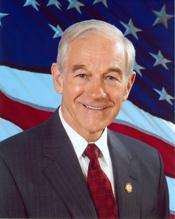
Mr. Speaker, I rise to express a few concerns that I have regarding both the commission and the trend toward a constitutional amendment that might solve some of the problems that people anticipate. I…
Mr. Speaker, I rise to express a few concerns that I have regarding both the commission and the trend toward a constitutional amendment that might solve some of the problems that people anticipate.
I certainly agree with the gentleman from Washington (Mr. Baird) that this is a very serious issue; and this is to me not just a casual appointment of a commission, but we are dealing with something that is, in a constitutional sense, rather profound because we are talking about amendments that are suggesting that our governors will appoint Members of Congress for the first time in our history. That should be done with a great deal of caution and clear understanding of what we are doing.
My concern, of course, with the commission is that we are moving rather rapidly in that direction. Hopefully, that is not the case. We had the commission report of the Continuity of Government Commission yesterday, and that was released, and then we had a unanimous consent agreement to bring this up, like we need to do this in a hurry.
Ordinarily, if we deal with constitutional amendments, quite frequently we will have a constitutional amendment proposed, and then we will hold hearings on that particular amendment. I think we could handle it that way.
But I have another concern about the urgent need and the assumption that the world ends if we are not here for a few days. There are times when we are not here like in August and a few months we take off at Christmas. Of course, we can be recalled, but the world does not end because we're not here. In a way this need for a constitutional amendment to appoint congressmen is assuming that life cannot go on without us writing laws.
I would suggest that maybe the urgency is not quite as much as one thinks. I want to quote Michael Barone who was trying to justify a constitutional amendment that allows governors to appoint moc in a time of crisis. He said, ``think of all the emergency legislation that Congress passed in the weeks and months after September 11 authorizing expanded police powers. None of this could have happened''. But now as we look back at those emergency conditions, a lot of questions are being asked about the PATRIOT Act and the attack on our fourth amendment and civil liberties. I suggest there could be a slower approach no harm will come of it.
I yield to the gentleman from California.
Mr. Speaker, I would like to say I am pleased to hear what the gentleman has said, because there are some who see this just from the outside, seeing what we are doing here today as nothing more than a continuity of what was done yesterday. The gentleman from California (Mr.
Dreier) suggests he does not see it that way, and that gives me some reassurance, and I thank the gentleman.
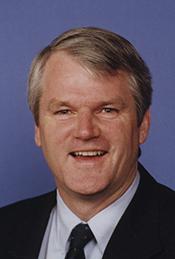
Mr. Speaker, I thank the gentleman from Texas for his leadership on this issue and also the leadership of the gentleman from California (Mr. Dreier), the chairman of the Committee on Rules. What we…
Mr. Speaker, I thank the gentleman from Texas for his leadership on this issue and also the leadership of the gentleman from California (Mr. Dreier), the chairman of the Committee on Rules.
What we are about here is about as serious as it gets. We are contemplating the possibility that everyone in this building and most of the Federal Government officials in this city would be killed. It is not pleasant to contemplate, but I view it as a sign of the strength of this great democratic Republic that we are able to contemplate it because what we are saying is this: We are proud to have been elected and serve in this great body, but there is something bigger than us as individuals. There is an institution that we love and hold dear called the House of Representatives that assures the people of our States and our districts that they will have a voice in the Federal Government as it deliberates the most weighty matters that come before this Nation.
Should we all be killed and not have a mechanism to replace this institution, we would leave this great Nation, indeed the world, without the system that has served us so well, the system of checks and balances to ensure that a self-appointed executive would not emerge with no checks and balances, to ensure that an unelected Cabinet member could not exercise extra constitutional powers without the checks of a representative body. That is what we are about.
The gentleman from California (Mr. Cox) has done an outstanding job, along with the gentleman from Texas (Mr. Frost) on the working group. Norm Ornstein is certainly to be credited, as is Tom Mann for the gift they gave this body yesterday with the Commission on Continuity. But we have important work to do. It is now almost 2 years since September 11 happened. We just lack a few months from that tragic date. In this time, we have the opportunity to ensure the continuity of this great body. I hope we will act on that.
The entire Constitution was written over the course of a few months by very wise individuals who got together and, as this select committee will do, set aside partisan differences. There were no parties at the time. They simply said: What is good for this country? What will help preserve our liberties? How can we establish a system that will learn from the mistakes of the past and persevere through the challenges of the future?
We have met new challenges, and we understand now we must adapt the ways we do business. This committee will help us learn to do that and will establish the procedures we need to move forward. I commend the two leaders for setting this up.
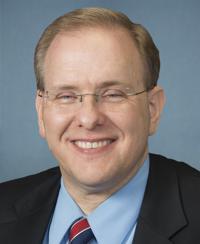
Mr. Speaker, I would just like to echo the concerns of the gentleman from Texas (Mr. Frost) and his desire and his belief that we need to have an alternative mechanism for appointing Members to the…
Mr. Speaker, I would just like to echo the concerns of the gentleman from Texas (Mr. Frost) and his desire and his belief that we need to have an alternative mechanism for appointing Members to the House in the event of a major catastrophe.
I would also like to thank and commend the gentleman from California (Mr. Cox) and the gentleman from Texas (Mr. Frost) for their outstanding leadership on this issue. It is a very difficult and in many ways unpleasant subject to be dealing with but one that is very necessary and could mean the survivability of this Republic in the event of a catastrophe.
Mr. Speaker, as a member of the Cox-Frost working group in the 107th Congress, I urged my colleagues to support H. Con. Res. 190 so Congress may continue to operate in the aftermath of a catastrophe that kills or incapacitates a large number of its Members. I also thank the gentleman from California (Mr. Dreier) and the gentleman from Texas (Mr. Frost) and the gentleman from Washington (Mr. Baird) for their leadership on this very important issue.
The Constitution declares that Members of the House must be popularly elected. However, the specter of terrorism, notably reports that the Capitol was an intended target on September 11, as well as the subsequent anthrax attacks, remind us that mass casualties in Washington or elsewhere are a real possibility and could have a detrimental effect on the House's ability to fulfill its duties.
While the Cox-Frost group made some significant progress in resolving these complicated problems in the last Congress, many questions still remain. For example, I have been working with the gentleman from Ohio (Mr. Ney), the gentleman from Maryland (Mr. Hoyer), and the gentleman from Connecticut (Mr. Larson) to address the communications needs of Members in emergency conditions. Yesterday, the Continuity of Government Commission issued its first report with recommendations for preserving Congress' ability to function in the wake of a terrorist attack. It is Congress' responsibility to consider those recommendations and develop a strategy to ensure that the people's business will not be interrupted. Today's resolution will help us reach that goal. I urge my colleagues to support it.
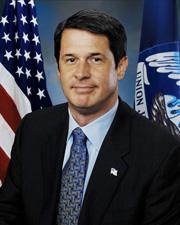
Mr. Speaker, I thank the gentleman from California (Mr. Dreier), the gentleman from California (Mr. Cox), and the gentleman from Texas (Mr. Frost) for all of their work on this issue; and that work,…
Mr. Speaker, I thank the gentleman from California (Mr. Dreier), the gentleman from California (Mr. Cox), and the gentleman from Texas (Mr. Frost) for all of their work on this issue; and that work, of course, must continue.
I rise in strong support of this resolution. I was honored and privileged to work on the working group with the gentleman from California (Mr. Cox) and the gentleman from Texas (Mr. Frost) and so many others.
I think that working group did some very valuable work, laid an important foundation, and in fact suggested and helped make very real and important and fundamental changes in both our rules and some statutes. We are continuing that work I believe today, and in the very near future the gentleman from California (Mr. Cox) will put into the hopper another bill aimed at changing statutes to again fine tune some of these issues with regard to presidential succession and related matters. I am happy to coauthor that bill, and that is further progress.
But just as clearly as we have met and gained consensus on some issues and made important progress, big questions remain; and clearly the biggest question which I believe must be tackled more adequately is the possibility of mass deaths among House Members and how our democratic institution of the House, our most democratic institution, would continue to function under that circumstance of national emergency. So that is why I think this resolution and the new joint work between the House and the Senate led by the gentleman from California (Chairman Dreier) and others is so very important.
I also want to join in the concerns that the gentleman from Texas (Mr. Paul) raised. They are very legitimate concerns that I and many other people hold, but clearly there are ways to address those concerns. Clearly, this new group is not headed in any specific direction that the rules addressing those concerns adequately deal with.
Mr. Speaker, I look forward to continuing to work on this issue with others.
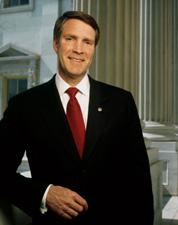
Madam President, I ask unanimous consent that the Senate proceed to the immediate consideration of H. Con. Res. 1, which is at the desk. Madam President, I ask unanimous consent that the concurrent…
Madam President, I ask unanimous consent that the Senate proceed to the immediate consideration of H. Con. Res. 1, which is at the desk.
Madam President, I ask unanimous consent that the concurrent resolution be agreed to and the motion to reconsider be laid upon the table.
Mr. Speaker, I offer a privileged concurrent resolution (H. Con. Res. 1) and ask for its immediate consideration.
Mr. Speaker, I offer a privileged concurrent resolution (H. Con. Res. 1) and ask for its immediate consideration.
Bill Text
3 versions available
        [Congressional Bills 108th Congress]
[From the U.S. Government Publishing Office]
[H. Con. Res. 1 Received in Senate (RDS)]

1st Session
H. CON. RES. 1

_______________________________________________________________________

IN THE SENATE OF THE UNITED STATES

January 9, 2003

Received

_______________________________________________________________________

CONCURRENT RESOLUTION

Regarding consent to assemble outside the seat of Government.

Resolved by the House of Representatives (the Senate concurring),
That pursuant to clause 4, section 5, article I of the Constitution,
during the One Hundred Eighth Congress the Speaker of the House and the
Majority Leader of the Senate or their respective designees, acting

jointly after consultation with the Minority Leader of the House and
the Minority Leader of the Senate, may notify the Members of the House
and the Senate, respectively, to assemble at a place outside the
District of Columbia whenever, in their opinion, the public interest
shall warrant it.

Passed the House of Representatives January 7, 2003.

Attest:

JEFF TRANDAHL,

Clerk.