Recognizing community organization of public access defibrillation programs.
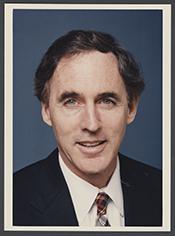
 Rep. Sherrod Brown (D-OH)
Legislative Activity
Stay on top of the latest movement without scrolling through every action
Received in the Senate.
October 6, 2004
View full timeline
Introduced in House
July 23, 2003
Referred to the House Committee on Energy and Commerce.
July 23, 2003
Mr. Barton (TX) moved to suspend the rules and agree to the resolution.
October 5, 2004 • 3:27 PM
Considered under suspension of the rules. (consideration: CR H8089-8091)
October 5, 2004 • 3:27 PM
DEBATE - The House proceeded with forty minutes of debate on H. Con. Res. 250.
October 5, 2004 • 3:27 PM
Passed/agreed to in House: On motion to suspend the rules and agree to the resolution Agreed to by voice vote.(text: CR H8089-8090)
October 5, 2004 • 3:35 PM
On motion to suspend the rules and agree to the resolution Agreed to by voice vote. (text: CR H8089-8090)
October 5, 2004 • 3:35 PM
Motion to reconsider laid on the table Agreed to without objection.
October 5, 2004 • 3:35 PM
Received in the Senate.
October 6, 2004
Floor Debate
3 membersWhat members said about H.Con.Res. 250 on the floor

Floor Debate
3 membersWhat members said about H.Con.Res. 250 on the floor
Madam Speaker, I move to suspend the rules and agree to the concurrent resolution (H. Con. Res. 250) recognizing community organization of public access defibrillation programs. Madam Speaker, I ask…
Madam Speaker, I yield myself 3 minutes. Madam Speaker, heart disease kills more Americans than any other condition. Nearly a quarter of a million Americans die from cardiac arrest every year. The…
Madam Speaker, I thank the distinguished chairman for yielding me this time, and I rise in support and as a cosponsor of H. Con. Res. 250, recognizing public access defibrillation, or PAD, programs.…
Bill Text
3 versions available
        [Congressional Bills 108th Congress]
[From the U.S. Government Publishing Office]
[H. Con. Res. 250 Received in Senate (RDS)]

2d Session
H. CON. RES. 250

_______________________________________________________________________

IN THE SENATE OF THE UNITED STATES

October 6, 2004

Received

_______________________________________________________________________

CONCURRENT RESOLUTION

Recognizing community organization of public access defibrillation
programs.

Whereas coronary heart disease is the single leading cause of death in the
United States;
Whereas every two minutes, an individual suffers from cardiac arrest in the
United States, and 250,000 Americans die each year from cardiac arrest
out of hospital;
Whereas the chance of survival for a victim of cardiac arrest diminishes by ten
percent each minute following sudden cardiac arrest;
Whereas 80 percent of cardiac arrests are caused by ventricular fibrillation,
for which defibrillation is the only effective treatment;
Whereas 60 percent of all cardiac arrests occur outside the hospital, and the
average national survival rate for an out-of-hospital victim of cardiac
arrest is only five percent;
Whereas automated external defibrillators (AEDs) make it possible for trained
non-medical rescuers to deliver potentially life-saving defibrillation
to victims of cardiac arrest;
Whereas public access defibrillation (PAD) programs train non-medical
individuals to use AEDs;
Whereas communities that have established and implemented PAD programs that make
use of AEDs have achieved average survival rates as high as 50 percent
for those individuals who have suffered an out-of-hospital cardiac
arrest;
Whereas successful PAD programs ensure that cardiac arrest victims have access
to early 911 notification, early cardiopulmonary resuscitation, early
defibrillation, and advanced care;
Whereas schools, sports arenas, large hotels, concert halls, high-rise
buildings, gated communities, buildings subject to high-security, and
similar facilities can benefit greatly from the use of AEDs as part of a
PAD program, since it often takes additional and therefore critical time
for emergency medical personnel to respond to victims of cardiac arrest
in these areas;
Whereas according to the American Heart Association, widespread use of
defibrillators could save as many as 50,000 lives nationally each year;
Whereas the Aviation Medical Assistance Act of 1998 (Public Law 105-170; 49
U.S.C. 44701 note) authorized AEDs to be carried and used aboard
commercial airliners;
Whereas the Cardiac Arrest Survival Act of 2000 (Public Law 106-505; 42 U.S.C.
238p-238q) and the Rural Access to Emergency Devices Act (Public Law
106-505, 42 U.S.C. 254c note) provided for the placement of AEDs in
Federal office buildings and increased access to AEDs in rural
communities;
Whereas the Community Access to Emergency Defibrillation Act of 2001 (Public Law
107-188; 42 U.S.C. 244-245) authorized the development and
implementation of PAD projects;
Whereas the Automatic Defibrillation in Adam's Memory Act (presented to the
President for his signature on June 20, 2003) authorizes the use of
grant funds to establish an information clearinghouse to provide
information to increase public access to defibrillation in schools; and
Whereas Summit County, Ohio serves as an inspiring model for communities across
the United States by providing access to AEDs in all of the county's 59
middle and high schools, in 47 city buildings and community centers, in
17 police departments, and in seven buildings at the University of
Akron: Now, therefore, be it
Resolved by the House of Representatives (the Senate concurring),
That Congress--
(1) recognizes the growing number of community activists,
organizations, and municipal governments leading the national
effort to establish public access defibrillation (PAD)
programs; and
(2) encourages the continued development and implementation
of PAD programs in schools, sports arenas, large hotels,
concert halls, high-rise buildings, gated communities,
buildings subject to high-security, and similar facilities to
increase the survival rate for victims of cardiac arrest.

Passed the House of Representatives October 5, 2004.

Attest:

JEFF TRANDAHL,

Clerk.